




Abstract
OBJECTIVE:
Renal cell carcinoma (RCC) is one of the most common genitourinary cancers, and advanced RCC usually leads to poor prognosis. Therefore, identifying novel biomarkers for predicting the progression and prognosis of RCC is essential. The present study aims to evaluate the clinical value of miR-183-5p in RCC development and prognosis after surgery.
MATERIALS AND METHODS:
We enrolled a total of 284 patients who received partial or radical nephrectomy from April 2003 to May 2013 at a single institution. The clinical and pathological characteristics of the patients were collected, including age, gender, tumor size, tumor stage, as well as follow-up information. The expression levels of miR-183-5p of all the patients were calculated from FFPE specimens. Cox regression analyses were performed to approve the effect of miR-183-5p expression on patient survival. Kaplan-Meier method was used to analyze the patient survival curves.
RESULTS:
After controlling for gender, age, tumor size and tumor stage in the multivariate analysis, we found that high expression of miR-183-5p was independently associated lower overall survival (HR
CONCLUSION:
Our results indicated that the high miR-183-5p expression is an independent factor for predicting RCC’s worse prognosis.
Introduction
As one of the most common genitourinary cancers, renal cell carcinoma (RCC) accounts for approximately 2%–4% of all human cancers [1, 2]. About one-third of RCC patients already have metastasis when diagnosed because of the absence of symptoms during the early stage of the disease [3]. Besides, 20%–40% of the patients with localized RCC would experience recurrence and metastasis after surgery [4]. Due to strong resistance to chemotherapy and radiotherapy, advanced RCC generally means poor prognosis, with a median survival of only 6–12 months [5]. Therefore, identifying novel biomarkers for predicting the progression and prognosis of RCC is essential.
MicroRNAs (miRNAs) are small non-coding single-stranded RNAs containing about 20–22 nucleotides that regulate the gene expression at the post-transcripti-onal level [6]. Numerous studies have indicated that miRNAs are aberrantly expressed in many malignant tumors and play significant roles in oncogenic or tumor-suppressive pathways [7, 8]. Lots of researchers accordingly believe that they may have a potential value in cancer management, including early stage detection, prognosis, and possibly providing novel treatment targets. By literature searching and gene analyzing, we focused on miR-183-5p, a promising miRNA that has been reported to be associated with osteosarcoma [9], bladder cancer [10], tongue sarcoma [11]and some other tumors [12]. Furthermore, numerous studies reported that a high expression level of miR-183-5p was significantly associated with poor prognosis in gastric cancer [13], breast cancer [14], colorectal cancer [15] and so on.
Despite these novel discoveries, the clinical value of miR-183-5p in RCC development and prognosis remains mostly unexplored. To identify the potential value of miR-183-5p for the prognosis of RCC, we evaluated the miR-183-5p expression level in 284 formalin-fixed paraffin-embedded (FFPE) RCC specimens and investigated the association between its expression level and RCC patients prognosis. Regression analyses were used to determine whether the expression of miR-183-5p was an independent predictor of prognosis for RCC patients after surgery. We also obtained data from TCGA (The Cancer Genome Atlas database) to validated our finding.
Materials and methods
Patients and samples
A total of 284 patients who received partial or radical nephrectomy at Peking University Shenzhen Hospital (Guangdong, China) from April 2003 to May 2013 were enrolled in our study. The inclusion criteria were the histopathology diagnose of RCC, and the exclusion criteria were lack of FFPE tumor sample or loss to follow-up. The clinical and pathological characteristics of the patients were collected, including age, gender, tumor size and tumor stage. The diagnose standard was based on the 2010 American Joint Committee on Cancer staging system [16]. None of the patients received chemotherapy or radiotherapy before tissue sampling. After surgery, all patients were regularly followed at the outpatient clinic or by telephone until May 2018 or until death. The study was approved by the Ethics Committees of Peking University Shenzhen Hospital, and the informed consent was obtained from every patient.
RNA extraction and RT-qPCR
Total RNA was extracted from FFPE specimens with TRIzol (Invitrogen; Thermo Fisher Scientific, Inc.) according to the manufacturer’s protocol. RNA concentration was measured on a NanoDrop 2000c (Thermo Fisher Scientific, Inc.) after purified with the RNeasy Maxi kit (Qiagen GmbH). RNA samples (260/280 ratio between 1.8-2.1) were used for further investigation. Total RNA (1
Statistical analysis
The relation between miR-183-5p expression and clinical-pathological variables (gender, age, tumor size and tumor stage) were analyzed using the Student’s t-test, Fisher’s exact test or Pearson Chi-square test. All data were presented as the mean
Validation from TCGA
We gathered the data of 506 RCC patients from The Cancer Genome Atlas (
Results
Patients clinical characteristics and miR-183-5p expression
There were a total of 284 patients enrolled in this study. The clinical-pathological data of the patients are shown in Table 1. These patients consisted of 177 men and 107 women, and their median age was 50 years, with 78 patients older than 60 years old and 206 patients younger. One hundred and seventy-five of them had stage I–II RCC and 163 was at stage III–IV. The median follow-up period was 44 months (range: 4–163 months), and 189 patients were alive at the end of our clinical follow-up.
Association between miR-183-5p expression level
and Clinical information in FFPE renal cancer samples
Association between miR-183-5p expression level
The miR-183-5p expression level of each patient was detected from the FFPE renal cancer samples. In each set of clinical-pathological feature, all cases were categorized into a high group and low group by a cutting point of median miR-183-5p expression level. We also compared miR-183-5p expression level and their clinical-pathological variables. As shown in Table 1, we found no significant association between miR-183-5p expression level and gender, age, tumor size or tumor stage.
The relationship between patients’ survival and clinical-pathological variables, together with miR-183-5p expression level, was studied by univariate analysis. As shown in Table 2, patients’ survival was not affected by gender, age, or tumor size, but was significantly associated with tumor stage (HR
Kaplan-Meier analysis of overall survival (OS) for patients with RCC for the predictive value of miR-183-5p in the overall patients. 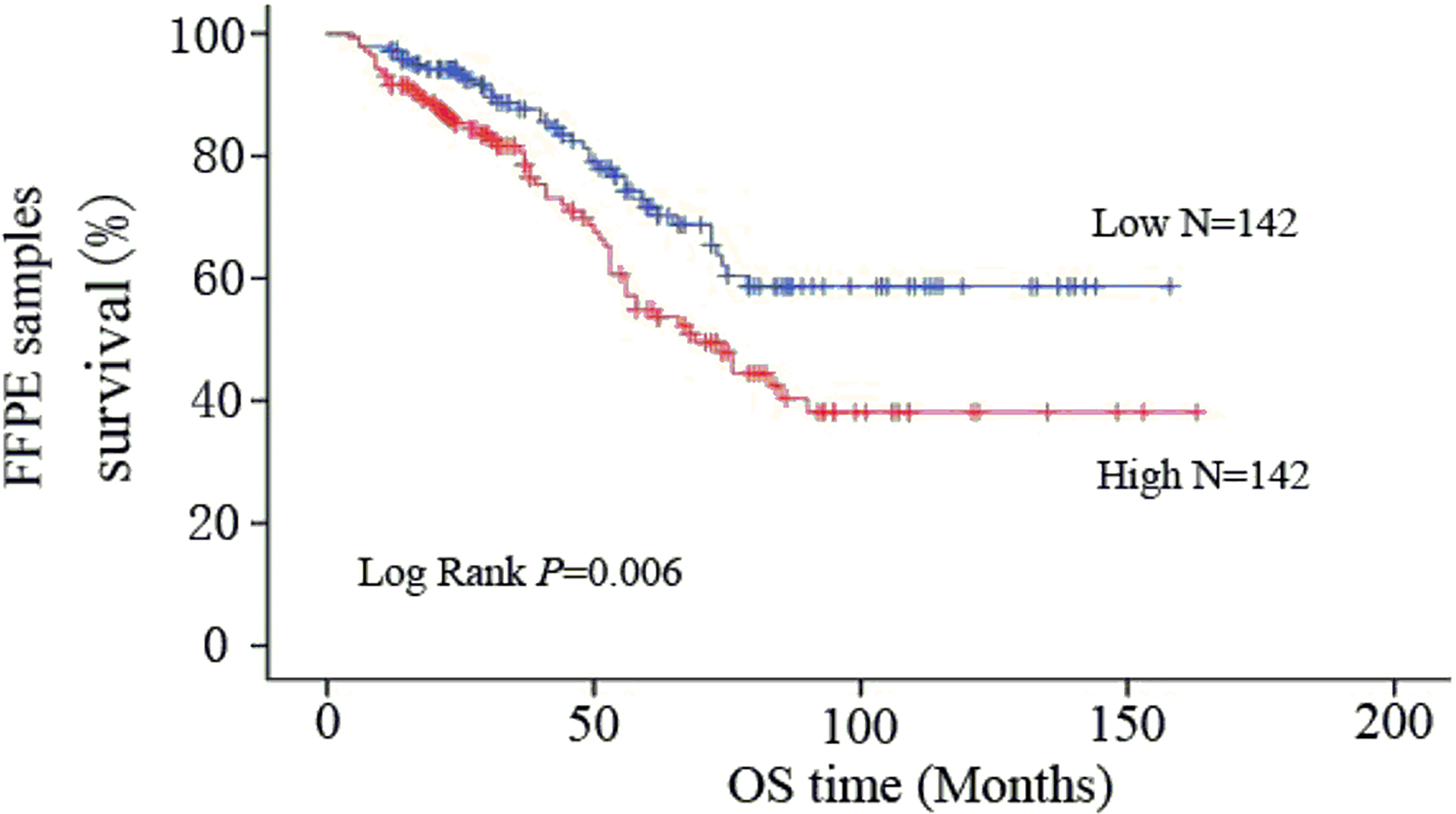
Kaplan-Meier analysis of overall survival (OS) for patients with RCC for the predictive value of miR-183-5p, data from TCGA. 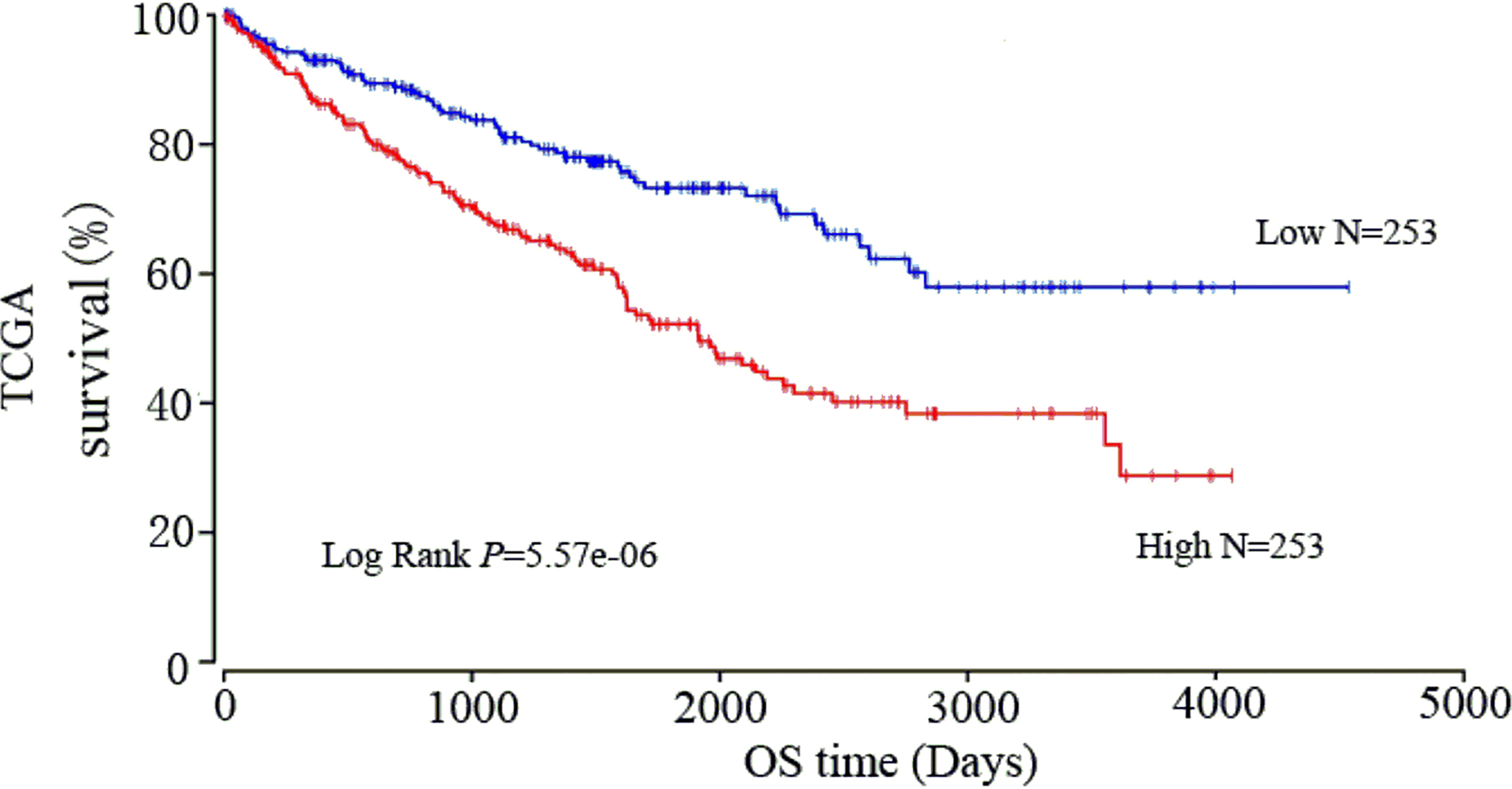
miR-183-5p expression and patients’ survival
HR, Hazard ratio; 95% CI, 95% Confidence interval.
Kaplan-Meier analysis of overall survival (OS) for patients with RCC for the predictive value of miR-183-5p in the tumor size set and tumor stage set. 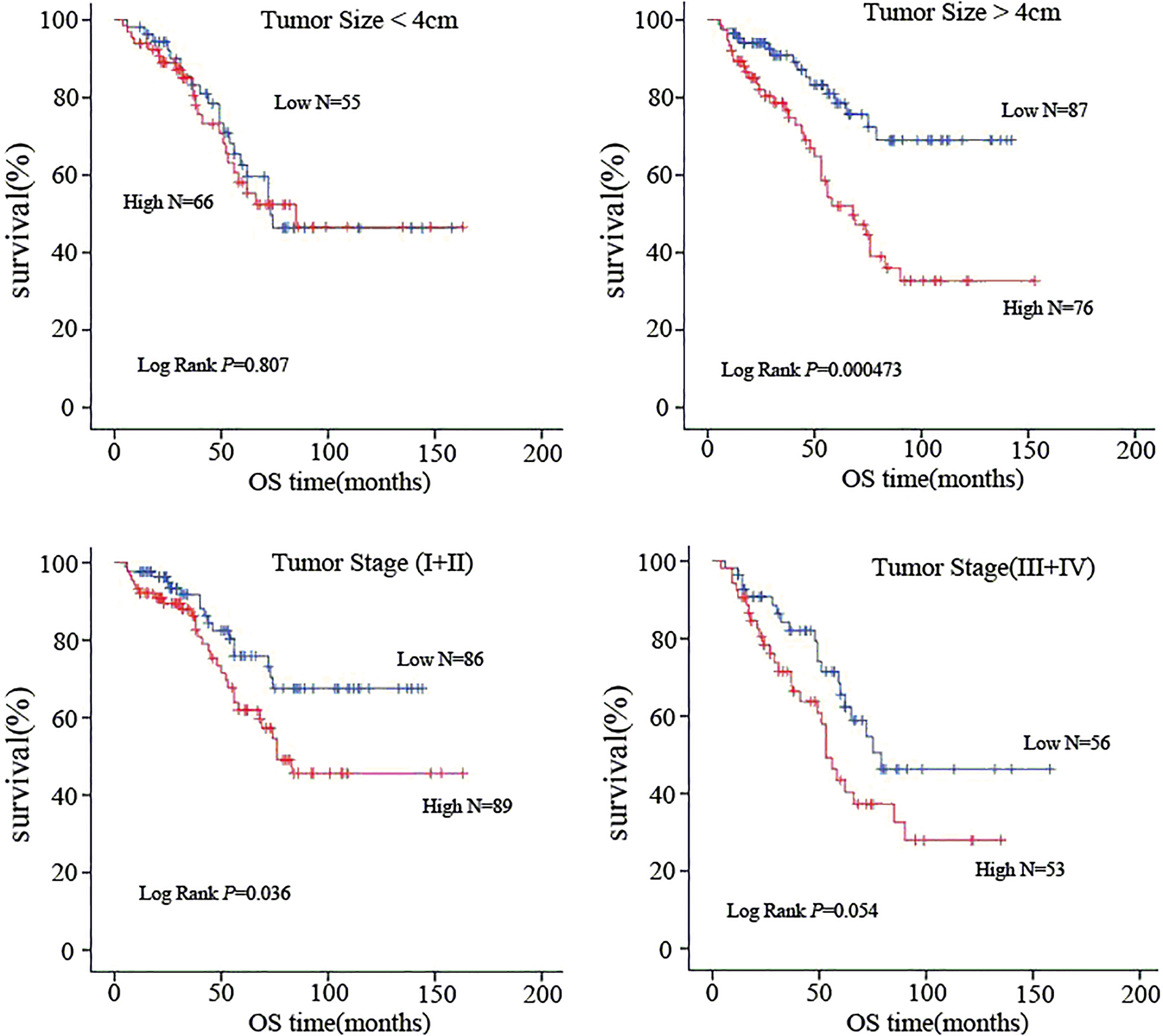
In the following Kaplan-Meier analysis, the survival curves showed a similar result: patients with high expression of miR-183-5p had a significantly poor prognosis (
When stratified by tumor size, miR-183-5p showed significant prognostic value for larger size (
RCC is one of the most prevalent urological cancer with the high mortality rate, especially when metastatic happens. One-third of patients after partial or radical nephrectomy would experience recurrence, which also means a poor prognosis [4]. To predict the progression of RCC and the survival rates of patients, multiple methods were evaluated and may be used, such as TNM stage, Furman grade, and many biomarkers. However, none of them is 100% reliable, and some of the studies even showed contradictory results. Therefore, the identification of a novel prognostic biomarker is urgently required to help the management of RCC. Recently, numerous studies have found that miRNAs play important roles in tumorigenesis and may be useful diagnostic and prognostic biomarkers for different types of cancers. For example, Liu et al.’s meta-analysis found that higher expression level of miR-9 significantly predicted worse overall survival in several cancers and thus may act as a prognostic biomarker for malignant neoplasms [19]. Other famous cancer-related miRNAs include miR-21 [20], miR-125 [21], miR-96 [22], and so on. Some of them act as the oncogene and predict worse overall survival while the others seem to play an opposite role, and even the same miRNA could play different roles in various cancers.
MiR-183-5p, located on chromosome 7q32, belongs to the miR-183 family. Previous studies have indicated that highly expressed miR-183 might predict poor survival of patients with most cancer types such as lung cancer, gastric cancer, and colorectal cancer, but played an opposite role as tumor suppressor in melanoma and pancreatic ductal adenocarcinoma at the same time [23]. Zhang et al. [24] reported that serum miR-183 was significantly higher in RCC patients, and was also associated with poor responsiveness of renal cancer to natural killer cells. After all the discoveries above, the correlation between miR-183-5p and the prognosis of RCC has not been reported. In other words, we are the first to study and highlight the prognostic potential of miR-183-5p for RCC.
In our study, we showed that patients with high miR-183-5p expression had shorter overall survival and supported the oncogene role of miR-183-5p in RCC after studying 284 RCC cases. In the multivariate analysis, high expression of miR-183-5p remained to be an independent factor on overall survival after controlling for gender, age, tumor size and tumor stage. This conclusion was strongly supported by the Kaplan-Meier survival curves of the data from both our constitution and TCGA. When we stratified the patients by tumor size and tumor stage respectively, the prognostic value of miR-183-5p seemed more affirmative for larger size tumors, but not for high tumor stage ones. This might indicate that miR-183-5p could independently predict the overall survival, but there weren’t too many differences in prognostic value between various tumor stages of RCC. In the Pearson Chi-square test, we similarly found no significant association between miR-183-5p expression level and tumor stage. This indicates that maybe miR-183-5p expression needs equal attention for patients with different stages of RCC. As the mechanism how miR-183-5p affects the prognosis of RCC remains unknown, this result may also contain some value for the future studies. By the way, in this study, the expression of miR-183-5p was assessed from FFPE samples, but in future studies, we could pay more attention to serum and urine, which are more convenient to get and maybe equally efficient.
To improve the predictive ability of biomarkers, some of them are often used together to establish a better predictive model. For example, Song et al. [14] found that increased miR-183/182/96 cluster level was correlated with local relapse, distant metastasis and poor clinical outcomes hence proved the role of the miR-183/182/96 cluster as a novel prognostic biomarker for breast cancer. Fritz et al. [25] showed that the miR(21/10b) ratio was an independent prognostic factor for M0 clear cell RCC patients. Christinat et al. [26] found a novel 5-miRNA signature which included miR-183 able to classify ccRCC in distinct subgroups by analyzing 584 ccRCC samples collected from the TCGA online database. When combined with information from conventional TNM staging and the age of the patient, the novel signature could prognosticate ccRCC outcome more accurately than known ccRCC miRNA signatures or TNM staging alone. Our study focused on one mi-RNA of the 5-miRNA combination, but also supported their conclusion to a certain extent. In the same way, our finding may be used together with some other methods, such as TNM stage, the most common way to predict prognosis nowadays. Moreover, of course, many other biomarkers with prognostic potential could also be enrolled. Promising models await to be established and validated in the future, and for now, miR-183-5p could offer a reference as one of the prognostic biomarkers for RCC after nephrectomy.
Conclusion
In summary, this is the first study that highlights the prognostic potential of miR-183-5p for RCC. The study demonstrated that after controlling for gender, age, tumor size, and tumor stage, the high miR-183-5p expression is an independent factor for predicting RCC’s worse prognosis. This reminds us the measurement of miR-183-5p may be helpful to identify high-risk patients and benefits the management of RCC. On the other hand, our study also has some limitations. Firstly, all our cases were from one same institution in China and thus may be affected by selected bias. More data from other institution or other countries are necessary to validate the prognostic value of miR-183-5p. Secondly, we did not explore the underlying molecular mechanism and possible targets affecting the prognosis of RCC, which also needs further studies in the future.
Footnotes
Acknowledgments
This study was supported by Research Fund Project of Peking University Shenzhen Hospital (JCYJ201700 1), Clinical Research Project of Shenzhen Health Commission (no. SZFZ2018072 and no. SZLY2018023), and Science and Technology Development Fund Project of Shenzhen (no. JCYJ20170307111334308).
Conflict of interest
The authors declare that they have no competing interests.