




Abstract
BACKGROUND:
Laryngeal cancer is one of the most common malignancies in the head and neck. Activated platelets play a critical role in cancer development and progression. Altered mean platelet volume (MPV) and platelet distribution width (PDW) have been found in various types of cancer. The purpose of the current study was to investigate the association of platelet indices with laryngeal cancer.
STUDY DESIGN:
The study included 216 patients with laryngeal cancer, 189 subjects with benign laryngeal disease, and 213 control subjects between January 2015 and December 2015. All participants’ clinical and laboratory characteristics at initial diagnosis were collected.
RESULT:
MPV was significantly lower and PDW was markedly higher in laryngeal cancer patients compared with control subjects and patients with benign laryngeal disease. A significant correlation between MPV and lymph node metastasis was found. The prevalence of laryngeal cancer increased as MPV quartiles decreased and PDW quartiles increased. Furthermore, MPV and PDW were independent risk factors for distinguishing laryngeal cancer from benign laryngeal disease.
CONCLUSIONS:
The patients with laryngeal cancer have reduced MPV and increased PDW compared to the subjects without laryngeal cancer. In addition, MPV and PDW play different roles in laryngeal cancer from benign laryngeal disease.
Introduction
Laryngeal cancer is one of the most common malignancies in the head and neck. There are approximately 40% of patients in advanced stage when first evaluated [1]. Therefore, it is extremely necessary to identify new biomarkers to detect patients with laryngeal cancer in early stage.
Platelets play an essential role in cancer progression and metastases. Platelets form aggregates with tumor cells. Furthermore, activated platelets interact with cancer cells through paracrine signaling and direct contact, promoting tumor cell growth and survival [2]. A growing body of evidence has showed that elevated platelets are associated with a poor prognosis in various types of cancer, such as pancreatic cancer, gastric cancer, colorectal cancer, endometrial cancer, and ovarian cancer [3, 4, 5, 6, 7]. However, platelet count is determined by the balance between the rate of production and consumption of platelets. A normal platelet count could conceal the presence of highly hypercoagulative and pro-inflammatory cancer phenotypes in the presence of efficient compensatory mechanisms [8]. Mean platelet volume (MPV) is an index of activated platelets and is linked to different inflammatory conditions [9]. Considerable evidence reported that MPV changed in gastric cancer, ovarian cancer, lung cancer, colon cancer, and breast cancer [10, 11, 12, 13, 14]. Platelet distribution width (PDW), another platelet index, indicates variation in platelet size [15].
However, only limited data are available in the literature with regard to the relationship between platelet indices and laryngeal cancer. The purpose of the current study was to investigate the association of platelet indices with laryngeal cancer.
Materials and methods
The study included 216 patients with laryngeal cancer (mean age 57.7
This study was approved by the Institutional Review Board of Harbin Medical University Cancer Hospital and written informed consent was obtained from the subjects.
Clinical examination and biochemical measurements
All the subjects underwent physical examination. Clinical data including smoking status, medical history and medication use were recorded for each subject. Venous blood samples after a 10-hour overnight fasting were collected from the individuals within 1 week prior to surgery. White blood cell (WBC), haemoglobin, and platelet indices were measured by an autoanalyzer (Sysmex XE-2100, Kobe, Japan). The whole blood samples were collected in EDTA-containing tubes, and all samples were processed within 30 minutes after blood collection.
Statistics
All data were expressed as means
Results
The study consisted of 216 patients with laryngeal cancer, 189 subjects with benign laryngeal disease, and 213 control subjects between January 2015 and December 2015. Of the 618 participants enrolled, 489 (79.1%) were men and 129 (20.9%) were women.
The characteristics of the participants according to laryngeal cancer status
The characteristics of the participants according to laryngeal cancer status
Values are shown as mean
MPV levels in laryngeal cancer, benign laryngeal disease, and control group.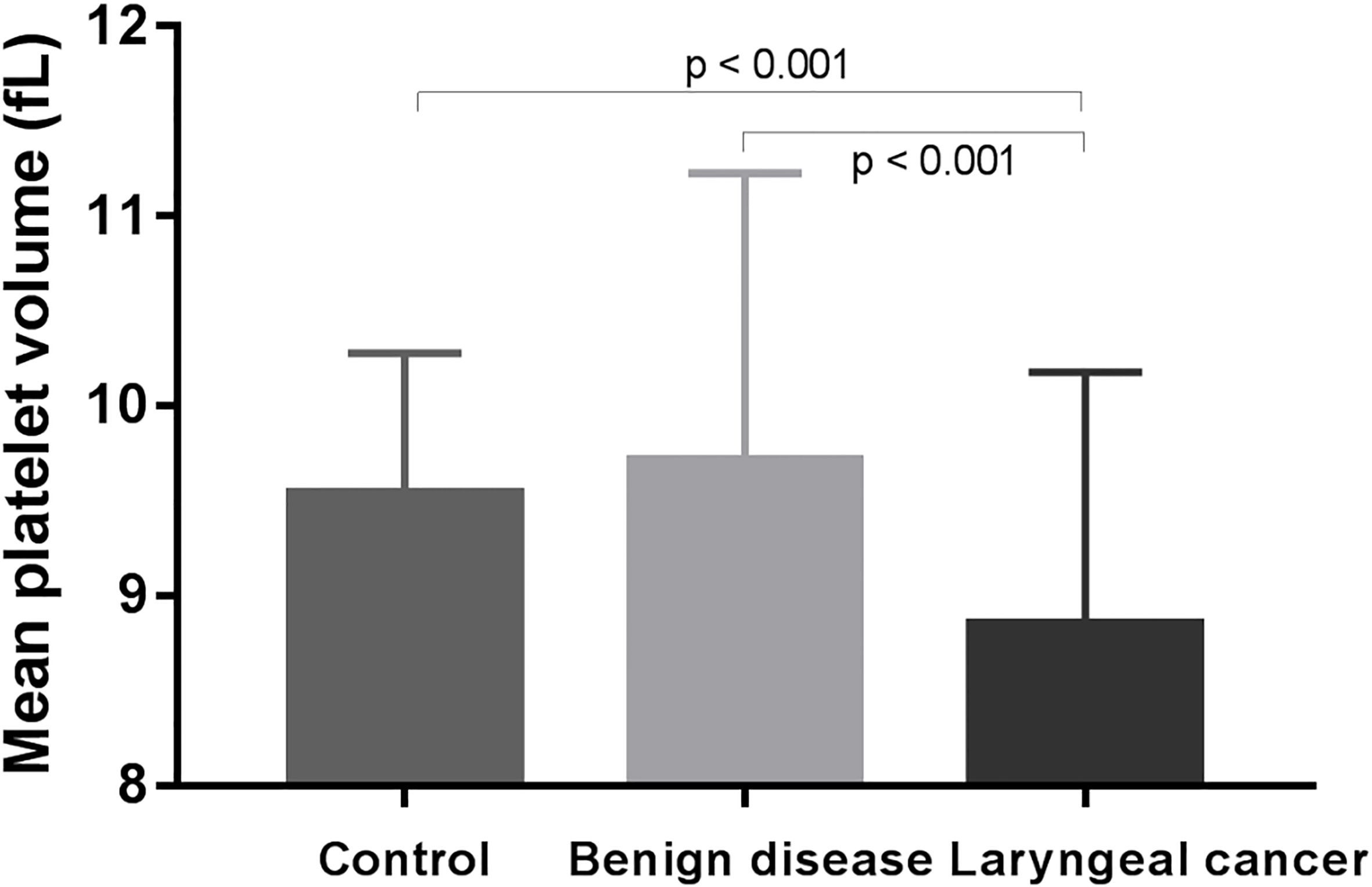
PDW levels in laryngeal cancer, benign laryngeal disease, and control group.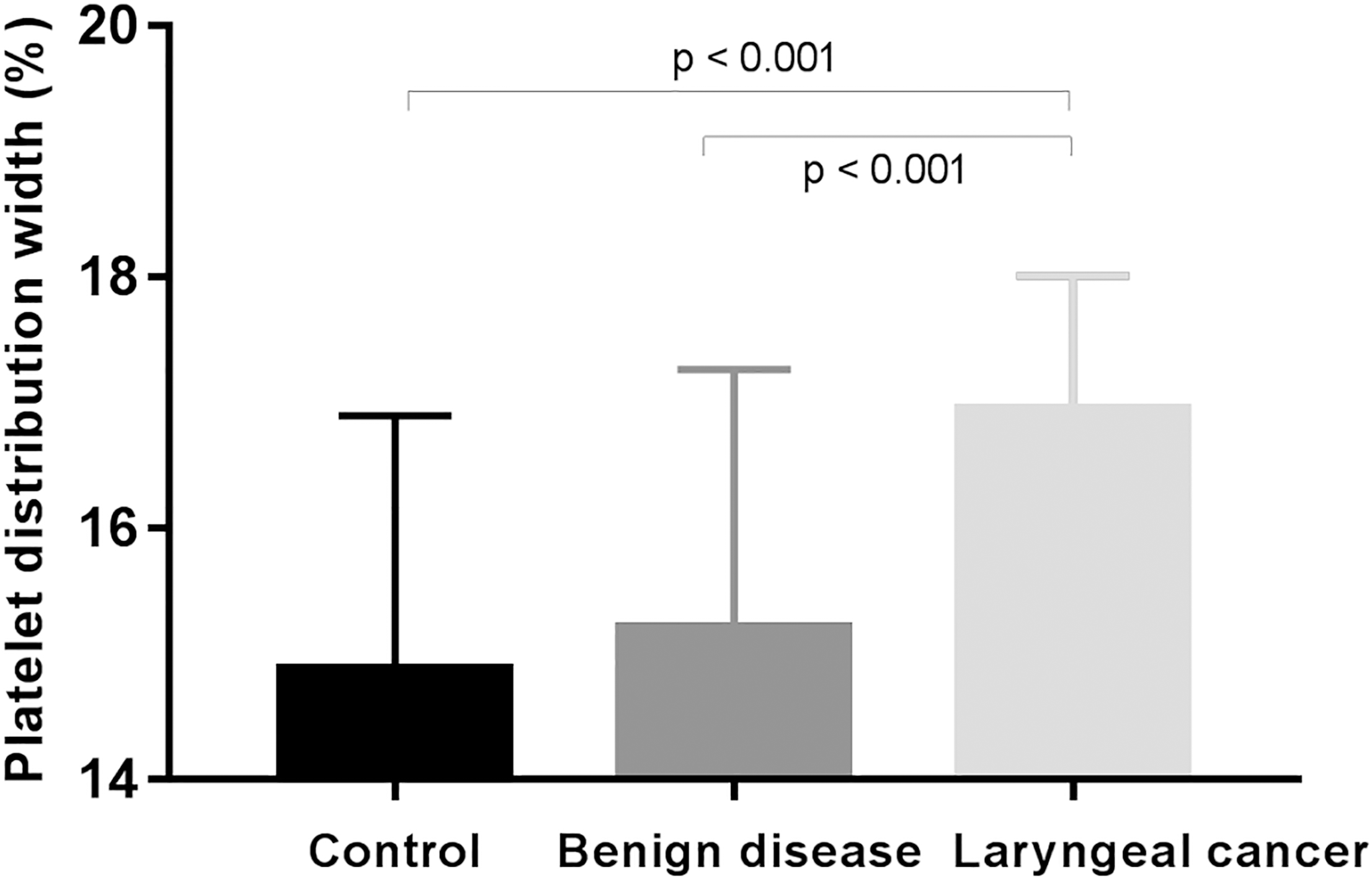
The characteristics of the patients with laryngeal cancer and benign laryngeal disease, and control subjects are reported in Table 1. One-way ANOVA analysis showed a significant group difference in age, BMI, MPV, PDW, and haemoglobin levels. However, there are no markedly difference in FPG, platelet count, white blood cell, and the percentage of male and current smokers among three groups.
MPV and PDW levels in laryngeal cancer, benign laryngeal disease, and normal control group are shown in Figs 1 and 2. MPV levels were increased both in normal control subjects and in patients with benign laryngeal disease compared to those in cancer patients (normal control vs. laryngeal cancer,
Correlations between clinicopathological characteristics and platelet indices in laryngeal cancer are summarized in Table 2. A significant correlation between MPV and lymph node metastasis was observed. However, there were no correlations between platelet indices and tumor size, tumor depth, tumor differentiation, and tumor stage.
Correlations between clinicopathological features and pre-operative platelet indices in laryngeal cancer
Prevalence rate of laryngeal cancer in the subjects with different quartiles of mean platelet volume.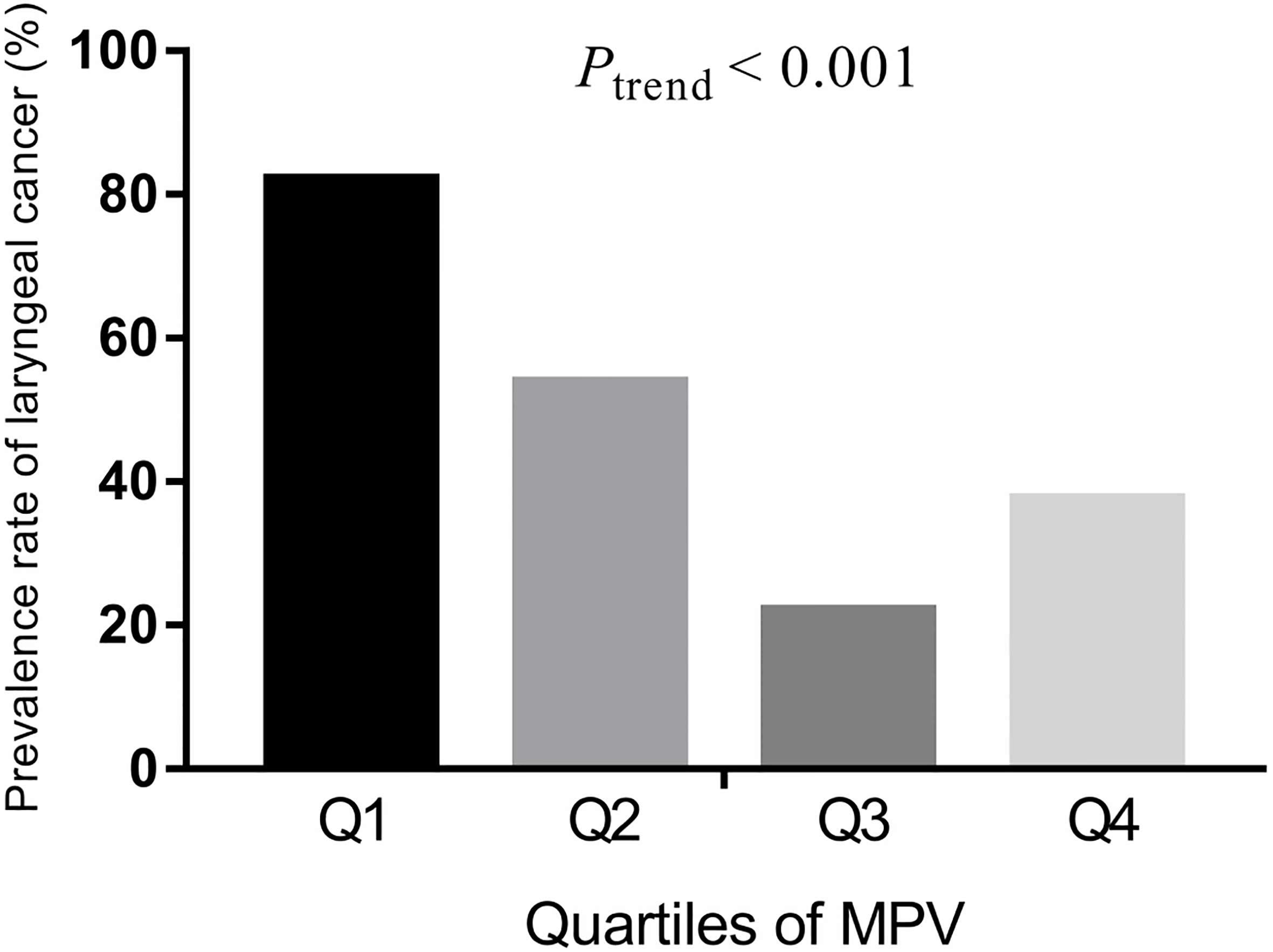
Prevalence rate of laryngeal cancer in the subjects with different quartiles of platelet distribution width.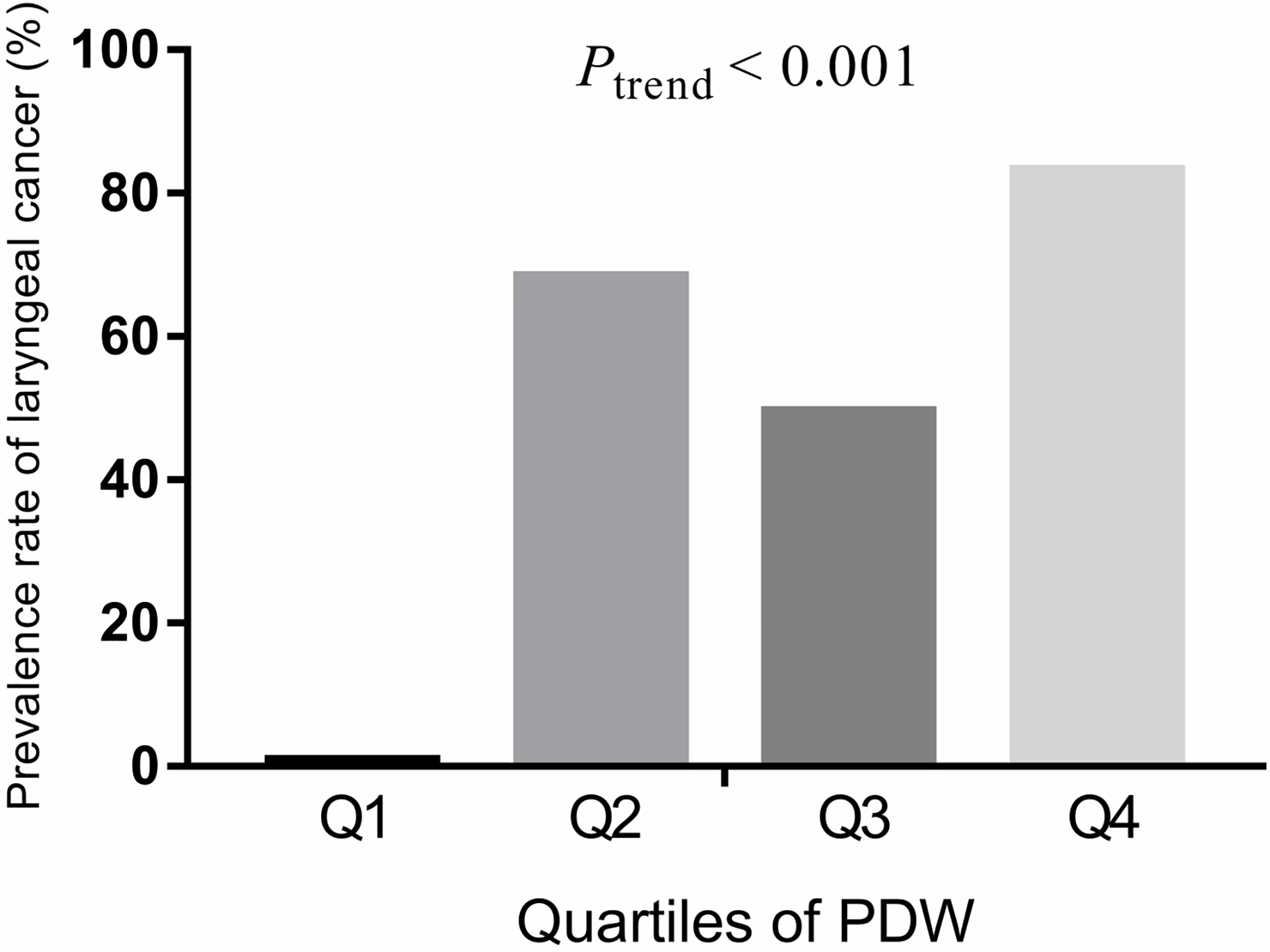
To understand the relationship between MPV and PDW levels and the prevalence of laryngeal cancer, the participants with laryngeal cancer and control subjects were classified into quartiles by their MPV and PDW levels. The prevalence of laryngeal cancer in the participants with different quartile levels of MPV and PDW was analyzed (Figs 3 and 4). For MPV, quartile 1 (Q1) was
MPV and PDW levels in the different pathological types of laryngeal cancer and benign laryngeal disease
MPV, mean platelet volume; PDW, platelet distribution width.
Multiple logistic regression analysis of factors used for differentiating benign laryngeal disease from laryngeal cancer
Data are presented as means (SD) or median (interquartile range) or percentage. BMI, body mass index; MPV, mean platelet volume; PDW, platelet distribution width.
We evaluated the levels of platelet indices in laryngeal cancer and benign laryngeal disease of various pathological types (Table 3). Platelet count, MPV and PDW levels were not markedly different in different pathological types of benign laryngeal disease and laryngeal cancer.
Logistic regression analysis was performed to evaluate the risk factors for distinguishing laryngeal cancer from benign laryngeal disease. The risk factors found to be significantly associated with differentiation in the regression analysis included age, BMI, MPV, and PDW (Table 4).
In this study, we provided evidence that platelets are activated in laryngeal cancer using a simple, relatively inexpensive, almost universally obtained test. The patients with laryngeal cancer have reduced MPV and increased PDW compared to the controls.
The prevalence of laryngeal cancer increased as MPV quartiles decreased and PDW quartiles increased. Furthermore, MPV and PDW are independent risk factors for distinguishing laryngeal cancer from benign laryngeal disease.
Platelets play a critical role in the development and progression of different cancers by promoting cancer cell proliferation, survival, angiogenesis, and metastasis. Several studies revealed that thrombocytosis is associated with poor prognosis in patients with various tumor types, such as lung cancer, ovary cancer, endometrium cancer, rectum cancer, renal cell cancer, gastric cancer, pancreas cancer, and breast cancer. Several clinical reports confirmed that the altered parameters of platelet activation, such as soluble P-selectin, CD40 ligand, and
The molecular mechanism underlying the association of reduced MPV and increased PDW with laryngeal cancer has yet to be fully defined. Decreased MPV may be related to inflammation. There is a strong linkage between inflammation and cancer [19]. Furthermore, platelet plays a key role in inflammation and cancer. MPV was an early indicator of activated platelets. Reduced MPV could come from an enhanced consumption of large platelets in inflammatory states [9]. Moreover, recent studies confirmed that low levels of MPV are associated with high-grade inflammatory diseases and reverse in the course of anti-inflammatory therapy [19].
Another possible mechanism is that platelets play a crucial role in promoting the hypercoagulable state in cancer. Activated platelets create a procoagulant micro-environment that enables the tumor cells to cover themselves with platelets and evade the host immune system [20]. Multifactorial complex interactions between platelets, endothelial cells and leukocytes further stimulate production of proinflammatory cytokines [21]. The mentioned above were just suggested based on theory. More experiments need to be carried out to explore the molecular mechanism for the change of MPV and PDW in laryngeal cancer.
Several lines of evidence supports the association between platelets and laryngeal cancer in clinical studies [22]. Our previous study found that higher PDW predicts poor prognosis in laryngeal cancer [23]. In this study, we confirmed the association between activated platelets and laryngeal cancer using simple and inexpensive biomarkers.
Our study has several limitations. First of all, we analyzed the subjects cross-sectionally, and this type of study fails to indicate causal relationship between MPV and PDW and laryngeal cancer. Secondly, this is a study carried out in a single hospital. Therefore, larger prospective studies are required to confirm these preliminary studies.
In summary, the patients with laryngeal cancer have reduced MPV and increased PDW compared to the subjects without laryngeal cancer. In addition, MPV and PDW play different roles in laryngeal cancer and benign laryngeal disease. Further studies on the involvement of MPV and PDW in laryngeal cancer are warranted.
Footnotes
Conflict of interest
All authors declare that they have no conflict of interest.