




Abstract
This paper examines the concept of “terminological gaps” and strives to identify suitable methods for dealing with them during translation. The analysis begins with an investigation of the contended notion of gaps in terminology based on empirical examples drawn from a German-Italian terminological database specifically designed for translation purposes. Two macro categories of gaps are identified, conceptual and linguistic level gaps, which only partially correspond to previous observations in the literature. The paper uses examples to explore the advantages of ontological representations for detecting conceptual terminological gaps and identifying appropriate translation strategies. However, limitations are also observed and an attempt is made to resolve these using a frame-based approach. A frame-based analysis reveals that while certain designations may appear to refer to convergent conceptual units with matching distinctive features, differences also emerge due to the way the two language systems build designations. Examples from the corpus make it evident that a frame-based approach is helpful for identifying both kinds of terminological gaps, and then resolving them during translation. An important presupposition for this approach is that larger units of analysis need to be addressed rather than just terms themselves. There is confirmation of the existing idea that methods embracing entire segments or paragraphs as units of investigation are preferable during translation, and this is also seen to apply in terminological studies.
Keywords
Introduction
The aim of this paper is to examine the concept of “terminological gaps” (TGs) and find suitable ways of dealing with them during language translation. The analysis begins by investigating the contended notion of gaps in terminology based on empirical findings within a German-Italian terminological database specifically designed for translation purposes. The analysis identifies two main categories of terminological gaps: conceptual and linguistic level TGs. As will become clear in Section 2, these only partially match and overlap with categories defined in the literature.
The paper explores how the representation and analysis of conceptual knowledge can help identify these gaps. The advantages of concept systems, and therefore ontological representation, for detecting TGs and assisting identification of appropriate translation strategies are illustrated through examples. However, limitations arise in relation to taxonomic divergences at high levels of specificity, cultural perspectives, and lack of linguistic point of view.
A frame-based approach (Faber, 2012; 2015; 2022) is then implemented to overcome these constraints, in particular by starting to consider discrepancies in explicit linguistic features between the two languages. These discrepancies can be considered contributing factors towards the concept of terminological gaps in the context of this study. The analysis of frames reveals that although certain designations in German and Italian may appear to refer to convergent conceptual units sharing all distinctive features, differences emerge due to the way the two language systems build and choose designations. It becomes evident that terms have linguistic components that are implicitly taken into account when writing specialized texts, and these must be considered contrastively during translation. The analysis of explicit linguistic frames can be helpful in this respect.
In order to minimize translation losses, translation strategies are implemented that focus on the transfer of frames, which carry both conceptual features and connotative information at sign level. However, it is important to note that the process of transferring conceptual and linguistic information, as made explicit by frames, cannot be confined solely to term units. It requires a wider focus encompassing longer textual units, supporting the view that longer units like segments or patterns are more suitable for terminological analysis for translation purposes than individual terms.
Terminological gaps
This paper will primarily focus on terminological gaps as distinct from lexical gaps. Although both involve an apparent void in a language system, they are distinguished by their scope or preliminary conditions (hence the definition of a domain). It is worth noting that the term “lexical gap” is often used interchangeably within terminological studies (Rogers, 2015). However, for the purpose of this study, the objective is to explore the work of terminologists and specialized translators when addressing gaps within specific domains or subject areas. In such cases the lack of one or more clearly defined terms becomes a primary focus, which is why reference is made here to “terminological gaps”. The literature on this topic may not explicitly use the term “terminological gaps”, but the concepts and approaches discussing examples of terminological-related absence are clearly relevant to the present discussion within the field of terminology.
According to Trask (1993:157) a “gap” is understood to be “the absence of a hypothetical word which would seem to fit naturally into the pattern exhibited by existing words”. This definition considers the possibility of detecting gaps by analyzing a single language, although this might not be effective and certainly not exhaustive. A contrastive analysis is a more comprehensive approach, when a gap is defined as the absence of “something” in one language system compared to another. Bentivogli & Pianta (2000) state that a lexical gap occurs whenever one language expresses a concept with a single lexical unit, while another language expresses the same concept with a free combination of words following the general rules of syntax. In the latter case the elements are not bound specifically to each other and occur freely with other lexical items (Cowie, 1981). This definition necessarily requires a contrastive perspective involving a translation process that identifies an equivalent textual construction conveying the same meaning and scope (Larson, 1998; Darwish, 2010). It is however difficult to set a boundary between a single lexical unit and the textual construction in order to define whether there really is a gap between languages. This is why a discussion on the unit of analysis is essential when investigating gaps.
For terminologists, a conceptual TG regards the absence of a specific term or concept in one particular language compared to another. It signifies the lack of an established and widely accepted term to express a specific idea or concept. This approach also considers the possibility of a “hole” mainly but not exclusively due to cultural differences (Lyons, 1997), which needs to be identified but (for terminological purposes) not necessarily filled. Traditionally, a TG has been referred to as a Benennungslücke (Arntz, Picht and Mayer, 2004), notion zéro (Van Campenhoudt, 1997), and lacuna terminologica (Magris, 2002). However, since a multilingual dimension is essential for the analysis of gaps, the TGs in this study largely include situations in which the two languages have different taxonomies, resulting in discrepancies between the two conceptual organizations (see Section 5 for more details), resulting in a partial sharing of conceptual properties. This has traditionally been called a corrispondenza parziale (Magris, 2002), Teiläquivalenz (Drewer & Schmitz, 2017), denotation differences (Lo Cascio, Boraschi & Corda, 1995) in terminology studies, or a denotative gap in translation studies (Bentivogli & Pianta, 2000) and requires a reconstruction of the multilingual concept systems (Van Campenhoudt, 1997). Adding conceptual system levels to accommodate a partial sharing of distinctive features necessarily leads to the occurrence of gaps at different ontological levels.
Terminologists specialize in identifying and analyzing terminological gaps, labeling them in different ways. Translators instead have to find suitable solutions for filling these gaps in the target language. The latter rely on their linguistic and cultural knowledge, research skills, and creativity to find appropriate equivalents, neologisms, or circumlocutions that best convey the intended meaning of the source text. In terminology, a gap is considered filled when a term achieves consensus amongst experts and is included in a codified collection. The Italian term controtelaio (a preliminary frame installed before the actual window frame) was a TG on a conceptual level in German for many years, since this element was part of a typically Italian method for mounting windows and doors. Only recently has this practice been introduced systematically in other countries, with Montagezarge being accepted by German experts as a converging German designation (Resi, 2022).
Comparing the role of terminology with that of translation led to the identification of another kind of TG, referred to here as a linguistic level TG. This kind of gap only occurs in a contrastive scenario and involves situations where there is a conceptual convergence between two terms, but the designations in the two different languages make certain details more explicit than others, thus influencing the perception of the entire text by the target readers in the two different languages. In this sense, TGs might be even more frequent than no-TGs because every language expresses concepts using the linguistic tools at its disposal. Bauelement (construction element) is much more informative than just elemento, which could pass as a general word not necessarily referring to something specific in the building industry (see Section 7 for more examples). A discussion on interdeterminacy specifically regarding the connection between language signs and perceptions might seem odd in the field of terminology and specialized translation. But term units are indeed signs, which can differ significantly from language to language and therefore be perceived differently. Searching for the most interdeterminant elements, regardless of their form, length, and context, represents an attempt to fill these gaps, as illustrated with examples in Section 7.
Translation strategies for TGs in the literature
Terminological “deficiencies” in a target language can be resolved in translations through the use of loanwords or loan translations, the creation of neologisms or semantic shifts, or the use of circumlocutions. This trio of strategies, as highlighted by Jackobson (1959), is well known and still widely utilized by professional translators (Stolze, 2013; Bellos, 2012) and terminologists (Arntz & Pitch, 1995) when addressing terminological challenges. A more extended range of translation strategies is proposed by Baker (2011). She explores various translation techniques including ways of addressing terminological challenges like translation by a subordinate and therefore more general word (discussed further in Sections 5.2 and 5.4) compared to a more specific word, and other strategies only marginally relevant to specialized translation, for example omission, since terms often carry significant informational content that should not be deleted. Regarding the proposed strategy of using less expressive or culturally appropriate substitutions in LSP texts, it is important to observe that while terms in specialized texts are typically not expressive, this does not mean that they are universally able to capture reality through a single mode of understanding. Ontological relativity is the underlying basis for conceptual TGs, while discrepancies at sign level is the basis for linguistic level TGs.
Loanwords and terms are regarded as the most efficacious method for filling lexical gaps (Tabrizi & Pezeshki, 2015), although they are unlikely to meet either traditional or contemporary prescriptions for coining new terminology. The present study identified very low occurrence of loanwords from English and across the specific language combination under investigation (German to Italian and vice versa). The loaning approach is highly conditioned by domain, and it appears that the building industry investigated in this study is not inherently open to this practice.
Section 5 deals with translation strategies for the first kind of TGs, while Section 7 considers the significance of connotative information conveyed at linguistic level and introduces an approach to effectively address it.
Data: Corpus and database used as a basis for the study
The examples presented in this article are drawn from a corpus compiled during creation of a terminological database for the building industry, intended to address specific translation and technical writing needs. The project was commissioned by iftRosenheim, a private accredited certification institute and laboratory who certify products, installation procedures, and personnel according to specific standards in the construction industry, with a focus on windows and doors (Resi, 2022).
The corpus was initially compiled using Italian and German regulations as reference implementation standards in the field, comprising 25 Italian texts and 17 German texts for a total of 150,000 tokens in Italian and 225,000 tokens in German. The resulting corpus comprises highly specialized language from regulatory and educational literature, mainly used in written communications between specialists, researchers and theorists. Hoffmann (1985) refers to this as Theoriesprache with its own distinct semiotic and communicative characteristics. The German corpus was later extended with another 30 publications from the ift-Akademie and RAL-institutes, as well as sector-specific magazines published by the ift-Verlag, reaching a total of 500,000 tokens in German. This literature belongs to the so-called Verteilersprache (Ischreyt, 1965; Hoffmann, 1985), which is used for disseminating information at all levels of publication, appearing in more widely circulated specialized magazines, and this was later included in the corpus for comparative reasons. It is considered an intermediary usage between Theoriesprache and Werkstattsprache, the latter being used by industry operators who are not bound by linguistic constraints and with the sole priority of immediate information access and effective communication (Ischreyt, 1965; Hoffmann, 1985). All terms were extracted manually from the corpus. On one hand the terminological work, and in particular the comparison between the two taxonomies of products of the building industry, revealed a great amount of TGs at conceptual level. On the other hand, the vertically diversified corpus provides with a good range of term variations which was found to be an abundant source of TGs at linguistic level. When terms vary within a specific language, it can be a challenge to identify equivalent terms that carry both the same conceptual meaning and the explicit meaning carried by the single term unit with respect to their variations. It is worth noting that linguistic level TGs may (but not exclusively) include a connotative gap. The absence of something in one language compared to another, a basic requirement when identifying conceptual and linguistic level TGs, needs to be found in the meaning that single units convey within a text. So while conceptual discrepancies refers to the projection of a concept through the term unit, TGs on a linguistic level regard the perception of readers through the semiotic sign of the term.
Detecting and managing conceptual TGs
Conceptual terminological gaps arise when there is a lack of specific terms or concepts in a particular language and domain. In order to identify and address these TGs, two approaches are employed and compared: the ontological and frame-based approach.
With the approach based on terminological ontologies nodes are referred to as concepts, and concepts are described and linked by means of their distinctive characteristics that denote properties of individual referents belonging to the extension of the concept. A valuable starting point for an ontology containing different types of relationships between concepts is a taxonomy. A taxonomy is often described as a hierarchical structure comprised of is_a links between concepts that describe a specific environment. The building industry domain is characterized by a series of real-world products subject to certification, which are then embedded within processes. Once the ontology of the processes have been established, the taxonomies of the products involved in the processes acquire more relevance. Non-hierarchical relationships are thus more relevant at the beginning of knowledge representation, while concept systems in the form of is_a relationships become more relevant when higher specificity is reached. It is also worth mentioning that the different ontologies provide frameworks for organizing and categorizing concepts within different subdomains of the specific macro area of the building industry. By examining these conceptual structures, it was possible to identify areas where a particular language may lack references. Comparing concept systems across languages can help to identify conceptual TGs and facilitate the development of appropriate translation strategies.
After identifying the limits of concept systems in comparing different language systems and observing some specific kinds of TGs, an alternative approach based on delineation of lexical level frames (Baker, Fillmore & Cronin, 2003) was implemented in order to identify gaps and propose suitable translation strategies which either transfer the same amount of meaning or possibly even increase it in target texts. This approach proved essential for identifying the second macro category of TGs, those on a linguistic level.
The case of serramento
The general conceptual representations of the building industry include the concept of Bauelement (any part of a building structure that serves to close openings in the structure), with subordinate concepts connected by a typological is_a relationship that include Tür (door), Fenster (window), Dachluke (roof hatch), Bodentreppe (attic stairs). Even at this lower level of specificity in which terms correspond with generic words, the Italian corpus taxonomy includes the hyponym serramento referring to both windows and/or doors. In order to sustain the universal ontology of Bauelement, we need to add a layer between the hyponyms door and window referring to the concept of serramento, and indicate the TG in the German designation. The additional box helps to underline this specific conceptual difference between the two languages. In this case the process of building the alinguistic ontology would be organized as follows. Concept maps are created based on the German corpus (Fig. 1) and on the Italian corpus separately (Fig. 2). When these are merged (Fig. 3) any TGs become evident (the case of Tür and door is discussed in Section 5.3).
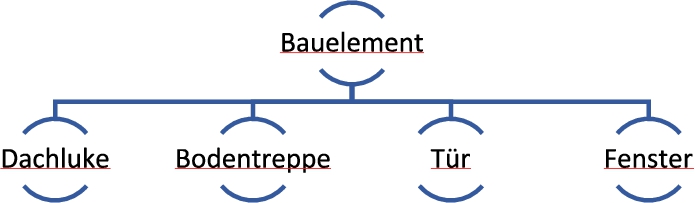
Concept map based on German corpus.
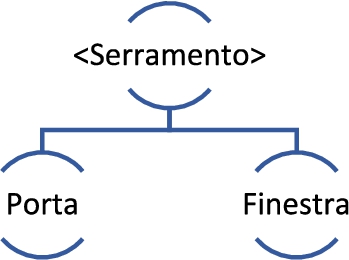
Concept map based on Italian corpus.
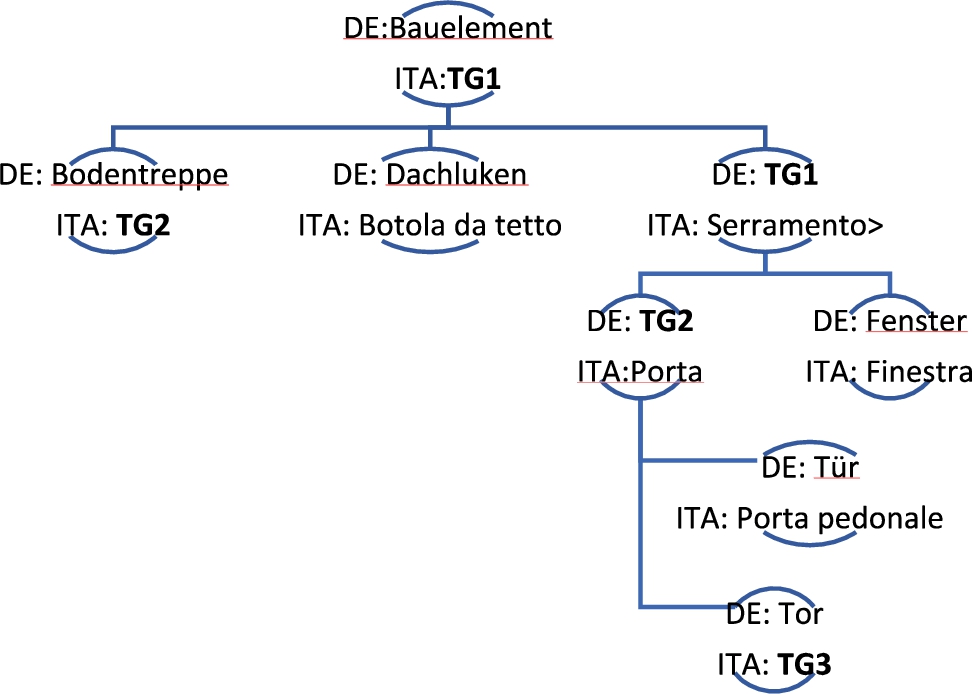
Merging of concept maps.
By extending the conceptual representation and explicitly mentioning the absence of a German designation for serramento the concept system acknowledges the gap and clarifies the distinction between the languages. This approach offers a more accurate representation of the concept system while accommodating differences between the conceptualizations of the source and target languages.
In this case the best way of dealing with TGs during translation is having access to a conceptual representation and in particular to the levels above and below a gap. If translators encounter serramento either the hyponyms or the hyperonym can be used. There might be cases when both are used if the sentence requires strategies of both specification and generalization. From a translation perspective, the strategies to bridge the gap of serramento in a German specialized text can be specificity or generalization, depending on the context. If the context reveals which of the two individual products is referenced, specificity can be chosen (1) increasing the meaning. Otherwise, the concept can be generalized (2) when meaning is not lost due to the previously mentioned contextual information. Generalization can create issues of overlap, for example when the terms elemento architettonico and serramento appear in the same source sentence (3), and these can be excluded when additional information would be redundant and superfluous for one of the two hyponyms (4). The interplay between moving from specific to generic and then back from generic to specific strongly implies that there is a shared reference between the two designations when embedded in a large unit of analysis like a text.
Installatore di serramenti.
Monteur von Fenstern und Türen.
(Installer of windows and doors)
L‘installatore deve assicurarsi che i serramenti siano montati correttamente.
Der Monteur muss dafür sorgen, dass die Bauelemente fachgerecht montiert werden.
(The installer must ensure that the windows and doors are fitted correctly)
Elementi coordinati funzionalmente con il serramento.
Bauelemente, die mit der Funktion der Fenster und Türen verbunden sind.
(Elements that are functionally coordinated with the windows and doors)
Serramenti esterni con specifica esclusione dei lucernari.
Fenster und Außentüren, mit Ausnahme von Dachfenstern.
(Windows and exterior doors, with the exeption of roof windows)
The lack of a term for a specific object in a language may also lead to increased repetitions in the target text, which according to Rogers (2007) is a natural effect of the chain of lexical cohesion that characterizes specialized language, together with the use of hyponym-hyperonym and hyperonym-hyponym shifts and functional synonymy discussed in Section 8. Lexical chains can only function with longer extenstions of text in translation, and larger areas conceptual representation in terminology. They are not to be analyzed on the basis of single terms and linear equivalences but instead semantic relationships made explicit through the comparison of language specific ontologies. This is helpful when choosing a word sequence that ensures cohesiveness of a translated text.
The case of porta and Tür
Conceptual representation assists understanding not just of what a concept represents, but also what it does not represent. Interlinguistic comparison allows conceptual discrepancies to be rendered visible.
When observing more specific levels of representation, like porta pedonale (pedestrian door), it is observed that the German corpus provides no explicit results for a “pedestrian” characteristic referred to any opening of a building. So why does the Italian system need the explicit term porta pedonale as a door type? Italian renders explicit the difference between Tür and Tor (hence between pedonale (pedestrian) and carrabile (driveway) with multi word term, resulting in a “non-convergence” between what lexical sources usually consider an equivalence (Tür = porta) (Langenscheidt, Pons, Sansoni consulted online). Unlike porta pedonale, the term porta carrabile is not considered a specific term because it never occurs in the specialized corpus. It can be considered a non-standard explanation, it is understandable but not used. Contrary to what the above-mentioned online lexicographic sources suggest, translating Tor with portone (large door) is imprecise because of the absence of the distinctive feature of Tor (the fact that vehicles can pass through it) that differentiate it from its counterpart Tür in the conceptualization. So of course the size of a portone may imply that a car can pass through it but in reality portone is a generalization that does not necessarily indicate a vehicular passage, being distinctive only for size and not for function. Porta appears to be a much broader concept than Tür. Tür refers specifically to pedestrian doors, porta encompasses doors for both people and vehicles. When faced with such distinctions, it is necessary to introduce additional levels or categories, while merging the alinguistic concept systems to capture variations and ensure accurate convergence with respect to the lexicographic equivalence as normally accepted in general use. Based on the distinctive properties of the included concepts (i.e.: Tür HAS_function: /letting people through/ while porta HAS_function: /letting people and vehicles through/) the two maps are merged (Fig. 4). This naturally leads to the identification of numerous gaps when one language lacks proper designations for lower levels or even entire categories, like for example, porta industrial (industrial door). Addressing these gaps during translation requires careful consideration and awareness, when the conceptual system can be of help, together with the application of appropriate translation strategies.
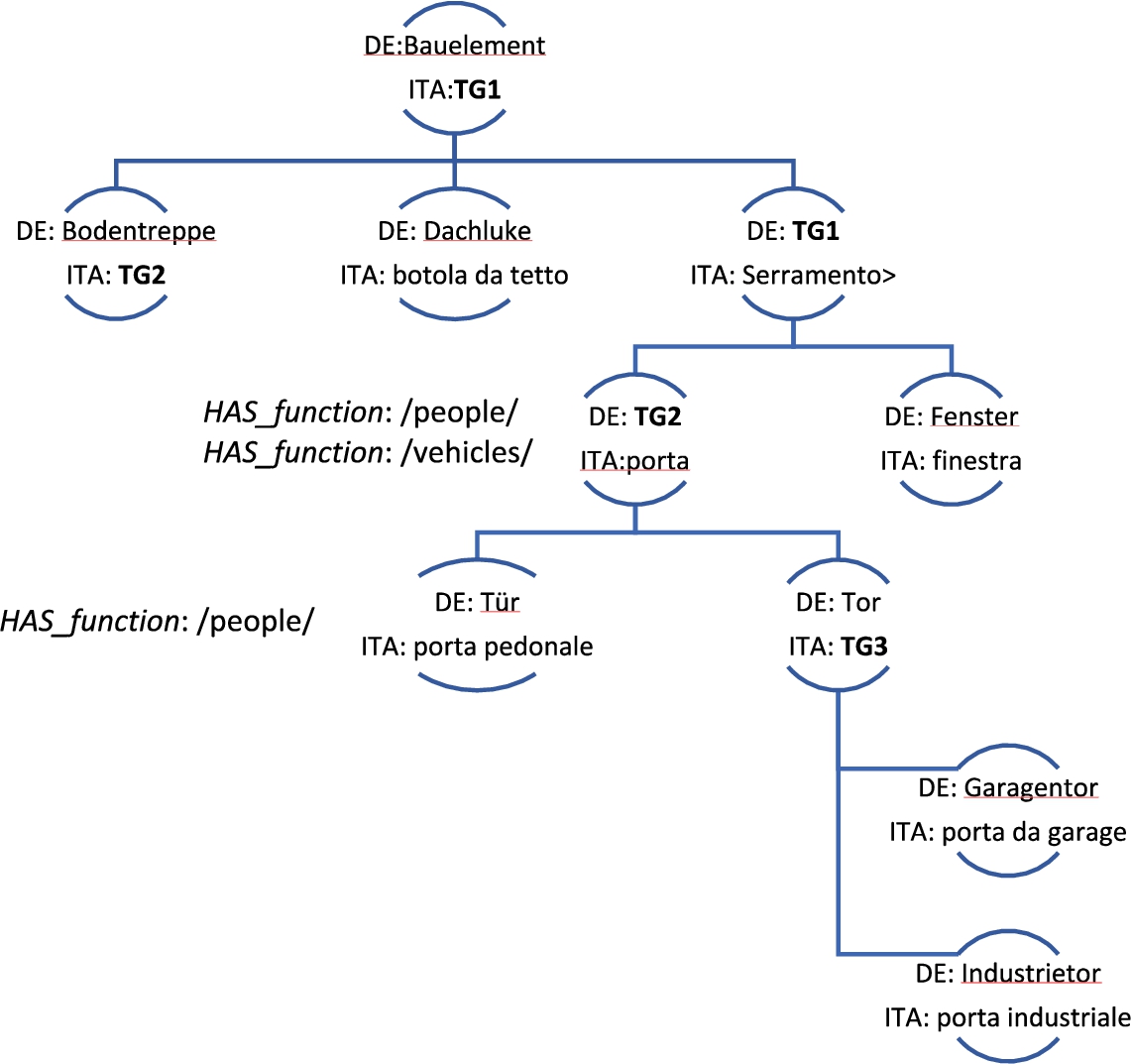
Merging of concept maps.
The example of porta pedonale already made it clear that a semantic frame explicated by an Italian lexical entry might not be represented under any label in the German corpus, suggesting that further investigation of the conceptual reference of door might be necessary in each case. Furthermore, the fact that the pedestrian property is explicit and clear already at linguistic level might create a discrepancy in the perception of the terms porta pedonale/Tür even if there is 100% convergence on a conceptual level. This is discussed further in Section 7.
As already noted, when a gap is at a high level in the concept system, this has repercussion on all underlying levels, and the translation strategy must be extendable to the more specific layers. In the case of door and pedestrian door only one functional property is missing in the other language, the possibility or not of vehicles passing through the opening in the structure. However, the chosen corpus and respective translations involve technical details in which a high degree of terminological precision is expected, so different types of porte must report both Tür and Tor in the target German text, resulting once again in longer terms and more transparency (5, 8). The other way round, when the feature /pedonali/ is included in the source text, conceptual convergence is guaranteed through the term Tür, although a perception of generalization is implied (6, 7).
Porte industriali, commerciali e da garage, limitatamente alle prestazioni dei giunti di installazione correlate alle prestazioni del prodotto dichiarate dal fabbricante.
Industrie-, Gewerbe- und Garagentüren und –toren, ausschließlich in Bezug auf die Leistung der Bauanschlüsse und die vom Hersteller erklärten Leistungen des Bauelements.
(Industrial, commercial and garage doors, exclusively in relation to the performance of the building joints and of the building element declared by the manufacturer)
Porte interne pedonali, limitatamente alle prestazioni dei giunti di installazione correlate alle prestazioni del prodotto dichiarate dal fabbricante.
Innentüren, ausschließlich in Bezug auf die Leistungen der Bauanschlüsse und auf die vom Hersteller erklärten Leistungen des Bauelements.
(Interior pedestrian doors, exclusively related to the performance of the building joints and of the building element declared by the manufacturer)
Finestre e porte esterne pedonali senza caratteristiche di resistenza al fuoco e/o di tenuta al fumo.
Fenster und Außentüren ohne Brandschutz- und Rauchschutzleistungen.
(Windows and external pedestrian doors without fire resistance and/or smoke tightness characteristics)
Serramenti esterni con specifica esclusione dei lucernari con e senza prestazioni di resistenza al fuoco dall‘esterno. Fenster und Außentüren, mit Ausnahme von Dachfenstern mit oder ohne Brandschutz vom Außen. (Windows and external doors with specific exception of roof windows with and without fire resistance performance from outside)
The case of mechanical joints
Multilingual conceptual representation in a subdomain like mechanical joints for the installation of doors and windows turned out to be of such complexity that it led to rethinking and adaptation of the approach for assessing terminological gaps. Overlapping categories and conceptual holes exponentially increased the number of terminological gaps within the system because mechanical joints are classified differently in the German and Italian language systems (Fig. 5 and 6). The concept of Bolzen (bolt) can include a head like a screw, or it can be headless like a pin, while in contrast the head feature is basic for distinguishing between a vite (screw) and a perno (pin) in the Italian system.
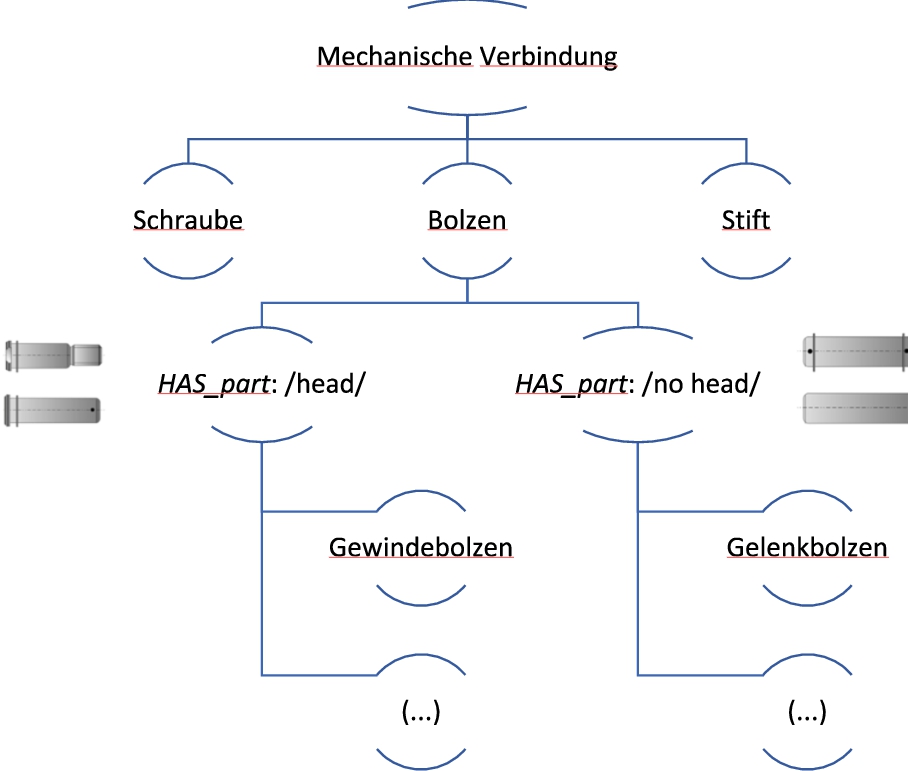
German taxonomy.
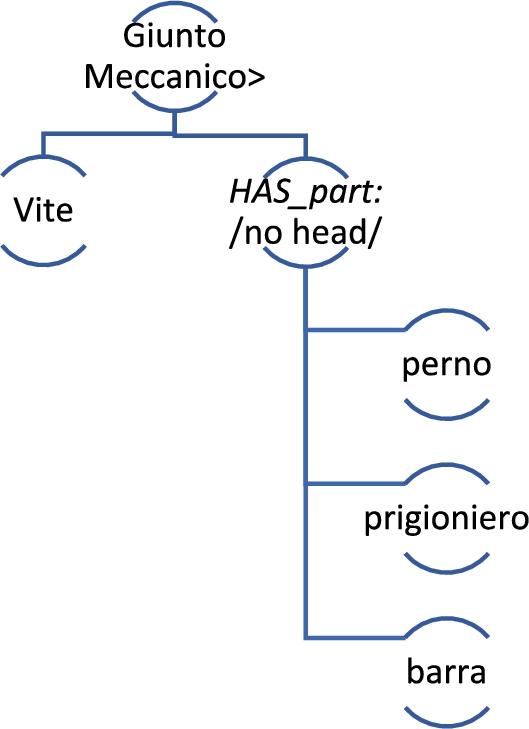
Italian taxonomy.
To simplify the reasoning, the term perno has been chosen to represent the category /no head/ due to the predominance of products named this way. However a much more complex scenario would arise if the intrinsic properties of prigioniero and barra were also taken into account. For the distinction of Schraube (screw), Stift (pin), and Bolzen (bolt) relative to vite and perno, it is almost impossible to build a comprehensive non language-specific concept map without adding too many levels, sometimes empty levels, in order to account for all the different features. A more straightforward representation for this level of taxonomy would be a Venn diagram showing the set intersections of Bolzen with the screw and pin sets, in which both language taxonomies are represented, thanks to the possibility of category intersections. The Venn diagram (Fig. 7) does not assert the existence of elements nor express disjunctive information, enabling the intersection of the German language Bolzen set with an empty set for the Italian language.
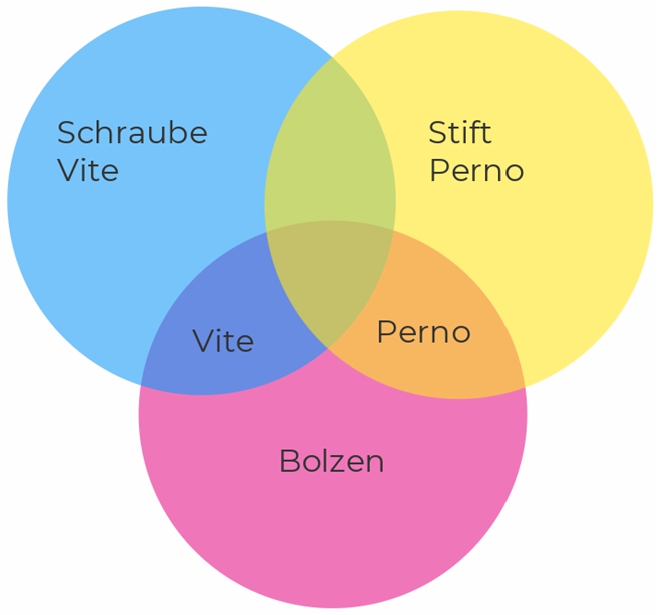
Venn diagram for accounting for German and Italian taxonomies.
So far only the presence or otherwise of a head was taken into account for conceptual representation (Fig. 7 and 8), but other properties of mechanical joints are also relevant, like looseness of fitting, and the different functions of mechanical joints (Table 1). Including these discrepancies would generate a multiplicity of layers.
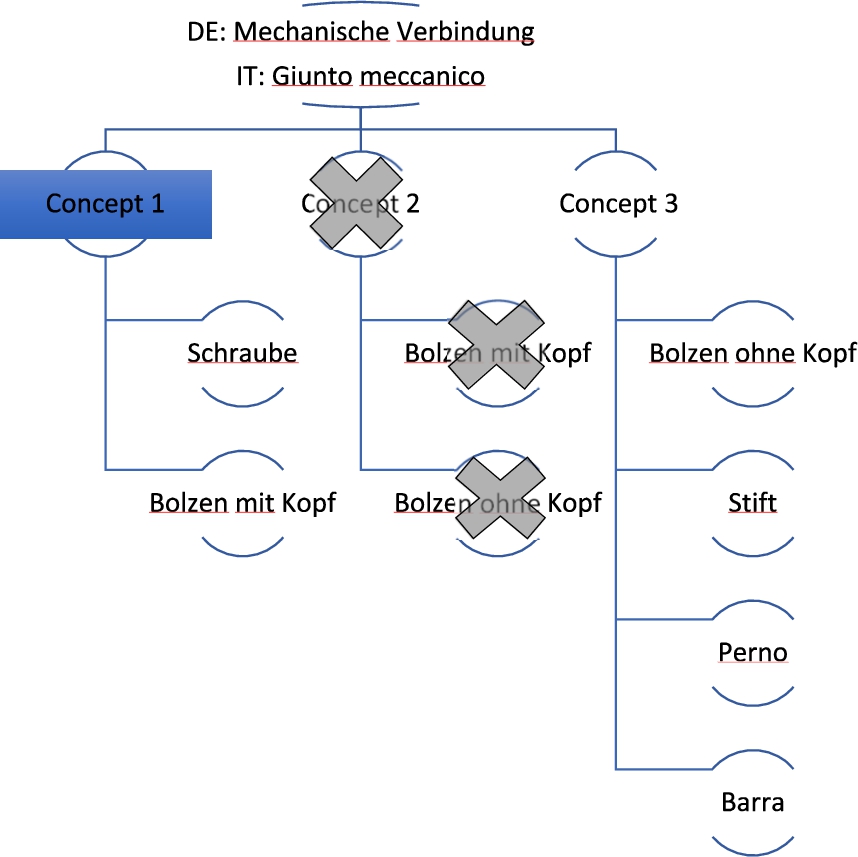
Merging taxonomies according to the property HAS_part: /head/.
Concept differentiations according to other properties rather than HAS_part:/head/
This without even trying to produce a conceptual representation that includes all the numerous compounds of the word Bolzen, which often involve is_a relations as types of Bolzen. Given the established complexity on a general level, a snowball effect down to all subordinate levels can be expected. When translating a term like Bolzendurchmesser (bolt diameter) it is first necessary to identify which box the word Bolzen belongs to, while investigating the different properties taken into account in Table 1, along with any others. Depending on the presence or absence of properties, an equivalence might be diametro della vite (screw diameter), diametro del perno (pin diameter), or both (Table 2). The same needs to be done for terms like Bolzendübel, Bolzenführung, Bolzengewinde, Bolzenriegel, Bolzenschwießen, and Bolzensicherung.
Possible translation of Bolzendurchmesser according to single properties
In this case, conceptual representations are unable to satisfy all requirements for a universal or alinguistic representation of the knowledge of such a specific sector. The limits of this kind of approach start to become evident, and these will be rendered explicit in Section 6.
It might be worth mentioning briefly why the term bullone does not appear in any conceptualization so far and why the expected equivalence proposed by any lexicographic source Bolzen=Bullone, which would facilitate the process of building an alinguistic ontology, is not taken into account. According to the adopted corpus of normative texts, a bullone is the combination of two elements forming a mechanical joint, a vite and a dado. This is confirmed by the Italian Treccani encyclopedia: “A bullone (from French boulon) is an assemblable joining element composed of two mechanical parts, a male element (vite) and female element (dado)” (my translation). An image is provided, which is always helpful from a terminological perspective. Even more specialized contexts, such as European regulations on bulloni as structural joints, confirm this. Once again, an image is provided.
From a translation perspective, there appears to be a terminological gap in the German language for the concept of a metal threaded stem element with hexagonal head together with a corresponding hexagon nut that can be paired together to form a mechanical joint. The German version of the European regulation on bulloni does not use the term Bolzen proposed in any Italian-German bilingual dictionary, nor does it resort on a long description or circumlocution. Translation strategies similar to those proposed for serramenti are applied, with explicitation of the parts such as Garnituren aus Sechskantschrauben und -muttern (assembly of hexagon screw and nut), or use of a generic hypernym with specification of the composition such as Mechanische Verbindung (mechanical joint) whenever the context is clear.
Limits of conceptual representation
Ontologies are valuable tools for organizing terminology based on semantic and conceptual relationships. However, the idea of integrating different concept systems in order to build a knowledge representation that is as comprehensive as possible and not related to any language in particular, is an ambitious objective that encounters major difficulties when different language system do not “think” in the same way in terms of classification and taxonomy. When multiple layers are superimposed over each other, clarity is lost and conceptual systems are no longer useful for resolving terminological gaps during translation. This was partially the case for the taxonomy of windows and doors, and very evident in the taxonomy of mechanical joints.
Although infrequent in the domain in question, specialized communication is not immune from cultural TGs (Stolze, 2009). This class of conceptual TGs have not been discussed much above, but for the sake of completeness the case of controtelaio/Montagezarge (mounting frame) is worth mentioning briefly (Resi, 2022 for other purposes). In this case comparable terms cannot be considered equivalent because although the object they designate is the same, the underlying concept is culturally different. Ontological representation might show where the object is collocated relative to other concepts, but in-depth knowledge of the history of this sector is still required to spot the gap between the languages. In fact differences lie not so much in the form, material, and properties of the object, but rather the purpose for which the item was and has been used.
Another issue is that concept-based ontologies tend not to take lexical aspects into account, resulting in a lack of correspondence between word organization according to ontological categories and relationships when conceptual TGs are evident, and word organization according to linguistic aspects when linguistic TGs are evident. In other words, the meaning of the lexicon is not represented.
In the ontologies presented so far, terms are considered labels that refer to concepts based on a semantic referential approach. The idea of a universal ontology based on a multilingual approach is in a sense contradictory. If the existence of concepts is inherently linked to the language systems in which they are developed and used, it is necessary to extend the ontology, and therefore its universality, to a linguistic level. Ontologies for translation purposes should be integrated with a model capable of showing the linguistic dimensions of terms in natural language, not just their conceptual dimensions. Sometimes what is perceived from the use of one label can be influenced by explicit information carried by specific linguistic features within the term itself.
In order to overcome this deficiency in representing the lexical aspect of items, an effort was made to assess the linguistic level of the terms used in mechanical joints with the help of frames. Frames refer to the mental structures that shape our understanding of concepts and associated relationships (Lakoff, 2004). By comparing how frames transfer between languages and relative terms, it is possible to identify differences in how terms in one language are perceived differently from potential equivalents in another language. Understanding these frame variations is crucial for effectively addressing TGs linguistically, especially from a translational perspective.
Linguistic level TGs were previously mentioned when discussing pedestrian doors. The frame evoked by the word pedestrian as a hyponym in the Italian conceptual map revealed a difference compared to the German system, while also increasing the precision of reference, making porta pedonale appear more precise than Tür, even though they share the same reference. What a label or code explicitly indicates appears to play a role in transferring specialized communication, and discrepancies in the tools a language uses for referencing specific concepts can also be considered as terminological gaps, this time on a language rather than conceptual level.
Linguistic level TGs
At this point it is useful to define linguistic level TGs for the purposes of the present study. With reference to monolingual terminology, a linguistic level TG is a lack of lexicalization of a specific and known concept in a given language. This means that the concept exists in a specific language environment but without having a standardized reference label. If terminology is considered contrastively and therefore relevant to translation and the purposes of this study, then linguistic level TGs also refer to discrepancies between terms in two different languages that share referential objects but evoke different nuances on at perception level. The latter definition clearly only applies for a contrastive perspective.
In order to describe linguistic level TGs, it is worth evoking the idea of functional names defined in Barsalou (1992). Functional names are labels/terms that aim to create mental images of reference objects in a reader’s mind. Instead of using descriptive or generic terms, functional names directly indicate the primary function or role of the item referenced. In other words, functional names are built with morphemes or word units that evoke a frame directly linked to the purpose or utility of the object. According to Barsalou (1992), functional names are nouns that carry the meaning of a functional concept, when functional concepts are attributes that assign values to their arguments, making them cognitive structures of representation, implemented ultimately as neuronal structures of the brain. Functional names, rather than non-evocative terms, help to streamline communication and facilitate understanding among professionals in particular fields or industries and this terminological impact should not be overlooked when translating scientific texts. Proper functional names are not always present in specialized communication and they are not exclusively the focus of analysis here but the idea of evoking a relevant property of the reference object through the language tools used for designation forms the underlying idea of linguistic level TGs.
Some language are more suited to functional terms than others because they possess versatile linguistic mechanisms for composition, affixation, and process derivation. Right headed languages are generally more adept for functionality than left headed languages because of their compactness and transparency when building composite words. An example of this is the term Dachfenster, which clearly identifies the location of a window on the roof of a building. The Italian equivalent, Lucernario (light+suffix), does not indicate any specific and distinctive property of this class of window, but rather the idea that it serves to illuminate a room, effectively the same as any other window. If the specific position of such a window has to be made more explicit, the less common variant, finestra da tetto (roof window), is used or the information is provided somewhere else in the text.
In the first study dataset for Theoriesprache, 12 German TGs and 134 Italian TGs were identified. German terms for mechanical joints tend to be much more functional and therefore evocative of relevant frames than Italian terms, probably due to the intrinsic disposition of the German language for building composites compared to the Italian language with its corresponding left headed multiword expressions. Moreover, through the analysis of a wider and more differentiated corpus, it became evident that since terms do not always express functional concepts, term variations in the sense of Freixa (2006) are sometimes created to satisfy the need to enhance one conceptual frame over another in a given textual environment. By adopting a certain term variation rather than another, a particular frame can be activated in the minds of readers, guiding their interpretation and filling in the relevant details of the conceptual structure. This enables for more efficient communication and comprehension, since the frame provides a mental framework for organizing and interpreting the incoming information.
Detecting and managing linguistic level TGs with frames
Since the ontological representation of mechanical joints failed to achieve a universal conceptualization when a certain threshold of specificity was reached, a representation based on term evoked frames for the taxonomy of mechanical joints for installing doors and windows was attempted. Based on an intuition that functionality is more strongly represented in German terms within this domain than in the equivalent Italian specialized language, the search for linguistic level TGs started by representing German terms and then extended to Italian terms. A classification of mechanical joints was defined according to the meanings evoked by the labels and based on the various frames related to single terms.
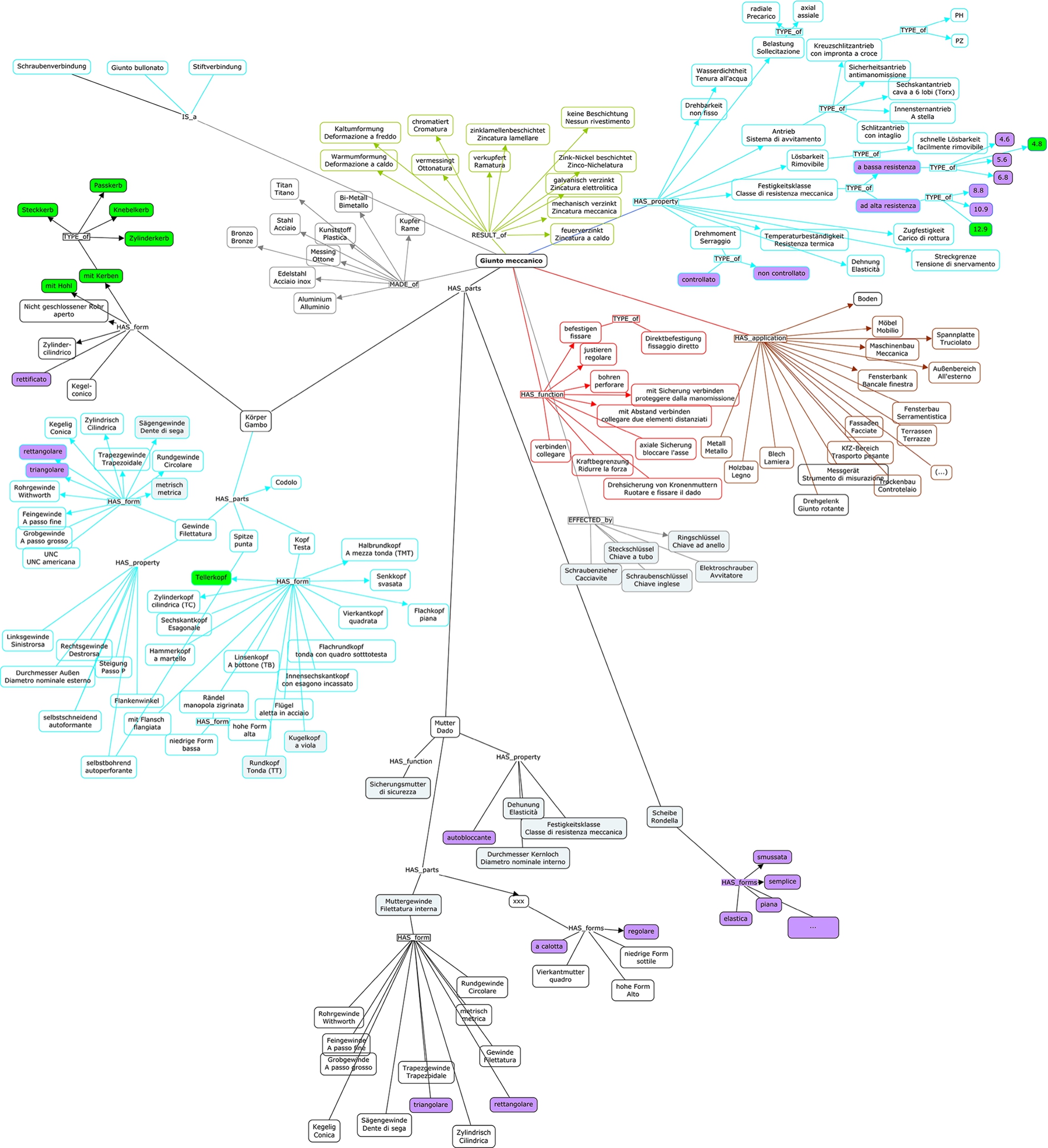
Ontology of mechanical joints based on frames at linguistic level. Full boxes refers to frames missing either in German or Italian designations.
When the details of the diagram are zoomed out, it can be seen that different linguistic frames (form, function, effects, material, and so) have all been represented. Whenever one of the two languages does not explicitly label a frame within the term, a linguistic level terminological gap is highlighted with a different color. For example, it was found that the German corpus did not include any term for a mechanical joint that explicated a rectangular or triangular thread shape. Moreover, the Italian corpus does not differentiate a mechanical joint functionally named to indicate a Teller-shaped head. This does not mean that the Italian language cannot indicate the concept of Tellerkopfschraube (disc head screw), but simply that the “head shape” property is not included in any Italian naming.
Another indication that this is not a conceptual representation are the term variations within this domain. Mechanical joints are referred to in different ways according to features a speaker wants to highlight in a given text. A product that is good for installing windows might be labeled as a Fensterschraube (/window screw/) even though this term could refer to the same object as Vollgewindeschraube (/full thread screw/), Kunststoffschraube (/plastic screw/), Fensterrahmenschraube (/window frame screw/), or Direktbefestigungsschraube (/direct mounting screw/).
There are five lexical designations in German that can refer to a single concept, clearly indicating an absence of one-to-one term-concept (Eindeutigkeit according to Wüster (1985)) and proliferation of term variation along the vertical stratification of this domain. The variation in choice of terms appears to be functionally motivated by nature of the support to which the mechanical joint is to be fixed (Fensterschraube, Fensterrahmenschraube, and Kunststoffschraube, by the thread characteristics (Vollgewindeschraube or by the function of the product (Direktbefestigungsschraube). This establishes a cohesively linked network of complex lexical variations within the Verteilersprache and expressed mainly in specialized magazines. In the normative corpus the cohesive links are guaranteed through coherence with the standardized term Direktbefestigungsschraube. Moreover, in the normative corpus this term does not appear to be an exact synonym for Fensterschraube, which is instead a subordinate term that includes Direktbefestigungschraube but no other explicit terms and it is thus used interchangeably in less formal contexts. Vollgewindeschraube, Fensterrahmenschraube and Kunststoffschraube remain synonymic terms for contexts in which more explicit information is called for through namings.
The range of Italian terms is generally less varied than German in this domain with the result that linguistic level TGs are much more frequent in the German-to-Italian direction. This is also probably due to the fact that functional names are less easy to construct in a left-headed language.
Figure 9 clearly shows that labels contained in different boxes may refer to the same referential object. This could be confusing when approaching terminology onomasiologically but it helps to highlight how differently languages transfer information with the use of different signs. Rather than relying solely on background knowledge or contextual cues, the significance of explicit linguistic expressions is acknowledged for signaling and establishing explicit frames. Choice of words can contribute to invoking specific frames and influencing how a concept is understood. In contrast to Rogers’s assumption (2007) the problem of interdeterminacy in translation is not limited to cases when an object forming the subject of a particular text is concrete. Correlation is not constant and differences in perception can arise even if the referential object remains the same within a text.
Ontological and frame-based representations are both propitious to help detect the full range of TGs, and since they target different purposes, both approaches should be used for filling those gaps in translation.
The proposed frame-based representation shows that explicit frames do not have the same value in translation, or when looking for convergence of frames evoked implicitly by terms. Translation reveals that, even when there is conceptual convergence, there can be linguistic features that change the perception of concepts by German and Italian readers in response to their respective designations. These connotative aspects affecting TGs were not identified during terminological work, but became evident during translation.
Although some designations in German and Italian appear to refer to convergent conceptual units sharing all distinctive features, the way the two language systems build and choose designations can lead to different perceptions of concepts. Terms have linguistic components that have to be taken into account during translating.
An attempt was made to analyze linguistic level TGs on the bases of compounds, which, as already mentioned, presents a huge contrast between the German and Italian language systems. Three examples are set out below in which the Italian language provides a clear designation for a matching conceptual unit, but the information transferred superficially by the term differs. German compounds in this domain generally display a high degree of semantic transparency, which is characteristic of all functional names. The question arises as to whether the designated equivalence is capable of transferring the same degree of specification in the target language.
The case of the Direktbefestigunsgschraube
Returning to the example of Direktbefestigungsschraube, which converges with Turbovite in Italian, it is evident that while both designations share common ground because the reference object is identical, on a linguistic level they differ significantly. The German Direktbefestigungsschraube explicates two screw-related frames, while the Italian term is somewhat confusing because the word Turbo conveys meaning extraneous to the conceptual dimension. In other words, a designation activates the full conceptual dimension in an expert’s mind, foregrounding the frames rendered most explicit in the designation, and always for a reason. The implicit reason must be taken into account during translation, which cannot just involve transfer of the conceptual dimension.
A assessment was made of how frames might help deal with such terminological gaps from a translation perspective. An effort was made to implement translation strategies focused on the transfer of explicit frames, in order to minimize translation losses.
Conceptual and linguistic frames of Direkbefestigungsschraube and Turbovite.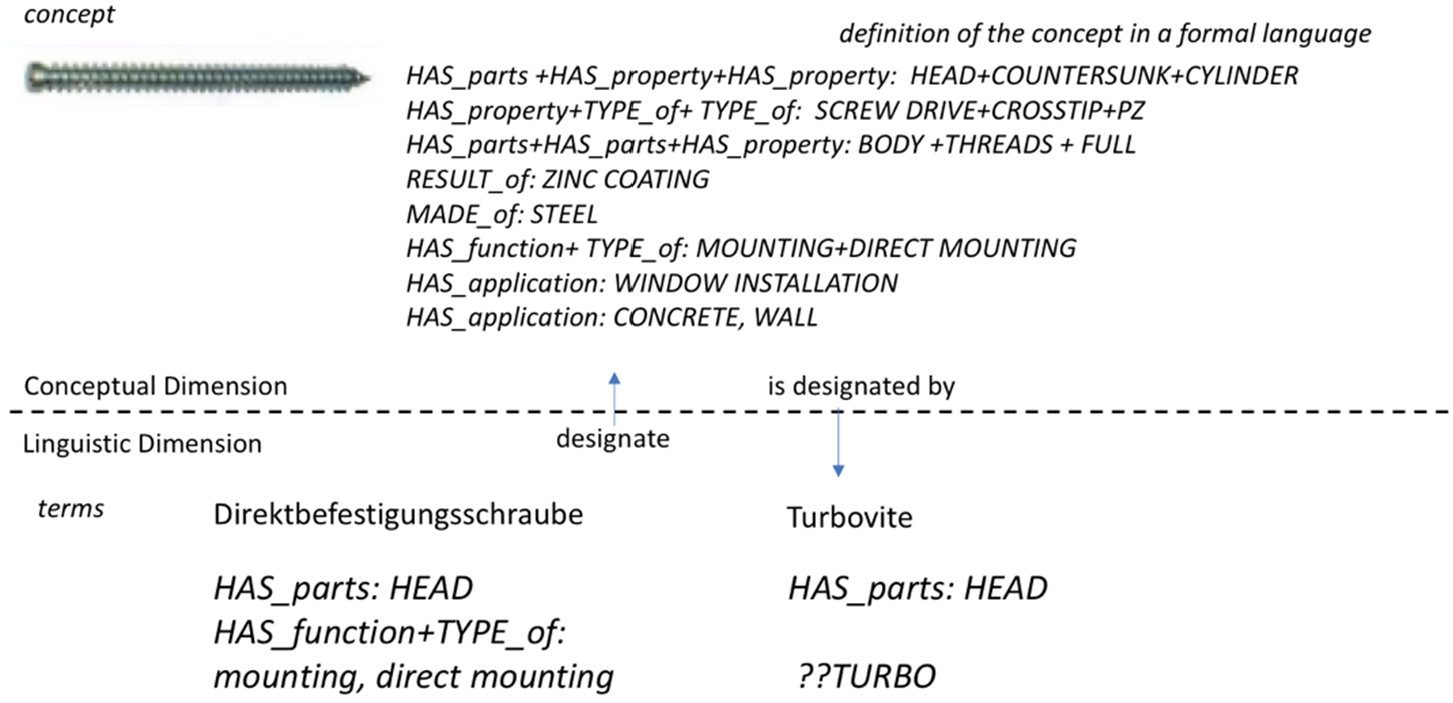
The German term Direktbefestigungsschraube invokes two explicit frames (/screw/ and /direct attachment/). The term explicitly conveys the screw frame with the word Schraube, indicating that it refers to a specific type of fastening element. The term Direktbefestigung implies that the screw is used for direct attachment, suggesting a specific installation method or purpose. The Italian term Turbovite invokes two frames too (/turbo/ and /vite/). The turbo element is commonly associated with the concept of a turbocharger in the automotive field. This frame relates to an entirely different conceptual dimension and may not accurately convey the intended meaning of the term in the given context. The term turbo is also often used in Italian colloquially to refer to something fast or efficient, which further adds to the potential confusion. Turbo does not very explicitly reference the frames related to the specific object or concept, like screw or fastening element. In this case, the challenge in translation is significant because there is terminological convergence and it is not possible to look for a more appropriate term that accurately captures the intended meaning and conveys the relevant frames. One strategy that translators can adopt is to consider a wider unit of analysis and then incorporate the intended frame somewhere else within the text in order to maintain consistency across languages. This is not possible when translating isolated terms like table headers (Fig. 11) but can be applicable in larger unit of analysis.
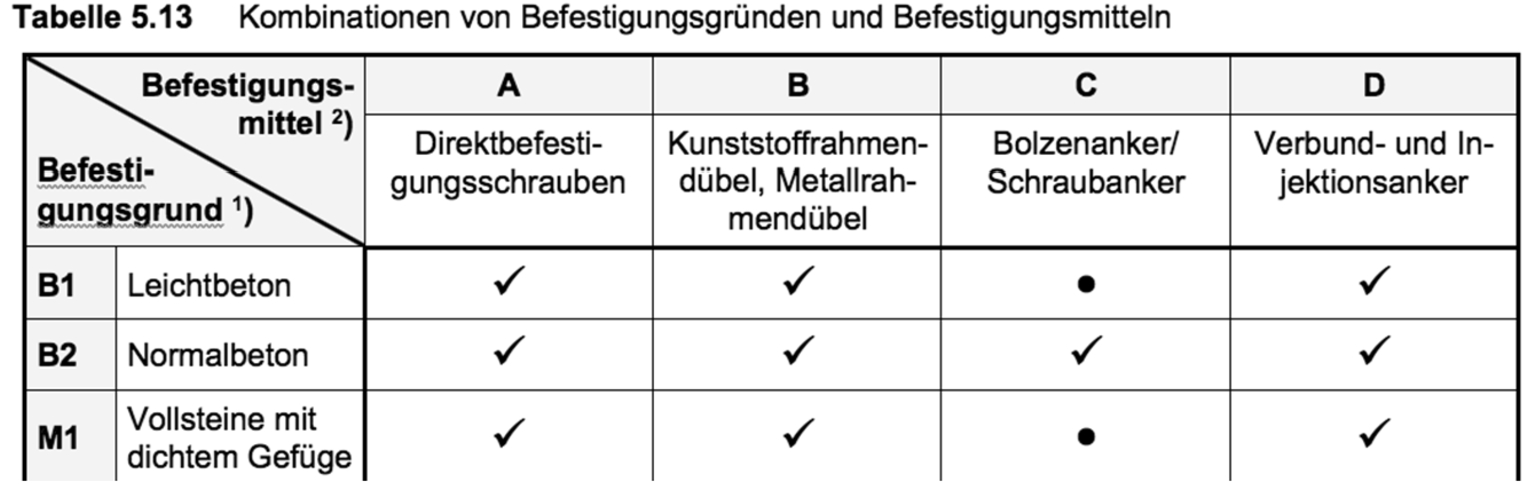
Example from the corpus.
When a term is in a phrasal context, translators need to identify the frame of the mounting device explicitly referenced in the source text and introduce it into a relevant paragraph of the target language. In the first paragraph of exemple (9) the target text fails to create a relationship between the type of product (turbovite) and the associated function (fissaggio diretto) and so the following paragraph recovers this information with additional elements (in bold). The more transparent the source term, the more explicit the target text needs to be after expressing the equivalent on a conceptual level. When the text is referring to direct mounting, the reference to the screw is clear in German but not in Italian due to the absence of this explicit frame within the term. Translators therefore need to add the missing frames into the paragraph in order to achieve a full translation on the conceptual and linguistic levels.
Setzen Sie es in die Zarge ein und befestigen Sie (/HAS_function/) es mit (…) Bei (…) Auch wichtig ist bei hohen Lasten, sprich der Montage schwerer Fenster, dass die Blendrahmen bandseitig fachgerecht verklotzt werden – und zwar auch dann, wenn Posizionare l’elemento nell’alloggiamento e fissarlo (/HAS_function/) con una turbovite (/IS_A product/) adatta a sostituire la funzione degli spessori di trasferimento carico e dei distanziali (almeno 35 mm di profondità e 25 mm di distanza dal bordo. (…) In caso di fissaggio diretto (…) Nel caso di carichi elevati, cioè nell’installazione di finestre molto pesanti, è fondamentale trasferire il carico con spessori sul lato cerniera anche quando è previsto (Insert it into the frame and fasten it with (GER) (…) With (GER) (…) It is also important for high loads, i.e. the installation of heavy windows, that the frames are professionally blocked on the hinge side – even (GER) if Conceptual and language frames of vorkomprimiertes Dichtungsband and nastro autoespandente.
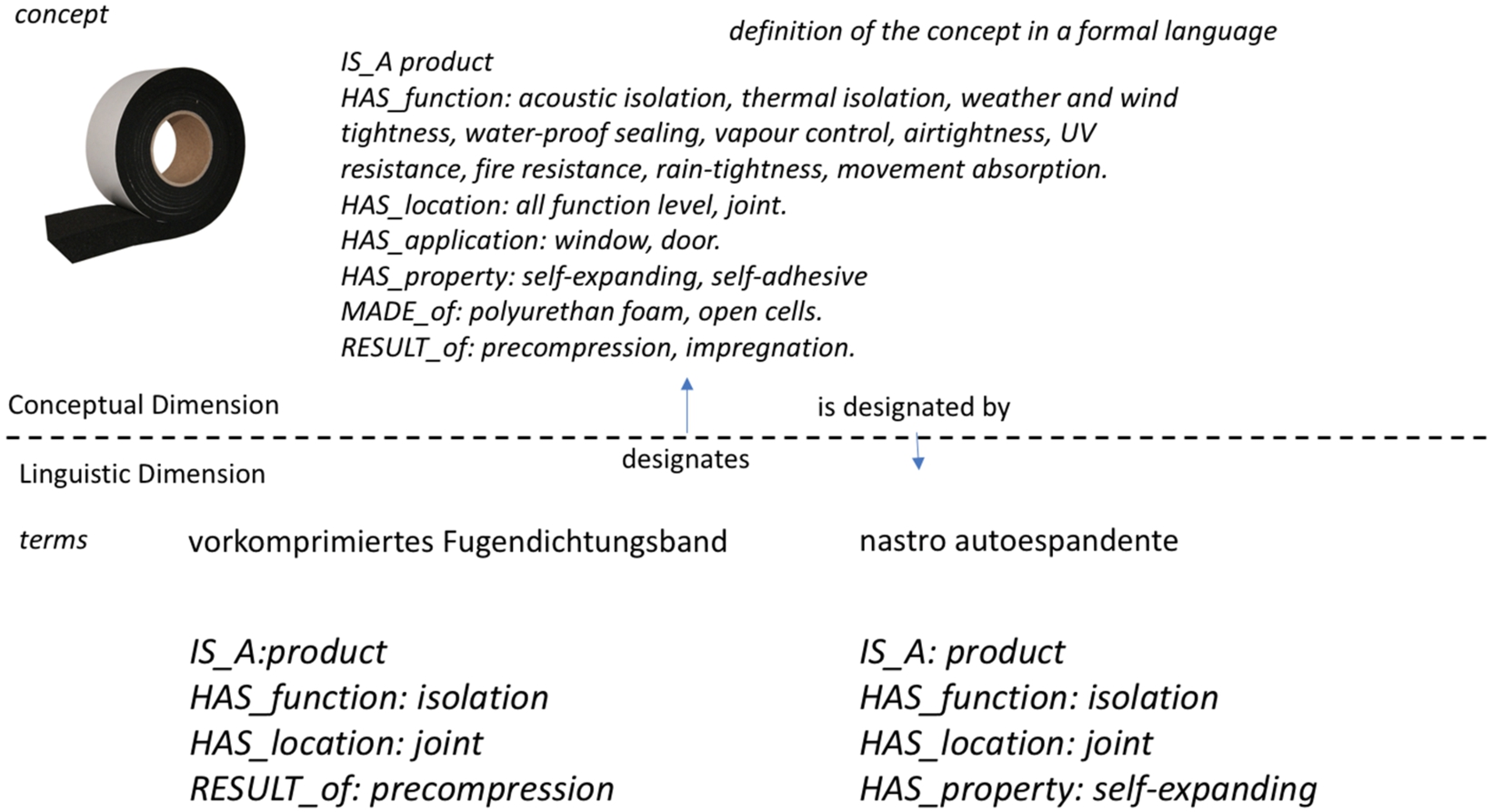
The German term vorkomprimiertes Fugendichtungsband (precompressed joint sealing tape) and the Italian term nastro autoespandente (self-expanding tape) convey different explicit frames at sign level. The adjectival component of the German term explicitly refers to the sealing tape being pre-compressed, suggesting that it has a specific state or condition before application. The term Fugendichtungsband indicates that the tape is specifically designed for sealing joints or gaps. The Italian term includes autoespandente which conveys that the tape expands or swells on its own when applied. The word nastro simply refers to a tape-like material. So once again the explicit frames at the sign level differ between the two terms. The German term focuses on the pre-compressed nature of the sealing tape and its function for sealing joints, while the Italian term highlights its self-expanding characteristic and general identity as tape.
When translating, it is important to consider all intended frames, first selecting an appropriate convergent term on a conceptual level, and then adding any ad hoc information required to fill gaps as required. Segment level reformulation in order to include missing terminological frames can be considered as a strategy (10).
I
(Self-expanding tapes are normally supplied in pre-compressed form)
Die
(The pre-compressed joint sealing tapes open themselves after insertion into the joint)
The process of transferring conceptual and semantic information made explicit by frames cannot be achieved entirely on a terminological level, and it requires zooming out to a larger textual unit, once again validating Gautier’s idea (2022) that more extensive units, like segments or patterns, are much more appropriate in terminological analysis for purpose of translation, rather than individual terms.
The case of Flachkopf-Innensechskantschraube
Even when matching terms in both languages explicitly reference the same frames, there can be a difference in the usage. AN example is Flachkopf-Innensechskantschraube and its counterpart vite a teta svasata piana con cava esagonale. The term in the Italian language is not obviously unitary and could become ambiguous when embedded within a longer text. Comparison with a third text corpus clarified that such extended explicit terms are mostly used in isolation within graphics, tables, or only occur once as an initial reference, subsequently being substituted with a vite hyperonym in the following text when they refer to the same item but without such explicit reference.
Die definierten Anzugsdrehmomente von
(…)
(…)
Il serraggio delle
(…)
Serrare le
(…)
Serrare le
(The defined tightening torques for
(…)
(GER)
(…)
(GER)
Two points can be noted about this example. The first is the phenomenon of clipping of compound terms (Mattiello, 2008; Nkwenti-Azeh, 1994). Repeated use of the full Italian term embedded in a text could be disorientating for readers, who might assume they are being given new information. Repeating an Italian term fully specified at the beginning of a text and then every time it is referenced would be considered over specification. The second point is that languages in general are inclined towards economy, although this is sometimes mitigated by the need for terminological precision in certain text genres. How far clipping can go while maintaining a balance between economy and precision is an issue to be resolved by the expertise of translators, but the units of analysis will certainly go beyond simple terms and include longer textual elements.
The case of Brandschutztuer
The terms Brandschutztür (German) and porta tagliafuoco (Italian) both refer to a specific type of door used for fire protection. The explicit frames conveyed by these terms are set out in Fig. 13.
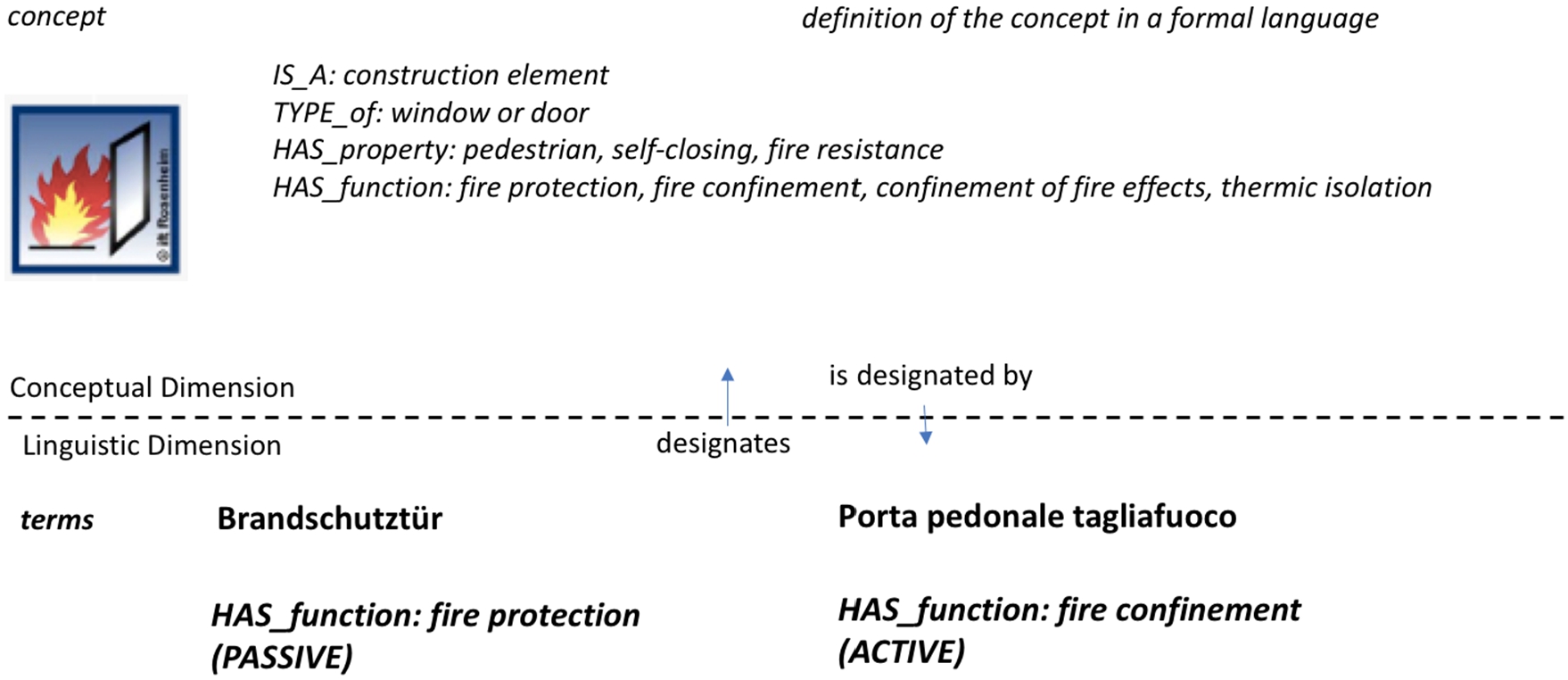
Conceptual and language frames of Brandschutztür and porta pedonale tagliafuoco.
The term Brandschutztür explicitly conveys the frame of fire protection. It suggests that the door is designed and built to withstand and prevent the spread of fire, providing a barrier to protect against flames and smoke. The Italian term Porta pedonale tagliafuoco explicitly conveys the frame of fire breaking or fire stopping. It suggests that the door is capable of cutting off or stopping the spread of fire, preventing its passage from one area to another. Since the simple word porta does include the pedestrian frame but without exclusivity, translators have to decide whether this information needs to be included or not. In some cases porta tagliafuoco (as hyperonym) can be used instead of porta pedonale tagliafuoco to avoid over specification or as a clipping strategy.
Both terms explicitly frame the concept of fire protection in their respective languages, emphasizing the door’s ability to prevent or control the spread of fire. However, the specific frames differ slightly. Brandschutztür highlights the protective aspect, while porta tagliafuoco emphasizes the ability to cut off or stop fire. When translating these terms, it is important to consider whether the explicit frames have to be transferred 1:1 to the target language, or if the meaning should be recovered or even highlighted within the rest of the text. In this example, a term variation in Italian might offer a solution. There is a slightly less standardized term belonging to the Verteilersprache that conveys the passive function of a door in relation to fire: porta antincendio (door against fire), reducing the semantic shift to a minimum since the active role of the door disappears.
If the idea that all languages have the capability to express anything in corresponding terms is accepted, there would be no such thing as a terminological gap. However, as seen in the examples above, this depends on the unit of analysis. By considering terms as units of analysis during translation and terminological work, a huge number of conceptual and linguistic level TGs are encountered. When the entire text is the unit of analysis, the first assumption might be true.
This study is far from being a comprehensive analysis of TGs in specialized communication in general and merely provides an overview of the most frequent TGs in the building industry domain, specifically the installation of doors and windows, which might be useful for TG analysis in other domains.
Ontological representation with an onomasiological approach is best suited to detecting conceptual TGs, but the limits of such an approach emerge when compared language systems display very different taxonomies, or when gaps are not single isolated cases but rather entire categories. When isolated conceptual TG gaps are detected, specification and generalization normally suffice to bridge the gap during translation. However, when a gap is found to project downwards into lower levels with a snowball effect, then a frame-based analysis of single conceptual units is required (as with the Bolzen compounds).
Frame-based analysis has proven useful for detecting and managing linguistic level TGs. The central idea is that linguistic expressions are not only vehicles for conveying concepts but also powerful triggers for activating and shaping specific conceptual properties, thereby influencing interpretation of the associated contexts by emphasizing one frame above others. At this point it might be concluded that virtually all terms fall into this category of TGs due to the different mechanisms implemented for conceptual expression in different languages. Nevertheless, the goal of specialized translation is to convey what a term conceptually means and connotatively evokes (now that the presumption of specialized areas of knowledge being culture and connotation-free zones of universal character has been largely discredited).
Failure to consider the explicit frames referenced by lexical items may lead to loss of specific sense in favor of a more generalized perceived meaning (Tür for porta pedonale), a semantic shift when the translated term bears a slightly different emphasis due to the inherent characteristics and cultural associations of the target language (Turbovite), a loss of efficiency (vite instead of vite a testa svasata piana), frame mismatch when a transferred property goes in a different direction (vorkomprimiertes and precompresso), or semantic adaptation when a less frequent variant is used to encompass the original frame (porta antincendio instead of porta tagliafuoco for Brandschutztür).
Terminology should aim at extending to larger unit of analysis than simply term in order to serve specialized translation in the difficult challenge of getting rid of the gaps between specialized languages. A larger unit of analysis has more possibility of overcoming interdeterminacy because the reader has more material to take into consideration and a larger picture with more details has more chances to be perceived in the same way as the source concept.
This study examined examples drawn from a corpus and database with the aim of demonstrating that frames can be used to link not only terms in different languages to the same specialized concept, but also terms with larger terminological units. This made it possible to account for both conceptual level TGs as well as connotative shifts that emerged from examination of surface frames, challenging traditional ideas of terminological equivalence.
Frames proved useful for detecting gaps and for assisting translation through consideration of larger analysis units. Translators are already accustomed to considering at least segments as basic analysis units. CAT tool interfaces generally implement text segmentation, and terminologists traditionally aim to identify term units even when a corpus/text based approach is being applied.
Resolving equivalences at text level rather than word level has been already investigated in translation in so-called “compensation” strategies. This means “providing additional information or emphasis elsewhere in the text”, especially for bridging conceptual gaps. This can take the form of expansion, contextual paraphrasing, footnotes, or restructuring. These compensation sub-strategies can be applied for bridging language gaps detected by frame analysis, when the information provided by the frame is recovered within the text.
In conclusion, ontological and frame-based analyses can both be usefully applied for detecting and managing terminological gaps in general. This is especially the case when processing terminology for translation purposes. Translation strategies can thus profit from conceptual methods more typical of terminological analysis, while terminology can move towards larger units of analysis like segments or paragraphs to better serve translation needs. On a more practical level, terminological sheets could include dynamic translation memory segments, both as references for terms in one language and as equivalences in target languages, as provided for the examples considered in this study. It would be interesting to implement the integration of texts in form of Translation Memory segments into a terminology management software system.