




Abstract
From an accurate description of the relations existing between the rate of renal excretion of any substance and the rate of urine formation, it is possible to make certain deductions concerning the manner in which the kidney excretes that substance. In spite of the active current interest in potassium metabolism, this relation as it exists in man has not been satisfactorily studied. We have attempted to fill this gap.
Repeated simultaneous determinations of plasma and urinary potassium concentrations were made upon 3 normal adult male subjects maintained on diets of approximately constant potassium content. The water content was varied within wide limits. With extreme water deprivation, urine flow rates as low as 0.5 cc per min. were obtained; while with ingestion of excess water, the flow reached 6 or more cc per min. Urine was collected for one 2-hour period, in the middle of which blood was drawn for analysis. The blood was oxalated and centrifuged immediately at 3000 rpm for 20 minutes. Potassium was determined on ashed urine and plasma by the method of Kramer and Tisdall. 1 2 Special precautions were taken to prevent loss of precipitate in washing. The subjects carried on regular laboratory work during the experimental periods.
The excretion rates have been expressed as clearances (C), calculated by the conventional formula:
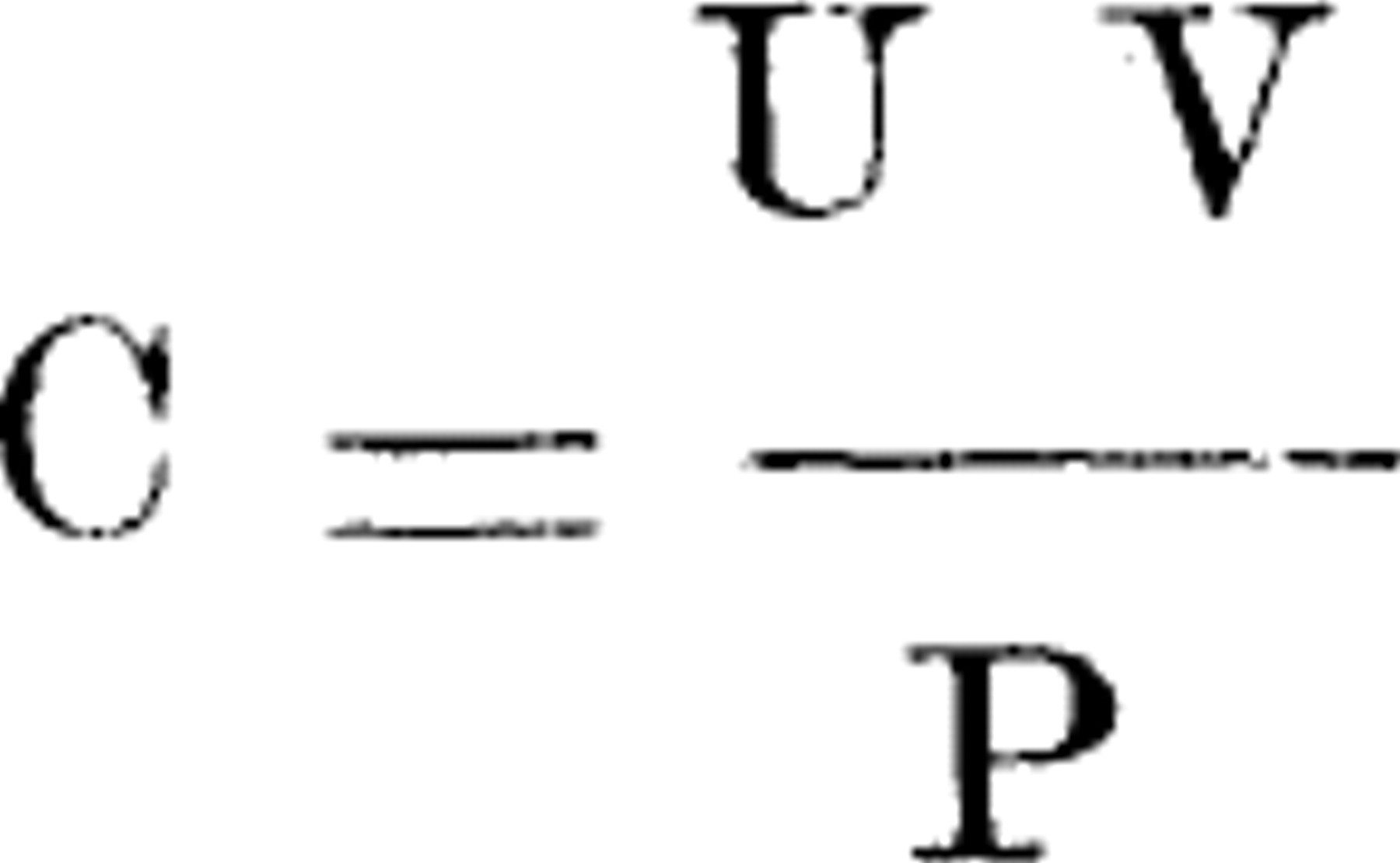
in which U is the concentration of potassium in the urine (mg per cc), V the volume of urine (cc per min.), and P the plasma potassium concentration (mg per cc). The plasma potassium concentrations (means with standard errors of means) were: Subject L, 16.4 ± 0.2; Subject C., 16.5 ± 0.6; and Subject H, 17.9 ± 0.4 mg per 100 cc.
From Fig. 1, in which the clearances are plotted against the rates of urine flow, it may be seen that, over a wide range of flow rates, the clearance remains constant.
Get full access to this article
View all access options for this article.