




Abstract
The effect of varying rates and volumes upon the duration of the phases of the isometric contractions of the ventricle has frequently been investigated. The influence of these factors upon the duration of the electrogram, and particularly the correlation of mechanical and electrical changes, have not been so fully determined. It is with this correlation, and with certain effects of fatigue, that this abstract deals.
The excised turtle ventricle was perfused with slightly alkaline 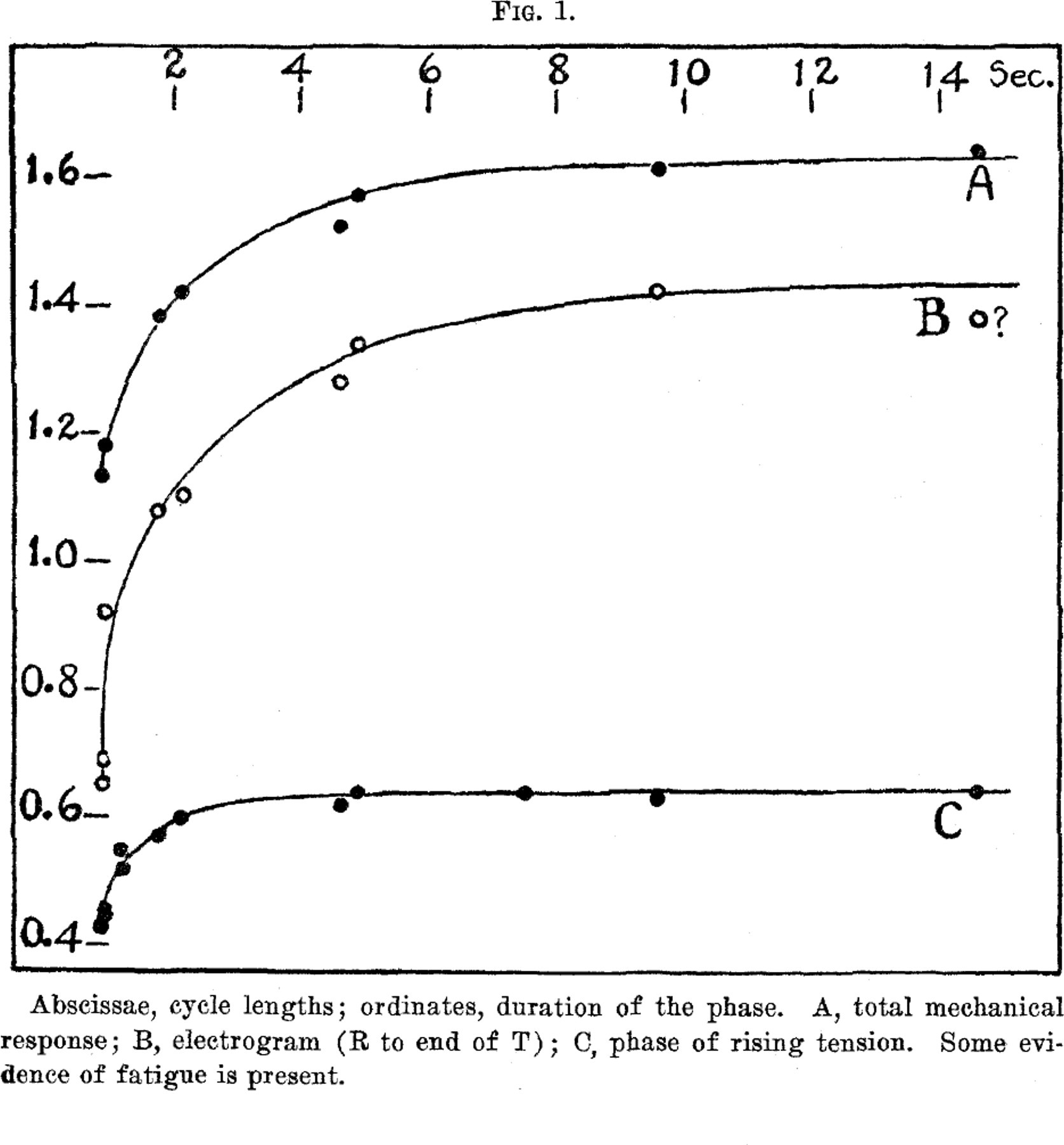 (pH 7.5—7.8), well-oxygenated and strongly buffered Ringer's solution. During temporary suspension of perfusion, the isometric responses to single induction shocks at varying rates were recorded. Both mechanical and electrical responses were simultaneously photographed on the electro-cardiographic film.
As illustrated in figure 1, the total duration of the electrical response (measured from the apex of the R-wave to the end of the T) and the duration of the phases of rising and falling tension within the ventricle are similarly influenced by changes in cycle length (rate).
In contrast are the effects of filling (fiber length) upon the durations of the electrical and mechanical responses. Contrary to previous report (turtle), 1 we find that increased filling, up to the limits of ventricular capacity, prolong the electrical response only very slightly or not at all.∗ The phases of rising and falling tension, on the other hand, increase with augmented filling (figure 2).
Get full access to this article
View all access options for this article.