




Abstract
It is generally recognized by practitioners that certain disturbances of the biliary tract are more prevalent among women than among men, especially stout women. The reason for this difference has never been ascertained. Indeed, before the advent of the Graham method no adequate means existed of comparing either the size of this organ or its behavior in the two sexes. In the hope of finding some anatomical or physiological basis for clinical differences the writer has recently begun a study of the contraction of the gall bladder in healthy young women, following a standard meal of 5 egg-yolks and half a pint of cream.
In 7 of these 11 cases it was possible to follow the contraction of the gall bladder until the shadow became very small. The changing 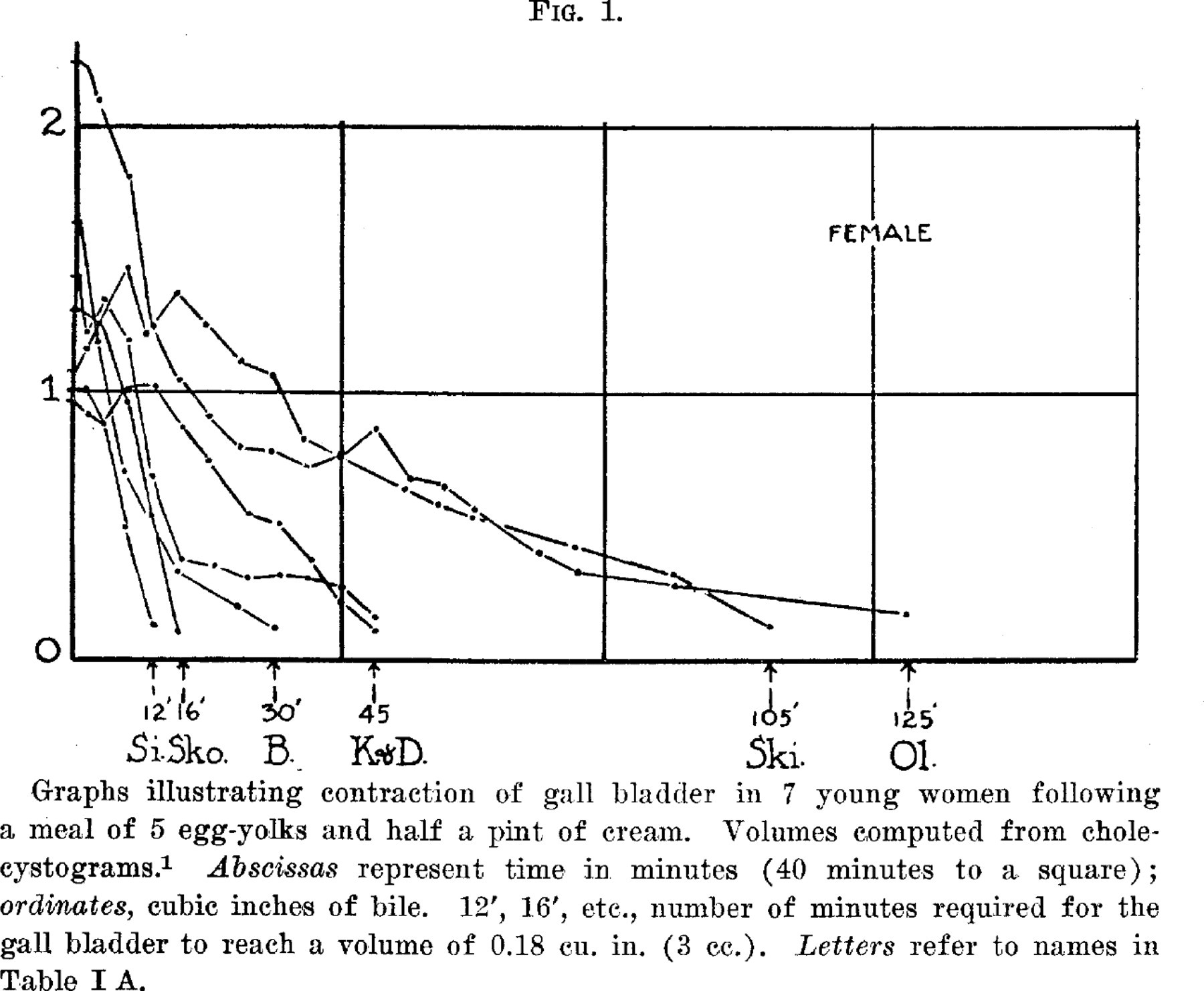
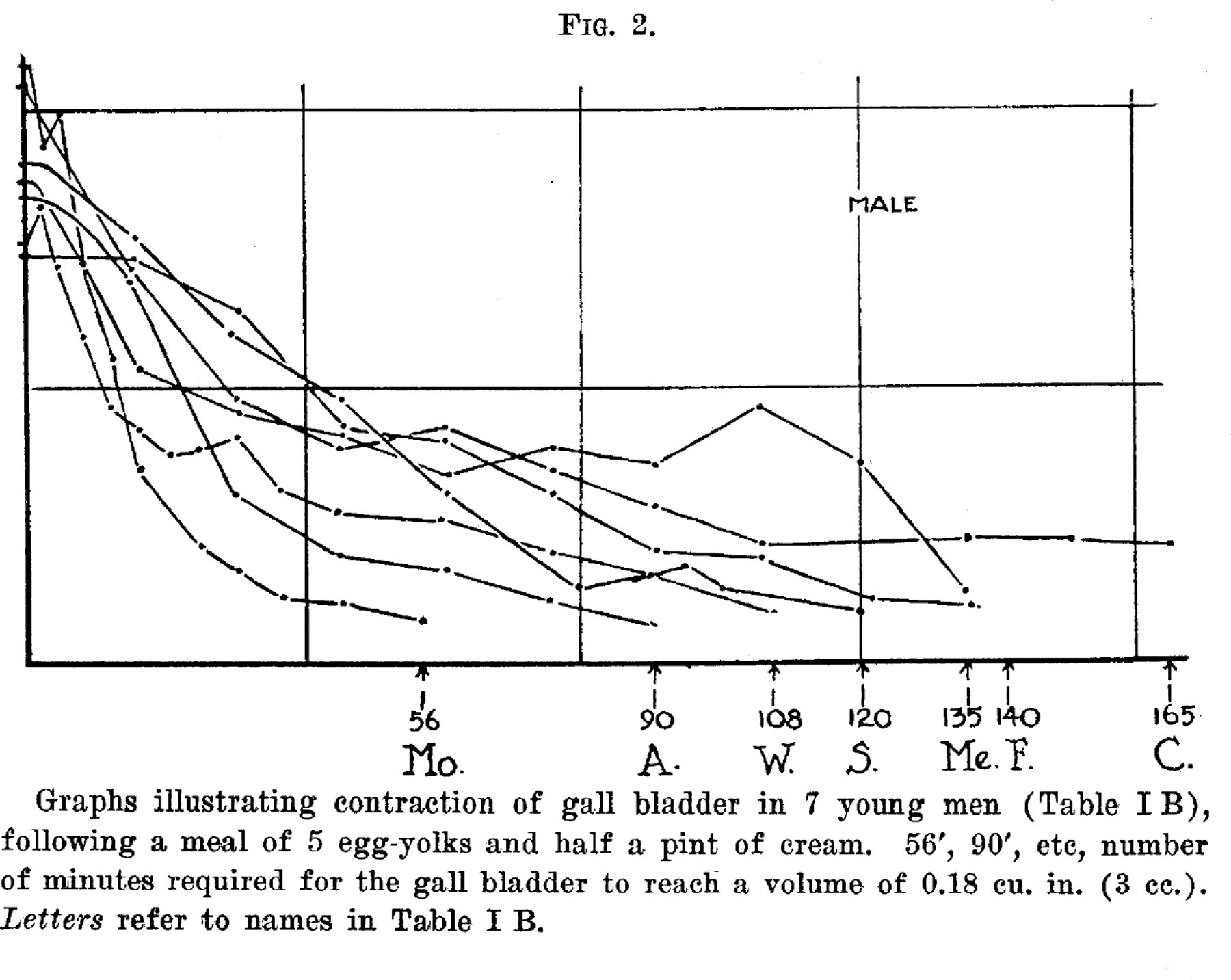
This striking contrast is due neither to a differing latent period (the initial contraction in either sex occurring anywhere from 2 to 16 minutes after food enters the mouth), nor to the fact that the gall bladder of the male is usually larger and therefore has more bile to be expelled. For a comparison of the minimum time required in each sex for the discharge of 1 cu. in. of bile (16.4 cc.), shows that the female gall bladder is nearly twice as quick as the male, the average ratio in these 14 cases being 23:40 (Table I C). Equally instructive is a comparison of the total volume of bile discharged in the two sexes at the end of the first 15, 30, and 45 minute periods, the comparisonl again favoring the female gall bladder.
Get full access to this article
View all access options for this article.