




Abstract
The phenomenon of contracture, induced in surviving sections of guinea pig intestine, suspended in Tyrode solution, by the addition of very small amounts of gas bacillus culture 1 suggests that the active substance, possibly substances, contains one or more free ethyl-amine groups, attached to an aromatic nucleus of the general type R :aromatic nucleus :ethylamine.
In such a compound, current theory predicates that its physiological activity is intimately associated with the presence of the free aromatic ethylamine group. It follows theoretically that any chemical change involving the elimination of this free NH2 group from such a compound should reduce, or even destroy the physiological action of the molecule as a whole.
The addition of formaldehyde to primary amines changes them according to the following equation, in accordance with the well known “formol titration” of Henriques and Sörenson: 2

It has been found by actual experiment that the addition of 0.1 cc. of neutralized formalin solution releases the contracture in a piece of guinea pig intestine which has been induced by either the soluble, physiologically active substance found in cultures of the gas bacillus, or by histamine. The following graph is the record of such a contracture induced by 0.2 cc. of gas bacillus filtrate, and released by 0.1 cc. of formaldehyde solution. Precisely similar ones have been obtained with histamine and formaldehyde.
The formaldehyde-ethylamine compound may be washed out of 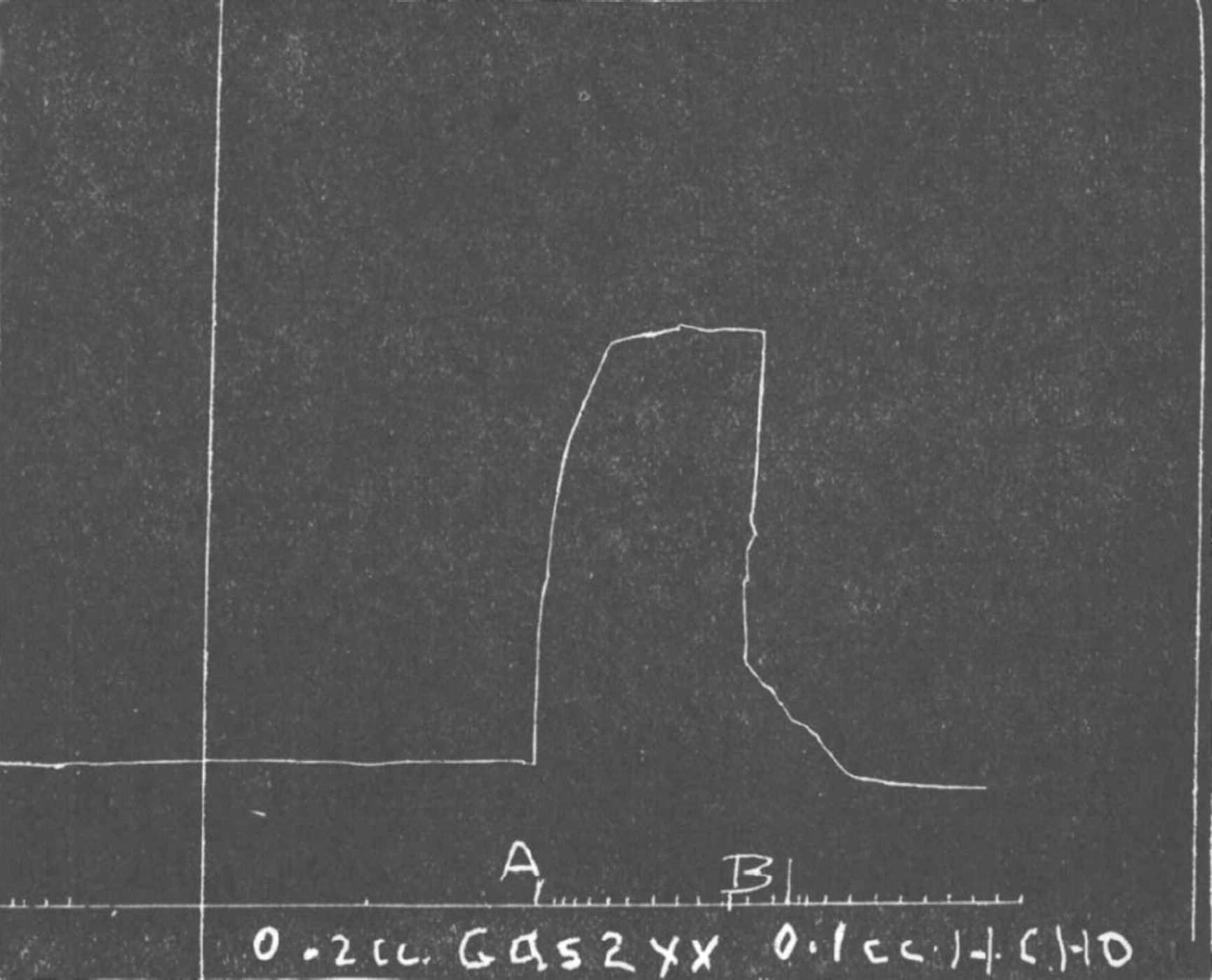
The experiments seem to indicate that contracture of smooth muscle may be induced by an aromatic ethylamine group, and that chemical change of this ethylamine group may thereby remove the contracture-inducing capacity of the entire molecule.
Get full access to this article
View all access options for this article.