




Abstract
The functional structure of self-aware consciousness in human beings is described based on the evolution of human brain functions. Prior work on heritable temperament and character traits is extended to account for the quantum-like and holographic properties (i.e. parts elicit wholes) of self-aware consciousness. Cladistic analysis is used to identify the succession of ancestors leading to human beings. The functional capacities that emerge along this lineage of ancestors are described. The ecological context in which each cladogenesis occurred is described to illustrate the shifting balance of evolution as a complex adaptive system. Comparative neuroanatomy is reviewed to identify the brain structures and networks that emerged coincident with the emergent brain functions. Individual differences in human temperament traits were well developed in the common ancestor shared by reptiles and humans. Neocortical development in mammals proceeded in five major transitions: from early reptiles to early mammals, early primates, simians, early Homo, and modern Homo sapiens. These transitions provide the foundation for human self-awareness related to sexuality, materiality, emotionality, intellectuality, and spirituality, respectively. The functional structure of human self-aware consciousness is concerned with the regulation of five planes of being: sexuality, materiality, emotionality, intellectuality, and spirituality. Each plane elaborates neocortical functions organized around one of the five special senses. The interactions among these five planes gives rise to a 5 × 5 matrix of subplanes, which are functions that coarsely describe the focus of neocortical regulation. Each of these 25 neocortical functions regulates each of five basic motives or drives that can be measured as temperaments or basic emotions related to fear, anger, disgust, surprise, and happiness/sadness. The resulting 5 × 5 × 5 matrix of human characteristics provides a general and testable model of the functional structure of human consciousness that includes personality, physicality, emotionality, cognition, and spirituality in a unified developmental framework.
Human beings are perennially curious about their inner nature and seek to understand what motivates their desires, actions, feelings, thoughts, and values. The study of human characteristics has led to many insightful theories and useful approaches, but each suffers from serious limitations regarding its scope and the qualitative properties of its form, aetiology, and dynamics.
Regarding scope, there are many different theories that focus on sexuality, physicality, emotionality, sociality, character, cognition, or spirituality [1]. Some broad theories try to serve as a coherent theory of theories (i.e. meta-theory), as did Freud, Piaget, and Maslow [2]. Each still focused on a particular aspect of being, such as sexuality, cognition, or spirituality. Separate theories for personality, cognition, and spirituality can each be useful, but the divisions are actually artificial and impair understanding in serious ways. Health is an integrated state of physical, emotional, social, cognitive, and spiritual well-being [3,4].
Regarding qualitative properties and form, most models of human characteristics fail to recognize the unique properties of different planes of being. ‘Planes’ are defined as distinct levels of existence, thought, or development [5]. Emotions cannot be fully described or explained by sexual or material mechanisms. Symbolic communication cannot be fully explained in terms of emotional processes. Spirituality cannot be adequately explained by intellectual judgments or rules of moral conduct.
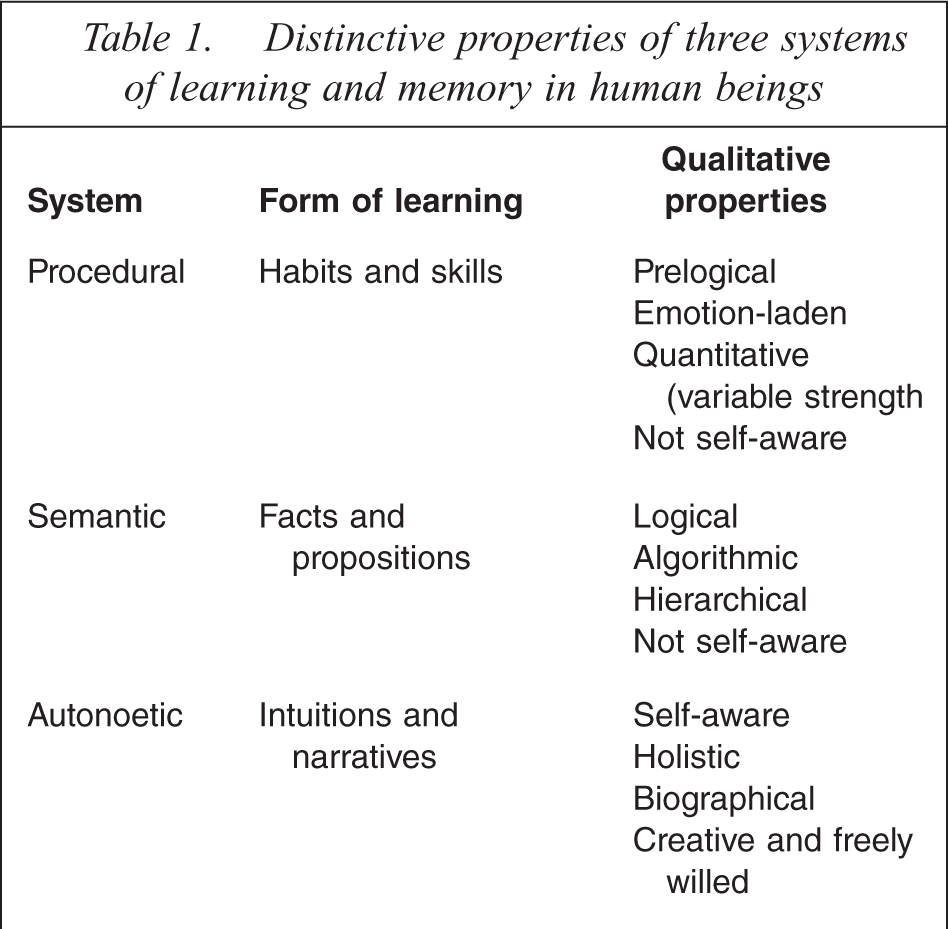
Even within the cognitive domain, there is often failure to attend to the qualitatively distinct properties of the multiple systems of learning and memory that are observed in human beings [6]. For example, associative conditioning varies quantitatively according to the strength of habits (Table 1). Aesthetic appreciation of beauty, however, is a qualitative experience. Self-aware consciousness is always subjective and holographic in form (i.e. self-aware perceptions are holistic and personal), so information about beauty cannot be specified by any amount of quantitative or objective detail [7].
Distinctive properties of three systems of learning and memory in human beings
No models of neurobiology or personality provide an adequate explanation of subjectivity (i.e. self-aware consciousness). There are several promising neurobiological insights for explaining different components of consciousness [8–13]. These individual components of consciousness need to be integrated in a unified general model recognizing the holographic nature of self-aware consciousness.
Personality and emotionality have other properties that must be satisfied by a general model of consciousness. Personality and emotionality have a universal structure shared by all human beings, as emphasized by Darwin and supported by cross-cultural studies of facial expression by Ekman [14]. Likewise, Chomsky suggested that there is a universal grammar for the development of language as part of the rich innate endowment of human beings [15]. He argued that without such universal structure we would not be able to communicate and respect one another as we do [16]. There may still be substantial differences among individuals in the expression of these universal functions, which provides diversity in adaptive capacities for possible ecological change [17,18].
Finally, a general model of human consciousness needs to provide a meta-theory for development, including the maturation and integration of sexual, physical, emotional, intellectual, and spiritual aspects of being [19–21]. Lifespan psychology is an effort to understand development from the perspective of multiple disciplines in an integrated fashion [22]. It recognizes biological and cultural influences on development, but lacks a coherent model of the functional structure of human beings. Development is a complex adaptive process that cannot be specified by linear stage models, such as those of Freud, Erikson, Piaget, or Kohlberg. Human consciousness is holographic, and so its development must be a quantum-like adaptive process, much like the development of fractals [7].
Unfortunately, there is no consensus at present regarding the functional structure [23] or the developmental paths [22,24] of basic human characteristics, such as personality, emotionality, or cognition. Likewise, there is no consensus regarding the structure of psychopathology and other dysfunctional human characteristics. Most psychiatrists recognize that current categorical systems of classification are seriously flawed, but do not know with what to replace them. It is impossible to build an adequate science of health and well-being without understanding how normal adaptive functions are organized [7,25]. Hence a general model of the functional structure of human consciousness is imperative for understanding well-functioning and ill-functioning human beings.
Darwin's anniversary is a propitious time for the development of a general model of the functional structure of human beings. As Darwin recognized, human evolutionary history provides a solid scientific basis for describing the functional structure of consciousness. As he asked (C Notebook, p. 166, around May 1838), ‘Why is thought being a secretion of the brain, more wonderful than gravity a property of matter? It is our arrogance…our admiration of ourselves’ [26].
Methods
Several recent scientific advances have now converged to permit the preliminary description of a general model of human consciousness that can be tested and refined by subsequent research. First, cladistic analysis is used to identify the succession of ancestors leading to human beings based on molecular phylogenetics [27,28]. A clade is a group of organisms that share a common ancestor. Recent advances in molecular phylogenetics have clarified the succession of ancestors leading to human beings from the earliest life forms [29–33].
The functional capacities that emerge along this line of ancestors are described. The ecological context in which each cladogenesis occurred is described to understand the influences on evolution, as illustrated by the co-evolution of angiosperms and the ancestors of primates [32,34,35] and the importance of hunting animals for meat for increasing body and brain size of early Homo [36]. These observations illustrate the shifting balance of evolution as a complex adaptive system [37].
Comparative neuroanatomy is reviewed to identify the brain structures and networks that emerged coincident with the emergent brain functions. Detailed neuroanatomical studies have been conducted that were guided by cladistic analysis to focus on the ancestral line leading to human beings [38,39]. Other studies identify which clades have specific brain structures and networks, such as mirror neurons [40] or von Economo neurons [8].
Results
What evolutionary transitions led to humans?
Evolution is a complex adaptive process in which multiple genetic and environmental events are constantly interacting, shifting the balance of reproductive fitness from situation to situation and time to time [37]. As a result, genetic influences on personality and other human characteristics show extensive gene–gene and gene–environmental interactions [7,41,42]. Consequently, it is important to follow the thread of evolution leading to humans as it unfolded in response to the unrepeatable ecological complexities of the past.
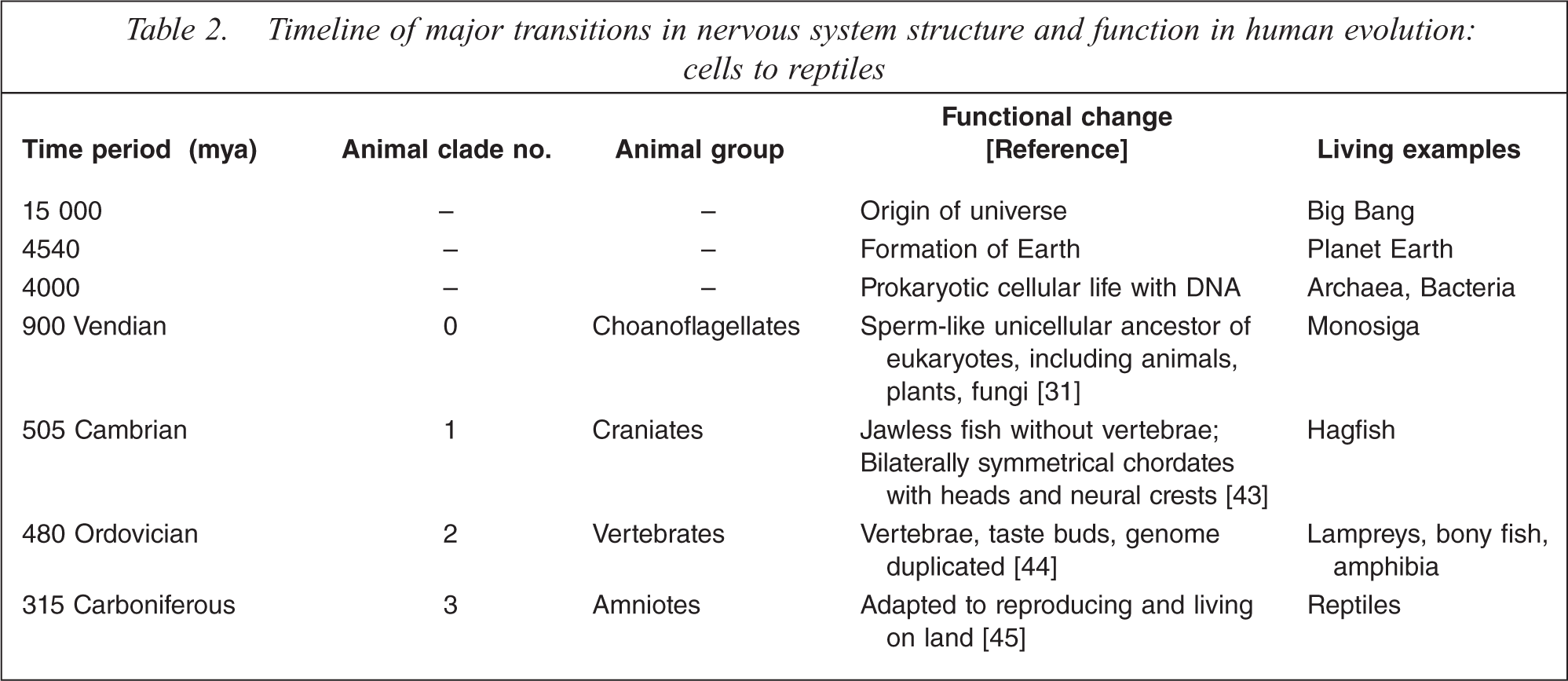
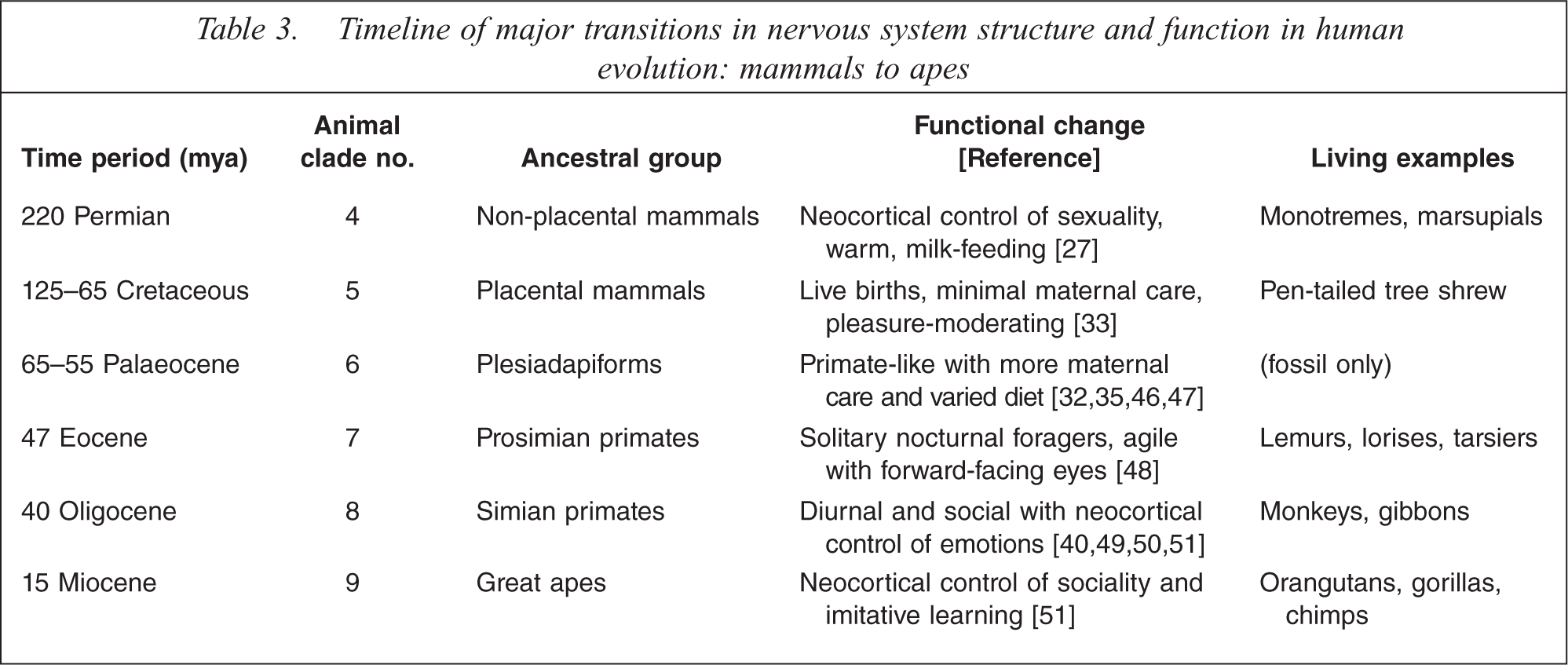
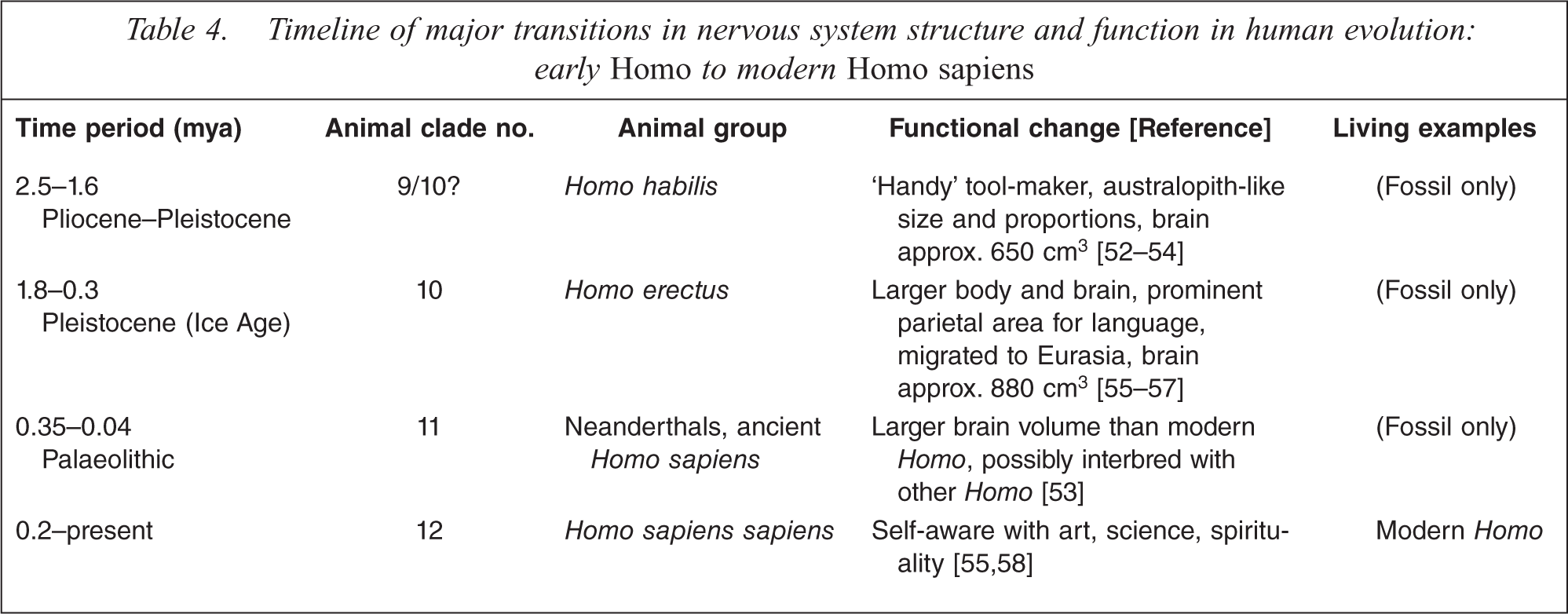
The timeline of major transitions in brain system structure and function in human evolution is summarized in Tables 2–4. The transitions represent the emergence of clades, usually with some living descendants of the common ancestor shared with human beings. All life forms share DNA as the mechanism of genetic inheritance, going back to the emergence of the first life forms on earth 4 billion years ago. The ancestral lineage leading to humans includes the first eukaryotes, craniates, and amniotes, thereby leading to the common ancestor shared by reptiles and mammals. Among mammals, the line continues from the earliest non-placental mammals to tree shrews and then the proto-primates called plesiadapiforms. The tree shrews were small, nocturnal, placental mammals who spent little time in maternal care. Their young developed quickly and they are free to spend most of their time having sex and eating. The pen-tailed tree shrew, Ptilocerus iowii, is found in Indonesia, Malaysia, and Thailand. It is thought to be the closest living example of the common ancestor of primates [33]. It consumes fermented nectar regularly with 3.8% alcohol without getting excessively intoxicated [59].
Timeline of major transitions in nervous system structure and function in human evolution: cells to reptiles
Timeline of major transitions in nervous system structure and function in human evolution: mammals to apes
Timeline of major transitions in nervous system structure and function in human evolution: early Homo to modern Homo sapiens
The primate-like mammals called Plesiadapiforms, such as Carpolestes simpsoni, are known from the late Palaeocene epoch of Wyoming. They had a grasping foot like primates, including an opposable toe and a nail rather than a claw. It could probably grasp with its hands as well. As a result, it was well-adapted to move in the terminal branches of fruit-bearing trees that flourished at that time [32,35].
Among primates, the line continues through ancestors in common with prosimians, simians, then great apes. Prosimians are typically nocturnal and solitary foragers, whereas simians (monkeys and apes) are typically diurnal and active in social groups most of the time [48,49,60]. The great apes show warm emotional expressions and affectivity, including ventral hugging, in addition to more complex imitation learning, more flexible dominance hierarchies, and communication with concrete symbols such as sign language [49,61].
Among the hominoids, the line continues through ancestors of Australopiths to early Homo. The details of the lineage are intensively debated, but the functional and structural changes are fairly clear even when the precise transitional form remains uncertain. Australopithecines had well-developed erect bipedal walking, as was shown in the fossilized footprints preserved at Laetoli in Africa,. The footprints preserve evidence of one holding hands with a younger child while a second adult followed, stepping precisely in the tracks of the first adult [55]. Homo habilis is classified as the earliest human species on the basis of an average brain volume of >600 cm3 and development of brain regions that support language functions in modern humans. Some argue, however, that it should be grouped with Australopiths, not Homo, because its body was similar to that of an Australopith [52]. It is clear that between Australopiths and Homo erectus there was a revolutionary increase in the size of the brain and body of human beings [62]. This increase required a new way of obtaining nutrients to support the greater energy consumption of a larger body and brain.
What were the circumstances of adaptive change?
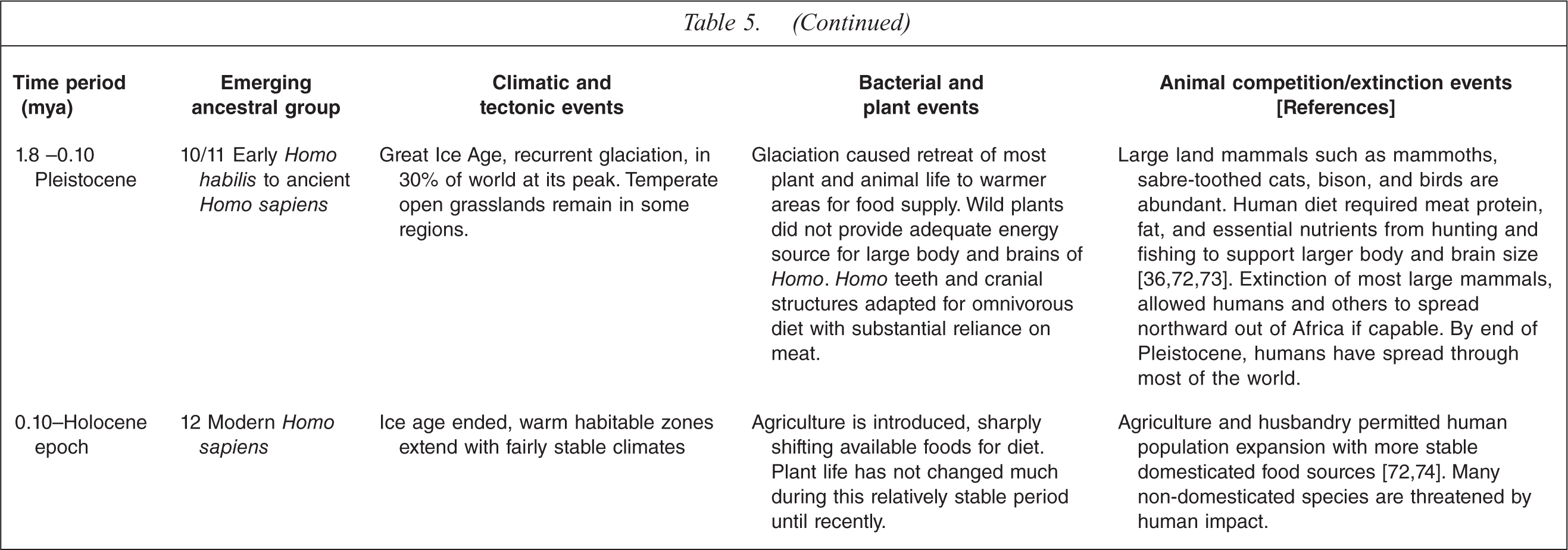
Every transition in the ancestral lineage leading to modern humans involved adapting to a novel ecological challenge. Some of the major adaptive forces playing out in human evolution are summarized in Table 5. Every transition was associated with different challenges that the extant species had to adapt to or face extinction. Mass extinctions occurred often, shifting the balance of dominance from one life form to another [63,75,76]. Animals co-evolved with plants, just as both plants and animals had to adapt to the changing climate and tectonic shifts.
Geologic timeline of coincident events in human evolution
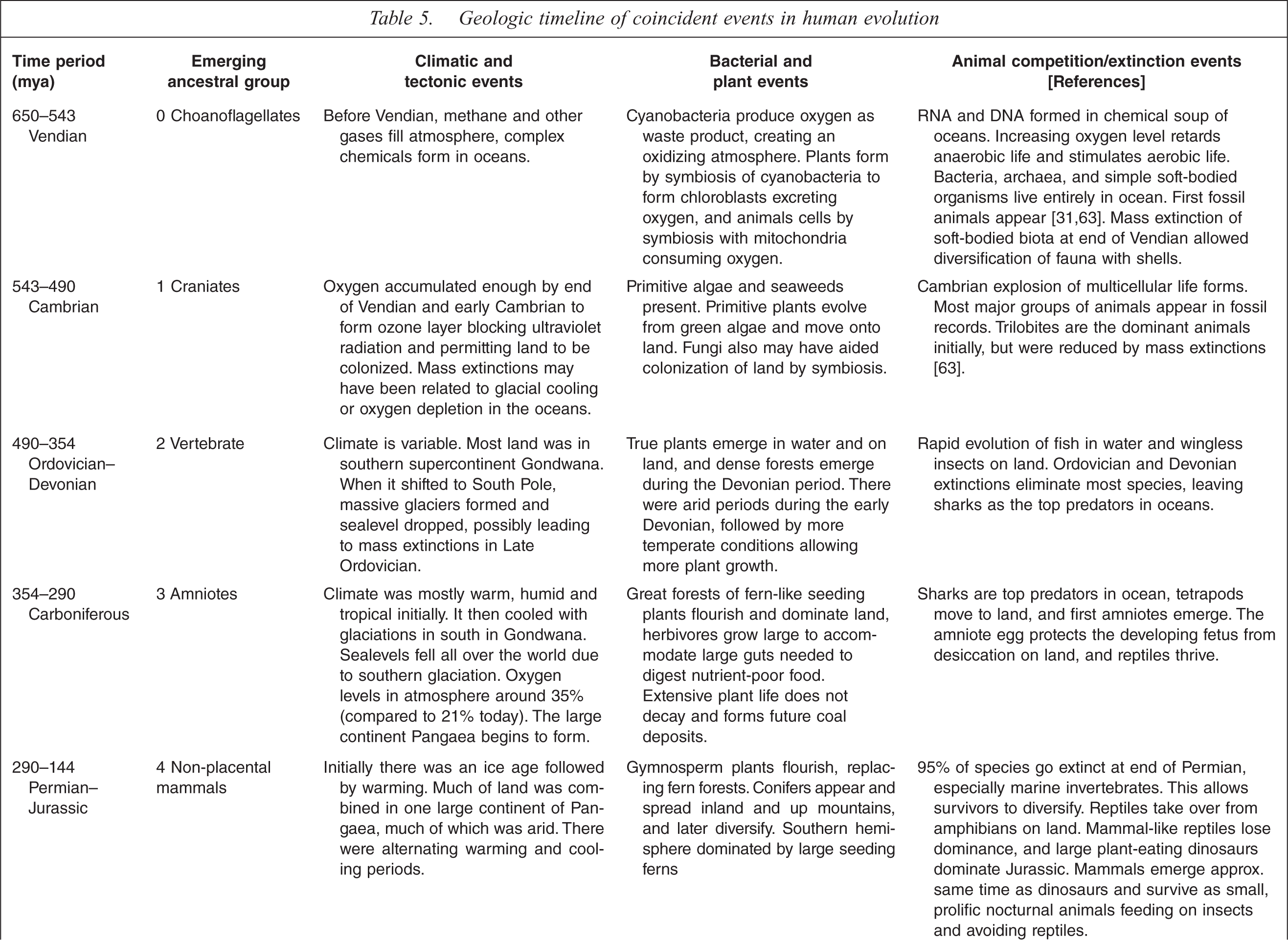
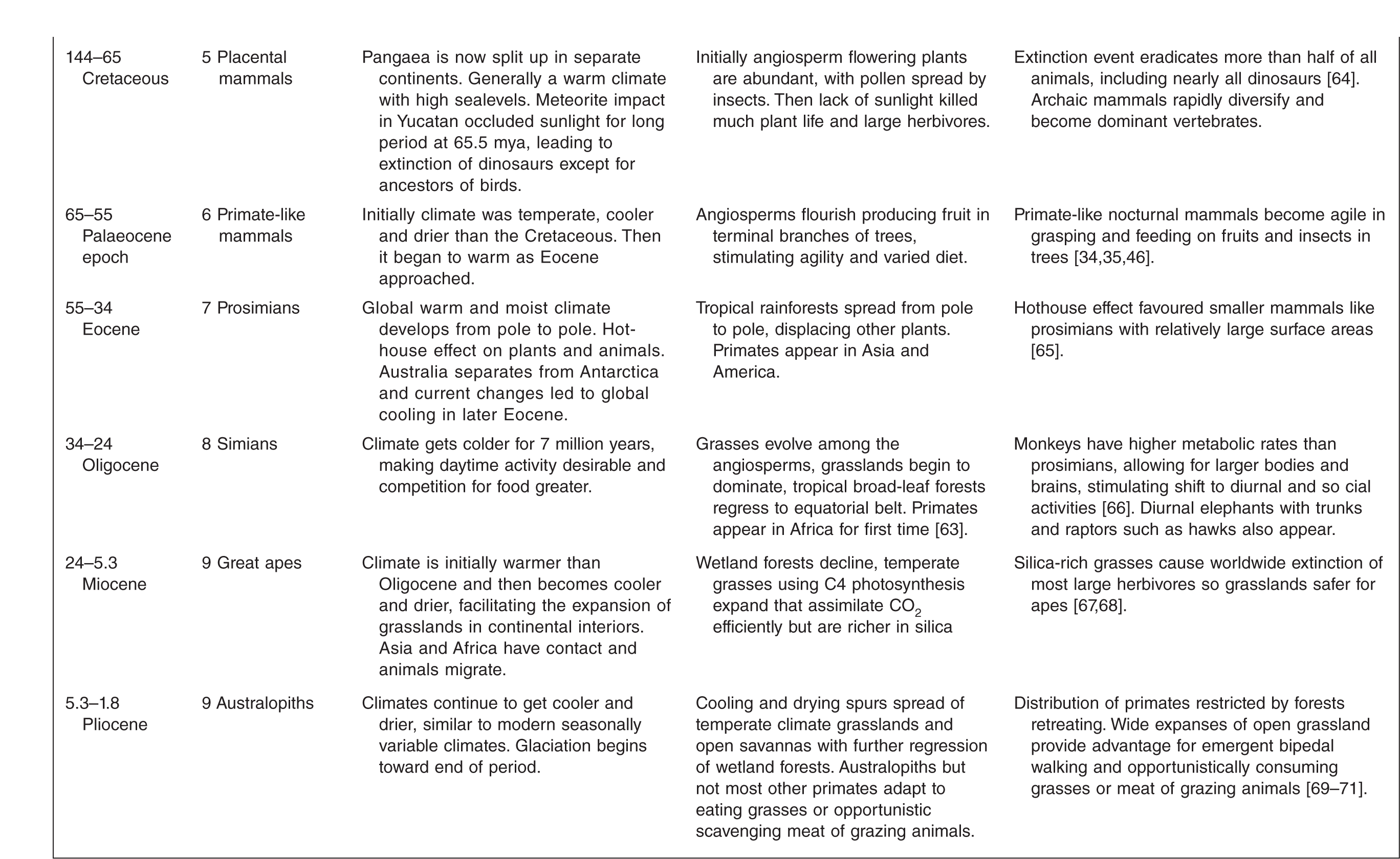
The adaptive challenge helps to recognize the functional shifts that occurred at each transition leading to modern human beings. Both mammals and dinosaurs emerged around the same time during the Jurassic period. The earliest mammals were small nocturnal animals that ate insects and avoided the large plant-eating dinosaurs. Then 65.5 million years ago a large asteroid struck the Yucatan and the resulting dust is thought to have occluded sunlight for so long that the herbivorous dinosaurs were extinguished, except for the ancestors of birds [63,64].
The extinction of the dinosaurs allowed mammals to diversify and they rapidly became the dominant land animals. The emergence of fruit-bearing trees provided the circumstance in which sexually prolific mammals were selected for greater agility, taste discrimination, and maternal care [34,35]. Extant prosimians are like living fossils of these Palaeocene ancestors of human beings except that they are true primates with forward-directed eyes. The prosimians thrived as nocturnal solitary foragers during most of the hothouse period of the Eocene, in which the earth was covered with tropical forest between 55 and 45 million years ago.
The global climate began to cool during the late Eocene. Vegetation changed in response to climate. As competition for resources increased, diurnal animals emerged, including elephants with trunks, diurnal raptors such as eagles and hawks, and also the first simians. Simians are typically diurnal and social, which gave them advantages in energy consumption. Simians have a higher rate of oxygen consumption than prosimians [66], so being active during the day and foraging in social groups confers an energy advantage that supported larger bodies and brains. Some prosimians did later adapt to diurnal living, but only one group of simians, the owl monkey, reverted to nocturnal existence.
When grasslands become widespread, replacing forest, most large herbivores became extinct. In contrast, Australopiths adapted well to the grasslands. They walked upright and also consumed grass or the meat of grass-grazers, giving them an advantage over apes that did not adapt for grass consumption [69–71].
Early humans developed larger bodies and brains, which required a means of richer nutrition. Hunting, fishing, tool-making, and use of fire all contributed to the supplementation of their high-fibre diets by early humans with meat for adequate nutrition during the Palaeolithic Ice Age [36,72]. They had the intelligence to migrate out of Africa and colonize areas throughout most of the world during the Pleistocene epoch. The end of the Ice Age made the development of agriculture feasible, providing a more reliable source of nutrition for modern Homo sapiens.
What brain structures emerged coincident with the functional changes?
The transitions described in Tables 2–5 can be summarized as the emergence of specific aspects of consciousness, as detailed in Table 6. The five major transitions are described more briefly in Table 7 because they are the crux of each functional development. In reptiles central regulation of brain functions is organized in the hypothalamus. Sensory information is first processed in the basal forebrain of before being relayed to the thalamus and dorsal cortex of reptiles. The dorsal cortex and thalamus of reptiles receive sensory input, but do not reciprocate with output that could modulate the hypothalamus [83]. A multi-layered neocortex first emerges in early mammals, and there is a progression of five transitions whereby the neocortex takes control of central regulatory functions from the hypothalamus. In early mammals and tree shrews, the major neocortical function is voluntary control of copulation, which is reflexive in reptiles [84]. Early mammals noted for their prolific sexuality, such as rodents and rabbits, are a sister clade of tree shrews [28]. Primary somatosensory cortex is clearly developed in early mammals and tree shrews (clades 6/7), but there is little or no differentiation of sensory neocortex from motor neocortex [38,39].
Evolution of major brain functions in human evolution
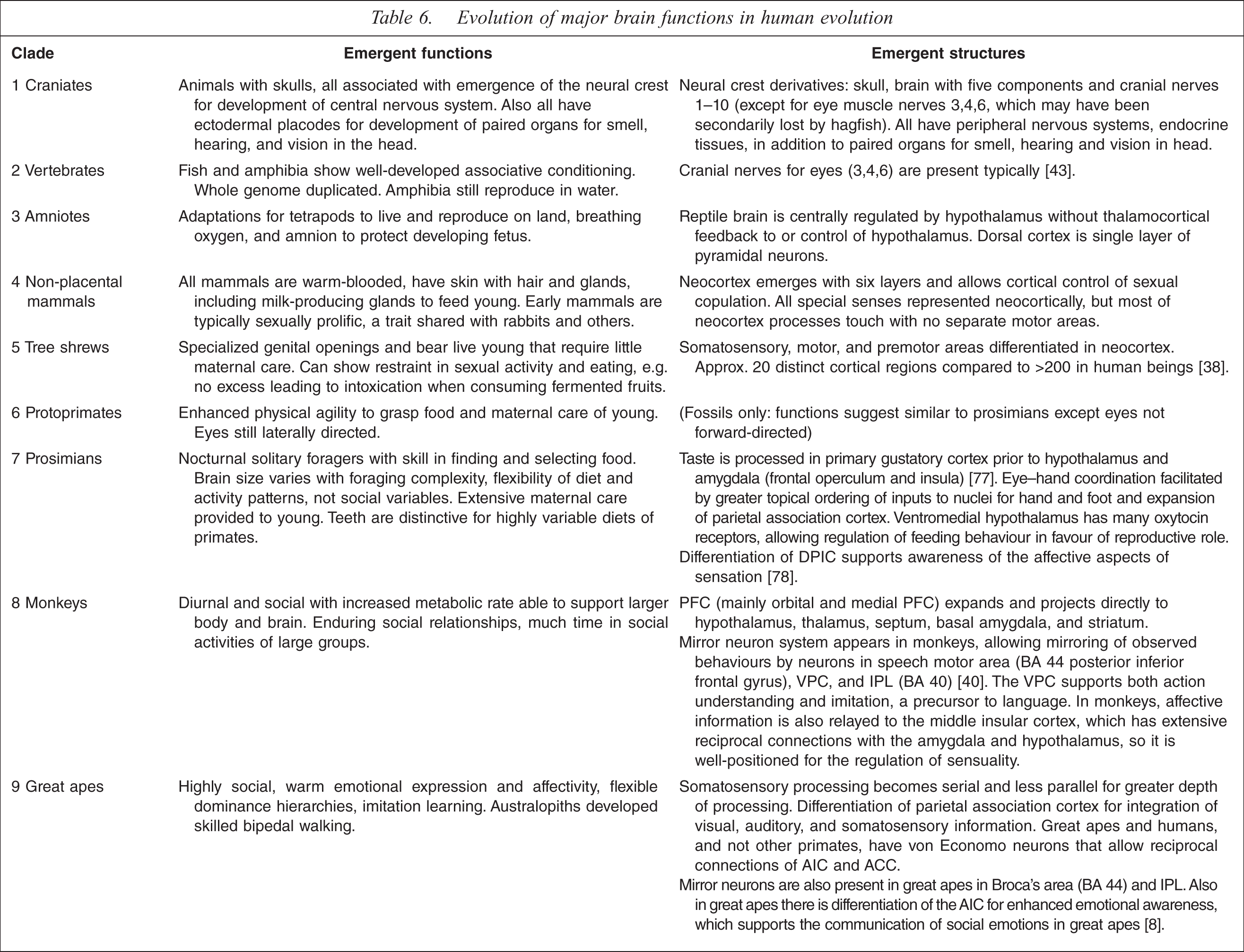
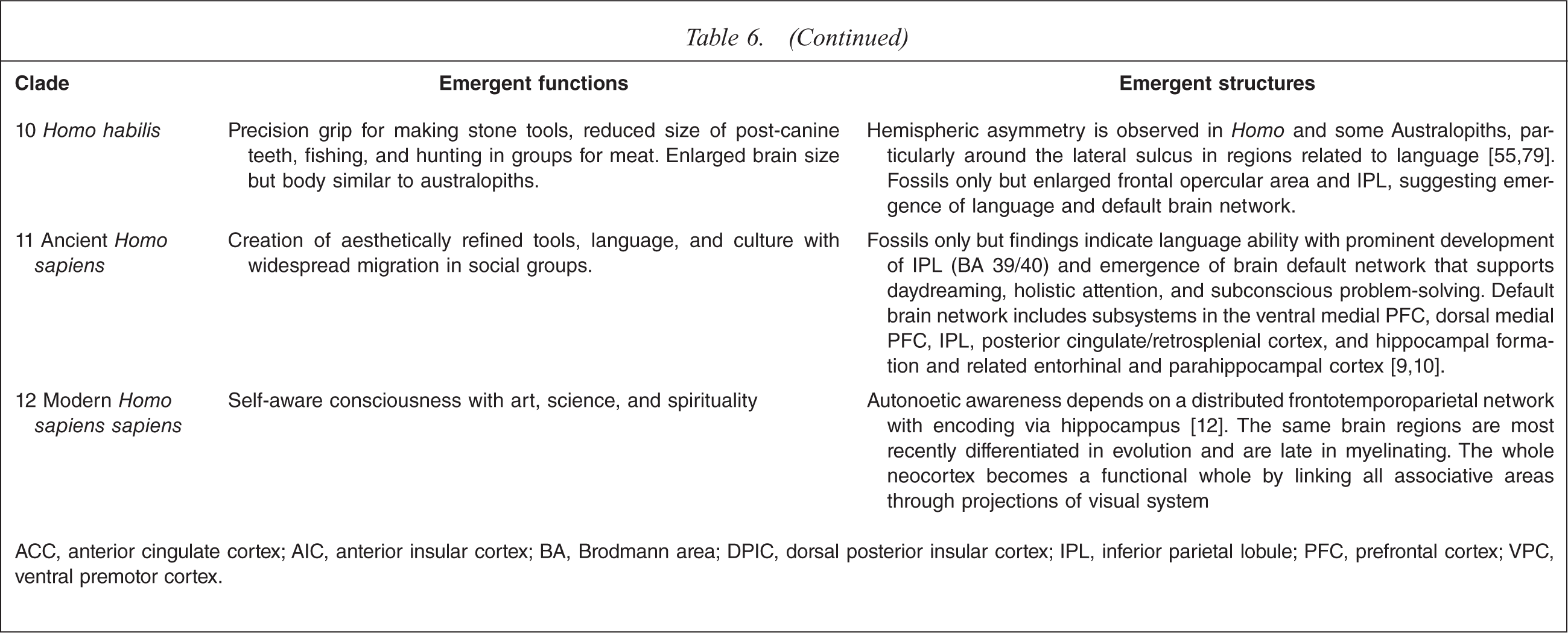
ACC, anterior cingulate cortex; AIC anterior insular cortex; BA, Brodmann area; DPIC, dorsal posterior insular cortex; IPL parietal lobule; PFC, prefrontal cortex; VPC, ventral premotor cortex.
Cladistic staging of evolution of the functional components of self-aware consciousness in human beings: five basic stages
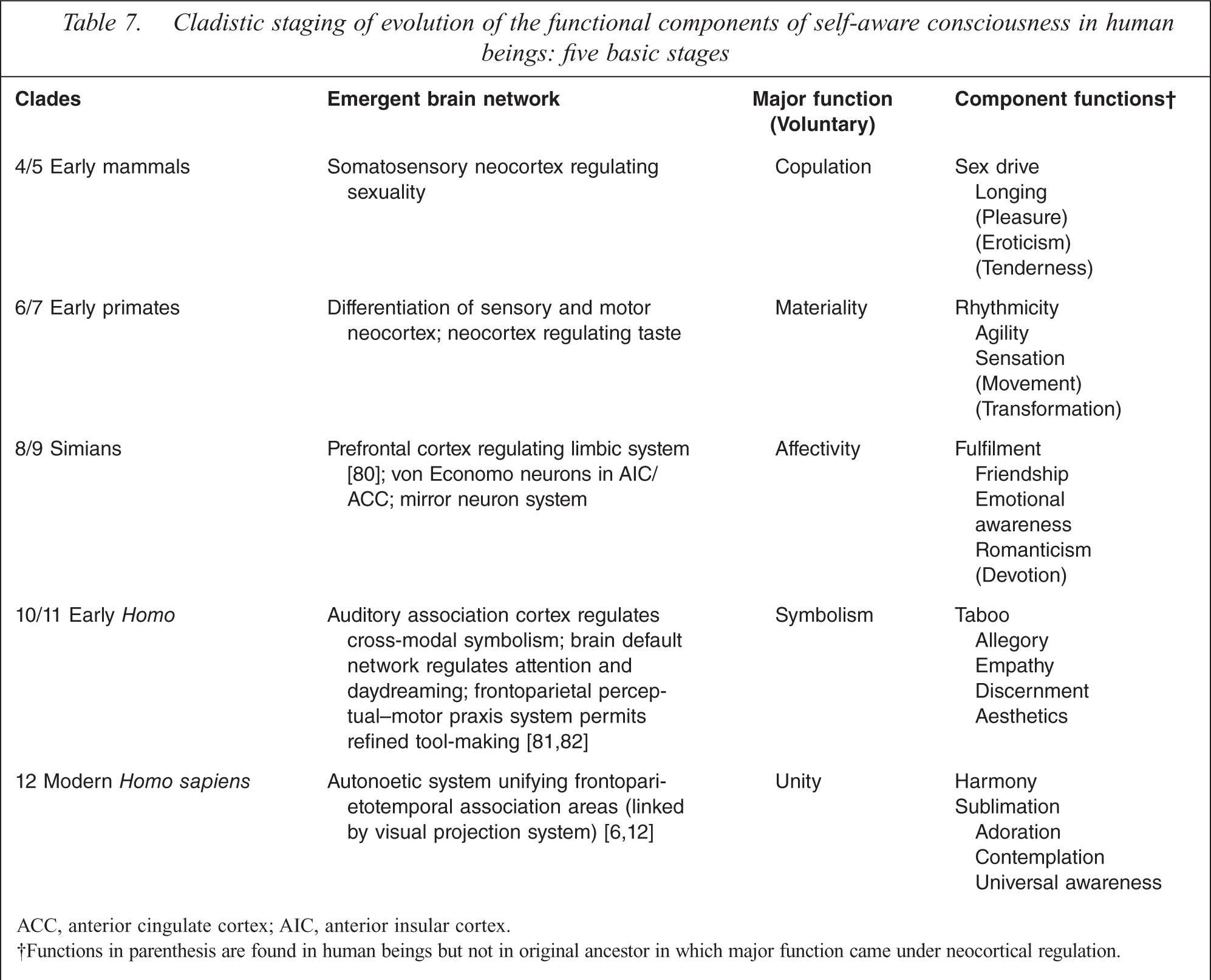
ACC, anterior cingulate cortex; AIC, anterior insular cortex.
†Functions in parenthesis are found in human beings but not in original ancestor in which major function came under neocortical regulation.
In proto-primates and prosimians there is functional development of motor agility, better discrimination of the taste of a varied diet, more maternal care of young, and more time spent in grooming and related form of assuagement. These functions involve regulation of material things such as food and activities of daily living. Unlike rodents, in primates there is no direct path from the brainstem taste areas such as the nucleus of the solitary tract to the hypothalamus and amygdala. Information about taste in primates, in contrast, reaches the amygdala and orbitofrontal cortex from the primary taste cortex, which is in the frontal operculum and insula [77].
Prosimians have well-differentiated sensory and motor neocortical areas, in contrast to tree shrews. Detailed studies of galagos indicated several changes in brain structure that support enhanced motor agility with advanced grasping and leaping adaptations [38,39]. The findings include greater topographical ordering of sensory input for the hands and feet, premotor and supplementary motor areas, at least two motor areas in the cingulate cortex, and feedback circuits between prefrontal cortex, premotor cortex, and primary motor cortex. In addition, prosimians have an enlarged posterior parietal cortex for processing visual, auditory, and somatosensory information to form and relay instructions about hand and eye movements to premotor areas.
In simians there is emergence of affectivity with patterns of emotional expression, attachment, and friendship that are similar to human affectivity as noted by Darwin [14] and Bowlby [49,61,85]. Related brain changes include the development of prefrontal cortex for regulation of emotional functions [80], a distinctive system for interoceptive processing of sensual aspects of touch [8,78,86,87], and the emergence of the mirror neuron system on frontal and parietal cortical areas [40].
In early Homo there is emergence of symbolism, including capacities for taboo, allegory, language, empathy, and discernment [79]. Symbolism builds on the abilities needed for cooperative group foraging in simians [79]. Homo erectus showed aesthetic appreciation in the making of refined tools in their Acheulian culture [81,82]. These symbolic functions depend on processing in the inferior parietal cortex, which is a convergence area for touch, hearing, and vision, allowing cross-modal transformations important for language and other forms of symbolism [55,79,88]. The angular gyrus in particular has an important role in the comprehension of metaphor and allegory [89]. Symbolic activity enhances the capacity of the brain default network, which allows first-person perspective taking and daydreaming, as when a person is letting his or her mind freely wander about inner thoughts and feelings [9,10].
Finally, in modern human beings there is self-aware perception of a sense of unity, manifest by emergent capacities for harmony, sublimation, spiritual adoration, and contemplation [7]. These abilities give modern human beings their potential in art, science, and spirituality, sometimes leading to transcendent joy, oceanic feelings or even cosmic consciousness [7,58]. Such integrated awareness is supported by autonoetic system of learning and memory [6]. Such self-aware consciousness allows a person to travel in space and time in their recollection of episodic events. Such autobiographical thinking involves a distributed frontoparietotemporal network [12]. Essentially the visual projection system connects all tertiary association cortices so that the brain can function as a coherent whole.
Discussion
I have sketched the ancestral lineage of human beings and identified five major transitions in functional capacity: copulation, materiality, affectivity, symbolism, and self-awareness of unity. These five functions are core abilities for the regulation of what I have elsewhere called the five planes of being: sexuality, materiality, emotionality, intellectuality, and spirituality [7]. A plane can refer to a level of existence, thought, or development. The term ‘plane’ is particularly appropriate for describing these components of self-aware consciousness. It is appropriate because a plane refers to a particular level of existence, perhaps sexual, material, emotional, and so on. It also refers to particular kinds of thoughts in self-aware consciousness. Finally, it refers to components of consciousness that are inseparably connected and dynamically developing, even when its manifestation is latent.
My last statement about latent development is important, even though it may seem obscure at first. It is obscure because throughout this brief sketch of evolutionary development I have traced a specific manifest line of development. I have talked only about emergent functions, but latent processes are expected to be already under development before they are overtly manifested. Remember that evolution and development are complex adaptive systems within a whole in which everything is interconnected and interdependent. Language did not develop wholly in one abrupt step [55,79,90]. Functional precursors that are developed in response to one challenge are often co-opted for another use in different situations.
Each plane of being involves neocortical functions organized around one of the five special senses. The interactions among these five planes gives rise to a 5 × matrix of subplanes, which are functions that coarsely describe the focus of neocortical regulation (Table 8). I have deliberately focused only on the five functions in bold along the diagonal of Table 7. These diagonal components are the core functions upon which the others are built. For example, the material subplane of sexuality (satisfaction, such as assuagement by grooming) depends on the differentiation of sensory and motor functions underlying materiality. Satisfaction and enhanced maternal care (a facet of reproduction) emerge together with materiality in protoprimates and prosimians. Likewise, the emotional subplane of sexuality (sensuality) depends on emotional awareness (affectivity), and they emerge together in simians.
Matrix of functional components of consciousness and the animal clade in which they are first manifest†
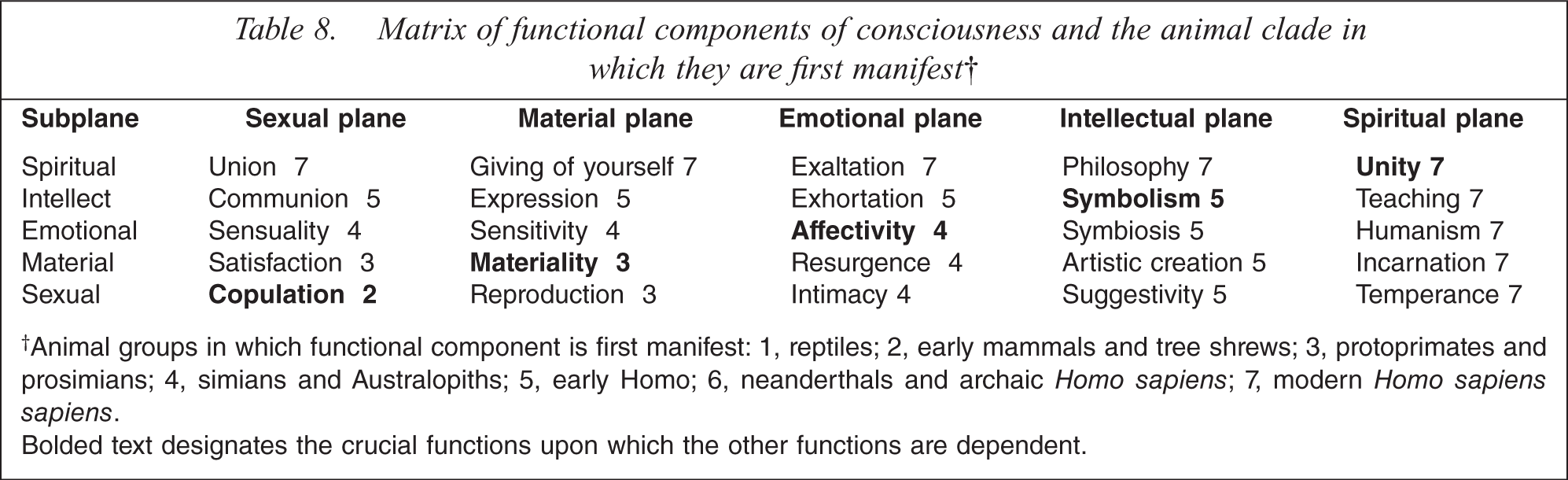
†Animal groups in which functional component is first manifest: 1, reptiles; 2, early mammals and tree shrews; 3, protoprimates and prosimians; 4, simians and Australopiths; 5, early Homo; 6, neanderthals and archaic Homo sapiens; 7, modern Homo sapiens sapiens.
Bolded text designates the crucial functions upon which the other functions are dependent.
Within each of the five planes of being, there are components of each plane that emerge in succession in the ancestral lineage leading to human beings. For example, in the sexual plane, copulation emerges in early mammals, satisfaction in protoprimates, sensuality in simians, and soon.
Each of these 25 neocortical functions regulates each of five basic motives or drives that can be measured as temperaments (harm avoidance, novelty seeking, reward dependence, persistence, plus coherence-seeking) or basic emotions like those described by Darwin and Ekman (fear, anger, disgust, surprise, and happiness/sadness) [14]. The resulting 5 × 5 × 5 matrix of human characteristics provides a general testable model of the functional structure of human consciousness that includes personality, physicality, emotionality, cognition, and spirituality in a unified developmental framework. Each of the components of this functional matrix can function either well or poorly, thereby providing the foundation for a positive science of well-being. I am pleased to introduce the evolutionary foundation of the science of well-being on the anniversary of Darwin's birth and his publication of The origin of species [91].
Footnotes
Acknowledgements
This work was supported by non-government funds from the Washington University Center for Psychobiology and the Anthropedia Foundation.