




Abstract
Empirical evidence indicates that family–school partnerships are linked to children’s academic success. The use of digital technology, including the Internet, computers, and communication systems, provides new opportunities to enhance family–school partnership practices. However, the increasing use of digital technology in family–school partnerships raises concerns about families with limited access to technology or digital skills. This systematic review examined the impact of the digital divide on technology-integrated family–school partnership practices by analyzing 10 high-quality studies. Results indicated that the multilevel digital divide presents multiple challenges for parents. In particular, the second-level digital divide, which relates to skills and usage gaps, limits the benefits of technology-integrated family–school partnerships for many parents. To address this, schools must consider parents’ socioeconomic status, provide the necessary information, and support training for effective technology-integrated partnerships.
Keywords
Introduction
The family–school partnership (FSP) is pivotal in promoting children’s academic and socio-emotional development. Throughout history, these partnerships have contended with issues such as communication gaps, varying degrees of family involvement, and disparate expectations between home and school (Deeba, 2021; Deslandes, 2025). The integration of technology into FSP has been instrumental in introducing innovative means to streamline communication and enhance FSP efforts (Grant, 2010; Hernandez & Daoud, 2024; Patrikakou, 2016). Along with enhancing communication, technology has the potential to strengthen family–school partnerships by creating equitable opportunities for engagement and collaboration. For instance, it can help address gender disparities (Perez-Felkner et al., 2025) and improve accessibility for students with disabilities (Zhang et al., 2024), fostering a more inclusive and participatory educational environment.
While these technological advances have facilitated improvements in FSP, they also introduce complex dynamics. One of the critical issues in technology-integrated FSP is the digital divide, which reflects the reality that not all families have equal access to or can effectively use technology (Mayes et al., 2015; Badiuzzaman, 2024). This digital divide is not merely a matter of access; it is complex and multilayered. Scholars have identified three levels: the access gap as the first level, the skills and usage gap as the second, and the outcomes gap as the third (Gómez, 2018; Ragnedda & Laura Ruiu, 2017; Ragnedda, 2019; Robinson et al., 2020; van Dijk, 2020). This multilevel divide may affect families’ participation in technology-integrated FSP and consequently affect their children’s education (Hou et al., 2024; Vigo-Arrazola & Dieste-Gracia, 2019). Considering the growing use of technology in FSP, understanding the impact of the multilevel divide in technology-integrated FSP is crucial. This systematic review explores the nuanced implications of the multilevel divide on technology-integrated FSP.
Family–School Partnerships
FSP refers to collaborative activities involving parents, schools, and the community to support children’s academic journey and social-emotional development (Day et al., 2024; Epstein, 1992; Sheridan et al., 2019). While widespread agreement exists on the significance of FSP for children’s skills and their emotional, social, and motivational development, a unified definition eludes scholars due to the multifaceted character and intricacies of family–school dynamics (Sheridan & Kim, 2015). Various terms such as parental involvement, home–school relations, family–school collaboration, parental engagement, and FSP have been used to describe the relationship between family and school (Sheridan et al., 2019). Although frequently used interchangeably, these terms encapsulate different concepts (Fishel & Ramirez, 2005), and it is important to delineate the distinction between parental engagement/involvement and FSP. Traditional parental involvement focuses primarily on parent–school interactions (Epstein, 1992). In contrast, partnership programs are broader, encompassing diverse engagement activities with parents, other family members, and the wider community (Epstein, 1992; Sheridan et al., 2019).
FSP differs from parental involvement in that it emphasizes active collaboration and shared recognition of responsibilities between the two institutions (family and school), recognizing the influence of the family members (Epstein, 1992). Moreover, FSP advocates for creating family-like schools by educators and school-like families by families (Epstein, 1992). A family-like school nurtures individuality and inclusivity for every child, while a school-like family emphasizes the significance of educational pursuits. Unlike traditional involvement, FSP represents a blend of varied engagement and mutual accountability, whereby families and educators collaborate to create impactful roles and practices that enrich children’s educational experiences (Christenson & Sheridan, 2001). Sheridan and Kratochwill (2007) further differentiate FSP by emphasizing the recognition of cultural subtleties. FSP values cultural variances, highlighting the importance of varied perspectives in shaping a positive learning milieu for every child. This partnership ensures that educational objectives are collaboratively set and shared. Moreover, FSP places importance on an “invisible” dimension of collaboration, which is often overlooked because it does not align with formal activities (Grant, 2010). For instance, families from ethnic minority backgrounds may be deeply involved in religious education, or lower-income families might assist their children at home without directly engaging with the school (Grant, 2010). Such invisible partnerships expand and enrich the comprehensive perspective of FSP.
A number of family–school partnership frameworks have been proposed and practiced over the years. Bronfenbrenner’s ecological systems framework is one of the pioneering models used in the FSP context. It outlines the microsystem (immediate environments like home or school), the mesosystem (interactions between microsystems), the exosystem (indirect external influences), and the macrosystem (cultural and traditional values). A fifth system, the chronosystem, highlights the temporal changes in these environments (Bronfenbrenner, 1979, 1986, 1994). While emphasizing multiple interlinked systems centered on child development and education, however, the ecological model did not delve into specific pragmatic practices in FSP. Filling this gap, Epstein’s family–school partnership framework provides a detailed approach by outlining different practices and involvement activities, offering a comprehensive and pragmatic perspective on FSP. According to Epstein’s widely used framework (1992), FSP activities consist of six types of involvement: (1) parenting, where families create supportive learning environments and schools offer developmental resources; (2) communication, involving bidirectional and culturally sensitive information exchange about school and student progress; (3) volunteering, with parents contributing to school functions and schools facilitating opportunities; (4) learning at home, where parents assist with school-related activities under teacher guidance; (5) decision-making, involving parents in school governance and community representation; and (6) community collaboration, where schools coordinate with external entities to enrich educational programs.
Although Epstein’s framework defines explicit typologies through six types of activities promoting family–school partnerships, research such as Baquedano-López et al. (2013) highlights concerns over power dynamics, suggesting that the framework might foster school-dominated practices. Circumstances influenced by race and class can relegate family members to a minor role, thus undermining the potential for a true partnership that necessitates an equitable distribution of power. For instance, in volunteering activities, schools often decide which family members will participate, possibly reinforcing school control. Nevertheless, Epstein’s (1992) model emphasizes collaborative decision-making between schools and families, which is a core element of FSP. In their subsequent work, Epstein et al. (2018) illustrate activities where collaborative decision-making practices mitigate power imbalances.
An equitable true partnership in FSP can be understood through the lens of critical social theory (Teemant et al., 2021). Teemant et al. (2021) contend that true equity in FSP is achieved by fostering dialogues that challenge the status quo and address power imbalances directly. This involves recognizing and actively questioning the power dynamics and conventional practices perpetuating inequalities among stakeholders in family–school interactions. According to critical social theory (Freire, 1994; Teemant et al., 2014), it is crucial to recognize and challenge these existing power dynamics and conventional practices that sustain inequities among FSP stakeholders. Teemant et al. (2021) propose an equity framework for family, community, and school partnerships to address these issues. Their framework highlights mutual respect, democratic participation, critical consciousness, and sustainable practices between school leaders, families, and the community to ensure equitable FSP. This approach enhances the partnership’s effectiveness and ensures educational practices are shaped through collective insights, thus supporting a more inclusive educational environment.
Sheridan and Kratochwill (2007) further enrich the FSP discourse by accentuating collaborative relationships and shared educational responsibilities. Their unique contribution lies in their emphasis on acknowledging cultural diversity among families. Sheridan and Kim (2015) depict FSP as an integration of relational elements and structural activities, whereby family and school perform structural activities (e.g., instructional support, monitoring) with relational approaches (e.g., two-way communication, mutual goals) to scaffold children’s academic and social development goals. The synthesis of various FSP models revealed that the predominant characteristics of FSP encompass shared goals between schools and families, constructive and collaborative relationships, a diverse array of family and school-based activities, and joint responsibility for the education and socialization of children (Sheridan et al., 2019).
There is considerable evidence that families’ involvement with their children’s education is associated with their children’s academic outcomes (Haines et al., 2015; Petrović, 2009; See et al., 2021). In particular, a partnership between family, school, and community is essential for implementing inclusive education and ensuring the success of all students (Badiuzzaman, 2024; Haines et al., 2015; Lo & Xu, 2019; Xu, 2020). Furthermore, FSP can affect children’s behavioral, emotional, and cognitive engagement with learning (Al-Alwan, 2014). Numerous studies have found that FSP enhances children’s performance across academic and nonacademic domains, resulting in success in both (Epstein, 2018; Fan & Chen, 2001; Haines et al., 2015).
Although schools, educators, and families universally comprehend the benefits of FSP, many barriers disrupt smooth FSP (Wildmon et al., 2024). Schools face challenges, including limited resources, the persistence of traditional FSP strategies among governing authorities, variability in teachers’ initiative, and variability in parental response. Teachers encounter challenges, such as inadequate administrative support and training, time constraints from academic responsibilities, and diverse parental perceptions (Epstein, 2018; Grover, 2012; Wildmon et al., 2024). Family members face challenges, such as balancing job commitments, bridging knowledge gaps, and navigating sociocultural differences (Baker et al., 2016; McKenna & Millen, 2013). The integration of technology offers a potential avenue to overcome some of these barriers and enhance FSP (Grant, 2010; Patrikakou, 2016).
Technology-Integrated FSP
The evolution of information and communications technology (ICT) has seamlessly integrated digital technology into various facets of life, including education. Contemporary technological tools, such as email, phone calls, mobile apps, and learning management systems, have been harnessed to foster partnerships between schools, communities, and families, addressing barriers inherent in traditional FSP. Specifically, these technologies offer flexible interaction methods, allowing families to engage in school activities at their convenience (Byrka, 2017; Hou et al., 2024). Schools have adopted a diverse array of technologies for both unidirectional (e.g., e-newsletters) and bidirectional (e.g., emails) communication with families. The proliferation of the Internet and associated digital tools has expanded opportunities for family participation in school activities, addressing challenges such as poor attendance in traditional FSP practices (Edwards-Gaura et al., 2014). For instance, video-conferencing tools (e.g., Zoom, Google Meet, and MS Teams) enable families with tight work schedules to participate remotely in school events.
Education technology experts highlight the transformative impact of integrating modern technology in FSP (Grant, 2010; Patrikakou, 2016). For example, the deployment of websites in schools has transformed their function from simply providing information to serving as interactive platforms that support student learning and encourage dialogue among families (Beeli-Zimmermann et al., 2024; Jackson, 2011). Additionally, technology has been used to address cultural and linguistic diversity through platforms offering translation functionalities and cultural insights, which are instrumental for inclusivity (Hirst, 2021). For instance, school authorities use web portals and smartphone apps to inform and educate families on cultural diversity via interactive calendars showcasing multicultural events, enriching the cultural competence of the school community. Moreover, by offering transcription services and real-time translation, technology adeptly bridges linguistic gaps, ensuring seamless communication and understanding across various languages and cultures.
Communication between families and schools has also been greatly enhanced by mobile technology’s growing affordability and ubiquity. This has created new, convenient communication channels, reinforcing FSP (Patrikakou, 2016). For example, academic updates, progress reports, and homework/assignments can now be shared with parents through emails or specialized apps like Easypeasy and Storypark, simplifying the information exchange process (Grant, 2010; Patrikakou, 2016). Smartphone applications such as Fobito, Periscope, and Messenger are increasingly used in educational contexts to mitigate common FSP challenges, such as transportation issues (Basit & Bayraktar, 2016).
Developers of smartphone and web applications assert that their products streamline FSP activities, thereby improving efficiency for teachers and families alike (See et al., 2021). Further, emerging technologies such as robotic process automation (RPA) are being incorporated into educational settings. RPA automates routine tasks such as attendance monitoring, grade tracking, meeting scheduling, personalized communication, and parent query resolution, thereby enhancing productivity and simplifying the roles of educators (Dilmegani, 2024).
In addition to addressing barriers that impede family involvement, such as time constraints, geographical distance, and disrupted information flow (Hirst, 2021; Thomas, 2019), technology (e.g., Kinderpedia, TeachKloud, and Reach More Parents) also allows family members to monitor and engage actively in their child’s learning process, providing direct access to teachers’ educational content and methodologies. This active participation empowers families to address potential challenges, such as a student’s difficulty in self-directed learning and the complexities faced by family members when supporting home-based education (Fadda et al., 2023). Furthermore, technology has broadened the scope for family members to partake in collaborative activities and forge connections with other family members, creating a platform for exchanging valuable insights and experiences that can enrich their child’s educational journey (Hirst, 2021).
Given the manifold benefits of technology, it has seen rapid adoption in FSP. However, while many researchers posit that these technologies lower the barriers for family members and schools in FSP practice, they may be overlooking families who encounter a digital divide (See et al., 2021). It is imperative to recognize that not all families have equal access to technology, hindering comprehensive participation in FSP among some (Rina et al., 2020). Given these inherent challenges in technology-integrated FSP, understanding the underlying digital divide within the FSP context is crucial.
Digital Divide in Technology-Integrated FSP
The prevailing definition of the digital divide posits it as a division between individuals who have access to and utilize digital media and those who do not (van Dijk, 2020). Within this context, “digital media” is an umbrella term, encompassing both devices and the Internet. The digital divide can manifest among individuals or groups based on various characteristics. For parents or family members, these characteristics include attributes such as income, education, age, and gender. Organizations such as schools also may experience this divide, influenced by attributes such as whether they are public or private (Hilbert, 2013).
Initially, the digital divide was perceived as a binary issue, defined by the presence or absence of technology access. Over time, this understanding has deepened into a multilevel concept that acknowledges the various stages an individual may encounter, from adopting to utilizing technology. According to van Dijk (2020), an individual’s journey of technology adoption and utilization progresses through four phases: motivation to engage with technology, access to the necessary physical infrastructure, development of digital skills, and the actual usage of these technological tools. These phases collectively define how individuals embrace and leverage technology. Contemporary understanding recognizes the digital divide as a complex phenomenon that can manifest during these phases, making it a multilevel issue.
The first-level divide, which centers on physical access to digital media, dominated discussions from 1995 to 2003 (Norris, 2003; van Dijk, 2005). Research indicates that this first-level digital divide primarily arises from differing demographic characteristics, such as income, age, and gender. However, with the advent of contemporary technologies, research has underscored the need to consider a second-level divide, emphasizing that access without the requisite skills is ineffectual. This led to the emergence of the idea of a second-level digital divide, or skills gap (Attewell, 2001; Hargittai, 2002). Researchers found that the actual use of devices and the Internet varies significantly based on the quality and nature of such usage (Talaee & Noroozi, 2019). This variation is primarily attributed to disparities in digital skills and digital literacy (van Dijk, 2020). While individuals may have access to digital technology, their level of digital literacy determines the extent of its benefits. Nevertheless, even when access and skills are in place, it does not guarantee equal benefits or outcomes, giving rise to the recognition of a third-level digital divide.
The third-level digital divide goes beyond the initial challenges of access (first-level) and the skills necessary for effective use (second-level), delving into the actual outcomes of digital engagement (van Dijk, 2020). It acknowledges that even when access and literacy are addressed, disparities in how individuals benefit from digital technology persist. This disparity in outcomes can result from earlier divides or arise from varying levels of personal or economic motivation, different social supports, and the diverse contexts in which technology is used (Robles & Torres Albero, 2012). In essence, the third level is the disparity in the beneficial outcomes of technology. Alongside these three levels of divides, a new “algorithm divide” is emerging due to the increasing use of AI and algorithms, potentially exacerbating existing inequalities (Chung & Wihbey, 2024; Gran et al., 2020; Robinson et al., 2020). The algorithm divide refers explicitly to the inequalities that arise when algorithmic decision-making in AI systems, influenced by biased data or design, disproportionately impacts different segments of society, further complicating the landscape of digital divides (Gran et al., 2020; Robinson et al., 2020). In summary, due to the multifaceted nature of the digital divide, even those with physical access may experience the digital divide depending on their ICT skills, usage patterns, and motivation (Gómez, 2018; Ragnedda, 2019; Ragnedda & Laura Ruiu, 2017; Robinson et al., et al., 2020).
Technology-integrated FSP implies the use of devices or the Internet and necessitates digital proficiency (Sadrani et al., 2020; Vigo-Arrazola & Dieste-Garcia, 2019). Given the intricate nature of the digital divide, some families may have limited digital access or skills to exploit technology-integrated FSP (Hilbert, 2013; Tarman, 2003). Factors such as income, education, age, and other defining characteristics drive this digital disparity (Blank & Groselj, 2014; van Deursen & van Dijk, 2013; van Deursen et al., 2017; Ragnedda & Muschert, 2013, 2015; White & Selwyn, 2013). Research suggests that many parents, especially those with low socioeconomic status (SES), might not fully benefit from a technology-infused FSP (Badiuzzaman, 2024; Malone, 2017; Vigo-Arrazola & Dieste-Gracia, 2019)
While efforts to bridge the multilevel digital divide continue, the challenge remains deeply rooted in persistent socioeconomic disparities (Cruz-Jesus et al., 2018). Families with low SES may find technology-integrated FSP out of reach due to the digital divide. As a result, their children might face hurdles such as challenges in remote learning, limited access to digital resources, and reduced efficiency in tech-driven settings, leading to unequal competition and diminished academic performance (Steele, 2018). As technology integration into FSP practices becomes increasingly ubiquitous due to evolving contextual demands, it is imperative that current FSP research addresses this issue (Patrikakou, 2016). While numerous studies have explored the utilization and advantages of tech tools in FSP activities (Grant, 2010; See et al., 2021), a gap remains in understanding how the multifaceted digital divide affects families within this tech-integrated FSP framework. This systematic review aims to consolidate global evidence on the interplay between the digital divide and technology-integrated FSP, shedding light on the repercussions of the multilevel digital divide for families engaged in FSP.
Previous Reviews
A number of reviews have dealt with technology-integrated FSP practice, with most discussing the application and outcomes of specific technology-integrated programs in particular activities. See et al. (2021) explore the impact of different forms of digital parental engagement, such as phone calls, text messages, emails, and websites, on various academic outcomes. They report variable effects, noting some benefits in mathematics but lesser benefits in English. Although they identify variability in the effectiveness of digital engagement across subjects, their study did not address how the multilevel digital divide might influence these disparities in engagement and outcomes. Ewin et al. (2021) examine parent–child interactions using smartphones and tablets, without considering other technological tools. Although prior studies acknowledge the benefits of technology across FSP activities, they concurrently highlight challenges, especially concerning access among low-SES families (Bouffard, 2008). Such reviews often emphasize specific aspects such as improving communication, fostering better engagement, and enhancing educational outcomes. While research, such as the study by Statti and Torres (2020), has recognized the presence of the digital divide in FSP, the deeper challenges it poses to families remain less clear or underexplored.
A number of reviews have addressed the multidimensional digital divide issues in EdTech; however, these reviews focus on specific academic activities rather than FSP practice more broadly (Katz & Gonzalez, 2016; Talaee & Noroozi, 2019; Yuen & Park, 2012). For example, Yuen and Park (2012) explore the multidimensional digital divide in inclusive classrooms. Talaee and Noroozi (2019) examine the multilevel digital divide among school-going children regarding the use of EdTech, focusing on the children and their access. Previous studies on technology-integrated FSP have primarily measured the effect of technology integration, often highlighting its positive impact (Bouck et al., 2007; See et al., 2021; Starkey et al., 2018). Again, however, such reviews do not depict the impact of the digital divide on families in FSP. Some studies have focused on access to ICTs and argued that the digital divide has been bridged as people’s access to ICTs has increased globally (ITU, 2022). However, these reviews can be misleading, as they only emphasize physical access (Starkey et al., 2018). In contrast, the multilevel digital divide concept suggests that access alone cannot bridge the divide (van Deursen & van Dijk, 2019).
Aims
As technology becomes increasingly integrated into FSP, a substantial body of literature has emerged, exploring its diverse applications. While some of these studies have delved into the access gap associated with the digital divide, they often overlook its evolution into a multilevel divide encompassing access, skills, and outcomes. This review seeks to consolidate evidence on the impact of each level of this expanded divide on families. It offers a detailed, organized depiction of how these multilayered challenges manifest in technology-integrated FSP, addressing the following research question:
What are the implications of the multilevel digital divide for families in technology-integrated FSP?
Method
To address the research question outlined in this study, we undertook a systematic literature review to pinpoint relevant studies. The review was preregistered with the Open Science Framework (www.osf.io) prior to initiating our literature search. The registration details can be accessed at https://osf.io/va9cx/. More in-depth details about this review are provided later.
Eligibility Criteria
In preparation for the systematic review, eligibility criteria were established, drawing inspiration from previous studies (Gardella et al., 2017; Vetter et al., 2022). The studies selected needed to be published in English to maintain linguistic consistency in data collection and analysis. Studies were required to be empirical, utilizing methodologies such as observations, experiments, or surveys. This criterion was established to ensure that the review focused on gathering concrete empirical evidence about the impact of the digital divide in technology-integrated FSP. The goal is to rely on data-driven results that reflect the actual and pragmatic situations experienced within these partnerships. These studies could include one or more stakeholders of FSP, such as family members, parents, caretakers, school administrators, principals, prospective and current teachers, and community members. This approach ensured that the review captured a comprehensive range of views and experiences reflecting FSP’s multifaceted nature. Additionally, studies could be conducted in any geographical location, facilitating a global perspective that enriched our understanding of how the digital divide impacts FSP across various educational contexts and cultural backgrounds.
The review targeted publications from 2013 to 2022, a period selected to reflect the rapidly evolving nature of technology and its integration into FSP. This timeframe is crucial for capturing recent technological breakthroughs and their implications within the realm of FSP. The review included studies that discussed technology integration within FSP, focusing on the experiences of educators, school administrators, family members, and students.
Both formal and informal educational settings were considered in this review to explore comprehensively how different environments interact with technological advances. Formal educational settings typically include regulated institutions such as K–12 schools, where partnerships with families are often structured around educational mandates. Informal educational settings, such as after-school programs and community workshops, often facilitate less regulated interactions that can also significantly influence partnerships. Current FSP literature emphasizes that informal practices contribute significantly to building collaborative relationships between families and schools, aligning with the broader objectives of FSP (Epstein, 2018; Hornby & Lafaele, 2011). The inclusion of both settings allows for a thorough exploration of technological integration in diverse educational contexts.
Studies were eligible if they explicitly examined the digital divide using terms such as “digital divide/disparity” or implicitly by reporting on relevant findings, thus ensuring a thorough understanding of the challenges and opportunities within technology-integrated FSP. Additionally, studies that discussed the bridging of the digital divide in these settings were also considered to highlight successful interventions and strategies. Studies that did not meet the eligibility criteria were excluded. For example, Gu (2021) was excluded as it focused on family socioeconomic status and government subsidies rather than FSP, despite discussing digital access disparities. Rizk and Davies (2021) examined classroom engagement through digital tools but did not address parental involvement or FSP, making it unsuitable for this review.
Search Strategy
We systematically explored electronic databases and search engines, encompassing ProQuest (Scholarly Journals, Dissertations & Theses), A+ Education, ScienceDirect, Sage Journals, Scopus, ERIC, Springer Link, British Education Index, Wiley Online Library, JSTOR, Web of Science, and Google Scholar. These searches were conducted from October to November 2022, ensuring the inclusion of the most recent and relevant studies up to that point. Initially, we prepared a list of prototype search terms related to technology-integrated FSP, the multilevel digital divide, and the diverse terms used to refer to these concepts. We meticulously prepared the keywords, drawing from a rigorous review of pertinent literature and relevant theoretical frameworks (Epstein, 1992; Robinson et al., 2020; See et al., 2021; Sheridan & Kim, 2015; Sheridan et al., 2019; van Dijk, 2020). This list incorporated not only direct terms but also synonyms and interchangeably used terms specifically related to the digital divide and FSP. We used Boolean operators (AND, OR) to generate focused results, combined keywords synonymous with the wildcard searching technique, and used the truncation symbol (*) to expand the search (Laher & Hassem, 2020). Using a combination of search strategies and terms, we derived the final search syntax, which can be found in the online supplementary materials S1 (Appendix 1 and Table S1). The first author conducted the searches and maintained a record of the number of documents retrieved from each database using specific keywords. This record was compiled into a report (see online supplementary material Table S2), which was subsequently reviewed by the second and third authors. This collaborative exchange prompted further discussions to fine-tune our search strategy. Alongside this method, we employed a “daisy-chain” approach to references (See et al., 2021), systematically navigating through the citations within each pivotal source to uncover additional relevant literature. We included both published and unpublished literature (e.g., dissertations and theses) to aid in avoiding publication bias (See et al., 2021).
The initial search produced 7,547 results. While this approach was broad, it was observed that many of the results lacked relevance to our study. Moreover, variations in keywords and constraints across different databases further influenced the search outcomes. For example, certain databases allowed only a specific number of keywords (e.g., JSTOR, British Education Index), while others exhibited more focused results when the keywords were reorganized and specified for different parts of the articles (e.g., title, abstract). We iteratively changed our search strategy for each specific database, using different combinations and varying numbers of keywords tailored to each, a process aligned with best practices for refining systematic review searches to maximize relevant study identification (Wilson & Anagnostopoulos, 2021). This refinement was essential to address challenges and to ensure that our search results more closely aligned with the objectives of our study, ultimately aiding in finding eligible studies (Moher et al., 2009). The outcome of this adjusted approach yielded a total of 987 articles. From these, 51 duplicates were identified using the EndNote reference manager and removed. The remaining 936 articles were screened for relevance. For transparency, a detailed report of these refined database-specific keywords and results is provided in supplementary materials.
Screening
The first author conducted a title-based examination of the 936 articles in initiating our screening process. This phase predominantly involved an assessment of article titles that explicitly delineated study characteristics misaligned with our eligibility criteria. The intention behind this title-only review was to rapidly filter out articles whose focus could be readily discerned as outside the scope of our study. During this process, when ambiguity arose concerning an article’s relevance, the first author shared the reference with the second and third authors to discuss and resolve the discrepancy, aiming to reach a consensus. As a result of this title-based assessment, 66 related articles were identified.
Subsequently, the abstracts of these 66 articles were collectively reviewed. The first author reviewed all abstracts, while the second and third authors each scrutinized half. To ensure consistency and mitigate individual biases, all three authors convened to discuss their decisions, especially when discrepancies or disagreements surfaced. A total of 20 articles were earmarked for full-text screening. The first author reviewed the full text of these articles, while the other two authors divided the remainder between them. Utilizing the blind mode in the software tool Rayyan, the authors recorded their decisions independently. After the review, the selected articles’ references were exported to a shared file containing links to the original sources, accessible to all authors for further analysis and discussion. When disparities arose between the two authors, another author undertook an independent review. Subsequent to this full-text examination, 11 studies were deemed fit for our review. Cohen’s Kappa for this full-text screening phase was recorded at .74, denoting substantial inter-author agreement.
Assessing the Quality of Evidence
The quality of selected studies was assessed based on relevance, study design, methodology, and data analysis to determine their trustworthiness (Boland et al., 2017; Uman, 2011). This evaluation ensured that only methodologically robust studies were included in the review (Laher & Hassem, 2020). The review incorporated quantitative, qualitative, and mixed-methods studies across education, social science, and computing. To systematically evaluate study quality, we applied the Standard Quality Assessment Criteria by Kmet et al. (2004), a framework suitable for diverse disciplines. Each study was independently assessed by two authors, with results presented in the online supplementary materials (S2).
For quality assessment, we employed a standardized scoring system measuring methodological rigor. Each study was rated using a scale of YES = 2, Partial = 1, and No = 0, with N/A for nonapplicable criteria. The first author evaluated 11 articles, the second author six, and the third author five. Scores for quantitative studies were normalized by dividing the total score by the maximum possible score, adjusted for N/A responses (total possible score: 28 minus twice the number of N/A responses). A similar method was applied to qualitative studies. The quality assessment criteria outlined by Kmet et al. (2004) provide a comprehensive framework for evaluating study quality, specifying detailed criteria. However, the final evaluation relies on the researcher’s judgment. Our choice of quality assessment tool was informed by existing systematic reviews that employed the Kmet method, including Forsdike et al. (2022), Valentin and Zsoldos (2016), Choudhry et al. (2019), and Ceretti et al. (2022).
The final classification followed the approach of Robertson et al. (2018) and Forsdike et al. (2022), adapted to ensure rigor. Studies scoring 85–100% were designated as high quality, 70–84% as moderate to high quality, 55–69% as moderate to low quality, and below 55% as low quality (excluded). Two authors independently scored each study, and an average score was calculated to enhance transparency.
Among the 11 studies fulfilling the inclusion criteria, one study was removed due to a low-quality score. Consequently, the final review included 10 studies, each scoring 85–100%, meeting almost all Kmet et al. (2004) criteria for high-quality research. These studies were retained for data extraction and synthesis. The PRISMA flowchart (Figure 1) illustrates the detailed screening and selection procedure.
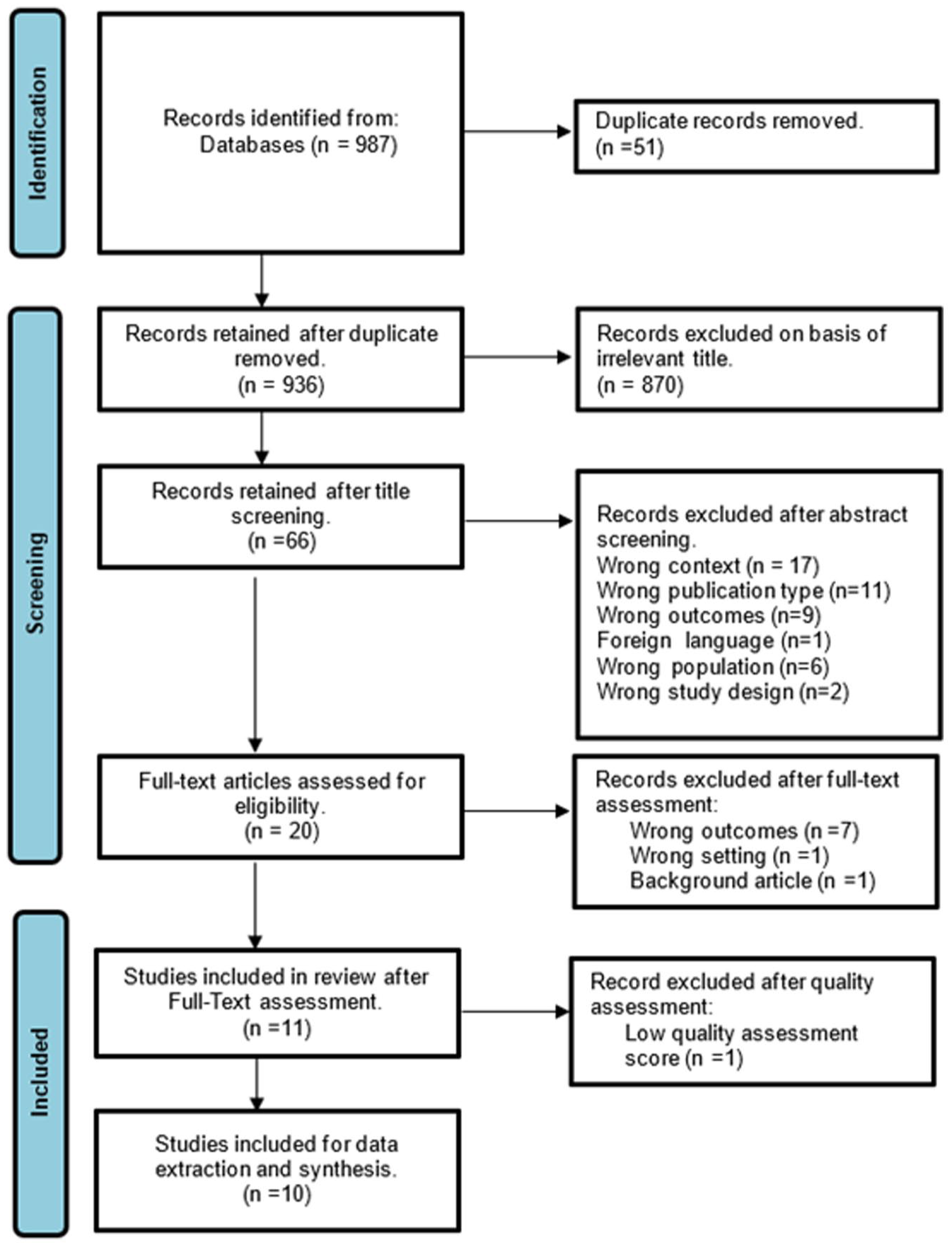
PRISMA flowchart detailing the study selection process.
Data Extraction and Synthesis
In the data extraction and synthesis phase, we amalgamated relevant qualitative and/or quantitative information from selected studies to answer the research question. We extracted both descriptive and analytical data from the studies, including publication year, authors, research design, sample size, participants, instruments, and theoretical framework. The analytical data pertains to the outcomes of the studies and relates to the research question. We adopted the qualitative thematic analysis technique proposed by Thomas and Harden (2008) and integrated the findings with a narrative juxtaposition of quantitative results from the selected studies as suggested by Dixon-Woods et al. (2005). The thematic analysis involved identifying, analyzing, and reporting patterns or themes within data, while narrative juxtaposition allowed for a comparative narrative of different data sets, highlighting contrasts and similarities. The first author coded the articles line by line, developed subthemes, and identified the main themes using NVivo. All authors reviewed and adjusted the codebook, main themes, and subthemes before finalizing the coding scheme, as detailed in the online supplementary materials S3. To maintain transparency in this process, the codebook, initially created in NVivo, was exported to a Word document and shared with the second and third authors. Collaborative discussions and amendments were made iteratively. During this process, comments and adjustments were continuously added to the shared codebook until consensus was reached among all three authors (the codebook is provided in online supplementary material S3).
Results
Study Characteristics
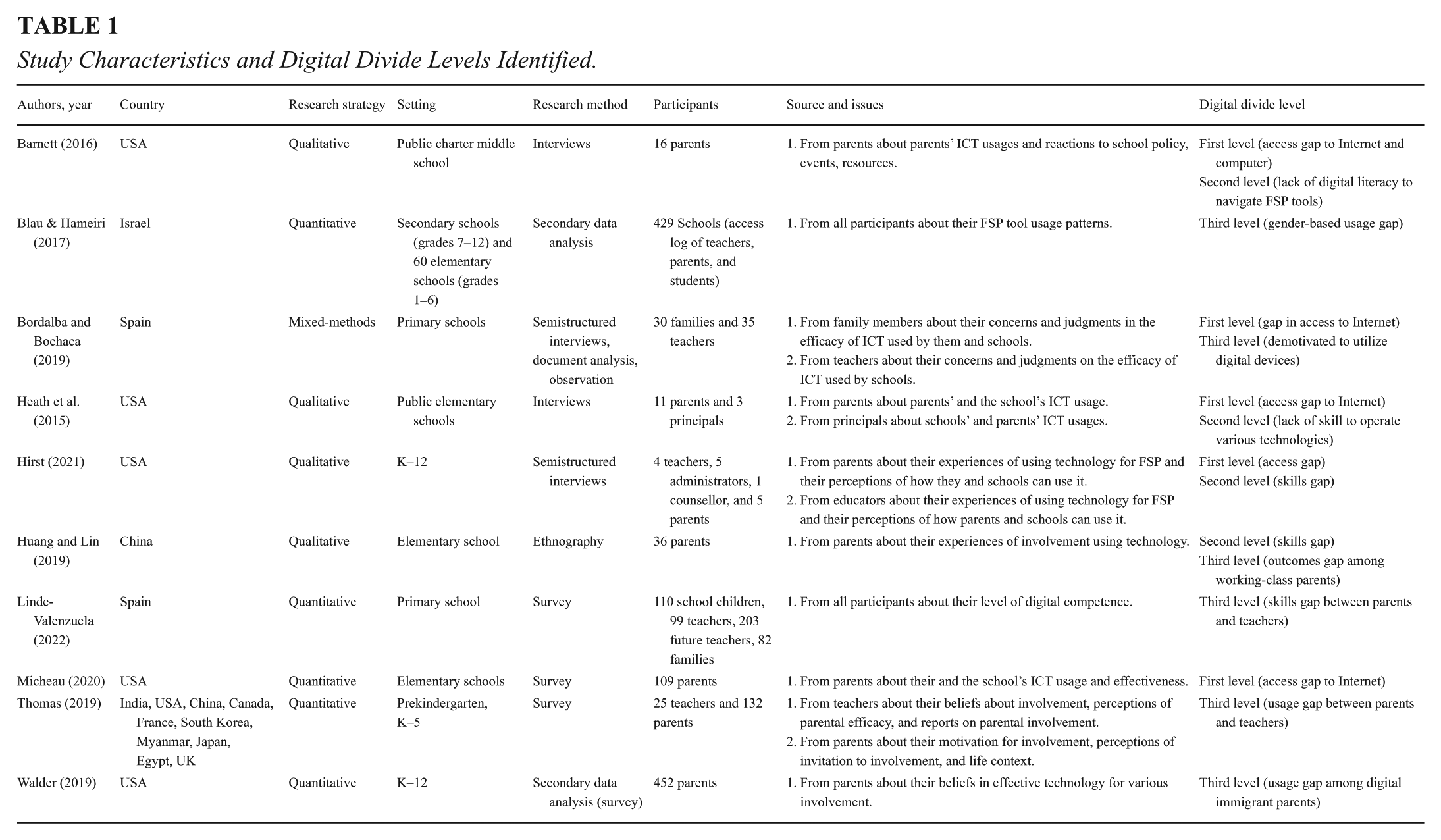
The results of a rigorous examination of the 10 studies that met inclusion criteria and high-quality standards are summarized in Table 1. The selected studies employed diverse research strategies: four qualitative, five quantitative, and one mixed-methods. The studies were conducted in various locations, including the United States (n = 5), China (n = 1), Spain (n = 2), and Israel (n = 1), and one study included participants from 11 different countries (India, the United States, China, Canada, France, South Korea, Myanmar, Japan, Egypt, and the United Kingdom). The studies were carried out in both formal and informal educational settings, including pre-kindergarten (n = 1), primary school (n = 5), lower secondary school (n = 1), and upper secondary school (n = 3). The participants in the selected studies comprised principals, teachers, prospective teachers, family members (e.g., parents, grandparents), students, administrators, and counsellors. Table 1 also provides clear details about which participants the findings were drawn from and to whom the data speaks.
Study Characteristics and Digital Divide Levels Identified.
Technology-Integrated FSP Activities
The selected studies explored a wide range of technology-integrated activities within FSP. As most (n = 7) of these studies utilized Epstein’s (1992) six typologies, it was suitable to organize the technology-integrated FSP activities into six types. Among the six dimensions of the FSP framework, communication was the most technology-integrated dimension, with five studies reporting a broad range of digital home–school communication tools (Barnett, 2016; Heath et al., 2015; Huang & Lin, 2019; Micheau, 2020; Walder, 2019). Commonly used communication tools include mass notification systems, voice calls, robocalls, email, websites, digital newsletters, PowerSchool, Microsoft SharePoint, mobile apps (e.g., MASHOV, Bloomz, ClassDojo, and Seesaw), streaming technology (e.g., podcasts, Facebook Live, and YouTube Live), and social media (e.g., WeChat, Twitter, Facebook groups, and Messenger).
The second most common way technology was used in FSP was for volunteering (n = 3) (Barnett, 2016; Hirst, 2021; Huang & Lin, 2019). Studies showed that parents used technology to communicate and organize volunteering activities and created dedicated channels for volunteering on platforms like WeChat (Huang & Lin, 2019). Teachers and parents also used SignUp Genius and Zoom to schedule volunteering activities (Barnett, 2016). Additionally, technology was used for decision-making in FSP, as parents used WeChat discussions to influence teachers’ pedagogical decision-making, and teachers used online surveys, teleconferencing, social media polls, and voting software to consult or collect opinions before decision-making (Hirst, 2021).
The fourth technology-integrated dimension of FSP was parenting, which included using parental web portals to monitor and support activities, such as real-time access to grades, assignments, attendance, and behavior reports through the Aeries Parent Portal and Google Classroom (Hirst, 2021). The fifth dimension was learning at home, where parents used tools like Zoom, social media, YouTube, homework links, mobile apps, and web portals to assist their children’s learning (Hirst, 2021). Hirst (2021) also finds that technology is used to convey information about available community services and assist parents in collaborating with the community (e.g., community organizations and administrators). Educators used ClassDojo and Google Stream for collaboration, while parents used social media to collaborate with the community.
Parental Technology Preferences
The selected studies portrayed the device usage patterns, the perceived effectiveness of technology integration in FSP, and the technologies preferred by parents. Micheau (2020) reports that 67% of parents primarily used handheld devices and also preferred email (44%), Messenger (36%), and Smartphone Apps (e.g., Class Dojo) (31%). Walder (2019) echoes this finding, reporting that parents recognized mobile devices as the most effective tool for mass communication in FSP. Also, text messaging was identified as the most effective method of receiving information according to parents’ perceptions in Heath et al.’s study (2015), which in turn influenced their preference for using mobile notification systems for updates (Heath et al., 2015). Furthermore, several studies, including those by Heath et al. (2015), Micheau (2020), and Walder (2019), highlight a consistent preference among parents for email communication. These findings exhibit that email and mobile device–based activities are prevalent and preferred methods for FSP among parents.
First-Level Digital Divide and Associated Challenges to Parents
Four studies identified evidence of a parental access gap to ICT (Bordalba & Bochaca, 2019; Heath et al., 2015; Hirst, 2021; Micheau, 2020). For example, Micheau (2020) finds that parents (65%) from high-SES schools (where most students come from affluent families) had significantly more household Internet access compared to parents (11%) from low-SES schools (where most students come from economically disadvantaged families). Heath et al. (2015) report that parents from certain demographic groups in low-SES urban schools lacked access to computers or the Internet, such as non-native English speakers (24%), those earning less than US$30,000/year (24%), and those without a high school education (41%). According to Hirst (2021), both educators and parents agreed that the lack of access to technology, particularly the Internet and Wi-Fi, was the most significant barrier to utilizing technology for FSP.
Apart from the access gap, disparity in access quality has also been identified as an additional challenge. For example, in one low-SES urban school, parents with strong technology backgrounds (e.g., high-tech industry professionals) had access to advanced devices (e.g., iPads, iPhones), while one working-class parent reported being totally unfamiliar with smartphones (Heath et al., 2015). Parents from low-SES households reported their frustration with the inability to use the PowerSchool (i.e., grade-checking system) application on their smartphones due to inadequate device quality (Barnett, 2016). Similarly, a reliable Internet connection was still considered a luxury in low-SES households (Hirst, 2021).
Insufficient access to devices and the Internet presented significant challenges for parents in technology-integrated settings. Heath et al. (2015) highlight that such access gaps, known as the first-level digital divide, restricted the effectiveness of technology-integrated FSP. Parents facing these challenges found it difficult to access vital information and opportunities for active communication with schools and engagement within the broader community (Hirst, 2021). Huang and Lin (2019) found that parents who could not actively participate in technology-based FSP activities experienced feelings of inferiority and social exclusion. These parents often felt disconnected from their community and were excluded from important discussions and decision-making processes affecting their child’s education (Heath et al., 2015; Hirst, 2021). On the other hand, technology was shown to bridge communication gaps for non-English-speaking parents. For example, 90% of the educators in Hirst’s (2021) study utilized technological tools to overcome language barriers and facilitate communication. Programs like ClassDojo offered built-in translation features that catered to non-English-speaking parents (Hirst, 2021). However, parents without access to these technological resources could not benefit from the advantages provided by such language tools in technology-integrated FSP.
Cross-platform incompatibility, characterized by FSP technology being operable only on specific devices, emerged as a significant hurdle for parents. Barnett (2016) reports that parents expressed concerns that schools’ online systems were often designed primarily for computer use, whereas their primary mode of access was through smartphones. This device-specific nature of FSP technology required parents to have access to particular devices, making the FSP tools less accessible if they did not. Given that smartphones have emerged as the most convenient and preferred device for parents (Micheau, 2020), any incompatibility with them resulted in significant frustration and feelings of exclusion (Barnett, 2016; Micheau, 2020).
Second-Level Digital Divide and Associated Challenges to Parents
As physical access became widespread, the first-level divide appeared to narrow, but a new disparity emerged: the second-level digital divide, or the skills gap (Hargittai, 2002; van Deursen & van Dijk, 2019). The second-level digital divide was a dominant issue explored in the selected studies (Barnett, 2016; Bordalba & Bochaca, 2019; Heath et al., 2015; Hirst, 2021; Huang & Lin, 2019). Evidence from the selected studies suggested that the challenges posed by the second-level digital divide have surpassed those caused by the first-level digital divide. Our review highlights significant disparities in digital literacy that affect family engagement with school systems, evident across different demographics and educational settings. Huang and Lin (2019) observed that working-class parents encountered difficulties using WeChat effectively. This challenge points to a lack of fundamental digital skills such as typing messages. This issue is not limited to communication apps but is indicative of a wider skills gap that varies significantly with SES. In a similar vein, Heath et al. (2015) report high variability in ICT skills among parents in urban schools based on their SES. This variability underscores an extensive skills gap among parents, further complicating their interaction with educational technologies. Barnett (2016) reports that parents from low-SES backgrounds struggled with fundamental tasks such as operating smartphones and recalling passwords. These challenges point to information literacy as critical for navigating digital school systems.
Further compounding the issue, Bordalba and Bochaca (2019) note that some families failed to retain system passwords, preventing effective use of school communication systems. Teachers in this study perceived limited knowledge and inadequate training as key factors contributing to these challenges. Moreover, Hirst (2021) identifies that both families and teachers face pronounced gaps in knowledge and skills necessary for using digital media effectively in the FSP. School administrators have observed a significant learning curve among stakeholders expected to adapt to new technologies, further emphasizing the critical nature of support and training in mitigating the second-level digital divide (Hirst, 2021). A disparity in parents’ digital literacy was identified as a significant obstacle to utilizing technology for the FSP, thereby presenting various challenges and associated impacts on parents.
When there was a gap in digital literacy and knowledge that hindered parents’ ability to engage in technology-integrated FSP, it resulted in “infoexclusion” (Linde-Valenzuela et al., 2022), with parents excluded from the vital information stream of the school. Additionally, parents with limited ICT skills faced challenges in comprehending the information and navigating modern web applications, which reduced their interactions with the school (Micheau, 2020). Likewise, engagement in collaborative activities of low-SES parents tended to be constrained by their limited ICT skills (Huang & Lin, 2019). Those parents were often found to be silent in collaborative groups, conceivably due to a lack of confidence, which largely excluded them from participating in collaborative relationships and interactions with teachers and other parents (Huang & Lin, 2019). Another significant barrier for parents who were non-native English speakers was that technologies developed exclusively in English could hinder their access to information and interaction due to challenges in navigating online systems and digital content in English (Barnett, 2016; Heath et al., 2015). The application of multiple FSP tools also posed challenges for parents. For example, when schools employed separate FSP tools such as email, websites, and smartphone apps, they demanded varied skills from parents, highlighting the need for comprehensive digital literacy to enable effective use of all these tools (Micheau, 2020).
Third-Level Digital Divide and Associated Challenges to Parents
The third-level digital divide, also referred to as the “outcomes gap,” was observed among parents who experienced obstacles in leveraging technology to engage with schools despite having adequate physical access and necessary skills (Blau & Hameiri, 2017; Bordalba & Bochaca, 2019; Huang & Lin, 2019; Linde-Valenzuela et al., 2022; Micheau, 2020; Thomas, 2019; Walder, 2019). Digital “native” parents born in the 1980s and beyond have been found to utilize technology in FSP more than digital “immigrants” born before the 1980s (Walder, 2019). Blau and Hameiri (2017) identified a gender-based usage pattern: mothers were found more frequently than fathers to utilize mobile applications to access children’s academic data. Additionally, there was evidence of differing levels of utilization and outcomes among different social classes. For example, while middle- and upper-class parents used WeChat in various ways to engage with schools and teachers, working-class parents used it primarily as a basic messaging tool (Huang & Lin, 2019).
Furthermore, the gap in outcomes between teachers and parents within technology-integrated FSPs has become evident, with teachers experiencing greater success and effectiveness in using the technology to achieve their goals and garner substantial outcomes (Blau & Hameiri, 2017; Thomas, 2019). In contrast, parents were found to benefit less, which was often attributed to their less frequent or inconsistent use of the same technological systems. Micheau (2020) reports that over 11% of survey respondents chose not to use technology for two-way communication with the district/school, potentially representing over 10,000 parents. Overall, the evidence illustrated that the third-level digital divide resulted in unequal outcomes between teachers and parents.
The third-level digital divide poses rising challenges to parents, as within a technology-integrated system that delineates specific engagement expectations for both parents, the observed variations in activity levels between fathers and mothers may contribute to an outcome gap. This gap manifests as differences in engagement in academic support and decision-making, which could influence children’s educational achievements (Blau & Hameiri, 2017). The infrequent checking of emails or irregular use of technology by some parents may lead to missed deadlines or opportunities (Barnett, 2016). The platform-dependency of schools sometimes restricts the flow of information to parents. For example, Micheau (2020) finds that although 75.1% of schools used their website as the primary medium of communication, only 35.8% of parents were able to utilize these websites effectively. Furthermore, a portion of parents expressed challenges in engaging with technology-integrated FSPs due to managing multiple technologies, which could be alleviated by streamlining technology use and providing training (Bordalba & Bochaca, 2019). The outcome gap between teachers and parents also highlighted the need for parents to keep pace with the rapid information sharing by teachers, suggesting enhanced support and training for parents to improve communication efficacy (Blau & Hameiri, 2017; Thomas, 2019).
Discussion
This systematic review aimed to understand the challenges arising from the multilevel digital divide that family members face in technology-integrated FSP. As research focusing on traditional access gaps is not capable of exploring the impact of complex digital divides (Deslandes, 2025; Gómez, 2020; Ragnedda, 2019; Scheerder et al., 2017; van Dijk, 2020), the multilevel digital divide framework was adopted in this study to gain insights into the challenges experienced by parents in technology-integrated FSP.
This review revealed a notable access gap among parents, known as the first-level digital divide (van Deursen & van Dijk, 2019). The access gap resulted in limited parental involvement in their children’s education among parents who faced obstacles to participating in technology-integrated activities (Heath et al., 2015; Hirst, 2021). When technology-integrated FSP is highly effective (Beasley, 2015; Hou et al., 2024), the first-level digital divide may result in digital disconnection with some parents, leading to negative impacts on their children’s education (Giovanna et al., 2018; Qualter, 2024). Eventually, their children may also miss out on opportunities for academic success. Furthermore, parents who have not utilized technology may find it challenging to understand the role of technology in their children’s education (Heath et al., 2015).
The first-level digital divide is primarily influenced by disparities in family members’ education, income, and language (Barnett, 2016; Bordalba & Bochaca, 2019; Heath et al., 2015). These findings are consistent with extensive research highlighting similar variables as the primary determinants of the divide (Bouffard, 2008; Cruz-Jesus et al., 2018). Income plays a significant role in accessing costly FSP tools (Barnett, 2016; Heath et al., 2015). To address this, researchers suggested using affordable, low-cost technology, such as text messaging and phone communication, which are convenient and effective for all parents (J-PAL Evidence Review, 2019; See et al., 2021). Additionally, there was a disparity in access quality among parents (Heath et al., 2015; Hirst, 2021), and research suggests that access quality is linked with the first-level digital divide (van Deursen & van Dijk, 2019). Parents with high-quality devices and Internet connections can access rich content and multimedia, while others face challenges in accessing the same resources. Previous studies have also demonstrated that devices with limited processing capabilities can pose significant difficulties for parents, as those devices may struggle to perform essential functions or operate slowly (Qualter, 2024; Yelland & Neal, 2012). It is important to note that the access quality gap was identified in only a few studies, necessitating careful consideration in interpreting the results and indicating a need for further research to explore this aspect comprehensively.
This review identified cross-platform incompatibility as a unique reason for the first-level digital divide in technology-integrated FSP. This issue underscores the broader conversation on interoperability in digital platforms, where web-based systems and tools are expected to work seamlessly across varied devices (Al-Gerafi et al., 2024; Mesbah & Prasad, 2011). When schools’ governing bodies authoritatively selected a technology tool that was only accessible using computers, parents restricted to mobile device usage found themselves at the forefront of the first-level digital divide, as the tool was inaccessible (Barnett, 2016). If the selected technology had embraced cross-platform compatibility, it might have mitigated this disparity (Hillier, 2020). Empirical evidence suggests that individuals with lower incomes are more likely to rely solely on smartphones for Internet access (Anderson, 2024; van Deursen & van Dijk, 2019). In comparison, those with higher incomes have access to the Internet through various devices, including smartphones, laptops, and desktops (van Deursen & van Dijk, 2019). Therefore, a lack of inclusive policies and bureaucratic barriers, such as imposing specific FSP tools by the administration, can also be a significant obstacle for parents, particularly those with lower income or education levels. The adoption of a more inclusive policy and the integration of cross-platform compatible technology could enable family members to leverage their existing device access (Hillier, 2020). This is particularly pertinent given that many parents and family members already possess mobile devices.
Adopting technology in educational settings often relies on the over-speculation of benefits rather than systematic planning (The US National EdTech Plan, 2024), which may cause hurdles for stakeholders, particularly families. To mitigate these issues and enhance educational outcomes, employing established technology integration frameworks like the SAMR (Blundell et al., 2022) and the PICRAT Model (Kimmons et al., 2020) is advisable. The SAMR Model categorizes technology integration into four levels, which include substitution, augmentation, modification, and redefinition, guiding educators to enhance the effectiveness of technology use in education. The PICRAT model evaluates technology integration through passive, interactive, and creative student engagement with technology, mapping with replacement, amplified, or transformative use of technology. These frameworks primarily focus on technology integration in education, and FSP is an integral part of education. Therefore, these frameworks could be effectively utilized to adopt technology within FSP. They provide a structured approach to ensure that technology implementations are thoughtfully aligned with all stakeholders’ educational needs and realities, thereby fostering more equitable and effective educational environments.
The results of this review indicate that the second-level digital divide is the most prevalent compared to the first and third levels. A gap in digital skills among parents was frequently discussed in the selected studies (Barnett, 2016; Bordalba & Bochaca, 2019; Heath et al., 2015; Hirst, 2021; Huang & Lin, 2019). This divide refers to the gap in digital literacy and competency among parents, which significantly impacts their ability to access and utilize technology effectively in FSP (Bordalba & Bochaca, 2019; Heath et al., 2015; Hirst & Naffziger, 2021). Digital literacy encompasses various competencies, such as technical competency (i.e., the ability to operate hardware and software), information literacy (i.e., the ability to recognize when information can solve a problem), online social skill (i.e., the ability to use ICT for social interaction), and creative skill (Mossberger et al., 2004; Scheerder et al., 2017).
Regarding the skill deficiency related to WeChat, as observed by Huang and Lin (2019), the gap was drawn from a small, qualitative study for this specific tool. It is crucial to note that WeChat is the most widely used communication tool in China, with 87.3% of the population using it (Statista, 2024). While the evidence comes from a limited sample size, the implications of such tool-specific skill gaps can potentially affect a broader population due to WeChat’s extensive role as both a social and communication platform. This finding has been reflected in other quantitative studies, which also identified skill gaps that hinder WeChat use, presenting similar challenges in adoption and effective utilization (Song et al., 2021).
The findings of this review align with a substantial body of literature. While the digital divide discourse has predominantly centered on the access gap (Büchi et al., 2016; Scheerder et al., 2017), there is burgeoning interest in the skills and knowledge gap (Altinay et al., 2016; Assefa et al., 2024; Dewan & Riggins, 2005). As the physical access gap declines, the skills gap poses a significant obstacle, hindering users from fully reaping the benefits of such access (Scheerder et al., 2017). Addressing this skills disparity is vital, as increasing access without addressing the skills gap results in inefficiencies and further divisions. Despite having access to devices and the Internet, the skills gap impedes parents from actively assisting their children in education at home, monitoring their progress, and planning support activities.
The result indicates that the ease of using FSP technology plays a pivotal role in parental engagement in FSP (Micheau, 2020). A user-friendly and straightforward interface in FSP technology could foster better engagement. This perspective can be explained by the technology acceptance model (Venkatesh & Davis, 2000), which states that people’s attitude toward new technology depends on its usefulness and ease of use. Additionally, evidence suggests that adopting multiple FSP tools requires a range of operational skills. This could be a demotivating factor for parents to engage with these technological tools. Based on these findings, an integrated FSP platform/tool could offer a more streamlined experience for family members. Overall, the lack of ICT skills and knowledge hinders parents from fully taking advantage of many benefits, leading to frustration and feeling left behind (Barnett, 2016; Hirst, 2021).
The results confirm that social media platforms such as WeChat, WhatsApp, and Facebook are increasingly used in FSP (Barnett, 2016; Heath et al., 2015; Huang & Lin, 2019; Micheau, 2020; Walder, 2019), which is expected to continue. These platforms are powered by AI-based algorithms, which highlight the direction of future concerns as research suggests that AI-driven technology may exacerbate a complex, algorithm-based digital divide (Gran et al., 2020; Robinson et al., 2020; Wang et al., 2024). When schools and families utilize these platforms, some family members may need to be made aware of the mechanisms of AI, potentially leading to variable visibility of information. Therefore, stakeholders are required to address this emerging concern by bridging the algorithm-based knowledge gap to ensure equitable access to and understanding of the information disseminated through these AI-driven platforms.
The discourse on the digital divide has evolved significantly, transitioning from a primary focus on access to the nuances of skills and, most recently, to the tangible outcomes resulting from ICT use, recognized as the third-level digital divide (Li et al., 2025; Wei et al., 2011). This refers to the varied offline experiences and outcomes individuals encounter arising from their non-engagement or suboptimal engagement with digital technologies, even if equipped with the potential capabilities to harness such tools for life enhancement (Gómez, 2018; Ragnedda, 2017).
Intriguingly, this review’s findings underscore that having equivalent access and digital literacy does not guarantee that parents will derive equal benefits from technological tools (Blau & Hameiri, 2017; Bordalba & Bochaca, 2019; Huang & Lin, 2019; Linde-Valenzuela et al., 2022; Micheau, 2020; Thomas, 2019; Walder, 2019). This intriguing observation arises from the observed disparities in participation rates in technology-integrated FSP, which are significantly influenced by factors such as parents’ gender, age, and socioeconomic status. These variables contribute to a tangible outcome gap in the deployment of FSP technologies (Blau & Hameiri, 2017; Thomas, 2019; Walder, 2019). The variability in benefits can often be attributed to the infrequent use of technology tools among certain groups, driven by these demographic factors. For instance, older parents or those from lower socioeconomic backgrounds may face additional challenges, such as less frequent interaction with technology, lower technology fluency, or limited time and resources to engage deeply with digital platforms.
The third-level divide may emerge as a consequence of the first or second levels of digital disparity (van Dijk, 2019). This outcome gap can be attributed to a myriad of factors, including users’ motivation, usage patterns, and various determinants influencing technology utilization, culminating in a pronounced discrepancy in outcomes (Gómez, 2020). As a result, specific segments of the population, such as fathers, older parents, and those from lower socioeconomic backgrounds, may experience diminished participation (Gómez, 2020; Scheerder et al., 2017). This leads to potential oversights of critical information and a sense of social isolation. Consequently, even when the twin barriers of access and skills gaps are overcome, the utilization chasm persists, potentially stymying active involvement in FSP and thus muting the intended advantages of bridging the prior divides. One avenue schools might explore is refining FSP strategies by diligently assessing family members’ access logs and interactions to craft more effective engagement strategies subsequently.
Confidence disparities and socioeconomic class divisions also may influence the third-level digital divide. It has been observed that parents with low SES might feel less assured or comfortable in environments where they perceive a dominant presence of high-SES counterparts (Bordalba & Bochaca, 2019; Huang & Lin, 2019). Such dynamics suggest that fostering a more inclusive and welcoming environment for technology-integrated FSP could be beneficial for holistic participation.
Drawing from Rogers’ diffusion of innovations theory, some family members can be late adopters of technology (Rogers, 2014). For these individuals, there might be an inherent inclination toward traditional methods as opposed to technology-integrated FSP. Factors such as the absence of nonverbal cues in email and online platforms might contribute to their perceptions of these platforms being less effective (Bordalba & Bochaca, 2019). Recognizing and understanding the reservations of these late adopters becomes critical as, without proper engagement strategies, they risk being marginalized in technology-centric environments.
While this review primarily highlights concerns related to the digital divide, broader critical issues surrounding technology in FSP have been increasingly raised in recent research, warranting further discussion. Some platforms used for FSP, such as AI-driven school communication apps and social media tools, have raised concerns about privacy and monitoring (Han, 2022). Studies have shown that EdTech platforms, particularly those endorsed during the COVID-19 pandemic, were found to track children’s online activities, collect personal data, and share it with third parties, often without adequate transparency or consent (Han, 2022). Such privacy violations highlight the risks of unregulated data collection and the potential misuse of personal information in digital learning environments. Similarly, research on ClassDojo suggests that some digital engagement tools may promote a culture of behavioral surveillance, shifting parental engagement toward performance monitoring rather than genuine collaboration (Manolev et al., 2020; Williamson, 2017). Moreover, as AI-driven engagement tools become more embedded in education, algorithmic biases may create unequal access to school-related information, disproportionately affecting parents with lower digital literacy (Eynon, 2024; Williamson, 2017). Therefore, while this review highlights digital divide concerns, recent research underscores the need to critically assess FSP technology to prevent inequalities, safeguard privacy, and mitigate surveillance risks.
Recommendations
Although technology-integrated FSP has the potential to overcome various obstacles and enhance partnerships, the multilevel digital divide can pose challenges to full participation for some families. Addressing this divide is crucial as technology becomes indispensable in the FSP. In the following sections, we offer actionable recommendations for specific stakeholders to effectively address these challenges and ensure inclusive participation.
School Administrators and Leaders
The findings highlight significant disparities in digital access, skills, and engagement among parents, necessitating a comprehensive assessment of the technological needs and constraints faced by families. Schools should prioritize cross-platform compatibility in FSP tools to accommodate the preferred devices used by parents, particularly smartphones, which were reported as the most commonly used device for communication. Ensuring that school systems are mobile-friendly will reduce frustration and prevent device-based exclusion, a challenge reported in several studies. Additionally, findings revealed that parents from low-SES backgrounds struggle with digital literacy, making regular training sessions and digital support initiatives necessary. However, given that scheduling conflicts and resource limitations may prevent some parents from attending, schools and families should collaborate to implement flexible solutions such as asynchronous training materials, self-paced tutorials, and nondigital alternatives (e.g., printed guides or peer support networks). These strategies may help bridge the second-level digital divide, empowering families by enhancing their digital skills and supporting their time management.
The findings also indicate that some parents resist technology-based engagement due to a lack of familiarity or a preference for traditional methods. School leaders should work to actively engage with these families, addressing their concerns and gradually introducing digital tools in a way that aligns with their comfort levels. This will help prevent exclusion from school communication and decision-making processes, a challenge that was observed among parents who felt disconnected from technology-based FSP initiatives.
Teachers
Teachers play a pivotal role in making technology-enhanced FSP accessible and engaging for families. The findings show that digital literacy gaps are not limited to parents but also affect teachers, leading to inconsistencies in the effective use of technology. Therefore, continuous professional development should be implemented to train teachers in using FSP tools effectively, ensuring they can support parents with varying levels of digital proficiency.
Given that different families engage with FSP technologies at varying levels, teachers should monitor parental participation patterns and adapt communication strategies accordingly. For example, findings revealed that mobile notifications and text messaging are more effective for some parents than emails or school websites. Therefore, teachers may use multiple communication approaches to reach a diverse parent population. Additionally, findings indicate that some parents struggle with multiple school communication platforms, leading to confusion and disengagement. To address this, teachers should work toward simplifying digital interactions by using consistent, accessible, and user-friendly communication channels that align with families’ preferences and digital competencies.
Government and Policymakers
The study highlights that economic disparities play a major role in access to technology, particularly for parents in low-SES communities. Therefore, government agencies may provide dedicated funding for digital infrastructure, ensuring that schools serving economically disadvantaged families have the necessary technological resources to facilitate digital inclusion. This could include providing subsidies for Internet access, affordable devices, and digital literacy programs for parents and teachers. Additionally, given the language barriers faced by non-native English-speaking parents, policymakers should mandate that FSP tools include multilingual support, ensuring that language does not become a barrier to parental engagement.
The study also highlights concerns about technology usability among parents who face digital literacy challenges, emphasizing the need for user-friendly FSP tools to ensure equitable participation. Therefore, government policies should prioritize digital inclusivity, ensuring that educational technology tools are intuitive, digitally accessible (e.g., assistive technology compatible), and designed with diverse users in mind.
While AI-driven platforms are becoming increasingly integrated into educational settings, the findings do not explicitly indicate that AI literacy gaps are a major challenge in current FSP systems. However, as AI-based engagement tools continue to emerge, policymakers should ensure transparency in AI decision-making processes and develop policies that protect parental data privacy, preventing algorithmic bias that could lead to unequal engagement opportunities.
Families
The findings indicate that parents who face digital literacy challenges experience significant difficulties engaging with school technologies, which can lead to exclusion from vital communication channels. To address this, families are encouraged to actively participate in digital literacy programs where possible, taking advantage of school-offered training, community resources, and peer support networks. Additionally, findings suggest that some families are hesitant to use technology-based engagement tools due to concerns about usability and relevance. To foster greater inclusivity, families should maintain open communication with schools, providing feedback on digital challenges and suggesting improvements to ensure that technology remains accessible and beneficial to all parents.
Technology Vendors and Developers
Findings indicate that cross-platform incompatibility remains a significant barrier to parental engagement, as some FSP tools are designed primarily for desktop use, despite mobile devices being the preferred method of access. Therefore, developers should ensure that FSP platforms are optimized for mobile use, allowing parents to access school information seamlessly across different devices. The findings also emphasize that digital literacy disparities among parents contribute to disengagement, highlighting the need for intuitive and easy-to-navigate FSP tools. Developers should prioritize simplified user interfaces, low-bandwidth versions, and multilingual support to ensure that parents from diverse socioeconomic and linguistic backgrounds can effectively use these tools.
Although the study does not explicitly identify a lack of UX research as a core issue, findings suggest that usability difficulties contribute to disengagement. To address this, technology vendors should incorporate parental feedback into platform development, ensuring that FSP tools are designed with accessibility and ease of use in mind.
Strengths and Limitations
This systematic review examined the multilevel digital divide in technology-integrated FSP, highlighting challenges for families and offering actionable recommendations for stakeholders. By addressing this intersection, the review fills a critical gap in literature, benefiting educators, policymakers, and technologists.
Our review was conducted with multifaceted inclusion criteria, focusing specifically on studies within technology-integrated FSP activities that address any aspect of the digital divide. This rigorous approach, while enhancing the relevance and depth of our analysis, inevitably reduced the breadth of selected studies, potentially impacting the generalizability of our findings. Ko et al. (2022) suggest that while a smaller sample size in a review may limit how broadly findings can be applied, it often stems from a committed effort to ensure a thorough and exacting review. A conspicuous absence in our review was studies addressing bridging the digital divide in technology-integrated FSP. This gap might reflect publication bias, whereby nonsignificant findings that did not identify any divide are less likely to be published (Cochrane, n.d.). Additionally, limited research from diverse geographical contexts, particularly Africa, limits location-based generalizability.
While the quality of the selected studies was assessed using a structured framework, final evaluations relied on researcher judgment, aligning with standard peer-reviewed methodologies. However, this limitation should be noted when considering the results. It is important to note that the findings are based on stakeholder perceptions from a small pool of studies, providing indicative rather than conclusive evidence. Despite these limitations, the findings align with existing literature, contributing valuable insights. Given these constraints, results should be interpreted with caution.
Conclusion
The integration of technology in FSP has shown promise in enriching family involvement in children’s education, while also revealing significant challenges. This systematic review highlights the varying degrees of technology engagement among families, driven by differences in access levels and digital literacy skills. Recognizing these diverse starting points is crucial for stakeholders, from school administrators to policymakers, as they develop strategies to foster equitable access to ICT and support technology-enhanced learning for all children. However, it is essential to interpret the findings of this review with caution, considering the limitations related to study designs, sampling, stakeholder perceptions, and methodological constraints. These factors suggest that the findings should be regarded as indicative rather than definitive.
Future research should aim to refine and validate strategies that bridge gaps in digital access and skills within FSP, mainly through more robust designs such as experimental studies or longitudinal assessments. Additionally, examining successful case studies of digital inclusion initiatives in FSP will provide actionable insights for policymakers and educators. Expanding research to include underrepresented regions and sociocultural contexts will help address the current geographical bias in the literature, ensuring a more comprehensive understanding of the global digital divide. Moreover, a deeper exploration of the ethical concerns surrounding digital engagement, such as data privacy and algorithmic bias, will be essential to ensure that technology benefits all families equitably. Furthermore, investigating the relational dynamics between parents and schools, as well as the variations in technology’s effectiveness across different socioeconomic landscapes, will offer deeper insights into how digital interventions can be tailored to diverse needs.
By outlining this research agenda, the study underscores the need for proactive, evidence-based approaches that address both the opportunities and challenges of emerging technologies in FSP. This will ensure that technological advances contribute positively to educational engagement outcomes and promote equitable learning experiences across diverse global contexts.
Supplemental Material
sj-docx-1-rer-10.3102_00346543251400771 – Supplemental material for A Systematic Review of the Impact of the Multilevel Digital Divide in Technology-Integrated Family–School Partnerships
Supplemental material, sj-docx-1-rer-10.3102_00346543251400771 for A Systematic Review of the Impact of the Multilevel Digital Divide in Technology-Integrated Family–School Partnerships by Md Badiuzzaman, Jung-Sook Lee and Therese M. Cumming in Review of Educational Research
Supplemental Material
sj-xlsx-2-rer-10.3102_00346543251400771 – Supplemental material for A Systematic Review of the Impact of the Multilevel Digital Divide in Technology-Integrated Family–School Partnerships
Supplemental material, sj-xlsx-2-rer-10.3102_00346543251400771 for A Systematic Review of the Impact of the Multilevel Digital Divide in Technology-Integrated Family–School Partnerships by Md Badiuzzaman, Jung-Sook Lee and Therese M. Cumming in Review of Educational Research
Footnotes

Authors
MD BADIUZZAMAN is a lecturer at Sydney Metropolitan Institute of Technology and a researcher at the University of New South Wales, Sydney, Australia; email: badiuzzaman@unsw.edu.au. His research focuses on the digital divide, educational technology, digital pedagogy, digital accessibility, and digital inclusion.
JUNG-SOOK LEE is an associate professor at the University of New South Wales, Sydney, Australia; email: js.lee@unsw.edu.au. Her research focuses on educational and social policy provisions to break the cycle of intergenerational disadvantages, with emphasis on equity, diversity, and family-school partnerships.
THERESE M. CUMMING is a professor of special education at the University of New South Wales, Sydney, Australia; email: t.cumming@unsw.edu.au. Her research focuses on evidence-based practices and the use of emerging technology and universal design for learning to support inclusive and accessible education.
References
Supplementary Material
Please find the following supplemental material available below.
For Open Access articles published under a Creative Commons License, all supplemental material carries the same license as the article it is associated with.
For non-Open Access articles published, all supplemental material carries a non-exclusive license, and permission requests for re-use of supplemental material or any part of supplemental material shall be sent directly to the copyright owner as specified in the copyright notice associated with the article.
