




Abstract
This systematic review examines how equity is conceptualized, operationalized, and prioritized within teacher education programs in the United States. Recognizing the critical role teacher education programs play in shaping preservice teachers’ understandings of systemic oppression and their capacity to advance educational equity, this review critically examines the structures and strategies through which equity is enacted. By analyzing a broad set of empirical studies on programmatic reforms, this review identifies key patterns in the design and implementation of equity-oriented efforts. Based on these findings, the review proposes an emerging typology of equity approaches in teacher education programs that range from surface-level commitments and symbolic representations to discrete efforts and systemic approaches. The paper concludes by identifying critical directions for future research that attend to methodology, conceptual clarity, and an explicit engagement with racial justice to more effectively advance equity in teacher education.
Keywords
Introduction
Teacher education programs (TEPs) serve an important role in training and preparing preservice teachers to become effective and high-quality teachers. Requirements within programs help ensure that teacher candidates are being adequately trained to teach diverse student populations and become equitable educators. However, foundational literature demonstrates that TEPs might not operate in an equitable manner, such as the inadequate preparation of preservice teachers for diverse classrooms, lack of diversity in faculty, and resource disparities (Cochran-Smith & Villegas, 2016; Darling-Hammond, 2005; Ladson-Billings, 1995a, 1995b, 2006).
Numerous issues around equity in TEPs remain. First, although equity remains a popular term in teacher education, leading scholars have argued that equity does not address the structural reproduction of inequality in programs. Scholars emphasize the need to dismantle systemic barriers and confront deeply rooted structural inequalities (Cochran-Smith & Keefe, 2022). Second, a lack of clarity endures around equity and the programmatic context of TEPs. Conventional equity rhetoric focuses on equal access, but there must be a transformative commitment to addressing systemic disparities within the program’s organization. Third, fragmentation is present, and programs do not enact the same types of equity content or approaches, which means that preservice teachers receive varying degrees of equity education depending on their program (Cochran-Smith et al., 2015; Goodlad, 1990; Ingersoll, 2012; Philip et al., 2019; Sleeter & Carmona, 2017; K. Zeichner, 2021). This review speaks to the most essential dilemma foundational scholars identify facing teacher education: preparing teachers to successfully educate diverse students who have encountered racial and income disparities (Ball, 2000; Carter Andrews et al., 2019; Cochran-Smith & Villegas, 2016; Howard, 2019; C. D. Lee, 2017; Milner, 2012; Philip et al., 2019; Sleeter, 2017a, 2017b, 2017c; K. M. Zeichner, 2017). There is a need to critically understand how TEPs undertake programmatic efforts to support equity.
This synthesis begins with the purpose of the review and overview of the background. Second, there is a reflection on positionality and how it relates to this analysis. Third, we describe the methodology, procedures, and inclusion/exclusion criteria for the systematic review. Fourth, we present the findings, alongside a discussion of the results. Based on the literature, an emerging typology is also presented. Finally, we share the recommendations, with a discussion of future research for educators and researchers. This review analyzes the equity efforts in TEPs, with a particular focus on social justice and racial equity.
Purpose and Aims
The purpose of this systematic review is to examine what research says about the relationship between TEPs’ holistic programmatic equity efforts and teacher preparation experiences for participants. We seek to understand the conceptions and focus of equity efforts in teacher preparation and their potential impact on preservice teachers in their understanding and teaching of diverse students. The research questions that we address in this systematic review are as follows: (1) What are the conceptions of equity in TEPs? (2) What are the programmatic efforts in TEPs that address issues of equity in education? (3) What is the focus of equity efforts in TEPs? We also propose an emerging typology from the review of the literature to understand types of equity efforts in TEPs.
Background
Although student populations in K–12 schools have become increasingly diverse, teachers have remained majority White. Currently, 54% of K–12 students are from multicultural or diverse backgrounds, and 79% of teachers are White (National Center for Education Statistics, 2022). This exemplifies the gap between teacher backgrounds and student populations. As K–12 student populations become increasingly diverse, TEPs must better equip preservice teachers to meet the needs of students from diverse backgrounds. Furthermore, racism and oppression are reproduced in K–12 institutions; therefore, teachers must be prepared to actively identify and resist structures that perpetuate inequities, especially in their classrooms.
TEPs have a critical role to play in addressing this issue. For teachers to become equity-oriented educators, it is important to examine the programmatic efforts in TEPs that can shape their understanding of systemic oppression and prepare them to be equity educators. An analysis of programmatic equity efforts in TEPs allows for a better understanding of the institutional changes that need to occur for programs to better prepare equity-oriented educators. It is important for TEPs to recruit and prepare teachers to enact equity in their classrooms. Additionally, TEPs can help increase the representation of teachers of color in the field (Sleeter & Milner, 2011). It is valuable for TEPs to focus on equipping teachers with the practical skills to effectively teach diverse student populations (Ladson-Billings, 1995a, 1995b). However, TEPs are not a silver bullet solution to equity issues in education and need to occur alongside other reforms, such as housing and healthcare (Cochran-Smith, 2020; Philip et al., 2018). Those in education must adopt a lifelong learner perspective that understands that their skills and understandings will shift and deepen over time. TEPs have a critical role in preparing teacher candidates early on to identify and confront systems of inequity and oppression in their daily practice (Cochran-Smith, 1991; Cochran-Smith & Keefe, 2022).
Key Terms & Concepts
This review is organized around the term “equity” because of its popularity in education research and prevalence in TEPs. While equity is often cited as a foundational value in TEPs, its definition and application vary widely, which raises questions about how programs conceptualize and implement equity efforts. To provide clarity for this review, it is important to explore the evolving usage of key terms associated with equity in education.
First, scholars have noted that equity is a multifaceted and ambiguous term that is used to convey different meanings in different contexts (Hytten & Bettez, 2011). This conceptual variability has made equity a tangled term that is both widely used and inconsistently applied (Schreiber & Cramer, 2022). In reviewing the literature on how TEPs engage with equity, it is critical to recognize that while some uses of the term may appear superficial or race-neutral in practice, its historical and theoretical roots are grounded in deep critiques of systematic inequality. Differing definitions and focus of equity make it easy for programs to espouse a commitment to equity, even though their conception and enactment of it may widely differ (Agarwal et al., 2010; Boylan & Woolsey, 2015; Cochran-Smith & Keefe, 2022; Cochran-Smith et al., 2009; Goodwin & Darity, 2019; Kaur, 2012). Consequently, it is possible to conduct equity research that is race-neutral and reinforces racial hegemonic assumptions (Kohli et al., 2022). For example, previous research shows that equity-oriented TEPs still exclude and marginalize preservice teachers of color (Kohli, 2009; Souto-Manning & Emdin, 2023). This complexity and understanding of equity shaped the review through the approach and analysis of the study. We aimed to understand the equity efforts of these programs alongside a critical analysis of their conceptions and focus on equity.
Second, related concepts such as diversity, multiculturalism, social justice, and culturally relevant approaches have frequently been used alongside or in place of equity (Banks, 2015; Ladson-Billings, 1995a, 1995b; Sleeter, 2012). These terms have critical origins and were developed to address structural inequities and affirm historically marginalized communities. For instance, multiculturalism and culturally relevant pedagogy emerged to counteract dominant Eurocentric curricula and to validate students’ cultural identities (Ladson-Billings, 1995a, 1995b). Social justice is tied to activist traditions that seek the redistribution of power and resources to redress societal inequities (Hytten & Bettez, 2011; Solorzano et al., 2000). However, in practice, these concepts can be adopted without attention to their critical foundations, which results in interpretations that emphasize inclusion or celebration of difference without naming or addressing racism, Whiteness, or power.
In contrast, terms such as race, racism, White supremacy, White privilege, and power are foundational to critical equity frameworks. Yet they are often less explicitly invoked in teacher education discourses around equity (Leonardo, 2009; Matias, 2013). This uneven emphasis contributes to depoliticized interpretations of equity that center inclusion without addressing the structural roots of inequity. These concepts help expose the systemic forces that shape educational inequities. Race is a social construct that forms the basis of systemic racism, which structures the opportunity and value based on racial hierarchies (Bonilla-Silva et al., 2006; Omi & Winant, 2014). An analysis of racism should extend beyond individual perspectives and examine systemic structures that sustain power and privilege for White people (Omi & Winant, 2014). Similar to Kohli et al.’s (2022) argument, we also acknowledge that racism cannot be eliminated through programmatic efforts alone. Both overt and covert White supremacy normalizes Whiteness and undergirds many institutional norms in teacher education (Leonardo, 2004; Wise, 2010). White privilege maintains the unearned advantages conferred to White individuals in such systems. Power is defined as the capacity to shape institutional decisions and outcomes and is integral to how racial hierarchies are maintained or disrupted in education (Apple, 2012). Meritocracy reinforces racial inequities by promoting the myth that success is purely a function of individual effort and ignores the structural conditions that advantage some groups over others (Gillborn, 2008). There is an assumption that individuals who gained access or made achievements, such as entrance into TEPs, are the most qualified to participate. Due to the hegemonic nature of meritocracy, it must be explicitly acknowledged or critiqued; otherwise, it remains unquestionably accepted and utilized for racial inequity. Similarly, color-evasiveness reinforces dominant norms by denying the salience of race and obscuring the realities of systemic racism (Bonilla-Silva, 2012, 2015; Bonilla-Silva & Embrick, 2006).
While these terms are sometimes adopted superficially or performatively in policy or practice, their origins reflect deep commitments to racial justice. As Kohli et al. (2022) argue, equity efforts that fail to explicitly name and address racism and power can reinforce educational inequities. Therefore, understanding the conceptual histories and tensions embedded in these terms is essential for critically assessing how equity is taken up in teacher education. This understanding shaped the analytic approach for this review. Rather than assuming a shared definition of equity, the review examines how various conceptions of equity are enacted in TEPs and how these interpretations shape programmatic efforts. Our aim is to interrogate not only the presence of equity rhetoric in teacher education but also the depth, coherence, and transformative potential of those equity commitments.
Finally, the review engages the concept of ‘policy’ at multiple levels within teacher preparation. For example, national or state policy refers to policies that TEPs must follow on the macro-level because they are requirements or standards for the credentialing process. Programmatic policy refers to the requirements in a program on the meso-level that teacher candidates must complete to graduate from that program. Programmatic efforts are defined as approaches to equity that are reflected throughout the program, beyond the standalone course.
Strong Equity in Teacher Education Programs
The field of teacher education has long been a focal point for discussions on equity in education. Equity is often cited as a goal of TEPs and is frequently investigated in education research. The call for reform within teacher education has been persistent, both internally and externally in the profession (Darling-Hammond, 2017; K. Zeichner, 2010). However, teacher education faces the pivotal call to transition from vague notions of equity to a deeper, transformative commitment to “strong equity” (Barber, 2003; Cochran-Smith & Keefe, 2022; Cochran-Smith et al., 2018). Strong equity beckons for a profound shift in the discourse surrounding equity, demonstrating the intricate web of societal structures, systemic aspects, and deep-seated inequities (Apple, 2008; Cochran-Smith & Keefe, 2022; Kumashiro, 2015). Thin equity is oftentimes referred to simply as “equity” and obfuscates the systemic issues that continue to perpetuate racialized inequity in programs (Cochran-Smith & Keefe, 2022). This narrow view of equity is often evaluated through an individual perspective, with a focus on teacher effectiveness and student academic outcomes. TEPs must operate from a perspective of “strong equity” and adequately prepare teacher candidates to be culturally competent and skillful in educating diverse student populations, while situated alongside communities, policymakers, and families. Overall, within this review, strong equity serves as a guiding principle for evaluating the depth of equity efforts within TEPs and critically explores the ways that programs both challenge and reify racial inequalities.
The demand for this paradigm shift arises from the recognition that traditional equity rhetoric, focusing solely on equal distribution of resources, often fails to address the underlying structures perpetuating educational disparities and White supremacy (W. Au, 2016; Fraser & Honneth, 2003; Leonardo, 2013; Young, 1990, 2000). With urgency for systemic equity, we seek to understand the complexities of programmatic contexts and equity efforts within TEPs.
Programmatic Efforts
The research has shown that including issues of equity in TEPs is essential and important (Banks & Banks, 1995; Cochran-Smith, 2003; Ladson-Billings, 1995a, 1995b; Nieto, 2000a, 200b). There have been a variety of different approaches to the ways TEPs have incorporated equity efforts into their programs. However, for this systematic review, we will only be evaluating empirical research on equity efforts that are woven throughout a TEP.
Programs take a comprehensive approach to equity standards by implementing overall programmatic efforts that are woven throughout the program. These efforts usually move beyond standalone courses and include fieldwork and multiple classes. Existing research shows that overall programmatic requirements have a greater benefit to developing teacher candidates’ understanding and implementation of equity (Darling-Hammond, 2010a, 2010b; Milner, 2011; K. Zeichner, 2006). TEP accreditation standards (Guide to CAEP Accreditation, 2022) also require programs to address diversity throughout all courses. Additionally, programs can include approaches outside of coursework, such as recruitment efforts that are aimed toward equity-minded preservice and cooperating teachers (Darling-Hammond, Hammerness, Grossman, et al., 2005). Some of these programmatic efforts can also include funding, faculty development, or mandated diversity workshops. For this review, we will only be analyzing programmatic equity efforts in TEPs.
Previous Reviews of Equity in Teacher Education Programs
Broadly, prior reviews have explored various dimensions of equity in TEPs. However, a comprehensive analysis of programmatic components, specifically related to a critical analysis of equity, is notably lacking in the existing literature. This review seeks to bridge this gap by critically analyzing the conceptions and focus of equity in teacher education research to inform changes in both research and practice. This review pairs well with other analyses of TEPs. For example, a few previous reviews analyze equity-oriented teacher education but do not extensively address broader policies fostering equity in TEPs or include a critical look at the uses of equity in these initiatives (Goodwin & Darity, 2019; Hollins & Guzman, 2005; Liao et al., 2022; Rowan et al., 2021). Other insightful reviews were limited in their search terms and only included article titles or searches in specific journals (Kaur, 2012; Mills & Ballantyne, 2016).
Outside of systematic reviews, Cochran-Smith et al. (2015) explored teacher education’s approach to multicultural education, contributing to the understanding of how initial teacher education addresses diversity. Sleeter and Owuor (2011) provided profound insights that investigated the ways initial teacher education addresses multicultural education through pedagogical strategies and frameworks. They provided insights into the state of teacher education by shedding light on the effectiveness of these programs in preparing teachers for diverse settings in their initial years of teaching.
Other reviews and analyses inform this review and contribute to a broader understanding. Scholars utilized other theoretical frameworks, such as critical race theory and intersectionality, to examine teacher preparation (Laughter & Han, 2019; Pugach et al., 2019). Other reviews analyzed different meanings of the term social justice or examined impact evaluations that assessed the effectiveness of TEPs (Mancenido, 2023; North, 2006). All these previous studies have contributed thoughtful and necessary information about teacher education and should be utilized in conjunction with the present analysis.
Positionality
My research is deeply intertwined with my background as a teacher and an immigrant woman of color who navigated the complexities of the K–12 education system. As a person from a communal cultural background, I write with the collective “we” to reject individualism and acknowledge the shared nature of knowledge and research (Na & Choi, 2009). My family and I are first-generation immigrants from South Korea. As an immigrant, my education path was marked by challenges stemming from systemic barriers, cultural nuances, and language barriers. This journey fueled my determination to examine and dismantle the systemic policies and structures that perpetuate racial hegemonic norms within teacher education. In my preservice training, I encountered brief and scattered equity training that left me ill-equipped in practice. As a teacher, I also saw how these systemic policies play out and affect marginalized student groups, but I was not prepared to effectively advocate for them in practice. These experiences motivated and brought me to this research with a desire to resist normative systemic inequities in education. My experiences in these systems brought me to the conviction that inequities must be analyzed systemically, as the onus for change is often placed on individual students and teachers.
My positionality impacted my approach to research and data analysis within the article. First, it impacted the thematic development to ensure that it was aligned with equity. This meant that my positionality, alongside theoretical underpinnings of equity, impacted my perspective of equity as a lens for categorizing studies based on how well they addressed equity in TEPs. This also emerged in the ways I was sensitive to critical concepts in equity, such as racism, Whiteness, and power, and how they operated within the studies. Second, my positionality informed my reflexive approach in coding. Being reflexive means critically reflecting on how my lived experiences and identity influenced my interpretations of the data. This meant that my experiences as an immigrant woman of color made me more attuned to recognizing forms of systemic oppression and marginalization in the studies reviewed. This resulted in codes and themes that were impacted by my personal commitments and experiences with equity. Additionally, I engaged in a reflexive journaling process to note how my positionality impacted my interpretations of the data.
Method
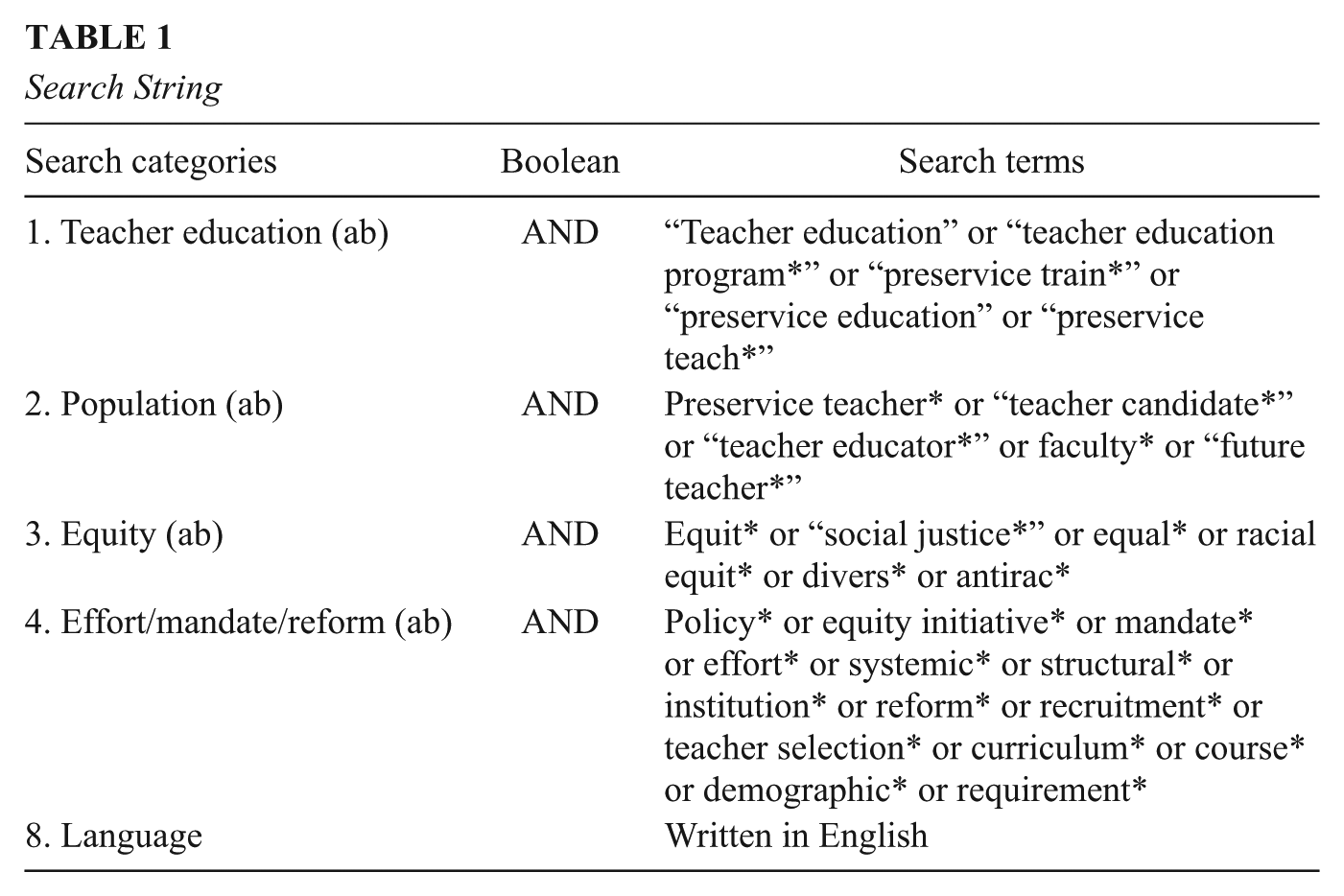
The review utilized the PRISMA (Preferred Reporting Items for Systematic Reviews and Meta-Analyses) guidelines (Page et al., 2021). The PRISMA guidelines include three phases in the screening process, which are identification, screening, and inclusion. The search terms, referenced in Table 1, included four concepts: (1) teacher education programs; (2) preservice teachers and teacher educators; (3) equity; and (4) efforts, mandates, or reforms. There was no specified date range. The key term search was conducted on July 15, 2022, and the initial yield was 2,075. The databases include ERIC (Education Resources Information Center), Web of Science, and PsychInfo. The search in ERIC yielded 1,025 articles, Web of Science yielded 777 articles, and PsychInfo yielded 273 articles. All the articles were peer-reviewed and written in English. We utilized Excel, and 553 duplicates were identified and removed. This meant that a total of 1,522 articles were screened using the inclusion and exclusion criteria. This process is depicted in the PRISMA flowchart in Figure 1.
Search String
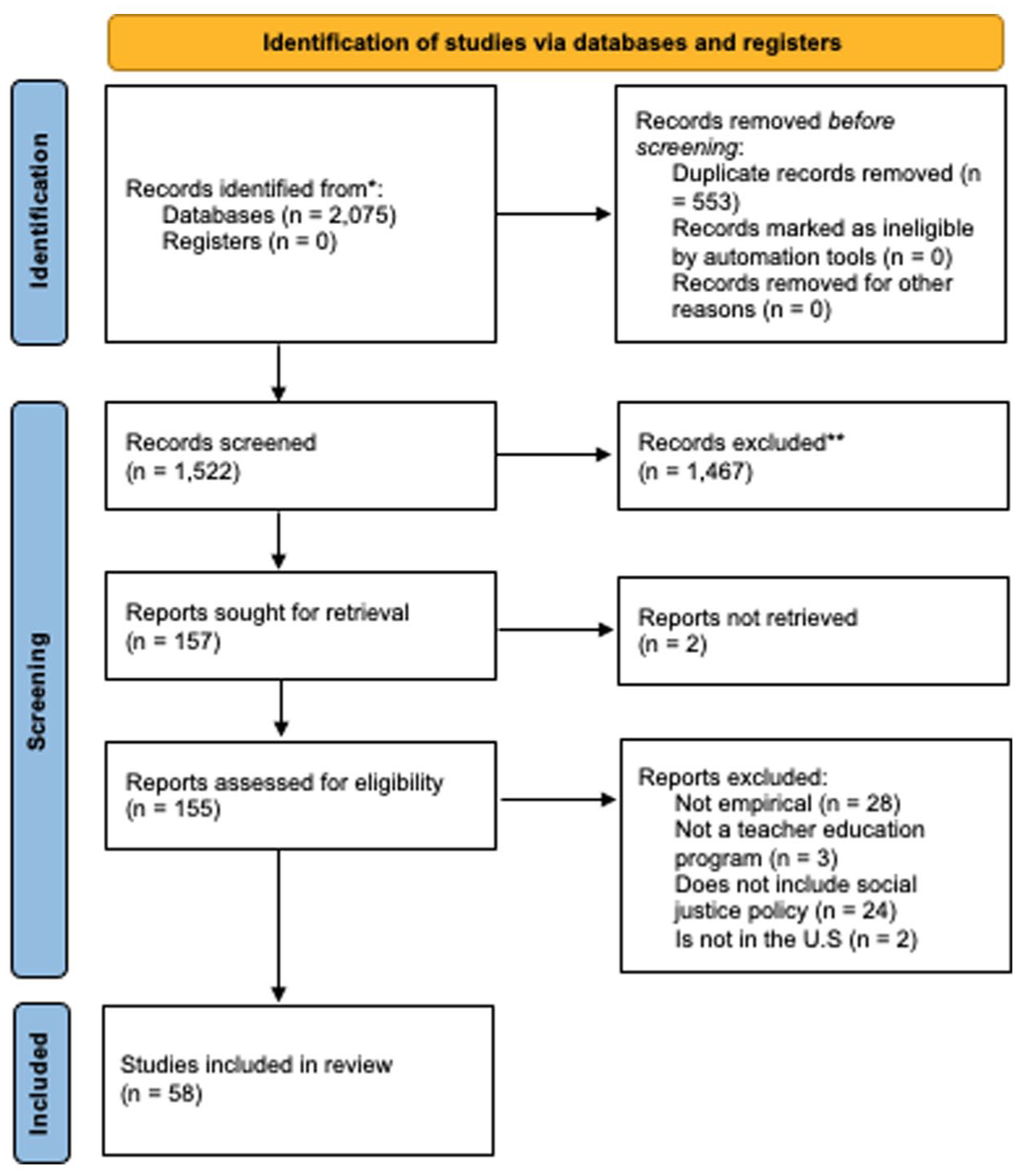
PRISMA flowchart.
Inclusion/Exclusion Criteria
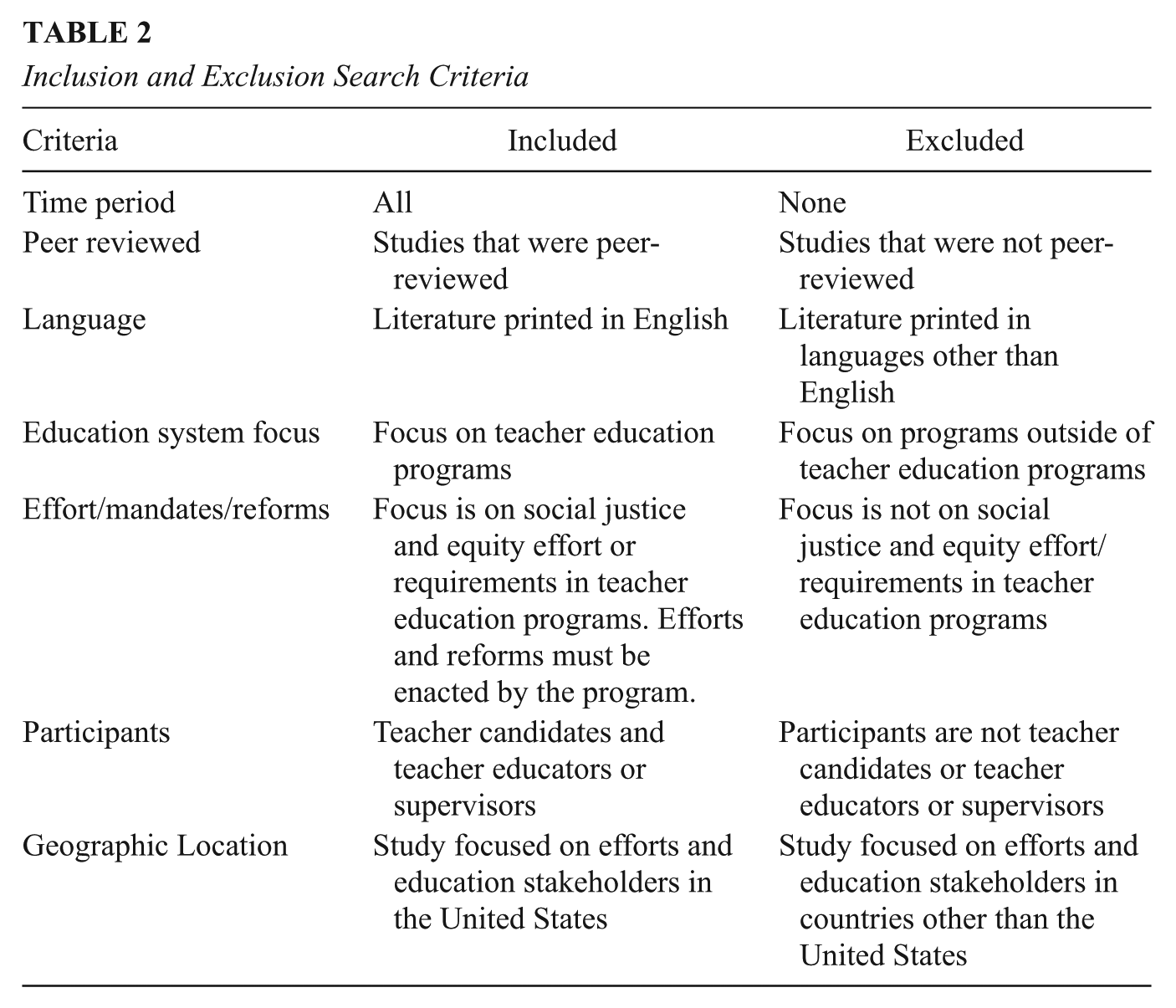
To be included in the review, there were a few criteria the articles needed to meet. The articles had to follow the following criteria: (a) peer-reviewed articles; (b) written in English; (c) studies about teacher education programs; (d) studies including equity efforts, mandates, or requirements in teacher education programs; (e) studies about equity embedded in teacher education programs, excluding isolated equity courses; (f) studies conducted in the United States; (g) studies that were empirical. Articles were excluded if they did not address program efforts throughout the entire program and equity. Articles were also excluded if they were dissertations, literature reviews, conference papers, or presentations. The inclusion and exclusion criteria are referenced in Table 2.
Inclusion and Exclusion Search Criteria
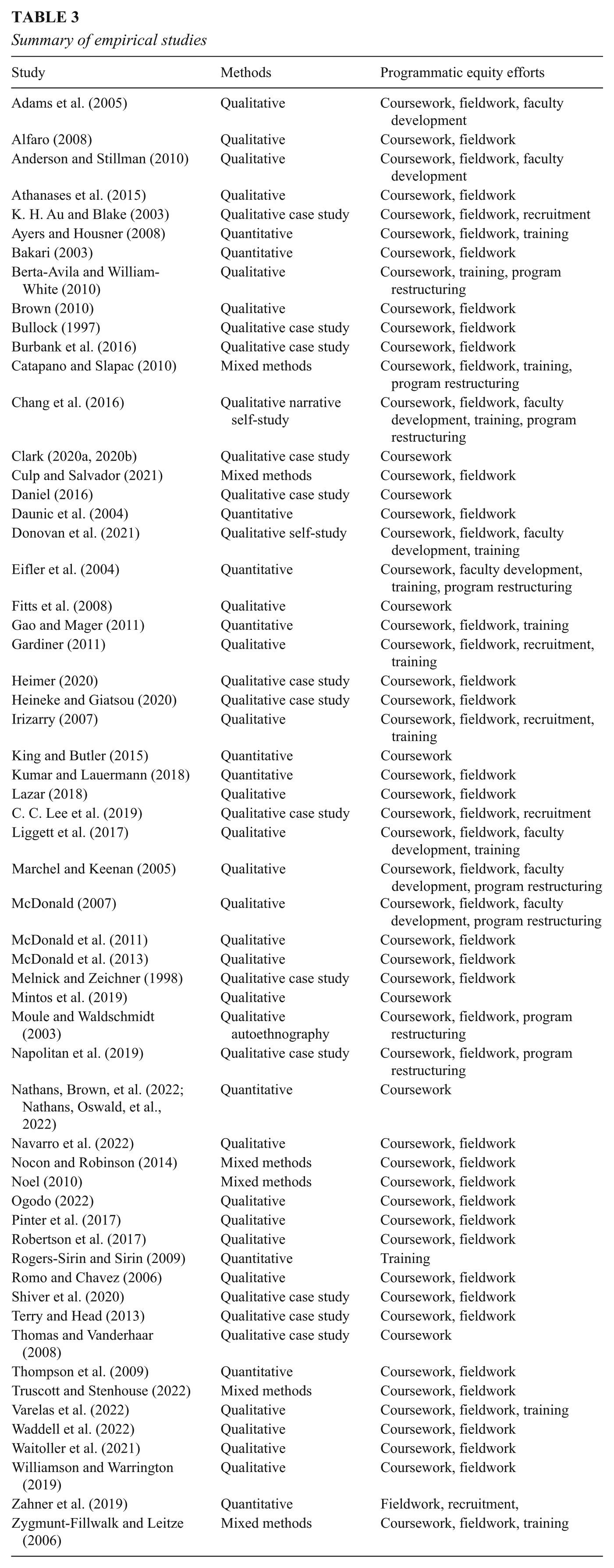
The articles were screened by their titles and abstracts. During the screening process, they were coded as (1) include, (2) unsure, or (3) exclude—type of study, language, education system focus, effort/mandate/reform, participants, and geographic location. After applying the inclusion and exclusion criteria, 157 articles remained to move into the full-text screening process. However, two articles were not accessible and therefore not included in the full-text screening process, which meant 155 full-text articles were screened. Through the full-text screening process, 58 articles were left that met the eligibility criteria, shown in Table 3.
Summary of empirical studies
Data Extraction & Analysis
The data extraction process was designed to systematically capture relevant information from each study included in the review. A few rounds of coding were conducted. The first round of coding focused on programmatic and study elements such as: (a) research methods; (b) sample size; (c) data sources; (d) racial/ethnic breakdown of participants; (e) gender of participants; (f) description or type of teacher education program; (g) equity efforts in the program; (h) location of the program; (i) stated goal or objective of the program; (j) efforts made to the program to be more equitable; (k) equity benefits; (l) equity challenges; (m) partnerships involved in the program; (n) pedagogical practices in the program; (o) recruitment strategies; (p) barriers; and (q) program outcomes.
A second round of coding focused on the conceptual elements of equity-related terms. This included terms such as: (a) equity definition; (b) equity; (c) social justice; (d) diversity; (e) multicultural; (f) cultural; (g) ethnicity; (h) race; (i) racism; (j) institutional racism; (k) White privilege; (l) White supremacy; (m) power; (n) color-evasiveness; and (o) meritocracy. These codes allowed for the identification of patterns in how equity and related concepts were defined and applied across the studies.
Following this, the third round was analytical coding to move beyond description and included interpretation of the data (Richards, 2020). This phase was guided by the research questions and components of strong equity outlined by Cochran-Smith and Keefe (2022). Analytical codes included: (a) whose knowledge is centered or marginalized, (b) who or what is framed as the site of the problem, (c) conceptions of structural change, and (d) specific equity components being addressed or measured in the studies.
A list of relevant themes and subthemes was created as well. Codes were then synthesized into themes to answer each research question: (1) What are the conceptions of equity in TEPs? (2) What are the programmatic efforts in TEPs that address issues of equity in education? (3) What is the focus of equity efforts in TEPs? All coding and data extraction were managed using Qualtrics and Excel to ensure organized documentation and analytic consistency throughout the review process.
Findings
Conceptions of Equity
The first research question asked: What are the conceptions of equity in TEPs? Our analysis revealed several key themes: (a) there were unclear definitions of equity; (b) tensions were raised around differing definitions of equity; (c) equity was used in race-evasive ways—only three articles meaningfully addressed Whiteness and 16 engaged with racism; (d) many uses of equity omitted discussions of power and meritocracy; (e) conceptions of needed equity change varied widely; and (f) the prevalence of thin equity was prevalent across the literature.
Unclear Definitions of Equity
Articles within this review (n = 11) included vague and differing definitions of equity. To add to the lack of clarity, many of the articles invoked the idea of equity but conflated it with other concepts such as diversity, social justice, or multiculturalism. Furthermore, 25 articles did not include a definition of equity, diversity, social justice, or multiculturalism at all. This adds to what previous researchers found, which shows that definitions of equity are flimsy and unclear (Cochran-Smith & Keefe, 2022; Fraser, 2009; Sleeter, 2008). Many of the articles that utilized terms like diversity, social justice, or multicultural with the concept of equity did not address critical issues of racism, Whiteness, or power. From the review, 11 of the 58 articles included a definition of equity, but the definition varied across the studies. However, there were a few commonalities that the equity definitions touched on.
The first commonality was meeting the needs of culturally and linguistically diverse students (Anderson & Stillman, 2010; Athanases et al., 2015; Gao & Mager, 2011; Lazar, 2018; Williamson & Warrington, 2019). For example, Anderson and Stillman (2010) examined the student teaching experiences of preservice teachers to be equity-oriented. In their article, they defined equity as being “equipped to meet the needs of culturally and linguistically diverse students” (Anderson & Stillman, 2010, p. 110). This topic was commonly used as the definition of equity and, in some cases, the only definition of equity (Anderson & Stillman, 2010; Athanases et al., 2015). Second, a few of the definitions (n = 4) included a need for collaboration and partnership with students, schools, and community members (Berta-Avila & William-White, 2010; Gao & Mager, 2011; Napolitan et al., 2019; Williamson & Warrington, 2019). In most of these conceptions, the community was mentioned as a place to be connected to. However, the definitions do not go into detail on how this might be achieved. Third, a few of the articles (n = 3) mentioned the need for teacher and individual growth (Donovan et al., 2021; Gao & Mager, 2011; Williamson & Warrington, 2019). In this conception of equity, growth was almost entirely individualistic and skill-based. Fourth was the acknowledgment of students as knowledge holders (Berta-Avila & William-White, 2010; Lazar, 2018; Williamson & Warrington, 2019). This was an asset-based understanding of students’ capabilities that utilized their existing resources and knowledge but was oftentimes vague and lacked detail. Lastly, a few of the articles (n = 3) touched on student achievement in their conceptions of equity (Berta-Avila & William-White, 2010; Mintos et al., 2019; Varelas et al., 2022). The articles described the need for students to achieve academically, and equity was perceived narrowly through this lens.
Although there were a few patterns that some of the equity definitions touched on, most of the descriptions were scattered and different. For example, only one article used power in their conceptualization of equity (Mintos et al., 2019). Mintos et al. (2019) defined equity as fairness and included aspects of access, achievement, identity, and power in their conceptualization of equity. These aspects of equity were separated into two categories, such as dominant, which includes access and achievement, and critical, which includes identity and power. Furthermore, one article included the need to examine the historical inequities in education (Williamson & Warrington, 2019). Williamson and Warrington (2019) examined preservice teachers’ tensions in an equity-oriented TEP. They defined equity to include the historical aspects of education, perceiving students as knowledgeable, and teachers utilizing students’ existing resources for curriculum development. To add to the disconnection, one article included a definition that examines both institutional and individual understandings of inequities (Donovan et al., 2021). Overall, these authors and research studies gave varying definitions, which further demonstrates the lack of clarity around the concept of equity. The definitions also varied in specificity. Some researchers highlighted equity to meet the needs of diverse students, while others included bigger-picture components such as history or institutional components.
Tensions Around Differing Conceptions of Equity
A few of the articles in this review (n = 2) also found that teacher educators and preservice teachers differed greatly in their conceptions of equity (Liggett et al., 2017; Moule & Waldschmidt, 2003). Moule and Waldschmidt (2003) found that teacher educators differed greatly in their definitions of social justice. This led to tensions between faculty as they tried to embed equity into their program. They found that differing understandings of equity and social justice were an important component of enacting equity work. In a study on university supervisors and their understandings of social justice, Liggett et al. (2017) found that a comparable understanding of equity was needed; otherwise, university supervisors reverted to White racial frames with their student teachers. These articles demonstrate that unclear definitions of equity can lead to tensions and misunderstandings among the different stakeholders in a program, such as directors, teacher educators, preservice teachers, mentor teachers, or supervisors (Liggett et al., 2017; Moule & Waldschmidt, 2003). Therefore, it is important to utilize a clear definition and understanding of equity at the onset of programmatic efforts in TEPs.
Equity as a Race-Evasive Term
Critical aspects of equity were not as frequently invoked as other terms. Quite notably, the term White supremacy did not occur at all within the pieces in this review. Although all the programs emphasized social justice values, cultural competency, or educating diverse student populations, most of the studies did not explicitly address race, racism, or Whiteness in their research. Previous researchers have found that TEPs continue to give advantage to Whiteness, and therefore it can be explicitly addressed in programs (Brown, 2014a, 2014b; Sleeter, 2017a, 2017b, 2017c). Although 10 articles in this review mentioned Whiteness, only three meaningfully addressed Whiteness as an important component of equity and social justice in programs (Navarro et al., 2022; Shiver et al., 2020; Waitoller et al., 2021). Seven articles simply mentioned Whiteness as an identity feature of the participants, without analyzing its relationship to equity or justice. Whiteness should be addressed in equity efforts because its assumed normativity and dominance perpetuate inequitable power dynamics and educational experiences (Ladson-Billings, 2006). Navarro et al. (2022) examined the experiences and perceptions of teacher candidates of color on culturally responsive teaching in their programs at predominantly White institutions. They examined the ways Whiteness was upheld through culturally responsive teaching, as it lacked a systemic understanding of racial inequities. They found that candidates of color recommended that programs hire more faculty of color, create affirming spaces such as affinity groups for candidates of color, and transform curricular practices that address White saviorism and decenter the perspective of White teachers. Navarro et al.’s (2022) article further illustrates the ways programs can espouse commitments to equity and uphold Whiteness and racism that is experienced by candidates of color.
Some of the articles (n = 16) addressed racism as an important component of equity in programs (Burbank et al., 2016; Clark, 2020a, 2020b; Daniel, 2016; Fitts et al., 2008; Heimer, 2020; Irizarry, 2007; Kumar & Lauermann, 2018; Lazar, 2018; McDonald, 2007; Moule & Waldschmidt, 2003; Navarro et al., 2022; Rogers-Sirin & Sirin, 2009; Varelas et al., 2022; Waitoller et al., 2021; Waddell et al., 2022). Racism is an essential component of equity discussions in education due to the ways it permeates all dimensions of the educational system. Heimer (2020) analyzed institutional messages about race and teacher candidate perceptions of a program focused on social justice and race. They addressed racism by using critical race theory (CRT) to examine preservice teachers’ lack of understanding about racism and the ways care relationships perpetuate racism and power inequities. They also analyzed racism through an institutional component by determining the need for teachers to be placed in helpful curricular settings, diverse settings, and engage in community partnerships. Although this study analyzed racism in TEPs, it still centers the analysis on White preservice teachers, as all the recommendations were made with their benefit in mind.
Overall, although many of the studies addressed equity through culturally relevant teaching, cultural competency, social justice, or meeting the needs of diverse students, most of the studies did not discuss racism or Whiteness as central to discussions of equity. The absence of critical analysis aligns with previous research that found culturally responsive research lacked critical discussions of systemic racism, racial equity, or critical pedagogy (W. Au, 2017; Nieto, 2017; Sleeter, 2017a, 2017b, 2017c). This presents a need for studies on critical components of equity.
Uses of Equity and the Omission of Power and Meritocracy
Both power and meritocracy include institutional elements that must be addressed in TEP’s equity efforts. Eleven of the articles highlighted power as an important part of equity efforts in TEPs (Berta-Avila & William-White, 2010; Burbank et al., 2016; Fitts et al., 2008; Heimer, 2020; Mintos et al., 2019; Noel, 2010; Rogers-Sirin & Sirin, 2009; Romo & Chavez, 2006; Varelas et al., 2022; Waitoller et al., 2021; Williamson & Warrington, 2019). Power is an important concept that should be evaluated in equity efforts due to the ways it is embedded in structural inequities, teacher-student interactions, policy formulations, or interactions between schools and communities. The lack of research on power dynamics in programmatic equity efforts is disconcerting, as it implies that current equity efforts may not address key components that are needed for advancing equity. One article that addressed power was Mintos et al.’s (2019) study, which analyzed the ways preservice teachers in mathematics gained an understanding of equity in their programs. Through their analysis, they found that the program focused more on access and achievement rather than the critical components of equity, such as identity and power. Power was the least common focus in the programs. They found that future equity efforts in programs needed to include coherent coursework, field placements in diverse spaces, and impactful learning activities. Although one program in the study had many Latine/x students, most of the recommendations were geared toward White preservice teachers. A limited number of articles included an analysis of power in the recommendations.
Additionally, most of the articles adopted a meritocratic approach in TEPs. One study explicitly addressed meritocracy in its programmatic equity efforts, which is critical in equity because it presumes that individual effort and skills determine academic success. However, this negates the structural and historical inequities that ultimately impact students’ educational experiences and success. Fitts et al. (2008) conducted a study that examined the development of cultural voice for Latine/x teacher candidates in a culturally responsive program. A salient theme was the need to expose the myth of meritocracy to disrupt normative forms of deficit framing of students and their families. Fitts et al. (2008) found that a common deficit frame was that Latine/x students and their families did not care about education. This type of deficit perspective reinforces meritocratic values that reify White supremacy. Programs might consider explicitly addressing meritocracy by developing programmatic strategies that promote equity, address historical disparities, and create inclusive learning environments for minoritized students. Most of the studies in this review did not explicitly address meritocracy and thus do not explicitly question whether student accomplishments are due to advantages or disadvantages in historical, structural, and social dimensions. It is helpful to use meritocracy to analyze different programmatic efforts, such as who is considered “highly qualified” as a teacher and how meritocracy plays into those qualifications. Furthermore, we should consider how meritocracy reifies Whiteness and racism in ideologies that are structured into programs.
Conceptions of Needed Equity Change
Although every study in this review described programmatic equity efforts, there were varying conceptions of what equity change should look like. This ranged from needing teacher candidate perspectives to pedagogical changes. Other conceptions of programmatic change included improvements in coursework (Ayers & Housner, 2008; Daniel, 2016; Eifler et al., 2004; King & Butler, 2015; Kumar & Lauermann, 2018; Nocon & Robinson, 2014; Ogodo, 2022; Robertson et al., 2017; Thomas & Vanderhaar, 2008; Zygmunt-Fillwalk & Leitze, 2006), field placements (Anderson & Stillman, 2010; Eifler et al., 2004; Gardiner, 2011; Heineke & Giatsou, 2020; Lazar, 2018; Robertson et al., 2017; Thompson et al., 2009; Zahner et al., 2019), training (Donovan et al., 2021; Rogers-Sirin & Sirin, 2009; Zygmunt-Fillwalk & Leitze, 2006), or efforts with specific stakeholders such as parents (Nathans, Brown, et al., 2022; Nathans, Oswald, et al., 2022), university supervisors (Liggett et al., 2017), mentor teachers (Gardiner, 2011), or community organizations (McDonald et al., 2013; Napolitan et al., 2019). Many of these conceptions were related to the existing programmatic efforts for equity, which are detailed later.
However, few described more critical aspects of equity change, such as the need to highlight the work of non-White institutions (Clark, 2020a, 2020b) or examine teacher education’s racist history (Heimer, 2020). Heimer (2020) discusses the need to examine the impact of racist history on TEPs and investigate the ways programs are positioned within institutions. Three studies described the need for community and parental involvement in conceptions of equity change (McDonald et al., 2013; Napolitan et al., 2019; Nathans, Brown, et al., 2022; Nathans, Oswald, et al., 2022). Nathans, Brown, et al. (2022) and Nathans, Oswald, et al. (2022) examined the implementation of a parent-teacher education curriculum in four TEPs. They found that a curriculum on family partnerships can improve teacher candidates’ knowledge, skills, and attitudes on working with parents (Nathans, Brown, et al., 2022; Nathans, Oswald, et al., 2022). Partnership with families gave value to parental voice and involvement, which is an important component of teacher education. The conceptions of equity change also varied in specificity, with some articulating the need for many areas of programmatic focus, whereas others did not indicate any specific conceptions of equity change at all. In connection with the earlier section addressing unclear definitions of equity, this underscores the disparate conceptualizations regarding needed changes for equity, which exemplifies the disconnected ways programs think about equity changes.
Prevalence of Thin Equity
Utilizing Cochran-Smith and Keefe’s (2022) framework on strong equity, most of the articles only addressed the economic dimension of redistribution (n = 58) and no other components of strong equity, such as the cultural dimension of recognition (n = 5), the political dimension of representation (n = 5), or discursive dimension of reframing (n = 3). This further exemplifies the use of thin equity in TEPs that diminishes a more holistic approach to equity.
Five articles acknowledged the cultural dimension of recognition (Clark, 2020a, 2020b; McDonald et al., 2011, 2013; Navarro et al., 2022; Waitoller et al., 2021), which focuses on the influence of institutionalized hierarchies of cultural values in perpetuating societal inequities (Cochran-Smith & Keefe, 2022; Fraser, 2009). These hierarchies undermine the values of minoritized groups, which leads to their marginalization (Fraser, 2009). Therefore, TEPs should view the cultural values, experiences, and knowledge of minoritized students, families, and communities as assets rather than deficits. This approach challenges the assumption that assimilation into existing shared goals is the primary purpose of education.
Additionally, five articles recognized the political dimension of representation (Irizarry, 2007; King & Butler, 2015; McDonald, 2007; Melnick & Zeichner, 1998; Napolitan et al., 2019), which focuses on the exclusion of individuals from participating in equal terms (Cochran-Smith & Keefe, 2022). In strong equity, representation necessitates the dismantling of institutionalized obstacles to ensure parity of participation. In TEPs, the matter of representation delves into the historical oppression and underrepresentation of minoritized students, families, and communities in shaping norms and practices related to valued knowledge, privileged epistemologies, and the central or marginal aspects of the curriculum (Cochran-Smith & Keefe, 2022). However, many equity perceptions center on equal access but do not consider that access to flawed curricula or programs, established without the representation of minoritized groups, is not the same as true equity (Cochran-Smith & Keefe, 2022; King & Butler, 2015).
Furthermore, three articles also included the discursive dimension of reframing (Clark, 2020a, 2020b; Truscott & Stenhouse, 2022; Varelas et al., 2022), which involves challenging and reconceptualizing the prevalent assumptions and frames associated with equity in teacher education (Cochran-Smith & Keefe, 2022). Educational frames related to equity are wielded as tools of power, influencing political agendas by positioning minoritized students with dominant ideologies in teacher preparation, practice, and policy-making. In this context, color-evasiveness and meritocracy emerge as influential frames that shape the perspectives of teacher educators, candidates, and policymakers regarding equity. These frames assume objectivity and conceal the structural and racialized nature of inequality within the discourse of individualism and equal access (W. Au, 2016)—strong equity advocates for a deliberate emphasis on unpacking, interrogating, and unlearning these powerful frames.
This analysis further supports the prevalence of thin equity in TEPs, highlighting the inadequacy of existing approaches in addressing the multifaceted challenges within programs. Thin equity fails to comprehensively address the systemic issues perpetuating educational disparities. This demonstrates the need for strong equity in TEPs that includes a fundamental restructuring of programmatic components, focusing on critical analyses of equity conceptions and reframing of prevalent assumptions. By embracing strong equity, TEPs can move beyond superficial measures and actively engage in the recognition of minoritized students. It is recommended that existing frames, such as color-evasiveness and meritocracy, be dismantled and replaced with frames that acknowledge and challenge the structural inequalities ingrained in educational systems. In doing so, TEPs can cultivate an inclusive environment that goes beyond mere assimilation and fosters genuine parity of participation for minoritized groups.
Programmatic Efforts for Equity
The second research question asked: What are the programmatic efforts in TEPs that address issues of equity in education? Our analysis identified several key themes: (a) Coursework was the most commonly used approach to address equity; (b) field placements varied in their approach and structures; (c) some programs implemented equity-oriented recruitment efforts; (d) initiatives focused on developing teacher educators and improving hiring practices; (e) workshops and training sessions were used to enhance equity understanding; and (f) a few programs engaged in broader restructuring to meet equity goals.
Coursework as a Common Approach
From the review, coursework was the most common (n = 42) approach to incorporating equity in TEPs. Although coursework was commonly used as an equity effort in programs, it was unclear if this approach was effective on its own in creating culturally competent teachers. Many of the studies (n = 20) indicated that there was a lack of program effectiveness in educating teacher candidates on social justice and cultural competency (Anderson & Stillman, 2010; Ayers & Housner, 2008; Bakari, 2003; Berta-Avila & William-White, 2010; Brown, 2010; Burbank et al., 2016; Bullock, 1997; Culp & Salvador, 2021; Daunic et al., 2004; Donovan et al., 2012; Fitts et al., 2008; Gao & Mager, 2011; King & Butler, 2015; Lazar, 2018; Liggett et al., 2017; Navarro et al., 2022; Terry & Head, 2013; Thomas & Vanderhaar, 2008; Thompson et al., 2009; Williamson & Warrington, 2019). Additionally, the research indicates that there is a need to demonstrate the long-term effectiveness of this approach as well. Nine of the studies in the review found a need to demonstrate the long-term effectiveness of coursework as an equity effort in TEPs (Athanases et al., 2015; Ayers & Housner, 2008; Chang et al., 2016; Kumar & Lauermann, 2018; Marchel & Keenan, 2005; Mcdonald et al., 2013; Mintos et al., 2019; Robertson et al., 2017; Shiver et al., 2020). Additionally, the research gaze is directed toward White teachers, as only six studies specifically mentioned the experiences of teacher candidates of color, while also examining program-wide equity efforts (K. H. Au & Blake, 2003; Bakari, 2003; Clark, 2020a, 2020b; Fitts et al., 2008; Irizarry, 2007; Waddell et al., 2022). Although the studies in this review found coursework to be a helpful approach, this element needs to be comprehensively integrated with other program components so that teacher candidates become equity-oriented. Additionally, although many studies indicated that programs required equity-oriented coursework, they did not specifically study the content and ways coursework was taught in the programs, leaving a major aspect of program efforts largely unaddressed in the research. These findings do not mean that coursework is not a helpful approach to equity efforts in TEPs. However, it does indicate that there are complexities to this approach on which additional research could provide clarity. Additionally, the researchers studied a few different approaches to coursework for equity in TEPs, such as a series of courses or a comprehensive approach, which are further elaborated in the following sections.
A set of courses
From the review, 62% (n = 36) of the articles noted that TEPs required a set number of courses on equity (Adams et al., 2005; Alfaro, 2008; Athanases et al., 2015; K. H. Au & Blake, 2003; Ayers & Housner, 2008; Berta Avila & William-White, 2010; Brown, 2010; Bullock, 1997; Burbank et al., 2016; Daniel, 2016; Fitts et al., 2008; Gao & Mager, 2011; Heimer, 2020; Heineke & Giatsou, 2020; King & Butler, 2015; Kumar & Lauermann, 2018; Lazar, 2018; C. C. Lee et al., 2019; Liggett et al., 2017; Mcdonald et al., 2013; Mintos et al., 2019; Napolitan et al., 2019; Nathans, Brown, et al., 2022; Nathans, Oswald, et al., 2022; Navarro et al., 2022; Nocon & Robinson, 2014; Noel, 2010; Ogodo, 2022; Pinter et al., 2017; Robertson et al., 2017; Romo & Chavez, 2006; Shiver et al., 2020; Terry & Head, 2013; Thomas & Vanderhaar, 2008; Thompson et al., 2009; Waddell et al., 2022; Waitoller et al., 2021). For example, in their study on the impact of multicultural courses on teacher candidates’ beliefs about students and instructional practices, Kumar and Lauermann (2018) found that the number of multicultural courses teacher candidates take was connected to their instructional beliefs about culturally diverse students. They conducted a quantitative cross-sectional analysis on surveys from 2,129 preservice teachers, and data were collected over 12 semesters at a Midwest college of education. Most of the surveyed participants were White (86%) and female (74%). The researchers found that teacher candidates were more open to changing their instruction to meet the needs of diverse students when they took more multicultural courses (Kumar & Lauermann, 2018). This supports the argument that taking more multicultural courses positively impacts preservice teachers’ understanding of students of color. However, this can become a symbol of equity in programs if it is not thoughtfully applied with other efforts to challenge existing power dynamics or inequitable practices.
A comprehensive approach to coursework
Additionally, 20.6% (n = 12) of the studies analyzed programs that took a more comprehensive approach, meaning equity topics were covered in the majority of their required courses (Anderson & Stillman, 2010; Catapano & Slapac, 2010; Culp & Salvador, 2021; Daunic et al., 2004; Donovan et al., 2021; Eifler et al., 2004; Gardiner, 2011; Melnick & Zeichner, 1998; Moule & Waldschmidt, 2003; Williamson & Warrington, 2019; Zygmunt-Fillwalk & Leitze, 2006; Varelas et al., 2022). In their study of an equity-focused TEP, Williamson and Warrington (2019) found the need for a comprehensive approach to coursework that spanned coursework requirements, fieldwork, and pedagogies. They conducted a qualitative case study with two participants, drawing from longitudinal data of preservice teachers in their programs and their first five years of teaching. Overall, the findings of this study support the need for equity to be conceptually unified across a program and throughout all coursework, values, and teaching pedagogies. The researchers also encourage teacher educators to interrogate tensions that exist within coherent approaches to ensure that all programmatic components are aligned. This can be a systemic approach to equity in programs if it is implemented as a sustained, collective, and institution-wide commitment to equity.
Impact on White teachers
There are also questions about whether equity-oriented coursework impacted White preservice teachers’ cultural competency. For example, Ogodo (2022) conducted an action research study that looked at the coursework in an urban TEP and the impact on White teachers. There were five participants in the study who identified as White. The program’s coursework requirements included a formal theory-based component and a practice-immersive experience. They found that White preservice teachers experienced growth in their cultural knowledge and understanding of students. They also became more aware of the systemic issues that urban communities face and were poised to advocate for their students’ needs.
Benefits and challenges of coursework
Although coursework was a common programmatic effort to increase equity awareness in TEPs, this approach had both benefits and challenges. One benefit of utilizing coursework was that it increased teacher candidates’ knowledge of social justice and cultural competency (Daniel, 2016; Nocon & Robinson, 2014). Additionally, teacher candidates reported greater self-efficacy because of taking multicultural courses (Ogodo, 2022; Terry & Head, 2013). These benefits show us that this approach can be impactful, as it may be effective in shifting candidates’ understanding and cultural competency. However, many of the studies described teacher candidates’ experiences with coursework but did not delve deeper into the details of the coursework.
There were some challenges to coursework as well. The biggest challenge was the need for greater effectiveness to increase teacher candidates’ cultural competency and understanding of equity. Although it was clear that coursework is beneficial to teacher candidates’ understanding, studies indicate there is a need for greater depth, and the long-term effects are unclear (Athanases et al., 2015; Ayers & Housner, 2008; Chang et al., 2016; Kumar & Lauermann, 2018; Marchel & Keenan, 2005; Mcdonald et al., 2013; Mintos et al., 2019; Robertson et al., 2017; Shiver et al., 2020). Additionally, some studies noted that the typical length of a program, which ranges from one to two years in length, is not long enough to truly impact preservice teachers’ understanding of complex topics such as social justice and racial equity. Therefore, further training must extend into candidates’ early years of teaching through induction and professional development (Heineke & Giatsou, 2020). These challenges demonstrate the merits of coursework as an equity effort that is valuable but needs to be tempered with other reform efforts to truly address deep-rooted, structural inequities in TEPs.
There is a need to consider additional efforts beyond changes to coursework. Waitoller et al. (2021) examined the impact of equity curriculum in TEPs through an intersectional perspective that focused on dis/ability and race. Although the program had a strong emphasis on equity, the impact of the coursework was not entirely effective. Teacher candidates learned about asset-based approaches but still used stereotypical perspectives to address issues of race and ability in students. This study demonstrates the need for programs to address issues of equity from a holistic approach that includes reforms beyond coursework. Additionally, programs might consider incorporating issues of equity through an intersectional approach, so that the needs of students with multiple marginal identities are met. The findings from this study align with other studies that also indicate the need for additional reforms to support greater cultural competency among preservice teachers (Anderson & Stillman, 2010; Ayers & Housner, 2008; Bakari, 2003; Berta-Avila & William-White, 2010; Brown, 2010; Burbank et al., 2016; Bullock, 1997; Culp & Salvador, 2021; Daunic et al., 2004; Donovan et al., 2012; Fitts et al., 2008; Gao & Mager, 2011; King & Butler, 2015; Lazar, 2018; Liggett et al., 2017; Navarro et al., 2022; Terry & Head, 2013; Thomas & Vanderhaar, 2008; Thompson et al., 2009; Williamson & Warrington, 2019).
Different Approaches to Field Placements
Field placements were also a large component (n = 46) of programmatic efforts for equity in TEPs. Some field placements had longer time requirements (n = 12), were more immersive (n = 4), or took place in after-school programs (n = 2). The majority of the field placement reforms were not standalone efforts but enacted with other approaches, such as coursework (n = 47), recruitment (n = 5), faculty development (n = 7), workshops (n = 10), and restructuring efforts (n = 7). This leaves us with some unclear conclusions on the effectiveness of this approach as an equity effort in programs. Similar to coursework, there was a large range of different approaches to field placement requirements aimed at meeting equity goals in programs. The programs in the review took different approaches to field placements to be more equity-oriented; these approaches are detailed later.
Field placements in urban settings
For example, 22.4% (n = 13) of field placements in TEPs were explicitly required to be in urban settings (Anderson & Stillman, 2010; Catapano & Slapac, 2010; Gardiner, 2011; Irizarry, 2007; C. C. Lee et al., 2019; Noel, 2010; Terry & Head, 2013; Truscott & Stenhouse, 2022; Varelas et al., 2022; Waddell et al., 2022; Waitoller et al., 2021; Williamson & Warrington, 2019; Zygmunt-Fillwalk & Leitze, 2006). The rationale of this approach was that preservice teachers would be better equipped to teach diverse students from urban schools if they were trained in these settings as teacher candidates. In their study of urban and suburban programs, Catapano and Slapac (2010) found that preservice teachers with field placements in urban settings reflected on the cultural diversity of students more than those in traditional placements. The researchers conducted a mixed-methods study that analyzed 72 student portfolios and compared the portfolios of candidates in the traditional program and urban placement program to analyze their understanding of diversity. They found that candidates placed in urban settings were more aware of students’ cultural needs and the impact of culture on learning. Although the researchers state the need for further research, specifically through a larger sample of data, this study demonstrates the benefits of field experiences in urban settings where candidates learn to teach diverse student populations. However, for this to be a truly equitable approach, it is important that placements in urban settings are not treated as one-off experiences without critical reflection or disconnected from other coordinated actions in the program.
Field placements in community settings
Alternatively, 18.9% (n = 11) of the field placements in the review were in community settings, such as family shelters, community resource centers, or Boys and Girls Clubs (Anderson & Stillman, 2010; K. H. Au & Blake, 2003; Catapano & Slapac, 2010; Gardiner, 2011; C. C. Lee et al., 2019; Noel, 2010; Romo & Chavez, 2006; Terry & Head, 2013; Truscott & Stenhouse, 2022; Varelas et al., 2022; Waddell et al., 2022; Waitoller et al., 2021; Williamson & Warrington, 2019). The rationale of this approach was that preservice teachers gain greater cultural competency when they are integrated into the communities of racially and socioeconomically diverse students. Additionally, studies showed that opportunities for preservice teachers to be more involved in the community resulted in a greater understanding of students and their contexts (McDonald et al., 2011, 2013; Napolitan et al., 2019; Noel, 2010). For example, in a study on a community-based elementary program, McDonald et al. (2011) found that community placements positively impacted teacher candidates’ perspectives of students from diverse backgrounds. The program required preservice teachers to spend 60 hours in a community organization. The study was longitudinal and took place over three years, following two cohorts during their programs. The data for this article included one candidate and was drawn from a larger study. This program was an institutional commitment to prepare teacher candidates to teach diverse students in high-need schools. The community organizations included Boys and Girls Clubs, community centers, and cultural programs. As a result of the community placements, participants were able to engage students of different backgrounds, and it positively impacted their perspectives of the students. Although this study and other research show the benefits of community-based field experiences (Sleeter, 2001, 2008), they found that their effectiveness was limited due to a lack of program cohesiveness. Additionally, to become a systematic approach to equity, it is important for partnerships to focus on co-constructing teacher preparation that truly reflects the strengths and values of communities, rather than imposing a top-down approach.
Field placements in after-school programs
Approximately 3.4% (n = 2) of programs had placements in after-school programs (Adams et al., 2005; Shiver et al., 2020). For example, Shiver et al.’s (2020) study consisted of 12 preservice teachers who concurrently took sequential courses aimed at culturally responsive teaching that were taught in after-school programs. The majority of the participants were White (n = 11), and the researchers used a phenomenological case study approach. Through the field experience in the after-school program, teacher candidates went from blaming the students to acknowledging the cultural differences between themselves and their students. At the end of the fieldwork, preservice teachers were able to bridge the gap and adjust their understanding and communication with their students. This is another example of field placements outside of the classroom that could be beneficial.
Immersive field placements
Additionally, 6.8% (n = 4) of the studies looked at programs that required immersive fieldwork experiences, meaning candidates were required to live and engage in the community (Alfaro, 2008; Melnick & Zeichner, 1998; Ogodo, 2022; Zygmunt-Fillwalk & Leitze, 2006). For example, Alfaro (2008) studied a program that required an immersive experience abroad. The participants were four multilingual teachers, two were Latine/x and two were White, and the researchers used emergent grounded theory to analyze the data. The specificities of the exact coursework were not shared. The program required a nine-month immersion experience in Mexico that incorporated both student teaching and coursework. As part of the immersion experience, students stayed with host families or other families of the faculty members of the program. The coursework was taught by local faculty members, and student teaching took place in indigenous schools. Alfaro (2008) found that participants learned to incorporate multicultural teaching practices and navigate cultural differences. Furthermore, Melnick and Zeichner (1998) discussed field placements that included both an immersive experience in Chicago’s racially diverse communities and student teaching. The immersive experience included student teaching, seminars, and living in the local community. They found that students were receptive and impacted by the immersive experiences. However, there was not much empirical evidence to support the program’s long-term success and effectiveness. They also make the argument that equity should be the responsibility of the entire institution and in all aspects of the program (Melnick & Zeichner, 1998).
Field placements with longer time requirements
Moreover, 20.6% (n = 12) of the programs had longer time requirements and extended field placements (Alfaro, 2008; Catapano & Slapac, 2010; Chang et al., 2016; Gardiner, 2011; Heineke & Giatsou, 2020; Irizarry, 2007; Navarro et al., 2022; Thompson et al., 2009; Truscott & Stenhouse, 2022; Varelas et al., 2022; Waddell et al., 2022; Zahner et al., 2019). For example, Gardiner (2011) studied a residency program and interviewed eight urban mentor teachers about their perspectives on yearlong fieldwork. The program was the first urban teacher residency program in the country, located in Chicago. Teacher candidates took equity-focused coursework and were placed with a mentor teacher for a year. As a result, mentor teachers believed that longer field placements were imperative to prepare preservice teachers to teach effectively in urban schools and increase their equity.
Benefits and challenges of field placements
Generally, most studies have shared the benefits of integrating equity-oriented field placements in TEPs. Although there were different approaches to field placement efforts, such as longer time requirements, community-based, urban settings, or immersive engagement, all these approaches resulted in more equity-oriented teacher candidates. Additionally, studies shared that field placements were an essential piece in educating equity-minded preservice teachers due to the importance of student teaching in learning classroom practice (Adams et al., 2005; Alfaro, 2008; Catapano & Slapac, 2010; Thompson et al., 2009).
However, the studies also revealed some challenges to this approach. Although reforms to field experience efforts are generally effective, there are complexities around field placements. Three studies found that although it is helpful to have field placements in urban settings, it is also important to evaluate the cultural competency of the mentor teacher (Anderson & Stillman, 2010; Gardiner, 2011; Thompson et al., 2009). These studies found that field experiences leave preservice teachers with less understanding of students’ knowledge and teaching if they are not appropriately guided by mentor teachers (Anderson & Stillman, 2010; Gardiner, 2011; Thompson et al., 2009). Additionally, studies indicated that it is important that field experiences are integrated with coursework and other aspects of the program to fully realize their effectiveness (Catapano & Slapac, 2010; McDonald et al., 2011). These challenges reveal the complexities of field placements and utilizing them as efforts in programs for equity. Additionally, these challenges reveal the need for a greater understanding of how field experiences are organized and implemented, beyond the location of the placement. These complexities impact the types of experiences and understandings of equity that preservice teachers leave with after the program.
Equity-Oriented Recruitment Efforts
Besides coursework and field experience efforts, fewer programs utilized equity approaches that extended beyond these two components. Equitable recruitment efforts included targeting minoritized groups, funding, and analyzing teacher dispositions and career expectations. Only 8.6% (n = 5) of the programs had recruitment efforts for preservice teacher candidates that aimed to develop equity-oriented teachers for community engagement (K. H. Au & Blake, 2003; Gardiner, 2011; Irizarry, 2007; C. C. Lee et al., 2019; Zahner et al., 2019). However, there were different approaches to recruitment efforts that ranged from recruiting teacher candidates based on their community connections (n = 3), beliefs about social justice (n = 1), or funding benefits (n = 4). These approaches are further detailed in the following sections.
Recruitment based on community connections
Approximately 5.1% (n = 3) of the recruitment efforts required that candidates have significant connections to the community, which required that they grew up and attended schools within the district or could demonstrate other significant ties to the community (K. H. Au & Blake, 2003; Irizarry, 2007; C. C. Lee et al., 2019). A few of these studies highlight the benefits of integrating equity-oriented recruitment efforts in TEPs. For example, Irizarry (2007) used qualitative methods to examine a program called Project TEACH that recruited “home-grown” teacher candidates who both attended local schools and were raised in the local community. Project TEACH was a partnership between a university and the local community that intentionally recruited teacher candidates of color from the community. The program recruited diverse teacher candidates to attract and retain more teachers of color in education. It also included funding packages for preservice teachers that required them to teach in the district upon graduation. Overall, the researchers found that the program was able to recruit diverse teacher candidates from the community.
Recruitment based on race
Approximately 3.4% (n = 2) of the programs had explicit recruitment efforts around racially minoritized backgrounds to increase the number of teacher candidates of color (K. H. Au & Blake, 2003; Irizarry, 2007). For example, K. H. Au and Blake (2003) used a case study design to examine a two-year elementary TEP at the University of Hawai`i. The Ka Lama program had a recruitment initiative that aimed at increasing the number of Hawaiian teachers and reducing the effects of teacher turnover. They specifically recruited indigenous Hawaiians and residents of the Leeward Coast. Findings demonstrated that candidates who were indigenous to the community had a stronger understanding of equity issues and student obstacles. Candidates not from the community could increase their understanding through field experiences and coursework within the community. Indigenous teacher candidates could also increase their understanding through field placements and coursework to reflect on their own cultural identity and make connections to teaching.
Recruitment based on teacher beliefs
Additionally, 1.7% (n = 1) of the programs included recruitment efforts on the beliefs and values of preservice teachers. For example, C. C. Lee et al. (2019) used a case study approach to examine an urban teacher residency program that prepared preservice teachers for urban environments. They found that up to seven years after graduation, most of the participants in the study were still teaching in urban schools. C. C. Lee et al. (2019) found that it is important to recruit teachers who are already aligned with equity beliefs and values. It is beneficial to adjust recruitment policies to create equity-oriented teachers who stay in the profession long-term.
Funding initiatives for equitable recruitment
Additionally, 6.8% (n = 4) of the studies examined recruitment strategies that included funding packages or benefits (Gardiner, 2011; Irizarry, 2007; C. C. Lee et al., 2019; Zahner et al., 2019). The funding packages often included the cost of tuition, books, and other fees. Most of the recruitment initiatives were grants that required the candidate to work in the district for a set number of years after graduation (Gardiner, 2011; Irizarry, 2007; C. C. Lee et al., 2019; Zahner et al., 2019). For example, Zahner et al. (2019) conducted a quantitative study with longitudinal data that analyzed the recruitment and career trajectories of math teachers in two types of TEPs at one university that aimed to support urban schools. One program was an alternative certification pathway through Teach for America, whereas the other program incorporated equitable recruitment initiatives with funding through the National Science Foundation. The researchers found that the program that provided funding was able to recruit more STEM majors, but the alternative program was able to recruit a more diverse group of teacher candidates. However, the attrition rates were higher in the alternative-certification program, and the graduates of the funded program indicated at higher rates that they intended to remain in teaching longer in comparison to their alternative-certification peers. This study shows the benefits of funding as a recruitment initiative and its impact on early teachers’ attrition rates. Irizarry’s (2007) study also included funding benefits. In the study, the funding packages were a helpful resource that allowed more diverse teacher candidates to access teaching as a viable career opportunity. The program graduated 81% of its enrolled students, and 81% of the graduates continued to teach in the district at the time of the study. This study demonstrates the potential effectiveness of funding, alongside other recruitment factors, in attracting teachers of color to the field.
Benefits and challenges of recruitment
The studies captured both benefits and challenges to recruitment efforts aimed at increasing equity. First, the benefits of the recruitment efforts included the ability to successfully recruit desired candidates, whether based on diversity, subject matter, or equity orientation. These candidates met the program’s equity mission and goals. Additionally, the studies reported that most of the graduates were still teaching, and attrition rates in the first few years of teaching were lower in comparison to more traditional approaches.
Conversely, some challenges were raised from these studies as well. For example, Irizarry (2007) found that the program recruited more teacher candidates of color, but they experienced isolation and negative campus climates from being at a predominantly white institution (PWI). K. H. Au and Blake (2003) also found that they were able to recruit more diverse candidates, but it was difficult to explore racial and cultural issues in depth due to the time constraints of a preservice program. Moreover, funding was a beneficial recruitment effort, but many programs noted that it was too difficult to maintain funding sources to provide potential students with adequate scholarships for the program duration (Irizarry, 2007; Zahner et al., 2019). These challenges demonstrate the difficulties of utilizing recruitment efforts for equity in TEPs. Additionally, equity-focused recruitment can be a symbol of equity in programs if they do not also address the institutional cultures and support systems that create barriers to retention and success.
Developing Teacher Educators and Improving Hiring Practices
Another program effort that TEPs utilized to become more equity-oriented was developing and educating faculty members. This approach targeted teacher educators as a strategic effort since they hold the responsibility of educating future teachers to be equity-oriented. Around 13.7% (n = 8) of equity efforts in TEPs were aimed at developing faculty members to be changemakers and create more equity-minded preservice teachers. One approach was to require faculty to revise their programs, curricula, or syllabi to be more equity-oriented. Other efforts that targeted faculty members included faculty hiring practices (Eifler et al., 2004; McDonald, 2007) and developmental training around equity topics (Chang et al., 2016; Donovan et al., 2021; Eifler et al., 2004; Liggett et al., 2017).
Development through training
Moreover, 6.8% (n = 4) of the programs’ efforts tasked faculty to form teacher inquiry groups and receive development training on equity topics (Chang et al., 2016; Donovan et al., 2021; Eifler et al., 2004; Liggett et al., 2017). For example, Eifler et al (2004) conducted a quantitative study that analyzed a faculty development model examining the effectiveness of peer instruction. The researchers conducted this as a self-study to analyze their program regarding culturally responsive teaching and online education. They found that the faculty development model was successful at increasing participants’ knowledge of their own identities and worldviews and identifying racist behaviors and culturally responsive teaching practices. Additionally, educators were more willing to work together and share leadership to bring about change in the program, making it more equity-oriented. This study shows the benefits of efforts that target faculty members and the impact they can have on preservice teachers’ learning. However, this can remain a symbol of equity in programs if they are not paired with efforts to address the deeper structural inequalities that are embedded in other levels of the program.
Development through syllabi and curriculum revision
Approximately 10.3% (n = 6) of the programs tasked faculty to revise their curriculum and syllabi to be equity-oriented (Adams et al., 2005; Chang et al., 2016; Donovan et al., 2021; Eifler et al., 2004; Marchel & Keenan, 2005; McDonald, 2007). For example, Marchel and Keenan (2005) used qualitative methods to examine the elementary childhood TEP at the University of Minnesota Duluth. The program used the Institute of Cultural Affairs (ICA) Objective Reflective Interpretive Decisional (ORID) process to engage in the program revision. Faculty members were asked to engage in a reflective process that increased conversation and engagement in the course revision process. This process facilitated a smooth transition to the new program and curricular changes. Students and early childhood professionals shared that faculty engagement in the course revision process would better prepare teacher candidates to teach diverse students. However, the study did not include longitudinal data and could not speak to the impact and long-term outcomes of the program.
Faculty hiring practices
Additionally, 3.4% (n = 2) of the studies focused on efforts that were aimed at faculty hiring and composition to ensure that faculty members were diverse and reflective of student populations (Eifler et al., 2004; McDonald, 2007). For example, McDonald (2007) used qualitative case study methods to analyze the Mills College elementary program and the intern program at San Jose State. McDonald (2007) found that, amongst other factors, faculty selection supported the development of equity in the TEP. It was important to hire faculty who were committed to equity and worked collaboratively with other faculty members on the mission of social justice. They found that faculty hiring efforts also contributed to more stable work environments where faculty could build on the equity work they had completed together. However, like student equity recruitment initiatives, this can remain a symbol of equity in programs if they do not address deeper barriers to success for faculty of color that are embedded in the institutional culture.
Benefits and challenges to faculty development
Like the other efforts, there were both benefits and challenges to this approach. Many of the studies highlighted the benefits of targeting faculty development to increase equity in TEPs. Some of the benefits include greater faculty awareness of their own identities, culturally responsive teaching, and multiple perspectives. This awareness also impacted teacher educators’ teaching practices and teacher candidates. Additionally, two studies indicated that the engagement of faculty on these topics meant a greater commitment to the program’s social justice mission and cooperation between faculty members to enact equity goals within the program (Donovan et al., 2021; Eifler et al., 2004).
However, there were some challenges to targeting faculty development in TEPs as an effort toward equity. Some of the studies found that conversations around race were tense and uncomfortable, making it difficult to engage in discourse around this topic at times (Donovan et al., 2021; Eifler et al., 2004; Liggett et al., 2017). Additionally, Liggett et al. (2017) found that teacher educators used language to downplay or deflect race issues and instead directed the conversation to discussions on learning styles and student needs instead. This deflection allowed faculty to revert to what they are accustomed to doing, or what Feagin (2013) refers to as the “White racial frame,” which informs their teaching practices and interpretations of students. However, researchers were hopeful that continued exposure, professional development, and conversations about race would stretch educators and move them toward equitable teaching.
Workshops to Enhance Equity Understanding
Within the review, 20.6% (n = 12) of TEPs efforts included training for students, university supervisors, or faculty on equity (Ayers & Housner, 2008; Catapano & Slapac, 2010; Chang et al., 2016; Donovan et al., 2021; Eifler et al., 2004; Gao & Mager, 2011; Gardiner, 2011; Irizarry, 2007; Liggett et al., 2017; Rogers-Sirin & Sirin, 2009; Varelas et al., 2022; Zygmunt-Fillwalk & Leitze, 2006). The workshops and trainings were designed to enhance participants’ understanding of equity topics outside of coursework. They were also used by teacher educators or university supervisors as a form of professional development on equity.
Workshops for preservice teachers
Specifically, 13.7% (n = 8) of the programs included workshops for preservice teachers during their program (Ayers & Housner, 2008; Catapano & Slapac, 2010; Gao & Mager, 2011; Gardiner, 2011; Irizarry, 2007; Rogers-Sirin & Sirin, 2009; Varelas et al., 2022; Zygmunt-Fillwalk & Leitze, 2006). Workshop participants indicated they increased their understanding or thought the training was effective (Liggett et al., 2017; Rogers-Sirin & Sirin, 2009). However, most of the studies did not measure the actual impact and outcomes of the workshops or training with the participants. Rogers-Sirin and Sirin (2009) evaluated the workshop to determine its effectiveness as a programmatic effort to increase the multicultural competence of preservice teachers. They analyzed a program that required the Racial and Ethical Sensitivity Training KIT, which was a workshop aimed at training preservice teachers to identify issues of racism and discrimination and skillfully handle these situations. The preservice teachers participated in 10 workshops that utilized the model. The workshop helped increase teacher candidates’ skills and understanding of culturally responsive teaching. Additional training beyond coursework could be an impactful programmatic effort in TEPs for equity skills. However, like other program efforts, such as faculty development and recruitment, programs requiring workshops and training were far less common and usually paired with coursework and field experience efforts.
Workshops for teacher educators
Additionally, 6.8% (n = 4) of the studies examined programs that included workshops for faculty in TEPs (Chang et al., 2016; Donovan et al., 2021; Eifler et al., 2004; Gardiner, 2011). For example, Donovan et al. (2021) conducted a self-study to examine the revision process in their program that included workshops for faculty members. This study took place over two years in an educational technology program at the College of Education at California State University Fullerton. Three participants were full-time faculty members. They used the Equity Literacy Institute’s framework to examine equity practices throughout the program and found that they needed professional development as teacher educators to become more effective equity practitioners. This indicates that faculty should consider continuing their professional learning of equity through active engagement.
Workshops for other stakeholders
Although many studies on teacher education emphasize preservice teachers, it is important to consider other stakeholders, such as university supervisors, mentors, or community members, that are influential in this process as well. For example, 3.4% (n = 2) of the programs required workshops for other important figures, such as university supervisors and mentor teachers, involved in TEPs (Gardiner, 2011; Liggett et al., 2017). Liggett et al. (2017) used a grounded theory method to study a program where university supervisors were required to attend workshops on equity. The study found that despite receiving professional development on cultural responsiveness, university supervisors diverted conversations about race to more comfortable topics such as student learning styles and learning needs, which dilutes the effectiveness of this approach.
Benefits and challenges
There were both benefits and challenges to utilizing workshops and training to meet equity goals in TEPs. Although many of the studies found that workshops on competency in equity were effective, other studies found the opposite. One benefit of this approach was increased understanding and practice of culturally responsive teaching. Workshops could also target other important stakeholders in programs, such as university supervisors, mentor teachers, or community members.
The studies also noted some of the challenges of this approach. For example, Rogers-Sirin and Sirin (2009) found that although the training was helpful and increased the cultural competency of the participants who were already open to the topic, it was not as effective with individuals who were resistant to the topic. Additionally, Liggett et al. (2017) found that the training did not actually improve university supervisors’ approach to topics of race and diversity and diverted the conversation to more comfortable topics instead, such as student learning styles and individual learning plans. Various programmatic approaches to equity need to be connected to be more effective (Ayers & Housner, 2008; Catapano & Slapac, 2010; Irizarry, 2007). Additionally, workshops can raise awareness but do not often address the deeper structural inequalities that are embedded in other levels of the program. To implement a systemic approach to equity, required workshops could be paired with other program efforts to increase its effectiveness.
Program Restructuring to Meet Equity Goals
Approximately 13.7% (n = 8) of the articles studied programs that engaged in complete restructuring efforts to prepare more equity-oriented teachers. Program restructuring efforts included changes to curriculum content, field placements, partnerships with local stakeholders, revising the mission, and professional development for teacher educators (Berta-Avila & William-White, 2010; Catapano & Slapac, 2010; Chang et al., 2016; Eifler et al., 2004; Marchel & Keenan, 2005; McDonald, 2007; Moule & Waldschmidt, 2003; Napolitan et al., 2019).
This type of programmatic shift indicated that the program was undergoing significant institutional change to meet equity goals, which is a move toward systemic equity. These studies concluded that their efforts were successful in developing greater cultural awareness among students. The authors also discussed the complex and layered aspects of program restructuring efforts. For example, six studies discussed collaboration among faculty in the program (Chang et al., 2016; Eifler et al., 2004; Marchel & Keenan, 2005; McDonald, 2007; Moule & Waldschmidt, 2003; Napolitan et al., 2019). Three studies were open about the tension between faculty that came up throughout the process (Chang et al., 2016; Marchel & Keenan, 2005; Moule & Waldschmidt, 2003).
Faculty-driven program restructuring
Often, most of the restructuring efforts were driven by the faculty of the program (Berta-Avila & William-White, 2010; Catapano & Slapac, 2010; Chang et al., 2016; Eifler et al., 2004; Marchel & Keenan, 2005; McDonald, 2007; Moule & Waldschmidt, 2003). However, in Eifler et al.’s (2004) study, although the program restructuring was still faculty-driven, the initial push was initiated by the dean. The TEP underwent program restructuring at the request of their dean, specifically to improve the multicultural content of the program. Since this process was mandated by the administration, 47 faculty members participated in the program restructuring, which included all faculty members in the program except one person. The program restructuring occurred during a five-and-a-half-year period to incorporate the systemic changes that were needed. Restructuring efforts included revisions to curriculum, syllabi, websites, resources, instructional designs, and fieldwork. Importantly, since this process was initiated by the dean, resources were given to the program to support the restructuring efforts, which were often missing in other faculty efforts.
Collaboration through program restructuring
Specifically, 10.3% (n = 6) of the studies that included program restructuring analyzed collaboration among faculty members and other stakeholders, such as community members (Chang et al., 2016; Eifler et al., 2004; Marchel & Keenan, 2005; McDonald, 2007; Moule & Waldschmidt, 2003). In their study on program restructuring, Marchel and Keenan (2005) noted the benefits of collaboration and shared decision-making in the program revision process. However, the study was unable to determine the outcomes of the changes. Similarly, Catapano and Slapac (2010) compared a traditional program to a restructured program. The restructuring efforts included the collaboration of faculty members with teachers and principals in districts to help preservice teachers further understand cultural complexities. The faculty, teachers, and principals worked collaboratively to deliver content knowledge to preservice teachers regarding culture and diversity in teaching.
Tension through program restructuring
Chang et al. (2016) conducted a self-study of their program that implemented the Teaching Learning and Leading in School Communities field-based model. As part of the program’s redesign process, faculty were required to engage in this transformative process collaboratively. They found that for the redesign process to occur, faculty identities needed substantial change. The authors also found that as the program shifted, their identities as educators shifted as well. The identity shift required faculty to move beyond traditional academic identities. This shows that for comprehensive change to take place in TEPs, efforts must also be attentive to identity shifts and educator thinking.
Benefits and challenges
As with the other programmatic efforts, there were both benefits and challenges to this approach. Some of the benefits included the results of the efforts, such as TEPs that were more equipped to prepare preservice teachers to teach equity. Additionally, programs were able to restructure various aspects of their program to reflect equity frameworks, such as mission statements, curriculum, and fieldwork. This gave programs a more coherent approach to teaching preservice teachers how to teach culturally and racially diverse student populations. Some of the critiques of the other programmatic efforts were that the approaches felt siloed and did not adequately connect to other aspects of the program (Ayers & Housner, 2008; Brown, 2010). The ability to completely restructure a program allowed for a deeper analysis of different aspects of the program and a more coherent approach to equity goals.
However, there were also some challenges to this approach. For example, 5.1% (n = 3) of the studies noted that program restructuring was often met with tension and disagreement around the process (Chang et al., 2016; Marchel & Keenan, 2005; Moule & Waldschmidt, 2003). Moule and Waldschmidt (2003) described the tension between faculty from the restructuring efforts in their TEP. The researchers used autoethnography and dialogue to reflect on their experiences during the restructuring process, with a specific focus on capturing their struggles. They found that tension came up because faculty had different definitions of the term “social justice.” These differences led to conversations about equity that resulted in breakdowns in communication among faculty. Specifically, they noted that tension arose between the daily workings of the program and the evaluation of the values and belief systems underlying equity frameworks. Although the reviewed studies concluded that the restructuring efforts were worthwhile, it is important to note the tensions that can occur throughout the restructuring process.
Focus of Equity Efforts in Programs
The third research question asked: What is the focus of equity efforts in TEPs? Our analysis identified several key themes: (a) There is a focus on White teachers, (b) teachers are framed as the focal point, and (c) researchers are positioned as the constructors of knowledge.
Focus on White Teachers
A prominent theme in this review was the extent to which the literature focused on the preparation of White preservice teachers. Previous research shows that TEPs have continued to be geared toward Whiteness as the norm (Brown, 2014a, 2014b; Sleeter, 2017a, 2017b, 2017c). While it is valuable that the studies in this review examined equity-related efforts, these reforms were frequently oriented toward helping White preservice teachers develop the knowledge and dispositions to engage with “culturally different” students, rather than centering the lived experiences and needs of teacher candidates of color. This pattern raises pedagogical and epistemological questions about whose knowledge and experiences are centered in equity work. For instance, in Nathans, Brown, et al.’s (2022) study, diversity was positioned as a tool for White teachers to “acquire greater cultural understanding” (Nathans, Brown et al., 2022, p. 541). This reflects an instrumental view of diversity rather than a structural or justice-oriented perspective. Across the studies, equity was often framed as professional competency for White preservice teachers to better navigate diverse classrooms, rather than a transformative project rooted in racial justice. Of the 29 studies that reported demographic data, 23 included samples composed primarily of White participants. Only six of the articles featured the experiences and perspectives of teacher candidates of color, while also examining program-wide equity efforts (K. H. Au & Blake, 2003; Bakari, 2003; Clark, 2020a, 2020b; Fitts et al., 2008; Irizarry, 2007; Waddell et al., 2022). This lack of representation limits the field’s understanding of how equity is experienced by candidates of color and how TEPs can be transformed to serve their needs more fully.
Importantly, while some studies mentioned White privilege (n = 10), the depth of this concept varied significantly (Brown, 2010; Burbank et al., 2016; Clark, 2020a, 2020b; Heimer, 2020; Kumar & Lauermann, 2018; C. C. Lee et al., 2019; Moule & Waldschmidt, 2003; Navarro et al., 2022; Noel, 2010; Shiver et al., 2020). For example, Heimer (2020) found that institutional values often obscured conversations about privilege, even when it was acknowledged. Similarly, Moule and Waldschmidt (2003) also found that the lack of awareness around White privilege and other racialized topics, such as racial interaction development, made it difficult for the TEP to make progress in implementing equity into the program. This illustrates the need for programs to address Whiteness and privilege to meet equity goals—programs should consider mechanisms to navigate the discomfort and resistance that often accompany this work.
One study specifically examined an equity-oriented program with teacher candidates of color at a historically Black college and university (HBCU) (Clark, 2020a, 2020b). One other study included an HBCU as part of the study sample but did not highlight the findings from that program (Bakari, 2003). Clark (2020a, 2020b) conducted a case study examining social justice at a physical education TEP at an HBCU. They found that an analysis of equity must include the culture and mission of the institution. In their analysis, Clark expressed dissonance with how non-White institutions are often excluded from equity discussions in teacher education and emphasized the importance of decentering Whiteness in conceptualizations of justice. They also argue that social justice in teacher education is primarily oriented toward White individuals who are enrolled at predominantly White colleges and universities. They highlight the ways in which the program embodies equity, beyond simple teachings of what equity is. For example, the program had an open admission policy, was comprised mostly of teacher educators of color, and had high expectations of preservice teachers from faculty. They found that the program decentered Whiteness and that justice was embedded into the program and institution, as it was not relegated to a special course or initiative. Similarly, Cochran-Smith (2010a, 2010b) shares that social justice education is not just for White monolingual middle-class teachers but for all preservice teachers of different backgrounds. Future scholarship can consider how equity efforts are beneficial and impactful for teacher candidates of color and center their experiences.
Teachers as the Focal Point
Another pattern identified in this review is the recurring tendency to frame teachers and teacher skills as the central problem and primary lever for achieving equity. Most of the articles (n = 41) positioned equity as a matter of teacher knowledge, beliefs, or skills. There was limited attention to the institutional, programmatic, or structural factors that shape inequity within TEPs. This focus reflects what scholars are already documenting—while teacher development is crucial, it is insufficient on its own to produce complete change (Sleeter, 2014; K. Zeichner, 2010). By isolating teachers as the locus of reform, many studies adopted an individual-level lens and overlooked how teacher learning is nested within systems that may themselves uphold inequity. For example, Nocon and Robinson (2014) examined the use of conceptual tools by teacher candidates that underscore the need for systematic methodologies within the policy context. There were no mentions of race, racism, White privilege, or White supremacy. It positioned teachers as the issue and the program as the holder of expertise, reinforcing a one-way model of change and masking the systemic conditions in which teachers operate. This critique is not to say that teacher-level solutions are not necessary, as the existing research has provided many relevant insights to improve teaching. Rather, this teaches us that conceptualizing equity solely as a teacher-level issue limits our capacity to imagine deeper forms of educational transformation. While tools, workshops, and pedagogical training can enhance teacher practice, attention is needed for programs to reflect on their own structures, assumptions, and roles in perpetuating inequity. Equity efforts should not only build teacher capacity but also interrogate the institutional conditions in which teachers are prepared.
Researchers as the Constructors of Knowledge
Another theme that emerged is how knowledge production is conceptualized and who is positioned as a legitimate knowledge holder in teacher education. Across the studies reviewed, researchers often centered their own understanding and critique, as well as the existing knowledge embedded within TEP curricula, as authoritative. In contrast, few articles positioned communities, teachers, or other stakeholders as holders of valuable knowledge. Three articles discussed the need for more community involvement in teacher education (McDonald et al., 2013; Napolitan et al., 2019; Nathans, Brown, et al., 2022; Nathans, Oswald, et al., 2022). For example, McDonald et al. (2013) found that community placements positively broadened the perspectives of teacher candidates on working with diverse populations. Although articles examined community organizations and parental involvement, there were no articles that positioned communities or families as the constructors of knowledge. The articles did not position communities as the creators of knowledge, but as places to experience diversity. This does not frame communities and families as essential collaborators in research knowledge but as places for White preservice teachers to develop equity skills.
Similarly, teachers were rarely positioned as constructors of knowledge. Instead, researchers retained epistemological authority in research conclusions. This raises important questions about whose voices are prioritized in shaping the field’s understanding of equity. The absence of teacher, family, and community epistemologies risks reproducing a top-down approach to equity reform that undervalues the lived expertise of those closest to educational injustice and practice. Yet, some scholars in teacher education are beginning to model approaches that challenge these dynamics. For example, research practice partnerships (RPPs) offer a potential step in giving power and value to essential voices in teacher education. By co-constructing research with teachers and communities, RPPs can redistribute epistemic power, validate local knowledge, and ensure that equity efforts are informed by those directly impacted by educational policy and practice. In future work, researchers might consider how their own positionality shapes whose knowledge is valued. This includes positioning teachers, families, and community members not merely as participants, but as constructors of research knowledge.
Limitations & Validity
There were some limitations that influenced the scope, interpretation, and generalizability of this systematic review. First, the review was limited by the availability of published research on equity in teacher education programs. While the research strategy aimed to be comprehensive, it is possible that relevant studies were excluded due to database limitations, publication bias, or exclusion criteria. For example, studies published in non-peer-reviewed venues or those not explicitly using the terms “equity,” “social justice,” “equality,” “racial equity,” “diversity,” or “antiracism” may not have been included, as it would not have come up in the search criteria. Second, the review is constrained by the uneven representation of populations and institutions across the included studies. Notably, few studies focused specifically on preservice teachers of color, which limits the ability to draw robust conclusions on how equity efforts are experienced by racially minoritized candidates. Additionally, the geographic and institutional diversity of the studies may not reflect the full range of practices in the field.
In terms of validity, the review employed systematic procedures for literature search, screening, and analysis to ensure transparency and replicability. Inclusion and exclusion criteria were developed a priori, and multiple databases were used to capture a wide range of empirical and conceptual studies. While qualitative synthesis does not produce generalizable claims in a statistical sense, the validity of this review lies in the conceptual depth, analytic rigor, and coherence of its findings. Regarding reliability, the review utilized multiple strategies to enhance consistency in analysis. These included pilot coding, the use of analytic memo structure, and iterative checking of code definitions against the literature. Given the interpretive nature of qualitative synthesis, findings reflect the researcher’s positionality and theoretical orientation. As such, reliability in this context is understood not as replication of identical results but as transparency in the process and alignment between research questions, methodology, and interpretation. Future systematic reviews can integrate studies from international contexts, as this review focused on studies conducted in the United States.
Emerging Framework
Toward a Typology of Equity Work in Teacher Preparation Programs
Based on patterns identified in the literature, we propose an emerging typology around a nuanced understanding of equity within TEPs. While equity is frequently cited as a core value in education, its definition and application often vary, leading to inconsistencies in how it is understood and implemented. This emerging typology clarifies these variations by examining how equity is approached programmatically within TEPs. This typology categorizes equity initiatives across two dimensions: (1) the conception of equity (race-evasive vs. critical) and (2) the level of implementation (individual vs. structural). The resulting four categories (surface-level equity, discrete approaches, symbols of equity, and systematic approaches) help illuminate the variation in how equity is understood and enacted across programs. Through this typology, we endeavor to deepen the theoretical understanding and practice of equity in teacher education.
Conceptions of Equity
Equity is a term that is widely used in educational discourse but often lacks a clear and consistent definition. In this review, equity was analyzed as a concept that ranged from superficial applications to deep, critical engagements with systemic inequities. This typology distinguishes between race-evasive conceptions of equity, which may involve surface-level commitments that fail to challenge existing power structures, and critical conceptions of equity, which actively seek to address and dismantle systemic injustices (Cochran-Smith & Keefe, 2022; Kohli et al., 2022). It is also important to highlight that equity efforts are not simply adopted because diversity benefits all types of students. This type of argument subconsciously upholds Whiteness and prioritizes the learning of White students as they interact with minoritized populations (Castrellón et al., 2021). Arguing that “diversity benefits all” perpetuates research that claims to be equity-based but truly focuses on the perspective and gain of White students, while making peripheral the experiences of minoritized students (Zabala Eisshofer, 2023). Equity efforts must be made because they benefit racially minoritized populations specifically and seek to rectify the power imbalances that are unquestioned.
Equity That Is Race-Evasive or Critical
The understanding of equity within this typology is deeply intertwined with broader social and institutional dynamics, including race, racism, White privilege, White supremacy, power, and meritocracy. These critical factors are often overlooked or insufficiently examined in TEPs, which can perpetuate inequalities rather than disrupt them. Several key concepts are closely associated with equity but differ in their criticality. Race-evasive conceptions of equity emphasize inclusion and the recognition of cultural differences but are not coupled with a critical examination of racism and power. Race-evasive conceptions of equity can include terms such as diversity, multiculturalism, social justice, and culturally relevant approaches. While the original intentions and definitions of these terms are rooted in critical frameworks, their utilization in teacher education has often served to reify racism and White supremacy when employed without a critical analysis of power and systemic oppression (Bell, 2018; Bonilla-Silva, 2021; Leonardo, 2009; Sleeter, 2017a, 2017b, 2017c). Critical conceptions of equity, by contrast, can include frameworks that challenge and dismantle systemic inequities. These emphasize terms such as racism, White supremacy, White privilege, power, and meritocracy. This distinction connects to Cochran-Smith and Keefe’s (2022) framework, which posits that strong equity involves a deeper, more critical understanding and enactment of equity. Strong equity implies addressing systemic issues, confronting power dynamics, acknowledging historical inequities, and actively challenging discriminatory practices. Conversely, thin equity is less transformative and may align with superficial uses of the term equity. When terms such as diversity, social justice, or culturally relevant are used without a critical lens, they contribute to thin equity and perpetuate existing power structures while failing to challenge systemic injustices.
Application or Implementation of Equity in Programs
The implementation of equity in TEPs differs based on the various understandings and conceptions of equity. Programs and individuals with race-evasive conceptions will implement equity efforts that perpetuate inequities and maintain the status quo. Those with critical conceptions of equity will implement equity efforts that analyze the deeper systemic context of the program. This results in differing types of equity efforts in teacher preparation programs, based on the gradient of conceptions of equity that range from race-evasive to critical. In addition, there is a component of equity efforts that is either structural or individualistic. These differences are shown in Figure 1.
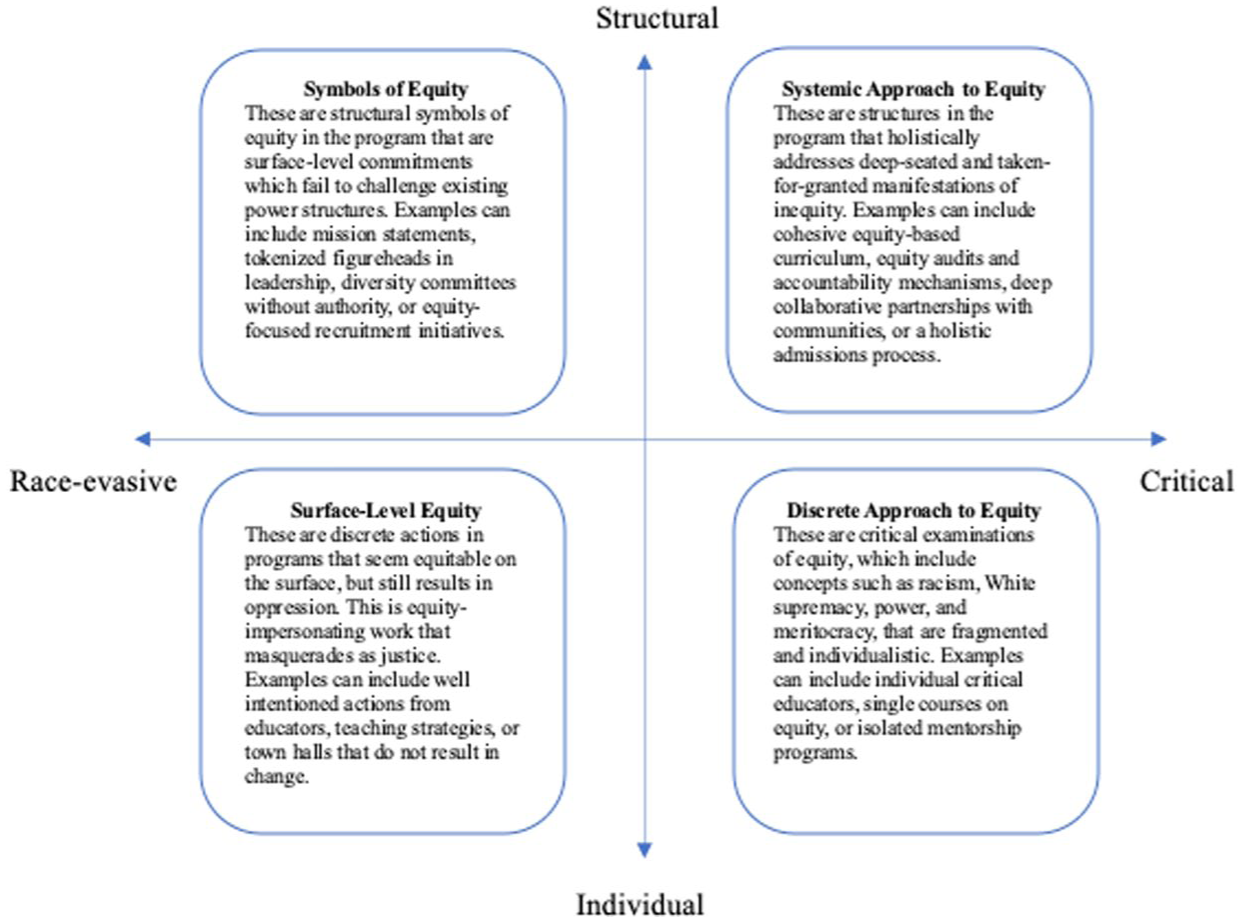
Types of equity efforts in teacher preparation programs.
Surface-Level Equity
Varying conceptions of equity and applications of equity efforts result in differing ways equity is implemented in TEPs. Conceptions of equity that are race-evasive and efforts that are individualistic are more likely to result in equity efforts that seem equitable on the surface but still result in oppression. This is equity-impersonating work that masquerades as justice in programs. Examples of this can include well-intentioned actions from educators, color-evasive teaching strategies, or town halls that do not result in change. These surface-level efforts appear equitable because they emphasize inclusivity, but they do so in a race-evasive and individualistic manner, which allows systemic racism to persist. By failing to explicitly address race and the broader structures of power and privilege, these efforts pose as equity while continuing to perpetuate oppression.
Discrete Approaches to Equity
Discrete approaches to equity in TEPs often involve critical perspectives but are fragmented and individualistic, focusing on isolated issues rather than systemic transformation. These efforts, though well-intentioned, tend to treat equity as an add-on rather than a fully integrated or collective pursuit. This includes examples such as individual critical educators, single courses on equity, or isolated mentorship programs. Although these actions are critical in nature, they do not result in systemic change due to their individualistic approach. These discrete efforts, while valuable, often fail to create a cohesive, institutional commitment to equity, as they leave the broader structures of inequality unchallenged.
Symbols of Equity
Conceptions of equity that are race-evasive and efforts that are structural result in symbols of equity that are surface-level commitments, which fail to challenge existing power structures. These examples might look or feel equitable but do not actually result in the disruption of inequities. Examples of this can be mission statements, tokenized figureheads in leadership, diversity committees that lack true authority, or equity-focused recruitment initiatives. These symbols can signal an intent to support equity but lack the depth needed to disrupt entrenched power dynamics or challenge inequitable practices.
Systemic Approaches to Equity
Systemic approaches to equity in TEPs are designed to address deep-rooted, structural inequities that are often taken for granted in educational systems. These approaches aim to transform the entire program and institution, going beyond individual efforts to create sustained, collective, and institution-wide commitments to equity. Examples can include cohesive equity-based curricula, equity audits and accountability mechanisms, deep collaborative partnerships with communities, and holistic admissions policies. Systemic approaches to equity seek to disrupt taken-for-granted structures that perpetuate inequity and create an institution-wide culture of justice and inclusion. These efforts are sustained, multifaceted, and require coordinated actions across every level of the program.
Discussion
The future of equity in teacher education invites a fundamental shift in how equity is conceptualized and practiced. This shift involves moving beyond conventional understandings and engaging more critically with systemic concepts such as racism, White privilege, White supremacy, and power. The current discourse on equity in teacher education often falls short of addressing the deeply rooted structural and systemic issues that perpetuate educational inequities. It may be beneficial for TEPs to embrace the concept of strong equity, which is a comprehensive approach that moves beyond resource-based understandings of equity. Some studies in this review illustrate how equity-oriented reform is possible when programs take up this challenge at the structural level by reorganizing components of the program and interrogating assumptions that reinforce inequality. These examples demonstrate that engaging in multifaceted, program-wide equity commitments can push the work beyond performativity and toward deeper, more lasting impact.
In fostering strong equity, this also involves rethinking who is recognized as a contributor in knowledge construction. Knowledge production in teacher education continues to privilege academic and programmatic perspectives, often excluding the insights of teachers, community members, and families. A more inclusive approach would position individuals beyond academia as genuine constructors of knowledge in teacher education. While some literature includes these voices as participants, there is a notable scarcity in acknowledging them as authentic contributors to knowledge construction. Integrating diverse perspectives is not only a matter of representation but also an acknowledgment of the valuable insights these stakeholders bring to the educational landscape.
Furthermore, a critical research gap exists in understanding programmatic equity efforts in TEPs from the perspective of candidates of color. Much of the current equity discourse remains centered on White preservice teachers, with limited focus on the experiences, priorities, and solutions of racially minoritized communities. Future research might expand this conversation by centering the voices of people of color—both in terms of lived experience and as knowledge producers. This shift could support equity efforts that are not only more inclusive but also more relevant and responsive to the communities most impacted by educational inequities. Ultimately, advancing equity in teacher education involves a conceptual and institutional reframing of who holds power, whose knowledge counts, and what outcomes matter. A more robust, critical, and inclusive equity framework holds promise for building programs that are not just rhetorically committed to justice but structurally aligned with it.
The review also identified limitations in the methodological approaches used to evaluate equity reforms in TEPs, referenced in Table 3. Although they offer depth and context, most studies in the review relied on qualitative designs, particularly single-site case studies, which limit the generalizability of findings. Small sample sizes, often fewer than five participants, further constrained the studies’ ability to reflect program-wide or systemic impacts. In many cases, the qualitative focus on participant self-perception, rather than observed practice or measurable outcomes, limited understandings of program effectiveness. Moreover, very few studies included longitudinal data, leaving the field with little evidence of the sustained impact of programmatic changes. Studies that did include quantitative elements or larger sample sizes were rare, and even fewer incorporated mixed-methods designs capable of triangulating data sources to strengthen validity. Additionally, it is important to acknowledge how broader structural constraints around academic knowledge production, such as word count limitations and publication review processes, may contribute to the limited representation of complex, equity-centered work in teacher education research. These constraints can render critical perspectives less visible due to the institutional barriers embedded in academic knowledge production.
Directions for Future Research
To advance equity-oriented teacher education, future research should adopt methodologically diverse, conceptually robust, and epistemologically inclusive approaches. First, there is a need for multisite and longitudinal studies that examine the sustained impact of equity reforms across diverse institutional types. Comparative studies across institutions can illuminate how institutional context mediates reform efforts. Second, the field should incorporate community-engaged and participatory research frameworks to democratize knowledge production. These methods can more authentically reflect the lived experiences of teachers, candidates, and community members. Additionally, it is important to consider power relations and who gets to participate in knowledge production. Third, there is a critical research gap in TEP equity efforts that focuses on White perspectives and neglects the experiences and needs of minoritized teachers. Future research might prioritize centering these narratives and solutions crafted by people of color within teacher education. Finally, future scholarship might interrogate how equity is discursively constructed and practiced in teacher education. There is a need for a paradigm shift in the trajectory of equity within teacher education, emphasizing the importance of extending beyond normative understandings of equity and integrating critical concepts such as racism, White privilege, White supremacy, and power. To advance this shift, future research should focus on reconceptualizing TEP components through the lens of strong equity and moving beyond resource-based notions of equity. In summary, future research on equity in teacher education benefits from approaches that are methodically diverse, conceptually coherent, and racially just. These approaches illuminate the impact of reforms, challenge dominant structures, amplify marginalized voices, and advance equity in both scholarship and practice.
Footnotes
Acknowledgements
I extend my heartfelt thanks to Thandeka K. Chapman, Amanda Datnow, Cheryl Forbes, Mica Pollock, Yan Jiang, and Andrew Matschiner. I also thank the Racialized Gendered Organizations working group at UC Berkeley, including Joy Esboldt, Bonnie Siegler, Talia Leibovitz, and Jennifer Classen. I also thank the anonymous reviewers and editors for their invaluable feedback.

AUTHOR
LILLIE KO-WONG, MA, is a PhD candidate in the Department of Education Studies at the University of California, San Diego, 9500 Gilman Drive, La Jolla, CA 92093-0070; email: