



Abstract
Asian American, Native Hawaiian, and Pacific Islander (AANHPI) communities are often racialized through stereotypes like the model minority myth, which oversimplifies and obscures the unique challenges these students face in schools. Using AsianCrit and TribalCrit frameworks, we critically examine two decades of empirical research on AANHPI students’ schooling experiences in the United States, analyzing 61 peer-reviewed articles. Drawing on the themes identified in our review, we discuss the findings across five core areas: duality in schooling experiences, struggles with racial and ethnic identity, the influential role of schools and educators, the distinct challenges faced by NHPI students, and the diverse experiences within AANHPI. The findings illuminate the heterogeneity and complexity of AANHPI students’ schooling experiences, highlighting variations based on ethnicity and race, and struggles resulting from imposed racialization. This review advocates for critical research and professional development initiatives that address their complex identities and confront systemic inequities, working toward a more equitable educational landscape.
Keywords
Asian American, Native Hawaiian, and Pacific Islander (AANHPI) communities, which represent a diverse group with ancestry from more than 40 countries and numerous ethnic groups, have significantly contributed to the growth and enrichment of the United States (E. Lee, 2015). Despite these generational contributions, they have faced harmful racial stereotypes and systemic exclusion within the U.S. educational system. AANHPIs are often racialized as “perpetual foreigners,” seen as outsiders regardless of how long they or their families have lived in the United States (Ng et al., 2007). Stereotypes such as the “model minority” further obscure the cultural and socioeconomic diversity within AANHPI communities, perpetuating the false notion that AANHPIs are a monolithic group in which all students excel academically, thereby masking the systemic racism and challenges they face (Maramba et al., 2022; Wright & Balutski, 2013). While the model minority myth is primarily associated with Asian Americans, Native Hawaiians and Pacific Islanders (NHPI) are often aggregated under the “Asian” category in many reports and research, inaccurately merging their distinct cultural and historical experiences with those of Asian Americans (Museus & Iftikar, 2013). This conflation overlooks the unique challenges faced by NHPI communities, diminishing recognition of their specific needs in discussions of racial equity and inclusion.
The persistent racialization of AANHPI students not only inaccurately portrays them (Poon et al., 2016), but also further marginalizes them by rendering their unique challenges invisible in critical discussions surrounding race, education, and equity (Teranishi, 2010). Unfortunately, educational research and policies often treat AANHPI students as a monolithic and homogenous racial group, neglecting the substantial differences among subgroups. For instance, while around 60% of Asian American households in the U.S. hold at least one bachelor’s degree or higher, this figure is only 20% for NHPI households (Pillai et al., 2023); the child poverty rate is 22% for NHPI, more than doubled the rate of Asian American children (National Center for Education Statistics [NCES], 2022). Moreover, these challenges can become even more pronounced within each AANHPI subgroup when intersected with factors such as socioeconomic status, gender, and immigration background (Buenavista & Chen, 2013). This intersectionality can further obscure their experiences and perpetuate their invisibility, making it difficult for educators to fully understand the diverse schooling experiences of AANHPI students and the tailored support mechanisms they require. As a result, the challenges and difficulties faced by AANHPI students have remained largely unrecognized and unheard (Chatterji & Yin, 2022), allowing structural inequalities and disparate outcomes to persist and perpetuate over time.
To address this gap, this paper conducted a systematic review of scholarship on AANHPI students’ K–12 school experiences over the last two decades with three primary aims: (1) to synthesize and consolidate existing knowledge “into a new whole” (Major & Savin-Baden, 2011, p. 653); (2) to enlighten scholars, educators, and other stakeholders about the realities and challenges of AANHPI students’ schooling experiences; and (3) to provide an opportunity to amplify the voices of AANHPI students who have been marginalized for far too long. This study reviewed research that can shed light on AANHPI students’ schooling experience to deepen our understanding and to better support them. More specifically, the interrelated questions driving this inquiry are:
What challenges do Asian American (AA) students face in schools, and what roles do schools play in shaping their educational experiences?
What challenges do NHPI students face in schools, and what roles do schools play in shaping their educational experiences?
How do the experiences of AANHPI students vary across different racial and ethnic groups?
While scholars have provided valuable insights into the educational experiences of AANHPI students in higher education (Poon et al., 2016; Yi et al., 2020), Southeast Asian students (Ngo & Lee, 2007), Filipinx students (Maramba et al., 2022), and Native Hawaiian Culture–based education (Kawano, 2023), no research has comprehensively addressed the broader schooling experiences of AANHPI students in K–12 settings. This systematic review seeks to fill this gap by shedding light on the unique struggles, challenges, and educational needs of AANHPI students, which have predominantly remained hidden and untold in the existing literature.
Importantly, over the past two decades, terms like Asian Pacific Islanders (API), Asian Pacific Americans (APA), Asian American and Pacific Islanders (AAPI), and AANHPI have served as collective pan-ethnic identities aimed at fostering solidarity and addressing the shared struggles of these diverse communities. This strategic essentialism approach has been instrumental in elevating the visibility of AANHPI communities within political and educational discourse, where their voices have often been marginalized or rendered invisible. Thus, we reviewed studies on the entire AANHPI community—including diverse ethnic and racial groups within—to promote social justice and strengthen solidarity among AANHPI populations.
At the same time, it is essential to recognize that each subgroup within the AANHPI category experiences distinct forms of discrimination. While there are shared experiences of marginalization, the challenges faced by subgroups, such as NHPI communities, are shaped by their unique Indigenous identities and histories of colonization—experiences that differ significantly from those of Asian American groups (Darrah-Okike, 2020).
To promote cross-group solidarity while addressing the specific needs of AANHPI students, particularly in K–12 education, we have grounded our research in the frameworks of Asian critical race theory (AsianCrit; Museus & Iftikar, 2013) and tribal critical race theory (TribalCrit; Brayboy, 2005). These theoretical approaches allow us to both acknowledge the diversity within the AANHPI community and develop a deeper understanding of their varied experiences. Additionally, in our analysis, we have given deliberate attention to both ethnicity and race, presenting NHPI findings separately to address their unique contexts and ensure their distinct voices are heard. Through this, our systematic review of AANHPI schooling experiences strives to bring greater attention to issues of equity, access, and the systemic challenges these communities face in education and beyond.
Asian American, Native Hawaiian, and Pacific Islander
Before delving into the literature, it is important to understand the meaning and implications of the term “AANHPI.” The AANHPI community is the fastest-growing racial group in the United States, making up approximately 6% of the total population (Lao, 2021). Comprising ethnic roots from more than 20 countries, AANHPI is a diverse group with a wide range of races/ethnicities, languages, religions, cultures, and social backgrounds within its subgroups (Lao, 2021). In the 1960s, the term “Asian American” was adopted as an umbrella term to bring together different Asian descendant communities in the fight for equity and justice. This approach united communities that shared the struggles of immigrant families and experienced discrimination, giving the Asian American community greater political leverage to impact policy and politics.
Since the 1980s, the term has been expanded to include Pacific Islanders and is used to categorize a group of culturally and linguistically diverse subgroups that trace their origins to the continent of Asia and the Pacific Islands (Empleo, 2006). The group of Asian Americans and Pacific Islanders is referred to as APA, API, or more recently, AANHPI. While this broad umbrella term provides an opportunity for solidarity across racial, ethnic, and political divides to combat discrimination, struggles, and obstacles commonly faced by AANHPI, it can also mask significant challenges within the community (Laanan & Starobin, 2004; Lao, 2021). For instance, in education, though AANHPI students tend to perform well overall, there are striking differences among subgroups, with over 70% of Chinese, Japanese, and Korean students enrolling in postsecondary institutions, while only 29% of Vietnamese, 18% of Laotian, and 16% of Cambodian Americans reach this level of education (NCES, 2019). Scholars have stressed that there are divergences within the AANHPI community regarding socio-economic status, labor market, family size, language proficiency, and other aspects (Lao, 2021; Ramakrishnan & Ahmad, 2014). Nevertheless, reports, publications, and data produced in K–12 education and policies still use the pan-racial/ethnic category. In 2000, the U.S. Census Bureau introduced separate racial categories for “Asian American” and “Native Hawaiians and Other Pacific Islanders” (Hasunuma, 2022). However, the umbrella term AANHPI persists in usage and is generally perceived as encompassing a monolithic group (Dosono et al., 2017; Hune, 2002).
It is essential to recognize that, while NHPI communities are often grouped under the AANHPI category, they possess distinct geographic, historical, and cultural heritages that differ significantly from those of Asian Americans. Unlike the “perpetual foreigner” label often assigned to Asian Americans, NHPIs do not view themselves as minorities or foreigners within their own lands (Trask, 2008). The racialization of NHPIs often obscures their identities as Indigenous peoples from colonized nations (Darrah-Okike, 2020). Settler colonialism treats NHPIs as just another ethnic group competing for power, stigmatizing them as left behind in the “game of assimilation” (Trask, 2000, p. 3). Racialization positions both Asian Americans and NHPIs within a racial triangulation that fuels racial tensions while erasing indigeneity and perpetuating the settler-colonial project (Glenn, 2015; J. Y. Kim, 1999). This necessitates a shift from racialization to a decolonizing perspective, which challenges the internalization of racism, white supremacy, and settler colonialism (Teves & Arvin, 2018; Tuck & Yang, 2012). Such a shift provides a framework to better understand the native peoples of the land and empowers their descendants to reclaim their land-based cultures and practices (Darrah-Okike, 2020).
This study recognizes the shared experiences and value of unifying communities under one banner but also acknowledges that such a label can make it difficult to identify the diverse experiences within the AANHPI community. The study reviews the scholarship on the schooling experiences of AANHPI students to understand the common challenges and struggles they face but also pays close attention to the unique experiences of different subgroups within the AANHPI community. By understanding these distinct experiences, we can tailor our approaches to better support AANHPI families and students, as well as educators and leaders who work with them.
Theoretical Framework of the Study
To provide a critical review of the literature on AANHPI students, we have grounded our study in AsianCrit and TribalCrit frameworks. Both frameworks extend from the critical race theory (CRT) and have been proposed to enhance understanding of the racialized experiences and realities of specific subgroups, including Asian Americans, Native Hawaiians, and Pacific Islanders. While sharing some tenets with CRT, AsianCrit and TribalCrit expand the original focus of CRT to address the unique and distinct aspects of these communities. Specifically, AsianCrit highlights the diverse cultural contexts and experiences of Asian Americans, while TribalCrit emphasizes the sovereignty, colonization, and cultural identities of Indigenous populations.
First, AsianCrit has been used to critically understand the racialized experiences and realities of Asian American students in the field of education. AsianCrit recognizes that discrimination faced by Asian Americans is “different from that suffered by other disempowered groups” (R. S. Chang, 1993; Museus & Iftikar, 2013, p. 1247). AsianCrit shares the same three tenets with CRT: (a) intersectionality; (b) story, theory, and praxis; and (c) commitment to social justice. However, AsianCrit has developed four additional tenets to more effectively encapsulate the Asian American racial realities within the framework of CRT. These additional tenets are (d) Asianization, (e) transnational context, (f) (re)constructive history, and (g) strategic (anti)essentialism. All of these seven tenets are closely interconnected, and each of them has been and can be used as a distinct framework for analysis. In this study, we focus on three tenets of AsianCrit—namely, Asianization, transnational context, and strategic (anti)essentialism—which bring to light the reality that Asian Americans are uniquely racialized and stereotyped as model minorities, while also acknowledging the diversity and complexity within Asian communities.
Specifically, the Asianization tenet identifies how Asian Americans are racialized in society and the impact of these stereotypes on their experiences (Museus, 2014; Rodriguez & Kim, 2018). Racialized stereotypes, such as the model minority and perpetual foreigner, aggregate all Asian American students into a monolithic group, emphasizing their otherness based on their Asian ancestral roots (Ng et al., 2007). As a result, students and teachers often grapple with the complexities of being both Asian and American, shaping students’ racial identities, relationships with others, and opportunities in schools. The transnational context is a core tenet of AsianCrit that acknowledges the global dimensions of Asian American identities and experiences. This concept highlights how the racialization of Asian Americans in the United States is deeply intertwined with global histories of migration, imperialism, colonialism, and international relations. Understanding Asian American experiences requires looking beyond the borders of the United States to consider how broader geopolitical forces shape their lives. The strategic (anti)essentialism tenet builds on the notion that race is a social construction and acknowledges that no singular experience defines a specific race/ethnicity (An, 2017; Iftikar & Museus, 2018). This tenet recognizes that the Asian American community may embrace racial and pan-racial labels, such as AANHPI, in certain contexts. However, it also argues that there is no essential experience that universally defines Asian Americans. Building on these three tenets of AsianCrit allows us to gain a deeper understanding of the schooling experiences of Asian American students and shed light on their diverse voices and experiences.
To capture the experiences of NHPI students within the broader AANHPI community, we have incorporated TribalCrit into our theoretical framework. Grounded in the lived experiences of Indigenous populations, TribalCrit extends CRT by foregrounding the effects of colonization, sovereignty, and Indigenous epistemologies on the educational experiences of Indigenous peoples, including NHPIs (Brayboy, 2005). TribalCrit offers a critical lens through which the indigeneity, historical context, and cultural specificity of NHPIs are asserted, emphasizing that NHPIs are not merely another racial minority but descendants of Indigenous peoples, often marginalized and portrayed as “left behind” in assimilationist narratives imposed by colonial structures (Trask, 2008).
Building upon the foundational insights of TribalCrit, other theoretical frameworks such as Kanaka ‘Oiwi critical race theory (‘OiwiCrit) (Kawano, 2023) have been recently developed to address issues related to colonialism, hegemony, military occupation, and cultural racism specific to Native Hawaiian communities. However, this theory often focuses on specific ethnic groups; given this study’s focus on NHPI educational scholarship, TribalCrit remains the most suitable framework as it provides a holistic and critical perspective of an Indigenous perspective. TribalCrit not only provides a robust theoretical lens for examining schooling challenges faced by Indigenous communities but also serves as a foundational framework to further innovate and develop culturally relevant support.
TribalCrit’s nine tenets offer an essential framework for understanding the NHPI community (Brayboy, 2005). For this study, we emphasize two tenets, as they are particularly relevant to educational contexts and for this review study: (a) Indigenous philosophies, beliefs, customs, traditions, and future visions are central to understanding the lived realities of Indigenous peoples, highlighting the diversity and adaptability of both individuals and communities; and (b) governmental and educational policies concerning Indigenous peoples are closely linked, often organized around the problematic goal of assimilation. This study applies these tenets to better understand and address the unique educational challenges and opportunities faced by NHPI students within the broader AANHPI community.
By integrating TribalCrit alongside AsianCrit, we aim to provide a more comprehensive understanding of the racialization of AANHPI students. While AsianCrit allows us to explore how Asian American students are racialized as model minorities and perpetual foreigners, TribalCrit enables us to critically examine how colonial legacies and Indigenous sovereignty shape the educational experiences of NHPI students. Together, these frameworks provide a nuanced understanding of AANHPI students’ schooling experiences, ensuring that both shared and distinct challenges across the community are highlighted.
Methods
This study undertakes a comprehensive review of the literature on AANHPI students in K–12 education within the U.S., spanning over two decades. The aim is to gain insights into the diverse school experiences of AANHPI students, incorporating various perspectives through the inclusion of quantitative, qualitative, and mixed-methods studies. The selection of studies is guided by four general criteria: relevance, scholarly merit, empirical approach, and overall quality. These criteria align with established standards in systematic reviews and are employed to ensure a rigorous and comprehensive examination of the literature (Guarino et al., 2006; S. W. Lee & Mao, 2020).
First, to ensure the relevance of the literature, the present study focused on studies published from January 2000 to December 2020 that examined the school experiences of AANHPI students. This period was chosen to ensure that the most recent and relevant research was included in the review.
Second, to maintain scholarly rigor, the review exclusively incorporates empirical papers published in peer-reviewed journals. This exclusionary approach means that publications such as reports, working papers, conference proposals, commentary papers, or dissertations appearing in non-peer-reviewed journals, newspapers, and other nonacademic outlets are not considered within the scope of the review. This criterion is implemented to uphold a high standard of academic reliability and credibility in the selected studies.
Third, the study focused on empirical studies that were quantitative, qualitative, or mixed-methods research. Nonempirical papers—although many provide valuable insights—were not included because they offered little empirical evidence relevant to the research questions in this review.
Fourth, to uphold the quality of the included studies, this review adheres to the standards set by the American Educational Research Association (AERA) for reporting research. These standards encompass elements such as clear problem formulation, a review of relevant scholarship, and a transparent description of the study’s purpose, design, data collection, and data analysis (Council of the AERA, 2006). To ensure adherence to these standards, all researchers engaged in the project collectively reviewed each initially included study and cast votes regarding its alignment with the AERA standards for inclusion in the final selection. This rigorous process aimed to maintain the overall quality and reliability of the literature review.
Search Strategy
To identify the literature on AANHPI students, the study accessed five online databases (EBSCOhost, ERIC, Education Full Text, JSTOR, APA PsycArticles), using combinations of the following two sets of keywords. The first relates to race/ethnicity: Asian American, Pacific Islander, Native Hawaiian, Samoan American, Chamorro, Korean American, Cambodian American, Hmong American, Vietnamese American, Indian American, Chinese American, Filipino American, Khmer American, Laotian American, and Asian Pacific American. To capture studies that focused on Asian American students from a specific region, we also included South Asian, Southeast Asian, and East Asian as keywords. The second relates to our research topic: youth, young, adolescent*, kindergarten*, child*, parent*, elementary, secondary, K-12, education*, school*, teacher*, and achievement*. While we made efforts to capture a broad range of studies by employing various combinations of key terms, it is possible that some relevant studies may not have been identified due to variations in terminology or the use of abbreviations. We therefore encourage cautious interpretation, acknowledging that wide-ranging search terms may still not identify all intended studies.
The initial search yielded a total of 5,158 studies. Among these were 124 duplicate studies, several unrelated studies, and a significant number of studies in medical fields. We initially captured these papers because of terms related to race/ethnicity, although they were not related to students’ educational or school experience. For instance, one study that examined vaccinations among Vietnamese American children, titled “Successful Promotion of Hepatitis B Vaccinations Among Vietnamese-American Children Ages 3 to 18: Results of a Controlled Trial,” was captured due to the term “Vietnamese American” in our search terms (McPhee et al., 2003).
After removing duplicate and unrelated papers, we screened our list based on the paper’s title, which narrowed the list to 170. We applied the AERA standards for reviewing the studies. Specifically, all three authors graded each paper and reported a normative score (3 = highest quality and relevance to the topic, 2 = medium quality and relevance, 1 = lowest quality and relevance). The researchers then discussed and voted on whether to include each study in our review. Studies were excluded mainly because of the context (e.g., church, family, culture, community, home) or because the primary focus was not on students’ school experiences. The result of the search yielded 61 peer-reviewed articles that met the AERA standards. Figure 1 shows an overview of the selection procedure.
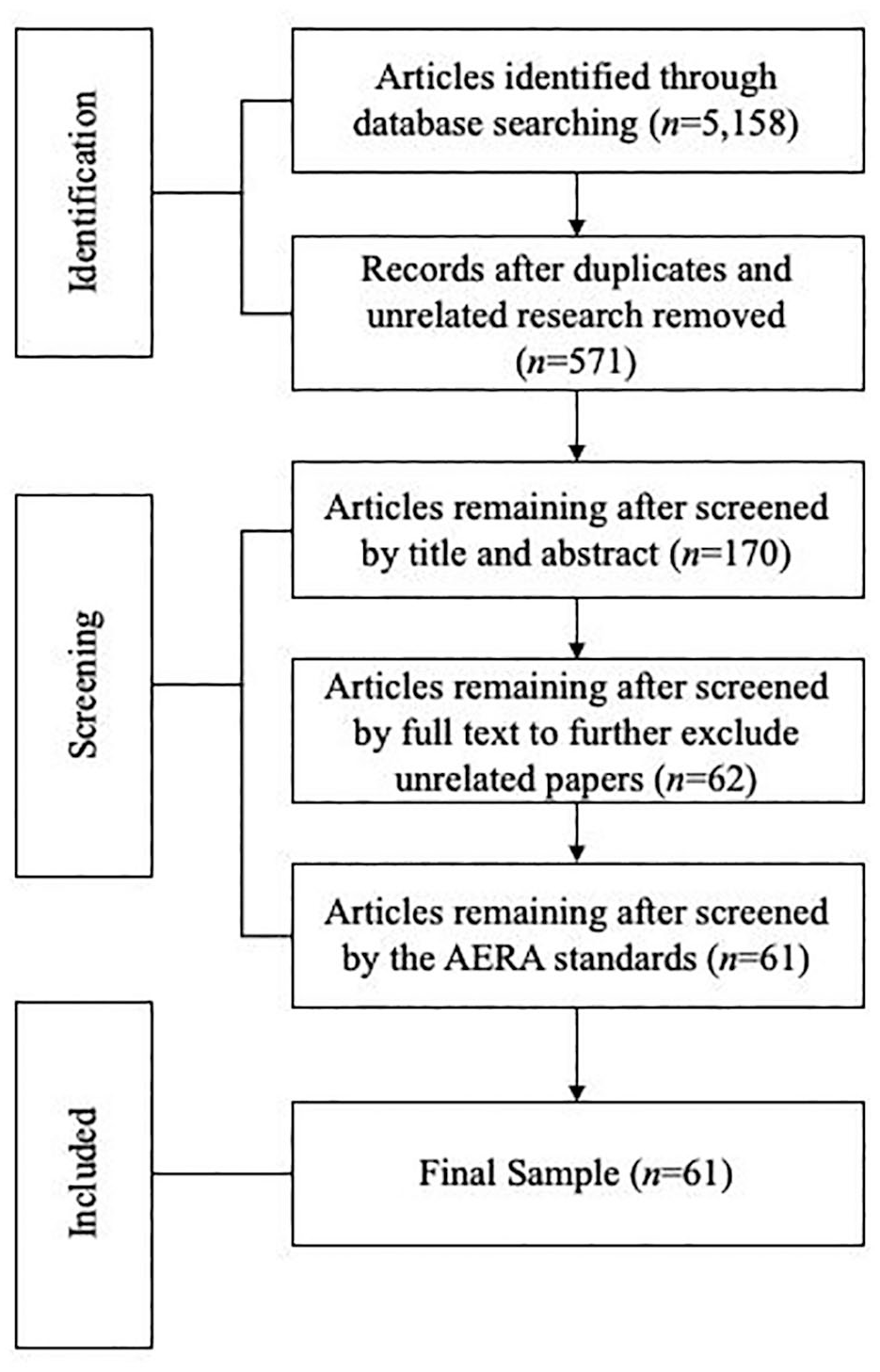
Selection process of all studies included in the review.
It is important to highlight that, in this study, the specific focus is on school-related factors that impact the schooling experiences of AANHPI students. Notably, the role of parental and community factors on educational outcomes has not been included in this review. Although many seminal studies have extensively explored the influence of AANHPI family, culture, and community on students (Anicama et al., 2018; Dinh et al., 2020), this study deliberately concentrates on identifying and understanding barriers and challenges that students encounter within the school setting. This conscious focus aims to provide valuable insights into how the educational outcomes of AANHPI students can be enhanced through targeted policies and interventions within the school environment. By narrowing the scope in this way, the study seeks to contribute specifically to the understanding and improvement of AANHPI students’ experiences within the educational system.
Notably, while we aimed to provide a contemporary perspective and empirical evidence on AANHPI students’ schooling experiences, we acknowledge that this scope excluded significant earlier scholarship, monographs, and stories. Works such as those by Dhingra (2007, 2020), Bhalla and Dhingra (2022), S. J. Lee (2005, 2009, 2022), Louie (2012), Ngo (2012), Ochoa (2013), Gupta (2023), and Warikoo (2022) have made critical contributions to the understanding of Asian American education. Their focus on themes such as the model minority myth, immigration experiences, identity, and its impact on intergroup relationships, particularly with other communities of color, is central to discussions about racial equity and justice in education. Moreover, several important works have also emerged related to NHPI communities, showcasing their often-hidden stories. Historically, NHPI voices and research have been marginalized, making it difficult to fully grasp their struggles, resilience, and rich cultural heritage through mainstream academic research. For instance, Fujikane and Okamura’s (2008) Asian Settler Colonialism: From Local Governance to the Habits of Everyday Life in Hawai’i and Goodyear-Ka’opua’s (2013) The Seeds We Planted: Portraits of a Native Hawaiian Charter School delve deeply into the history and experiences of Native Hawaiians, offering valuable insights into colonialism and education. Additionally, Hune and Nomura’s (2020) Our Voices, Our Histories: Asian American and Pacific Islander Women amplifies the voices of NHPI women, exploring their identities, cultures, and the unique challenges they face. These works, along with others, illuminate the complexities, struggles, and rich cultural tapestries of NHPI communities, allowing readers to engage with stories that have often been overlooked or misunderstood. While this study did not include these books, monographs, and stories, we acknowledge their critical role in shaping the field. We encourage readers to explore these foundational works to deepen their understanding and center the voices of Asian American and NHPI students’ schooling experiences within education discourse (Iftikar & Museus, 2018).
Positionality of the Researchers
As authors of this paper, we bring diverse perspectives shaped by our unique expertise, lived experiences, and personal biases as they relate to the AANHPI communities. To ensure transparency in our role as researchers, we offer this collective reflexivity statement. Our team consists of two male and one female scholar, all of whom are cisgender and identify as East Asian scholars with doctorates in educational leadership and education policy. Each of us serves as faculty at different universities, where the cultural, linguistic, and racial/ethnic contexts often differ from our own. Our research focuses on understanding the experiences of minoritized students, and we are deeply committed to advancing equity and justice in education, ensuring that the unique challenges and strengths of all minoritized students are recognized and addressed.
We acknowledge that positioning our racial, ethnic, and sociocultural identities in disseminating our research can lead to misunderstandings or misinterpretations (Boveda & Annamma, 2023), as no single individual or group can fully capture the complexities and nuances of all ethnic communities within AANHPI. However, we believe that embracing this vulnerability as researchers has made us more conscientious and intentional in our work. By actively engaging with scholarship, co-developing knowledge with communities, and utilizing a theoretically informed approach, we aim to amplify the voices of those who have been historically marginalized. Our goal is not to fragment the collective identity of AANHPI communities but to disrupt the power dynamics that have historically silenced these diverse narratives. Through this approach, we hope to contribute to dismantling systemic inequities and empowering marginalized communities within the educational landscape.
Overall Trends in the Scholarship
In this review, 61 studies were included, with 41 using a quantitative research design, 17 using a qualitative research design, and 3 employing mixed methods. Of the 41 studies using a quantitative research design, 9 used nationally representative datasets, including the School Crime Supplement of the National Crime Victimization Survey (Gee & Cooc, 2019), the Education Longitudinal Study of 2002 (Koo et al., 2012), the National Longitudinal Study for Adolescent Health (Y. Choi, 2007, 2008; Liu et al., 2020; Ryabov, 2013; Wong & Maffini, 2011), the Early Childhood Longitudinal Study-Kindergarten Class of 2010–11 (Sullivan et al., 2020), and the High School Longitudinal Study of 2009 (Froiland et al., 2016). Four studies used state-level data from California (Cooc, 2018; Pang et al., 2011), Minnesota (Homma & Saewyc, 2007), and Georgia (Wang et al., 2018). Seven studies used secondary data from projects such as the Coordinated Community Student Survey (Arora et al., 2017, 2020), Youth Risk Behavior Survey (Anyon et al., 2013), the UCLA middle school project (Chen & Graham, 2015, 2018), and the Children of Immigrants Longitudinal Study (Wang & Atwal, 2015; Ying & Han, 2006). One study used California administrative data but focused on a single suburban school district (Cooc, 2019), and 20 studies collected survey data through self-administered questionnaires. The geographical focus of the studies was primarily on states in the Northeastern, Southeastern, Midwestern, and Western regions of the country. Although Texas is one of the top three states where AANHPI families live, our search found a notable absence of studies from Texas and Southwestern states like Arizona and New Mexico.
Several studies in this review focused on large cities such as New York City (N = 6), San Francisco (N = 3), and Los Angeles (N = 3). Five studies collected data from Hawaii (Coryn et al., 2014; Goebert et al., 2012; Mayeda & Okamoto, 2002; Roberts et al., 2018; Wegner et al., 2010) to investigate Native Hawaiian and Pacific Islander (NHPI) students’ school experiences. While NHPIs live in areas besides Hawaii, no studies have looked exclusively at these students in other states.
In terms of racial/ethnic focus, the majority of studies in this review centered around the broad category of Asian Americans (N = 25) or Asian American and Pacific Islanders (N = 9). Fifteen studies specifically delved into the experiences of students from East Asia, with a particular emphasis on Chinese American students (N = 8) and Korean American students (N = 7). Another 12 studies explored the experiences of students from South or Southeast Asia, encompassing various groups such as Hmong American (N = 4), Cambodian American (N = 2), Filipino American (N = 2), Vietnamese American (N = 1), Indian American (N = 1), and two studies employing the broader terms South Asian American and Southeast Asian American.
Interestingly, despite Indian American students being the second-largest ethnic group among AANHPI, only one study specifically focused on this demographic (Asher, 2002). Notably, there was an absence of studies solely dedicated to Japanese American students. Additionally, four studies in the review centered specifically on students who are Native Hawaiians and/or Pacific Islanders (Coryn et al., 2014; Froiland et al., 2016; Roberts et al., 2018; Wegner et al., 2010), and two studies focused on Samoan students (Borrero & Yeh, 2020; Mayeda & Okamoto, 2002). These nuances in the racial/ethnic focus of the studies contribute to a more nuanced understanding of the diverse experiences within the AANHPI community.
Approximately half of the studies focused on high school students (N = 23), 12 focused on middle school students, and 11 across middle and high school students. Six studies focused on elementary school students (Ly & Zhou, 2018; Ly et al., 2012; Qin et al., 2008; Sullivan et al., 2020; Wang et al., 2016; Yiu, 2013), and seven included student samples across elementary, middle, and high school grades (Arora et al., 2017, 2020; S. Choi & Cho, 2013; Coryn et al., 2014; Cooc, 2018, 2019; Shen, 2016). One study has college-aged South Asian American students as participants but focused on their experiences during K–12 (Rice, 2020).
As previously indicated, the studies presented in this paper were systematically gathered through a thorough search process, adhering to the specific inclusion and exclusion criteria outlined earlier. Researchers need to exercise caution when interpreting the trends and findings presented next. Notably, there may be books and reports addressing issues related to AANHPI students that have not been included in this analysis.
Results
Our systematic review identified five interconnected themes. These themes often overlap, with certain findings reflecting multiple dimensions and some serving as central touchpoints that influence others. Specifically, in response to Research Question 1, which examines the educational experiences of Asian American students, we identified three key themes: (1) vulnerability to bullying, discrimination, and mental health issues; (2) peers, teachers, and schools make a difference; and (3) navigating racial and ethnic identity and the model minority stereotype. These include persistent issues related to bullying, discrimination, mental health struggles, and difficulties in navigating complex racial and ethnic identities. We also found that schools and teachers play a critical role in shaping students’ educational experiences, either fostering a positive, inclusive environment or inadvertently intensifying negative experiences. Grounded in AsianCrit, our finding underscores the importance of culturally relevant support and professional development for educators to better understand and address the unique needs of marginalized students, fostering a more supportive school environment.
In addressing Research Question 2, we analyzed NHPI scholarship separately, applying a TribalCrit lens to capture their unique cultural and historical contexts. Our findings emphasize the importance of strong school-community partnerships in promoting NHPI students’ identity development and academic success. Scholars stress the need for culturally relevant support within schools, underscoring the value of practices that align with the lived experiences of NHPI communities. This analysis is reflected in the theme titled “resistance to assimilation and the importance of culture.”
Finally, in addressing Research Question 3, our review reveals meaningful differences within AANHPI student experiences, synthesized under the theme “more than a single story: unveiling AANHPI’s different schooling experiences.” Though limited, noticeable differences exist both within Asian American subgroups and between Asian American and NHPI students, particularly in how they experience racialization and schooling. These findings highlight the need to recognize the heterogeneity within the AANHPI community and the importance of designing educational policies and practices that are responsive to the distinct needs of these diverse groups.
We elaborate on these themes and their implications in the following sections. A complete summary of the articles included in this review can be found in the online supplementary file.
Vulnerable to Bullying, Discrimination, and Mental Health Issues
Concerning the schooling experiences of Asian American students, scholars have observed an alarming prevalence of bullying and discrimination and the consequential impact on students’ mental well-being. Contrary to the common perception that Asian American students are model minorities who face minimal problems in school, research convincingly demonstrates that they are not immune to these challenges (DiBlasi et al., 2018; Qin et al., 2008; Shin et al., 2011).
Empirical evidence reveals that, irrespective of their ethnic backgrounds, Asian American students, including Korean Americans (DiBlasi et al., 2018), Chinese Americans (Qin et al., 2008), and Filipino Americans (Ying & Han, 2006), encounter elevated rates of bullying compared to their peers. Additionally, there is a notable vulnerability among Asian American students with immigrant backgrounds, who appear to be particularly susceptible to victimization within school settings (Koo et al., 2012). This underscores the importance of recognizing and addressing the specific challenges faced by Asian American students to create a more inclusive and supportive educational environment.
In addition to bullying, Asian American students frequently encounter various forms of discrimination, including unfair treatment (Shin et al., 2011), negative stereotyping (Wang et al., 2016), and positive stereotyping (DiBlasi et al., 2018). Such discriminatory experiences in school are associated with higher levels of depression among Korean American students (Shin et al., 2011), Filipino American students (Ying & Han, 2006), and Cambodian American students (Sangalang & Gee, 2015) and are strongly linked to instances of suicidal thoughts and behaviors (Wang et al., 2018). Similar to their peers from other racial/ethnic backgrounds, Asian American students are also found to have behavior problems regardless of their academic performance (Y. Choi, 2007).
Scholars have identified the prevalence of negative stereotypes, especially among male students in schools, which portray Asian boys as emasculated and associate them with physical weaknesses. Likewise, girls are frequently characterized as socially incompetent and described as quiet and shy. These misperceptions persist within school environments, leading students to believe that such stereotypes render them susceptible to both physical and verbal harassment (Liang et al., 2007; Qin et al., 2008; Wang et al., 2016). Furthermore, language proficiency, or the perceived lack thereof, represents another common reason why students believe they become targets for bullying and harassment. Asian American students may be more vulnerable to such treatment due to their accents and limited English proficiency, which can hinder their ability to defend themselves (S. Y. Kim et al., 2011; Wang & Atwal, 2015).
Positive stereotypes, notably the model minority myth depicting Asian American students as inherently intelligent and academically high achieving, also play a role in shaping experiences of bullying. Research has shown that the positive stereotype associated with Asian American students, coupled with preferential treatment by teachers, can result in peer ostracism and harassment (Qin et al., 2008; Wang et al., 2016). This underscores the complex and nuanced nature of stereotypes, where even seemingly positive ones can have adverse effects on students’ social interactions and well-being within the school environment. Addressing these stereotypes is crucial for fostering a more equitable and supportive educational atmosphere for all students.
Unsurprisingly, Qin et al. (2008) noted that “the social and emotional toll of the ‘model minority’ perception can be quite high for Chinese American youth (p. 38),” resulting in elevated levels of verbal, physical, and nonverbal discrimination and harassment. Similarly, Rosenbloom and Way (2004) found that when teachers uphold model minority stereotypes and provide preferential treatment in the classroom, it can lead to racial tensions and discrimination from peers. Furthermore, the experience and perception of discrimination can differ between Asian American students of different genders, influencing how they observe, interpret, and respond to discrimination (S. Y. Kim et al., 2011; Liang et al., 2007; Sangalang & Gee, 2015). Asian American boys tend to experience more physical harassment than girls (Sangalang & Gee, 2015; Wang et al., 2018). However, Asian American girls are more likely to exhibit depressive symptoms than boys (Liang et al., 2007) and have a higher propensity for suicidal thoughts and behaviors (Wang et al., 2018).
Despite the prevalence of bullying, depression, and suicidal behavior among Asian American students, they tend to underutilize school resources for support (Anyon et al., 2013; Wang et al., 2020). For instance, research based on the 2007 Youth Risk Behavior Survey in San Francisco indicates that Chinese American youth, when compared to students from other racial backgrounds, display lower awareness of school health services (Anyon et al., 2013). Furthermore, there exists a significant stigma surrounding mental health issues within Asian communities (Wang et al., 2020), often leading to the misconception that school health services are solely for “troublemakers” (Anyon et al., 2013). Additionally, Asian American students not only encounter challenges in seeking support but are also less likely to be identified for assistance. In particular, they are less likely to be identified for participation in special education programs (Cooc, 2018). Even when Asian American students are identified for special education, they tend to receive these services at later stages of their academic journey compared to their White peers (Cooc, 2019).
Peers, Teachers, and Schools Make a Difference
Being in a safe school environment (Juang & Alvarez, 2011), a positive school climate and culture (Homma & Saewyc, 2007), and a racially diverse school (Shin et al., 2011) have been shown to have significant impacts on reducing incidents of bullying and discrimination and improving students’ school experience. For instance, students who have been exposed to school gangs and physical fights (Gee & Cooc, 2019) and negative school climate—measured by their perceptions of school safety and experience (Juang & Alvarez, 2011)—are more likely to report higher levels of perceived discrimination and victimization. Conversely, a positive school climate is related to increasing self-esteem (Homma & Saewyc, 2007), being less likely to experience discrimination (Wang & Atwal, 2015), and being less likely to engage in youth violence (Goebert et al., 2012). Goebert et al. (2012) found that for API students—Filipino, Native Hawaiian, Japanese, and Samoan students—having a positive school climate is related to a decrease in incidents of violence. A positive school climate can also buffer the negative influence of victimization on students’ suicidal thoughts and behavior (Wang et al., 2018).
Several scholars have highlighted the importance of school racial diversity in shaping students’ experiences. Research has shown that a diverse student body is related to academic satisfaction (Cheon et al., 2020) and less bullying (Liu et al., 2020). While increasing the diversity of a school may not always be feasible, schools that prioritize multicultural education have been shown to have a positive impact on students. For instance, J. Chang and Le (2010) found that involving diverse students in school activities, fostering teacher support for racial harmony, and providing opportunities to learn about diverse cultures within the curriculum are significantly and positively associated with Asian American students’ development of ethnocultural empathy.
Furthermore, researchers found that cross-race friendships have a positive impact on Asian American students’ mental health (Liu et al., 2020). Specifically, Asian American students with more cross-race friendships have higher self-esteem, school engagement, and lower depressive symptoms, which is particularly salient for Asian American students who are marginalized at school. Additionally, having a higher possibility of finding a friend from the same racial background within a school is also found to be positively associated with Asian American students’ educational attainment (Ryabov, 2013). It is important to note that Asian American students have varying preferences for building peer relationships. For instance, one study found that Vietnamese American students tend to prefer friendships with high-achieving peers (Duong et al., 2014). Indian students are more likely to form cross-ethnic friendships and demonstrate more positive attitudes toward intergroup interactions than their Asian peers from Southeast Asia regions (Chen & Graham, 2015). However, two studies cautioned and documented the potential drawbacks of strong peer support, as spending more time with peers can reinforce students’ awareness of cultural differences, thereby increasing their symptoms of depression (Arora et al., 2020) and suicidal attempts (Wong & Maffini, 2011). Scholars explained that spending more time with peers can inadvertently lead to co-rumination, where individuals excessively dwell on their experiences of bullying and victimization (Arora et al., 2020).
In alignment with the extensive literature emphasizing the importance of teachers (Cheon et al., 2020), studies have consistently demonstrated that teachers play a significant role in reducing Asian American students’ depression over time (Arora et al., 2017). Research findings indicate that students who perceive a high level of support and warmth from their teachers tend to exhibit better reading achievement (Ly et al., 2012), while those who perceive lower warmth from their teachers are more likely to internalize problems (Ly & Zhou, 2018). Suh and Satcher (2005) highlighted the impact on Korean American students, noting that a lack of support from teachers can lead to feelings of helplessness and hopelessness, contributing to a sense of alienation in school and ultimately resulting in dropout. One student in the study expressed, “Teachers’ prejudiced, insensitive, uncaring, and sometimes even aversive attitudes towards them, along with perceived unfair disciplinary policies, evoked a desire to stay away from school” (Suh & Satcher, 2005, p. 431). Similarly, Chinese American students reported feeling not well-connected to schools and harboring negative attitudes toward teachers when they perceived a lack of understanding or misunderstandings of their psychological needs (Zhou et al., 2003). Moreover, teacher support has been identified as a factor in reducing students’ likelihood of engaging in or supporting bullying in schools (S. Choi & Cho, 2013). Additionally, when Asian American students share the same racial background as their teachers, it is positively associated with stronger student-teacher relationships (Yiu, 2013). These findings underscore the crucial role that teachers and their support play in shaping the overall well-being and experiences of Asian American students in the educational setting.
However, two scholars have expressed concern that cultural misperceptions (Endo, 2017) and assumptions about race from teachers, even well-intended, can negatively influence students’ identity development (Rice, 2020). In one study, Endo (2017) discovered that many teachers reported feeling overwhelmed by the diversity of their students and chose to ignore their racial/ethnic differences or uncritically accept the stereotypes about Asian American students. In a recent study by Rice (2020) involving retrospective reports from 10 college-aged South Asian American students, it was observed that these students, all identifying as Indian Americans, were frequently called upon by their teachers to act as spokespersons for their culture or race, with teachers assuming that their ethnicity and religion rendered them experts on India. The students found these assumptions embarrassing, and they felt as though they were expected to provide a non-American perspective, positioning them as perpetual foreigners and resulting in a sense of being “othered” at school. Schools, particularly teachers, despite their best intentions, can inadvertently perpetuate stereotypes of model minorities or perpetual foreigners for Asian American students. Thus, it is imperative for schools to adopt a transnational perspective, enabling educators to better understand how history, immigration, and sociopolitical contexts uniquely shape each student’s experience.
Navigating Racial and Ethnic Identity and the Model Minority Stereotype
Research in this domain underscores the significance of race in the daily experiences of Asian American students, revealing that their encounters in schools are dynamic and multidimensional. Rather than conforming to a binary racial categorization, these students position themselves along a racial continuum. Scholars argue that Asian American students construct their racial and ethnic identities through nuanced interactions, recognizing the intricate linkages between their cultural backgrounds and lived experiences (Chutuape, 2016; S. J. Lee, 2001; Palmer & Jang, 2005; Uy, 2018). Chutuape’s (2016) study, rooted in observations and interviews within a New York City high school, delves into the experiences of Filipino youth. Contrary to feeling invisible or marginalized, the findings illuminate how these students navigate Black–White racial discourse, strategically choosing when and how to engage in discussions about race. Importantly, they position themselves in a racial “middle ground” between Blacks and Whites within the prevailing binary racial discourse. Additionally, some Filipino American youths describe themselves as “Chinese-Mexicans” or the “Blackest Asians” in response to challenges and stereotypes surrounding their racial identity. Similarly, Uy (2018) discovered that Southeast Asian American students exhibit a hybrid identity. When queried about their racial identity, these students employed the term “Khmerican” to characterize a hybrid identity that enables them to navigate between their cultural background and lived experiences seamlessly. This embrace of both heritage and American culture is held regardless of generation. S. J. Lee (2001) centered on Hmong American youth and observed that 1.5 generation Hmong students, often perceived as “traditional” by the school, teachers, and society, actively embrace American cultures and norms. Similarly, second-generation Hmong students, while appearing “Americanized” in terms of clothing styles and language proficiency, often maintain a strong identification with their Hmong heritage. However, the process of balancing between preserving their cultural heritage and assimilating into U.S. culture presents a significant challenge. This struggle can create tension within the Asian student community. Palmer and Jang (2005) highlight this dynamic by pointing out that in interviews with both Korean-born Korean Americans and U.S.-born Korean Americans, there is often criticism exchanged between the two groups for being “too White American” or “too Korean.” Notably, this tension appears to be rooted in the shared goal of gaining acceptance from their White peers. The complexities of identity formation and cultural assimilation contribute to the intricate social dynamics among Asian American students, reflecting the multifaceted experiences within the diverse Asian American community.
Navigating and confronting the stereotype and internalizing the model minority myth imposed on society, Asian American students often grapple with its impact on their identity. Research indicates that, as Asian American students are consistently perceived through the lens of the model minority stereotype at school and in broader society, they tend to internalize it as an integral part of their identity (Asher, 2002; Gao, 2017; Kiang et al., 2016). Numerous studies have highlighted the detrimental effects of the model minority stereotype on the identity and experiences of Asian American students (Chhuon & Hudley, 2011; Endo, 2017; S. J. Lee, 2002; Lew, 2004; Wexler & Pyle, 2012). Furthermore, when these students fail to conform to the model minority stereotype, they may also encounter discrimination (Endo, 2017; S. J. Lee, 2002). While society and the model minority myth often depict all Asians as homogeneous model students, the reality is diverse, and not all Asian ethnic students conform to this stereotype. S. J. Lee’s (2002) exploration of the school experiences of Hmong students in Wisconsin revealed widespread marginalization, with educators using terms like “underclass” and “at-risk” to categorize them. The participating school attributed Hmong students’ academic struggles to their culture, perpetuating stereotypes about their work ethic. Endo (2017) further studied Hmong American students in Minnesota, finding that predominantly White educators labeled Hmong males as “at-risk,” channeling them into noncollege preparatory tracks, remedial, or special education. This negative label adversely impacted students, fostering feelings of failure within their families and communities. Chhuon and Hudley’s (2011) research on Cambodian students in California challenged the model minority myth, highlighting low expectations from teachers and counselors. Despite the broader society’s perception through the model minority lens, Cambodian students were often viewed as culturally deficient within the school setting. Facing conflicting identities, Cambodian students tended to identify themselves as Asian rather than Cambodian, hoping that embracing a pan-ethnic Asian identity would raise academic expectations from teachers.
This internalization contributes to the perpetuation of both Asianization and feelings of otherness. Shen’s (2016) survey of school counselors working with Asian American students revealed that these students grapple with heightened expectations and academic pressures imposed by both their families and society, all influenced by the model minority stereotype. The internalization of these expectations can lead to a complex interplay of academic pressures and a sense of being treated as perpetual outsiders, highlighting the need for a nuanced understanding of the challenges faced by Asian American students in educational settings. Asher (2002) conducted interviews with 10 Indian American high school students in New York City and found that when these students faced intense expectations for academic excellence from both their parents and schools, they internalized the pressure and strived for excellence, aligning with the perceived Asian persona. The model minority stereotype, as argued by the researcher, becomes deeply ingrained in the academic and career aspirations, shaping the internalized self-image of Indian American students as they conform to the successful model minority framework. Gao (2017) investigated the experiences of eight Asian American high school students from Malaysia, the Philippines, India, Mainland China, and Taiwan. The study revealed that the model minority stereotype significantly influenced their self-perception within the school environment. Participants preferred being perceived as “smart” rather than being associated with negative stereotypes such as the “perpetual foreigner.” Similarly, Kiang et al. (2016), based on longitudinal data from 180 Asian American students in the Southeastern United States, found that accepting the model minority image was positively correlated with these students’ valuation of school, self-esteem, and academic performance. Unfortunately, failure to meet the expectations of the model minority stereotype led to negative self-attributions regarding competence (Chen & Graham, 2018). Witkow and Fuligni (2007) also mentioned that for Asian students, performance-avoidance goals—the desire to avoid performing more poorly than other students—are associated with positive school feelings. Moreover, while most attention has been focused on the academic impact of the stereotype, its implications for social and emotional well-being, including self-esteem, have been neglected (Kiang et al., 2016).
The model minority stereotype not only perpetuates biases but also hinders Asian American students’ access to necessary school support and interventions. In a case study by Wexler and Pyle (2012) focusing on an Asian American student who left high school, it was revealed that the student’s academic struggles and disengagement went unnoticed by teachers, likely due to the influence of the model minority stereotype. Similarly, Lew (2004) conducted observations of 30 Korean American high school students in New York who had dropped out. Lew noted that Asian students not conforming to the model minority image were often “looked down upon and seen as stupid,” resulting in a lack of institutional support. This underscores the detrimental impact of stereotypes on recognizing and addressing the diverse needs of Asian American students in the educational system.
Findings regarding racial and ethnic identity revealed that Asianization is shaping students’ school experience as they are expected by teachers and parents to live up to the model minority stereotype (Asher, 2002; Gao, 2017). As a result, Asian American students internalized these expectations into their identity building and prioritized academic excellence in school life (Kiang et al., 2016). Moreover, the model minority stereotype that is deeply rooted in society masks the actual needs of Asian American students and limits opportunities for appropriate support. Therefore, it is important and necessary for educators to recognize the harmful effects of stereotypes, especially the model minority myth, on Asian American students and to actively provide responsive, culturally informed support for Asian American students.
Moving Beyond Assimilation Toward Cultural Connection
Despite the paramount importance of comprehending the schooling experiences of NHPI youth, our review only revealed five studies specifically delving into the unique challenges and opportunities encountered by NHPI students regarding their schooling experience.
Though limited, this body of research highlights the importance of positive school environments and strong school-community connections in promoting the academic success of NHPI students, particularly Native Hawaiian students. Coryn et al. (2014) found that in schools where NHPI students showed stronger academic outcomes, teachers often maintained close ties with families and engaged in consistent communication about student learning, underscoring the value of relationships built on mutual cultural understanding. Froiland et al. (2016) found that culturally aligned support from teachers enhances NHPI students’ intrinsic motivation to learn. Similarly, Roberts et al. (2018) noted that culturally aligned support that resonates with NHPI values promotes academic performance, including college readiness and aspirations for postsecondary education. However, Wegner et al. (2010) observed that a positive attitude toward school alone does not reduce violent behavior among some Native Hawaiian students, who may view schooling as a “Western, alien institution from their traditional culture and lifestyle preferences” (p. 799). They argued that schools serving Native Hawaiian students should focus on fostering positive bonds and building bridges among schools, students, and communities. Unsurprisingly, Borrero and Yeh (2020) observed that Samoan students who feel pride and esteem in their identity report stronger connections to their school and teachers.
TribalCrit asserts that educational policy and practice must move beyond the historical goal of assimilation to genuinely support Indigenous students. It is essential to recognize that “concepts of culture, knowledge, and power take on new meaning when examined through an Indigenous lens” (Brayboy, 2005). Our review suggests that forced assimilation efforts and the persistent lack of culturally relevant pedagogy continue to hinder NHPI students’ academic success and their sense of belonging within schools. By centering Indigenous worldviews and resisting assimilationist approaches, educational practices can more effectively foster environments where NHPI students can thrive both academically and culturally.
More Than a Single Story: Unveiling AANHPI’s Different Schooling Experiences
Although pan-ethnic labels such as AANHPI or API have helped build solidarity, they can also obscure disparities within these groups and further marginalize students under the model minority myth (Chhuon & Hudley, 2011; Endo, 2017; S. J. Lee, 2002; Lew, 2004; Wexler & Pyle, 2012). Asian American and NHPI students represent diverse communities with distinct cultural histories, educational experiences, and challenges. While each study from previous sections offers insights into the diverse educational pathways and challenges faced by AA and NHPI students along ethnic lines, four studies specifically examined intragroup differences, shedding light on the varied schooling experiences within these communities.
By disaggregating data, Y. Choi (2008) identifies higher risks for lower GPA, increased substance use, and delinquent offenses among Filipinos, “other” APIs—which include Cambodian, Laotian, Malaysian, Burmese, Hmong, Thai, and Pacific Islander students—as well as multiethnic API youths compared to their Chinese, Korean, and Vietnamese peers. Moreover, Pang et al. (2011), through their analysis of disaggregated AANHPI data in California, brought to light the substantial heterogeneity within AANHPI students concerning academic achievement. Their findings indicated that Chinese, Japanese, and Korean American students consistently outperformed other groups on the California Achievement Test. In contrast, Samoan, Lao, Cambodian, and Pacific Islander students scored significantly lower than their East Asian counterparts and White students. These scholars underscore the importance of recognizing the varied experiences among AANHPI subgroups instead of generalizing academic and schooling across the entire ethnic category.
While NHPI students share certain experiences with Asian American students, they face unique forms of racialization. For example, Samoan students are often labeled as “lazy,” diverging from the “model minority” stereotype applied to many Asian Americans, which affects perceptions of their intellectual abilities (Mayeda & Okamoto, 2002). Additionally, gender stereotypes differ significantly between NHPI and Asian American students; Samoan males are often viewed as “masculine,” in contrast to the emasculating stereotypes facing Asian American males, while Samoan females are perceived as masculine, unlike the “hyper-feminized” stereotypes associated with Asian American females. These distinct stereotypes emphasize the need to examine NHPI students’ experiences separately from those of Asian American students. As emphasized in TribalCrit, it is essential to recognize “the differences and adaptability among individuals and groups” (Brayboy, 2005). Sullivan et al. (2020) further noted that Pacific Islander students have a higher likelihood of being identified for special education services than White students, contrasting with Asian American students, who generally face lower identification rates. They assert that “disaggregation is essential and challenges monolithic conceptualizations of AAPI’s experiences and needs” (p. 463).
Findings from the previously mentioned studies underscore the complexities and heterogeneity of AANHPI students, revealing that there is no single narrative can capture their diverse educational experiences. Such insights, grounded in the frameworks of AsianCrit and TribalCrit, challenge the monolithic view and emphasize the need to contextualize student experiences within broader sociopolitical and historical frameworks. Thus, to better support AANHPI students, school leaders and educators need to recognize their diverse identities, move beyond monolithic representations, and adopt a more nuanced understanding of AANHPI students’ experiences and struggles.
Discussion
This study reviewed two decades of literature on AANHPI students in K–12 education, identifying 61 peer-reviewed articles and highlighting five key themes that related to AANHPI students’ educational experiences. For Asian American students, our findings revealed the duality of their schooling experiences, their struggles with racial and ethnic identity, and the critical role of schools and teachers. For NHPI students, the results underscore their distinct challenges that differ from those of Asian American students, with an emphasis on moving beyond assimilation toward strengthening cultural connections among schools, families, and communities. Our last theme emphasized the diversity of educational experiences across AANHPI communities, shaped by their varied histories, cultures, and sociopolitical contexts. Our findings and their implications contribute to the current discourse on AANHPI issues, underscoring the complexity of students’ experiences shaped by stereotypes, limited support systems, and diverse cultural backgrounds. Additionally, we discuss the limitations within the existing body of scholarship, particularly the scarcity of research focused on NHPI students, and provide recommendations for future research that include disaggregating data to more accurately reflect the distinct needs and challenges of different AANHPI subgroups.
One thread that emerges from our findings is the duality of Asian American students’ schooling experience. Specifically, research from the last two decades illustrates the hypervisibility and invisibility experiences of Asian American students in schools. On one side, Asian American students are rendered hyper-visible for their otherness in Asian stereotypes such as language proficiency, appearance, and personal characteristics (Qin et al., 2008; Wang et al., 2016). This type of otherness often leads Asian American students to experience bullying and discrimination based on stereotypes related to their racial identity. As highlighted by the Asianization tenet in AsianCrit, racializing Asian Americans as overachieving model minorities and perpetual foreigners reinforces the picture that they are distinct from others (J. Kim & Hsieh, 2021). Although not included in our review, this is also echoed in Hong’s (2024) study, which found that Indian American boys—often viewed as model minorities and associated with academic excellence—strategically navigated academic and social expectations to resist the stigma of being labeled “nerds,” demonstrated their social prowess, and gained acceptance from peers at school.
On the other side, opposite to hypervisibility, some Asian American students are experiencing invisibility in the discussion of receiving school resources and school support such as mental health services and special education (Anyon et al., 2013; Cooc, 2018). The reality that Asian American students are far from problem-free shows that the model minority paints a false picture of Asian American students and raises the issue of the invisibility of Asian American students in receiving school support. As we reviewed, the underrepresentation and late identification of Asian American students in special education services bring out the fact that the portrayal of Asian Americans as model minorities has served as a factor in resource distribution in schools, which often leaves students underserved and unsupported (Y. Choi, 2018; Morgan, 2022). Moreover, studies from our review have repeatedly shown that Asian American students suffer from racial/ethnic discrimination and mental health issues due to the stronghold the model minority stereotype has in schools (S. Y. Kim et al., 2011; Sangalang & Gee, 2015). This undue pressure can lead to severe outcomes, as indicated by a troubling trend identified by the Centers for Disease Control and Prevention (CDC): suicide stands as the leading cause of death among Asian American young adults aged 15 to 24, a phenomenon not equally prevalent in other racial groups (Centers for Disease Control and Prevention [CDC], 2019). However, many Asian American students hesitated to use mental health services, even when available, due to the cultural stigmas surrounding mental health in their communities. Their invisibility on this issue in K–12 schools makes it difficult for educators and schools to better address this issue. The hypervisibility and invisibility experiences of Asian American students highlight the urgent need to disaggregate data to better understand the struggle by ethnicity, as well as the necessity for research that challenges the stereotypes imposed on them and ensures their inclusion in school support programs. Moreover, the lack of disaggregated data on AANHPI students continues to exacerbate these issues, limiting our ability to fully understand the nuanced experiences of various Asian American subgroups and perpetuating the very stereotypes that harm these students. Addressing these gaps will help dismantle the racialization and foster a more equitable educational environment where all AANHPI students’ academic and social needs are recognized and met.
Our findings indicate that the model minority myth significantly influences the construction of racial and ethnic identities among Asian American students in schools (Chhuon & Hudley, 2011; Endo, 2017). Asianization, where Asian American students are stereotyped as high-achieving and academically successful, yet socially invisible, reinforces this myth, shaping not only the perceptions of educators and peers but also how Asian American students view themselves. Importantly, while the model minority myth is pervasive, it does not affect all racial groups equally. This myth is generally not imposed on other racial or ethnic groups in the same way; they face different stereotypes and societal expectations. Within Asian American communities, subgroups like the Hmong and Cambodian communities reveal that this stereotype undermines their identity development (Chhuon & Hudley, 2011; S. J. Lee, 2002), as it pressures students to conform to expectations of academic excellence while obscuring the cultural richness and diversity within the Asian American community. The burden of Asianization often forces students to conceal essential aspects of their cultural identity, preventing them from fully embracing or constructing their racial identities within the school setting. While some schools have introduced cultural enrichment programs, such as after-school clubs, to help Asian American students connect with their heritage and foster a sense of belonging (Paik et al., 2017), more extensive efforts are needed. Schools should create environments that allow Asian American students to freely explore their identities without being confined by narrow, essentialist views imposed by the model minority myth. The focus should be on supporting students’ identity exploration, allowing them to develop authentically, free from stereotypical pressures.
To address the multifaceted needs of Asian American students, AsianCrit’s transnational context tenet underscores the importance of understanding students’ experiences within their broader cultural and global backgrounds, rather than solely through a Western lens. This perspective became especially relevant during the COVID-19 pandemic, when AANHPI students faced heightened discrimination, racism, and violence, which deeply impacted their mental health and sense of belonging (Huynh et al., 2023). Responding to these harmful narratives, movements like “Not Your Model Minority” (Chin & Pan, 2021) demonstrated the resilience of AANHPI communities and emphasized the need for schools to acknowledge students’ individual cultural identities alongside the sociopolitical contexts influencing their lives. When schools overlook these factors, they risk reinforcing the perception of AANHPI students as perpetual foreigners, which exacerbates isolation and alienation within the school environment.
Creating a positive school climate is, therefore, instrumental in enhancing the educational experiences of Asian American students by fostering inclusivity, reducing bullying, and supporting their well-being (Aldridge et al., 2016; Homma & Saewyc, 2007; Wang et al., 2018). Research consistently shows that inclusive environments benefit all students of color, contributing to their sense of belonging and academic success (Schneider & Duran, 2010; Smith et al., 2020). Key components of such environments include a diverse student body, respect for cultural differences, and active participation from educators to establish a space where all students feel valued. Teachers and principals play a critical role in cultivating these settings (Martin, 2014), yet many report feeling overwhelmed by the diversity in their classrooms. This often leads to unintentional reinforcement of stereotypes, such as the model minority myth, which can harm AANHPI students by perpetuating false perceptions and contributing to feelings of isolation (Endo, 2017).
The exclusion of AANHPI histories, cultures, and experiences from the curriculum, described as “curriculum violence” (An, 2022) and “curricular epistemicide” (Hartlep & Scott, 2016), further compounds these challenges. This omission leaves educators with inadequate resources to engage AANHPI students meaningfully. While states like New York are making strides by mandating the inclusion of AANHPI history in school curricula (P. Kim, 2024), others, such as Texas and Florida, resist these changes, reflecting broader national tensions surrounding race and education (Lopez, 2022; Yam, 2023). For schools to better support AANHPI students, it is essential to integrate AANHPI histories into curricula across the nation and invest in professional development that equips educators with culturally responsive practices. Such initiatives are crucial for fostering inclusive environments where AANHPI students feel seen, respected, and validated in their educational journeys (Wu et al., 2024).
In addition, Asian American students are frequently underrepresented in both academic support and special education programs, often leading to unmet educational needs. Research has shown that Asian American students are less likely to be identified for special education services, even when they meet the criteria (Cooc, 2018). For instance, while Asian American students make up approximately 6% of the public school population, they are disproportionately underrepresented in special education programs, with many being identified at a later stage than their peers (Cooc, 2019). This underidentification can be attributed to both the model minority myth and educators’ implicit biases, which often assume Asian American students are academically successful and, therefore, do not need additional support. In fact, the disproportionate placement of students of color in special education programs is often influenced by both implicit and explicit biases among educators, reflecting interpersonal racism and systemic biases within school and community structures (Childs & Wooten, 2023). Teachers play a critical role in addressing these disparities by recognizing that academic achievement does not negate the need for emotional, psychological, or academic support services. Given the growing population of Asian American students in U.S. public schools (Lao, 2021) and the predominantly White teacher workforce (Sleeter, 2012), ongoing training is crucial. These programs should focus on raising awareness of the duality in Asian American students’ schooling experiences, addressing the stereotypes and biases that educators may unknowingly hold. By equipping teachers to thoughtfully navigate these complexities, schools can ensure that Asian American students receive the recognition, respect, and tailored support necessary for their success in an inclusive learning environment.
In our review of NHPI students, the existing studies underscore the importance of creating positive school environments that value their identity and culture. This aligns with TribalCrit, which emphasizes viewing NHPI students’ schooling experiences through an Indigenous lens and integrating Indigenous culture and knowledge into educational spaces. For example, Coryn et al. (2014), Goebert et al. (2012), and Borrero and Yeh (2020) highlight the value of culturally responsive support systems in fostering academic success and reducing instances of violence among NHPI students. The tenet of “culture, knowledge, and power take on new meaning when examined through an Indigenous lens” in TribalCrit (Brayboy, 2005, p. 429) calls for situating students’ educational experiences in terms of cultural relevance and community-bonding. In other words, embedding Indigenous cultural values into educational practices and strengthening school-community connections for NHPI students serves as a source of strength within educational spaces. As argued by Brayboy (2005), while education can shape students’ lives, it “need not do so at the expense of their home culture” (p. 437), which reaffirms the importance of honoring NHPI cultural identities in school systems that often fail to recognize their cultural needs. To better support NHPI students, it is crucial that future research explores the development of curricula that are responsive to NHPI histories, cultures, and values. Furthermore, the limited number of studies focused specifically on NHPI students highlights the persistent invisibility and ongoing marginalization of NHPI voices within educational research. This invisibility reflects TribalCrit’s critique of assimilation as a problematic goal, where Indigenous identities are either overlooked or inadequately represented in dominant educational narratives. This not only limits our understanding of NHPI students’ unique educational challenges and strengths but also perpetuates their marginalization within educational discussion. This gap in the literature underscores the need for scholarship that centers NHPI perspectives and experiences and critically engages with theory such as TribalCrit to better understand the structural factors shaping NHPI students’ experiences and to inform more culturally grounded approaches to research and education.
Moreover, our review indicates that while NHPI students share certain marginalization processes with Asian American students, their experiences diverge in important ways, particularly through unique forms of racialization that distinctly shape their schooling experiences (Mayeda & Okamoto, 2002). While we found several studies offering valuable insights into culturally related support for NHPI students (Borrero & Yeh, 2020; Froiland et al., 2016; Roberts et al., 2018), we found only one study specifically addressing NHPI students’ racialization experience and how it impacts their ethnic identity (Mayeda & Okamoto, 2002), highlighting a significant gap in the literature. Mayeda and Okamoro (2002) pointed out that common Asian stereotypes and racialization processes do not apply to NHPI students in the same way, underscoring the need for more research to better understand and support their educational experiences. This aligns with TribalCrit tenet, which highlights the significance of understanding NHPI students’ experiences through the lens of Indigenous beliefs, cultures and customs, and traditions, and not simply by applying general racialization frameworks. While affirming the cultural specificity of NHPI communities, this tenet also brings attention to the diversity and adaptability among groups—nuances that are often overlooked when NHPI students are grouped into broad AANHPI racial categories. An important study not captured in our systematic review but worth noting is Vaught (2012), which complements Mayeda and Okamoto (2002) by examining how educators racialize Sa’moan students. Vaught (2012) argued that, despite claims of colorblindness, educators perceive Sa’moan students as Black when discussing race, which perpetuates their hyper-invisibility and erasure of their unique cultural identity. Such perceptions further limit Sa’moan students’ access to services, such as English as a second language programs, as they are viewed as Black and American, who do not need language support services. The distinct racialization experiences of Sa’moan students, revealed by Mayeda and Okamoto (2002) and Vaught (2012), call for a more culturally nuanced way of examining the lives and experiences of NHPI students. There is a critical gap and a need for research that acknowledges the diversity and variation within AANHPI populations—particularly those of NHPI students—as distinct from the pervasive model minority myth and refrains from treating these communities as a single or homogenous group.
Future Research
The scholarship over the past few decades has primarily adopted an approach of strategic essentialism, uniting AANHPI voices to collectively address and combat racism and discrimination. While research in this area has greatly advanced our understanding of AANHPI students, it has also revealed limitations in the empirical findings and theoretical frameworks used to address contemporary issues. We highlight four key areas where scholarship needs to evolve to do justice to AANHPI students’ experiences and to more fully recognize the contributions and value of AANHPI communities in the broader social and educational landscape.
Over the last two decades, research has tended to heavily focus on East Asian students, such as Chinese and Korean American students, or use Asian American as a broad racial category. Although studies have provided valuable information on Chinese American and Korean American students’ schooling experiences, we found no research on how Chinese American students develop racial/ethnic identity in schools, despite them constituting the largest Asian ethnic group in the country (Budiman & Ruiz, 2021). There is also no study exclusively focusing on Japanese American students’ schooling experience. Moreover, the voices from South and Southeast Asian students are consistently lacking, and research is limited—we were able to find only four studies in total that specifically focused on Hmong students, Cambodian American students, Indian American students, and Vietnamese American students. Despite Indian Americans being one of the top three AANHPI ethnic groups in the United States (Budiman & Ruiz, 2021), only two studies have focused on Indian American students. Instead of grouping all Asian students together, future research should explore the unique experiences of diverse ethnic groups within the Asian American community. This approach will better capture their attributes and specific needs, leading to more effective support for their educational journeys and ultimately enhancing the overall positive experiences of Asian American students.
Second, there is a notable lack of research focusing on NHPI students’ schooling experiences, with only seven studies identified over the past 20 years. Specifically, research on NHPI students’ mental health, academic achievement, and how to integrate their cultural heritage into school settings to strengthen school-community connections is scarce. To contribute to the ongoing discussion of how to better serve diverse student populations within the NHPI community, future research should further investigate what NHPI students experience in schools and how these experiences shape their identities and development. Notably, we found no research focusing on NHPI students residing in states outside the Hawaiian Islands, despite their presence in places like California, Texas, and Arizona (U.S. Census Bureau, 2012). Future studies should explore the experiences of NHPI students across the country, considering how educational policies and practices impact their schooling. Students living outside the Hawaiian Islands may face significantly different challenges, making this an essential area for further research.
Relatedly, more research is needed on the representation of NHPI students in special education programs (Sullivan et al., 2020). Among the studies reviewed, only one specifically addressed the overrepresentation of NHPI students in special education—an issue not observed to the same extent among Asian American students (Sullivan et al., 2020). While educational studies on this topic are limited, health-related research highlights similar concerns. For example, Payakachat et al. (2019) note that “little is known about health limitations and service utilization among NHPI children with developmental disabilities due to limited data,” and Kaholokula et al. (2019) call for data disaggregation and culturally responsive research to better understand health disparities within NHPI communities. This underscores the importance of more nuanced, culturally sensitive research in education as well. Addressing these disparities requires a deeper understanding of NHPI students’ specific needs, along with targeted professional development for educators to recognize and respond to these challenges effectively.
Third, while there has been a strong push and agreement on the importance of disaggregating data for AANHPI, only three studies have utilized disaggregated data and suggest significant variation in their schooling experiences (Y. Choi, 2008; Pang et al., 2011; Sullivan et al., 2020). Although federal agencies have prioritized collecting disaggregated data (Gilfoil et al., 2023), this commitment has not consistently translated into practice. In our review, nine studies employed nationally representative data, with five drawing from the National Longitudinal Study of Adolescent Health survey; however, only two out of the nine studies disaggregated the data to explore AANHPI subgroups (Y. Choi, 2008; Sullivan et al., 2020). Many of the state and federal reports and data still collect and group everyone as “Asian,” making it difficult to explore and understand the issue. While state and district-level data from regions like California and New York City have been putting forth efforts to collect and use disaggregate data, the research and reports using it remain limited. Moreover, studies have often focused on specific regions, with limited research on emerging AANHPI populations in states like Texas, Indiana, and other southern regions. To move beyond the restrictive and reductive narrative of the model minority myth, it is essential to disaggregate data to examine the schooling experiences of AANHPI subgroups. This will not only help reveal the unique challenges they face but also ensure their voices are represented in educational policies and practices, especially in regions where AANHPI populations are growing.
Lastly, the current scholarship on Asian American students and their schooling experiences lacks strong theoretical foundations. Just as CRT has been essential in exposing racial inequalities affecting other marginalized groups, frameworks like AsianCrit and/or TribalCrit, which are tailored to the unique experiences of AANHPI students, are crucial in understanding and addressing the challenges, barriers, and inequalities often hidden beneath pervasive stereotypes. Among the studies reviewed over the last two decades, many lacked a theoretical framework, with only two explicitly incorporating critical perspectives or frameworks such as AsianCrit. No studies explicitly used TribalCrit or NH OiwiCrit to examine NHPI students’ schooling experiences, which can help better expose structural inequalities, dismantle assimilation processes, and move toward authentic self-determination and tribal sovereignty (Brayboy, 2005; S. Y. Kim et al., 2011; Sangalang & Gee, 2015). While studies without theoretical frameworks have made significant contributions to understanding AANHPI students’ experiences, engagement with critical theories such as AsianCrit and TribalCrit can deepen our insight into the systemic barriers these students face. These frameworks can illuminate the unique challenges often obscured by dominant narratives like the model minority myth, which generalizes AANHPI students’ experiences and masks struggles related to sovereignty, decolonization, and racialization. As Brayboy (2005) stated, “Theory and practice are inherently connected, necessitating that scholars work towards tangible social change” (p. 430). Therefore, we strongly encourage future research to ground its analyses in critical frameworks like AsianCrit and TribalCrit to provide a more culturally nuanced examination of AANHPI students’ diverse realities, advancing the field, and informing educational practices that promote equity.
Supplemental Material
sj-docx-1-rer-10.3102_00346543251363239 – Supplemental material for Unveiling Narratives: A Systematic Literature Review on the K–12 Schooling Experiences of Asian American, Native Hawaiian, and Pacific Islander Students
Supplemental material, sj-docx-1-rer-10.3102_00346543251363239 for Unveiling Narratives: A Systematic Literature Review on the K–12 Schooling Experiences of Asian American, Native Hawaiian, and Pacific Islander Students by Se Woong Lee, Xinyi Mao and Soobin Choi in Review of Educational Research
Footnotes

Authors
SE WOONG LEE is an associate professor at the University of Missouri-Columbia in the Department of Educational Leadership and Policy Analysis, 303 Townsend Hall, Columbia MO; email:
XINYI MAO is an assistant professor at the University of Central Florida in the Department of Educational Leadership and Higher Education, 220H Educational Complex, Orlando FL; email:
SOOBIN CHOI is an assistant professor in the Department of Education Policy and Leadership at the Education University of Hong Kong; email:
References
Supplementary Material
Please find the following supplemental material available below.
For Open Access articles published under a Creative Commons License, all supplemental material carries the same license as the article it is associated with.
For non-Open Access articles published, all supplemental material carries a non-exclusive license, and permission requests for re-use of supplemental material or any part of supplemental material shall be sent directly to the copyright owner as specified in the copyright notice associated with the article.
