




Abstract
Effective teaching pedagogies and curriculum frameworks in school physical education have been regularly changing and widely debated. However, teachers have predominately used technical and sport-based approaches, but tactical game-centered approaches (TGAs) are becoming more common when teaching games in physical education. This review systematically described the content and the quality of research that compared TGAs with other teaching approaches within school physical education. All 24 studies that were found compared a technical approach (TA) or control group with a TGA, and most originated from Western Europe. Studies were conducted equally in primary and secondary schools, most research was mixed-gender, and the majority incorporated a single sport to compare teaching approaches. The quality of reporting was mostly low with a moderate to serious risk of bias. Studies commonly showed that TGAs improved student outcomes in tactical skill; skill execution; affective, procedural knowledge and/or physical activity; and TAs improved skill execution and technical skill.
Keywords
Traditionally, physical educators have adopted a technique-based approach to skill development, focused on practicing skills in isolated drills before applying them into game-based settings (Morales-Belando et al., 2018; Renshaw & Chow, 2019; Schmidt et al., 2019; Wood et al., 2023). A key limitation of this approach is that it does not adequately acknowledge that performing skills in game-based contexts requires more than technical execution; rather, the student needs to understand when, where, and why to perform certain skills under varying conditions (Miller, 2015). In response to technique-based approaches, tactical game-centered approaches (TGAs) have been widely implemented in physical education (PE) settings through the use of modified games to enhance students’ understanding about what they did, what they could have done, and why they could have used a different technique in certain situations (Breed & Spittle, 2021).
Teaching and Learning Approaches in Physical Education
Utilizing effective pedagogical models for teaching games and sports in PE is crucial because teaching games is a significant and common element in PE curricula (Harvey & Jarrett, 2014). Within a PE context, TGA and technical (or traditional) approaches (TA) are the most utilized methods for teaching games and sports. Several other methods have been previously defined, such as the sport education model and cooperative model, but TAs have predominately been adopted by most physical educators (Barba-Martín et al., 2020). PE teaching models or approaches have evolved over time with a variety of names used to describe them as their features change. For example, traditional and direct instruction approaches are both variations of TAs, thought to have been defined or developed as early as 1890 (Metzler & Colquitt, 2021). TAs are characterized by teacher-centered decisions and teacher-directed learning, with the main student outcomes of motor skill development (e.g., technical skill proficiency) and declarative knowledge (Gurvitch & Metzler, 2013). TAs have been used for student learning across all ages and activities, such as athletics, gymnastics, and games and sports. More recently, it has been suggested that TGAs might be more suitable for teaching games and sports (Werner et al., 1996), particularly from upper primary school years or older childhood, that is, aged 9 onwards (Breed & Spittle, 2011).
Authors’ Stance and Positionality of Teaching Approaches
Our understanding of motor learning and skill development is broadly informed by an ecological dynamics account. Recent PE research indicates that learning is an emergent, nonlinear process, in which individual, task, and environmental constraints interact to produce movement (Chow et al., 2021). From this perspective, we understand that skill development is a complex process, and the aim for teachers is to provide learning experiences that facilitate transfer of skills into other contexts, encouraging the development of flexible and adaptable movements aligning more closely with a TGA (Jess et al., 2011; Renshaw & Chow, 2019). Thus, we take more of an ecological dynamics perspective, which informs a constraints-led perspective of skill acquisition that underpins TGA. We acknowledge the potential bias of the review towards discipline mastery and learning outcomes that are more reductionist and compartmentalized, possibly in part due to the authors, but mostly due to the nature and design of the studies reviewed. We have not aimed to demonstrate that any one approach is better than another for developing student learning outcomes, rather, to provide a descriptive account of the content and quality of the reviewed research.
Background of Tactical Game-Centered Approaches
Much of the development of TGAs in PE is attributed to the emergence of the Teaching Games for Understanding (TGfU) model first proposed in 1982 (Bunker & Thorpe, 1982). Bunker and Thorpe (1982) identified limitations of TAs in PE, including a focus on the development of technical skills through repetitive isolated skill practice and little emphasis on tactical understanding, skill transfer, and decision-making. Although there are some differences between the various TGAs that have developed since 1982 (Harvey & Jarrett, 2014), they share common elements related to cognitive, constructivist, and situated learning theories, with the game as the central context through which learners develop their tactical, technical, and strategic skills through problem-solving and responding to questioning (Breed & Spittle, 2021). Small-sided games are developed (e.g., designed for repetitive practice with a clear purpose and outcomes) that involve dynamic systems (e.g., practicing representative tasks within changing environments), constraints-led approaches (e.g., manipulating task constraints in games to shape skill acquisition) (Robles et al., 2013), and complexity (e.g., developing more complex and creative solutions that lead to new possibilities) (Ovens et al., 2012). Chow et al. argued that nonlinear pedagogy could be used as a theoretical underpinning for TGfU, involving the manipulation of key task constraints to facilitate learning functional movement patterns and decision-making behaviors (Chow et al., 2007). Inventing or creating games can be part of TGA, as an alternative to the conventional approach where the teacher designs or selects the activities (Butler & Robson, 2012). In game creation, the students develop their own rules as constraints on gameplay that help them develop an understanding and appreciation of games. This can also help in developing an understanding of the nature of games and ethical gameplay. Research studies included in this review compared TGA with a comparative approach using a conventional approach of a structured curriculum not involving game creation.
Some variations of TGAs identified in the literature in both PE teaching and sport coaching include play practice (Launder & Piltz, 2006), tactical games approach (Mitchell et al., 2006), tactical-decision learning model (Gréhaigne et al., 2005), and game sense (Breed & Spittle, 2011; Light et al., 2014). Despite the wide variation in terminology and practical application of TGAs, the main purpose across all iterations is for educators to apply and deliver effective tactical approaches in PE and sport to maximize learning, which deserves further consideration in the research literature.
Game Categorization
TGAs involve a curriculum of structured, modified games with learners generating their own tactical, technical, and strategic solutions to the tasks created by the game (Breed & Spittle, 2021) and inquiry approach. Modified games are smaller representative versions or components of the full game/sport, which are designed to emphasize specific tactical elements, such as moving into space or hitting the ball away from an opponent (Light et al., 2014). Game conditions or task constraints such as the rules, aims and objectives, scoring methods, playing area, and number of players, are modified to create tactical problems for the game, give the game its structure and purpose, and challenge the cognition of the learner (Atencio et al., 2014; Clemente et al., 2012). These TGAs can utilize a thematic approach where games are categorized according to tactical similarities, such as target, net/wall, fielding/striking, and invasion (or sometimes called “territorial”) games, which can be used to foster transfer of cognitive knowledge and psycho-motor skills between games within a category (Pill & Hyndman, 2018). Whilst game categorization is theoretically and ecologically very sound, there is only a little evidence in the research showing transfer of knowledge and skills across different games (Contreras Jordán et al., 2005; Roca & Williams, 2017).
Background of Technical Approaches
TGAs have provided an alternative method to TAs for teaching games in PE, which are characterized by direct, explicit instruction using teacher-organized skill drill practice for replication and repetition of prescribed movement patterns or techniques (Pill & Hyndman, 2018). It has been suggested that a TA is the most commonly adopted model in PE, with the main focus on the development of technical motor skills (Metzler & Colquitt, 2021; Pill et al., 2012) through isolated drills that are then applied into game-based contexts (Krause et al., 2019). A TA is typified by teacher-centered control of each lesson, such as content, management, demonstrations, instructions, task practice, and progression. A lesson is structured with a clear learning objective, demonstration and instruction of a new (or revised) motor skill (e.g., overhand pass), learning activities that maximize skill practice attempts with direct teacher corrective feedback, and then playing a game that emphasizes these learned skills (Metzler & Colquitt, 2021). Potential concerns raised with TAs in PE include reduced enjoyment through repetition of skills and drills, more explicit learning of skills, limited transfer of skills between activities, development of inflexible techniques that are not adaptable to the game, and the learning of skills in isolation from the game context (Bunker & Thorpe, 1982; Pot et al., 2017; Robles et al., 2020). It is important to note that TAs, such as direct instruction, are often misinterpreted and not always used as intended (Fyall & Metzler, 2019). For example, teachers have often assumed that TAs do not involve questioning to develop student knowledge; rather, learning is a passive process by accepting teacher-centered explicit instruction and feedback (Metzler & Colquitt, 2021).
Several studies have attempted to compare TGAs and TAs, perhaps based on a theoretical position that the TGA or TA is “better” or more effective at producing specific learning outcomes. Often teaching approaches are aligned to create or emphasize different outcomes; thus, there is probably not one “best” approach. Whereas there is some evidence suggesting that quality PE can improve a number of student outcomes, such as physical/movement skills, the mechanisms that contribute to the development of cognitive and affective outcomes are not always clear (Bailey et al., 2009). Although TGAs have existed for a significant amount of time, there is limited understanding of their comparative effectiveness with TAs across a range of learning outcomes in a PE context.
Student Learning Outcomes
Regardless of the teaching approaches used, there are specific learning outcomes that students should develop when participating in PE. Student outcomes have traditionally been classified into four broad domains of physical, cognitive, social, and affective (Austrailian Curriculum, Assessment and Reporting Authority [ACARA], 2014; Bailey et al., 2009), irrespective of the activity or unit of work. Miller (2015) categorized outcome variables in the TGA research as technical skill, game performance, knowledge, and affective. Many others also suggest that the social domain should be a part of affective outcomes and have integrated it within the affective domain (Bracco et al., 2019; Breed & Spittle, 2011; Rudd et al., 2020). Therefore, in the PE literature, there are commonly three main domains that have often been outlined that can be developed through quality PE teaching: cognitive, physical/motor, and affective (Rudd et al., 2020). It could be argued that these domains are not specific enough or representative of the many possible outcomes that can be achieved in PE. For example, affective outcomes can include many factors, such as motivation, perceived competence, friendships, and enjoyment, that might contribute to the feelings, values, attitudes, and behaviors of students (Jones et al., 2010; Koekoek & Knoppers, 2015; White et al., 2021).
Concerns have been raised with the more traditional behaviorist and cognitivist notions of learning within the physical education literature (Ovens et al., 2012). There are other conceptual characteristics, experiential characteristics, and potential learning outcomes from TGA and TA that may not be captured in the studies in this review. It is possible to teach TGA from perspectives other than a discipline mastery perspective (Butler et al., 2014), but it appears that research studies have predominantly adopted and measured learning outcomes associated with such a perspective. In discipline mastery, the emphasis is on development of content or knowledge, with motor skill and tactical execution in games reflective of successful performance. More ecological perspectives of learning such as complexity theory have argued for broader educational goals. Complexity theory encourages a more organic and emergent notion of learning than a cognitive-behavioral perspective and is aligned more with constraints-led perspectives of skill acquisition that underpin TGA, where learning is nonlinear and “messy” and solutions develop from emergent possibilities (Ovens et al., 2012).
There are other experiential outcomes from games and sports that have been advocated, including enjoyment, fun, and flow, with flow encompassing joy in actual movement, which has been indicated as a potential outcome from TGA by advocates for this approach (Lloyd & Smith, 2010). Phenomenological approaches focus on experience, with the body as a basis for constructing knowledge and understanding (Ovens et al., 2012). Embodiment broadens understanding beyond dualistic mind-body conceptions, where knowledge is gained through the body, and opportunities for reflection help develop student exploration (Aartun et al., 2022; Light & Tan, 2006). Primacy of movement perspectives suggest that movement is a source of experience and making sense of situations (Sheets-Johnstone, 2011), but has been less explored than cognitive-behavioral perspectives of learning in physical education. Previous research in PE has focused predominately on measuring motor/physical skill outcomes, such as technical/motor competency skills and/or tactical skills (e.g., decision-making) (Miller, 2015; Morales-Belando et al., 2021), with an increasing interest and further need for research investigating affective outcomes (Barba-Martín et al., 2020; Harvey & Jarrett, 2014).
Aligning Student Outcomes With Teaching Models
It has been suggested that specific models should be used to emphasize certain student outcomes, depending on the aims and objectives of the PE curriculum (Casey & MacPhail, 2018). The student outcomes that are addressed by a TGA and TA should be distinct due to the difference in each approaches’ methods, therefore suggesting that each approach should be used to emphasize various learning domains, such as skills, cognitive, or affective (Casey & MacPhail, 2018). For example, tactical skill (e.g., decision-making), procedural knowledge (e.g., game understanding), and affective domains (e.g., cooperation, social) are accentuated in TGAs, with technical skill (e.g., motor patterns) and declarative knowledge (e.g., knowledge of rules and techniques) emphasized more in TAs (Metzler & Colquitt, 2021). However, it seems commonplace that PE teachers do not align appropriate models to curriculum goals, and the majority still feature traditional teacher-centered models with sport-based curriculum (Fyall & Metzler, 2019; Pill et al., 2017). Games-related activities have the potential to develop a range of learning outcomes in PE (Miller, 2015), but the pedagogy that teachers use to present games is a determinant of the outcomes of PE; and if games are used ineffectively, then their value in the curriculum is reduced (Morales-Belando et al., 2021). This review systematically describes the content and the quality of research that compares TGAs with other teaching approaches within school physical education. The studies predominantly contrast TGA and TA; thus, the comparison focuses on the learning outcomes that have been compared between these approaches in the research. This means that the review reports on TGA and TA, principally from a discipline mastery perspective (Butler et al., 2014) focusing on student learning outcomes, classified into tactical skill (in-game), skill execution (in-game), technical skill (isolated skill tests), affective (including motivation, enjoyment, perceived competence), declarative knowledge, procedural knowledge, and physical activity (PA). This could be viewed as reductionist and may potentially bias the findings towards this perspective of TGA and TA.
Comparison of Tactical Game-Centered Approaches With Technical Approaches
TAs in teaching are characterized by a series of structured lessons focused on the learning of technical/motor skills through teacher-centered instruction and demonstrations, with each lesson concluding with a game activity that allows the application of the skills practiced in the preceding part of the lesson (Jayantilal & O’Leary, 2017). However, in TGAs, small-sided modified games are the central organizing tasks through which learners develop their knowledge and skills through student-centered instruction. Proposed advantages of TGAs over TAs include motivation through playing games rather than repetitive skill drills, enhanced transfer of tactical skills by utilizing the similarities between games, and development of decision-making and strategic skills through representative gameplay (Breed & Spittle, 2021; Bunker & Thorpe, 1982; Oslin & Mitchell, 2006). In relation to cognitive development of the learner, TAs are characterized by knowledge passed on from the teacher to the learner, with the learner aiming to memorize and recall the knowledge. In contrast, TGAs involve learners exploring, discussing, and developing solutions to challenges posed through teacher questioning or practical game scenarios. However, complexity thinking encourages ecological models and constraints-led approaches that suggest no one correct teaching model, indicating a need for teachers to adopt a range of pedagogical models to meet learning outcomes (Jess et al., 2011).
Often, teaching approaches are aligned to create or emphasize different outcomes. Whereas there is some evidence suggesting that quality PE and school sport can improve a number of student outcomes, such as physical/movement skills, the mechanisms that contribute to the development of cognitive and affective outcomes are not always clear (Bailey et al., 2009). Although TGAs have been around for a significant amount of time, there is limited understanding of their comparative effectiveness with TAs across a range of learning outcomes in a PE context.
Measurement Tools to Assess Student Learning Outcomes
One of the main issues for teachers in PE has been using and aligning appropriate and valid tools to measure student learning and development in games and sports. There are very few widely accepted measurement tools that have been designed and adopted specifically for meeting the various learning domains in PE. Often with limited curriculum time allocated to PE in schools (Dudley & Burden, 2019), the issue of quality assessment of student learning and development remains a real challenge for teachers.
Assessment of Knowledge in TGAs
The reception of knowledge is regularly referred to as the cognitive domain in learning. In the context of game performance, knowledge is deemed important to enable the learner to develop techniques and tactics through a greater understanding of the game and, therefore, be able to make better decisions (García-ceberino et al., 2020). In PE and sport, research in transfer of knowledge has often been classified into declarative and procedural knowledge (Moreno et al., 2011; Turner & Martinek, 1992). Declarative knowledge is the information pertaining to the rules, goals, and subgoals of the game; whereas procedural knowledge is characterized by the application of knowledge to an appropriate action, such as decision-making in a game (Turner & Martinek, 1999). It has often been suggested that a learner requires an adequate declarative knowledge base prior to the development of procedural knowledge that contributes to making better decisions within a game (Blomqvist et al., 2001; García-ceberino et al., 2020). TAs are thought to focus more on the development of declarative knowledge through their teacher-centered approach and TGAs to focus more on procedural knowledge with their student-centered approach (Metzler & Colquitt, 2021).
Several studies have aimed to measure the effect of PE teaching interventions on the development of declarative and procedural knowledge in primary PE (Moreno et al., 2011; Olosová & Zapletalová, 2015), secondary PE (Gray & Sproule, 2011; Turner & Martinek, 1999), and college PE students (Blomqvist et al., 2001). Written tests and questionnaires (García-ceberino et al., 2020; López Lemus et al., 2016; Nathan & Haynes, 2013) have been the most common form of assessing knowledge in PE, with a small number of studies using verbal interviews (Chatzipanteli et al., 2016) or video-based tests using short clips of scenarios (Tallir et al., 2005). Whilst these methods might be appropriate for research, there are very few standardized or validated tools used for this purpose (Essiet et al., 2021; Morales-Belando et al., 2021), and there is little practical application of them in the school setting due to time constraints or the lack of action-perception (e.g., testing student responses to scenarios in the game setting).
Assessment of Skills in TGAs
In PE and sport, the development of skills is commonly separated into technical and tactical skills. Technical skills are usually assessed by performing an isolated skill test, for example, throwing, catching, or dribbling a ball; or in the context of a game, which demonstrates the ability to perform a technical skill with game pressure. The latter is generally called skill execution and is measured within a game by using an observational tool, such as the Game Performance Assessment Instrument (GPAI) (Oslin et al., 1998). When measured in isolation, technical skills are assessed by performing individual fundamental movement skills or sport-specific skills related to a sport. The Test of Gross Motor Performance (TGMP) and its later variations (TGMP-2 and TGMP-3) have been commonly used in PE and sport settings, having been validated (Miller et al., 2019) and having good to excellent measures of reliability across multiple studies (Rey et al., 2020). The TGMP was devised in 1985 as a test battery to identify motor skill changes in children between the ages of 3 and 11 years, using norm-referenced criteria. It has been updated to the TGMP-3 in 2019, which has two subtests of locomotor (e.g., run, hop, leap) and object control (e.g., throw, catch, kick) with a total of 13 isolated skills and between three to five observable descriptors scored for a total of each subtest (Ulrich, 2019). Although intended as a test battery, some research investigating the effect of a teaching intervention on technical skill has utilized a small number of the TGMP skills (Miller et al., 2015), developed their own sport-specific test (Güneş & Yılmaz, 2019), or used variations of previously developed sport-specific skill tests for sports such as hockey (Nathan & Haynes, 2013; Turner & Martinek, 1999) or basketball (López Lemus et al., 2016).
Tactical skills developed in PE teaching interventions have commonly been assessed by using an observational tool either during a game or postgame recording. These tools have several variables relating to tactical skills, such as decision-making with the ball and off-ball support, and observations are coded as successful/effective or unsuccessful/ineffective. Since its development in 1998, the GPAI has become the most utilized tool to assess in-game performance (e.g., skill execution and tactical variables) in PE and sport school settings (Barquero-Ruiz et al., 2020). The GPAI was developed and validated specifically for use in PE settings (Oslin et al., 1998) but has also been utilized in youth sport settings with sport coaches (Arias-Estero & Castejón, 2014). Two other commonly used tactical assessment tools in PE and sport research have been the Team Sport Assessment Procedure (TSAP) and the Game Performance Evaluation Tool (GPET) (Arias-Estero & Castejón, 2014; Barquero-Ruiz et al., 2020), measuring similar variables but with variations in terminology, definitions, recording, and scoring. Most intervention studies in PE and sport settings have utilized one of the previously mentioned tactical assessment tools, but it is important to note that some studies have used their own modified versions, not reported reliability or validation methods, or have been used in a different setting to which they were designed and validated (Arias-Estero & Castejón, 2014; Morales-Belando et al., 2021).
Assessment of Affective Outcomes in TGAs
The affective domain often includes a wide range of potential outcomes that might contribute to the social, personal, relationships experienced by students in PE, such as motivation, enjoyment, perceived competence, and friendships (Breed & Spittle, 2021). Whilst the affective domain is regularly considered as a central and essential component of PE, particularly in terms of developing student physical literacy and therefore long-term involvement in PA (Choi et al., 2018; Durden-Myers et al., 2018), it is underrepresented in the PE intervention research literature (Barba-Martín et al., 2020; Miller, 2015). Affective outcomes have mostly been measured using written questionnaires (Jones et al., 2010; Sgrò et al., 2020) or via interviews (Bracco et al., 2019). Whilst there have been several instruments developed to measure various aspects of the affective domain, the Intrinsic Motivation Inventory (IMI) aims to assess participant subjective experiences related to a specific activity and has been frequently used in PE and sport research (Chatzopoulos et al., 2006; Jones et al., 2010; Smith et al., 2015). The IMI has up to seven subscales, but a commonly used 22-item, four subscale tool of interest/enjoyment, perceived competence, perceived choice, and pressure/tension has been validated in a competitive sport setting using college students (McAuley et al., 1989). The IMI and many other affective measurement tools are based on self-determination theory that suggests people are motivated to develop by meeting the psychological needs of competence, connection, and autonomy (Claver et al., 2020; Moy et al., 2016).
Assessment of Physical Activity or Fitness in Physical Education
Previous studies have aimed to establish a relationship between the skill competency of children and their PA levels, with some positive relationships found within a limited number of studies (Engel et al., 2018; Miller et al., 2019). PA is viewed as a crucial element of PE, yet the assessment of PA in PE intervention research has been underrepresented (Morales-Belando et al., 2021). PA or physical fitness are rarely considered an independent learning outcome or domain; but in some curriculum frameworks, they are considered part of the physical domain (ACARA, 2014) or as a by-product of the lesson design. There have been several methods and tools utilized for measuring PA in PE lessons, including self-report questionnaires (Choi et al., 2018), self-report scales for perceived effort and intensity (García-ceberino et al., 2020), direct observation of motor engagement time and intensity (Miller et al., 2016; Smith et al., 2015), and objective or direct measurement tools such as pedometers (Hodges et al., 2018; Rodríguez-Negro & Yanci, 2020) or accelerometry (Harvey & García-López, 2017; M. Wang & Wang, 2018). However, one of the issues with measuring PA in PE and sport classes is that there is little information or evidence suggesting what is sufficient or what constitutes a quality PE lesson. Some research has aimed to focus more on active versus passive time of students during PE (with the assumption that a higher percentage of movement time is better) (Gouveia et al., 2019; Miller et al., 2016), whilst others have aligned it to recommended PA guidelines as a percentage of moderate or vigorous PA requirements per day (Harvey & García-López, 2017).
Reviews of Tactical Game-Centered Approaches
TGAs have become more common in PE as teachers have advocated for more engaging and effective pedagogies for teaching games in the PE curriculum. This is critical as games are a significant component of the PE curriculum at both primary and secondary school level (Harvey & Jarrett, 2014). Previous reviews of TGAs have not focused solely on the delivery of such approaches in school PE by teachers or compared two or more approaches on student learning outcomes. The purpose of this article is to provide a comprehensive review of research on TGAs when compared to another approach by teachers in school PE to determine the content, quality, and student outcomes of the teaching interventions.
Previous TGA Reviews
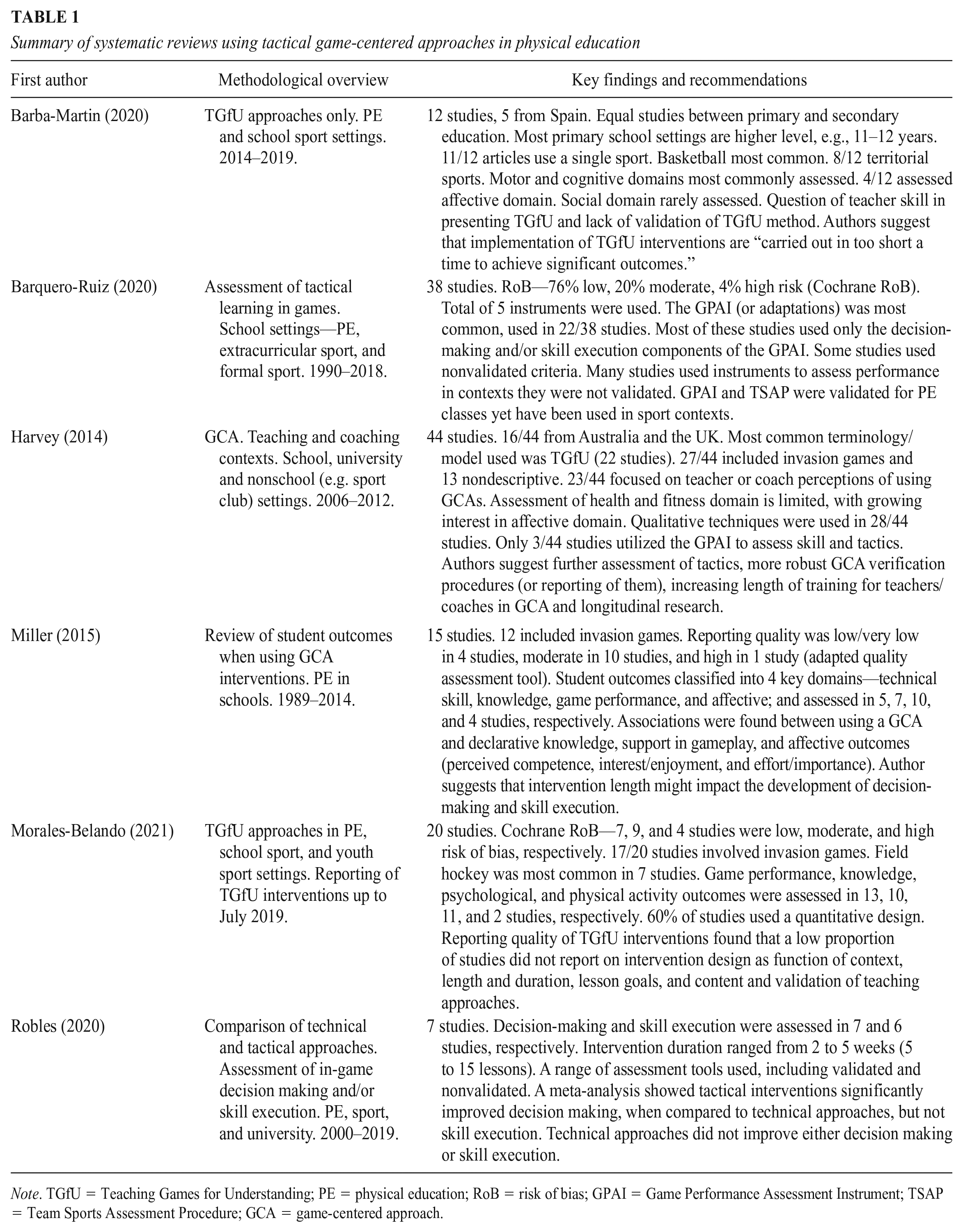
We identified six key reviews of TGAs which are briefly summarized in Table 1. There are some key variations between the reviews, such as specifically using a TGfU approach in PE and sport (Barba-Martín et al., 2020), measurement tools used to assess tactical learning in games during PE and sport (Barquero-Ruiz et al., 2020), student outcomes assessed in TGAs in PE (Miller, 2015), and TGfU approaches in PE and youth sport settings (Morales-Belando et al., 2021).
Summary of systematic reviews using tactical game-centered approaches in physical education
Note. TGfU = Teaching Games for Understanding; PE = physical education; RoB = risk of bias; GPAI = Game Performance Assessment Instrument; TSAP = Team Sports Assessment Procedure; GCA = game-centered approach.
Harvey and Jarrett (2014) provided a narrative review of TGAs in both PE and sport settings from 2006 to 2012, with most of their 44 studies situated in secondary school PE, and the remainder in primary school, tertiary training courses, and sporting clubs. Studies were predominantly in invasion games and reported using a TGfU model, with four studies that utilized a hybrid model, such as TGfU and sport education, or TGfU and cooperative learning. Most of the studies focused on student/player and teacher/coach attitudes and perceptions, with in-game performance being assessed in less than one third of studies. Qualitative measures such as semistructured interviews, observations, journals, and questionnaires were most frequently adopted, with a quantitative only approach used by 16 studies, with 9 studies reporting descriptive statistics and 16 inferential statistics. Of the 44 studies, 10 implemented a comparative design by examining TGAs relative to another condition (usually a TA). Studies were mostly based in Australia and the UK, but the review indicated an expansion of research in Europe and Southeast Asia. No differences were indicated between TGAs and TAs for improvements in motor skill execution. Fitness and activity levels were rarely measured, with a growing proportion of studies measuring affective outcomes such as motivation and enjoyment (Harvey & Jarrett, 2014).
Barba-Martín et al. (2020) conducted a systematic review of the TGfU model in PE and school sport settings between 2014 and 2019. However, they further limited the criteria to include only the TGfU model used in schools (PE or sport), resulting in 12 studies. The majority of studies were conducted in a European context (e.g., Spain), with an equal split between studies in primary and secondary school contexts. Further, most of the included studies (n = 10) focused on a specific sport rather than thematic units, with basketball the most common sport, and most studies centered on motor and cognitive outcomes such as tactical, decision-making, and technical skills, or level of PA. Length of interventions in studies varied from less than 9 lessons through to more than 18 lessons, with all lessons lasting between 40 to 60 minutes. Quantitative measures were the most frequently utilized (41.6%), including game performance evaluations, systematic observation, or activity monitoring. Qualitative measures were implemented to a lesser degree (25%) and included discussion groups, interviews, and discourse analysis, and mixed measures (33.4%). Overall, most studies seemed to indicate positive results from TGfU on performance outcomes such as tactical skills, decision-making, and PA, as well as affective outcomes such as motivation.
Robles et al. (2020) presented a systematic review and meta-analysis on the effects of TAs and TGAs on skill execution and decision-making in games. The review included PE and sport settings from primary to tertiary level and identified just seven studies in total, with all seven studies measuring decision-making and skill execution measured in six studies. When compared with TAs, results indicated that TGAs showed significant improvements in decision-making, but not in skill execution. The quality of evidence was evaluated using the GRADE approach, with a large heterogeneity of interventions and a low quality of evidence.
Miller (2015) conducted a systematic review of TGA outcomes assessed in children and adolescents within school PE. Twelve out of 15 studies focused on invasion sports, and outcomes were classified in to four key domains of technical skill, knowledge, in-game performance, and affective. In-game performance was the most common outcome measured, in 10 studies, with 4 studies measuring affective outcomes. Using a modified tool, the reporting quality of the studies was predominately low or moderate. The review indicated that TGAs were associated with improvements in declarative knowledge, support during gameplay, and affective outcomes, but not for technical skill, procedural knowledge, and gameplay skills of decision-making and skill execution development. Intervention length appeared to be important, with positive associations for decision-making and skill execution for interventions longer than 8 hours.
Morales-Belando et al. (2021) provided a systematic review of TGfU specific interventions in PE and youth sports (<18 years of age). They reported that the 20 studies included some of the teaching and learning implementation features of TGfU, but none of the studies included all features. Most of the included studies focused on invasion games and were conducted in PE classes. Common outcomes measured included game performance, knowledge and psychological, with just two studies measuring PA. Most studies were found to provide a low reporting quality of key intervention details, such as length and duration, lesson goals, content, and validation of teaching methods.
Previous systematic reviews provide a foundation to understand the influence of TGAs in PE and coaching contexts. However, several limitations are evident that need to be addressed to strengthen these findings and provide further understanding on the content and quality of comparative tactical TGAs. Recent reviews have synthesized studies from both PE and sport coaching contexts (Harvey & Jarrett, 2014; Light & Harvey, 2017; Morales-Belando et al., 2021), which does not adequately account for the varying levels of expertise in PE teachers and sport coaches when delivering TGA based programs. Such an approach to synthesizing studies is problematic as there is yet to be a review that solely focuses on TGAs within a PE context, limiting current understanding of how these approaches are used within PE and their outcomes on student learning. In addition, previous reviews have tended to focus on a specific model such as TGfU rather than accounting for the broad spectrum of models that comprise TGAs. Furthermore, previous reviews have often utilized narrow eligibility criteria, resulting in a limited number of included studies that are primarily narrative accounts or short time periods.
Therefore, this review seeks to address some of the aforementioned limitations and contribute to the existing body of literature by systematically synthesizing information about the content of TGAs and their comparative interventions by (a) excluding studies in a sport coaching context and focusing on TGAs specifically in PE classes at primary and/or secondary school to better understand the use and effectiveness of TGAs specifically in a PE context; (b) including all studies that implement models that are broadly characterized as a TGA, rather than focusing on a singular model (e.g., TGfU); (c) applying broad eligibility criteria to capture studies of short, medium, and long duration; and (d) reviewing the quality of reporting of TGAs and comparative interventions in PE. From these findings, this review aims to enhance our understanding of the content and effectiveness of TGAs to inform future TGA research in PE.
Method
This review followed the guidelines of the Preferred Reporting Items for Systematic Reviews and Meta-Analyses (PRISMA) (Moher et al., 2009) and the Cochrane Handbook for Systematic Reviews of Interventions (Higgins, 2020).
Design of the Literature Search Procedure
A systematic search of four electronic databases (EBSCOHost, ProQuest, Scopus, and SportDiscus) from inception to 2020 was conducted on January 13, 2021. Keywords were grouped into three levels: (a) method/approach, (b) setting/environment, and (c) intervention type. Then variations of keywords and controlled vocabulary were searched using each database (refer to supplemental Table S1 in the online version of the journal for further detail). All references were imported to Endnote X9 (Thompson Reuters, Carlsbad, California, USA), and 1,033 articles were identified once duplicates were removed.
Study Eligibility
Peer-reviewed studies were included based on the following criteria: (a) implemented a TGA unit of at least four consecutive lessons; (b) compared to either (or both) an alternative teaching approach or a control group; (c) was conducted within a primary or secondary school PE program; (d) measured at least one student outcome; and (e) had full text available in English. Studies were excluded if they used a tactical hybrid approach (e.g., TGA and Sport Education Model), measured only teacher outcomes, or was conducted in a sport setting, such as training or coaching sport teams.
Study Selection
Titles and abstracts were initially screened for relevance (R.L., A.K.), followed by a full text review by two authors (R.B., M.S.) using the above predetermined eligibility criteria. Any inconsistencies regarding eligibility were discussed and, if required, resolved in consultation with a third author (A.K.). Following the screening of titles and abstracts, 41 articles were eligible for full text review, with 24 of these subsequently meeting criteria for inclusion and analysis (Figure 1).
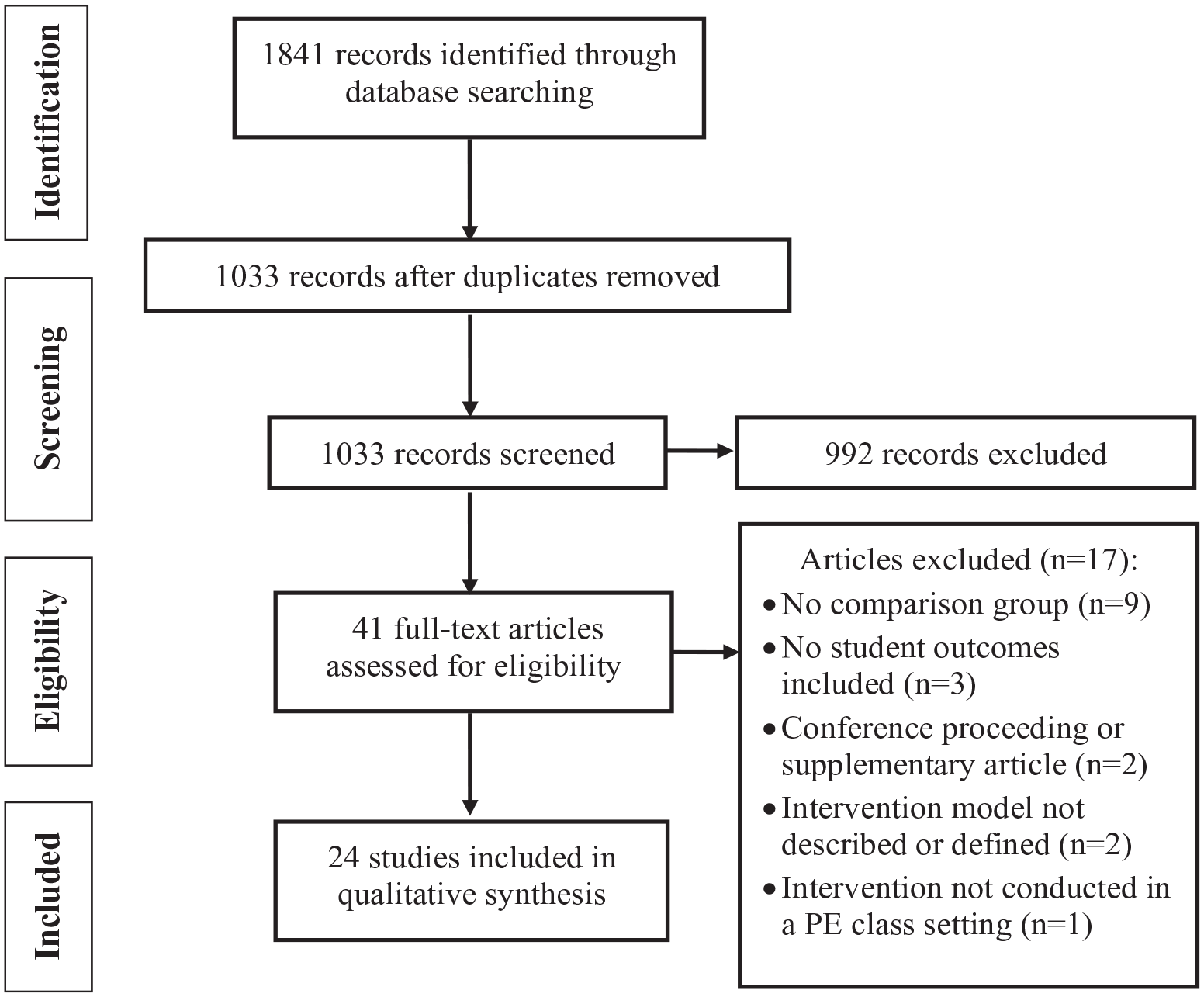
Systematic review search strategy.
Quality of Reporting
Reporting quality of each study was assessed using the Template for Intervention Description and Replication (TIDieR) checklist and guide (Hoffmann et al., 2014). The TIDieR was developed as a guide to improve the completeness of reporting and replicability of the intervention and comparison elements of a study (Hoffmann et al., 2014). It is a 12-item checklist with a focus on the reporting of four key areas: materials, procedures, planned interventions, and actual interventions applied to each study. The checklist was applied to each study, and items had to be met by all included interventions. A scoring system to quantify the reporting quality was adapted from previous studies (Barba-Martín et al., 2020; Whale et al., 2019), with 0 allocated for an item not reported, 1 for an item partially reported, and 2 for an item fully reported or replicable (maximum of 24 points) (Yamato et al., 2018). Two authors (R.L., A.K.) independently extracted data from the studies relevant to each TIDieR item; any differences in results were discussed; and, if required, a third author (R.B.) was consulted to reach consensus. The completeness or quality of reporting was then described as low (< 60%), moderate (60%–74%), or high (>75%) (Charlton et al., 2017) (refer to supplemental Table S2 in the online version of the journal for further detail).
Risk of Bias
The risk of bias was assessed using the Risk of Bias in Non-randomised Studies – of Interventions (ROBINS-I) tool (Sterne et al., 2016). This tool was developed for systematic reviews in evaluating studies that involved interventions without randomization of participants in the allocation of groups. More recently it has been utilized within the health research areas (Farrah et al., 2019; Waddington et al., 2017), forming the rationale for its implementation in the present review. The ROBINS-I tool has several questions that aim to address seven domains through which bias might exist within a study. These domains of bias might be introduced in the preintervention stage (confounding, participant selection), at intervention (classification of interventions), or postinterventions (deviation from intended, missing data, outcome measurement, and selection of reported result) (Sterne et al., 2016). Two authors (R.L., A.K.) independently evaluated each study using the ROBINS-I tool; any differences in results were discussed; and, if required, a third author (R.B.) was consulted to reach consensus. The potential bias of each study was classified as low, moderate, serious, or critical risk (Sterne et al., 2016).
Data Extraction and Synthesis
The following variables from included studies were extracted using a predetermined spreadsheet: (a) descriptive data, including country and sample groups of students; (b) study design; (c) content and progression of interventions; (d) supervision and delivery of programs; (e) student outcomes; (f) measurement tool(s) implemented; and (g) main findings related to the outcome measures. In addition, Scimago ratings (Scimago, 2021) were obtained to further examine the quality of articles reviewed. The extracted data was used for summarizing the content, describing patterns and trends, and for frequency distributions within the included studies. Studies used a range of measurement tools for student outcomes (e.g., physical fitness, decision-making, declarative knowledge), and therefore, the authors classified the outcomes into seven categories to capture the wide range of terminology used: (a) tactical skill (in-game), (b) skill execution (in-game), (c) technical skill (isolated skill tests), (d) affective (including motivation, enjoyment, perceived competence), (e) declarative knowledge, (f) procedural knowledge, and (g) physical activity. Similarly, the included studies used a variety of terms to name the teaching interventions utilized; therefore, they will be classified as either a TGA or TA in this review.
Results
Description of Included Studies
An overview of the study design, participants, duration, measurement tools, outcomes, and findings of the 24 included studies is provided in Table 2.
Summary of included studies
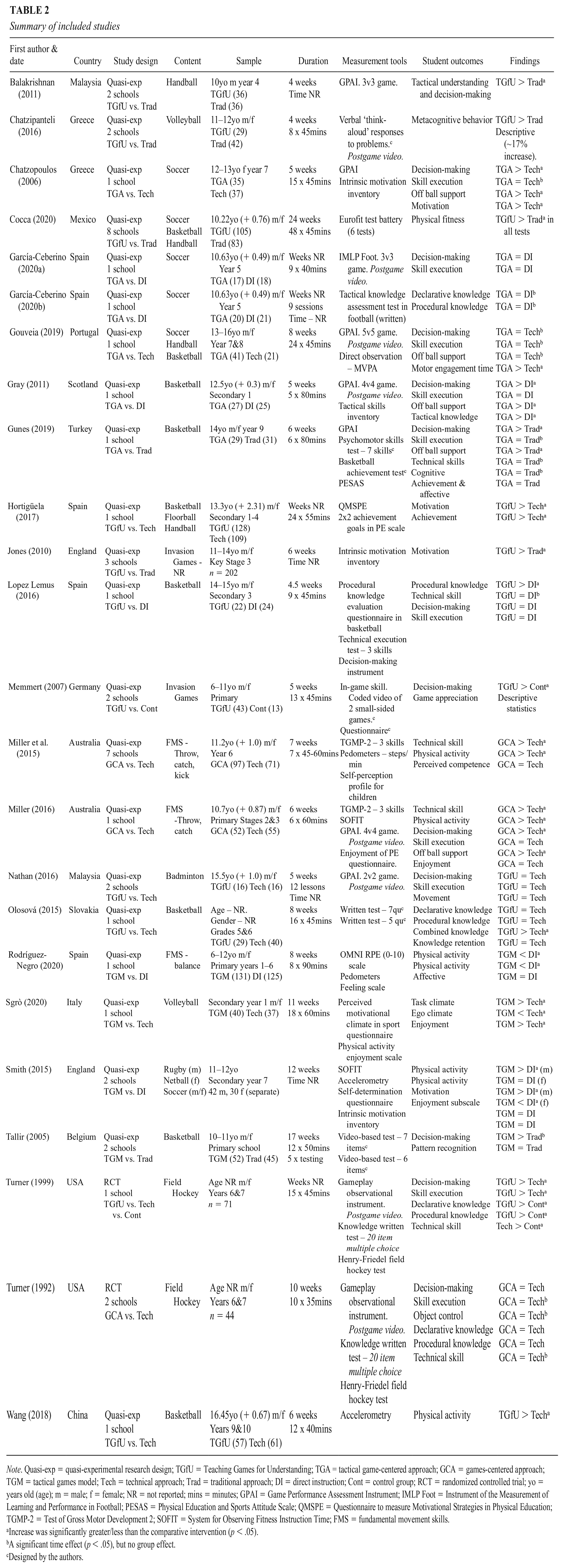
Note. Quasi-exp = quasi-experimental research design; TGfU = Teaching Games for Understanding; TGA = tactical game-centered approach; GCA = games-centered approach; TGM = tactical games model; Tech = technical approach; Trad = traditional approach; DI = direct instruction; Cont = control group; RCT = randomized controlled trial; yo = years old (age); m = male; f = female; NR = not reported; mins = minutes; GPAI = Game Performance Assessment Instrument; IMLP Foot = Instrument of the Measurement of Learning and Performance in Football; PESAS = Physical Education and Sports Attitude Scale; QMSPE = Questionnaire to measure Motivational Strategies in Physical Education; TGMP-2 = Test of Gross Motor Development 2; SOFIT = System for Observing Fitness Instruction Time; FMS = fundamental movement skills.
Increase was significantly greater/less than the comparative intervention (p < .05).
A significant time effect (p < .05), but no group effect.
Designed by the authors.
Summary of Studies
Most studies were published in Western Europe (n = 14), predominately from Spain (n = 5) and the UK (n = 3). Using Scimago ratings (Scimago, 2021), six studies were published in Tier 1 journals, six in Tier 2, five in Tier 3 or 4, and seven were not currently listed or rated. If journals were rated in two or more subject area categories, such as education and sports science, the highest rating was included. No studies matching our eligibility criteria were published before Turner and Martinek (1992), and Figure 2 shows an increasing trend in the comparative TGA research. Twenty-two studies were quasi-experimental (e.g., students stayed in their normal class groups, but class groups were randomly allocated to either a TGA, TA, or control); and in two studies, students were randomly allocated to a group (Turner & Martinek, 1992, 1999). No approaches other than a TA or control intervention were compared to a TGA intervention.
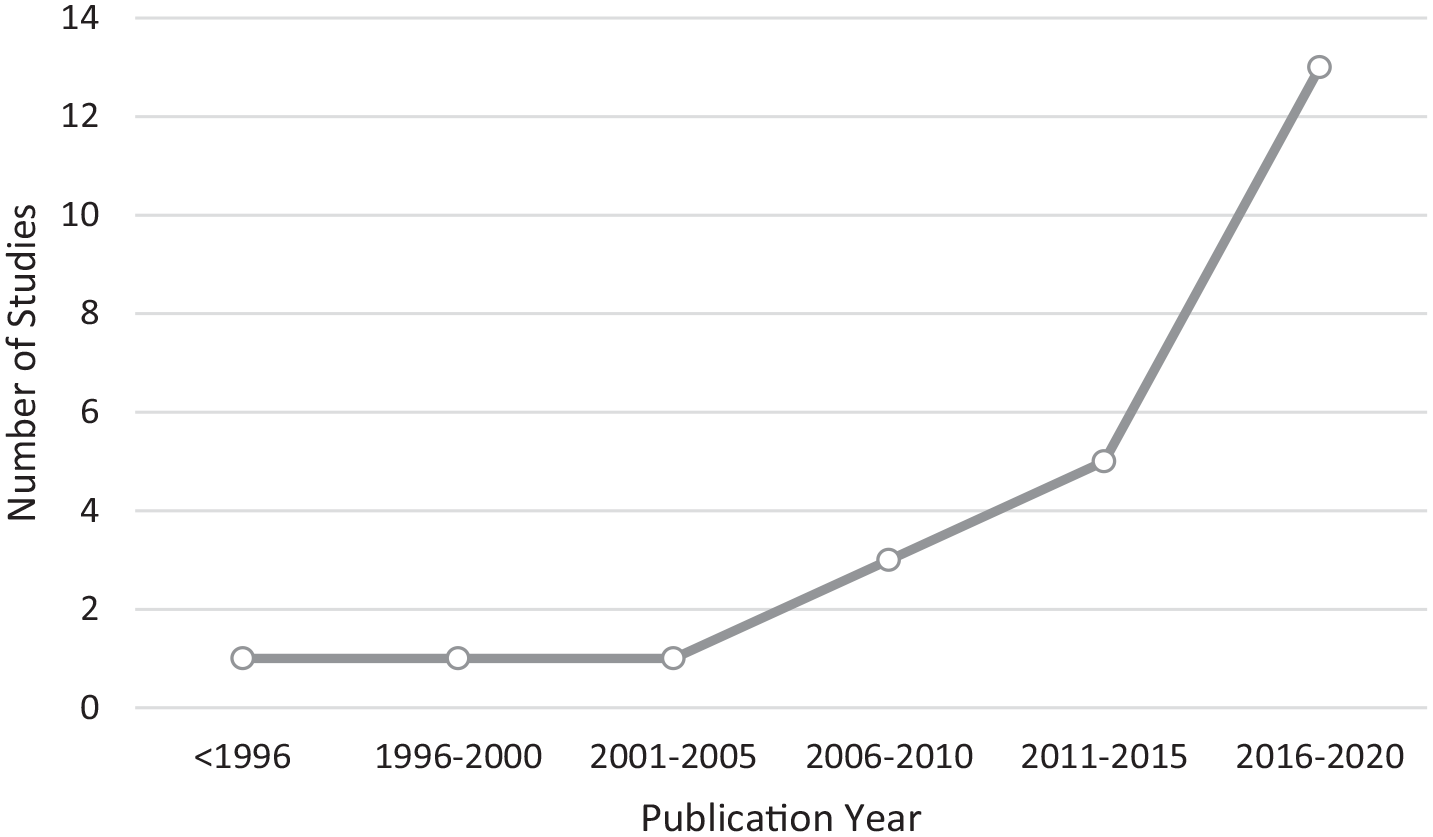
Number of studies published in each 5-year period.
Study Samples
Eleven studies each were conducted within a secondary school and primary school setting, respectively, with two studies performed within combined primary/secondary schools. Fourteen studies included a single school, seven studies included two schools, and three studies sampled from three or more schools. The majority of students were aged between 10 and 14 years of age, with ranges between 6 and 16 years. Twenty-one studies were mixed boys and girls, with one study each of boys only, girls only, and no gender stated.
Overview of Interventions
The terminology used for the tactical intervention groups in the included studies were TGFU (n = 11), TGA (n = 6), tactical games model (TGM) (n = 4), and game-centered approach (GCA) (n = 3). These groups were all compared to technical teaching methods, with the most common terminology being technical approach (n = 11), direct instruction (n = 6), and traditional approach (n = 6). Whereas 13 studies also named their comparative groups as controls, we interpreted that only 2 studies included an actual control group where the content and teaching approach of the intervention was not related to the experimental group or measurement methods (Memmert & Konig, 2007; Turner & Martinek, 1999).
Figure 3 shows the types of activities that were included in each study. Most studies compared a TGA with a TA using a single sport (n = 15), such as basketball or soccer/football. Four studies used an intervention that included either two or three individual sports (taught one after the other), and four studies used a thematic content approach, such as learning fundamental movement skills (FMS) or generic games. Four activities listed as “other” in Figure 3 included floorball, badminton, netball, and rugby. Of the 27 sports identified, invasion games were reported most frequently (n = 24), with 3 net and wall games in the remaining studies. All studies matched their comparative intervention groups in both duration and number of lessons. Teaching interventions typically lasted between 4 and 6 weeks, with 11 studies incorporating teaching units of 12 or more lessons (Figure 4). Nineteen studies reported both the number and length of lessons, with 7 of these studies including interventions of less than 8 hours and 8 studies with 8- to 12-hour interventions.
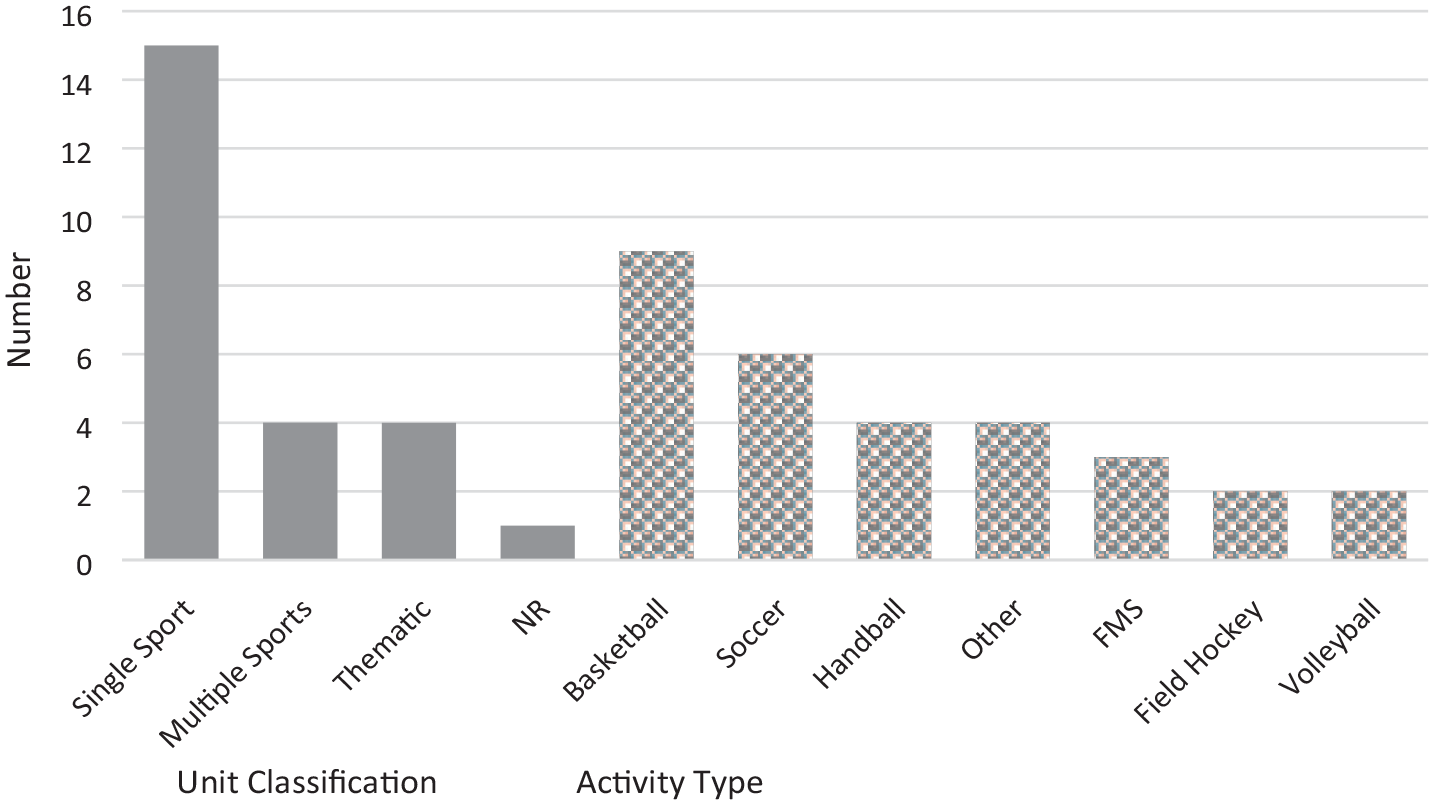
Number of activity types and sports reported. NR = not reported; FMS = fundamental motor skills.
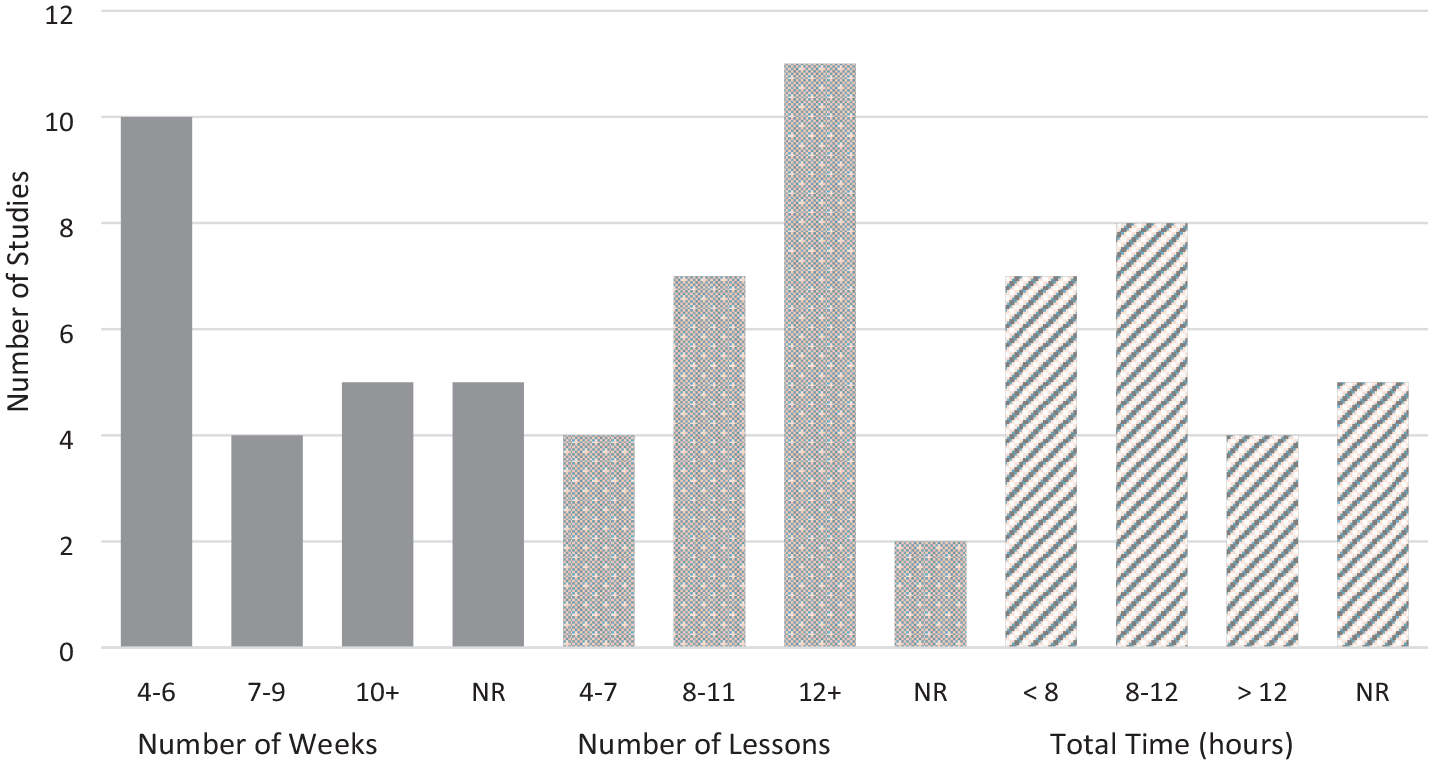
Duration of teaching interventions. NR = not reported.
Quality of Reporting
The purpose of measuring the quality of reporting in the included studies was to identify whether the research could be replicable. According to the TIDieR tool, quality of reporting was primarily found to be low (n = 18), with the remaining studies being moderate (n = 5) and high (n = 1) (Figure 5). Across all studies, five items were identified that were consistently reported poorly: descriptions of the content of each intervention (Item 4); whether the interventions were tailored/individualized (Item 9); whether the interventions were modified/changed from planned (Item 10); assessment of adherence or fidelity (Item 11); and, whether the interventions were delivered as planned (Item 12). Two TIDieR items were reported to be high quality: Each intervention model is named (Item 1), and there is a description of the aims/purposes/theory of each intervention (Item 2) (refer to Supplemental Table S2 for further detail).
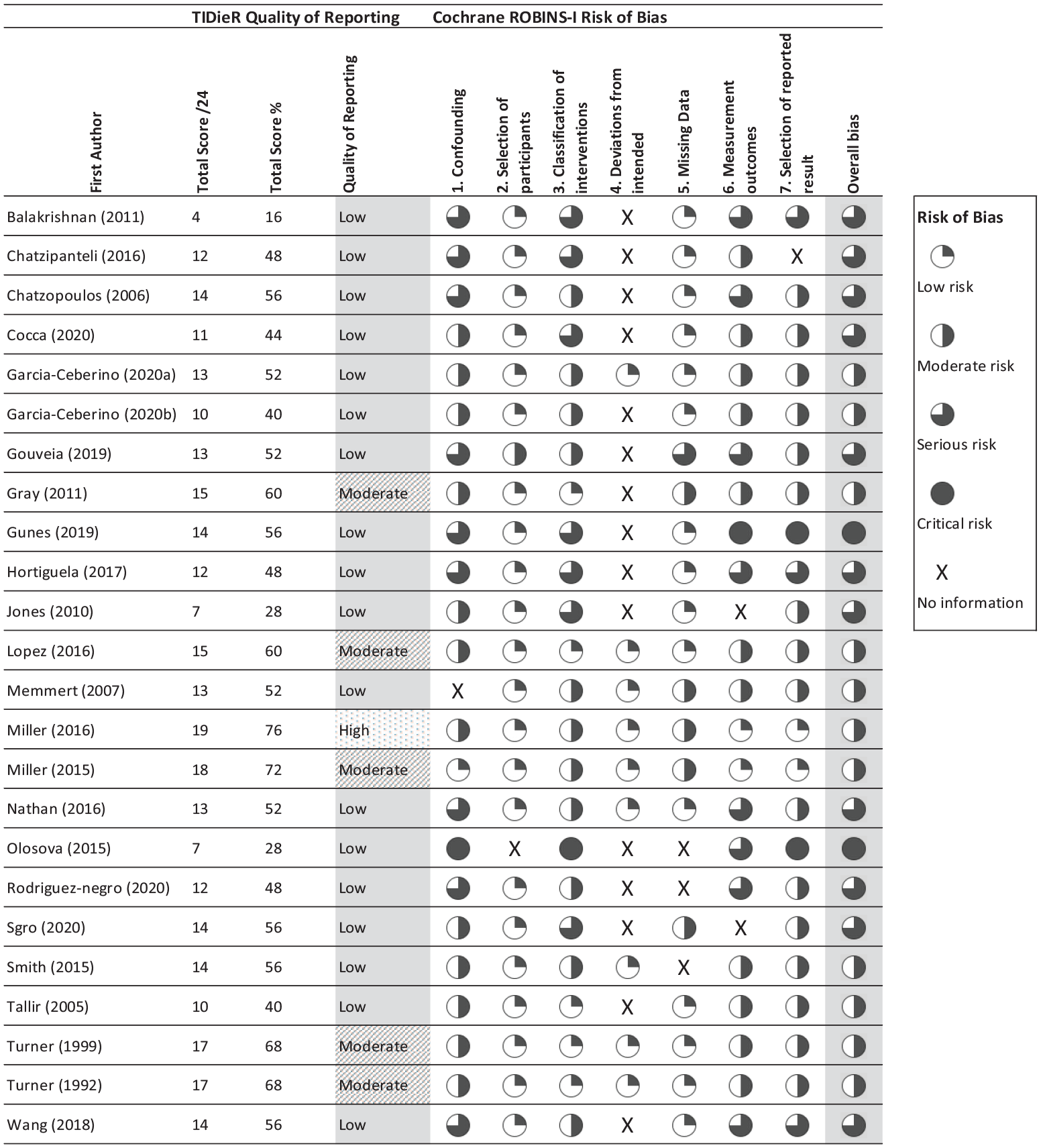
Quality of reporting and risk of bias summary.
Risk of Bias
Using the ROBINS-I tool, it was identified that 14 studies had a moderate overall risk of bias, 8 serious, and 2 were critical (Figure 5). When broken down into the seven types of bias, the reviewed studies were mostly reported to have low bias when selecting the participants and in the classification of interventions. Fifteen studies provided no information regarding the deviation from their intended interventions. Ten studies had either serious or critical confounding bias.
Measurement and Student Outcomes
Table 1 summarizes the measurement tools used, the intended student outcomes, and the main findings of each included study. The most common student outcomes assessed were in-game tactical skill (n = 12), affective (n = 12), and in-game skill execution (n = 11) (Figure 6). Note that in a small number of studies, two assessment tools were used to measure aspects of one outcome; for example, Smith et al. (2015) measured affective outcomes by using part of the Intrinsic Motivation Inventory to specifically assess enjoyment (five items) and a modified self-determination questionnaire. In-game tactical skill and skill execution was most commonly measured in a small-sided game by coding a postgame video using a written observation tool, for example, the GPAI (Oslin et al., 1998), which was used in 7 of 12 studies that assessed tactical skill and/or skill execution in game. The majority of TGA groups significantly improved outcomes in tactical skill, skill execution, affective, technical skill, procedural knowledge, and physical activity levels; whilst most of the TA groups significantly improved only technical skill outcomes (Figure 6).
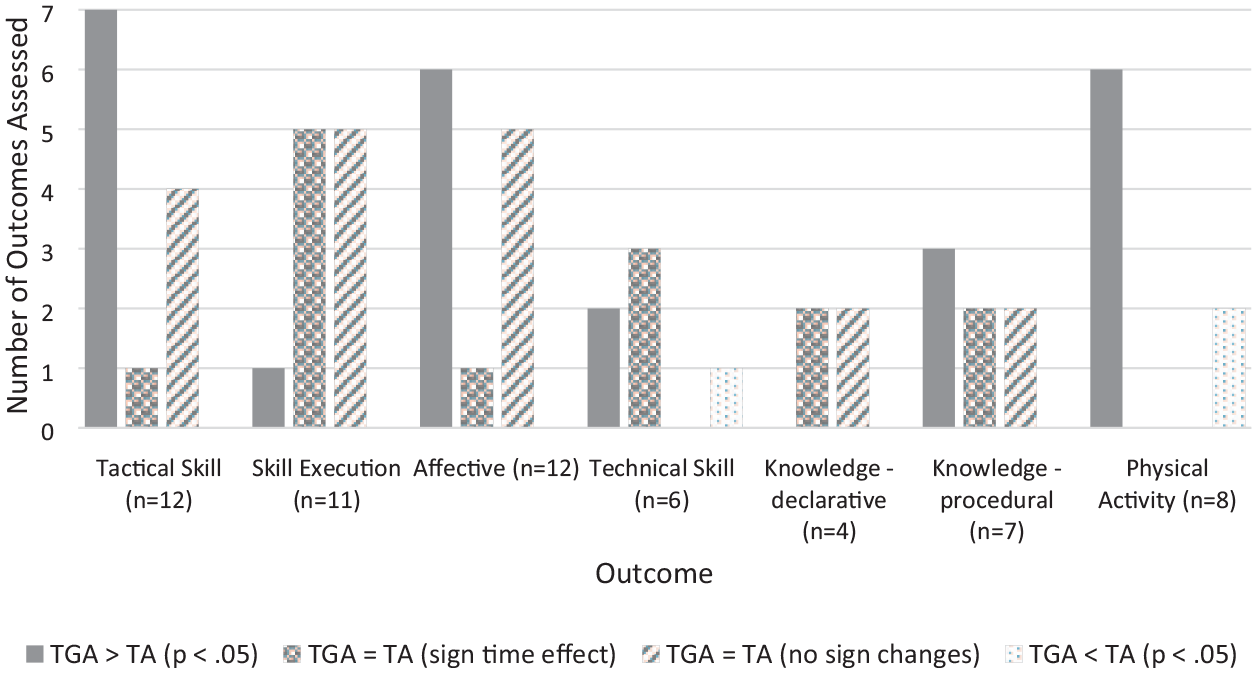
Frequency of outcomes and summary of results.
Discussion
The present review aimed to investigate the content and quality of TGA and a comparative approach in PE. Specific content variables were examined to identify potential areas that my impact the effectiveness of TGAs and TAs.
Content of Included Studies
TGAs in PE have been used for many decades and have evolved over time as teachers and researchers have focused on more engaging and educationally meaningful ways to incorporate games into the curriculum (Breed & Spittle, 2021). Traditionally, games were taught using a technical skill approach with the theory that as skills developed, they would transfer directly to a game (Gray & Sproule, 2011). Bunker and Thorpe challenged this with the development of their understanding approach in 1982, and subsequent work by them and other researchers has aimed to further progress these tactical learning concepts (Werner et al., 1996). Our findings suggest that researchers and teachers were slow to adopt TGAs, as only 3 studies meeting our criteria were found prior to 2005 with a sharp increase in studies comparing a TGA and TA, with 13 of 24 included in our review since 2016.
From 30 activities included within the 24 studies in our review, 24 could be classified as invasion games, 3 net/wall, and 3 as general FMS or generic games. Surprisingly, we found no studies involved the learning of striking/fielding sports when comparing the effectiveness of teaching methods, particularly as cricket in Australia and England, and baseball in the USA, are popular sports for both watching and playing amongst children and adolescents (Aspen Institute, 2019; SportAus, 2018; SportEngland, 2019). This finding supports previous systematic reviews of TGfU studies that also found invasion games to be highly represented and striking/fielding games rarely utilized (Barba-Martín et al., 2020; Harvey & Jarrett, 2014; Morales-Belando et al., 2021). Previous theoretical perspectives have also suggested that an effective way of learning is for games to be taught in thematic categories, such as invasion, net/wall, and striking/fielding, which could improve cognitive and motor skill transfer across several sports (Breed & Spittle, 2011; Mitchell et al., 2006). Research in the area of skill transfer is limited, but some positive associations between sport skills transferring from one sport to another within a similar category have been identified (Contreras Jordán et al., 2005; Roca & Williams, 2017). Using a thematic approach can also facilitate learning of generic skills required to help learners establish a healthy active lifestyle and to be physically literate (Breed & Spittle, 2021; Singleton, 2009). Only four of the reviewed studies could be considered as using a thematic approach (nonsport specific) that used generic games for learning (Gouveia et al., 2019; Memmert & Konig, 2007; Miller et al., 2015, 2016), suggesting that some of the research in this review does not align with current curriculum models. For example, the Australian curriculum provides no reference to teaching specific sports within PE, but states that the development of movement skills, concepts and strategies must be addressed through a variety of games and sports in categories of invasion, net and wall, striking and fielding, and target games (ACARA, 2014).
Reviews by Harvey and Jarrett (2014) and Miller (2015) suggested that intervention duration in research studies should in general be longer. Whilst this might be advantageous from a research perspective, it is rarely practical in the school setting. For example, an issue commonly raised in the teaching of PE (and health) is the limited curriculum time allocated for the subject (Dudley & Burden, 2019), particularly in reference to cognitive and motor skill development (Robinson et al., 2019). In Australia, many primary and secondary schools have only one period per week of dedicated PE time (with weekly competitive sport training or games in addition). For example, in the state of Victoria, although officially mandated that Prep to Year 3 students complete 20 to 30 minutes each day and that Year 4 to 6 students complete 1.5 hours per week of sport and 1.5 hours per week of PE (Department of Education and Training [DET], 2020), meeting these requirements is not actively enforced (Crooks et al., 2021). Therefore, it could be considered that the length of many research interventions in this review were unrealistic, particularly in the context of an Australian PE setting, and considering all the other topics that must be taught within the curriculum (e.g., swimming, dance, gymnastics, athletics, games and sports, and health and well-being). For instance, 11 of the included studies reported teaching interventions of 12 or more lessons—3 of these consisting of 22 or more lessons. To enable study findings to be compared or viewed with less caution, they should include the length of the intervention (e.g., weeks), number of lessons, and the length of each lesson. Seventeen studies reported all three of these variables, but it was not clear in most of these whether the time stated was allocated curriculum time or actual activity time.
Quality of Reporting
In research exploring the effects of interventions on specific outcomes, the reporting of details such as descriptions of activities, teacher/researcher experience, validation of methods and assessment tools, fidelity and adherence to the program are essential in order to interpret the research findings and also apply the research in practice (Hoffmann et al., 2014). Whilst there is no specific tool designed for PE research, the TIDieR checklist was applied to the studies in this review as each involved comparative interventions or control groups (Hoffmann et al., 2014). Although the TIDieR was developed mainly as a checklist for researchers to ensure completeness of reporting and replicability of interventions, some previous systematic reviews have quantified the 12 items as a score (e.g., Whale et al., 2019), with Yamato et al. (2018) demonstrating that applying a 2-point scale to each item has acceptable validity when used as a single score out of 24. The majority of the studies in our review (75%) were of low quality in their reporting, similar to the findings of noneducational studies that use exercise interventions (Breed et al., 2021). In contrast, the systematic reviews of Barba-Martin et al. (2020) and Miller (2015) found most studies using teaching and coaching tactical interventions in PE and sport settings to be of moderate or high reporting quality. However, various modified measurement tools were used in reviews of studies that predominantly involved a single intervention (e.g., not comparing two or more intervention types) applied in either PE or sport settings (Barba-Martín et al., 2020; Miller, 2015; Morales-Belando et al., 2021), whereas in this current review, all studies compared the effects of a TGA with a TA/control on student outcomes within a physical education class setting only. Therefore, we analyzed the quality of reporting of both interventions, partly justifying our finding of low-quality reporting in the research. However, it should be noted that there is no preferred tool used in educational research and studies used a variety of measurement tools, terminology, scales, and modifications; therefore, using scores for quality of reporting should be interpreted cautiously, even though they have been found to discriminate between low- and high-quality reporting (Yamato et al., 2018). Similar to the findings of Yamato et al. (2018) in their systematic review of reviews using the TIDieR, we identified that many studies reported the aims, purpose, and content of the “experimental group” (e.g., TGA intervention) with good detail, but lacked clear or detailed reporting of the comparative intervention (e.g., TA intervention) or control group. Many studies in our review provided no information on the comparative intervention other than naming the activity (e.g., basketball) and the pedagogy used (e.g., direct instruction) (see Figure 5).
Similar to the findings of Morales-Belando et al. (2021), the reporting of details regarding individual lesson content, such as the aims, purpose, activity descriptions, questions, group sizes, progressions, and activity time, was poor in the majority of interventions, thus making it challenging to replicate or utilize the interventions in a practical school setting. Most of the research simply provided a general overview of the interventions, without any description of the content or activities taught. However, whilst we recognize clear limitations of word counts within the scope of journals, describing the content of interventions should be considered most important to enable a comparison of groups or studies, provide transparent reporting, and interpret results, perhaps through supplementary materials, an online depository, or appendices. Majority of studies in our review did not clearly describe the teacher/researcher experience and training background or how teaching approaches were validated. Finally, the reporting of fidelity, adherence, and modification of interventions from planned was poor overall. Only one study described any changes from the intended intervention (Turner & Martinek, 1999), further emphasizing the need for research in this field to improve completeness and quality of reporting.
Risk of Bias
Majority of studies used a similar design comparing a TGA with a TA using a single sport, whilst students remained in their regular class groups (quasi-experimental). Only two studies randomly allocated students to groups (Turner & Martinek, 1992, 1999). Whilst many of the 22 quasi-experimental studies stated various methods to help minimize teacher bias (e.g., video feedback of teaching pedagogy for each approach), there is likely to be an inherent bias through teacher preference or by using a different teacher for each approach. This potential of bias is further implied as 11 studies named their TA intervention a control group, when students were learning the same activity as the TGA group but by using a technical direct instruction, skill-drill approach, adding to an assumption that improvement in student outcomes were not expected when using a TA. Only one study compared a TGA and TA against an actual control group, whereby the experimental groups participated in field hockey and the control students participated in an unrelated unit of softball (Turner & Martinek, 1999). Further studies comparing two or more approaches should consider the use of an actual control group to minimize bias of one approach over another. That said, it might be challenging to include a true control group as a comparison within a PE setting, due to curriculum constraints and ethical implications.
The ROBINS-I tool (Sterne et al., 2016) was applied to each of the included studies as they were mostly non–randomized controlled trials (RCTs) that involved comparative interventions. The ROBINS-I tool has become frequently utilized within health research (Farrah et al., 2019; Waddington et al., 2017), but it is often misapplied and should not be modified (Igelstrom et al., 2021). One of the issues in this current review was the use of nonequivalent posttest designs and maintaining intact class groups. This is the normal approach for educational research to maintain ecological validity; however, it does not always fare well when using risk of bias (RoB) tools, such as the ROBINS-I, which is measuring and comparing studies through a RCT lens. For example, Sterne et al. (2016) stated that a low RoB on the ROBINS-I is “comparable to a well performed randomised trial.” With many quasi-experimental studies in this review, there is the potential confounding of different baseline characteristics not being controlled for, particularly with some studies including multiple grade groups in each condition (e.g., Hortigüela et al., 2017; Memmert et al. 2007) or multiple schools (e.g., Chatzipanteli et al., 2016; Jones et al., 2010). Some studies did provide ecological validity as a justification (e.g., Hortiguela et al., 2017), but this type of design raises two possible confounding issues: internal validity of using natural groups, and external validity of explaining the procedure to be followed. However, Miller et al. (2015) implemented sound strategies to reduce the risk of confounding bias when working with diverse populations and controlling for potential confounding variables, such as stratifying and matching schools based on socioeconomic index, random assignment to groups following baseline measures, and blinding assessors from treatment conditions. Ten of the studies in our review had serious or critical levels of confounding bias, overall the highest level of the seven bias types, and supporting the findings of Igelstrom et al. (2021).
Fifteen of our reviewed studies provided no information regarding deviations or changes from planned unit interventions and/or how adherence and fidelity was measured. This limited reporting of deviations from the interventions aligns closely with results of TIDier Items 9 to 12, which are specific to the quality of reporting. Whilst this reduced the quality of reporting, it is important to note that the lack of reporting these deviations from intended/planned interventions (RoB Domain 4) did not contribute to the overall RoB result, as it cannot be assumed whether there were indeed deviations, or they simply were not reported. Five studies reported checking fidelity or program adherence but did not report whether fidelity of treatments had been maintained or if changes had been made (Chatzopoulos et al., 2006; López Lemus et al., 2016; Memmert & Konig, 2007; Nathan, 2016; Rodríguez-Negro & Yanci, 2020). For example, Chatzopoulos et al. (2006) reported that plans were reviewed each week to assure fidelity of approaches and discuss any changes, but no further information was provided to indicate whether any changes were actually made.
Whilst no studies had a low risk of bias (e.g., equivalent to a well-performed randomized trial), the majority of studies had a moderate overall risk of bias (n = 14). By the nature of school settings and convenience, almost all of the included studies were quasi-experimental, whereby students were taught in their regular class group, which was randomly allocated to either a TGA or TA/control group. However, the comparative group (either a TA or control or both) was rarely described in most studies, suggesting a potential bias towards the TGA. Eleven studies also called their comparison group a control group, when in fact it was a technical or direct-instruction approach with the activity the same as/matched to the TGA. This could suggest there was an assumption that the technical or direct instruction (DI) approach should not improve student outcomes and contribute to potential bias of results. Future comparative studies should ensure that any bias is minimized or fully reported, for example, bias due to selective measurement outcomes or reported results, intervention classifications and deviations from the intended interventions.
Measurement and Student Outcomes
Studies included in this review compared two teaching approaches with pretesting and posttesting to identify any time and/or between intervention differences across one or more student outcomes. All studies matched their comparative intervention groups in relation to time, although very few stated the actual teaching/learning time, which could be considered much more relevant when interpreting the results of an experimental study. We classified student outcomes into seven categories, noting that skill execution was measured in-game and technical skill was measured using isolated skill tests. Seven of the 12 studies that assessed in-game tactical and/or skill execution used the GPAI, suggesting that PE research involving TGAs have widely adopted this as an effective tool, with most of the remaining studies using their own methods of coding game skill performance. Barquero-Ruiz et al. (2020) similarly found that 22 of 38 studies utilized the GPAI; however, they noted that it was originally designed and validated for use in PE classes yet had been used in a variety of sporting contexts. In contrast, Harvey and Jarrett (2014) only found 3 of their 44 reviewed studies between 2006 and 2012 used the GPAI, indicating that the tool has only recently gained traction in the research since it was first introduced in 1996 (Oslin et al., 1998). Assessment tools to measure affective outcomes were varied, depending on what subdomains were viewed as most important by the researchers (e.g., motivation, enjoyment, attitude, autonomy) with little to no justification for their selection. Only the Intrinsic Motivation Inventory was used in multiple studies (3/10) to assess affective outcomes, where between one and four subscales (e.g., enjoyment) were used. Seven studies assessed physical activity and movement in class, with the System for Observing Fitness Instruction Time (SOFIT), pedometry, and accelerometry used in two studies each (Table 2). With the recent findings of low physical activity levels of children and adolescents worldwide, it would seem important to measure this outcome in future research.
We suggest that technical skill tests (e.g., fundamental motor skills, such as throwing and catching) should be redundant in upper primary and secondary schools (e.g., from about age 10 years), as the objective of learning these skills at an early age is for the purpose of effectively applying them in a game context, and there is no one “ideal” technique. Therefore, the assessment of skill execution in a game is more representative of competitive game conditions and, therefore, more relevant to understanding how a learnt skill transfers from practice to game-like settings. Morales-Belando et al. (2021) found that many studies did not design interventions or use measurement tools as a function of the context. For example, tactical approaches such as game sense were designed to focus predominately on developing tactical and game execution skills and affective outcomes, such as feelings, attitudes, and values (Breed & Spittle, 2021). However, only half of our reviewed studies of TGAs measured tactical and/or skill execution, and 10 of 24 assessed affective outcomes, such as motivation or enjoyment. Thus, there should be constructive alignment between unit outcomes, lesson design, and the assessment of the outcomes. Whilst 10 of our reviewed studies measured only one outcome, it should be noted that PE teachers should be focusing on numerous student outcomes in each unit, considering the three broad categories of movement skills (e.g., tactical and technical), knowledge (e.g., declarative and procedural), and affective (e.g., personal, social, and relationships) (Breed & Spittle, 2021), with the overall aim of developing students’ physical literacy (Durden-Myers et al., 2018).
In most reviewed studies, a TGA intervention was either more effective or equally effective than a TA or control group in six of the seven student outcomes: tactical (e.g., decision-making), skill execution, affective, technical skill, procedural knowledge, and physical activity. Whilst there appears to be a clear advantage of utilizing a TGA over a TA, the results of many studies need to be treated with caution, due to potential teacher and researcher bias towards TGAs, such as assuming the TA is a control group and not describing any TA or control interventions. It is important to note that the main aim of TAs is to improve technical skill, yet our reviewed studies suggested that TGAs were equal to or more effective in developing these skills. As most studies involved invasion sports, we should also be careful in applying these findings to other game categories, such as net/wall and striking/fielding, which could be argued that many sports in these categories require a higher level of technical proficiency to play the game successfully (Koopmann et al., 2020). Though it appeared that intervention length did not impact overall outcomes, Miller (2015) provided some evidence that TGA interventions of less than 8 hours or 10 sessions contributed little in improving game performance outcomes, such as skill execution and decision-making. It has also been suggested that the implementation of TGAs in research might be too short to achieve significant outcomes (Barba-Martín et al., 2020; Harvey & Jarrett, 2014). However, their reviewed studies included both PE classes and sport coaching, which could be considered two different environments. Whilst it might be an advantage to conduct research of this type of longer duration, it is rarely practical within a PE setting that commonly involves an already “crowded” curriculum. Therefore, findings from long-duration research studies might not be realistic or transferable in a practical PE (and health) curriculum.
Limitations
Although this article details a comprehensive review of TGAs and comparative approaches in PE and their effectiveness on student learning outcomes, there are some potential limitations of the approach adopted. The RoB tool used for this study is not specific to interventions conducted in PE or school settings, but we decided to use a full, validated version, rather than modifying or developing our own tool. Interpreting the authors’ terminology and intention was a major limiting factor, with many studies unclear in their description of methods and results. Where not clear, we analyzed and assessed studies based solely on the information provided. To minimize our bias, we used a preestablished data extraction table and discussed any items that were not categorically clear. We decided not to use a meta-analysis design for a number of reasons that could contribute to misleading interpretation of results, in that the studies were heterogenous in terms of instructor experience and training (e.g., researcher, class teacher, pre-service teacher), age and experience of participants (e.g. from age 6 to 16), activities/sports undertaken, the measurement tools used to assess outcomes, and the overall poor level of reporting of important features in many studies.
This review may incorporate a discipline mastery perspective or dualistic view, comparing learning outcomes focused on traditional learning domains such as physical, cognitive, social, and affective, given that it is a comparison of TGA with TA. Broader student outcomes and experiential perspectives of TGA and TA (e.g., complexity thinking, ecological perspectives, embodiment, and phenomenological understandings) are not covered in this review. These conceptions appear to have been much less researched in the TGA literature (or PE literature more broadly), even though they are part of the conceptual basis for TGA. Reviews of more embodied and complex thinking perspectives in TGA and TA would be warranted to explore learning outcomes beyond what may be narrow conceptions of learning and development.
Conclusions
We systematically reviewed 24 research studies that compared a TGA with another approach within primary and secondary PE classes. All TGAs were compared with a TA or control, and there was an even distribution of studies performed in primary and secondary school settings. The majority of studies were published in Western Europe and were of mixed gender, with TGfU being the most commonly used term for a TGA. Almost all games and sports played could be classified as invasion games, with no studies investigating striking/fielding games and sports. Most studies had a low quality of reporting according to the TIDieR tool, and many did not describe the content of both interventions or individual lessons, which would make replicability or transfer into practice very challenging. The reporting of the TA intervention was poor overall and was often named a control group, possibly suggesting a bias towards the TGA. Generally, studies did not report any information regarding the fidelity, adherence, or modifications to the planned interventions. The results from our reviewed studies suggested that a TGA was superior to a TA in tactical skill, procedural knowledge, affective outcomes, and physical activity levels. However, they should be viewed with caution due to various factors, such as the length of intervention, lack of information describing the interventions, and training and validation of teaching methods.
Implications for Practice and Future Research
Our review of 24 studies comparing a TGA with a TA/control approach identified the potential need for several practical developments. Whilst results from the present review suggest that longer interventions might be necessary to obtain meaningful or significant results, this might not be practical within the school PE setting that has curriculum and time constraints. Many contemporary curriculum frameworks suggest that games and sports should be taught in themes, rather than sport-specific units, so PE programs should also consider using thematic units of work when teaching games and sports to encourage skill transfer across sports. Assessment also continues to be a key issue in PE settings, as many measurement tools used in the research are time-consuming and are therefore not practical for the PE teacher in a “crowded” curriculum. For example, the GPAI tool that is used to measure skill within a game can only focus on one student per 5 to 8 minutes of game time. There is the potential for further development of valid, reliable, and quick assessment tools for use in PE. Of the reviewed studies, no teaching and learning approaches other than TAs were compared with a TGA, such as sport education models or cooperative learning models. Future research could investigate the use of thematic units rather than sport-specific units and identify any transfer of skills across various games and sports. Also important in skill acquisition is whether retention of knowledge and skills can be maintained over longer periods following interventions. Further research could consider the development of student learning outcomes following net/wall or striking/fielding game categories. In addition, a fruitful line of inquiry would be to compare student learning between different game categories, for example, invasion games versus striking/fielding games.
Considering the recent educational emphasis on the development of student physical literacy, research investigating various teaching approaches and models would be valuable to further understanding key outcomes that might contribute to physical literacy. One of the issues though is the lack of validated measurement tools for identifying a students’ level of physical literacy or readiness to be active for life. However, it is a multifaceted concept with various student characteristics that might contribute to lifelong participation, such as motivation, enjoyment, friendships, knowledge, and perceived skill competence. Studies in this review implemented a TGA that adopted a conventional approach to games teaching where the researcher designed or selected the games and manipulated task constraints (Butler & Robson, 2012). Game creation is an alternative approach or part of TGA that can help students develop an understanding and appreciation of constraints and complexity in games (Ovens et al., 2012). Further research investigating the impact of creating games on student learning outcomes and physical literacy could be warranted.
We investigated several RoB tools, but none were purposefully developed for PE research settings. The ROBINS-I was specific to health research interventions but could be modified and validated for use in PE (and sport) research studies. Finally, the findings of our review found that the quality of reporting of the research interventions specific to PE was generally poor. Notwithstanding the limitations of journal word counts, it should be considered a priority for future PE intervention research to describe the following key variables in order to replicate or apply the findings in the real world: the unit content of each method, including lesson content (supplementary or appendix) with desired outcomes, activity descriptions, pedagogy, for example, key questions, student/group numbers, and time spent on each activity; the school environment/facilities; the number, duration, and length of each lesson, including the teaching/learning time; teacher experiences and education of teaching approaches; validation methods used to identify teacher adherence to teaching methods; and the actual intervention used, including the changes from planned, teacher fidelity and student adherence to the interventions.
Supplemental Material
sj-docx-1-rer-10.3102_00346543241227236 – Supplemental material for Content and Quality of Comparative Tactical Game-Centered Approaches in Physical Education: A Systematic Review
Supplemental material, sj-docx-1-rer-10.3102_00346543241227236 for Content and Quality of Comparative Tactical Game-Centered Approaches in Physical Education: A Systematic Review by Ray Breed, Riki Lindsay, Aden Kittel and Michael Spittle in Review of Educational Research
Footnotes

Notes
Authors
RAY BREED is a lecturer of exercise science in the School of Health Sciences at Swinburne University of Technology, SPW Health Precinct, Hawthorn, Victoria, 3122, Australia; e-mail:
RIKI LINDSAY is a lecturer in health and physical education in the Institute of Education, Arts and Community at Federation University, University Dr, Ballarat, Victoria, 3350, Australia; e-mail:
ADEN KITTEL is a lecturer in career development & employability in the College of Arts, Business, Law, Education and IT at Victoria University, Ballarat Rd, Footscray, Victoria, 3011, Australia; e-mail:
MICHAEL SPITTLE is a professor in motor learning and physical education in the College of Sport and Exercise Science at Victoria University, Ballarat Rd, Footscray, Victoria, 3011, Australia; e-mail:
References
Supplementary Material
Please find the following supplemental material available below.
For Open Access articles published under a Creative Commons License, all supplemental material carries the same license as the article it is associated with.
For non-Open Access articles published, all supplemental material carries a non-exclusive license, and permission requests for re-use of supplemental material or any part of supplemental material shall be sent directly to the copyright owner as specified in the copyright notice associated with the article.
