




Abstract
While the disproportional application of school discipline has garnered notable attention, the relationship between trauma or adversity and school discipline is under examined. The purpose of the current scoping review was to map the state of the literature, empirical and theoretical, at the intersection of school discipline, and trauma or adversity. The findings identified a gap in our knowledge as only 14 of the 49 included articles detailed empirical studies focused on the relationship between adversity and school discipline, with very few from outside of the United States. However, this burgeoning body of knowledge points to a significant relationship between trauma/adversity and experiencing school discipline that warrants further study and contextualizes expanded adversities, including poverty and racism as adversity. We believe this is necessary to acknowledging the hidden and unaddressed trauma among students being disproportionally disciplined, leading to a greater understanding of student lives, and evidence-based, trauma-informed, and culturally attuned discipline.
Trauma and adversity are known to have a significant negative impact on student outcomes generally (Fry et al., 2018), yet there is very little focus on the relationship between trauma or childhood adversities and school discipline, such as suspension, expulsion, detention, and office referral. For example, the extant literature on exclusionary school discipline has predominately focused on identifying its disproportionate application, concerned primarily with student characteristics and family social location factors (race, culture, socioeconomic status [SES], neighborhood, community) and school-level factors (percentage of Black students within a school, average school achievement, principal’s perspectives, classroom management skills, staff-student racial match, teacher perceptions and expectations) (Alexander et al., 2007; Finn & Servoss, 2015; Losen, 2015; Mackey et al., 2015; Theriot et al., 2010; Welsh & Little, 2018b). Given the bio-psycho-social and developmental impact of childhood adversities and trauma, this scoping review of the literature sought to explore what is known about the contribution, role or prevalence of trauma and early childhood adversity (ACE) for students who are disciplined at school and the ways that adversity or trauma are theorized, contextualized, or understood, related to school discipline. Scoping review methodology was considered most appropriate for the research questions as scoping reviews are used to identify gaps in existing literature and draw conclusions regarding the overall state of research in an area (Arksey & O’Malley, 2005).
Trauma and Adversity
Trauma refers to the sequela, symptomology, or impact of a distressing or disturbing experience, such as a car accident or a natural disaster, being harmed by someone, witnessing someone else being harmed, or exposure to violence (Santiago et al., 2013). Trauma is therefore considered a reaction or a response rather than an event. Adverse experiences are those that can lead to trauma, generally understood as situations that are harmful or threatening, or involve the absence of stimulation needed for typical development early in life (Koss & Gunnar, 2018). Specific ACEs have been identified as affecting long-term health and are conventionally defined as psychological, physical, or sexual abuse; physical or emotional neglect; death of a parent; violence against mother; parental separation or divorce; or living with caregivers who misuse substances, experience mental illness or suicidal behavior, or were ever imprisoned. Early ACEs studies, however, involved predominantly White, middle- to upper-middle-class samples and focused on exposures within the home (Cronholm et al., 2015). More recent research has supported the expansion of the conventional understanding of ACEs to include peer victimization, isolation, and rejection; a close network member being seriously ill or attempting suicide; exposure to community violence; low SES; experiencing racism; living in an unsafe neighborhood; and having lived in foster care (Cronholm et al., 2015; Finkelhor et al., 2015; Turner et al., 2020). This scoping review included both conventional ACEs and the recommended expanded ACEs. While the terms trauma and adversity or ACEs are understood distinctly, they converge in that adversity can lead to trauma. However, experiences of adversity can have an impact regardless of whether the response is recognized or categorized as trauma.
Systemic inequity, community violence, poverty, and systemic racism are consistently identified as drivers of disproportion within the discipline. These have not, however, been contextualized as adversity within the literature on school discipline, or consistently in the broader ACEs research (Alloway et al., 2013; Christie et al., 2004; Cronholm et al., 2015; Gregory et al., 2010; Hemphill et al., 2010; Skiba et al., 2015; Vanderhaar et al., 2015). Narrow definitions of adversity render many important forms of adversity experienced by children and youth unrecognizable, notably experiences of racism, poverty and non-life-threatening school and community violence (Alvarez et al., 2016; Voisin, 2019). It is essential for healthy relationships and connections within schools that educators recognize and understand the lives of students, including experiences of adversity or trauma, which in turn fosters school success and plays a key role in schools that have low rates of suspension (Anyon et al., 2018; Ekstrand, 2015). If educators are not attuned to experiences of adversity among students, they are more likely to discipline them in ways that exacerbate harm.
Without a solid empirical understanding of adversity or trauma and school discipline, educators do not have the knowledge necessary to make evidence informed practice and policy decisions, such as how to apply trauma-informed approaches within a disciplinary situation. Additionally, theoretically informed research that examines causal mechanisms of disproportion within discipline is essential to design better and equitable interventions (Valdebenito et al., 2019). It is important, therefore, to understand the basis of our knowledge related to school discipline and where there may be gaps in this understanding.
Disproportion Within School Discipline and Exposure to Adversity
The disproportionately high application of discipline on students who are Black or Indigenous, male, have special education needs, or come from low-SES backgrounds has been well documented (Finn & Servoss, 2015; Shollenberger, 2015; Skiba et al., 2002). This disproportion in school discipline both reflects and contributes to racial and other opportunity gaps, driving disparate academic outcomes and feeding what has been termed the school-to-prison pipeline (Cage et al., 2018; Cuellar & Markowitz, 2015; Hemez et al., 2019; James & Turner, 2017; Losen, 2015; Novak, 2018, 2019; Raufu, 2017; Skiba et al., 2014; Welsh & Little, 2018b). The literature, however, has been critiqued for being too narrowly focused; lacking a critical incorporation of history; and undertheorizing, particularly theory that understands the impact of the larger economic and social structures that impact students and schools (McGrew, 2016; Welsh & Little, 2018a). This scoping review is guided by a critical and ecological systemic understanding of the sociohistorical, systemic, and interpersonal factors believed to be at the root of disproportion not only within school discipline but in disproportionate exposure to adversity (Bronfenbrenner, 1977; Collins, 2019; Crenshaw, 1989). These factors put the same populations of students who are disproportionately disciplined at greater risk of exposure to violence, trauma and adversity (Centers for Disease Control and Prevention, 2014; Cronholm et al., 2015; Maguire-Jack & Font, 2017; Slopen et al., 2016; UNICEF, 2017). The relationship between childhood adversities and school discipline outcomes, however, is rarely examined (Crosby, 2016; Mallett, 2017). Therefore, this scoping review applies a critical and systemic approach to our trauma and adversity framework, specifically interested in works that explicitly conceptualize the intersection of trauma or adversity and school discipline, and intentionally addressing the gap that is present in the literature that scoping reviews are particularly geared towards to identifying.
This scoping review aimed to identify and map our current understanding of the relationship of adversity and trauma to school discipline. This mapping entailed identification of gaps in the literature related to adversity and discipline broadly and understanding the nature and diversity of the knowledge related to trauma and adversity within school discipline.
The Current Study
The current scoping review examined literature related to educational settings from kindergarten to the end of secondary school, excluding postsecondary education. School discipline included all forms of suspension (removed from school or classes for a specific time period) and expulsion (removed indefinitely); in-school or in-office suspensions; as well as being referred to the school principal, vice principal or administrative office for disciplinary reasons (office disciplinary referrals) and detention (required to stay beyond class time such as after school or during lunch). At the time of this review, there were no known reviews of the literature that focused on the intersection of trauma or adversity and school discipline.
Objectives
The purpose of the current scoping review was to map the state of literature on school discipline related to factors consistent with trauma and adversity. This purpose is aligned with Arksey and O’Malley’s (2005) stated goal “to identify research gaps in the existing literature . . . drawing conclusions from existing literature regarding the overall state of research activity . . . [and] identify gaps in the evidence base where no research has been conducted” (p. 21). Moreover, with a scoping review, the research questions are typically broader, and the review may include multiple forms of evidence, particularly useful in emergent areas of research (Peters et al., 2021; Tricco et al., 2016). This study sought to identify and describe what is known about exposure to trauma or adversity related to school discipline, identify any gaps in our understanding of the role of trauma and adversity within school discipline (including geography, theoretical understanding, and potential role in disproportionate discipline), and understand how trauma/adversity has been contextualized or theorized within school discipline.
To meet these study aims the following research questions were explored: (a) What is known about the contribution, role or prevalence of trauma and adversity for students who are disciplined at school? (b) How is adversity or trauma theorized, contextualized, or understood, related to school discipline?
Methods
This scoping review followed the five-step methodology identified by Arksey and O’Malley (2005), which includes identifying the research question(s); identifying relevant studies; selecting studies; charting the data; and collating, summarizing, and reporting the results, as well as the scoping review recommendations made by the Joanna Briggs Institute (JBI) (Peters et al., 2020). The objectives, inclusion criteria, and methods for this scoping review were specified in advance and documented in a study protocol that has been registered with Figshare (Sanders et al., 2021).
Inclusion/Exclusion Criteria
We included empirical studies including experimental and quasi-experimental study designs, qualitative studies, descriptive observational study designs, and systematic reviews that met the inclusion criteria depending on the research question. Theoretical conceptual and opinion papers were included to understand the ways that adversity in school discipline is being contextualized and theorized. This scoping review included research related to students, parents, staff, and any other data that considers adversity or trauma within school discipline. We included expanded forms of childhood adversity, potentially traumatic experiences, or the identification of symptoms, and characteristics or expressions of trauma among students who have been disciplined in school. Research that discusses adversity or trauma in education, in the home, or community but not specific to discipline were excluded. Studies published in English were included with no beginning date identified. Conference abstracts; undergraduate, masters, and doctorate theses; newspaper articles; website and blogs; and articles not translated to English were excluded.
Search Strategy
The search strategy was aimed at locating published articles that included school discipline and adversity or trauma. After extensive consultation with the research team, the team research librarian developed the search strategy. The first stage of the three stage search strategy was an initial limited search in Social Work Abstracts and Social Services Abstracts conducted in January 2021. This initial search was undertaken to identify articles on the topic, the major concepts used, words contained in the titles and abstracts of relevant articles, search terms, and the index terms used to describe the articles (see Table 1). This initial search was then used to develop a full search strategy for Criminal Justice Abstracts, ERIC, PsychInfo (Proquest), Scopus, Social Service Abstracts, Social Work Abstracts, and Sociological Abstracts. These databases were chosen as they support the interdisciplinary aims of the scoping review, covering topics including education, criminology, psychology, social work, and other social sciences. The search strategy, including all identified keywords and index terms, was adapted for each included database and/or information source. No limits were placed on date, language, or full text filter in these database searches. The reference lists of included articles were searched for additional relevant studies as the third step to this three-step process.
Search strategy
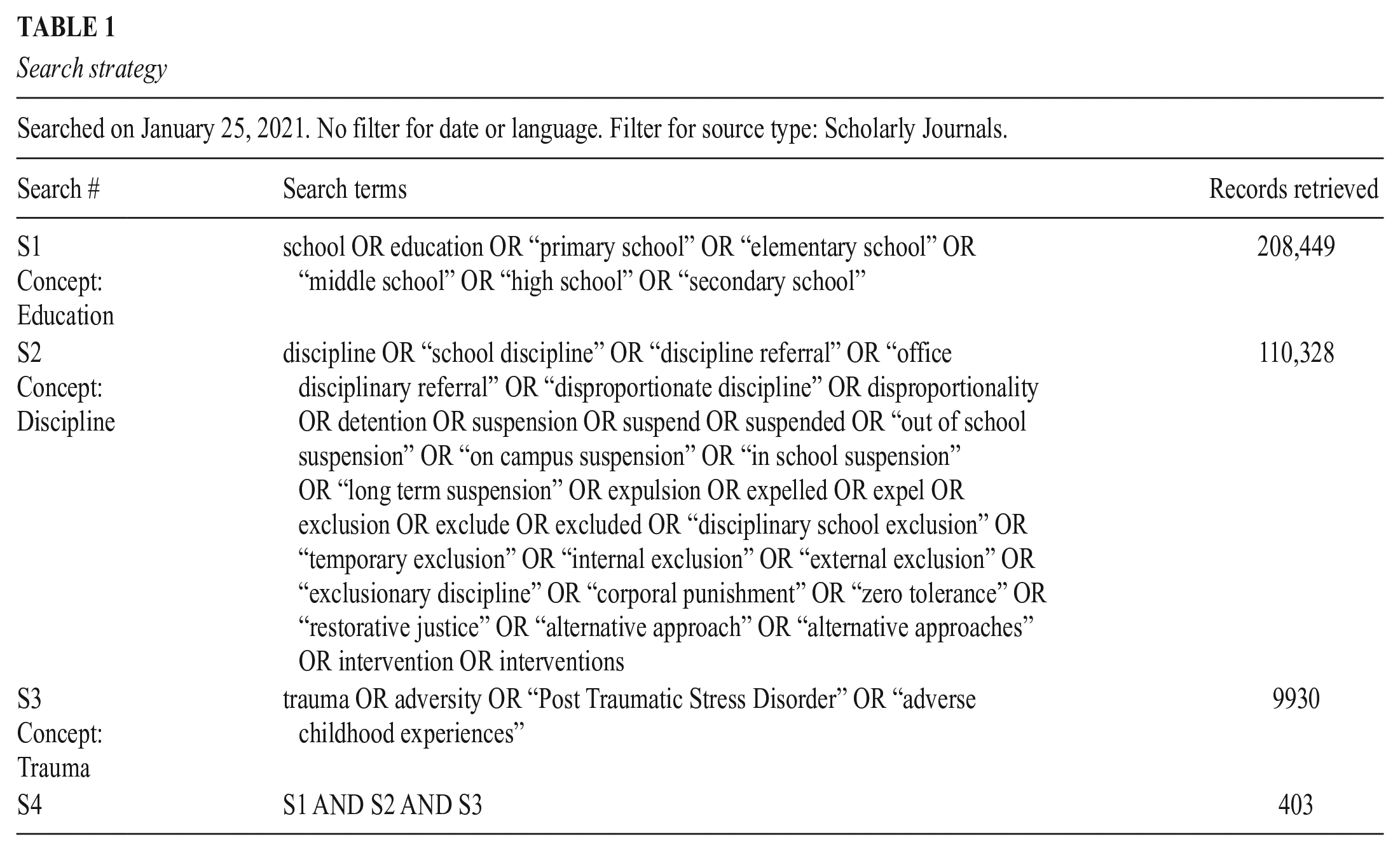
Source of Evidence Screening and Selection
Following the search, all articles were exported in RIS format from the databases and imported into Covidence, a screening and extraction tool, where duplicates were removed. Two authors (JS and EI) pilot tested and refined the data extraction tool with 10 of the selected articles (see Appendix I). Titles and abstracts were screened by two independent reviewers for assessment against the inclusion criteria. Articles were removed that were not relevant to the current review—as an example, our initial search retrieved research related to chemical suspensions or expulsion, trauma outside of a school context such as with veterans, and purely medical trauma such as cardiac arrest. Potentially relevant sources were retrieved in full and inputted into Covidence for data extraction. The full text of selected citations was assessed in detail against the inclusion criteria by two independent reviewers. Other than duplications, no articles were excluded at full text review. Any disagreements that arose between the reviewers at each stage of the selection process was resolved through discussion. The data were charted and sorted by themes guided by a critical approach in line with reflexive thematic analysis (TA) (Braun & Clarke, 2021). TA was used as a flexible approach for organizing and conceptualizing patterns or themes noted within the papers. We applied the six stages of reflexive TA throughout the various stages of the scoping review. For example, throughout the title and abstract and full text review stages of the scoping review, we were engaged in familiarizing ourselves with the data. Coding took place in conjunction with data extraction and consolidation, and initial themes were identified while charting the data (see Table 2). These themes were further developed, then refined and finally written up in this article. This approach guided the identification of themes found across the literature that were directly related to the research questions. We identified empirical studies that explicitly explored adversity and school discipline to answer our first research question. Further, TA was conducted on the forms of adversity most often included in the data, as well as an exploration of prominent themes; these included failing to understand and address students with trauma histories, papers that promoted the application of trauma-informed care within school discipline, discussions of intervention programs or classrooms to address school discipline, and the school to prison pipeline.
Summary table of included sources of evidence

Results
Search Results
Our initial search identified 9,716 articles (see Figure 1). Following the removal of duplicates, 7,431 articles remained. A total of 7,359 were excluded during abstract screening, culminating with 72 articles undergoing full-text screening, through which 29 were removed. An additional six were identified using snowballing, expert consultation, and hand searching. Overall, this scoping review found 49 articles that met our inclusion criteria. See Table 2 for a summary table of included sources of evidence.
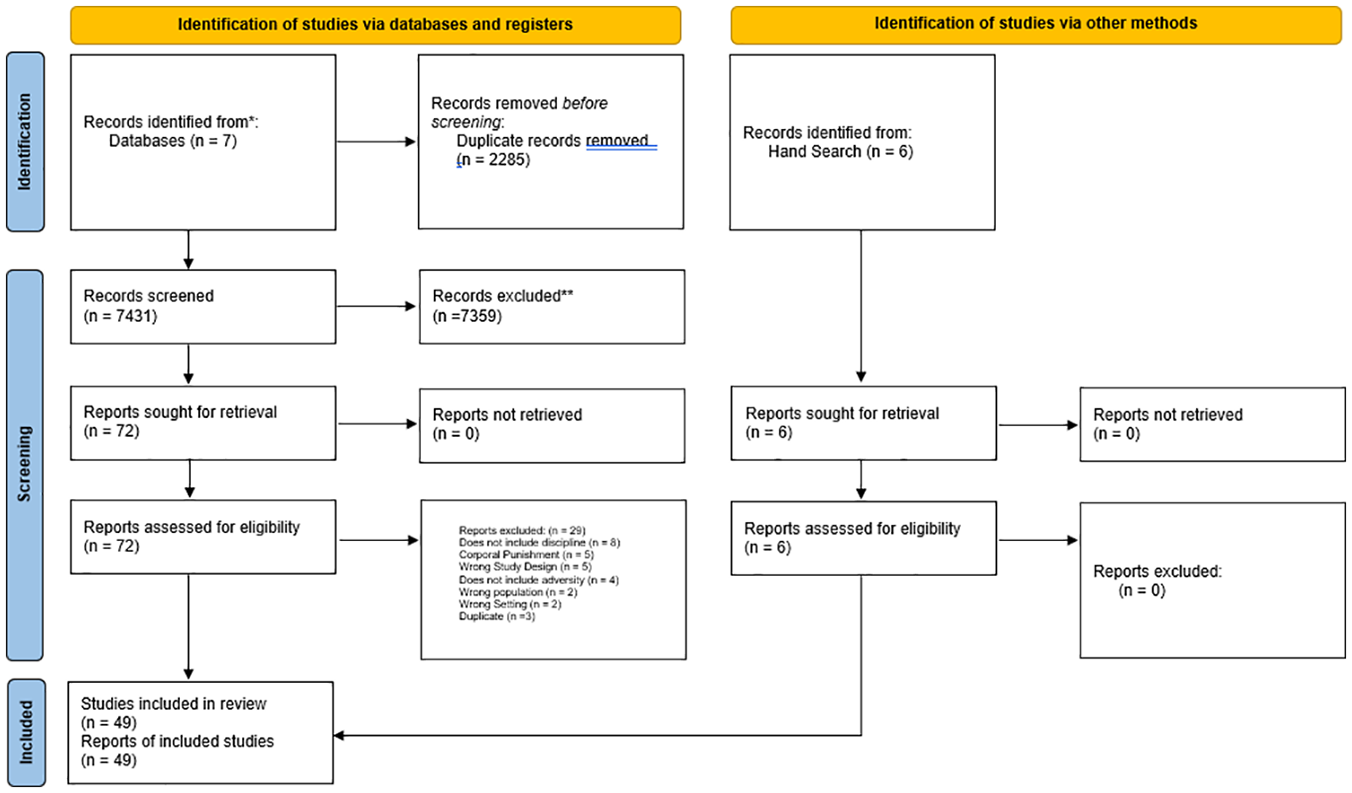
Review flow diagram.
Review Findings
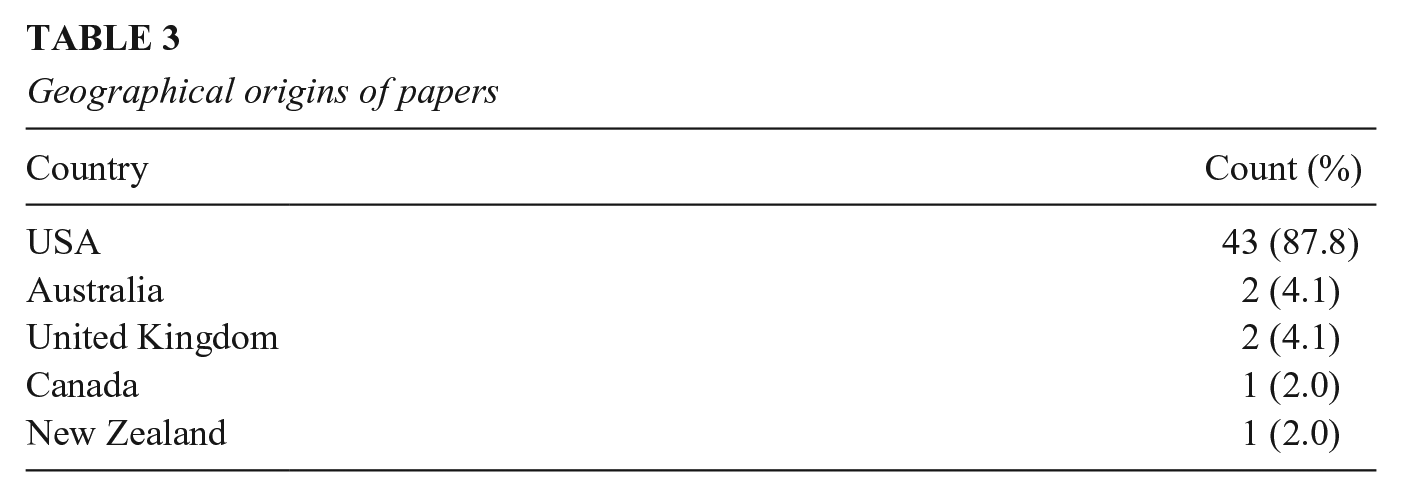
Articles were identified from five countries. Table 3 details the total number and relative percentage of articles from each country. The majority (87.8%) of articles were from the United States, with articles from Australia, the United Kingdom, Canada, and New Zealand each nominally represented. No articles from Europe (outside of the United Kingdom), the Caribbean, Central America, South America, Africa, or Asia were identified. Year of publication of papers can be seen in Figure 2. An increased trend of publication in this field over time can be seen, as 25 (52.1%) of the included papers were published between 2010 and 2019 inclusive, and 10 (20.8%) of the papers were published 2019 to January 2021. However, even with this increase, there were only 25 articles that mention both adversity and school discipline in the past decade.
Geographical origins of papers
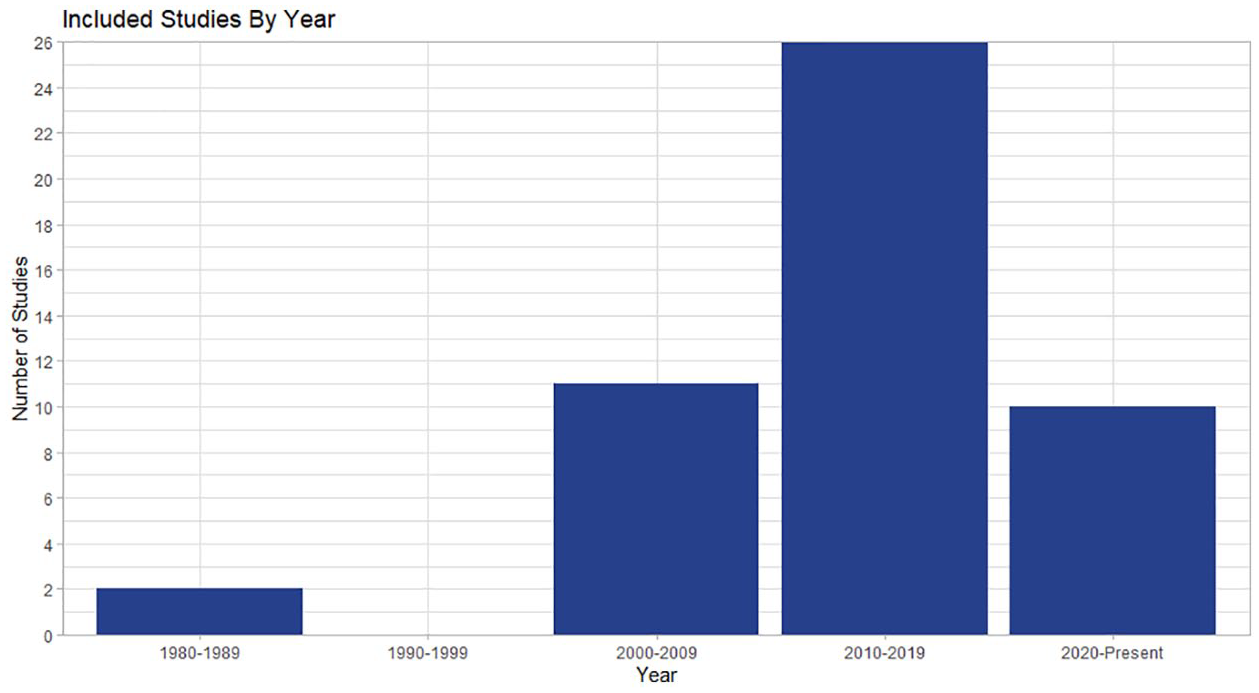
Included studies by year.
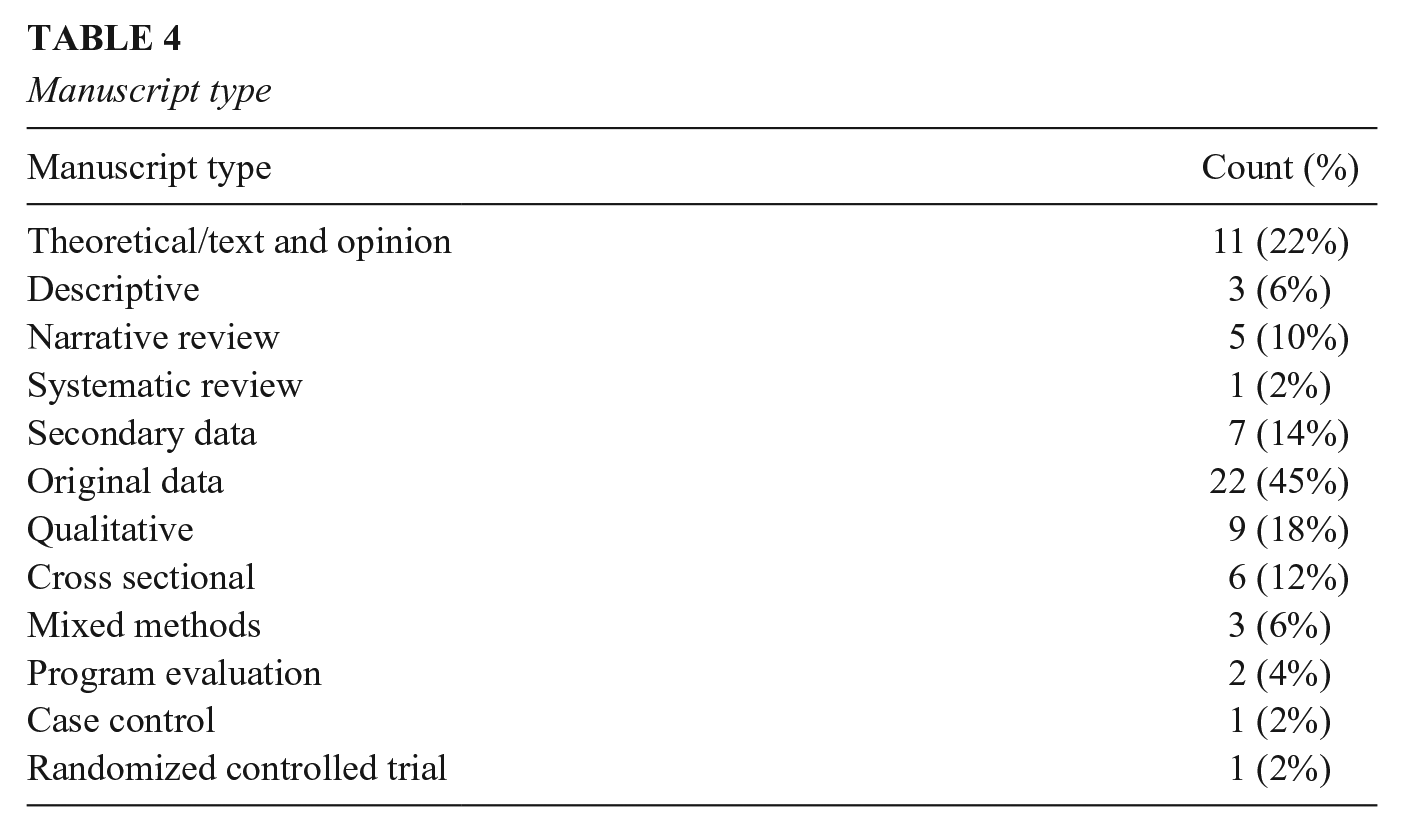
There was a wide variety of study designs and article types identified in this scoping review (see Table 4). Of the included articles, 29 (59%) presented empirical research. Of these, 22 (45%) presented research involving original data, and 7 (14%) were secondary data analysis. The remaining 20 (41%) articles in this review included 1 systematic review, 5 (10.4%) narrative reviews of literature, 11 (22.9%) theoretical or opinion papers, and 3 program/intervention description papers without a research component.
Manuscript type
RQ1: What Is Known About the Contribution, Role, or Prevalence of Trauma and Adversity for Students Who Are Disciplined at School?
Our analysis determined that in 28 of the 49 papers (55%), trauma, adversity, and school discipline was mentioned but was not a focus, with no explicit discussion or analysis of the relationship between these topics, or the definition of trauma/adversity was inconsistent with the definition applied in this scoping review. Of the 21 papers that did explore adversity and school discipline, 14 were empirical studies. Nine of these 14 papers presented original research (Alloway et al., 2013; Bornstein, 2018; Crosby et al., 2018; Goebert et al., 2004; Kernic et al., 2002; King, 2016; Ramirez et al., 2012; Semanchin Jones et al., 2018; Theriot et al., 2010), and 5 involved secondary data analysis (Beland & Kim, 2016; Loomis, 2020; Loomis et al., 2020; Mittleman, 2018; Zeng et al., 2019).
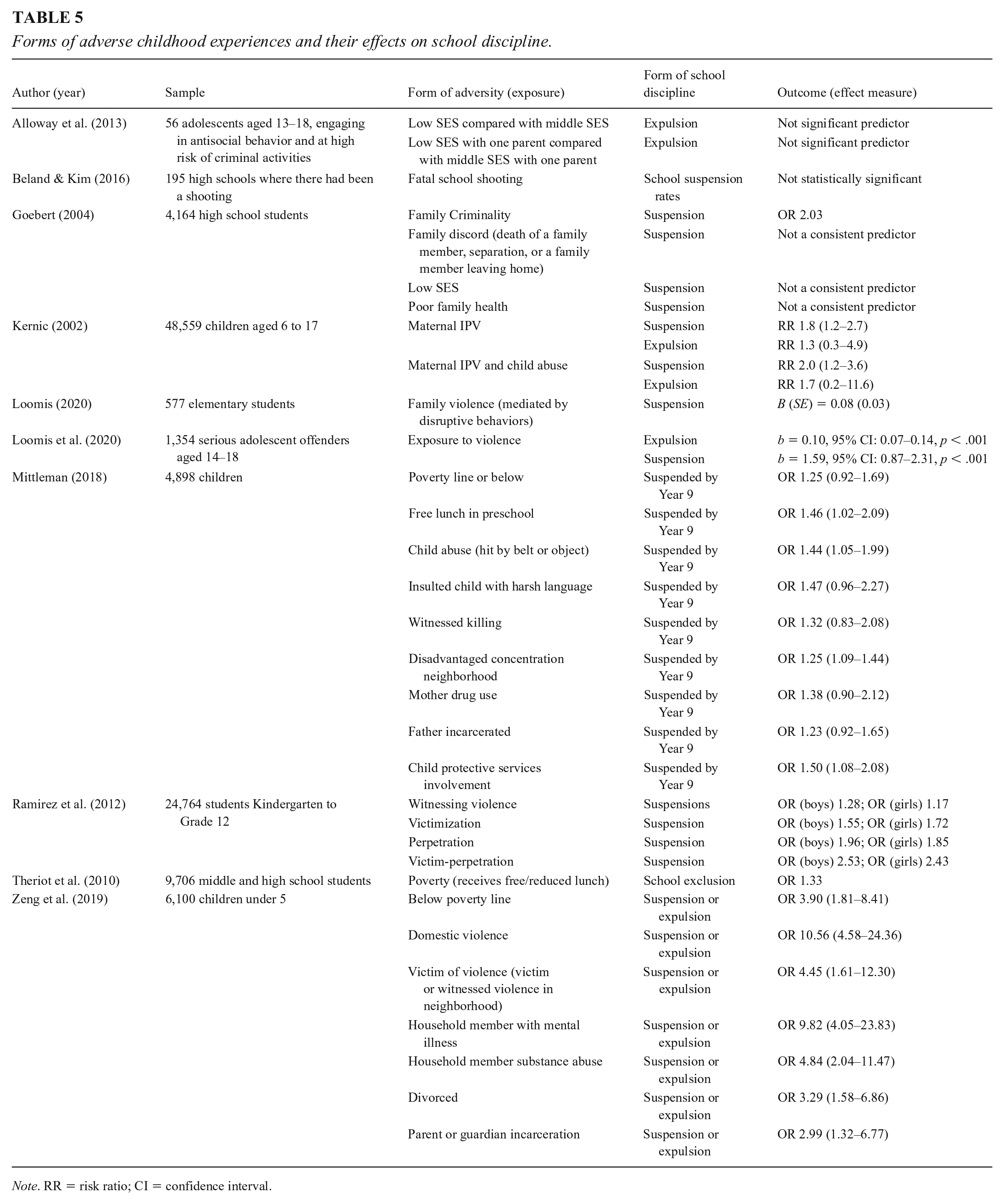
Ten of the empirical studies presented quantitative research that explicitly evaluated the association between trauma and adversity and school discipline (Alloway et al., 2013; Beland & Kim, 2016; Goebert et al., 2004; Kernic et al., 2002; Loomis, 2020; Loomis et al., 2020; Mittleman, 2018; Ramirez et al., 2012; Theriot et al., 2010; Zeng et al., 2019). Overall, the findings indicate that experiencing adversity is associated with, or predictive of, higher likelihoods of school exclusion (see Table 5). Notably, Zeng and colleagues (2019) found the odds of being suspended or expelled in preschool increased by 80% for every ACE identified. Moreover, they found that when included, ACEs were stronger predictors of disciplinary school exclusion than demographic characteristics including ethnicity. Preschool children were more likely to be suspended or expelled if they had experienced domestic violence (odds ratio [OR] = 10.6, p < .001), lived with mental illness (OR = 9.8, p < .001), adult substance abuse (OR = 4.8, p < .001), were a victim of violence (OR = 4.5, p = .004), lived in high poverty (OR = 3.9, p =.001), had divorced parents (OR = 3.3, p = .001), or a parent who was incarcerated (OR = 3.0, p = .009). Additionally, Kernic and colleagues (2002) found that children in a household with intimate partner violence (IPV) had a relative risk of suspension of 1.8. One secondary data analysis found that higher rates of violent victimization predicted higher rates of exclusionary discipline both directly and indirectly through problem behavior (Loomis et al., 2020), and another found a direct relationship between IPV exposure and suspension as well as an indirect relationship through school behavior (Loomis, 2020). Notably, Loomis (2020) found that within their sample, African American students were significantly more likely be suspended despite being significantly less likely to have witnessed family violence than non–African American students. Therefore, while the pathway between violence exposure to suspension was still significant when including race and gender, being male and African American significantly predicted being suspended more days. Mittleman (2018) found that children involved with child protective services had 50% higher odds of suspension, those who had been hit with an object had 44% higher odds of suspension, and those raised in neighborhoods of disadvantage had a 25% increase in the odds of being suspended for every standard deviation increase in disadvantage. Ramirez and colleagues (2012) found a strong correlation between exposure to violence and suspension, and Theriot and colleagues (2010) found that students who were eligible for free or reduced lunch were 33% more likely to be disciplinarily excluded from school.
Forms of adverse childhood experiences and their effects on school discipline.
Note. RR = risk ratio; CI = confidence interval.
There were some inconsistencies across the studies, however. While Goebert and colleagues (2004) found that family criminality significantly increased the odds of suspensions (OR = 2.03), they also identified that family adversity indicators were not strong predictors of school adjustment difficulties, including suspension. Two additional studies noted no significant increased risk of school discipline with exposure to adversity. Beland and Kim (2016) found no statistically significant impact of a fatal school shooting on subsequent suspension rates in that school. Alloway and colleagues (2013) examined a community sample of “antisocial adolescents” to explore the role of potential contributors to antisocial behavior and their impact on being expelled. These authors also considered living in a low- versus medium-SES neighborhood and living in a low SES neighborhood with only one parent compared with middle SES neighborhood with only one parent; neither of these factors were found to be significant influencers on expulsion for their sample.
Three qualitative studies (Bornstein, 2018; King, 2016; Semanchin Jones et al., 2018) and one mixed methods study (Crosby et al., 2018) explored the relationship between trauma and adversity and school discipline. These authors collected interview data and found that those who had experienced school discipline commonly experienced conventional and expanded ACEs. Students attending alternatives to traditional education due to behavioral issues commonly experienced being witnesses to violence, abuse and neglect, or “household dysfunction” including substance misuse and IPV (Crosby et al., 2018; King, 2016). Bornstein (2018) surmised that students were often disciplined for behaviors that were rooted in trauma, which is in line with King’s (2016) finding that the timing of disciplinary exclusion is connected with periods of increased or intense trauma. Semanchin Jones and colleagues (2018) called for understanding behavior in the context of trauma and adversity pointing toward a trauma-informed approach rather than punitive discipline.
RQ2: How Is Adversity or Trauma Theorized, Contextualized, or Understood, Related to School Discipline?
Forms of Adversity Examined
We conducted a TA on the forms of adversity most often included across the 49 manuscripts providing a loose count as an indicator of the forms of adversity considered most relevant within this body of literature. Seven of the papers used the general term trauma. ACE was used in four manuscripts without providing a definition of ACEs, and in five additional manuscripts where forms of ACEs were specified; ACEs were not consistently defined across these papers. Abuse was identified in 19 manuscripts, with 5 of those specifying sexual abuse, 6 specifying physical abuse, and 4 emotional abuse. Forms of IPV were identified in 10 articles; neglect was identified in 9; separation, divorce, single-parent household, or nontraditional family structure was identified in 9 articles; family member involved in crime or incarcerated in 9; parental or household substance misuse in 8; death of a family member in 6; and parental mental health concern or suicide was found in 4 of the articles.
Expanded forms of adversity were relatively well represented across the papers. Indicators of poverty were the most frequently included expanded form of adversity: living in disadvantaged and low-income communities, homelessness, and receiving reduced or free meals were found in 17 articles. Fourteen papers discussed violence in a general way, including war, exposure to violence, and witnessing violence without specifying the location. Eleven of the papers discussed neighborhood safety, community, or school violence. Indicators of racism, discrimination, and structural inequity related to race was included in seven papers. Removal from family home or foster care was included in four papers, with one additional discussing residential treatment. Other situations including, but not limited to, police brutality, fire, car accident, natural disaster, and medical trauma were mentioned. Finally, four of the papers referred to school discipline in trauma terms, for example, characterizing school expulsion as a form of trauma examined.
While the representation of expanded forms of adversity is encouraging, our analysis determined that expanded adversities were less often included in the empirical studies we identified as addressing the relationship between exposure to adversity and school discipline. For example, one quantitative study (Williams et al., 2020) and two qualitative studies (Fitzgerald et al., 2019; Powell & Coles, 2021) discussed racism; however, none of these three studies were categorized by our team as directly studying the relationship between racism and discipline. Seven studies categorized as including a focus on adversity and discipline included indicators of low SES (Alloway et al., 2013; Goebert et al., 2004; King, 2016; Mittleman, 2018; Semanchin Jones et al., 2018; Theriot et al., 2010; Zeng et al., 2019), and five specified community or school violence (Beland & Kim, 2016; Bornstein, 2018; Loomis et al., 2020; Ramirez et al., 2012; Zeng et al., 2019).
Failing to Understand and Address Students With Trauma Histories
A prominent theme was a failure to understand and address the needs of students with trauma histories, resulting in the application of disciplinary actions and exclusion from school (Baroni et al., 2020; Bornstein, 2018; Delale-O’Connor et al., 2017; Howard, 2016; Hyman et al., 1988; Lamboy & Lu, 2017; Morris, 2016; Singletary, 2020). Bornstein (2018) described that students were often excluded from class through discipline for behavior rooted in trauma. While behavior was seen to play a role in the discipline of students exposed to trauma (Loomis, 2020; Loomis et al., 2020), there was also a direct relationship found between higher rates of adversity and higher rates of school discipline (Loomis et al., 2020). Singletary (2020) suggests that a lack of understanding of trauma-related behaviors and symptoms may be interpreted as behavior problems, resulting in discipline without treating the root cause. Moreover, both King (2016) and Semanchin Jones and colleagues (2018) identified disciplinary exclusion as occurring at periods when students were experiencing significant forms of adversity and trauma. Semanchin Jones and colleagues interviewed youth who discussed the need for educational institutions, child welfare, and homeless services to better understand their negative experiences and provide support rather than exclusionary punishment. These findings are in line with those of Fitzgerald and colleagues (2019), who identified that schools need to be places where students can let their guard down rather than serving as institutions where further risk of violence and punishment is high.
In many articles, the experiences of Black students and other students of color were viewed through a critically informed lens. School discipline was contextualized as a way to maintain systemic racial inequities and as a tool to punish or control students of color who are coping with trauma, which in turn increases stress and anxiety, and can be retraumatizing (Ashworth et al., 2008; Bailey et al., 2019; Delale-O’Connor et al., 2017; Dutil, 2020; Lamboy & Lu, 2017; Semanchin Jones et al., 2018). Authors highlighted the difficulty that White dominant systems have in recognizing symptoms of trauma students may exhibit, particularly Black students and other students of color, stressing that disciplinary responses are likely to increase stress and anxiety and alienate these students from necessary resources (Bornstein, 2018; Dutil, 2020; Fitzgerald et al., 2019; Henderson et al., 2019; Joseph et al., 2020). Baumle (2018) and Morris (2016) argued that unaddressed or hidden trauma is seen as influencing the disproportionate criminalization of low income and female students of color, with school discipline serving as the pathway. Joseph and colleagues (2020) argued that the lack of culturally responsive and trauma-informed disciplinary practices could be contributing to the disproportion within discipline. Within this theme, there was a focus on building social support and attending to the cultural and racial realities of students, integrating parents and community (Henderson et al., 2019; Joseph et al., 2020). These ideas were congruent with Mittleman’s (2018) finding that students who attend an elementary school with at least one guidance counselor have 22% lower odds of being suspended.
Trauma-Informed Care
We found 14 articles that promoted the application of trauma-informed care within school discipline (Baroni et al., 2020; Basford et al., 2020; Bornstein, 2018; Crosby et al., 2018; Day et al., 2017; Dorado et al., 2016; Dutil, 2020; Gill et al., 2016; Hoover, 2019; Howard, 2016; Joseph et al., 2020; Loomis, 2020; McGruder, 2019; Semanchin Jones et al., 2018). Six qualitative studies (Bornstein, 2018; Crosby et al., 2018; Day et al., 2017; Fitzgerald et al., 2019; King, 2016; Semanchin Jones et al., 2018) and one secondary data analysis (Baroni et al., 2020) explored the importance of trauma-informed care to school discipline. Among these, three discussed the Monarch Room, a designated classroom that is available and used throughout the school day to assist students to de-escalate situations and allow them to return to the classroom (Baroni et al., 2020; Crosby et al., 2018; Day et al., 2017). Additionally, these authors identified that the Monarch Room offered an improvement over zero-tolerance approaches as it sought to support students, rather than immediately punishing or excluding them. Across the articles, trauma-informed care was presented as necessary, given that students who are experiencing periods of challenging life experiences are more likely to be permanently excluded from education (King, 2016). McGruder (2019) discussed the significance of implementing trauma-informed schooling to better help students who are experiencing various forms of adversity and trauma; while Hoover (2019) discussed how trauma-responsive schools are able to provide safer and more productive environments for students, leading to increased graduation rates, attendance, classroom behavior, and safety. Hoover (2019), Joseph and colleagues (2020), and McGruder (2019) each explored concepts of trauma-informed discipline and restorative practices and provided frameworks for how this could best be implemented. These authors discussed the relationships between racially disproportional school suspensions, ACE exposure, and trauma-informed schools within a critical race theory framework. Moreover, these authors highlighted that in order for schools to adequately address the socioemotional needs of students, multitiered interventions, trauma-informed care practices, and equity-focused and antiracist practices are required (Joseph et al., 2020).
Interventions and Programs
We identified 12 papers that discussed intervention programs or classrooms used to address school discipline (Ashworth et al., 2008; Baroni et al., 2020; Basford et al., 2020; Bennett, 2007; Bornstein, 2018; Coleman, 2015; Crosby et al., 2018; Day et al., 2017; Dorado et al., 2016; Gill et al., 2016; Koffman et al., 2009; Williams et al., 2020). Of these 12 papers, 3 were categorized as having a focus related to trauma and discipline; 2 of these were focused on the Monarch Room (Crosby et al., 2018; Day et al., 2017) and 1 on the Transformative Leadership Framework, a trauma-informed approach to discipline, applied to an urban elementary school (Bornstein, 2018).
Four of the 12 papers described programs implemented at the elementary school level (Ashworth et al., 2008; Bornstein, 2018; Dorado et al., 2016; Gill et al., 2016). These included three case studies of public school-based programs: a school policing program (Gill et al., 2016), the creation of a restorative justice center as an alternative to detention (Ashworth et al., 2008), and the addition of the Transformative Leadership Framework (Bornstein, 2018). Additionally, Dorado and colleagues (2016) evaluated the implementation of the Healthy Environments and Response to Trauma in Schools (HEARTS) program, a whole school multilevel prevention and intervention program for reducing out-of-school suspension and expulsion. Five years following the implementation, the authors found that there was a 95% decrease in out of school suspension compared with the year prior to the implementation of the program. Another study conducted a randomized controlled trial on social belongingness in high school (Williams et al., 2020).
Five studies described programs or alternative schooling opportunities for individuals who had already experienced school discipline, were no longer part of traditional schooling, or were court-involved (Baroni et al., 2020; Basford et al., 2020; Coleman, 2015; Crosby et al., 2018; Day et al., 2017). Alternative education programs were primarily focused on restoration and the prevention of previously disciplined students entering the school-to-prison pipeline. As previously noted, three studies (Baroni et al., 2020; Crosby et al., 2018; Day et al., 2017) discussed the Monarch Room. Crosby and colleagues (2018) found that students consistently used the Monarch Room and that students found the Monarch Room to be an effective tool for behavior de-escalation, while Baroni and colleages (2020) found that the implementation of a Monarch Room at a “second chance” public charter school was associated with a reduction in suspensions. Two studies discussed educational institutions serving as alternatives to traditional schooling (Basford et al., 2020; Coleman, 2015). Basford and colleagues (2020) described the success of the High School for Recording Arts (HSRA). The HSRA was an alternative education program for students, 85% of whom had been removed from traditional schooling experiences. The HSRA program, which focused on using trauma-informed services and independent advising, had graduated between 76% and 96% of its seniors between 2014 and 2019 (Basford et al., 2020). Coleman (2015) performed a qualitative study discussing the utility of an alternative education institution for students who were previously expelled and found that while students described expulsion as traumatic, a consistent theme was the importance of necessary interventions students received through the alternative education program (Coleman, 2015).
School-to-Prison Pipeline
We identified five papers that discuss the school-to-prison pipeline theme (Basford et al., 2020; Baumle, 2018; Delale-O’Connor et al., 2017; Dutil, 2020; Tuzzolo & Hewitt, 2006). This theme contextualizes school discipline, particularly suspension and expulsion, as the beginning of a pathway away from school and toward the criminal legal system for students. Two authors built on this conceptualization to identify the trauma-to-prison pipeline (Baumle, 2018) and the cradle-to-prison pipeline (Delale-O’Connor et al., 2017) to articulate the causal role of trauma and adverse experiences in this pathway.
Discussion
The aim of this scoping review was to map out the state of the literature on school discipline related to factors consistent with trauma and adversity. We applied a critical and ecological systemic approach within our trauma and adversity framework. Empirical studies, as well as literature reviews, theoretical, opinion, and descriptive papers were included to explore both the state of knowledge and the way adversity or trauma is understood or contextualized related to school discipline. As per the general aim of scoping review methodology, we were most interested in the state and nature of the literature, exploring gaps in the literature and the overall state of research activity, and did not assess the quality of the studies in our sample.
First, the characteristics of the papers included in this scoping review point toward a significant gap in our knowledge. When examining the geographical location of the papers, very few of the identified articles were from outside of the United States. We concur with Valdebenito and colleagues (2019), who stressed the importance of cross-cultural research in the area of exclusionary discipline. These authors highlight that approaches effective in some countries or cultures may not be as effective in others and, therefore, communities need context-specific knowledge to be able to make appropriate and effective decisions. Given that the extant research is United States–centric, and that context matters for studies of school discipline, research from other countries would be an important extension of current knowledge. Moreover, international studies could also shed light on the context in the United States by examining the effects of racial trauma, anti-Blackness, and bias against Indigenous students or members of similarly minoritized groups across contexts. The findings, however, indicate a growing interest in this area, as over half of the articles were published between 2010 and 2019, with an additional 20% since 2019.
Of the 49 articles that met our overall inclusion criteria, we identified only 14 empirical studies that we categorized as focused on the relationship or intersection of adversity and school discipline. This burgeoning body of research pointed toward the relevance of adversity or trauma within school discipline. The findings from 8 of the 10 quantitative studies, the three qualitative study, and the one mixed method study identified that exposure to adversity or experiences of trauma are important in the school discipline process. Adverse experiences were common among students who have been disciplined in school (Bornstein, 2018; Crosby, 2016; King, 2016; Semanchin Jones et al., 2018) and were in fact predictive of discipline, particularly exclusionary discipline such as suspension (Kernic et al., 2002; Loomis, 2018; Loomis et al., 2020; Mittleman, 2018; Theriot et al., 2010; Zeng et al., 2019). Therefore, when considering our first research question, we determined that the body of knowledge is small but growing and indicates that experiences of adversity or trauma play a significant and potentially contributing role in school discipline, including suspension and expulsion.
However, research is needed to more fully understand this relationship and the ways that trauma and adversity are related to school discipline and, ultimately, academic and long term outcomes. As noted, the current literature on disproportionate application of school discipline holds little focus on the role of adverse experiences despite this emergent body of knowledge indicating there is a relationship between the two. We propose that disproportionate exposure to adversity may play a contributing or causal role in disproportionate school discipline. The mechanisms through which this results in disproportion, however, remain unclear. For example, building on Singletary’s (2020) ideas, a lack of understanding of trauma-related behaviors and symptoms may lead to these being interpreted as behavior problems, resulting in discipline without treating the root cause. From a privileged worldview, in which adverse experiences are infrequent, educators may not account for, or recognize, symptoms of trauma within students, particularly within a context of historical and structural bias related to specific students (Sanders et al., 2022). This is an important theoretical foundation from which to explore the individual and social processes that drive disproportionate school discipline. This will, in turn, generate the necessary knowledge to guide policy and practice related to trauma-informed discipline.
We used TA to explore our second research question, which provided an overview of the ways that adversities or trauma are theorized, contextualized, or understood related to school discipline. We found that across the 49 included articles, there is a common recognition that adversity and trauma are important factors within school discipline despite the dearth of empirical research.
It is noteworthy that there appears to be no consistent conceptualization of trauma or adversity across the papers, including those we categorized as being focused on the interaction between adversity and school discipline. Eleven papers referenced experiences such as “trauma” or “ACEs” without clearly defining these terms. When ACEs were clearly identified or defined, there was inconsistency in the forms that were included. This is not unique to this body of literature, as there has been ongoing evaluation and expansion of the ACEs constructs (Bethell et al., 2017; Cronholm et al., 2015; Finkelhor et al., 2015; Turner et al., 2020).
It was encouraging to find that expanded forms of adversity were relatively well represented across the papers. We found general acceptance of the implications of poverty within school discipline as this was the most often included expanded form of adversity. However, indicators of poverty were not consistently contextualized as adversity. We deem this to be important because if poverty is contextualized simply as a demographic consideration, the global impact may be missed, and the knowledge base of trauma and trauma-informed approaches may be less likely to be employed when supporting students. Violence, with an unspecified location, and violence in the community or school were also relatively well represented. However, it is important to identify that only seven papers included indicators of racism, discrimination, and structural inequity. This is particularly noteworthy given the significant body of work identifying the disproportionate application of school discipline among non-White students, most significantly those who identify as Black and Indigenous, and the relevance of the school-to-prison pipeline (Cuellar & Markowitz, 2015; Dutil, 2020; James & Turner, 2017; Losen, 2015; Mallett, 2017; Morris, 2015). As we noted earlier, the extant literature on school discipline has predominately focused on identifying its disproportionate application.
Our analysis determined that expanded adversities were less often included in those empirical studies identified as addressing the relationship between exposure to adversity and school discipline. Only three empirical studies included racism, and none of these were categorized by our team as directly focused on the relationship between experiences of racism and school discipline. It should again be noted that there is a strong body of research identifying the disproportionate application of school discipline, which has been related to systemic racism. Given our search terms, the breadth of this research would not have been included in the current scoping review as racism is not consistently contextualized as a form of adversity. Like poverty, we feel that it is worth explicitly acknowledging racism as a form of adversity to foster recognition of the impact on school discipline outcomes. Racial trauma or racial stress involves real or perceived experiences of racial discrimination including threats of harm, injury, humiliation, shame, or witnessing harm to others of a similar racial identity (Carter, 2007; Comas-Díaz et al., 2019). Racial trauma and racial discrimination can result in symptomology consistent with traditionally defined post-traumatic stress disorder (PTSD) such as hypervigilance, flashbacks, nightmares, avoidance, suspiciousness, and physical symptoms (Carter, 2007; Comas-Díaz et al., 2019). Moreover, racial trauma does not consist of one incident, and perception of discrimination is associated with PTSD, panic disorder, and substance misuse (Carter, 2007; Chou et al., 2012; Comas-Díaz et al., 2019; Sibrava et al., 2019).
The failure to understand and address trauma histories amongst students who have been disciplined was a prominent theme amongst the included articles. When students’ history of adversity and trauma was not acknowledged, authors argued that they were more likely to be dealt with through discipline, including being excluded from school. It was argued that trauma-related behaviors and symptoms of trauma are interpreted as behavior problems, which, in turn, leads to discipline without treating the root cause and limiting student access to support. Given the association between experiences of adversity and being disciplined that we found in the empirical research, it is imperative that discipline practices and policies become trauma-responsive to protect vulnerable students. Many of the authors argued for a critical lens to understand the ways that White dominant systems interpret students’ coping strategies, with these systems upholding inequitable discipline practices that ultimately block access to resources; increases stress; and retraumatizes students, families, and communities (Bornstein, 2018; Dutil, 2020; Fitzgerald et al., 2019; Henderson et al., 2019; Joseph et al., 2020). Moreover, unaddressed or hidden trauma was identified as contributing to the disproportionate school-to-prison pipeline (Baumle, 2018; Morris, 2016).
The theme of trauma-informed care was found in 14 articles. These authors promoted the application of trauma-informed care within school discipline. However, it was asserted that educators must also attend to the cultural and racial realities of students (Henderson et al., 2019; Hoover, 2019; Joseph et al., 2020; McGruder, 2019). While only 3 of the 12 papers that involved programs or alternative schooling opportunities were categorized as specifically focused on adversity or trauma and discipline, trauma-informed approaches were common amongst these programs, many of which indirectly supported students who had been disciplined.
Conclusions
This scoping review highlights the importance of ongoing research related to experiences of trauma or adversity and school discipline. Given the identified relevance of adversity and trauma to school discipline, paired with the dearth of research in this area, this scoping review lends support for increased focus, particularly greater empirical research, and research beyond the United States. In addition to the profound gaps in the geographic origins of the papers, there was a noted inconsistency in the conceptualization of trauma or adversity. The current findings indicate a need for research that incorporates expanded forms of adversity and contextualizes important factors, such as poverty, and racism as adversity. We believe this is an important step toward acknowledging the hidden and therefore unaddressed trauma among students being disproportionally disciplined. Moreover, it is important that trauma-related behaviors and symptoms of trauma are appropriately understood and supported rather than viewed as behavior problems and managed through punitive or exclusionary discipline without support. We would like to echo the calls of authors such as Semanchin Jones and colleagues (2018) for understanding behavior in the context of trauma and adversity pointing toward trauma-informed and culturally attuned approaches to school discipline.
Footnotes
Appendix I

Note
This scoping review was funded in part through two Internal King’s Research Grants. This funder had no role in the review process.
Authors
JANE SANDERS is an assistant professor in the School of Social Work at King’s University College at Western Canada, 266 Epworth Avenue, London, Ontario, Canada N6A 2M3; e-mail:
ANDREA JOSEPH-M
MICHAEL MASSEY is an assistant professor at the National Catholic School of Social Service at the Catholic University of America, 620 Michigan Ave NE, Washington, DC 20064; e-mail:
EMMA SWIATEK is the associate librarian: research and user services at King’s University College at Western University Canada, 266 Epworth Avenue, London, Ontario, Canada N6A 2M3; e-mail:
BEN CSIERNIK is a master’s student in the faculty of Health Sciences at Ontario Tech University, 40 Conlin Rd, Oshawa, ON L1H 7K4; e-mail:
ELO IGOR is a registered social worker and research assistant at King’s University College at Western University Canada, 266 Epworth Avenue, London, Ontario, Canada N6A 2M3; e-mail: