




Abstract
We examined the relation of morphological awareness with language and literacy skills, namely phonological awareness, orthographic awareness, vocabulary, word reading, spelling, text reading fluency, and reading comprehension. We also examined potential moderators of the relations (grade level, orthographic depth of language, receptive vs. productive morphological awareness, inflectional vs. derivational vs. compound morphological awareness, and L1/L2 status). After systematic search, a total of 232 articles (965 unique samples, N = 49,936 participants, and 2,765 effect sizes in 17 languages) met inclusion criteria. Morphological awareness was, on average, moderately related to phonological awareness (r = .41), orthographic awareness (r = .39), vocabulary (r = .50), word reading (r = .49), spelling (r = .48), text reading fluency (r = .53), and reading comprehension (r = .54). Importantly, morphological awareness had a stronger relation with word reading in orthographically deep languages (.52) than in orthographically shallow languages (.38). The relation with vocabulary was stronger for upper elementary grades than for primary grades. The magnitude of the relation also varied by the nature of morphological awareness: productive morphological awareness had a stronger relation with phonological awareness and vocabulary than receptive morphological awareness; derivational morphological awareness had a stronger relation with vocabulary and word reading compared to inflectional morphological awareness; and compound morphological awareness had a weaker relation with phonological awareness but a stronger relation with vocabulary compared to inflectional morphological awareness. These results underscore the importance of morphological awareness in language and literacy skills, and reveal a nuanced and precise picture of their relations.
Central to language and literacy processes is meaning, of which morphemes—the smallest unit of meaning—are the foundation (Goodwin & Ahn, 2010; Kuo & Anderson, 2006; Nagy et al., 2014). Thus, one’s awareness of morphological structures of a language—morphological awareness—should relate to language and literacy skills. Indeed, a large body of literature, both correlational and experimental work, has shown the relations of morphological awareness with language and literacy skills. In the present study, we estimated magnitudes of these relations by examining correlations between morphological awareness and language and cognitive skills (phonological awareness, orthographic awareness, vocabulary, word reading, spelling, text reading fluency, and reading comprehension), and moderations of the relations as a function of several individual characteristics (i.e., grade levels, L1/L2 status), orthographic depth, and nature of morphological awareness.
Several systematic reviews and meta-analyses have been conducted on morphological awareness. One line of work focused on morphological interventions on language and literacy outcomes and found a positive effect of morphological instruction on literacy outcomes for students from preschool to grade 8 (Bowers et al., 2010), those from kindergarten through grade 12 (Reed, 2008), and those in grade 5 and beyond (Ford-Connors & Paratore, 2015). Furthermore, meta-analyses of the morphological intervention for school-aged individuals from prekindergarten to grade 12 with (Goodwin & Ahn, 2010) and without literacy difficulties (e.g., Goodwin & Ahn, 2013) revealed moderate to fairly large effect sizes on vocabulary (.34 to .40) and literacy outcomes (.20 to 59). Another line of work focused on a review of correlational data (Ruan et al., 2018; Tighe & Schatschneider, 2016) and theoretical conceptualization (e.g., Carlisle et al., 2010; Kuo & Anderson, 2006; Nagy et al., 2014). Tighe and Schatschneider (2016) examined the relations of component reading skills to reading comprehension for struggling adult readers and found that morphological awareness was fairly strongly related with reading comprehension (r = .59). Ruan and colleagues (2018) examined the relation among phonological awareness, morphological awareness, and reading (accuracy, fluency, and comprehension) in English and Chinese, respectively. Morphological awareness was related to reading skills within each language as follows: reading accuracy in English (r = .46) and Chinese (r = .39), reading fluency in English (r = .37) and Chinese (r = .39), and reading comprehension in English (r = .53) and Chinese (r = .36).
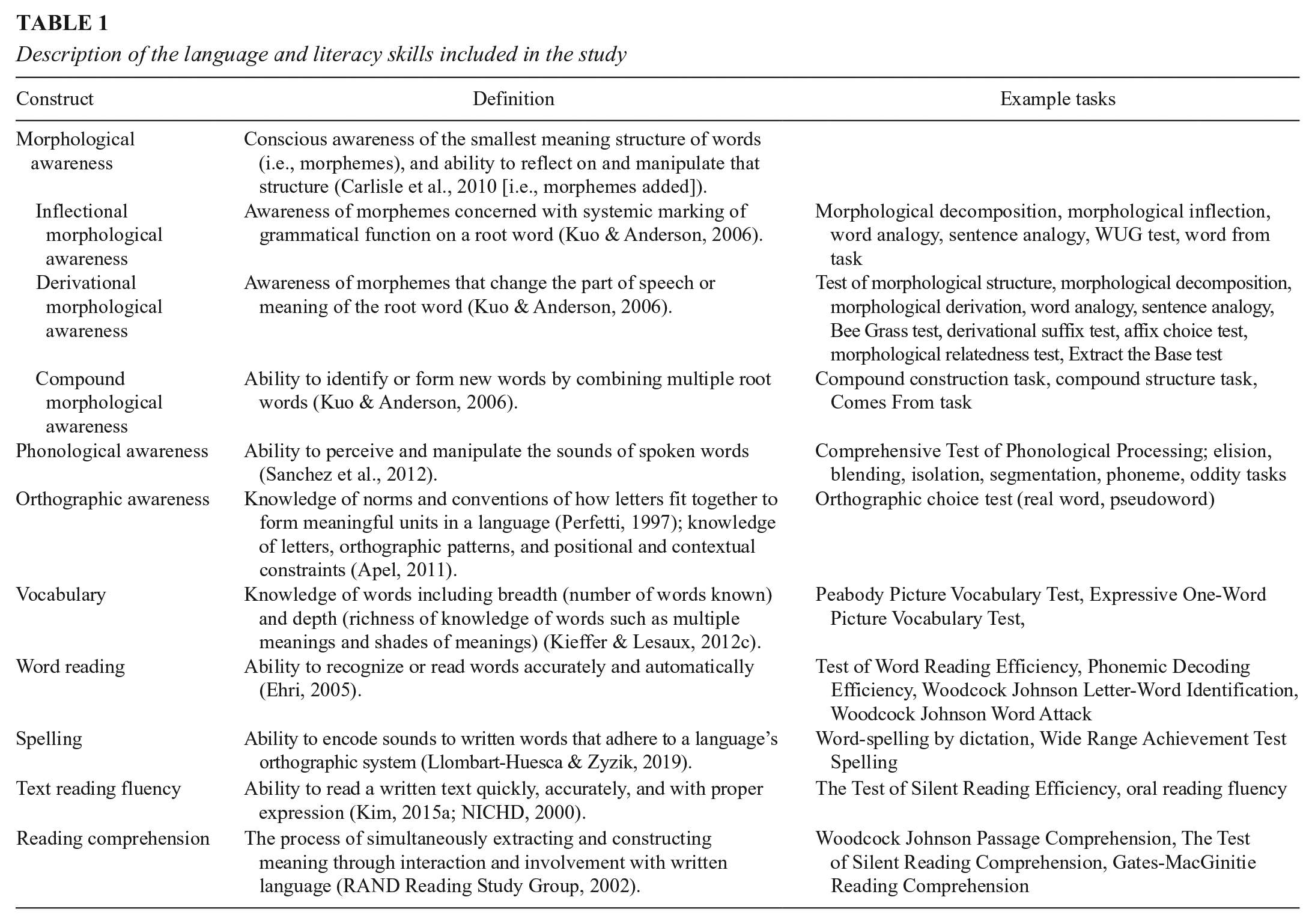
In the present study, we build on these previous systematic reviews and meta-analyses (particularly those that focus on correlations) and expand our understanding of the role of morphological awareness in language and literacy skills in two important ways. First, we examined the relations of morphological awareness with a comprehensive set of language and literacy skills (phonological awareness, orthographic awareness, vocabulary, word reading, spelling, text reading fluency, and reading comprehension; see Table 1 for description of each construct) across a wide developmental span (prekindergarten to adults). Second, we also investigated a relatively comprehensive set of potential moderators systematically, guided by a theoretical framework and prior evidence: whether magnitudes of the relations vary by individual characteristics (students’ grade level, L1/L2 status), orthographic depth of language, and nature of morphological awareness (receptive vs. productive morphological awareness; inflectional vs. derivational vs. compound morphological awareness).
Description of the language and literacy skills included in the study
Theoretical Framework
The study is grounded on the direct and indirect effects model of reading (DIER; Kim, 2020a, 2020b). DIER hypothesizes that morphological awareness, in addition to phonological awareness and orthographic awareness, is important to word reading and other language and literacy skills. An important and unique feature of DIER is specification of structural relations—hierarchical, dynamic, and interactive relations—of language, cognitive, and reading skills. According to DIER, morphological awareness is directly and indirectly related to vocabulary knowledge, word reading, spelling, text reading fluency, and reading comprehension (see more details below). Furthermore, according to the dynamic relations hypothesis, the relations of language and cognitive skills to reading skills vary depending on developmental phase, measurement of constructs, and orthographic depth (Kim, 2020a, 2020b). Below are details of the hypothesized relations of morphological awareness with language and literacy skills, and moderations.
Relations of Morphological Awareness with Language and Literacy Skills
Word Reading
In line with the triangle model (Adams, 1990), DIER hypothesizes that morphological awareness is important to word reading. Writing systems of many languages represent morphological information in addition to phonological information in words’ spelling. For example, in a morphophonological system (e.g., English, Korean, Greek), morphological information is reflected in the spelling of words such that the consistency of spelling increases when morphological information is taken into account. In a morphosyllabic system employed in Chinese, each character represents a morpheme and a syllable. In languages that employ these writing systems, morphological awareness is expected to contribute to word reading and spelling skills (Adams, 1990; Bahr et al., 2012; Kim, 2020b; Nagy et al., 2014), and indeed a large body of studies have supported their relations (e.g., Burt, 2006; Cho et al., 2008; Goodwin & Ahn, 2010, 2013; Kieffer & Lesaux, 2008; Law et al., 2018; Liu et al., 2017; McBride-Chang, Cho, et al., 2005; Nagy et al., 2003).
Phonological Awareness and Orthographic Awareness
Morphological awareness is hypothesized to be related to phonological awareness and orthographic awareness (Adams, 1990; Kim, 2020a). Phonological awareness and orthographic awareness tap into metalinguistic awareness like morphological awareness, and therefore, the metalinguistic awareness aspect would render them to be related to one another. Furthermore, morphological information is encoded in orthography (orthographic pattern) at least in languages that reflect morphology in words’ spelling, and thus, morphological processing and orthographic processing are expected to be related (Adams, 1990). Similarly, the activation of meaning (morphemes) is expected to activate the phonological information (Adams, 1990). Previous research has reported that morphological awareness is weakly to moderately related to phonological awareness and orthographic awareness (e.g., Burt, 2006; Chen et al., 2009; Hauerwas & Walker, 2003; Liu et al., 2017), and morphological instruction results in sizable improvement in phonological awareness (effect sizes ranging from .48 to .49; Goodwin & Ahn, 2010, 2013).
Vocabulary
Morphological awareness is also hypothesized to have reciprocal relations with vocabulary knowledge according to DIER (also see Kuo & Anderson, 2006). Recognition of morphemes that constitute words can help readers infer and learn their meanings (Ford-Connors & Paratore, 2015; Goodwin & Ahn, 2010; Kuo & Anderson, 2006; Nagy et al., 2014). For instance, as the majority of academic vocabulary in English is composed of morphemes that originated from Greek or Latin (Koda, 2007; Nagy et al., 2014), knowledge of prefixes, suffixes, and word roots of Greek and Latin origin contributes substantially to one’s English vocabulary as seen in some experimental studies on morphological analysis instruction of Greek and Latin cognates to secondary-level students (e.g., Crosson & McKeown, 2016; Crosson et al., 2019). Many studies have found moderate and positive relations between morphological awareness and vocabulary (e.g., Chen et al., 2009; Liu et al., 2017; McBride-Chang et al., 2008; Muller & Brady, 2001; Nagy et al., 2003). In addition, vocabulary knowledge is expected to help recognize morphemes because as vocabulary size grows, shared morphemes among words are likely to be noticed. Evidence supports bidirectional relations between morphological awareness and vocabulary (e.g., Kieffer & Lesaux, 2012a; McBride-Chang et al., 2008).
Text Reading Fluency and Reading Comprehension
DIER posits that morphological awareness is related with text-level reading skills, text reading fluency, and reading comprehension, but these relations are indirect via two pathways. The first pathway is that morphological awareness predicts word reading, as morphological analysis takes place during the decoding process where constituent morphemes are identified and morphological information is used to facilitate decoding (Levesque et al., 2021). Word reading, in turn, predicts text reading fluency (Jenkins et al., 2003; Kim, 2015a; Kim & Wagner, 2015), which then predicts reading comprehension (e.g., Kim & Wagner, 2015; Kuhn & Stahl, 2003; National Institute of Child Health and Human Development [NICHD], 2000). The second pathway is via vocabulary and grammatical knowledge (morphosyntactic and syntactic knowledge) and listening comprehension: morphological awareness is related to vocabulary and grammatical knowledge (e.g., Ho et al., 2017; Kieffer & Box, 2013; McBride-Chang, Wagner, et al., 2005; Nagy et al., 2006), which, in turn, predicts listening comprehension (Florit et al., 2011; Kendeou et al., 2008; Kim, 2015b, 2016) and text reading fluency and reading comprehension (Elleman et al., 2009; Kim, 2015a; Kim & Wagner, 2015).
According to the morphological pathways framework (Levesque et al., 2021), there are three pathways for the relation between morphological awareness and reading comprehension: a direct relation, an indirect relation via word reading, and an indirect relation via vocabulary. Studies showed moderate and positive relations of morphological awareness to text reading fluency (e.g., Chung et al., 2014; Foorman et al., 2012) and reading comprehension (e.g., Carlisle, 2000; Foorman et al., 2012; Kieffer & Lesaux, 2008; Law et al., 2018).
Moderators
The relations between morphological awareness and the language and literacy skills may vary as a function of developmental phase (i.e., grade level), orthographic depth of language, nature of morphological awareness, and L1/L2 status.
Grade Level
According to the dynamic relations hypothesis of DIER (Kim, 2020a, 2020b), the contributions of language and cognitive skills, such as morphological awareness, to reading skills vary depending on the developmental phase. Children typically develop reading and spelling skills for monosyllabic and monomorphemic words first, followed by reading and spelling skills for multisyllabic and multimorphemic words. Furthermore, texts in upper grades typically include more morphologically complex words (Goodwin & Ahn, 2013). In addition, unlike phonological and orthographic awareness for which students reach ceiling by grade 3, morphological awareness, particularly derivational morphological awareness, continues to develop beyond grade 3 (Berninger et al., 2010). Then, the relation of morphological awareness with language and literacy skills might be stronger in upper grade levels than in lower grade levels. This is evidenced by Wysocki and Jenkins’s (1987) study, which found stronger morphological generalization skill in processing multimorphemic words for higher grade level students (grades 6 and 8 compared to grade 4), indicating a stronger relation between morphological awareness and vocabulary for students in advanced grade levels.
Orthographic Depth
DIER hypothesizes that relative contributions of language and cognitive skills to reading differ according to linguistic and orthographic characteristics of a language. A case in point is the relation of morphological awareness with language and literacy skills, which is posited to be stronger in orthographically deep languages (which employ morphophonological or morphosyllabic writing systems) than in orthographically shallow languages (Kim, 2020b). Languages with morphophonological writing systems represent morphological information often at the expense of phonological information, and therefore, in these writing systems, knowledge of phoneme-grapheme correspondences is not likely sufficient, and one’s morphological awareness would play an important role (e.g., see McBride-Chang, Cho, et al., 2005; Mousikou et al., 2020). English is an example of a morphophonological writing system. For example, the word react is read as re-act /riækt/, preserving the morphological structure of the word rather than /rikt/ treating ea as a vowel team. Chinese has a morphosyllabic writing system where morphological information is consistently represented to a greater extent than phonological information (McBride-Chang, Cho, et al., 2005). In contrast, in orthographically shallow languages, the spelling of words primarily reflects phonological information, and therefore, morphological awareness is not likely to be as strongly related to word reading and spelling (e.g., Mousikou et al., 2020).
Nature of Morphological Awareness
DIER hypothesizes that the relations of language and cognitive skills to reading skills vary as a function of activity/measurement (dynamic relations as a function of activity/measurement; Kim, 2020a, 2020b). Morphological awareness is a multidimensional construct (Goodwin et al., 2017; Nagy et al., 2014) and morphological awareness tasks capture different aspects of morphological awareness; then, the relation of morphological awareness with language and literacy skills might vary. In the present study we considered two aspects of morphological awareness: (1) by receptive and productive nature of morphological awareness tasks, and (2) by inflectional, derivational, and compound morphological awareness.
Receptive and productive morphological awareness
Receptive morphological awareness refers to the ability to recognize morphemes by segmenting words into their meaning units (e.g., recognizing the morpheme “act” from the word react; Kuo & Anderson, 2006). Productive morphological awareness is the ability to manipulate morphemes (e.g., producing “re” and “act” as morphemes in the word react; Goodwin et al., 2017; Kuo & Anderson, 2006). Metalinguistic awareness develops from receptive ability to productive ability (Gombert, 1992), and receptive morphological awareness functions as a basis for productive morphological awareness (Kuo & Anderson, 2006). If productive morphological awareness is a more advanced stage of morphological awareness, then the relation of morphological awareness with language and literacy skills might be stronger for productive morphological awareness.
Inflectional, derivational, and compound morphological awareness
Derivational and compound morphemes generate new words whereas inflectional morphemes primarily serve grammatical functions (Kuo & Anderson, 2006; Nagy et al., 2014). Derivational morphemes change the part of speech or the meaning of the root word (e.g., “-ment” in government; “dis-” in disagree). Compound morphemes form new words by combining two or more root words (e.g., tablecloth = table + cloth; Kuo & Anderson, 2006). Inflectional morphemes are suffixes that neither alter the meaning nor change the part of speech of their root word (e.g., “-ing” in skipping) and play grammatical functions for a root word. Furthermore, inflectional morphemes map onto syllables (e.g., “-ing”) or phonemes (e.g., plural “s”) whereas compound morphemes map onto words. Given the different nature, the relation of morphological awareness with language and literacy skills may vary depending on the type of morphological awareness. Specifically, awareness of derivational and compound morphemes may be more strongly related with vocabulary than awareness of inflectional morphemes. Awareness of inflectional morphemes may be more strongly related with phonological awareness and orthographic awareness than compound awareness because inflectional morphemes, phonological awareness, and orthographic awareness engage sublexical grain sizes (e.g., phonemes or letters) whereas compound awareness does not.
L1/L2 Status
Researchers have argued that morphological awareness would make a greater contribution (stronger relation) to other language and literacy skills (e.g., vocabulary, reading comprehension) for L2 speakers than L1 speakers of a language (Goodwin & Ahn, 2010; Kieffer, 2013). L2 learners by definition lack the proficiency in L2 (Goodwin, 2011; Kieffer & Lesaux, 2008), and therefore, morphological awareness in L2 may facilitate language and literacy skills for L2 learners to a greater extent (i.e., stronger relations). Note, however, it is not clear whether the importance of oral language proficiency and the role of morphological awareness in oral language skills for L2 speakers would result in differential relations of morphological awareness with language and literacy skills.
Present Study
Morphological awareness is hypothesized to be important to language and literacy skills. In the present study, we synthesized the relations (correlations) between morphological awareness and a comprehensive set of language and literacy skills and moderators covering a wide developmental span. To address these gaps in the literature, two research questions guided this study. First, how is morphological awareness related with phonological awareness, orthographic awareness, vocabulary, word reading, spelling, text reading fluency, and reading comprehension? Second, do the relations differ by grade level, orthographic depth of language, nature of morphological awareness (receptive vs. productive morphological awareness; inflectional vs. derivational vs. compound morphological awareness), and L1/L2 status?
We hypothesized that morphological awareness would be positively related with phonological awareness, orthographic awareness, vocabulary, word reading, spelling, text reading fluency, and reading comprehension. We also anticipated that morphological awareness might have a stronger relation with literacy skills (word reading, spelling, text reading fluency, and reading comprehension) in upper grade levels than in lower grade levels. We further hypothesized that the relation with word reading and spelling would be stronger in orthographically deeper languages. We posited that productive morphological awareness would have stronger relations with language and literacy skills than receptive morphological awareness; awareness of derivational and compound morphemes would have a stronger relation with vocabulary than awareness of inflectional morphemes; and awareness of inflectional morphemes would have a stronger relation with phonological awareness and orthographic awareness than compound morphological awareness. Lastly, we did not have a specific hypothesis regarding L1/L2 status. This is because although L2 learners lack proficiency in L2, whether this translates to differential relations is not theoretically specified.
Method
Literature Search Parameters
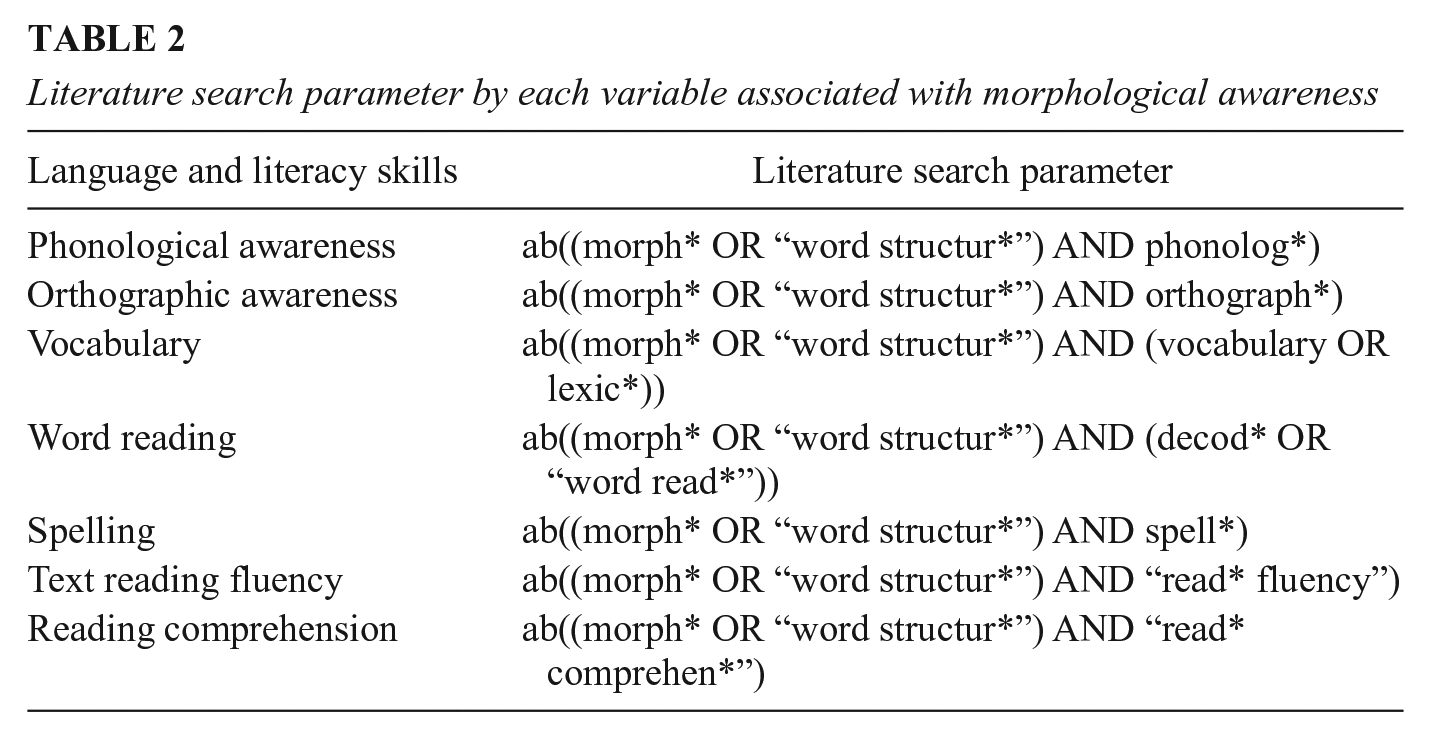
Studies were identified through an electronic search of the following ProQuest databases: Educational Resources Information Center (ERIC), ProQuest Dissertations & Theses A&I, PsycINFO, and Sociological Abstracts. Key search terms we used are listed in Table 2. A total of 14,051 studies were initially identified, and after duplicate studies were removed, 10,224 studies remained.
Literature search parameter by each variable associated with morphological awareness
Inclusion Criteria
Each study had to meet the following criteria to be included in this meta-analysis. First, studies were published between 1980 and end of March 2021. Studies published after 1980 were included because researchers began to focus on connections between morphological awareness and other language and literacy skills around the 1980s (Goodwin & Ahn, 2013). Second, studies were written in English. Third, participants were prekindergartners to adults. Fourth, studies measured morphological awareness and one or more of the following skills: phonological awareness, orthographic awareness, vocabulary, word reading, spelling, text reading fluency, and reading comprehension. Studies that were not written in English (e.g., Blondet & Guiraud, 2017; da Mota, 2012), that did not measure either morphological awareness or one of the other skills mentioned above (e.g., Miller et al., 2016; Schiff & Raveh, 2006; Varma et al., 1985), and of which the measures had not assessed morphological awareness per se (e.g., morpho-syntax that confounds morphological awareness with syntactic awareness; Hu, 2010; de Oliveira et al., 2017; Reese, 2009) were excluded in the screening process.
Title and abstract screening resulted in 395 studies to include for the full study screening. Inter-rater reliabilities for the title and abstract screening process were calculated for each of the language and literacy skills (e.g., morphological awareness and phonological awareness, morphological awareness and vocabulary). Using approximately 20% of the studies, inter-rater reliabilities ranged from 97% to 100%, and disagreements were resolved through discussion. Of the studies that were included for the full study screening, inter-rater reliability was 95% using approximately 20% of the studies, and disagreements were resolved through discussion. A total of 245 studies met our inclusion criteria after full study screening, and 126 studies included effect sizes, Pearson’s r correlation (see Figure 1 for a PRISMA chart). Furthermore, additional studies were identified by a hand-search of six journals from which a number of studies are published in this topic—Applied Psycholinguistics, Reading and Writing, Journal of Research in Reading, Scientific Studies of Reading, Journal of Educational Psychology, and Reading Research Quarterly—and backward tracking of included studies’ references. A total of 106 studies were identified through this process. In the end, we had a total of 232 studies (126 plus 106) that met our inclusion criteria and were included in our analysis (see Figure 1).
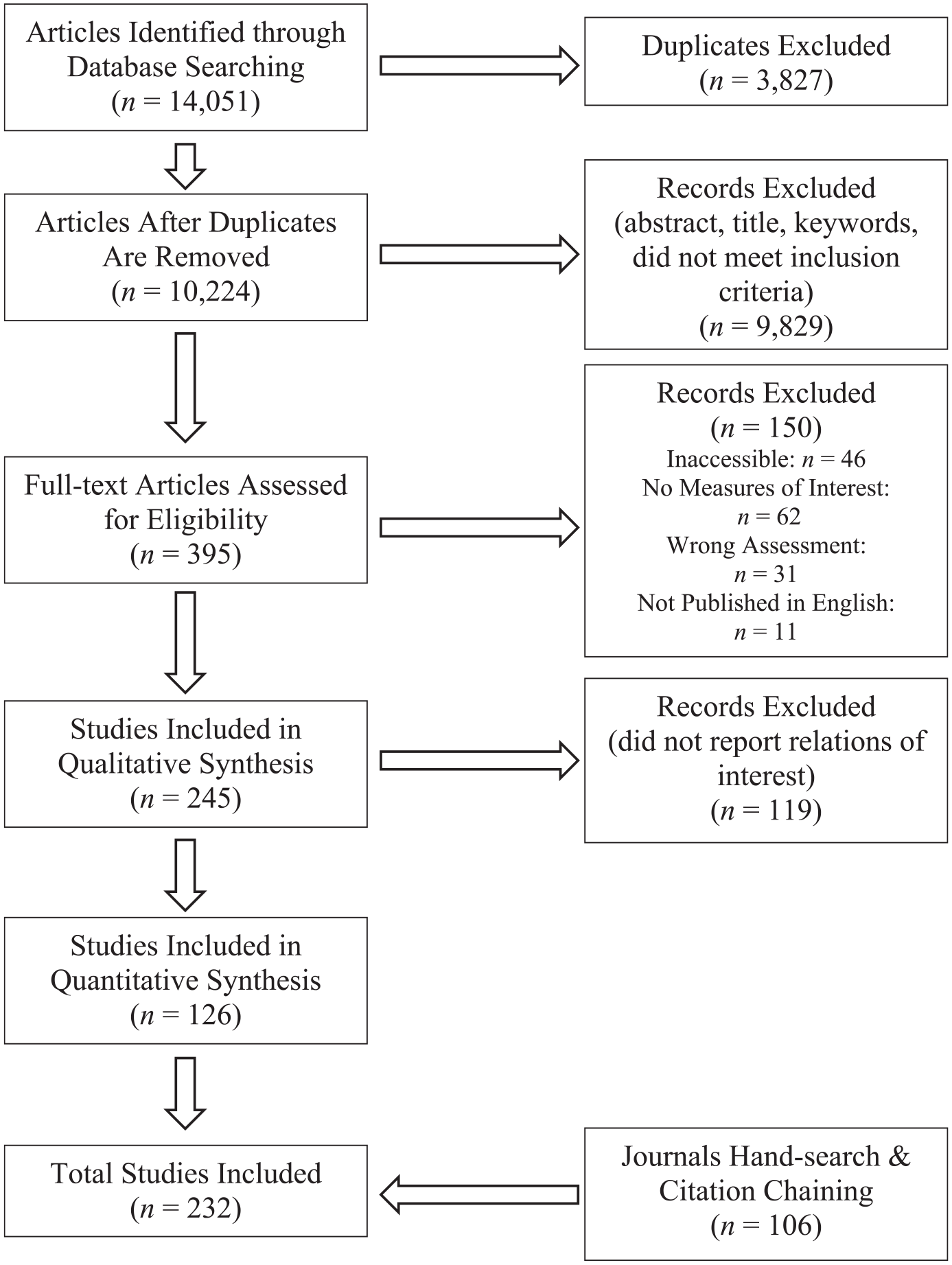
PRISMA flow diagram depicting the literature search process.
Coding of Studies
The 232 studies were coded for participant characteristics, language, nature of morphological awareness, L1/L2 status, and effect sizes. Approximately 20 percent of the studies were double-coded for reliability, and inter-rater reliability was 100%.
Participant Characteristics
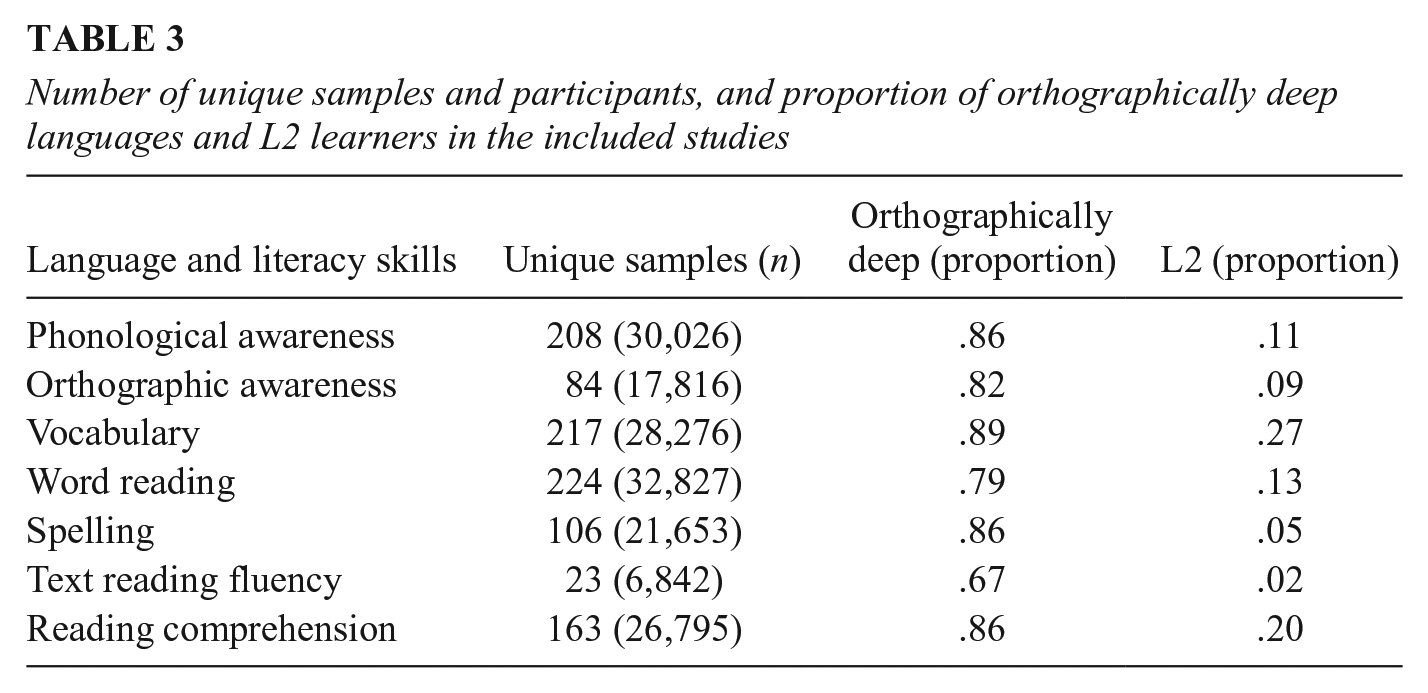
The sample size, participant sex ratio, age, grade level, and race (e.g., White, African American) were coded. Please see Table 3 for sample size for each measure. In addition, we coded disability status (dummy coded as “1” for studies in which more than half of the participants had a disability related to their language and literacy development) and socioeconomic status (SES; low-SES dummy coded as “1” for studies in which more than half of the participants were eligible for subsidized lunch or were from a low-SES district). However, many studies did not include information on disability status and SES, and therefore, these were not included in the analysis.
Number of unique samples and participants, and proportion of orthographically deep languages and L2 learners in the included studies
Grade Levels
Grade level was converted into a categorical variable using the following developmental stages: primary grade levels (prekindergarten to grade 2), upper elementary grade levels (grades 3–5), secondary grade levels (grades 6–12), and adult/university. This is a common practice in meta-analysis (e.g., Florit & Cain, 2011; García & Cain, 2014; Petscher, 2010) and allows for studies that grouped grade levels together to not be excluded from analysis, permitting more degrees of freedom.
Orthographic Depth
We coded the language in which morphological awareness was assessed (e.g., English, Chinese, Arabic) and the orthographic depth of the language. Orthographic depth of language was coded dichotomously either as deep or shallow (dummy coded as “1” for orthographically deep languages). For the majority of European languages, we referred to Seymour et al. (2003) to determine their orthographic depth. For other languages, we used the literature to guide our classification (see later for details). For example, although Korean and Greek are considered to have relatively shallow orthography, they also employ a morphophonological writing system where their spellings prioritize the morphological principle, rendering encoding (spelling) more challenging than decoding (word reading; Kim, 2011; Protopapas & Vlahou, 2009; Seymour et al., 2003; Wang et al., 2009). To illustrate, let us take an example of a Korean word, “깊이” /gipi/ (depth), which is composed of two morphemes “깊” (/gip/, deep) “이” (/i/, a nominalization derivational morpheme). When decoding the word, although it is orthographically represented as /gip.i/, it is read as /gi.pi/ because it undergoes resyllabification where the coda of the first syllable /p/ becomes the onset of the second syllable when followed by a vowel. Resyllabification is an extremely frequent phenomenon in Korean, and since all the phonemes /gipi/ are represented orthographically, decoding words with resyllabification does not typically present a challenge. In contrast, spelling /gipi/ is more difficult because the letter ㅍ representing /p/ should be placed in the coda position of the first syllable to preserve morphological structure of the word (깊이) rather than applying the alphabetic principle (기피; Kim et al., 2016). Arabic and Hebrew were coded differently by whether they had diacritics or not. With diacritics, they are orthographically shallow because all phonological information is available for each letter, but without them, they are deep (Eviatar et al., 2018). Overall, the following languages were coded as orthographically deep: Arabic without diacritics; Chinese, Danish, French, English, Greek (spelling), Hebrew without diacritics; Kanji of Japanese, and Korean (spelling). The following were coded as orthographically shallow: Arabic with diacritics, Finnish, German, Greek (word reading), Hebrew with diacritics, Japanese (Hiragana and Katakana), Korean (word reading), Malay, Russian, Southern Bantu, Spanish, Dutch, and Portuguese.
Nature of Morphological Awareness
Morphological assessments were coded for whether the morphological awareness tasks measured receptive or productive morphological awareness, and inflectional, derivational, or compound morphological awareness.
L1/L2 Status
L1/L2 status was dummy coded: “1” for studies in which more than half of the participants were second-language learners.
Effect Size
The Pearson’s r between morphological awareness and the language and literacy skills (e.g., morphological awareness and phonological awareness, morphological awareness and vocabulary) was coded.
Statistical Analyses
Each Pearson’s r correlation was converted into Fischer’s z derived by the equation z = 0.5 * ln (1 + r / 1 − r). Then, variance (V) was calculated by the equation V = 1 / N − 3 (N = sample size; Borenstein et al., 2009). The statistical analyses were conducted using the Robumeta package in R (Fisher & Tipton, 2015; R Core Team, 2013). The package implements meta-regressions with the estimator of robust variance estimation, adjusting for small sample sizes in synthesizing the overall relations and running moderator analyses. This package synthesizes effect sizes using Fischer’s z, variance, unique sample, and moderator variables to weight the overall relations by sample size and run moderator analyses. The I2 statistics, which indicate the proportion of the observed variance in effect sizes (Borenstein et al., 2009), were also derived from this analysis. We then conducted moderator analyses on students’ grade level, orthographic depth of language, nature of morphological awareness, and L1/L2 status. We fitted multiple models for each of the language and literacy skills: models 1 to 5 included each of the target moderators alone; model 6 included nature of morphological awareness together; model 7 had orthographic depth controlling for grade level and L1/L2 status; and model 8 included all moderators together. Studies that reported a mixture of morphological awareness (e.g., correlations with language and literacy skills were not reported separately for receptive vs. productive morphological awareness) were excluded in the moderation analysis by the nature of morphological awareness.
Results
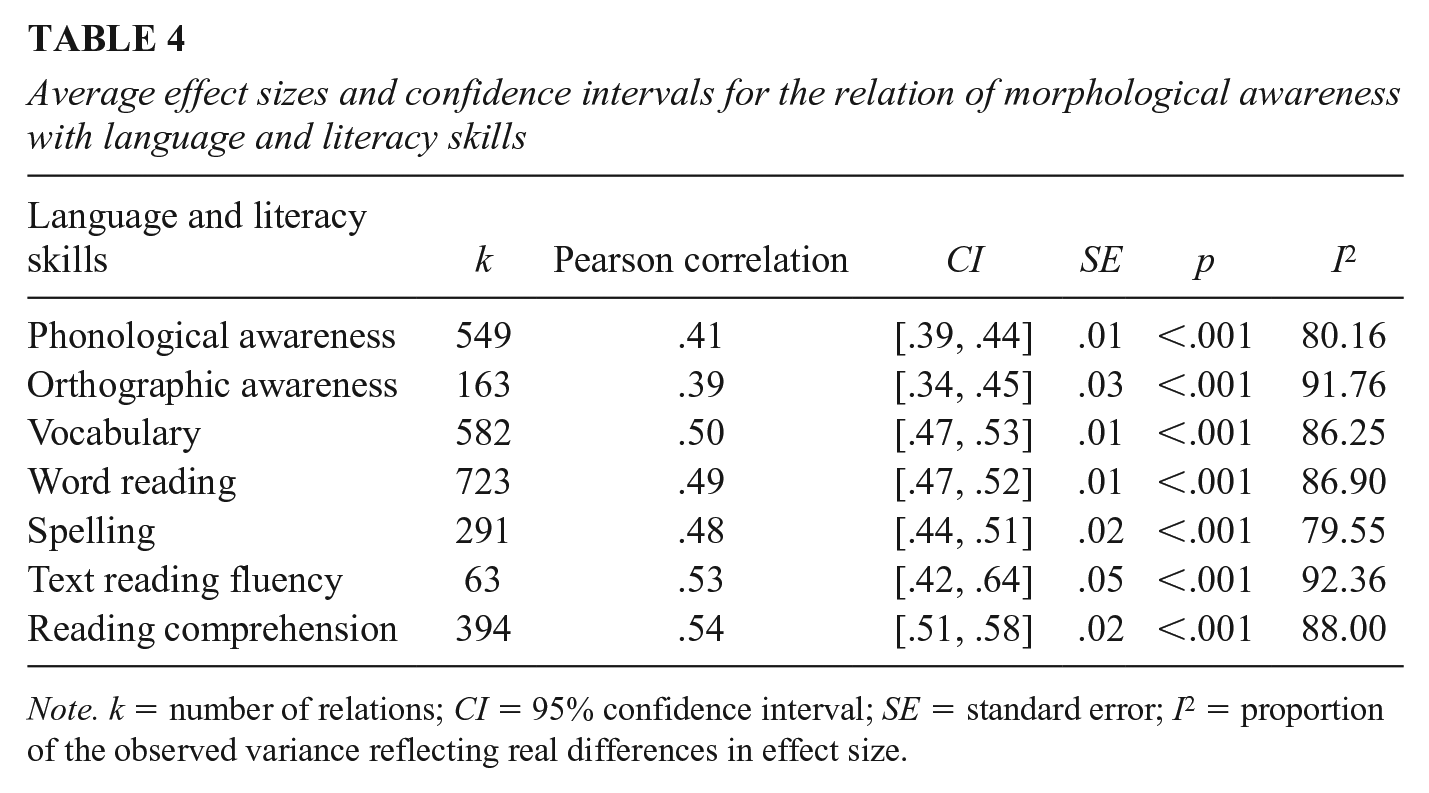
From the 232 articles, we had a total of k = 2,765 effect sizes from 965 unique samples (N = 49,936 participants in 17 languages). Please see Table 4 for the number of effect sizes by language and literacy skills. Large variability in relations was present among each language and literacy skill within the included studies. I2 ranged from 79.55 to 92.36, indicating that approximately 80% to 92% of the total observed variance was due to between-study differences rather than within-study sampling error.
Average effect sizes and confidence intervals for the relation of morphological awareness with language and literacy skills
Note. k = number of relations; CI = 95% confidence interval; SE = standard error; I2 = proportion of the observed variance reflecting real differences in effect size.
Research Question 1: Overall Relations of Morphological Awareness With Language and Literacy Skills
As seen in Table 4, the overall relations of morphological awareness with language and literacy skills in random effects models were as follows (ps < .001): r = .41 with phonological awareness, r = .39 with orthographic awareness, r = .50 with vocabulary, r = .49 with word reading, r = .48 with spelling, r = .53 with text reading fluency, and r = .54 with reading comprehension.
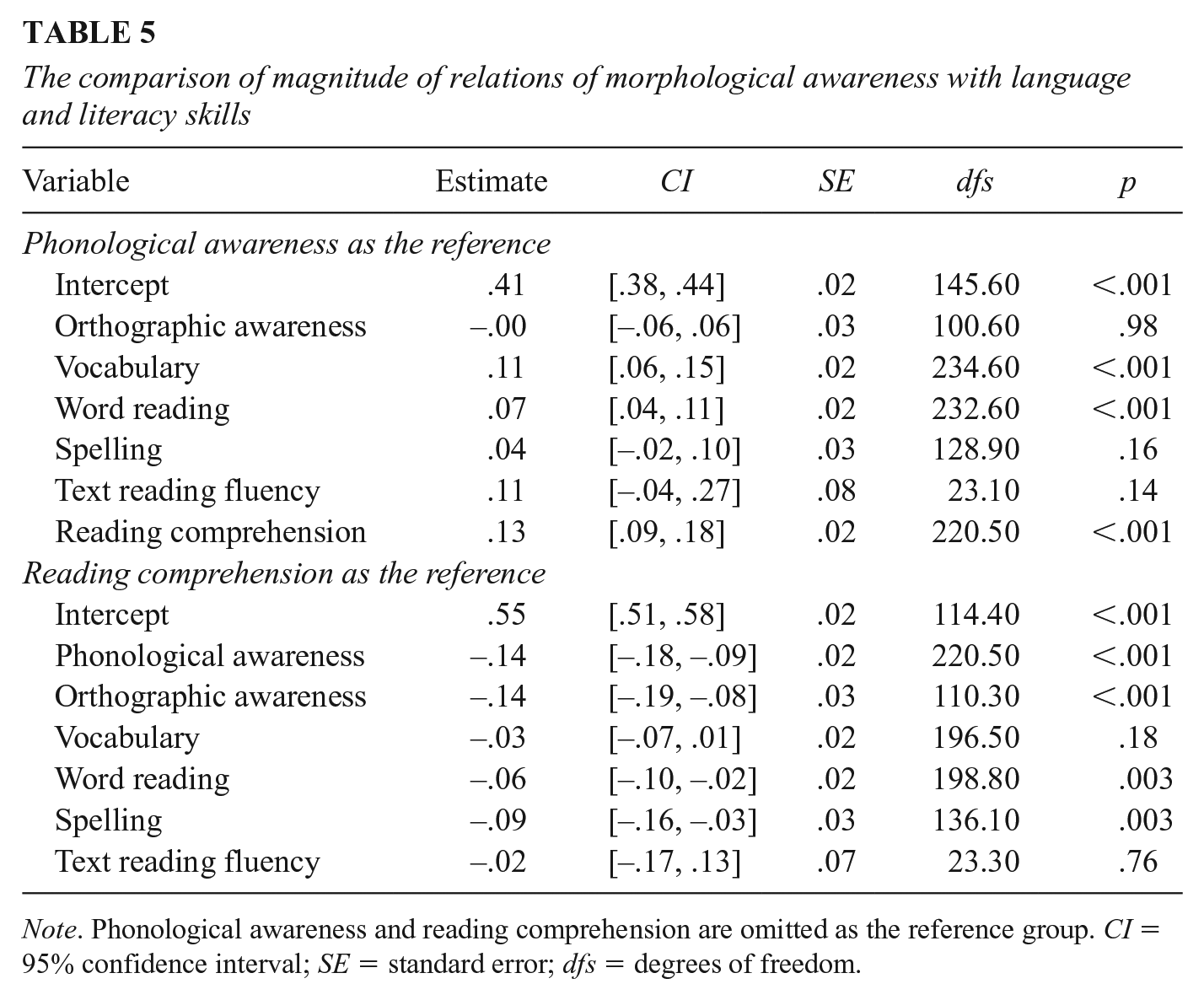
There were some statistically significant differences in the magnitudes of the relation (see Table 5). The relation of morphological awareness with phonological awareness did not differ from that with orthographic awareness, spelling, and text reading fluency whereas morphological awareness had stronger relations with vocabulary, word reading, and reading comprehension (ps < .001) than with phonological awareness. The relation of morphological awareness with reading comprehension (r = .54) did not differ from those with vocabulary and text reading fluency, but the relation was stronger than those with phonological awareness, orthographic awareness, word reading, and spelling.
The comparison of magnitude of relations of morphological awareness with language and literacy skills
Note. Phonological awareness and reading comprehension are omitted as the reference group. CI = 95% confidence interval; SE = standard error; dfs = degrees of freedom.
Research Question 2: Differential Relations by Moderators
Grade Level
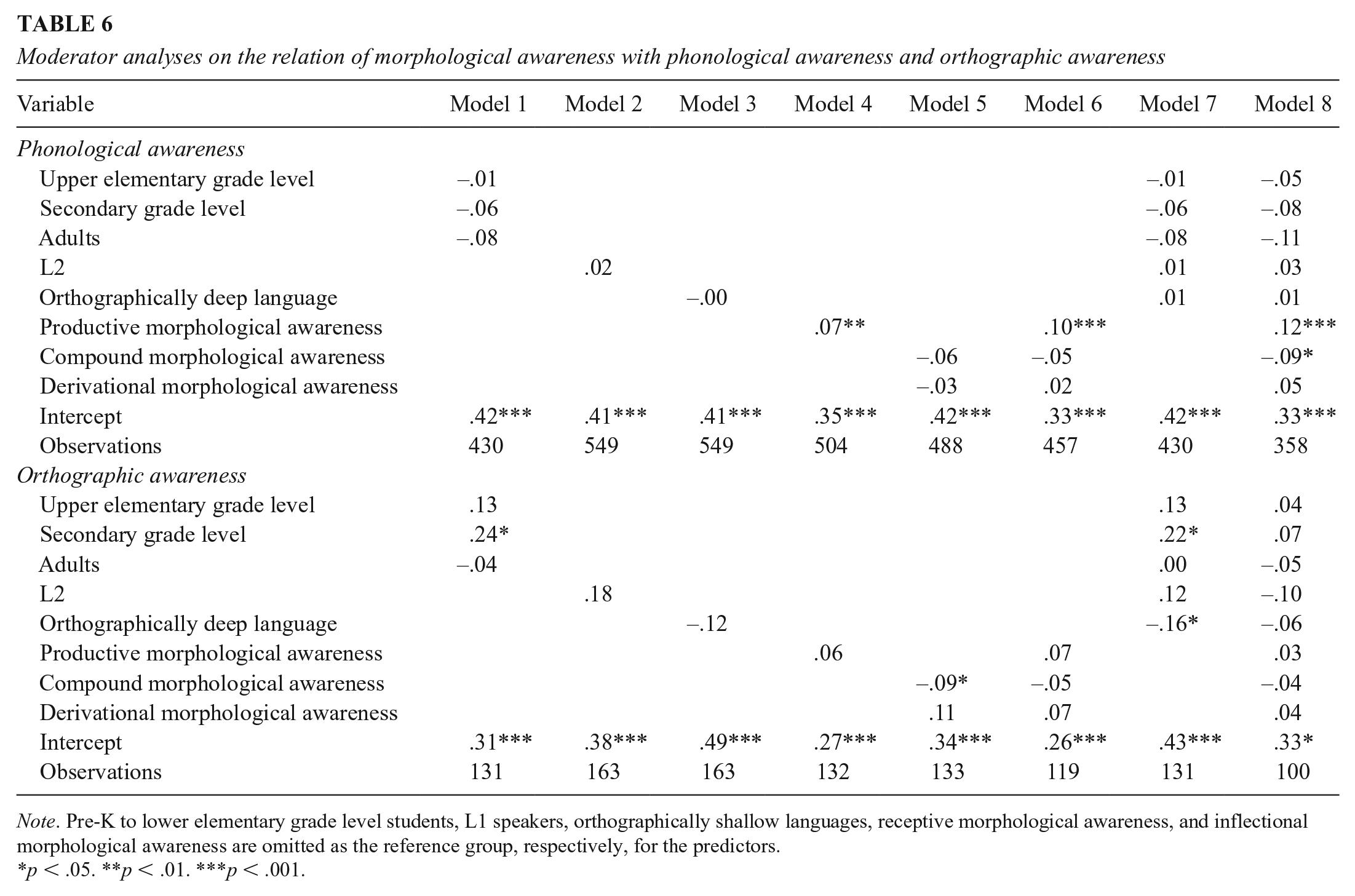
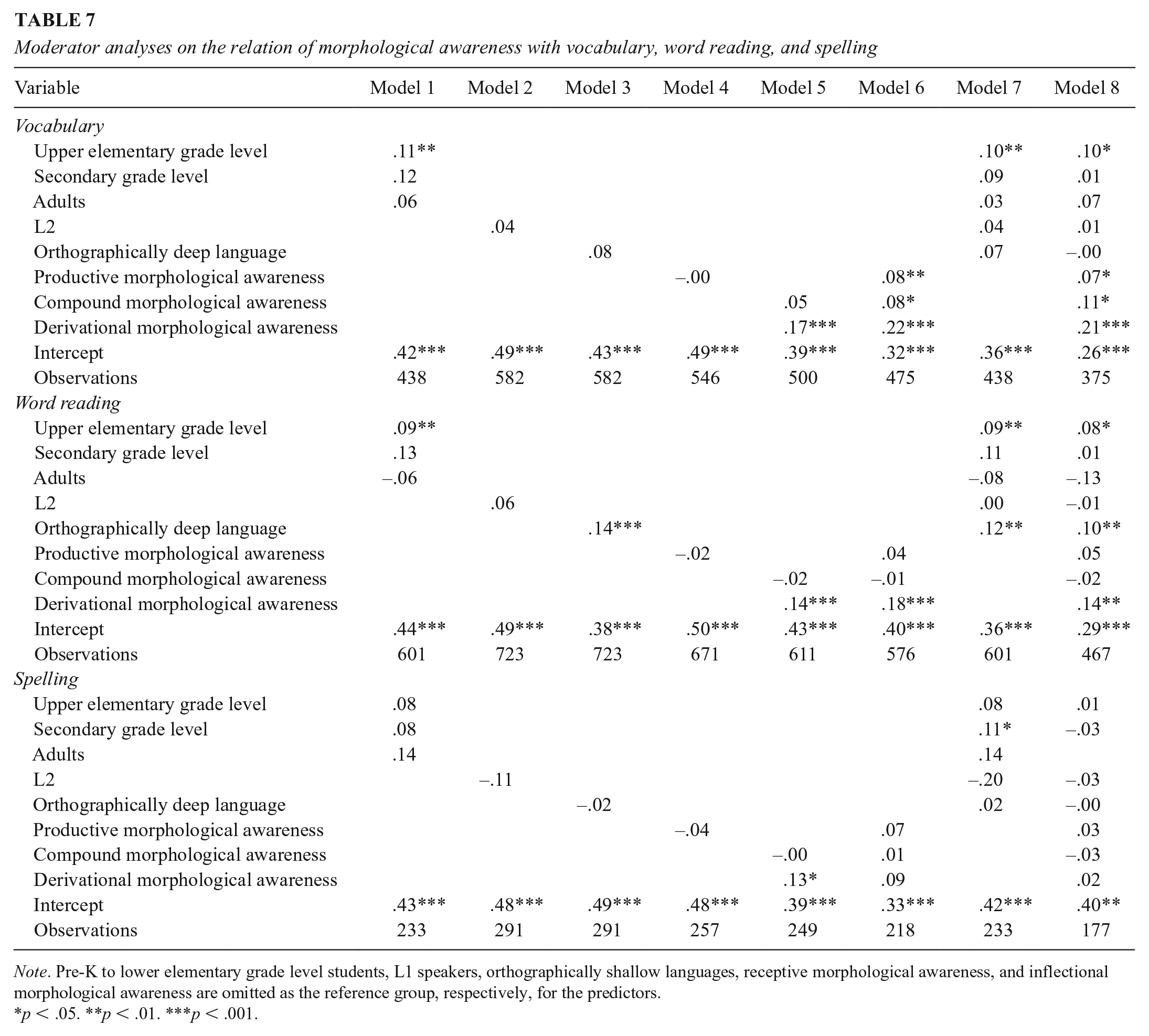
Results of moderation analyses are found in Tables 6 to 8. The number of unique samples by grade level was as follows: 4 in prekindergarten, 24 in kindergarten, 31 in grade 1, 38 in grade 2, 38 in grade 3, 32 in grade 4, 16 in grade 5, 18 in grade 6, 2 in grade 7, 10 in grade 8, 2 in grade 9, 1 in grade 10, 2 in grade 11, none in grade 12, and 30 in adults. Primary grade level (prekindergarten to grade 2) was the reference group in the models. A couple of statistically significant differences were found (see model 8 of Table 7). The relation of morphological awareness with vocabulary was .26 for primary grade students and .36 for upper elementary grade students, and this difference was statistically significant (p = .02), controlling for the other moderators. Similarly, the relation of morphological awareness with word reading was .29 for primary grade students and .37 for upper elementary grade students, and this difference was borderline (p = .05).
Moderator analyses on the relation of morphological awareness with phonological awareness and orthographic awareness
Note. Pre-K to lower elementary grade level students, L1 speakers, orthographically shallow languages, receptive morphological awareness, and inflectional morphological awareness are omitted as the reference group, respectively, for the predictors.
p < .05. **p < .01. ***p < .001.
Moderator analyses on the relation of morphological awareness with vocabulary, word reading, and spelling
Note. Pre-K to lower elementary grade level students, L1 speakers, orthographically shallow languages, receptive morphological awareness, and inflectional morphological awareness are omitted as the reference group, respectively, for the predictors.
p < .05. **p < .01. ***p < .001.
Moderator analyses on the relation of morphological awareness with text reading fluency and reading comprehension
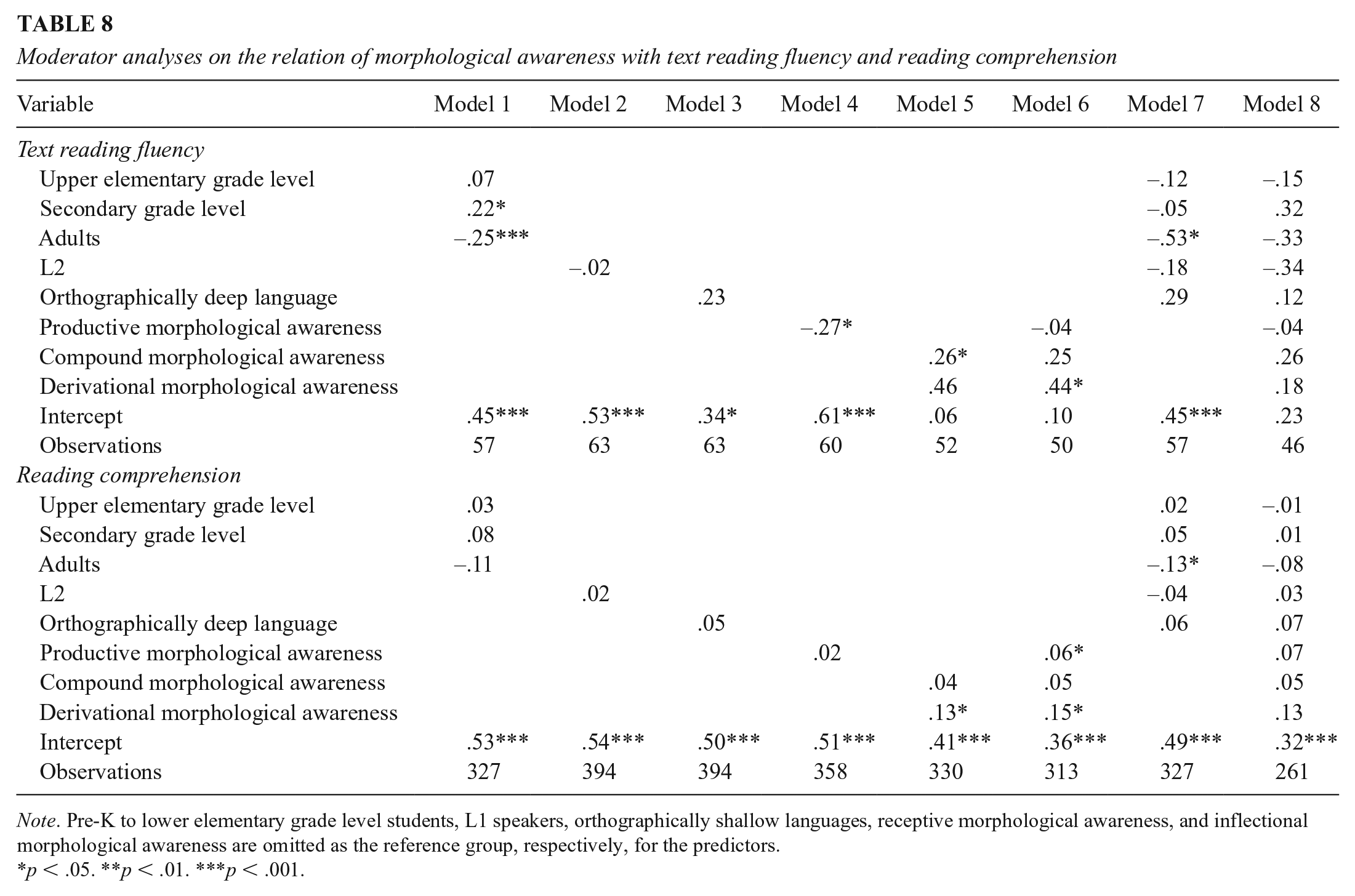
Note. Pre-K to lower elementary grade level students, L1 speakers, orthographically shallow languages, receptive morphological awareness, and inflectional morphological awareness are omitted as the reference group, respectively, for the predictors.
p < .05. **p < .01. ***p < .001.
Orthographic Depth of Language
Morphological awareness had a stronger relation with word reading in orthographically deep languages with (β = .10, p = .04; model 8, Table 7) and without (β = .14, p < .001; model 3, Table 7) controlling for the other moderators. For example, the relation between morphological awareness and word reading was .38 in orthographically shallow languages whereas the relation was .52 in orthographically deep languages.
Nature of Morphological Awareness
Receptive versus productive morphological awareness
Compared to receptive morphological awareness, productive morphological awareness had a stronger relation with phonological awareness (Table 6): the relation between receptive morphological awareness and phonological awareness was .35 whereas the relation between productive morphological awareness and phonological awareness was .42. The stronger relation remained whether controlling for the other moderators (β = .12, p < .001) or not (β = .07, p = .01). Similarly, the relation between morphological awareness and vocabulary was stronger for productive morphological awareness: the relation between receptive morphological awareness and vocabulary was .26 whereas that between productive morphological awareness and vocabulary was .33 controlling for all the other moderators (see model 8 of Table 7).
Inflectional versus compound morphological awareness, and inflectional versus derivational morphological awareness
Inflectional morphological awareness was the reference condition in the models. Compared to inflectional morphological awareness, compound morphological awareness had a weaker relation with orthographic awareness (β = −.09, p = .04; see model 5 of Table 6) and a stronger relation with text reading fluency (β = .26, p = .04; see model 5 of Table 8). Once the other moderators were controlled for, these differences were no longer statistically significant. Furthermore, compound morphological awareness had a weaker relation with phonological awareness compared to inflectional morphological awareness (β = −.09, p = .03) (model 8 of Table 6). In contrast, compound morphological awareness had a stronger relation with vocabulary than for inflectional morphological awareness after holding the other moderators constant (β = .11, p = .03; see model 8 of Table 7).
Turning to the relation of inflectional morphological awareness versus derivational morphological awareness with language and literacy skills, derivational morphological awareness had stronger relations with vocabulary (β = .17, p < .001; Table 7), word reading (β = .14, p < .001; Table 7), spelling (β = .12, p = .04; Table 7), and reading comprehension (β = .13, p = .05; Table 8) compared to inflectional morphological awareness. The stronger relations of derivational morphological awareness with vocabulary and word reading remained even after controlling for the other moderators (model 8, Table 7).
L1/L2 Status
Participants’ L1/L2 status was not a significant moderator for the relations of morphological awareness with any of the language and literacy skills, whether controlling for the other moderators or not (see Tables 6–8). This indicates that the relations between morphological awareness and the included language and literacy skills were not different for L1 versus L2 learners. However, it should be noted that as seen in Table 3, the extent to which L2 speakers were included varied largely across language and literacy skills, and therefore, some of the findings with small sample sizes (e.g., text reading fluency) need to be interpreted with caution.
Sensitivity Analysis
To check whether studies with a large sample size relative to other studies (Goodwin et al., 2020, which had N = 1,120; Görgen et al., 2021, which had N = 3,122) had a substantial influence on our findings, separate analyses were conducted. Removing these studies did not change our findings, suggesting that their comparatively large sample sizes did not have an impact on our results. Furthermore, the orthographic depth analysis was redone with Portuguese and Dutch as orthographically deep languages. Results were essentially the same.
Publication Bias
As seen in Figure 2, the majority of the funnel plots of the relations were symmetric. Egger’s regression tests of the intercept for funnel plot asymmetry (Egger et al., 1997; Sutton, 2009) were not significant for phonological awareness (z = −0.06, p = .95), orthographic awareness (z = .64, p = .52), word reading (z = −0.24, p = .81), and reading comprehension (z = −1.73, p = .08). In contrast, they were statistically significant for vocabulary (z = 2.12, p = .03), spelling (z = −2.72, p = .01), and text reading fluency (z = −2.56, p = .01). Statistically significant results in Egger’s regression tests indicate that the hypothesis of no publication bias is rejected. However, note that both published and unpublished studies (e.g., dissertations) were included in this study. According to the moderator analysis of publication status (peer-reviewed or not), we found a significantly weaker relation for findings from peer-reviewed studies between morphological awareness and orthographic awareness (β = −.24, p = .005). For the other skills, relations did not differ by publication status.
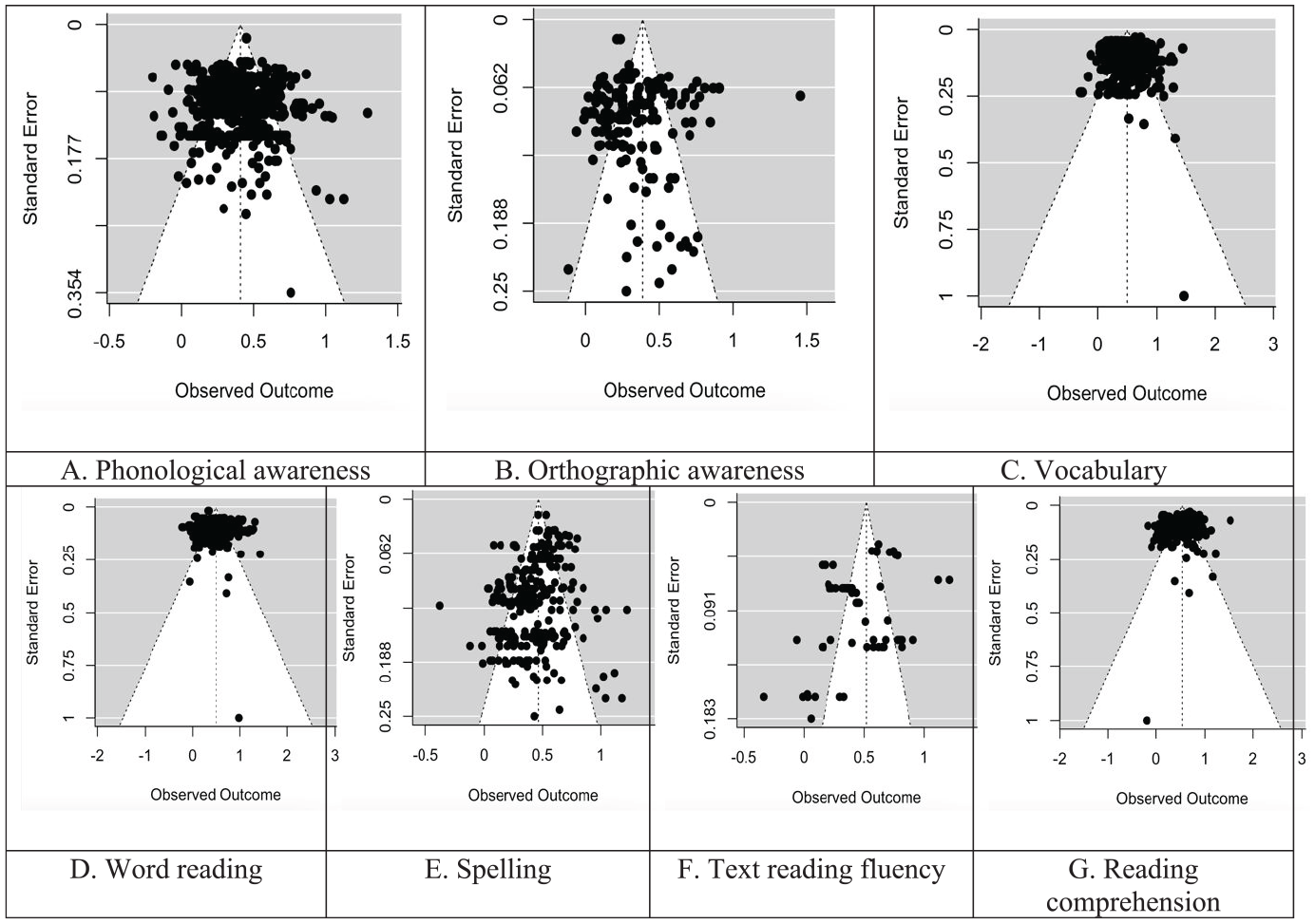
Funnel plots of relations from all included studies.
Discussion
We examined the relation of morphological awareness with a wide range of language and literacy skills—phonological awareness, orthographic awareness, vocabulary, word reading, spelling, text reading fluency, and reading comprehension—grounded on DIER (Kim, 2020a, 2020b). We also investigated how these relations differ by several potential moderators—grade level, orthographic depth of language, nature of morphological awareness, and L1/L2 status.
Using 2,765 effect sizes from 49,936 participants in 17 languages, we found that morphological awareness was positively and moderately related with all the language and literacy skills. Morphological awareness had moderate relations with word reading (.49) and spelling (.48), supporting the role of morphological awareness in decoding and encoding words (Kim, 2020a, 2020b; Nagy et al., 2014). Morphological awareness was also moderately related with phonological awareness (.41) and orthographic awareness (.39), suggesting that metalinguistic awareness of phonology, orthography, and morphology are related to each other (Adams, 1990; Kim, 2020a; Seidenberg, 2005). Our results also confirmed substantial relations of morphological awareness with vocabulary (.50), text reading fluency (.53), and reading comprehension (.54). It is striking that the relations with all the included language and literacy skills are consistently moderate, which underscores the important role of morphological awareness in language and literacy skills. Overall the consistent relations of morphological awareness with various language and literacy skills are in line with DIER (Kim, 2020a, 2020b).
Beyond the average moderate relations with the included language and literacy skills, our present findings underscore that the magnitude of relations varies by several factors. Based on the dynamic hypothesis of DIER (Kim, 2020a, 2020b), we examined differential relations of morphological awareness with language and literacy skills as a function of grade levels (a proxy for developmental phase), orthographic depth, and nature of morphological awareness. Our hypothesis on moderation by grade levels was partially supported: the relations of morphological awareness with vocabulary and word reading were stronger in upper elementary grades than primary grades. As children develop, the demand of knowledge of multimorphemic words in reading increases and, therefore, the role of morphological awareness increases.
Moreover, magnitude of relations differed by orthographic depth such that morphological awareness had stronger relations with word reading in deep orthographies (.52) than in shallow orthographies (.38). DIER (Kim, 2020b) posits a stronger relation in orthographically deep languages because words’ spelling in orthographically deep languages reflects morphological information in addition to phonological information, and the consistency of spelling increases when taking into account morphological information (also see McBride-Chang et al., 2008). In contrast, the role of morphological awareness in reading would be reduced in orthographically shallow languages.
Our results also highlight the importance of considering measurement and the nature of morphological awareness for the relation between morphological awareness and language and literacy skills. We examined the nature of morphological awareness in two aspects: receptive versus productive morphological awareness, and types of morphemes (inflectional vs. derivational vs. compound morphological awareness; Goodwin et al., 2017; Kuo & Anderson, 2006). Tasks that capture productive morphological awareness were hypothesized to have a stronger relation with the included language and literacy skills. This hypothesis was partially supported in that productive morphological awareness had a stronger relation with phonological awareness and vocabulary, indicating that individuals with more advanced morphological awareness in tasks that require production of morphemes by manipulation also have advanced phonological awareness and vocabulary. Productive morphological awareness tasks require more robust and precise representation of morphemes compared to receptive morphological awareness tasks, and this might support representation of phonological information and vocabulary learning. Note, however, that the present findings do not indicate directionality of the relations; it may be that advanced phonological awareness or vocabulary support productive morphological awareness. Receptive versus productive nature of morphological awareness did not moderate the relation of morphological awareness with other skills, orthographic awareness, word reading, spelling, text reading fluency, and reading comprehension. It is not clear why differential relations are inconsistent across language and literacy skills. Future work is needed to further illuminate differential relations of receptive versus productive morphological awareness with language and reading skills.
Morphological awareness is a multidimensional construct with different types of morphemes, and we hypothesized that the relation of morphological awareness with language and literacy skills would vary for inflectional, derivational, and compound awareness. Our hypotheses were by and large supported. Derivational morphological awareness was more strongly related with vocabulary and word reading than was inflectional morphological awareness even after accounting for the other moderators. Compound morphological awareness had a weaker relation with phonological awareness and a stronger relation with vocabulary than did inflectional morphological awareness. Overall, these results support the dynamic relations hypothesis of DIER and indicate the importance of considering and teasing out dimensions of morphological awareness for a precise understanding of the relation between morphological awareness and language and literacy skills.
Finally, L1/L2 status did not significantly moderate the relation of morphological awareness to any language and literacy skills included in our research. Note that these results do not deny the importance of morphological awareness for L2 speakers (Goodwin, 2011; Kieffer & Lesaux, 2008; Nagy et al., 2014). Instead, the present findings suggest that the importance of morphological awareness in language and literacy skills is not different for L1 learners versus L2 learners. In other words, although oral language proficiency in L2 is a defining feature for L2 learners, and morphological awareness is an essential part of oral language skill, this does not entail differential magnitude of importance of morphological awareness in language and literacy skills for L1 versus L2 learners.
Overall, our findings are in line with previous meta-analyses that focused on correlations of morphological awareness with reading skills (Ruan et al., 2018; Tighe & Schatschneider, 2016) as well as systematic reviews and meta-analyses that focused on the effect of morphological awareness instruction on language and reading outcomes (Bowers et al., 2010; Goodwin & Ahn, 2010; Reed, 2008). The present study extends the previous review studies by revealing that morphological awareness is moderately related to a more extensive set of skills (e.g., orthographic awareness, spelling, text reading fluency). Importantly, the present study expands our understanding by showing that the relations are not uniform, and instead, magnitudes of the relations between morphological awareness and language and reading skills vary as a function of orthographic depth and nature of morphological awareness.
Taken together with previous work, the present findings highlight the importance of morphological awareness in language and literacy skills in theoretical models of reading development and educational practice. The results also indicate a need for developing a nuanced understanding of the nature of relations of morphological awareness with various language and cognitive skills—the relations are not unidimensional, but instead they depend on multiple factors such as developmental phase, orthographic depth, and measurement (see DIER, Kim, 2020a, 2020b). With regard to educational practice, direct implications are limited because our analysis was based on correlational data. However, together with the prior meta-analyses of intervention studies with experimental designs that supported the causal role of morphological awareness in language and literacy skills (Bowers et al., 2010; Goodwin & Ahn, 2010, 2013), present findings indicate a need for explicit and systematic instruction on morphological awareness as part of language and literacy instruction.
Limitations and Future Directions
One limitation of this study is that the number of observations for some language and literacy skills (e.g., text reading fluency) and some moderators was small. For example, the number of unique samples and associated participants for text reading fluency was smaller than the other skills (see Table 3). Consequently, the findings regarding the relations of morphological awareness with text reading fluency may have been impacted, particularly for the moderation analysis. Furthermore, there was large variation in the proportion of inclusion of L2 speakers across the language and literacy skills (see Table 3). For example, the number of L2 participants for the relation between morphological awareness and text reading fluency was approximately 137 (2%) whereas it was over 7,600 participants for the relation between morphological awareness and vocabulary (27%). Thus, precision of null results for the L1/L2 status as a moderator likely varies across language and cognitive skills.
It should be noted that correlations do not indicate directionality. Therefore, our findings indicate the existence and magnitude of relations between morphological awareness and language and literacy skills, but not the directionality. DIER hypothesizes that language and literacy skills have interactive or bidirectional relations (e.g., Kim, 2020a, 2020b). For example, morphological awareness facilitates vocabulary development, and growth in vocabulary promotes morphological awareness. Indeed, previous studies indicated bidirectionality of relations (e.g., morphological awareness and vocabulary, Kieffer & Lesaux, 2012a; McBride-Chang et al., 2008; morphological awareness and word reading, Deacon et al., 2014). A future meta-analysis focusing on experimental studies can examine causality of bidirectional relations. Similarly, the question on moderation by orthographic depth and the type of morphological awareness can also be examined in the context of experimental studies. Additionally, future work can consider the proportion of L2 speakers as a continuous variable—in the present study, L1/L2 status of participants was dummy coded, which does not fully capture variation in proportions of L1 and L2 speakers.
One future direction is an examination of pathways and indirect relations hypothesized in DIER (Kim, 2020a, 2020b). Morphological awareness was hypothesized to be related to text reading skills (text reading fluency and reading comprehension) via two pathways: its relation with vocabulary and grammatical knowledge, and its relation with word reading. That is, one’s understanding of morphological structure of a language helps one decode and infer meanings of words, which, in turn, supports one’s text reading fluency and reading comprehension. A few studies do support such pathways (e.g., Guo et al., 2011; Kieffer & Lesaux, 2012b; Kim et al., 2020), and future meta-analyses can examine pathways (indirect relations) of relations.
Conclusion
By synthesizing 232 articles in the field of language and literacy since 1980, our results indicate a positive and substantial relation of morphological awareness with language and literacy skills—namely phonological awareness, orthographic awareness, vocabulary, word reading, spelling, text reading fluency, and reading comprehension. We also found that some of these relations differed by orthographic depth of language, nature of morphological awareness, and grade levels. The results together suggest the central importance of morphological awareness in language and literacy development and a need for a nuanced and precise understanding of the role of morphological awareness in language and literacy skills.
Supplemental Material
sj-pdf-1-rer-10.3102_00346543221123816 – Supplemental material for The Relations of Morphological Awareness with Language and Literacy Skills Vary Depending on Orthographic Depth and Nature of Morphological Awareness
Supplemental material, sj-pdf-1-rer-10.3102_00346543221123816 for The Relations of Morphological Awareness with Language and Literacy Skills Vary Depending on Orthographic Depth and Nature of Morphological Awareness by Joong won Lee, Alissa Wolters and Young-Suk Grace Kim in Review of Educational Research
Footnotes

Notes
This research was supported by grants from the Institute of Education Sciences (IES), U.S. Department of Education, R305A170113 and R305A180055, and National Institute of Child Health and Human Development (National Institute of Child Health and Human Development), P50HD052120, to Young-Suk Grace Kim. The content is solely the responsibility of the authors and does not necessarily represent the official views of the funding agencies.
Authors
JOONG WON LEE, MA, is a doctoral student at University of California, Irvine, 3200 Education Building, Irvine, CA 92697; joongwl@uci.edu. His research interest includes literacy skills with a focus on morphological awareness.
ALISSA WOLTERS, MA, is a doctoral student at University of California, Irvine, 3200 Education Building, Irvine, CA 92697; awolters@uci.edu. Her research interest includes language and literacy development for children from diverse linguistic backgrounds.
YOUNG-SUK GRACE KIM, EdD, is a professor and the senior associate dean in the School of Education at University of California, Irvine, 3200 Education Building, Irvine, CA 92697; youngsk7@uci.edu. Her work includes development and effective instruction of language, cognition, reading, and writing skills for children from diverse linguistic, cultural, and socioeconomic backgrounds.
References
Supplementary Material
Please find the following supplemental material available below.
For Open Access articles published under a Creative Commons License, all supplemental material carries the same license as the article it is associated with.
For non-Open Access articles published, all supplemental material carries a non-exclusive license, and permission requests for re-use of supplemental material or any part of supplemental material shall be sent directly to the copyright owner as specified in the copyright notice associated with the article.
