




Abstract
Over the past decades, peer review of teaching has become commonplace at many universities around the world. Though research on the topic is expanding, much of the literature is composed of qualitative studies that offer relevant empirical findings but often have limited foundations in theory. Using a framework synthesis approach, we synthesize the empirical findings of 48 qualitative articles on peer review of teaching into a comprehensive conceptual framework drawing on sociocultural perspectives of learning. We propose the term “collegial faculty development” (CFD) to encompass all practices that support faculty in developing their teaching quality by drawing on the expertise of their colleagues. Our framework conceptualizes the main elements of CFD and shows how different contextual, individual, and relational factors shape the way CFD unfolds. Based on these theoretical considerations, we discuss issues of intersubjectivity, materiality, and temporality as potential avenues for further research.
Keywords
The quality of teaching is one of the most important influences on students’ learning outcomes and motivation (Seidel & Shavelson, 2007). As a result, universities and colleges worldwide have been giving increasing attention to ways in which academic faculty might improve their teaching quality to support students’ learning (Harvey & Williams, 2010). In the wake of this development, assuring and developing teaching quality are increasingly regarded as a collaborative endeavor rather than the private responsibility of individual faculty members (A. Bell & Thomson, 2018; Wingrove et al., 2018). Against this backdrop, collegial approaches to faculty development and quality assurance have started gaining ground. In this study, we propose the term “collegial faculty development” (CFD) to refer to these increasingly popular forms of faculty development that mainly serve formative purposes by drawing on the available expertise of colleagues to support faculty members in the development of their teaching quality (Byrne et al., 2010).
In line with this growing interest, numerous researchers have started to empirically study approaches to CFD. Close scrutiny of the articles analyzed by two previous review studies on CFD (Teoh et al., 2016; Thomas et al., 2014) reveals that much of the existing research is characterized by single-intervention studies and practitioners’ reflections that focus on identifying benefits, problems, and best practices when using peers to develop teaching quality. Thomas et al. (2014) discussed how the scarcity of systematic empirical studies makes it difficult to parse the effectiveness of different CFD practices. This situation creates several challenges when seeking a deeper understanding of how collegial approaches contribute to faculty development.
First, the majority of practitioners’ reflections and intervention studies treat CFD as a onetime event in a specific institutional setting, failing to link it to wider theoretical perspectives nor drawing on conceptually coherent notions. This conceptual idiosyncrasy makes it difficult to reconcile their findings into a more comprehensive understanding of collegial approaches to faculty development that extends beyond the immediate context of the respective study.
Second, collegial approaches include a vast range of different practices that add a diverse range of terminology to the literature. Though some groupings exist around labels such as “peer review of teaching” (PRT) and “peer observation of teaching” (POT), these terms are often used without reference to commonly accepted definitions. Even though the reviews by Thomas et al. (2014) and Teoh et al. (2016) have provided important insights into PRT and POT, their focus on these specific terms led to the exclusion of a wide range of relevant studies that describe CFD practices but use alternative labels. In addition, these reviews took more practice-oriented approaches by focusing on faculty’s perceived barriers and attitudes toward PRT (Teoh et al., 2016) and exploring strengths, weaknesses, opportunities, and threats when conducting PRT (Thomas et al., 2014). Therefore, the contributions of these studies to a comprehensive conceptual understanding and related terminology of CFD practices remains limited.
Finally, the fact that collegial approaches take such diverse forms in practice makes it difficult to study and compare the various models and approaches described in the literature. Beside some attempts (Byrne et al., 2010; Gosling, 2002, 2014) to categorize different models of PRT, research literature struggles to find a systematic way to describe the core elements of CFD practices that is also able to account for the wide variety of approaches used in practice.
For these reasons, we need to expand our focus beyond PRT and POT literature and develop a more comprehensive conceptual understanding of collegial approaches to faculty development in higher education, which is the main purpose of this review. Moreover, considering the importance of teaching quality for students’ learning and motivation, this review will contribute a relevant overview of approaches to developing teaching quality with the help of colleagues and provide recommendations for practice.
Collegial Faculty Development in Higher Education
Though it has long been common practice in the school sector to draw on fellow teachers to assess and develop teaching performance, similar approaches in higher education have been slower to emerge (Atkinson & Bolt, 2010; Harris et al., 2008). The United States, Australia, and the United Kingdom have been among those countries that made the earliest and most widespread use of CFD (Lomas & Nicholls, 2005). In these contexts, collegial approaches mainly emerged to serve summative purposes, for example using PRT as part of yearly staff-appraisal schemes. In Scandinavia, some institutions have a long tradition of using peer faculty for developmental purposes, but the use of peers for staff appraisal is a much less common practice (de Lange & Wittek, 2018).
Beyond the above overarching classification, CFD has taken many different forms in higher education. In the literature, some important attempts have been made to develop a typology of four different PRT models commonly used in practice: the evaluation model, the developmental model, the peer review model, and the peer development model (Byrne et al., 2010; Gosling, 2002, 2014). In the evaluation model, senior staff conduct teaching observations for quality assurance and assessment. In the developmental model, teaching observations are conducted by faculty developers who focus on the evaluation and development of teaching competencies. In the peer review model, academic faculty members observe each other’s teaching and use these observations to generate reflective discussions and collaborative development on their teaching practices (Gosling, 2002); this model usually involves four phases: preobservation meeting, observation, postobservation feedback, and reflection (Fullerton, 1999). Byrne et al. (2010) added a peer development model in which peer faculty identify specific topics regarding their teaching practice and meet frequently over the course of the academic year to explore these topics together. This typology shows that the term PRT has many connotations, ranging from a purely summative instrument for accountability to a bottom-up initiative for faculty who want to develop their teaching with help from peers.
In consideration of the formative approaches, the advantages of using peers in faculty development have been well documented over time. Involving peers has been shown to help faculty reflect on their teaching (Hammersley-Fletcher & Orsmond, 2005), increase their confidence (M. Bell & Cooper, 2013), feel less isolated (Hendry et al., 2014), enhance their awareness of students’ learning experiences (A. Bell & Mladenovic, 2015), and improve practical teaching (Barnard et al., 2011). In addition, collegial approaches have been shown to create community and collegiality among faculty (A. Bell & Thomson, 2018) and help them critically reflect on the social context and dynamics of the teaching situation (Peel, 2005). The observed faculty members are not the only ones who benefit from the process, as the observers also perceive the process as valuable (Hendry et al., 2014).
Despite the generally positive evaluation of using peers in faculty development, a number of challenges have also been reported. Some have argued that the assessment of peers may lead to self-congratulatory and therefore inaccurate evaluations (Bingham & Ottewill, 2001). Purely summative peer review processes are particularly criticized as contributing little to faculty’s professional development (Byrne et al., 2010). Others have found that these processes can sometimes be perceived as overly time-consuming, invasive, subjective (Lomas & Nicholls, 2005), posing a threat to faculty’s academic freedom (Keig & Waggoner, 1995), and generally focusing too much on performance (Gosling, 2002).
These findings paint a complex picture that is further complicated by the fact that most studies do not establish clear links to wider theories of how and why collegial approaches to faculty development work the way they do. Therefore, we review the existing empirical literature on collegial approaches to faculty development in order to integrate previous findings on CFD in a coherent way, develop a theory-informed understanding of CFD, and identify gaps in our understanding of CFD that need further research attention. To that end, we address the following questions:
How are collegial approaches to faculty development described in the research literature?
What factors shape these collegial approaches to faculty development?
How can we integrate previous empirical findings into a theory-informed conceptualization of CFD?
Method
This study employs a framework synthesis approach (Dixon-Woods, 2011; Gough et al., 2017) to reviewing qualitative literature that aims to generate a new “conceptual framework that reflects the understandings gained from the reviewed literature” (Gough et al., 2017, p. 186). Framework synthesis is a review method that combines deductive and inductive approaches to synthesizing empirical findings from a set of qualitative research studies. This method focuses particularly on studies using qualitative methods and excludes studies with purely quantitative findings.
Because the target literature identified in previous reviews (Teoh et al., 2016; Thomas et al., 2014) is largely composed of qualitative or mixed-methods studies, we consider this review method as particularly well suited for addressing our research questions. A theory-informed synthesis of qualitative findings facilitates the study of the complex relations and processes involved in CFD. Moreover, this method allows us to make substantial contributions to the literature based on our experience as faculty developers and our expertise in both qualitative methodology and sociocultural theories. Further detail on our positionality and how it influences the review process is offered in a later section.
As depicted in Figure 1, the framework synthesis approach (Dixon-Woods, 2011; Gough et al., 2017) is composed of two main phases. The first phase is the development of an initial framework based on the authors’ a priori theoretical considerations and previous knowledge of the field. The second phase consists of a literature search based on the initial framework, which is then synthesized into the final framework aimed at providing a comprehensive and theory-informed understanding of CFD.
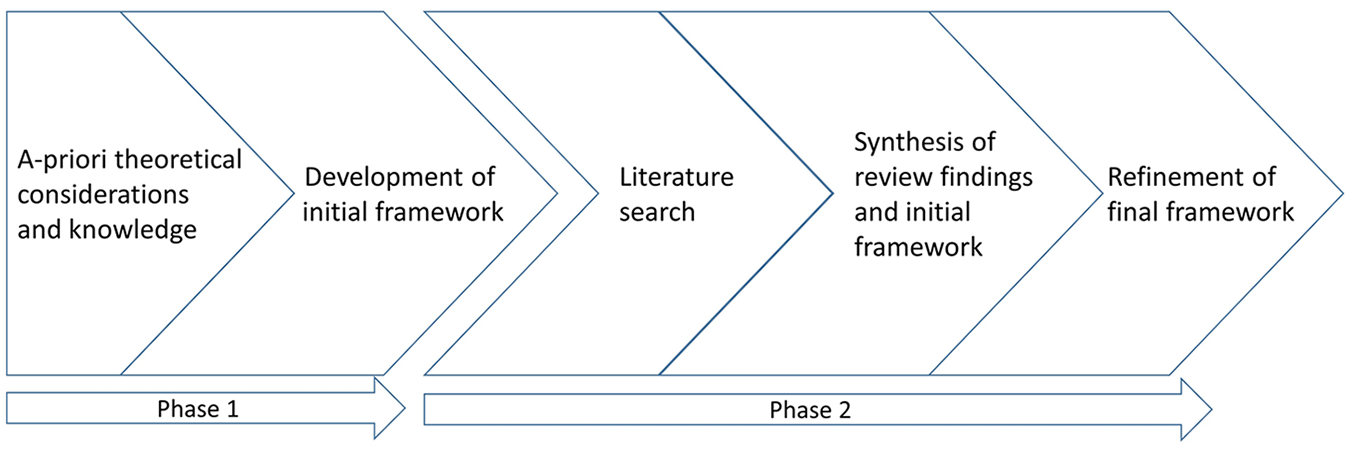
Workflow for the framework synthesis approach.
Developing the Initial Framework
The phase of developing an initial framework is informed by theoretical considerations drawn from sociocultural perspectives on human activity and learning (Vygotsky, 1978). The main reason for this conceptual choice resides in the assumption that collegial approaches to faculty development are deeply relational by nature. Powerful explanations of how this relational nature manifests itself need a coherent conceptualization that is not available in current studies. There are, of course, good reasons why this is the case, such as the fact that CFD is often performed and studied across multiple disciplines and therefore tends to be conceptually fragmented. Another reason is related to the fact that CFD implementation is often derived from pragmatic institutional motivations on quality development rather than ambitions to advance theory development. Thus, even if a great number of studies produced valuable incremental insights on CFD practices, the totality of their findings does not bring about deeper overarching understandings of the mechanisms that might explain fundamental underlying factors. In light of these assumptions, we believe that sociocultural notions can provide more substantial contributions by providing a conceptual grounding for analyzing how fundamental factors and relations evolve through participant interactions and sustaining focus on more pervasive structures surrounding these interactions, which allows us to transcend the situational properties of each individual instance of CFD.
Central to the sociocultural perspective is the idea that human activities such as faculty development can be understood as a set of social practices that faculty members and developers in a community share and that are shaped by social conventions and the cultural tools used in the given practice (Cole, 1998). We define cultural tools as material and conceptual resources that mediate and constitute participants’ actions in practice (Wertsch, 1991). In CFD, we expect to find cultural tools such as rules of conversations, roles, timetables, or work requirements, all of which influence discussions, observations, and reflections on teaching as they unfold as practices in situ. These tools have developed over time and are instilled with the knowledge, norms, and values of the social practices from which they have been derived (Wertsch, 1991).
Based on these theoretical considerations, we define CFD as all forms of formative faculty development practices that involve faculty members discussing and developing their teaching, assessment, or supervision practices with the help of a colleague or faculty developer, who are here referred to as peers. Considering CFD as social practices allows us to account for the complex processes and relations that unfold within these settings. Given our sociocultural view, we presume that CFD practices are enacted in interaction between faculty colleagues using cultural tools. These interactions may, for instance, include group discussions, mentoring meetings, or teaching observations. A sociocultural perspective draws our attention to the question of how these interactions unfold over time and how they contribute to the development of teaching quality (Daniels, 2016). We suggest that constructive CFD interactions are transformed into learning at an individual level, which then leads to changes in teaching practices at the given institution. Our perspective draws our attention toward the way these CFD interactions are shaped by closely intertwined factors that can be grouped into three levels. First, contextual factors refer to the structures, rules, spaces, resources, or policies that organize and delimitate which interactions are possible. Second, relational factors refer to previously existing and in situ emerging relations such as trust, respect, and power dynamics that occur between individual participants in the practice. Third, individual factors refer to the specific characteristics, experiences, beliefs, and conceptions of the individual participants.
The aforementioned cultural tools are considered to be linking elements between the three levels. Taking the example of a set of rules used in a CFD interaction, these rules constitute cultural tools that have developed over time and as part of the social practices of the given institution, discipline, and faculty community. Consequently, these rules incorporate specific norms, values, and conventions from the sociocultural context. When taken into use during a CFD interaction, these rules mediate the relationships between the participating faculty members as well as each participant’s individual understanding, which may lead to changes in their teaching practices. At the same time, the specific relational dynamics and individual interpretations of the rules during CFD interactions are constantly negotiated and thereby incrementally adjusted and changed by the participants as an ongoing development of these cultural tools. It is our intention in this study to discuss this conceptual perspective in relation to our own findings from the review and suggest practical implications and further research exploring this sociocultural grounding in the examination of CFD practices.
This definition of CFD enables us to incorporate the wide range of terms and concepts used in the literature into one comprehensive understanding of all faculty development practices that make use of collegial structures to improve teaching practices in higher education. This reconciliation highlights the commonality of various approaches used in practice but also makes it possible to account for the specific characteristics of each approach. Furthermore, our definition implies that CFD practices have an inherently formative purpose of supporting the development of teaching performance. This focus on the formative aspect is important in order to delineate CFD from those practices that might entail similar elements, such as teaching observations, but that serve purely summative purposes. For this reason, our definition of CFD explicitly excludes those practices that involve peer observations and reviews of teaching for purposes of quality assurance, accountability, ranking, or academic promotions and appointments.
Literature Search and Analytic Categories
In the next phase of the framework synthesis approach, we conducted a literature search based on the definition developed in the initial framework. We aimed particularly at extracting findings from qualitative studies that would provide us with insights into what factors shape CFD and how it unfolds in practice. We identified relevant literature through a multi-step search strategy. On January 14, 2019, we conducted a systematic search of twelve international databases covering various geographical areas: (a) ERIC, (b) ISI Web of Science, (c) ERC, (d) IBSS, (e) PsycINFO, (f) Idunn 1 (Scandinavian University Press database), (g) Scopus, (h) ProQuest Sociological Abstracts, (i) Medline, (j) British library ETHOS (U.K. theses), (k) EBSCO Open dissertations (U.S. theses), and (l) Australian library TROVE (Australian theses). Beside the main educational databases, we included databases in psychology, medicine, and sociology, as these databases also cover educational publications in their disciplines. Moreover, we included several databases of theses in order to identify potentially relevant literature that was not published in traditional publication channels.
Considering the idiosyncratic use of terminology in the literature on CFD, we focused our search on all studies that addressed CFD, irrespective of which terminology they used. This search strategy entailed a stepwise development of Boolean search parameters to cover most possible combinations of terminology that might be used to refer to CFD while delimitating the search from irrelevant literature. The selection of keyword strings was informed by our previous knowledge of the literature and our conceptual considerations. All search parameters were initially tested and further adjusted before the final search strategy was devised and applied to all the databases. Table 1 provides an illustration of the final parameters. Additional references found in previous review studies and handbooks were included in the initial set (Chism, 1999; Klopper & Drew, 2015; Sachs & Parsell, 2013; Teoh et al., 2016; Thomas et al., 2014). The initial 981 database hits were exported to an Excel file, where the first author completed the initial screening for duplicates and by title.
Search parameters (illustrated on the search in ERIC, January 14, 2019)
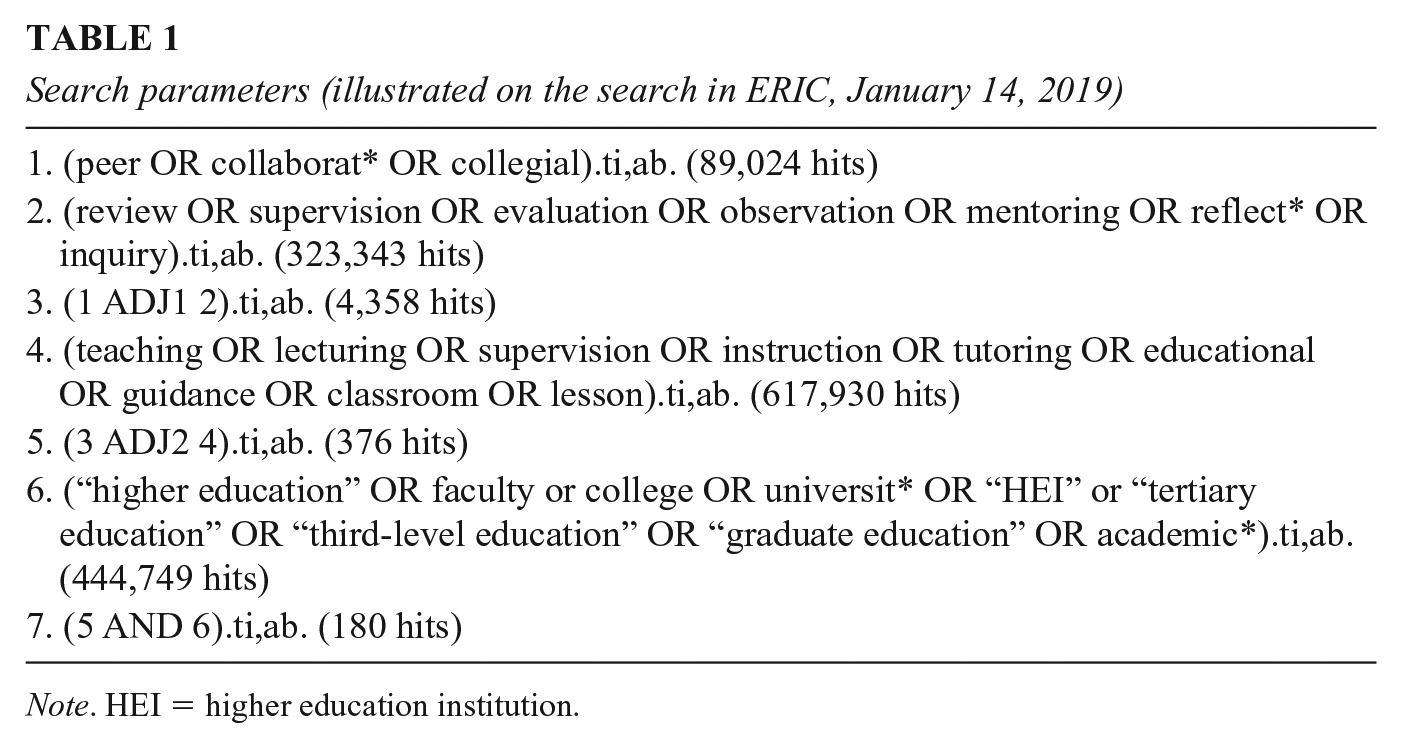
Note. HEI = higher education institution.
The third screening by abstract was conducted by the first and third authors using criteria for inclusion and exclusion (see Table 2). To be included, papers had to be qualitative studies that focused on practices of faculty members and/or faculty developers who either observed and/or discussed teaching or supervision practices. As required by the framework synthesis method, studies with solely quantitative findings were excluded due to their predominant focus on measuring individual variables rather than revealing complex relations across the three conceptual levels in the initial framework (e.g., White et al., 2014; the data presentation was limited to correlations and group-level differences regarding academics’ willingness to participate in CFD).
Inclusion and exclusion criteria
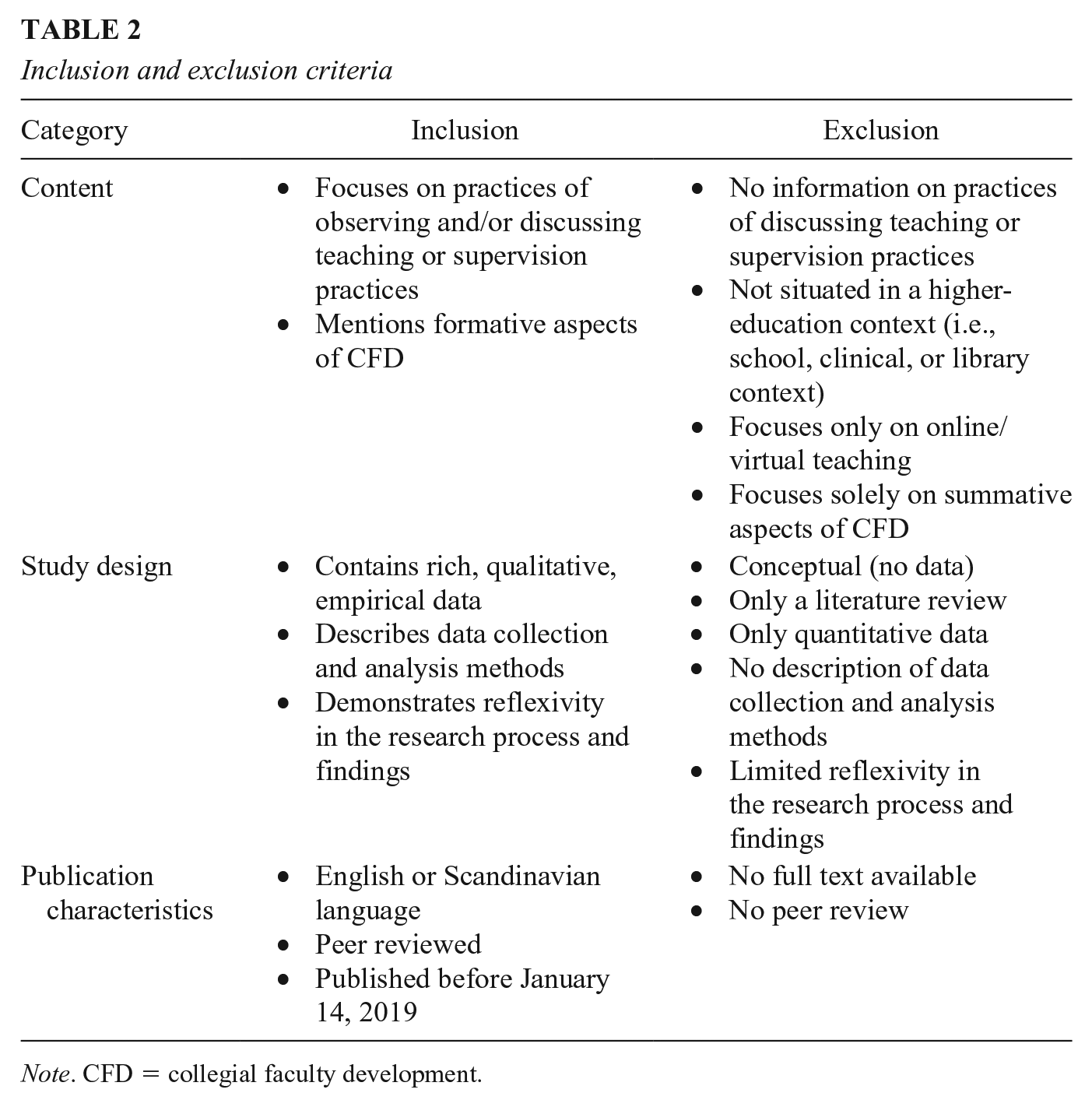
Note. CFD = collegial faculty development.
We also excluded studies that referred to faculty teaching primarily in online environments or outside of higher education contexts, such as in clinics, schools, or libraries (e.g., Alabi & Weare, 2014; study on CFD for librarians). In line with our definition of CFD as a practice aimed at the development of teaching quality, we further narrowed the selection down by including only studies that focused on formative aspects of CFD and excluding those that mainly addressed the performance evaluation of faculty (e.g., Nair et al., 2015; study on the use of peer review for the appraisal of teaching performance). The fact that qualitative research is often presented in a less systematic manner required us to set a threshold for methodological quality that allowed for the sufficient inclusion of relevant studies without compromising the quality of our own analysis. Based on the quality criteria presented by Tong et al. (2007), studies were excluded if they did not describe any methods used for data collection and analysis or if the authors did not demonstrate any reflexivity concerning the research process and findings. As suggested by Berger (2015), reflexivity is one of the most important strategies for quality control in qualitative research. By disclosing one’s own background, worldview, and social position, reflective researchers allow the reader to understand how they construct the world, pose questions, and interpret data; this, in turn, contributes to the credibility of the findings and the limitation of personal bias.
A sample of 20 abstracts was reviewed for inclusion by both raters, which led to 17 concurring decisions. This interrater reliability test was used to discuss divergence and calibrate the inclusion criteria before analyzing the complete data set. The remaining 81 articles were divided between all the coauthors, who read the full texts to determine inclusion or exclusion for the final synthesis. Figure 2 shows the number of citations at each screening step and the citations removed at the title, abstract, and full-text screening stage. A total of 48 full texts were included in the final data set (see full overview in the Supplemental Table S1 in the online version of the journal). All exclusions at the full-text level were cross-checked with at least one other author.
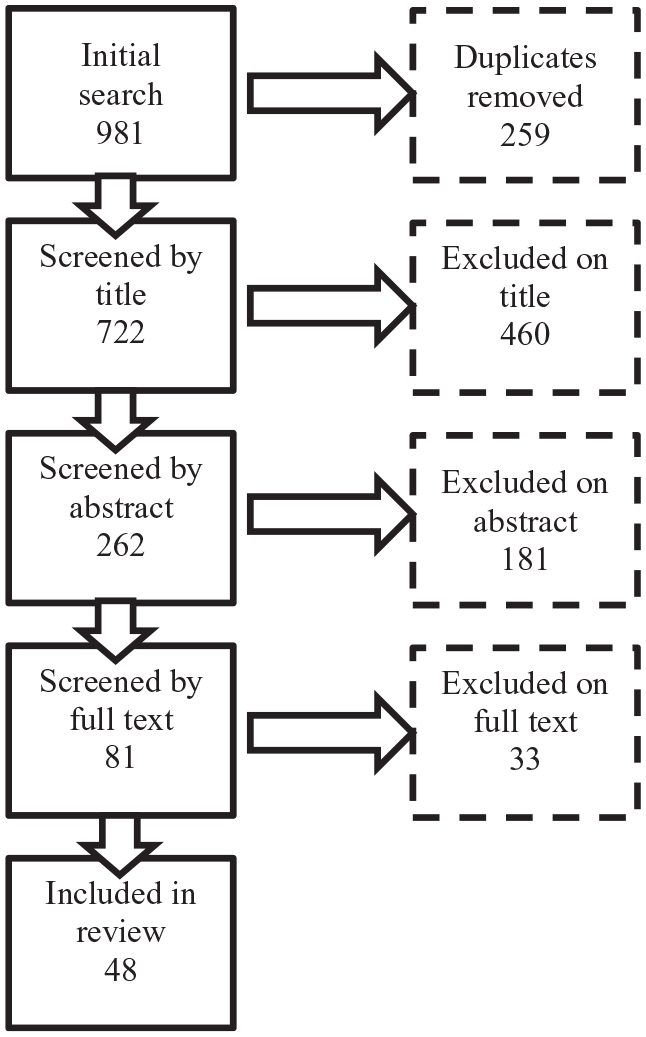
Search and screening process.
Synthesis Process
Based on our initial framework, we analyzed the original findings of the 48 included studies according to the factors they highlighted as the most relevant for shaping the CFD practices. Even though our framework underscores the importance of the interconnectedness between the different factors, we maintained the division into three categories for analytical purposes: (a) contextual factors in the sociocultural context, (b) relational factors between the participants, and (c) individual factors of the participants. Table 3 provides descriptions of the different categories and examples of data that represent these analytic categories.
Analytical categories based on the initial framework of CFD practices
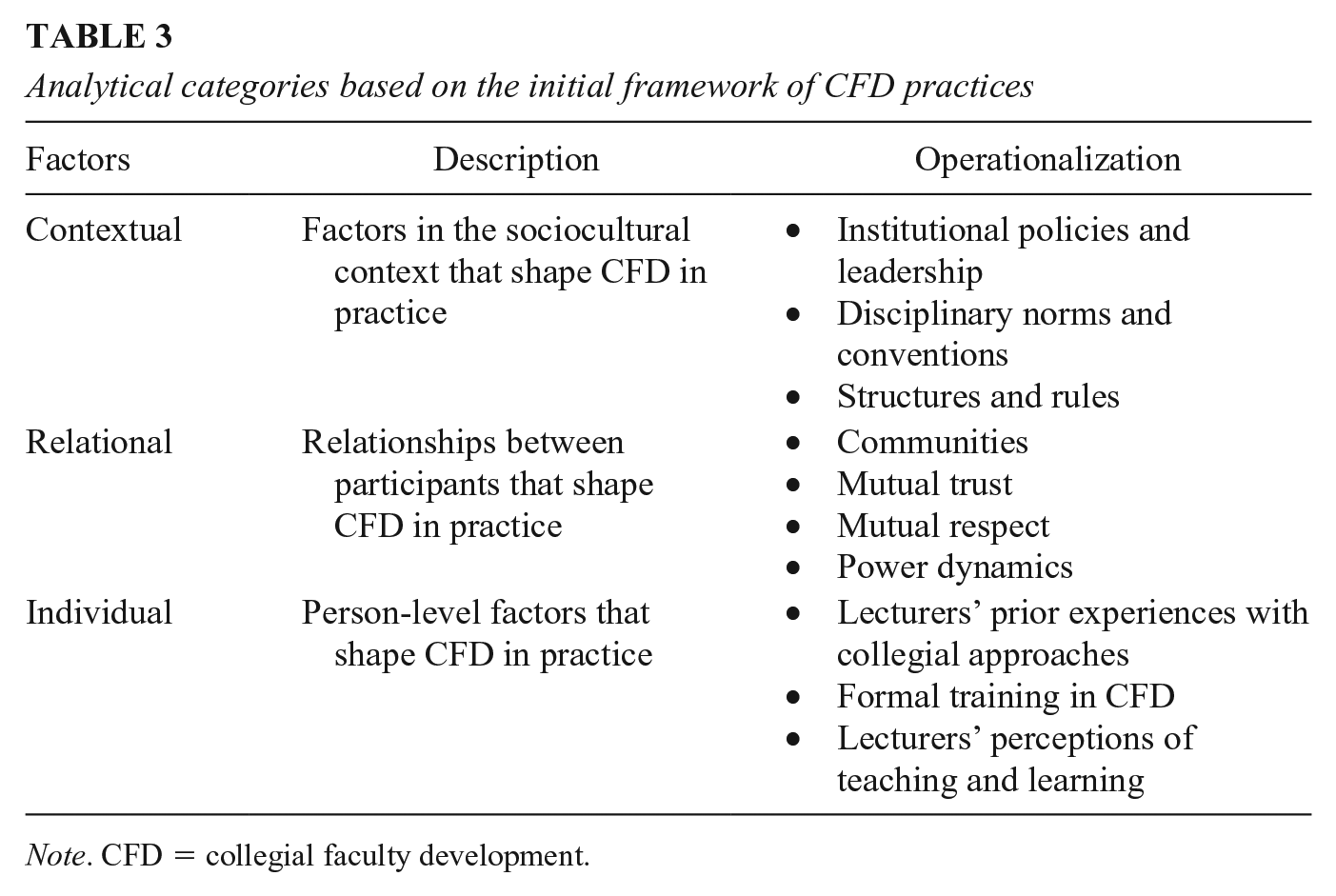
Note. CFD = collegial faculty development.
All the authors tested the framework by using it to analyze three articles. This led to further adjustments of the framework due to additional conceptual considerations and newly emerging themes. Each author was responsible for analyzing an equal share of articles, and the first author familiarized herself with all the articles. Regular author team meetings were conducted to discuss coherence, outliers, and emerging themes.
Positionality Statement
To increase the transparency of the research process, it is important to give an open disclosure of our own positionality regarding the chosen methods and theories. All the authors have a disciplinary background in educational science and work as faculty developers in higher education. This review study has been conducted as part of an intervention project aimed at creating and investigating sustainable CFD practices in different academic communities in Norwegian higher education. The theoretical framing of the project as well as most previous research by the authors are rooted in the tradition of sociocultural perspectives on human activity and learning (Vygotsky, 1978). This tradition also includes a deep appreciation of qualitative methodologies and the conviction that the study of complex relations and practices involved in learning and development requires methods that allow us to capture these phenomena in comprehensive ways. As is the case with any research process, these preconceptions and experiences have shaped our approaches to reviewing and interpreting the literature used in this study.
Results
Characteristics of the Literature
Of the included 48 articles, the primary authors were predominantly from the United Kingdom (16), Australia (14), and the United States (8), in addition to authors from Canada (3), Norway (2), Ireland (2), Portugal (1), Malaysia (1), and Saudi Arabia (1). The earliest record in the data set was from 1995, with increasing numbers of publications over the following decades (see Figure 3 for an overview of the publications per year).
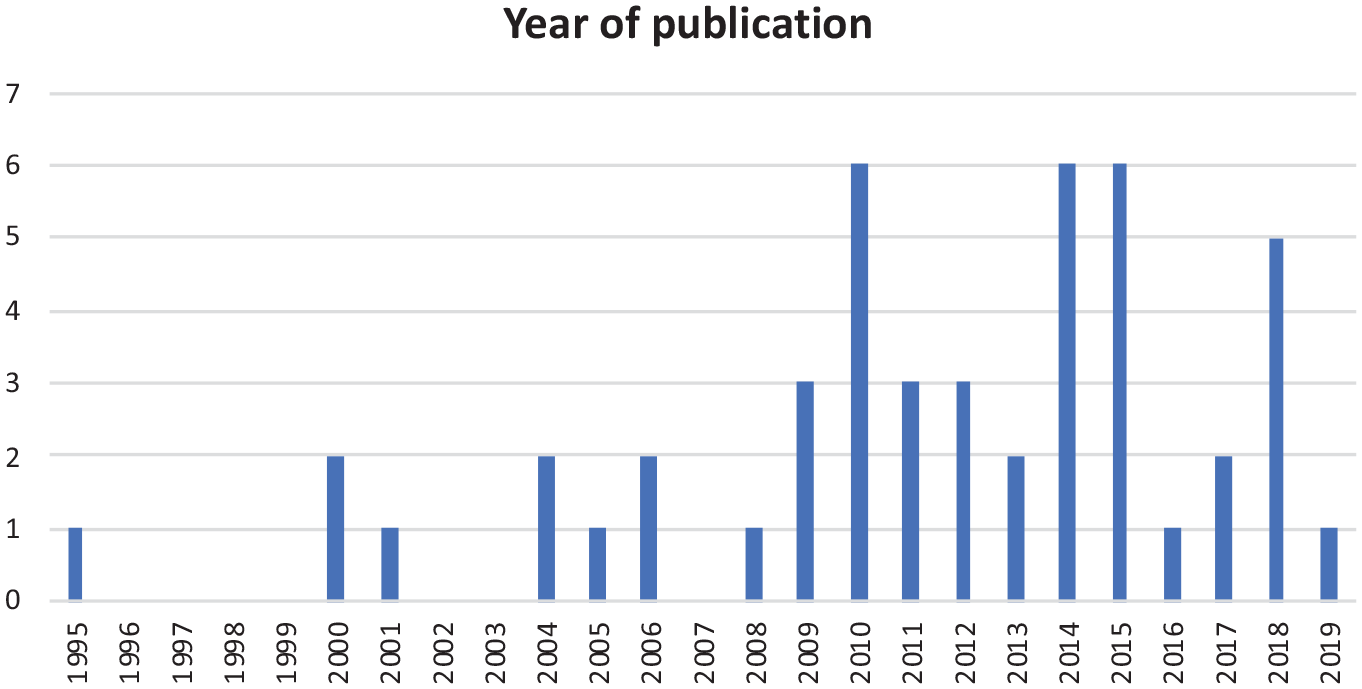
Number of included articles by publication year.
Of the whole set, 33 contributions were categorized as “intervention studies” that focused mainly on the evaluation of a CFD instrument or model, and a further 12 were categorized as “external research studies” that addressed research problems that went beyond the evaluation of a CFD instrument. Finally, three contributions were categorized as “practitioner reflections” and primarily included reflections and experience with CFD practices or tools from participants’ or faculty developers’ viewpoints. The methodologies used in the articles were qualitative (35) or mixed methods (13). The majority of the studies investigated CFD in multidisciplinary contexts (20), followed by studies that focused on the disciplinary contexts of health care (14), business and administration (5), educational science (4), languages (2), and STEM (3).
We also identified the main theoretical traditions drawn upon by the individual studies. The traditions were included only when studies explicitly established links to specific theories (e.g., reflective practice by Schön, 1983; situated learning by Lave & Wenger, 1991) or employed theoretical notions drawn from wider theoretical traditions (e.g., Byrne et al., 2010, who use notions like critical discourse and learning conversations from the literature on professional learning and development). Studies that referred only to empirical or practical literature were marked with “No clear link to wider theoretical tradition,” which accounted for over one third of the articles (19). The other studies each connected to one or multiple theoretical traditions that were loosely grouped and labelled: professional learning & development (13), reflective practice (10), situated learning (5), observational learning (4), scholarship of teaching and learning (3), teachers’ conceptions and approaches (3), organizational learning (2), leadership theories (2), experiential learning (2), academic cultures (2), collaborative learning (2), and activity theory (1). See supplementary Table S1 for an overview of these groupings in the online version of the journal.
The main term used to describe peer review practices differed considerably across the literature. A majority of 23 contributions used POT, and nine contributions used PRT. In addition, 14 other terms were used: teaching observations, educational peer review, faculty study groups, partnership-enhancing practice, peer collaboration, peer development, peer mentoring, peer observation partnership, peer partnerships, peer reflective supervision, peer supervision, peer-supported review of teaching, reflective collaborative practice, and teacher inquiry community.
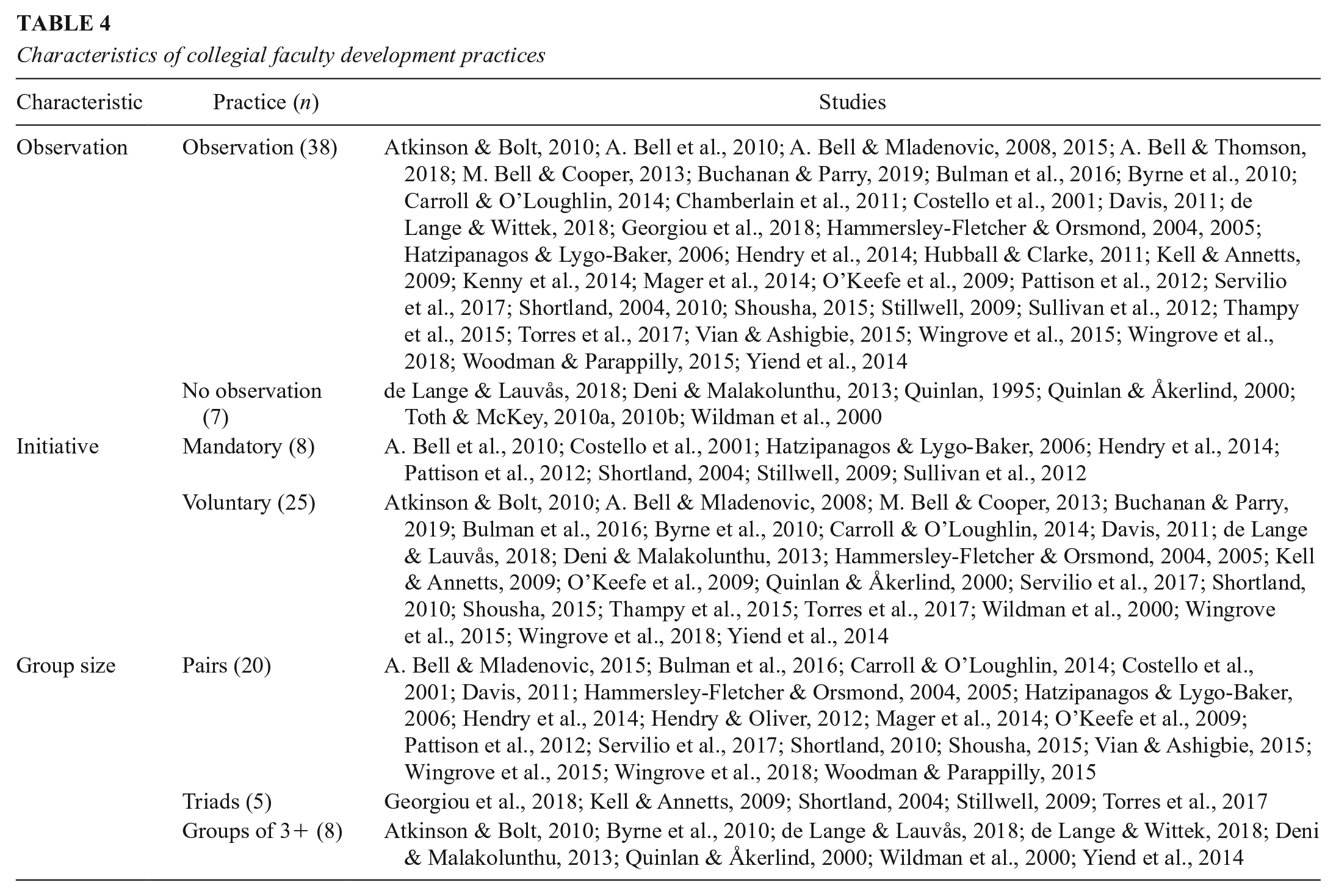
All but three papers investigated specific CFD practices, and the remaining studies focused on CFD practices in a more general sense (e.g., Ambler et al., 2014, who investigated the role of communication in CFD without describing a specific practice). The level of detail provided on the rules, guidelines, and process of implementation in the CFD practices differed considerably across the articles. The practices differed according to the following characteristics: (a) observation versus no observation, (b) mandatory versus voluntary participation, and (c) number of participants. Table 4 provides an overview of these characteristics and notes related articles.
Characteristics of collegial faculty development practices
Factors That Shape Collegial Faculty Development
The analytical categories we extrapolated from our initial framework provided a good starting point for the empirical review. In line with the framework synthesis method, we refined the initial categories to include several themes and topics that appeared during the analysis. The results of the empirical review served to address the research questions of how collegial approaches to faculty development were described in the research literature and what factors shaped those approaches. In the next step, these findings are synthesized and used to refine our conceptual framework of CFD practices.
Contextual Factors
The following contextual factors were highlighted in the reviewed literature: (a) institutional climate and integration into existing practices, (b) institutional leadership, (c) organization of CFD across disciplines, (d) rules and materials, and (e) spaces and temporal sequencing. Many of these topics are closely intertwined with other relational and individual aspects, but they are presented here as contextual factors that are primarily located in the sociocultural context of the CFD practices. Throughout the presentation of these findings, we highlight how different cultural tools have mediated CFD practices as described in the literature.
Institutional Climate and Integration Into Existing Practices
The literature shows that universities implement CFD in vastly different ways. These differences are related to different institutional practices that some authors refer to as the “microclimates” of the given department or institutions (Ambler et al., 2014). From a sociocultural perspective, these climates are shaped by the social conventions, norms, and cultural tools that mediate the ways in which the staff in the given department engage with each other and the CFD process. Ambler et al. (2014, p. 71) suggested that an especially open climate “built on trust, support and common goals facilitates the kind of open communication that enables peer review to be successful.” Similarly, Wingrove et al. (2015) argued that the general success of CFD is linked to institutional climates that value reflective practices among faculty.
Among the contextual factors that impede the long-term success of CFD is the insufficient integration of CFD into existing departmental practices and future plans as well as failure to incorporate the increased workload of such implementation. As noted by several institutional leaders, integrating CFD into staff work plans “created time for engagement, emphasised accountability and signalled the value of teaching” (Wingrove et al., 2018, p. 374). This was supported by other studies that emphasized how integrating CFD into staff work plans helps academics recognize CFD as a fundamental part of their scholarly teaching practice (Shousha, 2015). The institutional work plans of the faculty are important cultural tools that influence the ways CFD practices unfold in the given context.
Institutional Leadership
Other important contextual factors highlighted in the literature are the institutional leadership and the rationales that underlie the implementation of CFD. In many cases, CFD processes are initiated in a top-down manner by institutional leaders (e.g., A. Bell & Mladenovic, 2008; M. Bell & Cooper, 2013; Byrne et al., 2010; Mager et al., 2014). The institutional aims and strategies are examples of cultural tools that have developed over time and therefore encompass the norms and values shared by the members of the given institution. In turn, these aims shape the way leadership organizes, resources, and communicates about CFD. Universities often implement CFD with the formative aim of enhancing long-term professional development and establishing strong teaching communities among faculty staff (Byrne et al., 2010). These aims are often paired with summative goals dictated by national requirements, such as the subject review by the Quality Assurance Agency for Higher Education in the United Kingdom, in which whole institutions are assessed in terms of their teaching quality (Costello et al., 2001). In other cases, CFD programs are initiated and organized by the faculty themselves. Such bottom-up CFD initiatives are often based on common concerns about how to improve teaching practices in response to new demands from the institutions (Kenny et al., 2014). Some have argued that a combination of bottom-up initiatives and strong institutional support contributes to the successful and sustainable implementation of CFD (A. Bell & Mladenovic, 2015; M. Bell & Cooper, 2013).
Concerning the role of the leadership more generally, it is assumed that the “attitudes of heads of department toward [CFD] could influence the nature of staff engagement with it” (Chamberlain et al., 2011, p. 196). Leaders that were explicit about their expectations for faculty participation in CFD and that allowed staff to participate in the cocreation of CFD guidelines contributed to increased engagement with the process among the faculty (Chamberlain et al., 2011). Such engagement processes are, however, difficult to manage directly. Some authors are wary of institutional leadership forcing participants into collegiality (Ambler et al., 2014). This relates to issues of faculty fearing that institutionally coordinated CFD processes would restrict their academic freedom in choosing their own pedagogical approaches to teaching. In the most extreme cases, faculty complied and filled in the documentation they were supposed to provide without actually participating in observation or engaging in any deeper reflections of their teaching (Shortland, 2004).
Organization of CFD Across Disciplines
There is a relative silence on the role of the disciplinary context in CFD literature, which suggests that the conventions and cultural tools used in CFD are often taken for granted and therefore not explicitly stated by members of the given discipline. This applies to not only faculty participants but also the researchers conducting the study. The cultural tools and rules for organizing CFD within or across disciplinary contexts are therefore rarely studied in a systematic manner. Our review shows indirectly, however, that the way faculty are paired up across disciplines has an important influence on the way CFD unfolds and how participants experience the process.
On one hand, several studies showed that faculty often found it beneficial to see a peer teach a related or similar subject (A. Bell & Mladenovic, 2015; Davis, 2011) and to get feedback relevant to their discipline (Hatzipanagos & Lygo-Baker, 2006). Conducting CFD with faculty in the same discipline is also argued to generate more substantive conversations about teaching that are rooted in the subject matter of the discipline. This is particularly important in disciplines that use specific types of pedagogy that require insider knowledge from the reviewers, such as bedside teaching in nursing or experimental demonstrations in physics (Buchanan & Parry, 2019; Georgiou et al., 2018; Mager et al., 2014).
On the other hand, several studies showed that sharing teaching experiences is equally valuable across disciplines. Cross-disciplinary observation makes it clearer to members of a discipline what different values they hold (Quinlan, 1995). One study reported that cross-disciplinary CFD usually focuses more on student experience, but intradisciplinary CFD focuses more on the subject and its delivery (Hammersley-Fletcher & Orsmond, 2004; Yiend et al., 2014). Moreover, some have suggested that the primary goal of CFD is to share teaching methods and to improve opportunities for collaborative reflection on teaching, which is not bound to one discipline (de Lange & Wittek, 2018; Vian & Ashigbie, 2015). It is also acknowledged that a dominating common set of teaching values within one discipline might silence the most “radical lecturers” and reduce the variety of teaching approaches (Quinlan, 1995).
Rules and Materials
The literature revealed that rules and materials used in CFD constitute important cultural tools that shape the ways participants interact with each other. These tools are considered part of the context, as they are developed as part of the common practices in the given institution or discipline and therefore incorporate the norms, knowledge, and values of the given context. Specific sets of rules and guidelines for how to give feedback and what to assess during observation situations were perceived as helpful in keeping effective time and maintaining a focus on the pedagogical side of the problems (de Lange & Lauvås, 2018; de Lange & Wittek, 2018; Torres et al., 2017). Others reported that formalizing the CFD process created a more stressful environment that impeded their freedom (Hammersley-Fletcher & Orsmond, 2004). Generally, observation guidelines were seen as most useful when they were flexible enough to accommodate various teaching styles (Mager et al., 2014).
In addition, the materials faculty had to generate upon completion of CFD were cultural tools that had a structuring effect on the process. Where faculty were required to use material from the CFD process for developing their teaching portfolio or reflection notes, they were encouraged to reflect on changed knowledge, attitudes, and beliefs about teaching (A. Bell et al., 2010; Woodman & Parappilly, 2015). In CFD processes that involved extensive paperwork, however, this was “perceived to add a managerial layer that is not productive and may be obstructive to dialogue between peers” (Lomas & Kinchin, 2006, p. 210).
Space and Temporal Sequences
Space was mentioned as another relevant factor in CFD practices. It was suggested that lecture rooms are often understood as spaces of private communication between faculty and students and where observing peers could be experienced as an intruder “bursting in” in a threatening sense (Ambler et al., 2014, p. 79). Others argue that the limited space and time of the observation session put the focus only on the role of the lecture, but there are “many good aspects of teaching which may not necessarily be identified by this process. For example, the extent to which a lecturer is available to talk to students” (Lomas & Kinchin, 2006, p. 210). In addition, many important peer exchanges about teaching take place outside of formal CFD spaces, for example, during lunch or when walking to the classroom together (Ambler et al., 2014).
Another factor was the temporal sequencing of the CFD process (de Lange & Wittek, 2018). Hatzipanagos and Lygo-Baker (2006) found that it was crucial that the CFD process include enough time to debrief and discuss peer observations in order to have a developmental effect. Moreover, observations early in the year made it easier for observed faculty to reflect and act upon feedback, as they became less receptive to feedback and deep reflection toward the end of the academic year (Hammersley-Fletcher & Orsmond, 2005).
Summary of Contextual Factors
In summary, several contextual factors shape CFD practices. These factors lay primarily at the level of the institution, such as leadership models, work plans, and allocated resources. These institutional factors are in turn closely intertwined with factors at the national level (e.g., national quality assurance requirements) or the disciplinary level (e.g., discipline-specific teaching standards).
The findings show how these interrelated contextual factors influence the ways in which CFD is organized in different contexts, which in turn shape the actual interactions that unfold between faculty and, eventually, what individual participants will gain from the process. These insights help us refine our understanding of the conditions under which CFD is likely to contribute to the development of participants’ teaching quality.
Even though a theoretically unlimited number of contextual factors may be relevant for CFD, we have presented only those factors that have been most consistently highlighted in the literature. Other contextual factors that might be important but did not receive specific attention in the original literature related to questions of whether differences exist in CFD by geographical location or whether CFD differed between teaching-oriented and research-oriented institutions.
Relational Factors
The following relational factors were emphasized in the literature: (a) faculty communities, (b) trust, (c) credibility and mutual respect, and (d) power dynamics. These factors either pertain to previously existing relations between the individuals before involvement in CFD or relations that emerged through participation in CFD.
Faculty Communities
Positive relations between CFD and the development of faculty communities were widely reported and had especially positive outcomes on professional networking (Ambler et al., 2014; Costello et al., 2001; Servilio et al., 2017). The communities developed through CFD often appear to function as a refuge in which faculty explore and develop their teaching in a safe environment. A crucial factor is that the CFD process entails nonthreatening feedback and sufficient time to discuss in a confidential setting (Buchanan & Parry, 2019). The guidelines and formats in which feedback is provided act here as cultural tools that mediate the ways in which faculty interact in both the CFD meetings and their wider professional context.
Creating safe faculty communities helps faculty become more comfortable trying something new and sharing ideas outside their departmental context (Wildman et al., 2000). Similarly, the development of cohesion and a sense of collegiality was reported in other research (Atkinson & Bolt, 2010; M. Bell & Cooper, 2013). Some argued that the staff’s professional identity of belonging to a community of faculty rather than only to a disciplinary subject community (e.g., historians, engineers) contributes to their CFD engagement (Lomas & Kinchin, 2006).
The development of trustful faculty communities is closely related to some contextual factors such as the way CFD is linked to staff appraisal processes. Keeping CFD separate from summative institutional staff development processes is essential for maintaining its formative effect on teaching quality. These summative assessment procedures are forms of cultural tools that mediate how faculty may engage with the ideas they are presented with during CFD meetings.
Trust
Another prevalent topic among relational aspects was the role of trust between participants as central to the success of CFD (Carroll & O’Loughlin, 2014; Hammersley-Fletcher & Orsmond, 2005; Hatzipanagos & Lygo-Baker, 2006; Hendry et al., 2014; Shousha, 2015; Wingrove et al., 2015). CFD can be very exposing, as faculty may fear the loss of self-image, status, and even their job (Ambler et al., 2014). To increase trust, the topics discussed in CFD sessions are often held as confidential (Bulman et al., 2016). It is also beneficial if faculty can choose peers and teaching sessions to be observed (Carroll & O’Loughlin, 2014; Costello et al., 2001). Other ways of increasing trust are to make the CFD process as transparent as possible (Mager et al., 2014), to arrange constructive preobservation meetings (Pattison et al., 2012; Sullivan et al., 2012), and to provide faculty with control over aspects of their teaching on which they wish to receive feedback (O’Keefe et al., 2009; Stillwell, 2009). All these rules and guidelines are examples of cultural tools that mediate the ways participants interact during CFD and influence whether trusting relationships are formed.
Trust was important not only for the observed faculty but also for the observers giving feedback. Having to provide honest feedback on a less-than-perfect teaching session can lead to awkward moments and can cause considerable anxiety (Hammersley-Fletcher & Orsmond, 2005). One strategy for making such situations less threatening was to let the observed faculty assess their own teaching first and give them the opportunity to identify challenges by themselves before receiving feedback from the observer. Interestingly, one study also showed that too much emphasis on friendliness and politeness can hinder critical and honest feedback (de Lange & Wittek, 2018).
Credibility and Mutual Respect
Similarly, the roles of credibility and mutual respect were often mentioned as important to CFD practices. Not all faculty feel they have the expertise to provide feedback on another peer’s teaching. For this reason, in some CFD models, professional faculty developers or independent experienced observers are invited to do observations or to supervise ongoing CFD (Atkinson & Bolt, 2010; Buchanan & Parry, 2019). Some reported that the use of experts helped move the focus away from observing toward reflecting on underlying assumptions, beliefs, and values (Yiend et al., 2014). Moreover, including educational experts allowed the participants to “avert a system whereby the process of observation becomes too cosy” (Hammersley-Fletcher & Orsmond, 2004, p. 496). In line with this idea, it was problematic when observing peers did not have professional respect for their colleagues (Ambler et al., 2014; Hendry et al., 2014) or general respect for teaching and pedagogical development (Wildman et al., 2000).
Power Dynamics
In addition to trust, respect, and credibility, power dynamics were also influential on CFD processes. Some studies suggested conducting CFD with participants from across different disciplines reduces impeding power dynamics and potentially negative impact on internal departmental relationships (Hammersley-Fletcher & Orsmond, 2005). The involvement of professional faculty developers also helped avoid negative power dynamics (Atkinson & Bolt, 2010; Buchanan & Parry, 2019). Likewise, pairing faculty with equal status helped create safe environments, but unequal pairings gave CFD a feeling of appraisal (Costello et al., 2001). When peers of unequal experience and status participate in CFD, the junior faculty sometimes takes on a listener role rather than being a proactive participant (Deni & Malakolunthu, 2013). In the worst case, it can feel patronizing or humiliating to have a colleague evaluate and offer advice on one’s teaching (Costello et al., 2001; de Lange & Lauvås, 2018). Byrne et al. (2010) suggested that bottom-up approaches to CFD in which faculty can participate voluntarily and select their own peers helps counteract negative power imbalances. These different ways of organizing CFD within an institution are instances that illustrate clearly how closely relational factors such as power dynamics are intertwined with the contextual factors described above.
Summary of Relational Factors
In summary, several relational factors are relevant for CFD practices. Some of these relationships are relatively stable and are maintained through the use of cultural tools such as organizational hierarchies and rules that have developed over time. Faculty communities, for example, are relational structures that are shaped by the shared goals, spaces, and activities of a group of individuals. They are considered stable structures because they do not cease to exist if a faculty member stops participating in the community. Other relational factors are more dependent on the actual engagement of individual participants. For example, trust results more directly from the in situ interactions between two or more individuals. These factors might be shaped by previously existing relations and organizational structures, but they are always enacted in concrete interactions.
One relational factor that might be important for CFD but did not receive specific attention in the original literature pertains to the relations between staff and students and how they may shape the faculties’ engagement in CFD. It was also surprising that more focus was not given to the actual interactions and the content of feedback provided during concrete CFD situations. Finally, we noted a relative silence on the temporality of these relations and about questions such as how much time it takes for participants to engage in and benefit from CFD.
Individual Factors
Individual factors were generally highlighted less often in the literature. However, two topics in particular were frequently emphasized among the many possible individual factors that might shape CFD: (a) faculty’s prior experiences and pedagogical training and (b) their conceptions of teaching and learning.
Prior Experiences and Pedagogical Training
Generally, CFD helped faculty feel reassured and less isolated (Bulman et al., 2016; Georgiou et al., 2018; Hendry et al., 2014; Servilio et al., 2017; Thampy et al., 2015; Toth & McKey, 2010a). Some authors suggested, however, that faculty members differ in their CFD needs based on their previous teaching experience and their type of faculty appointment, noting that a needs assessment can be helpful in designing CFD schemes (Toth & McKey, 2010a). Toth and McKey (2010a) gave an example of different CFD needs when they discussed how part-time faculty struggle more with keeping up with changing curricula and requirements, which generated an increased need for CFD as a way to align their pedagogical approaches with their colleagues.
In another study, it was considered problematic when a CFD pair or triad did not include an experienced faculty member, as “experience is viewed as a resource” (Hammersley-Fletcher & Orsmond, 2004, p. 496). Lecturers with the most experience are often selected as observers, but some studies argued that those with little experience also have an important contribution to make (e.g., new ideas), and experienced staff could gain just as much from being observed (Ambler et al., 2014). In some cases, inexperienced faculty perceived the CFD process as unfamiliar and intimidating at first but usually gained confidence during the process when they recognized similarities in their colleagues (Hatzipanagos & Lygo-Baker, 2006; Hendry et al., 2014). Some suggested that junior staff especially benefit from seeing senior staff facing similar issues with disengaged students, which made them feel like they were “not the only person who faced challenges in their teaching” (Hendry et al., 2014, p. 325).
Several studies addressed the role of training participants for the CFD process. This training was generally perceived to be important (Shortland, 2010; Sullivan et al., 2012; Thampy et al., 2015), but others warned that it can also cause you to “become overtrained and if you’ve been trained to look for specific things you’re then going to perhaps miss something that could be vitally important” (Hammersley-Fletcher & Orsmond, 2004, p. 498).
Conceptions of Teaching and Learning
Even though it was rarely studied explicitly, the literature showed that different conceptions of teaching and learning have an influence on how faculty engaged with CFD practices. Being a reviewer helped faculty consider different ideas about teaching methods (Costello et al., 2001; Hatzipanagos & Lygo-Baker, 2006). Reviewers tended to be especially attentive to pedagogical aspects that contrasted with or seemed to be of concern in their own practices and conceptions (Torres et al., 2017). Many faculty members cherished personal beliefs and values about teaching and learning that affected their decisions based on what they would prefer and allow in their classes (Deni & Malakolunthu, 2013). If fundamental beliefs about teaching and learning were not considered, it was likely that CFD participants made only surface changes in their practices rather than engaging in deep changes based on their convictions. For productive communication in CFD, faculty colleagues must respect each other’s different pedagogical conceptions instead of trying to persuade the other of what they believe is right (Ambler et al., 2014).
Concerning the changeability of pedagogical conceptions, one study suggested that professional faculty developers modeling constructive feedback interactions during CFD meetings could help faculty develop their reflexivity and ability to provide reflected feedback on their colleagues’ teaching (Yiend et al., 2014). Another study showed that many believe people are either reflective or not, and that only the former kind will reflect on their teaching through CFD (Hammersley-Fletcher & Orsmond, 2005). When faculty were passive rather than proactive and let CFD just “happen to them,” they tended to show little development in their teaching (Ambler et al., 2014, p. 72). Among the especially impeding conceptions is the belief that talking about your teaching is a sign of weakness and that teaching quality is purely determined by the faculty’s subject knowledge rather than their pedagogical understanding (Ambler et al., 2014).
Summary of Individual Factors
The review shows that the development of individual factors is closely related to the interactions that unfold during CFD. On one hand, participants’ individual characteristics such as previous experiences and conceptions influence how they understand their role in the CFD process and how they interact with their peers during CFD meetings. On the other hand, the participants’ individual conceptions will develop further through their participation in these meetings. For instance, faculty might collect new pedagogical experiences during CFD meetings and develop new ideas about what good teaching entails. These experiences and ideas will then shape their engagement in further CFD practices.
A number of individual aspects, particularly participants’ gender and socioeconomic and cultural backgrounds, received little attention in the literature even though they might play a relevant role in CFD. As most of the included studies did not include information on the participants’ background, it is difficult to address the important question of how homogeneous versus heterogenous CFD group compositions might shape the participants’ interactions and the ways in which they engage in the development of their teaching. Finally, the literature provides little insight into the role of perceived teaching autonomy and how this may influence faculty engagement in CFD.
Practical Recommendations based on Synthesis
Based on the synthesis of the empirical findings, we created an overview of recommendations for conducting CFD in practice. The overview presented in Table 5 allows leaders and participants to analyze potential reasons why CFD does or does not yield the desired outcomes in their specific contexts. Moreover, practitioners can use the recommendations when planning and implementing CFD. We have deliberately refrained from describing a best-practice approach to CFD, as our theoretical approach suggests that it is impossible to outline a solution that is universally effective. Instead, practitioners are advised to consider our recommendations according to their own knowledge and make informed judgments about the given context, participants, and institutional goals.
Practical recommendations for CFD
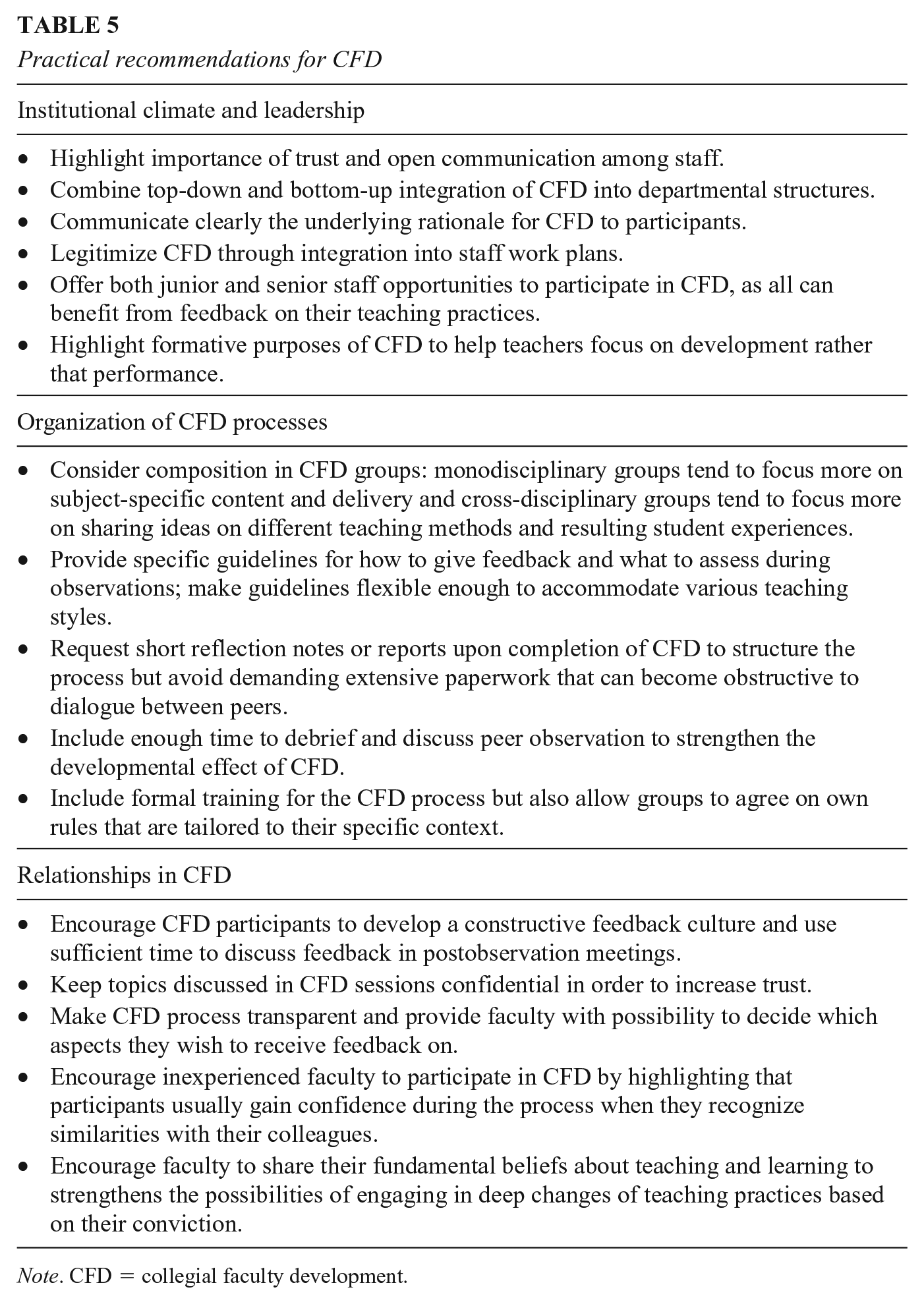
Note. CFD = collegial faculty development.
Discussion
In this review study, we have synthesized findings from the research literature on collegial approaches to faculty development and provided a theory-informed understanding of the process of CFD and the factors that shape it. The findings have generated a more refined image of the factors that shape CFD practices. In the following, we use these empirical insights to further develop our conceptual framework of CFD.
Refining the Conceptual Framework
As suggested by the initial framework, interactions between faculty colleagues are at the core of all CFD practices. Naturally, faculty members engage in a range of interactions with each other as part of their professional life. However, not all of these qualify as interactions that contribute to faculty development. It therefore becomes necessary to clearly delineate what kind of interactions count as CFD and the characteristics of these interactions.
In opposition to the common idea that CFD always includes observations of teaching, the review shows that many forms of CFD can take place without observations. CFD may involve peer interactions in various ways such as faculty study groups to discuss pedagogical issues or teaching material (de Lange & Lauvås, 2018; Deni & Malakolunthu, 2013; Wildman et al., 2000). A common denominator of all CFD practices is that they involve (a) two or more faculty members that (b) interact in person or online for (c) the purpose of discussing teaching-related issues. Only within these parameters is it meaningful to speak of collegial faculty development.
The review also shows that CFD interactions involve sets of cultural tools that help direct participants’ discussions and further actions. This might be feedback provided by a peer, specific pedagogical problems noted by a participant, teaching material that is shared with colleagues, or a teaching session observed by peers. Such cultural tools structure interaction and give purpose, for example, by describing a pedagogical problem as a starting point for further conversations or defining the roles of the involved peers during meetings (e.g., de Lange & Wittek, 2018; Kenny et al., 2014). At the same time, these mediating tools may be changed throughout CFD activities, such as when the presenting faculty refines the pedagogical problem based on input from their peers (A. Bell et al., 2010).
Among the cultural tools at play during CFD interactions, one of the most important is the feedback that faculty members receive on their own teaching. For meetings between peers to be of pedagogic value, it is important that they engage in discussion in a constructive manner (de Lange & Wittek, 2018; Hammersley-Fletcher & Orsmond, 2005; Shortland, 2010). A teaching review process in which faculty are merely informed about how they are rated on various quality criteria rather than receiving formative feedback is therefore unlikely to contribute to the development of teaching quality.
These summarized and overarching characteristics are synthesized into a conceptual framework of CFD as illustrated in Figure 4, which depicts CFD as a process that is directed toward improving teaching quality (e.g., Byrne et al., 2010; Costello et al., 2001). This outcome is not achieved directly, but it is the result of changes generated through interactions between faculty colleagues. For example, collegial discussions of pedagogical content might change ideas, pedagogical knowledge, self-confidence, or sense of collegiality.
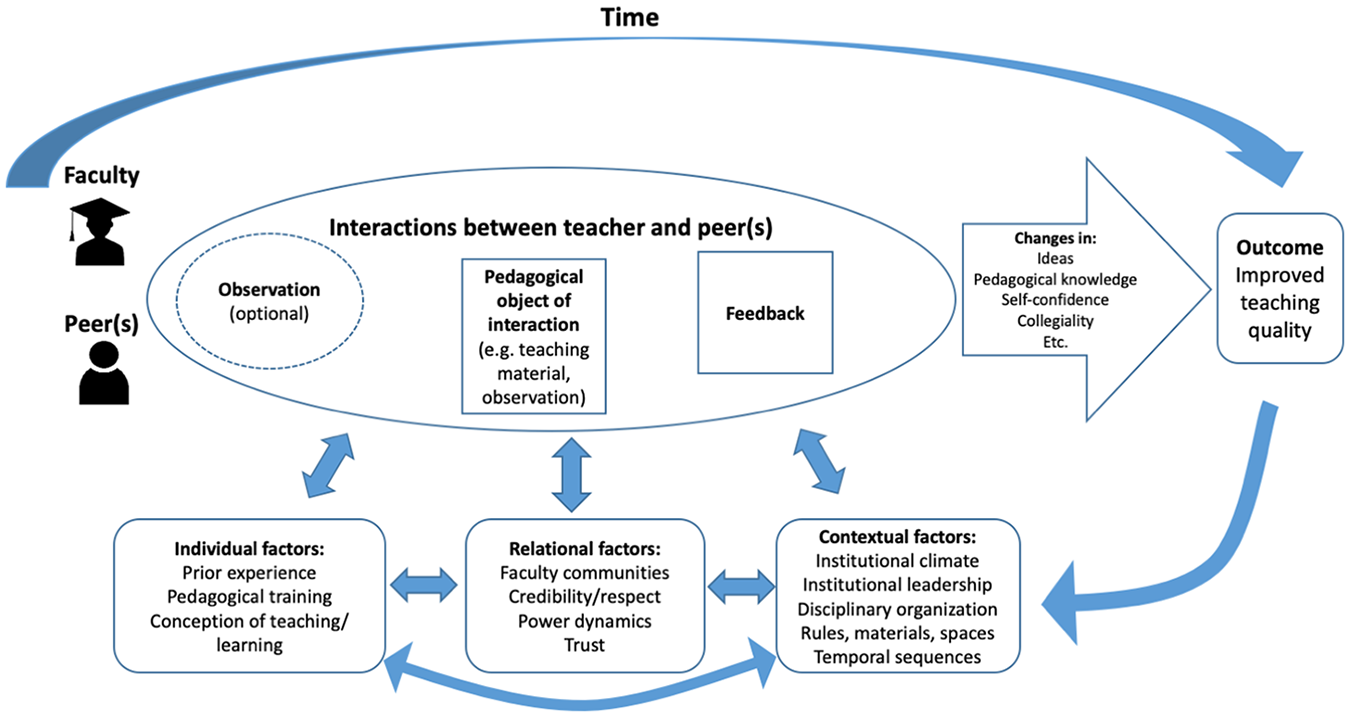
Synthesized framework of collegial faculty development.
The review findings show how various contextual, relational, and individual factors influence the way the CFD process and the interactions between the participants unfold over time. As our findings exemplify, contextual factors might influence who is involved in the practice (e.g., number of faculty members, professional faculty developers, etc.), what rules and materials (e.g., templates) are used, and whether the process includes teaching observations (e.g., de Lange & Wittek, 2018; Torres et al., 2017). Examples of relational factors of influence are the level of trust and respect between faculty colleagues, which might influence their willingness to provide honest and constructive feedback (e.g., Bulman et al., 2016; Carroll & O’Loughlin, 2014). Examples of individual factors are the faculty’s prior teaching experiences and their conceptions of learning that might influence the subjects they choose to discuss during meetings (e.g., Ambler et al., 2014; Deni & Malakolunthu, 2013).
As is shown in our review, these factors are closely intertwined. For example, an institutional context in which CFD is used to make personnel decisions (e.g., promotion, hiring) influences the relational aspect of trust, which in turn influences the discussions participants engage in during their meetings (e.g., Ambler et al., 2014). Moreover, CFD itself has an impact on these contextual, relational, and individual aspects. From a normative view, a successful CFD process will lead to the positive development of a trusting relationship among faculty, increase pedagogical knowledge of individual faculty members, and develop institutional routines that allow them to implement changes as their pedagogical understanding develops. All these advancements are expected to have a positive influence on teaching quality.
Implications for Further Research
Our review study has implications for future avenues of investigation. By offering theory-informed terminology, our framework makes it easier for future researchers to precisely define the objects of their study by referring to the specific factors of CFD practice on which they are focusing. This specification enables future intervention studies to enter into a more theoretically coherent, cross-curricular discussion of their findings, which will help reduce the fragmentation of the field and build a more solid empirical understanding of relevant factors in productive CFD practices.
To further develop a coherent research agenda, we see particular potential in mixed-methods research projects based on different empirical contexts analyzed by teams of researchers applying a unified analytical framework. Following a clearly stated theoretical approach enables researchers to be more specific about which aspects of CFD are worth investigating and which cases may provide particularly relevant insights into the stated research problems. Mixed-methods studies could, for example, integrate quantitative methods to map intentions and regulations for different CFD practices across institutions and countries, and use qualitative methods to study the unfolding processes and interactions in depth. Such studies would also give insight into the complex but important question of how the development of teaching quality is related to the actual interactions and topics discussed during CFD interactions.
In consideration of our conceptual grounding in sociocultural theories (Cole, 1998; Daniels, 2016; Vygotsky, 1978; Wertsch, 1991), we have identified several relevant issues for further investigation. In general, our sociocultural approach draws attention away from merely asking what works in CFD toward how it works. In the following, we present a range of unexplored topics related to intersubjectivity, materiality, and temporality as particularly promising in further developing our understanding of how CFD processes work.
Interactions and Intersubjectivity in CFD Practices
When analyzing the empirical literature through our framework, it became clear that CFD fundamentally depends on how two or more people manage to interact productively to create a common ground for understanding. For this reason, we argue that understanding how these boundaries between participants’ views are crossed is an important element in studying the productivity of CFD practices. The sociocultural perspective offers the notion of intersubjectivity as a relevant analytical entrance in studying how faculty members learn from—and with—each other through CFD interactions. Intersubjectivity is central in sociocultural thinking (Cooper-White, 2014) and denotes a fundamental reciprocity in interaction. The most basic dyadic relation is two or more actors allowing access to one another’s experiences, thereby opening a shared reality. This basic coconstructive notion of reality is deeply dialogic in nature (Wertsch, 1991), potentially providing valuable access to the more deeply rooted common feature in all CFD activities.
This idea proposes an explanation to some of the findings in our review. For example, the fact that CFD does not yield good results when implemented in a coercive top-down manner might be related to the limited willingness of or opportunities for participants to engage with each other’s ideas, thereby limiting their intersubjectivity (Ambler et al., 2014; Shortland, 2004). This also relates to the findings that showed how providing clear rules for CFD interactions helps participants focus on a shared object of discussion that contributes to the development of intersubjectivity (Torres et al., 2017). Also, trust and respect are closely related to the idea that participants can develop intersubjectivity only when they recognize the relevance of each other’s knowledge in their own context.
Despite the relevance of understanding how faculty achieve intersubjectivity during CFD meetings, our review found that only a few papers focused on these interactional processes, that is, the actual and ongoing discussions in CFD meetings. This might be related to the fact that most of the literature comprises studies that treat CFD as a finished intervention at given institutions that is evaluated for its effectiveness. Beside a few exceptions (A. Bell et al., 2010; Bulman et al., 2016; de Lange & Wittek, 2018), the topics addressed and discussed during CFD activities remain an enigma and are left open for speculation. Therefore, insights into the actual facts of CFD conversations—the pedagogical contents, the thematic focus, and the way participants engage with one other—are still very limited. Though we can assume that faculty in CFD talk about their teaching methods, we still know little about what this talk means in respect to the quality of reflection and opportunities for competence development for the participants. The empirical questions of how participants, through interaction, coconstruct meanings related to teaching, engage with each other’s views, and develop a shared understanding are therefore relevant to address in future research.
Materiality in CFD Practices
To gain more explanatory depth into how CFD practices work, our conceptual framework shows that we also need to illuminate how these practices are structurally arranged and what material resources surround CFD activities. Our review reveals that a range of resources are used in CFD, such as notes from teaching observations, rules of conversations, role descriptions, timetables, or work requirements. From a sociocultural perspective, such material resources constitute cultural tools that are imbued with meanings, values, insights, and priorities, and that have developed over time and are shared within a community (Wertsch, 1991). Implementing these tools during a CFD meeting creates expectations of how to interact, what roles the different participants should play, and what should be considered good teaching.
As suggested in our framework, the dynamics created by material resources framing CFD activities influence the flow of interactions in substantial ways (Wertsch, 1991). Our review reveals that the question of how materiality shapes CFD, however, stands relatively unanswered. Many studies mentioned the rules and structuring resources that are used in different forms of CFD (e.g., de Lange & Lauvås, 2018; de Lange & Wittek, 2018; Kenny et al., 2014; Mager et al., 2014; Torres et al., 2017), but few focused their analysis on how these resources afford or constrain the productivity of interactions between faculty. This lack of reflection on the role of material surroundings becomes especially problematic when considering that most of the literature appears to take a normative approach by suggesting that one CFD model is better than another. However, given that these conclusions rarely consider the resources, rules, and materials used in the respective CFD model, the evidence presented in the literature appears largely unsubstantiated.
Based on these theoretical considerations, we suggest that future research should address empirical questions of how CFD participants engage with cultural tools and what forms of materiality support faculty in developing their teaching through CFD. The focus here should not be limited to either the individual participants or the material entities but should center on how productive CFD activity unfolds from the interplay between factors at the contextual, relational, and individual levels.
Temporality of CFD Practices
Finally, the above perspective on intersubjectivity and materiality has bearings on temporality. As suggested in our framework, CFD practices involve change processes that occur over time. The participants, at the moment of their discussion, create a partially shared space of understanding by engaging with a set of cultural tools. The faculty’s engagement with these tools transforms their current and future actions. For example, a peer observation template might trigger a faculty member to offer feedback to a colleague, who then uses the template to change their teaching in the future.
Referring to a sociocultural view, change processes triggered through CFD activities may take place on several levels (Cole, 1998): first, the development of the individual faculty members and of their knowledge and experience through their participation in CFD; second, the moment-to-moment interactions between different participants and cultural tools when “performing” CFD (i.e., engaging in peer discussions in situ); and third, the development of CFD practices over time within their broader sociocultural contexts such as the disciplines, institutions, and communities in which these collaborative practices are situated. Analyzing change here can address the level of individual development such as participants’ strategies and their changing identities as faculty staff and colleagues. At the same time, it can address the CFD arrangement, which may change as cultural tools like templates, guidelines, or rules are adjusted over time. Finally, change can be analytically addressed as developing teaching practices across time and in different settings.
When studies try to capture these change processes, they typically do so in isolation, for example, by investigating how individual faculty members describe their participation in CFD (Ambler et al., 2014; Woodman & Parappilly, 2015) or how a CFD model was implemented in an institution over time (Hubball & Clarke, 2011). How these developments influence each other on the different levels, however, is rarely addressed. We argue that CFD—like any phenomenon that involves learning—is best understood when accounting for these developments in interrelation.
These considerations raise the question of what kind of changes we expect when describing a CFD intervention as “effective.” Is CFD effective only when it leads to individual changes in the faculty, or would a positive effect on creating collegial faculty communities or an atmosphere of trust also count? What is considered effective in CFD depends on the underlying notion of teaching quality against which CFD effectiveness is measured. A challenge in this respect is that teaching quality is regarded differently across contexts and often surrounded by a polyphony of claims, understandings and meanings. In this sense, our contribution does not confine CFD to given conceptual boundaries of teaching quality but rather conceives it as a collaborative space where teaching can be discussed in conceptually flexible ways. The question of defining teaching quality is in this respect beyond the scope of this review, as we argue that improvement of teaching can be achieved in many ways, including changes on individual, relational, or contextual levels. Our framework suggests that these changes need to be investigated as an interconnected whole. Future research could focus on questions concerning how changes in individual faculty members’ beliefs about teaching and learning influence moment-to-moment interactions during CFD and vice versa. It would also be relevant to study how trust and respectful relationships between participants change depending on how CFD practices are embedded in the institutional environment over time.
Conclusion
This review study has contributed to a better conceptual and empirical understanding of collegial approaches to faculty development. We have expanded on previous review studies on PRT that excluded large parts of relevant literature due to variances in terminology. Our review of the existing literature has painted a complex picture of the various factors that shape collegial approaches to faculty development. The framework synthesis method has proven to be a useful approach for reinterpreting the existing empirical findings from a coherent sociocultural theoretical perspective (Cole, 1998; Daniels, 2016; Vygotsky, 1978; Wertsch, 1991).
Based on our initial (and deliberately broad) framework, our review findings were grouped into three main factors: contextual, relational and individual. All the results could be sorted into one of the three sections, and no additional factors had to be added during the inductive phase. The subheadings and themes under each section emerged partly as expected based on the initial framework and partly as novel themes that were then integrated into the refined framework. The synthesis process therefore allows us to claim that the final framework encompasses all themes and factors found in the literature with no further patterns or outlier findings that could not be integrated into the final framework.
Our review shows that the current state of scholarship on CFD is characterized by a majority of intervention studies that often exhibit weak links to wider theoretical traditions. We may assume that other factors might have been included in our results, if the original literature had included different theoretical approaches. For example, the fact that none of the studies indicated participants’ gender, socioeconomic or cultural background as relevant factors for CFD might be an artifact of the absence of studies taking critical race or feminist approaches to studying CFD.
Against the backdrop of this challenging theoretical landscape in the literature, our sociocultural perspective has helped unite the interconnected contextual, relational, and individual aspects that should be considered when studying or practicing CFD. Our background as faculty developers and our expertise in sociocultural theories has undoubtedly shaped our framework, but we also reflected on our methodological choices and considered our findings in light of alternative theories throughout the process. Prominent alternatives in the literature are perspectives related to professional and reflective learning (e.g., “reflective practice” as used by Hammersley-Fletcher & Orsmond, 2005), sociocognitive learning theories (e.g., “observational learning” as used by Hendry & Oliver, 2012) or theories related to organization and leadership (e.g., “distributed leadership” as employed by Wingrove et al., 2015). These theories provide valuable insights into learning processes, organizational structures, and aspects of development in relation to CFD. From our point of view, however, studies in these traditions tend to omit important aspects of materiality and temporality and often cannot do full justice to CFD as a fundamentally dialogic practice with an overarching aim of creating shared understandings between faculty. The complexity of CFD deserves, in our opinion, conceptual foregrounding, not as an excluding maneuver to other epistemologies but as a starting point for further empirical research and practical explorations. The resulting sociocultural framework, we therefore argue, is an adequate fit for the evidence presented in the literature and offers a promising avenue forward for research on CFD.
Supplemental Material
sj-pdf-1-rer-10.3102_0034654321990721 – Supplemental material for Moving Beyond Peer Review of Teaching: A Conceptual Framework for Collegial Faculty Development
Supplemental material, sj-pdf-1-rer-10.3102_0034654321990721 for Moving Beyond Peer Review of Teaching: A Conceptual Framework for Collegial Faculty Development by Rachelle Esterhazy, Thomas de Lange, Sofie Bastiansen and Anne Line Wittek in Review of Educational Research
Footnotes

Notes
Authors
RACHELLE ESTERHAZY is a postdoctoral researcher at the Department of Education, University of Oslo, Postboks 1092, Blindern, 0317 Oslo, Norway; email:
THOMAS DE LANGE is an associate professor at the Department of Education at the University of Oslo, Postboks 1092, Blindern, 0317 Oslo, Norway; email:
SOFIE BASTIANSEN is a PhD student at the Department of Education, University of Oslo, Postboks 1092, Blindern, 0317 Oslo, Norway; email:
ANNE LINE WITTEK is a professor at the Department of Education, University of Oslo, Postboks 1092, Blindern, 0317 Oslo, Norway; email:
References
Supplementary Material
Please find the following supplemental material available below.
For Open Access articles published under a Creative Commons License, all supplemental material carries the same license as the article it is associated with.
For non-Open Access articles published, all supplemental material carries a non-exclusive license, and permission requests for re-use of supplemental material or any part of supplemental material shall be sent directly to the copyright owner as specified in the copyright notice associated with the article.
