



Abstract
Conserving energy in large public buildings is an art in itself.
ENVIRONMENT: Museums go green
In a busy month, 43,000 people will visit the Archaeological Museum of Delphi on Mount Parnassus in Greece. Visitors can view the ruins where ancient Greeks once traveled to consult the Oracle of Delphi, and peruse famed artifacts such as the bronze statute Charioteer (see below right). With such vestiges on display, preservation always trumped all other priorities in the museum staff's thinking–a trait shared with most other museums in the world.
Not any more. With concerns about climate change increasing, many view shrewder energy conservation in large (often older) public buildings such as museums as a viable means of reducing carbon emissions. Over the last few years, Delphi and seven other museums across Europe have undergone comprehensive monitoring and ecofriendly renovation as part of a project sponsored by the European Union. The project aims to curtail the museums' energy use without harming the welfare of the exhibits.
JOSH SCHOLLMEYER
Let there be light: Daylighting helps reduce Delphi's energy consumption.

The museums
BRITAIN THEpUBLIC
GERMANY Herzog Anton Ulrich Museum
GREECE Archaeological Museum of Delphi
ITALY Archaeological Museum of Marzabotto; Bardini Museum
PORTUGAL National Archaeological Museum
SLOVENIA Slovene Ethnographic Museum
SWEDEN Moderna Museet
The renovations
It starts on the outside, on the so-called building envelope. Better insulating the buildings' roofs, walls, and windows keeps more heat in, while improved shading cools the museums, lessening their reliance on air conditioning. Enhancements inside the museums are more sophisticated. “Carbon dioxide sensors determine how many people are in a museum at any given time,” says Matheos Santamouris, a physics professor at the University of Athens who worked on the Delphi retrofits. “When the museum has a lot of visitors and the concentration is higher than 600 parts per million, we increase the ventilation. When the number of visitors is low, only natural ventilation is necessary.” Similar intelligent control systems can monitor a museum's heating and cooling needs. In fact, Santamouris explains, “Most of the energy conservation comes from this.”
The results
Admittedly, Santamouris and his colleagues sought out museums with a high potential for energy conservation. But they weren't disappointed: Delphi reduced its energy consumption by 61 percent, and most of the other museums experienced measurable energy savings. It's even cost effective–to a point. “If you want to increase the energy conservation from 80 percent to 90 percent, it's about 400 times more expensive than when you increase it from 10 percent to 20 percent,” Santamouris warns. “You have to know when to stop.”

RE: CHEMICAL WEAPONS: Forgotten menace

Biological and nuclear weap-on threats capture the public's imagination. Chemical weapons typically don't. But the botched attempt by the Japanese terrorist group Aum Shinrikyo to use Sarin nerve gas on the Tokyo subway system–which resulted in 12 deaths and hundreds of injuries–indicates the danger of these weapons.
As such, the findings of a study of medical laboratory directors, lab managers, chief technologists, and other laboratory professionals published in the American Society for Clinical Pathology's journal LABMEDICINE is especially alarming. The study concludes that pathology labs, such as those found in hospitals, lack written protocols for dealing with potentially contaminated materials (i.e. clothes) and that most laboratories do not provide training to treat chemical exposures–whether intentional or unintentional.
That said, awareness is improving. “While there is a long way to go, it looks like some laboratories have made progress in understanding what their preparedness goals should be,” notes Julie Fischer, the head of the Henry L. Stimson Center's Global Health Security program. “Now they need to work to make sure they can reach those goals.”
DANIEL KIMERLING
Q+A Martha Brill Olcott
Martha Brill Olcott is a senior associate with the Russian & Eurasian Program at the Carnegie Endowment for International Peace. Her book, Central Asia's Second Chance, considers this ethnically diverse region in light of the post-9/11 security threats.

“We forget that these countries are actors and not acted upon.”
JOHN REZEK
IN BRIEF
That's a nyet to proof of concept. While Russia is still refining the idea of using floating nuclear power plants in the country's Arctic regions, it recently discussed building similar power plants in Namibia.
THREAT ASSESSMEN: A dangerous lesson?
For decades, high school physics and chemistry teachers have used small amounts of radioactive material in their classrooms–often at the federal government's urging–to teach students about radiation. When the lessons conclude, however, the material often ends up stuffed in a cabinet and forgotten. When the Illinois Emergency Management Agency instituted its Orphan Source Recovery Program High School Initiative” for the 2006-2007 school year, more than 40 schools contacted it about disposing of long-neglected material. Likewise, as part of its Off-Site Source Recovery Program, the National Nuclear Security Administration discovered gammator devices (gamma irradiators) at U.S. high schools and small colleges. Each contained around 200 curies of cesium 137. All of this spurs fears that the classroom might provide the necessary ingredients for a dirty bomb.
A founding member of the Health Physics Society's Homeland Security Committee, the former radiation safety officer (RSO) at the University of Rochester, and a consultant to New York City and the International Atomic Energy Agency on radiological terrorism and radioactive material security.
“Even at the University of Rochester, only two or three of the 2,500-3,000 pieces of radioactive material that we had on hand at any given time could hurt someone. The rest were small stockpiles used in research or cancer therapy–100 ‘seeds,’ for example, that physicians load into a prostate tumor to destroy it.
“I'm not surprised then that many of these sources become orphaned. The people charged with taking care of them don't have the luxury of devoting time to radiation safety. Even if physics teachers serve as schools' RSOs, they're going to be more concerned about teaching their students. From time to time, they might think about the thing with the trefoil [radiation symbol] in the back storeroom. But what school wants to spend $2,000 to dispose of it? It's easierto leave it in the storeroom, and let someone else deal with it.”
JOSH SCHOLLMEYER
ENERGY: China's coal rush
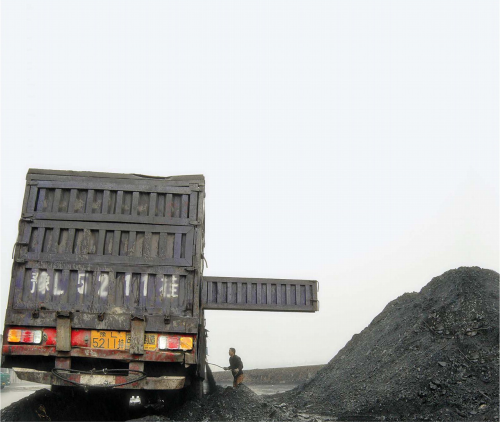
The world knows china needs an enormous amount of electricity. And it doesn't surprise energy analysts that coal power plants will meet much of this demand, as coal represents the country's most abundant resource. What stuns these analysts is the coal capacity China has installed in recent years–a staggering 100 gigawatts in 2006 alone. That roughly equals all of Germany's power output.
“In some sense, this is the ball game as far as global warming is concerned,” says Richard Lester, the founding director of MIT's Industrial Performance Center, which closely follows the Chinese energy sector. “That doesn't mean it's clear what should be done. China has a long way to go before its per capita electricity consumption compares to the countries it would like to match economically. Currently, coal power plants are the technology of choice. Even if China starts to build other things–and it has a very ambitious nuclear power plan–coal will be the workhorse of China's power sector. So the short-run prospects for China cutting its carbon emissions aren't good.”
RE: PUBLIC HEALTH: Deterrence by design
When it comes to radiation, you can't be too cautious. International Atomic Energy Agency (IAEA) officials hope a new radiation warning sign will help mitigate deaths and injuries resulting from acciden tal exposure to large radioactive sources such as food irradiators, industrial radiography units, and machines used in cancer treatment. The initiative will supplement the yellow trefoil symbol, which officials say has no intuitive meaning for those uneducated about radiation.

To some, the new visual (see above) is more perplexing than powerful: “The symbol combines information and prescription in a way that is at once literal and abstract,” says Michael Bierut, a partner at the international design firm Pentagram. But the IAEA has a specific audience in mind: Accidental exposure to radiation occurs predominantly in developing countries, where poor scavengers comb dump sites and abandoned research and medical facilities for scrap metal, including the lead casings around radiation sources, on which the ominous new skull-and-crossbones symbol would be placed.
“The vast majority of people in the developing world don't know what radiation is,” says Carolyn MacKenzie, an IAEA radiation source specialist. “So how would they recognize the [trefoil] symbol?”
GENOCIDE: The science of apathy
Among the many obstacles to an accurate tally of those killed by government-backed militia in Dar-fur are outdated census data, the absence of death certificates, and, of course, warfare. But even if officials intent on conveying “the scale” of the crisis could agree on a number, the figure is irrelevant, says University of Oregon psychology Professor Paul Slovic, because our moral intuition doesn't respond to numbers–especially big ones.
Most societies would consider it inhuman not to care about suffering populations. But Slovic believes that we may be unable to care about mass misfortune. “We really fail to draw meaning from the statistics of tragedy,” Slovic says. His research calls upon literature in cognitive and social psychology to scientifically document an oft-cited failure to wrap our minds around diffuse, chronic human atrocities. Slovic theorizes that our moral intuition is stymied by psychological principles such as Weber's law–our decreasing sensitivity to additional stimuli, for example, the number of dead. The result is what Slovic calls “psychological numbing,” which shuts down the action reflex linked to the emotional part of our brains. Instead, he says, to act we need to engage the analytical side, which dictates laws and institutions.
“You might think of the income tax system,” Slovic says. “We could leave it to people's moral intuitions to decide what tax they should pay for the good of society, but we don't. The system would collapse. So we created a very rigid system of laws to compel us to calculate the appropriate amount we should pay and force us to do that.” By engaging scholars in international law, Slovic's next step is to determine how similar conventions might be adopted to address genocide.
If not Darfur, then why Katrina? What causes people to pay attention to tragedy under select circumstances? “We can understand the experience of a natural disaster at a level we cannot for genocide,” Slovic explains. “We can understand being in a violent storm and imagine it happening to us; we can empathize. Natural disasters also have what sociologists call the normal rules of plot. They have a beginning, middle, and end. It passes. Now it's time for recovery. Whereas genocide and large-scale factors such as famine, poverty, and AIDS are more diffuse. They're chronic. You don't see an end where you can help people recover. It doesn't seem real to us, so we've been slow to respond.”
Deadly exodus: Unmarked graves of refugees from Darfur who died while fleeing to Chad

THE BIG PICTURE: Material danger
If the United States and Russia reduced their nuclear arsenals to 1,000 weapons each–a practical goal on the road to nuclear disarmament–each state would require less than 5 metric tons of weapon-grade plutonium and 30 metric tons of highly enriched uranium (HEU), according to the International Panel on Fissile Materials (IPFM). Today, their military stocks hold a combined 150 metric tons of plutonium and 1,000 metric tons of HEU. Additional material awaits disposal or use in nuclear reactors and could be diverted. A handful of other nations maintain smaller plutonium and HEU stocks. In total, global stocks of plutonium and HEU are sufficient, in principle, for more than 100,000 simple nuclear weapons.
Despite this glut of fissile material, many nations continue to build and operate enrichment and reprocessing facilities for military and commercial purposes (see map at right)–further undermining nonproliferation efforts and increasing the risk of theft.
JONAS SIEGEL

Supplementary Material
2007 Global Fissile Materials Report