




Abstract
How to spread nuclear power without sharing nuclear know-how.
Nations develop nuclear weapons when they think it's in their vital national interest. Each of the world's proliferators and would-be proliferators is motivated by a unique blend of desire for prestige and perceived need for deterrence.
China, for instance, in response to U.S. threats to use nuclear weapons during the Korean War, developed its arsenal as a hedge against future nuclear blackmail, as well as to further Beijing's aspirations of becoming a world power. India, mindful of its border disputes with China, consequently felt compelled to join the nuclear club. And India's perennial rival, Pakistan, was unwilling to leave itself vulnerable to military encroachment backed up with a nuclear threat.
The enduring ChinaTndia-Pakistan standoff represents one of the more notable failures to prevent the spread of nuclear weapons. While this Asian arms race began well before the 1970 advent of the Nuclear Non-Proliferation Treaty (NPT), it is doubtful that an earlier NPT would have made any difference. That's because the NPT has two serious, congenital flaws that remain a continual source of grief: The treaty lacks a mechanism for adding new weapon states, and it gives all signatories the right to a complete nuclear fuel cycle and the associated technologies.
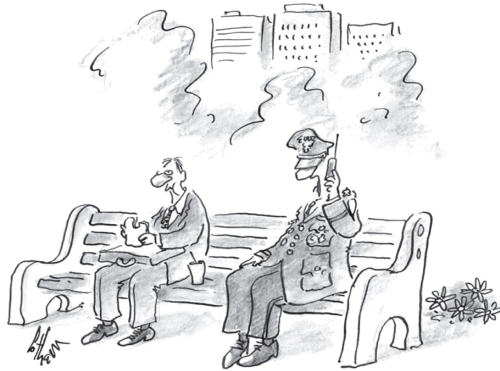
“I'm calling in an airstrike on my own position.”
To be sure, the NPT's overall impact has been positive. By strengthening the norm against the development of new nuclear weapons, it has enabled many countries to feel secure enough to see those weapons as a liability rather than as an asset. Of the 44 nuclear-capable states identified by the Kennedy administration in 1963, only nine today possess nuclear arsenals.
Yet, the shortcomings of the current system can be seen in the dilemma posed by India–which, along with Pakistan, has refused to sign the NPT and accept “second-class status” as a non-weapon state. And, as long as China and Pakistan retain their nuclear weapons programs, so will India. That country, like it or not, is now a member of the nuclear club and must be dealt with on that basis. The United States can choose either to continue the ineffective policy of nuclear isolation that has prevailed since India carried out a “peaceful” nuclear test in 1974 (it became a recognized weapons state in 1998 with a series of five nuclear tests), or to step outside the limitations of the current NPT.
Facing that Hobson's choice, President George W. Bush has opted for something rather than nothing and agreed to help India with its civilian nuclear technology, even though its weapons program will continue to expand. The agreement has the virtue of inducing India to place civilian nuclear power under international safeguards–although in India's case that virtue is more symbolic than substantive.
The second serious defect in the treaty is apparent in the current crises with Iran and North Korea. Allowing non-nuclear weapon state signatories the right to develop a full fuel cycle is a giant hole in the NPT–a license that is simply no longer tolerable in today's world.
Bush has partially addressed this problem by proposing a Global Nuclear Energy Partnership (GNEP). The world's leading nuclear exporters would guarantee that all countries have access to a reliable source of fuel for civilian reactors at a reasonable cost, and in return the non-nuclear weapon nations would renounce enrichment and reprocessing. What the administration has not done yet is move to legitimize the initiative by working to amend the NPT. To win acceptance, the supplier nations' fuel and waste-disposal services will have to be guaranteed by an international entity such as the International Energy Agency or the International Atomic Energy Agency. The negotiations will not be easy, but they are worth the effort.
The Bush administration's agreement with India is an acknowledgement that global growth of nuclear power is inevitable. That's certainly good news for the environment, given the urgent need to avoid the construction of large numbers of polluting coal plants and to reduce carbon emissions. But many worry that nuclear expertise will propagate as well, leading to further proliferation. Along with a repaired NPT, therefore, a way is needed to export nuclear power to developing nations without also spreading the technological know-how.
It can be done. Under an arrangement known as “hub-spoke,” self-contained reactors, sometimes called “nuclear batteries,” would be available in a variety of sizes. Sealed and fail-safe, they would be manufactured at a central location and rented to nations needing more energy. Running them would not require advanced nuclear expertise. At the end of their 15- to 30-year lifetimes, the exhausted reactor cores, still sealed, would be traded for rejuvenated ones.
This is not pie in the sky–the technology exists and could be provided now. Toshiba has developed a nuclear battery, and to demonstrate it, it has offered to install one at Galena, Alaska, (population 650) for free. Called the 4S (“Super Safe, Small, and Simple”), the reactor would generate 10 megawatts of electricity, just right for Galena–although the reactors can be made in much larger modular units, suitable for large cities.
The combination of hub-spoke, an amended NPT, and a variation of the GNEP with internationally guaranteed fuel recycling and waste disposal, will not turn back the clock on existing nuclear weapon states, nor will it guarantee that further proliferation will not occur. But it would permit the inevitable spread of civilian nuclear power without expanding the membership of the nuclear weapon club.
Supplementary Material
Global Nuclear Energy Partnership Strategic Plan
Supplementary Material
Treaty on the Non-Proliferation of Nuclear Weapons