



Abstract

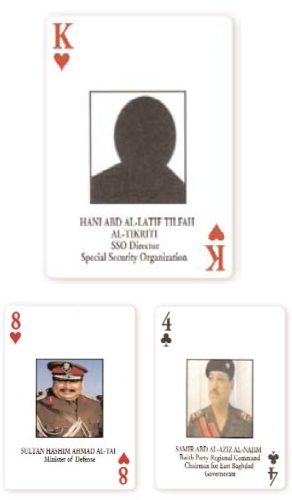
The U.S. military dealt itself a winning hand with its “Iraqi Most Wanted Playing Cards,” which it introduced on April 11. Each card features a picture and brief description of a member of Saddam Hussein's regime “who may be pursued, killed, or captured,” said Brig. Gen. Vincent Brooks. The cards not only proved popular with the public but also have the fringe benefit of making the military look good every time it holds a press conference to announce the “capture” of one of the deck's subjects. (What better way to counter growing criticism of fruitless hunts–for Osama bin Laden, Saddam, or weapons of mass destruction–than to create a gotcha list of people, many of whom have simply surrendered?)
After the military posted the cards on the Web, it wasn't long before entrepreneurs were downloading, printing, and selling copies for a tidy profit.
Clever minds at Greenpeace saw an opportunity to adapt the playing card phenomenon to a different end–nuclear disarmament. In early May, Greenpeace distributed hundreds of “Nuclear Poker” decks to delegates attending the Nuclear Non-Proliferation Treaty preparatory committee meeting in Geneva.
“If cards are good enough for the U.S. military to use to educate soldiers in how to spot bad guys, we figured they were good enough for us,” said a Greenpeace press release.
Aces and kings in the Greenpeace deck are reserved for heads of nuclear weapons states; weighty nuclear tidbits and factoids are printed on the rest. The five of diamonds, for example, reads: “The latest U.S.-Russian nuclear disarmament treaty will not involve the destruction of any nuclear weapons.” Greenpeace took its cards a step further and created an online game that “features the same cards we gave out to the delegates, presented (appropriately enough for a 35-year-old treaty that hasn't accomplished much) in the perennial time-wasting and unilateralist format of a game of Solitaire.” It is, says Greenpeace, “a great way for world leaders to pass the time while the Nuclear Non-Proliferation Treaty collapses.”

Greenpeace's deck of cards proved so popular that it is now considering making a nuclear disarmament version of the game Twister.


It all started with the U.S. military's cards (at right), which feature “no photo available” shadows and distorted fit-to-box head shots. Top left, a card from the “War Profiteers” deck; left, from the “Deck of Weasels”; above, the back of “William J. Bennett Playing Cards.”

In the wake of the military and Greenpeace cards, copycat decks have proliferated–everything from the “Deck of Weasels,” in which photographs of anti-war public figures were doctored to add Republican Guard berets, to the “War Profiteers” deck, which lambastes those who gain from the “U.S.'s endless war on terror.”
Making a political statement has never been so much fun. •