



Abstract

Sharpen the logic
David Gompert (“Sharpen the Fear, January/February Bulletin) favors a no-first-use policy for U.S. nuclear weapons in any situation except in response to another's use of a weapon of mass destruction.
He specifically argues that the United States should retain the right to use nuclear weaponry in response to an attack by biochemical weapons, and he proposes that this willingness should be well publicized as a deterrent to those who may think of making such an attack. He believes that publicizing such a policy would substantially reduce the risk that biological weapons would be used.
I agree with Gompert that it is in the national interest to clarify U.S. nuclear policy. However, I disagree with the view that the United States should consider a nuclear response to a chemical or biological attack. The sole role of U.S. nuclear weapons should be to retaliate after a first use of nuclear weapons by another.
I searched in vain in Gompert's piece for any recognition of the extent of death, destruction, and contamination that would result from a nuclear explosion in a populated place. Such an oversight is a common failing
among those who propose the use of nuclear weapons, although the world outside that of nuclear proponents appears to have developed an appropriate revulsion to the wanton slaughter of innocents.
Gompert emphasizes the value of deterrence. A deterrent is only as effective as it is believable. Would the United States really follow through with the threat? I find it difficult to believe that a civilized society like that of the United States would compound one evil with a much greater one.
But if the United States would not follow the threat with the act, then it is doubtful that an adversary would take the threat seriously. Saddam Hussein, for example, has demonstrated almost no concern for the well-being of the Iraqi populace. The people of Baghdad have no say in what he does. If he were to decide to threaten or to use biological weapons, it is doubtful that anything other than a promised reprisal on him personally would affect his decision.
And if he did decide to kill thousands of Americans in an anthrax attack, would the United States not be acting even more reprehensibly if it obliterated Baghdad and most of its inhabitants in the hope that Saddam might be killed or overthrown?
“Where should I aim the missiles?”
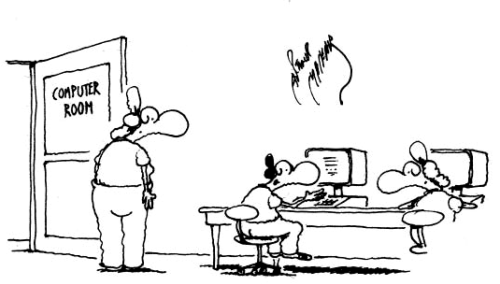
This is not an unusual example. The leaders of rogue states seldom care for the welfare of their people. The United States should make it clear to these thugs that they will be hunted down and killed if chemical or biological weapons are used.
Another risk in using nukes in response to an attack by chemical or biological weapons is that the user may have nukes himself or have allies who do. For the United States to use a nuke in that situation would risk nuclear war, something it has avoided for more than 50 years.
If the United States would use a nuke only against a rogue nation that had no such nuclear connections, would that not be an incentive for the rogue state to obtain some nuclear capability? Gompert's proposal could promote nuclear proliferation.
The United States should seek treaties with all nuclear powers to outlaw the use of nuclear weapons except in response to the use by another. We would give the treaty teeth by obtaining recognition by the World Court that the first use of nuclear weapons would be defined as a crime against humanity of the greatest magnitude. The head of any state that fires a nuclear weapon at another country should be found guilty of the most serious war crime.
There are several advantages to this course of action. It would increase U.S. security by reducing the chance that a conflict would escalate to the nuclear level. A clear policy leaves far less room for misinterpretation and for the making of unwise decisions.
Without a nuclear role in future wars, the United States should reduce the defense dollars spent on nukes to that required to maintain a small, secure arsenal of nuclear weapons adequate to deter another nuclear power. Because the current types of weapons are satisfactory for that purpose, it would be unnecessary to improve any of its weapons. And with a clear understanding of the single remaining role of nukes, the U.S. military would be able to plan and train much more effectively.
If the United States were to commit to a no-first-use treaty with the other nuclear powers, the hands of each would be equally tied. I see no downside risk to this proposed course. The United States would still have the right to use nuclear weapons in retaliation for their use by others. No other use makes sense.
Victor J. Reilly
Aiken, South Carolina
∗ ∗ ∗ ∗
David Gompert, a vice president of the Rand Corporation, is so mired in the antiquated logic of the Cold War that the obvious flaws in his arguments elude him.
His assertion that the United States should “explicitly warn” that it will retaliate with nuclear weapons in response to chemical or biological attacks is hardly a “fresh idea.” Rather, it is merely another corollary to the same tired theories of nuclear deterrence that are still used to legitimize the continued existence of swollen nuclear arsenals.
Twenty-first century terrorists who deliver weapons of mass destruction and leave no return address are, unfortunately, unlikely to be stopped by the fear of “mutual assured destruction.” Where exactly would the United States aim its “presumably selective nuclear detonation”?
And since when have nuclear weapons become “selective”? How many women and children would be selectively incinerated?
Like those who advocate the construction of a national ballistic missile defense system, Gompert conveniently ignores the fact that the most likely routes weapons of mass destruction would take to the United States would be covert. He focuses on battlefield scenarios with well defined and precisely located opponents. Only once does he briefly mention the word “clandestine.”

Because it is hardly a secret that the United States would respond to an attack by weapons of mass destruction, wouldn't it be more likely that the perpetrators of such an attack would try to remain anonymous in order to escape retaliation? And what better weapons to use than biological? At least several days would pass before the onset of symptoms, more than enough time for terrorists to be thousands of miles away.
Why is it that so many ardent militarists fail to adequately address the threat posed by terrorists bearing weapons of mass destruction? Is it because they secretly fear it will expose the gross inadequacies of their sacred theories of nuclear deterrence?
Or perhaps it is because it requires new ways of thinking rather than hightech weapons systems and bellicose posturing to keep loose nukes and man-made plagues from destroying a vulnerable society.
Steven Starr
New Bloomfield, Missouri
Perspective, please
“Accident Prone,” a March/April Bulletin article about the Tokai nuclear accident by Edwin Lyman and Steven Dolley, could mislead your readers. The authors, both officials with the Nuclear Control Institute (NCI), describe the Japanese nuclear fuel manufacturing accident that killed one worker and seriously injured another.
However, they do not mention the Tosco oil refinery accident near my California home, which killed four workers and emitted gases that had the potential to harm the public. And they do not report that in the energy fields there were more than a thousand deaths worldwide in the past two years caused by coal, oil, and gas explosions. In the United States it is estimated that there are tens of thousands of premature deaths yearly due to fossil fuel emissions. And what about the 50,000 yearly deaths in the United States from automobile accidents?
All technologies have potential dangers. Remember Bhopal? In the case of peaceful nuclear energy we should be proud that since the start some 45 years ago, safety has been the key requirement. Indeed, not a single member of the public has been harmed by nuclear energy built and operated to U.S. and Western standards. Three Mile Island did not harm anyone, and Chernobyl would not have been permitted here. The Japanese build and operate their nuclear power plants to U.S. standards, but the Tokai fuel facility did not meet U.S. standards.
As a manager in General Electric's peaceful nuclear business, I had direct working contacts with the Japanese nuclear industry for some 20 years before retiring in 1992. There is no doubt in my mind that in the future U.S. fuel safety standards will be adopted in Japan.
Bertram Wolfe
Monte Sereno, California
(Bertram Wolfe is a past president and fellow of the American Nuclear Society and a retired vice president of General Electric.)
Ask the candidates
“That Old Designing Fever” by Greg Mello (January/February 2000 Bulletin) should alert us to the fact that the U.S. government is moving back to a Cold War stance. And, once again, the success of that Cold War will be measured by how well it fills the pockets of the owners and managers of the giant nuclear monster we have created.
Never mind what it costs American citizens or that it risks the obliteration of the world. The U.S. stockpile could kill the world 27 times over, yet U.S. politicians are still more concerned about having the largest bogey man possible than the continuation of the human race.
In 1996, the B61-11 variable yield earth penetrator was deployed. In my opinion, earth penetration is the only reason for thermonuclear warheads and it is not likely that even 50 of these warheads would ever be justified.
Now the 100-kiloton W76 warhead is being upgraded and will begin entering the stockpile in 2004 as a near-ground-burst weapon. There will be 3,200 of these warheads. The two bombs used against Japan, which were much less powerful, were detonated at 1,000 feet and produced 132,000 immediate deaths and another 132,000 deaths over the next six months. No one can justify producing these 3,200 upgraded warheads.
Mello has written an informative article. More of us need to become informed and to insist that the president and members of Congress become more responsible. Elections will be held in the fall. The candidates should be asked what they know about these issues—and if they intend to behave responsibly.
“You're not paranoid—there are a lot of bigger fish in the sea!”

R. Virgil Donovan
Ephrata, Washington
Peace movement(s)
At the conclusion of Bret Lortie's excellent article on the peace movement (“Where's It Gone,” March/April 2000 Bulletin), David Cortright is quoted on the need to make the elimination of nuclear weapons a moral rather than a political issue.
Because of our increasing longevity and improved quality of life, we senior citizens are becoming a powerful, cohesive group—not only in the United States but worldwide. I propose that we organize a group to be called “Seniors Without Borders” (“SWOBS”)— with a title analogous to the name of the Nobel-prize winning group Doctors without Borders. The primary objective of SWOBS would be to eliminate all weapons of mass destruction, nuclear, biological, and chemical, wherever they may be located and whoever may possess them. National sovereignties should be circumvented as much as feasible.
we want to hear from you
Send them to: Letters, The Bulletin, 6042 South Kimbark, Chicago, IL 60637 fax: 773 702-0725 e-mail:
Be sure to include your mailing address and phone number.
The task would admittedly be a difficult one, but I see no alternative. To make it work SWOBS might first work systematically to alleviate the woeful ignorance regarding nuclear weapons in the United States and elsewhere, including the belief that possession of more and better nuclear weapons and continued testing of them can enhance national security. A worldwide educational campaign must be organized. Coordinated, worldwide demonstrations would simultaneously call for turning over all weapons of mass destruction to an international commission for proper disposal.
When we have accomplished this task, we seniors could rest in peace.
Ralph Simon
Vienna, Virginia
What a difference three months makes! In your November/December 1999 issue, a 400-strong direct action at Los Alamos National Laboratory last summer was worth a dozen column inches in an article titled “Los Alamos: Summer Under Siege.” Yet in “Where's It Gone,” in the March/April 2000 issue, that same protest was portrayed as dramatic evidence of the decline of the peace movement.
The major change, of course, was the Senate's rejection of the Comprehensive Test Ban Treaty last fall, which has inspired much soul-searching in the disarmament and arms control community. While deeper tactical and strategic analysis is a good idea, in practice so far it has been consistently devoid of an organizer perspective— even when it is filled with quotes culled from organizers, as the assumptions and conclusions.
First, it is unwise to compare other actions to the million-person demonstration that gathered in Central Park in June 1982 to protest the nuclear war-fighting plans of the Reagan administration. Using the high-water mark of a movement as the standard of measurement is to make anything less a failure by definition, and it completely obscures the ebb and flow which is the reality of all social change movements.
Second, the “anti-nuclear” movement was only the featured flavor in the 1980s of a much broader peace and disarmament movement. It is a mistake to view activist involvement in other issues as a lack of interest in nuclear issues. At the core of the anti-nuclear movement in the 1980s were many of the same people who worked against the Vietnam War 10-15 years earlier, many of whom were also working for justice in Central America. Many of the people working against nukes now also work to end the economic sanctions against Iraq or to close the School of the Americas. From an organizer's perspective, it is both good and significant that thousands of the people we work with— particularly young people—march on the School of Americas every fall, and that the religious community we worked with in the 1980s is now mobilizing to lift the economic sanctions against Iraq.
Third, it is a mistake to assume that large social change movements simply burst forth fully formed in times of crisis, and then transform themselves into effective institutions before the issue falls from the front page. It just ain't so, and any analysis of the decline of activism on these issues has got to include the sharp decline in funding for grassroots disarmament organizations since the end of the Cold War. The ability to take advantage of opportune moments in history—from the point that public outrage manifests itself to working with those who stay with the movement after the high point, and to actually achieve political change—requires effective organization.

Yet grassroots peace organizations have left the funding profile of the large majority of the liberal foundation community. Similarly, a lack of understanding of grassroots dynamics has caused the movement as a whole to become far too conservative in its tactics. As a media trainer who was quoted in the article remarked, “The whole process of winning a battle has gone away.” She could as easily be talking about the way the anti-nuclear community frames the issue as she was the lack of long-term perspective on the part of students.
This past fall, for the first time in years, we were able to provoke the semblance of a public political battle on nuclear issues with the test ban, and now many of the players in our larger community regret that we did it, simply because we lost. But if we want citizens in our movement, we have to consider that to fight and lose is much better than not to fight at all. If there are no battles, no public debate, why should student activists, or anyone else for that matter, get involved? The test ban can always be resubmitted to Congress. Activists who are not engaged when you have the chance may not come back again.
Unfortunately this same conservatism is also causing us to miss a golden opportunity right now. The American voting public knows what a nuclear test ban is, supports it overwhelmingly, and knows who killed it. The test ban is one of the few clear foreign policy distinctions between the major party candidates. Peace Action and its sister Education Fund commissioned a hard-hitting, professionally produced TV ad that identifies senators who voted against the test ban. With a $50,000 budget we were able to buy a thousand cable spots in seven major media markets. From this we were able to get hard news articles in five major dailies, as well as mentions in the Washington Post and the National Journal website, “The Cloakroom.” We elicited responses from several senators, and got a Republican incumbent and a Democratic challenger in a printed verbal exchange in Missouri. Jesse Helms himself felt compelled to mention the ads on the floor of the Senate.
Now if all this can be done for $50,000—a laughably small sum in contemporary political terms—is the problem that the media doesn't know how to cover us, as the article contends, or rather that our community is not yet able or willing to run a serious media campaign on a politically significant issue? A well-supported milliondollar media campaign could make the test ban an active part of the public policy debate this fall. Isn't that what we want?
This is only one viewpoint, of course. But if we want to see success on our issues it is past due that the perspective of organizers be included in our community's analysis and strategizing. I thank the Bulletin for the opportunity to do so with this letter.
Gordon S. Clark
Executive Director, Peace Action, (formerly sane-freeze), Washington, D.C.
Depleted uranium kills
I am deeply troubled by the articles in the November/December 1999 Bulletin about depleted uranium (“When the Dust Settles,” by Steve Fetter and Frank von Hippel, and “Politically Depleted Munitions,” by Bill Arkin.) I am one of those who will never be convinced that depleted uranium (DU) is as harmless as Fetter, von Hippel, and Arkin would have us believe. By defending the use of DU munitions, the Bulletin has turned away from its founding principle.
I am particularly disturbed by Ar-kin's statement: “In the DU world, for every crackpot haunted by radiation, there is a craven and unsympathetic commander or bureaucrat. In the middle are many physicians and suffering veterans who think DU is the cause of the post-Gulf War nightmares many veterans suffer. They are not soothed by reassuring studies and presidential commissions.”
I resent being called a “crackpot haunted by radiation” and I totally lack confidence in the “reassuring studies” that have been prepared by presidential commissions and the National Academy of Sciences, and most recently by the General Accounting Office's study on dose reconstruction.
We are definitely “not soothed” by these deliberately stonewalling, repetitive studies that drag on and on while many of us who were exposed to radiation from nuclear bomb testing and DU munitions continue to suffer and die.
Oscar Rosen, Editor
Atomic Veterans Radiation News Salem, Massachusetts
∗ ∗ ∗ ∗
Bill Arkin replies:
Let there be no doubt that depleted uranium is hot—a hot potato. It was used in only about 100 A-10 missions over Yugoslavia last year, but it has become a standard of anti-NATO and antimilitary propaganda, an object around which veterans have organized, and a contentious issue between the alliance and the environmental assessment of the war by the United Nations.
In Yugoslavia, as in Iraq, all we have is the belief—no science, no epidemi-ology—that DU is responsible for widespread illness. “Widespread” is the key here. It is indeed the case that DU is a rare enough class of weapon that it requires a health warning for even standard handling and use. It is for that reason, and because the public conscience increasingly finds the use of such weapons repugnant, that a serious search for an alternative should begin.