




Abstract
The prevalence of neurodegenerative disorders is rising as the population ages, and many ailments, such as depression, Parkinson’s disease, Alzheimer’s disease, autism spectrum disorder, and multiple sclerosis, have intricate underlying mechanisms that are still poorly understood. The Neuron Foundry Mach 8 is a multi-modal neuro-supportive energy therapy device designed to treat neurodegenerative disorders through daily sessions. This device proposes to deliver safe and controlled energy therapy through multiple therapeutic pathways, including stimulating brain mitochondrial energy, supporting homeostasis within the brain’s immune system, increasing melatonin production within neuronal mitochondria, and triggering cellular communication through the brain’s white matter. By combining these unique energy-based treatments, this device holds promising potential for slowing, stopping, reversing, or at least reducing the effects of neurodegenerative diseases.
Keywords
1 Introduction
One of the most common causes of limitations in people’s physical and cognitive skills is thought to be neurodegenerative disorders. These illnesses impact 15% of the global population and have increased for the past 30 years. Over the next few decades, experts predict the trend among people with various neurological problems will double [1, 2]. Some of the most common neurodegenerative conditions, such as Alzheimer’s Disease (AD), Parkinson’s Disease (PD), and clinical depression, manifest themselves through mechanisms that are not fully understood. In many scenarios, these conditions substantially reduce the quality of life, such as decreased and impaired cognition, memory, and body movements [3, 4]. Moreover, Autism Spectrum Disorder (ASD), a severe neurological condition, also warrants consideration. Cognitive and communication disorders characterize ASD and are increasingly recognized as a syndrome involving neurodevelopmental and neurodegenerative components. Emerging research suggests that neurodegeneration contributes to the progressive nature of ASD, involving the deterioration of neural networks and synaptic connections over time [5, 6].
The progression of neurodegenerative diseases can be slowed and managed through support from the body’s inherent systems for self-repair. Vincent Tedone and Terry Wahl have demonstrated the immune system’s essential role in treating Amyotrophic Lateral Sclerosis (ALS) and Multiple Sclerosis (MS), respectively [7, 8]. Increasing cellular respiration and mitochondrial melatonin production are well-known targets for intervention, and specific energy therapies hold promise. Energy therapies, including red light, magnetic pulse, and Transcranial Magnetic Stimulation (TMS), have shown potential for treating neurological disorders [9, 10].
Energy therapy has been around for millennia. The brain’s neurons at rest have a voltage of about 70 millivolts, and neurons can be considered batteries due to their ability to generate a charge across their membrane. When divided by the microscopic distance traversed, this difference in electrical potential results in about 14 million volts per meter or 4x the force needed to produce lightning [11–13]. Thus, the potential for energy therapy for the brain is a very inviting target for study. According to Gerald Edelman, the human cortex has 30 billion neurons [14]. The brain is also highly plastic. Jordan Grafton, Chief of Psychological and Brain Sciences at UC Santa Barbara, has studied how brain plasticity changes over time. He says it peaks early and that, as a baby, the right hemisphere can take over the left side’s duties and vice versa [15]. Bruce Miller, a behavioural neurologist at the University of California Neurology Department, showed how left hemispheric brain damage hurts language ability but helps artistic and musical skills develop [16]. According to quantum theory and high-energy particle physics studies, all matter is energy and we can use energy in various therapeutic regimes. Examples include therapeutic radiation, electricity to suppress pain signals, and electromagnetic fields to promote bone formation. Low-level or subtle energy may be successfully used therapeutically to promote the healing of various conditions far more extensively than only reducing pain and promoting bone formation [17–19].
Inflammation has long been recognized as a precursor to many bodily ailments and has now been identified as a potential prime mover in neurodegenerative disease. Many scientists have demonstrated that minute, low-frequency signals can affect cellular activities by altering signaling pathways while providing external stimuli to the cell’s interior. Cellular membranes may amplify weak signals with protruding proteins [20–22]. Such hormonal responses to electromagnetic fields are a proposed mechanism of action for various energy therapies. The foundation of subtle energy therapies is that the body comprises energy fields that can be regulated to aid in healing. Theories of cooperativity that explain how a system can transition from one stable state to another via different mechanisms and at different speeds, such as phase transitions, hysteresis, and avalanche effects, can be induced from weak signals through an amplification effect that may take place suddenly or gradually [23–25]. We believe such an amplification effect may be generated via a specific combination of subtle signals. MS, AD, PD, and other neurodegenerative disorders are among the conditions that are defined by the progressive loss of neurons and brain function. Most of these diseases, frequently chronic and incapacitating, are now incurable. Medications are commonly used in conventional therapies for neurodegenerative diseases to control symptoms like cognitive decline, tremors, and muscle stiffness [26, 27]. Although these therapies may lessen some of the condition’s symptoms, they do not address the underlying causes of the diseases and may have serious adverse effects [28, 29].
While treatments can alleviate certain physical and mental symptoms of neurodegenerative diseases, their progression cannot be slowed, and cures are currently unavailable. To address this challenge, we introduce Neuro Foundry Mach 8, a device that combines proven therapeutic modalities to potentially enhance treatment outcomes for neurodegenerative diseases, offering beneficial synergies in their management.
2 Neuron Foundry Mach 8
In this section, we describe Neuron Foundry Mach 8 as a device for providing multi-modal energy therapy to treat neurogenerative disorders. More specifically, it refers to a device that offers a person with multi-modal neuro-supportive energy therapy through daily sessions in a single facility. The device provides a variety of secure, well-researched energy therapies in a regulated, sequential manner to promote neuronal mitochondrial activity, which powers the brain’s neurons and is frequently impaired in states of neurodegenerative diseases. Specific energy delivery techniques and frequencies are also employed to control microglial movement and encourage microglial homeostasis and neuroprotective functions. Along with being functional, combining these tried-and-true treatment modalities into a single device might also provide synergies that cannot be obtained when using them separately. It may be possible to slow down, reverse, or alleviate neurodegenerative diseases, including AD, ALS, and PD, using this potent combination of these distinctive energy-based medicines. In addition to demonstrating how the gadget can produce promising results, the study also provides perspectives into various theories related to energy which serves as the foundational principle supporting therapies for individuals afflicted with neurodegenerative diseases.
2.1 Potential therapeutic pathways
Our device is based on the ideas of scientists who have demonstrated that minute – low-frequency signals can impart an outsized effect on cellular activities by altering signaling pathways while providing external stimuli to the cell’s interior. Weak signals may be amplified by cellular membranes, which have protruding proteins that Ross Adey, a Professor of Anatomy and Physiology at the University of California, described as “a field of waving corn, responding to an infinite variety of faint electrochemical breezes that blow along the membrane surface” The brain’s pineal gland has been demonstrated to be sensitive to earth’s geomagnetic field. Even the earth’s Schumann resonances, often called the earth’s pulse, affect the brain’s melatonin levels [30]. Our technology is hypothesized to work by causing these hormonal reactions to electromagnetic fields. Theories of cooperativity that describe how a system can change from one stable state to another via various mechanisms and at multiple rates, such as phase transitions, hysteresis, and avalanche effects, can be induced from weak signals through an amplification effect that may occur suddenly or gradually.
2.1.1 Stimulating the brain’s mitochondrial energy
Emerging evidence suggests that the health of the brain’s mitochondria may play a role in reducing the risk of certain neurodegenerative diseases Our research is focused on eight therapies involving four separate therapeutic pathways. Each pathway is aimed supporting neuronal mitochondrial energy. Mitochondria are cellular organelles that provide energy for cellular function. Mitochondria are present in all cells except red blood cells, usually a couple hundred thousand per cell, but this number falls with age [31]. During normal cellular respiration, they use oxygen to turn the food we eat into energy, but during this process, damaging free radicals are also formed as a by-product. Neurodegenerative diseases are characterized by a significant decline in the number of mitochondria within brain cells, leading to harmful effects on cellular function. In some cases, the reduction can be drastic, breaching critical thresholds and contributing to the manifestation of the disease [32, 33].
When glucose availability is limited, the brain’s mitochondria provide energy to its 86 billion neurons through the process of oxidative phosphorylation using either glucose or ketone bodies. Neurodegenerative disease symptoms will manifest when there is a widespread or localized failure of this metabolism in the brain [34, 35]. Various energy therapies are known in the healing arts. Each energy therapy, taken alone, is understood or believed in providing different beneficial effects to the human body, including pain relief, mental relaxation, improved mood, nitric oxide production, improved circulation, tissue repair, and improved hormonal secretions, pituitary and adrenal support. For example, mitochondria absorb red light photons and this stimulate ATP production within them [36].
Near-red light energy has also been demonstrated to improve cellular communication and reduce oxidative stress at the cellular level. Another pathway by which energy therapies support cellular function is cytochrome c oxidase. Cytochrome c oxidase is a mitochondrial enzyme excited when near-infrared photon energy fields reach it. When cytochrome c oxidase is produced, ATP production is enhanced, and signaling molecules are sent out that direct cellular repair and free radical scavenging [37, 38]. These mitochondrial processes can also be stimulated by other subtle forms of energy, including magnetic pulses, electrical microcurrents, and specific sound frequencies [39]. (Figure 1).

Neuron Foundry Mach 8 could stimulate the brain’s mitochondrial energy.
2.1.2 Supporting homeostasis within the brain’s immune system
Support for homeostasis in the brain’s immune system, which is regulated by microglia, is a second potential therapeutic pathway. The microglia act as the brain’s macrophages and can destroy foreign invaders. But when the microglia become inflamed due to genetic predisposition or environmental factors such as stress or toxins, their activity can upregulate so high that they destroy healthy brain tissue, including the brain’s synapses, just as in an autoimmune disorder such as rheumatoid arthritis, symptoms occur when healthy tissue, such as cartilage, is destroyed by macrophages [40–42].
In microglial inflammation, the disturbed microglia inflame the brain with cytokines and other neuroinflammatory chemicals that actively destroy the brain’s synapses. Yet, under normal conditions, they protect these critical junctions from potential disturbances by releasing protective chemicals and signals for helpful proteins [43]. They can also release nutrients that promote the generation of healthy new neurons, the formation of new synapses, and aid in the recovery and growth of damaged neurons, facilitating the development of new neuronal projections. Effectively addressing neurodegenerative diseases requires managing the inflammation of microglia and leveraging their reparative capabilities once stabilized [44, 45].
Historically, the impact of immune response activation of the microglia wasn’t fully explored, as the assumption was that the blood-brain barrier protected the brain from immune activation [46]. Recent studies, however, have revealed that immune cells can infiltrate the brain directly [47, 48]. Upon activation, the brain’s immune system cells embark on a process that involves the secretion of immune chemicals, such as cytokines and chemokines, along with a surge of free radicals to counter invading organisms. The problem lies that in the absence of actual invaders this response is unwarranted and comes at a significant cost. The brain’s immune response involves releasing two chemicals—glutamate and quinolinic acid, termed excitotoxins—that negatively impact brain cells and their connections while also exacerbating free radical generation. Research shows that excitotoxin levels can rise dangerously following viral and bacterial brain infections. A repeated combination of excitotoxins and immune cytokines, can lead to widespread damage in the nervous system. Such persistent activation is believed to hamper the brain’s immune system, potentially resulting in neurodevelopmental issues, such as autism, language problems, behavioural dysfunction, and even neurodegenerative diseases in both developing brains and adults [49–51].
A multi-modal neuro-supportive energy therapy could support the homeostasis within the brain’s immune system (Figure 2). Many methods have been tried to lessen the generation of pro-inflammatory chemicals and cytokines secreted by microglia and reduce neuroinflammation [52–54].

Neuron Foundry Mach 8 could support homeostasis within the brain’s immune system.
2.1.3 Increasing the production of melatonin within the neuronal mitochondria
Mitochondrial melatonin acts to prevent premature cellular death. The only known way to raise intracellular mitochondrial melatonin levels is to stimulate the mitochondria to produce it themselves. Recently, scientists have estimated that up to 95% of the human body’s melatonin is produced inside its mitochondria, which cools them down by scavenging free radicals. This allows the mitochondria to work efficiently and increases their vitality [9, 55]. Serotonin, the precursor molecule for mitochondrial melatonin, and the activity of aralkylamine N-acetyltransferase (AANAT), the enzyme that catalyzes it are two factors controlling the synthesis of this hormone. Accurate measurement of intracellular mitochondrial melatonin concentrations in humans is currently not feasible. This specific type of melatonin cannot be assessed through blood tests or supported by oral melatonin supplements [56, 57]. The brain’s response to stimuli can also be modulated by energy therapies. The Neuron Foundry Mach 8 is designed with the theoretical basis that certain energy modalities, such as red light therapy, can influence mitochondrial function and melatonin production. A study showed that red light therapy (670 nm, 4 J/cm2) has the potential to restore glutathione redox balance, enhance cytochrome c oxidase activity, and boost energy production. These cellular processes are intricately linked to melatonin regulation, providing a theoretical foundation for the design of the Neuron Foundry Mach 8 [58]. Further, the device is designed to cause the patient to enter a theta brain wave state prior to the delivery of the neuro-supportive therapies, so that the neuronal response will be optimized (Figure 3).
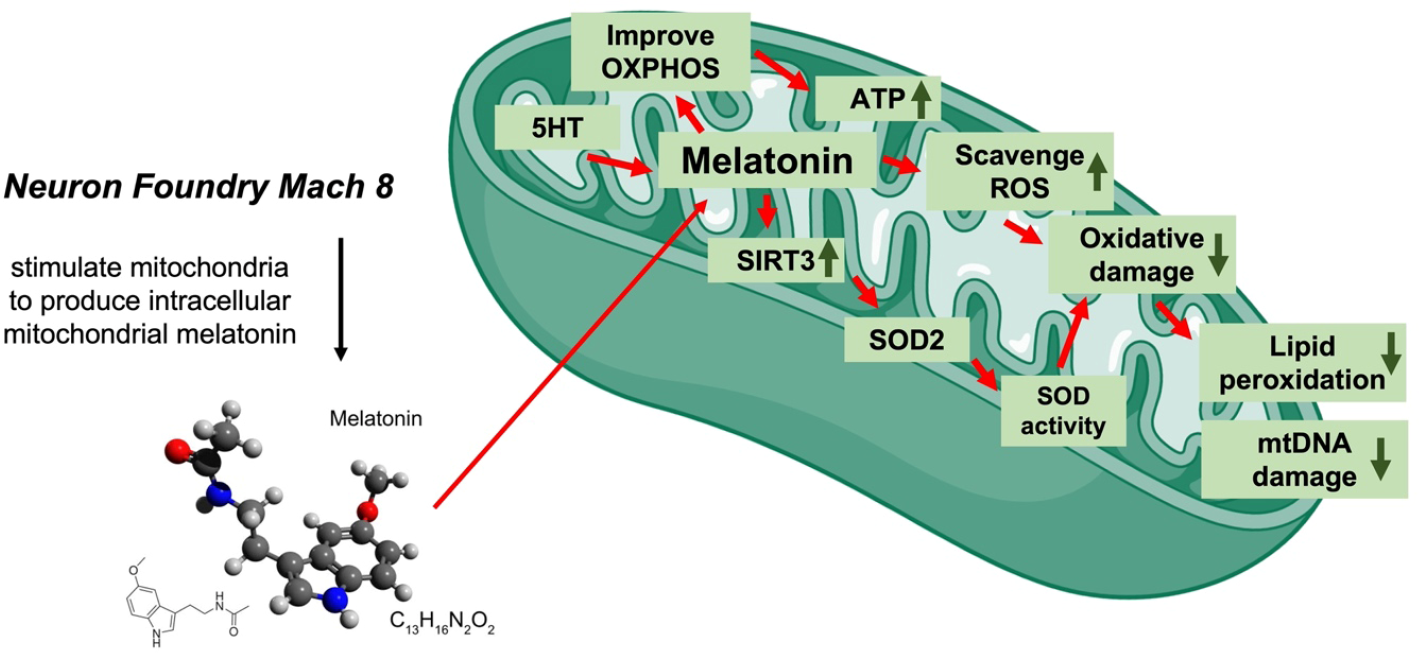
Neuron Foundry Mach 8 could increase the production of melatonin within the neuronal mitochondria.
2.1.4 Triggering cellular communication through the brain’s white matter
Theoretically, brain function should be improved if subtle energy fields can augment communication along the brain’s 85,000-mile-long axonal highway. The major component of the brain’s white matter is bundles of axons surrounded by myelin sheathing, which speeds up this communication system by an estimated 100 times. These axons connect neurons via synapses. The extracellular space (ECS) plays a role here too. ECS is the fluid-filled area surrounding neurons and is extremely important in controlling neuronal activity (Figure 4). In AD and migraines, it contracts, which hinders signaling one permanently, the other temporarily [59, 60]. The brain’s white matter may now be studied thanks to recent developments in imaging technology [61]. The effects of subtle energy fields on the ECS and white matter may be better understood by real-time imaging.

Neuron Foundry Mach 8 could trigger cellular communication through the brain’s white matter.
2.2 Therapies offered by the device
A device providing multi-modal neuro-supportive energy therapy to a person via a daily session in a single facility would be ideal. Such an apparatus could provide an array of safe, well-studied energy therapies in a controlled, sequential manner to stimulate neuronal mitochondrial activity, which powers the brain’s neurons and is often defective in neurodegenerative disease states. Selected energy delivery mechanisms and frequencies are also employed to stabilize microglial movement and promote microglial homeostasis and neuroprotective secretions.
In addition to practicality, combining these proven therapeutic modalities into a single device may offer synergies not found when employed alone. In addition to stimulating neuronal mitochondrial respiration and mitochondrial melatonin production and promoting microglial synaptic plasticity, these subtle energy fields could facilitate the release of neurotrophic factors. Sequential subtle energy therapy fields supported with bio-modulating audio and visual frequencies could help support neuronal mitochondrial function, benefiting those suffering from neurological diseases, including ALS, PD, ASD, and AD. The device under development involves a combination of subtle energy therapies based on the principles of Vincent Tedone’s Deanna Protocol that use a full complement of nutraceuticals in a time-dependent manner to support neuronal health. The Deanna Protocol and its custom versions have been used by thousands of people with neurological conditions, including ALS, PD, and AD [62]. PD, AD, ASD, and ALS all feature a high rate of neuronal apoptosis [63–65]. Vincent Tedone’s nutraceutical therapy supporting mitochondrial energy focuses on providing the mitochondria with critical nutrients, including B vitamins, 5HTP, tryptophan, alpha-ketoglutarate, ubiquinol, CoQ10, arginine, and taurine [66]. Similarly, the Neuron Foundry Mach 8 is an electromagnetic device that combines subtle energy therapies that have been used individually for decades.
Some of these modalities target cellular respiration. We believe this work synergistically to support neuron health when used sequentially and supported by audio and visual frequencies proven to calm the brain. It is accepted science that the human brain is also highly plastic and can re-route specific information pathways when one region is damaged or even removed. Recently, it has been discovered that even memories are constantly being moved to new locations within the brain [67, 68]. Regarding where memories are kept in the brain, recent studies have indicated that memories are spread among several neural networks rather than preserved in a single permanent spot. Memory consolidation is believed to be a key mechanism in this process, but its precise mechanics are still poorly understood [69, 70].
The Neuron Foundry Mach 8 combines eight therapies to support neuronal health. The eight therapies include 1) Red light therapy; 2) Solfeggio frequencies; 3) Binaural beats; 4) 40Hz -Flickering light from visor; 5) Frequency-specific microcurrent; 6) Pulsed electromagnetic field (PEMF); 7) Tuning fork acoustic wave therapy; and 8) Gentle vibrational-based massage. The embodiment and features of the Neuron Foundry Mach 8 prototype can be seen in Figure 5, Figure 6, Figure 7, and Figure 8 with detailed explanations available in Supplementary Data 1.

The helmet device providing multi-modal neuro-supportive energy therapy.

The plate device providing multi-modal neuro-supportive energy therapy.

The two-part wearable accessory system providing multi-modal neuro-supportive energy therapy.

The helmet 600 further includes a visor portion extending downwardly from the cap portion. (a) Rough sketch and (b) Colored sketch.
2.2.1 Red light therapy - head and trunk
Red light therapy is a non-invasive phototherapy that uses low levels of near-infrared to stimulate healing processes by activating cellular functions. This therapy is believed to have potential therapeutic benefits for neurodegenerative diseases. In addition, red light therapy can stimulate hair growth, reduce inflammation, prevent wrinkles, and reduce the likelihood of developing varicose veins [71, 72]. Several studies indicate that red light therapy has a neuroprotective effect and the potential to treat neurodegenerative diseases such as AD, PD, and ASD [73, 74]. Red light therapy can improve learning and enhance memory in animal models of AD by reducing oxidative stress and inflammation in the brain [75]. Furthermore, red light therapy can reduce inflammation, improve mitochondrial brain function, and promote neuron growth and survival [76].
2.2.2 Solfeggio frequencies - audio from speakers
Solfeggio frequencies are defined as a set of musical frequencies with different levels. This frequency range consists of 6 frequencies: 1) 396 Hz reduces fear; 2) 432 Hz facilitates changing situations; 3) 528 Hz repairs DNA; 4) 639 Hz connects instinct; 5) 741 Hz expresses passion; and 6) 852 Hz to awaken intuition. Solfeggio frequency correlates with aspects of human physiology and behaviour that can help improve mental and emotional balance. A series of applied frequencies can have an energy field effect on the body. This energy is believed to restore harmony and balance in the body. Furthermore, Solfeggio frequency can improve sleep quality, cognitive function, and the immune system [77, 78]. The frequency of 432 Hz is often mentioned in music history because it was the frequency Verdi and other composers used to tune their instruments before playing them. Although composers liked to use the 432 frequency, in 1939, it was decided to standardize all tunings to 440 Hz. [79]. Additionally, there are several fascinating correlations between history and the natural sciences and the frequency of 528 Hz. Many musical instruments found dating back thousands of years have been found to be tuned to this frequency or at least capable of producing a sound that vibrates at that frequency, which is assumed to have been employed in many ancient religious chants. Due to the fact that light and sound at this frequency travel similarly, the frequency 528 Hz is not merely used in music. The wavelength of light is expressed as 528 Hz, and while light is experienced at different wavelengths, it is not a color. The frequency of 528 Hz can be expressed as part of the electromagnetic color spectrum. Like the 432 Hz frequency, which has a direct connection to Earth, the 528 Hz frequency also connects with nature and the sun. These two frequencies are believed to be the most powerful frequencies in the universe, which are beneficial to the human body and mind [80].
2.2.3 Binaural beats - audio from speakers
The binaural beat is a wave therapy that employs two slightly different sound frequencies with almost the same intensity and amplitude (one frequency in each ear) to give the illusion of a third frequency. This combined frequency improves focus, relaxation, and cognitive performance. Calmness in the brain and peace are also appropriately stimulated by binaural beats through harmonization with alpha brain wave conditions. Furthermore, binaural beats can train nerve oscillations to support increased cognitive function. The 16 Hz and 40 Hz frequencies can improve cognitive abilities and rehabilitation. Listening to a 40 Hz binaural beat can trigger gamma oscillations in several brain areas related to auditory response. Gamma oscillations can also induce beta oscillations in the brain’s frontal regions. Exposure to a 40 Hz binaural beat improves cognitive functions such as working memory [81, 82].
Through Magnetic Resonance Imaging (MRI) scans, it has been observed that the prefrontal cortex of the brain deactivates precisely at a frequency of 111 Hz. This deactivation leads to a temporary shift in dominance from the language center to the right hemisphere, which is linked to intuition, creativity, and holistic processing. As a result, a meditative or trance-like state is induced. Many megalithic sites and ancient temples resonate specific frequencies, some embodying the 111 Hz one. Testing that examined the sound in the Oracle Chamber of the Maltese Hypogeum revealed resonance at a frequency of 111 Hz that matched the same pattern. The brain produces these waves when you are not paying close attention to anything in particular [83].
2.2.4 40Hz - Flickering light from visor - peripheral vision only
40-Hz flickering light therapy is a form of photobiomodulation (PBM), type of light therapy that uses low-level light energy to stimulate the body’s natural healing processes. In this therapy, a light source emits a low-level light that flickers at 40 Hz. This flickering light is thought to stimulate the production of nitric oxide, a molecule that helps regulate blood flow and plays a role in the body’s healing processes. Light therapy at 40 Hz stimulates the brain’s natural electrical activity. This is done by exposing the brain to a frequency of 40 Hz, like the frequency of the brain’s natural electrical activity. This stimulation can help reduce symptoms of depression, anxiety, and other mental health issues. It can also help improve sleep, focus, and overall mood [84, 85]. Additionally, flickering light is thought to increase the production of adenosine triphosphate (ATP), which helps provide energy to cells. This increased production of ATP is thought to help cellular respiration and health. The benefits of 40 Hz flickering light therapy include improved mood, reduced symptoms of depression, and improved cognitive performance, such as memory and attention [86].
2.2.5 Frequency-specific microcurrent - head and trunk
Microcurrent therapy devices deliver about one-millionth of an ampere into tissues. This level of energy will likely not be felt or detected by the recipient and has been demonstrated to be very safe by practitioners of microcurrent therapy. Since the 1930s, frequency-specific microcurrent (FSM) devices have been used for therapeutic purposes. New businesses are selling digital frequency generators that encompass the spectrum of beneficial frequencies. There are a few in the hearing range of 1 to 20 kHz, most of which are in the radio frequency (RF) band between 15.7 kHz and 17,033 kHz. FSM, an electrical stimulation therapy, uses low-level electrical currents to treat various diseases. Compared to the currents used in conventional electrical stimulation, FSM currents are typically in the 0.5-2 milliamp range. The current is applied to particular body parts to encourage the body’s innate healing mechanisms [87, 88]. FSM is believed to function by igniting the body’s electrical signals, which can lessen pain and inflammation and encourage healing. FSM is also thought to contribute to the body’s energy systems returning to equilibrium, enhancing general health and well-being. FSM has been proven beneficial in lowering pain brought on by several ailments, such as fibromyalgia and arthritis, as well as in shortening the time it takes for an injury or sickness to heal [89].
2.2.6 Pulsed electromagnetic field (PEMF) - head and trunk
Pulsed electromagnetic fields (PEMF) have also been in use for decades, and today, many companies offer high-end units for improved athletic recovery and performance. One major brand is being used globally in health clubs and by professional sports teams and trainers. Focused magnetic waves have been deployed to overstimulate neuronal mitochondria, which causes them to overheat and die off essentially. This is an experimental treatment for glioblastoma [90, 91]. It seems that one could target areas including the motor neurons and stimulate them with a to-be-determined therapeutic level to support their survival, as Dr Tedone has done with nutraceuticals for individuals suffering from motor neuron diseases such as ALS [7]. The magnetic field is the modulus used in magnetic pulse therapy, which can increase blood flow and oxygenation to the area of the body being treated. Inflammation and pain are accelerated healing by smooth blood flow. Magnetic pulse therapy can also improve conditions for nerve pain, arthritis, and muscle pain. The cells in the body are stimulated to repair themselves and regenerate by the flowing magnetic field. It can help mobility and body health [92]. Furthermore, by applying electromagnetic fields, PEMF therapy aims to modulate neural activity, enhance brain plasticity, and alleviate behavioural symptoms linked to ASD. Research indicates encouraging results, with sensory processing, communication skills, and social interactions potentially benefiting from this intervention [93].
2.2.7 Tuning fork acoustic wave therapy
Tuning fork therapy is a therapy that uses vibrations and sound to restore relaxation, harmony, and balance to the body. The tuning fork instrument provides vibrations and sound that spreads throughout the body. It stimulates the body’s natural healing response. Vibration tuning forks are placed on acupuncture points, meridians, and body chakras. These blockages in several areas of the body are broken up by the vibrations and sound produced by the tuning fork [94, 95].
2.2.8 Gentle vibrational-based massage - back and shoulders
A gentle vibrational-based massage from our chair is provided at the start of the therapy session to foster relaxation. Massage alone has been proven to offer many of the benefits described above, and we believe it is the perfect way to begin an energy therapy session
2.2.9 Device compatibility with technological advances
Neuroinflammation can lead to neurodegenerative disease, and drug companies are also looking to target brain inflammation. Current drugs only delay symptom progression for significant neurodegenerative disorders, including MS, PD, and AD. Photobiomodulation, a non-invasive procedure, lowers oxidative stress and inflammation while promoting energy synthesis, which supports mitochondrial health. PBM can decrease the expression of proteins linked to mitochondrial fission and increase the expression of proteins related to fusion, directly improving mitochondrial dynamics. Second, by lowering the Bax/Bcl-2 ratio raised by streptozotocin injection, the restoration of mitochondrial dynamics aided in maintaining mitochondrial homeostasis. Furthermore, research showed that PBM could reduce inflammation and oxidative damage [96]. The family of neurodegenerative diseases presents in a highly variable and individual manner [97], and some people suffering from them will undoubtedly be more responsive to the individual therapeutic components of the Neuron Foundry Mach 8.
2.3 Energy as the essence: Bridging the theoretical insights of Niels Bohr with Neuron Foundry Mach 8
Niels Bohr’s statement, “Everything we call real is made of things that cannot be regarded as real,” Niels Bohr’s profound statement about the nature of reality as fundamentally composed of energy resonates with the Neuron Foundry Mach 8’s approach to neurodegenerative disease and the fundamental role of energy in the universe [98]. The brain’s intricate neural networks are the most energy and oxygen dependent systems in the body. Neurodegenerative diseases such as AD, PD, and MS are characterized by the progressive loss of neuronal function and structure, leading to cognitive and motor impairments. Recent research has underscored the importance of energy dysregulation in these diseases [99]. Bioenergetics is the study of how cells, including neurons, convert and utilize energy, primarily in the form of ATP, for various biological processes [100]. Dysregulation of bioenergetic pathways has also been implicated in neurodegenerative disorders [101].
3 Methods
The paper centers its investigation on the underlying hypothesis, specifically examining the potential effectiveness of Neuron Foundry Mach 8 as a multifaceted neuro-supportive energy therapy for the treatment of neurological disorders and diseases. This study eschews experimental and clinical trials, opting instead for a systematic review to establish the device’s credibility and potential. To rationalize the hypothesis regarding the effectiveness of Neuron Foundry Mach 8 as a multi-modal neuro-supportive energy therapy in treating neurodegenerative disorders and their clinical manifestations, a systematic review was performed according to the following criteria:
3.1 Search strategy
A comprehensive search of the electronic database PUBMED was performed on June 1st, 2023. The search included the following terms: “red light therapy” and “Alzheimer’s disease”. “Alzheimer’s disease” was searched as a MeSH Term and the keyword, “red light therapy” was searched as the keyword. Similar scenarios were carried out for every other type of therapy offered by Neuron Foundry Mach 8 (Solfeggio Frequencies, Binaural Beats, 40Hz Flickering light, Frequency-specific microcurrent, Pulsed electromagnetic field, Tuning fork acoustic wave therapy, and Massage) for other neurodegenerative diseases (Parkinson’s disease, autism, multiple sclerosis, and amyotrophic lateral sclerosis) and their clinical manifestations (memory, cognition, mobility, dementia, anxiety levels, stress levels, and heart rate variability). The publication date was restricted from the last 20 years (2003-2023). Only original articles in English were included. Only clinical trials and randomized controlled trials were further considered. Two authors of this study (Charles McGlynn and Doni Dermawan) independently performed the literature search, that is, screened titles and identified abstracts of articles after removing duplicates, then independently assessed the full text of potentially relevant articles for inclusion and exclusion criteria. Discrepancies between the two authors were discussed and resolved.
3.2 Inclusion criteria
The criteria for inclusion in the study were as follows:
Participants: All demographics and age brackets are included. No restrictions on disease course, disability, disease duration, comorbidities, or treatment. When patient populations overlapped in articles, only the articles with the most complete information were included.
Types of studies: Original articles, including clinical trials and randomized controlled trials. Investigated the therapeutic efficacy against predetermined neurodegenerative disorders in patients compared with healthy or diseased controls. Included studies can be retrospective or prospective.
Context: Only articles in the English language were included.
3.3 Data extraction
Data extraction form created. Data were extracted from independently selected articles in duplicate (Charles McGlynn and Doni Dermawan). The following data were extracted: first author, year of publication, number of patients per disease group, associated disease, type of intervention(s), method used to assess effectiveness, intervention duration, clinical manifestations measured, and scores before and after the therapeutic intervention.
3.4 Statistical analysis
Descriptive statistics were used to summarize the potential effects of Neuron Foundry Mach 8 on AD (Table 1), PD (Table 2), MS and ALS (Table 3), and ASD (Table 4) based on the systematic review. Statistical analysis was performed using SPSS Statistics version 26 [102]. Graphs (Figure 10a and Figure 10b) based on the statistical analysis were generated using OriginLab 2021 [103].
Potential effects of Neuron Foundry Mach 8 on Alzheimer’s disease based on the systematic review.

otential effects of Neuron Foundry Mach 8 on Parkinson’s disease based on the systematic review.

Potential effects of Neuron Foundry Mach 8 on multiple sclerosis and ALS based on the systematic review.

Potential effects of Neuron Foundry Mach 8 on autism spectrum disorder (ASD) based on the systematic review.

4 Results and Discussion
The search strategy identified 638 references (Figure. 9). After removing duplicate records, 603 references were screened for potential relevance through titles and abstracts. This process yielded 336 potentially eligible studies that underwent full-text eligibility review. Of these, 55 studies were included in the systematic review. 11 studies addressed the effect of red light therapy, one study of Solfeggio frequencies, seven studies of Binaural beats, five studies of 40Hz flickering light, one study of frequency-specific microcurrent, 13 studies of pulsed electromagnetic field, two studies of tuning fork acoustic wave therapy, and 15 studies massage therapy to neurodegenerative diseases (like AD, PD, ASD, MS, and ALS). Clinical manifestations measured include cognition, depression, anxiety, emotional, memory, agitation, dementia, fatigue severity, motor performance, tremors, body balance, sleep quality, heart rate variability (HRV), pain, disability, bradykinesia, and quality of life. All 45 studies included in this systematic review were presented in Supplementary Data 2.

Flow diagram of study identification, screening, eligibility review, and selection for the systematic review.

Systematic review results. (a) Top 10 clinical manifestations measured based on the number of studies. (b) The average percentage (%) of improvement for the top 10 clinical manifestations measured.
4.1 Potential effects of Neuron Foundry Mach 8 on Alzheimer’s disease (AD)
Table 1 provides a comprehensive overview of various interventions and their effects on clinical manifestations in individuals with AD. By analyzing the data, we can gain a deeper understanding of the potential benefits and limitations of these interventions in addressing the symptoms associated with AD. Red light therapy, as indicated in Table 1, shows promising results in improving memory and cognition. The study cited reports a 9.5% improvement in memory and a significant 100.0% improvement in cognition [71]. These findings suggest that red light therapy may have a positive impact on cognitive function in individuals with AD. Moreover, red light therapy also demonstrates positive effects on emotional well-being. Table 1 highlights a 54.3% improvement in depression and a 63.1% improvement in anxiety. Additionally, it shows a remarkable 125.64% improvement in mood [104]. These findings indicate that red light therapy has the potential to address the emotional symptoms commonly experienced by individuals with AD.
Solfeggio frequencies, another intervention mentioned in the table, show a 22.68% improvement in emotional well-being [107]. Although the specific effects on memory and cognition are not provided, the improvement in emotional well-being is significant as it contributes to the overall quality of life for individuals living with AD. Binaural beats, on the other hand, exhibit promising results in improving dementia (19.64%) [108]. Furthermore, they show modest improvements in cognition (13.33%) and memory (9.19%), along with a significant improvement in mood (75.0%) [109]. These findings suggest that binaural beats may have potential benefits in addressing cognitive decline, memory impairment, and mood-related symptoms in individuals with AD. The utilization of 40Hz flickering light also appears to have a positive impact on cognition. The studies cited in the table report improvements ranging from 3.84% to 42.31% in cognitive function [85, 110–112]. Notably, one study even demonstrates a remarkable improvement of 400.0% in functional abilities [111]. These findings suggest that 40Hz flickering light may have potential benefits in enhancing cognitive function and functional outcomes in individuals with AD. Massage therapy, although showing relatively modest improvements, demonstrates positive effects on cognition (4.36%) and sleep quality (10.52%) [113, 114]. While the percentage of improvement may appear small compared to other interventions, the potential benefits in cognitive function and sleep quality should not be disregarded in the context of AD.
4.2 Potential effects of Neuron Foundry Mach 8 on Parkinson’s disease (PD)
Red light therapy emerges as a promising intervention, as it shows positive outcomes in multiple areas (Table 2). Red light therapy has shown promise in improving excessive daytime sleepiness by 29.22% [115]. Sleep disturbances are common in PD and can significantly impact quality of life. Additionally, red light therapy demonstrates improvements in motor performance (11.63%) and cognition (33.65%) [116]. These improvements suggest that red light therapy may positively influence motor function and cognitive abilities in individuals with PD. Red light therapy also exhibits positive effects on dynamic balance, an important aspect of mobility and fall prevention. Binaural beats, on the other hand, have shown mixed results. While they exhibit a 28.57% improvement in motor performance [117], the improvement in cognition is relatively modest at 2.7%. However, binaural beats do show promise in enhancing quality of life with a 22.15% improvement [118]. Furthermore, they have shown positive effects on anxiety (22.36%) and heart rate variability (11.94%) [119]. These findings suggest that binaural beats may have potential as an adjunct therapy for addressing certain aspects of PD, but further research is needed to explore their efficacy and optimal implementation.
The use of 40Hz flickering light has demonstrated significant improvements in depression (89.58%) and anxiety (59.45%). However, the improvement in cognition is relatively modest at 5.80% [120]. These findings indicate that 40Hz flickering light may have potential benefits in addressing mood-related symptoms in PD but may have limited impact on cognitive function. Pulsed electromagnetic field (PEMF) therapy has shown promise in various areas. It exhibits improvements in emotional well-being (18.58%) and cognitive function (25.95%) [121]. Additionally, PEMF therapy shows positive effects on motor performance, including reductions in bradykinesia (44.52%), improvements in dynamic balance (46.04%), and reductions in disability (13.04%) [122]. These findings suggest that PEMF therapy may have potential benefits in addressing motor symptoms, cognitive decline, and emotional well-being in individuals with PD.
Tuning fork wave therapy has modest effects on motor performance (7.43%) and cognition (4.38%) [127]. However, it shows a significant 50.00% improvement in freezing of gait [128]. Freezing of gait is a common and challenging symptom in PD, leading to falls and reduced mobility. The improvement in freezing of gait suggests that tuning fork wave therapy may hold promise in addressing this particular symptom. Massage therapy has demonstrated positive effects on various symptoms associated with PD. It shows improvements in fatigue severity (48.07%), shoulder stiffness (41.81%), and muscle pain (44.77%) [129]. Additionally, it shows reductions in cortisol concentrations (31.42%) and improvements in quality of life (16.66%), depression (15.89%), and anxiety (33.16%) [130–132]. These findings indicate that massage therapy may have potential benefits in reducing physical discomfort
4.3 Potential effects of Neuron Foundry Mach 8 on multiple sclerosis and ALS
Multiple Sclerosis (MS) and Amyotrophic Lateral Sclerosis (ALS) are neurodegenerative conditions that affect the central nervous system. The comprehensive analysis of Table 3 enables a thorough discussion of the potential effects of various interventions on the clinical manifestations of these diseases. Red light therapy has shown promise in reducing fatigue severity in MS patients, with studies by [133] and [134] reporting improvements of 11.88% and 8.68%, respectively. Frequency-specific microcurrent therapy has demonstrated significant effects in reducing pain and disability in MS, with [135] reporting impressive improvements of 81.35% in pain reduction and 62.02% in reducing disability. Pulsed electromagnetic field therapy has shown some positive effects on reducing fatigue severity in both MS and ALS. [136] reported a 15.79% improvement in MS patients, while [137] reported a 5.39% improvement in ALS patients. Additionally, [136] found a modest improvement of 2.23% in walking cadence and an 8.28% improvement in reducing depression symptoms in MS patients.
Massage therapy has demonstrated varied effects on MS. [140] reported a 2.08% improvement in reducing disability, while several studies highlighted its positive impact on reducing fatigue severity. [140] [142] and [143] reported improvements of 22.73%, 43.63%, and 41.75%, respectively. Furthermore[140] found a 16.94% improvement in body balance, and [141] reported a 14.03% improvement in neurogenic bowel dysfunction in MS patients. [142] indicated that massage therapy can also help alleviate depression (29.29%) and anxiety (16.66%) symptoms in MS patients. In ALS, massage therapy has shown a positive impact on muscle strength, with [144] reporting an 11.32% improvement. However, it is important to note that while the mentioned studies provide valuable insights, further research is needed to validate these findings and determine the optimal integration of these interventions into comprehensive management strategies for MS and ALS.
4.4 Potential effects of Neuron Foundry Mach 8 on autism spectrum disorder (ASD)
ASD is a heterogeneous neurodevelopmental disorder characterized by a wide range of impairments in social interaction, communication, and behaviour. As individuals with ASD present diverse clinical manifestations, addressing their unique needs often requires a multifaceted approach. The systematic review presented in Table 4 sheds light on the potential benefits of the Neuron Foundry Mach 8, a comprehensive neuro-supportive energy therapy, across various domains of ASD symptomatology.
Red light therapy has garnered attention for its potential to modulate cellular activity and promote healing. The review suggests that red light therapy holds promise in ameliorating several aspects of ASD. The reported improvements in sleep quality, health status, and behaviour problems by percentages ranging from 3.17% to 33.08% indicate the therapy’s potential to positively impact the overall well-being of individuals with ASD [146]. Moreover, the therapy’s ability to enhance the degree of activation of HbO by 10.0% indicates a possible influence on cerebral oxygenation and perfusion [147]. Impressively, red light therapy demonstrated a significant reduction in irritability, agitation, lethargy, social withdrawal, stereotypic behaviour, hyperactivity, and noncompliance, with percentage improvements ranging from 35.67% to 85.71% [148]. These findings suggest that red light therapy might hold promise in addressing some of the behavioural and functional challenges associated with ASD. Binaural beats, an auditory phenomenon created by presenting slightly different frequencies to each ear, have been explored for their potential cognitive and emotional effects. The review indicates that binaural beats might contribute to communication improvement by 5.70%, cognitive enhancement by 11.97%, and a remarkable sociability improvement by 93.97% [149]. Additionally, a 37.25% reduction in negative emotional reactions suggests that binaural beats might hold promise in alleviating emotional distress often experienced by individuals with ASD [150].
Pulsed electromagnetic field (PEMF) therapy involves the application of electromagnetic fields to influence cellular function. The review highlights that PEMF therapy might offer potential benefits in diverse domains. Improvements in speech by 38.14%, sociability by 40.80%, awareness by 39.02%, and health status by 25.0% suggest a broad-spectrum impact on ASD symptomatology [93]. Most notably, the substantial improvement of communication skills by 100.75% could be of tremendous significance in enhancing the overall functioning and quality of life of individuals with ASD [151]. Massage therapy, involving manual manipulation of soft tissues, has been explored for its potential to modulate sensory experiences and promote relaxation. The review underscores that massage therapy may offer modest improvements in motor performance by 11.16%, cognition by 3.14%, communication by 6.85%, and sociability by 7.47% [152]. Notably, reductions in anxiety by 18.42%, improvements in hyperactivity by 8.96%, inattention-passivity enhancement by 24.36%, and significant sleep behaviour amelioration by 53.65% indicate that massage might positively influence both emotional and behavioural aspects of ASD [153].
4.5 Top measured clinical manifestations based on a systematic review
Figure 10(a) shows the top 10 clinical manifestations measured based on the number of studies. Cognition is the most studied aspect (16 studies), followed by fatigue severity (12 studies), motor performance (7 studies), depression, anxiety, and disability (6 studies each). Cognition holds immense importance in clinical trials of multi-modal neuro-supportive energy therapy interventions due to its profound impact on an individual’s quality of life. Cognitive impairments, such as memory deficits, attention difficulties, and executive function impairments, can significantly hinder daily functioning, decision-making, and overall mental well-being [155]. Therefore, addressing cognitive deficits becomes a crucial aspect of treatment in neurological disorders. These multi-modal energy therapy interventions, such as red light therapy, Solfeggio Frequencies, Binaural Beats, 40Hz Flickering light, Frequency-specific microcurrent, Pulsed electromagnetic field, Tuning fork acoustic wave therapy, and Massage, are specifically designed to target cognitive function by utilizing various mechanisms of action. Each modality has unique properties that can potentially influence brain activity, neural connectivity, cellular function, and energy balance within the brain.
Neuroplasticity and neurogenesis are key underlying processes in cognitive improvement and repair. Neuroplasticity refers to the brain’s ability to reorganize and form new neural connections, while neurogenesis involves the generation of new neurons. Multi-modal energy therapy interventions have the potential to enhance these processes, leading to cognitive enhancements and the restoration of neural pathways [156]. Furthermore, these interventions often serve as complementary approaches to traditional medical treatments. While pharmacological interventions play a vital role in managing neurological conditions, they may not fully address cognitive deficits. Multi-modal energy therapy interventions offer non-invasive and non-pharmacological alternatives that can be used in conjunction with medication or as standalone therapies to target cognitive impairments. This integrative approach provides a more comprehensive and holistic treatment strategy [157]. The extensive study of cognition in clinical trials of these multi-modal energy therapy interventions demonstrates the recognition of cognitive impairments as significant challenges in neurological disorders. By focusing on cognition, researchers and clinicians aim to enhance cognitive function, improve quality of life, and promote overall well-being for individuals affected by conditions such as AD, PD, MS, and ASD.
The remarkable efficacy of multi-modal neuro-supportive energy therapy interventions in addressing specific clinical manifestations is a testament to their comprehensive approach to improving the overall well-being of individuals. Particularly striking are the improvements seen in sociability, depression, and anxiety, with notable average percentage enhancements of 45.63%, 41.97%, and 35.53%, respectively (Figure 10b). These substantial positive outcomes are a result of the collaborative effects of the diverse therapeutic modalities embedded within these interventions. Each modality is carefully crafted to engage distinct facets of the nervous system, capitalizing on specific mechanisms of action to produce therapeutic effects that go beyond the individual capabilities of each modality.
The impressive improvement in sociability, depression, and anxiety can be attributed to the strategic combination of modalities that target various aspects of emotional and social well-being. For instance, interventions like red light therapy have demonstrated notable improvements in sleep quality, health status, and behaviour problems, which collectively contribute to enhancing sociability and reducing symptoms of depression and anxiety [146]. Similarly, the implementation of binaural beats, recognized for their impact on cognitive and emotional states, contributes to substantial improvement in communication, cognitive function, and sociability [149].
The consistent enhancements in emotional well-being across multiple interventions underscore the potential relevance of multi-modal neuro-supportive energy therapy for a range of neurodegenerative and neurological disorders. In the context of AD, these interventions can aid in mitigating social withdrawal, depression, and anxiety, improving the overall quality of life for affected individuals [158]. In PD, where both motor and non-motor symptoms play a role, addressing depression, anxiety, and sociability could significantly contribute to holistic patient care [159]. Similarly, for ASD, improvements in sociability, depression, and anxiety hold the potential to enhance social communication and emotional well-being [160]. In the case of MS, these interventions may alleviate depression, anxiety, and sociability issues, thereby enhancing mental health and social engagement among patients [161].
The collective findings suggest that multi-modal neuro-supportive energy therapy interventions offer a holistic and innovative approach to addressing emotional and social well-being across a diverse spectrum of neurological and neurodegenerative disorders. By synergistically engaging different mechanisms of action and facets of the nervous system, these interventions demonstrate their potential to positively impact the lives of individuals, enhancing their emotional and social experiences.
4.6 Comparative analysis of innovative approaches in neurodegenerative disease research
In this section, we conducted comparative analyses to explore innovative approaches in the realm of neurodegenerative disease research. We examined distinct strategies employed in recent studies and highlighted their contributions to addressing the complex challenges posed by these debilitating conditions.
a. Innovative nano-cognitive devices for neural network enhancement
In a groundbreaking study led by Saniotis from the University of Zurich, the concept of an Endomyccorhizae-like interface (ELI) nano-cognitive device was introduced, aiming to enhance neural network properties in individuals with neurodegenerative disorders. This concept draws inspiration from the fascinating world of plant symbiosis, particularly endomyccorhizae, and seeks to mimic the beneficial relationships seen in nature. The ELI device is meticulously designed to establish connections akin to mycorrhizal networks found in plants. These networks, known for their vital role in nutrient exchange between plants and fungi, serve as the ELI device’s neural connection model. The primary function of the ELI device is to create networks that link multiple neurons, emulating the intricate mycorrhizal networks of the plant world. These connections facilitate neural communication by detecting action potentials and delivering them to connected neurons. This innovative approach holds immense promise for compensating for neuronal loss observed in conditions like AD and PD. This concept aligns with the goals of the Neuron Foundry Mach 8, which also focuses on targeting neuronal networks through a technological device. Recent advancements in medical neurology, genetic editing, and nano-neuroscience are making the development of such an ELI-type device a promising avenue for treating neurodegenerative conditions [162].
b. Comparative analysis with Kaub and Schmitz: Different approaches to light therapy
The study conducted by [163] shares similarities with the Neuron Foundry Mach 8 concept in its focus on the therapeutic application of light, although there are notable differences in methodology and target outcomes. Both studies leverage light as a therapeutic tool, showcasing the versatility of light-based therapies in addressing various medical conditions, depending on the specific wavelengths and applications. Neuron Foundry Mach 8 proposes to employ 40Hz flickering light and red-light treatment to address different aspects of cognitive and functional abilities. The primary distinction lies in the therapeutic methods employed. Kaub and Schmitz conducted experimental research to examine the effects of near-infrared (NIR) light on musculoskeletal diseases, primarily aiming to reduce pain and inflammation and accelerate tissue healing. On the other hand, Neuron Foundry Mach 8’s approach involves a systematic review to support the neuroprotective foundation of the device, focusing on enhancing cognitive functions, memory, mood, and anxiety through red light therapy.
c. Contrasting strategies: Cunanne vs. Neuron Foundry Mach 8
A comparative analysis between the research conducted by [164], focusing on the restoration of cerebral energy as a therapeutic concept for addressing neurodegenerative disorders associated with aging, and the concept of Neuron Foundry Mach 8, reveals distinct disparities in both methodology and design. Cunanne’s investigation centers on a specific facet of therapy tailored to the prevailing demands of managing neurodegenerative disorders associated with aging. In contrast, Neuron Foundry Mach 8’s concept employs an alternative approach, utilizing a device to interact with potential therapeutic pathways, offering innovative strategies for mitigating the effects of such disorders. Although both studies incorporate terminology such as ketones, ATP, glucose, and energy supply, Cunanne primarily concentrate on the state and future of therapeutic methods for preventing age-related neurodegenerative diseases by enhancing, protecting, or rescuing brain energization. Increasing insulin sensitivity, correcting mitochondrial dysfunction, ketone-based interventions, acting via hormones that modulate cerebral energetics, RNA therapeutics, and complementary multimodal lifestyle changes are among the strategies described in the study. Notably, both investigations share a commonality in their pursuit of targeting metabolic pathways to salvage or enhance brain function. Other than that, Neuron Foundry Mach 8’s approach is more extrinsic and involves a device to act on these potential therapeutic pathways.
These comparative analyses highlight the diversity of approaches within neurodegenerative disease research, showcasing the potential of innovative technologies and diverse therapeutic applications of light and biochemical interventions. Each study contributes uniquely to the growing body of knowledge aimed at addressing the complex challenges posed by neurodegenerative disorders.
5 Conclusion
Neuron Foundry Mach 8, a multi-modal neuro-supportive energy therapy intervention, has enormous potential effects on neurodegenerative diseases such as AD, PD, MS, and ALS. Neurodegenerative diseases are not preventable nor curable, but Neuron Foundry Mach 8’s synergistic effect may decrease the risk and improve the management of neurodegenerative diseases.
The study illustrates the critical role of energy in neural networks. The device aims to enhance cognitive and functional abilities in individuals with neurodegenerative diseases by stimulating neural networks through energy-based interventions.
Overall, the study’s findings support the potential advantages of multi-modal neuro-supportive energy therapy as a complementary treatment for people with neurodegenerative diseases. To better understand the therapeutic potential of these interventions, Neuron Foundry Mach 8 needs to be completed and tested. Furthermore, the application protocol of Neuron Foundry Mach 8 to individuals with neurodegenerative diseases also needs to be defined accordingly. These subtle energy fields, including red light, pulsed magnetic fields, and vibrational and audio-visual frequencies, can influence mitochondrial respiration. The device can provide multiple subtle energy therapies in a timed sequential delivery for optimum neuronal stimulation while avoiding overstimulation.
Like all therapies, individual patients may respond to a given energy field to varying degrees. However, by sequentially combining these energy modalities, the problem of overstimulation may be avoided while still providing the opportunity for individual patients to receive the potential benefits from the entire range of energy fields.
6 Limitations
While our systematic review provides valuable insights, it is essential to acknowledge its limitations, which may affect the interpretation and generalizability of the findings. These limitations primarily stem from the evidence supporting the effectiveness of the eight physical therapies, including Neuron Foundry Mach 8.
6.1 Methodological Limitations
a. Open and uncontrolled trials:
The evidence gathered for Neuron Foundry Mach 8 and other physical therapies has predominantly originated from open and uncontrolled trials, relying on subjective reporting. The absence of rigorous controls introduces the potential for biases, limiting the ability to establish a clear cause-and-effect relationship between the therapies and observed effects.
b. Subjective vs. objective measures:
Objective measures, such as cognition and motor function, demonstrate only mild improvements compared to more subjectively rated symptoms like depression and anxiety. This discrepancy raises questions about the reliability of the observed effects, especially when relying on self-reported outcomes.
c. Placebo effects and lack of blinding:
One significant limitation is the absence of blinding in the included studies. The lack of blinding raises concerns about potential placebo effects influencing reported improvements. Blinding is crucial to mitigate biases related to participants’ expectations, providing a more accurate assessment of the true therapeutic effects.
d. Absence of control groups with different frequencies:
The lack of control groups using different frequencies for comparison is another notable limitation. Without appropriate controls, it becomes challenging to attribute improvements solely to Neuron Foundry Mach 8, as opposed to potential effects from other frequencies or external factors.
6.2 Interpretation Challenges
a. Subjectivity of outcomes:
The subjective nature of certain outcomes, such as self-reported measures of mood and well-being, introduces variability and may be susceptible to individual interpretation and reporting bias. This subjectivity adds complexity when interpreting the overall impact of Neuron Foundry Mach 8 on neurodegenerative diseases.
b. Variability in study designs and participant characteristics:
The variability in study designs, participant characteristics, and outcome measures may introduce heterogeneity, limiting the generalizability of findings. Neurodegenerative diseases exhibit diverse clinical trajectories, and the inclusion of participants with varying disease severity levels further complicates the interpretation of results.
6.3 Recommendations for Future Research
Addressing these limitations is crucial for strengthening the evidence base for the effectiveness of Neuron Foundry Mach 8 and similar physical therapies in neurodegenerative diseases. Future research should consider the following:
a. Controlled trials with blinding:
Controlled trials incorporating blinding mechanisms are recommended to mitigate biases and provide more rigorous assessments of therapeutic effects.
b. Control groups with different frequencies:
Including control groups exposed to different frequencies is essential to discern the specific effects attributable to Neuron Foundry Mach 8. This approach ensures a more accurate evaluation of its unique contributions.
c. Larger sample sizes and homogeneity:
Prioritizing larger sample sizes and striving for more homogeneity in study populations will enhance the robustness and generalizability of research findings.
7 Other Considerations
Understanding the potential confounding factors in studies involving Neuron Foundry Mach 8 is crucial for a comprehensive evaluation of its effectiveness in addressing neurodegenerative diseases. Several variables may influence the outcomes, including participant demographics, disease severity, medication use, and concomitant interventions or treatments. By acknowledging and discussing these factors, we aim to enhance the transparency and interpretation of the findings.
7.1 Participant demographics
The diversity in participant demographics across the reviewed studies introduces a layer of complexity to understanding the impact of Neuron Foundry Mach 8. Age, gender, and other demographic factors have been recognized as significant influencers in the progression and manifestation of neurodegenerative diseases. While our review provides a broad understanding of the potential effects, it is crucial to acknowledge that these demographic factors may contribute to variability in treatment responses. Future research could explore potential variations in treatment responses based on these characteristics, providing a more nuanced understanding of how Neuron Foundry Mach 8 interacts with different demographic groups.
7.2 Disease severity
The severity of neurodegenerative diseases varies widely among individuals, and this heterogeneity may contribute to differing responses to Neuron Foundry Mach 8. Recognizing that individuals at different stages of disease progression may exhibit distinct treatment responses is essential for a comprehensive assessment of the device’s efficacy. While our systematic review provides a broad understanding of the potential effects across different disease severities, further research should focus on specific disease stages. This targeted approach could offer valuable insights into the device’s efficacy in various phases of neurodegenerative disorders, contributing to a more tailored and effective treatment approach.
7.3 Medication use
The use of medications by participants in the reviewed studies may introduce confounding variables that could influence the observed outcomes. Medications targeting neurodegenerative symptoms or comorbidities may interact with Neuron Foundry Mach 8 interventions, potentially complicating the interpretation of results. Future studies should consider controlling for medication use or stratifying analyses based on medication profiles. This approach can elucidate the specific effects attributable to Neuron Foundry Mach 8, allowing for a more accurate assessment of its standalone efficacy and potential interactions with pharmacological interventions.
7.4 Concomitant interventions or treatments
Participants in the reviewed studies may have undergone additional interventions or treatments during the study period, potentially influencing the observed outcomes. Concomitant interventions could include pharmaceutical treatments, physical therapy, or other complementary approaches. A careful examination of these factors is crucial for isolating the effects of Neuron Foundry Mach 8 and determining its standalone efficacy. Future studies should employ rigorous study designs that control for concomitant interventions, allowing for a more precise evaluation of Neuron Foundry Mach 8’s impact on neurodegenerative diseases.
Footnotes
Author contribution
C.M. and D.D. conceptualized the whole study and conducted formal analysis, validation, visualization, and interpretation of data. C.M. and D.D. wrote the manuscript. G.M.C. reviewed and provided advice on medical aspects. All authors reviewed and agreed on the final draft.
Data availability statement
The information provided in this document is for educational and informational purposes only. It is not intended to be a substitute for professional medical advice, diagnosis, or treatment. Always seek advice from your physician or qualified healthcare provider with any queries regarding a medical condition. The authors, publishers, editors, and reviewers of this article make no representations or warranties, express or implied, regarding the accuracy or completeness of the information provided. The authors, publishers, editors, and reviewers will not be held responsible for any errors, omissions, or consequences arising from using this information.
Declaration of conflicting interests
The authors affirm that they have no known financial or interpersonal conflicts that would have appeared to impact the research presented in this study.
Funding information
None.
Acknowledgments
None.
Ethics approval
Not applicable.
Consent to participate
Not applicable.