






Abstract
A 55-year-old man was attacked by a Brazilian tapir (Tapirus terrestris) after surprising and stabbing the animal in his corn plantation. The victim received deep bites in the thighs, neck, and cervical areas, resulting in severe hemorrhage and death. This is the first report of a tapir incident resulting in death and is of interest because of the severity of the contusions and lacerations caused by the provoked animal.
Introduction
Injuries from encounters with animals are a significant yet poorly recognized public health problem. 1 Although tapirs have been reported to attack humans,2,3 authenticated reports of death caused by wild mammals in South America are rare.
The tapir (anta in the Brazilian Indian Tupi language) belongs to the phylum Chordata, class Mammalia, order Perissodactyla, family Tapiridae, species Tapirus terrestris (the Brazilian or lowland tapir), Tapirus bairdii (the Baird's tapir of Central and North America), Tapirus pinchaque (the mountain tapir), and Tapirus indicus (Malayan tapir). 4 –6 The first 3 species are American and live in rainforest areas of South, Central, and North America (Mexico).
The female Brazilian or lowland tapir (T terrestris) can grow up to 2 m in length and 1 m in height and can weigh over 200 kg (Figure 1). 6 In some regions of Brazil, lowland tapirs are extensively hunted for meat, even though they are listed as a threatened species. 7 Away from their native habitats they have been domesticated and kept for exhibition and as pets. Except for females with young, tapirs are solitary animals. 4 –6 They are herbivorous and generally shy and docile, seeking refuge in water or crashing off into the brush when threatened, but they can defend themselves by biting with very powerful jaws and teeth (Figure 2).
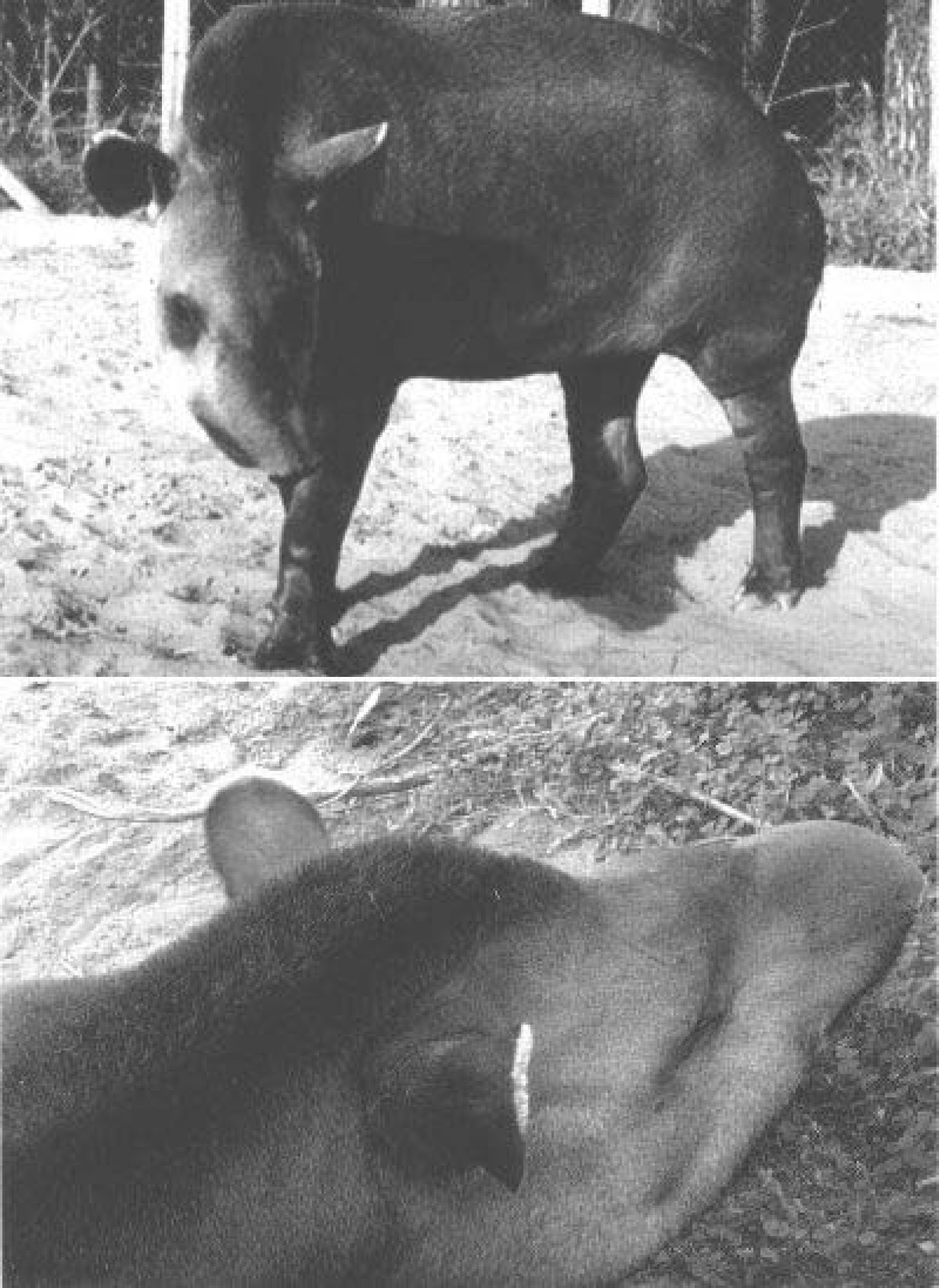
The Brazilian or lowland tapir (Tapirus terrestris). Below: detail of the head. Photograph by Marcelo Ribeiro Duarte and Vidal Haddad Jr.
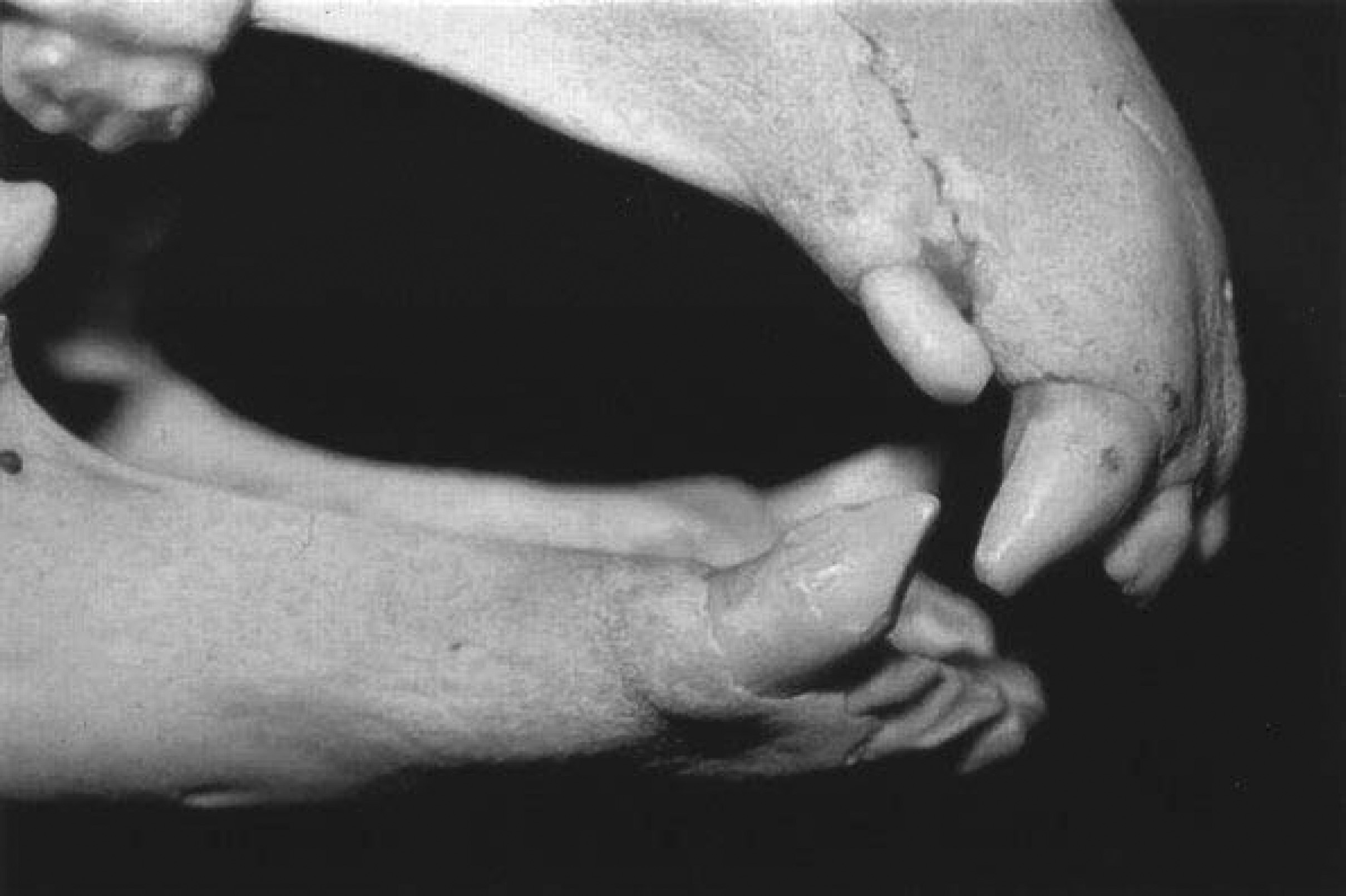
Tapirs have very strong and sharp teeth that can cause serious lacerations. Photograph by Marcelo Ribeiro Duarte.
Tapirs are agile in closed or open habitat and in or under water. 4 –6 Populations may be limited where their forage declines in quality, even though the plants themselves do not disappear. 7 Tapirs have been known to damage young corn and other grain crops. 8
Case report
A female tapir weighing approximately 180 kg was discovered feeding in a 55-year-old man's corn plantation. According to the man's colleague, the man grabbed and stabbed the animal, which, in turn, then attacked and repeatedly bit the man, causing fatal injuries. The tapir inflicted at least 3 deep bites that caused severe lesions and fatal hemorrhage. The tapir was later found near the farm, dead from the wounds inflicted by the farmer.
The attack happened in a rural area known as Itapura Farm beside the River Tietê near the border between South Mato Grosso and São Paulo States (Brazil). The area is dedicated to pastures and farming, specifically maize (Figure 3). The farmer's hut was within about 500 m of where corn stalks were damaged and the soil showed furrows, with evidence of dragging. Human footprints and tracks typical of a tapir were evident. The tracks measured about 16 cm in diameter, which is characteristic of an adult tapir. There had been local reports of problems with an adult tapir raiding crops.
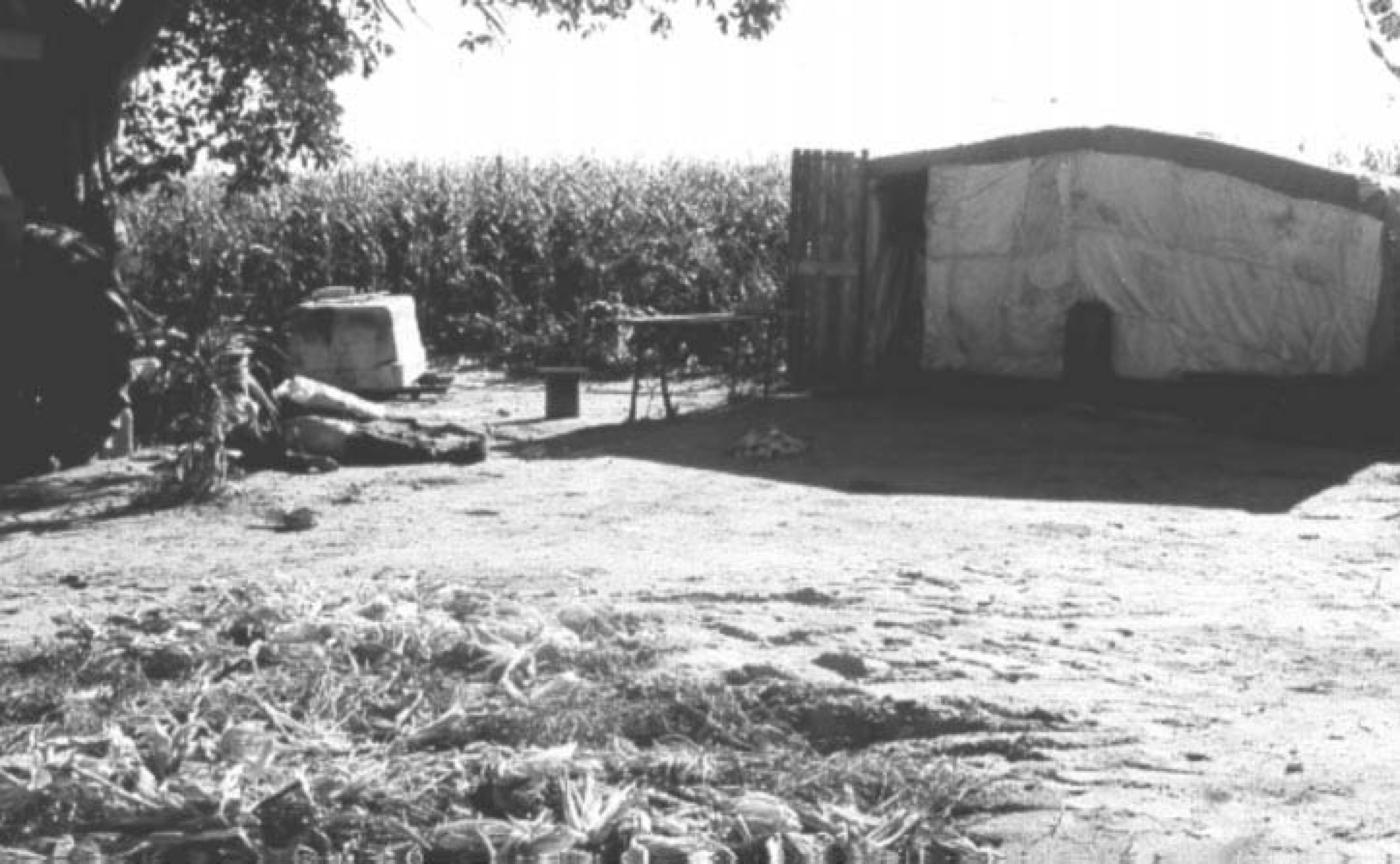
The rural farm—scene of the fatal attack. On the left of the picture is the victim's corpse. Photograph by Helio Yatsuo Ataíde.
The body of the farmer (160 cm tall, 64 kg, 55 years old) was found supine in the field and still warm to the touch. The victim had widespread bruising and lacerations that had bled profusely. Very serious bite wounds were apparent on the anterior cervical area and left arm (Figure 4) and proximal to the thighs and testicles. Ecchymoses and hematomas were in several locations on the body.
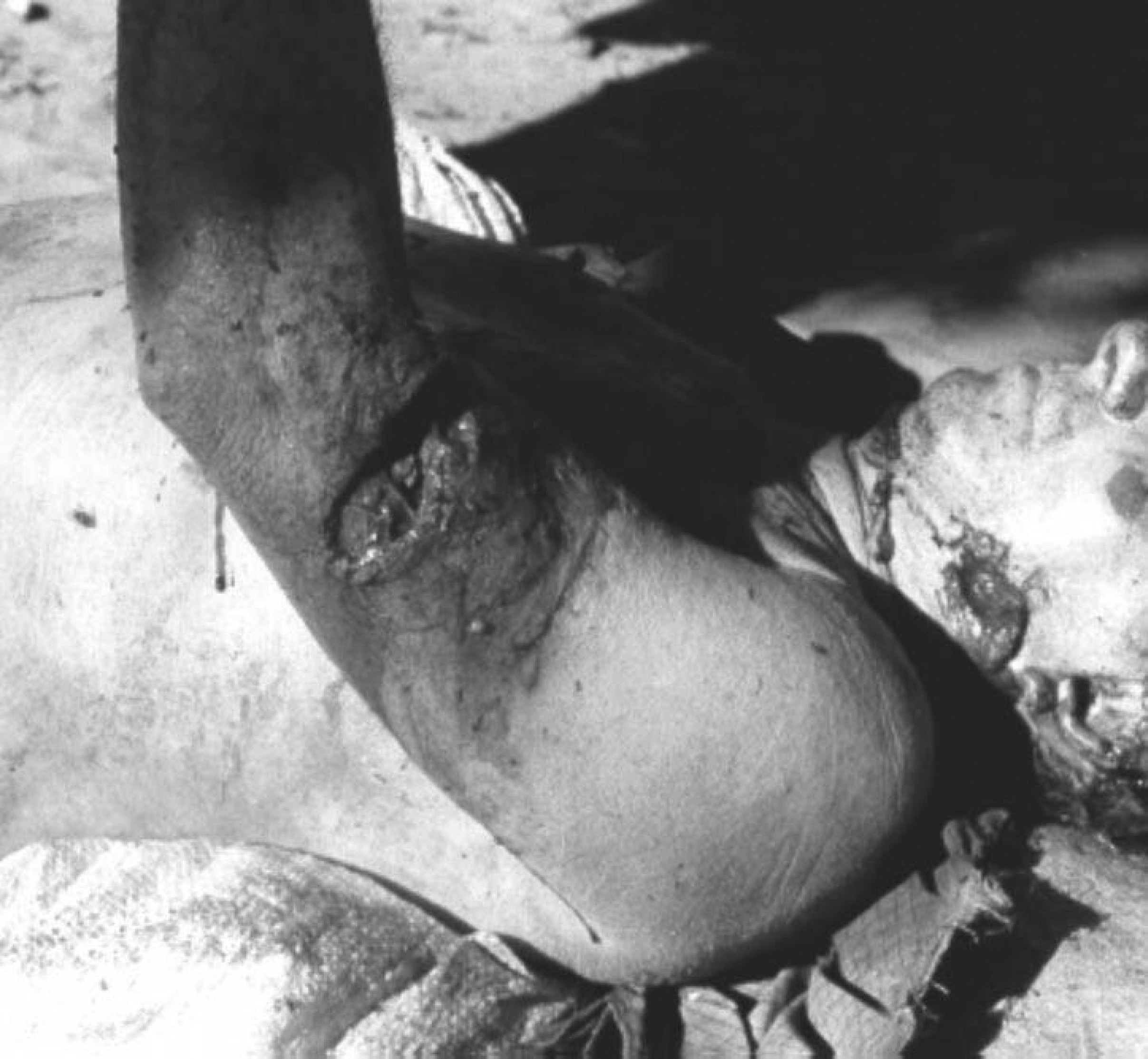
The victim received extensive lacerations that were the cause of death. The bites in the cervical region resulted in fatal blood loss. Photograph by Helio Yatsuo Ataíde.
Discussion
Very little in the literature addresses injuries inflicted by tapirs. The animal is usually very shy and does not attack humans. In this instance, the victim apparently attacked and injured the animal, thus provoking it into a severe defensive response. Tapir teeth are large and sharp; in this case, they caused wounds serious enough to induce fatal hemorrhaging. Wild animals, especially larger ones, should be respected and avoided. Although generally shy and docile, tapirs are strong and capable of inflicting bites with serious consequences.
Footnotes
Acknowledgments
We would like to extend special thanks to Júlio César Gomes and Luís Antônio de Mello, criminal forensic experts; Hélio Yatsuo Atayde, photographer of the Police Specialist Criminal Group, Andradina, São Paulo State, Brazil; Mogi-Mirim Municipal Zoo; and Cristina España, Veterinary Medicine School, São Paulo University.