






Abstract
Objective
The presence of coliform bacteria indicates a watershed risk for harboring microbes capable of causing human disease. We hypothesized that water from watersheds that have different human- or animal-use patterns would have differing risks for the presence of coliform bacteria.
Methods
Water was collected in wilderness areas of the Sierra Nevada range in California. A total of 60 sites from lakes or streams were selected to statistically differentiate the risk categories: 1) high use by backpackers, 2) high use by pack animals, 3) cattle- and sheep-grazing tracts, and 4) natural areas rarely visited by humans or domestic animals. Water was collected in sterile test tubes and Millipore coliform samplers during the summer of 2004. Water was analyzed at the university microbiology lab, where bacteria were harvested and then subjected to analysis by standardized techniques. Confirmation was performed with a Phoenix 100 bacteria analyzer. Statistical analysis to compare site categories was performed with Fisher exact test.
Results
Only 1 of 15 backpacker sites yielded coliforms. In contrast, 12 of 15 sites with heavy pack-animal traffic yielded coliforms. All 15 sites below the cattle-grazing areas grew coliforms. Differences between backpacker and cattle or pack-animal areas were significant (P ≤ .05). Only 1 of the 15 wild sites rarely visited by humans grew coliforms. All coliforms were identified as Escherichia coli. All samples grew normal aquatic bacteria of the genera Pseudomonas, Ralstonia, and Serratia and nonpathogenic strains of Yersinia. No correlation could be made with temperature or elevation. Sites below cattle-grazing tracts and pack-animal usage areas tended to have more total bacteria.
Conclusions
Alpine wilderness water below cattle-grazing tracts or areas used by pack animals are at risk for containing coliform organisms. Areas exclusively used by backpackers were nearly free of coliforms.
Introduction
The Sierra Nevada range snowpack serves as an important water source for California; its watershed provides nearly 50% of the state's freshwater supply. 1 It is important that this watershed be protected from microbial, chemical, and toxic pollution for users both downstream and upstream.
Within the Sierra Nevada range, over 3 000 000 acres of land have been designated as official wilderness by the National Park Service or United States Department of Agriculture (USDA) Forest Service and protected from development, logging roads, and motor vehicles.2,3 Some wilderness areas have quotas to limit overnight camping by backpackers and use by pack animals. Most of these protected areas are in high alpine regions between 2000 and 4200 m in elevation. These high alpine lakes and streams are an especially important watershed for California because of presumed purity of water and a large quantity of precipitation in the form of snow. The water is important for not only the distant water users but also the local water users such as backpackers, campers, fishermen, and the USDA Forest Service and National Park Service. However, this land is potentially subject to pollution by day hikers, backpackers, horses and pack animals, and also commercial cattle and sheep grazing. Pollution may occur from potential harmful substances that include microbial organisms or toxic substances. 4 Microbial organisms that may cause illness in humans include pathogenic bacteria such as coliforms and protozoa such as Giardia or Cryptosporidium. 5 Chemicals or toxins may be imported or synthesized by microbes, zooplankton, or phytoplankton from precursors imported by humans. Debate has ensued on the impact of backpackers, cattle grazing, or livestock such as mules and horses polluting the watersheds in wilderness areas. We completed 2 studies in a previous year that surveyed remote Sierra Nevada lakes and streams.6,7 However, these studies did not provide the statistical power to show significant differences for risk factors. This current study was designed to provide a direct comparison of risk factors.
Coliform bacteria have been established as indicators of fecal pollution or contamination of waterways in the United States.8,9 Coliforms may originate from a single source or a combination of sources: 1) backpackers, 2) pack animals, 3) grazing animals (cows, sheep), and 4) wild animals. Coliform pollution of wilderness areas by humans occurs through inadequate burial and disposal of fecal material. In addition, bathing or swimming in alpine lakes may also result in microbial pollution. 9 Pack animals may pollute by deposition of manure either directly into lakes and streams or indirectly onto trails or meadows, from which it may be washed into waterways by summer storms and annual snowmelt. The USDA Forest Service “leases” tracts in wilderness areas for cattle grazing. 2 As a result, a high density of cattle manure may be found in certain alpine watersheds, either in meadows or as a result of direct deposit into streams or lakes. Finally, coliform or other bacteria may originate from natural, wild animal zoonotic reservoirs.
We hypothesized that wilderness freshwater from watersheds that have different human- or animal-use patterns would have differing risks for the presence of coliform bacteria. Therefore, the purpose of the study was to analyze wilderness freshwater samples for coliforms and compare results from watersheds that have different use patterns among the following groups: 1) backpackers, 2) horses and mules (pack animals), 3) cattle grazing, and 4) isolated areas affected only by natural wild animals.
Methods
Field Site Collection
Sixty sites were prospectively selected to differentiate among environmental risks for different types of bacterial contamination in wilderness areas of Kings Canyon National Park, Sequoia National Park, and Yosemite National Park as well as the following USDA Forest Service wilderness areas: Mokelumne, Carson-Iceberg, Emigrant, Hoover Wilderness, Adams, John Muir, and Golden Trout. The Hall Natural Research Area, adjacent to the eastern boundary of Yosemite National Park and the southern boundary of Hoover Wilderness, was also included. No overnight camping or motor vehicles are allowed in the Hall area, and the remote areas have minimal visits by humans.
Risk classifications included 1) high use by backpackers, 2) high use of pack animals, 3) cattle-grazing tracts, and 4) natural sites (wild ecologies) not likely contaminated by humans or domesticated animals. Sites were risk stratified with the assistance of the National Park Service and USDA Forest Service on the basis of user nights by backpackers, pack animals, and cattle allotments in grazing tracts. Cattle grazing is not permitted in national parks, so all samples in cattle-grazing tracts were taken from within USDA Forest Service wilderness areas.
Field Water Collection
Water samples were collected from May through September in 2004. Water was collected in sterile test tubes and Millipore total coliform count samplers (Millipore Corporation, Bedford, MA). All samples were collected in duplicate, cooled according to standardized procedures, and transported to the University of California, Davis. 10 Sample devices measured bacteria for 1 mL of sample. This was multiplied by 100 as per standardized procedure of reporting colony-forming units per 100 mL in the water literature. Water temperature was measured at each site with a stream thermometer (Cortland Line Company Inc, Cortland, NY).
Bacterial Analysis of Water Samples
Details of analysis for bacteria have been described elsewhere.6,7 The analysis for coliform counts and total bacterial counts required incubating Millipore counting plate paddles at 35°C for 24 hours. Bacterial colonies were counted and then harvested for further analysis. Colonies were initially plated onto sheep blood and MacConkey agars (Remel Inc, Lenexa, KS). Lactose fermenting colonies from MacConkey plates were presumed to be coliform bacteria and were subject to further testing. Further screening and initial identification was performed by subplating onto C.I.N. (Yersinia) agar, Sorbitol-MacConkey agar, L.I.A., and T.S.I. tubes. Precise identification of bacteria genera and species analysis were performed by standardized automated laboratory procedures. In addition, analysis was also performed with a Phoenix 100 bacteria autoanalyzer. Strains were grown on Colombia agar with 5% sheep red blood cells for 16 to 24 hours at 37°C, replated, and grown again for 16 to 24 hours at 37°C just before testing. A suspension of 0.5 McFarland (accepted range, 0.5–0.6) was prepared in the identification (ID) broth (Becton Dickinson, Erembodegem, Belgium) and poured within 30 minutes into the panel, which was then loaded into the instrument within 30 minutes. Four quality-control strains (Escherichia coli ATCC 25922, Klebsiella pneumonia ATCC 13883, Klebsiella pneumoniae ATCC 700603, and Pseudomonas aeruginosa ATCC 27853) were loaded with each study batch, which always met quality-control criteria. The Phoenix instrument gives an ID result when a species or group of species is identified with more than 90% confidence. The confidence value is a measure of the likelihood that the issued ID is the only correct ID. The average time required to reach an ID result ranged from 3 to 12 hours. The autoanalyzer provided a computer printout identifying the bacteria. E coli colonies were also subjected to analysis to determine the presence of E coli O157 by using latex agglutination methodology.
Statistical significance among groups was calculated with Fisher exact test by STATA 8 Software (STATA Corporation, College Station, TX).
Results
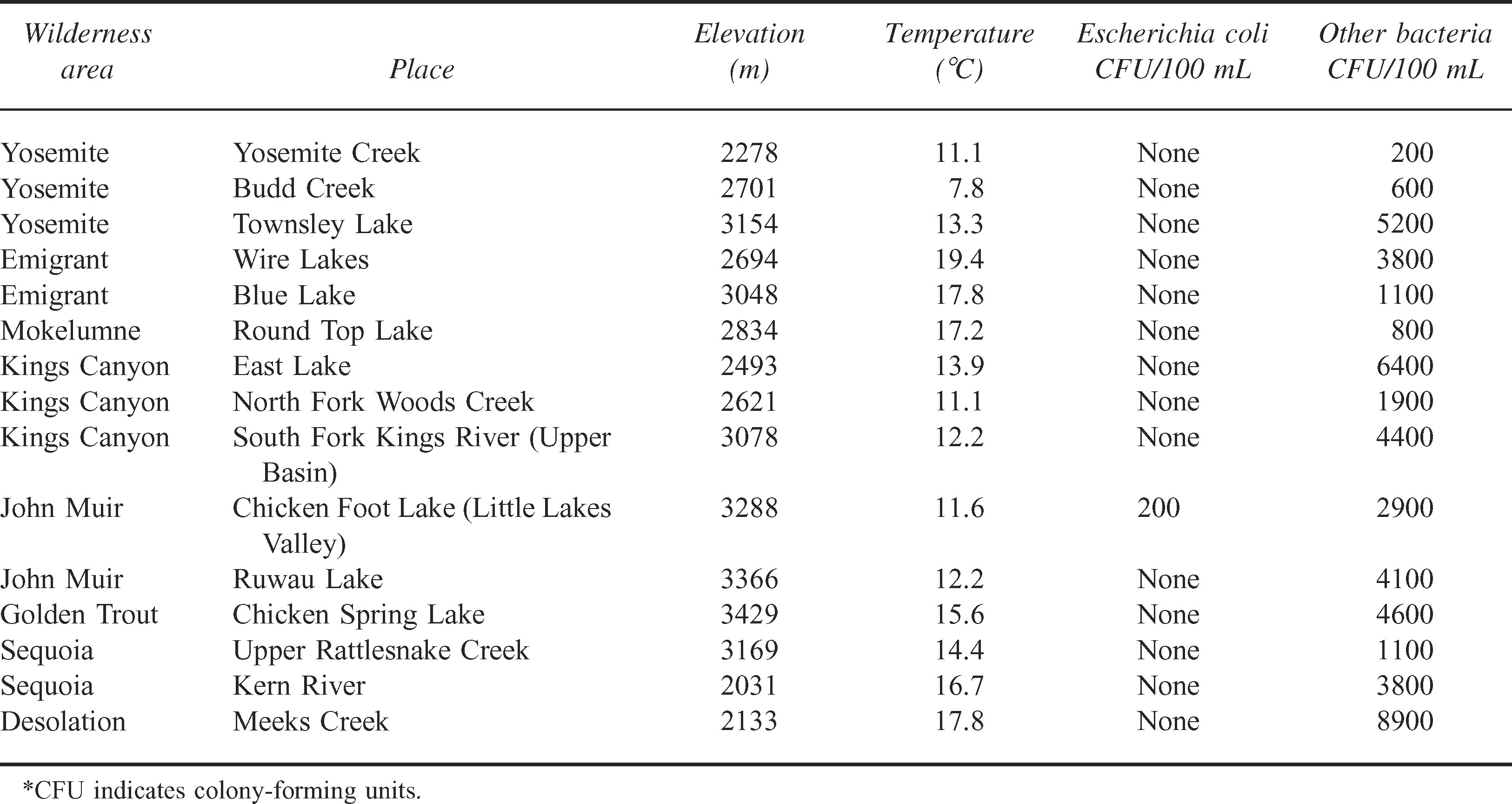
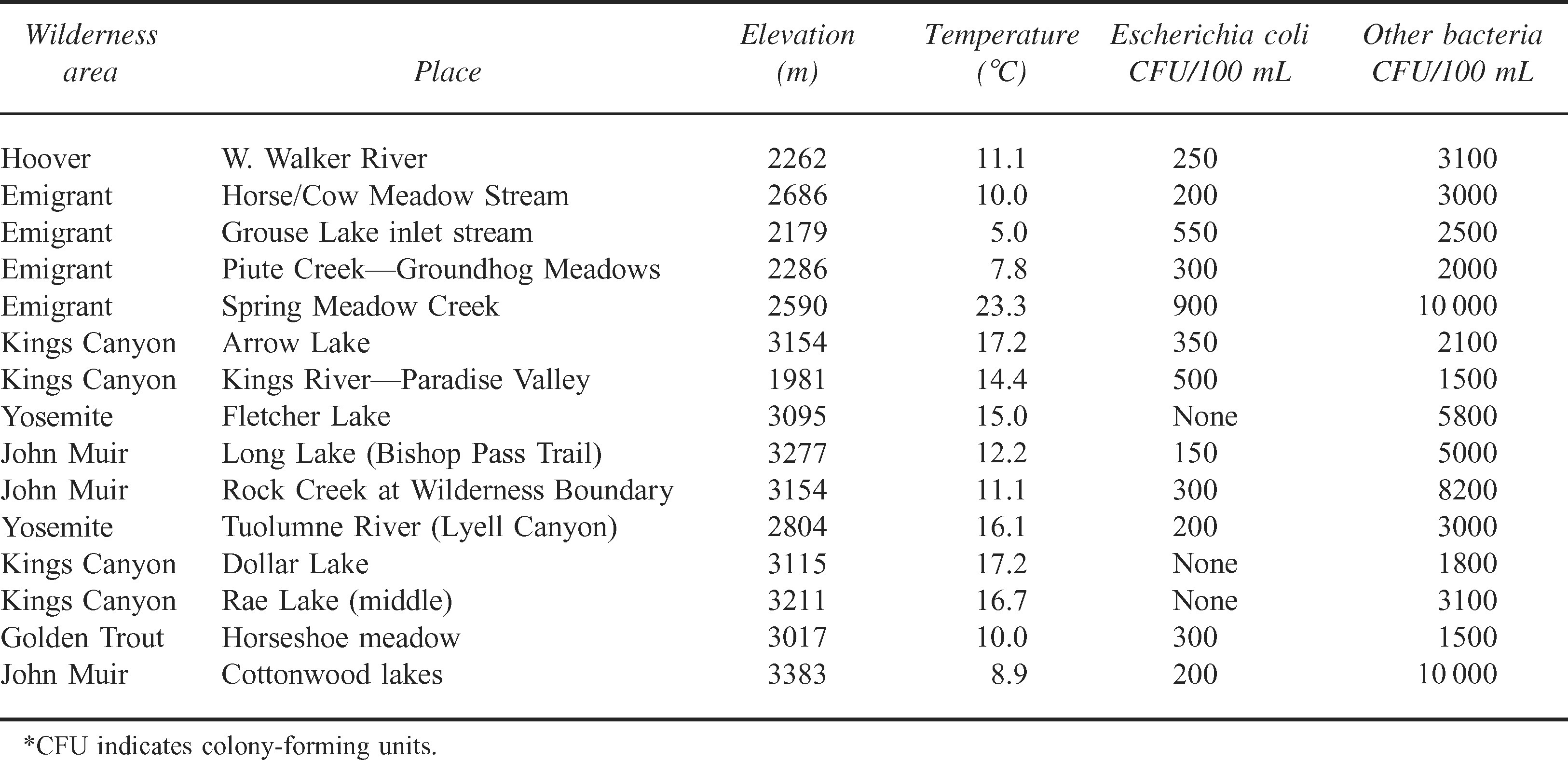
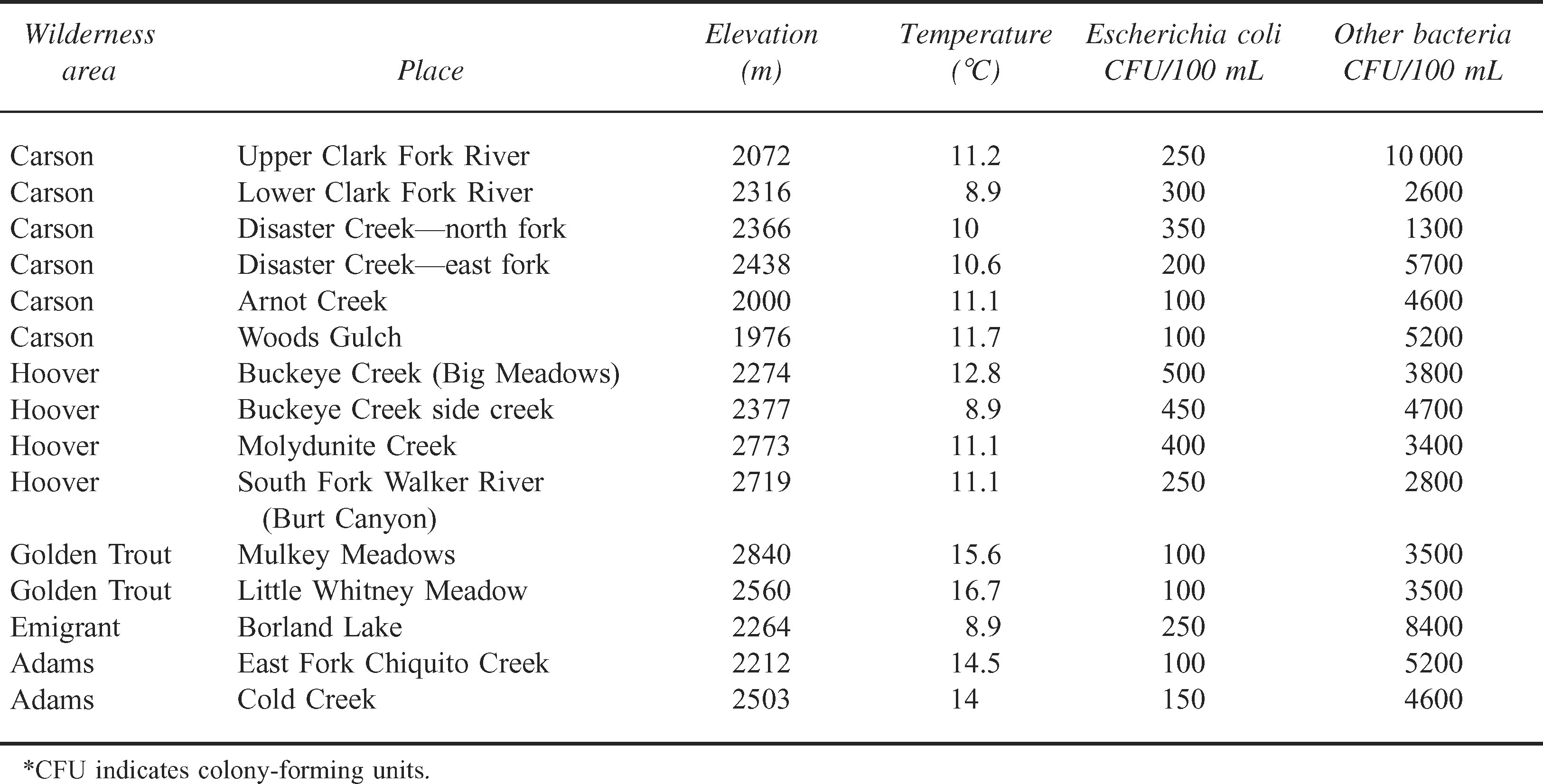
The results are summarized in Tables 1 through 4. Significant differences were found among sample groups. All 15 samples that were taken below areas in which cattle grazed or had recently grazed were positive for coliform growth. From areas frequented by pack animals, 12 of 15 samples had coliforms. In contrast, coliforms were found in only 1 of 15 areas of heavy backpacking. Only 1 of 15 sites rarely visited by humans or pack animals contained coliforms. Backpacker and natural-site groups had significantly fewer sites with coliforms when compared with the cattle-grazing group (P ≥ .01). Likewise, the pack-animal group had significantly more sites with coliforms when compared with the backpacker and natural areas (P ≥ .05). No statistical differences were found in numbers of coliform bacteria according to water temperature or elevation.
Sites with heavy backpacking*
Sites with stock (horses and pack animals)*
Cattle-grazing sites*
Low-impact sites: rare visits by humans*
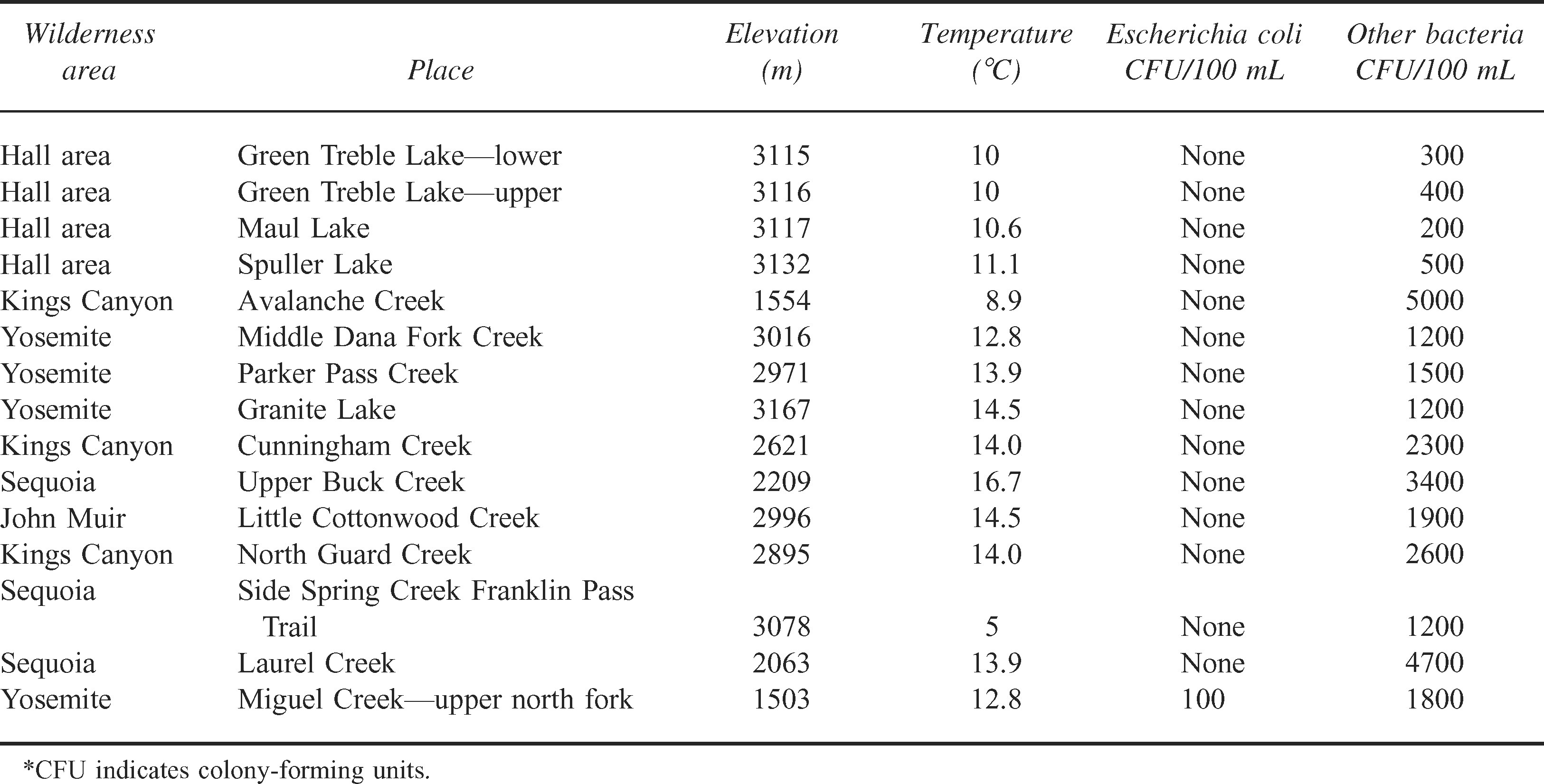
Noncoliform aquatic bacteria were also identified from the samples. The most common bacteria found included Achromabacter species, Pasteurella haemolytica, Rahnella aquatilis, Ralstonia paucula, Serratia odorifera, Serratia plymthica, Yersinia intermedia, Yersinia kristensenii, Yersinia frederiksenii, Pseudomonas putida, and Pseudomonas fluorescens. No correlation could be made between site use and types of noncoliform bacteria or total bacteria counts, except for the Hall Natural Research Area, where the total bacteria range was the lowest of any group of samples. Total bacteria in the Hall Natural Research Area ranged from 200 to 500 per 100 mL. Temperature or elevation was not a factor, as other sites with similar temperature and elevation had higher baseline levels of aquatic bacteria. The marked absence of human impact distinguished this area.
Discussion
In this study, areas frequented by cattle or pack animals had the greatest degree of fecal contamination into the wilderness watershed. We are not surprised at the finding of coliforms below cattle-grazing areas. In most of these areas, moderate amounts of cattle manure were observed during field collections. We identified all coliforms in our study as E coli. In some respects, finding coliforms below grazing areas serves as a positive control for the study. One might expect coliforms in watersheds with high densities of cattle. 11 However, we are surprised at the finding of coliforms in areas frequented by pack animals. National parks and the USDA Forest Service have strict requirements on management of livestock in wilderness areas. It is not possible to exclude a human contribution to this finding, as high-volume pack-animal areas are also used by humans. In previous years we have examined Sierra Nevada water for coliform bacteria.6,7 However, those studies were from water taken primarily from watersheds polluted by both pack animals and humans, and we were unable to fully determine associated risks for coliform pollution. This current study identified and included sampled sites used exclusively by backpackers and not pack animals. In addition, this current study added sites that were unused by humans, pack animals, or cattle. The absence of coliforms in most of those areas used exclusively by humans and the absence of pack animals would suggest that pack animals are most likely the source of coliform pollution. Pack animals produce high volumes of manure, which is deposited directly onto the surface of trails, soil, or meadows.12,13 Manure deposited on the ground may be swept into streams during summer rains or spring snow runoff. During the field operations of the study, pack animals were observed on several occasions to be defecating directly into bodies of freshwater. Fecal contamination as indicated by the finding of coliforms would place the watershed at risk for harboring microbes capable of causing human disease. Some of these infections are a potential threat to humans. This includes certain pathogenic strains of E coli, Salmonella, Campylobacter, and Aeromonas and protozoa such as Giardia, all of which have animal reservoirs. The organism Yersinia enterocolitica has been previously cultured in high alpine areas of the Sierra Nevada range and may have a natural reservoir in small mammals and birds. 14 Pack animals entering the High Sierra have been subject to analysis, and Giardia samples were found in their manure. 15
E coli and other pathogenic bacteria can survive in aquatic environments for long periods depending on the nutriment availability, pH, and water temperature. The number of years that E coli can survive in aquatic environments has been debated. 16 A study of Lake Michigan shore water showed that E coli may sustain itself indefinitely in appropriate environmental situations. 17 Open-range cattle are noted to carry E coli strain O157: H7 at a rate of 1%, placing humans who drink untreated water below established cow pastures at risk for a very serious disease. 13 Studies on this strain have also shown it to survive in cold water. 18 In addition, many non-O157 E coli are capable of inducing serious disease in humans. 10 Although it is possible to genetically differentiate human from animal and ecologic E coli, these techniques are very expensive and available only in limited laboratories in the United States.
Finally, we wish to comment on the noncoliform bacteria found in the study. Aquatic bacteria are part of a normal ecosystem of lakes and streams. 19 Indeed, if bacteria were absent, the normal food chain from frogs to fish, as well as the ecological balance, would be in jeopardy. The most common bacteria we found was R aquatilis. Several nonpathogenic species of Yersinia were also cultured. Many bird species can be carriers of nonpathogenic species of Yersinia and Y enterocolitica. 20 Previous studies of wilderness water suggest a correlation between total bacterial counts and usage by backpackers.6,7 Freshwater from remote alpine areas has been shown to be a source of Campylobacter, Salmonella, and Y enterocolitica, although these were not found in the current study.21,22,23
Conclusion
The risk for finding coliform bacteria in alpine wilderness water was determined by the use of the adjacent watershed. Water in areas used extensively by pack animals or for cattle grazing was routinely contaminated, whereas water in those areas used exclusively by backpackers or rarely visited by humans was rarely contaminated.