






Abstract
Objective
To provide a 5-year longitudinal assessment of risk of acquiring disease from Sierra Nevada Wilderness area lakes and streams. This study examines the relative risk factors for harmful water microorganisms, using coliforms as an indicator.
Methods
Streams and lakes in the backcountry of Yosemite and Kings Canyon National Parks and neighboring wilderness areas were selected and water was analyzed each year over a 5-year period. A total of 364 samples from lakes or streams were chosen to statistically differentiate the risk categories based on land usage, as follows: 1) areas rarely visited by humans (Wild), 2) human day-use-only areas (Day Hike), 3) areas used by backpackers with overnight camping allowed (Backpack), 4) areas primarily impacted by horses or pack animals (Pack Animal), and 5) cattle and sheep grazing tracts (Cattle). Water was collected in sterile test tubes and Millipore coliform samplers. Water was analyzed at the university microbiology lab, where bacteria were harvested and then subjected to analysis using standardized techniques. Statistical analysis to compare site categories was performed utilizing Fisher exact test and analysis of variance.
Results
A total of 364 sampling sites were analyzed. Coliforms were found in 9% (4/47) of Wild site samples, 12% (5/42) of Day Hike site samples, and 18% (20/111) of Backpacker site samples. In contrast, 63% (70/111) of Pack Animal site samples yielded coliforms, and 96% (51/53) of samples from the Cattle areas grew coliforms. Differences between Backpacker vs Cattle or Pack Animal areas were significant at P ≤ .05. All samples grew normal aquatic bacteria.
Conclusion
Surface water from watersheds below cattle areas and those used by pack animals is at high risk for containing coliform organisms. Water from Wild, Day Hike, or Backpack sites poses far less risk for contamination by coliforms.
Introduction
The Sierra Nevada Mountain Range in California serves as an internationally recognized recreational area and an important natural resource, in that it provides 50% of the state's drinking water.1,2 The Sierra extends from Tehachapi Pass in the south 400 miles northward to Soldier Meadows, near Lassen National Park. 3 Much of the land still retains wilderness character, with roughly 4 000 000 acres of land designated as official wilderness by the National Park Service or the US Department of Agriculture (USDA) Forest Service, and is protected from development, logging roads, and motor vehicles. 4 Most of these protected areas range from 1800 to 4200 m in elevation. Surface-water quality at high-elevation headwaters is important to hikers, backpackers, and fishermen, as well as downstream urban water districts.2,5 Non–point source pollution may result in contamination of surface waters with harmful substances, including both microbial organisms and toxic substances. 2 Therefore, the issue of potential microbial pollution from day hikers, backpackers, horses and pack animals, and commercial cattle and sheep grazing is important. Microorganisms include coliforms, pathogenic bacteria, and protozoa such as Giardia or Cryptosporidium. 6 Although concerns have been raised regarding Giardia in the Sierra, many authors have suggested that other fecal pathogens, such as enterotoxic Escherichia coli, may play a greater role in mountain-acquired illness. 6 –10
The unique geographic features of the Sierra have resulted in challenges to water ecology and quality. Much of the watershed consists of granite or metamorphic bedrock, with little topsoil. 11 As a result, soil buffering capacity is extremely low, providing little or no biogeochemical retention or transformation of nutrients such as nitrogen and phosphorus. 5 Relatively small amounts of nutrient addition or habitat disturbance can lead to significant impacts on nutrient flux and subsequent impacts on water quality and aquatic ecosystems. 12 Pollution from soap, sunscreens, food particles, and human and animal waste may enter the waterways. These substances include nutriments known to increase rates of surface-water eutrophication, in turn prompting conditions that lead to increased survival or growth of microorganisms such as bacteria and algae. 13 –15
Monitoring for each type of microorganism is expensive and difficult; this difficulty is compounded by the high alpine geography that requires multiple hiking days to access remote sites. As an alternative to testing for all microorganisms, testing for coliforms can provide an index of risk for pathogenic waterborne disease.16,17 Coliform bacteria have been established as indicators of fecal pollution or contamination, including Giardia, of waterways in the United States. 17 In wilderness areas, coliforms may originate from one or a combination of sources including 1) wild animals endemic to the area; 2) humans visiting during daylight; 3) backpackers who camp overnight; 4) stock or pack animals, such as horses and mules; and 5) cattle or sheep grazing. Coliform pollution of wilderness areas by humans may occur through inadequate burial and disposal of fecal material. In addition, bathing or swimming in lakes may also result in microbial pollution. 18 Pack animals may pollute by deposition of manure either directly into lakes and streams or indirectly by deposition of manure onto trails or meadows, and these animals have been documented to import Giardia into the Sierra wilderness.19,20 This manure may be washed into waterways by either summer storms or annual snowmelt.21,22 The USDA Forest Service leases tracts in wilderness areas for cattle grazing. 23 Both cattle and pack animal manure are known to potentially contain microbes that are pathogenic to humans, including viruses; protozoa such as Giardia and Cryptosporidium; and bacteria such as E coli and Salmonella. 24 –27 Finally, some coliform and other bacteria potentially may originate from natural wild animal and bird zoonotic reservoirs. 28
We have surveyed the surface water of Sierra Nevada wilderness areas during selected summers in past years, but debate still continues regarding the impact of backpackers, cattle grazing, or livestock on the watersheds in wilderness areas. 23 In this report, we use results from previously published surveys (years 2003 through 2006) and combine them with new results reported here to create a continuous 5-year data set. 29 –31 The goal of this paper is to determine the relationship between land use patterns and the prevalence of coliforms in the Sierra Nevada surface water.
Methods
Field Site Selection
Sites were selected that include all common types of land use in wilderness areas of Kings Canyon, Sequoia, and Yosemite National Parks, as well as the following USDA Forest Service wilderness areas: Carson-Iceberg, Emigrant, Hoover, and John Muir (the Figure). The Hall Natural Research Area, adjacent to the eastern boundary of Yosemite and the southern boundary of the Hoover wilderness, was also included. No overnight camping or motor vehicles are allowed in the Hall area. Sites were selected randomly from areas representative of different use patterns. Relative differences in the number of sites in each category reflect the prevalence of land use patterns along the various trails. Risk classifications included 1) natural areas not visited by humans or domesticated animals (Wild); 2) day hike areas used only by humans and in which overnight camping was not allowed (Day Hike); 3) areas used by backpackers with overnight camping allowed (Backpacker); 4) areas traversed by animals such as horses and mules (Pack Animal); and 5) cattle and sheep grazing tracts (Cattle). Site characteristics were stratified with the assistance of the National Park Service and the USDA Forest Service based on use described by the risk classifications of this study. Cattle grazing is not permitted in National Parks, so all samples in cattle grazing tracts were taken from within Forest Service wilderness areas.
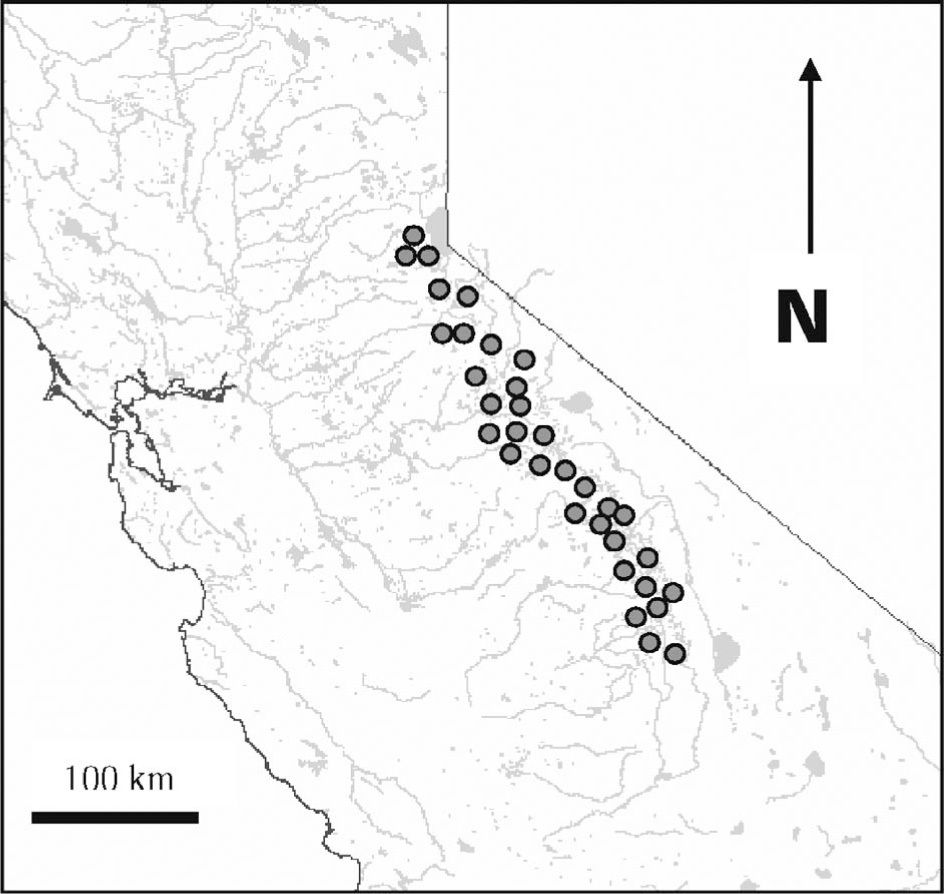
Study area and sample collection sites. Sites were located throughout the majority of the Sierra Nevada range. In some cases each dot represents more than one sampling site because some sites were too close to display individually.
Field Water Collection
Water samples were collected from June through September for the 5-year period ranging from 2002 to 2006. For sites subject to repeated analysis, samples were taken during the same week each year. Water was not collected within 3 days of thundershowers to prevent skewing of results from trail runoff. Samples were not taken in the real-time visible presence of pack animals or cattle. Water was collected in 1) sterile test tubes, 2) Millipore total coliform count samplers (Millipore Corporation, Bedford, MA), and 3) Millipore heterotrophic bacteria count samples. All samples were collected in duplicate. Although the manufacturer suggests immediate incubation, this was not possible as a result of the remote wilderness conditions of the study. Our control studies have shown that colony survival is not affected for up to 1 week at temperatures below 30°C, a condition to which we adhered in the field by monitoring the temperature of the sample container and returning to the laboratory within 7 days of all sampling (R. W. Derlet, MD, unpublished data, May 2002). To prevent deterioration from higher temperatures during transport from trailhead to laboratory (a trip taking, on average, 8 hours), samples were kept in a cooler at 5°C. Each sample device measured bacteria for 1 mL of sample. This was multiplied ×100, as per standardized procedure of reporting colony-forming units (CFU)/100 mL in the water literature.17,30 The mean value of duplicate samples is reported. Water temperature was measured at each site using a stream thermometer (Cortland Line Company Inc, Cortland, NY). Location and elevation were determined using US Geographical Society topographical maps, guide books, and backcountry rangers.
Analysis of Water Samples
Details of analysis for bacteria have been described in detail elsewhere.28,29,32 The analysis for coliform counts and total bacterial counts required incubating Millipore counting plate paddles at 35°C for 48 hours. Bacterial colonies were counted, then harvested and subplated for further analysis, following standardized procedures. 32 Colonies were plated onto Sheep Blood, MacConkey, and Sorbitol agars (Reel Inc, Lenexa, KS). Lactose fermenting colonies from MacConkey plates were presumed to be coliform bacteria and were subject to further testing. Further screening and initial identification was done by subplating onto Eosin Methylene Blue (EMB Levine), Cefsulodin Irgasan Novobiocin, and Hektoen agars. The color and morphology of the colonies were recorded. Controls and samples, including coliform-inoculated and coliform-free water, were subjected to simulated field conditions and tested to provide quality assurance of methods.
Data Analysis
The entire data set was analyzed to compare the results of water analysis to the different land use patterns. A subset of sites that had been subject to an annual analysis for at least 4 of the 5 years was analyzed separately to determine if these specific sites produced consistent results each year. Coliform-positive samples were correlated with water temperature and elevation. For this purpose, very low temperature was arbitrarily categorized as 0°C to 10.9°C, low as 11°C to 15.9°C, mild as 16°C to 20.9°C, and warm as 21°C and higher. Elevation was compared in 500-m intervals from 2000 m to 3500 m. Statistical significance between groups was calculated with Fisher exact test and analysis of variance (ANOVA) utilizing STATA Software (College Station, TX). Data are reported with 95% confidence intervals, unless otherwise stated.
Results
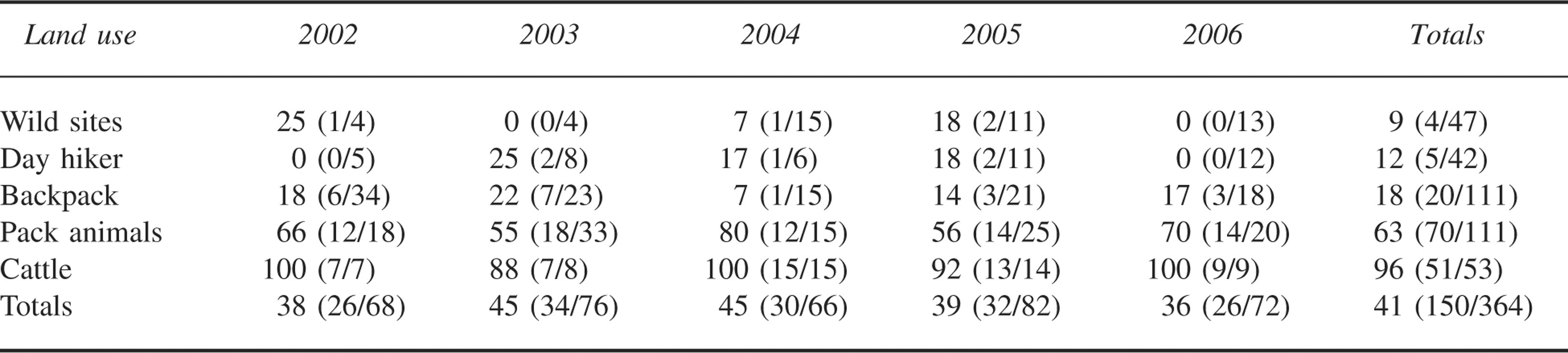
Sample sites are illustrated in the Figure, and results are summarized in Tables 1 through 6. A total of 364 samples were collected from 105 different streams or lake sites. Coliforms were found in 4 of 47 Wild sites (8.5%, CI 1.8–15.2), 5 of 42 Day Hike sites (11.9%, CI 3.1– 18.9), and 20 of 111 backpacker sites (18.0%, CI 12.0– 24.0). In contrast, 70 of 111 Pack Animal sites (63.1%, CI 55.5–70.5) yielded coliforms, and 51 of 53 Cattle sites (96.2%, CI 91.5–100) grew coliforms. The differences between Wild, Day Hike, or Backpacker and either Pack Animal sites or Cattle sites were statistically significant (P ≥ .05, Fisher exact test).
Percentage of coliform-positive sites by land use and raw data (positive sites/total sites)
Wild sites: Number of coliforms at each site by year (colony-forming units [CFU]/100 mL)
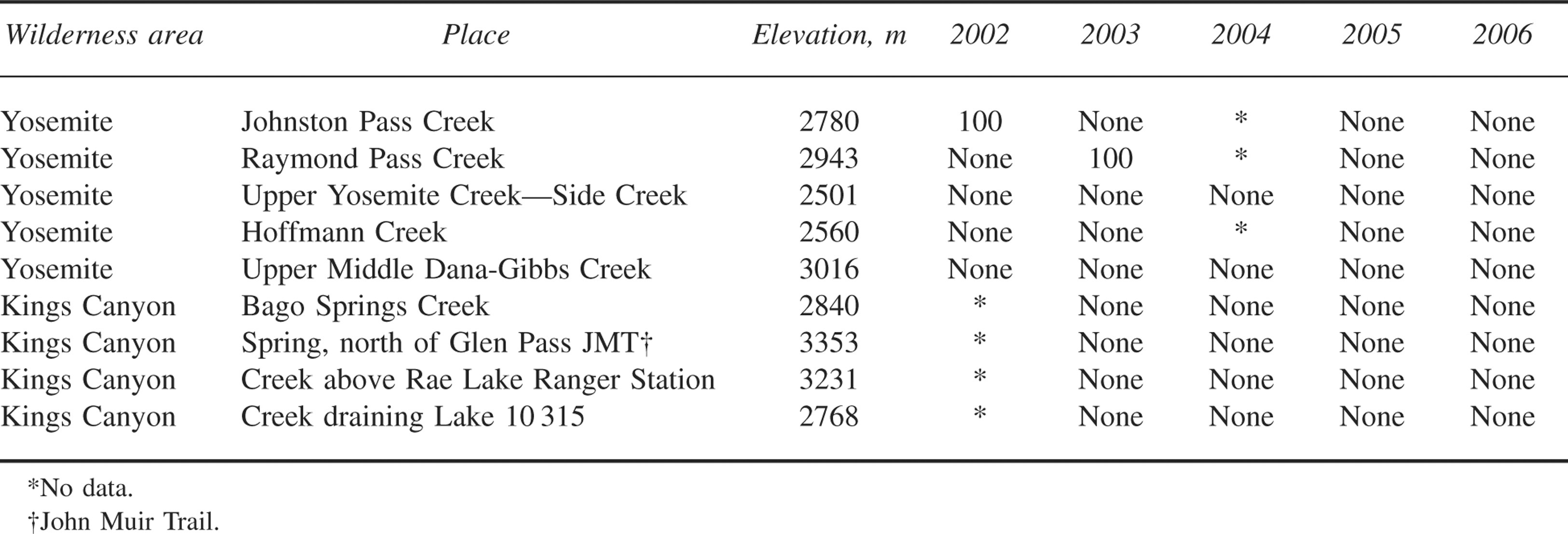
Day hike only sites: Number of coliforms at each site by year (colony-forming units [CFU]/100 mL)
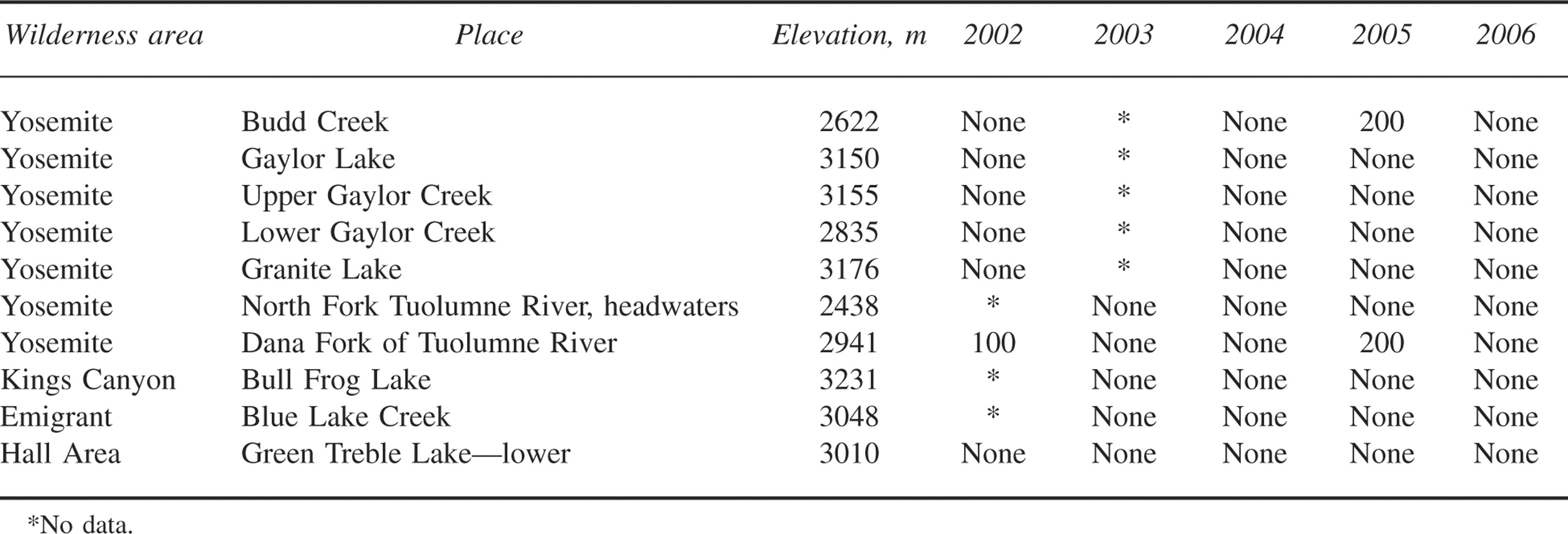
Backpacking sites: Number of coliforms at each site by year (colony-forming units [CFU]/100 mL)
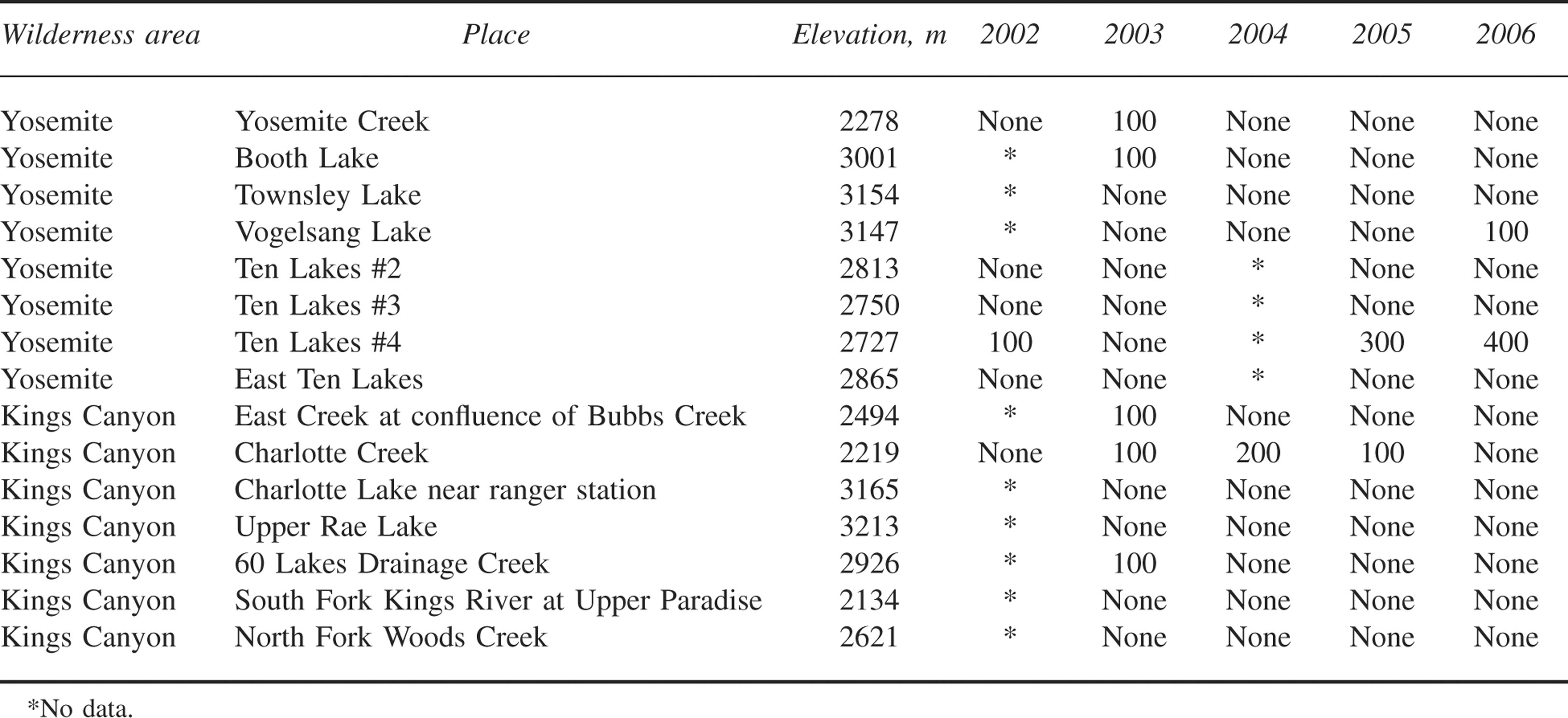
Pack animal sites: Number of coliforms at each site by year (colony-forming units [CFU]/100 mL)
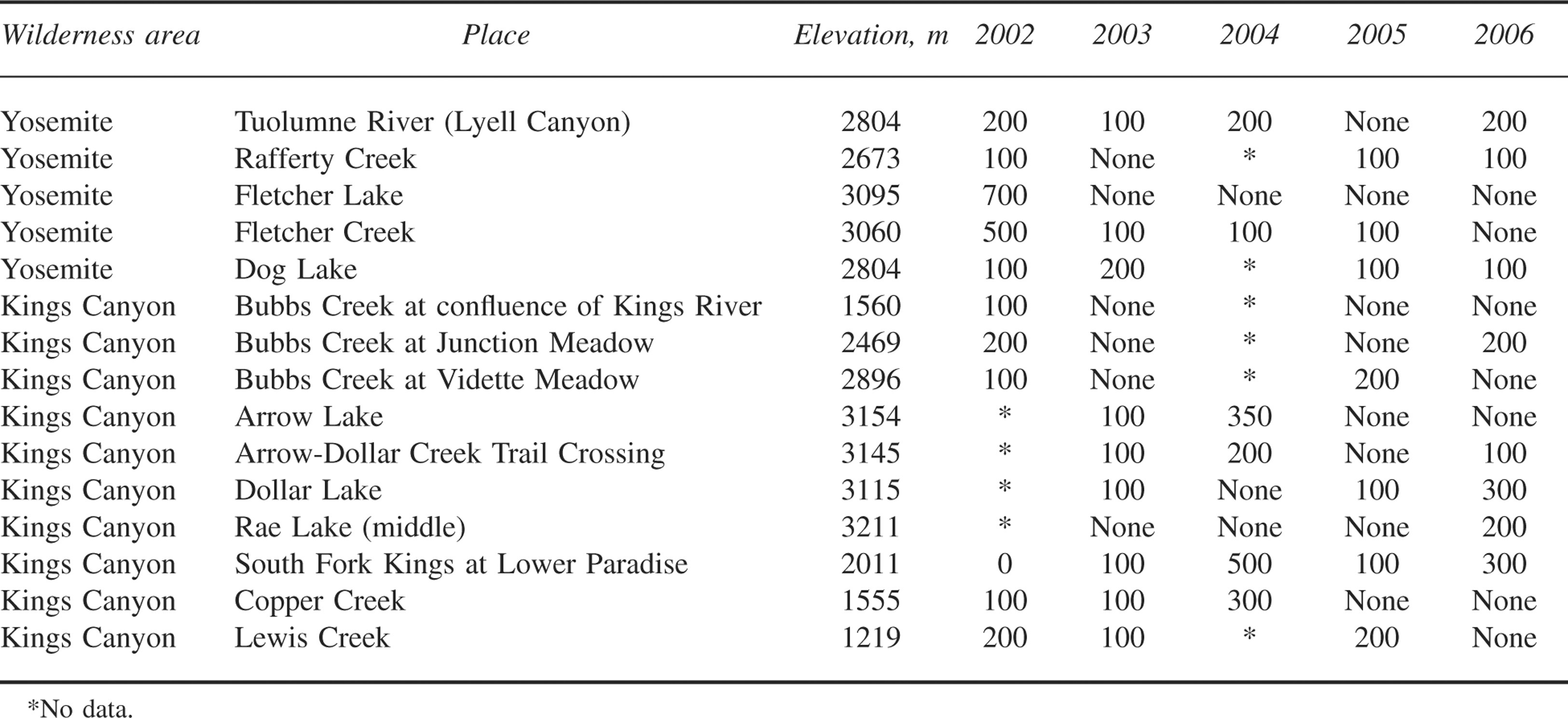
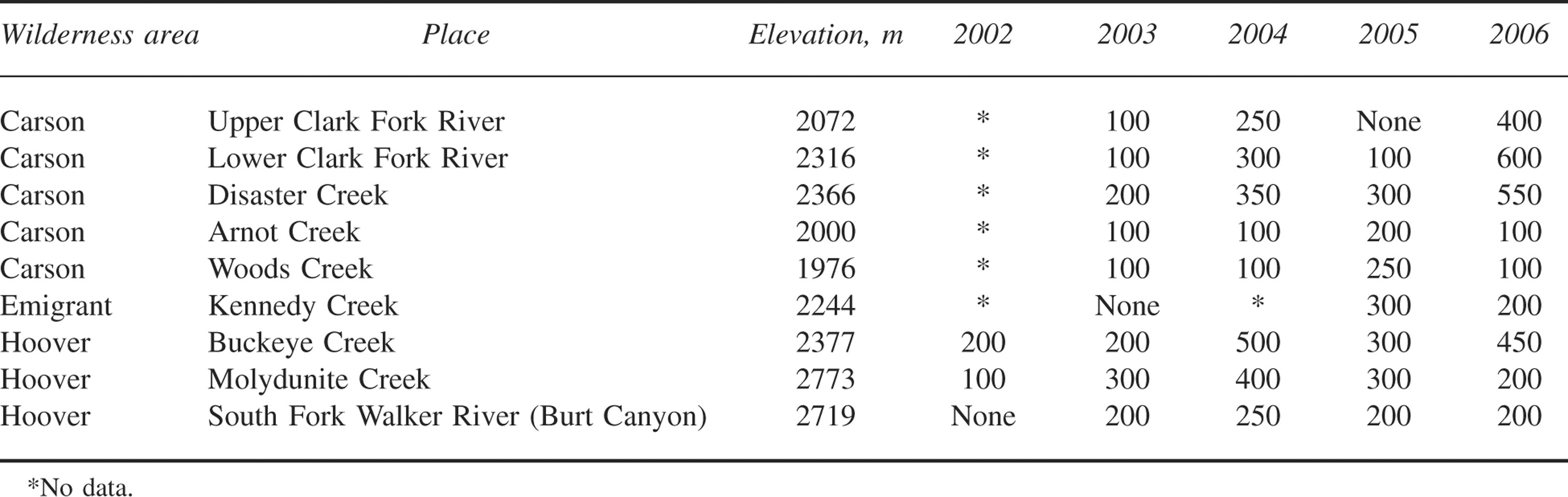
Cattle risk watershed sites: Number of coliforms at each site by year (colony-forming units [CFU]/100 mL)
With regard to temperature, 9 of 23 samples at very low temperature were positive (39.1%, CI 12.2–66.8), and 59 of 158 samples at low temperatures were positive (37.3%, CI 17.9–38.2). For mild temperatures, 65 of 160 samples were positive (40.6%, CI 29.9–51.3), and 2 of 5 samples from warm temperatures were positive (40.0%, CI 4–76). There was no significant difference between coliform growth and temperature range (P = .56, ANOVA). For elevations between 2000 and 2499 m, 24 of 51 samples were positive (47.0%, CI 27.0– 67.0), and for elevations between 2500 and 2999 m, 60 of 162 samples were positive (37.0%, CI 24.3–49.7). For elevations above 3000 m, 66 of 151 samples were positive (43.7%, CI 30.4–57.0). No significant difference in coliform growth and elevation range was detected (P = .57, ANOVA). Coliform counts in positive samples ranged from 100 to 500 CFU·mL−1.
Subanalyses performed on sites that were sampled at least 4 of the 5 years are listed in Tables 2 through 6. These sites were sampled at similar times during 4 of 5 summers. A total of 58 of these sites provided 246 samples for analysis. Coliforms were found in a similar frequency when compared to the total analysis. In this subanalysis, coliforms were found in 2 of 38 Wild samples (5.0%, CI 0–11), 3 of 42 Day Hike samples (7.1%, CI 0.6–13.6), 11 of 62 Backpacker samples (17.7%, CI 9.2– 24.9), 40 of 65 Pack Animal samples (61.5%, CI 51.5– 70.9), and 35 of 37 Cattle samples (94.5%, CI 87.6– 100).
Heterotrophic bacteria were also identified from the samples. Concentrations ranged from 400 to 12 200 CFU/100 mL. Although not statistically significant, total bacterial counts for positive samples tended to be lower at the Wild and Day Hike sites, with a combined mean of 2333 CFU/100 mL (CI 1562–3105), compared with 5248 CFU/100 mL (CI 2838–7650) for Backpacker sites, 5819 CFU/100 mL (CI 3010–8628) for Pack Animal sites, and 5732 CFU/100 mL (CI 2947–8517) for Cattle sites.
Field collection observations confirmed the characterization of land use categories. Wild areas had no trails or visible evidence of human or domesticated animal use upstream of the sampling site; Day Hike areas were posted as such or were posted with “No camping” signs. Backpacker areas had no evidence of recent or remote pack animal manure on trails, but they did show evidence of campsites. Pack Animal areas had animal manure on the trails, and in Cattle areas cow pies were observed in meadows and woodland. No manure was observed directly in lakes or streams at the time of sampling.
Discussion
In our 5-year analysis, overall consistency was found each year with respect to the prevalence of coliforms overall and also in each designated land use area. This consistency and reproducibility of results is an important finding of this 5-year analysis and has implications for validating single-year data. Total coliform prevalence ranged from 36% to 45% each year. Total annual precipitation was similar each of the years sampled, with no drought years. 33 Only a few other studies have examined backcountry water in the Sierra, providing few data with which to compare our findings. 7 –9 We believe that analyzing the data by land use areas provides a useful prospect of impact on water quality.
Cattle Areas
We have found that areas frequented by cattle had the greatest degree of coliform contamination into the wilderness watershed, ranging from a prevalence of 88% to 100% for each year sampled over the 5-year period. We are not surprised at the finding of coliforms below cattle grazing areas. On traditional US rangelands, coliforms can be expected to be found in the watershed. 34 A recent study of South Carolina watersheds found non-point pollution with E coli to be high in cattle grazing areas. 35 In some respects, finding coliforms below grazing areas serves as a positive control for the study. However, until recently, data on the impact of cattle on Sierra water have been limited. 30 Cattle harbor and excrete many microorganisms capable of causing disease in humans, including protozoa, bacteria, and viruses. 25 –27 Miller and colleages 36 found up to 14 000 Giardia cysts per liter of water in storm surface water below coastal California dairies. Cattle are also noted to carry E coli strain O157: H7 at a rate of 1% to 30%, placing persons who drink untreated water below established cow pastures at risk for very serious disease. 26 Studies on this strain have also shown it to survive in cold water. 37 In addition, cattle manure contains large amounts of nitrogen, phosphorus, and other growth factors for algae. 14 These substances also create an aquatic environment that supports pathogenic microorganisms. 12 –15 Each wilderness “cow use day” is equivalent to 100 to 120 human use days in terms of environmental impact with respect to waste pollution.38,39 Despite these concerns, the US Forest Service has recently increased proposed cattle grazing tracts in the Sierra Wilderness. 23
Pack Animal–Impacted Areas
The finding of a high prevalence of coliforms in wilderness areas frequented by pack animals is important. Very few other studies have attempted to analyze land use patterns and risk for finding pathogenic microorganisms in the high-elevation areas of the Sierra Nevada.8,9 A report on the Rae Lakes region of Kings Canyon National Park found that water from lakes and streams with higher human activity tended to have a higher prevalence of coliforms. 8 However, these areas were also subject to pack animal traffic. In that study, lakes and streams found free of coliforms were inaccessible to horses and mules. Pack animals produce high volumes of manure, which is deposited directly onto the surface of trails, soil, or meadows.24,38,40 In contrast to human waste, pack animal manure is not buried in the soil. Manure deposited on the ground can be swept into streams during summer rains or spring snow runoff.21,22 The National Park Service is concerned about manure contamination of surface waters because of its effect on water.40,41 Fecal contamination, as indicated by the finding of coliforms, would place the watershed at risk for harboring microbes capable of causing human disease. As is the case with cattle, these threats include certain pathogenic strains of E coli, Salmonella, Campylobacter, Aeromonas, and protozoa such as Giardia. Pack animals entering the High Sierra have been subject to analysis, and Giardia has been found in their manure. 20 The organism Hafnia alvei was found in one study conducted along the John Muir Trail in the Sierra Nevada, even in old manure. 24 H alvei can cause diarrhea in humans. 42 The pack animal areas studied were also traversed by humans. Therefore, it is possible that some of the coliforms found at these sites originated from humans. An examination of results from the Backpack sites helps to clarify this issue. In comparison to Pack Animal sites, only a small percentage of Backpacker sites had coliforms. This finding would support the conclusion that most of the microbial contamination in pack animals areas is a result of pack animal manure. Furthermore, in Day Hike areas in which pack animals are not allowed to travel, only low levels of coliforms were found.
Backpack-Only Sites
Coliform was found in an average of 18% of these sites. Wilderness regulations require that human waste must be buried at least 100 feet from waterways.40,41 Discussions with wilderness backcountry rangers indicate that there is generally good compliance with these regulations. When disposed of properly in humus topsoil, which contains a multitude of bacteria and fungi, these environmental microbes degrade many of the pathogens. Some Wilderness areas now also ask backpackers to carry out their toilet paper.
Wild Sites
In contrast to the other site types, coliforms were found in only 9% of Wild sites. The source of coliforms found in the wild is speculative. Coliforms may be present as a result of waste contamination from the many species of birds and native mammals. Environmental coliforms have been reported in the environmental literature. 43
Heterotrophic, aquatic bacteria are part of a normal ecosystem of lakes and streams. 44 Indeed, if bacteria were absent, the normal food chain from frogs to fish, as well as the ecological balance, would be in jeopardy. A prior study identified many species, including Achromabacter species, Pasteurella haemolytica, Rahnella species, Serratia species, Yersinia intermedia, Yersinia species, and Pseudomonas species in wilderness surface water. 29 We found total bacterial counts to be lower at Wild and Day Hike sites, compared to other categories in this 5-year analysis. This may result from the effects of camping, which include the deposition of bacteria from skin contact into surface water and also the stirring up of bacteria-rich bottom sediment in lakes and streams. 39
Limitations
Multiple confounding factors may affect wilderness field findings. Annual precipitation varied during the years of the study. Wind, water flows, and cloud cover may affect results. Although samples were taken during summertime traffic by humans and domesticated animals, these represent single–point-in-time samples; additional samples at different times may have increased the accuracy and significance of findings. Data in this report are applicable only to Sierra Nevada Wilderness Areas and not to areas with human habitation. Finally, overall use patterns were not quantified (backpacker use in terms of persons/night; animal use in terms of heads of livestock/ acre, etc).
Recommendations
In wilderness areas where cattle or pack animals have been present, we recommend that drinking water be treated. In Sierra Nevada wilderness areas, water from alpine sidestreams that are free from upstream domesticated animal use have a very low risk of harboring coliforms and we believe have a minimal risk of illness if drunk untreated.
Conclusion
In this 5-year analysis, coliform prevalence in Sierra Nevada Alpine wilderness water varied by land-usage patterns of humans and domesticated animals. Water in areas of cattle grazing or in areas used by pack animals has a high probability of containing coliform organisms. Water from lakes and streams of Wild, Day Hike, or Backpack watersheds bears significantly less risk of harboring coliforms.