





Abstract

To the Editor:
A small fish family, the Cobitidae (loaches), is found in Africa, Asia, and Europe. Loaches are typically slim, some of them almost eel like. Their tiny scales are covered by thick mucus. Loaches lack teeth in their jaws. 1 The thick-lipped protrusible mouth bears 3 to 6 pairs of barbells. Loaches use their highly vascularized intestine as an accessory respiratory organ. Loaches have small fins, and their eyes are commonly covered with a protective transparent lid. Just in front of or below the eyes is a pronged spine that may be used for probing or possibly as a weapon. Several of the tropical species are kept in aquariums. Members of the genus Botia are 10 to 15 cm long and, in contrast to other loaches, have plump bodies. 1 The caudal peduncle is almost as thick as the body, and the painted snout bears as many as 4 pairs of barbells on the upper lip. The eyes are high on the head, and the 2-pronged spine beneath each eye is directed backward (Figure).
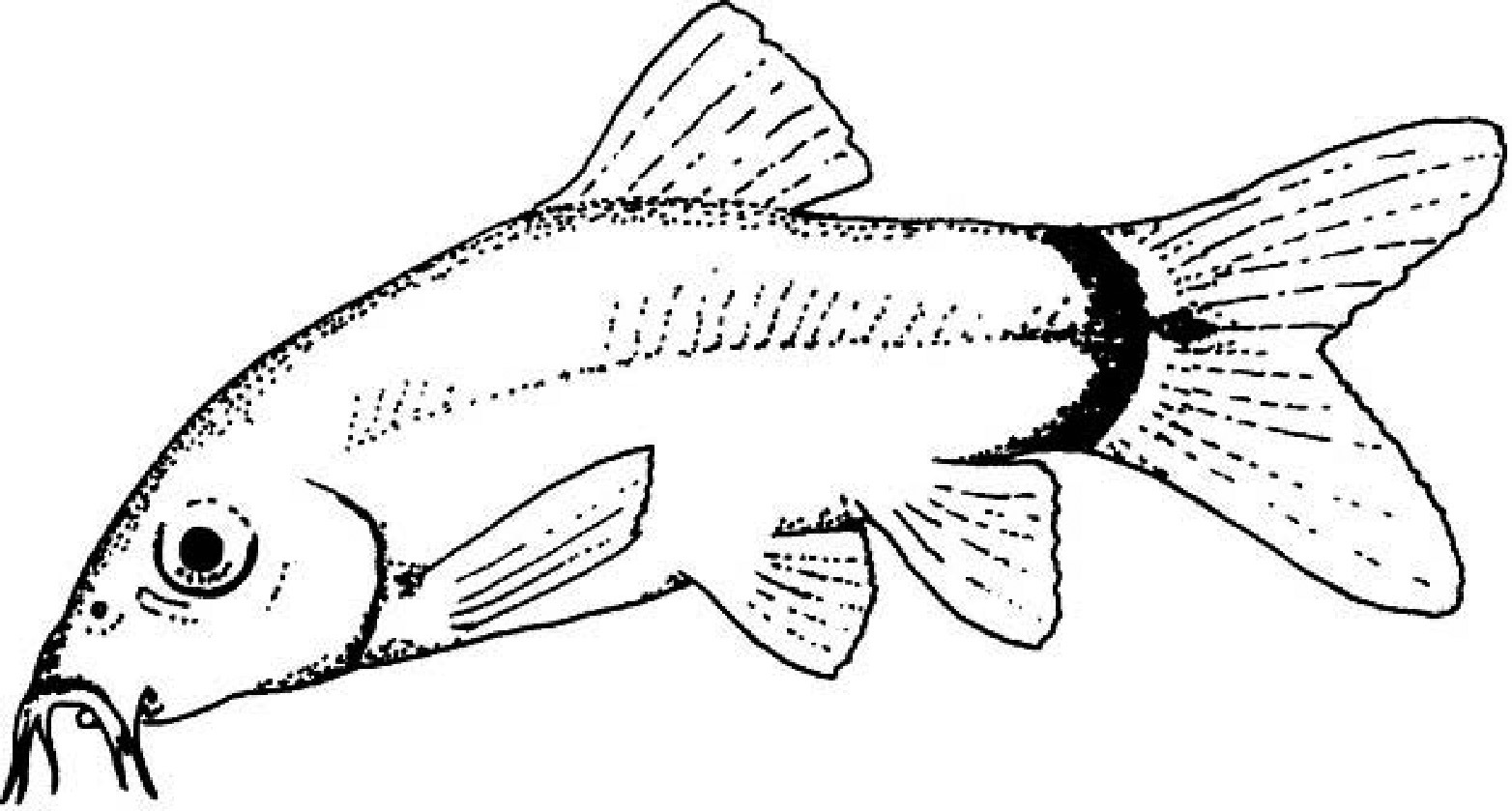
The redtail botia, Botia modesta.
A 32-year-old male breeder of aquarium fish presented to the Department of Clinical Toxicology in Poznań, Poland, with an injury to the fourth finger of his right hand inflicted by a captive redtail Botia modesta (Bleeker, 1865) with a length ∼9 cm. The injury occurred during tank tending. The patient complained of bleeding, numbness, sensibility disturbances, and intense pain at the site of the injury. The pain appeared at once after injury. Numbness radiated to his armpit. On admission the patient was alert, with good verbal response, and his heart rate was 76 beats per minute, blood pressure 117/77 mm Hg, and respiratory rate 20 breaths/min. At the base of his finger, there was a puncture wound ∼1 mm in diameter with surrounding edema and erythema, and he had muscle fasciculations of the arm. The Poison Information Center at the Jagiellonian University Medical College, Kraków, was consulted. The work up consisted of electrocardiogram, erythrocyte sedimentation rate, complete blood count, serum electrolytes, enzymes, urinalysis, and coagulation profile. All studies were normal, with the exception of an elevated creatine kinase level of 764 U/L. The area of the wound was infiltrated with 1% lidocaine and examined carefully. There was no evidence of retained foreign body. The wound was irrigated and cleansed with antiseptic solution and left open. Further treatment included tetanus immunization, pain management with lidocaine, and a 7-day course of prophylactic antibiotics that included cefuroxime 250 mg 2 times a day and trimethoprim-sulfamethoxazole (160 mg:800 mg) 2 times a day. After 6 hours of observation, the patient was discharged from the hospital at his own request but was followed up closely to evaluate clinical manifestations associated with the injury and any potential complications. At 1 month, the wound was healing well but slowly by secondary intention. The hand ultimately healed completely without any deficits in motor or sensory function. It was felt that this patient suffered minor, although quite painful, toxicity after the sting due to a toxic factor likely found in the surfactant secretions from the fish's skin.
The production of toxic substances by fish is by no means rare. A venom or toxin is generally defined as a substance, or more frequently a mixture of chemical compounds, produced by a living organism, actively excreted, toxic to other organisms, used to scare enemies away and/or to obtain food, or released after death from the decomposing body. 2 Fish skin in general contains only single-cell glands, which excrete mucus or serous fluid. The number of glands, their appearance, and type of excreted substance are quite variable. 2
Several groups of fish are known to release into the surrounding water toxic skin secretions, presumably as defence substances against predators. They commonly possess toxins with both ichthyotoxic and hemolytic activities. The chemistry of these secretions has been studied in only a few cases. Two peptide toxins termed grammistins 1 and 2 were isolated from the skin secretion of the soapfish Grammistes sexlineatus. 3 Other well-characterized toxins include pahutoxins (choline esters of 3-acetoxypalmitic acid), pavoninins and mosesin (steroid glycosides), and pardaxins (peptides). All of these have been determined to be surfactants. 3
Some catfish produce crinotoxins, proteinaceous substances found in the epidermal secretions coating the entire fish's body surface, not just the spines, and released when the fish is excited or threatened.4,5 These substances may coat the spine and, when introduced into open skin, can cause symptoms similar to envenomations. Data on the functions of fish crinotoxins are meagre but suggest a protective function against other organisms, whether viruses, bacteria, fungi, algae, settling invertebrate larvae, or predators. The evidence suggests that they are allelochemics. If exposed to open skin, these toxins can cause symptoms of throbbing pain, tissue necrosis, and possibly muscle fasciculations. Crinotoxins may have been the evolutionary precursors of the toxins present in the stings of catfish. 5 The latter are known to be rich in the epidermis of fishes with reduced squamation and are believed to play an important role in producing toxic components. Indeed, there is evidence of a positive relationship between production of proteinaceous crinotoxins and reduction of squamation in fish. 2
The redtail botia has become a popular aquarium fish in Europe and is available in almost every pet shop. Additionally, many popular aquarium fish belonging to Cobitidae, Siluridae, and Anguillidae with reduced squamation are potentially rich in crinotoxins and pose a potential risk to aquarists.