






Abstract
Objective
To identify the emergency medical service (EMS) workload and trends associated with search and rescue (SAR) operations in Utah's National Park Service (NPS) units.
Methods
Data for this study were collected from the Annual Emergency Medical Services Report and the Annual Search and Rescue Report for National Park Service units in Utah from 2001–2005.
Results
There were 4762 EMS incidents reported between 2001 and 2005, including 79 fatalities (50 traumatic; 29 nontraumatic). The most common EMS transportation method was ground (1505) and helicopter (553) transport. The heaviest trauma, medical, and cardiac workload was at Glen Canyon National Recreation Area (GLCA) and the heaviest first aid workload was at Zion National Park (ZION). There were 1190 SAR operations between 2001 and 2005 involving 67 fatalities, 623 ill or injured visitors, 1813 non-ill or non-injured visitors, and 92 saves. GLCA and ZION accounted for 47% and 21% of all SAR operations. The total cost of SAR operations was $1 363 920. SAR operations most commonly occurred on weekends, involved male visitors (59%), visitors aged 20–29 years (23%), and 40–49 years (20%), and visitors participating in day hiking (221), motorized boating (196), and canyoneering (98) activities. Most SAR operations were in lake (226), desert (147), and canyon (140) environments and were resolved within 24 hours.
Conclusions
GLCA and ZION experienced heavy use of EMS resources that should be noted by EMS administrators and planners. GLCA and ZION also reported the most SAR operations. The development of techniques to prevent the need for SAR at GLCA and ZION would likely have the most potential to reduce the financial impact of SAR incidents and morbidity and mortality to visitors.
Keywords
Introduction
The state of Utah is a popular destination for outdoor enthusiasts. With almost 80% of land in the state administered for public use by federal and state government agencies, Utah has succeeded at becoming a magnet for outdoor recreation pursuits. In fact, active outdoor recreation in Utah contributes $5.9 billion USD annually to the state's economy and supports over 65 000 jobs. 1 Utah is also viewed as a capital for America's national parks because the state plays host to 5 national parks (Arches, Bryce Canyon, Canyonlands, Capitol Reef, and Zion), 5 national monuments (Cedar Breaks, Dinosaur, Hovenweep, Timpanogos Cave, and Natural Bridges), 1 national historic site (Golden Spike), and a major national recreation area (Glen Canyon). Together these National Park Service (NPS) units report an estimated 8.2 million recreational visitors per year. 2
The 2003 National Survey on Recreation and the Environment reported that 97.6% of Americans over the age of 16 participate in some type of outdoor recreation activity each year.3,4 Moreover, activities such as hiking and backpacking are among the most popular and fastest growing outdoor recreational activities. 3 –6 The NPS units in Utah offer a wide range of recreational opportunities such as hiking and biking in Arches National Park, horseback riding at Bryce Canyon National Park, 4-wheel driving and whitewater rafting in Canyonlands National Park, canyoneering in Zion National Park, and boating and swimming at Glen Canyon National Recreation Area. With these opportunities, however, comes the risk of injury and illness that may require search and rescue (SAR) or emergency medical services (EMS) intervention.
Despite the popularity of outdoor recreation, there is only a small body of literature dedicated to reporting the morbidity and mortality of recreation-oriented visitors to NPS units. Moreover, much of the published literature is heavily concentrated on NPS units in California, Hawaii, Washington, and along the Appalachian Trail. 5 –15 Outside of 4 known manuscripts from Denali National Park and Preserve, Yellowstone National Park, Yosemite National Park, and Sequoia-Kings Canyon National Park, even less information has been published about SAR operations and the EMS workload in NPS units. 16 –19 Since SAR and EMS are a vital component of any rural and wilderness emergency medical system, it is important to know the impact that lost, ill, and injured recreational users have on medical services. 20 –22 Thus, the purpose of this investigation was to identify SAR trends and the EMS workload in Utah's NPS units. The results should provide valuable information for those involved in the management of EMS and the development of preventive SAR operations in Utah's NPS units.
Methods
Data for this study were collected from the Annual EMS Report and the Annual Emergency Medical Services Report and the Annual Search and Rescue Report for NPS units in Utah from 2001 to 2005. Arches National Park (ARCH), Bryce Canyon National Park (BRCA), Canyonlands National Park (CANY), Cedar Breaks National Monument (CEBR), Glen Canyon National Recreation Area (GLCA), Timpanogos Cave National Monument (TICA), and Zion National Park (ZION) were the Utah-based units reporting any EMS workload from 2001 to 2005. The Annual Emergency Medical Services Report details the number of trauma, medical (noncardiac), cardiac, and first aid incidents handled by each park unit and classifies them as either a basic life support (BLS) incident or an advanced life support (ALS) incident. ALS incidents are defined as EMS calls requiring ALS skill intervention, such as starting intravenous therapy (IV), intubation of a patient, or administering medications. All other incidents are defined as a BLS call. The reports also count the number of fatalities (traumatic and nontraumatic) and the type of EMS transportation (ground, helicopter, fixed-wing, vessel) workload handled by each individual unit.
From 2001 to 2005, SAR activity was reported by ARCH, BRCA, CANY, CARE, GLCA, and ZION. The Annual SAR Report includes information about the total number of SAR incidents in each park and how many SAR operations ended with a fatality, ill or injured person, non-ill or non-injured person, or a save. A save is defined as any case where death would have occurred without SAR intervention. The report also includes the total fiscal costs of SAR operations. These costs are determined by tallying the reported personnel, aircraft, vessel, and supply costs. In 2003 NPS changed to a more detailed SAR reporting form providing more detailed information about SAR operations. Hence, in this investigation, details about the demographics of persons involved in SAR operations, the day of week the SAR incident occurred, the subject activity at the time the SAR operation was initiated, and the factors contributing to SAR incidents were only reported for 2003 to 2005. Also, the reported notification method calling for SAR assistance, the SAR operation duration, the SAR environment, and the rescue methods used during the SAR operations were reported for 2003 to 2005. Dinosaur National Monument (DINO) was excluded from this study because the monument's headquarters and majority of acreage are in the state of Colorado. Also, it was impossible to determine the number of EMS and SAR incidents that occurred in the Utah or Colorado sections of the monument. The cumulative reported data for each year of the Annual EMS Report and the Annual SAR Report were entered into a spreadsheet and all calculations were performed using SPSS (v. 12.0) software.
Results
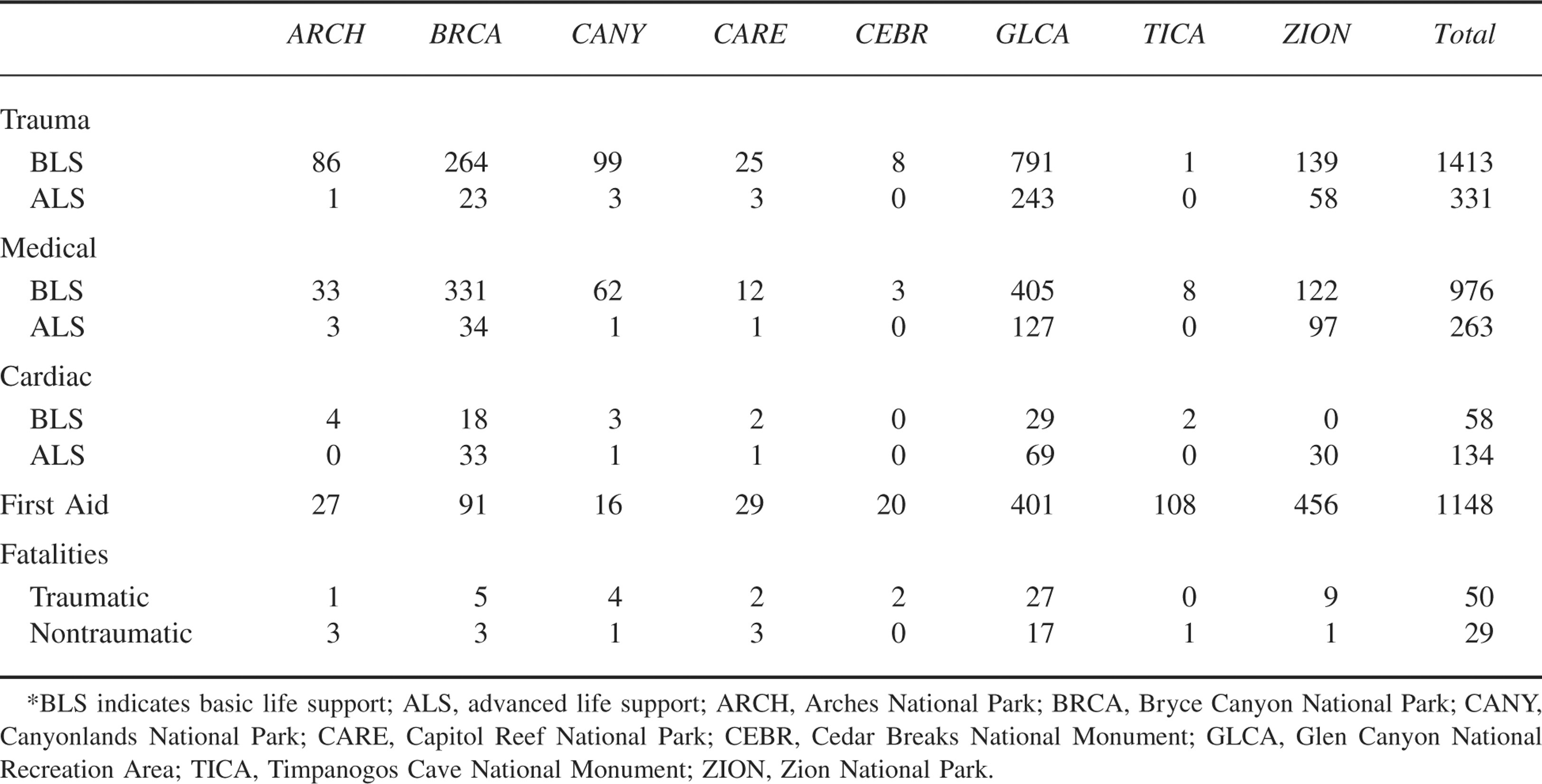
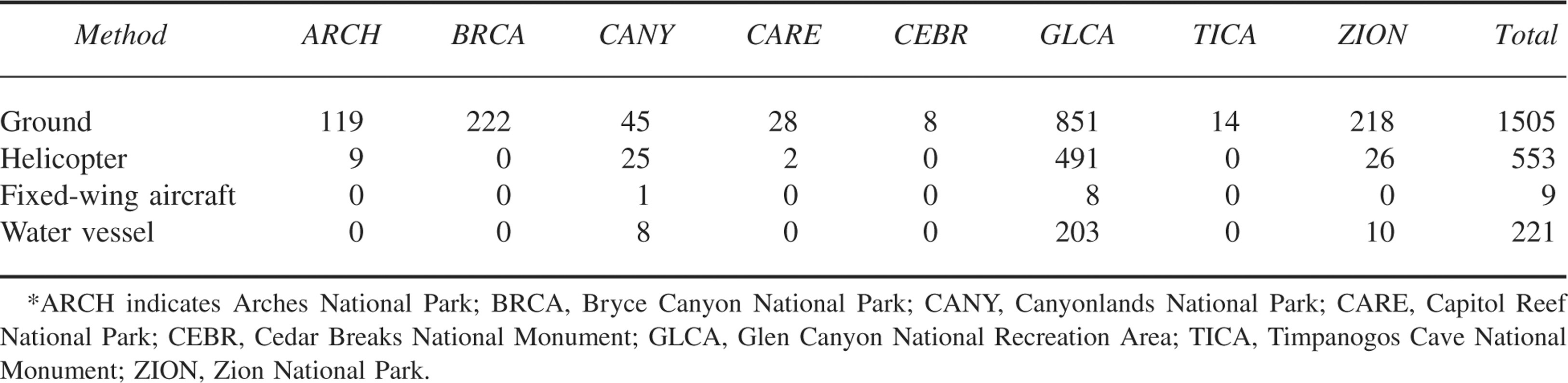
From 2001 to 2005, there were 4402 EMS incidents reported in Utah's NPS units. There were 79 fatalities (50 traumatic; 29 nontraumatic), 1744 trauma incidents, 1239 medical incidents, 192 cardiac incidents, and 1148 first aid incidents. GLCA recorded the highest number of traumatic and nontraumatic fatalities (Table 1). ZION recorded the highest number of first aid incidents and GLCA recorded the highest number of trauma, medical, and cardiac incidents in both BLS and ALS categories. The most common EMS transportation methods were ground transport, helicopter transport, water vessel transport, and fixed-wing aircraft transport (Table 2). GLCA accounted for 57% of all ground transports, 89% of all helicopter and fixed-wing transports, and 92% of all water vessel transports.
Emergency medical services workload for National Park Service units in Utah, 2001 to 2005*
Emergency medical services transportation method for National Park Service units in Utah, 2001 to 2005*
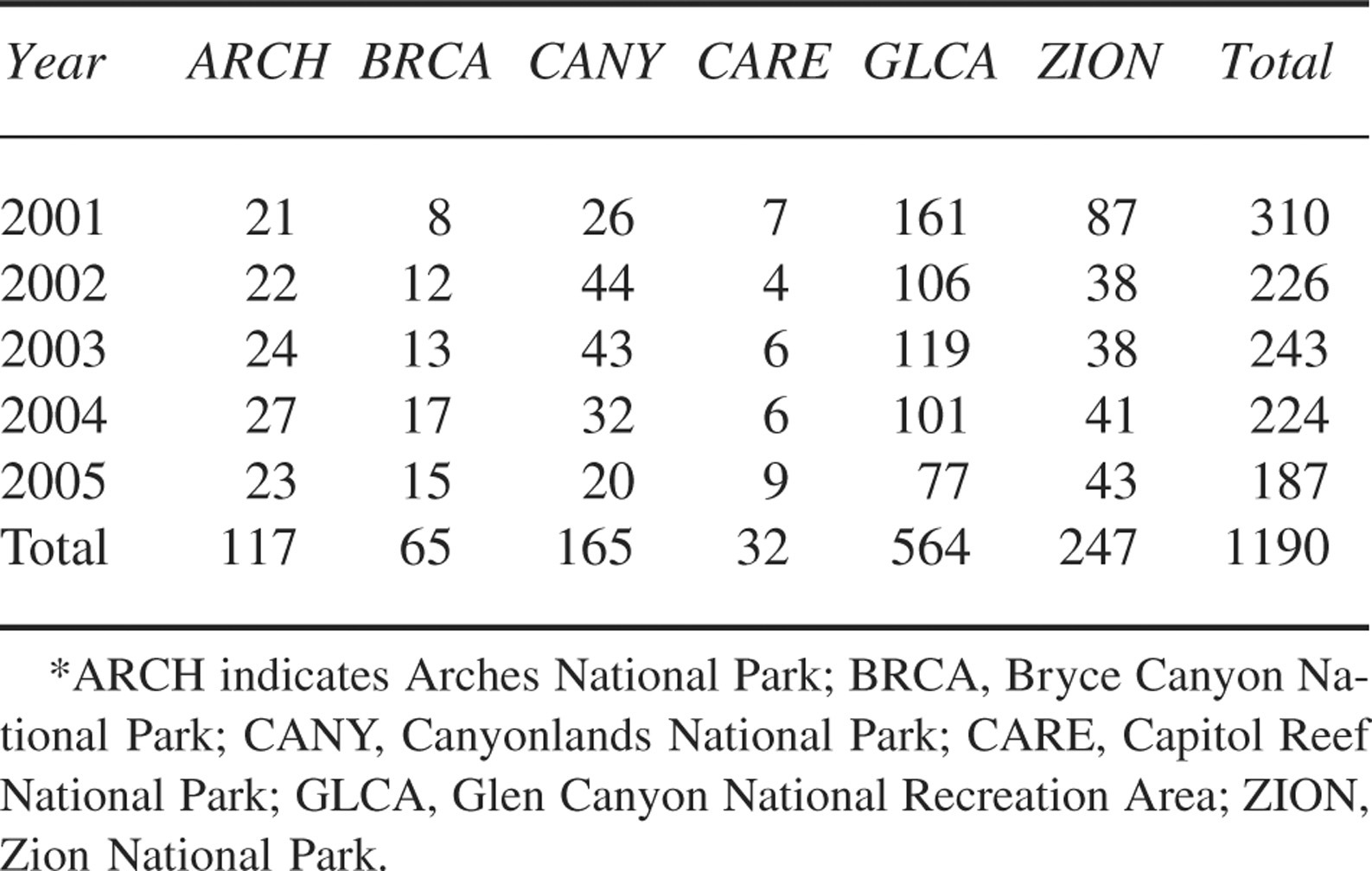
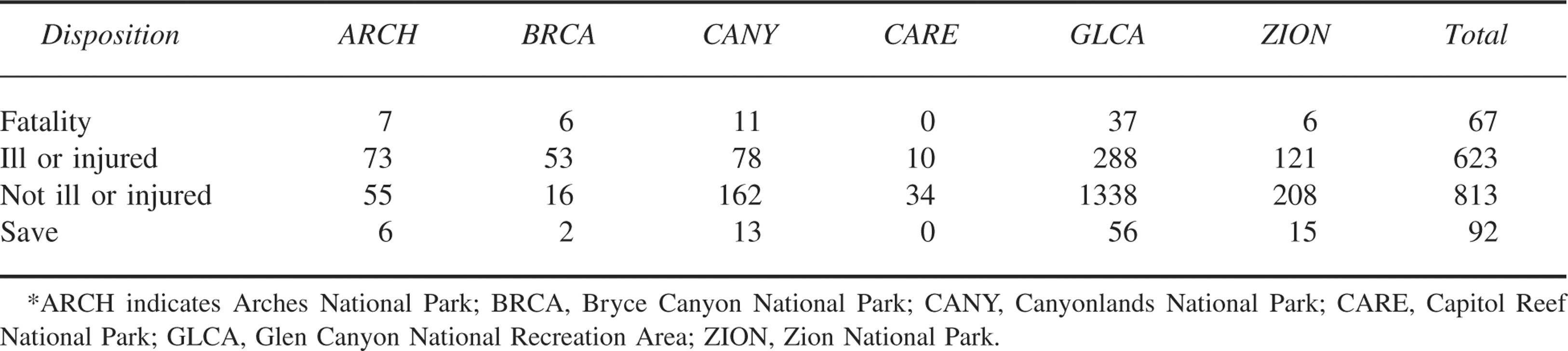
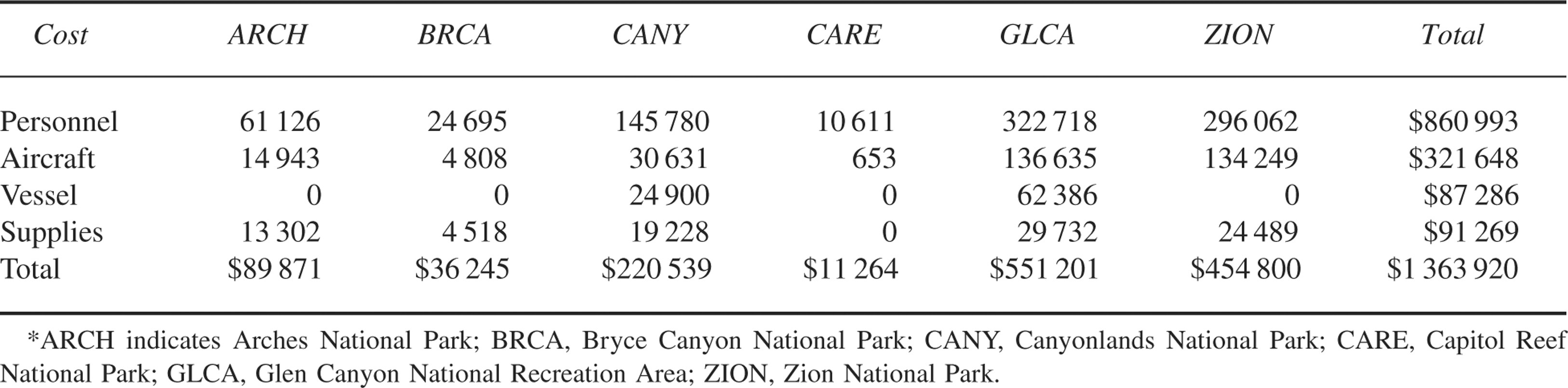
In addition to the EMS workload, there were 1190 SAR operations reported in Utah's NPS units from 2001 to 2005 (Table 3). These operations ended with 67 fatalities, 623 ill or injured visitors, 1813 visitors that were not ill or injured, and 92 saves (Table 4). GLCA accounted for 47% of all SAR operations, ZION accounted for 21%, CANY accounted for 14%, and ARCH accounted for 10%. GLCA was the only NPS unit in Utah to report more than 10 SAR operations ending with fatalities. GLCA additionally accounted for 46% of all ill or injured SAR incidents, 74% of the SAR incidents where the visitor was neither ill nor injured, and 61% of all incidents reported as saves. ZION reported the second highest number of SAR operations involving ill or injured visitors, the second highest number of operations with no ill or injured visitors, and the second highest number of operations recorded as saves. The total financial cost of SAR operations in Utah's NPS units from 2001 to 2005 was $1 363 920 (Table 5). Personnel costs for all units totaled $860 993 and aircraft costs totaled $321 648. Vessel costs totaled $87 286, and the cost for supplies was $91 269. GLCA, ZION, and CANY reported the highest individual unit SAR costs.
Total reported search and rescue operations for National Park Service units in Utah, 2001 to 2005*
Disposition of search and rescue operations in Utah's National Park Service units, 2001 to 2005*
Total search and rescue costs for Utah's National Park Service units, 2001 to 2005*
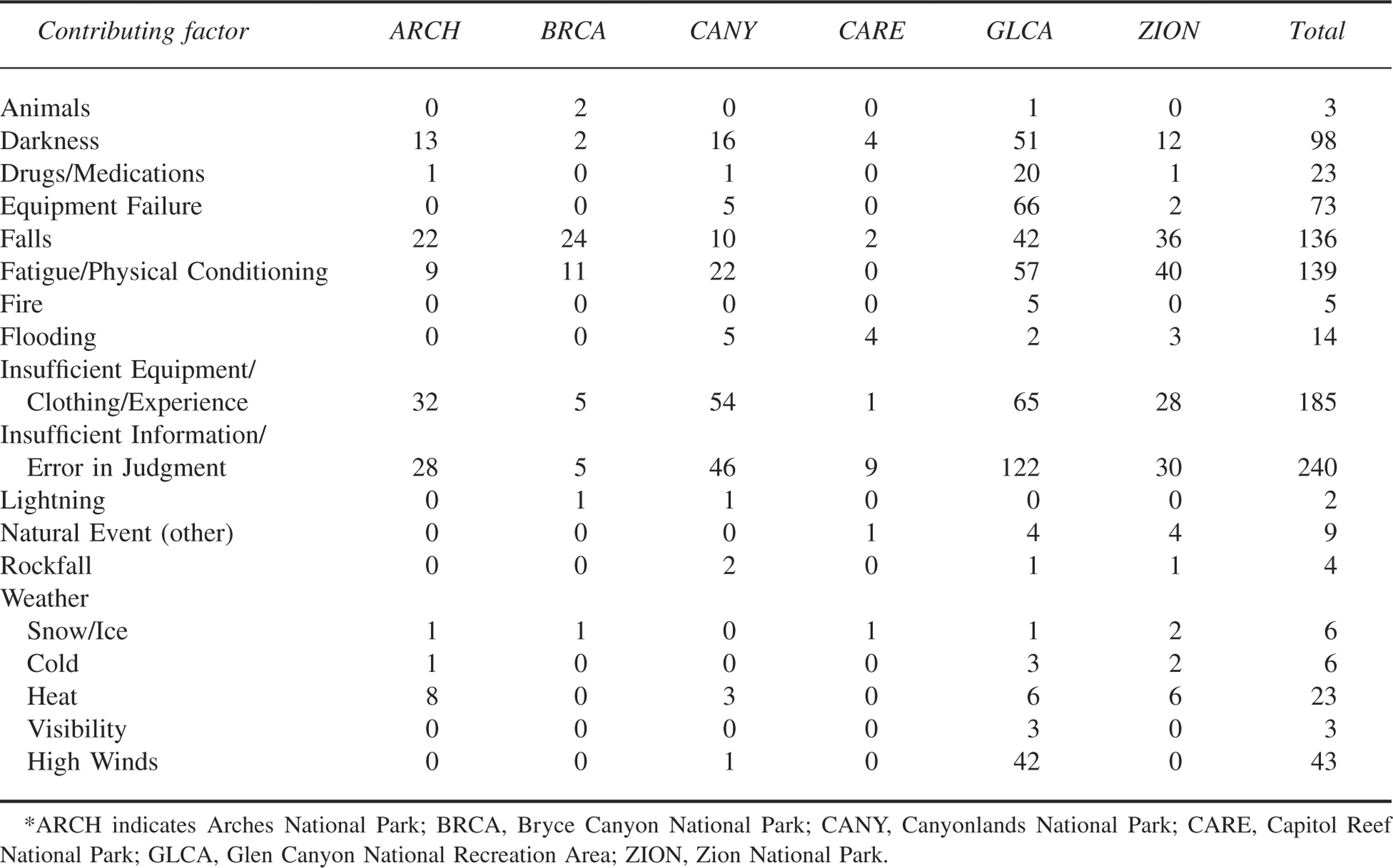
During 2003 to 2005, 565 male and 326 female visitors were involved in SAR operations. Out of the 857 SAR reports that recorded visitor age, visitors aged 20– 29 years were involved in 23% of the SAR operations, visitors aged 40–49 were involved in 20%, and visitors age 30–39 were involved in 18%. At the individual unit level, BRCA was the only NPS unit to deviate from this general trend and report highest involvement in SAR operations in visitors aged 60+ years, 40–49 years, and 50–59 years. Moreover, the highest number of SAR operations occurred on Saturday (19%) and Sunday (18%). The most common victim activities at the time the SAR operation was initiated were day hiking, motorized boating, and canyoneering (Table 6). Day hiking was the most common initiating activity at all NPS units in Utah with the exception of motorized boating at GLCA and canyoneering at ZION. The most common factors reported to contribute to SAR operations were insufficient information and errors in judgment, insufficient equipment, clothing and experience, fatigue and physical conditioning, falls, darkness, and equipment failure (Table 7). Insufficient equipment, clothing and experience, and insufficient information and errors in judgment were the most reported contributing factors at ARCH and CANY, falls were the most reported contributing factor at BRCA, insufficient information and errors in judgment were the most reported contributing factor at CARE and GLCA, and fatigue and physical conditioning and falls were the most reported contributing factors at ZION.
Reported subject activity at the time search and rescue operations were initiated in Utah National Park Service units, 2003 to 2005*
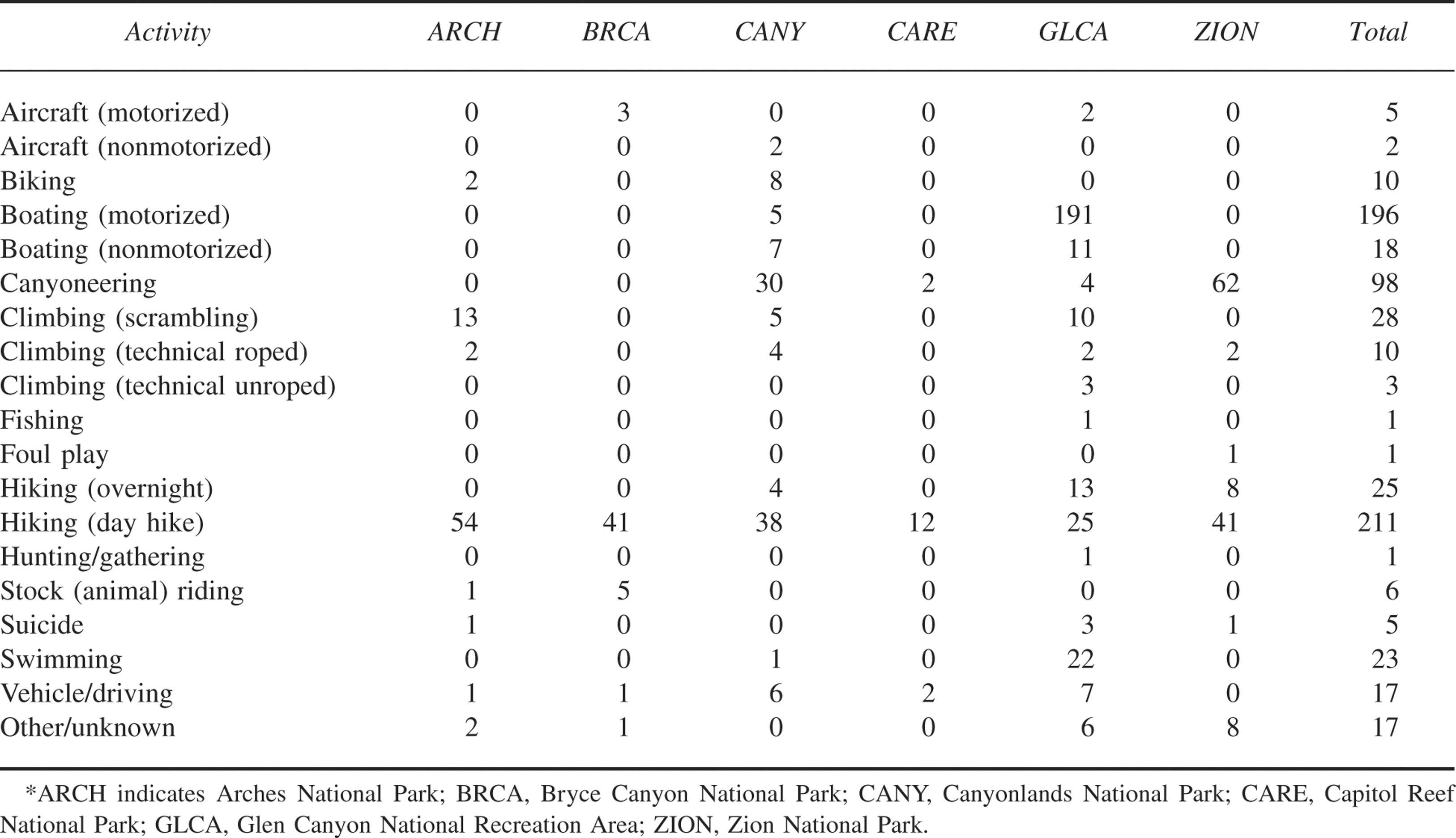
Reported factors contributing to search and rescue incidents in Utah National Park Service units, 2003 to 2005*
The most common notification method for visitors seeking SAR assistance in Utah's NPS units were via cell or satellite phone (21%), in-person contact (21%), marine or citizens band radio (20%), and landline telephone (18%). Notification via landline telephone was most common at BRCA and CARE, marine or citizens band radio was the most common at GLCA, in-person contact and landline telephone contact were the most common at ZION, and in-person contact and cell or satellite phone use were the most common notification methods at CANY. Furthermore, the vast majority of SAR operations in Utah's NPS units were resolved within 24 hours (94%) or within 24–48 hours (4%).
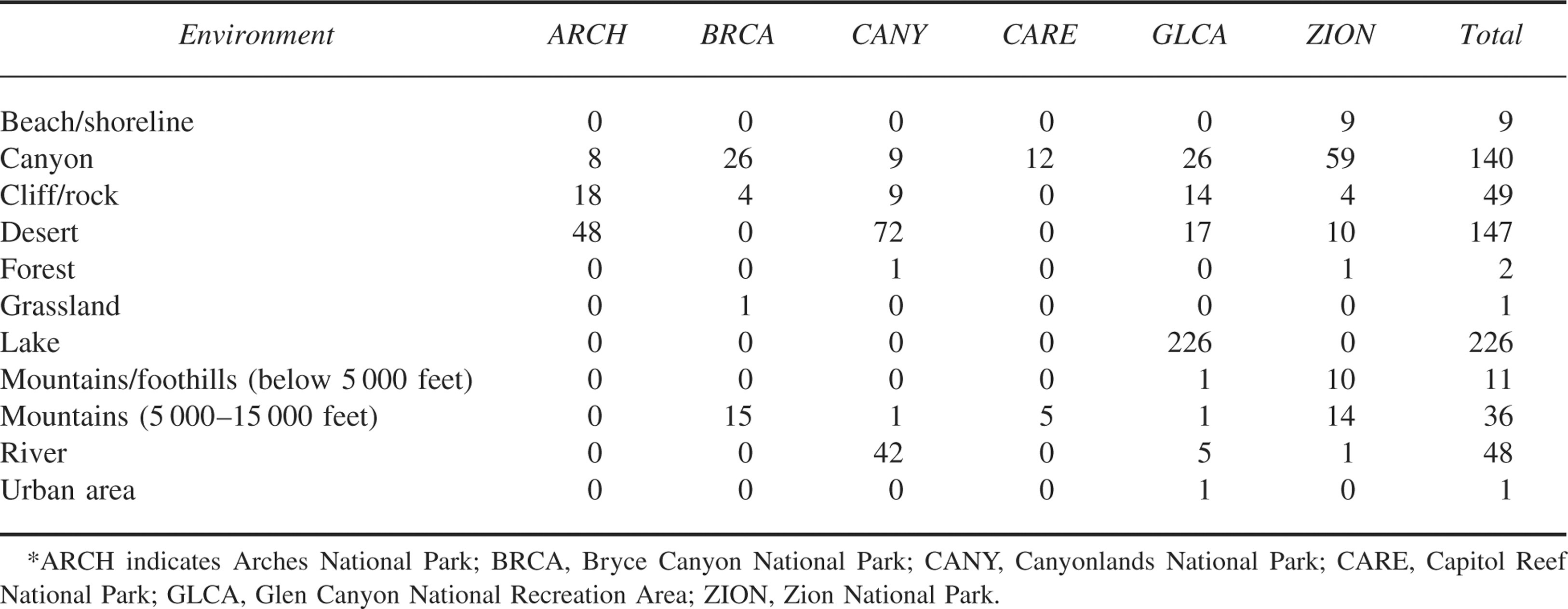
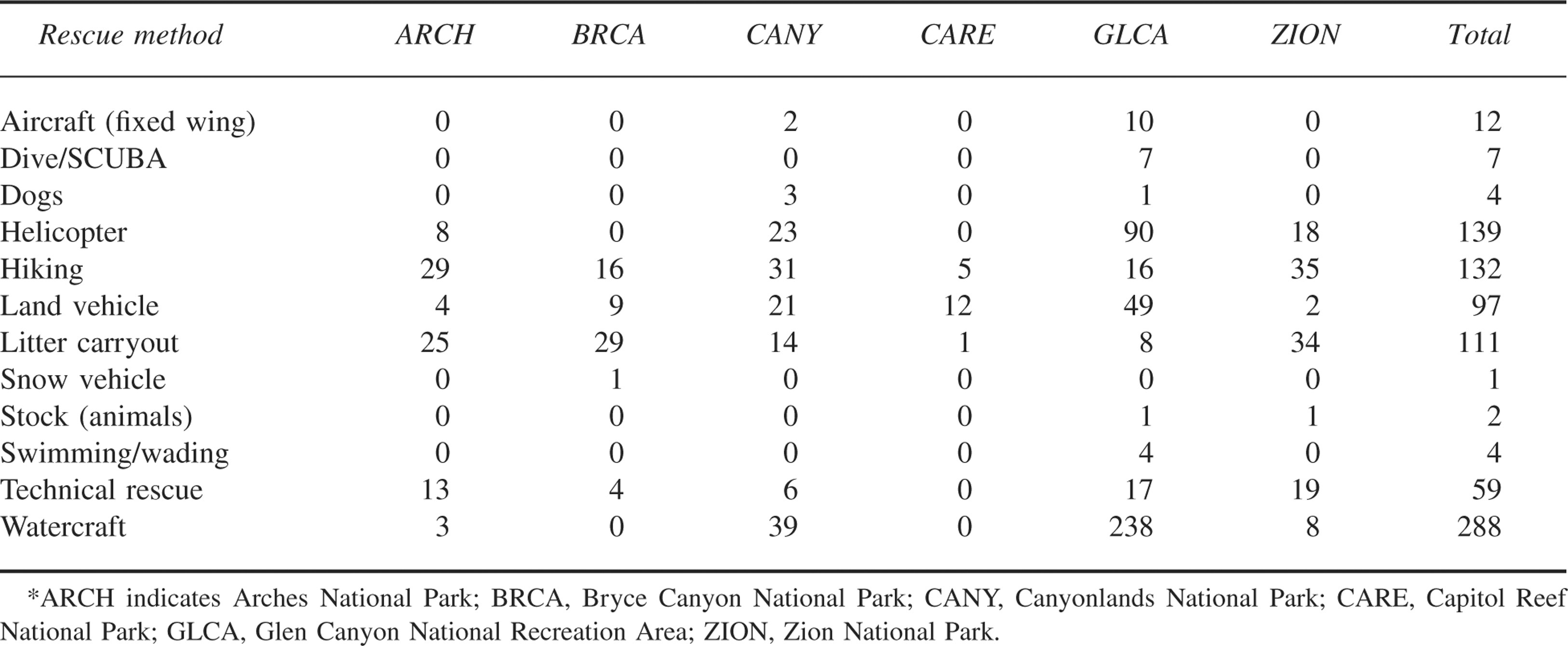
Given the prominence of GLCA in SAR operations in Utah, the leading SAR environment in Utah's NPS units was a lake environment (Table 8). This was followed by the desert and canyon environment. The desert environment was the most common SAR environment at ARCH and CANY. The canyon environment was the most common SAR environment at BRCA, CARE, and ZION. Moreover, the most utilized rescue methods reported in Utah's NPS units were the use of watercraft and helicopters, hiking, litter carryouts, land vehicles, and technical rescues (Table 9). Hiking and litter carryouts were the most common rescue methods at ARCH, BRCA, and ZION, watercraft and hiking were the most common at CANY, land vehicles were the most common method at CARE, and watercraft and helicopters were the most common rescue methods at GLCA.
Reported search and rescue environments in Utah National Park Service units, 2003 to 2005*
Reported rescue methods used during search and rescue operations in Utah National Park Service units, 2003 to 2005*
Discussion
The purpose of this investigation was to identify SAR trends and the EMS workload in Utah's NPS units. It is clear from the results that the heaviest EMS workloads in Utah's NPS units belong to GLCA and ZION. These same 2 units also reported the highest number of SAR operations and the highest SAR costs. Previous research investigating SAR operations and wilderness mortalities in Arizona found open water areas such as GLCA to have a disproportionate number of deaths. 23 Also, it is likely that higher visitation numbers at GLCA and ZION play a role in the elevated EMS workload and number of SAR incidents compared to other NPS units in the state. For example, in 2002, GLCA and ZION reported 1.9 million and 2.6 million recreational visits. 2 BRCA and CEBR were the next highest with 886 000 and 587 000 visitors. 2
Ground and helicopter transportation were the most utilized EMS transportation methods in Utah's NPS units. Moreover, helicopters and land-based methods, such as hike-outs, litter carryouts, and land vehicles, played a prominent role in the rescue methods employed in SAR operations. Previous research has shown that the availability of helicopter-based EMS transport in rural and wilderness areas has significantly reduced fatalities by extending rapid rescue and EMS care to victims.21,24–26 Helicopters have also been described as the vehicle of choice for many SAR operations with traditional methods such as walk-outs and litter carryouts becoming a thing of the past. 18 The results of this study show, however, that even though helicopters play an important role in EMS transport and SAR methods, ground transports and land-based SAR methods still play an important role in Utah's NPS units. In the case of GLCA, the vast wilderness environment, amount of water coverage, diverse range of activities, and visitation numbers likely explain why the unit accounted for over half of all EMS ground transports and almost all of the helicopter and water vessel based EMS transports in Utah's NPS units. The same can be said for the high use of watercraft, helicopters, land vehicles, scuba, and fixed wing aircraft in SAR rescues at GLCA.
It is likely that many visitors to NPS units do not understand the financial costs of SAR operations. The average cost of a SAR operation in Utah's NPS units between 2001 and 2005 was $1146. In a study of SAR operations at Yosemite National Park (YOSE), it was determined that the average cost of a SAR operation was $4400. 18 While this figure appears to be substantially higher than that of the Utah units, it should be noted that the Utah units do not have the same amount of resources, manpower, or organizational SAR culture available to them as does YOSE. Furthermore, in previous studies the use of mobile cell phones has been found to initiate up to 80% of SAR operations, and concerns have been raised about the potential for visitors to use cell phones to launch expensive SAR operations when they are only momentarily disoriented or involved in a minor situation. 21 The findings of this study found only 21% of SAR operations were actually initiated by cell phones compared to 39% by in-person contact and landline telephone and 20% by marine/citizen band radio. Thus, it is difficult to determine if cell phones are increasing the number of SAR operations in Utah's NPS units or not.
SAR operations in Utah's NPS units were most common on weekends. This likely correlates with higher visitation trends on weekends and mirrors the same trend identified in YOSE. 18 SAR operations in Utah's NPS units also involved male visitors 59% of the time. This representation of males in the SAR operations is similar to that of SAR studies in New Hampshire and on Mt. Hood, where 65% and 57% of the victims were reported to be male.20,27 Also, visitors aged 20–29, 40–49, and 30–39 years of age were involved in 58% of all SAR operations. This finding is again similar to the age distribution of the SAR studies in YOSE and the state of New Hampshire and identifies a demographic group that preventive measures could be oriented towards.18,20
The SAR environments in Utah's NPS units tend to reflect the geography of the park units. For example, due to the higher number of SAR incidents at GLCA, the most common SAR environment was the lake environment. Excluding the prominence of GLCA in SAR incidents, the desert and canyon environments were the most common SAR environments. Moreover, the identification of day hiking as the most common subject activity resulting in the initiation of SAR operations is not surprising. Hiking has been identified as a common activity resulting in negative health incidents, as a common activity in YOSE SAR operations ending with fatalities, and as the most common participant activity requiring SAR operations in the state of New Hampshire.7,12,18,20,27,28 Likewise, the identification of judgment errors, inadequate preparation and experience, physical conditioning, falls, and darkness as common factors contributing to the need for search and rescue was not surprising. Darkness has previously been identified as the most common environmental factor contributing to the need for SAR operations in the state of New Hampshire and falls and poor judgment were found to be the most common contributing human factors. 20 Furthermore, inexperience and inadequate preparation were previously identified as factors likely contributing to SAR incidents in YOSE. 18
This study was limited by a lack of accurate visitation data and specific participation rates. All NPS units do not employee the same methods for counting visitors and do not systematically collect specific participation data. Thus, we were unable to use denominators to determine the proportion of participation in specific recreational activities in Utah's NPS units. It was also limited by the use of cumulative data that did not allow for investigation at the individual incident level and used categorical groupings that were predetermined by the NPS. It also did not allow for the identification of any overlap between EMS and SAR incidents. Nonetheless, the data were sufficient for the purpose of this study and identified important trends and factors associated with EMS and SAR operations in Utah's NPS units. The findings of this investigation also set the stage for future research in Utah's NPS units. It is recommended that future research investigate EMS- and SAR-related incidents at the individual incident level to better determine EMS and SAR related factors. It is specifically recommended that hardcopy reports of NPS Form 10-343 (case incident report with a narrative statement) and NPS Form 10-344 (official SAR report form) be used in any future analysis of incidents at individual parks.
Conclusions
As long as the Utah's NPS units continue to attract recreational visitors, there will always be a need for EMS and SAR services. This study identified a number of trends that can aid the development of preventive safety measures as well as assist in the administration and planning of EMS and SAR operations in Utah's NPS units. EMS planners and administrators should note the heavy use of EMS resources at GLCA and ZION. In addition, the development of preventive SAR techniques at GLCA and ZION would likely have the most potential to reduce the financial impact of SAR incidents and the morbidity and mortality of visitors in Utah's NPS units.