






Abstract
Residential fires are a significant risk factor threatening the health and security of occupants. The purpose of this study was to develop a novel fire-safety product to help occupants safely and quickly evacuate from fire. Residential fire-resistant clothing with an alterable robe-coverall structure was developed according to a functional design procedure. The protection and ergonomic performance of the new fire-resistant clothing were verified by material selection and testing, flame manikin testing, and a simulated evacuation test. The results demonstrated that the fire-resistant clothing could provide essential thermal protection, inhalation protection, tear resistant, and visibility. Moreover, compared to current fire blankets, this fire-resistant clothing integrated the robe and coverall together, providing improved thermal protection and ergonomics, while decreasing skin burn percentage by 30.04% and allowing flexible leg movement.
Introduction
Injuries and deaths caused by residential fires have become a major public health issue in China. It was reported that residential fires comprise over 75% of all fires, contributing to almost 700 injuries and 1300 deaths, as well as 216 million Yuan (RMB) in direct property losses. 1 In fire accidents, rapidly spreading fire, high temperature, smoke, and toxic gases limit the effective evacuation time for survival to only 3–7 minutes. 2 In this regard, it is impractical for occupants to only rely on rescuers, whereas prompt evacuation should be the first response and a workable option. Fire-safety products consequently play a critical role in self-rescue.
Fire-safety products have been developed over several decades, including fire detection products (e.g., fire detectors and alarms), fire suppression products (e.g., fire extinguishers and sprinklers) and fire-resistant textile products (e.g., fire blankets and fire-resistant capes).3–5 However, the prevalence of fire-safety products is generally low in China, with only 0.01% of Chinese families equipped with fire extinguishers. 6 From a market survey and our previous research, some limitations exist in current fire-safety prod-ucts.7,8 Fire detection and suppression products are difficult to operate and maintain, especially for children and older adults. More importantly, they do not offer direct personal protection and evacuation abilities when occupants are exposed to explosion or fash fires. It has been reported that the highest percentages of occupants died or were injured while escaping fires or attempting to control a fire. 9 There-fore, fire-resistant textile products with both fire suppression and personal protection functions represent a more practical strategy for occupants’ fire safety.
Currently, fire blankets are common fire-resistant textile products, which are typically made of wool or specially woven fiberglass fabric treated with flame-retardant chemicals for thermal protection from sparks and splatter. According to market analysis, the cost of a current fire blanket ranged from 50 to 200 RMB. Such fire blankets could be used to cover a burning object to cut of the oxygen supply or placed on the human body during evacuation. Because of their simple style, fire blankets are easy to maneuver and are widely available in kitchens, super markets, cars, and households. However, most fire blankets are only 1 × 1 m or 1.2 × 1.2 m in size, which are unable to cover the entire body or provide effective protection. 10 The large opening at the bottom hem provides a passage for fames vertically entering the clothing microenvironment, resulting in severe skin burns. 11 Meanwhile, the wearer must grasp the blanket while moving, and occupation of both hands has a negative influ-ence on body movement. Qualified protection and rapid movement are two primary factors for occupants’ successful fire evacuation, which require that residential fire-resistant products focus on both protective capacity and ergonomic performance. While major studies were performed to increase the protective level of fire-resistant textile products by improving materials properties,3,12 few studies have focused on ergonomic performance.
Furthermore, specific evaluation methodologies and performance standards for protection of fire-resistant textile products have been established. 12 However, evaluation of ergonomic performance does not have a consistent methodology due to the lack of standard protocols or published guidelines. During fire accidents, occupants may encounter multiple and unpredictable circumstances when evacuating from a burning home. It is necessary to design a simulated evacuation test to evaluate the ergonomic performance of the fire-resistant textile product. Several studies have described various test methods for evaluating the ergonomic impacts of Personal Protective Equipment (PPE).13–15 These methods quantify the impact of PPE on wearers’ range of motion and motor performance, using a digital timing system, goniometer, or 3D motion capture system, which provide a reference for the present study.
Therefore, the purpose of this study was to 1) develop a novel fire-resistant textile product, mainly focusing on improved protective ability and ergonomic performance, and 2) to evaluate the protective ability and ergonomics of a new residential fire-resistant product, using a specially designed simulated fire evacuation test. Ultimately, the findings of this study are expected to provide an effective evacuation strategy for occupants to reduce fire-related injuries and deaths, as well as to expand the market of available residential fire safety products.
Functional Development of Residential Fire-Resistant Clothing
Requirement Analysis
Performing a requirement analysis is the first step to deter-mine the design criteria and features needed. In residential fire accidents, environment-related risk factors are the leading causes of injuries and deaths. 16 Firstly, fames and heat are the primary threats. Statistics indicate that 30.1% of fire fatalities are caused by skin burned by fames. 17 Secondly, smoke released by flammable materials is another fatal threat, for example, deaths by suffocation due to excessive smoke inhalation or being trapped in a fire due to poor visibility. These risk factors require fire-resistant textile products to be flame resistant and heat-insulating, as well as capable of providing inhalation protection and improved visibility.
Surroundings characteristics are also potential risk factors for fire-related injuries and deaths, as they primarily affect evacuation timeliness. Firstly, a fire load is high when adequate flammable substances and ignitable sources are present, which accelerates fames spreading and impede the occupants from exiting their homes rapidly. Clothing can also be hooked or torn by obstacles during hurried movement. Secondly, fames spread in vertical wells, such as stairwells, elevator wells, pipeline wells, and cable wells, leading to the acceleration of fire growth due to the fire chimney effect. 18 It has been reported that smoke spread from the ground floor to the top of a 100-m high building through a vertical well in 30 seconds. 19 Lastly, high buildings, high occupation density, and narrow passageways and stairs may cause longer evacuation time in the event of a fire. These risk factors represent a requirement for product ergonomics, such as being easy to wear and exerting little negative impact on body movement.
Determination of Design Features
Once the design requirements are identified, the design specifications and features are subsequently determined, which can be categorized into protection (i.e., thermal protection, inhalation protection, tear resistance, and visibility) and ergonomics (i.e., wearing convenience and body mobility) as shown in Fig. 1.
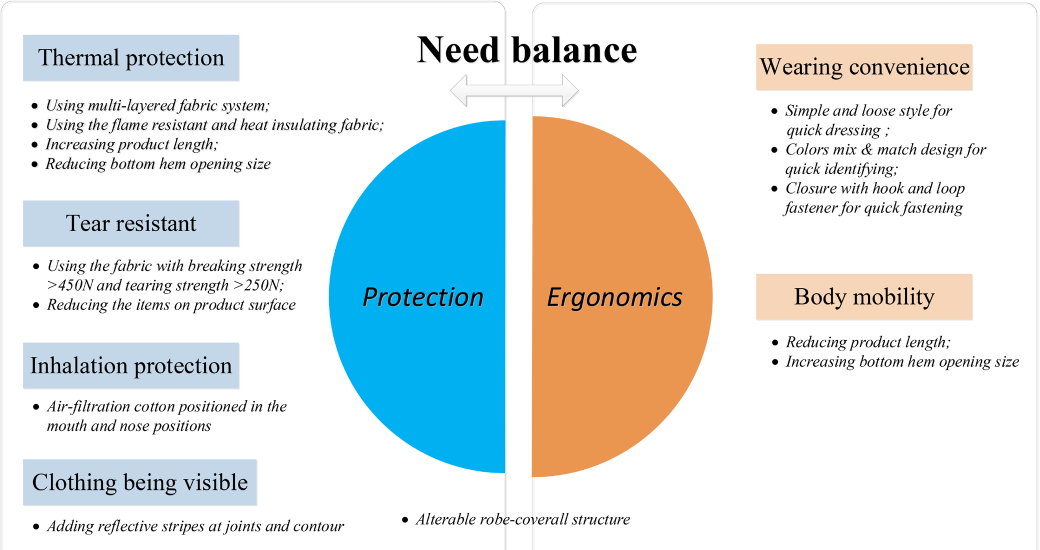
Design specifications and features of the fire-resistant product.
Protective functions represent fundamental requirements for fire-resistant clothing and include the following: a) for thermal protection, which requires a certified flame-resistant, heat-insulating fabric to form a multi-layered fabric system. Increased body coverage is necessary to reduce direct contact between the skin and the heat source, while a reduced opening size of the bottom hem hopes to keep the fames from entering the clothing microenvironment, b) for tear resistance, where it is necessary to ensure the breaking strength and tearing strength of the fabric system meet the GB/T 17591-2006 (breaking strength > 450 N and tearing strength > 25 N) standard. 19 Reducing the number of accessories or attachments on the product surface prevents clothing from being hooked by obstacles, c) inclusion of air-filtration cotton positioned in the mouth and nose positions to filter smoke and toxic gas, to increase inhalation protection, and d) reflective strips attached to the product surface to enhance visibility.
Ergonomic performance mainly focuses on the occupants’ evacuation timeliness, including wearing convenience and body mobility. Easy dressing can help the occupants make a rapid warning-response and complete evacuation in the shortest possible time, while flexible movement contributes to shortening the exposure time to risks. A simple and loose style is desirable to easily don and doff the garment, as well as to provide convenience for arm access. Color mix and match design helps occupants quickly identify the front and back of the product, while the use of hook and loop fastener tape can shorten the fastening time. Regarding body mobility, the reduced product length and increased bottom hem opening size are beneficial to leg movement.
However, several thermal protection design features are in conflict with the desired ergonomics, which require careful consideration to obtain an optimal balance. For example, “increasing product length” under thermal protection con-flicts with the “quick fastening” under wearing convenience, and the “reducing product length” under body mobility. Increased product length could improve thermal protection, but it inevitably increases the dressing time and restricts leg movement. Moreover, “increasing bottom hem opening” under body mobility facilitates leg movement, but also provides a channel for fire spread, conflicting with “reducing bottom hem opening size” under thermal protection. Consequently, the product length and bottom hem opening design (involving opening location, size, and closure mode) were identified as design priorities, so as to balance the thermal protection and ergonomic factors.
Prototype Development
Prototype development involves style design, an alterable robe-coverall structure, as well as materials and prototype generation. Style design includes the overall style and detailed design features;, an alterable robe-coverall structure is developed for the balance between thermal protection and ergonomics, and materials and prototypes illustrate the material properties and wearing diagram of the prototype.
Style Design
As previously mentioned, the thermal protective level of fire blankets is significantly reduced in fash fires due to their low body coverage and the large opening at the bottom hem, 20 and the wearer's speed of movement tends to decrease because both hands are occupied in wearing the blanket. 10 Therefore, a new design concept termed “clothed style” is proposed, which aims to increase body coverage, reduce the bottom hem opening, and free up the hands. The robe style was confirmed to be convenient to wear and involved fewer body movements when the individual is donning such a garment. 21 A robe with a fully open bottom hem is therefore selected as the basic style of the new fire-resistant clothing and the corresponding design features are proposed based on the robe style.
The design proposal is shown in Fig. 2. Detailed design features for the proposed fire-resistant clothing include the following. The robe style was selected to increase body coverage, reduce bottom hem opening, and ease of wear. To balance the body coverage and leg movement, the clothing length was set to around the knee (about 85 cm), and the hook and loop fastener tape on the placket was located 10 cm from the bottom hem to form a vent.
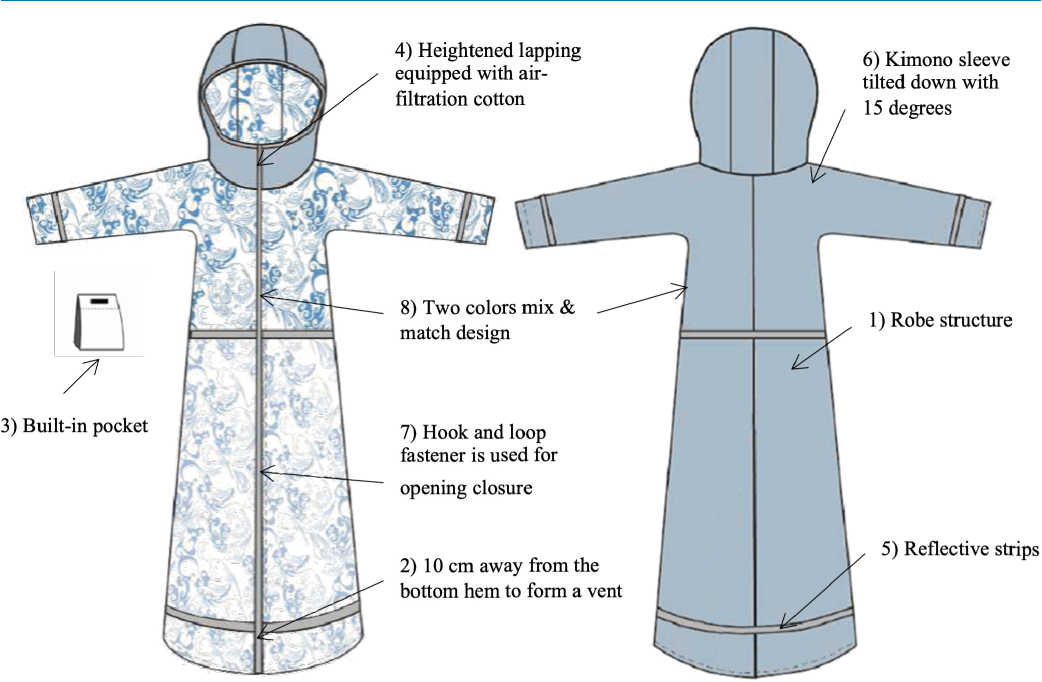
Design proposal for the fire-resistant clothing.
The pocket was designed in the clothing's interior to retain a smooth clothing surface. The hood's lapping at the mouth and nose was raised and equipped with air-filtration cotton to form a natural “mask” for inhalation protection.
Reflective strips were attached at the hood, center front placket, waistline, sleeve cuffs, and bottom hem. These reflective strips can help occupants to quickly locate the fire-resistant clothing and identify the placket opening. Meanwhile, the reflective strips also help rescuers to find trapped people easily. A kimono-style sleeve was developed to facilitate arm access and increase the range of possible arm motion. The sleeves are angled downward 15 degrees to avoid a bulky underarm area. Hook and loop fastener tape was used to create a rapid-opening closure to minimize the conflict between clothing length and quick fastening.
A two-color mix-and-match design was adopted combined with reflective strips to help occupants identify the placket opening quickly at night or in a smoky fire.
Alterable Robe-Coverall Structure
An alterable robe-coverall structure was specially designed for the balance between thermal protection and ergonomics, which could achieve the transformation between the robe and coverall. As shown in Fig. 3, one piece of fabric was inserted into the center back from the crotch to the hem bottom of the robe, which forms a shape similar to a pants pattern. These inserted pieces have hook and loop fasteners that could be fixed steady on the surface of the clothing to keep the normal robe style. They could be unfolded forward and backward respectively and joined on the side seam using the fasteners to form the pants style.
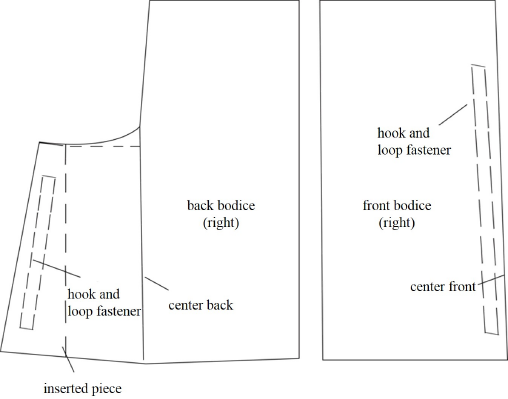
Design scheme of the alterable robe-coverall.
The diagram of the alterable robe-coverall structure is shown in Fig. 4. The normal robe style is formed when the inserted pieces are fixed on the clothing surface (Fig. 4a). The robe can be converted into a coverall by folding forward and joining the inserted pieces (Figs. 4b and c).
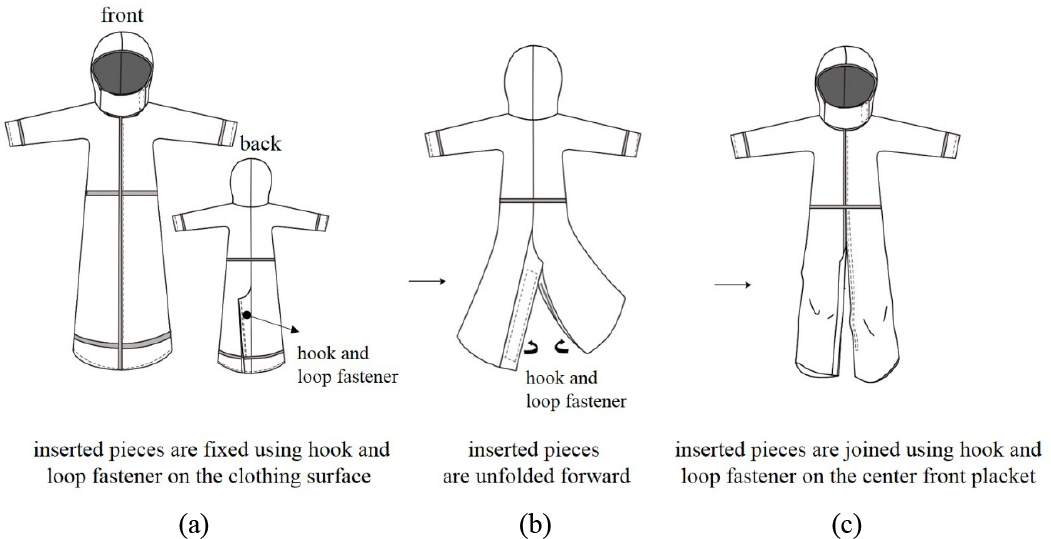
Diagram of the alterable robe-coverall structure, (a) robe style, (b) robe-coverall structure and (c) coverall style.
Materials and Prototype
Material selection is vital to meet the essential performance requirements. A three-layered fame-resistant fabric system was constructed, including the outer layer, the middle filling, and the inner liner. The outer layer and inner liner were the same fame-resistant fabric made of 100% cotton with fame-resistant finishing. The middle layer was the fame-resistant filling made of 100% polysulfonamide. All accessories, including the hook and loop fasteners, reflective strips, and sewing thread were manufactured using flame-resistant materials. The hook and loop fasteners were made of 100% Nylon with flame-resistant finishing. The reflective strips were made of 100% Aramid. The sewing thread was made of 100% Nomex IIIA.
According to standards GB/T 3820-1997, 22 GB/T 4669-2008, 23 GB/T 11048-2008, 24 GB/T 3917-2009, 25 GB/T 3923-2013, 26 and ASTM F2700-2013, 27 the fabric system was initially tested to ensure its protective properties met the requirements.
As shown in Table I, the thermal protective level of the fabric system was assessed by thermal protective performance (TPP) testing using a CSI-206 instrument (Custom Scientific Instrument Corporation, USA). Although the TPP value was slightly less than the GA 10-2014 28 value of 28.0 cal/ cm2, it effectively provided thermal protection for a residential fire-resistant garment with a relatively lower protective requirement. The breaking strength and tearing strength of the fabric system were measured using an Instron 3365 uniaxial testing machine (Instron, Massachusetts, US). Both of them exceeded requirements of tear resistance (GB/T 17591-2006, 29 breaking strength > 450 N, and tearing strength > 25 N), which could decrease the risk of the clothing surface being hooked by obstacles. Regarding inhalation protection, added air-filtration cotton into the raised hood's lapping was able to filter the smoke and toxic gas, while attached reflective strips made clothing visible. Above all, thermal protection, inhalation protection, tear resistance, and visibility were evaluated by material selection and testing.
Detailed Properties of the Multilayer Fabric System
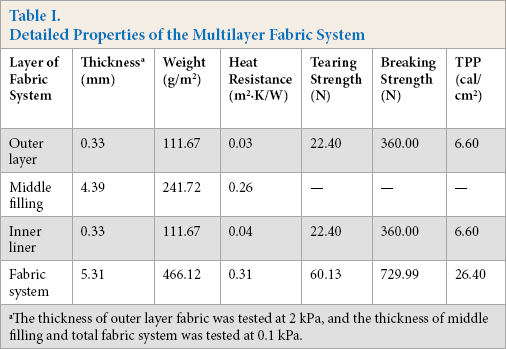
The thickness of outer layer fabric was tested at 2 kPa, and the thickness of middle filling and total fabric system was tested at 0.1 kPa.
The prototype was manufactured, and the wearing diagram is shown in Fig. 5. Two sizes (M, 60/84A and L, 170/92A) were designed according to the average height of adults in China (167.1 cm for males and 155.8 cm for females), which could be suitable for different body shapes.
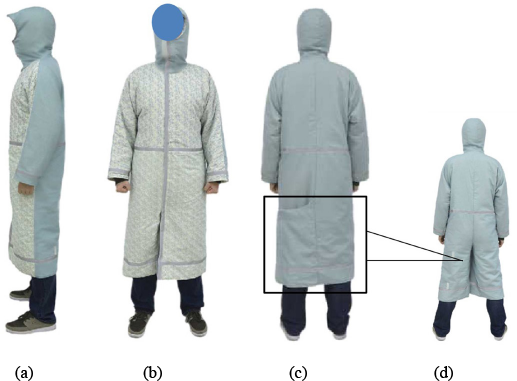
Wearing diagram of the newly design fire-resistant clothing. (a) Side, (b) front, (c) back-robe style, and (d) back-coverall style.
Prototype Performance Evaluation
The newly designed fire-resistant clothing is expected to provide improved protection and ergonomics, including thermal protection, inhalation protection, tear resistance, and visibility, as well as wearing convenience and body mobility, which were respectively evaluated by overall clothes testing.
Thermal protection, wearing convenience, and body mobility of the fire-resistant clothing were evaluated. The flame manikin test was used to evaluate the overall thermal protective level of the new fire-resistant clothing, while a simulated evacuation test involving leg movement, wearing convenience, and escape performance was designed to evaluate the ergonomic impacts.
Test Samples
A commercial fire-resistant blanket (one size) and the new fire-resistant clothing were selected as the test samples. The robe and coverall style were both evaluated. The test fire-resistant blanket and fire-resistant clothing were combined with long pants, a T-shirt, and running shoes. All test samples were preconditioned for 24 h in a standard laboratory environment (20 ± 2 °C, 65 ± 5% relative humidity (RH)) prior to testing.
Thermal Protection Test
A flame manikin test was performed with the fame manikin system (Thermetrics, Seattle, WA, USA) to evaluate the thermal protective performance of the newly developed fire-resistant clothing. This flame manikin system fully conforms to the technical requirements specified both in ASTM F 1930-2018 30 and ISO 13506-2008. 31 The manikin was located at a 5 × 5 × 3.36 m flame chamber (Thermetrics) and surrounded by 12 propane torches to generate diffusion flames. Heat flux sensors (135) were distributed evenly over the manikin's surface to record the amount of heat flux generated in the combustion process, as shown in Fig. 6.
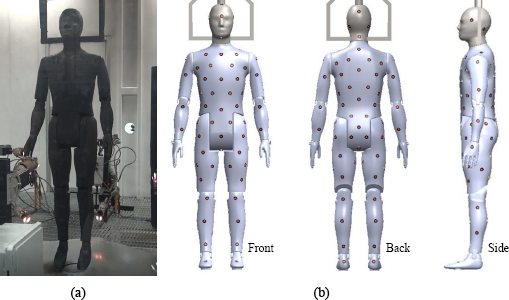
Flame manikin test system. (a) Diagram of flame manikin and (b) locations of 135 sensors on the manikin.
For this study, the exposure conditions were in accordance with the ASTM F1930-2012 30 and ISO 13506-2008. 31 The exposure time was set at 7 s and the heat flux was calibrated to 84 ± 4 kW/m2. No underwear was worn. The chamber initial temperature was 20 ± 3 °C and the initial RH was 65 ± 5%. To simulate evacuation behavior in a real situation, the manikin was set to move across a simulated fire ground with the standing posture at a speed of 0.5 m/s, during which time, the manikin's contact with fames was 3 s. The naked manikin was first tested for the calibration of exposure levels, and then the clothed manikin wearing the blanket, robe, and coverall were tested in order. All samples were tested three times.
Simulated Evacuation Test
Subjects
Six college-aged male students (age: 25 ± 5 years; height: 175 ± 3 cm; weight: 61 ± 2 kg; wearing large size) were recruited for the wear trails. All subjects were healthy and with no history of musculoskeletal or cardiopulmonary problems. Subjects were informed of all the details of the test contents and the associated risks and discomforts before the actual testing.
Experimental Protocol
The simulated evacuation test included two sections: one was the simulation of frequent motions during evacuation to assess leg mobility, and the other was to simulate the whole evacuation routine, including donning the fire-resistant clothing and running out of the building to assess evacuation timeliness. Only one subject was scheduled to be tested in a given day, and the order of test garments was randomized to minimize the error caused by the sample order.
The simulated motion test was conducted in a thermo-neutral laboratory at 22 ± 0.5 °C and 40 ± 10% RH. The subjects were required to randomly perform five specific motions under each test sample as quickly as they could, including walking (9 m), running (9 m), stepping over four obstacles (30 cm height and 60 cm distance between obstacles), climbing over an obstacle (75 cm height; 110 cm length), and going downstairs (6 steps).
To quantify leg mobility, the distances of knees and ankles were measured using a 3D inertial motion capture Xsens MVN system (120 Hz; Xsens Technologies B.V., Enschede, the Netherlands). Xsens motion trackers (38 × 53 × 21 mm, 30 g each) were fitted on the body to capture the real-time coordinates of ankles joints on a global coordinate frame. Distances of knees and ankles were obtained based on the coordinates of the left and right ankle joints in the sagittal plane. The time used for each motion and subjects’ perceived leg restriction (a 5-point scale, 1 = none and 5 = extremely restricted) were also recorded.
The simulated evacuation routine test was conducted in a residential building. To simulate a real residential environment, some pieces of furniture were placed in the room (Fig. 7a), three obstacles (30 cm in height) were placed in the corridor (Fig. 7b), and a pile of cartons was placed in the corner to narrow the passageway, giving a width of 75 cm (Fig. 7c).
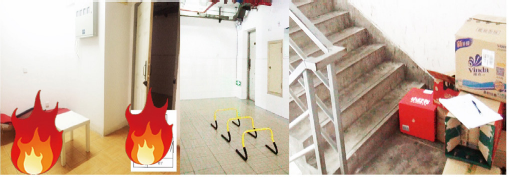
Whole evacuation simulation route. (a) Burning room, (b) obstacles in the corridor, and (c) corner of stairs with cartons.
The fire was assumed to occur in a room on the eighth floor. Subjects were required to don the test sample quickly, then run out of the room, step over the obstacles on the floor, go downstairs, and finally out of the building at their fastest pace. The donning steps included opening the clothing, putting on, closing front placket, and completing the robe-coverall alterable structure. The total dressing time and each dressing step time, as well as subjective ratings (a 5-point scale, 1 = difficult to wear and 5 = convenient to wear) were recorded to assess the wearing convenience. To evaluate the moving performance, the completion time for each period of the evacuation process was recorded, and the perceived restriction ratings (a 5-point scale, 1 = none and 5= extremely restricted) were obtained.
Data Analysis
The percentages of the areas with second-degree burns, third-degree burns, and the sum of the burned areas measured by the flame manikin were calculated based on the Pennes mod-el 32 and the Henriques burn integral. 33 Motion capture data was initially pre-processed by Xsens software for labelling the markers. Then, the coordinates of knees and ankles on a global coordinate frame were imported into the Visual Basic for Applications (VBA) extraction program to calculate the peak values of the knee and ankle distances for each motion.
SPSS 16.0 was used for all of the statistical analyses. The data used in the analyses were the mean values for each test condition. A one-way factor analysis of variance (AVOVA) test was used to compare the knee and ankle distances, completion time of simulated body motion, donning time, and moving time in whole evacuation routines, as well as the burn percentage, followed by Bonferroni post hoc comparisons. 34 The non-parametric test 35 was used to analyze subjective evaluation results. All statistical tests were done at a 0.050 level of significance.
Results and Discussion
Skin Burns and Distribution
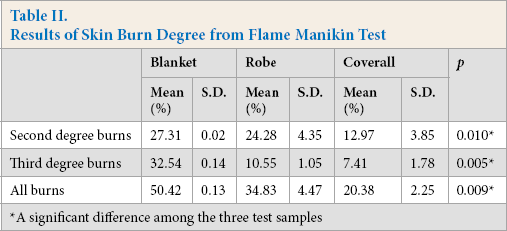
The second degree, third degree, and total burns percentage and distribution from the flame manikin test are shown in Table II and Fig. 8, from which the data regarding hands and feet were excluded.
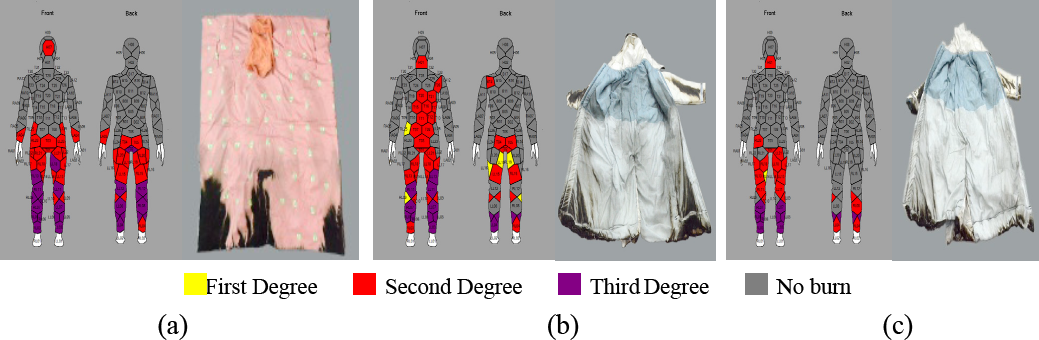
Skin burn degree in flame manikin test. (a) In blanket, (b) in robe, and (c) in coverall.
Results of Skin Burn Degree from Flame Manikin Test
A significant difference among the three test samples
Previous studies showed that the death risk increased with a higher burn percentage, especially when the burn percentage was greater than 40%. 36 The total burn percentage in the blanket was up to 50.42%, which was significantly greater than in the robe and coverall (34.83% and 20.38%, respectively). Moreover, wearing the coverall contributed to a significantly lower third-degree burn percentage compared to the blanket (p = 0.002), as well as a significantly lower second-degree burn percentage compared to the robe (p = 0.026). Regarding the burn distribution, more serious burns were observed on the manikin's legs when the blanket was worn. On the other hand, no burns occurred on the upper body, posterior thighs, posterior hip, and crotch when the coverall was worn.
These results indicated that the newly designed fire-resistant clothing provided better thermal protection and lower injury risks than the current blanket. This may be explained by less blanket coverage for the leg and the fire chimney-effect from the large bottom hem opening. By contrast, the new fire-resistant clothing increased clothing coverage and reduced the bottom opening size. The pants structure in the coverall was especially more desirable to restrain the chimney-effect of the flame and the crotch structure offered a barrier to resist fames channeling upward from the bottom hem opening.
Leg Mobility
Leg mobility was evaluated by knee and ankle distance, as well as the completion time and the perceived leg restriction in five simulated motions.
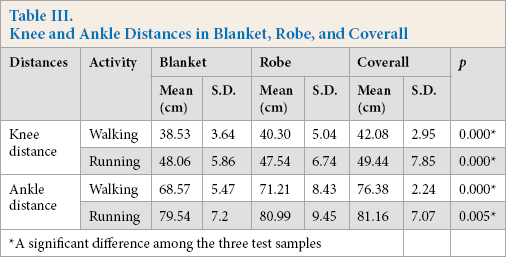
As shown in Table III, both the knee and ankle distances in walking and running when wearing the coverall were significantly larger than in the blanket (p < 0.050). In terms of the differences between the robe and coverall, a significant improvement of knee distance (p = 0.000) when running was found in the coverall compared to the robe. These results indicated that the coverall style adapted well to leg movement. This may be due to the pants structure and even weight distribution of fire-resistant coverall on the human body. As shown in Fig. 9, the weight of the robe and blanket was mainly located on the subjects’ head, and subjects had to pull the blanket or robe upward to relieve the load. In this regard, the opening size of the bottom hem tended to narrow, causing a restriction in leg movement.
Knee and Ankle Distances in Blanket, Robe, and Coverall
A significant difference among the three test samples
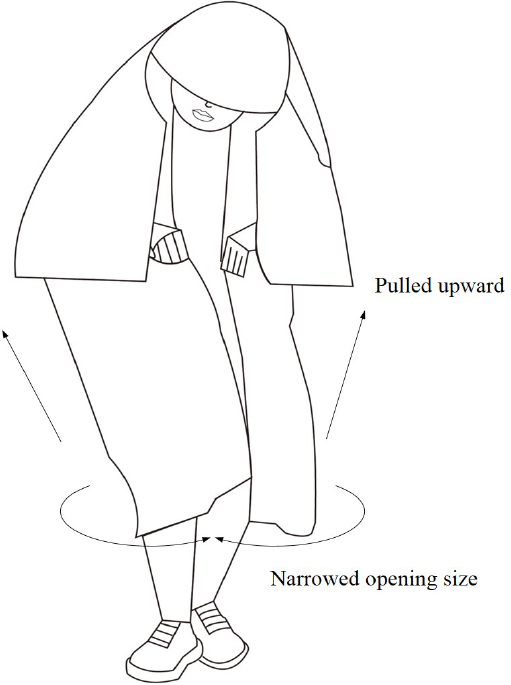
Wearing methods of the blanket and robe.
Improvement of leg mobility when wearing the coverall can be further verified by the motion completion time and subjective response. As shown in Fig. 10, subjects performed the running significantly faster in the coverall than in the blanket (p = 0.000). Occupation of both hands and the heaviness of the blanket tended to decrease subjects’ moving speed. Subjects also complained that the blanket restricted leg move-ment most and only scored 2 for it. They expressed that the coverall had less leg restriction than the blanket and robe, especially when spanning and climbing over obstacles. This was probably due to the smaller bottom hem opening of the blanket and robe that could not allow a greater pace, thereby increasing the completion time and causing restrictive sensations. This finding was consistent with the results of knee and ankle distances, which further indicated that the coverall had a less negative effect on leg mobility, particularly when subjects performed with a greater range of motion.
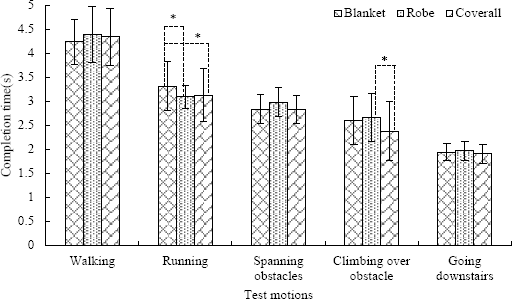
Completion time of the selected five body motions.
Evacuation Timeliness
The donning time and escaping time from the hazards were analyzed to evaluate the evacuation timeliness. For a given scenario, people are considered safe in a burning building if the available safe egress time (ASET) is longer than the required safe egress time (RSET). 37 ASET is defined as the time from the fire ignition to that constituting a threat to people, which is dominated by fire ignition and spreading of fire and smoke.38 REST is defined as the time for people evacuation from the risks to a safe place, 38 which is the sum of the fire detection time (T1, the time from fire ignition to activation of the automatic fire alarm systems), response time (T2, the time when people received alarm to finishing preparation for egress), and egressing time (T3, the time for the evacuation process). Xiao simulated a burning process of 2400 s in a single room (5.2 × 4.8 × 3.0 m) and found that the AEST of evacuation from the single room and the floor was 32 and 324 s, respectively. 39 In the present study, the evaluation of wearing convenience was related to response time (T2), so the ultimate time for donning was set as 32 s. The evacuation timeliness was related to the egressing time (T3), so 32 s was set as the threshold for running out of the room and 324 s for leaving the building.
The total time for evacuation when wearing blanket, robe, and coverall was 83.85, 82.75, and 90.85 s, respectively. Evacuation times for the three clothing styles were all less than the REST of 324 s.
The dressing time demonstrated that the total time to put on the coverall (29.19 ± 6.746 s) was significantly longer by about 9 and 15 s than the robe (19.88 ± 5.02 s, p = 0.000) and the blanket (17.19 ± 3.66 s, p = 0.002). The longer time needed for coverall donning was due to the step of “completing the robe-coverall alterable structure,” which took the subjects on average 9.76 s. Nevertheless, both donning times in the robe and coverall were less than the REST of 32 s, which indicated the new fire-resistant clothing was in the safe range. The subjective rating also showed that the coverall was more difficult to don than the robe and blanket, which were 2.68 (0.63), 3.18 (0.78), and 3.68 (1.02), respectively, however, no signifi-cant difference was found (p > 0.050).
The total time consumed for running out of the room, going downstairs, and running out of the building is shown in Table IV. The escaping time when wearing the coverall in three simulated environments were all shorter than in the robe or blanket. A significant difference was found between the blanket and coverall in running of the floor (p = 0.013) and out of the building (p = 0.011), while no significant difference was found between the blanket and the robe (p > 0.050). The perceived restriction for the coverall was also rated significantly lower than the blanket (p = 0.046). This finding was consistent with the results of simulated body motions, which indicated the negative influence of the new fire-resistant clothing on evacuation behavior was less than the blanket, and that the coverall could provide better moving capacity.
Evacuation Times in Blanket, Robe, and Coverall
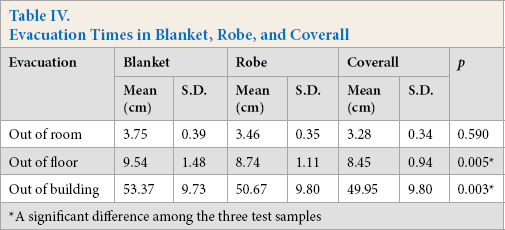
A significant difference among the three test samples
Conclusion
Fire-resistant clothing with improved protective capacity and ergonomic performance was newly developed for occupants. These are expected to reduce the number of fire-related injuries and deaths. The “robe style” with an alterable robe-coverall structure was designed according to requirements analysis, design features determination, and prototype development. The protection and ergonomic performance of the new fire-resistant clothing were verified by material selection, flame manikin, and simulated evacuation testing. The results demonstrated that the new fire-resistant clothing could provide basic thermal protection, inhalation protection, tear resistant, and visibility. Moreover, the new fire-resistant clothing integrated the robe and coverall together in the alterable robe-coverall structure, and provided both improved thermal protection and ergonomic performance to satisfy multiple emergency demands. Compared to the current fire blanket, the coverall style significantly decreased skin burn percentage by 30.04%, while allowing flexible leg movement and quick movement. The robe style was able to provide the shortest evacuation time and improved skin burn percentage. Generally, the robe would be preferred for short evacuation processes and low risk levels, while the coverall would be recommended for longer evacuation distances and high risk levels.
Moreover, the fire-resistant clothing is lightweight and soft, and could be placed as a type of common clothing without taking up an excessive amount of living space. Under everyday circumstances, the clothing can be placed in any location that is visible and easy to access, such as in a sofa or wardrobe. The clothing can also be folded and inserted into the cushion cover to form a back cushion.
This new fire-resistant clothing could also be used for other populations as well due to its universal design features. However, these special design features were developed based on the special requirements of young adults, which are different from older adults and children. Age-related characteristics and the special requirements of older adults and children should be studied in future product research and development.
Footnotes
Acknowledgments
The authors would like to acknowledge materials support from Shanghai Tanlon Fiber Co. Ltd., the Fundamental Research Funds for the Central Universities (Grant No. 2232021G-08), and the Graduate Student Innovation Fund of Donghua University (Grant No. CUSF-DH-D-2020089).