




Abstract
Firefighters wear personal protective equipment (PPE) to protect themselves from high-temperature working environments during fire suppression operations as burn injuries can impose both physical and psychological burdens on firefighters. The Korea Fire Service recorded 140 reports of burn injuries among firefighters in the 3 years from 2021 to 2023, with an annual average increase of 29.8%. However, the burn studies conducted to evaluate the efficacy of firefighter protective clothing (FPC) under various conditions have typically employed simulations and bench-scale tests, which fail to consider the effects of air gaps between the layers and various components of FPC. Therefore, this study conducted full-scale manikin flame tests with all PPE to assess the burn severity and time to pain according to the moisture contents of the outer shell and thermal inner layers of the FPC. The results indicated that the risk of burn injury was relatively less severe when all FPC layers were dry or the outer shell was saturated. However, first- and second-degree burns were observed, and the time to pain was significantly reduced when the moisture content of the thermal inner was 10%, 20%, or 40%, indicating an elevated risk of injury. This study offers valuable insights for the prevention of burn injuries among firefighters exposed to unpredictable hazardous thermal environments.
Keywords
Introduction
Burn injuries among firefighters continue to occur annually in Korea because the personal protective equipment (PPE) worn by a typical firefighter, which includes firefighter protective clothing (FPC) and a self-contained breathing apparatus, cannot provide complete protection against all thermal hazards encountered at fire scenes. Furthermore, firefighters often face unpredictable high-temperature events, such as flash fires, flashovers, backdrafts, and smoke explosions. According to NFPA 2112, 1 a flash fire is a short-duration fire that rapidly spreads through a diffuse fuel source, such as dust, gas, or vapor from a flammable liquid, without generating significant overpressure. Choi 2 stated that flash fires present extremely hazardous situations that can lead to severe injury or death even when PPE is worn. Lawson 3 reported that flash fires releasing high heat fluxes (greater than 80 kW/m2) in less than 5 s can result in serious burn injuries. Critically, the sudden and unpredictable nature of such events may prevent firefighters from reacting appropriately, significantly increasing the risk of injury.
The FPC worn by Korean firefighters typically comprises of an outer shell and thermal inner layers that forming a multilayered protective system. The outer shell protects the body from external heat; the thermal inner comprises a moisture barrier that prevents the ingress of water while allowing internal moisture to escape and a thermal liner that provides additional insulation against external heat. During intense firefighting activities, FPC inevitably gets wet from internal and external moisture sources. Internal moisture is typically generated by perspiration, whereas external moisture usually originates from hose spray, dew, or rain. 4 The moisture trapped inside FPC can alter the thermal characteristics of the garment, including its thermal conductivity, and significantly affect heat transfer. Furthermore, this trapped moisture may evaporate and migrate toward the skin, where it condenses, potentially leading to burn injuries.5–7 Therefore, moisture management in FPC is critical during fire suppression operations.
Common international standards for evaluating the TPP of textiles 20 .

Note. RPP stands for radiant protective performance, SET stands for stored energy tester, HTI indicates heat transfer index, HTP stands for heat transfer performance, RHR stands for radiant heat resistance, and TF indicates heat transmission factor.
Although bench-scale tests are useful for evaluating the TPP of multilayer textiles, 21 because these tests only assess the textile itself, they cannot comprehensively evaluate the effects of factors such as air gaps between layers, design (e.g., color), and components (e.g., seams, zippers, pockets, and fasteners). Several studies have highlighted the limitations of bench-scale tests when evaluating the TPP of clothing and emphasized the need for full-scale tests.22–25 Song et al. 22 noted that bench-scale tests fail to consider the spatial effects of clothing on the human body as well as the importance of pockets and vents during actual wear, preventing accurate predictions of TPP. When predicting instances of hand burn, Lee et al. 23 mentioned that bench-scale tests evaluating flat textile samples cannot provide sufficient information describing the TPP of clothing in its actual three-dimensional form, necessitating manikin flame tests. Manikins can be used to evaluate the thermal performance of finished garments and permit consideration of various factors influencing garment performance when actually worn. The manikin flame test method is prescribed as a “selection” item for FPC standards such as ISO 11999-3, EN 469, and ISO 11612. Notably, manikin flame tests typically focus on unpredictable emergency situations that pose the greatest risks to firefighters as these conditions represent the highest thermal loads that FPC must endure. 25
Beyond domestic investigations, recent international research has made significant progress in the development of advanced firefighter PPE and wearable monitoring technologies. Smart textiles and integrated sensor systems have enabled real-time monitoring of temperature, humidity, and physiological strain during firefighting activities.26,27 Concurrently, modeling studies have refined multilayer heat and moisture transfer simulations to predict dynamic thermal responses under realistic fireground conditions. 28 These technological advances provide a broader framework for understanding moisture–heat interactions in FPC and complement the objectives of the present study.
In this study, to overcome the limitations of bench-scale testing, which is the existing general fire protection performance evaluation method, the risks associated with FPC engulfed in sudden flames have been evaluated in multiple ways using full-scale tests. Specifically, this study simulated firefighter exposure to a flash fire to assess the performance of FPC according to the moisture contents of its layers by predicting the risk of injury under actual conditions, including full PPE, based on burn type and severity.
Experimental setup
Testing approach (ISO 13506)
Manikin flame test
The ISO 1350629,30 specification details the requirements, equipment, and calculation methods for evaluating the performance of fully equipped clothing used in tasks involving short-duration thermal exposure. Notably the standard manikin flame test is not designed to directly measure the properties of FPC materials but to evaluate the interaction between the material behavior and clothing design. In the manikin flame test conducted in this study, a fully equipped clothing ensemble was placed on a fixed manikin subjected to controlled laboratory fire tests in which the heat flux, exposure duration, and flame distribution were regulated. The total energy absorbed by the manikin was measured using more than 110 heat flux and temperature sensors evenly distributed on its surface (excluding the hands and feet) to predict the range and type of skin damage that could occur under similar exposure conditions. The incident heat flux was used to establish the exposure conditions for the test (nude exposure) and the absorbed heat flux was used to calculate the energy transferred through the FPC specimen. The ignition source was a propane-fueled torch burner with 12 nozzles that limited the average incident heat flux outside the clothing to 84 kW/m2. The exposure time rangedfrom 3–to 12 s, depending on the expected insulation performance of the FPC specimen and the associated risk assessment. All tests were performed in a controlled environment (22 ± 2°C, 45 ± 5% RH). Prior to the exposure tests, the flame manikin system was calibrated according to ISO 13506-1 requirements. Sensor calibration and verification procedures were conducted to ensure measurement accuracy of the incident and transfer heat flux across all channels. This calibration process ensured that the manikin performance conformed to internationally recognized standards. Figure 1 illustrates the schematic of the test procedure. Schematic of the test procedure.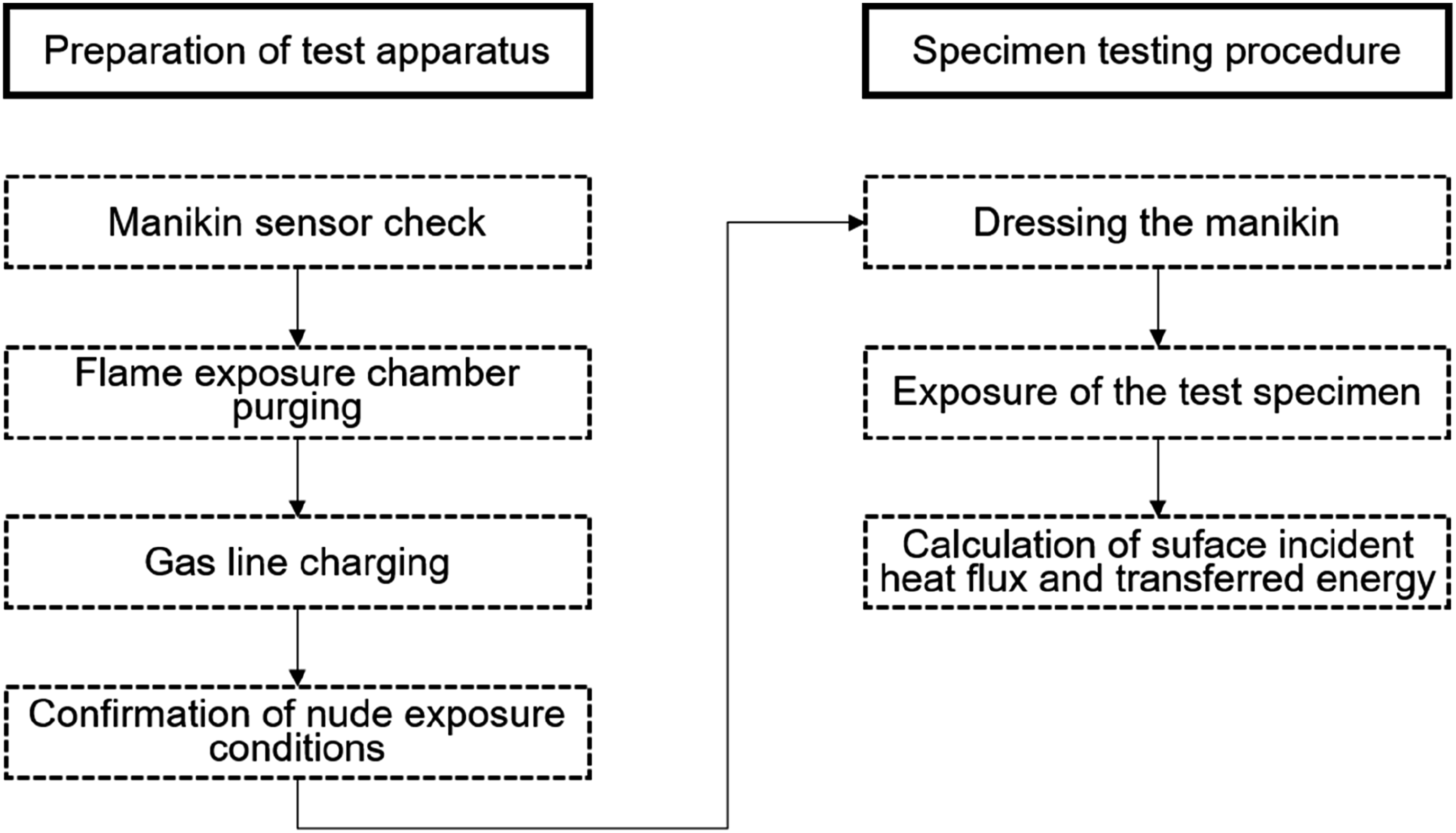
Skin burn injury prediction
The Henriques damage integral model was applied to estimate skin burn time in this study. This model predicts skin burns based on the temperature values measured at each time interval at specific tissue depths: 
The value of
Applied materials and methods
Materials
Properties of FPC material used in the experiment.

According to ISO 13506-1, testing a garment one size larger than the standard size will result in an approximately 5 % reduction in both total transferred energy (TTE) and predicted body burn percentage. Therefore, as the standard test manikin is size 6, a size 7 set of FPC was used in this experiment. The FPC clothing was new and preconditioned for 24 h prior to testing.
Sensors
Sensor distribution excluding hands and feet.

Dressing
The manikin was equipped with a complete set of PPE typically worn by firefighters during actual fire suppression operations. This PPE comprised FPC as well as an air respirator set, helmet, fire gloves, fire hood, and safety boots to account for the possibility that PPE may either protect the body or contribute to injury and consider the influences of PPE materials, designs, and features on burn outcomes. Although no sensors were provided on the hands and feet, gloves and boots were included to allow visual inspection of their contact areas. Figure 2 shows the experimental manikin fully outfitted in PPE. Experimental manikin with all PPE: (a) front view, (b) back view.
Air-gap measurement: The average clothing–air gap thickness was not measured separately for dry versus wet ensembles. All donning procedures followed the ISO 13506-compliant protocol, with a size-7 ensemble fitted on a size-6 manikin to ensure a standardized fit and minimize inter-condition air-gap variation. Consequently, this study focuses on evaluating garment-level heat transfer under realistic fit conditions rather than isolating the effects of air-gap thickness.
Exposure time
Although ISO 13506 allows for exposure durations of up to 12 s, an 8 s exposure was selected in this study to balance standardized testing with realistic fireground scenarios. In actual flash fire or backdraft events, firefighters are unlikely to remain unresponsive for the full 12 s, as survival often depends on immediate withdrawal or protective actions within a shorter timeframe. Therefore, 8 s was selected as a representative and realistic exposure time for evaluating burn injury risks. Although this duration reflects a practical withdrawal window for many flash-fire scenarios, real events can vary in intensity and length.
Moisture content

Moisture content and weight of each specimen after preconditioning.

Note. SD denotes standard deviation.
Results and discussion
Clothed burn injuries
The prediction of burn injury in this study is based on the Henriques damage integral model, as prescribed in ISO 13506-2. Although this model is internationally standardized and widely used in flame manikin testing, it has inherent limitations. The model relies on fixed threshold values (e.g., Ω = 0.53 for second-degree burns and a nociceptor pain threshold at 43.2°C), which may not fully represent inter-individual variability or the complex physiological responses of human skin under real fireground conditions. These parameters were originally derived from experimental and numerical studies involving human skin analogs and have since been validated for comparative use in standardized manikin evaluations. However, they should be interpreted as standardized approximations rather than exact physiological limits. Variations in skin sensitivity, tissue conductivity, fabric contact, and garment configuration may introduce small uncertainties when applying these thresholds to manikin simulations. Therefore, the burn predictions presented in this study should be regarded as normalized estimates within the ISO 13506 framework rather than the exact representations of actual human injury outcomes.
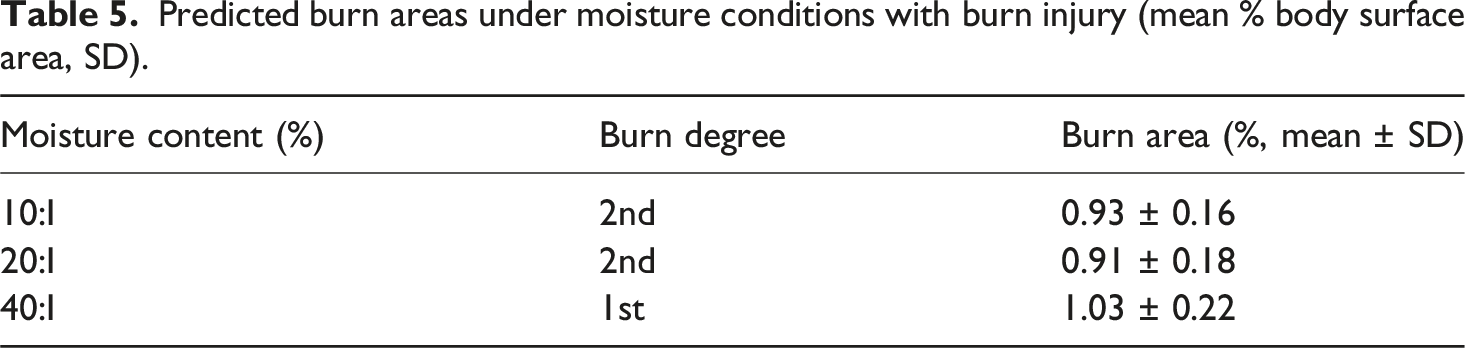
Figure 3 illustrates the predicted burn injuries according to the moisture contents of the outer shell and thermal inner layers of the FPC. The selected experimental conditions provided representative burn prediction trends under different moisture conditions. When the manikin wore a dry garment (0:I), no skin burns owing to convective or radiant heat were predicted, and only two pain areas were identified that accounted for 2.17 % of the total body surface. When the inside surface of the liner in the thermal inner was wet, the predicted burn and pain areas varied with moisture content. For the 10:I and 20:I conditions, second-degree burns were predicted on a single body part with burn areas of 1.12 % and 0.68 %, respectively; for the 40:I condition, a first-degree burn was predicted on one body part with a burn area of 1.24 %. Consistent burn outcomes were observed across three repeated trials of the 10:I, 20:I, and 40:I conditions: in each case, either first- or second-degree burns were predicted on a single body area and no third-degree burns were observed. Table 5 summarizes only the conditions where burns were consistently predicted. At 10 % and 20 % moisture, small areas of second-degree burns (approximately 0.9 % of body surface) were predicted, and at 40 % moisture, only first-degree burns (approximately 1.0 %) were predicted. No third-degree burns were predicted under any condition. Notably, higher moisture contents in the thermal inner did not lead to burns but only pain areas. Indeed, burn risk was greater when the moisture content was below 60 % than when it was above 60 %, suggesting that lower moisture contents in the thermal inner may accelerate heat transfer toward the skin, whereas higher moisturecontents lead to heat absorption and retention, delaying its transmission to the skin. Therefore, a critical threshold for burn risk may exist at a thermal inner moisture content of 60 %. To illustrate the heat-transfer behavior corresponding to the predicted burn areas, representative heat-flux profiles recorded from 126 sensors are shown in Figure 4. The uniformity of peak heat fluxes across sensors supports the spatial burn distribution patterns shown in Figure 3. Clothed burn injury prediction according to moisture content of outer shell and thermal inner layers: (a) 0:I, (b) 10:I, (c) 20:I, (d) 30:I, (e) 40:I, (f) 60:I, (g) 80:I, (h) 100:I, (i) 100:O, and (j) 100:IO. Predicted burn areas under moisture conditions with burn injury (mean % body surface area, SD). Representative heat-flux profiles recorded from 126 sensors on the thermal manikin surface under different moisture conditions: (a) 0:I, (b) 10:I, (c) 20:I, (d) 30:I, (e) 40:I, (f) 60:I, (g) 80:I, (h) 100:I, and (i) 100:O (for clarity, individual legends are omitted).

No burns were predicted when only the outer shell was saturated (100:O); however, two pain areas were identified covering only 1.36% of the manikin surface area. No burns or even pain were predicted on any part of the manikin when both the outer shell and thermal inner were saturated (100:IO). These results indicate that the saturated outer shell effectively blocked external heat from reaching the thermal inner, primarily by absorbing the heat itself. This comparison clearly illustrates the differences among the dry garment, garment with a dry thermal inner and wetted outer shell, and garment with a wetted thermal inner and dry outer shell, which resulted in the largest predicted burn and pain areas.
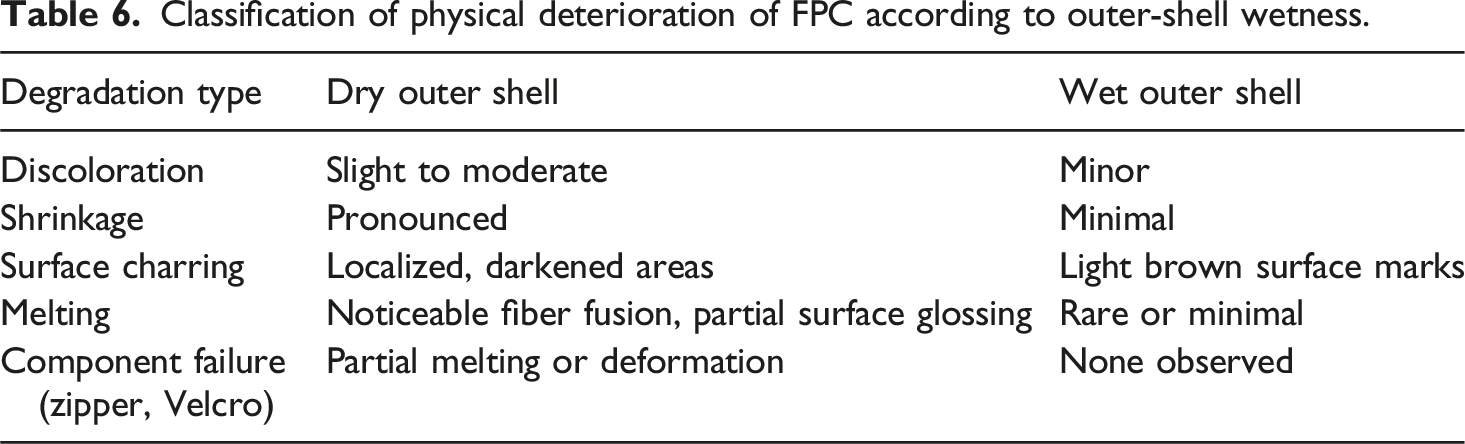
Figure 5 partially illustrates the appearance of the dry garment and equipment following thermal exposure. Physical deterioration of the FPC was examined by visual inspection after each test and classified into five categories: discoloration, surface charring, melting, shrinkage, and component failure (e.g., zipper or Velcro melting). The severity and type of degradation were primarily influenced by the wetness of the outer shell. Under dry outer-shell conditions, marked shrinkage and melting were observed owing to direct heat exposure, whereas wet outer shells showed only minor discoloration and surface charring because of surface moisture cooling. A qualitative spatial correspondence was observed between predicted burn areas and the physical degradation of certain structural components of the protective clothing. The back region exhibited minimal burns because the air respirator cylinder shielded the area, reducing direct heat exposure. By contrast, more burns occurred on the front knees, consistent with the presence of rubber knee pads that absorbed and retained heat. Frequent burn predictions on the shoulders were associated with melting of the rubber shoulder pads and the reduced air gap caused by the shoulder harness of the air respirator set. These findings indicate that localized design features and air-gap variations directly influenced the spatial distribution of burn risk. While wetting may result in localized compression of the thermal liner and slight reduction in air gaps, the standardized donning procedure maintained a consistent overall fit across all tests. Consequently, the observed variations are predominantly ascribed to differences in moisture distribution within the garment layers rather than to significant alterations in the clothing–air gap. The moisture barrier in the thermal liner was composed of aramid fibers laminated with PTFE. PTFE is known to undergo thermal decomposition above approximately 260–300°C, generating gaseous by-products such as perfluoroisobutene and HF. Although internal layer temperatures were not directly measured, the short 8-s exposure and evaporative cooling effects likely kept the barrier temperature below this threshold. Nevertheless, prolonged or repeated high-heat exposure could increase the risk of PTFE degradation, suggesting that future studies should evaluate alternative high-temperature or non-fluorinated barrier materials for improved firefighter safety. Although the hands, feet, and head were not fitted with sensors and thus excluded from quantitative burn prediction, post-exposure observation revealed visible discoloration and partial deformation on the gloves and boots. These physical changes indicate localized thermal stress in high-risk areas and highlight the need for component-level evaluation in future studies. Post-exposure inspection revealed that vulnerable components such as reflective tapes, plastic zippers, and rubber shoulder pads exhibited noticeable melting or charring. These localized degradations corresponded to higher predicted burn areas, suggesting that such components can act as thermal weak points. The use of high-temperature composites or redesign of these elements is recommended to improve garment integrity under flash-fire exposure. As visible degradation was distributed across seams, pads, and reflective components, a direct correspondence with the burn-sensor regions could not be established. However, comparison between dry and wet outer-shell conditions demonstrated that surface wetness effectively reduced shrinkage and melting, while inner-layer moisture had little effect on the extent of external deterioration. Appearance of dry PPE and components after exposure: (a) hem seam, (b) reflective tape, (c) protective pads, (d) Velcro patch, and (e) plastic zipper.
Transferred energy
Figure 6 illustrates the variation in the TTE as a function of the moisture contents in the outer shell and thermal inner layers of the FPC. Each bar in the figure represents the average value of three repeated measurements for the given condition and the error bar denotes the corresponding standard deviation (SD). The TTE was 178.6 kJ for the dry garment (0:I), indicating relatively high heat transfer. However, the TTE was higher for all cases in which only the thermal inner was wetted (10:I–100:I), ranging from a minimum of 182.2 kJ (60:I) to a maximum of 204.8 kJ (10:I). This suggests that the wet thermal inner, which was in direct contact with the manikin, facilitated greater heat transfer because of the high thermal conductivity of water. By contrast, when only the outer shell was saturated (100:O) or when both layers were saturated (100:IO), the TTE decreased significantly to 143.1 and 0 kJ, respectively. This implies that the saturated outer shell effectively blocked incoming thermal energy, significantly limiting the heat transmitted to the thermal inner, even in the presence of moisture. Therefore, the outer shell appears to act as a thermal barrier, whereas the moisture in the thermal inner promotes heat conduction to the skin. TTE according to moisture contents of the outer shell and thermal inner layers. Each bar represents the mean of three replicate tests, and error bars indicate ±1 SD.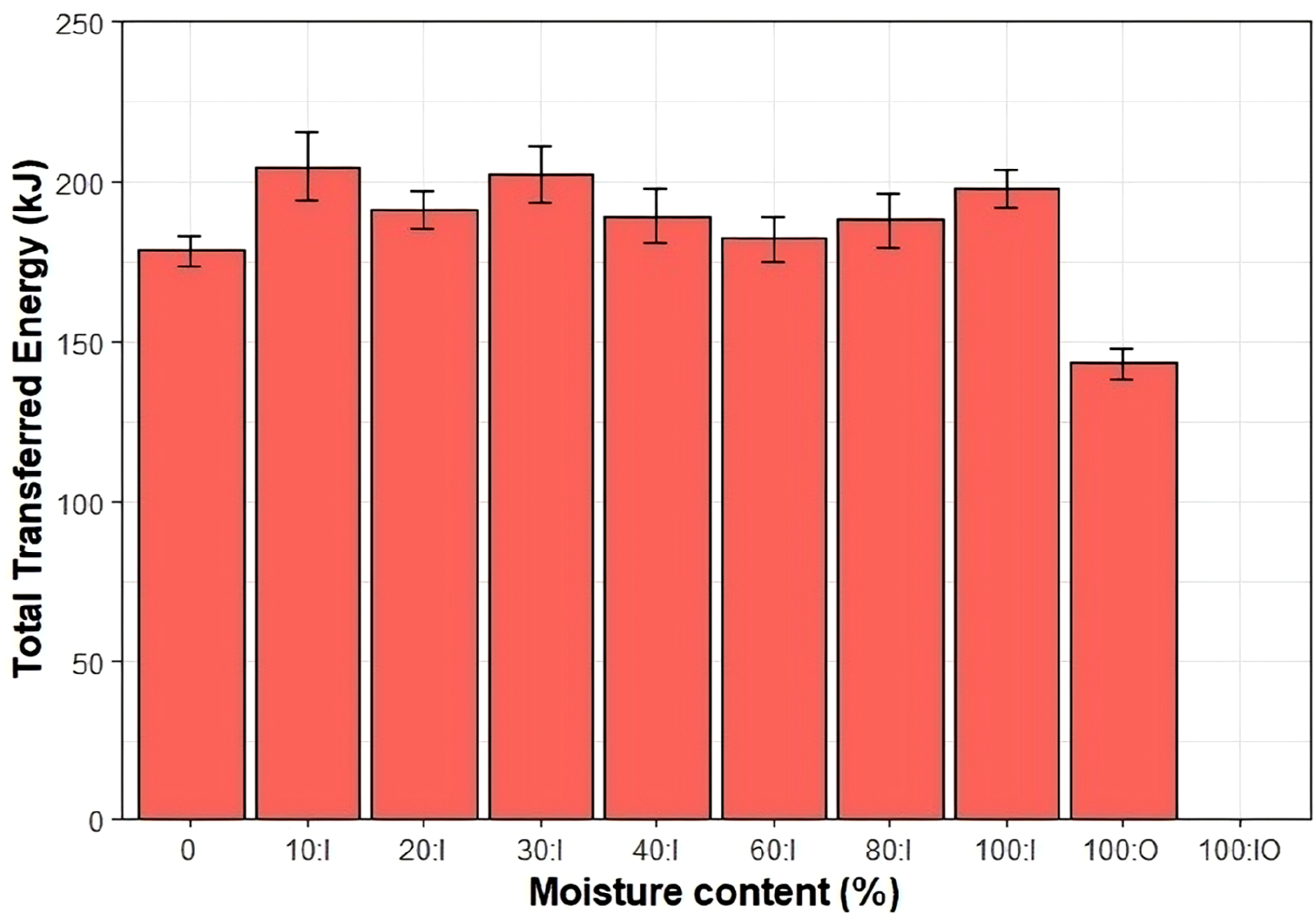
Figure 7 shows the variation in the TTF with the moisture contents of the outer shell and thermal inner layers of the FPC. Each point represents the average of three repeated measurements for each moisture content condition and the error bar indicates the corresponding SD. The results exhibited a trend similar to that for the TTE, in which partially or fully wetted thermal inner layers transmitted more energy to the skin than dry garments or garments with a fully saturated outer shell. These findings suggest that the presence of moisture in the thermal inner significantly increases the likelihood of skin burns owing to enhanced heat transfer. TTF according to moisture contents of the outer shell and thermal inner layers. Each bar represents the mean of three replicate tests, and error bars indicate ±1 SD.
Figures 6 and 7 reveal a significantdifference in energy transfer under moisture conditions with a fully saturated thermal inner with a dry outer shell and that with a wet outer shell (100:I vs 100:IO). Specifically, the completely dry garment (0:I) exhibited a lower burn risk than the combination of a dry outer shell with a saturated thermal inner (100:I), suggesting that a fully wetted thermal inner significantly increases burn risk. However, the condition in which the outer shell was wet and the thermal inner was dry (100:O) posed a greater risk than that when both layers were saturated (100:IO). These contrasting results highlight the influence of the outer shell moisture content. Because the outer shell is the first textile layer exposed to heat, it tends to retain and accumulate more heat when dry than when wet; similar results have been observed in previous studies on firefighting gloves and hoods. 33 When a dry outer shell was paired with a wet thermal inner (100:I), the dry outer shell stored heat as the moisture in the thermal inner accelerated the heat transfer toward the skin. By contrast, the wet outer shell acted as a protective barrier by absorbing and dissipating external heat, thereby reducing the energy transferred to the thermal inner whether wet or dry. This explains why the 100:O condition exhibited a greater burn risk than the 100:IO condition. Under the 100:IO condition, no pain or burn was predicted because both layers were fully saturated, producing strong evaporative cooling and latent heat absorption that prevented the inner-surface temperature from reaching the pain (43.2°C) and burn (Ω = 0.53) thresholds within the 8-s exposure. This finding indicates that full saturation can temporarily suppress heat transfer under short exposure durations; however, it should not be overgeneralized. Longer or more intense exposures may reduce the cooling effect, resulting in burn onset. The 8-s exposure used here follows ISO 13506 recommendations for realistic flash-fire conditions and represents a controlled scenario rather than the full range of possible fireground events.
Time to pain
Figure 8 illustrates the variation in time to pain according to the moisture contents of the outer shell and thermal inner layers of the FPC. Each point represents the average of three measurements, and the error bar indicates the corresponding SD. The only condition in which pain was not detected was when both the outer shell and thermal inner were fully saturated (100:IO), and the completely dry garments (0:I) were associated with the longest time to pain of 23.4 s. By contrast, the time to pain was shorter when the thermal inner was wet, although it varied depending on the moisture content. Notably, when the moisture content was below 40 %, the time to pain ranged between 11.1 and 13.8 s, which was shorter than that under conditions with moisture contents exceeding 40 %. An exception was observed for 100:I, when the time to pain was consistently the shortest across all wet thermal inner conditions (10.0 s). These results were consistent with the trends observed for TTE and TTF. Specifically, the time to pain was longer in wet than dry outer shell conditions and shorter in wet thermal inner conditions. Furthermore, the conditions in which second-degree burns were predicted—10:I, 20:I, and 40:I—exhibited the most rapid onset of pain, highlighting the increased burn risk under partially wet garment conditions. At complete saturation (100:I), excess liquid water fills the fabric pores, restricting vapor escape and leading to steam accumulation once the local temperature exceeds 100°C. This accelerates heat transfer toward the skin, resulting in a shorter time to pain despite a higher moisture content. Time to pain according to moisture content of outer shell and thermal inner layers. Each bar represents the mean of three replicate tests, and error bars indicate ±1 SD.
Classification of physical deterioration of FPC according to outer-shell wetness.
Correlation analysis between inner-layer moisture content and outcome measures.
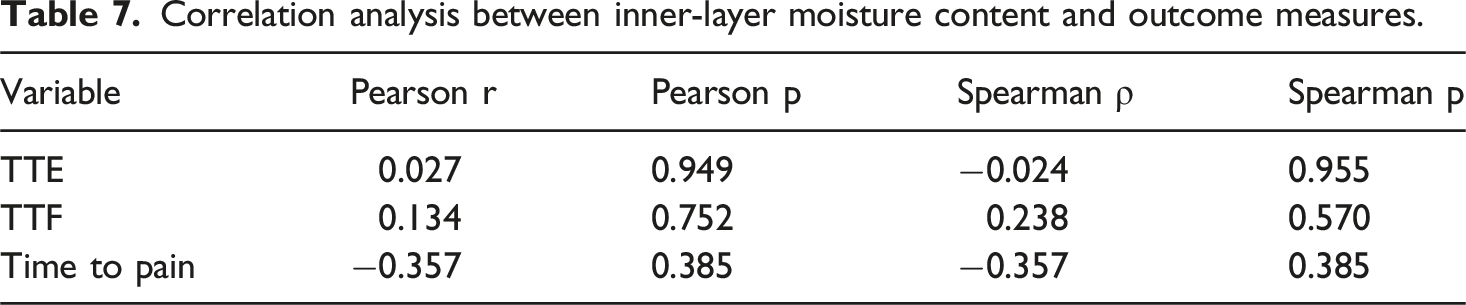
Previous bench-scale TPP studies have consistently reported that partial wetting (approximately 10%–20% moisture in the thermal liner) accelerates heat transfer and shortens the burn-onset time, whereas higher moisture levels delay heat transmission until full saturation causes rapid heating again. Our full-scale manikin tests exhibited the same moisture-threshold pattern under realistic garment conditions. Additionally, the full-scale method revealed localized phenomena—such as slight air-gap compression near harness areas and thermal degradation of pads or reflective components—that cannot be reproduced in bench-scale setups. These findings emphasize the added realism of whole-garment evaluation and illustrate the influence of structural and component factors on burn risk beyond fabric-only results. The results presented in Sections 3.1–3.3 collectively describe a coherent thermal response of FPC under varying moisture conditions. The burn predictions, transferred energy (TTE and TTF), and time-to-pain data are sequential indicators of the same heat transfer process. Higher transferred energy corresponded to shorter time-to-pain and greater predicted burn areas, demonstrating that partial wetting of the thermal inner layer (10% – 40%) intensified heat transmission to the skin. By contrast, higher moisture levels (≥60%) temporarily suppressed heat transfer via evaporative cooling, whereas complete saturation (100%) again promoted rapid heating once steam generation and fabric clinging occurred. These interconnected findings reveal a nonlinear, threshold-type relationship between moisture content and burn risk, linking the thermal and physiological responses observed in this study.
This study focused on single flash-fire exposure to isolate the effect of moisture content under controlled laboratory conditions. However, in real firefighting operations, protective clothing is repeatedly subjected to heating, wetting, and drying cycles that may cause material aging, fabric shrinkage, and changes in moisture absorption behavior. These cumulative effects could gradually reduce the TPPobserved in this study. Therefore, future research should incorporate cyclic wetting–drying and multiexposure testing to evaluate the long-term durability and evolving heat–moisture interaction characteristics of FPC under realistic service conditions.
Conclusions
This study investigated the degree of skin burn injury according to the moisture content of FPC during flash fire exposure. The limitations of bench-scale testing were addressed by conducting full-scale tests using a manikin equipped with FPC and firefighter PPE to simulate exposure to flash fire conditions and predict burn injuries. The instrumented manikin was exposed to a heat flux of 84 kW/m2 for 8 s. The collected data were analyzed to predict the resulting risk of injury for different moisture contents of the outer shell and thermal inner layers of the FPC. First- and second-degree burns were predicted when the moisture content of the thermal inner was 10%, 20%, or 40%, whereas moisture contents above 60% delayed heat transfer to the skin. Although direct numerical comparison with previous bench-scale studies is limited owing to differences in garment systems, our findings are consistent with the established pattern: partial wetting accelerates heat transfer, whereas higher moisture levels may delay it until full saturation promotes rapid heating again. This confirms that the trends observed in our full-scale manikin tests align with prior work while providing novel insights into localized burns and PPE degradation, underscoring the added value of full-scale evaluation. Furthermore, the saturation of the outer shell had a positive effect on burn prevention. Notably, several PPE components influenced the incidence of burn injuries under dry garment conditions. Thus, although PPE is essential for protecting the body during firefighting, certain elements may pose burn risks and require careful consideration in future studies.
The burn trends were analyzed in detail by examining the variations in the TTE, TTF, and time to pain. Wearing a saturated outer shell provided the best burn prevention, followed by wearing all dry garments. However, wearing a wet thermal inner posed considerable burn risk depending on the moisture level. Even when the thermal inner was wet, the moisture condition of the outer shell (wet or dry) significantly affected heat accumulation and thereby influenced burn severity. This study provides an integrated understanding of the influence of moisture content on heat transfer and burn injury development in FPC. The combined interpretation of the burn area, transferred energy, and time-to-pain results demonstrates the existence of a moisture-dependent threshold: partial wetting increases heat transfer, whereas high saturation temporarily mitigates it. Practically, these findings highlight the importance of moisture management in firefighter PPE—garments that are partially wet may pose a higher burn risk than those that are fully dry or fully saturated. Theoretically, the results offer quantitative evidence supporting the incorporation of a moisture-threshold concept into future heat-transfer models and standard test methodologies.
From a practical perspective, the results indicate that PPE protocols should aim to keep the thermal inner layer as dry as possible, as partial wetting increases heat transfer and full saturation causes steam accumulation that accelerates heat transmission. By contrast, wetting of the outer shell slightly improved thermal protection owing to surface cooling and enhanced heat absorption, though this effect was limited to short flash-fire exposure. Therefore, deliberate wetting of the entire garment is not recommended; however, maintaining moderate surface moisture on the outer shell may provide temporary benefits under transient flash-fire conditions.
From a material-design perspective, the outer shell should provide high thermal resistance and limited moisture uptake while allowing controlled surface wetting to attenuate radiant heat, whereas the thermal inner layer should be engineered to minimize liquid water retention and facilitate rapid vapor diffusion to prevent steam accumulation and secondary burns. These insights emphasize the need for layer-specific moisture-management strategies in both PPE design and field maintenance, guiding the development of next-generation FPC with improved safety and durability. These results bridge the gap between bench-scale TPP data and full-scale garment behavior, demonstrating that the moisture-threshold effects observed in small-sample tests persist under realistic whole-PPE conditions while revealing additional spatial and material interactions unique to manikin testing. The comparison highlights how full-scale methods provide more realistic insights into the combined influence of garment structure, component materials, and moisture distribution on firefighter safety.
Footnotes
Acknowledgments
The authors received editing assistance from a specialist communications company.

Author contributions
Tae-Sun Kim: Conceptualization and Writing – original draft preparation. Ji-Hyun Yang, Tae-Hee Park, and Tae-Dong Kim: Data curation and Visualization. Jin-Suk Kwon: Supervision.
Funding
The author(s) disclosed receipt of the following financial support for the research, authorship, and/or publication of this article: this work was supported by the Technology and Development to Support Firefighting Activities grant (2760000025) and funded by the National Fire Agency of Korea. The funding agency had no role in the study design; collection, analysis, and interpretation of data; writing of the report; or decision to submit the article for publication.
Declaration of conflicting interests
The author(s) declared no potential conflicts of interest with respect to the research, authorship, and/or publication of this article.