






Abstract
An adequate analgesic strategy is important to improve the postoperative recovery and welfare of laboratory rats and mice. It is desirable that the method for administering the drug is non-invasive and stress-free. We have previously validated a method for administering buprenorphine in a nut paste for voluntary ingestion. This method has many advantages over parenteral administration. To use the method in a successful way, however, it is important to prepare and administer the mix correctly. The present paper describes in detail how to implement the method, by means of habituation, presentation, adequate concentrations and amounts of buprenorphine/nut paste, and dosage of buprenorphine to rats and mice.
The use of analgesics in laboratory rats and mice after surgery is essential, because pain and stress are considerable welfare issues, which can alter their physiology and endocrine system and thereby bias the experimental data 1,2 . When treating animals for pain, it is desirable to administer the medication in a non-stressful manner. Subcutaneous injections that are often used for administering drugs, induce an acute stress response 3 . Therefore it is desirable to find alternative ways to administer an effective analgesic treatment, in a way that eliminates human interference with the animal.
Several studies have shown that buprenorphine administered in a sticky nut paste (Nutella®), voluntarily ingested by laboratory rats and mice, is an effective analgesic strategy, with reduced stress and lower corticosterone levels in blood and faeces 4–8 , and higher and prolonged buprenorphine concentrations in serum, when compared with traditional parenteral administration regimens 6,9 . However, this method is discouraged in some institutions, which is probably due to a lack of detailed instructions on how to apply the method, and uncertainty about how different animal models are affected by opioids. Therefore, the present report aims to provide sufficient details on how to administer perioperative analgesia to laboratory rats and mice, by using buprenorphine mixed in a sticky nut paste for voluntary ingestion.
It is recommended that the animals are habituated to ingesting Nutella®, before the actual treatment. A period of up to five days has been recommended
10
, although one or two days has been sufficient in other studies
5,6,11
. In our institution, animals are single-housed in the pre-habituation period, but Isaksson
The Nutella® is conveniently offered stuck on a piece of adhesive tape, which is then attached to the inner cage wall, a couple of centimetres above the bedding (Figure 1). Placing the nut paste in a bowl or other container on the floor of the cage is not recommended, since neophobic animals tend to bury the novel item, and thus mix the nut paste with the bedding material.
Mouse ingesting buprenorphine–Nutella mix from a piece of tape attached to the cage wall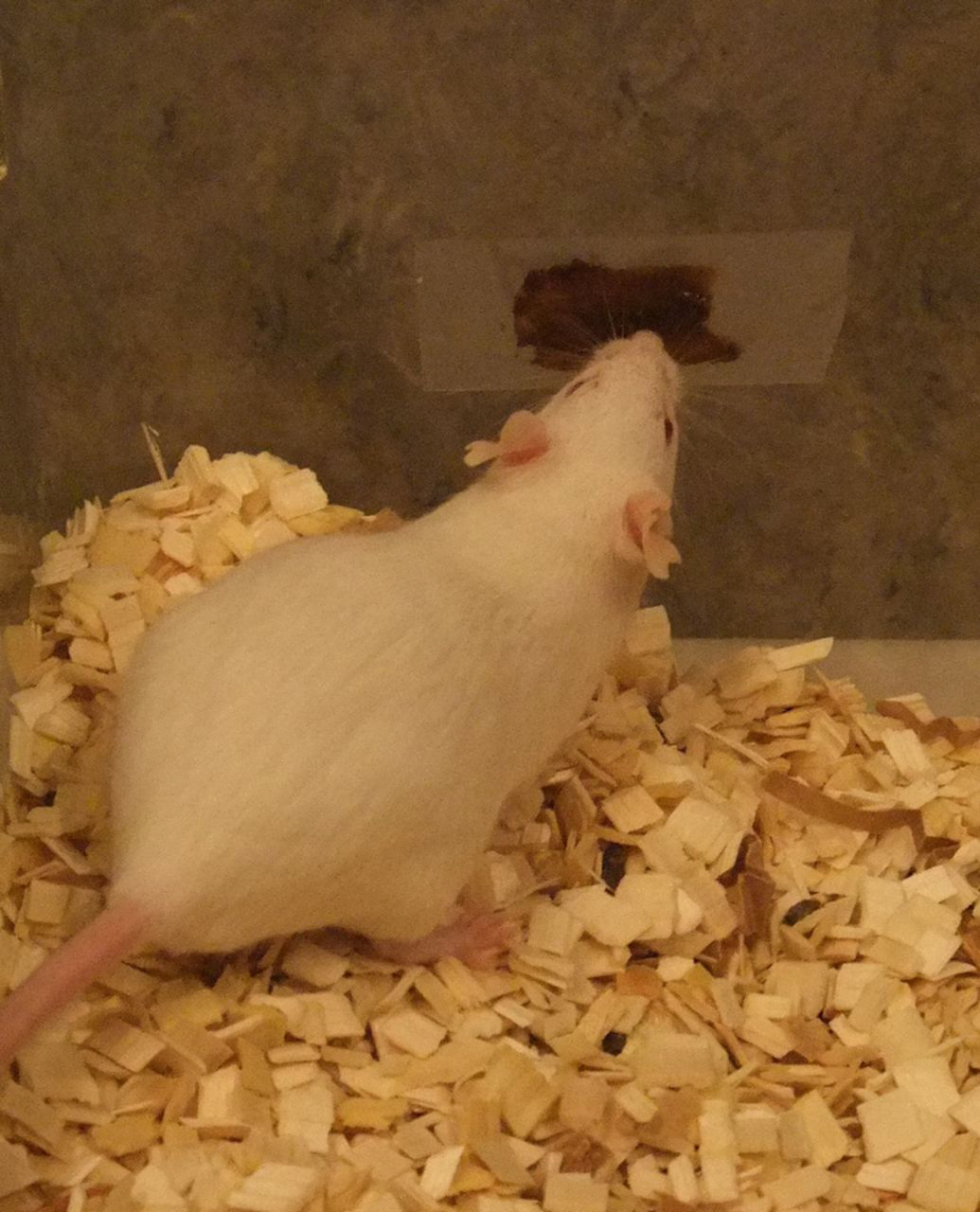
The amount of Nutella® given to the animals may vary. The amount should be chosen so that it is large enough to hold the analgesic, and appear attractive to the subjects, but small enough not to cause unintended significant diet changes in the animals. The Nutella is composed of sugar, vegetable oil, hazelnuts, cocoa, skim milk powder, soy lecithin and vanillin. The caloric content is 22.27 kJ/g; protein content is 6.9%, carbohydrate content 56.6% (mostly sugar), fat content 31%, and dietary fibre content 3.4%. We have found approximately 2 g Nutella®/kg body weight (BW) for rats and approximately 5 mg Nutella®/kg BW for mice appropriate.
When preparing the buprenorphine–Nutella® mixture, preparing a batch that can be used for several animals is recommended, since mixing small amounts of the mixture may be difficult. The possible degradation of buprenorphine in the nut paste has not been investigated, but in our experience, the batch can be kept in a refrigerator at 4°C for up to a week. Buprenorphine in tablet form should be used (sublingual tablets 0.2 or 0.4 mg). A tablet is crushed to a fine powder, and thoroughly mixed in the nut paste to a suitable concentration of buprenorphine–Nutella® mix, depending on the dose of buprenorphine to be administered. The somewhat bitter taste of buprenorphine did not affect the willingness to ingest the mixture of neither rats nor mice, when offered in concentrations of 0.2–0.4 mg/g. 4–6,8,9,11
The dose of buprenorphine administered may vary depending on the overall analgesic strategy. The dose we have validated in rats is 0.4 mg/kg BW, administered once (1 h preoperatively). This dose is sufficient for treatment of moderate pain conditions
4–6,12
. The mix should be provided according to the following equation: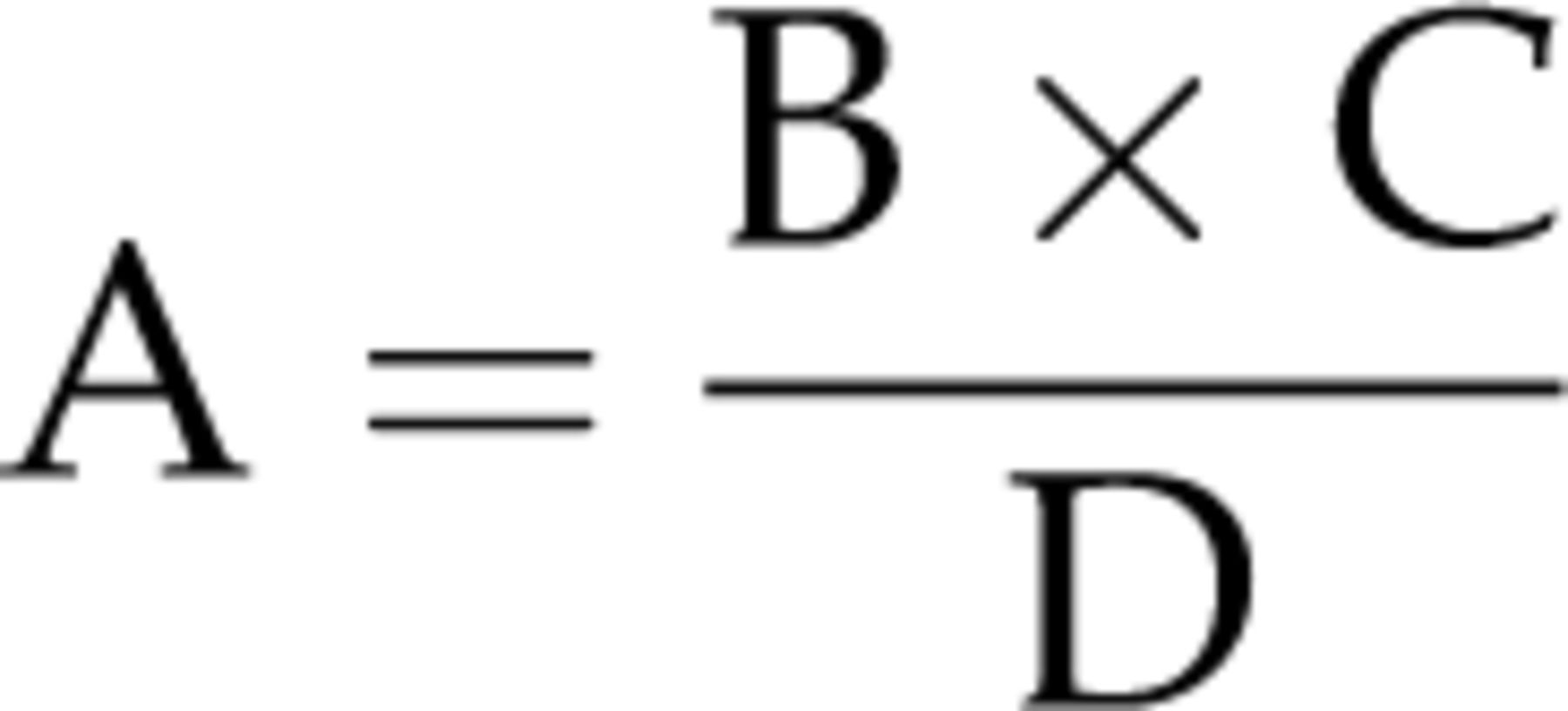
For example, in treating a 250 g rat with 0.4 mg/kg BW buprenorphine (in 0.2 mg/g nut paste), the rat should be provided with 0.4 × 0.25/0.2 = 0.5 g of the buprenorphine–Nutella® mixture.
A recent study of mice indicates that approximately 1.0 mg/kg BW buprenorphine is suitable 8 . Thus, treating a 25 g mouse with 1.0 mg/kg BW calls for 1.0 × 0.025/0.2 = 125 mg of the buprenorphine–nut paste mixture.
Healthy animals readily ingest the mixture immediately or within minutes, once habituated, and administering the analgesia preoperatively is convenient. Postoperatively, we have found that mice ingest the mix after catheterization 8 and middle cerebral occlusion (preliminary data), and rats after catheterization 4–6,13,14 and induction of global cerebral ischaemia 7 . These conditions are considered to produce mild to moderate pain. How readily the animals will ingest the mixture after more invasive surgical procedures remains to be investigated. Furthermore, the duration and depth of anaesthesia, the skills of the surgeon, and the overall perioperative care of the animals are factors that affect postoperative recovery 15 , and thus the willingness of the animals to ingest the mixture after regaining consciousness.
Treatment with buprenorphine, similar to other opioid analgesia, is often associated with adverse effects, such as reduced appetite, changes in activity, and pica behaviour 16 . However, reduced appetite and changed activity are often due to overdosing the animals 16 , and adjustment of doses for different animals and experimental situations may be necessary. Pica behavior has not been observed in any of our experiments.
In conclusion, the protocol presented in this paper describes a feasible method of administering pre and postoperative buprenorphine to rats and mice in several experimental situations. By following the description presented step-by-step, it is most likely that the animals will ingest the presented treatment.