






Abstract
According to the European recommendations rodents should be provided with a nest box if there is insufficient nesting material to build a complete, covered nest. Rats are generally poor nest builders; hence an additional structure is needed. Optimally, housing refinement may be combined with better science; at least it should not detract from the scientific integrity. In order to evaluate these options, there is a need to assess the items used in individual research projects. Studies investigating molecular mechanisms of cardiac hypertrophy and heart failure are typically long-lasting studies; therefore, refinement of the housing of rats in these studies is important. The aim of this study was to evaluate in rats whether a wooden tube has any impact on cardiac morphology or on basal gene expression of atrial natriuretic peptide (ANP) and brain natriuretic peptide (BNP); known markers of cardiac overload, hypertrophy and heart failure. The experimental protocol simulated cardiovascular studies, but without any surgical operations. A total of 42 male Hsd:SD rats were used in an eight-week experiment. After weaning, the experimental group was provided with a rectangular aspen tube and nesting material, and the control group with only nesting material. ANP and BNP gene expression were measured from the left ventricles with Northern blot analysis postmortem along with the absolute weights of the whole heart, left and right atria and left and right chambers. The weights of the whole heart and left chamber were also analysed in relation to body weight. No statistically significant differences were observed in any of these variables. The inter-individual variation was also unchanged by the cage item. In conclusion, the aspen tube does not disrupt research results or alter the number of animals needed and can therefore be recommended for enrichment purposes in cardiovascular studies.
Keywords
The 3R principle (Replacement, Reduction and Refinement) is widely accepted as an ethical guideline with respect to laboratory animals 1 and is an integral part of the European legislation governing this area. The Commission recommendation on guidelines for the accommodation and care of animals used for experimental and other scientific purposes (2007/526/EC) 2 emphasizes the importance of housing refinement. The belief is that various enrichment approaches are ways of achieving this goal.
Enrichment has been defined by several authors. ‘Any measure which promotes expression of natural, species-specific behaviours and a decrease in, if not disappearance of, abnormal behaviours.’ 3 ‘Environmental enrichment implies manipulation of an animal's surroundings in such a way as to enhance its perception of well-being.’ 4 ‘An improvement in the biological functioning of captive animals resulting from modifications to their environment.’ 5 In all of these definitions, the enrichmental status of an environmental modification is conditional on its consequences for the animals. However, in a number of publications, increasing the complexity of the animals’ environment is called enrichment even if its impact on the animals’ wellbeing or behavioural repertoire is not clear. Baumans (1999) takes this problem into account with her definition: ‘any modification in the environment of captive animals that seeks to enhance their physical and psychological well-being by providing stimuli meeting the animals’ species-specific needs’. 6 To be able to discuss the effects of different environmental manipulations without confusion in terminology, the following definition of enrichment will be used in this paper: ‘Any modification increasing the complexity of the animals’ environment intended to improve the animals’ well-being’.
The current European legislation recommends that there should be some form of environmental complexity. It is recommended that ‘Nest boxes should be provided if insufficient nesting material is provided for the animals to build a complete, covered nest’ (2007/526/EC, section A.4.2.). Rats are generally poor nest builders; 7 hence, an additional structure may be needed. This is recognized in the Commission's recommendation: ‘Nest boxes or other refuges are important for … rats’. Furthermore, ‘To increase environmental complexity the addition of some form of enclosure enrichment is strongly recommended. Tubes, boxes … are examples of devices which have been used successfully for rodents…’ (2007/526/EC, section A.4.2.). 2
In practice, common ways of providing enrichment for laboratory rats are the company of conspecifics or the provision of bedding material, gnawing sticks and tunnels and other shelters. It is quite clear that most forms of added environmental complexity have positive effects on the welfare of rats.8–11 It has also been shown that rats prefer enriched environments over more reduced or barren environments.12–14
The impact of enrichment on the scientific quality of research is more ambiguous. Enrichment can affect research results by altering the distribution of a given variable. This can result in changes either in the mean value itself or in the amount of variation within the group. Changes in the mean value can make it difficult to compare the results with those of previous studies conducted using different housing conditions. Changes in variation can alter the number of animals needed to achieve statistical significance.15,16 It has been proposed that environmental enrichment could result in more uniform research results due to the animals’ better coping and thus decreased reactions to novelty and stressors.17,1 However, when analysed, inter-individual variation has been shown to remain unchanged19–21 or even to increase22–25 in enriched conditions. Moreover, these effects are dependent not only on the variable in question but also on the strain/stock of the animals, their age and sex and of course the specific form of enrichment used.19,25,26 Therefore, the effects of any given form of enrichment should be determined in the specific field of research where it is meant to be used.
The aim of this study was to determine the feasibility of using a specific enrichment item in cardiovascular research. The molecular mechanisms involved in cardiac hypertrophy and heart failure are novel and rapidly developing research areas. Animal experiments are necessary for the development of new diagnostic markers as well as for new treatment strategies of heart failure. Studies on cardiac hypertrophy and heart failure are typically long-lasting; therefore, refinement of housing is of major importance. The effects of environmental enrichment, i.e. provision of an aspen tube, on several of the variables commonly measured in cardiovascular research were evaluated in this study.
Materials and Methods
The study protocol was reviewed and approved by the Animal Care and Use Committee of the University of Oulu (licence number KEK057/05). The study was conducted in the Laboratory Animal Centre (LAC), University of Oulu.
Animals and housing
A total of 42 male barrier bred Hsd:Sprague Dawley (SD) rats (LAC, Oulu, Finland) were used in this study. The barrier was free of the pathogens listed in the FELASA recommendations for health monitoring. 27 The animals were three weeks old at the beginning of the study. They were housed in groups of three in solid bottom Makrolon® polycarbonate cages (55 x 35 x 20 cm) with a wire-grid lid (Bayer AG, Leverkusen, Germany). Ambient temperature was 21 ± 1°C and a relative air humidity of 50 ± 10%. Room illumination followed a 12/12 h cycle, with lights on at 07:00 h. Food (R36, Lactamin Ab, Stockholm, Sweden) and tap water in polycarbonate bottles were available ad libitum. Aspen chips (2 L) were used as bedding (Tapvei Oy, Kaavi, Finland) and aspen wool (20 g) as nesting material (PM90L, Tapvei Oy, Kaavi, Finland) for all animals. In addition, the enrichment group was provided with an aspen tube (for details and availability, see below). Cages, bedding, nesting material and water bottles were renewed twice a week and the aspen tubes were renewed once a week.
The aspen tube
The wooden tube used was rectangular (20 x 10.5 x 10.5 cm, 1.5 cm wall thickness, Figure 1) and made of dried aspen (Populus tremula) board (Tapvei Oy, Kaavi, Finland). The walls of the tube were pinned together with aspen pins (4.0 x 0.6 x 0.6 cm) in predrilled holes. The tubes were rinsed once a week under a pressure washer without detergent and autoclaved after washing. 28
Enriched cages were equipped with an aspen tube, nesting material and bedding. The control cages had only nesting material and bedding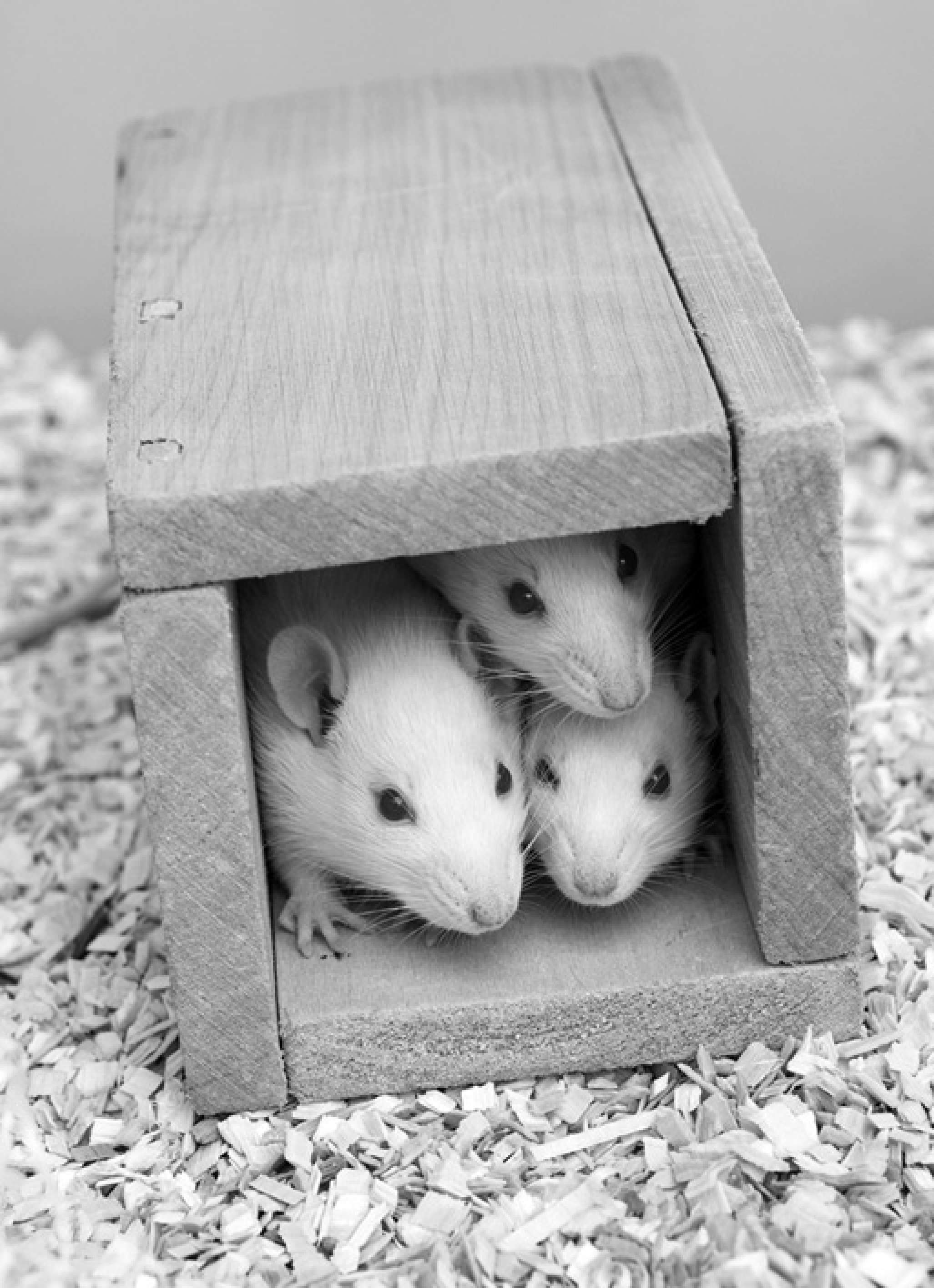
Study design
The study consisted of two groups (21 rats each). One group was provided with the aspen tube in the cage (enrichment group) and the other group was the control group without the aspen tube (control group).
Seven litters with a minimum of six males were chosen for the study. All litters were housed in cages equipped with only bedding and nesting material until weaning. Six male pups from each litter were randomly selected at the time of weaning (3 weeks). Each sextet of male siblings was randomly divided into two cages with three siblings per cage; one cage equipped with the aspen tube and the other without the tube. Thus, the enrichment group and the control group both consisted of seven cages with three siblings housed together in each cage (Figure 1). The cages were placed into two racks, the study cage and control cage being always on the same position in each rack.
At the age of seven weeks, the rats were separated and housed individually for 24 h. These cages were equipped with bedding and nesting material, but no tubes for any of the animals. The animals were left undisturbed for the 24 h and on the next day the rats were returned to their original groups, in which they remained for the rest of the study. The study lasted eight weeks. The rats were weighed weekly (Wedo Easy 2000, Western Digital, Lake Forest, CA, USA) throughout the experiment.
Euthanasia and postmortem examination
At the age of 11 weeks, the rats were euthanized with 70% CO2 and immediately decapitated. The hearts were collected for analyses. The total weight of the heart, the weight of the left and right atrium, the weight of the right ventricle and the weight of the anterior and posterior parts of the left ventricle were measured (AM 50, Mettler Toledo International Inc, Columbus, OH, USA). The hearts were immersed in liquid nitrogen and stored at – 70°C for further analysis.
RNA extraction and Northern blot analysis of atrial natriuretic peptide and B-type natriuretic peptide
The RNA was extracted from the left ventricles by using the guanidine–thiocyanate–CsCl method. For the Northern blot analyses, 20 g samples of RNA were separated by electrophoresis and transferred onto nylon membranes (Osmonics, Westborough, MA, USA). The cDNA probes complementary to rat atrial natriuretic peptide (ANP) and B-type natriuretic peptide (BNP) or ribosomal 18S RNA were random primer-labelled with [32P]dCTP, and the membranes were hybridized and washed at ± 62°C. The membranes were exposed with Phosphorlmager screens (Amersham Biosciences, Faifield, CT, USA), which were scanned with a Molecular Imager FX Pro Plus, and quantitated using Quantity One software (Bio-Rad, Hercules, CA, USA). The hybridization signals of ANP and BNP mRNAs were normalized to that of 18S RNA in each sample.
Data processing and statistical analyses
The appropriate sample size in the experiment was estimated with the Resource equation method; 29 the degree of freedom for error was 12. The statistical software package used to process and analyse the data was SPSS 14.0 for Windows (SPSS Inc, Chicago, IL, USA). The graphs were created with SigmaPlot 10.0 software (Systat Software Inc, San Jose, CA, USA).
The differences between the enrichment and control groups were analysed with linear mixed models using all collected data. A random litter effect was included in the models in order to accommodate for the possibility of correlated outcomes among siblings. The variables that were not normally distributed were log-transformed before the statistical analysis. The results of normally distributed variables are presented as arithmetic means and standard deviations (SD). Model-based estimates for differences of the means and their 95% confidence intervals (CI) are also reported. For variables that were not normally distributed, the results are presented as model-based estimates of the geometric means, their ratios and their 95% CI.
Linear mixed models for repeated measurements were used for the variable measured at multiple times from the same subjects, i.e. growth during the study. Time, treatment and their interaction were included into the models as fixed effects. In addition, siblinghood was included as a random effect in the models in order to account for possible dependencies due to the hierarchical nature of the data.
The equality of variances was investigated from the residual variance terms (obtained from the linear mixed model analyses) with Levene's test.
Results
Cardiac morphology
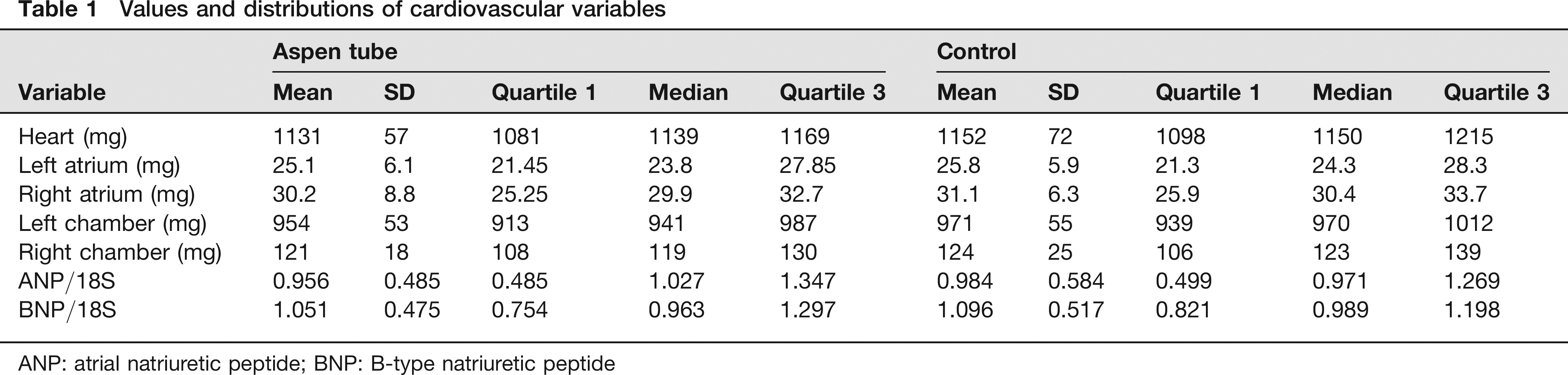
The following results are presented as model-based estimates. The total heart weights were 1130 ± 57 mg (± SD) in the enrichment group and 1150 ± 72 mg in the control group and the corresponding total heart weight per body weight ratios were 3.13 ± 0.16 and 3.20 ± 0.17, respectively. The values for the means of the left chamber weight were 954 ± 53 mg in the enrichment group and 971 ± 55 mg in the control group; and for the right chamber 121 ± 18 mg and 124 ± 25 mg, respectively. Furthermore, the means of the left chamber weight per body weight ratio were 2.64 ± 0.13 in the enrichment group and 2.70 ± 0.10 in the control group, equally the geometric means of the left atrium were 24.50 (95% CI [21.68; 27.73]) in the enrichment group and 25.24 (95% CI [22.29; 28.51]) in the control group; while values for the right atrium were 29.24 (95% CI [26.49; 32.36]) in the enrichment group and 30.55 (95% CI [27.67; 33.81]) in the control group. The differences between groups were not statistically significant (P > 0.05) in any of these variables (Figure 2 and Table 1).
Box-plots of the measured variables. ANP: atrial natriuretic peptide; BNP: B-type natriuretic peptide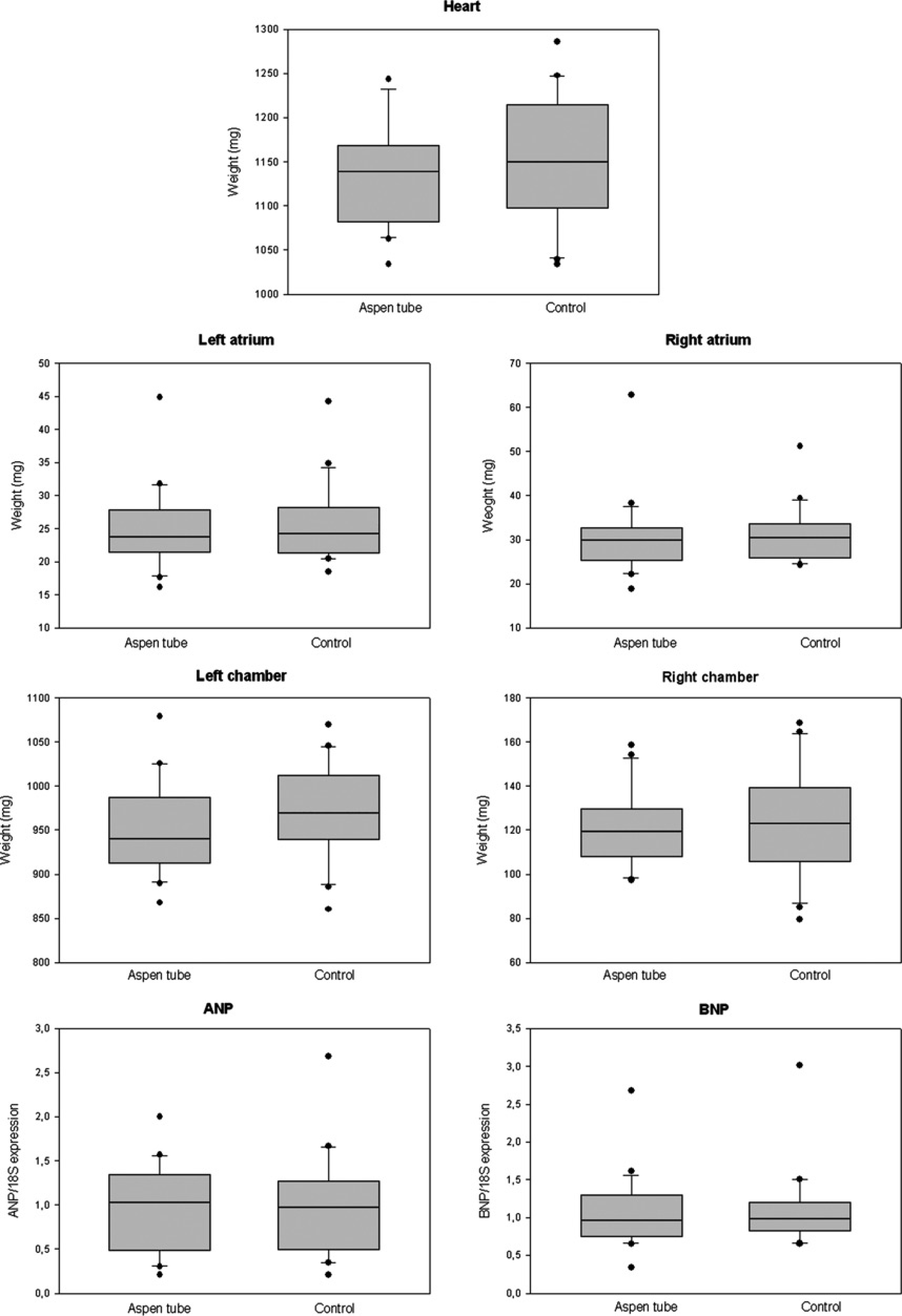
Values and distributions of cardiovascular variables
ANP: atrial natriuretic peptide; BNP: B-type natriuretic peptide
ANP and BNP gene expression
The model-based estimates for the means of the ANP/18S gene expression ratio were 956 ± 0.5 in the enrichment group and 964 ± 0.6 in the control group, while the same calculations for the geometric means of the BNP/18S gene expression ratio were 0.968 (95% CI [0.735; 1.276]) in the enrichment group and 1.004 (95% CI [0.762; 1.327]) in the control group. The differences were not statistically significant (P > 0.05) (Figure 2 and Table 1).
Body weight
The average weight of the two groups did not differ over time (P > 0.05). The interaction between time and treatment was not significant (P > 0.05) in the linear mixed model for repeated measures. At the end of the experiment, the model-based estimates for the means were 362 ± 18.9 g in the enrichment group and 361 ± 17.7 g in the control rats. The difference was not statistically significant (P > 0.05) (Figure 3).
Growth curves of the rats during the experiment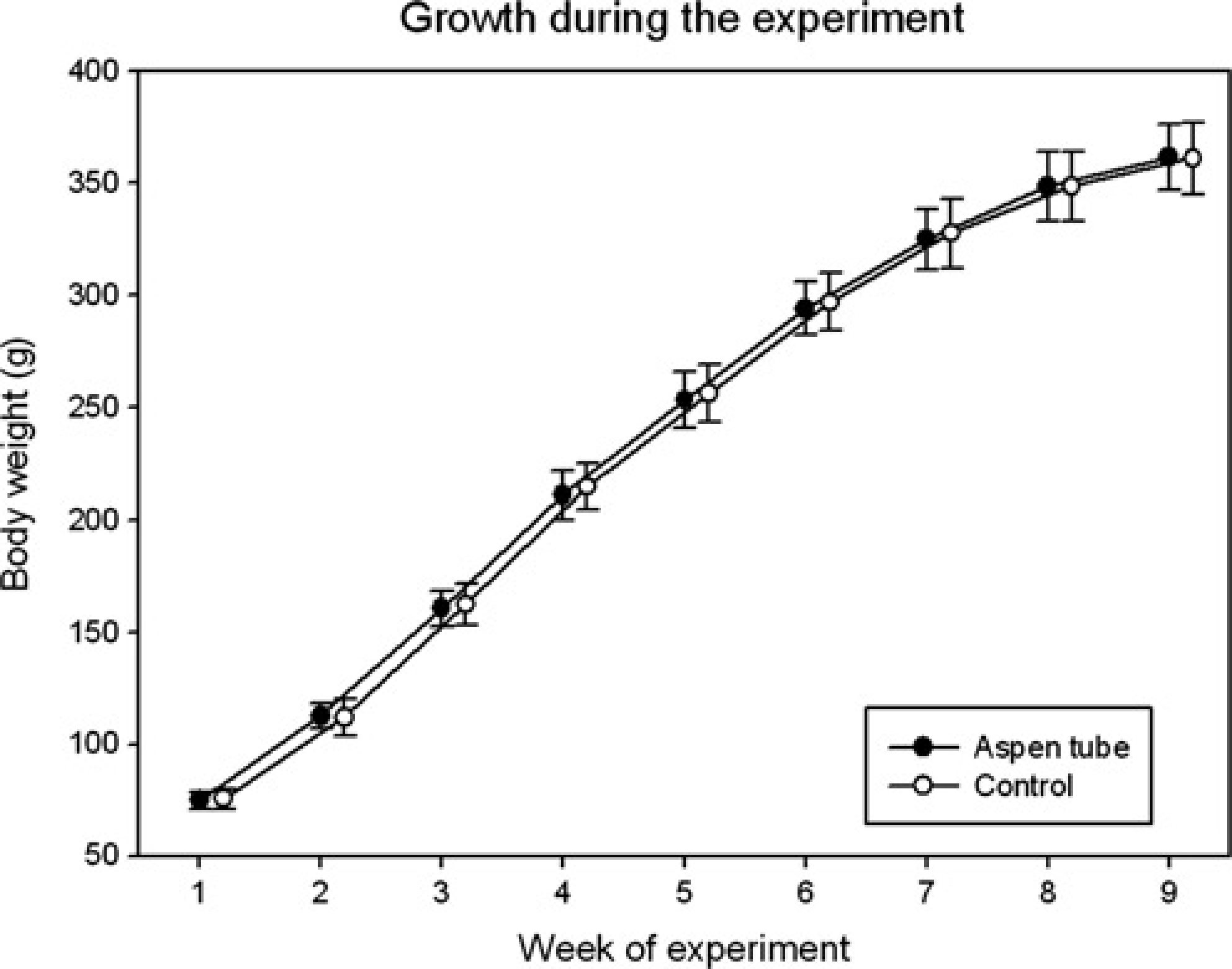
Result variation
The equality of variances was investigated for all variables of cardiac morphology, ANP and BNP gene expression and final body weight. No statistically significant differences (P > 0.05) were detected between the enrichment and control groups in the variances of any of these variables.
Discussion
The purpose of this study was to determine whether an aspen tube would be a suitable enrichment object for rats used in cardiovascular studies. According to the 3R principle, 1 the possibilities of using refinement and reduction alternatives in animal experiments should be assessed in each experiment.
Enrichment can function as refinement, if the animals’ welfare is enhanced by the item. Several approaches can be used to determine an enrichment object's welfare impacts. The species-specific natural behavioural repertoire should be taken as a guideline when planning enrichment. 30 Behavioural testing can be used to quantify the animals’ preferences and behavioural needs.31,32 The animals’ stress physiology, health and behaviour can be measured after exposing them to the enrichment in question. 33
In this study, the welfare impacts of the aspen tube enrichment were not directly measured. According to the existing literature, a shelter can be argued to have a positive impact on rats and thus constitute a refinement alternative to standard housing. Rats have been repeatedly shown to have a strong preference for shelters12–14,34 and to spend considerable amounts of time within the shelter (87% of light period and 24% of the dark period), when such a structure is provided. 35 Furthermore, adding shelters to the environment has been shown to increase activity and decrease anxiety. 34 However, it is not clear whether a tube can provide the same benefits as a nest-box type shelter.36,37
The aspen tube also provides further advantages as an enrichment object. Items made from softwood have been shown to emit volatile compounds including pinenes; a problem solved by prior heat treatment. 38 Nonetheless, the best way to avoid exposing animals to additional chemical compounds is to use a material already present in the cage or to make use of genuinely inert materials. One solution is to use items made of the same material as the bedding, 35 which is the case with the aspen tubes used in this study. Moreover, rats prefer wooden, chewable objects to a diverse group of other materials. 39 Lastly, the tube also provides recommended addition to the complexity of the cage environment. 2
The question of nest-building is ambiguous. Rats do not show such a strong preference for nesting material as they do for shelters, 13 although they actively manipulate nesting material when it is available. 12 Nest-building is an innate behaviour observed also in rats reared without contact to nesting material,40,41 though the opportunity to learn nest-building as a pup increased the complexity of the nests built. 7 It has been suggested that nest-building behaviour is dependent on the correct stimulus, e.g. rats use nesting material to build nests within existing nest boxes. 41 In this study, nesting material (aspen wool) was provided to all rats. The rats in both groups manipulated the material to create simple nest-like constructs, where the animals often rested. However, none of the rats used the nesting material to build a nest within the aspen tube. One likely explanation was the limited dimensions of the tube. Thus, it could be argued that the tube in fact did not function as a recommended nest-box.
In addition to speculating on whether an aspen tube is a good choice for enrichment, it is equally important to ascertain that it does not confound research results. In this study we concentrated on cardiac variables to ensure that the aspen tube was a suitable enrichment choice for cardiovascular studies. There were two reasons for choosing the aspen tube as the cage furniture to be studied: the aspen tube is commonly used for rats in our laboratory and visual observations suggest that it is used to a high degree by the rats. The study protocol simulated a protocol used in cardiovascular studies in the University of Oulu.42–44 However, no surgical procedures were performed. The stress caused by the surgical procedures and the 24 h recovery period in isolation was simulated (to a milder degree) by a 24 h period of isolation in a barren cage. Several variables were analysed to investigate the possible effects of enrichment on the research results. The animals’ weight gain was followed throughout the study. At the end of the experiment, cardiac morphology and expression of the cardiac natriuretic peptide gene were measured. No differences between the enriched and control group were observed in any of these variables.
Blood pressure is one mechanism through which enrichment could affect cardiac morphology and ANP and BNP gene expression. Hypertension is associated with elevated levels of ANP and BNP gene expression45–47 and cardiac (especially left ventricular) hypertrophy.48–50 Previously, blood pressure has been shown to be affected by different stressors and housing conditions.51,52 Decreased blood pressure can be considered as a sign of increased welfare. 51 Generally speaking, enrichment lowers both baseline blood pressure53,54 and the cardiovascular responses to additional stressors, i.e. handling, though the effects appear to be item and stock/strain specific.55,56
A related mechanism that could link enrichment and cardiac morphology is the sympathetic nervous system (SNS). Activation of the SNS contributes to the development of cardiac hypertrophy 57 also independently of blood pressure. An elevated tone of the SNS is an inherent feature of the stress reaction.58–60 Environmental enrichment can evoke changes in the stress-associated physiological variables.8,61–64
The lack of significant differences in this study indicates either that the two environmental conditions did not greatly differ from the rats’ point of view or that cardiac variables are not sensitive to minor differences in the animals’ physiology and behaviour. The animals used in this study were all young and healthy and thus the possible differences in blood pressure and SNS tone induced by environmental enrichment were likely to be sufficiently small to allow the cardiovascular system to adapt without developing any observable pathological changes. The results of this study do not by any means prove that the aspen tube was beneficial to the rats. However, the results indicate that aspen tubes can be safely used in similar cardiovascular studies without confounding the research results. Further studies would be needed to increase the applicability of these results to other strains, sexes or age groups.
In addition to the effects that enrichment can have on animal welfare and research results, an important consideration is the reduction aspect. Enrichment can affect the number of experimental animals needed by changing inter-individual variation.22–25 In this study, the variances in the enrichment and the control groups were compared in all cardiac variables and the final body weight. No statistically significant differences were observed in any of the variances. Thus, it is likely that the presence of an aspen tube would not alter the number of animals needed in studies on cardiac hypertrophy. 15
In conclusion, the aspen tube is one way to satisfy the European recommendations on cage complexity. This form of enrichment has been shown to be preferred and utilized by rats. In this study, we have shown that an aspen tube does not disrupt research results or increase the variation in cardiovascular variables and can therefore be recommended as a form of environmental enrichment for laboratory rats in cardiovascular studies.