





Abstract

This is a series on the working lives of medical professionals. Please e-mail any suggestions or comments to
1. Please outline your typical working day
I wake up at 6am and, after looking through my Internet mail and reading the Delhi newspapers, leave for Sir Ganga Ram Hospital at 7:30am. At 8am there's a class for the postgraduates which is either a journal club, topic discussion, formal exam-oriented case presentation or a review of their ongoing research projects. After this I do a quick ward round and then go to the operating theatres where I do rather complicated GI surgical operations till at least 4pm when I rush, usually late, to the outpatient department till 6pm (Monday to Friday). I see between 20 and 35 patients there, new and old, who are from all over India, including some from Bangladesh, Nepal, Africa and even Pakistan, and often have to extend the hours to 7–7.30pm. I then go to a nearby small hospital, also run by Ganga Ram, where I do a round on the patients there. In between operations, I have to attend various weekly hospital committees on Academics, Research, the Hospital Library, hospital website and Departmental Audits as well as the clinical combined rounds and the Pathology conferences – I have to as I am Co-Chairman of the Department of Academics. On Thursdays I go to the New Delhi Television studios to a meeting of our website DoctorNDTV.com team (‘for the better health of Indians’). We have 300 experts from India and abroad who answer 160 queries every day and the site gets 6.5 million hits per month. I return home at 8.30pm, have dinner, read medical journals or an occasional book and go to sleep.
2. One aspect of work you most look forward to each day
I suppose doing a difficult operation satisfactorily (this is very rare!). Samiran Nundy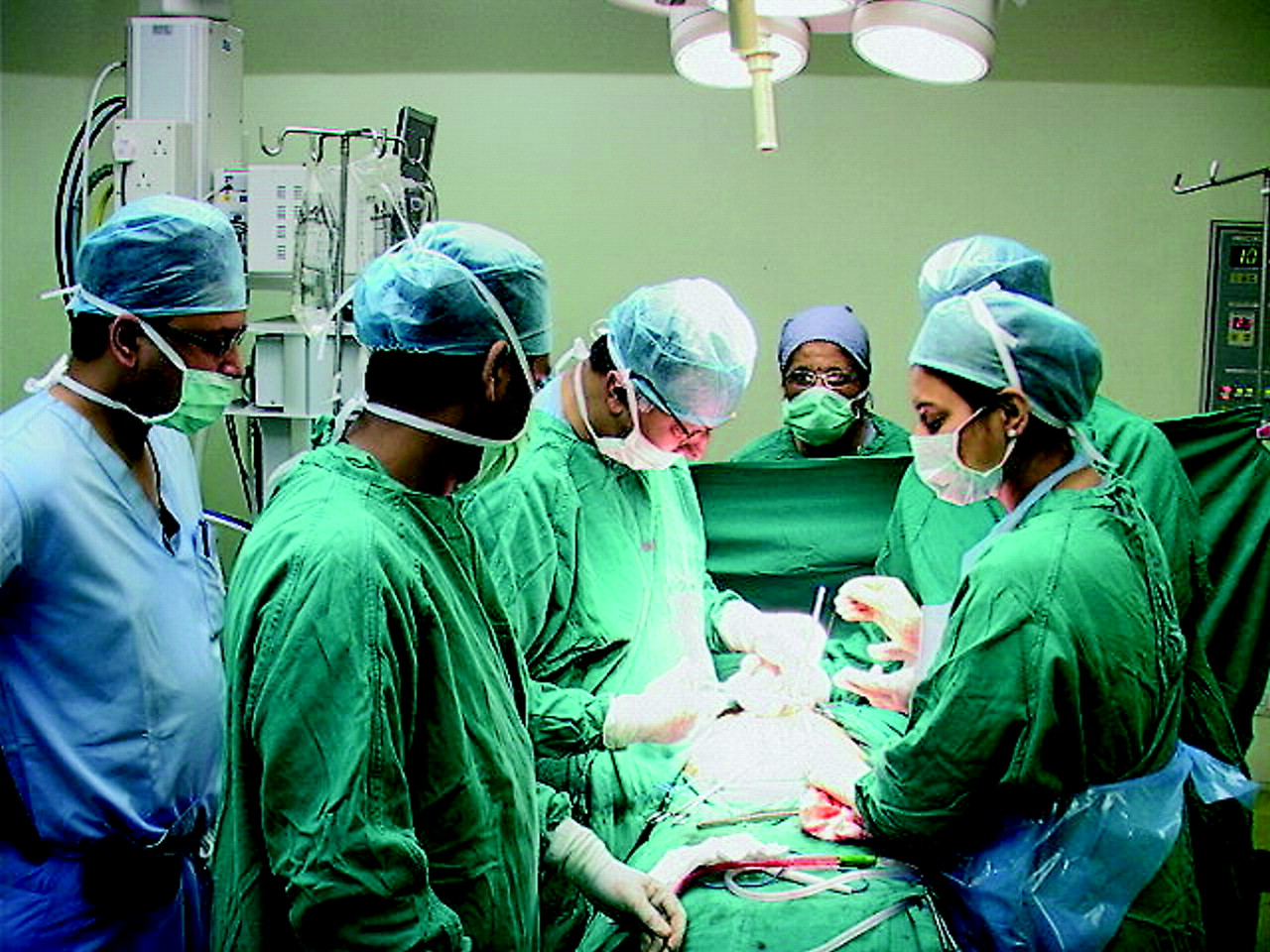
3. One aspect of work you least look forward to each day
Coping with the large numbers in the outpatient department.
4. A person who has inspired you most at work (past or present)
The rector of St Paul's School, Darjeeling, Mr Leslie Goddard, who told me that because I had been born into privilege it was my duty to help my poorer countrymen.
5. The most significant achievement of your career
Helping to draft and pass through both Houses of the Indian Parliament, the Transplantation of Human Organs Act 1994. This made human organ trading illegal and recognized brain death as a form of death.
6. List your reasons for choosing this career
In spite of the fact that my father was a well-known and successful Professor of Surgery, my mother and her smarter family wanted me to join the more prestigious Indian Civil Service or the Diplomatic Corps. One day while I was listening to my mother telling us what a glamorous life I would lead as an Ambassador to France I decided suddenly to change to medicine – mainly to please my father. This was after I had gotten into Cambridge to do a non-medical tripos, so that I had to go through the boredom of passing the biology part of the first MB which I, fortunately, scraped through. After my medical training and 19-year stay abroad where I worked in the most prestigious institutions in the UK and the USA, I then had to decide whether to return to India. My wife was very keen to come back, I less so, but I returned remembering my school headmaster's words. I am pleased I did because I feel, looking back, that I've been given many opportunities that I would not have had in the West and have loved the satisfaction and rewards of being a doctor in India.
7. Alternative career (in another lifetime)
A serious film critic or a serious classical guitarist.
8. Non-medical book(s) you are currently reading
White Tiger by Aravind Adiga (superficial, a ‘foreigner's’ view of Indian poverty) and Outliers by Malcolm Gladwell (he tortures the data a bit to fit in with his hypothesis but brilliant and inspiring nevertheless).
9. Song(s)/piece(s) of music you are currently listening to
‘Recuerdos de la Alhambra’ on the guitar played by John Williams and, I am afraid, ‘My sweet Lord’ by George Harrison and ‘What's up’ by 4 Non Blondes.
10. How do you wind down at the end of the working day?
I practise the classical guitar when I'm not too tired, chat with my wife and daughter over dinner and then curl up in bed with news magazines, medical journals and books. I hate going to parties.