





Abstract

After 10 years of study and research in Europe, I recently returned home to work in China.
On a free day I came to the outpatient department of a nearby county hospital to see Dr Li, my friend and colleague of years past. His clinic was full of patients, so I waited outside the door until he finished seeing them. After warm greetings, he asked me what I had learnt while abroad for so long. I told him of some of my experiences, particularly of the kindness, unselfishness and warmth of European colleagues. For example, Professor Crabe invited me to stay in their home, introducing me to his friends and relatives to accustom me quickly to local life, and even Professor Bogaert who gave my wife and me lovely Belgian chocolates. When our daughters were born we received baby clothes from many kind people. Noteworthy also was Mr Taylor who provided houses for foreign students, where we lived and studied language. I thought these examples would help Li understand the kindness and altruism of the people in our host country. Sample of a doctor's tally sheet for a particular pharmaceutical company in Chinese (Figure 1) and translated to English (Figure 2). The tally shows 44 prescriptions and, given to this company's salesman, will earn the doctor a particular amount of money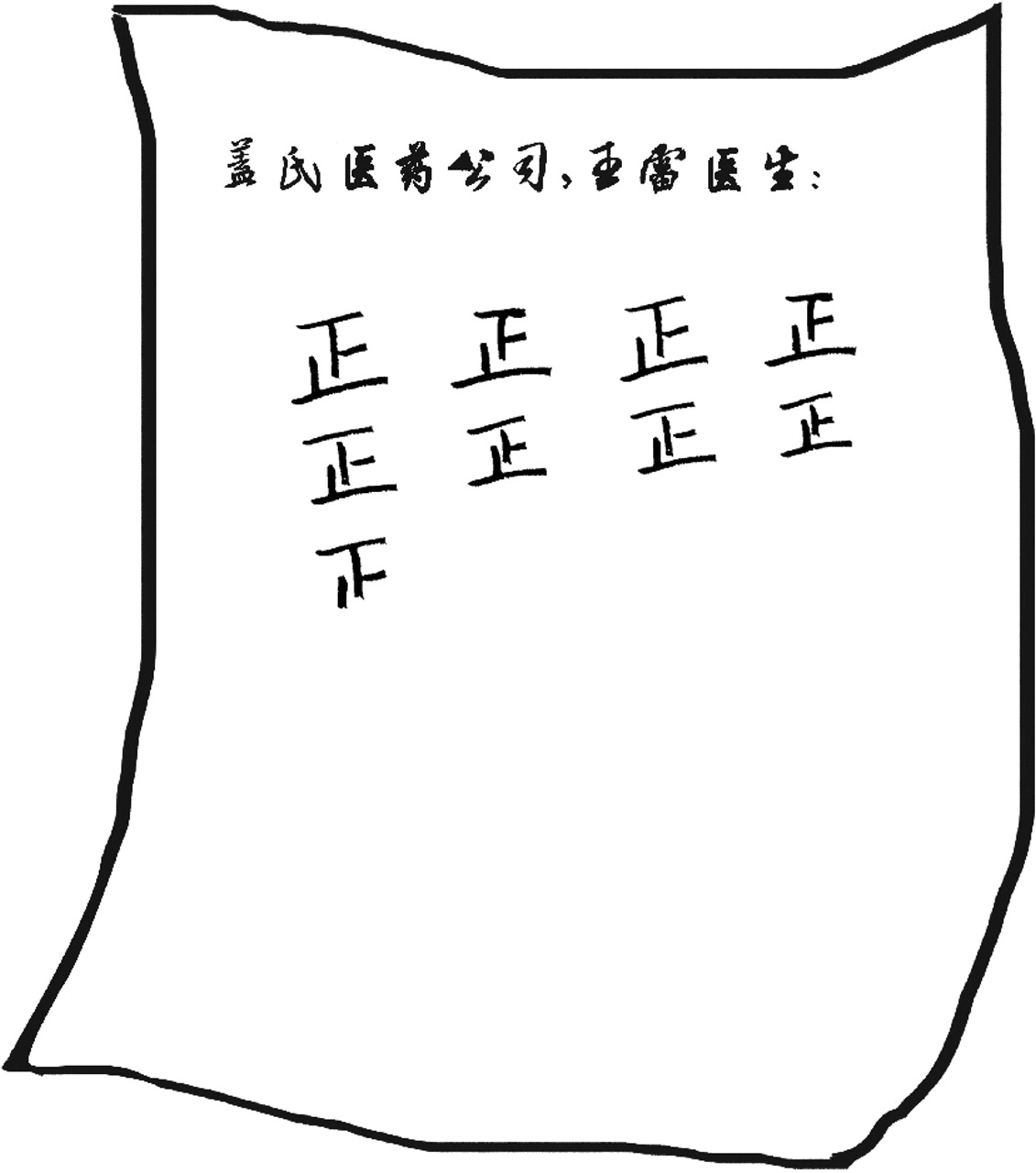
While we were chatting, a steady flow of patients came in with drugs prescribed by Dr Li, who gave each person instructions on how to take their pills. After the last patient had left he furtively took a piece of paper from his desk drawer, made some marks on it, and quickly put it back in the drawer. Noting my curiosity, we had the following conversation:
‘Years ago, I told you to come back to work as soon as possible because the situation has changed. The government still does not pay us enough salary, but the pharmaceutical companies now supplement our incomes.’
‘But, how?’
‘They will pay you a kickback on the amount of their drugs you have prescribed.’
I had heard of this before; I was quite surprised when my old friend admitted to his complicity in this scheme.
‘How can they know how much I prescribed?
‘You record the number of the drug purchases on a tally sheet and the company's salesman verify whether the number you record is right or not. Then you are paid accordingly.’
Thus, I understood what he had done with the paper from the drawer a few minutes before.
I also realized that, because of our long friendship, he was telling me something that other doctors would hide from me. He was trying to persuade me to be more practical in life and I, valuing his friendship greatly, was deeply troubled by his actions.
What about the patients? What if the kickbacks led the physicians to prescribe medications they did not need? Surely the patients would prefer to spend their hard-earned money on things other than unnecessary, possibly harmful, drugs. Then, what should I do during my own life? Should I think only of my income, or rather, live altruistically like the people I met in Europe? Having benefited so much from the generosity of others, I now felt compelled to follow their example. I chose not to be a ‘tally-sheet doctor’. Figure 3 shows a doctor telling an elderly male patient how to take the expensive antibiotic he prescribed. A female patient standing beside the table is waiting for his instructions while another female patient is coming to his clinic, both have large bags with the excessive amount of drugs he has prescribed for them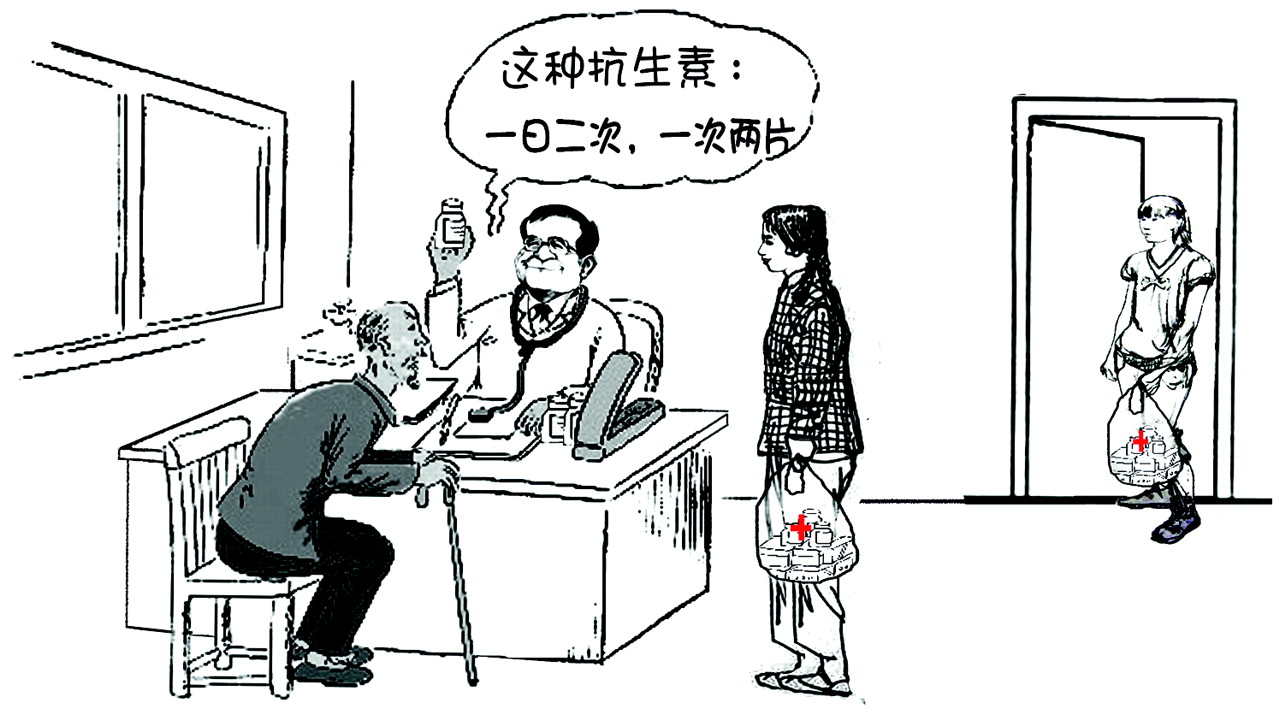
Footnotes
DECLARATIONS
Footnotes
Acknowledgements
I would like to thank Professor Holmes, Rachel Wattier, Anthony Marfeo and Jake Graff for providing valuable feedback. I thank Jing Liu and Chen Xu for helping me with drawing the figures. Heartfelt thanks go to all the people who helped me while I was studying and working in Europe. I still enjoy the friendship of ‘Dr Li’ and, as with this good friend,names have been changed in telling this story