






Abstract
Abstract
Background
Adding or incorporating clinical interpretative comments on biochemistry results is widespread in UK laboratories; although this consumes considerable human resource, there is still little evidence to suggest that it is either effective or appreciated by our clinical colleagues. I therefore decided to survey our local general practitioners (GPs) and nurse practitioners to analyse whether they found biochemistry comments on reports helpful.
Methods
A simple questionnaire was designed and sent to 159 GPs and 81 nurse practitioners asking them whether they found this activity useful for the limited range of test groups that we routinely comment on and also whether they would like to see commenting on more groups of tests.
Results
Overall, 49.6% of questionnaires were returned. Of these, there was overwhelming support for commenting on reports and 77% would like to see comments on a greater range of tests.
Conclusions
Although adding clinical interpretative comments is very time-consuming for senior laboratory staff, there is overwhelming support of this activity among our GPs and nurse practitioner users; therefore, our local policy of routinely adding clinical comments will remain for the foreseeable future.
Introduction
Most UK laboratories have a Duty Biochemist (a suitably qualified senior medical or scientific professional) who adds interpretative comments on certain biochemistry reports, where the additional comment is considered to ‘add value’ to the requesting doctor or nurse. These activities have been considered in this journal on many occasions, 1,2 but even today there is little evidence that the activity is effective or appreciated by users of the service.
Our laboratory policy is to routinely add clinical comments to most endocrine sets of results (follicle-stimulating hormone/lutenizing hormone [FSH/LH], oestradiol, cortisol, etc.), complex thyroid function test (TFT) results, all glucose tolerance test (GTT) results and other miscellaneous test results where interpretation is thought to be of help, (e.g. persistent hyponatraemia, persistent abhorrent liver function tests etc.) for our local general practitioners (GPs) and nurse practitioners. However, this activity is very time-consuming and although considered by laboratory staff to be helpful and appreciated by our users, has never been formally confirmed. Therefore, I decided to survey all their local GPs and nurse practitioners to establish whether adding interpretative comments was considered helpful to them. Moreover, I also decided to ask whether they would like to see commenting on greater numbers of biochemistry tests.
Methods
A brief and simple ‘tick box’ questionnaire (see Appendix) was drafted asking GPs and nurse practitioners whether they found comments helpful or not.
Notably, they were asked whether comments on the following groups of tests FSH/LH, oestradiol, testosterone, prolactin, progesterone and cortisol, TFT and GTTs were very helpful, helpful, slightly helpful, neither helpful nor unhelpful, or unhelpful.
They were also asked whether they would like to see more comments added to other sets of biochemistry results and if so, which ones.
The questionnaire was sent to our entire group of 159 GPs and 81 nurse practitioners across our local Primary Care Trusts that uses our laboratory. The survey was undertaken, as a ‘one off’ occasion, in July 2006.
Results
Replies to the questionnaire were received from 95 out of 159 GPs (59.7%) but only 24 out of 81 nurse practitioners (29.6%). The overall return rate was 49.6%.
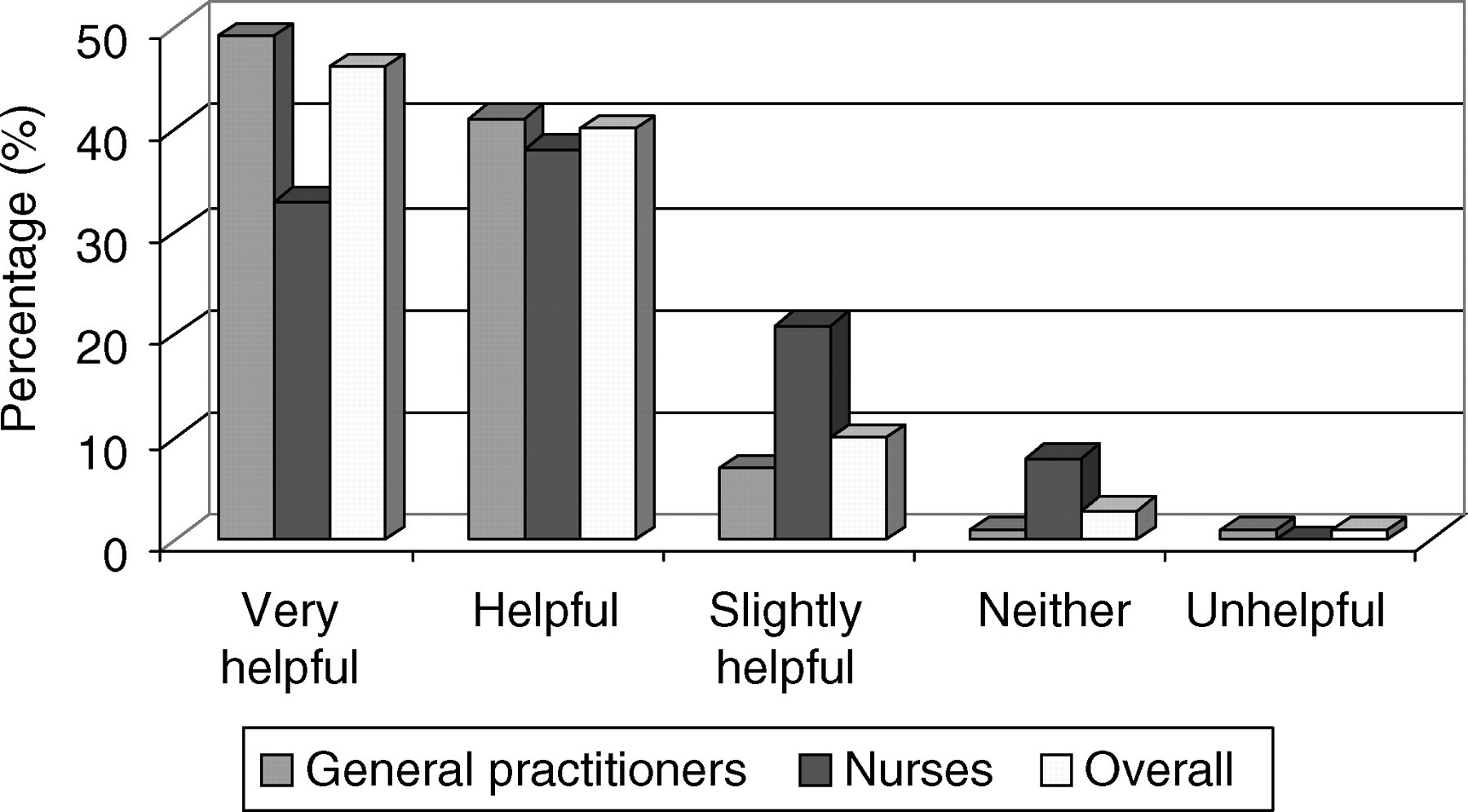
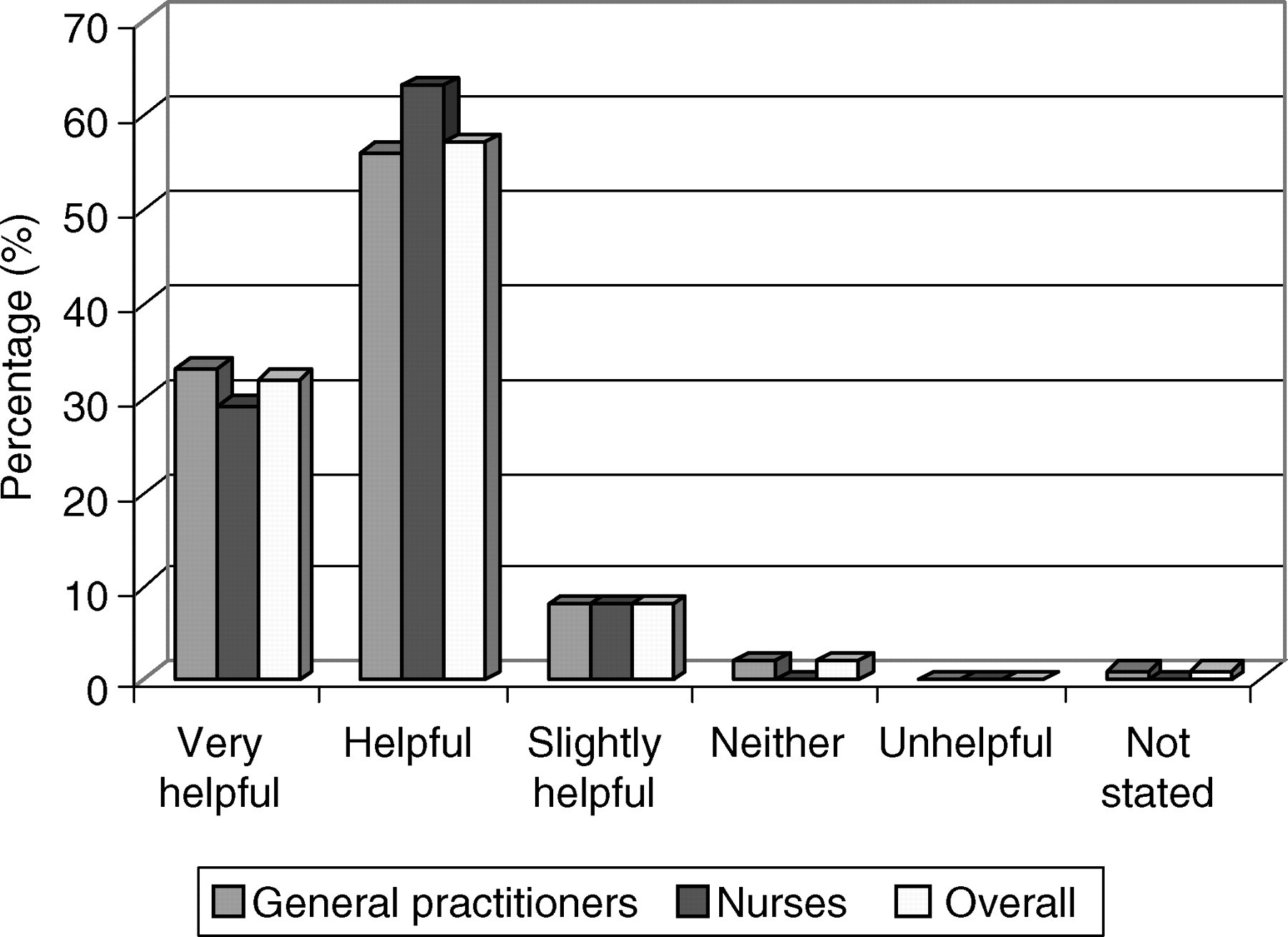
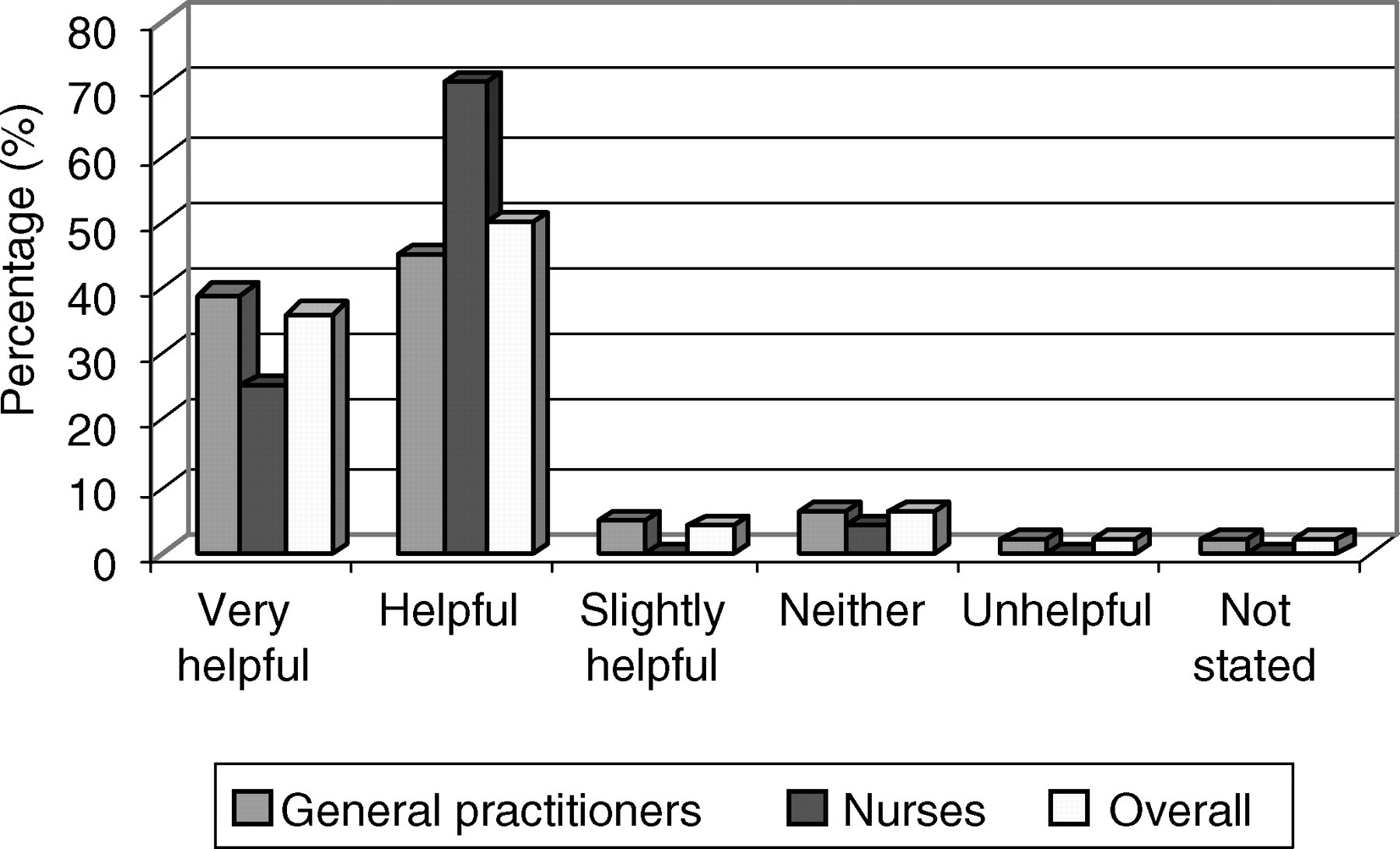
The results were analysed in the two separate practitioner groups and also combined to give overall percentage responses. Figures 1–3 show the key responses to the survey.
Ninety-one percent of GPs and 71% of nurse practitioners found the comments on FSH/LH etc. either very helpful or helpful (87% overall); Eighty-eight percent of GPs and 92% of nurse practitioners found the comments on TFTs, either very helpful or helpful (89% overall); Eighty-four percent of GPs and 96% of nurse practitioners found the comments on GTTs either very helpful or helpful (87% overall). How helpful are follicle-stimulating hormone/leutenizing hormone, oestradiol, testosterone, cortisol and prolactin comments? How helpful are thyroid function test comments? How helpful are glucose tolerance test comments?
Seventy-five percent of GPs and 79% of nurse practitioners highlighted that they would like to see comments on a broader range of tests, in order of preference, liver function tests (LFT) (62% overall), calcium/bone (51% overall), urea and electrolytes (U/E) (36% overall) and lipids (19% overall).
Discussion
The overall return rate of 49.6% is probably quite reasonable for a survey of this type but responses from nurse practitioners was surprisingly low at 29.6%, is rather disappointing and difficult to explain. The return rate specifically from GPs of 59.7% compares favourably with other GP postal surveys 3 of 54.5%. Overall, our users seem very happy with the interpretative comments they receive, although arguments could be made regarding whether the results of the survey are truly representative given that only half of our surveyed practitioners responded. However, of those who did not respond, it is highly unlikely that they would all have disapproved of or found commenting unhelpful, but this is purely speculative.
Therefore, although this a very time-consuming activity, I am reassured by these results and therefore our policy of clinical commenting on the above groups of tests will remain for the foreseeable future.
We have no plans at this stage to extend routine commenting to any of the additional groups of tests highlighted by our users as this would be impractical given the large volume of reports involved; most of which are added by a single-handed consultant. However, commenting on these other groups of tests is occasionally undertaken, on an ad hoc and exceptional basis when such a comment is considered by technologists to be helpful to the requester. Automated computer comments are routinely added to lipids and tumour markers.
The plan is to repeat the exercise in about a year; ideally, also canvassing those users of the service that did not answer this survey and also asking users specifically ‘if comments had impacted on patient management’.
I hope this survey adds to the debate about this important aspect of clinical biochemists' work and also encourages other professionals to canvass their own users' views on this activity.
Footnotes
Acknowledgement
Thanks to Susan Hampshire for preparation of the graphics and data collation/analysis.
Appendix
(1) I am a:
GP Nurse practitioner
□ □
(2) How do you find interpretative comments for FSH/LH, oestradiol, testosterone, prolactin, progesterone and cortisol?
Very helpful Helpful Slightly helpful Neither helpful nor unhelpful Unhelpful
□ □ □ □ □
(3) How do you find interpretative comments for TFTs?
Very helpful Helpful Slightly helpful Neither helpful nor unhelpful Unhelpful
□ □ □ □ □
(4) How do you find interpretative comments for Glucose Tolerance tests?
Very helpful Helpful Slightly helpful Neither helpful nor unhelpful Unhelpful
□ □ □ □ □
(5) Would you like to see more interpretative comments on biochemistry reports?
Yes No Do not mind either way
□ □ □
(6) If you answered yes to the above, which tests would you like interpretative comments on?
U/E LFT Calcium/Bone Glucose Lipids Others (please state)
□ □ □ □ □ □
Please return your completed form to: