




Abstract
Although prior research suggests stakeholder engagement can align divergent perspectives, differences persist in unwanted projects. Through a case study of Sydney’s Rozelle Interchange, we examine incompatible understandings of success and failure between the project team and local community at project closure and opening for use. Drawing on pragmatic sociology, we show how these are grounded in distinct value-systems. We conceptualize temporally-situated value-systems as logics of evaluation, justification, and legitimacy that mobilize different pasts and futures. Thus, we contribute to theorizing the lack of common ground: explaining how incompatible understandings are structured, why they are hard to reconcile, and why they persist in unwanted projects.
Introduction
Projects can attract significant public attention and debate when their potential social, environmental, or economic harm becomes a source of concern (e.g., Lehtinen & Aaltonen, 2022; Van den Ende & Van Marrewijk, 2019). Recent research has begun to theorize how external stakeholders experience these projects as “unwanted” (Di Maddaloni et al., 2025; Lehtinen et al., 2023). Unwanted projects are defined as projects that are unwelcome by affected communities, which cause harm, divert resources, or solve problems that don’t exist. They are often recognized through negative press coverage.
Scholars have explored the diverse perspectives of stakeholders, arguing that improved engagement can align their perspectives to generate project value (e.g., Davis, 2014; Eskerod & Ang, 2017; Li et al., 2024). However, emerging scholarship, often published outside core project management journals, challenges the assumption that such alignment is achievable, particularly in the context of unwanted projects. For instance, recent studies highlight different logics of action (Esposito et al., 2022) and warn of elite capture, calling instead for community empowerment (Fox, 2020; Larson et al., 2022). This body of work invites reconsideration of how, and whether, common ground can be established in projects after they become viewed as unwanted.
A parallel stream of project management scholarship has begun to problematize conventional definitions of project success as the delivery on time, within budget, and to specification. Instead, this work focuses on the broader concept of project value (Ika & Pinto, 2022, 2023; Pinto et al., 2022), reimagining project success and failure in relation to initial value expectations (Martinsuo et al., 2019; Pinto et al., 2022).
Much of this literature retains the idea of a single project value, it also highlights the diversity of stakeholder perspectives (Davis, 2018; Eskerod et al., 2015b) and the importance of a temporal framing, in which different values are anchored in and mobilize different pasts, presents, and futures (Feddersen et al., 2024). This framing of project value as pluralistic, negotiated, and temporally-situated connects with recent work on future making (Comi et al., 2025; Whyte et al., 2025), which approaches projects as sites of emancipatory inquiry, where diverse perspectives—anchored in different pasts and presents—shape alternative futures.
While this research emphasizes the potential for reconciling diverse views, it pays less attention to how, during transitions within projects, understandings may persist in being distinct and irreconciled. There is a critical transition when delivery is completed, and the project is handed over and becomes accessible to users. At this stage, the project receives heightened public scrutiny, and infrastructure becomes available for direct experience and use in the present everyday of operations. This direct engagement enables external stakeholder groups to assess whether their expectations are realized (Vuorinen & Martinsuo, 2019; Whyte & Nussbaum, 2020; Zhang et al., 2024). While project delivery teams may frame the project as a success, as it opens for use, communities may not (Brady & Davies, 2010). Hence, our research question is: Why do mutually incompatible understandings of success and failure persist as a project opens for use?
Our case is the opening of the Rozelle Interchange, a major road infrastructure project within Sydney, Australia’s WestConnex toll-road network. We became interested in the sharply contrasting perspectives that emerged at the time of its opening. Although the delivery team presented the Interchange as a rare success, completed on time and on budget, it formed part of the WestConnex network that had been unwanted from the outset. Its opening triggered widespread public criticism and negative media coverage, leading to a New South Wales (NSW) Government Parliamentary Inquiry. In this Inquiry, the Interchange’s failure to meet the needs of residents, pedestrians, cyclists, and motorists resurfaced latent dissatisfaction and provoked renewed calls for alternative imagined futures for the city.
To provide new insight into the lack of common ground in unwanted projects, we introduce the concept of temporally-situated value-systems, drawing on analysis of this case. To build our contribution, we conceptualize social groups as loosely organized collections of individuals whose shared understandings are embedded in their values, norms, cultures, and practices. In our case, the social groups studied are the local communities and the project delivery team. We see common ground as an overlapping space between groups that allows for dialogue and cooperation.
To explore how common ground might be lost between these groups, our approach starts from the idea that incompatible understandings are underpinned by different values (Esposito et al., 2022; Martinsuo, 2020). We extend this by introducing the concept of value-systems, adapted from French pragmatic sociology (Boltanski & Thévenot, 2006; Godard, 1990) to explain why such mutually incompatible understandings of a project persist. Thus, while work on future making draws on pragmatism to explore the negotiation across perspectives as an emancipatory inquiry (Comi et al., 2025; Whyte et al., 2025), we offer a new way to explain why perspectives may resist reconciliation by situating values in relation to the temporally-situated practices of evaluation, justification, and legitimation.
We structure the argument as follows. First, we provide theoretical background, outlining relevant research on project value, pragmatic sociology, and transitions. Then, we describe our methods and present our case. Our findings contrast the delivery team’s framing of the project as a success (delivered on time and on budget, defying Flyvbjerg’s “iron law of megaprojects”), with the failure expressed by local communities. We show how these competing accounts reflect deep-seated and incompatible value-systems that mobilize different pasts and futures. Our discussion addresses the loss of common ground and question of whether it can be regained. We conclude by reflecting on the implications for project delivery practices and identifying new avenues for further research.
Theoretical Background
Project Value as Pluralistic, Negotiated, and Temporally-Situated
Research on external stakeholders in projects (Lehtinen & Aaltonen, 2020; Chow & Leiringer, 2020; Çıdık et al., 2024) extends stakeholder theory. This theory developed in the strategic management field (Aaltonen et al., 2024; Bridoux & Stoelhorst, 2022) and initially related the importance of different groups to their financial stake and their resource utility (Freeman et al., 2010; Phillips et al., 2003), a focus retained in recent strategy work (McGahan, 2021). This heritage informs definitions of project value as the worth of the project to the financial sponsor and other stakeholders: the difference between benefits realized, disbenefits, and the life cycle cost (Zwikael & Huemann, 2023). Yet, while some project scholars categorize stakeholders as either financial versus nonfinancial (Gil & Fu, 2022) or market versus nonmarket (Li et al., 2024), others now argue for a broader view that includes societal actors on more equal terms, without reference to financial stakes (Banerjee & Arjaliès, 2021; Eskerod & Ang, 2017; Vuorinen & Martinsuo, 2019).
Likewise, scholars such as Andriof et al. (2017) distinguish between stakeholder management and stakeholder engagement, where the latter shifts attention from shareholder value to the engagement of stakeholders in the process of creating long-term value (Kujala et al., 2022; Zwikael & Huemann, 2023). This move toward inclusivity in the project stakeholder literature (Di Maddaloni & Sabini, 2022) reflects a shift from managing stakeholders to managing for and with stakeholders (Freeman et al., 2010). Such work adopts a normative stance, asserting that stakeholders should be valuable not just instrumentally, but also as they have the right to be included and embraced (Eskerod et al., 2015a). It calls for more collaborative relationships with projects, moving beyond a focus on impact or financial stake, and instead requiring a deeper engagement with stakeholders’ perceptions, needs, behaviors, and expectations (Di Maddaloni & Davis, 2024).
In recent project scholarship, value has become understood as both temporally unfolding and temporally-situated (Feddersen et al., 2024; Van Marrewijk et al., 2024). It is temporally unfolding, where the evaluation of project value is changing over time (Ika & Pinto, 2022). It is temporally-situated, where project success in any present emerges from the reinterpretation of pasts and futures by situated actors (Feddersen et al., 2024). Indeed, this process perspective on value challenges the presumption that there are preexisting criteria for evaluating success. With multiple, contingent, potential ways to succeed, Kreiner (2020) argues that success criteria emerge within the project process, becoming both premise and outcome (see also Kreiner, 2014). From such a perspective, where project value is integral to success, scholars should not presume a-priori knowledge of what constitutes value or the criteria through which it might be evaluated (Eskerod & Ang, 2017).
Thus, there is research interest in how project value itself becomes negotiated in the process of aligning divergent perspectives (Kier et al., 2023; Li et al., 2024; Oliver et al., 2024). Here, Kier et al. (2023) argue that an ideology of collaboration enables value to be cocreated across organizational boundaries. Similarly, Li et al. (2024) describe processes of value exchange during multistakeholder collaboration, arguing that value is created through these interactions rather than solely from the end product. Oliver et al. (2024) argue that aligning perspectives to create project value and realize benefits requires enabling identities that transcend place and singular temporalities. Negotiations can occur across multiple levels and spatial scales involving actors across an ecology (Paravano et al., 2024; Zerjav et al., 2021), with project value emerging through public engagement practices that are shaped by politics and power struggles (Chow & Leiringer, 2020).
While differences between groups are common in projects and often take the form of competing narratives (Ninan & Sergeeva, 2022), many reflect different stakeholder values, positions, and interests (Eskerod & Ang, 2017), rather than opposing worldviews. In these cases, narratives appeal to common evaluative criteria or understandings of what constitutes a legitimate argument in that situation. For example, shared conventions underlie the negotiation among self-interested parties as project goals emerge from temporary coalitions of interests that come together around the expected value created on the owner side and truces negotiated with suppliers (Winch, 2024). In these contexts, external stakeholders can be managed by project-based organizations to balance interests or to foster and sustain their support for a project (Aaltonen & Kujala, 2016; Freeman et al., 2010). Yet, in contrast, there are situations in which value-systems are not shared and represent fundamentally different world views and evaluative criteria (Buclet, 2023). In such cases, the label “unwanted” may become applied in public discourse if the project fails to provide a future that is consistent with societal values. Values may be founded in diverse beliefs about ideal end states and appropriate modes of conduct (Martinsuo, 2020), with conflicts emerging between competing logics of action (Esposito et al., 2022).
There is a growing critique of the term stakeholder itself. Scholars argue it has colonial connotations (e.g., Larson et al., 2022) and reflects the managerial perspective of a delivery team rather than the lived realities of those affected by projects. While Aaltonen et al. (2024) call for multidirectional relationships between broader society, projects, and stakeholders, Di Maddaloni et al. (2025) highlight the ongoing marginalization of groups without formal power or financial investment; while Çıdık (2024) seeks a relational understanding of project value, highlighting politics and power from a political economy perspective. In project planning, disempowered actors may include the public, interest groups, local communities, and those who lack property rights or a financial stake (Di Maddaloni & Sabini, 2022), with their perspectives frequently subordinated to economic priorities. This work resonates with wider concerns about elite capture and the need for community empowerment (Fox, 2020; Larson et al., 2022). Given these critiques, our desire to engage with local communities and delivery teams, and recognition of the historical and ideological weight that the term “stakeholder” carries, we avoid using the term stakeholders and refer instead to social groups, while acknowledging internal diversity and the presence of subcultures within such groups.
Value-Systems: Evaluation, Justification, and Legitimacy
Pragmatic sociology sets out the idea of a complex society composed of multiple understandings each claiming universal validity, yet fundamentally irreducible to one another and often incompatible (Buclet, 2023; Godard, 1990; Thévenot, 1989). In foundational work, Boltanski and Thévenot (2006) and Godard (1990) are concerned with how different principles of evaluation can coexist, exploring how people justify claims and actions as legitimate within pluralistic societies.
These concerns of pragmatic sociology have become embedded in research on values, evaluation, justification, and legitimacy in organization studies (Dionne et al., 2019; Jagd, 2011; Oldenhof et al., 2014; Patriotta et al., 2011) and other social sciences (Blokker, 2011). While their broad appeal lies in the recognition that values are embedded in social processes such as evaluation (Cefaï et al., 2015), they have had relatively little traction in project management. This is surprising given recent interests in project value in relation to external “nonmarket” stakeholders (Gil, 2023; Lehtinen et al., 2023; Martinsuo et al., 2019) and unwanted projects (Lehtinen et al., 2023). Outside of the project literature, pragmatic sociology has been applied to projects (Buclet, 2023; Esposito et al., 2022), and as we discuss in this section, engaging with pragmatic sociology provides an opportunity to extend and clarify the links between values and (e)valuation that are beginning to be made in recent project scholarship (e.g., Çıdık et al., 2024; Ika & Pinto, 2022; Martinsuo et al., 2019).
In the pragmatic sociology research tradition, the dynamics of action in social situations are understood as always both open to, and in need of, interpretation (Blokker, 2011; Wagner, 1999). As the social world is incompletely structured, this interpretive openness gives rise to pluralism and uncertainty (Blokker, 2011). In such situations, evaluation becomes necessary: social groups and individuals within them must assess the worth of things in relation to their values. Evaluation usually requires justification—an articulation of the evidence or reasons—and justifications are often made with reference to a common good (Boltanski & Thévenot, 2006). Yet, conceptions of the common good vary in pluralistic societies, and may reference market, industrial, civic, inspiration, fame, and domestic orders of worth (Boltanski & Thévenot, 2006). Thus, the legitimacy of an evaluation and its justification is tested both within and across groups and in relation to an external reality.
Building on this, we treat the value-systems used by individuals and groups as locally emerging, rather than, as previous research has done, applying the specific orders of worth identified by Boltanski and Thévenot (2006)—market, industrial, civic, inspiration, fame, and domestic—instrumentally as a framework for analysis (e.g., Dionne et al., 2019), or proposing additional orders, including environment, network, or project orders (Boltanski & Chiapello, 2005; Buclet, 2023; Thévenot, et al., 2000). We are interested in the specific evaluations and justifications mobilized by social groups in our case, and how the legitimacy of these becomes tested at opening. While orders of worth describe stable, institutionally grounded, and universalized regimes, we use the term value-systems to refer to the dynamic processes of evaluation, justification, and legitimation through which individuals and groups interpret and act in particular situations. These value-systems may be held by loosely formed social groups, at a local rather than societal level. Although deeply embedded, they are formed and sustained through discourse and may evolve over time, making them resistant to change but not impervious to it.
We thus extend recent work, which combines a typology of orders of worth with the analysis of tensions that arise between the values of diverse groups (Labelle et al., 2019; Salehi, 2024). A particularly notable contribution is Berg’s (2024) work on the mining permitting process, which shows how the kind of proof seen as legitimate constrains and shapes both understandings of sustainability and how nature is valued. Similarly, Krauss et al. (2021) trace the justification work of stakeholder groups in response to the adequacy of budgeting at the outset of a project that failed to gain public support and thus did not continue. Compromises are made as groups seek to overlap and make compatible the justifications from different orders of worth (Boltanski & Thévenot, 2006; Thévenot et al., 2000). Stark (2009) sees the potential for innovation in the heterarchical ambiguity arising between different value-systems, yet Boltanski and Thévenot (2006) describe such compromises as fragile and unstable because they require the coexistence of multiple truths.
While the theoretical starting points for pragmatic sociology are only very distantly and tenuously related to pragmatism (Blokker, 2011; Jagd, 2011), recent scholarship has begun to bring these theoretical traditions into dialogue, particularly through the work of the pragmatist Dewey (1938), who shares with pragmatic sociology an interest in the justification of action (Holden et al., 2014). This opens up an opportunity for potential connections with recent work on future making that draws on Dewey’s notion of inquiry to set out a participatory process of both making sense of and acting to make futures: a process that is difficult to achieve but important in contexts in which decisions need to be justified (Comi et al., 2025; Whyte et al., 2025).
Transitions: Opening Infrastructure for Use
Transitions are fundamental to projects and other temporary organizations (Locatelli et al., 2020). Lundin and Söderholm (1995) use the notion of transition to indicate both the actual change from before to after, and the perception of that change among project participants. Across project closure and the opening for use, an infrastructure project goes through a significant transition. In this the legitimacy of claims that were made during delivery are put to the test, as infrastructure becomes available for direct experience and use in the present everyday of operations.
While early work on project management was narrowly focused on the delivery phase, work on the management of projects has expanded the scope to include this “back end” of projects (Artto et al., 2016; Zerjav et al., 2018). This includes the transition in which there is a handover from project teams to operators, and infrastructure is tested, commissioned, and transitioned into operations (Brady & Davies, 2010; Whyte & Nussbaum, 2020; Zhang et al., 2024). It marks the point at which infrastructure becomes opened and operational, and publicly visible and embedded into everyday life (Lundin & Söderholm, 1995). In the case of unwanted projects, this transition, beyond project closure to the opening for use, may be the point at which communities that have opposed a project throughout its planning and construction phases are compelled to adapt to an infrastructure that is imposed onto them. They must come to terms with the actual change and their perception of that change, where they have neither asked for nor consented to the future they face.
During project closure and the transition to opening, the present is experienced as having duration (Ricoeur, 1979), while also being “liminal” (Söderlund et al., 2025) as a threshold between pasts and futures. Yet, understandings of time can be different between social groups involved in a project (Langley & McGivern, 2024) as infrastructure becomes embedded into everyday life. Before this point of reckoning, in unwanted projects, promises made in earlier negotiations and compromises may have been broken. A future may have been invoked to postpone discussion, temporarily sheltering decisions and forestalling scrutiny (Van Elk et al., 2024). In such a case, where common ground is lost, the point of opening for use becomes a denouement, as in this transition, moral scrutiny becomes inescapable (Van Elk et al., 2024) and the legitimacy of evaluations and justifications become tested.
Methods
Research Design
We studied the opening of the Rozelle Interchange in Sydney, Australia as a single, in-depth case study. We were interested in it as an exceptional case (Siggelkow, 2007): a project that was presented as a rare success, having been delivered on time and within budget. Yet, what made it particularly interesting was the sharp contrast between this framing and the reception on opening, when it was widely regarded by motorists, local residents, politicians, and press as a failure. While always unwanted, the problems provoked public backlash, extensive negative media, and a state Government Parliamentary Inquiry. This made the opening of the Rozelle Interchange in November 2023 a rich site for examining theoretical questions around mutually incompatible understandings of project success. We deliberately bound our study to the opening of the Rozelle Interchange, rather than considering the broader WestConnex megaproject, which has been the focus of prior research (e.g., Hossain & Fuller, 2021; McManus & Haughton, 2021; Searle & Legacy, 2021). Methodologically, we adopted an abductive case study approach (e.g., Dubois & Gadde, 2002), grounded in the strong tradition of case study research to address questions in project scholarship (e.g., Van Marrewijk et al., 2008) and broader qualitative methodology (Eisenhardt & Graebner, 2007; Flyvbjerg, 2006).
Data Collection
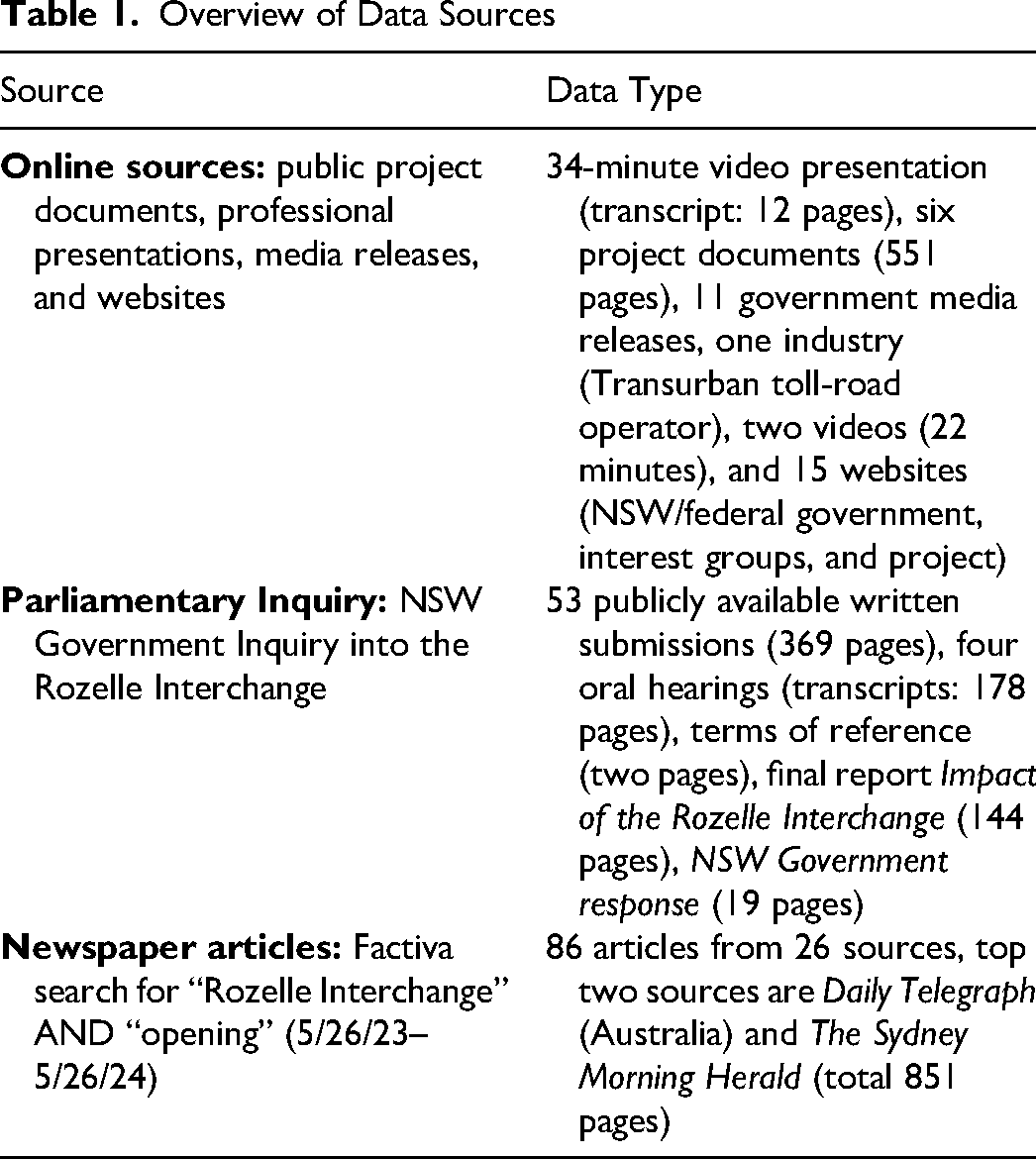
To examine the mutually incompatible understandings of the Rozelle Interchange at this key transition, we focused on the year of its opening, collecting data from 6 months before opening to 6 months after opening. Our case draws on publicly available data that captures the perspectives of social groups, including online sources, the NSW Parliamentary Inquiry, and newspaper articles. Table 1 summarizes the three main data types.
Overview of Data Sources
Online Sources
We conducted a desk-based review of the transition from project delivery to post opening and constructed a database of online documents. This database included public project documents, media releases, professional presentations, and websites related to the project. A key source was the 34-minute video of a conference presentation by the project team, given at the Project Controls Expo event, held in Melbourne, Australia, 14–15 November 2023.
Parliamentary Inquiry
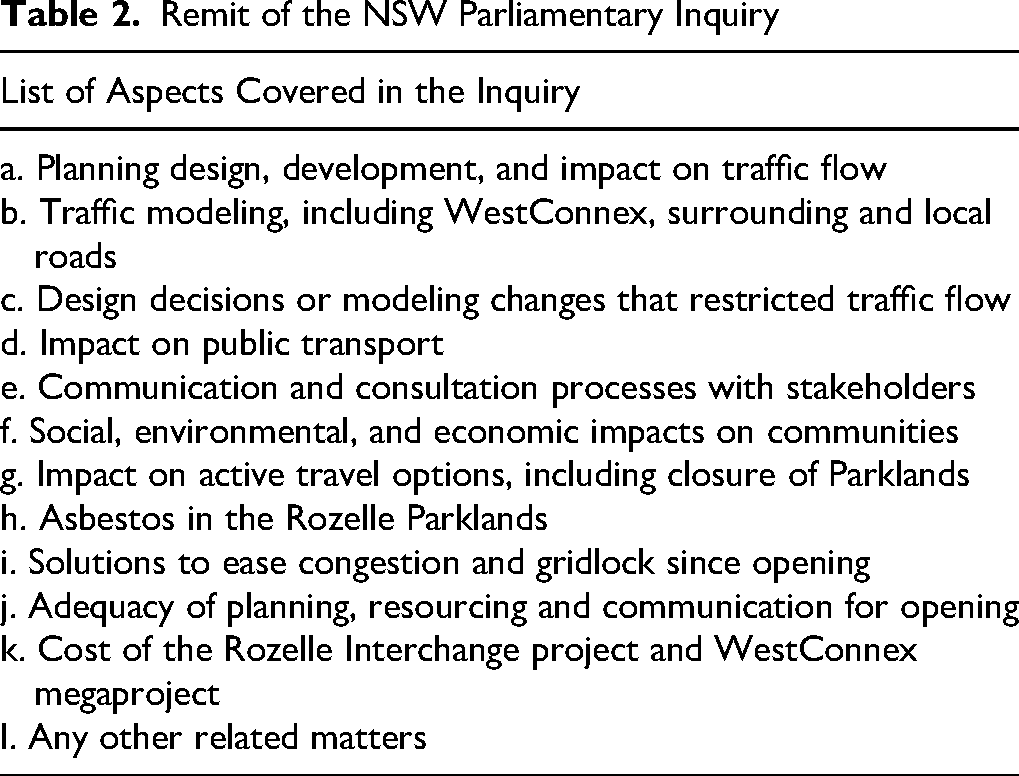
We collated data from the NSW Parliamentary Inquiry, which was launched 3 months after the opening (February 2024) and covered 12 topics as shown in Table 2. Submissions came from residents, advocacy groups, professionals, and local Members of Parliament (MPs) and were submitted by early April 2024. We used them extensively in our research. While the terms of use restricted direct quotation of submissions, the published Inquiry documents are quotable. For this reason, we include the final report (July 2024) and government response (October 2024) in the dataset, although they fall outside our main data collection period.
Remit of the NSW Parliamentary Inquiry
Newspaper Articles
We used the media as a supplementary source of evidence. Articles were collected using the business and research tool, Factiva, to identify relevant news stories across the timeframe studied. These helped contextualize the case, provided triangulation with other datasets, and offered direct quotations to illustrate key points.
Data Analyses
Our analyses were iterative, combining manual and automated methods to examine the different understandings of the project at this transition, involving project closure and opening for use. Given the volume of data, initial topic modeling using natural language processing (NLP) tools provided a high-level overview of inquiry submissions (e.g., frequent mentions of “cycling” or “Victoria Road”). While useful for orientation, this was insufficient for deeper analysis. Two researchers then reviewed all of the data sources to develop a case overview, including a chronology and factual description. At this stage, we conducted open coding to surface the main issues of concern (e.g., traffic flow, safety, design, compliance).
Through our iterative approach, our team conducted analyses separately and together as we moved from surface-level themes to deeper interpretive work. In the early stages of analysis, we used qualitative data analysis software, NVivo 14, for thematic coding across the dataset, identifying recurring concerns across sources. Drawing on Buclet’s (2023) approach to analyzing contrasting viewpoints, we focused on why the project team and local communities held different understandings of success and failure. We distinguished between project team and community perspectives based on the source, author (or speaker) identity, and organizational affiliation. The project team included delivery professionals, state and federal government officials, and the toll-road operator; while the local communities included residents, advocacy groups, local MPs, councilors, and motorists. Iterating between the data and theory, we analytically coded for how evaluations were justified. We found justifications grounded in either personal experience or common good. For example, arguments about the Interchange’s failure included both disruptions to daily life (personal experience) and concerns about the safety of the Parklands (common good).
Through these analyses, we identified how evaluations and justifications were linked to different understandings of pasts and futures. To further examine temporality in the local community evaluations, we used zero-shot classification (Lewis et al., 2019) to tag references to the past, present, and future in the Inquiry submissions. We found 156 statements that used the past tense, 102 that used the present tense, and only six that used the future tense. However, our interpretation of these results revealed that the future was discussed as lost potential, using the conditional past tense (“could have been” or “should have been”) to describe past possibilities and express lost futures. We manually reanalyzed other datasets, including project team materials, to track how both social groups invoked the past and future. This interpretive step deepened our understanding of how temporality shaped evaluations in this transition. For instance, the ambiguous statement from the video transcript in our data: “So, what was, what is, the Rozelle Interchange?” illustrated the liminal nature of temporality in the transition to opening that our study explores.
As we built understanding of temporally-situated value-systems, we revisited our dataset to ensure validity. For example, we conducted additional analyses to understand the legitimacy of evaluations and justifications, both within social groups and across their boundaries. We sought evidence that peers, with the same value-system, saw an evaluation and justification as legitimate, and we also sought evidence that this evaluation and justification were more widely seen as legitimate across groups.
Case Introduction
The Rozelle Interchange project cost AU$3.9 billion. It links key arterial toll roads (M4-M8 Link and City-West Link) with a toll-free section (Iron Cove Link) and delivered road widening, 6.6 kilometers of tunnels, and 9.5 hectares of open space (Rozelle Parklands). It will later also be connected to the (currently under construction) Western Harbour Tunnel.
The Interchange opening completed Stage 3 of Sydney’s AU$16.8 billion, 33- kilometer, WestConnex toll-road network. Promoted as a response to congestion and to improve connectivity and future transport for the large population in western Sydney (Searle & Legacy, 2021), the WestConnex megaproject faced strong community opposition from the outset due to local impacts, including the demolition of 280 properties (Haughton & McManus, 2019; Searle & Legacy, 2021). As part of WestConnex, the Rozelle Interchange had a long history as an unwanted project.
The Interchange opened in late November 2023, shortly before the summer school holidays. It was promoted as a “game changer” to reduce traffic bottlenecks. However, it quickly faced severe congestion and confusion, in part due to inadequate signage and new lane layouts. Outside of the underground toll-road tunnels, concerns from local communities about the implications at surface level persisted. In early 2024, a local resident discovered asbestos in the landscaping of the newly opened Rozelle Parklands, prompting a prolonged closure for public safety during investigation and remediation that also closed pedestrian and cycle routes across the Interchange. These challenges, and the negative press, led to the NSW Parliamentary Inquiry.
Findings
Our findings explain how mutually incompatible understandings of success and failure are structured and sustained. We show that differences are grounded not only in values, but also in temporally-situated value-systems, making them deeply embedded and persistent. Through our empirical analyses, we identify two contrasting value-systems: (1) a delivery value-system, held by the project team, which frames the project as a success; and (2) an infrastructure value-system, held by local communities, which interprets the same project as a failure. These value-systems operate as internally coherent logics of evaluation, justification, and legitimacy, revealing a lack of common ground between the groups.
By treating the project team and local communities as social groups, we seek to compare their value-systems without privileging either perspective. Through our analyses, we find each value-system is situated in the present but mobilizes different interpretations of past and future (see Figure 1), compounding the challenge of finding common ground. It is at the transition, seen as project closure or opening for use, that the legitimacy of evaluations and justifications is finally tested, through confrontation with the infrastructure itself and in the subsequent government Inquiry. Next, we explain the evidence for the delivery and infrastructure value-systems at opening, showing their logics of evaluation, justification, and legitimacy, and how they mobilize pasts and futures.

Temporally-situated value-systems.
The Delivery Value-System: Project as a Success
Using the evaluation criteria of “on time and on budget,” and with a focus on delivery, the project team saw the Rozelle Interchange as a significant success at the conclusion of their work. At the 2023 Project Controls Expo, professionals who presented their work on the Rozelle Interchange argued that the project: “absolutely nailed it in delivery.” We do not dispute their claims. They are internally consistent and well argued, with the presentation highlighting how 750 professionals working on the project achieved successful delivery.
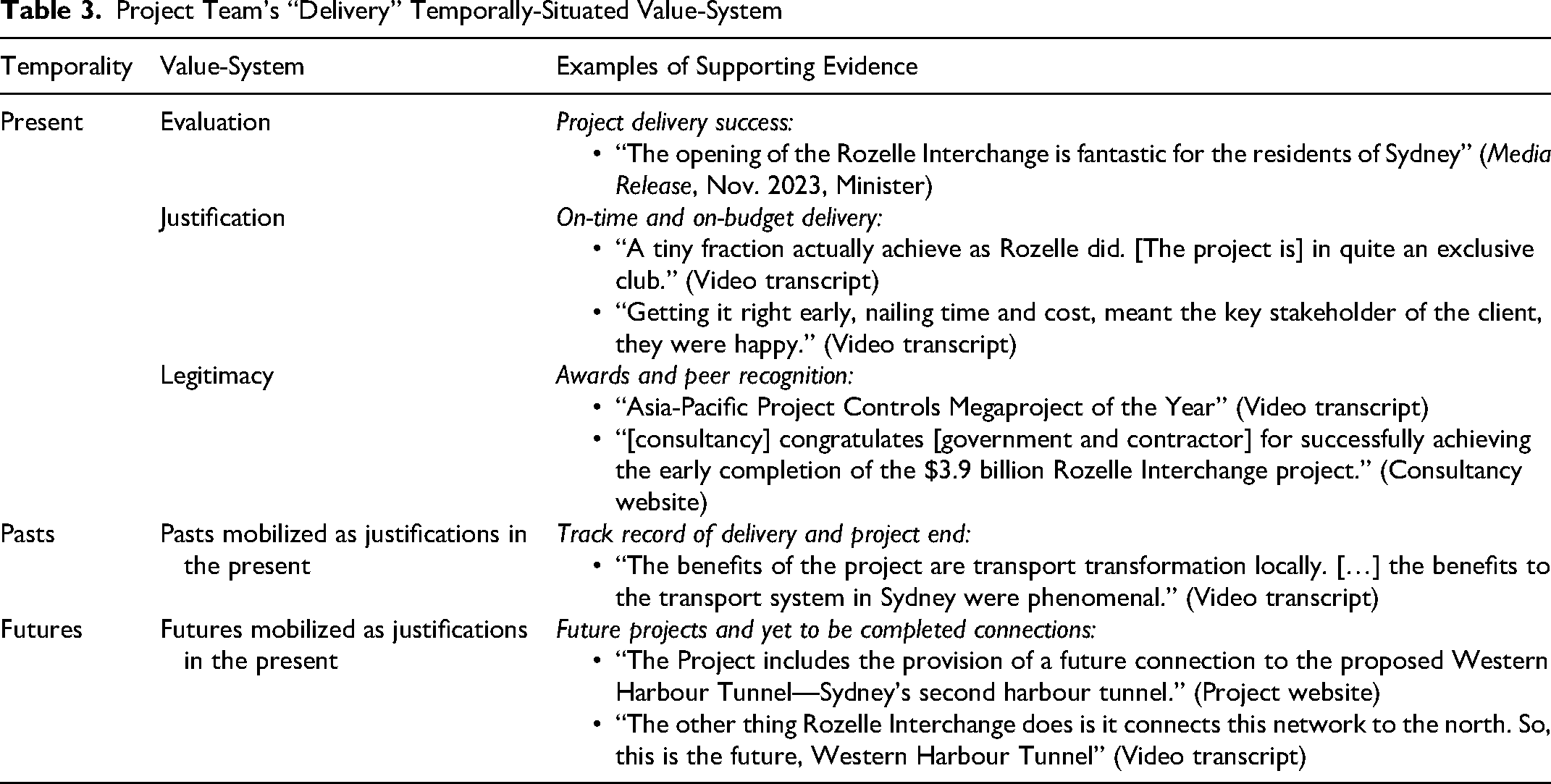
Table 3 presents the structure and supporting evidence of the project team’s temporally-situated value-system. In the following, we show how delivery-focused criteria permeate the project team’s evaluation, justification, and legitimation of project success in terms of on-time completion, budget adherence, and quality against required specifications and how it mobilizes a past track record of delivery and future of planned additional projects.
Project Team’s “Delivery” Temporally-Situated Value-System
Evaluation, Justification, and In-Group Legitimacy at Opening: On Time and On Budget
This presentation introduced the “iron law” of megaprojects—that they fail to deliver on time and on budget—and argued that the Rozelle Interchange project defied this law. The evaluation of the project as an unusual success was justified using a chart of earned value, which showed 52.1% of all projects failed to meet both time and budget, 42.9% were on time but overbudget, and only 8.5% achieved both. Only 0.5% of projects, the final segment on this chart, were on time, on budget, and delivered the expected benefits in revenue. This final 0.5% could only be achieved by the toll-road company according to the presenter, who stated: “The half a percent is fought on benefits, which is really outside the control of contractors. To deliver that will be about the tolling revenue and the cars through the tunnel. If that’s as expected, Rozelle will move up into that half percent club” (Video transcript).
Thus, the Rozelle Interchange was framed as being in the top 1% of projects, and its evaluation to the top 0.5% of projects depended on the future tolling revenue, beyond the control of the delivery team. Within the Project Controls Expo community, this representation of the project as an outstanding success was legitimized as the project contractors received the “Asia-Pacific Project Controls Megaproject of the Year” award for the successful management of this complexity through effective project controls.
Benefits were primarily framed in financial terms. This may align with the interests of the operator to which the delivery team handed over the infrastructure, as the Transurban toll-road operator had its share price at the bottom of its main webpage. The press reported that: “income from its roads rose 7.5%, with Sydney’s WestConnex performing ‘in line’ with forecasts after the opening of the Rozelle Interchange.” (Australian Financial Review [AFR], Feb. 2024) with this opening being “broadly neutral” in the near term. The professional presenting at the Expo noted that the client was happy, but acknowledged that because infrastructure projects are political, they need to keep local stakeholders satisfied, claiming they had achieved this: “Because these projects are inherently political: They need to run well, we need to keep the local stakeholders happy, and they all are” (Video transcript). The same speaker, using financial arguments, added that the “thousands of jobs” created and “hundreds of apprentices trained” had broader economic benefits and thus contributed to the project’s success. Therefore, the benefits of the project were framed in terms of time and cost, and “putting money back into the economy.”
On the day before opening, the state and federal governments issued a joint media release that gave a positive portrayal of the project’s economic benefits. This announcement emphasized jobs and the significance of the infrastructure investment. The NSW Roads Minister, John Graham stated: “There has been a total of 65,000 people who have worked on WestConnex over its life which has created a highly skilled, highly experienced workforce that will go on to other infrastructure and construction projects as the Minns Labor Government delivers the state’s biggest ever infrastructure spend through Budget 2023–24.” (Media Release, Nov. 2023).
Thus, at the time of opening, both the project sponsor and project delivery professionals continued to frame the project success in terms of cost, schedule adherence, and broader economic contributions. Claims of positive community impact remained framed primarily in economic terms.
Mobilizing Pasts: A Successful Project Delivered
As the delivery of Rozelle Interchange is completed, it has already become the past from which to learn. Thus, in the Expo presentation, less than 2 weeks before the opening, having commissioned the physical assets, delivery professionals were already discussing the project in the past tense. They raised and answered a question: “So what have we delivered? World-class asset and world-class performance” (Video transcript). For them, commissioning was the endpoint of their involvement and the project was already performing successfully.
In the Expo presentation, there was also a substantial discussion of how complexity was detailed out and managed by the 16 project managers and 12 planners, and the tools that made this possible. And there were a lot of things to track, for example “155,000 different data points” associated with mechanical and electrical services. As well as the award, there are many positive reports online from the engineering design, supplier, and construction companies involved in the project about the on-time and successful delivery of the project, particularly around procurement and cost savings, which agree with the arguments proposed by the project controls practitioners.
One of the project controls professionals noted that “one of the things I want to put across is Rozelle did really well, and we don’t think it was an accident” (Video transcript). By stating that “Rozelle did really well,” they used the past tense but also imply that the future success of the project is assured, and that there are positive lessons learned to share such as their role in facilitating collaboration on decision-making using their project controls tools.
Mobilizing Futures: Success Assured for Later Projects
The futures for project delivery professionals are the projects that they will later work on and those that will provide future connections to the Rozelle Interchange. Immediately ahead of the opening there is awareness that short-term adjustments accompany the opening of major infrastructure projects, with one official noting: “The first couple of weeks generally is when you do tend to get a little bit more slowing down as people actually maybe are even admiring the infrastructure” (Video transcript). For the project professionals, attention shifted to their next projects. In the Expo presentation, professionals indicated they would be back next year to talk about the Sydney Gateway airport link and “hopefully pick up another award.” Thus, the futures imagined by the project delivery team include the next delivery projects they will work on and those already in construction, the Sydney Gateway and Western Harbour Tunnel projects, that will be integrated into the WestConnex motorway network.
The Infrastructure Value-System: Project as a Failure
Local communities, including residents, motorists, pedestrians, and public-transport users, evaluated the project based on the amenities, journey times, and quality of life. For them, the opening of the Rozelle Interchange was not seen as a success. For many, the project had been unwanted from the start and was experienced as imposed without genuine consultation or agreement.
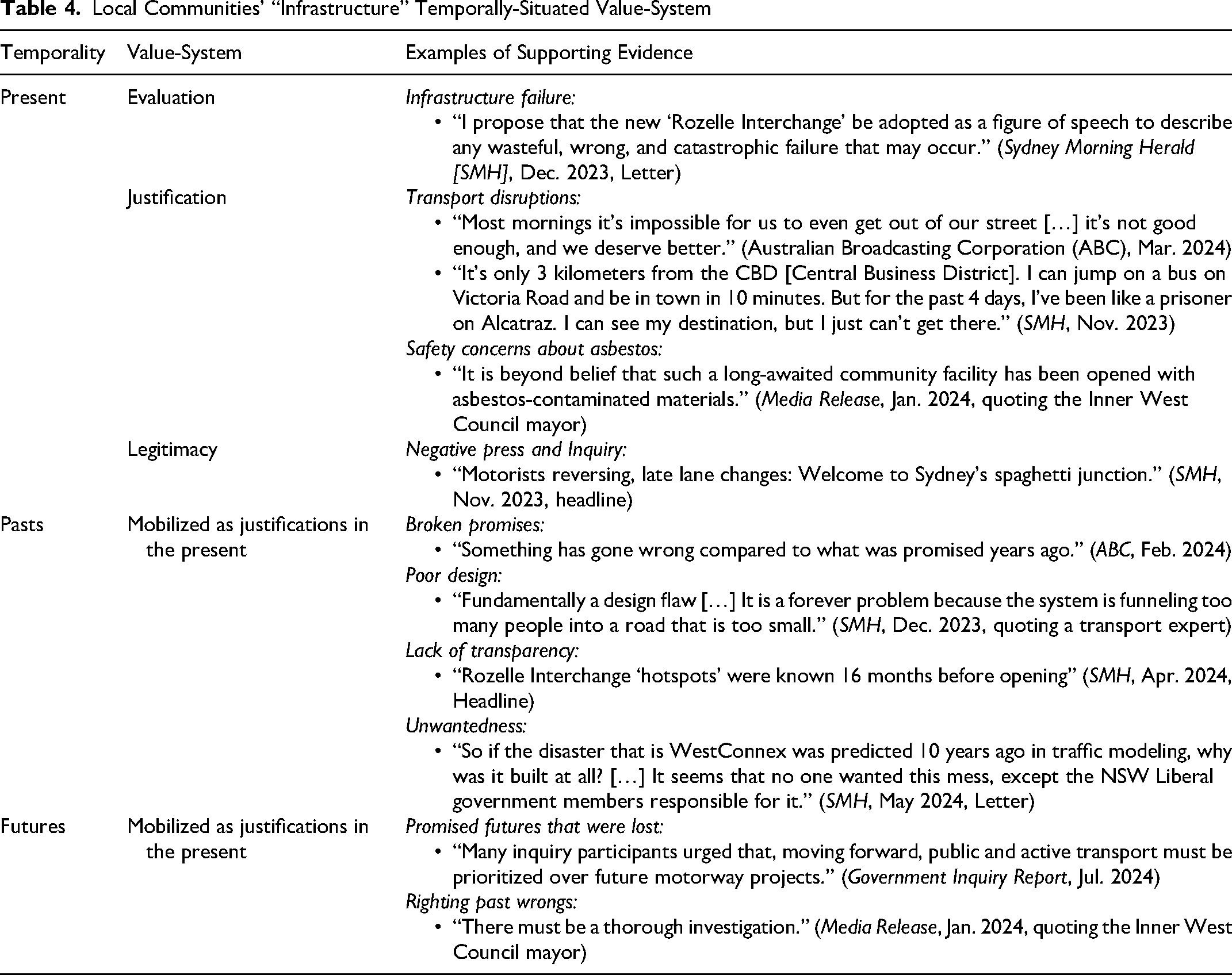
Table 4 presents the structure and supporting evidence of the local communities’ temporally-situated value-system. Next, we show how local communities evaluated the project as a failure based on their lived experiences, mobilizing past experiences of disruptions and accommodations, and the unrealized promises and futures that were lost.
Local Communities’ “Infrastructure” Temporally-Situated Value-System
Evaluation, Justification, and Legitimacy at Opening: Traffic Problems and Asbestos
The ongoing lack of amenities and the continued accommodations required from local residents, motorists, pedestrians, and public-transport users reinforced perceptions of the project as a failure. Inner West Council Mayor Darcy Byrne reflected this sentiment, stating that: “We were promised Nirvana but all we’ve got is a tunnel to a traffic jam and a park full of asbestos.” (Sydney Morning Herald [SMH], Apr. 2024). Quoted as the Inquiry was in process, Byrne summarized two of the major issues experienced by local communities: traffic problems and the closure of the parks due to asbestos, which also meant that for months after the opening there were no pedestrian or cycle routes across the Interchange.
While traffic issues at opening were widely anticipated, authorities chose not to offer an initial month without toll charges due to contractual agreements with the toll-road operator Transurban. The complexity of the Interchange led to driver confusion, resulting in traffic chaos. ABC reported that motorists had been: “plagued by traffic issues and ‘confusing’ signage following the opening of the country’s most complicated underground interchange just over a week ago” (ABC, Dec. 2023). Residents held a public meeting in December 2023 to confront officials. They complained that the traffic from the underground toll road was prioritized as lanes merged out of the Interchange: “There’s one lane [and that’s] bottlenecking and slowing the local traffic, […] and then the tunnel traffic is just flowing straight on unimpeded.” (The Guardian, Dec. 2023).
Concerns persisted. In January 2024, Mayor Byrne said that local residents warned that a temporary reduction in traffic over the holiday period could be “the calm before another storm” and urged Transport for NSW to listen to residents. He stated: “The limited number of mitigations that have been implemented might simply not be enough to overcome the structural defects of the Rozelle Interchange. […] We can’t go back to residents being locked in their suburb and unable to get to work each morning.” (SMH, Jan. 2024)
By early February, the Inquiry had been launched and opened to consultation. In February 2024, the state government also released travel time data to help commuters plan trips. The website for the project showed multiple videos to allow drivers to virtually practice their routes through the Interchange before using it.
Yet traffic problems continued. In early March, Transport for NSW officials met 120 locals who crammed into a pub to put across their views, as reported in the press: “Locals say gridlock is worsening in their suburbs following changes to improve traffic flow through the notorious Rozelle Interchange, with drivers using local streets as ‘rat runs’ to dodge congestion.” (SMH, Mar. 2024)
At the meeting with locals, officials argued that journey times have improved and that residents should adapt their practices by going earlier or later or via alternative routes to avoid a peak in the use by tradespeople at 7:00 a.m., followed by the main peak at about 8:15 a.m. However, this did not satisfy the residents who lived on residential streets around the scheme, many of whom felt that their daily lives had been significantly disrupted. For example, one local stated that their street used to be quiet but had now become a “rat run” and was busy due to redirected traffic.
For residents, the discovery of asbestos was experienced not only as an inconvenience but as a breach of trust, raising questions about safety in a brand-new public park. The local community was gifted the new Rozelle Parklands as compensation for the disturbance caused by the construction and operation of the Rozelle Interchange. After a resident’s child picked up asbestos from the wood mulch in a playground, the closure of these Parklands soon after opening meant there was no immediate benefit for those impacted locally, with none of the promised amenities available and no way for pedestrians or cyclists to cross the Interchange. This situation reinforced the perception that the time and cost of delivery to the toll-road operator was prioritized over the benefits to local communities of the Parklands and active transport.
Mobilizing Pasts: Project Conception, Delivery, and Cost
For the residents, motorists, pedestrians, and public-transport users, concerns about the difficult opening resurfaced the longstanding opposition to the scheme, as well as a sense of betrayal as promises were broken and an interest in what went wrong.
Respondents to the Inquiry, particularly those who had campaigned against the road for years, questioned the intentions of those involved in delivering the scheme. During the Inquiry, investigations into the past of the WestConnex motorway scheme (which includes the Rozelle Interchange) showed that the project sponsor, the NSW Government, was aware in the early investment planning phases of the project that there would be operational challenges. Reporting on the Inquiry process, a journalist reported that they: “Knew as early as 2014 that the Rozelle Interchange design would result in Sydney’s Anzac Bridge being ‘overloaded with traffic’ but went ahead so it could maximize profits from its sale of WestConnex.” (AFR, May 2024) Revisiting these earlier phases reminded those impacted that they had not been listened to throughout the project.
The media also invoked the past to demonstrate how the project had “stalled Sydney” and failed to realize promised benefits. They highlighted that former Australian Prime Minister Tony Abbott was quoted in 2015 as saying motorists would be “singing in their cars, because their cars would be moving.” (AFR, Dec. 2023) when WestConnex was complete. Quoting the government’s past public commitment to delivering a project that would bring motorist benefits reinforces the stark contrast with what they felt was delivered.
Mobilizing Futures: Ongoing Impacts and Potential Alternative Futures
In the Inquiry, individuals raised alternative futures that were lost through the investment in the Rozelle Interchange project, pointing to the lost potential for more sustainable, car-free futures. The Inquiry report emphasized the significance of this failure, concluding that “the impacted communities were promised benefits from the Rozelle Interchange that have not been realized” (Government Inquiry Report, Finding 4, July 2024). Responses to the Inquiry used “could have” and “should have” to describe these lost opportunities and alternative futures. These were summarized into lessons for future projects in the report, for example indicating how a cycling group: “Stressed the need for future road-based projects to adopt a ‘multimodal strategic model’ that involves ‘reallocating road space for public and active transport’” (Government Inquiry Report, July 2024).
In designing the project, promises were made to active transport users in Sydney, to provide improvements in accessibility on key routes for cyclists and pedestrians. At the point of opening, instead of delivering separate cycleways and safe pedestrian crossings, there were no links for active transport, and the expected links were worse than before the project, highlighting the failure to realize the imagined futures envisioned by, and promised to, active transport advocates.
Local communities also expressed the desire for people to be held responsible in the future for poor past decisions. For example, one resident singled out the politicians making decisions and argued that “Whoever they are should be named, shamed, and held fully responsible—preferably behind bars.” (SMH, May 2024, Letter).
Lack of Common Ground: Value-Systems and the Absence of Shared Understanding
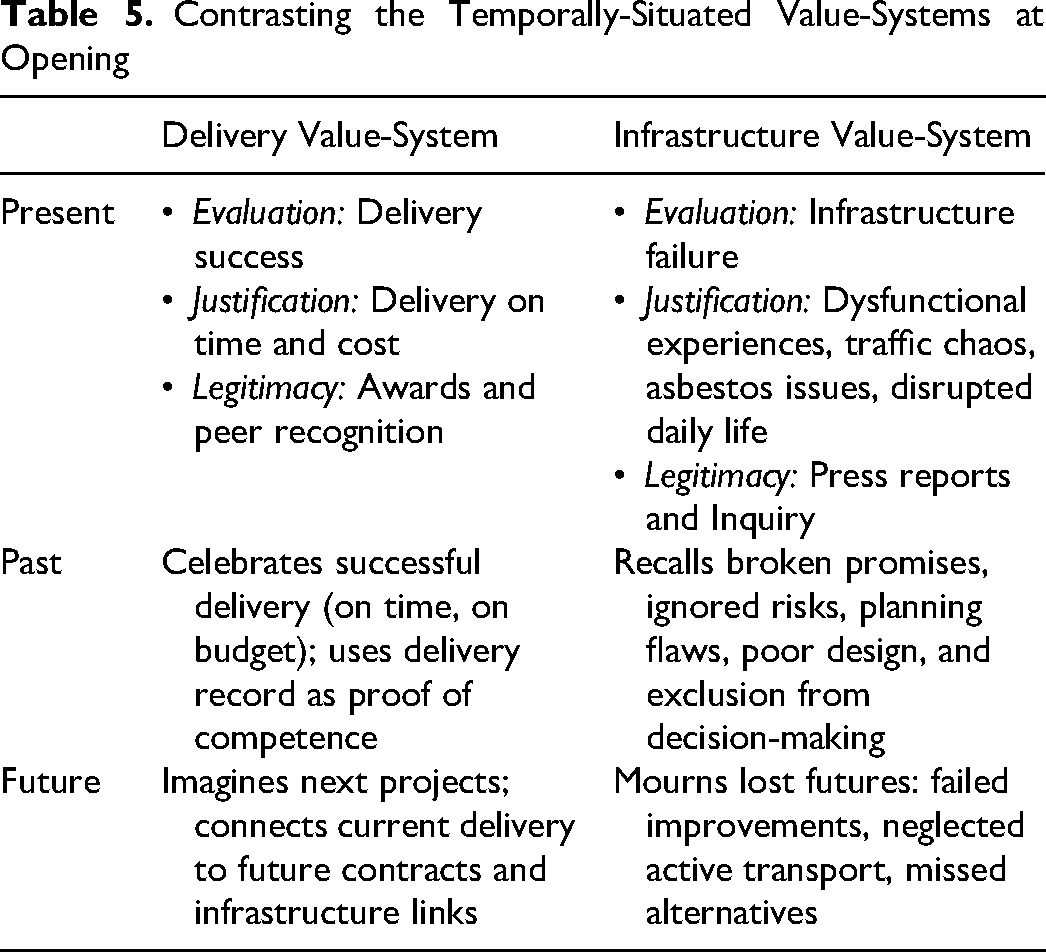
In summary, our analysis reveals how the delivery and infrastructure value-systems, though internally coherent, are mutually incompatible, as summarized in Table 5. There is an absence of shared understanding, beyond an agreement that the project was complex. The different temporally-situated value-systems identified in our findings, between delivery professionals and impacted local communities, illustrate the opposing evaluations of the project’s success and failure at the transition to opening. Each group mobilizes different interpretations of the past and future to justify their evaluations in the present. The resulting disconnect was not just a momentary disagreement, but rather reflects a deep, persisting lack of common ground between temporally-situated value-systems.
Contrasting the Temporally-Situated Value-Systems at Opening
Discussion: Temporally-Situated Value-Systems and Common Ground
Drawing on pragmatic sociology (Boltanski & Thévenot, 2006; Godard, 1990), our analyses introduce the concept of temporally-situated value-systems to explain how mutually incompatible understandings of project success or failure are shaped not only by differing values, but also by distinct temporal practices of evaluation, justification, and legitimacy.
Extending recent work on unwanted projects (Lehtinen et al., 2023), we show how the differences between value-systems held by the project team and local community involve not only present values, but also mobilize alternative interpretations of history, its legacy, and the aspirations for the future. This explains why such incompatible understandings are deeply embedded, extremely difficult to reconcile, and may persist throughout the project life cycle.
While there is a research focus on engaging stakeholders (e.g., Davis, 2014; Eskerod & Ang, 2017) this work typically starts from the perspective of the project team and seeks to align the perspectives of local communities with those of the project team. In contrast, the literature on unwanted projects (Di Maddaloni et al., 2025; Lehtinen et al., 2023) takes the perspective of local communities, emphasizing resistance, marginalization, and the failure of projects to engage meaningfully with affected groups. Our framing instead seeks to treat both the project team and local communities as social groups, each with a distinct temporally-situated value-system. Between these groups, in our case, there is a lack of common ground.
As illustrated in Figure 2, common ground suggests an overlapping space of shared values that enables dialogue; where disagreements may be reframed, negotiated, and adjusted and compromises can be made without the alignment of one group to another. Or this common ground may be absent. We find such common ground is hard to attain between the temporally-situated value-systems, in which different pasts and futures are mobilized, with the persistence of mutually incompatible understandings.
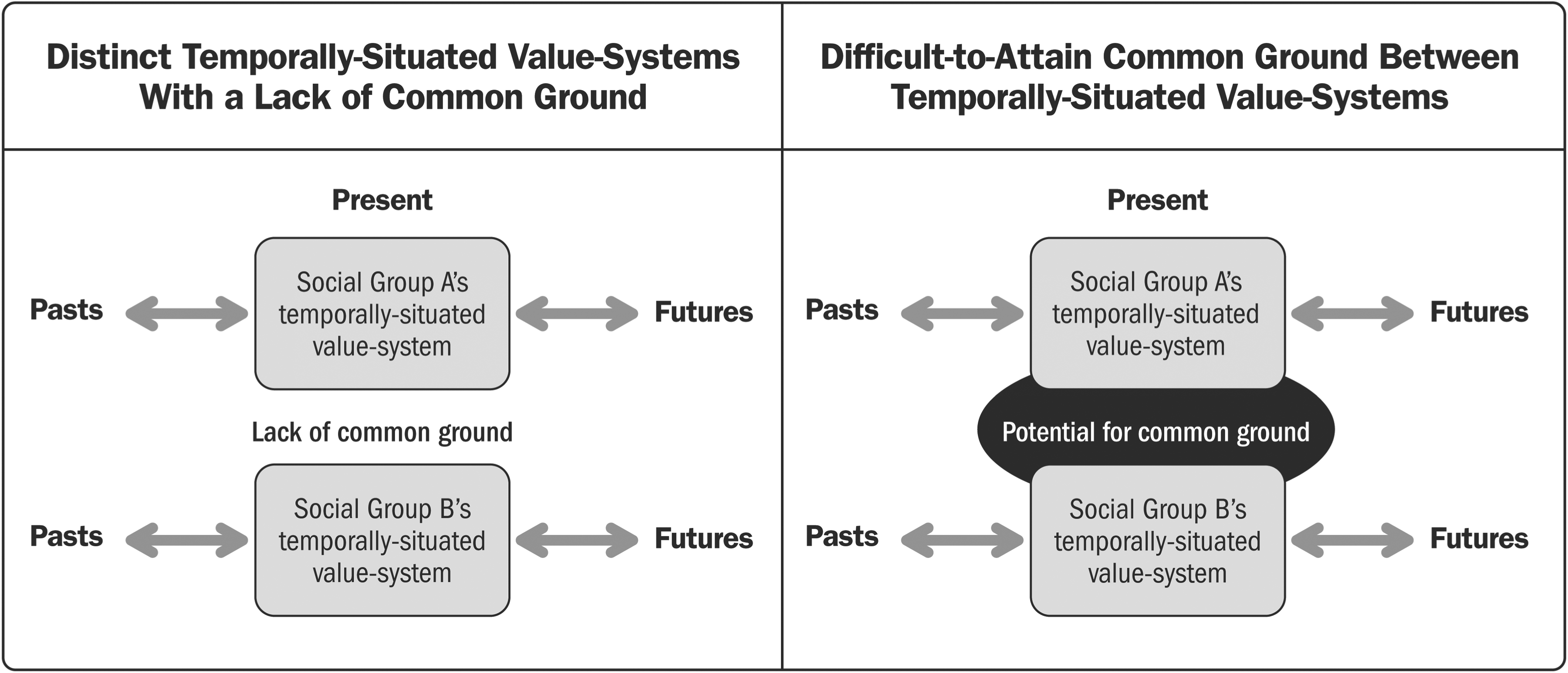
Common ground as lacking, and as a difficult-to-attain overlapping space between the temporally-situated value-systems of two social groups.
Without common ground, in unwanted projects, stakeholder engagement by the project team can feel like a form of appeasement: making concessions to avoid or resolve conflict or to pacify others without changing the fundamental dynamics of the situation. Value may be captured by elites, with no empowering of communities (Fox, 2020; Larson et al., 2022). Rather than engaging, project teams can neglect, criminalize, ignore, or denigrate communities they serve (Kujala et al., 2022). Engagement may be ceremonial in nature (Larsen & Frandsen, 2022) with hearings, dialogue meetings, and workshops, and it can defer the responsibility to justify present actions into the future (Van Elk et al., 2024), asking local communities to sacrifice their values or well-being now for supposed benefits later.
For a large-scale infrastructure project to be “wanted” rather than “unwanted” by communities, our case reinforces the idea that the social construction of the project needs to be seen as legitimate within and across social groups. The WestConnex project was viewed as “forced” upon local communities by the NSW Government, unwanted and met with resistance, yet the infrastructure was framed for the public benefit (Haughton & McManus, 2022; Searle & Legacy, 2021). Amsterdam’s North-South Metro similarly met with severe community resistance on the grounds of protecting the historic center from urban renewal plans, which were subsequently ignored and became unwanted (Van den Ende & Van Marrewijk, 2019). The project proceeded to construction without social acceptance, with many reassurances that they were protecting the social and cultural values of the local community as expressed many years earlier in the planning phases (Mottee et al., 2020). Yet, the project suffered several crises and an inquiry, requiring an expensive reconciliation plan to regain legitimacy from the local community for the project (Van den Ende & Van Marrewijk, 2019).
Previous studies of the WestConnex project, including the Rozelle Interchange, emphasize the financialization of infrastructure, showing how toll roads transform local assets into tradable value streams, with spatial politics shaping public narratives and competing visions for the city (Haughton & McManus, 2022; McManus & Haughton, 2021; Searle & Legacy, 2021). These dynamics reveal how efforts to engage and align external stakeholders without addressing underlying differences in value-systems can default to financial terms, failing to appreciate the wider issues raised by local communities in an unwanted project. What is distinctive about this case of an unwanted project is the sharpness of the contrast between the understandings of the two social groups we study: there is negative press, local communities experiencing difficulties, and politicians in opposition; however, the project team persists in framing the project as defying the “iron law of megaprojects” and proclaiming success. The stark nature of this contrast reveals the ways that project success or failure is evaluated and justified by the project team and local communities, without incorporating or accommodating each other’s arguments.
While common ground was lacking during delivery, opening for use—as a key transition in which a proposed future became a present reality—brought opposing views on success and failure into prominence in a wider public debate. Our case is typical of unwanted projects (Lehtinen et al., 2023) in which a dominant social group (the project team) has incompatible understandings that clash with marginalized local communities who feel their values, livelihoods, or well-being are threatened. This case is notable for the clear contrast between the mutually incompatible understandings of success and failure, and the public test of their legitimacy in the Government Inquiry. Yet our contribution is not based on empirical novelty: it is theoretical, extending work on unwanted projects by explaining the persistence of mutually incompatible understandings as a project opens for use.
Questions of morality and ethics are brought into view by this move to recognize mutually incompatible understandings of project value (and project success) as not only based in the different values of social groups, but also in their temporally-situated value- systems. Value-systems provide a framework of priorities and beliefs (Martinsuo, 2020) and thus are deeply connected with identity and meaning making. Choices are made by moral actors; thus, evaluations require moral justifications and ethical legitimation. Moral justifications draw on personally or culturally shaped principles about what is right and wrong, appealing to the common good. Ethical legitimation draws on the wider socially shared principles of what is right or wrong, through which such appeals are tested and assessed.
The idea that project success is understood in relation to initial value expectations (Martinsuo et al., 2019; Pinto et al., 2022), suggests the importance of establishing common ground early in the project. Our findings suggest that it is extremely difficult to find common ground in unwanted projects, as groups apply internally coherent but mutually incompatible criteria for success. Value-system differences become particularly visible at the transition to opening when promissory futures (Van Elk et al., 2024) give way to lived realities, and legitimacy is publicly tested. In the Rozelle Interchange case, the delivery team continued to rely on a narrow, output-focused definition of success. Their primary concern was fulfilling obligations to the toll-road operator, with the delivery of the infrastructure on time, on budget, and to the quality they required. This was in stark contrast to the value-systems of local communities.
While work on future making as an emancipatory process of inquiry (Comi & Whyte, 2018; Whyte et al., 2022) highlights how diverse social groups can coshape better futures through genuine engagement, listening, and exploration (Aaltonen et al., 2024), our findings reveal that common ground may be lost. This suggests the difficulty of initiating such a process once trust is eroded. Future-making practices are hopeful about reconciling perspectives, but in unwanted projects, common ground is lacking. Entrenched value-systems persist and are revealed at critical transitions like project closure and opening for use. Thus, future-making efforts may be most effective when engaged early and continuously, before incompatible understandings harden, which underscores the need for sustained dialogue throughout the project life cycle.
How projects are discussed matters. Different groups can easily talk past each other (Kundu et al., 2025). Even terms like project “closure” and “opening” are not neutral. For local communities, opening marks the start of their lived experience, whereas for the project team this “end” stage of the project signifies closure, as they finish their work and hand over the delivered infrastructure into operations (Whyte & Nussbaum, 2020). These words reveal different understandings of time in this key transition. Such divergent framings can entrench incompatible understandings that persist beyond delivery, crossing into the operational phases. Regaining this common ground is far more difficult later, especially when community concerns continue to be poorly considered up to the opening for use.
We have ourselves struggled with whether to write about project closure, as it would seem as viewed from the project team, or opening, as it appears to local communities. In our research community, the term “project closure” is often used to demark the end of the project. To ensure that we are understood by our peers, we clarify our focus on this end phase of the project, and particularly on the opening of project outputs for use, as these outputs are handed over into operations. As part of this transition at project termination, the project organization dissolves its temporary structure, contractual obligations are finalized, the outputs are transferred to the project owner, politicians make statements, and a media presence marks this significant transition as the outputs are opened for use, and as the operational phase begins.
Our study has limitations, which suggest avenues for further research. The nature of our document-based data on opening allows for the theorization of temporally-situated value-systems but limits our ability to theorize their temporally unfolding nature or the dynamics of attempts to build common ground between them. Other social groups, beyond the project team and local communities represented in our data, may have played roles that were not captured in our analyses. Studying opening is an opportunity, but also a limitation, as the past and present are more richly represented in our dataset than the future. A further limitation is that we have rich data from the Inquiry, which informed our analyses but could not be directly quoted in this article. Thus, our work opens up three directions for further research.
First, unwanted projects and stakeholders: Our findings suggest ways to enrich and extend the trajectory of research on unwanted projects (Di Maddaloni et al., 2025; Lehtinen et al., 2023) and external stakeholders (Aaltonen et al., 2024; Çıdık et al., 2024; Feddersen et al., 2024) by drawing on pragmatic sociology (Boltanski & Thévenot, 2006; Godard, 1990). Our theorization also opens up new avenues for studying morality and ethics in projects, including the justification of behaviors that may harm the common good. Moving beyond a focus on stakeholder alignment to the concept of common ground provides opportunities to further develop work that considers how overlaps between values can become a locus for dialogue. This is vital for the kind of emancipatory inquiry envisioned in work on future making. While our framing and data have focused our attention on the temporally-situated value-systems of different social groups, work might consider how these are historically institutionalized, and also how value-systems might adapt to consider how projects affect nonhuman stakeholders and future generations, issues that were not addressed by either of the social groups within our dataset.
Second, temporality: We highlight how different social groups mobilize futures of varying length and purpose, sometimes to delay discussion (Van Elk et al., 2024) and sometimes when “short termism” dominates. Future making, particularly emancipatory future making, can foster an inquiry that leads to better outcomes, but must be initiated early and sustained. We concur with Van Marrewijk et al.’s (2024) argument that value is reevaluated well beyond the moment of delivery and identify the potential for further research to examine this temporality within projects and across their boundaries. Attending to how the present is experienced as having duration can support the transition to opening, helping to integrate past lessons, and anticipate what comes next. There are also opportunities for more processual studies, of the temporally unfolding nature of handover processes.
Third, common ground: The term “common ground” literally suggests shared land. Research using the concept of temporally-situated value-systems can further articulate how common ground might become reimagined between social groups. Here, our contribution has been to explain why perspectives resist reconciliation: we have shown how common ground is lost in unwanted projects. The case reveals mutually incompatible understandings, suggesting a deeper kind of impasse—one that cannot easily be addressed through alignment, integration, or compromise. Our contribution brings into view the multiple levels and complex societal contexts in which projects operate as well as the potential for local workarounds and arrangements. Existing research conceptualizes interstices between social groups as boundaries to be spanned by individuals and objects or as trading zones. This work can be enriched through greater consideration of the temporally-situated value-systems of these social groups. Building on pragmatic sociology, there is also the potential to reframe away from social groups and their boundaries to instead focus on situations in which criteria for judgment are unclear and need to be negotiated. These are arenas in which common ground can be found.
Conclusions
We contribute by showing how, in unwanted projects, temporally-situated value-systems explain the persistence of mutually incompatible understanding between the project delivery team and local communities. The temporally-situated value-systems of these social groups have distinct logics of evaluation, justification, and legitimation that mobilize particular pasts and futures. Their legitimacy becomes tested in public debate at the point of opening for use. This reveals how understandings of project success and project value are linked not only to different positions in the present, but also to different evaluations of what mattered in the past and what should shape the future. This explains how different understandings are structured, why they are extremely difficult to reconcile in unwanted projects, and why they persist.
We build our contribution by drawing on pragmatic sociology (Boltanski & Thévenot, 2006; Godard, 1990) to introduce the notion of temporally-situated value-systems. These value-systems, unlike orders of worth (Boltanski & Thévenot, 2006), involve evaluations that are justified by individuals in social groups not only in relation to the common good of society but also in relation to the benefits to the group or self-interest, a belief that their contribution to society entitles them to privileges. Thus, justifications for behavior harmful to the common good may arise from unawareness of the harm or from perceived individual or group benefits. This has important practical implications. Governments worldwide increasingly prioritize cost control, budgets, and productivity, which risks overlooking wider societal understandings of the values embedded within projects. As engaging with stakeholders becomes an increasing cost to projects, this work suggests that approaches to projects that give external stakeholders financial compensation, enrolling nonfinancial stakeholders into a financial understanding of projects, may not create the common ground in which there can be dialogue across temporally-situated value-systems.
To conclude, the Rozelle Interchange case, and the Government Inquiry it provoked, illustrate how project value is experienced by different social groups. By focusing on how these groups mobilize pasts and futures to evaluate, justify, and legitimate their claims, the notion of temporally-situated value-systems offers new insights into the lack of common ground, and the deep challenges it poses.
Footnotes
Acknowledgements
We would like to acknowledge the support of the Editor, Alfons van Marrewijk, three anonymous reviewers, and colleagues Joseph Harrison, Stewart Clegg and Karl-Emanuel Dionne, who kindly gave comments on previous drafts.
