




Abstract
This editorial reviews 40 literature review articles published in Project Management Journal® (PMJ) between 2008 and 2024. It identifies trends in topics, methods, and impact, noting a growing interest in review-based contributions. Systematic reviews are the most cited and methodologically rigorous, whereas integrative and narrative reviews offer flexibility for complex topics. However, societal engagement remains limited. By synthesizing these patterns, the editorial emphasizes how literature reviews can shape agendas and extend their relevance. It concludes with practical recommendations to help PMJ authors design reviews that are rigorous, insightful, and aligned with evolving expectations in project management research.
Keywords
Introduction
Literature reviews play an essential role in advancing academic research. They help synthesize existing knowledge, identify conceptual gaps, and chart directions for future inquiry (Snyder, 2019). Their value is reflected in the growing volume of review articles across disciplines, where reviews help consolidate fragmented scholarship and inform both theory and practice. Leading management journals increasingly emphasize the importance of literature reviews. For instance, the Academy of Management Learning & Education (AMLE) has called for more impactful literature reviews and introduced a structured approach centered on promise, perspective, and prospects (Coraiola & Caza, 2025). Similarly, the Journal of Management (JOM) publishes an annual review issue that prioritizes integrative contributions capable of extending and reshaping theoretical conversations (Devers, 2025). These developments signal rising expectations for reviews to offer more than summaries. They are expected to contribute meaningfully to scholarly dialogue and managerial relevance.
Project Management Journal® (PMJ) has followed a similar path. Over the past decade, the journal has published a growing number of literature reviews, many of which make significant contributions to the project management field. In a 2020 editorial, the editors-in chief, Gary Klein and Ralf Müller, outlined the journal’s expectations for literature reviews, emphasizing their importance as both integral components of empirical or theoretical studies and as potential stand-alone contributions. They argued that reviews, regardless of format, must move beyond description to critically synthesize knowledge, structure insights, and contribute meaningfully to theory or practice. While the editorial did not focus exclusively on review articles as stand-alone studies, its guidance has since shaped the journal’s broader expectations for review-based scholarship.
Despite this growing attention, literature reviews published in PMJ have not yet been systematically examined. Several questions remain open. Do these reviews meet the methodological standards the journal has articulated? How have their themes and approaches evolved over time? How does their impact compare with that of regular research articles? And what guidance can we offer to authors seeking to design and publish stronger reviews? These questions are especially relevant at a time when literature reviews are both more visible and more contested in the broader academic publishing landscape.
This editorial addresses these questions by reviewing 40 literature review articles published in PMJ between 2008 and 2024. The analysis has two components. First, we conduct a descriptive analysis of publication trends, topic areas, and methodological choices. Second, we carry out a critical appraisal of methodological quality, based on established criteria such as research question clarity, transparency of search strategies, and synthesis rigor. We also compare the impact of review articles with regular articles using citation data and Altmetric scores. The goal is not only to reflect on what has been published, but to offer practical guidance for authors and to help shape PMJ’s future contributions in this area.
The remainder of this editorial outlines our approach and findings. We begin with a brief description of the methodological framework. We then present key patterns in publication, topic development, and review design. A critical appraisal of quality follows, accompanied by practical examples of best practices. The final section offers reflections on future directions and concludes with actionable advice for prospective PMJ review authors.
Methodology
This editorial is informed by a structured review of 40 literature review articles published in PMJ between 2008 and 2024. To ensure both breadth and rigor, the methodology integrates two complementary frameworks: a descriptive analysis framework that captures trends in topics, methods, and impact; and a critical appraisal framework that evaluates the methodological quality of the reviews. Both frameworks guided data collection, coding, and evaluation. To enhance reliability, two researchers independently applied the frameworks. Discrepancies were discussed and resolved collaboratively.
Descriptive Analysis Framework
The descriptive analysis examined several variables, including publication year, review topic, review type (systematic, integrative, or narrative, based on Snyder, 2019); databases and journals searched; temporal scope of included studies; sample size; synthesis method; and two forms of impact: citation counts and Altmetric Attention Scores. Citation data were sourced from Web of Science (WoS), and societal impact was gauged using Altmetric.
PMJ articles were identified through a manual scan of all issues published from 2008 through 2024. This timeframe was selected based on database availability. Three databases were initially considered: WoS, Scopus, and Sage. WoS was chosen due to its broader coverage of PMJ since 2008, reliable citation tracking, and data export features. Although Sage has hosted full-text PMJ content from 1998, it lacks the analytics functionality required for structured review analysis. Scopus was excluded due to incomplete coverage of PMJ before 2010. All data were collected in early January 2025.
Review articles were defined as those explicitly aiming to synthesize existing knowledge in project management through structured methodologies. Articles that only provided general overviews or lacked transparent methods were excluded. The final dataset includes 40 literature reviews that met these inclusion criteria.
Critical Appraisal Framework
The critical appraisal was adapted from Snyder (2019) and assessed each review article across seven dimensions: (1) clarity of research questions, (2) transparency of the search strategy, (3) justification of inclusion and exclusion processes, (4) use of quality measures, (5) application of reliability measures, (6) clarity and transparency of the synthesis process, and (7) articulation of future research directions. These criteria were applied consistently across all selected articles to evaluate methodological rigor and reporting standards.
Review types and topic clusters were cross analyzed to explore relationships between content focus and methodological approach. Citation and Altmetric data were also mapped to review characteristics to assess variation in scholarly and societal impact. Results were summarized using tables and visualizations to support interpretation and comparison.
Results and Discussions
This section presents reflections grounded in the descriptive and critical appraisal frameworks outlined in the methodology. The structure follows a logical sequence, with two subsections: the first examines what has been published in terms of timing, topics, methods, and impact; and the second focuses on how these reviews have been conducted and appraised in terms of methodological quality and contribution. Rather than presenting these as research findings alone, we interpret them as a basis for editorial insight, highlighting patterns, gaps, and practices that can inform future review submissions to PMJ.
Descriptive Analysis
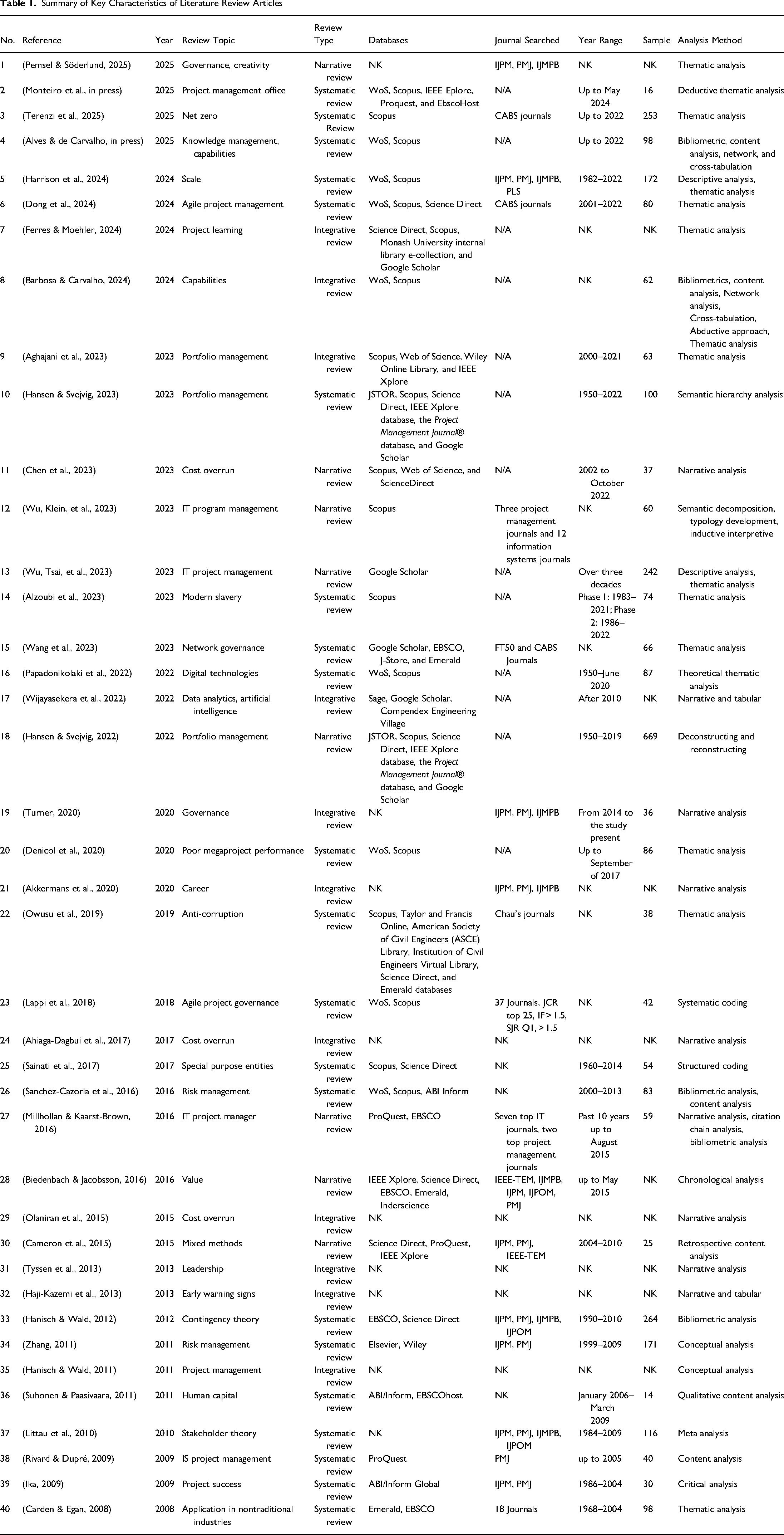
The descriptive analysis highlights key characteristics and trends among literature review articles published in PMJ. Table 1 summarizes core features, including publication year, research focus, review type, study selection methods, and analysis techniques. Together, these variables offer insight into how review practices have evolved over time and how they align with the journal’s editorial expectations.
Summary of Key Characteristics of Literature Review Articles
Publication Trends
For consistency in analysis, first-online articles not yet assigned to a print issue were treated as 2025 publications. Publication trends of literature review articles in PMJ show moderate fluctuations from 2008 to 2024. As shown in Table 1 and Figure 1, the number of review articles varied by year, with notable growth in recent cycles. A peak occurred in 2023, with seven review articles published, followed by sustained output in 2024 and early 2025. These counts reflect articles available online at the time of data collection in January 2025. Additional review articles may still be published within the current volume year.
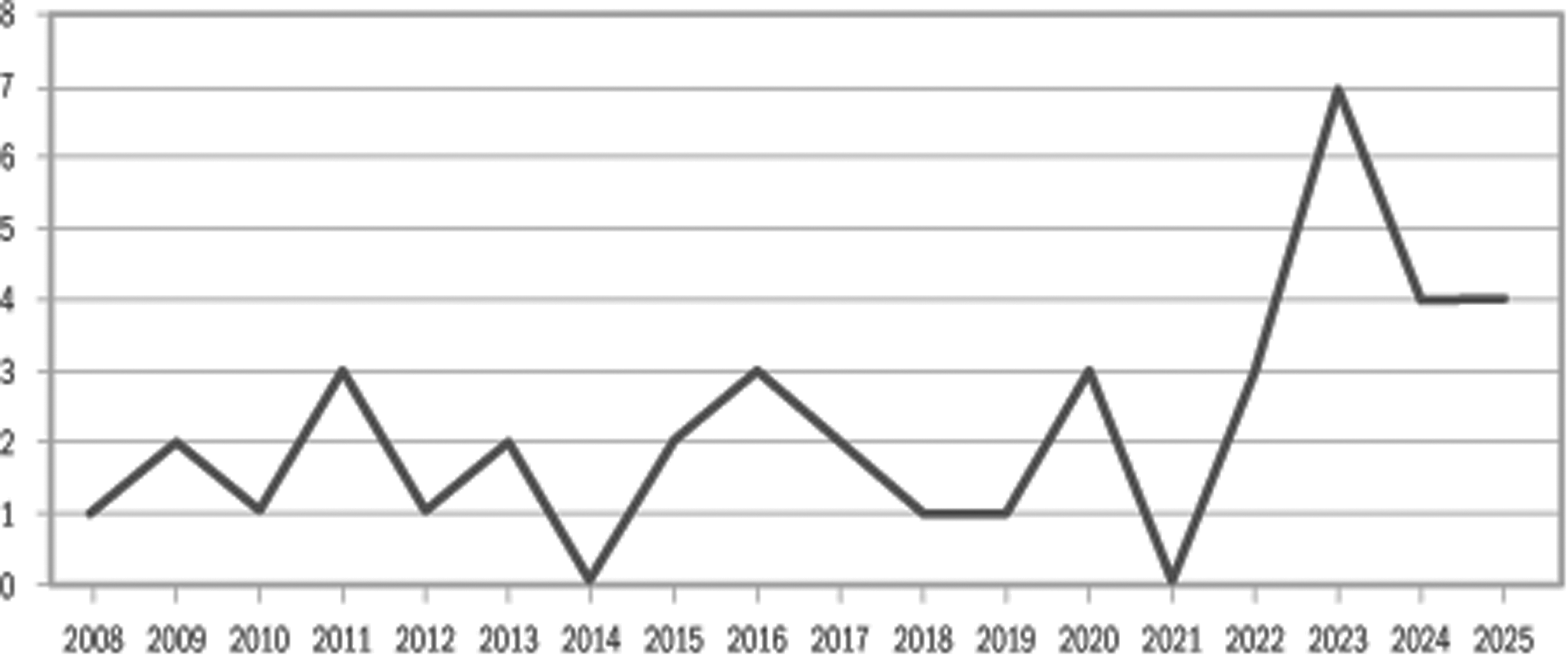
Annual number of literature review articles published in PMJ (2008–2024).
Despite this recent growth, review articles remain a small share of PMJ’s total output. Since 2008, PMJ has published 966 articles, of which only 40 (4.1%) are literature reviews. This suggests that the review format remains underutilized within the journal. However, the increase in frequency during recent years may signal a shift in editorial openness or author interest in review-based contributions.
This rise is consistent with broader academic trends. Leading journals, such as Academy of Management Annals (e.g., Salmon et al., 2023) and Journal of Business Research (e.g., Appiah et al., 2025), have expanded their review offerings. Across disciplines, the number of review articles indexed in the Web of Science Core Collection increased from 93,724 in 2014 to 212,343 in 2024. These figures, obtained during data collection for this study, reflect a growing recognition of literature reviews as essential scholarly contributions.
Topic Trends
A wide range of topics has been covered in PMJ’s literature review articles, grouped into 10 thematic clusters based on titles, abstracts, and stated research questions. Table 2 summarizes these clusters, including the number of articles and key references. Articles were often assigned to multiple clusters, reflecting the interdisciplinary nature of project management scholarship. The identified themes range from well-established areas, such as risk management (Sanchez-Cazorla et al., 2016; Zhang, 2011), to newer concerns including net-zero transitions (Terenzi et al., 2025) and modern slavery (Alzoubi et al., 2023), demonstrating the journal’s responsiveness to both traditional and emerging challenges that have a societal impact.
Summary of Identified Topic Clusters in Literature Review Articles
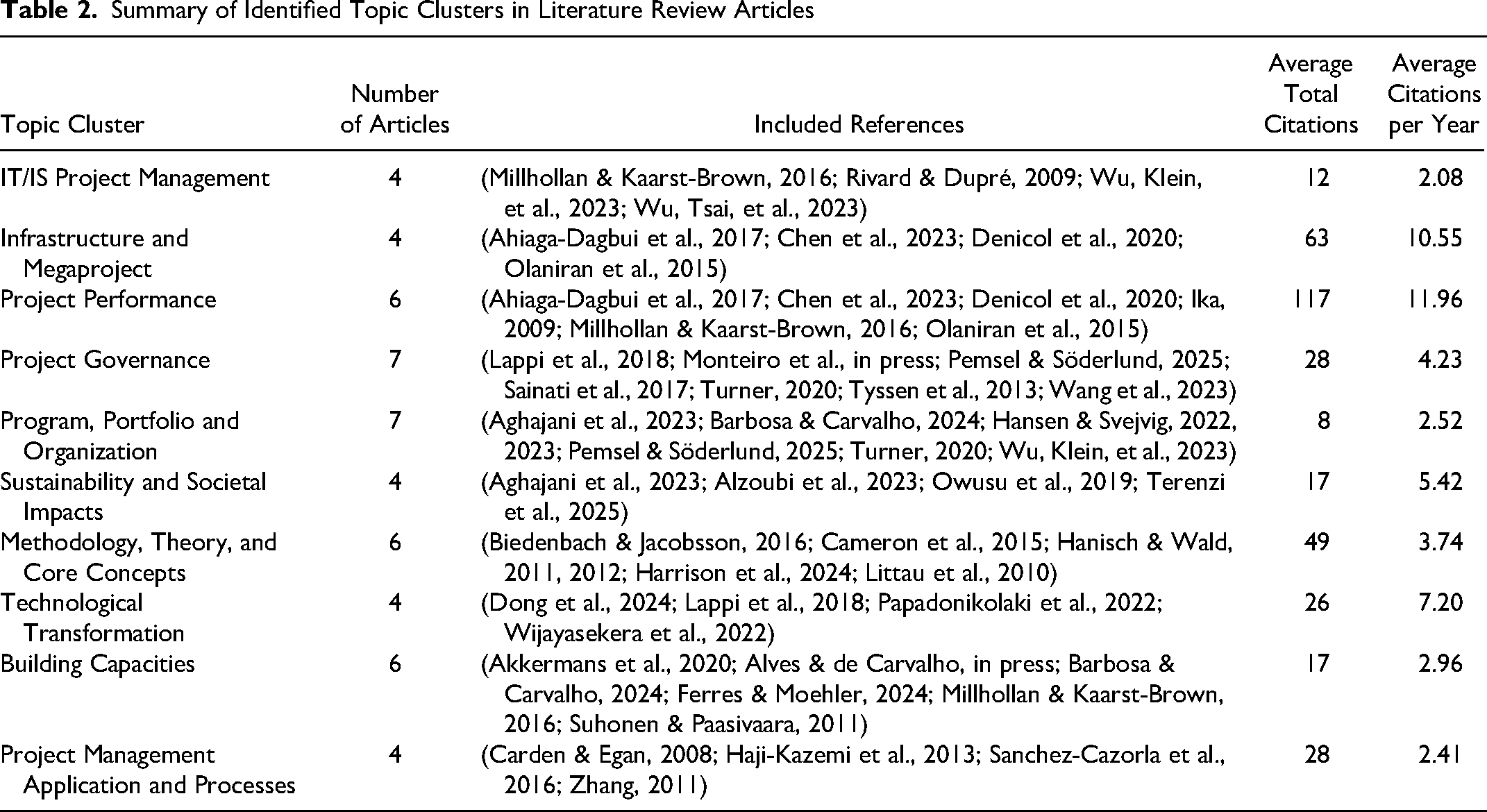
Some clusters have declined in visibility. The project management application and process cluster, which includes risk management and early warning signs, has seen few recent contributions. For instance, Zhang (2011) examined two schools of thought in risk analysis, whereas Sanchez-Cazorla et al. (2016) focused on risk identification in megaprojects. Similarly, the methodology, theory, and core concepts cluster covering foundational ideas and theoretical developments has slowed, with earlier contributions, such as Hanisch and Wald (2012) on contingency theory and Littau et al. (2010) on stakeholder theory, signaling a phase of consolidation rather than expansion.
In contrast, several clusters show sustained relevance. The project performance cluster includes frequently cited reviews on cost overruns (Ahiaga-Dagbui et al., 2017; Chen et al., 2023; Olaniran et al., 2015), megaproject performance (Denicol et al., 2020), and project success (Ika, 2009; Millhollan & Kaarst-Brown, 2016). The building capacities cluster covers skills and learning, including knowledge transfer (Alves & de Carvalho, in press), dynamic capabilities (Barbosa & Carvalho, 2024), project learning (Ferres & Moehler, 2024), and career development (Akkermans et al., 2020). Governance also remains central, with reviews on leadership in temporary organizations (Tyssen et al., 2013), decision-making frameworks (Turner, 2020), and project management offices (Monteiro et al., in press).
More recent reviews reflect a shift toward emerging concerns. The sustainability and societal impacts cluster includes research on modern slavery (Alzoubi et al., 2023), sustainability in portfolio management (Aghajani et al., 2023), and net-zero transitions (Terenzi et al., 2025). The program, portfolio, and organization cluster explores multilevel dynamics, such as IT program management (Wu, Klein, et al., 2023), portfolio governance (Hansen & Svejvig, 2023), and dynamic capabilities across organizational layers (Barbosa & Carvalho, 2024). The technological transformation cluster captures the influence of digital tools and data analytics, including agile project management (Dong et al., 2024), digitalization in the built environment (Papadonikolaki et al., 2022), and artificial intelligence (AI) in megaprojects (Wijayasekera et al., 2022).
While these clusters reflect broad engagement, notable gaps remain. PMJ has begun to address issues such as sustainability and digital transformation, but topics like climate resilience, equity and inclusion, project ethics, and the digital–social interface are still underexplored, despite their increasing relevance across management journals. For example, Business & Society and Academy of Management Perspectives have recently featured reviews that foreground ethics, power, and societal impact (Brown et al., 2022; Nyberg & Wright, 2022). Cross-disciplinary reviews linking project studies with psychology, ethics, or sustainability science also remain rare, partly due to the challenges of aligning theoretical perspectives across fields. Nonetheless, these integrative reviews hold strong potential to broaden project scholarship. As PMJ positions itself as a gateway journal, we encourage authors to pursue topics that are not only timely and relevant but also underrepresented in current discourse.
These reflections can be further contextualized by comparing PMJ reviews with influential literature reviews published elsewhere. For example, Bakker (2010) and Söderlund (2011) in International Journal of Management Reviews offer field-shaping syntheses, with Bakker reviewing temporary organizational forms, and Söderlund mapping schools of thought based on over 400 articles. Burke and Morley (2016), in Human Relations, similarly integrate and extend the literature on temporary organizations. These reviews demonstrate how topic-focused reviews can shape theoretical agendas and elevate disciplinary conversations. PMJ has published important topical reviews, but few have attempted this level of conceptual integration. This presents an opportunity for future authors to undertake more ambitious, theory-guided reviews that help define the contours of project management research.
Methodological Trends
The methodological diversity across PMJ’s literature review articles reflects the field’s evolving practices and growing sophistication. As summarized in Table 1, the reviews vary in type, synthesis method, and study selection strategy.
Systematic reviews are the most prevalent, accounting for 52.5% of the articles. Defined by structured methodologies, transparent search strategies, and clear inclusion criteria (Snyder, 2019), these reviews aim to minimize bias and ensure replicability. Common analytical techniques include thematic and bibliometric analysis (Grant & Booth, 2009). Their prominence reflects an increasing demand for rigor and comprehensiveness in project management scholarship. Systematic reviews are particularly dominant in emerging areas such as sustainability and societal impacts (e.g., Alzoubi et al., 2023; Owusu et al., 2019; Terenzi et al., 2025) and technological transformation (e.g., Dong et al., 2024; Lappi et al., 2018; Papadonikolaki et al., 2022). These topics often involve rapidly developing literature, where structured synthesis is essential. In contrast, systematic reviews are less common in areas, such as program, portfolio, and organization, where researchers often favor broader and more exploratory approaches. A strong example of a systematic review is Denicol et al. (2020), which synthesized research on causes and cures for poor megaproject performance. The review applied a comprehensive search strategy and transparent inclusion criteria, demonstrating how structured reviews can generate actionable insights and strengthen theoretical foundations.
Integrative reviews make up 27.5% of the articles. These reviews synthesize diverse theoretical and empirical sources to develop new models, taxonomies, or conceptual frameworks. Unlike systematic reviews, they rely on iterative or semistructured searches and incorporate both foundational and emerging literature (Torraco, 2005). Narrative synthesis, conceptual analysis, and abductive approaches are common techniques (Grant & Booth, 2009). Integrative reviews appear frequently in clusters focused on conceptual development, such as program, portfolio, and organization (e.g., Aghajani et al., 2023; Barbosa & Carvalho, 2024; Turner, 2020) and building capacities (e.g., Akkermans et al., 2020; Barbosa & Carvalho, 2024; Ferres & Moehler, 2024). These reviews often aim to clarify complex domains or propose new research directions, rather than answer narrowly defined questions. Aghajani et al. (2023) offer a strong example. Their review of sustainability integration in project portfolio management identified three key themes, that is, mindset, assessment, and process, and examined each across strategic, organizational, and project levels. The resulting framework illustrates the value of integrative synthesis in organizing fragmented literature and guiding future work.
Narrative reviews account for 20% of the articles. These reviews aim to provide holistic overviews and often rely on interpretive methods such as chronological mapping, typology development, and deconstruction–reconstruction analysis (Ferrari, 2015). They are particularly suited to emerging or fragmented fields where flexibility is needed to explore broad, dynamic themes. Narrative reviews are common in areas like program, portfolio, and organization (e.g., Hansen & Svejvig, 2022; Pemsel & Söderlund, 2025; Wu, Klein, et al., 2023) and IT/IS project management (e.g., Millhollan & Kaarst-Brown, 2016; Wu, Klein, et al., 2023; Wu, Tsai, et al., 2023). These clusters often require broad historical and conceptual integration. Hansen and Svejvig (2022) exemplify best practice in this format. Their historical analysis of 669 articles on project portfolio management employed deconstructive methods to produce a concept map and an onion model that traced the field’s evolution. This approach clarified past developments and surfaced gaps for future exploration.
While our analysis applies Snyder’s (2019) typology, as adopted in the previous PMJ editorial on literature review in Klein and Müller (2020), we acknowledge that other review classifications exist. For example, Grant and Booth (2009) identify 14 review types, including scoping and state-of-the-art reviews, many of which appear in broader management literature. One form rarely found in PMJ is the theory-developing or proposition-building review, commonly seen in Academy of Management Review. These reviews selectively engage literature to construct conceptual frameworks or identify theoretical propositions. Although Snyder might classify them under integrative reviews, their purpose and ambition suggest the need for separate recognition. Their absence in PMJ likely reflects the applied focus of the field and the difficulty of producing high-quality conceptual work. Still, as project studies mature, the journal would benefit from more reviews that engage theoretical fragmentation, challenge dominant assumptions, or draw from neighboring disciplines. While our typology reflects current practice, we encourage future authors to explore these alternative formats when appropriate to their aims.
Impact Trends
To evaluate the scholarly and societal influence of PMJ’s literature review articles, citation data and Altmetric Attention Scores were analyzed. Table 3 summarizes citation metrics for each article, including total citations, average citations per year, and rank among all 966 PMJ publications indexed in WoS. Topic cluster-level averages are also reported in Table 2. Altmetric data provide additional insight into online visibility across 534 PMJ outputs mentioned online.
Citation and Altmetric Metrics for Literature Review Articles
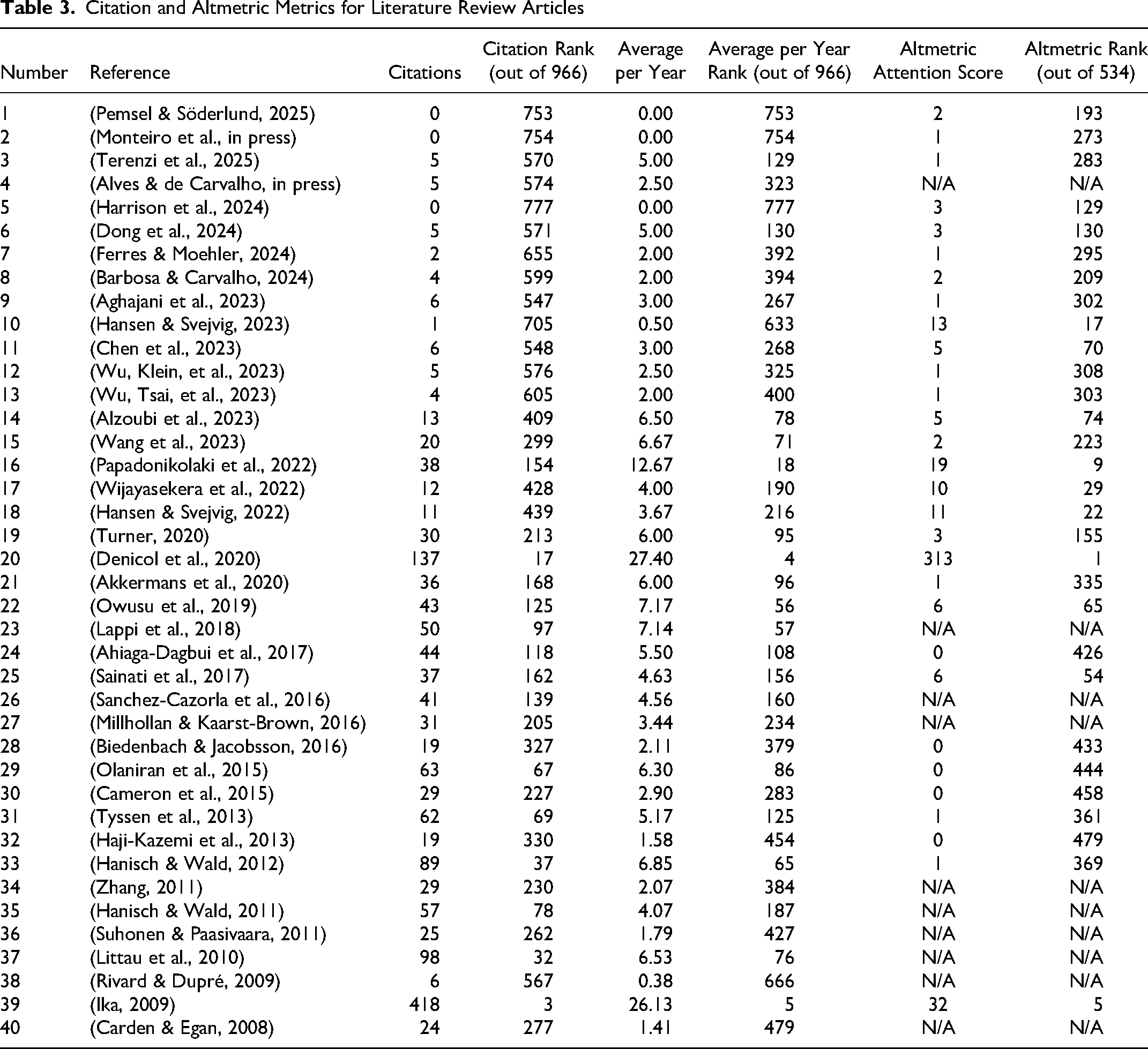
Overall, the 40 review articles have received 1,524 citations, with an average of 38.1 citations per article. This compares favorably to PMJ’s overall average of 21.56 citations per article, based on 966 total publications and 20,830 cumulative citations. Notably, 45% of review articles fall within the top 25% of all PMJ articles by citation count. Twenty percent rank in the top 10%, and 10% are among the top 5%. Several articles stand out for their citation performance. Ika (2009) leads with 418 citations and ranks third among all PMJ publications. Denicol et al. (2020) follows with 137 citations (17th overall), and Littau et al. (2010) and Hanisch and Wald (2012) rank 32nd and 37th, respectively. All four are within the top 5% of PMJ articles.
Citation patterns vary, with more recent articles still early in their citation life cycle. To account for this, average citations per year were also examined. Based on this metric, 55% of review articles fall within the top quartile of PMJ articles, 30% are in the top 10%, and 7.5% rank in the top 5%. Some articles, such as that by Ika (2009), combine high total and annual citation rates, indicating sustained influence. Others, such as that by Hanisch and Wald (2012), show strong historical impact but lower current citation rates. Emerging articles by Alzoubi et al. (2023), Papadonikolaki et al. (2022), and Wang et al. (2023) already show high annual citation rates, suggesting strong future visibility.
Citation performance is influenced by multiple factors, including topic popularity, scope, and methodological rigor. Among review types, systematic reviews perform best, with an average of 52 citations and 6.42 citations per year. This likely reflects their comprehensive design and analytical transparency (Snyder, 2019). Integrative reviews follow, averaging 30 citations and 4.15 citations per year, whereas narrative reviews lag behind with averages of 13 and 2.45, respectively.
Citation trends also differ across topic clusters. Reviews focused on project performance and infrastructure and megaprojects yield the highest impact, with average citations of 117 and 63, and average annual rates of 11.96 and 10.55, respectively. These themes attract consistent scholarly attention. Clusters such as program, portfolio and organization and IT/IS project management show lower impact, with annual citation averages of 2.52 and 2.08, respectively. Emerging clusters such as technological transformation (7.20) and sustainability and societal impacts (5.42) exhibit promising citation rates that reflect growing interest.
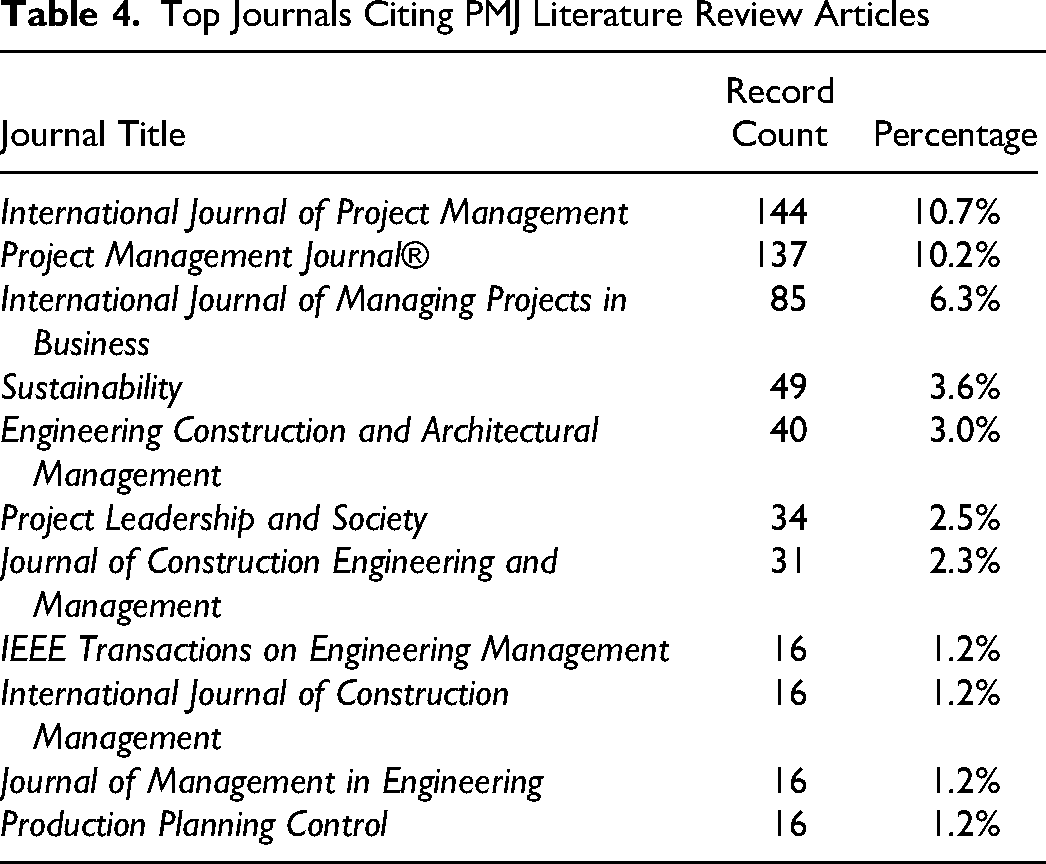
Table 4 provides further insight into citing sources. Approximately 30% of citations originate from leading project management journals, including International Journal of Project Management (10.7%), PMJ (10.2%), International Journal of Managing Projects in Business (6.3%), and Project Leadership and Society (2.5%). PMJ reviews are also widely cited in construction management, with strong presence in Engineering Construction and Architectural Management, Journal of Construction Engineering and Management, International Journal of Construction Management, and Journal of Management in Engineering. Outside project management and construction, multidisciplinary journals, such as Sustainability, IEEE Transactions on Engineering Management, and Production Planning Control, also cite PMJ reviews.
Top Journals Citing PMJ Literature Review Articles
Altmetric Attention Scores reflect the increasing impact PMJ is having in the management field and its relevance to advancing research in management and organization studies. Among the 534 PMJ publications indexed in Altmetric, 386 had at least one mention. Denicol et al. (2020) lead with a score of 313, followed by Flyvbjerg (2014) at 268. Only six review articles appear among the 31 PMJ articles with scores above 10, representing 19.4% of that subset. Although citation performance among review articles is strong, their broader public visibility remains limited. That said, several articles demonstrate dual influence. Denicol et al. (2020), Ika (2009), and Papadonikolaki et al. (2022) perform well in both citation and Altmetric measures. Others, such as Hansen and Svejvig (2022, 2023) and Wijayasekera et al. (2022), show greater societal reach than academic citations might suggest. These cases illustrate that some review articles succeed in resonating across both scholarly and practitioner communities, though most remain anchored in academic discourse.
Critical Appraisal
To assess the methodological quality of literature review articles in PMJ, we applied a critical appraisal framework adapted from Snyder (2019). This framework includes seven criteria: (1) clarity of research questions, (2) transparency of search strategies, (3) justification for inclusion and exclusion, (4) use of quality measures, (5) application of reliability checks, (6) analysis transparency, and (7) provision of future research directions. These criteria reflect PMJ’s editorial expectations. Table 5 presents the appraisal results.
Summary of Critical Appraisal Results for Literature Review Articles
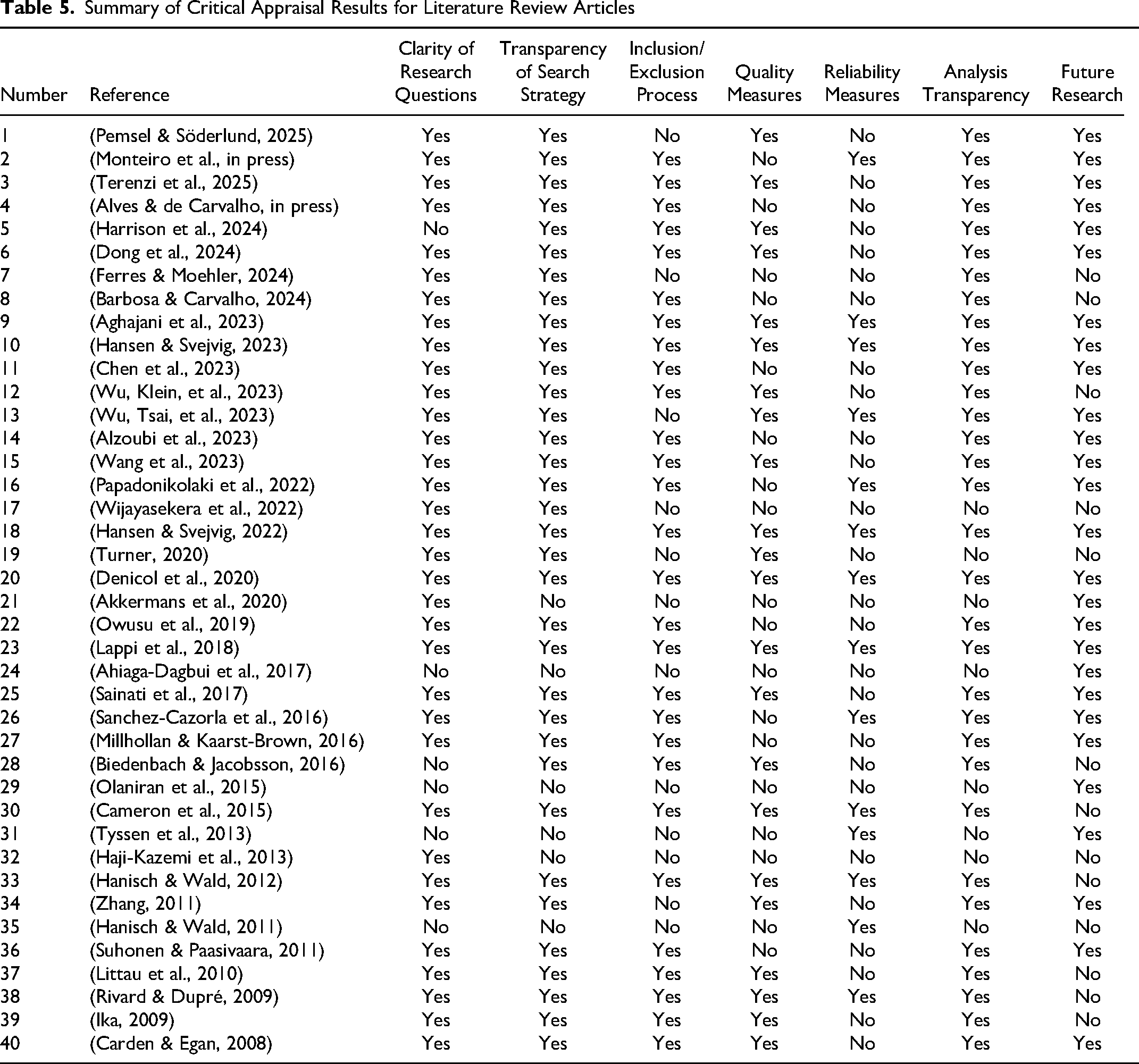
The results reveal distinct patterns across review types. Systematic reviews show the highest adherence to methodological standards. Ninety-five percent of these articles clearly state research questions and describe their search strategies, and all demonstrate analysis transparency. However, only 38% report reliability measures such as independent coding or validation. This gap represents an opportunity to further improve methodological credibility through more structured review processes.
Integrative reviews display lower consistency across criteria. Only 64% meet the clarity standard for research questions, and just 45% describe analysis processes transparently. Adherence to quality checks (18%) and reliability measures (27%) is also limited. These results suggest that although integrative reviews offer flexibility, they often lack the documentation needed for transparency. Selectively incorporating structured elements, such as explicit inclusion criteria and search strategies, could enhance their robustness.
Narrative reviews perform well on transparency of search strategies and analysis, with 100% adherence to both. Yet similar to the other types, only 38% report any form of reliability check. The interpretive and historical nature of many narrative reviews may explain the looser approach to documentation. Still, these reviews could benefit from greater methodological structure without losing their analytical richness.
It is important to note that adherence to appraisal criteria does not necessarily determine a review’s contribution or scholarly value. Each type of review serves a different purpose and requires an appropriate methodological fit. Systematic reviews currently set the benchmark for rigor, but all review types could strengthen their reliability practices. In turn, integrative and narrative reviews can improve transparency by selectively integrating systematic methods.
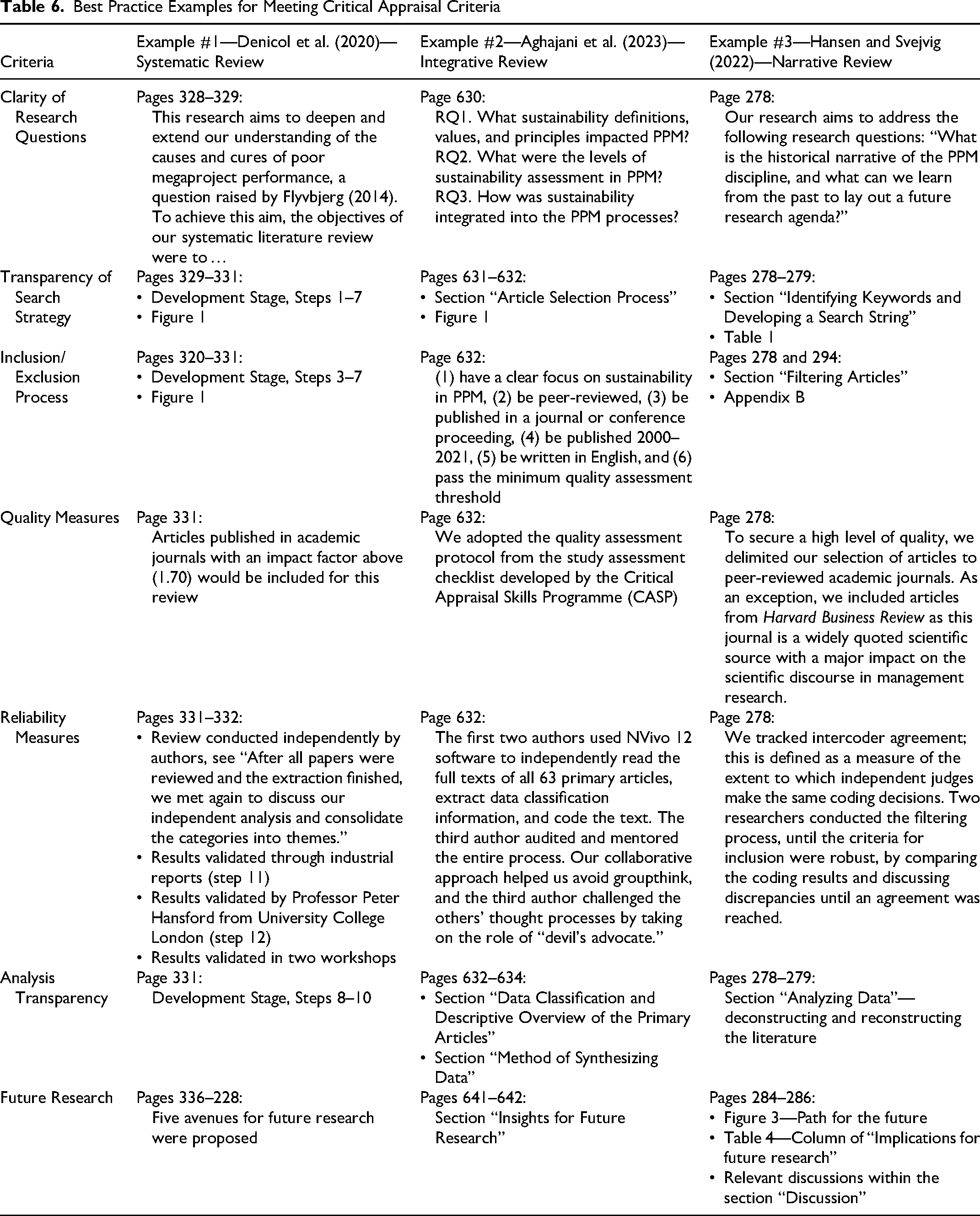
To highlight strong methodological practice, Table 6 presents examples of review articles that performed well across appraisal dimensions.
Best Practice Examples for Meeting Critical Appraisal Criteria
In addition to these examples, we offer the following practical recommendations for authors preparing literature review submissions to PMJ. These suggestions reflect recurring themes observed in both high-quality and problematic submissions and aim to clarify the journal’s expectations for review-oriented contributions.
The following points outline recommended practices that can enhance the quality and contribution of a review submission:
Define a clear purpose and contribution: Explain why the review is needed now, what conceptual or empirical gap it addresses, and how it contributes to understanding in project management. Be intentional in topic selection: Choose topics that are timely, underexplored, or fragmented, and avoid areas where reviews have become repetitive or saturated. Set explicit boundaries: Clearly state inclusion and exclusion criteria, scope, and the rationale for these decisions. Be transparent in method: Provide a clear, replicable account of how literature was identified, screened, and analyzed. Synthesize, don’t summarize: Go beyond listing studies and map the field, identify patterns and tensions, and offer integrative insights. Engage with theory meaningfully: Use theory to frame your synthesis, clarify constructs, or guide analysis. You do not need to develop new theory, but your review should help locate or connect existing perspectives. Identify actionable research directions: Offer specific, theory-informed, and practically relevant questions or agenda items for future research. Consider conceptual or cross-disciplinary approaches: Where appropriate, draw from adjacent fields or problematize disciplinary boundaries to extend the reach of project scholarship.
In contrast, the next set of points highlights common pitfalls that should be avoided to ensure clarity, rigor, and relevance in the review:
Avoid descriptive cataloging: Merely listing prior studies without insight, structure, or synthesis provides limited scholarly value. Avoid claiming comprehensiveness without clarity: Do not use terms like “comprehensive” unless your methods clearly justify it. Be transparent about search scope and limitations. Avoid weak methodological rationale: All methodological choices, including databases, search terms, inclusion windows, and analysis methods, should be clearly justified. Avoid outdated or uncritical framings: Revisit foundational literature where appropriate but engage with current theoretical and practical debates. Avoid disconnection from practical relevance: PMJ values reviews that matter to both scholars and practitioners. Clearly articulate the practical implications of your findings and arguments.
These dos and don’ts are not prescriptive rules but reflect the priorities and expectations of the editorial team. Strong reviews integrate rigor with insight, scope with selectivity, and synthesis with significance.
Conclusions
This editorial has examined 40 literature review articles published in PMJ between 2008 and 2024, offering an evidence-based reflection on their publication patterns, thematic focus, methodological characteristics, scholarly impact, and alignment with quality standards. The analysis affirms the growing role of review-based scholarship in advancing project management research and provides targeted guidance for authors.
Although review articles remain a small share of PMJ’s total output, their prevalence has increased in recent years, reflecting broader shifts in academic publishing. Thematic clusters reveal a mix of traditional concerns, such as project performance and governance, and newer topics, including sustainability, societal impacts, and digital transformation. Systematic reviews are the most methodologically rigorous and are associated with the highest citation impact. Integrative and narrative reviews offer greater conceptual flexibility but show more variability in transparency and reliability. Although citation metrics indicate strong academic reach, Altmetric data suggest that societal engagement remains limited, pointing to a need for more deliberate dissemination strategies.
The critical appraisal highlights where review types converge and diverge in quality. Systematic reviews tend to meet more formal criteria, whereas integrative and narrative reviews excel in exploring complexity but often fall short on documentation. The best examples from each category show that rigor and creativity are not mutually exclusive, and that PMJ’s standards can be met through multiple pathways.
This review of reviews is not without limitations. Its scope is limited to PMJ and may not generalize to other project management journals. The use of Altmetric scores offers only one proxy for societal influence. In addition, the study did not assess the internal quality of synthesis within each article, which remains a valuable direction for future work.
Despite these limitations, the findings offer practical value for authors and reviewers. Literature reviews in project management can do more than organize prior work. They can surface contradictions, reframe fields, and drive conceptual innovation. The expectations outlined in this editorial echo those of other leading journals. Academy of Management Learning & Education encourages authors to articulate novel perspectives and outline clear research agendas. Journal of Management has institutionalized its commitment by curating an annual review issue focused on theoretically ambitious contributions. Meanwhile, some journals are becoming more selective, expecting literature reviews to offer conceptual clarity and originality, not just coverage. This evolving landscape presents both a challenge and an opportunity for PMJ. The journal is well positioned to encourage diverse review formats while promoting clarity, synthesis, and contribution. Special issues in particular provide a valuable opportunity to include at least one literature review that synthesizes the topic area. We encourage PMJ’s special issue editors to actively consider such contributions as part of their editorial strategy. As project studies mature, literature reviews should not only consolidate knowledge—they should help define the intellectual architecture of the field!
Footnotes
Declaration of Conflicting Interests
The author(s) declared no potential conflicts of interest with respect to the research, authorship, and/or publication of this article.
Funding
The author(s) received no financial support for the research, authorship, and/or publication of this article.
