




Abstract
Drawing on the Cultural Competence for Equity and Inclusion (CCEI) model, this study examined the leadership challenges faced by Australian resources project teams in attracting and retaining employees from underrepresented groups and diversity and inclusion (D&I) initiatives. We adopted a mixed method: an online survey (n = 224) and in-depth interviews (n = 12) to ascertain the efforts being made to attract and retain underrepresented groups. We found that project managers often encounter challenges at three levels: organizational, project manager, and project team. This study contributes to the D&I literature in project management and the CCEI model by highlighting multilevel leadership challenges.
Introduction
This study contributes to the diversity and inclusion (D&I) literature in project management and the Cultural Competence for Equity and Inclusion (CCEI) model (Goodman, 2020) by highlighting multilevel leadership challenges. In the project management context, particularly with a greater migration movement globally, D&I have emerged as critical factors influencing project outcomes (Müller & Locatelli, 2023). Diversity encompasses a broad spectrum, including gender, ethnicity, nationality, language, and culture; inclusion refers to feelings of belonging and being valued in organizations or work projects (Le et al., 2021; Shore & Chung, 2022). When used in this article, the term “underrepresented” groups refer to indigenous people, women, those from culturally and linguistically diverse (CALD) backgrounds, neurodiverse people, refugees, and veterans. We embark on this research within the context of increasing efforts in the Australian resources sector—comprising the mining and energy industries—to improve D&I through targeted programs and initiatives (Kincaid & Smith, 2021). These efforts have been catalyzed by a range of factors, including the increasingly aging workforce in the sector (Kansake et al., 2021), high turnover of skilled workers particularly in fly-in-fly-out (FIFO) remote areas (Parmenter et al., 2024), and increasing public pressure to enhance inclusion of underrepresented groups (Holcombe & Kemp, 2020).
However, previous literature identifies the challenges facing the sector in relation to D&I concerning the attraction, engagement, and retention of those from underrepresented groups. These challenges are not unique, with countries around the world reporting similar challenges in the recruitment and engagement of underrepresented groups, including Canada (Caron et al., 2020), South Africa (Pelders & Nelson, 2019), Norway, and Finland (Segerstedt & Abrahamsson, 2019). The challenges facing underrepresented groups in the sector around the globe are ample and, broadly speaking, relate to levels of work readiness and adequate support (Caron et al., 2020), feelings of belonging and sexism (Rubin et al., 2019), and a culture of relocation and travel (Dorow et al., 2023).
Despite numerous studies on D&I in organizational contexts, significant research gaps remain in project management literature. Companies are working toward enhanced strategies to combat these challenges, but ascertaining the actual status, implementation, and impact of D&I in the global resources industries is complex. There is a lack of data on D&I programs and their impact (Campero et al., 2023) and concrete reports on the industry’s global state (Kincaid & Smith, 2021). Additionally, the situation for each underrepresented group is nuanced (Sasikala & Sankaranarayanan, 2022). Addressing these challenges enables project managers to create more inclusive and effective teams, leading to improved performance, innovation, and overall project success (Rehman, 2020). Therefore, it is crucial for project managers to understand these challenges and improve the attraction and retention of diverse teams.
The goal of this article is to address the above gaps in the literature. We sought to address the following research questions (RQ): RQ1. What leadership challenges do Australian resources project teams face in attracting and retaining employees from underrepresented groups? RQ2. How do project teams in the Australian resources sector deal with the challenges and integrate underrepresented groups into their workforce?
By addressing these research questions, we aim to fill a significant gap in the literature on leadership challenges and strategies in project management. This gap is critical due to the temporary nature of projects and the unique contexts of project-based organizations in the resources sector (Müller & Locatelli, 2023). The complexity is heightened by skill shortages in Australia’s regional and remote locations and the scarcity of D&I studies in project management within the resources industry (Le et al., 2023). Understanding these challenges is essential for developing effective leadership strategies that enhance project outcomes, foster innovation, and ensure sustainability. This contribution advances both project management and workforce development in the resources sector.
Our article makes three important contributions to the literature. First, it identifies the challenges around attracting and retaining employees from underrepresented groups in the resources sector with a focus on project management and project teams. Despite extensive research on D&I in the fields of human resource management (HRM) and business, less is detailed within the scope of project management. Specifically, studies in the project management field often focus on technical skills and the competencies of project teams (Nauman et al., 2022) and the management of diverse project teams in various organizational settings (Nauman et al., 2024); though, broadly speaking, there is relatively little scholarly focus on both D&I within the project management research. More research is required to explore how D&I impacts project outcomes, performance, and team dynamics; this article contributes to this body of work in exploring challenges for project managers (RQ1) as well as the D&I strategies (RQ2) required to ensure better project outcomes and team dynamics.
Second, we explore challenges related to attracting and retaining employees from all diverse groups in the project management field within the resources sector. While the research on D&I in the resources sector exists, most of the research that exists tended to focus on indigenous people, women, and those with a disability, whereas the research around people from CALD backgrounds, refugees, and veterans is often underexplored (Triana et al., 2021). This article adds to the project management and D&I literature by offering insights into the status of these underrepresented groups in the resources sector.
Finally, drawing on the CCEI model (Goodman, 2020), our article advances the project management literature by identifying and evaluating current D&I strategies employed in the resources sector to address skills shortages in project-based organizations. Through thematic analyses to answer RQ2, we address a recent call for creating more diverse and inclusive project teams (Müller & Locatelli, 2023) and provide practical implications for project and human resources (HR) managers in the resources sector on strategies to develop diverse teams.
Theoretical Background
In the workplace, cultural competence involves understanding and valuing differences, recognizing one’s own biases, and adapting communication and behavior to be inclusive of diverse perspectives (Foldy & Buckley, 2017). For project managers, developing cultural competence may result in an enhanced ability to understand, communicate, and interact with people from diverse cultures and backgrounds (Jiang et al., 2018). Based on this view, we propose that D&I within project management should generalize diversity and present cultural competence as a broad competence encompassing the values and beliefs of people from different identities and backgrounds.
The CCEI model focuses on developing individuals’ knowledge, skills, and attitudes to effectively interact with people from diverse backgrounds (Goodman, 2020). Building on the proponents of a cultural competence perspective, Goodman (2020) introduces the CCEI model in the workplace, viewing it as the capacity to work effectively in culturally diverse environments while endorsing a commitment to D&I. The CCEI model presents five competencies: (1) self-awareness, (2) understanding and valuing others, (3) knowledge of societal inequities, (4) interpersonal skills to engage effectively across differences in various contexts, and (5) skills to enhance transformation towards equity and inclusion (Goodman, 2020). Going beyond earlier approaches that emphasize self-awareness, cultural differences, and interpersonal skills, the CCEI model incorporates an intersectional perspective and social justice concepts, addressing issues of power, privilege, oppression, and systemic change.
Prior project management research has drawn on the CCEI model, arguing that it can facilitate effective communication, decision-making, and conflict resolution among team members from diverse backgrounds (Kiznyte et al., 2015). Research has shown that cultural differences can significantly impact project outcomes, making it essential for project managers to develop cultural intelligence to navigate these challenges successfully (Ochieng & Price, 2010). Within the resources sector, projects often involve multinational teams working in various cultural settings, making cultural competence even more critical (Wang et al., 2014). Understanding local customs, traditions, and business practices can significantly influence the success of resource-based projects, such as mining or oil extraction, which often operate in diverse and sometimes remote locations (Le et al., 2023). Kiznyte et al. (2015) found that the application of cultural intelligence in international project management underscores that cultural competence enables project managers to anticipate potential cultural challenges and implement strategies to mitigate risks associated with cultural misunderstandings.
Drawing on the CCEI model (Goodman, 2020), we posit that to be successful, project managers and staff at all levels need to develop their capacities to work across differences and establish environments that are welcoming, equitable, and inclusive of diversity. Whether it is leading project teams, dealing with clients, engaging with community members, or leading organizations, people need to cultivate the D&I competencies—that is, the awareness, knowledge, and skills related to D&I to effectively manage diverse teams (Goodman, 2020).
Literature Review
Leadership Challenges in Attracting and Retaining Underrepresented Groups
A wide body of research surrounds the challenges of recruitment, engagement, and retention of underrepresented groups in the workforce. In the HR scholarship, the last 60 years have tended to focus on D&I within the context of gender and race, whereas it is only in the last decade that other underrepresented groups have been examined, including LGTBQI, those with a disability, and age diversity (Fujimoto et al., 2014; Triana et al., 2021).
Project teams and leaders are shown to experience various challenges in attracting and retaining employees from underrepresented groups (Kansake et al., 2021). A common theme in the literature is the importance of leadership and the significance leaders have in shaping the impact of D&I efforts and overall culture in an organization. Too often leaders are suggested as occupying a passive role tasked with being the enactors and communicators of D&I programs and initiatives (Buengeler et al., 2021; Morfaki & Morfaki, 2022). Challenging this view, scholars suggest that leaders have the power to shape the effects of diversity practices on minority employees and leverage the inclusive potential of HR diversity practices (Dawson et al., 2024). The literature reveals a need for a more nuanced understanding of leadership in D&I, moving beyond a compliance-based view to one that acknowledges leaders as key drivers of inclusive workplace cultures.
In the broader project management literature, various insights are offered regarding what project managers can do to facilitate the engagement and retention of staff from underrepresented groups. These include promoting inclusive leadership (Rehman, 2020), implementing inclusive practices (Tumba, 2024), establishing clear policies and processes (Lindgren & Packendorff, 2009), and continuously evaluating D&I initiatives and goals (Rehman, 2020). Hence, it is through the implementation of these practices that project managers and leaders can harness the full potential of diverse teams, leading to improved organizational outcomes, innovation, and job satisfaction (Winch et al., 2021).
The literature highlights three clusters of D&I challenges for leaders. First, the industry’s historical lack of D&I and perceptions of male dominance hinder the attraction of underrepresented groups (Kansake et al., 2021; Helbert, 2018). Second, the geographically remote and isolated nature of resource sector jobs deters diverse candidates, especially those desiring proximity to families, urban centers, or community networks (Caron et al., 2020; Lovell & Critchley, 2010). Commuting logistics pose challenges for those with family responsibilities or seeking work-life balance (Parmenter & Drummond, 2022). Third, the cyclical nature of resource projects introduces employment stability uncertainty, affecting retention efforts (Gough et al., 2019). Additionally, leaders’ attitudes and competencies may not prioritize D&I as an important aspect of organizational culture.
Despite the growing literature on leadership’s role in promoting D&I (Baker et al., 2021; Dang et al., 2023), there is a notable gap in research addressing specific leadership challenges within the unique context of resource sector projects. This oversight is concerning given the distinct challenges faced by Australian resources project teams such as geographic isolation, remote locations, industry culture, and job stability. Our study aims to fill this critical gap by examining these specific challenges in detail.
Underrepresented Groups in the Resources Sector
The resources sector was selected for this research because it provides an appropriate context for answering our research questions. The resources sector faces significant challenges in attracting and retaining underrepresented groups, including indigenous peoples, women, CALD individuals, neurodiverse individuals, refugees, and veterans. Despite the increasing number of indigenous employees in the resources sector, their engagement and retention remain problematic (Parmenter et al., 2024). Key barriers include inadequate skills and work readiness, unfamiliarity with the industry, lack of support, inability to practice traditional customs (Caron et al., 2020), and the substantial distance between work sites and their family/community (Holcombe & Kemp, 2020).
In the traditionally male domain of the resources sector, women face persistent issues related to sexism and a lack of belonging (Rubin et al., 2019). The culture of travel and relocation, particularly challenging for those with children, further exacerbates these issues (Dorow et al., 2023). These factors negatively impact mental health, job satisfaction, and sense of belonging, ultimately affecting their engagement and retention (Campero et al., 2023).
While the contributions of individuals from CALD backgrounds are increasingly recognized for their unique skills and experiences (Kincaid & Smith, 2021), significant challenges persist. These include work readiness (Caron et al., 2020), feelings of belongingness, and workplace racism (Parmenter & Drummond, 2022). Additionally, issues such as cultural blindness, ethnocentrism, parochialism, and in-group favoritism are prevalent in leadership and project management contexts (Mäkilouko, 2004).
Notably, attracting neurodivergent individuals is seen as a strategy to address labor shortages in the resources sector (Austin & Pisano, 2017); however, their engagement and retention present unique challenges (Le et al., 2023). Factors such as the need for nuanced recruitment practices (e.g., single recruitment contact) and accommodating physical conditions (e.g., lighting, noise) are critical considerations (Walkowiak, 2023).
Furthermore, refugees, viewed as an untapped resource, face numerous barriers despite active recruitment efforts by Australian mining companies (Le et al., 2023). These barriers include language proficiency, securing visas, recognition of overseas qualifications, discrimination, and understanding the Australian work culture (Tan & Cebulla, 2023).
Governments and industry groups are increasingly recognizing the potential of veterans in the resources sector across the United Kingdom, Canada, Australia, and the United States (Macmahon, 2020). Veterans, however, face challenges in seamlessly transitioning to other industries due to job-seeking and recruitment processes, and lack of experience with writing résumés and interviewing (Becker et al., 2023).
In summary, the research highlights persistent structural and cultural barriers hindering attraction and retention in the resources sector. While many studies focus on recruitment, they often overlook systemic challenges impacting long-term retention. Research underscores the roles of workplace culture, support structures, and leadership in shaping inclusion (Randel et al., 2018), yet gaps remain in understanding their interaction in sector-specific contexts. Additionally, D&I efforts are often treated as stand-alone initiatives rather than integrated into broader organizational strategies. Addressing these gaps requires further investigation into current interventions’ effectiveness and a deeper exploration of leadership’s influence on the long-term success of diversity initiatives.
Strategies to Integrate Underrepresented Groups
Attracting and retaining underrepresented staff in the resources industry present significant challenges for leaders. Addressing these requires proactive outreach initiatives (Morfaki & Morfaki, 2022), partnerships with diverse communities (Le et al., 2023), and fostering an inclusive workplace culture (Le et al., 2021). Ensuring successful integration involves creating an inclusive onboarding process that respects diverse backgrounds and provides equitable growth opportunities (Simmons & Yawson, 2022). Balancing cultural fit with the need for diverse perspectives can be challenging (Jain & Pareek, 2020). Retaining diverse talent requires ongoing efforts to foster an inclusive culture where individuals feel valued and empowered (Le et al., 2021). Addressing unconscious bias (Storm et al., 2023), sexism, and racism (Parmenter & Drummond, 2022) is crucial for all employees to thrive.
Organizations that purposefully use diversity strategies are more likely to develop inclusive cultures (Lee & Kramer, 2016). Implementing D&I programs is not enough; staff at all levels must understand their value (Kirton & Greene, 2019). The CCEI model (Goodman, 2020) emphasizes the importance of leaders understanding their biases and privileges as a step toward inclusivity. Knowledge and appreciation of other cultures and identities are also essential (Caron et al., 2020; Goodman, 2020). D&I programs targeting specific identity groups are more effective (Li et al., 2019). Hence, leaders should develop competence in addressing unique challenges of underrepresented groups (Shore & Chung, 2022). Sustaining an inclusive environment requires continuous learning and assessment of D&I efforts (Goodman, 2020).
The literature on D&I strategies emphasizes the importance of tailored programs and the provision of support and resources to ensure that staff feel valued and respected (Caron et al., 2020). Strategies targeting indigenous employees include preemployment readiness programs, flexible work arrangements that allow staff to meet cultural and familial obligations (Caron et al., 2020), opportunities for professional development, comprehensive training (Parmenter et al., 2024), and mentoring and peer support opportunities (Caron et al., 2020). Supporting the cultural awareness highlighted in the CCEI framework (Goodman, 2020), the literature advocates for the provision of training for staff at all levels, ensuring the entire workforce is educated about the unique aspects of indigenous culture (Parmenter et al., 2024).
D&I strategies targeting women employees include mentoring programs, gender diversity targets, paid parental leave, flexible work arrangements, and sexual harassment and discrimination prevention programs (Baruah & Gaudet, 2022). The literature emphasizes the importance of staying informed about each country’s regulatory policies, agendas, and commitments related to D&I. While some countries, such as South Africa, have set targets for gender diversity (Sasikala & Sankaranarayanan, 2022), others rely on legislation to provide guidance and mandates around gender, including Australia, the United Kingdom, South Africa, and the United States (Workplace Gender Equality Agency [WGEA], 2023). Additionally, countries, such as Brazil, Canada, and Mexico, utilize industry bodies and women’s groups to set the diversity agenda for companies within the resources sector (Sasikala & Sankaranarayanan, 2022).
Key strategies for CALD employees include training to facilitate the transition of their skills to match the resource sector context (Caron et al., 2020); the provision of fairer wages and opportunities for promotion (Adamovic & Leibbrandt, 2023); and improved living conditions, particularly in remote work contexts (Caron et al., 2020).
Despite the limited research attention on including neurodiverse employees, tailoring recruitment systems and processes is suggested as an effective attraction strategy for this group (Khan et al., 2023). However, retaining and including these employees require adequate training of staff at all levels and enhancements to the work environment (Walkowiak, 2021). Overall, research on D&I strategies in the resources sector typically centers on gender-related issues and indigenous people, whereas the research around people from CALD backgrounds, refugees, and veterans has received limited attention (Triana et al., 2021).
Project managers play a vital role in creating inclusive work environments, especially in remote resources sector projects without an HR presence (Morfaki & Morfaki, 2022). Given their role in promoting equity, inclusivity, and belonging throughout the employee life cycle (Simmons & Yawson, 2022), the literature advocates for mandatory D&I training for project managers (Noon & Ogbonna, 2021). However, literature on project managers’ D&I challenges and strategies is limited, with few exceptions (Roh & Sung, 2024). Our research advances the literature by examining leadership challenges in fostering D&I within the Australian resources sector. Unlike studies that view leaders as passive enactors of D&I initiatives (Buengeler et al., 2021), we highlight their active role in shaping inclusive workplaces. Our study also addresses underrepresented groups beyond gender and indigenous representation, often overlooked in research.
Notably, the HRM literature tends to focus primarily on organizational practices to accommodate those from underrepresented groups, rather than attempting to understand the various factors impacting their psychological integration into the workplace (Zhu et al., 2019), particularly at the project level. This scarcity of research makes it difficult for organizations and leaders to understand the full potential of staff from underrepresented groups and how to foster their self-efficacy and capacity to thrive (Zhu et al., 2019). Against this backdrop, our framework for culturally competent project leadership, using rich qualitative data from the resources sector, makes useful theoretical and practical implications. Our study moves beyond general HRM strategies to examine the psychological, structural, and operational barriers that impact retention and engagement at the project level. This deeper insight into the lived experiences of project leaders allows us to develop a framework for culturally competent project leadership that is both theoretically grounded and practically applicable.
Methods
Research Setting and Sample
This study was conducted in the context of a funded project in the resources industry in Australia. Given the well-documented benefits of a diverse workforce, the resources sector in Australia is making solid efforts to enhance workforce D&I through a range of strategies and initiatives to attract and retain diverse employees. The sector often includes project-based organizations.
To address our research questions, we utilized multiple data sources: surveys (including open-ended questions) and in-depth interviews with managers (eliciting successful strategies and initiatives). We first explored key challenges through surveys and then delved into a deeper understanding of the main themes through open text responses and interviews.
Data Collection
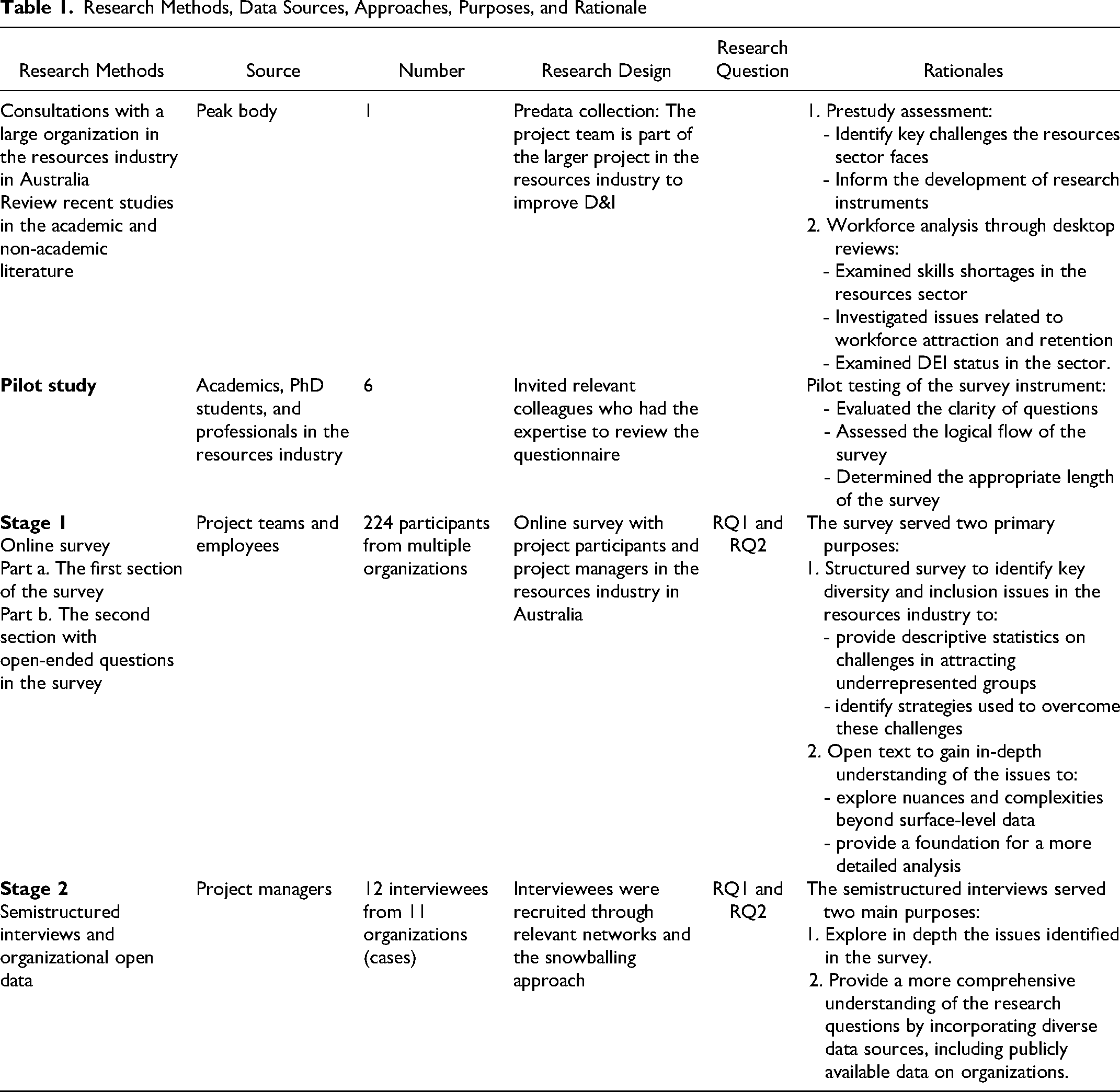
After obtaining ethics approval from an Australian university, we proceeded with data collection in two main stages. First, with the support of a large government agency, we invited resources organizations to participate in the survey (Stage 1). Second, we conducted subsequent data collection activities, including interviewing managers and exploring their organizational websites (Stage 2). Table 1 summarizes data collection activities, including the rationale for each activity and the samples.
Research Methods, Data Sources, Approaches, Purposes, and Rationale
Stage 1: Online Quantitative Survey
One month before launching the survey, we piloted the questionnaire with university academics and employees in the Australian resources sector to ensure user-friendliness and alignment with project objectives. Developed through consultation with key stakeholders, the survey focused on (1) participant profiles, (2) challenges in attraction and retention, and (3) effectiveness of current D&I tools/strategies. The online survey, supported by a government agency, was sent to multiple organizations in the sector. It included open-ended questions to gain deeper insights, aligning with previous research methodologies (Merlot & De Cieri, 2012). This mixed-method approach provided a comprehensive understanding of the issues.
Out of 262 volunteers, 224 completed the survey in Stage 1. Most participants (70%) were from non-underrepresented groups, with the remaining 30% from migrant, neurodiverse, and indigenous backgrounds. No participants were from refugee or veteran backgrounds. Descriptive statistics were used to identify main leadership challenges and effective D&I strategies.
Stage 2: Semistructured Interviews
Approximately two months after Stage 1, we conducted Stage 2 data collection using a qualitative approach to complement the quantitative survey data. With support from a government agency, we posted an interview invitation in a newsletter. Of the 15 respondents, 12 interviewees from 11 mining or energy organizations (large, medium, or small) participated. Using purposive sampling, participants were selected based on the following criteria: (1) holding a leading role in a resources organization, (2) voluntary participation after receiving the newsletter invitation, and (3) not participating in the Stage 1 survey. Confidentiality and ethical procedures ensured we did not know survey participants, but interviewees confirmed nonparticipation in the survey.
Two authors conducted one-on-one semistructured interviews with project or operational managers (10 females and two males). These interviews, lasting 45 minutes to over one hour, explored recruitment challenges and D&I strategies. Researchers referred to Stage 1 findings to capture rich data from multiple sources. Semistructured interviews provided comprehensive insights into participants’ experiences and perspectives (Patton, 2015), allowing for probing questions based on responses. Interview data complemented descriptive survey data and themes (Creswell, 2021) from Stage 1 such as leadership challenges related to skill shortages, attracting diverse groups, relocation issues, and project team support.
Data Analysis
In Stage 1, we used Excel to analyze quantitative data on key D&I issues in resource projects. For RQ1 and RQ2, we analyzed qualitative open-text data from the online survey (Stage 1) and 12 interviews (Stage 2), identifying major themes in leadership challenges presented in the Findings section. Following Naeem et al. (2023), we conducted a step-by-step thematic analysis of interview transcripts. We coded the data, triangulated multidata sources, and cross-checked themes to identify patterns. Finally, we reviewed and confirmed key themes at multiple levels to answer both research questions.
Findings
Part A, Stage 1: Online Survey Findings
Our survey findings indicated the top five challenges in attracting and retaining project members. The most challenging was attracting skilled workers and professionals (77%), followed by attracting employees from underrepresented groups (68%). Retaining employees from underrepresented groups was the least challenging (53%). Despite these challenges, around 49% of organizations have policies to attract and retain underrepresented groups. Respondents generally found attraction issues more challenging than retention issues.
Organizations in the resources sector show varying levels of awareness and formal data collection for diverse employee groups. High awareness and formal data collection are evident for indigenous employees (92% presence, 77% formal collection), women (100% presence, 92% formal collection), and employees from migrant backgrounds (94% presence, 48% formal collection). Underrepresented groups in leadership roles are present in 81% of organizations, with 66% formally tracking the data. However, there are lower awareness and less formal data collection for employees from refugee backgrounds (30% presence, 50% no formal collection), veterans (72% presence, 50% no formal collection), and neurodiverse employees (53% presence, 56% no formal collection). These findings highlight disparities in organizational approaches to diversity awareness and data management across different employee groups in the sector.
Respondents were asked to evaluate the effectiveness of the D&I tools and strategies that are currently active in their organization. Of all 22 tools or strategies, each can be categorized into the following seven D&I categories: leadership, recruitment, training and development, inclusive culture, monitoring and evaluating, facilities, and programs. The top five effective tools and strategies were the D&I training that is offered to all employees, followed by having flexible work arrangements that accommodate diverse needs; D&I policies; mandatory requirements to complete D&I training; and having open and transparent conversations about D&I with staff. Of the two leadership tools and strategies currently used for attraction and retention, both were evaluated to be quite effective, with a lead role that reports to the CEO being slightly higher than having key performance indicators (KPIs) as part of the performance metrics for leaders.
Figure 1 illustrates a trend in the effectiveness of tools found in our survey. Training and development tools/strategies are considered the most effective in enhancing D&I.
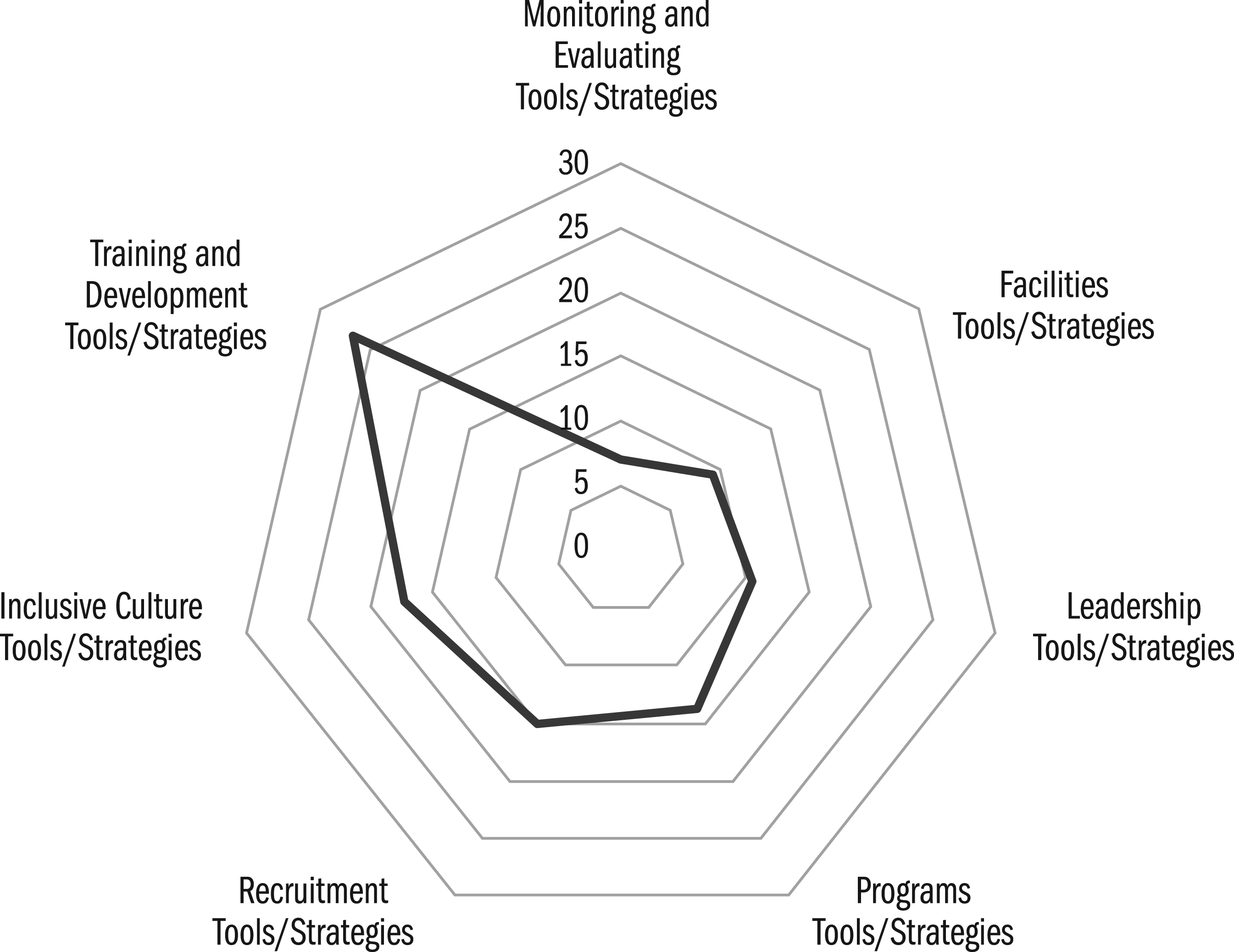
Tools and strategies to enhance D&I.
Of the two training and development tools and strategies, having D&I training (i.e., anti-discrimination and cultural awareness training) offered to all employees was slightly higher than D&I training, being mandatory for all employees.
While Stage 1’s quantitative findings helped identify key challenges in attracting and retaining underrepresented groups, they lacked detail on the specific contexts of these challenges. To gain deeper insights, we conducted open-ended online questions with both managers and employees, followed by 12 face-to-face semistructured interviews with managers from 11 mining or energy organizations. We then analyzed qualitative data from both stages to explore the sources of these challenges, addressing two key research questions, as outlined in the following section.
Part B, Stage 1 and Stage 2: Current D&I Challenges
Corresponding with RQ1, our findings revealed common challenges related to the contextual factors of the industry, as identified in the literature and in Stage 1 (e.g., remote locations, FIFO arrangements, and facilities issues). Additionally, project managers often encountered D&I challenges at multiple levels: project manager, project team, and organizational levels. Understanding these challenges sheds light on how the sector addresses the issues.
Project Manager–Level D&I Challenges
We first explored project manager–level challenges in fostering an inclusive work environment and identified two categories of challenges, namely, (1) time and resource availability, (2) gaps in understanding and valuing cultural diversity, and (3) lack of diversity in the leadership teams. The findings reiterate the need for project managers in the resources sector to go beyond traditional workforce categories to meet their talent requirements. However, enhancing workforce diversity in projects within the resources sector is challenging.
Time and Resource Availability
Project managers are generally busy, working toward tight project deadlines. Valuing diversity and creating an inclusive work environment are often viewed as activities demanding extra time and effort from project managers, impacting the timely and successful completion of projects. One respondent explained “…it’s time and resources” (female manager #1, Stage 2), whereas another stated: … everyone’s just busy doing their day-to-day and …because companies are changing management so quickly, people moving so quickly through jumping from place to place, you’re not getting that continued transition. [male manager #1, Stage 2]
These quotes imply that enhancing project-level D&I may be lower on a project managers’ list of priorities. This might be because the relatively short life spans of projects and changing project team members could make project-level D&I even more challenging.
Gaps in Understanding and Valuing Cultural Diversity
The lack of project managers’ understanding of workforce differences was found to be a key challenge in enhancing project-level diversity. One said, “…We have a D&I Group, but I don't know how well it is functioning. I don't know too much about it … I don't really know what we do in that space.” [female manager #2, Stage 2]
The lack of awareness of diversity was closely associated with the lack of value for workforce differences and therefore limited effort to make project team members from underrepresented groups (not male and Caucasian) feel excluded. Referring to the implications of gaps in cross-cultural awareness, a manager said: “But then when they [underrepresented groups] get into the workplace, they might still struggle … [manager] not understanding the cultural background and that goes across all culture… not just indigenous, but right across that space.” [female manager #2, Stage 2]
This lack of valuing diversity can lead to bias in workforce management, as echoed in the online survey. One respondent highlighted issues with attracting a diverse workforce: “Bias during recruitment, onboarding, and new starter cultural issues…” (Stage 1). This quote points to cultural bias, starting from the recruitment process and extending to providing a supportive working environment. Our findings from both stages emphasize the need to enhance project managers’ cultural competence in managing diverse teams and recognizing the value of diversity.
Lack of Diversity in the Leadership Teams
Participants also indicated a clear challenge of inadequate diversity in leadership roles, including project managers, due to the male-dominant nature of the industry. Highlighting this issue, one manager said: “Our entire executive is made of middle-aged white men, meaning there is a particular bias.” (Stage 1) This lack of diversity in leadership can perpetuate existing biases and hinder the development of inclusive policies and practices. It underscores the need for targeted initiatives to promote diversity at all levels of the organization, ensuring a broader range of perspectives and more equitable decision-making.
Project Team–Level D&I Challenges
Creating and sustaining a diverse and inclusive work environment in a project are not solely the project manager’s responsibilities, but also all project members. Yet, we identified two project team–level challenges due to: (1) lack of awareness and value for D&I, and (2) unfavorable perceptions of members from underrepresented groups.
Lack of Awareness and Value for D&I
The lack of awareness and value for diversity by the dominant group is identified to be a key challenge for creating an inclusive environment at a project level. Such gaps in awareness lead to unconscious biases and beliefs. The following evidence from Stage 1, which includes responses from members of both non-underrepresented and underrepresented groups, suggests how mainstream employees perceive those from underrepresented groups: I don't believe there is a focus on attracting employees from underrepresented groups. The approach appears to be that we attract the “best” talent, however, the definition of “best” is set by those who have been in the industry for years and targets those who have the same existing experience … [Stage 1]
Unfavorable Perceptions of Members from Underrepresented Groups
The lack of diversity, along with the perceived lack of inclusiveness by employees from underrepresented groups, can make them limit their effort to engage fully at the project level. As one manager elaborated: “Underrepresented groups might have perceptions that the mining industry is not inclusive, which can deter them from pursuing or remaining in careers.” [Stage 1] Given the importance of underrepresented groups feeling welcomed and that they belong, it is not surprising that these negative perceptions of the sector are a continued barrier.
Another manager warned of the barrier that unconscious bias and preconceived ideas can have on engagement and retention efforts, particularly when staff from underrepresented groups arrive without the skill set or work readiness required. This interview respondent insisted: “Don’t assume they are the wrong person for a job when struggling—it means capacity needs to be built. ‘Okay, what can we do for this person?’ They’re the right person for the job. They've just got a gap.” [female manager #3, Stage 2]
Organizational-Level D&I Challenges
We identified two organizational-level challenges: (1) lack of genuine leadership commitment, and (2) lack of operational preparedness and support.
Lack of Genuine Leadership Commitment
Top leadership support and commitment play a crucial role in implementing D&I strategies in an organization. Reiterating the importance of top leadership support, one participant mentioned that it is only when “leaders show why it is important to include these groups” that other staff will appreciate the “value that underrepresented groups can bring.” [female manager #8, Stage 2]
Our qualitative evidence suggests that leaders who genuinely commit to diversity go beyond supportive communication to (1) foster a culture of inclusiveness, (2) value and integrate diverse perspectives in organizational decision-making, and (3) allocate appropriate resources to implement D&I strategies. On the contrary, in organizations with poor top leadership commitment, senior leaders often limited their D&I support to lip service. Reiterating the importance of top leadership commitment: “Change starts from the top; the senior leaders don’t prioritize or care about changing the culture. Unconscious bias is rife, and this organization has a long way to go to improve.” (Stage 1)
Such lack of top leadership commitment is associated with their lack of understanding of the value of diversity or lack of competence in fostering a D&I supportive culture.
Lack of Operational Preparedness
Despite organizational policy initiatives to enhance D&I, some resource sector organizations in our study lacked operational readiness to embrace diversity. For instance, the appending evidence highlights gaps in organizational preparedness to facilitate gender diversity in field projects: “I just discovered that we actually in our catalogue don't have any women's size clothing in our yellow work gear. So, this whole-time women just ordered men's clothing cause that’s all that’s available…” [female manager #8, Stage 2]
The limited availability of accommodation and childcare facilities in remote locations where the majority of resource sector projects are located, and limited availability of mentors to guide underrepresented employees to transition to the work environment were raised as other operational challenges. The low diversity in the resources sector means that underrepresented employees often lack sector experience and thus require additional support and guidance: Many underrepresented groups come into the organization as “green,” never having worked in the industry before. They are often unprepared for the harsh environmental conditions and time spent away from family. There is no support for them when this occurs, and there is little option for them to ease their way into the industry … [Stage 1]
However, project managers often find themselves ill-equipped (beyond the project manager–level challenges discussed earlier) to provide guidance tailored to each underrepresented employee. In some instances, project managers are unaware of whom to contact when D&I support is needed.
In summary, from the online survey and interviews, we identified multilevel challenges in the resources industry. Those working within the sector felt like the resources industry in this region was well behind other industries regarding D&I; however, there is notable commitment evident from the sector to enhance D&I efforts.
Strategies for Enhancing D&I
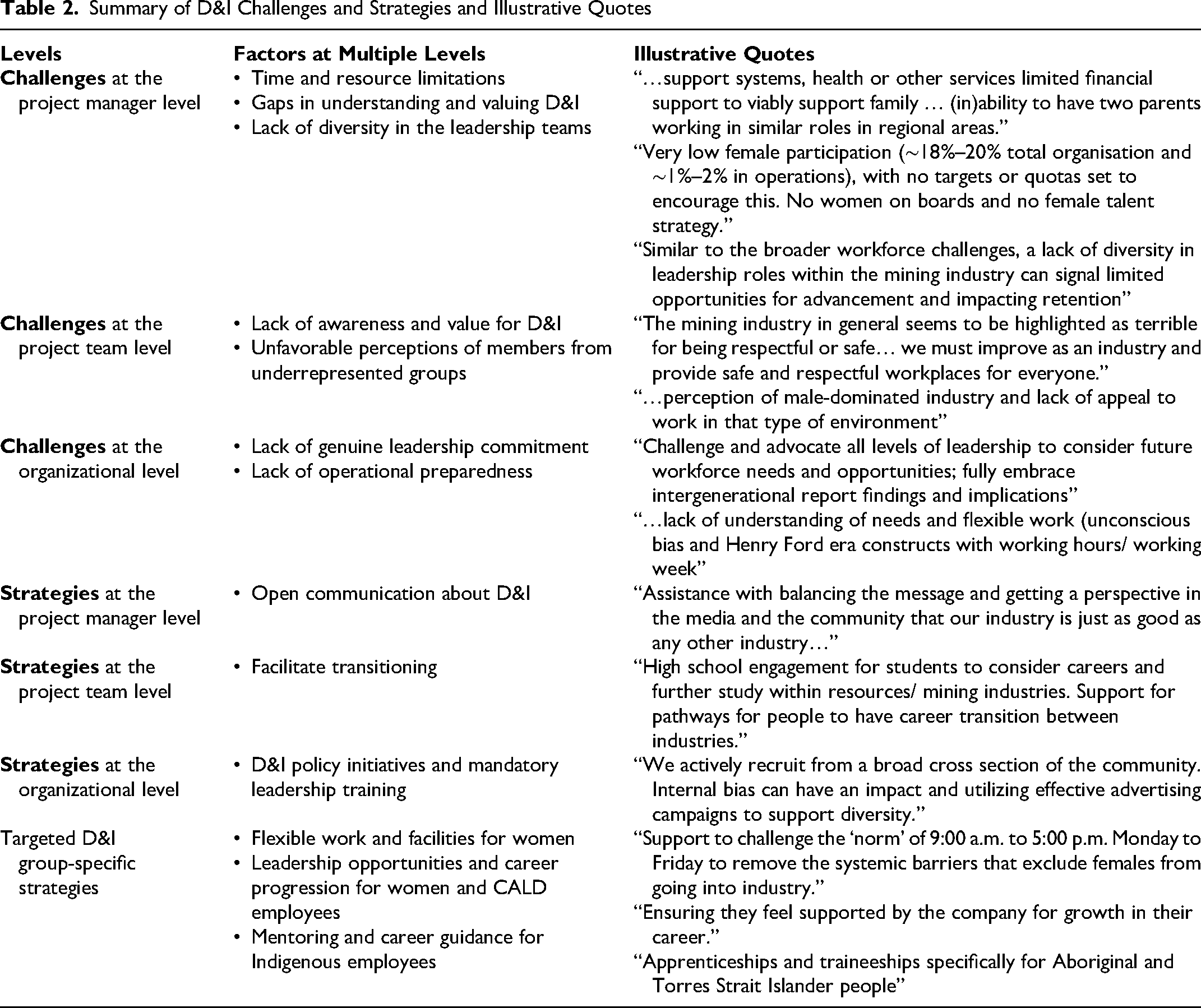
To address RQ2, we explored strategies for tackling the aforementioned challenges. Figure 1 identifies two key categories of D&I strategies: (1) D&I novice and (2) D&I master. D&I novice organizations focus on policy initiatives, whereas D&I master organizations integrate D&I into daily practices and culture. We differentiated D&I strategies at the project manager, project team, and organizational levels, then moved on to targeted interventions for underrepresented groups. Table 2 summarizes the D&I challenges, strategies at all levels, gaps and opportunities in the sector, and illustrative quotes.
Summary of D&I Challenges and Strategies and Illustrative Quotes
Multilevel D&I Strategies
Our findings identified multiple strategies that have assisted in enhancing D&I in the sector. All resources organizations represented by participants in our study (in Stage 1—Online survey and Stage 2—Interview and case analysis) had policies to attract, engage, and retain employees, particularly from women, indigenous, and CALD groups. Yet, those organizations that are considered “master” in their D&I efforts have institutionalized D&I as a part of their organizations’ culture, daily routines, and practices, beyond the policies.
Strategies at Project Manager Levels: Open Communication About D&I
D&I master organizations are found to make a significant effort to deliver clear and consistent messaging across all levels of the organizations reinforcing their leadership commitment to D&I. Such messaging includes cohesive communication with external stakeholders, including prospective employees from underrepresented groups. As one manager explained what makes their organization so “effective,” he simply said, “We are consistent.” [male manager #4, Stage 2]
However, consistent leadership and employee action that align with the inclusive values of the organization are considered much stronger than words. Therefore, D&I master organizations were found to promote leaders to model inclusive behavior through decision-making and communication, as one highlighted: “…we spend a lot of time working with our leaders now around… how to have conversations, how to look at psychosocial hazards, how to create an inclusive environment.” [male manager #4, Stage 2]
Strategies at Project Team Levels: Facilitate Transitioning
The majority of underrepresented employees attracted to the resources sector were found to lack sector-specific skills and experience and thus required assistance in adjusting to the sector and organizations. The findings point to work readiness and preparatory skills training as a highly effective strategy for equipping underrepresented employees with resource sector requirements. Reiterating the importance of facilitating such a transition to the sector, one respondent stated: “It’s not about educating or training the people coming in, it’s [about] changing… unlearning and teaching people how and creating safe space for people to show up as their authentic self.” [female manager #3, Stage 2]
These quotes highlight the importance of training and education for underrepresented groups during their transition, and the “unlearning” needed for existing staff regarding D&I and minority groups. Our findings indicate that D&I master organizations prioritize transitioning processes for women, indigenous peoples, and CALD groups.
Data from interviews and organizational websites show that diversity initiatives in the resource sector vary across demographic groups. Among the 11 companies researched, there was a greater focus on women, indigenous people, and CALD backgrounds. All organizations, regardless of size and D&I maturity, have policies to enhance gender diversity. D&I novice organizations focus on overall gender diversity, whereas D&I master organizations strive to enhance gender diversity beyond management to shop-floor operations.
Strategies at Organizational Levels: D&I Policy Initiatives and Mandatory Leadership Training
Despite policy support at the organizational level, the responsibility of enacting D&I policies at the project level is on project managers. We earlier highlighted how the lack of D&I awareness and competence of project managers can hinder the project’s D&I outcomes. The evidence from Stage 1 suggests the provision of D&I training—including mandatory anti-discrimination and cultural awareness and cultural competency training for all staff—is the most effective strategy for enhancing D&I outcomes. D&I master organizations provide modified training and education programs targeting their management and leadership teams to increase the awareness and value of D&I. One respondent mentioned: …it's really important that we take the frontline leader and supervisor through coaching and training. So, they actually understand some of the nuances of the challenges… in terms of building awareness and capability and understanding what are the tools out there. [male manager #9, Stage 2]
D&I master organizations also provided mandatory D&I training and education to employees of all levels, an aspect lacking in novice organizations. These D&I master organizations not only provided diversity training (e.g., cultural awareness) as a part of employee induction but also provided continuous D&I training as an integral part of organizational practices on the changing nature of the D&I landscape.
Targeted D&I Group-Specific Strategies
The findings indicate that organizations with specific strategies targeting each underrepresented group are more successful than those with broader, all-inclusive approaches as discussed as follows.
Flexible Work and Facilities for Women
The data suggest that offering flexible work arrangements, such as remote work and flexible hours, is effective in attracting and retaining women employees. However, large-scale resources organizations championing D&I are also found to offer on-site childcare facilities to further support the inclusiveness of women employees. Participants in the online survey echoed this view. One participant highlighted the importance of such support: “…are we…doing enough to maybe support the participants [women], not just within the program and then with employment, but with keeping that employment and having the right support? So that’s kind of a bit of a journey…” [female manager #8, Stage 2]. This implies that resources organizations must continuously enhance their support systems to effectively retain women employees.
Leadership Opportunities and Career Progression for Women and CALD Employees
The data from both Stages 1 and 2 suggest that organizational inclusive reputation and fair wages were among the factors that attracted, engaged, and retained women and CALD employees. Highlighting that “industry, in general, is mostly made up of Caucasian western males and that’s what’s visible in manager levels, it lacks diversity in middle management and executive management levels.” (Stage 1) Our findings reiterated the importance of targeted career development programs for attracting and retaining women and CALD employees.
Mentoring and Career Guidance for Indigenous Employees
In relation to other underrepresented groups, we found that indigenous employees receive significant attention through widespread policies for attraction, retention, and career guidance, including internships and mentoring. As one participant referred to: “My company offers cadetships (supporting students who didn't do well enough or have enough money to go to university) to gain work in the mining industry across mining engineering, survey, geology, environment, etc. We also have intake apprentices.” [Stage 1]
Figure 2 illustrates the raft of effective strategies that were found to exist in the organizations that participated in the study. There were clear lines of demarcation between those just beginning on their D&I journey (novice) and those with more mature D&I practices in place (master). Within our study, novice organizations tended to be smaller to medium-sized organizations, whereas master organizations were large companies with ample resources. While the effectiveness of strategies was not necessarily determined by the novice or master status, it seems logical that master organizations (with their broader range of strategies and more resources to tailor those strategies to each underrepresented group) were more effective overall in their D&I efforts. Meanwhile, novice organizations were in their infancy and the efficaciousness of their strategies would understandably be less impactful than master organizations. Figure 2 shows a raft of strategies to mitigate the challenges around the retention and engagement of underrepresented groups.
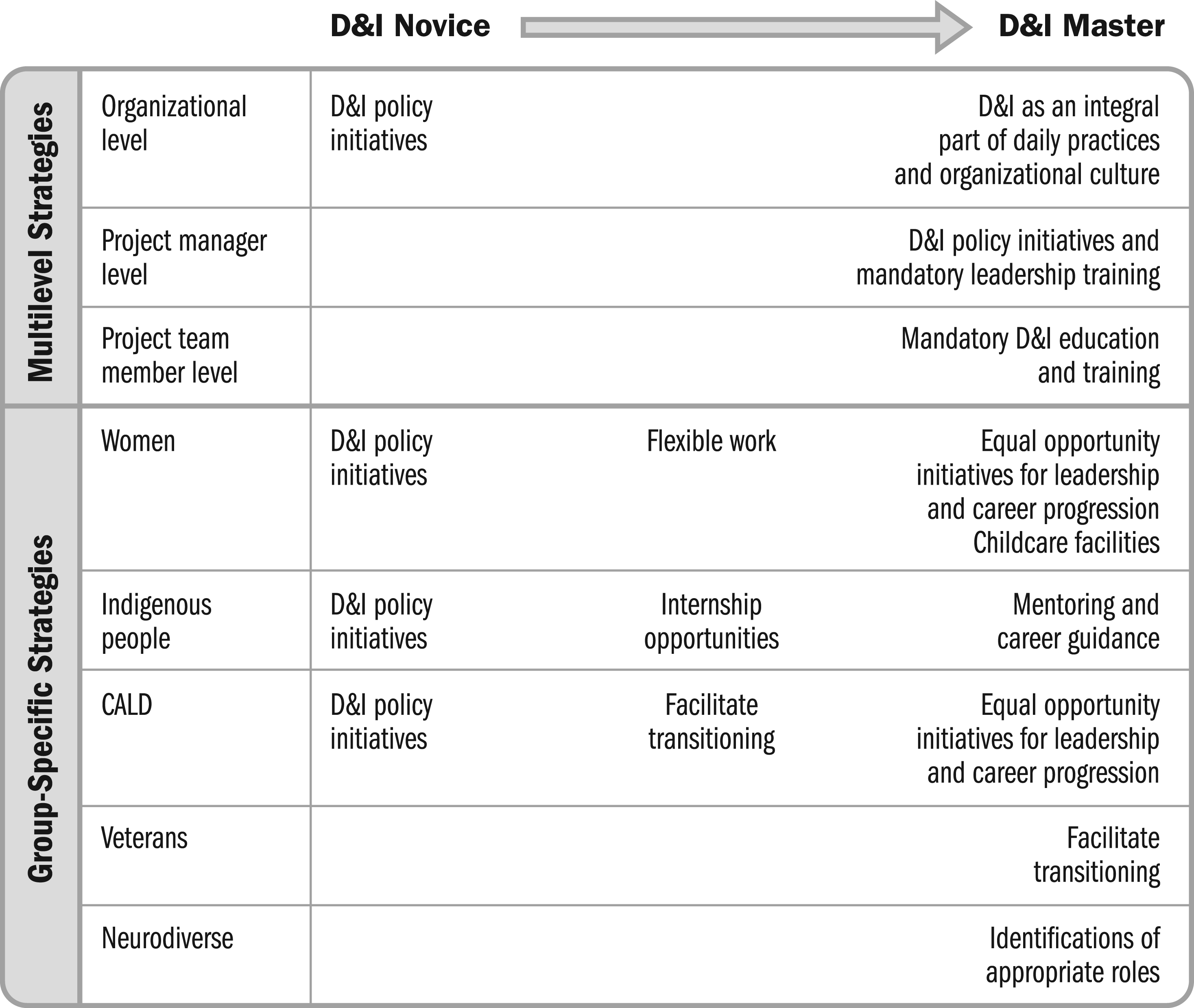
D&I focus and strategy maturity. Note: The arrow indicates the increasing focus on D&I within organizations. The placement of D&I strategies reflects their association with the organization’s level of D&I maturity.
In summary, the companies we interviewed primarily focused on strategies for three underrepresented groups: women, indigenous people, and individuals from CALD backgrounds. There were significantly fewer or no specific strategies for neurodiverse individuals, veterans, and refugees. When such strategies existed, they were limited to identifying appropriate roles.
Gaps and Opportunities in D&I Strategies and Practices
Irrespective of multiple efforts by organizations and project managers to enhance project-level D&I, even D&I master organizations have room for making their organizations genuinely inclusive at all levels and programs. Therefore, we explored gaps and opportunities in D&I strategies.
Need for Organizational Culture Change
To improve an inclusive climate, a greater need for cultural changes was mentioned: “Major cultural resetting to think outside of current red-neck norms and create psychologically safe places for people to work.” [Stage 1] Similarly, a participant noted in the online survey: “[we should have] a workplace support program: manages bullying, sexual harassment, discrimination through trauma, and culturally informed practice with intersectional psychosocial risk management.” This is possibly because most novice organizations might not have this program or if there is, it might not be effective. Some others alluded to more serious concerns around diversity and inclusion and a purported “toxic treatment of underrepresented groups” that can exist in some organizations. Another explained why this might be the case: “Critical stakeholders lack experience in diversity, equity, and inclusion. As a result, there are no targeted retention strategies.” (Stage 1) These quotes suggest that the sector needs to do much more to become truly inclusive for underrepresented groups in the sector.
Need for Greater Organizational Adaptability
Another barrier identified within the study was the need for organizations to adapt to underrepresented groups, rather than forcing those from underrepresented groups to adjust. This ties in with the groundbreaking idea of “unlearning” proposed by one of the project managers, and the need for organizations to change their thinking. One interview respondent explained organizations are currently asking “…how do you fit the mining mold?” rather than “meeting in the middle” and “adjusting to meet underrepresented groups where they are.” [female manager #8, Stage 2] Additionally, the respondents emphasized the unique challenges of this industry which often focus on homogenous groups: “Tailoring recruitment efforts to reach diverse talent pools, including those with different educational and vocational backgrounds, can be challenging in a traditionally homogenous industry.” (Stage 1)
The findings highlight the need for organizations to embrace and unlearn past practices to facilitate necessary cultural shifts for D&I. Efforts must go beyond identifying challenges faced by underrepresented groups; organizations must also consider factors affecting their psychological integration (Zhu et al., 2018). This approach empowers project leaders to operate more culturally competently and ensures underrepresented groups thrive in the workplace (Zhu et al., 2018).
Need for Cross-Organizational Partnerships
One significant issue that arose was the lack of cross-organizational partnership or sharing. Managers from novice organizations suggested there might be a greater connection with master organizations to help them in their efforts, and master organizations similarly saw the value in this. One respondent said: “Organizations that are … a bit further along in their D&I journey can definitely … provide help for people who are just sort of beginning or a bit unsure about things.” [male manager #4, Stage 2] Another claimed such cross-organizational partnerships might be useful in providing “opportunities … to have discussions with people outside of our workplace to provide information … to be able to loop that back then and provide best practice ideas or initiatives.” [male manager #9, Stage 2] While Figure 1 presents the two categories as separate, it also suggests a continuum from novice to master in which effective strategies are shared, helping increase the rate at which organizations might move from one to the other.
Need for Industry-Wide Efforts
Many respondents also indicated there was a fundamental lack of industry-wide efforts to tackle the issue of D&I. One survey respondent said: “Without industry-wide changes, these obstacles will persist and hinder our progress…” [Stage 1]. The above challenge is one of the significant issues related to the lack of cross-organizational partnerships and resource sharing in the resources industry. It underscores the need for more comprehensive and integrated D&I strategies that go beyond policy initiatives and are embedded in the daily practices and culture of organizations. To address the lack of industry-wide efforts to tackle the issue of D&I and cross-cultural competence, one respondent explained what strategies should be done: “While we press forward in our pursuit of a more inclusive mining industry, it's crucial to acknowledge that a collaborative effort from all stakeholders is required… Only through joint endeavors and persistent advocacy for change can we pave the way for lasting transformation and greater opportunities for underrepresented individuals in our field.” [Stage 1]
Need for Interventions for Refugees, Veterans, and Neurodiverse Individuals
The findings identified strategies for attracting and retaining women in the resources sector, but neurodiversity remains largely overlooked, with few efforts to identify suitable roles for neurodiverse individuals. Only one large organization in the study made deliberate attempts in this area. The complexity of neurodiversity appears to make it a low priority for many organizations. While the sector shows a stronger commitment to diversity for women, indigenous, and CALD employees, programs for refugees, veterans, and neurodiverse individuals were less developed, indicating areas for improvement.
In summary, the findings echo the literature on the importance of project leaders in managing diversity and its challenges. Culturally competent leadership requires project leaders to be aware of D&I challenges and effective strategies. The study highlights the unique context of project leaders in the resources sector: male-dominated, geographically remote, and cyclical projects. Project leaders must be supported and empowered through organization-wide and industry-wide support and a sector-wide commitment to prioritize D&I.
Discussion and Conclusion
The rich qualitative data provides valuable insights to answer two research questions. The CCEI model (Goodman, 2020) helps consider critical factors for project leaders in cross-cultural situations in diverse workplaces. For RQ1, the study reveals multifaceted challenges for project managers in improving D&I initiatives and engaging underrepresented groups at organizational, project management, and team levels. For RQ2, findings indicate a wide spectrum of D&I strategies across organizations, from novice to advanced. Despite various strategies, the sector still faces challenges in attracting and retaining employees from underrepresented groups. Our article provides the following theoretical and practical implications.
Theoretical Contribution
Extending the CCEI framework (Goodman, 2020), our study emphasizes individual competencies beyond self-awareness to include understanding and valuing others, recognizing societal inequalities, developing interpersonal skills to engage across different contexts, and fostering transformation toward D&I. This provides a multilevel perspective for project leaders. Specifically, we highlight how individual competencies are reinforced and supported by organizational and project team-level diversity and inclusion (D&I) initiatives.
Our findings underscore the critical role of organizational initiatives in promoting inclusive project leadership. These initiatives include openly advocating for the D&I of all social groups within project environments, ensuring inclusive operational policies, such as accommodating gender-specific needs (e.g., work uniforms for women) and providing targeted training and development to help project leaders foster inclusivity for marginalized employees, including women and neurodiverse individuals. These organizational efforts serve as a crucial mechanism to enhance the cultural competence of project leaders, particularly in environments constrained by limited time, resources, and operational considerations. By embedding D&I at the organizational level, project managers can better integrate and support minority employees, fostering a more inclusive project culture.
While traditional theories of cultural competence often focus solely on individual-level competencies, a broader organizational perspective is essential to fully enabling culturally competent leadership (cf. Johnson et al., 2006; Leung et al., 2014). Similarly, the proactive, creative, and reflexive use of cultural knowledge has been highlighted as a means for individuals to navigate cross-cultural environments, reinforcing the idea of competence as an individual trait rather than a systemically supported skill (Chiu & Hong, 2013). Intercultural competence has been framed as the ability to function effectively in another culture, primarily in global contexts, without explicitly addressing power, privilege, oppression, and systemic change—key elements central to CCEI (Leung et al., 2014; Goodman, 2020).
By contrast, our study found that cultural competence must be viewed through an integrated, multilevel lens, where organizational structures and policies actively shape and reinforce project leaders’ ability to lead diverse teams to reduce societal inequality. This perspective bridges the gap between individual and systemic approaches to cultural competence by demonstrating how organizations can operationalize D&I principles to support project leaders in diverse work environments (Johnson et al., 2006; Leung et al., 2014). Thus, our research broadens cultural competence theories by moving beyond the individual focus and incorporating an organizational perspective that actively enables and sustains culturally competent leadership in project teams, particularly in time- and resource-constrained, male-dominated primary resource sectors.
Our article offers significant contributions to the D&I literature in project management. First, we highlight multilevel leadership challenges at the contextual, project manager, project team, and organizational levels, particularly within the resources sector. While much literature emphasizes leadership’s role in project success (Nauman et al., 2024), there is little focus on the challenges leaders face at multiple levels. Our study reveals limited understanding of diversity among project managers, difficulties in maintaining commitments, and gaps in inclusive management competencies. Although long-term leadership commitment is crucial (Morfaki & Morfaki, 2022; Li et al., 2019), our findings show this commitment is still developing in the sector.
Second, we highlight parallel challenges at the project team and organizational levels. Fostering a diverse and inclusive work environment requires active participation from all project members. We identified discrepancies between D&I awareness and negative perceptions of underrepresented groups. At the organizational level, there was a lack of operational preparedness and leadership commitment, leading to unconscious biases and prejudices (Storm et al., 2023). This hampers the development of cultural competency and the attraction and retention of a diverse workforce (Foldy & Buckley, 2017).
Third, we identify strategies within the resources sector to foster a culturally competent workplace. Effective D&I strategies include training, consistent messaging, and targeted initiatives for underrepresented groups. D&I success is greater when training extends beyond initial induction to become an ongoing component of the manager’s role (Buengeler et al., 2018). However, many strategies fall short due to a lack of collaboration, gaps between policies and practices, and insufficient stakeholder commitment.
Our final contribution is the development of a project-focused framework, illustrated in Figure 3, based on the CCEI model. This framework provides insights into the leadership and contextual challenges faced by project managers in the resources industry and how leaders can address these challenges. To embrace D&I, project managers must overcome multilevel challenges and leverage identified strategies to move toward a D&I master level. Enhancing project managers’ competencies in managing diverse teams and fostering a project diversity climate is crucial for creating inclusive project teams and sustainable D&I strategies (Müller & Locatelli, 2023).
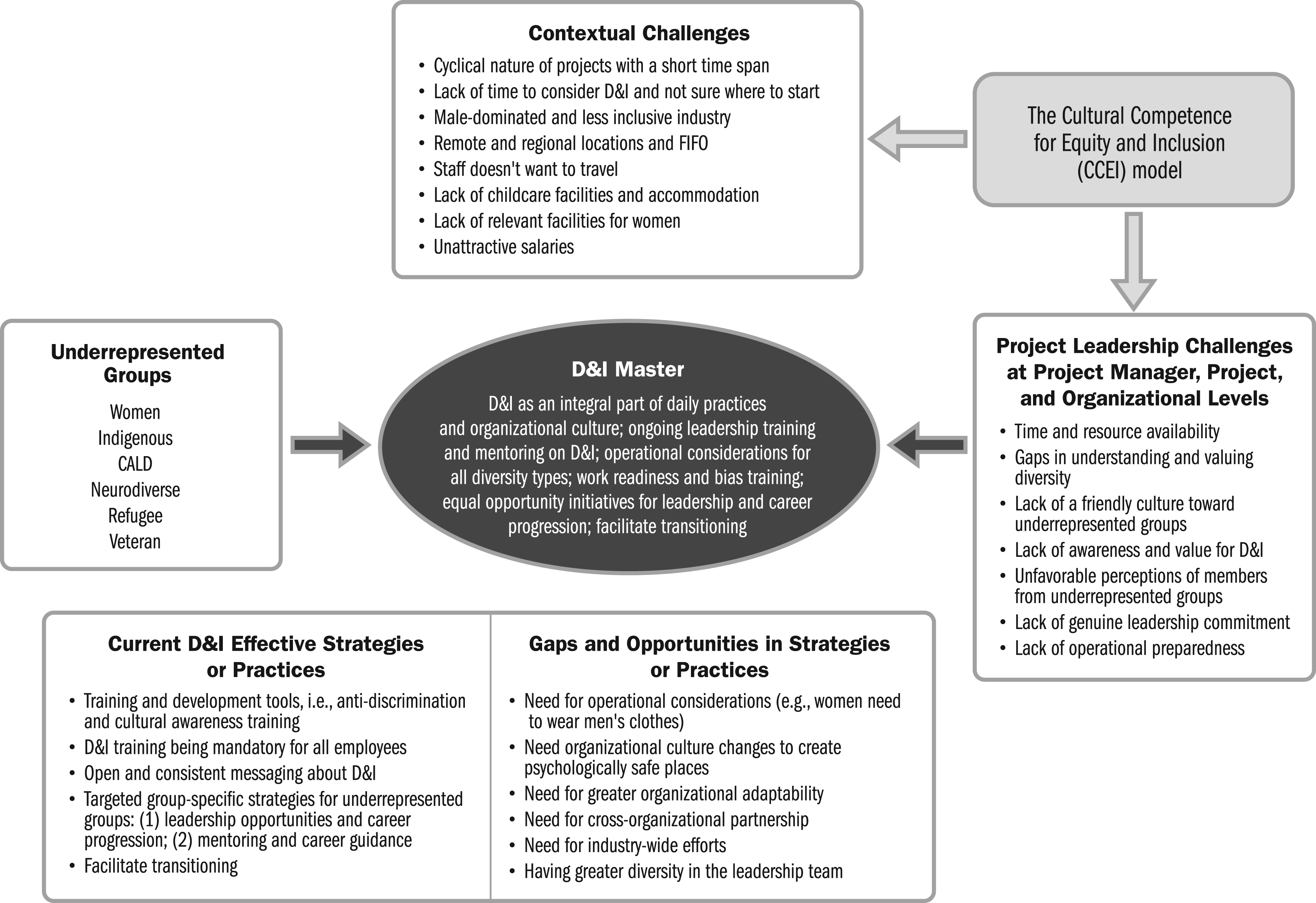
Project-based framework.
Practical Implications
This research has several practical implications for the Australian resources sector and broader management practice. First, resource projects must establish comprehensive cultural and diversity competency training programs to address D&I challenges. Foldy and Buckley (2017) highlighted the importance of such training in fostering inclusive attitudes and behaviors. However, our research identifies two areas needing improvement: (1) existing cultural competency training may not be effectively implemented across the organization, particularly in attraction and retention, and (2) organizations without such training should ensure their programs are tailored to specific organizational issues and provide practical application and outcomes. Additionally, organizations with existing cultural competency training programs often lack visibility of their D&I policies and procedures at all levels, diminishing their effectiveness.
Second, strong and consistent communication through various channels can reduce reticence within the organization. For resource organizations that have yet to establish cultural competency practices, it’s crucial to focus strategies on issues specific to the organization for greater success. Smaller organizations may not be able to set quotas or D&I targets initially. Instead, they should prioritize strategies to enhance diverse recruitment and engagement from a broader audience, while offering support throughout employment to ensure retention. Mentorship programs, flexible work arrangements, and leveraging existing technologies for accessibility are effective strategies to reinforce D&I within the organization.
Third, resource organizations should focus their recruitment and engagement strategies outside the organization in the broader community. The qualitative data suggest a greater need for collaboration with industry bodies, government agencies, and community organizations (such as schools) to better prepare both diverse individuals seeking to enter the resources sector and resource organizations to include diverse individuals. For example, organizations that worked collaboratively within diverse communities, such as aboriginal communities, tended to have clearer pathways to diverse employment.
Finally, megaprojects in the resources sector need more effective monitoring and evaluating mechanisms for their D&I strategies. Despite targeted retention efforts, women are still leaving the resources sector. While it was suggested that facilities and spaces do not always cater to a female workforce (e.g., lack of female restrooms), these claims were not as substantiated. There is a need to communicate with diverse individuals to understand their lived experiences in the workplace, explore why underrepresented groups are leaving the organization, and determine what can be done to better accommodate them.
Limitations and Future Research
As with all research, this study has limitations. First, the findings are based on a specific sample from Queensland, Australia, focusing on a small group of underrepresented and non-underrepresented individuals. While this offers valuable insights for the Australian resources sector, it may have limited international applicability. The small sample size, despite triangulated data, affects generalizability. Future research could replicate this study in various resources sectors globally to explore attraction and retention challenges.
Second, the study relied on self-report data, which may introduce social desirability or recall bias. To mitigate these issues, items were designed to capture both favorable and unfavorable perspectives, and anonymity was ensured. Participants were prompted to focus on their current role and organization to reduce recall bias. Future research could collect data from various project types to better understand how D&I initiatives are communicated across organizations. In summary, our study provides a foundation for project leaders to develop effective strategies for improving workforce diversity and addressing skill shortages in the resources sector.
Footnotes
Declaration of Conflicting Interests
The author(s) declared no potential conflicts of interest with respect to the research, authorship, and/or publication of this article.
