




Abstract
Interorganizational transportation projects are increasingly difficult to manage because of a need to coordinate complex interdependencies pertaining to railway organizations with increasing levels of connectedness. In this article, the perceived dynamics of coordination mechanisms in the decision-making processes of interorganizational projects of the Dutch railway system are investigated. The results of this study suggest that the perceived effectiveness of interorganizational decision-making can be positively impacted during the pre-project phase, by emphasizing relational coordination. A reinforcing relationship between trust and mutual understanding among stakeholders by means of relational coordination mechanisms is one explored explanation.
Introduction
Public transportation organizations have to coordinate increasingly complex interfaces in interorganizational projects. Previous literature has shown that projects demonstrate critical shortcomings at the interface of two or more collaborating and risk-sharing organizations, due to issues with project managers and decision makers in reliably assessing the benefits and risks for the project (Flyvbjerg et al., 2003). These shortcomings can lead to failures, delayed implementation, and increased costs (Flyvbjerg et al., 2003). An example of this is the failed implementation of the FYRA high-speed train in the Netherlands, which resulted in the decommissioned train series after a brief period (van Silfhout & van den Berg, 2014). One of the reasons for performance shortcomings was that managers and decision makers underestimated the risks involved when working with unknown partners in the value chain. The interorganizational project carried critical symbolic meaning for the different stakeholders (e.g., economic growth vs. strengthening of own position), which resulted in different priorities, power struggles, and ultimately delays and cost overruns (Van Marrewijk, 2017). This shows that there was conflict between stakeholders during decision-making processes and limited success in recognizing the need for coordination across organizations.
Interorganizational projects, such as FYRA, typically feature decision-making processes in which interdependent and complex tasks must be executed at different times by various actors whose interests often conflict (Levitt & Scott, 2017; Pitsis et al., 2018). The operations research literature on complex interorganizational business environments has focused on optimizing collaborative decision-making problems (Lu et al., 2012). From an operations research perspective, collaborative decision-making problems can be solved with (integer) linear programming (Zaraté, 2013). However, since not all relevant information is made explicit or can be quantified, and we are interested in understanding the coordination behavior of individuals in projects, this article adopted an organizational science perspective. When considering decision-making processes from a project management perspective, researchers found that stakeholders have different risk preferences (Lehtiranta, 2014) and different value creation approaches (Morris, 2013). This plays a crucial role at the front end of projects, where decisions to initiate projects in a complex stakeholder environment are often the result of politically negotiated processes based on value arguments among local value, sectoral value, and user value (Zerjav et al., 2021). Liu et al. (2019) discuss differences between the value-for-firm and the value-in-use at the front end of interorganizational projects, where the value-in-use can be cocreated, contributing to better knowledge sharing and mutual trust. As such, differences in value negotiations and value creation approaches can significantly impact the progress of interorganizational projects. Furthermore, role ambiguities especially between partners who have limited collaborative experiences can lead to friction in negotiations and power struggles in projects (Van Marrewijk et al., 2016). All this challenges the process of finding consensus for decision-making at the front end of interorganizational projects. Given the difficulties in building consensus among various actors, coordination mismatches in decision-making processes may occur at the interorganizational level (Flyvbjerg, 2014; Van Marrewijk et al., 2016). Relational coordination appears to be important in such environments (Maylor & Turner, 2017) but is often undervalued in interorganizational collaborations (Hammervoll, 2011). Hetemi et al. (2020) identify two important focal points for understanding project decisions: the consideration of the interorganizational network of actors at the front end of such projects and the importance of investigating these projects from a process perspective. To this end, they acknowledge that much can still be gained from understanding coordination mechanisms of decision processes in interorganizational project settings, also from the perspectives of the project participants.
The core argument of this article is that the interorganizational context and its lived complexities are central to the effectiveness of coordination mechanisms (Maylor & Turner, 2017). Due to the realization that there is no one-size-fits-all approach to project management, more holistic consideration of project coordination has been called for (Söderlund et al., 2017). Additionally, the front end of the project has a major impact on the effectiveness of the decision-making processes during the interorganizational project as a whole (Hetemi et al., 2020). In this article, the effectiveness and success of the decision-making process is understood in terms of the pace of the process and perceived satisfaction of the decision-making process by its stakeholders. In addition, the front end of projects, when the network of actors starts to interact but no project has been formally established, is referred to as the pre-project phase. We posit that the experienced coordination efforts in the pre-project phase are highly relevant in the decision-making process because projects are still flexible, and there is a lot of leverage at this stage. Another important point of attention to gain a more rigorous understanding of the dynamics of project coordination represents the ever-growing contextual complexity, which makes the managerial context inherently systemic (Artto et al., 2016). This is widely underestimated in traditional project management research, since most research in project management uses methods based on a reductionist approach (Williams, 2005). Moreover, success of projects is mostly evaluated based on narrow indicators, in other words, “the triple bottom line,” whereas framing interorganizational projects as dynamic and evolving networks would provide a useful basis for measuring the performance of interorganizational projects on a foundation of promoting learning (Lehtonen, 2014). Interorganizational projects influence and are influenced by industry changes and pressure, showing patterns of unpredictable behavior, leading to feedback loops (Hetemi et al., 2021), which is in stark contrast to the view that projects are decomposable into smaller parts to be managed (Williams, 2005). Ultimately, this nature leads to variations in the perceived functioning and effectiveness of coordination mechanisms in different phases and contexts of the project. Accordingly, coordination enablers and effects can be better understood and explored from a contextual, descriptive perspective using case studies.
The Dutch railway system provides appropriate examples of situations in which vertical separation of the system can lead to conflict in the decision-making process (Broman et al., 2022). A vertical separation of the railway system entails the separation of infrastructure management (upstream) and passenger and freight transport operation (downstream), for reasons to increase competition to offer better services to the end user. As such, the Dutch railway system’s infrastructure and transport operation are separate institutional entities, which are linked and must be managed jointly as their tasks are highly interdependent (Smith et al., 2012). System weaknesses must be addressed through cost-effective, multidisciplinary, and innovative measures, which can only be achieved through strong governance and collaboration between stakeholders (Stamos et al., 2016). To prepare the Dutch railway system for the increased capacity demands of the future, several interorganizational projects are currently running in parallel. Previous studies on the Dutch railway system and its projects have identified that their implementation was delayed due to insufficient knowledge of system integration and a lack of collaboration between stakeholders (van Dongen et al., 2019). As such, the vertical separation in the Dutch railway system demands effective coordination to facilitate the decision-making process. In this research, coordination is defined as a way to organize the collaboration between the different railway stakeholders.
Therefore, we pose the following research question:
As such, the primary aim of this study is to investigate how the effectiveness of coordination mechanisms in facilitating decision-making in interorganizational projects of public transportation organizations is perceived by project members. To do this, a descriptive and explorative case study has been conducted, which takes into account the complexity of the inter-organizational context. Two interorganizational projects within the Dutch railway system, namely the SAFETY project and the CAPACITY project, are empirically investigated. For the purposes of this article, each project has been divided into two phases: the pre-project phase and the project phase.
The remainder of this article proceeds as follows: First, the main theoretical implications of coordinating interorganizational projects are discussed. Second, the research design is presented. Third, the case studies are introduced, and the results of the individual case analyses are presented. Fourth, the cross-case analysis findings are presented, discussed, and reflected on, followed by addressing the limitations of this study. Finally, recommendations for future research are presented, as well as our conclusion.
Coordination of Interorganizational Projects
Interorganizational Projects in Transportation
Interorganizational projects are “large-scale, complex ventures that typically cost US$1 billion or more, take many years to develop and build, involve multiple public and private stakeholders, are transformational, and impact millions of people” (Flyvbjerg, 2017, p. 2). Although a clear trend toward more research on these projects can be observed in recent years, literature on these interorganizational projects is rather lacking cohesion at this time. As such, the field of project management research just starts to understand why interorganizational projects underperform. Common causes of underperformance are underestimation of uncertainty, stakeholder mismanagement, and inflexibility in contracts awarded (Lenfle & Loch, 2016). Nevertheless, the need to understand such underperformance better is particularly high in the transportation sector, since many interorganizational projects take place in this field, and due to its direct impact on society (Flyvbjerg, 2017) and its contribution to the world’s increasing need for economic growth (Söderlund et al., 2017).
Coordination Requirements in Railway Projects
Historically, the body of project management concepts has strongly reflected a predominately positivist worldview, corresponding to a hard system and best practice perspective (Maylor et al., 2018), while more recent research indicates the value of a contingency view in the management of highly complex projects (Dahlgren & Söderlund, 2010). This paradigm shift from hard system to soft system theories and practices has previously been elaborated by Pollack (2007), where this study falls within the soft paradigm in project management. Moreover, research on interorganizational projects is often conducted using an outside perspective, which limits the possibility for gaining an understanding of what happens within the “black box” of projects (Söderlund et al., 2017). As such, understanding coordination of complex projects is crucial to revealing the coordination performed in interorganizational projects. Likewise, the complexities of the project context provide particular challenges, both in practice and theory, mostly due to their variable nature since they consist of structural (e.g., interdependencies), sociopolitical (e.g., people), and emergent (e.g., uncertainties) elements (Geraldi et al., 2011; Maylor et al., 2018). Therefore, the context of railway projects seems to be highly appropriate for investigating the perceived functioning of coordination mechanisms because it demonstrates complexities due to the influence of system integration and joint decision-making activities. To achieve the project goal, the collaborating organizations need to execute tasks that are often interdependent. Coordination mechanisms are here understood as the activities performed that bring together the different elements of a complex process to enable them to work together effectively. These activities enable an effective and coherent execution of the tasks. When applying a contingency approach, the types of lived complexities that arise from the unique elements of the context of interorganizational projects can best be addressed by means of customized coordination responses (Maylor & Turner, 2017). As such, it can be stated that the context appears to be an important aspect of understanding the role of organizational coordination mechanisms of railway projects.
The Role of System Integration and Decision-Making in Railway Project Coordination
Project complexity in the railway system context is influenced by system integration and shared decision-making activities. According to Artto et al. (2016), system integration, which is a critical element of railway projects (Rajabalinejad et al., 2019), requires particular attention to coordination. System integration is complex because multiple interdependent organizations must work together to create operational value (Artto et al., 2016) while having individual interests (Levitt & Scott, 2017; Pitsis et al., 2018) and distinct value creation approaches (Morris, 2013). These systems are sociotechnical in nature, because a result of the human agency impact and system behavior is difficult to predict such as interorganizational railway projects (Wilson, 2014). Often system integration is coordinated far too late, leading to significantly higher costs and inflexible interface mechanisms (Tao et al., 2000). For example, the railway undertaking and the infrastructure manager have different—sometimes conflicting—primary goals, such as reliable and frequent rail traffic versus the stability and reliability of the infrastructure. For the passenger, however, both parties can only create value jointly. Because the passengers are paying customers of the railway undertaking, their interests align well, being reliable and punctual transportation service. Besides that, the regulatory body has a primary interest in ensuring that all system rules and regulations are compliant. These divergent interests make the coordination of decision-making processes in interorganizational railway projects demanding and can lead to higher costs if they are not coordinated from the start of a project. In this context, Artto et al. (2016) note that establishing a coordinating body is an important integration mechanism at the beginning of the system life cycle (i.e., the project phase). They consider the front end of the system life cycle to be the project phase and as such do not pay special attention to the pre-project phase. In line with this, Tao et al. (2000) find that proper project definition is crucial for system integration to prevent conflicting views on the business model.
Within interorganizational project decision-making processes, information needs to be exchanged so that the collaborating organizations come to decisions they agree to. For this, information needs to be investigated and exchanged between the different project participants. This requires the coordination of tasks that organize the collection and exchange of information relevant for decision-making (Daft & Lane, 2008). Due to these organizational interdependencies and the often misaligned interests of the project participants, conflict and power imbalance can occur. Ultimately, this can lead to failure of coordination within these decision-making processes (Flyvbjerg, 2014; Van Marrewijk et al., 2016). One reason for this misalignment is differences between the parties’ risk preference (Lehtiranta, 2014). Moreover, understanding the context of project decisions can facilitate recognition of the mechanisms that enable project success (Hetemi et al., 2020). According to these authors, especially the pre-project phase affects interorganizational project decisions. While acknowledging the need to consider the interorganizational context and the network of actors in decision-making, they do not explicitly address the different types of pre-project coordination mechanisms. Furthermore, the project participants’ perspectives regarding the perceived impact of using certain coordination mechanisms on project decisions is not the focus of the investigation. Nevertheless, the need for coordination between parties in the pre-project phase due to the scale of the network of actors and their inherent interdependencies within the interorganizational context is recognized (Flyvbjerg, 2014; Hetemi et al., 2020).
Contingencies for Project Coordination
According to Söderlund et al. (2017), more information is needed on the dynamics of coordination mechanisms in interorganizational projects to discover their black box and discover the inner workings of interorganizational projects. Coordination mechanisms are particularly important at interfaces where several subprojects and stakeholders need to be organized, since these mechanisms aid in managing interdependencies between organizational parts (and in extension their need to exchange information) and in gaining a mutual understanding regarding these interdependencies (Lilliesköld & Taxén, 2006). One of the fundamental works on linking interdependencies with coordination mechanisms has been authored by Thompson (2017), who identified three types of interdependencies with increasing complexity (pooled, sequential, and reciprocal), which are addressed by means of corresponding coordination mechanisms (standardization, planning, and mutual adjustment). The work of Maylor and Turner (2017), who have developed a contingency approach to the coordination of lived project complexities, is specifically focused on project management. They distinguish between three different forms of coordination mechanisms, namely planning and control, relationship development, and flexibility, each of which addresses distinct project complexities. Planning and control mechanisms are similar to Thompson’s coordination mechanisms (Thompson, 2017) and use responses that are common to traditional project management such as work breakdown structures (Morris, 2013). In decision-making processes, the mechanisms typically lead to structured approaches used when there is clarity about the problem and solution (Daft & Lane, 2008). Relationship development as a coordination mechanism enables shared goals, shared knowledge, and mutual respect to support timely and careful problem-solving communication (Bolton et al., 2021), for example, by employing soft system methodology (Staadt, 2012). In decision-making processes, this mechanism is used when there is unclarity about the problem by reaching a consensus first (Daft & Lane, 2008). Flexibility as a coordination mechanism addresses ambiguous, uncertain, and time-sensitive project situations in which approaches such as agile and lean management may be required (Williams, 2005). This mechanism is used when there is ambiguity about the problem and solution knowledge in the decision-making process (Daft & Lane, 2008). Entrepreneurial behavior is, for instance, a response used in these situations (Maylor & Turner, 2017). Recent literature finds that in particular, planning and relational coordination efforts have a positive effect on project effectiveness and efficiency (Sicotte & Delerue, 2021).
Dynamics of Project Coordination Mechanisms
In recent years, research in the field of organizational studies has increased interest in understanding how and why (coordination) mechanisms evolve in an organizational setting (Sydow & Braun, 2018). Such a better understanding of the inner workings of projects can also be achieved by considering the perspectives of project participants. For example, subjective reports and experiences of people regarding the coordination mechanisms that facilitate decision-making in projects serve to create an understanding of what is associated as positive and negative reports (Fachin & Langley, 2017). For this, narratives of project members across time and cases can be compared (Brunet et al., 2021) to illustrate patterns of how project members perceive what happens in certain time intervals and contexts as they deal with similar types of problems. In order to summarize the narratives of various project members, a technique based on understanding the relations among context, mechanisms, and effects can be used—the so-called context, intervention, mechanism, outcome logic (CIMO-logic) . The CIMO-logic has already been used in a descriptive case study design (Denyer & Tranfield, 2009). For instance, Denyer et al. (2008) use CIMO-logic in an organizational setting to gain an understanding of how mechanisms work by examining context, interventions, and outcomes. This concept can also be applied in the context of interorganizational projects to gain an understanding of how coordination mechanisms are perceived to facilitate decision-making.
Furthermore, by exploring coordination mechanisms, processes and their interdependencies can be illuminated, providing explanations for contexts and outcomes (Pajunen, 2008). This is particularly important for gaining an understanding of the inner workings of projects, which is currently lacking. Through the use of sensemaking strategies of processes, dynamic contexts are analyzed with the aim to understand unexpected and largely uncontrollable chains of activities over time (Langley et al., 2013). Therefore, comparing narratives across cases and time appropriately captures the perceived differences in the coordination mechanisms underlying the activities performed in the pre-project phase and the project phase itself. In summary, it is necessary to understand the subjective and constructed inner workings of projects in the context of the railway system, where interdependencies between organizations are high and where joint decisions must be made even though interests are not perfectly aligned. The interest in understanding the dynamics of coordination mechanisms in interorganizational projects (Söderlund et al., 2017) can be satisfied by studying the perceived changes in the use of mechanisms between project phases and cases, as well as structures that generate these mechanisms, which provides a more accurate understanding of the inner workings of inter-organizational projects.
Methodology
Research Design
To understand the dynamics of coordination mechanisms in interorganizational projects, especially during the pre-project phase, an explorative multiple case study design was adopted (Yin, 2003). This article combines a number of qualitative research techniques. This approach allows for a more accurate investigation of the perceived inner workings of project decision processes. Yin (2003) considers the case study method to be most appropriate when the context is strongly relevant to the subject. As discussed in the review of the literature, this also holds for interorganizational projects (Maylor et al., 2018). Furthermore, investigating narratives of how decision processes have developed aids in understanding how coordination mechanisms are perceived by project participants across time and cases (Brunet et al., 2021), which assists in uncovering the black box of interorganizational projects (Söderlund et al., 2017) and provides insight into the dynamics of the decision-making process. Therefore, a case study approach is well suited to identifying the dynamics of coordination mechanisms in interorganizational decision-making processes. A comparative analysis of two different railway projects is used to identify similarities and differences between decision-making processes and perceived coordination mechanisms.
Moreover, several different data analysis methods were combined (see Figure 1), thus enhancing data triangulation and the rigor of the study. The units of analysis of this case study are two different project initiatives within two interorganizational projects (namely the CAPACITY project and the SAFETY project), whereas the unit of observation is an inter-organizational project team working within the larger project.
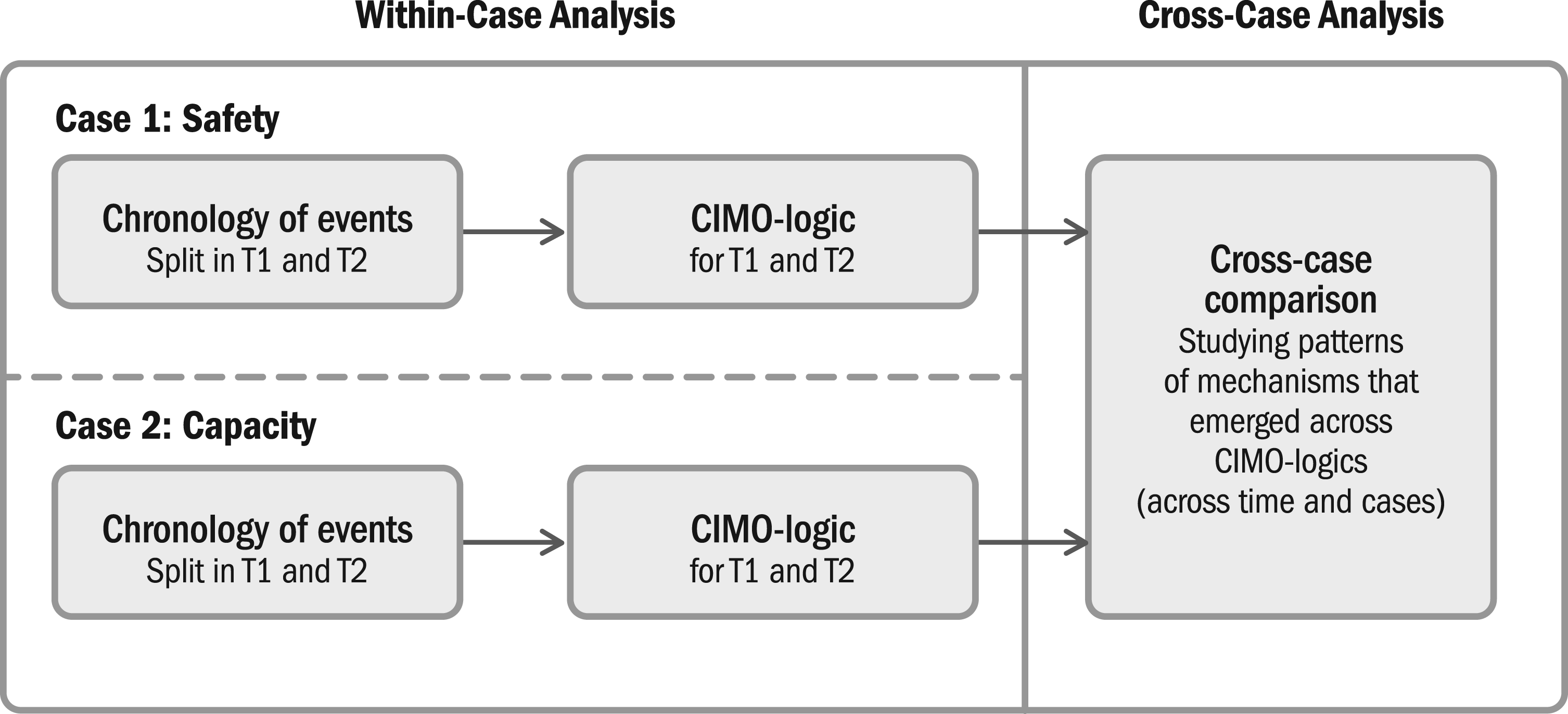
Overview of the within- and cross-case data analysis steps.
Case Selection
The two cases were selected based on their distinct characteristics regarding the involvement of actors, timeframes, and themes while simultaneously being sufficiently similar in their technical aspects to enable comparative analysis. Interorganizational projects within the context of the Dutch railway system constitute a suitable research context because of several (parallel) initiatives to prepare the railway system for future demands, resulting in large infrastructure projects. These projects are needed since the Dutch railway network is one of the most congested networks of Europe, and demand is still expected to grow (Schipper & Gerrits, 2018). To facilitate data access, the authors set up a multiyear research project with the two main stakeholders of the Dutch railway system, in this article referred to as railway undertaking (RU) and infrastructure manager (IM), to answer the queries examined in this article.
Two project initiatives within two different larger interorganizational projects were selected as cases to be analyzed: namely, the improvement of the train safety system braking criterion as part of the interorganizational SAFETY project, and the design of a new train type as part of the CAPACITY project. Both cases align with the purpose of this study since effective coordination facilitated a decision that was accepted by all participating parties. The cases differ in various aspects, such as the timeframe, the involvement of stakeholders, political pressure, and the value placed on different decision criteria. The two case studies facilitate analysis of reoccurring patterns of emerging coordination mechanisms across cases, allowing rich and detailed analysis. A summary of the case characteristics can be found in Table 1.
Case Characteristics of the Studied Decision-Making Process Based on van der Mark et al. (2018), Ministerie van Infrastructuur en Waterstaat (2020a), and Internal Project Documentation
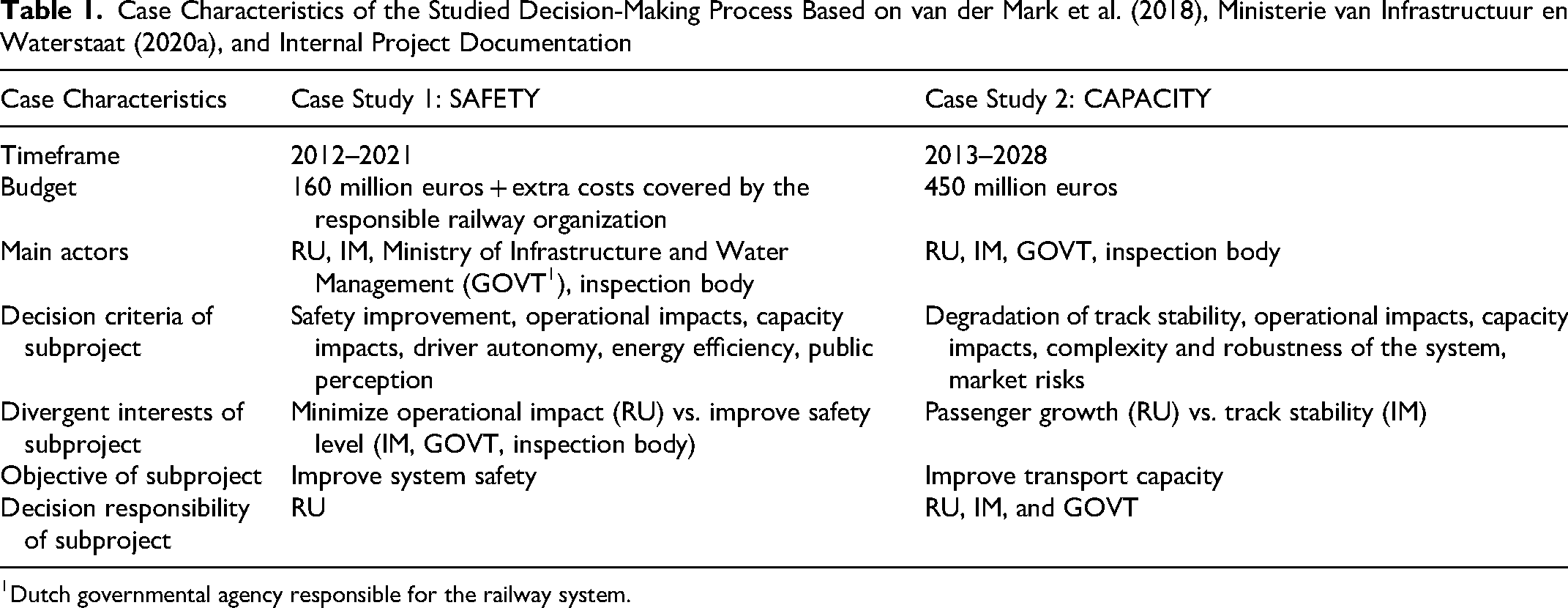
Dutch governmental agency responsible for the railway system.
Data Collection and Analysis
Data collection was carried out through semistructured interviews (14 interviews in the SAFETY-case and 10 in the CAPACITY-case) and internal case documentation. The semistructured interviews were transcribed and verified with the interview partners. The data for the SAFETY-case was collected from April 2019 to October 2019, and the data from the CAPACITY-case was collected from January 2020 to July 2020. During the data analysis period, this study used thematic analysis to learn from the collected data (Braun & Clarke, 2006). Methodologically, this combination of data analysis steps is especially suited to learn from rich and holistic data. Figure 1 shows an overview of the conducted data analysis steps.
Within-Case Analysis Using CIMO-Logic
A chronology of events has been established by studying the available documentation (i.e., presentations, reports, government documents, letters, and other communications). Subsequently, the chronology of events was divided into two distinct time intervals so that perceived coordination mechanisms can be compared across time and cases, with T1 being the pre-project phase and T2 being the joint project/working group phase. As such, the decision moment at which a formal project/working group has been established is defined as the moment where T1 ends and T2 begins. The decision to split the case into two separately studied entities was influenced by the change in formal structures in the case context. This is in line with the introduction, where the conceptual differences of the two phases are outlined. Typically, the basis on which each period is determined depends on some continuity in activities; in each case, the pre-project phase and the project phase center on the same decision issue. The decision issues per case study are outlined in Table 1, which is the decision to increase the braking criterion of trains in the system in case 1 and the decision to improve system capacity through train type selection in case 2. This provides the methodological advantage of allowing a comparison of the units of analysis (Langley, 1999).
For each time interval (T1 and T2), interview partners who were active in the project at that time were selected. Some interviewees were active in the project during both time intervals, which meant that special care had to be taken during the coding step. For each time interval, the so-called CIMO-logic was applied to understand the experienced functioning of the project, and to better understand what role project participants attribute to the various coordination mechanisms. CIMO-logic deals with the development and understanding of the mechanism, as well as the results of the implementation of the interventions once field-tested. Applying CIMO-logic requires a strong focus on the context in which the interventions are applied, which provides a comprehensive learning process (Denyer et al., 2008). The rich data this yields helps to improve understanding of the perceived inner workings of the project. This approach employs the following logic: “in this class of problematic Contexts, use this Intervention type to invoke these generative Mechanism(s), to deliver these Outcome(s)” (Denyer et al., 2008, pp. 395–396). Akkermans et al. (2019) used a similar research design, based on CIMO-logic, to develop collaborative key performance indicators (KPIs) in interorganizational partnerships, and as such, its fit for the interorganizational context was demonstrated. Moreover, CIMO-logic has previously been used to identify mechanisms that have been triggered by interventions applied in a certain context (Mazzocato et al., 2010).
In order to apply CIMO-logic to the two cases, a thematic analysis with a hybrid approach was applied, using both inductive and deductive reasoning (Swain, 2018). The thematic analysis can be used for identifying narratives (Czarniawska, 2004). This hybrid approach is a seven-step iterative process, inductively learning from the data as well as deductively incorporating theory in the coding scheme. For the inductive part, the semistructured interviews were coded using open coding (Strauss, 1987) with Atlas.TI software. Subsequently, the role of coordination mechanisms was explored through deductive reasoning, using the CIMO-logic as themes and the complexity-response framework (CRF) (Maylor & Turner, 2017) as the main theoretical base for the codes. The resulting combined a priori and a posteriori codes can be found in Figure 2.
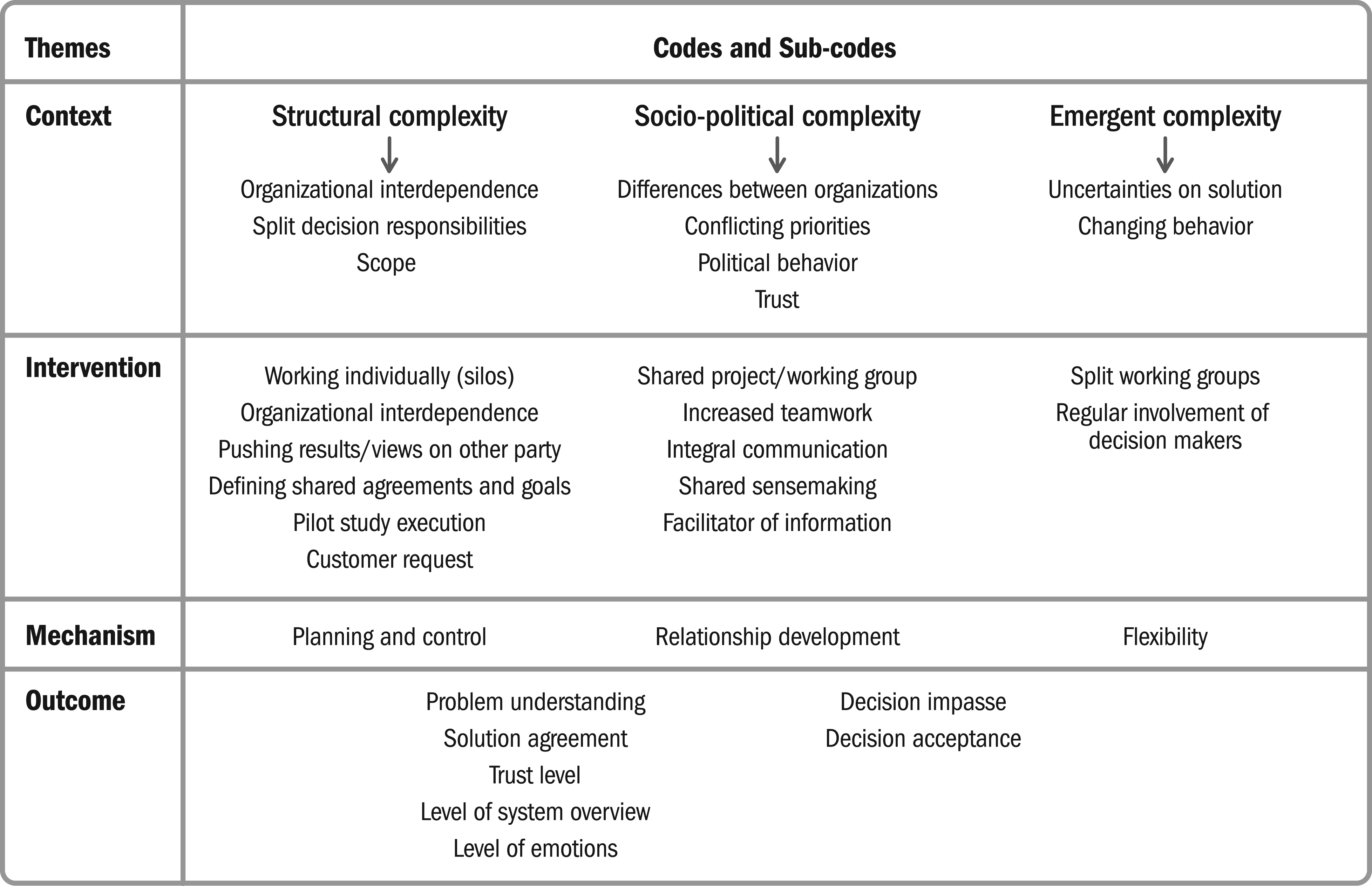
The coding structure used for the thematic analysis of the collected data.
To provide an example of the coding scheme based on thematic analysis, when an interviewee stated the following: “…irrespective of the various commercial interests, there are also safety interests to keep in mind. Finding a preference everyone agrees to is, therefore, a challenge…”, this statement was subcoded as “conflicting priorities,” which fits into the code of “socio-political complexity,” which in turn is part of the theme “context” (see coding structure [Figure 2]). The CIMO-logic analysis resulted in a profile of the triggered interorganizational coordination mechanisms in both time intervals of the two cases.
Cross-Case Analysis
The determined CIMO-logics of the two intervals are contrasted in a cross-case comparison. For this purpose, pattern matching is performed across cases, in order to relate the observed empirical patterns and draw conclusions about the functioning of perceived coordination formation (Sinkovics, 2018). In this way, the drivers and effectiveness of the coordination mechanisms in the specific context can be explored.
Validity and Reliability
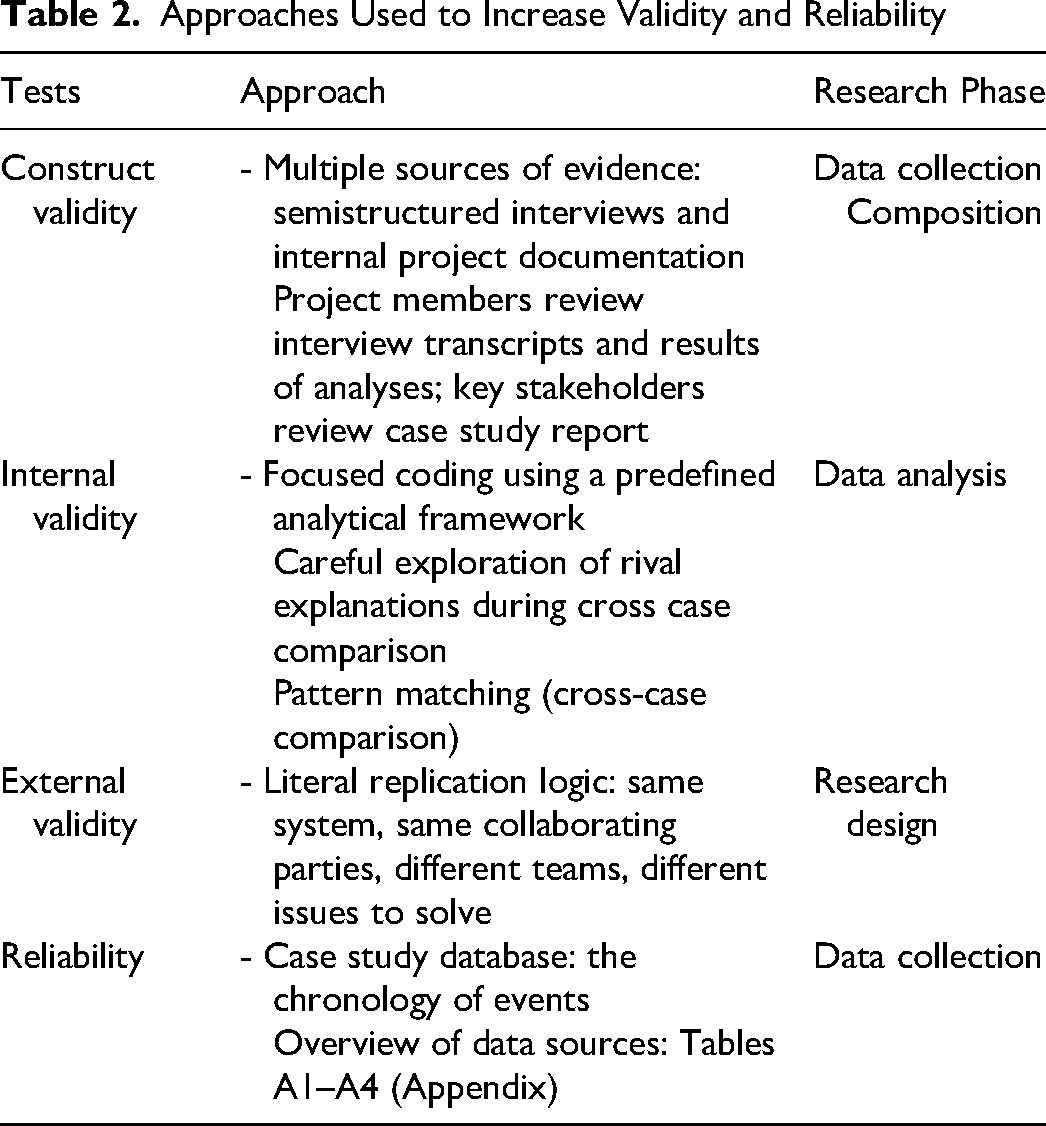
This study uses several approaches to ensure validity and reliability of the cases; see Table 2 for more details. More specifically, the validity of the semistructured interviews has been improved by employing data triangulation, through complementing the information gained through the interviews with internal project documentation. For instance, the project documentation has been used to establish a chronology of events, which has been validated with the events described in the interviews.
Approaches Used to Increase Validity and Reliability
Case Analysis
The Railway System Context
Train-track interface issues within interorganizational projects in the railway system are characterized by interdependent organizations working for their interests (Thanh et al., 2010). Darling (2004) previously identified that the splitting up of the British railway system into separate entities has led to individual authorities having overlapping responsibilities, which has caused ineffective decision-making and conflicts. This is, for instance, because most of the employed approaches focus on optimizing the benefits for the infrastructure manager or railway undertaking, not taking into consideration the interests of other railway stakeholders (Prodan & Teixeira, 2018). Similarly, in the Dutch railway system, the responsibilities for train operations and infrastructure management are split (van Dongen, 2015), which affects the performance of shared projects. Although the need to integrate the railway system into a cohesive whole has been recognized by stakeholders, the piecemeal optimization of components, rather than focusing on the integral system, leads to inefficient and inconsequential decisions (Thanh et al., 2010; van Dongen et al., 2019).
As such, interorganizational projects in the Dutch railway system provide a promising black box to investigate, since they meet the main requirements for this study, namely large transformational and long-lived projects; many stakeholders with distinct interests; overlapping roles and responsibilities; and many interorganizational interfaces that require coordination to facilitate decision-making.
Within-Case Findings
Case 1: Initiative to Improve System Safety
GOVT initiated the SAFETY project in 2012 to reduce the number of safety-related incidents (van der Mark et al., 2018), which are analyzed through the signals past danger (SPAD). To mitigate this, railway undertakings must consider whether additional safety measures should be taken. One such undertaking is the improvement of the braking criterion of the train safety system (case 1). Figure 3 shows a chronology of the main events, including the separation into T1 and T2 and their corresponding main coordination mechanisms. Figure 3 is used to familiarize researchers with the events and activities of the case and thus influence the thematic analysis.
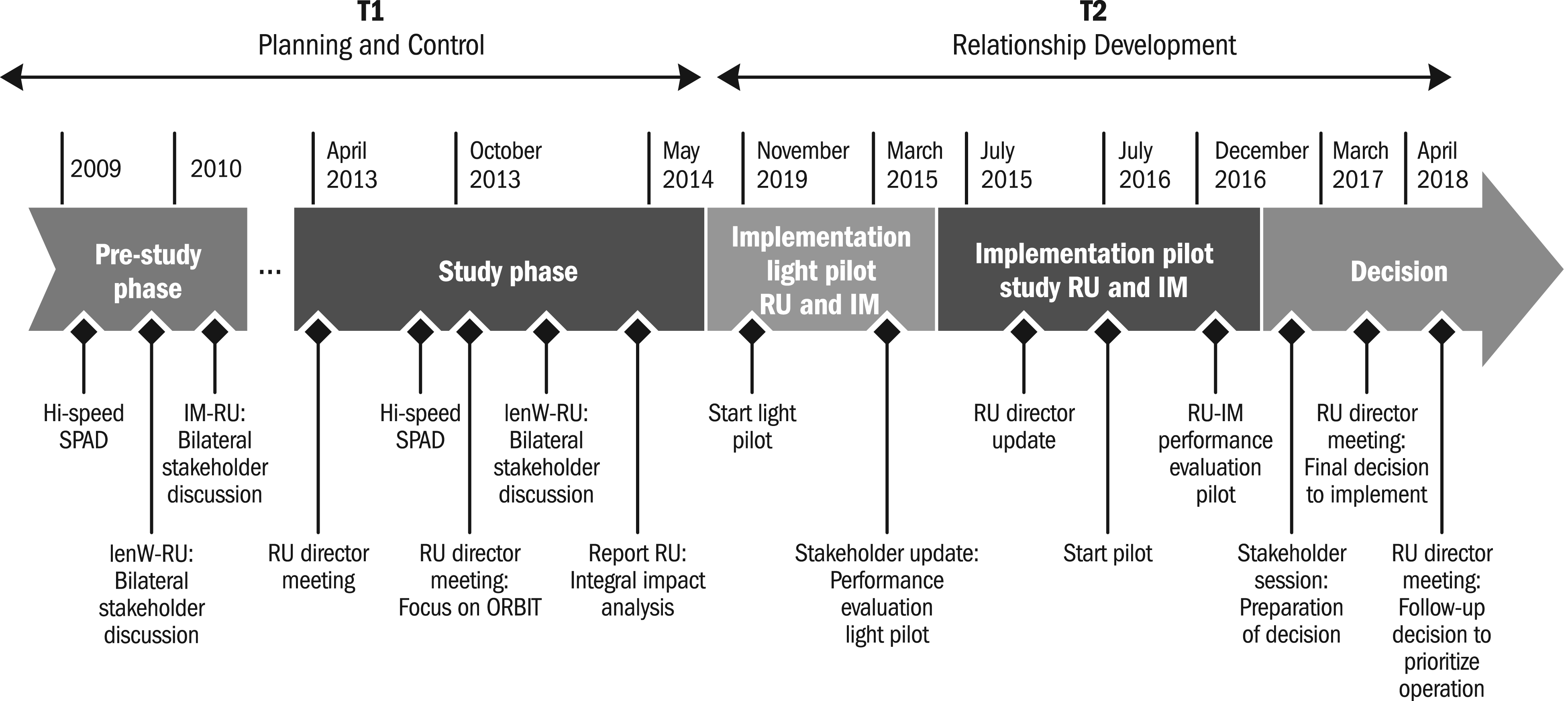
The chronology of events of the SAFETY-case.
Case 1: Time Interval 1
In T1, the initial context of the SAFETY-case is marked by a number of structural and emergent lived complexities but primarily by sociopolitical issues. In instances of structural complexity, project participants remarked the level of organizational interdependency as high, and the scope as extensive, including many differing expert opinions. Concerning the lived sociopolitical complexities, three main aspects were specified, namely disagreements between the commissioned project staff and organizations, conflicting priorities, and politics. Regarding the disagreements between the commissioned project staff, cultural conflicts were identified as the two organizations working in different ways, one being more bureaucratic and the other more hands on. Additionally, it was observed that the experts involved in problem-solving acted from different perspectives, as they had different safety-related backgrounds; some had worked with safety methods for a long time, while others were relatively new to the field. This resulted in divergent understandings of the problem, of how the risk of future safety incidents has to be comprehended, and therefore the need to mitigate this risk was judged differently. As for conflicting priorities, it was mentioned that due to the different interests of the main stakeholders, disparate solution possibilities were preferred. IM focused on optimizing technology, while RU preferred a process solution that aligned with their goal of higher customer satisfaction. The disparate goals led them to take different levels of risk regarding the impact of appropriate solutions, which ultimately did not lead to a preference for the same options. As such, politics played a significant role in this case. One party attempted to put pressure on the other to make a decision in its favor, by including other key railway stakeholders. Additional safety incidents in the railway system were perceived to make the issue more sensitive, which added emotional value to the matter. Finally, several emergent complexities were observed, such as uncertainty about the impact of the proposed solutions, since not all information was available yet. This was due in part to the rotation of team members in the safety department.
To address these complexities, in the first 4.5 years (T1), no major interventions were recorded in the normal functioning of the main participating organizations. Project participants remarked that the organizations formed their opinions on issues individually, within their respective departments. After coming to their conclusions, they tried to persuade the other party, for which a number of bilateral discussions were held. The safety manager mentioned: [Challenges arose] “due to the fact that there were so many different interests— everyone was interested in pushing their own interest forward, stakeholders were overly critical towards each other’s information, and it was a challenge to arrive at a document everyone was agreeing to.”
Finally, in 2014 an impasse was reported, emphasizing the need for a different approach. This impasse was used as an opportunity to end the investigation of T1, as it was the trigger for the initiation of a formal interorganizational intervention and led to a change in behavior of the project actors involved.
The most important mechanisms that resulted from the mode of operation was coordination by means of planning and control. Individual planning of how to proceed and what is in the individual best interest was noticed. Furthermore, pressure to decide in one’s favor was perceived, leading to decreasing levels of trust and increased uncertainty, and in turn, to more controlling behavior.
Case 1: Time Interval 2
In T2 the context remained virtually unchanged from T1, since no significant progress was made with respect to the topics addressed; no shared understanding of the problem had yet been reached, and no agreement on the way to proceed was reported. If anything, it was remarked that the duration of this matter made it even more complicated, as evidenced by the dwindling trust between the stakeholders.
To address the lived complexities discussed above, project participants reported the setup of a joint project to conduct a pilot study to investigate the consequences of the preferred solution. Several actions were recorded as part of the joint project to ensure success. First, the project team defined common agreements and criteria, including both process agreements and decision criteria, based on shared railway system interests. Additionally, engaging in this project improved collaboration levels between the organizations. More openness was created by making the process and decision criteria transparent, and cooperation between organizations was intensified. More holistic communication efforts were made to support the case. Informal activities were organized, and continuous interorganizational communication channels were established to include all key stakeholders. Joint awareness activities were introduced to create a better common understanding of the problem. For example, several integral stakeholder meetings were organized and the Dutch BOB-Model—which involves picture formation, judgment forming, and decision-making—was applied to provide decision makers with a common view of the situation. As such, the project manager of the railway undertaking mentioned: “One of the most important milestones of the project was the BOB-Model, in particular, establishing the first two phases [picture formation and judgement formation] required a lot of effort from the whole team.”
The interventions were perceived as resulting in improved relationships within the project group and between stakeholders. Efforts to create a shared view of the situation and a shared understanding of the problem seemed to facilitate an improved relationship between project members and decision-makers. A shared planning and control approach was observed as a supporting mechanism that was particularly effective in the implementation of the pilot study.
Case 2: Design of a New Train Type
The large-scale CAPACITY project is an initiative of GOVT and was initiated to prepare the railway system for growing passenger demand. The aim is to increase the capacity of the railway system to prepare it to meet the projections concerning the public transportation system in 2040. One of the CAPACITY project initiatives was the design of a new train series (referred to as case 2). A chronology of the main events, including the separation into T1 and T2, and their corresponding main coordination mechanism, is shown in Figure 4. The researchers use Figure 4 to familiarize themselves with the events and activities of the case and therefore it has an influence on the thematic analysis.
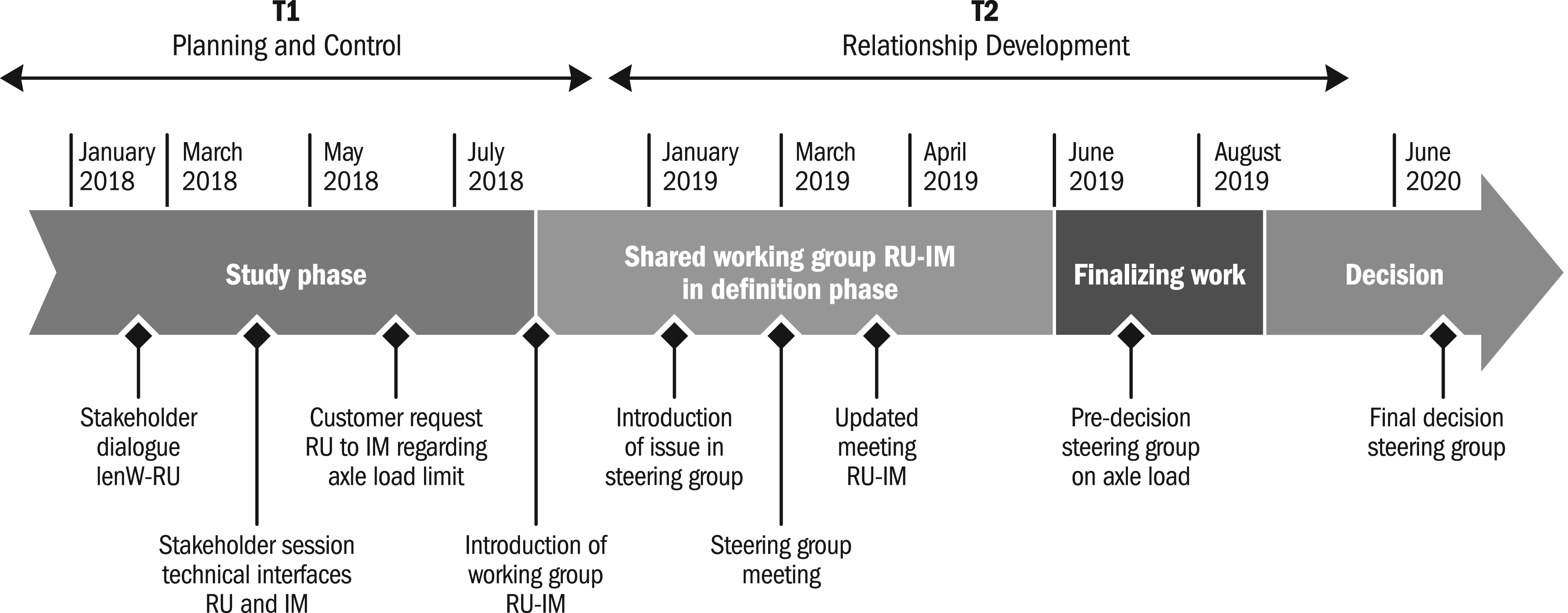
The chronology of events of the CAPACITY-case.
Case 2: Time Interval 1
T1 is a relatively short time interval of only 6 months (January 2018–July 2018), after which the decision was taken to start a shared working group. This indicated that the need for collaboration was recognized early into this process.
The context of the CAPACITY-case is characterized by many lived sociopolitical issues, and some experienced structural and emergent complexities. Where structural complexities were observed, it was reported that organizational interdependencies made the decision more difficult, as responsibilities were divided across the organizations, and the decision of one party had far-reaching effects on the other. This made it difficult for both parties to accept all the risks of the decision. Regarding the lived sociopolitical complexities, the individuals involved from both organizations have different backgrounds (technical vs. commercial departments), and therefore had different perspectives on the problem. On the one hand, some project members argued that a problem regarding infrastructure congestion could be recognized based on local data. On the other hand, dissenting project members felt that there was insufficient data to assess the existence of a problem. Additionally, the two organizations had reportedly different goals: IM wanted to limit impacts on infrastructure stability and maintenance, whereas RU wanted to optimize the capacity of the railway system. As a result, project members remarked the difficulty to get people to focus on common interests rather than advocate for their own party's demands. Recent events related to infrastructure stability were perceived to cause interests to diverge even further, which also affected the interpersonal behavior of participants. As far as lived emergent complexities were concerned, initially the exact consequences of the proposed decision could not be determined based on the available data, which led to noticed uncertainties about the impacts. Additionally, project members noticed the existence of new employees who did not yet have all the required knowledge in the departments.
Regarding interventions, it was reported that RU was studying possible design choices for their new train series, which touched upon limits regulated by IM. This led to a customer request to increase the preset limit, and bilateral exchanges of viewpoints between the two main organizations were organized. It was remarked that due to strongly divergent viewpoints, this became a sensitive topic. This may be due to the long-running history of the issue, as it often comes up when new rolling stock is introduced. This, as well as a reduced willingness to compromise on the part of IM, reportedly led to lower levels of trust. Participants found it difficult to stick to fact-based arguments during bilateral viewpoint discussions.
Ultimately, the awareness of the need for a different collaboration method led to the establishment of a joint working group. The main mechanism observed was planning and control-based coordination, which was based on formal ways of communication and command changes in the system regulations from the start.
Case 2: Time Interval 2
The project stakeholders collaborating in a working group changed the formal structures in which they coordinated, providing evidence for stopping the investigation of T1. Additionally, in hindsight, a change in coordination behavior was observed, even though the context remained the same, endorsing the choice to end T1. As such, the context of T2 is very similar to that of T1, except for the reduced level of trust between the parties.
To address the issue of the CAPACITY-case, a joint working group was set up to reach a consensus on the decision. In order to achieve this, the working group began by defining common goals and areas of focus, to align decision criteria and prioritize problem areas. The project manager of IM phrased it as follows: “They decided to prioritize two main issues relevant for the design phase of the overall RU project. […] Together, they formulated a process goal, namely, to get agreement on hard decision criteria. […] Finally, they achieved a compromise by showing experts what the interests and benefits for the railway system as a whole are, when choosing a certain type of material. Furthermore, the pressure from RU helped to make the interests of both parties explicit very early on to find commonalities.” “The idea was to split the project team into a relatively small process-related group, dealing with the problem and preparation of the decision, and a larger knowledge acquisition, and sharing group, to establish a knowledge base around the issue. This ensured that no premature decision based on content alone was made.” “RU and IM together achieved a good overview of what each of them wanted: a […] train that met the capacity requirements but at the same time limited the excess load, ensuring. Discussion of the high-level requirements helped the process of establishing a compromise. […] Generally, the project manager did a great job in facilitating the discussion, considering the many conflicting interests.”
As a result of the interventions, a compromise was established within the team, and a consensus was reached among the decision makers. Additionally, most members of the working group expressed trust in further cooperation with the other members.
In conclusion, the interventions made reportedly led to better relations in the working group and ultimately also strengthened trust in the project team. These interventions included shared sensemaking activities, good facilitation, and communication within and pertaining to the working group, and regular updating of the decision makers. Moreover, the separation of content and process, and the associated communication structure, seemed to allow for more flexibility. By merit of an early definition of joint goals, planning and control was observed to be a successful supporting mechanism.
CIMO-Logic for Cases 1 and 2
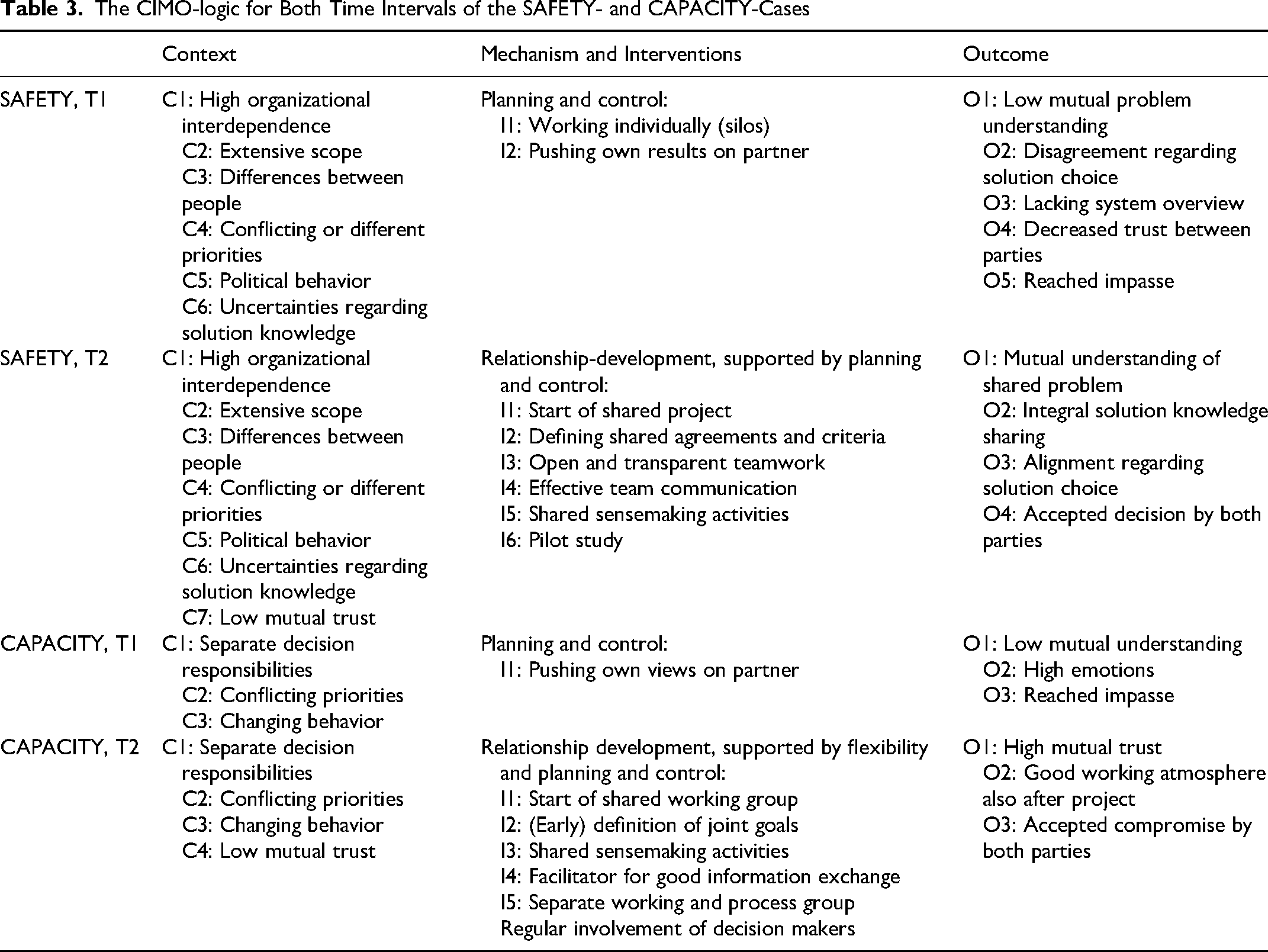
A summary of the findings can be found in Table 3, depicting the CIMO-logic for both time intervals of the SAFETY- and CAPACITY-cases.
The CIMO-logic for Both Time Intervals of the SAFETY- and CAPACITY-Cases
Cross-Case Findings
The results of the empirical analysis show that two main coordination mechanisms were observed by project participants—namely, planning and control, and relationship development. Both coordination mechanisms were perceived in both cases (SAFETY-case and CAPACITY-case), although they were invoked to varying degrees depending on the context. In the following sections, the situation in which these mechanisms were noticed, as well as and their effects are compared. Because flexibility as a mechanism was barely recognized, this will not be extensively covered in the discussion.
Planning and Control
Coordination through planning and control has been observed in both cases, mainly in the pre-project phase (T1), during which joint activities were limited, and individual planning and control activities predominated. Possible reasons for the predominant focus on planning and control are the organizational culture, which has been built on such project management methods, and the distribution of power, which tends to be top-down focused, with GOVT having a supervisory and controlling role (van Dongen, 2015; van Dongen et al., 2019). From the CIMO-logics (see Table 3), the perceived singular focus on planning and control coordination has led to trust issues between key parties, as well as low degrees of mutual understanding of the problem and disagreements regarding solution selection. Ultimately, this behavior was remarked to have led to an impasse in decision-making. The projects differ in the length of time that this approach has dominated them. In the SAFETY-case, the pre-project phase lasted 4.5 years, after which it was recognized that there may be more effective ways to coordinate. During the implementation of the pilot study, the actors started a shared project. In the CAPACITY-case, RU remarked to have become aware of this issue early in the project and intervened after several months of studying the issue by establishing a joint working group.
Relationship Development
The mechanism of relationship development seemed to be set in motion by the actions taken after an impasse was reached. The organizations reportedly became aware of the need for a joint approach to solving the problem. Consequently, a joint project/working group was initiated in which both organizations collaborated. In both cases, this was perceived as resulting in an accepted decision in a suitable amount of time. In particular, in the first case, the pace of the project increased once the joint project started. Moreover, in both cases, the measures observed to address the situations were comparable, as shared sensemaking activities and calls to work on common interests were acted on to improve the relationship, which ultimately seemed to lead to increased levels of trust between the parties. There were also differences between the two cases: in the SAFETY-case, the parties were able to jointly demonstrate that the chosen solution had a low degree of negative impact on their respective interests. The CAPACITY-case, however, was about finding a compromise based on common interests.
Discussion
The Within-Case Findings
This type of in-depth case assessment, which looks at the perceived development of decision-making processes in interorganizational projects, is particularly useful for improving understanding of what happens in the black box of projects. As such, it has been shown that by using narratives, the diversity of respondents’ experiences can be captured by highlighting the contingencies in their coordination mechanisms and experiences that tend to lead to positive or negative decision outcomes. By not limiting the investigation to a single point in time, but rather following the development of the decision-making process throughout the project (Sydow & Braun, 2018), preferred coordination mechanisms can be identified per time interval. The use of CIMO-logic also considers the context of interorganizational networks and provides details about when reported interventions lead to specific outcomes. This seems to be particularly useful in contexts as complex as the railway system, where one has to deal with strong interdependencies and conflicting interests. To this end, the interventions observed in the two cases mainly revealed the use of the coordination mechanisms of planning and control in the pre-project phase and relationship development during the project phase. Furthermore, previous research on coordination responses by Maylor and Turner (2017) is expanded by a detailed empirical investigation of the dynamics of planning and control and relationship development coordination in the interorganizational system. This reveals the phase in which the mechanisms are frequently perceived as facilitating decision-making. This is further elaborated on in the discussion of the cross-case findings. Compared to previous studies on coordination mechanisms in interorganizational projects, the mechanisms and effects studied by Hetemi et al. (2020) aim to understand and explain lock-in., One of these studied mechanisms is the coordination effect, which is mainly understood as the control of activities by the hierarchical structure. This coincides with the coordination mechanism of planning and control examined in this conducted case study. In addition, the need for shared understanding in coordinating the goals of project actors is highlighted by Hetemi et al. (2020), which emphasizes the need for relationship development. The empirical findings of this case study add to these findings by studying these two mechanisms from a different, more subjective, and constructed perspective (narratives of project participants summarized in the CIMO-logic), offering more comprehensive explanations for these particular mechanisms and their perceived success. This study therefore contributes to the project management field by examining how these specific mechanisms are perceived to work and promote decision-making, all together providing a more nuanced view.
The Cross-Case Findings
The hierarchical power structure of the Dutch railway system and its organizational project approach appear to encourage planning and control responses, which are enhanced by existing trust issues and uncertainties that accumulate between the actors involved. A possible explanation is that planning and control responses are embedded in the use of standard project management approaches such as PRINCE 2 (Meredith et al., 2017). Additionally, the culture of the entire railway system is characterized by a planning and control approach, especially for interorganizational projects or programs. This is likely because the government, as the financier and supervisor in the trilateral relationship, still holds power over the other parties, stressing the hierarchical power structure present. The larger the interorganizational railway project, the more coordination is based on planning and control measures imposed from the top, for all entities involved, as is evident in the reporting process of the European Rail Traffic Management System (ERTMS) program (Ministerie van Infrastructuur en Waterstaat, 2020b). In the cases, these structures encouraged planning and control behavior between the railway undertaking and infrastructure manager. Possible other explanations for planning and control behavior in interorganizational railway projects are regulatory changes and the pressure from society. For example, the first project was prompted by safety concerns in the railway system and the associated pressure from society to make the system safer. Formal evidence is typically required to show compliance with the safety standards, further emphasizing planning and control behavior. Other authors have also shown that these events and trends can have an impact on interorganizational project progress. For example, Floricel et al. (2023) examine the effects of external representative events and trends (such as societal pressure) and external volitional events and trends (such as regulatory changes) on the development of project progress and find a significant impact. Similarly, Lehtinen et al. (2023) call for more research on the impact of nonmarket stakeholders (such as society) on project value creation as it seems more and more relevant, yet research on this topic is scarce. This is supported by Ninan and Sergeeva (2022), who show that nonmarket stakeholders (such as members of society who complain publicly after rail safety problems) often have little value creation potential from undesirable projects and thus draw negative public attention and media coverage to the problem, which in turn creates potential negative externalities of undesirable projects. Finally, Gil (2023) cites value distribution as a cause of interorganizational projects failing to meet performance targets, particularly due to the narrowly defined purpose that project managers strive for, which clashes with the broader goals of societal requirements such as the United Nations sustainable development goals (SDGs). This study thus joins the line of research looking at the impact of external forces on projects and brings up a new impact direction, namely the impacts on the coordination mechanisms at the frontline of interorganizational projects.
Awareness of a need for coordination and adaptation, and a joint project approach, seems to facilitate the development of relationships between the parties, which in turn increases the level of trust between them and leads to improved relationships for the decision-making process. Existing literature that illustrates the reinforcing link between relationship and trust is highlighted in established literature (Fang, 2019). The findings of this study suggest that especially building mutual understanding promotes trust, which, once established, contributes to an even better relationship. For complex system integration questions, conducting joint sensemaking activities and focusing on common interests of stakeholders in the pre-project phase of interorganizational projects appear to be promising interventions that facilitate a trusting relationship. This in turn can have other positive implications regarding project success.
Conclusion
This article investigates how coordination mechanisms are perceived to facilitate decision-making in interorganizational projects. The results of this explorative case study extend the front-end focus of the system life cycle view of Artto et al. (2016) and support the contingency view of the complexity-response framework for interorganizational projects by Maylor and Turner (2017). The narratives through CIMO-logic used in this research serve to expand our understanding of how coordination mechanisms are perceived to contribute to certain outcomes in interorganizational projects. By means of our qualitative research, the findings revealed the dynamics of the two main coordination mechanisms in both T1 and T2, as well as possible enablers of these mechanisms. Hetemi et al. (2020) have previously emphasized the importance of understanding prior linkages, for example, interdependencies among different actors, before the start of the interorganizational project. This article contributes to this body of knowledge by explicitly considering the time before the start of the interorganizational project and the perceived impact of individual coordination efforts on the problem-solving progress, taking into consideration the views of critical project participants. In doing so, this study moved beyond the system life cycle view as described by Artto et al. (2016), which starts with a shared project setting but does not include the pre-project phase. Especially in the context of system integration, where several interdependent organizations must work together to create operational value, shared coordination efforts before the start of the project seem to be important. Sharing coordination efforts possibly helps to identify misaligned interests from the start and implement appropriate coordination efforts to mitigate these for more efficient decision-making processes.
The findings of this study emphasize the importance project participants ascribe to building relationships in an interorganizational context as early as possible and having planning and control mechanisms in place as supporting elements. This is an interesting result in relation to the study of Sicotte and Delerue (2021), who found the effect of the two variables reversed. They show that planning efforts contribute to the effectiveness and efficiency of the project, with relational coordination having a mediating influence. Responding to the need for research to uncover the black box of interorganizational project (Söderlund et al., 2017), this study observes promising methodological foundations for the application of CIMO-logic in narrative analysis. By means of this approach, this article was able to identify perceived salient coordination mechanisms of interorganizational projects produced in an interorganizational setting. The most prominent coordination mechanism observed in the pre-project phase was planning and control, whereas during the shared project phase more emphasis was placed on relational coordination. Turning the coordination efforts around and using relational coordination at the start can possibly leverage the decision-making process in complex situations where system integration is required.
These results are not only relevant for interorganizational railway projects but also have implications for large technical systems such as infrastructure, transport, energy, or communication systems. These systems have similar characteristics in terms of complexity, size, interdependence between project participants, and decision-making responsibilities. In the energy transition, in particular where systems are being managed in an increasingly decentralized manner, the separate decision-making responsibilities and the different interests of those involved are playing an ever greater role, which illustrates the importance of these findings for this industry.
The unique combination of qualitative research techniques enriches our understanding of the perceived dynamic behavior of coordination mechanisms beyond just studying simple deterministic relations. Finally, our research contributes to the value-added elements of project-oriented front-end studies (Artto et al., 2016) while recognizing that the mechanisms are constructed by project members to make sense of the process they went through (Orr & Scott, 2008), as demonstrated by the application of CIMO-logic (Denyer et al., 2008).
Managerial Implications
An important implication for managers is the critical nature of the contingencies of the inter-organizational project context when deciding on the use of coordination measures, and these should be considered key starting points for project management approaches. This supports the recommendation by Söderlund et al. (2017) to depart from classic project management practices and best-practice approaches and instead use more nuanced approaches that adapt to the realities of interorganizational projects.
Additionally, the study demonstrates the perceived effectiveness of coordination by means of relational development in the decision-making process of interorganizational projects with constitutional dependencies and unaligned interests. In these contexts, interventions based on shared awareness and a focus on common interests contributed to trust building and an accepted decision. Conversely, planning and control was perceived effective as an adjunct rather than as the main instrument of coordination, and it was more successfully applied after initial relational coordination.
Limitations and Recommendations for Future Research
One of the limitations of this study is the limited predictive power of our results, since generalizing the results of our study should be done with caution (Rowley, 2002), as it only involves two cases and is not subject to quantitative analysis. This exclusion can be considered a limitation, as its absence does not allow comparison to coordination mechanisms observed in other studies. However, since the goal of this study was to gain a better understanding of the dynamics of coordination mechanisms in interorganizational projects, this limitation can be considered minor weighed against the comprehensive and rigorous understanding gained by means of the case studies (Yin, 2003). This study was also limited by the fact that a single researcher conducted both data collection and analysis. This issue was mitigated through data triangulation (semistructured interviews and project documentation), methodological triangulation (CIMO-logic, pattern matching across cases and time), and repeatedly switching between the data set and analysis steps. Finally, retrospective bias (Shachar & Eckstein, 2007), in other words, bias in the reproduction of respondents’ earlier decisions, can be considered a limitation. This was addressed by comparing different interview responses and the chronology of events.
This study provides numerous suggestions for future research. Though focused on findings from past projects, this study identifies significant opportunities for research on the design and testing of practical interventions in the interorganizational context using CIMO-logic from the action research field (Denyer et al., 2008). Developing an intervention that aids in recognizing the complexities of the decision-making process in interorganizational projects, for example, could potentially lead to greater awareness regarding suitable coordination mechanisms. Another suggestion for future research lies in the examination of the effectiveness of planning and control measures in the context of interorganizational projects. In this analysis, planning and control appear to be effective only as supporting activities, yet investigating the perceived effective use of coordination through planning and control could contribute to this field, given its prominence in project management.
Footnotes
Acknowledgments
We wish to sincerely thank Netherlands Railways, ProRail, and TKI for providing sponsorship for, and their participation in, the SIRA research project. Furthermore, we acknowledge the peer-review feedback leading to improvement of this article. The authors want to express their gratitude to Mohammad Rajabali Nejad for his efforts in giving feedback in the first version of the study. His dedication has contributed to the advancement of this publication.
Declaration of Conflicting Interests
The author(s) declared no potential conflicts of interest with respect to the research, authorship, and/or publication of this article.
Funding
This research is co-financed by the Research and Innovation contribution (PPP) from the Dutch Ministry of Economic Affairs and Climate.

Author Biographies
Appendix. Data Source Overview
The data source overview gives more information on the collected data of the SAFETY- and CAPACITY-cases, both regarding the semistructured interviews and the analyzed documents.