




Abstract
Stakeholder engagement in collaborative research and innovation projects poses significant challenges, particularly in complex, multistakeholder settings addressing sustainability concerns. This study proposes a novel method for stakeholder prioritization in such projects, combining the analytic network process (ANP) tool with the sustainability categories of the P5 standard for sustainability in project management. Its applicability and usefulness are demonstrated through a case study project, using the new stakeholder theory (NST) lens. The ANP-P5 method can assist project managers in effectively aligning stakeholder management with both sustainability and NST principles.
Keywords
Introduction
Organizational contexts in which projects are generally developed increasingly include the imperative of sustainability, namely from the social, economic, and environmental points of view (Sabini et al., 2019; Silvius, 2017). Specifically, research and innovation (R&I) projects are critical in driving sustainability and prosperity, serving as vital means to delivering tangible benefits to society (Fernandes & O’Sullivan, 2021). Importantly, public funds are increasingly being invested in R&I projects that address grand or societal challenges (Præst Knudsen et al., 2019), such as promoting sustainability through circular economy principles and technologies, which can have significant economic, environmental, and social impacts. R&I activities are therefore a key instrument to achieve sustainability by projects. Moreover, the integration of sustainability into project management practices (i.e., sustainability of projects) can offer organizations a competitive advantage and enhance project success (Marcelino-Sádaba et al., 2015; Martens & Carvalho, 2016).
Collaborative R&I projects are characterized by high levels of risk, technical and scientific uncertainty, and potential clashes between the goals of academia and industry (Rybnicek & Königsgruber, 2019). Their scope and knowledge base are typically broader than those of a typical industry project, which increases the complexity of stakeholder management toward project success (Urbinati et al., 2021). Typically, these projects bring together a consortium of companies, research-performing organizations, and other entities such as sectorial associations and public authorities. This involvement of heterogeneous stakeholders can significantly increase the potential for conflicts (Moura & Teixeira, 2010) and sets dynamic relationships that require considerable trust and commitment among stakeholders to create reciprocal benefits over time (Fernandes & O’Sullivan, 2021). Moreover, project management methods employed in universities frequently fall behind those utilized in the private sector (Santos, 2021), leading to a disparity in project management maturity. Such characteristics strongly influence management approaches in this specific project type (Fernandes et al., 2023).
Despite the increasing relevance of sustainability in projects and project management, the paradigm shift toward sustainable project management (SPM) remains challenging (Sabini et al., 2019). Many organizations continue to struggle due to lack of knowledge and practical guidance on how to integrate sustainability dimensions within project management processes. As a result, they often rely on conventional project management practices, leading to project failure (Silvius & Schipper, 2022). Therefore, there is a need to identify and develop methods, tools, and techniques to incorporate sustainability at the project level and assess the environmental, economic, and social impacts of projects (Carvalho & Rabechini, 2017; Silvius, 2017; Uribe et al., 2018).
Based on the scientific literature, Silvius and Schipper (2022) recently identified 16 project sustainability impact assessment tools, of which three were identified as being more effective: the Wa-Pa-Su project sustainability rating system (Poveda & Lipsett, 2014), the SPM3 Sustainable Project Management Maturity Model (Silvius & Schipper, 2015), and the P5™ Standard for Sustainability in Project Management (GPM, 2019). The consideration of the process and product impact dimensions notably distinguishes these sustainability impact assessment tools from the alternatives reported in the literature as it allows to clearly distinguish between the sustainability of the project (processes) and sustainability by the project (products). The P5 standard builds on the Triple Bottom Line framework (profit, people, planet) adding the processes and products dimensions. It takes a more generic approach than the Wa-Pa-Su and SPM3 approaches (Silvius & Schipper, 2022), which makes it amenable to application in a wider variety of project contexts. Also, it allows for project management integration into the whole project life cycle. Moreover, it sets the requirements for projects in line with key worldwide initiatives on sustainable development (Piterska et al., 2018; Silvius & Schipper, 2022). Besides academic applications (Carboni & Hodgkinson, 2013; Turan & Johan, 2016), the P5 standard has already been widely applied in project management practice (Piterska et al., 2018). This complies with the recent call in Project Management Journal® to develop models based on industry standards for sustainable project management using the Triple Bottom Line framework (Subaie et al., 2023).
Stakeholder theory continues to be a foundational framework for comprehending the relationships between businesses and society and is widely employed in evaluating environmental and social dimensions (Matakanye et al., 2021). In particular, stakeholder management consistently emerges as a critical element in sustainable project management studies (Armenia et al., 2019; Silvius & Schipper, 2014; Uribe et al., 2018). Freeman’s stakeholder theory has positively impacted sustainability implementation in project management, which is evident by the still growing number of related publications (Uribe et al., 2018). It continues to significantly enrich project management at different levels (Uribe et al., 2018). Nevertheless, new theoretical developments are needed to strengthen the sustainability aspect in the multistakeholder objective setting processes of project management (Cvijović et al., 2021).
A new stakeholder theory is emerging that highlights the role of socially valuable outcomes beyond nominal fiduciary economics (Gil, 2023; Gil & Fu, 2022). It conceptualizes organization performance and stakeholder engagement as value creation defined by today’s grand challenges, from loss of biodiversity and climate change to social inequality (McGahan, 2021, 2023). Therefore, the new stakeholder theory can be particularly relevant as a theoretical framework for stakeholder management in sustainable project management. The new stakeholder theory highlights the need for negotiating the fair distribution of co-created value among stakeholders. Nevertheless, it still lacks answers to who should be in and out (Gil, 2023; Klein et al., 2019). In particular, “what criteria can be developed to determine the sharing of decision rights vis-à-vis stakeholder consultation, and so determine who is ‘in’ and who is ‘out’?” (Gil, 2023, p. 5).
Conducting stakeholder analysis stands as a pivotal phase within stakeholder management. This process commences by selecting and prioritizing stakeholders, playing a critical role in ensuring successful involvement and the adept handling of expectations in projects (Denicol et al., 2020). Recent advances include the IAP2 framework for public–private partnerships (Legacy et al., 2023). However, in a sustainable project management context, traditional stakeholder analysis requires updating with tools that prioritize stakeholders based on their anticipated benefits from different sustainability perspectives. Traditional methods, such as the salience model (Elias, 2016), only indirectly address this objective. Moreover, there is little evidence to suggest that the level of importance (salience) of a stakeholder group is directly correlated with the amount of effort put into engaging with that group, especially when the group’s expectations are mutually exclusive (Boesso & Kumar, 2009a). This is particularly relevant in collaborative R&I projects due to their typical complex multi-actor setting and associated cultural gap between academics and companies (Santos, 2021).
Identifying stakeholders is a crucial step in stakeholder engagement, starting before or during the project initiation and continuing throughout the project (Project Management Institute [PMI], 2017). Incorporating sustainability practices in project management significantly expands the list of potential project stakeholders, which places a greater burden of responsibility on project managers (Blak Bernat et al., 2023). To address sustainability, it is important to select stakeholders who, for example, represent the environmental and social aspects of the project such as environmental protection groups and human rights (Silvius & Schipper, 2014; Tharp, 2012). The social dimension of sustainability has also been investigated in terms of the importance of prioritizing stakeholders according to their real interest in the project and how the project manager should act in building solid relationships from this analysis (Ahn & Park, 2018). For example, Dziadkiewicz et al. (2022) evidenced the importance of stakeholder identification and prioritization in projects implemented by sustainability-oriented teams in the tourism industry in Poland.
Indeed, the often intangible and subjective nature of sustainability criteria makes stakeholder selection and prioritization in this context particularly challenging. Despite recent developments in multicriteria decision-making methods, such as the use of fuzzy logic approaches (Pérez Vera & Peña, 2020), the subjectivity of sustainability criteria, associated with the multicriteria decision nature of stakeholder prioritization, requires the creation of specific methods for this purpose. The analytic network process is particularly relevant in this regard, as it enables the relative measurement of intangible criteria by considering diverse dimensions (Aragonés-Beltrán et al., 2017; Saaty, 2005).
Therefore, this article seeks to answer the following research question: How can project stakeholders be prioritized in collaborative research and innovation toward sustainability? In response to this question, a method (herein referred to as the ANP-P5 method) has been devised, integrating the P5 standard as a sustainability framework and employing the analytic network process as a ranking tool. To showcase the practicality and efficacy of this novel method, it has been applied to a case study in the circular bioeconomy domain, namely to a collaborative R&I project focused on facilitating sustainability transitions.
From a practical standpoint, the proposal of the ANP-P5 method and its application to a sustainability-driven case study respond to the wide call for practical tools that promote sustainable project management (Carvalho & Rabechini, 2017; Silvius, 2017; Uribe et al., 2018). From a theoretical standpoint, this study advances the understanding of the new stakeholder theory as a theoretical framework for stakeholder management in sustainable project management. Bearing in mind the described alignment between the analytic network process and P5 standard, it is proposed herein that a useful method (the ANP-P5 method) would consist of criteria, based on the profit-people-planet-process-product framework, and of a multicriteria decision-making technique (the analytic network process tool) adequate to prioritize intangible and tangible criteria to determine who should be in and who should be out (Gil, 2023; McGahan, 2021, 2023) in the value co-creation and distribution process of sustainability-driven collaborative R&I projects.
This article reviews relevant literature, describes the methodology, presents findings, and discusses their implications. The conclusion summarizes theoretical and practical contributions, considering how they can guide decision-making and help project managers manage stakeholders in collaborative R&I projects with a focus on sustainability. Limitations and future research directions are also identified.
Theoretical Background
Collaborative Research and Innovation Projects
In general terms, a collaborative R&I project is an alliance that allows for faster technological diffusion from universities to companies (Fernandes & O’Sullivan, 2021). Specificities of this type of project include an explicit application context defined by the industry—but that is in the interest of all partners; heterogeneous partners, such as different institutions with different research focuses; collective responsibilities; and being mostly funded through public agencies (vom Brocke & Lippe, 2015). Additional specific characteristics include technical/scientific uncertainty, high levels of risk, and potential conflicts between the goals and constraints of academics and industry (Rybnicek & Königsgruber, 2019).
In practice, it is unfeasible to fully deliver the expected benefits to all stakeholders typically involved in collaborative R&I projects. Thus, the project manager should consider who and what really counts, ensuring there is the necessary collection of information about their expectations (Boesso & Kumar, 2009b; Mitchell et al., 1997). The integration of sustainability concerns with stakeholder management in collaborative R&I projects has been explored by several scholars. For example, Yawson et al. (2006) used the balance scorecard as a tool to develop recommendations for managing stakeholders (staff, clients, and donors) of a research organization pivotal in sustainable development. Seebode (2012) observed that the challenge in innovation projects for sustainability is learning to work with new partners. Elias (2016) used a systems approach to capture strategies suggested by stakeholders to manage conflicting stakes in a research and development project dealing with a chemical with potentially serious environmental impacts.
Sustainability and Project Management
The significance of sustainability in achieving project success has grown significantly, driven by stakeholders’ expectations for ethical practices, environmental responsibility, and economic efficiency throughout the project life cycle (Silvius, 2017). In addition, sustainability practices also facilitate stakeholder engagement, fostering more constructive and positive dialogue with relevant parties involved in achieving the project’s objectives (Matakanye et al., 2021).
International Organization for Standardization (ISO) standards (e.g., ISO 26000) have been acknowledged for their contributions to sustainability in projects, particularly from a product perspective (Marcelino-Sádaba et al., 2015). Mainstream project management frameworks and standards, including A Guide to the Project Management Body of Knowledge (PMBOK® Guide), ISO 21500, Prince2, and IPMA’s Competence Baseline have limitations in addressing environmental and social sustainability aspects (Silvius & Schipper, 2014). Thus, several sustainability impact analysis tools have been developed in recent years, focusing on incorporating sustainability considerations into project management.
Silvius and Schipper (2022) recently reviewed 16 sustainability impact assessment tools and found that three were more effective: the Wa-Pa-Su rating system (Poveda & Lipsett, 2014), the SPM3 maturity model (Silvius & Schipper, 2015), and the P5 standard (Global, 2019). These tools were then reviewed based on a set of six sustainability impact assessment best practices that were derived from the literature on impact assessment. Their study showed that all three instruments had incorporated the best practices of assessing sustainability impacts based on a holistic set of criteria and the consideration of different levels of project impact (Carboni & Hodgkinson, 2013; Turan & Johan, 2016): process and product besides the profit, planet and people dimensions. This aligns with the two perspectives emerging in the literature regarding the integration of sustainability and project management: The sustainability of the project’s product and the sustainability of the project’s processes in managing and achieving its objectives (Silvius & Schipper, 2015; Silvius, 2017). All three instruments also shared a development orientation and were aimed at identifying improvement opportunities in projects. The instruments differed in the specificity of their assessment, the P5 instrument taking a more generic approach. Thus, it is amenable to application in a variety of project contexts.
The P5 standard provides for useful benchmarking across industry and essentially helps organizations demonstrate the reality of their commitment to sustainability by allowing stakeholders to better understand the organization’s contribution to sustainable development (Joel, 2016). Besides the project’s life cycle, it takes into consideration the product’s life cycle from a social, environmental, and economic perspective (Piterska et al., 2018; Silvius & Schipper, 2022). Moreover, it sets the requirements for projects in line with 10 key worldwide initiatives and six standards (Piterska et al., 2018; Silvius & Schipper, 2022), for example, the United Nations Sustainable Development Goals (SDG), the International Labour Organization Declaration on Fundamental Principles and Rights at Work, the SA8000:2014 Standard (Social Accountability International), and ISO 14001: 2015.
In the face of the above characteristics and advantages over alternative tools, the P5 standard was selected in our study to categorize the project impacts from a sustainability perspective. Existing applications include both academic and practical settings. In academia, it has been used to assess the sustainability of projects (Carboni & Hodgkinson, 2013; Turan & Johan, 2016). In practical applications, it has been used to guide project management decisions (Piterska et al., 2018).
The P5 standard encompasses 16 core areas, which further translate into 51 potential project sustainability areas (Figure 1). These areas provide a comprehensive framework for scoring indicators relevant to the project and collecting improvement strategies in a sustainability management plan (Koke & Moehler, 2019).
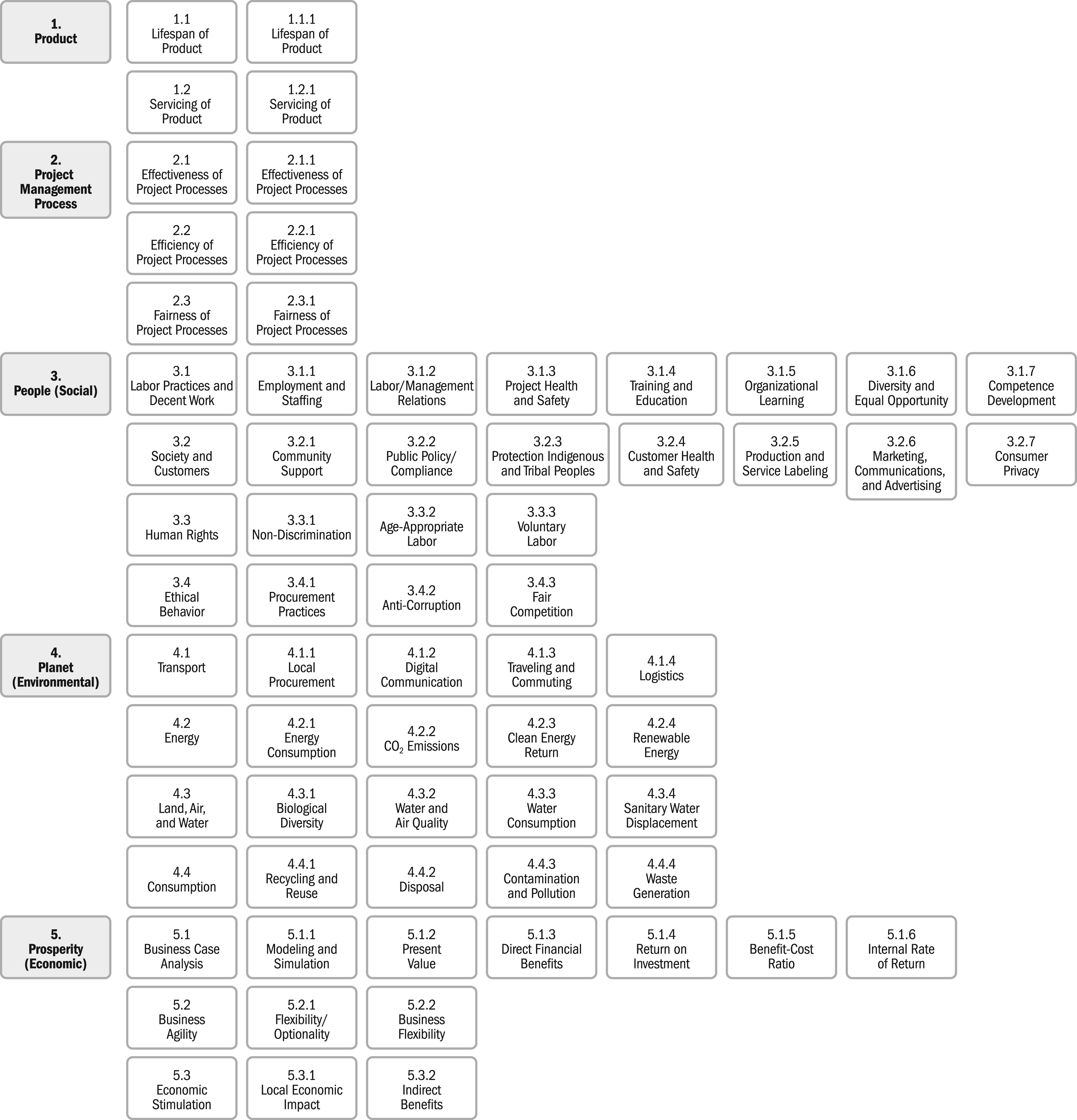
Overview of the P5 standard sustainability areas (GPM, 2019).
Nevertheless, existing literature highlights the need for further research to develop practical knowledge, methodologies, tools, and techniques, for effectively integrating sustainability into project management (Carvalho & Rabechini, 2017; Marcelino-Sádaba et al., 2015; Silvius, 2017). For example, Silvius (2017) found that pragmatic project managers require a practical structured approach to effectively incorporate sustainability into their projects. Martens and Carvalho (2016) stressed the importance of decision-making tools and practices to systematically incorporate sustainability criteria into project selection, execution, and evaluation processes.
Sustainability and Stakeholder Management
Sustainable project management is very closely related to stakeholder management as, by definition, it is related to “the managerial practice aiming at pursuing project objectives by maximizing economic, social, and environmental benefits through the proactive involvement of stakeholders, the consideration of the extended life cycle of resources, processes, and effects, and continuous organizational learning” (Armenia et al., 2019, p. 12). Moreover, considering and respecting the potential interests of stakeholders is key to sustainability as evidenced in Silvius’s view on sustainability and stakeholders: “Sustainability is about stakeholder participation” (Silvius & Schipper, 2014, p. 70), and “Sustainability is about stakeholder orientation” (Silvius et al., 2017, p. 1136). Also, according to the ISO 26000 standard, proactive stakeholder engagement is one of the basic principles of sustainability.
Traditionally, project management has focused on providing stakeholders with the information deemed necessary. However, several authors have recognized the need for more open and proactive engagement of stakeholders as a consequence of integrating sustainability in project management (Eskerod & Huemann, 2013; Martens & Carvalho, 2016; Silvius, 2017). For example, Armenia (2019) proposes a conceptual framework for sustainable project management that includes stakeholder engagement as one of its key dimensions. Silvius (2014, 2017) suggests that integrating sustainability into project management requires a shift toward more inclusive stakeholder engagement. Authors such as Tharp (2012) and Silvius and Schipper (2014) suggest that the integration of sustainability in project management requires considering how to ensure meaningful stakeholder engagement. According to Eskerod and Huemann (2013), project management standards often adopt the management of stakeholders approach, which tends to address stakeholder issues superficially and primarily for the benefit of the project. Moreover, authors such as Carvalho and Rabechini (2017) recommend that stakeholders’ interests should be involved even in shaping project objectives, enhancing their engagement, and fostering their participation to achieve more sustainable project management. These examples demonstrate that concepts such as openness, proactivity, inclusiveness, meaningfulness, diversity, and rights are emergent concepts in stakeholder management in projects. This effectively calls for a paradigm shift in project stakeholder management.
A New Stakeholder Theory and Stakeholders Prioritization
An emerging concept known as the new stakeholder theory focuses on collaborative value creation among stakeholders (Freudenreich et al., 2020; Gil, 2023; McGahan, 2021, 2023). This theory is based on the idea that organizations are formed to enable teams of stakeholders to generate more value together than they could individually. The new stakeholder theory emphasizes that the value organizations capture is determined by both the value created through stakeholder engagement and the fair distribution arrangements negotiated by the organization (Klein et al., 2019). The theory draws on economic and legal arguments, suggesting that stakeholders will stay connected to an organization if they expect appropriate returns on their contributions such as profit, reputation, recognition, and psychological safety (Gil & Fu, 2022).
The new stakeholder theory is rooted in organizational economics and explores how organizations create socially valuable outcomes by orchestrating coordinated collective action with stakeholders. It goes beyond traditional fiduciary economics, elevating the interests of stakeholders to the same level as the nominal fiduciary interests of the organization or even higher. Instead of viewing stakeholder engagement instrumentally for pecuniary rewards, the new stakeholder theory conceptualizes organization performance as value creation driven by the organization’s purpose. This purpose involves defining what value the organization seeks to create for its stakeholders and addressing current grand challenges, including climate change, loss of biodiversity, social inequality, and polarized politics. The implications of this process for the environment have been addressed, for example, by Bansal (2003), and Delmas and Toffel (2004).
While the new stakeholder theory highlights the importance of engaging stakeholders in addressing the grand challenges, there are still unresolved questions about who should be involved and how benefits should be equitably distributed (Gil, 2023; McGahan, 2021, 2023). Managers adopting the new stakeholder theory perspective may face conflicting choices between narrowing project purposes for quantifiable rewards or broadening them to tackle today’s deepest challenges and UN Sustainable Development Goals (Gil, 2023).
Although the trend in stakeholder theory is toward joint value creation and collaboration, it is still necessary to prioritize stakeholders, as highlighted by recent advancements in project governance (Derakhshan et al., 2020). Stakeholder prioritization is crucial for effectively managing their expectations, involvement, and contributions in the project (Denicol et al., 2020).
Stakeholder identification is a complex process that requires careful consideration of the project’s context and the diverse interests of various stakeholders. This complexity is particularly evident in collaborative R&I projects, where stakeholders possess unique characteristics and specificities (Santos, 2021). One of the challenges in stakeholder identification for collaborative R&I projects is navigating the differing interests of academics and industry (Fernandes & O’Sullivan, 2021).
Elias et al. (2002) presented a methodology for systematically analyzing stakeholders in research and development projects. They drew upon Freeman’s three levels of analysis, which consider stakeholders as individuals, groups, or organizations; and upon Mitchell et al.’s approach to analyzing stakeholder dynamics, which explores the power, legitimacy, and urgency of stakeholders (Mitchell at al., 1997). Vos and Achterkamp (2006) proposed a method for stakeholder identification in innovation projects, emphasizing the importance of a classification model that aligns with the project’s specific context. They argued that a classification model should be complemented by a procedure for identifying real-life stakeholders. Mabrouk (2014) proposed an approach for stakeholder mapping to support the identification of significant partners in sustainable development projects. More recently, Pérez Vera and Peña (2020) proposed a fuzzy linguistic approach for stakeholder prioritization. This approach considers the uncertainty introduced by the evaluations of multiple experts in the stakeholder classification process. By incorporating fuzzy logic, it provides a framework to handle the imprecision and subjectivity in stakeholder assessments.
Despite the progress made in stakeholder prioritization, many practitioners still rely on traditional techniques such as interviewing, brainstorming, and checklists (Pérez Vera & Peña, 2020). While traditional approaches such as the influence and interest approach (De Lopez, 2001) and the power, legitimacy, and urgency approach (Mitchell et al., 1997) still have their merits, they may not fully capture the complexities of sustainability-related stakeholder prioritization. To address this limitation, the use of multicriteria decision-making techniques can be beneficial.
Multicriteria Decision-Making Methods
Multicriteria decision-making methods have wide application in various fields of science, including management, engineering, science, and business (Kheybari et al., 2020). These methods are frequently employed in project management literature for selection processes (project selection, supplier selection), with different multicriteria decision-making techniques being developed depending on the level of uncertainty, precision, and preference aggregation needs (Subaie et al., 2023). Illustrative techniques encompass fuzzy multicriteria decision-making techniques (Khodadadi & Aghabeigi, 2018), VIseKriterijumsko KOmpromisno Rangiranje (multicriteria compromise ranking) (Khodadadi & Aghabeigi, 2018), techniques for order preference by similarity to ideal solution (Barrios et al., 2016), the analytic hierarchy process (Tohumcu & Karasakal, 2010), and the analytic network process (ali Kahn et al., 2016; Aragonés-Beltrán et al., 2017).
For example, Bendjenna et al. (2012) put forth a multicriteria decision-making process for stakeholder prioritization. The method utilizes Mitchell et al.’s model for identifying criteria and incorporates the fuzzy Choquet integral as an aggregation operator. This innovative approach treats stakeholder prioritization as a multicriteria decision analysis problem, leveraging a well-established model like Mitchell et al.’s and considering the interaction between criteria using the Choquet integral. However, the subjective nature of criteria weights and the rapid elicitation process raise concerns about the validity of the results.
The analytic network process is a general type of the analytic hierarchy process for multicriteria decision-making questions. Whereas the analytic hierarchy process is useful for hierarchical decision-making problems, the analytic network process allows for an improved representation of the complex interactions, interdependencies, and feedback relationships among the different components of intricate decision systems (Saaty, 2005). It provides a comprehensive structure and mathematics to derive priorities for intangible criteria to enable one to choose a best alternative for a decision (Saaty, 2005; Saaty & Sodenkamp, 2010) such as those relevant to stakeholder and sustainability management. Additionally, its use allows project managers to overcome the subjective nature of criteria weights, as observed in Bendjenna el al.’s approach (2012). The mathematical principles of the analytic hierarchy process and the analytic network process can be found in Saaty (2005) and are summarized, for example, in Ligardo-Herrera et al. (2019).
Prominent areas of focus where the analytic network process finds application include sustainability, environmental, and supply chain management (Chen et al., 2019). Recently, the analytic network process was used to identify the most influential stakeholders in extraction problems of the Chilean mining industry (Poveda-Bautista et al., 2022).
The analytic network process has emerged as one of the most successful prioritization tools, finding applications across various decision-making domains within project management (ali Kahn et al., 2016). Moreover, the analytic network process model has demonstrated its value in the context of project stakeholder analysis as it offers a direct and robust approach to rank stakeholders by considering varied dimensions. For example, it has been found to be an effective approach to consider both tangible and intangible factors in the selection of a suitable partner for strategic alliances (Wu et al., 2009). Ligardo-Herrera et al. (2019) developed a methodology using the analytic network process to assess stakeholder influence in a research project with a focus on responsible R&I. Aragonés-Beltrán et al. (2017) presented a methodology utilizing the analytic network process to measure stakeholders’ influence from the perspective of the project manager. In summary, by enabling decision makers to assess diverse possibilities and comprehend the influence of numerous interdependencies among and between sustainability-related criteria and project stakeholders, the analytic network process can enhance human decision-making in sustainable project management. However, to the best of our knowledge, it has never been used in the specific setting of the project stakeholder’s prioritization in a sustainability context.
Research Methodology
The dominant research philosophy employed in the study is pragmatism, which emphasizes the practicality and usefulness of research findings. The study focuses on addressing real-life challenges and providing practical solutions that can be implemented in the context of collaborative R&I projects. This pragmatic approach aims to bridge the gap between theory and practice by ensuring that the research outcomes have tangible benefits and applicability in real-world settings.
The study is framed within stakeholder theory, using the new stakeholder theory lens. It explores how the new stakeholder theory can be effectively applied in the context of managing collaborative R&I projects, where multiple stakeholders with diverse, often conflicting interests and objectives are involved. The unit of analysis for the research study is the temporary organization—the collaborative R&I project. This focus allows the researchers to examine the unique characteristics, challenges, and opportunities that arise within these specific project settings.
Research Design
The research design is organized into five sequential steps: (1) preselection of sustainability categories and key stakeholders, (2) development of the analytic network process model for stakeholder type and sustainability category ranking, (3) collection of model data from experts, (4) running the analytic network process model for stakeholder and sustainability category prioritization, and (5) discussion of the results with experts in a focus group. These steps are discussed in the following subsections.
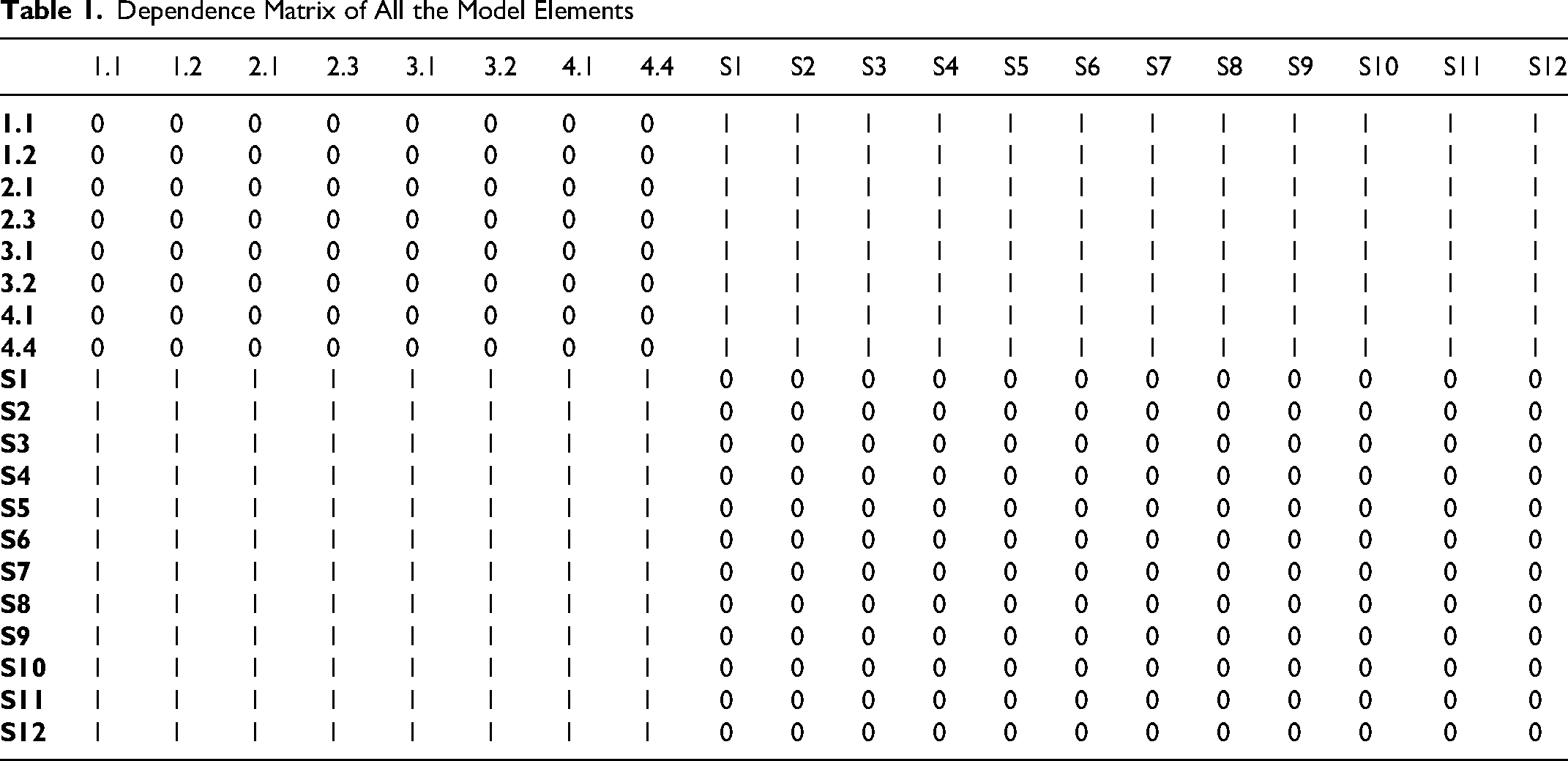
A dependence matrix is developed (Table 1), where 1 means that the element of the column depends on the element of the row, and 0 means that there is no dependence among them. Dependence of one element on another means that the latter influences the former in the context of the analytic network process goal. The rows and columns of the matrix are formed by all the elements of the network, in other words, by the (sustainability) criteria and the alternatives (stakeholder types) (Saaty, 2005). A graphical representation of the analytic network process model (Figure 2) can then be obtained.
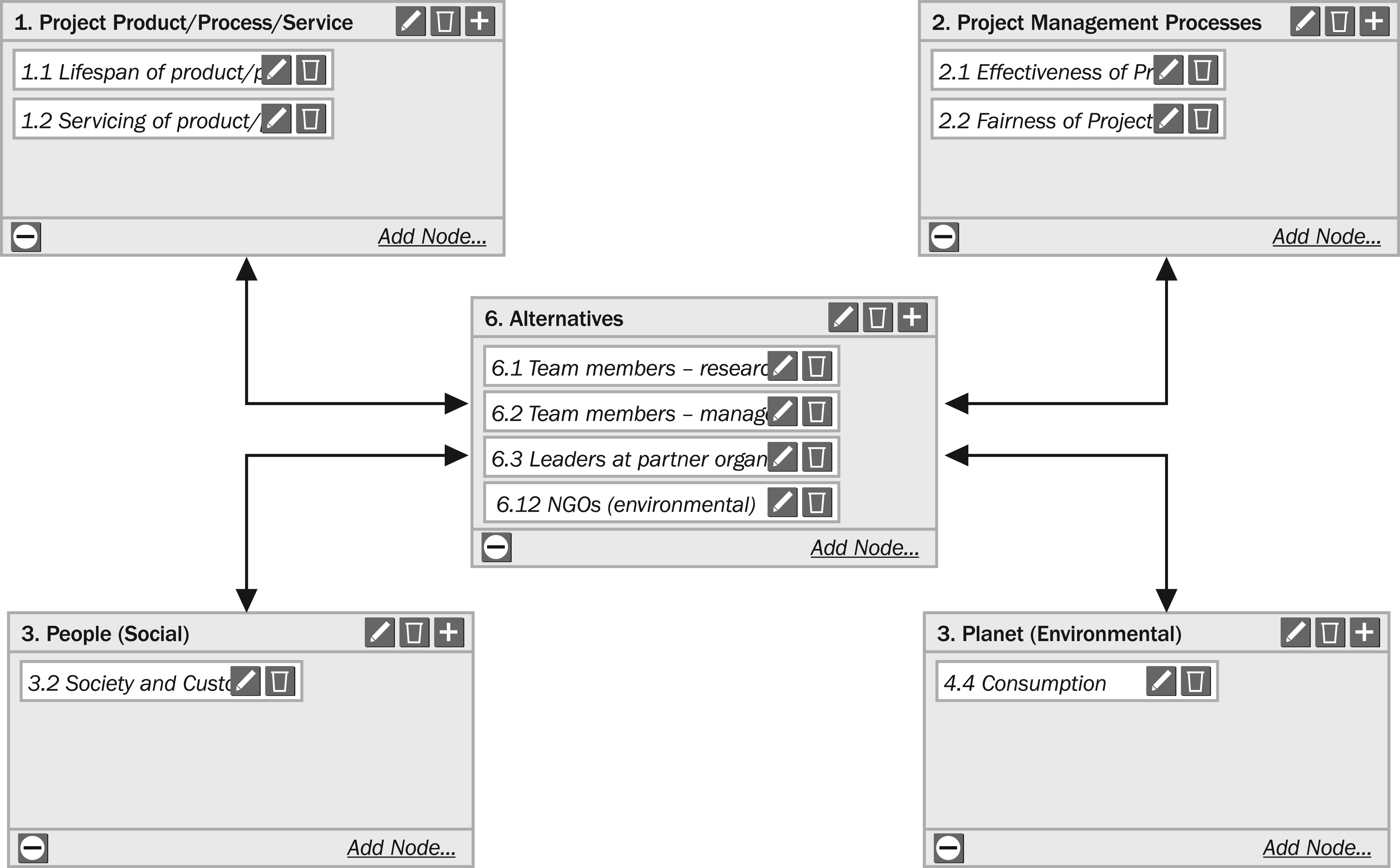
Analytic network process model.
Dependence Matrix of All the Model Elements
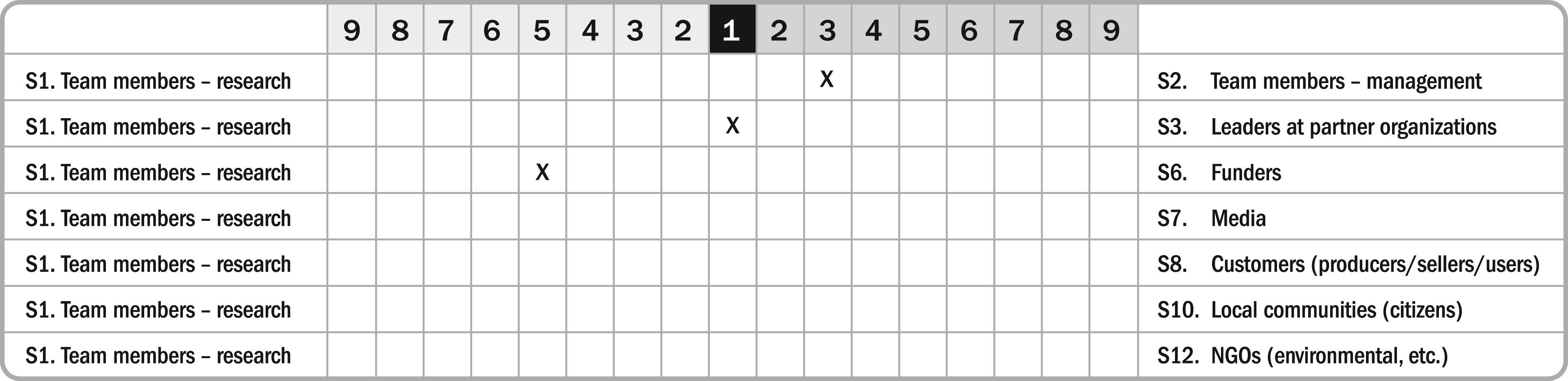
Example of pairwise comparisons used to collect analytic network process model data.
It is important to incorporate in the analytic network process model perspectives of key stakeholders to increase the coherence of the final results. Although the use of the geometric mean of the individual ratings of each expert has been proposed to obtain a final alternatives prioritization list (Ligardo-Herrera et al., 2019), this is not recommended (Subaie 2023). In our study, and in line with the new stakeholder theory principles (Gil, 2023; McGahan, 2021, 2023), it was considered that the views of each key stakeholder on each selected sustainability dimension need to be accounted for and incorporated in the stakeholder management strategy to be defined. This is somewhat lost when a mean of the individual ratings is used.
Therefore, the last phase of this study comprised the conduction of a focus group with seven experts who provided the analytic network process model data. The purpose was to engage focus group participants in a collaborative discussion regarding the results of the analytic network process model. Hence, the focus group started by providing context, reminding participants of relevant information about the project, its goals, and the context in which it operates. Then, an open and inclusive environment was created, encouraging active participation and fostering constructive dialogue among the participants. By involving multiple stakeholders in the discussion, the aim was to foster a sense of ownership and commitment to the project, as well as to promote a holistic understanding of the project's sustainability priorities.
The Case Study
The collaborative R&I project selected involves a collaborative effort from a multidisciplinary team comprising 20 members. These team members are drawn from a consortium leader—a Portuguese small medium enterprise and three research centers. Additionally, the project benefits from the collaboration (an advisory board) of international experts, a university–industry interface entity, and partner firms. The case study represents adequately the typical complex multistakeholder setting of collaborative R&I projects.
The project aimed to develop a novel process for the extraction of bioactive compounds from the wine production process and to demonstrate their potential for the pharmaceuticals, food, cosmetics, and civil construction industries. To assess the environmental sustainability gains achieved by the leading company, a comprehensive life cycle analysis is intended.
The wine production process results in a large volume of spent filtration materials (4 ton/year in the case study), which are currently discarded and forwarded to landfills. This represents a relevant environmental issue when considering that wine production is one of the most significant agricultural activities globally (Maicas & Mateo, 2020). Moreover, these residues are known to contain valuable bioactive compounds. Thus, the case study represents an excellent example of R&I activities as a key instrument to achieve sustainability by projects.
Findings
Preselection of Sustainability Categories and Key Stakeholders
The results from this initial step have already been partially reported in the literature (Santos & Fernandes, 2023). A rating model (Saaty, 2005) was developed for the preselection of sustainability categories by the case study project manager, using as criteria (1) the level to which each goal (P5 category) can be assessed, qualitatively or quantitatively; and (2) its actionability, in other words, the level to which it can be impacted by the project activities. Each criterion, in other words, the assessability and the actionability of each P5 category, was classified by the case study project manager according to a five-point Likert scale (very low, low, medium, high, very high). A simplified analytic hierarchy process model, with both criteria having the same weight, was used to determine the relevance of each P5 category, according to the project manager’s perspective. P5 sustainability categories with a final rating greater than 75% were preselected for the next step (i.e., for the development of the analytic network process model). Running the rating model led to a reduction of the original 16 category areas of the P5 standard to eight categories (Figure 4).
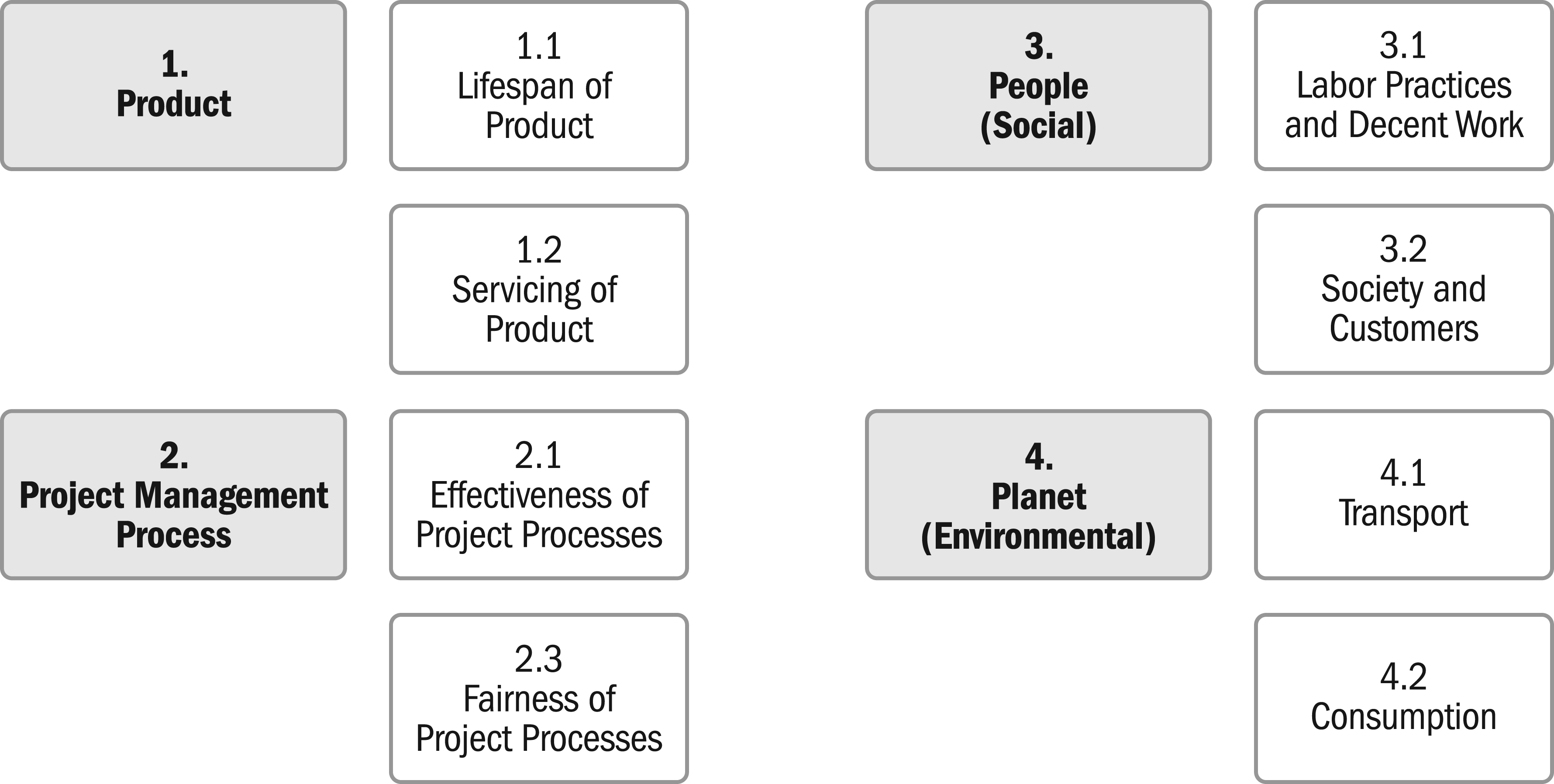
Preselected P5 sustainability criteria.
The preselection of relevant stakeholders was carried out also by the case study project manager, based on their experience on R&I projects in circular economy and related domains. Therefore, the project manager considered the potential social, environmental, and economic impacts of the project activities on various aspects such as individuals, organizations, systems, and on society at large. Particular attention was paid to select stakeholders who represent the environmental aspects, which are key when addressing sustainability issues in projects (Silvius & Schipper, 2014; Tharp, 2012).
Using their expertise and background literature (Karlsen, 2002; Majava et al., 2015), the case study project manager elaborated an initial list of stakeholders comprised of 13 stakeholder categories (from which competitors were removed after consultation with project team members, on the grounds of confidentiality concerns): S1. research team members, S2. project management team members, S3. leaders at the consortium organizations, S4. suppliers, S5. partners (not part of the consortium), S6. funders, S7. media, S8. customers (producers/sellers/users of the technology to be developed), S9. public authorities (certification, licensing, etc.), S10. local communities (citizens), S11. sectorial associations/networks, and S12. nongovernmental organizations (NGOs) (environmental, etc.).
The initial list of P5 categories and stakeholder types that resulted from this step of the method was approved by the research team.
Development of the Initial Analytic Network Process Model
The dependence matrix (Table 1) was developed by project team members. It shows that each P5 category was considered to depend on each stakeholder. No intracluster dependencies were considered in order to not increase undesirably the number of pairwise comparisons in the questionnaire to be used in the next step to collect the analytic network process model data.
Computation of the Analytic Network Process Model
In a first iteration, data was collected from expert nr. 1, an experienced project manager, with an engineering and scientific background and long experience in managing and executing collaborative R&I projects (from small to large scale projects and teams, and multiple disciplines involved). This allowed for a reduction of the number of pairwise comparisons to a level adequate to the collection of responses from the other experts (Subaie et al., 2023). The computation of the initial analytic network process model by expert nr. 1 (582 pairwise comparisons) resulted in a further reduction to six P5 sustainability categories, grouped in four clusters.
A second iteration was then performed with data from expert nr. 2, and the results discussed in face of those obtained for the first iteration. This expert is a knowledgeable researcher on circular economy with extensive experience in projects on this topic, both from the theoretical and practical points of view. Only the sustainability criteria and stakeholder types with a rating by expert nr.1 greater than ca. 50% were selected for model computation by expert nr. 2, resulting in a further reduction of the analytic network process model to eight stakeholders and six P5 impact areas (184 pairwise comparisons).
The analysis of the analytic network process model computation results led to the observation that four stakeholders are considered as the most important by both experts: S1. research team members, S2. project management team members, S3. leaders at partner organizations, and S12. NGOs (environmental, etc.). Considering these alternatives and the six P5 sustainability categories that resulted from the initial computation with data from expert nr. 2, a final model was developed that leads to 44 pairwise comparisons (see Figure 2). This was considered by the project team as an adequate questionnaire dimension to extend the computation of the final analytic network process model to the four key stakeholder types identified by both experts. It allowed to cross-reference the opinion of the key stakeholders as to which P5 sustainability categories should be prioritized in face of their importance to each one. Questionnaire responses from a representative of each key stakeholder category were obtained, the final analytic network process model was computed, and the limit super matrix obtained for each respondent.
The Final Analytic Network Process Model Outputs
The following stakeholders were involved in the collection of empirical data to compute the final analytic network process model: a member of the project research team based at a research center (RT1, expert nr. 3), a member of the project management team (PMT1, expert nr. 4), a leader at a partner research organization (L1, expert nr. 5), a leader at a partner company (L2, expert nr. 6), and a member of an environmental NGO (NGO1, expert nr. 7). The values of the limit super matrix for each stakeholder representative, once normalized, show the relevance of each alternative (stakeholder type, Table 2) and criteria (P5 sustainability category, Table 3).
Final Ranking of Alternatives (Stakeholder Type) Normalized by Cluster

Final Ranking of Criteria (P5 Sustainability Categories) Normalized by Cluster

Stakeholders Prioritization
The results presented in Table 2 show that, for the case study considered herein, NGOs are valued by most of the enquired stakeholders as the most important stakeholder type. Interestingly, the representative of the environmental NGO judges the members of the research team as the most important stakeholder category and ranks its own lowest in the list, along with stakeholder type leaders at partner organizations. Only the leader at a partner research organization (L1) ranks its own stakeholder category as the most important. The stakeholder type research team members ranks in second place of importance, again except for the leader at a partner research organization. Stakeholder type project management team members generally ranks higher than leaders at partner organizations.
These results show that, generally, the participants are aware of the relevance to the P5 sustainability categories of stakeholder types that go beyond their own. The importance of stakeholder types broadly decreases in the following order: NGOs, members of the research team, members of the project management team, and leaders at partner organizations.
Sustainability Categories Prioritization
The ranking of P5 categories was focused on the cluster level. The ranking by the stakeholder representatives was consensual (see Table 3). In cluster 1. Product, Lifespan of Product was considered more important than Servicing of Product, namely by the leaders at partner organizations. In cluster 2. Project Management Process, Effectiveness of Project Processes was considered more important than Fairness of Project Processes, again namely by the leaders at partner organizations. Clusters 3. People and 4. Planet were limited to the categories Society and Customers and Consumption, respectively.
Focus Group
There was a general consensus on the importance of involving environmental NGOs in the project development, bearing in mind its focus on sustainable development. Importantly, it was stressed that this type of stakeholder should have been involved in the project proposal development, along with the research and project management team members. The NGO representative agreed, despite emphasizing that this is not usually the case; for that reason, they ranked their own stakeholder type lowest in priority. The support from leaders at partner organizations was generally considered to be important but only the leader at a partner research organization identified their stakeholder type as the most important. Reasons mentioned include the perspective that research activities are central to the case study project and that these should be aligned with the research center strategy. Nevertheless, the key role of NGOs was also recognized by this stakeholder representative.
In the sustainability categories, the group agreed that due consideration should be given to each of the final model P5 sustainability categories considered to be actionable and assessable in this particular project: product, project management process, people (social), and planet (environmental). The sustainability of the project’s products throughout their useful life was considered more important than the prospects for their sustainable servicing. This was discussed as being related to the nature of the case study project outputs, namely a new process that uses by-products as new raw materials. In particular, leaders at partner organizations expressed that for this specific project, sustainable servicing of the new technologies was not critical due to their nature (from a technological point of view).
The achievement of the desired results through the project management process was deemed to hold greater significance than maintaining a fair and respectful relationship with all individuals involved in the project. Reasons include the need to comply with commitments agreed with the project funder. This was highlighted by the leaders at partner organizations. The other stakeholder representatives attributed a lower importance to this. Furthermore, there was unanimous consensus on the key importance of two factors. First, securing community support for the project’s activities and results, ensuring compliance with applicable regulations, and promoting ethical and truthful dissemination of information about the project results were deemed crucial. Second, minimizing water and soil contamination, as well as reducing waste generation in the winemaking industry through the utilization of the project’s new technologies, was recognized as a significant priority for environmental sustainability.
The group's discussion highlighted the contextual considerations that influenced the prioritization of sustainability categories in the project. The specific nature of the project’s outputs, the commitments to the project funder, and the environmental concerns of the winemaking industry shaped the participants’ perspectives.
Discussion
Answering our research question: How can project stakeholders be prioritized in collaborative R&I toward sustainability? this study builds on Bendjenna et al.’s proposal (2012) to use multicriteria decision-making methods for stakeholder prioritization, while improving it by using the analytic network process to mitigate the highly subjective nature of criteria weights in the fuzzy Choquet integral and to deal with decisions that involve intangible issues (Aragonés-Beltrán et al., 2017; Saaty, 2005). To the best of our knowledge, this is the first report on the use of the analytic network process along with the P5 standard for prioritizing stakeholders from a sustainability perspective, both by and of the project (Huemann & Silvius, 2017). Also, the devised method promotes both the proactive inclusion of stakeholders and the recognition of their different interests, in other words, both the participation and the political dimensions of sustainable project management, as defined by Silvius and Schipper (2014). By recognizing and valuing stakeholders’ interests, and by improving their engagement and participation toward more sustainable project management, the developed method contributes to the paradigm shift still required in the foundational values of project stakeholder management (Carvalho & Rabechini, 2017; Gil, 2023; McGahan, 2021, 2023).
The consideration of the project’s long-term impacts on its stakeholders and society is a key characteristic of the P5 standard, an aspect on which the new stakeholder theory places a strong emphasis (McGahan, 2021, 2023). This encourages project managers to consider the broader social, economic, and environmental implications (Roncancio-Marin et al., 2022). Moreover, the new stakeholder theory encourages project managers to consider not only the economic interests of stakeholders (Gil, 2023). This is accounted for in the P5 standard through the incorporation of the fairness of project processes category, which considers the stakeholders’ rights, well-being, and dignity. This helps to build trust and credibility, which are crucial for long-term success and positive stakeholder relationships (Oliver et al., 2020). As upheld by the new stakeholder theory, the sustainability categories of the developed method allowed for a focus on creating value for all stakeholders (Klein et al., 2019), rather than simply trying to satisfy their needs. This can be observed in the society and customers category that includes concerns with community support, public policy compliance, customer health and safety, product and service labeling, advertising and marketing, and customer privacy. This can also be observed in the consumption category as it includes concerns with recycling and reuse of the project’s products, their disposal, associated contamination and pollution, and generated waste. These highlight concerns related to value creation for environmental NGOs similar to those outlined in the ANP-P5 method implementation and pertinent to the discussion of results.
The devised step-by-step method was found to be useful to find the right balance between the volume and the quality of the empirical data needed to compute the analytic network process model, as it combines the knowledge of the project manager about the specificities of the project and its context with the expertise of specialists in the project area, and with the judgments of stakeholder representatives from varied perspectives. Moreover, the chosen stakeholders are key decision makers at their organizations; therefore, they have a decisive influence on project development.
Furthermore, the results show that stakeholder management, being essentially centered on interpersonal interactions, must focus on the individual level (a particular person) and not only on the organizational level (a particular stakeholder type), which is in line with the new stakeholder theory principles. In fact, Kou et al. (2014) and Ligardo-Herrera et al. (2019) also found that when using the analytic network process the quality of experts is more important than their number due to the often intangible and subjective nature of the elements being evaluated. This is further illustrated by a recent application of the analytic network process to the selection of subcontractors in projects (Subaie, 2023), where also a group of seven experts were chosen based on the range of projects handled, the number of years of experience, and the position within the project focal organization.
The focus group was a valuable step in the research methodology adopted for stakeholder prioritization as it allowed for demonstration of the consistency of the analytic network process model results, similarly to the procedure adopted in other studies (Subaie et al., 2023). Moreover, it promoted the discussion of contextual aspects such as the specificities of university-based project members that influenced the prioritization results—namely, the individual perspectives of these stakeholders in terms of value co-creation. Additionally, it provided new insights such as the recommendation for the involvement of environmental NGOs in the development of collaborative R&I project proposals. This supports the previous observation by Cvijović et al. (2021) that stakeholders should be adequately involved from the early project planning phases. Moreover, the focus group enhanced the analytic network process model implementation by openly discussing its results and related consequences for the project objectives and society, in alignment with the new stakeholder theory principles.
Although explorative in nature, our results seem to confirm previous reports that in collaborative R&I projects the different interests of academics and industrials are a challenging specificity of this type of project that must be accounted for (Fernandes et al., 2021; vom Brocke & Lippe, 2015; Santos, 2021). This was evidenced by the fact that the leader of a research organization was the only stakeholder who considered their stakeholder type as the most important. The open discussion among stakeholders that took place in the focus group was key to clarifying the reasons why and to openly discuss adequate expectation management strategies thereof.
Moreover, we took a more holistic approach to stakeholder identification than traditional approaches. Thus, the broader and more inclusive approach to identifying stakeholders resulted in the identification of a stakeholder that typically is not engaged in this specific type of project: an environmental NGO. This is aligned with the new stakeholder theory, which recognizes that stakeholders can go beyond just those directly impacted by the project (McGahan, 2021, 2023) and include individuals or groups with moral, ethical, or environmental claims.
Traditional stakeholder management often focuses on simply informing stakeholders about project decisions; however, the new stakeholder theory argues that organizations should actively engage stakeholders in the decision-making process (McGahan, 2021). This was pursued in our study by creating opportunities for stakeholders to provide input on project decisions. In particular, the focus group allowed the identified key stakeholders to discuss openly the ANP-P5 method results, confronting the varied views on sustainability categories and stakeholder prioritization. This approach created a sense of ownership.
Overall, the study findings show that the use of the developed ANP-P5 method as a tool to prioritize sustainability categories and stakeholder types offers a more nuanced and comprehensive approach to stakeholder management, enabling project managers to create more sustainable and socially responsible outcomes. By adopting the new stakeholder theory principles, project managers can mitigate the generalized problems associated with traditional stakeholder management, namely limited stakeholder identification, not involving stakeholders in decision-making processes, focusing on short-term impacts, nonsystematic incorporation of ethical dimensions, and treating stakeholders as competing or conflicting parties.
Conclusion
Projects are an instrumental tool toward sustainability. Collaborative R&I projects, in particular, play a leading role in the development of new concepts, knowledge, and technology that can drive a more sustainable society (Præst Knudsen et al., 2019). In this context, the concept of sustainable project management has been gaining momentum as it addresses both sustainability by and of the project, in other words, it endorses the use of sustainable management approaches to deliver sustainable goods or services (Huemann & Silvius, 2017; Silvius, 2017).
Several definitions exist for the concept of sustainable project management, but it is consensual that to ensure a project’s sustainability the different perceptions of stakeholders should be understood and managed accordingly (Armenia et al., 2019; Silvius & Schipper, 2014). This fact leads to a higher degree of complexity and calls for project management processes that take into account a joint, open, flexible, and fair negotiation and sharing among multiple stakeholders of the co-created value (Gil, 2023; McGahan, 2021, 2023). Conversely, from a practical perspective, there is still a tendency to favor the traditional management of stakeholders, for example, based on the salience model (Mitchell et al., 1997), instead of their engagement from a sustainability point of view (Silvius & Schipper, 2019). Effective stakeholder management becomes even more critical in collaborative R&I projects due to their multi-actor configuration and potentially conflicting interests (Moura & Teixeira, 20).
In fact, several studies have argued that researchers should develop practical tools that incorporate sustainability aspects, so that project managers can properly address sustainability and incorporate it into project management processes. Multicriteria decision-making methods, such as the analytic network process, effectively handle situations with multiple stakeholders, diverse objectives, and interconnected relationships among factors (Kheybari et al., 2020). The analytic network process is particularly relevant for ranking processes in sustainable project management due to its ability to rank intangible criteria (Saaty, 2005; Subaie et al., 2023; Wu et al., 2009).
Among the available sustainability impact assessment tools, the P5 standard has been found to be one of the more effective and generic sustainable project management standards that considers both the sustainability of and by the project (Silvius & Schipper, 2022). Moreover, it incorporates key worldwide initiatives on sustainable development (Piterska et al., 2018; Silvius & Schipper, 2022). Thus, this study explored the use of the P5 standard to select sustainability criteria in an analytic network process-based method for stakeholder and sustainability criteria prioritization. To demonstrate its applicability, the ANP-P5 method is applied to a collaborative R&I project in the circular economy domain.
From a practical standpoint, it was observed that developing analytic network process models for stakeholder prioritization requires striking the right balance between accurately representing interdependencies among factors and implementing a feasible data collection mechanism. Additionally, careful analysis and open discussion of each stakeholder judgment informing the analytic network process model are important to understand specific aspects that can significantly influence project outputs, outcomes, and impacts.
Theoretical and Practical Contributions
Expanding the theoretical understanding of stakeholder management, the study findings show that the use of the new stakeholder theory as a theoretical lens offers a more holistic approach to stakeholder management in a sustainability context. In particular, the findings shed light on the significance of the following new stakeholder theory aspects aligned with sustainable project management: (1) the consideration of long-term impacts of the project on its stakeholders and society (socially valuable outcomes); (2) the consideration of interests of stakeholders that go beyond financial aspects; (3) a focus on fairly co-creating and distributing value for all stakeholders, including non-traditional ones such as NGOs; and (4) a focus on openly and proactively engaging stakeholders in decision-making processes. Furthermore, the proposed ANP-P5 method contributes to clarify who should be in and who be out as a project stakeholder from a new stakeholder theory perspective (Gil, 2023).
The developed ANP-P5 method also demonstrates the practical integration of sustainability criteria into project management processes (Carvalho & Rabechini, 2017; Silvius & Schipper, 2022). The method can be implemented in different organizational contexts and inform decision-making in sustainable project management, namely about which stakeholder types and sustainability areas should be prioritized when developing stakeholder and sustainability management plans.
It is anticipated that embedding the ANP-P5 method within projects will positively affect the success and, consequently, the sustainability of collaborative R&I projects. However, embedding new project management practices will depend on the partners’ levels of project management maturity (Fernandes et al., 2014).
Limitations and Future Research Directions
Whatever the method used for project stakeholder prioritization, a broad and adaptable set of criteria should ideally be used to respect differences in target groups. Therefore, ideally, the pairwise comparisons questionnaire should have included more P5 sustainability categories. This could be accounted for in forthcoming studies by interviewing stakeholders instead of using an online questionnaire.
A critical aspect of stakeholder management concerns the evolution over time of their opinion and positioning toward the project. This study will be repeated after the end of the project. Stakeholder representatives will be surveyed about the project benefits and added value to each, according to the prioritized sustainability categories.
Footnotes
Acknowledgments
The authors would like to thank Project BachusTech and the participating organizations for enabling this research to take place, as well as the editor, anonymous reviewers, and the participants of the EURAM 2023 Conference, Project Organizing Track, for their valuable feedback.
Funding
The author(s) disclosed receipt of the following financial support for the research, authorship, and/or publication of this article: The authors are grateful to the Foundation for Science and Technology (FCT, Portugal) for financial support through the European Regional Development Fund (ERDF) and FCT/MCTES (PIDDAC) to CIMO (UIDB/00690/2020 (DOI: 10.54499/UIDB/00690/2020) and UIDP/00690/2020 (DOI: 10.54499/UIDP/00690/2020)), SusTEC (LA/P/0007/2021 (DOI:  )), ARISE (LA/P/0112/2020), and CEMMPRE (UIDB/00285/2020).