




Abstract
As global crises such as COVID-19 become more frequent, many projects, which can be called blitz projects, will need to be completed extremely quickly in response. However, there remains a lack of theoretical support for their implementation as well as systematic strategies for managing their schedules. This article examines the responses to COVID-19 by three specialty field hospitals in China. Through reviews and cross-analysis of the influential factors and practices, and their effects on extreme schedule management, this article proposes a systematic strategic framework including the elements of mission, solution and innovation, organization and culture, communication, resources, dynamics, and adaptability.
Introduction
In the volatility, uncertainty, complexity, and ambiguity (VUCA) era, globally significant crisis challenges, such as public health events, political unrest, and natural disasters, are increasing in number and magnitude. Responding to these challenges requires unconventional measures—some response activities must be initiated and completed in an extremely brief time to stop situations from escalating and reduce the damage as quickly as possible (Pastor-Satorras et al., 2015). From the pacing perspective such activities can be termed blitz projects (Shenhar & Dvir, 2007). For example, the COVID-19 pandemic, which began in 2020, far exceeded previous experiences and predictions in both scope and impact. To rapidly expand medical facilities, numerous field hospitals were built ultra rapidly around the world, especially in China (Luo et al., 2020). In the business field, as technology advances, markets change, and emergencies occur, companies and organizations are also facing greater pressure to implement projects with extremely tight schedules such as the rapid development of new products (Bukley, 2020) and large-scale information system restoration (Sun et al., 2021). Companies that have recently introduced disruptive technologies are likely opening the door for the deployment of extreme-schedule and blitz projects in noncrisis scenarios. Elon Musk’s initiatives, such as Tesla’s gigafactory construction, serve as examples of such projects. Blitz projects will prove more challenging than their predecessors, particularly because we clearly lack both sufficient practical experience and systematic theoretical research regarding the schedule management of such projects (Robert & Lajtha, 2002). We urgently need to develop this knowledge and understanding for such projects to succeed.
Project management researchers and institutions have long recognized the existence of this important gap. Shenhar and Dvir (2007) suggested that blitz projects are the most urgent type of projects and that differing rates of completion have a significant effect on traditional project management. Kerzner (2015) suggested that projects must adapt to a rapidly changing environment. A Guide to the Project Management Body of Knowledge (PMBOK® Guide) – Seventh Edition (and The Standard for Project Management) (Project Management Institute [PMI], 2021) transforms technology-driven project management tools into project delivery principles to increase the flexibility of knowledge. However, new situations often emerge with more speed and complexity than we expected. The unpredictability of crisis events leads us to remain desperately short of relevant practical experience and theoretical support. Hence, this article proposes a strategic framework for the schedule management of blitz projects.
Project management is a science of practice, and practice-based wisdom is an important source of innovation in project management knowledge (Cicmil et al., 2006), so case studies—especially multiple case studies—serve as an important way of developing new theories of project management (Yin, 2017). Based on this idea, in this article we analyzed three specialty field hospital construction projects that took place during the COVID-19 pandemic in China, as well as three similar hospital construction projects (including two international cases) for the sake of reference and comparison to ensure robustness of the results.
The structure of this article is as follows. First, the article presents a literature review on project schedule pressure and related challenges. Then, we deliver a practical review of extreme schedule management for specialty field hospitals, along with a systematic summary of innovative practices. To support the conclusions of this analysis, we also refer to projects in Hong Kong and London. Finally, we propose and discuss an extreme scheduling strategy framework for blitz projects. This article contributes to project management theory by conceptualizing a strategic framework for extreme schedule management for blitz projects through a multiple-case study, making an important addition to the project management theory system.
Literature Review
Project Schedule Pressures and Challenges
Today’s world can be described as full of volatility, uncertainty, complexity, and ambiguity (VUCA) (Garti & Dolan, 2021). Where “volatility” describes rapid changes, and the need for project plans and schedules to bear their impact (Nachbagauer & Schirl-Boeck, 2019), “uncertainty” describes the unpredictability of the external environment and the need for organizations to adapt and adjust quickly (Denicol et al., 2020). “Complexity” describes the synergy of projects in the context of multidisciplinary and multistakeholder involvement (Elia et al., 2020), and “ambiguity” describes the difficulties in information collection, identification, and processing within such an environment (Elia et al., 2020). Companies and organizations increasingly need to complete projects quickly to achieve the goals of controlling costs, capturing markets, and even surviving in a fast-paced environment (Zidane et al., 2018). For example, to complete the Artemis program, NASA concluded the development of a solar-powered device in months (Bukley, 2020), and Mercedes-Benz has developed an electric vehicle model that is one of the fastest developed in history (Asif et al., 2021). Although time has a measurable, objective, and unchanging form, people’s perception of time is shifting with the development of technology and the fast-paced changes in society, causing time lines to become compressed (Burdick, 2017). Moreover, major global events, such as public health crises, wars, and natural disasters that have continued to occur in recent years, have further compressed the project time frame (United Nations High Commissioner for Refugees [UNHCR], 2020) with increasing frequency (van Aalst, 2006). Organizations need to deliver projects within extremely tight schedules, quickly responding to the external environment through projects to weaken the impact of disruptions and crises (Luo et al., 2020). Examples of these types of projects include Fangcang shelter hospitals during COVID-19 (Chen et al., 2020), mobile medical laboratories during the Ebola epidemic (Moll et al., 2016), tented hospitals in war zones (Caddick et al., 2021), and temporary relocation centers during hurricanes (Hamilton et al., 2009).
As schedules continue to be compressed, more and more project management challenges are emerging. To ensure quality and success, urgency and compression should not be completely consistent throughout a project but should be decoupled from time pressure as needed (Nachbagauer, 2022). Rapid completion requires additional resources, infrastructure, and services (Basu et al., 2017). High schedule compression also leads to higher rework rates, offsetting the time gain. Cognitive limitations can lead to irrational decisions and judgments being made in a project with a short time frame (Kwesi Buor, 2019). The increased capital consumption, indirect costs stemming from numerous stakeholder interactions, and lack of management under time pressure must also be addressed (Rapp, 2011). Militello et al. (2007) reported that project teams are often brought together on short notice for both permanent and temporary partnerships, though they lack collaborative experience and trust in the temporary organization. In response to uncertainty in the environment and to maintain project schedules, various guidelines have been produced and constantly updated in response to changes in the external environment. This aids in the development of objectives and plans but often provides little direct assistance for project implementation (Kalkman & de Waard, 2017). The effectiveness of traditional project management methods is often challenged, and strict adherence to planning and implementation frameworks proves difficult due to redundancy of information and lack of timeliness (Robert & Lajtha, 2002). The ever-accelerating pace of project implementation is transcending the theoretical boundaries of project management and requires more focused knowledge and guidance.
Projects With Different Paces
From a pacing perspective, projects can be categorized into four types (Shenhar & Dvir, 2007), as shown in Figure 1. Regular projects are efforts in which time is not critical. Schedule management in such projects is based on a time-cost-quality triangle, and the three performance indicators are mutually binding so schedule compression is minor or even delayed (Meier, 2010). Fast or competitive projects are the most common types of projects for industrial and profit-driven organizations. Since forerunners gain significant advantages (Sońta-Drączkowska & Mrożewski, 2020), including new product development (Millson & Wilemon, 2019), manufacturing (Hutchinson & Hong, 2007), and marketing benefits, organizations focus heavily on project schedule control. Urgency further increases in time-critical projects, which are constrained by immovable deadlines or windows of opportunity. For example, if the date of a large event is announced in advance (i.e., the Olympic Games), the related project must be completed by this time. Delay means failure and brings financial and reputational damages, which are basically unacceptable (Davies & Mackenzie, 2014; Li et al., 2018).
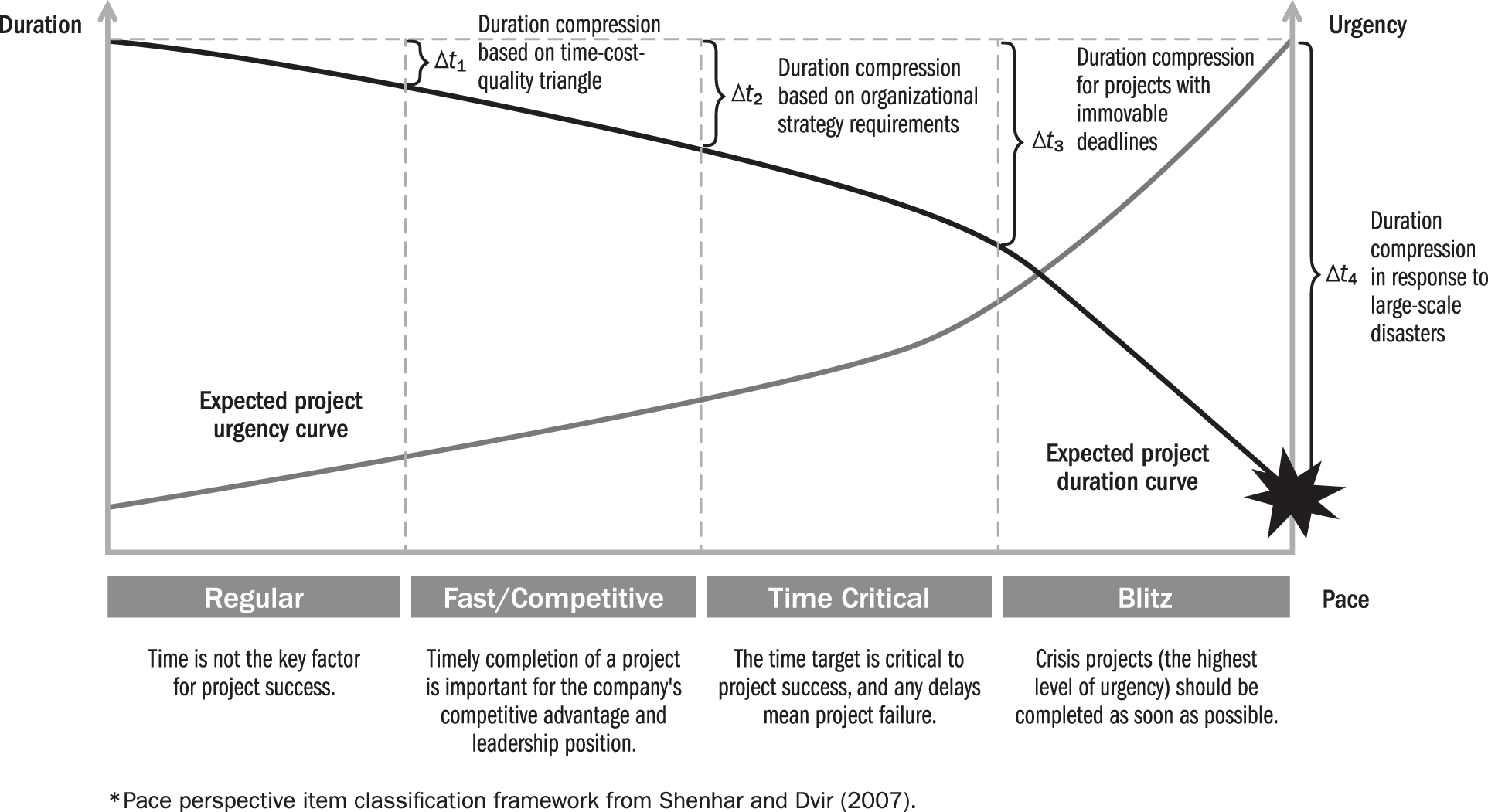
Expected schedule-compression problems at different project paces.
Blitz projects are the most urgent type of initiative and typically arise in response to a crisis or a result of an unexpected event. Completing them as fast as possible is the criterion for success (Shenhar & Dvir, 2007), which makes the task extremely difficult. To make the completion of the project possible, the project must be developed without a clear plan, causing the work to begin in an ambiguous environment (Barton et al., 2015). The full extent of the situation often remains unknown (Bye et al., 2019), and the ambiguity of objectives and uncertainty of the project environment will result in a constant need to adapt and change within the organization (Chen et al., 2020), further increasing project complexity and schedule challenges (Chen et al., 2020). The temporary gathering of many stakeholders will lead to a crisis of trust (Militello et al., 2007), conceptual slack (Busch, 2002), communication difficulties (Groenendaal & Helsloot, 2016), and bureaucratic behavior within the organization (Klein et al., 2006). The scheduling demands of these blitz projects are difficult to achieve using existing theories and methods and require methodological integration and innovation in practice (Fang et al., 2020). As the most urgent type of project, blitz projects impose particularly significant project management challenges to which project teams must respond with different management approaches (Shenhar & Dvir, 2007), although we still lack the relevant systematic knowledge of how to handle these situations.
In summary, advances in technology and management tools are driving projects to completion at faster and faster speeds. However, the speed and extent of change in the external environment are upsetting the balance between the supply and demand for relevant knowledge. In the future, we may need even more and more blitz projects. To counter the challenges that become apparent as the speed of projects increases and drive project success, we must systematically study the schedule management of blitz projects. The occurrence of COVID-19 provides an unfortunate opportunity to review and understand in depth how these rapid-response projects were completed within such a limited time frame. This also provides the opportunity to create effective practices to provide a systematic strategic framework for blitz projects.
Research Method
Research Design
To draw comprehensive conclusions, we adopted a multiple-case comparison approach. Case studies are suitable for in-depth research into the why and how of some social phenomena (Yin, 2017), especially in project management, where this approach can address the specific aspects of real projects and problems that arise with many difficult-to-quantify variables (Taylor et al., 2011). Multiple-case research can reveal the underlying causes of a particular problem or context (Flyvbjerg, 2006). The cases in this article have been selected carefully rather than opportunistically, which is similar to random sampling (Groenendaal & Helsloot, 2016). To derive a systematic strategic framework, we referred to the parts of the project life cycle that occur before implementation, including the conception, planning, production, and handover stages.
To avoid the influence of institutional environment and cultural differences, we selected three specialty field hospitals in China at the beginning of the COVID-19 pandemic: Leishenshan Hospital in Wuhan, the outbreak center and two specialty field hospitals in Shanghai and Shenzhen. Wuhan, Shenzhen, and Shanghai are all megacities in China, but they had varying levels of disease severity and evolution trends at the time of the outbreak. In addition, we selected a similarly sized regular hospital project for reference to determine how the extreme scheduling strategy of the field hospital blitz projects differed from the development of this site. Data on other specialty field hospital constructions, such as the Hong Kong Infection Control Center (HKICC, 4 months, 816 beds) and the Nightingale Wing of the Jersey General Hospital in the United Kingdom (4 weeks, 180 beds), were also collected to validate the conclusions.
Data Collection and Analysis
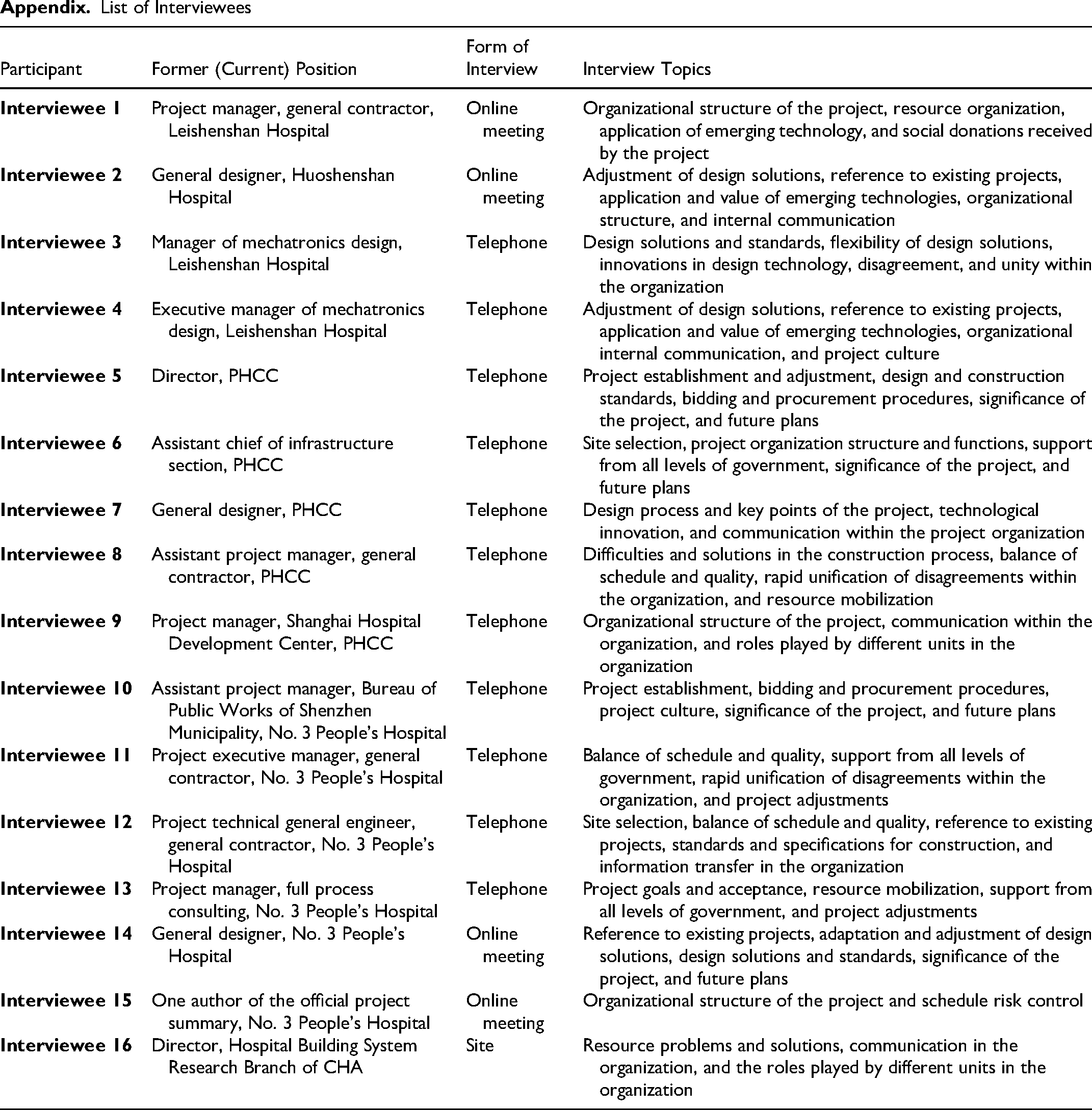
Data were collected from multiple sources (Yin, 2017). First, two authors of this article were involved in the construction of the Shanghai case site and the official project summary of the Shenzhen case site. One author served as project director of the Shanghai case site, allowing us to have a comprehensive and profound understanding of the entire management process at that facility. Second, we obtained many internal project documents; however, due to the urgency of the project, they were concise and raw, with less-than-optimal quantitative data and statistics. We carefully read these project documents to understand the key events experienced during the development of the projects and used them as the basis for the design of the interview outline. We invited 16 key people to participate in semistructured interviews (see the Appendix at the end of the article). During the interview process, some interviewees also provided a wide range of internal project documents within their scope of authority. In the end, we received a total of 37 meeting minutes, 31 project summaries from participating units, 39 project logs, three project design drawings, two official project summaries, and two officially published project management books; we coded and filed all materials in a uniform manner. We conducted an in-depth reading and analysis of the materials, evaluated the knowledge gaps reported in the literature about project management with extreme schedules, and identified the factors influencing the schedule of the case project. We then discussed these factors among the three authors and clustered the redundant ones to form the five different parts that constitute the case study. Third, at the beginning of the pandemic, two of the authors were commissioned by the China Hospital Association (CHA) to organize 20 hospitals, designers, contractors, and consulting companies. They presided over the preparation of the Guidelines for Construction of Emergency-Response Temporary Healthcare Facilities, published by the CHA in April 2020, and conducted a preliminary study of the issue. Several case studies were collected, including those examining three cases explored in this article, and several workshops were organized. All these methods are applicable to qualitative case-based studies (Yin, 2017). To guarantee adequate data and deepen our understanding of the contexts of the projects, we comprehensively searched news reports, open databases, and public websites. We continued to collect case data until there were hardly any marginal gains in information and theoretical saturation had been reached (Yin, 2017). Redundant data from different sources provided support for cross-validation purposes and enhanced the reliability of data.
Case Background
COVID-19 is a contagious disease caused by severe acute respiratory syndrome coronavirus 2 (SARS-CoV-2), and the World Health Organization (WHO) identified it as a global pandemic on 11 March 2020. The virus spreads mainly through aerosol and direct contact transmission and has several mutations. Due to its fast transmission, timely prevention and control measures are essential to suppressing its spread. In January 2020, the disease spread rapidly in Wuhan, greatly exceeding the capacity of the designated hospital, and creating a bottleneck for pandemic control. Meanwhile, other Chinese cities began consolidating medical resources.
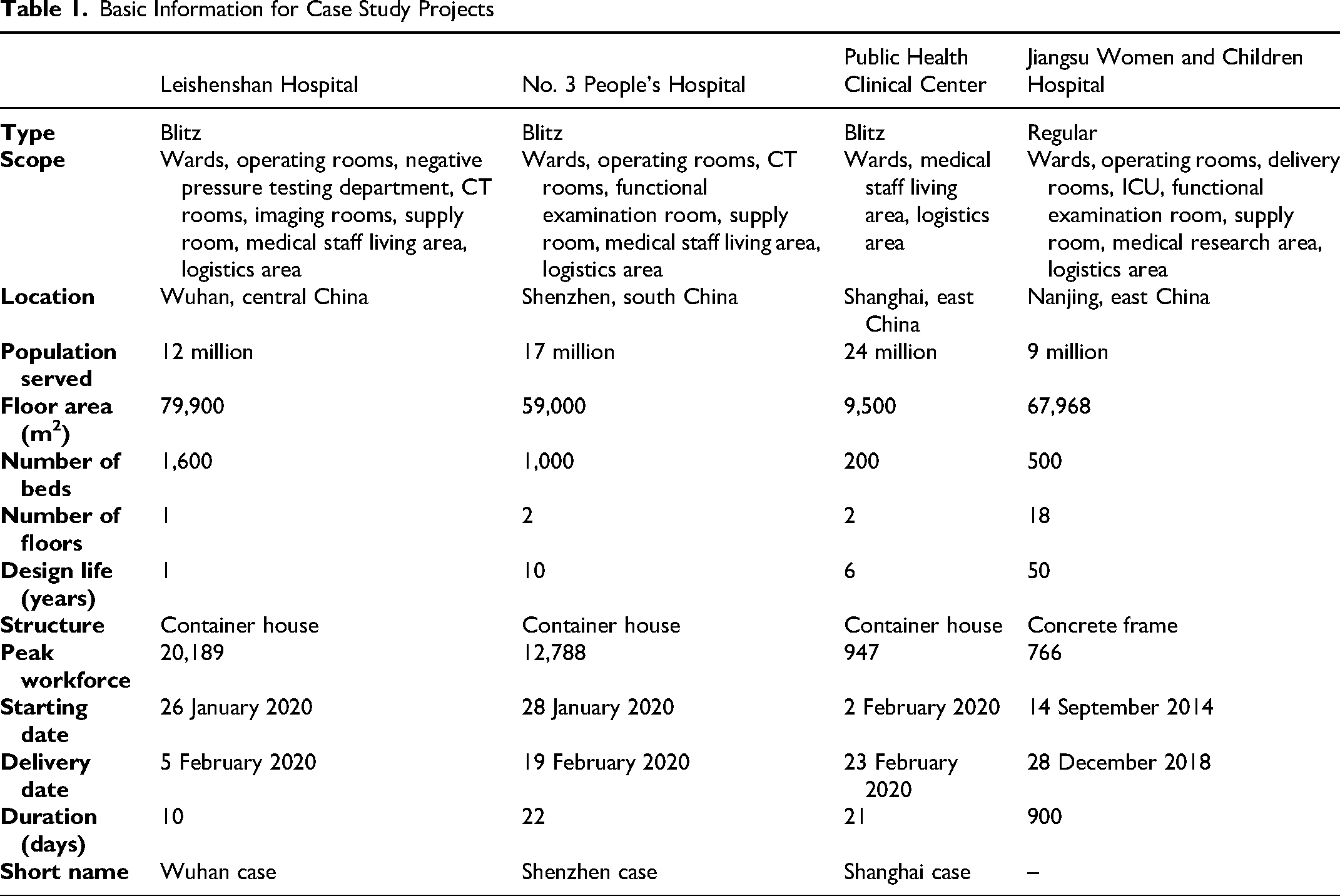
Specialty field hospitals for COVID-19 responses are respiratory infectious disease hospitals, which play an important role in rapidly increasing medical capacity and centralizing patient admissions. A construction project that produced an inpatient ward building of a regular hospital was also examined as a reference case. The basic information on these cases is shown in Table 1.
Basic Information for Case Study Projects
Case Study
In this section, we systematically present the case projects. First, we will describe the external environment and how it affected the urgency of each project. Then we will present the project in four phases following the logical sequence in which it proceeded. By comparing the reference case with the research cases, we found that many phases of regular construction projects were omitted in the blitz project, whereas the project phases mostly ran parallel to one another within this extreme time frame. Figure 2 presents the project phases involved in the case study stages.
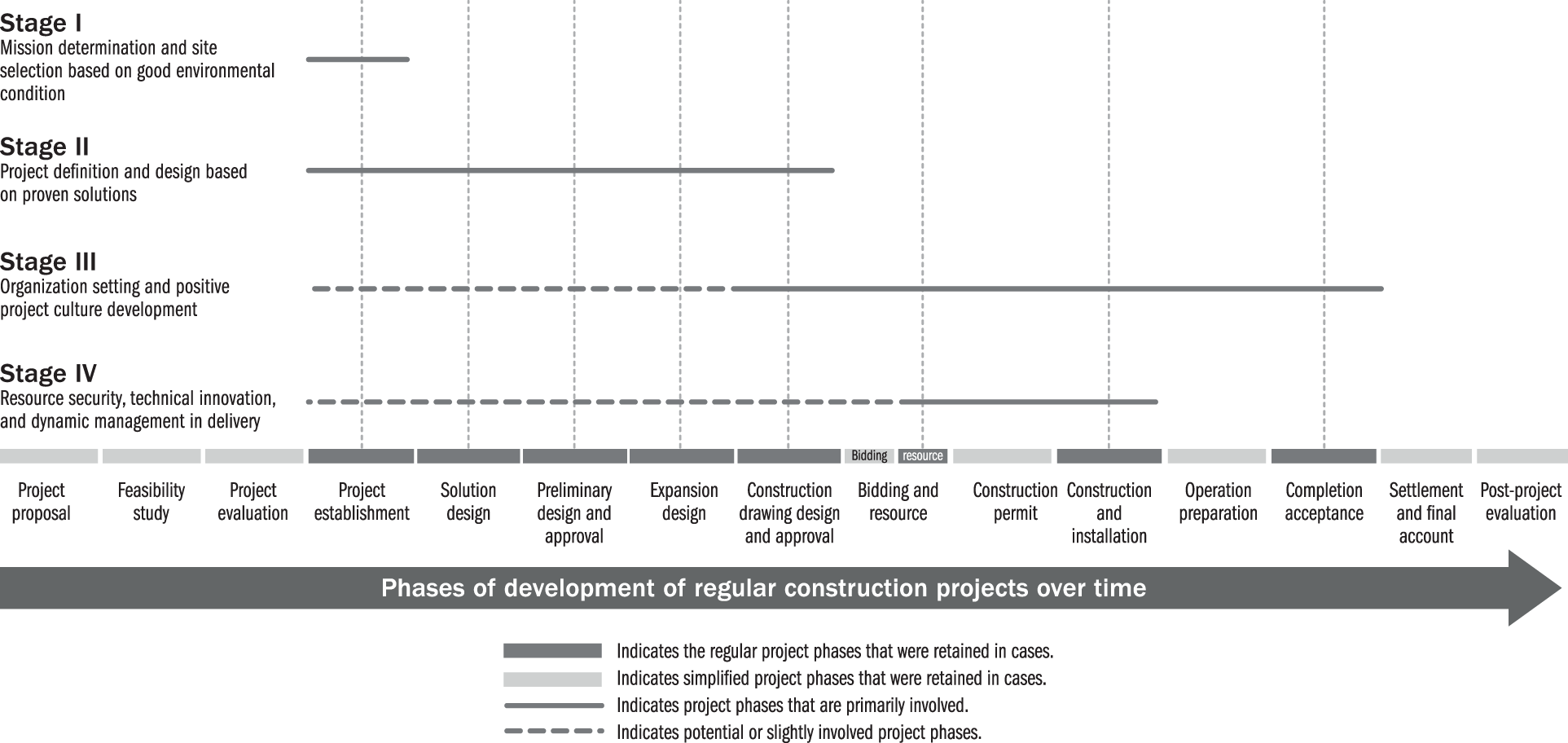
Relationship between the case study stages and regular project phases.
External Environment
Unlike regular projects, blitz projects respond directly to the external environment; therefore, the evolution of the crisis in the external environment significantly affects the pace of task completion.
Wuhan was the first city in China to discover an outbreak of COVID-19—and the most severely affected. The explosive increase in patients led medical resources to swiftly become overloaded. The government promptly began building specialty field hospitals to isolate and treat patients, relieve the pressure on medical resources, and contain the disease’s spread. The field hospitals constructed in Wuhan include the Fangcang Hospital and the infectious disease hospital, with the former used for confirmed low-risk cases (Fang et al., 2020) and the latter for severe ones. Confirmed cases were rising rapidly during construction (Figure 3a), so the hospital had to be delivered as soon as possible.
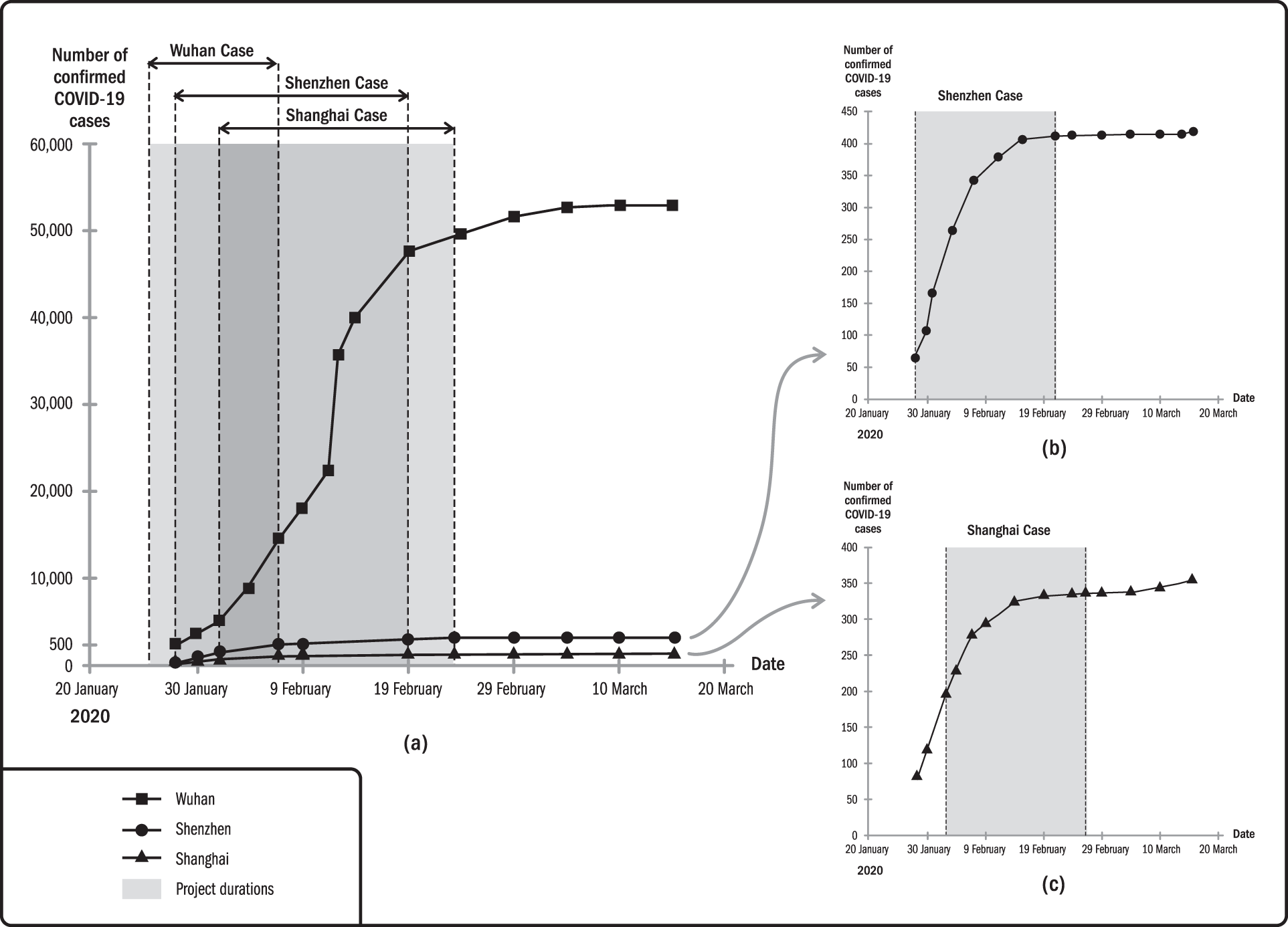
Number of confirmed COVID-19 patients in Wuhan (a), Shenzhen (b), and Shanghai (c), and the projects’ durations.
Shenzhen, which has a large population of immigrants from other provinces and cities, faced the dual risk of people returning during the Spring Festival holiday and people traveling there from high-risk regions. Thus, the pandemic expanded rapidly (see Figure 3b), so specialty field hospitals had to be delivered as quickly as possible to ensure Shenzhen had sufficient medical resources to cope with the highly uncertain evolution of the pandemic.
Shanghai also faced severe challenges from the rapid spread of the pandemic. In 2004, after responding to the severe acute respiratory syndrome (SARS) outbreak in 2003, the city spent a year building the Shanghai Public Health Clinical Center (PHCC) to treat infectious diseases and this became the designated hospital for its COVID-19 response. To provide adequate beds, the government built new emergency medical housing on the campus. Three phases were planned—each with 200 beds—and the need for continuing construction was evaluated throughout the evolution of the pandemic. At the end of the first phase, the number of COVID-19 cases in Shanghai leveled off (see Figure 3c), so the remaining two phases were suspended.
The external situational analysis discussed above reveals that the current severity of the pandemic, evolution trends, uncertainty, patient pressures, and capacity of existing medical facilities strongly affect the scheduling requirements. As a result of such factors, Wuhan lost the most viable period of early response. Existing medical resources had almost collapsed, and more beds needed to be built soon, so the Wuhan facility was designed for only one year of use. Shenzhen and Shanghai were in relatively early stages of the pandemic, but as megacities with large, highly mobile populations, their risk of long-term outbreaks was extremely high. Hence, Shenzhen and Shanghai adopted the dual pursuit of a swift response and provision of normal healthcare services. The design lives of the Shenzhen and Shanghai cases totaled 10 and 6 years, respectively.
Stage I: Mission Determination and Site Selection Based on Good Environmental Conditions
At the time of the project’s inception, the COVID-19 virus had just been discovered and its interpersonal transmission characteristics and capacity became alarming as the number of patients grew exponentially over time. Therefore, the central mission of the case projects involved completing them as quickly as possible to provide crucial medical resources to the community. “Leishenshan Hospital is a project in a race against time and must be delivered as fast as possible to save patients’ lives,” stated one interviewee in this study (Interviewee 3). “We organized a meeting with all participating units to convey the urgency to them,” said another (Interviewee 6). “At that time, to determine the principle of the project is the priority of the schedule; that is, the shortest possible time—the project to save lives cannot be delayed,” said a third interviewee (Interviewee 13).
The transmission mode of COVID-19 increases the importance of site selection for specialty field hospitals (Zolfani et al., 2020). The site also determines the external environment of the hospital, such as evenness of terrain or the presence of surrounding roads and utility support, which can affect the pace of construction.
Wuhan used the bus parking lot for the 7th International Military Sports Council (CISM) Military World Games for a field hospital because the site “is developed and has some supporting resources that can be used directly,” explained Interviewee 2. The site was well supported by municipal facilities, roads, open space, and suitable material stacking; the athletes’ living areas could be used as well, which greatly reduced the need for new construction. The Shenzhen site sat in an existing hospital (Shenzhen No. 3 People’s Hospital) around a flat, open space. The Shanghai site sat inside the PHCC; according to Interviewee 7, “the construction of PHCC focuses only on negative pressure wards, and some medical and technical facilities can be directly used within the hospital, making the overall project less difficult.” Whereas traditional hospital siting focuses on spatial distribution and service coverage (Vahidnia et al., 2009), common features of these sites are a beneficial environment and strong municipal support (Figure 4). During our research, we found another case reflecting this site selection pattern: the HKICC project west of the AsiaWorld-Expo, facilitating direct access to underground services and a nearby transportation hub 9.
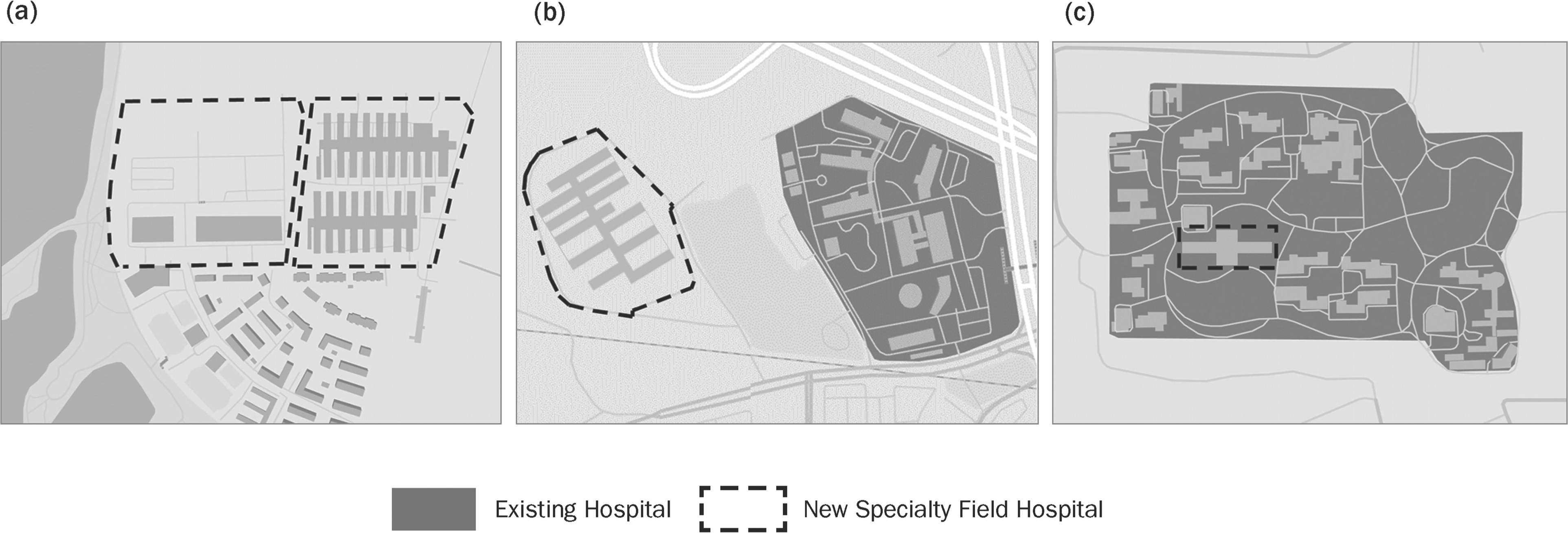
Locations of research case projects: Wuhan case (a), Shenzhen case (b), and Shanghai case (c).
Stage II: Project Definition and Design Inspired by Proven Solutions
Project scope, quality, cost, and scheduling are mutually constraining, so one way to significantly accelerate a project is to reduce its scope and quality requirements (Wearne & White-Hunt, 2014). For the specialty field hospitals, simultaneously pursuing an extreme schedule and the requirements of a hospital specializing in infectious diseases proved difficult. In the reference case, the design time totaled approximately seven months, whereas the design of the specialty field hospitals required 24 hours or less. Therefore, designing a high-standard, individualized, and complex solution did not serve as the best option for the COVID-19 pandemic response.
Specialty field hospitals make extensive reference to existing design solutions in similar projects. SARS and COVID-19 had similar characteristics and requirements for specialty field hospitals, so the Xiaotangshan field hospital built in response to the SARS epidemic was of great reference value. In all three research cases, the design drawings of the Xiaotangshan Hospital were used as the basis for modified plans, which greatly reduced design time, learning time, and risk of errors. The design unit of the Xiaotangshan Hospital sent the drawings to the Wuhan government within an hour of receiving notice of the decision to build the Leishenshan Hospital. In Shanghai, the first task was “to get the drawings of Xiaotangshan Hospital, Huoshenshan Hospital, and Leishenshan Hospital as soon as possible” (Interviewee 7). The same design company that built the Xiaotangshan Hospital built the one in Shenzhen: “I worked on the Xiaotangshan project in 2003, and the project was optimized and improved on the basis of the Xiaotangshan drawings,” asserted Interviewee 14.
Another measure involves lowering the design standards. Like field hospitals in war (Caddick et al., 2021), to ensure the fastest possible construction, these hospitals were characterized by their assurance of basic functions rather than adherence to the highest standards. “Our goal is not to build highly technical projects, but fast projects, so we must ensure that the design can be easily implemented,” said Interviewee 3. “The principle of the simplest design was followed to meet these basic requirements,” stated the PHCC Temporary Medical Project Design Summary. The ultra-rapid construction mode can lead to some degree of problems with quality during the operation of the project site. “Some corridors leak during heavy rains, but can be repaired quickly,” stated Interviewee 5.
Meanwhile, specialty field hospitals also face the need for evolution because of the uncertainty of demand, so their design must be resilient and scalable. Standardization and modularization are the best ways to cope with complexity and uncertainty under extreme schedule requirements. All three cases considered in this study used modular designs based on standard container houses. Two interviewees stated, “We design based on available materials, rather than procuring materials based on design” (Interviewees 4 and 14); whereas another said, “Using containers was the only option to complete this project” (Interviewee 7). This approach allows for the utilization of existing containers, facilitating modular design in accordance with the functional characteristics of the area and the medical process flow. “The ward needs to be connected to much equipment through piping, and the holes for this piping can be reserved directly at the factory without on-site processing,” said another (Interviewee 8). During the research, we also found that in the HKICC project, 524 modular containers were used in the patient treatment area, which spans more than 14,000 square meters. The design of the Jersey General Hospital Nightingale Wing project employed the same modular construction methods (Smith, 2021).
Stage III: Organizational Setting and Development of a Positive Project Culture
Due to the time constraints of a blitz project, making a thorough plan and then executing it would prove impossible (Barton et al., 2015). Problems often arise during projects, and decisions cannot be made through the traditional process. In such projects, timely decisions are preferable to optimal ones that require lengthy consideration. Thus, blitz projects require strong governance and active management and, consequently, they require people and systems with those competencies.
The Wuhan site used a top-tier decision-making approach and was coordinated by the Wuhan Novel Coronavirus Pneumonia Prevention and Control Headquarters, whereas the Wuhan Urban and Rural Construction Bureau organized an interdepartmental construction headquarters for project management. The Shenzhen site used top-tier decision-making coordinated by the Shenzhen Novel Coronavirus Pneumonia Prevention and Control Headquarters, headed by Shenzhen’s secretary municipal committee of the CPC, 1 and the Bureau of Public Works of Shenzhen Municipality 2 set up the management headquarters. The Shanghai case also used top-tier decision-making, coordinated by the Shanghai Leading Group on Response to the Novel Coronavirus Pneumonia, and the Shanghai Hospital Development Center 3 was responsible for project management. “The level of government involvement and attention is unprecedented. The government sends officials to the site daily to hear progress reports and bring support, while related procedures can be approved within a day,” said Interviewee 6. Interviewee 13 asserted, “In the project planning site, the government has given the condition that ‘the project boundary will be drawn wherever the project is built,’ which is unimaginable in other projects.” Top local government leaders and professional departments organized all three facilities using a model with high decision-making power and efficiency under China’s centralized management system.
According to Interviewee 1, the technical difficulty of the construction was “not immense, but the most serious difficulty lies in the overall coordination, the scheduling of a large number of people, materials and machines, the management of the site, and so on.” Figure 5 shows the structures of the three research cases and the reference case for this study. The research cases entail additional decision-making and governance levels, with decisions made by a temporary body formed by the local government that assumes a higher administrative level for the project. The governance tiers differ, with the Wuhan case being governed by a state enterprise development company and the other two using government public project agencies. Interviewee 15 asserted, “These participants with government backgrounds are extremely competent in coordination of participating units.” The resources for the project came from all over the country, even though the transportation of these materials proved difficult during the lockdown period. “The government ensured the timely supply of materials through cross-regional coordination,” stated Interviewee 13.
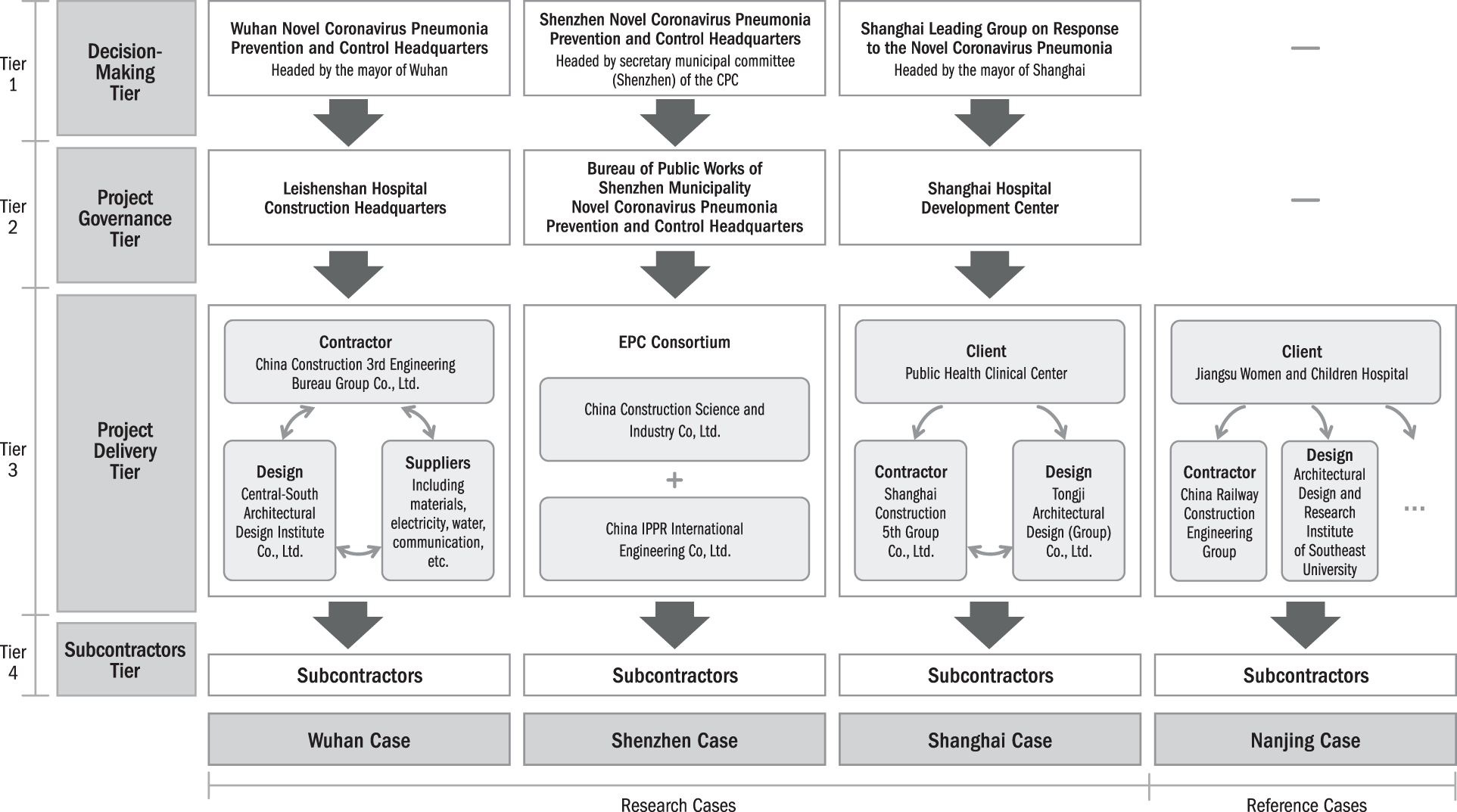
Organizational structures of the cases.
At the project-delivery tier, the general contractors for the three research cases were large state-owned companies with strong overall capabilities. All contractors were local and had outstanding project records, which aided in the scheduling of resources and supply chains while assuring trust and synergy in the organization. The general contractor of the Shanghai case had also served as the original contractor of the initial PHCC site. The managers in these three cases were general managers or chairmen of their companies, which differed significantly from the reference case. As Interviewee 11 put it, “We manage the entire project in a step-up mode,” and two others stated, “Almost all senior leaders are involved in the project” (Interviewees 7 and 16).
The problem of conceptual slack (Busch, 2002) and inefficient information transfer (Groenendaal & Helsloot, 2016) within the organization of large projects must be addressed by special operational mechanisms. “Tasks are communicated in the form of orders, which cuts down disputes,” said Interviewee 14. During the project, “all staff are in a chat group and will respond quickly,” emphasized Interviewee 4. Unlike with regular projects, messages sent in a blitz project do not need to be cascaded up but can be communicated directly to those who can solve the problem. In addition, two interviewees stated, “in general projects, we usually have a regular meeting per week, but in the PHCC project, we have two per day, and various special meetings to solve problems that arise at any time” (Interviewees 9 and 16). The number and content of the documents we reviewed indicated that meetings are frequent and unscheduled, and that all staff whose work pertains to the meeting topics participate in the discussion. The entire staff in a blitz project will be on-site 24 hours a day.
Active organizational citizenship behavior, such as self-organization, is often the key to achieving miraculous results in emergency projects, especially in the very early phases when formal structures and responses are underway. The pandemic contributed significantly to citizenship behavior in specialty field hospital construction (Wang et al., 2021). In the Wuhan case, local companies took the initiative to collect supplies, transport personnel, and provide meals. The community donated more than RMB ¥3 billion (US$481 million) to the Wuhan Charity Federation in the first month of the outbreak, of which more than RMB ¥700 million (US$112 million) was spent on the construction of the specialty field hospital (Wuhan Charity Federation, 2020). Many donations of equipment formed a nonprofit-driven supply chain. During the pandemic, the common public perception that more people could be saved through the creation of rapidly built specialty field hospitals emerged, which inspired positive actions and feelings of responsibility, motivation, and pride: “Everyone works relentlessly based on their professional ethics,” stated Interviewee 3. Tens of thousands of workers were quickly brought together during the Spring Festival and made concerted efforts to race against the spread of the virus, acting as though they were not afraid of personal danger. The Bureau of Public Works of Shenzhen Municipality (2021) asserted, “The project vividly reflects the great anti-pandemic spirit and is a case of the struggle of the people of Shenzhen against the pandemic.”
Stage IV: Resource Security, Technological Innovation, and Dynamic Management in Delivery
Access to adequate resources helps to guarantee that project schedules can be maintained (Chen et al., 2020). The construction of the field hospital sites discussed in this study encountered unprecedented resource-supply challenges, described as follows:
Scale: The Wuhan site had more than 20,000 laborers but needed more than 3,000 backup laborers, 1,600 sets of containers, and a large amount of medical equipment. Timepoint: Because of the Spring Festival holiday, most workers were on vacation and manufacturing units had stopped production. Lockdown policies: The entire community almost stopped moving, and the high concentration of people created a risk of infection. Urgency: Most resources needed to be deployed in the shortest time possible. Space: Limited on-site space made logistics, security, and pandemic prevention difficult.
Addressing these problems required the use of several strategies. First, the government authorized and mobilized emergency funds for the contractor; resources were mapped, documented, and procured in separate lines using the design and procurement principle of “use what is available” (Interviewees 8 and 12). Second, forecasts were made to plan for resources and improve accuracy in time and quantity, following the principle of “never have the site wait for resources” (Interviewee 15). China Construction 3rd Engineering Bureau Group (2020) asserted, “A multilevel supply-guarantee system was established with multiple measures to guarantee resources, reserve backups, share information, manage dynamically, handle external and on-site resource logistics, remove useless resources as soon as possible, and establish on-site resource management systems and procedures.” By counting the number of laborers recorded in the project logs, the peak workforce in the Shanghai case, with a construction scale of only 9,500 square meters, was 947—more than the 766 in the reference case, which had a construction scale of more than 60,000 square meters. At their peaks, the Wuhan (20,789) and Shenzhen (10,788) cases had dozens more laborers than the reference case.
Technological innovation can assist in compressing schedules, especially when extreme schedules cannot be met with traditional technology. Interviewee 1 stated, “Innovation in the project is not something that is created from scratch, but rather some details that are applied to achieve better results in a short period of time in a way that has not been used before.” For example, all three cases applied building information modeling (BIM) technology. In the Wuhan case, the application of BIM technology in the design phase allowed for information from all phases of the construction to be fused on a collaborative platform to achieve parallel design and construction and create a digital twin model for the project. BIM-based simulations enabled quick validation of the negative pressure ward design (Luo et al., 2020). The Shenzhen case used BIM to simulate construction scheduling and planning, guarantee efficient collaboration, and ensure feasibility of the plan. The Shanghai case used BIM to optimize standardized modules and rapidly assign tasks to workers from different sources and with different skill levels. Innovations in construction technology also occurred during the construction phase. For example, the Wuhan case adopted combined foundation construction technology to reduce the time required for soil excavation and foundation hardening. The Shenzhen case used modular hole setting to reduce the demand for scarce waterproof materials.
In their different external environments, the three field hospital case sites used different forms of dynamic management during the project delivery process. In Wuhan, “The earlier design solution could not accommodate the planned number of beds, and we immediately solved this problem by reorienting the building,” said Interviewee 3. In Shenzhen, adjustments were made to the scope of its project during the decision-making phase: “The initial decision was for 400 beds, which was later increased to 800 beds and finally settled on 1,000 beds,” explained Interviewee 13. After completing phase 1, the Shanghai site had sufficient infectious disease beds, so project developers cancelled the last two phases: “The rapid completion of the project consumed a large amount of social costs, and it would be a great waste if it was deserted without application,” stated Interviewee 7. Due to the inherent uncertainty in the development of infectious diseases, coupled with the fact that specialty field hospitals with a short design life have poor functional compatibility, this dynamic adjustment was used to reduce waste while safeguarding the pandemic response.
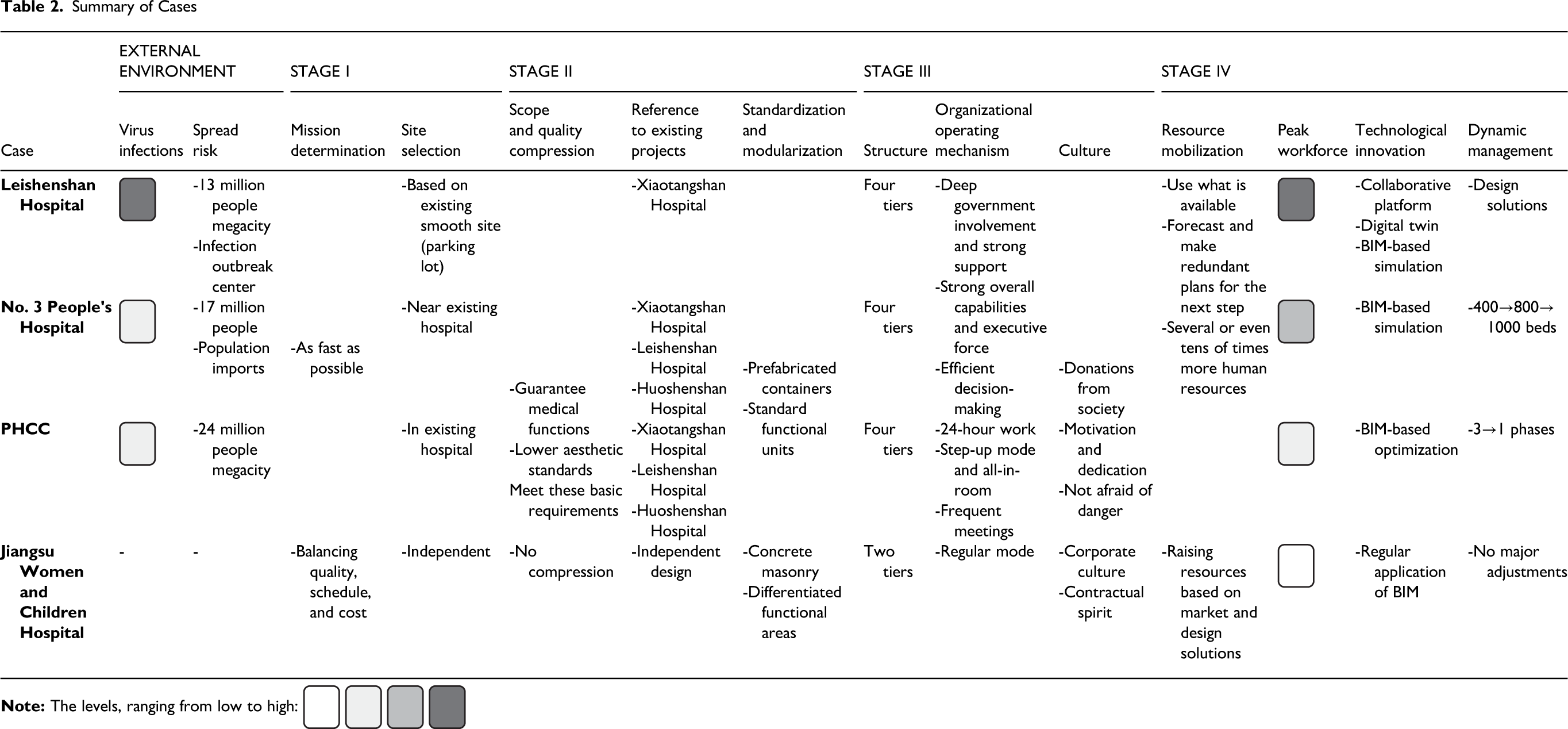
Overall, we observed differences in the urgency of the external environment among the three research cases during the construction and delivery phases stemming from the fact that the three projects were not initiated for the same purpose. While the three cases used almost the same approach in some phases, some differences existed among them in other phases, as shown in Table 2.
Summary of Cases




Strategic Framework and Discussion
Based on the literature and case studies discussed in this article, it is evident that unlike with regular projects, the most important goals of a blitz project are organization and extreme scheduling, indicated as “lim(duration)” in Figure 6. In developing the framework, we ignored the characteristics of the construction in favor of applicability to a wider range of projects.
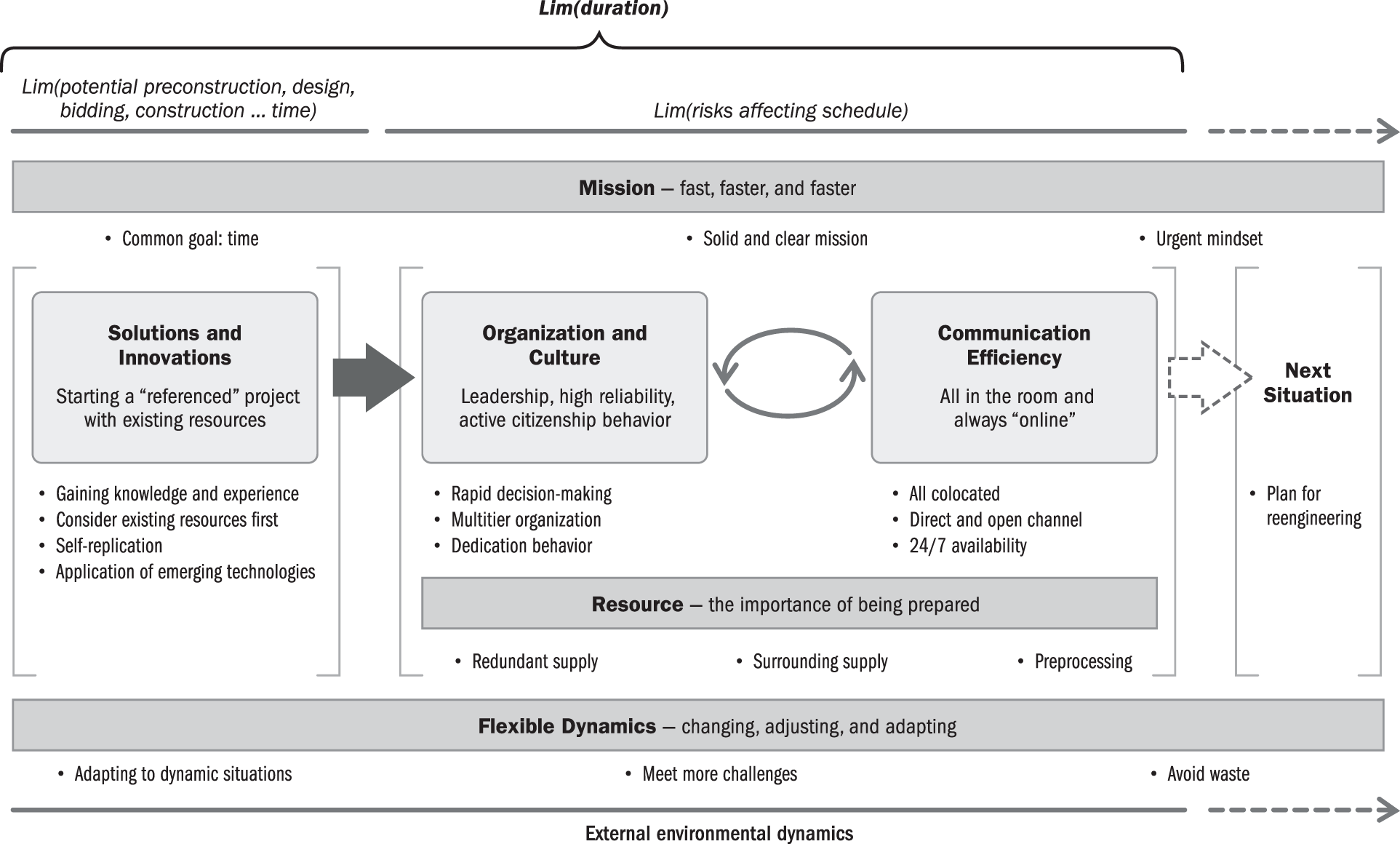
“Lim(duration)” strategic framework for blitz project extreme schedules.
Mission: Fast, Faster, and Faster
In blitz projects, time is life (Rodríguez et al., 2018). With every hour that passes, possible damage and costs increase exponentially, which may result in escalation or secondary disasters that cannot be responded to (Lloyd-Smith, 2020). Therefore, organizations carrying out such projects must have a clear understanding that they must complete the project as quickly as possible, and project teams and stakeholders must adopt the mindset that extreme schedules are urgently needed while cost and quality may be sacrificed. Resolving a crisis quickly may be more critical than saving resources (Shenhar & Dvir, 2007).
Building a hospital typically takes several years, but building a specialty field hospital may only take days or weeks. In the three field hospital cases studied, the organizations clearly had an urgent commitment to using extreme scheduling, making time the sole focus of their efforts, and driving rapid innovation (Luo et al., 2020). In this context, blitz projects have a life-or-death focus similar to warfare, requiring things be done fast, faster, and even faster.
Solutions and Innovations: Starting a Referenced Project with Existing Resources
Creative design often fuels the generation of a new product or facility, after which resources are developed to carry out the plan. However, sourcing and supplying resources prove time-consuming (Chen et al., 2020; Larsen et al., 2016). The process is also subject to much risk and uncertainty. In blitz projects, developers must refer heavily to similar existing projects, which gives the project a higher starting point and clearer objectives while reducing the workload and the probability of errors (Barton et al., 2015; Bye et al., 2019).
Case studies have demonstrated that lowering a blitz project’s quality standards within a reasonable scope and degree is necessary (Viles et al., 2019). However, project developers must maintain clear boundaries for this reduction, safeguarding standards regarding the core application value of the project (Nachbagauer, 2022), such as the functional standards of the negative pressure ward in one case, as this determines the success of the project. Some standards regarding psychological and spiritual enjoyment must be compromised within an extremely tight development time frame (Viles et al., 2019) such as aesthetics and spatial comfort. Although the reduced design standards can create problems for the operational process of the project (Wang & Yuan, 2017), they also provide a more feasible time requirement by allowing corrections and improvements to be made during the course of operation.
Another approach involves self-replication or standardized modular design and construction, which allows for simpler design, rapid assembly-line production, and flexible on-site assembly, increasing construction speed and meeting dynamic changes in demand (Barton et al., 2015; Denicol et al., 2020; Nachbagauer & Schirl-Boeck, 2019). Modularity refers to repetition and iteration, which reduces task complexity for individual laborers and decreases rework rates through proficiency gains (Elia et al., 2020). In describing the Jersey General Hospital Nightingale Wing project, Smith (2021) highlighted the use of experience from previous projects and modular wards to achieve rapid delivery with fewer laborers. The post-case review concluded that the stockpiling of war-reserve resources and modular components serves as an efficient model for rapid response to crisis events (Basu et al., 2017). Similarly, modularity and fast iteration act as the key factors in the time performance of megaprojects (Flyvbjerg, 2021).
The value of emerging technologies is demonstrated in improved efficiency and reduced repeat work. This value becomes magnified in blitz projects; thus, the applicability of emerging technologies to these blitz projects is wider and deeper than in projects with longer time frames (Wang & Yuan, 2017). In the research cases, technologies such as BIM aided in addressing challenges such as handling solution design and information interaction in temporary organizations. These technologies offered low trial-and-error costs, information traceability, and support for collaborative work (Merschbrock et al., 2018). However, practical problems can create new challenges to emerging technologies during such projects, driving innovation in technologies and applications.
Organization and Culture: Leadership, High Reliability, and Active Citizenship Behavior
The urgency of a blitz project environment requires a team with strong professional capabilities and the autonomy to act as a task force to quickly resolve problems (Militello et al., 2007). Team members should have expertise and extensive project experience that allow them to form trust rapidly within the temporary organization (Chang-Richards et al., 2017; Kwesi Buor, 2019). A blitz mission team must maintain a critical position close to the field, which requires an integrated frontline team to make decisions and resolve problems quickly (Barton et al., 2015).
Decision-making acts as an important “portal” for blitz projects, as time is too limited to go back (Kwesi Buor, 2019). Due to the compressed schedule, a series of important and interrelated questions can emerge simultaneously and require prompt decisions (Barton et al., 2015). These questions may require different individuals or organizations to make decisions (Cohen-Hatton et al., 2015). Traditional decision mechanisms can lead to missed war opportunities and require a rapid decision package that demands a high-level presence (Faraj & Xiao, 2006). At the same time, the complexity of such projects requires a strong ability to command a team, clear instructions, and a multitiered organizational system to implement decisions, monitor progress, and ensure that key objectives are met (Chang-Richards et al., 2017; Kwesi Buor, 2019).
Although the decision-making and organizational structures adopted in the three research cases differed, their overall structures consistently comprised multitier organizational systems. The top tier has strong decision-making and command authority (Groenendaal & Helsloot, 2016). The specific agency executing the project must be able to implement decisions authoritatively, relying on its experience, which improves efficiency (Militello et al., 2007). At the same time, multitier organizations should collaborate to create a short-term, on-site task force that enables prompt decision-making for essential matters. This reduces errors and inefficiencies in information transfer and enhances reactive decision-making efficiency (Robert & Lajtha, 2002).
A project culture based on dedication plays a crucial role in fostering success. Team members must bear a high level of psychological stress—including, in these cases, health-related anxiety—caused by the external environment in addition to their work pressure (Wang et al., 2021). Dedication will cause them to derive a sense of honor from bearing these stressors, which will increase motivation. This project culture is not only reflected in the project organization; citizens also serve as important stakeholders in blitz projects. Active citizenship can include donation, participation, or simply following a project’s development to contribute financial, material, and psychological help (Wang et al., 2021).
Communication Efficiency: All in the Room and Always Online
Efficient communication proves critical to project organization in any situation (Ziek & Anderson, 2015). However, because blitz projects occur in such a highly uncertain context that might lie outside of developers’ experience, unanticipated problems could arise at any moment. At the same time, differences of opinion can exist within large-scale organizations (Busch, 2002). The rapid resolution of emerging issues and internal divisions is a prerequisite for enabling the mission to advance quickly and without interruption (Barton et al., 2015).
In the case of specialty field hospitals, key executives and decision makers are colocated and hold various meetings to reach key decisions rapidly, which largely weakens the possibility of disagreement (Busch, 2002). All the staffs maintain direct and open channels for reporting up and ordering down. Knowledge, experience, lessons, and other information can be disseminated and used quickly. All problems are solved on-site and never left for the next day, which requires all key personnel to attend meetings (Klein et al., 2006). Any nonpresent personnel must be online 24 hours a day. In addition, advanced digital technologies, such as cloud collaboration platforms and online meeting software, enhance the scope, flexibility, and efficiency of communication (Merschbrock et al., 2018).
Resources: The Importance of Being Prepared
Adequate resources serve as the fundamental means of guaranteeing the viability of compressed schedules (Chen et al., 2020). However, the uncertainty of emergency missions and disaster evolution precludes the use of traditional resource-management principles of planned supply. For example, the research cases required a workforce of more than 10,000, which greatly exceeded regular construction needs (Basu et al., 2017). This excessive (redundant) supply of laborers allowed for 24-hour construction and the meeting of unexpected personnel needs (Wang & Yuan, 2017). The preparation of the material resources also utilized rapid checking within a 300-kilometer area, which provided a rapid supply of resources on demand. In sum, a rapid resource supply hierarchy formed on an as-needed basis. The research cases explored in this study indicate that it is necessary to build a resource reserve system for blitz projects (Basu et al., 2017). The use of adequate project basis conditions should also be prioritized. In the three research cases, high reliance on already-treated site environments and available materials facilitated comprehensive project design. The direct use of existing resources can save most of the resource production time. In addition, the ideal material support is not only large in quantity but convenient; for example, case projects widely used prefabricated buildings (Elia et al., 2020; Flyvbjerg, 2021). Materials for blitz projects should be preprocessed to the greatest extent possible to reduce the on-site workload.
Flexible Dynamics: Changing, Adjusting, and Adapting
War, pandemics, hurricanes, earthquakes, and other large disasters undergo different types of evolution, which shapes their external environment and changing nature of responses. In regular projects, changes and adjustments must largely be avoided due to cost increases and the potential for waste resources (Yap et al., 2019). In blitz projects, though, changes and adjustments play a positive and necessary role in driving adaptation (Barton et al., 2015). The need for adjustment within blitz projects bears much similarity to the agile project management approach used to ensure timely project delivery in other fast-paced initiatives (Lappi et al., 2018). Blitz projects can evolve into fast projects or even regular projects or vice versa, or they may be constantly repeated and unpredictable, as with the secondary disasters following earthquakes and hurricanes’ shifting paths. Such changes and threats require rapid adjustments and flexibility with objectives, strategies, security systems, readiness to slow down to save costs, and readiness to speed up to meet more challenges. Forecasting and rapid decisions become essential (Cohen-Hatton et al., 2015). Case studies have proven that the application of modularity and standardization supports the rapid adaptation of projects for efficient scaling up and down.
In China, many cities built specialty field hospitals during the COVID-19 pandemic, but the differing evolution and needs in each place led to wasted investment. Thus, despite our focus on the quick development time lines of blitz projects, we still need to pay attention to social resources and costs (Basu et al., 2017).
Next Situation: Planning to Adapt to External Changes
When the external environment continues to deteriorate, as with a continued increase of infectious disease patients or aftershocks, the format of the project may need to be upgraded as well, which requires more efficient project teams, more resources, and more advanced technical support to reengineer it (Basu et al., 2017; Wang & Yuan, 2017). Conversely, when the external environment suddenly improves, as in the disappearance of extreme weather, the time pressure decreases, making it possible to complete a higher-quality, more sustainable project. None of our research cases required project reengineering. Although reengineering would not have a direct influence on the duration of these projects, adequate anticipation and preparation could conceivably have a positive effect on the duration of the updated project (Barton et al., 2015), so we still believe in the need for continuous planning for the next situation.
Conclusion
As the global environment and economic markets continue to change, various uncertainties increase. Therefore, it is essential to balance people’s needs, economic development, and environment protection. Blitz projects are often direct responses to crisis events and catastrophes, caused by acts of people or by nature. However, the blitz project approach could potentially be used in the future within industry and developmental projects, as well as to carry out critical projects for the community. Due to total domination of the time criterion over other relevant project management criteria, traditional project management knowledge proves ineffective—a problem addressed by this study.
In our research, we selected three specialty field hospitals and one regular hospital in China and divided them into two case groups to conduct a multiple-case analysis. First, we determined the influence of the external environment on each project. Then, referring to the full project life cycle framework and embedding it in the case-analysis process, we derived findings for project-level extreme-scheduling contexts.
This research contributes to project management in important ways. Because blitz projects are increasingly present as the VUCA world increasingly becomes normalized, our findings contribute to the schedule management of blitz projects, which has received limited attention in previous research. We have derived a strategic framework for extreme schedule management for blitz projects, which includes seven modules: mission, solutions and innovations, organization and culture, communication efficiency, resources, flexible dynamics, and preparing for the next situation. We have also identified the boundaries and dependencies among these components, contributing to project management theory. Under each module, we propose corresponding strategies to directly guide practice.
This research has several limitations. First, the generalizability of a single scenario is limited, although several cases were analyzed to increase the relevance of the work to other specialty field hospital construction projects. Second, the selected cases all come from a single country, and the findings are highly consistent with the cultural context of China, although they are supported by references to two cases from different cultural contexts. Third, while this article provides an in-depth analysis of COVID-19 pandemic responses, different kinds of crises will require different response strategies, although they may share the same urgency. Rapid response projects serve as a means of crisis management. This article sheds light on key aspects of such projects while providing a strategic framework for blitz project management. However, blitz projects are unique, complex, and important for communities, so their management requires more attention from the research community to form the foundations of a theory of management systems that can be adapted to the local environment.
Footnotes
Acknowledgments
This study was supported by the National Social Science Foundation of China under Grant No. 19VDL001, the Fundamental Research Funds for the Central Universities under Grant No. 22120220296, the Fundamental Research Funds for the Central Universities under Grant No. 22120230381, and Tongji University’s Employment of Foreign Cultural and Educational Experts Project (DL2022133001L). The authors are grateful for the support of Mr. Zhang Jianzhong, director of the Hospital Building System Research Branch of China Hospital Association (CHA); Mr. Chen Shihua, assistant project manager of Shenzhen No. 3 People’s Hospital; and Mr. Jia Ruihua, chief engineer of Leishenshan Hospital and the Chartered Institute of Building (CIOB). Any opinions, findings, and conclusions or recommendations expressed in this material are those of the authors and do not necessarily reflect the views of the funding agencies.

Notes
Author Biographies
List of Interviewees
| Participant | Former (Current) Position | Form of Interview | Interview Topics |
|---|---|---|---|
|
|
Project manager, general contractor, Leishenshan Hospital | Online meeting | Organizational structure of the project, resource organization, application of emerging technology, and social donations received by the project |
|
|
General designer, Huoshenshan Hospital | Online meeting | Adjustment of design solutions, reference to existing projects, application and value of emerging technologies, organizational structure, and internal communication |
|
|
Manager of mechatronics design, Leishenshan Hospital | Telephone | Design solutions and standards, flexibility of design solutions, innovations in design technology, disagreement, and unity within the organization |
|
|
Executive manager of mechatronics design, Leishenshan Hospital | Telephone | Adjustment of design solutions, reference to existing projects, application and value of emerging technologies, organizational internal communication, and project culture |
|
|
Director, PHCC | Telephone | Project establishment and adjustment, design and construction standards, bidding and procurement procedures, significance of the project, and future plans |
|
|
Assistant chief of infrastructure section, PHCC | Telephone | Site selection, project organization structure and functions, support from all levels of government, significance of the project, and future plans |
|
|
General designer, PHCC | Telephone | Design process and key points of the project, technological innovation, and communication within the project organization |
|
|
Assistant project manager, general contractor, PHCC | Telephone | Difficulties and solutions in the construction process, balance of schedule and quality, rapid unification of disagreements within the organization, and resource mobilization |
|
|
Project manager, Shanghai Hospital Development Center, PHCC | Telephone | Organizational structure of the project, communication within the organization, and roles played by different units in the organization |
|
|
Assistant project manager, Bureau of Public Works of Shenzhen Municipality, No. 3 People’s Hospital | Telephone | Project establishment, bidding and procurement procedures, project culture, significance of the project, and future plans |
|
|
Project executive manager, general contractor, No. 3 People’s Hospital | Telephone | Balance of schedule and quality, support from all levels of government, rapid unification of disagreements within the organization, and project adjustments |
|
|
Project technical general engineer, general contractor, No. 3 People’s Hospital | Telephone | Site selection, balance of schedule and quality, reference to existing projects, standards and specifications for construction, and information transfer in the organization |
|
|
Project manager, full process consulting, No. 3 People’s Hospital | Telephone | Project goals and acceptance, resource mobilization, support from all levels of government, and project adjustments |
|
|
General designer, No. 3 People’s Hospital | Online meeting | Reference to existing projects, adaptation and adjustment of design solutions, design solutions and standards, significance of the project, and future plans |
|
|
One author of the official project summary, No. 3 People’s Hospital | Online meeting | Organizational structure of the project and schedule risk control |
|
|
Director, Hospital Building System Research Branch of CHA | Site | Resource problems and solutions, communication in the organization, and the roles played by different units in the organization |