




Abstract
Shoulder injury and pain are the most commonly reported work-related musculoskeletal disorders (WRMSDs) among sonographers. Shoulder injury can affect the sonographer’s performance, which may lead to a reduction in the quality of services to patients. Therefore, sonographers must protect themselves from shoulder injury to provide high-quality services, work efficiently, conserve their future career, and improve their quality of life. A review of literature was conducted, revealing evidence to suggest ways to prevent various injuries to sonographers, but only a few studies in the past 10 years have focused specifically on shoulder injury. Good posture, ergonomics, and suitable workspace design play important roles in reducing the rates of shoulder injury. In addition, increasing the sonographer’s awareness of how to prevent shoulder injury and the supervisor’s knowledge about the protection from WRMSDs can decrease the rates of shoulder injury among sonographers.
According to Baker and Coffin, 1 work-related musculoskeletal disorders (WRMSDs) have been recognized in sonographers since 1997, with the frequency of such disorders expanding rapidly. In 1997, surveys conducted on American and Canadian sonographers demonstrated an 84% occurrence, and this rate increased to 90% by 2008. 2 However, only a few studies have tried to directly investigate and assess the underlying causes of these disorders. 3 Still, pain complaints among sonographers worldwide identified the shoulder as the most affected body part in 76% of reported cases. 2 In 1985, shoulder injury was the first injury reported among sonographers. 4 In the Kingdom of Saudi Arabia, a study including 100 sonographers found that 84% had experienced musculoskeletal pain; the majority of them suffered from shoulder pain. 5 In Enugu State, Nigeria, the most commonly reported WRMSD among sonographers was shoulder pain at 81.43%. 6
Shoulder injury has several consequences. It can affect the sonographer’s performance, which leads to reduction in the quality of services to patients. Furthermore, some sonographers may lose their job because, depending on the level of injury, certain cases tend to be incapacitating; for example, injuries such as tendonitis and nerve entrapment syndromes affect not only the muscles but also the blood vessels and nerves. 1 Therefore, sonographers must protect themselves from shoulder injury to be able to provide high-quality services and work efficiently. Moreover, it also has a financial and emotional impact. 4 In the United States, the Bureau of Labor reports that more than $20 billion annually is spent on workers’ compensation for WRMSDs, and almost $20,000 per year in individual costs are accrued for shoulder injuries, excluding surgery. 1 Symptoms of WRMSDs appear among 15% of sonographers after the first 6 months of work, increase to 45% after 3 years, and continue to increase to 72% after 10 years of work. 7
Solving the problem of shoulder injury could lead to increased efficiency of the sonographers within the workplace and in their quality of life. In addition, it will provide better health care to patients and reduce the costs associated with treating shoulder injury. This review adds to the literature about WRMSDs by identifying shoulder pain as having the greatest prevalence, summarizing its hazards and prevention, and finding solutions to prevent shoulder injuries. In addition, this review addresses the problem of shoulder injuries when sonographers follow the instructions in the literature. The primary aim in this study is to investigate ways to prevent or decrease the incidence of shoulder injury before it happens, which can be more effective than treatment after the injury occurs.
Method
Database Search Criteria
The studies used in the search aimed to identify the causes of shoulder injury for sonographers and the ways to prevent these injuries. The databases searched were PubMed, Google Scholar, Scopus, and CINAHL. The key words used included ultrasound, WRMSD, ergonomics, and shoulder injury.
Criteria for Including and Excluding of Articles
As a screening review, the first phase included screening inclusion and exclusion criteria related to title and abstract. The second phase of screening included a review of the full text. Moreover, the 2 phases were done by the 2 authors. This literature review included studies that elucidated sonographer ergonomics as well as the prevention and causes of shoulder injury to sonographers, such as awkward posture, patient position, exercise, stretching, and ergonomic workstations. In this review, only articles published within the past 10 years (2008–2017) and in English were included.
Study Selection
As inclusion criteria, only sonographers were the participants in the studies reviewed. The studies included were those that concentrated on the prevention of shoulder injuries, the ergonomics of workstations that affected those injuries, and the causes of shoulder injuries to identify ways to help sonographers follow the health and safety guidelines for the prevention of shoulder injuries. The studies excluded were those that concentrated on other injuries, such as neck, wrist, and lower back. Moreover, studies were excluded if they did not give solutions to prevent sonographers’ shoulder injuries. In addition, studies that discussed prevention of shoulder injuries in different modalities such as magnetic resonance imaging (MRI), computed tomography (CT), and radiography were excluded.
Figure 1 illustrates the different phases of the literature search and selection criteria.
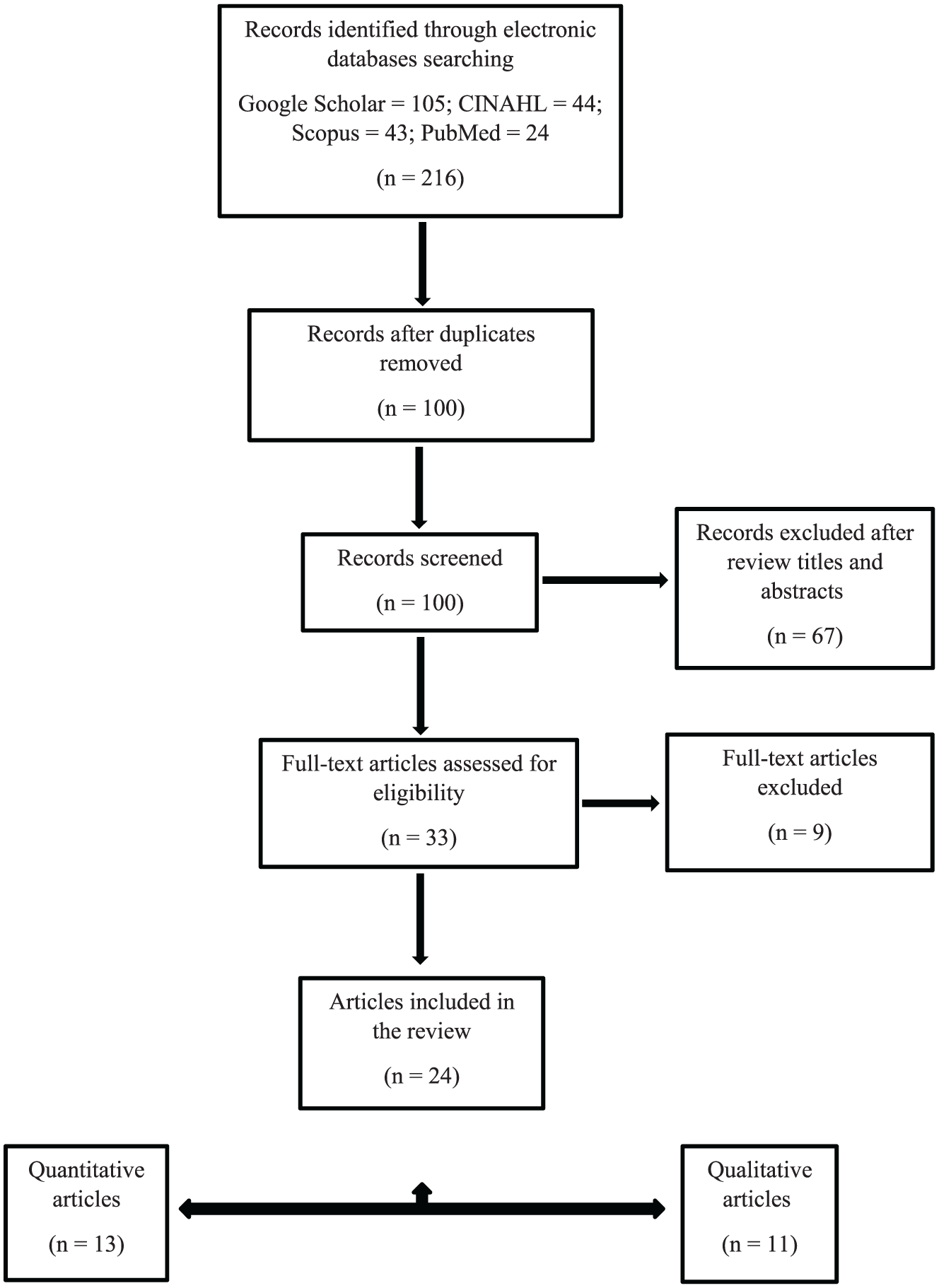
Flowchart illustrates the different phases of the literature search and selection criteria.
Results
The database search resulted in the identification of 216 articles: 105 articles in Google Scholar, 44 articles in CINAHL, 43 articles in Scopus, and 24 articles in PubMed. After eliminating duplication, there were 100 articles. After screening for inclusion and exclusion related to title and abstract, 33 articles were included. Twenty-four articles remained after reading the full text (Table 1). The 24 selected studies discussed different ways to protect sonographers from WRMSDs, specifically shoulder injury. The different topics offering protection from WRMSDs were education and awareness, supervision, physical positioning and condition, and ergonomics.
Summary of Data From Studies That Satisfied the Selected Criteria for Inclusion.
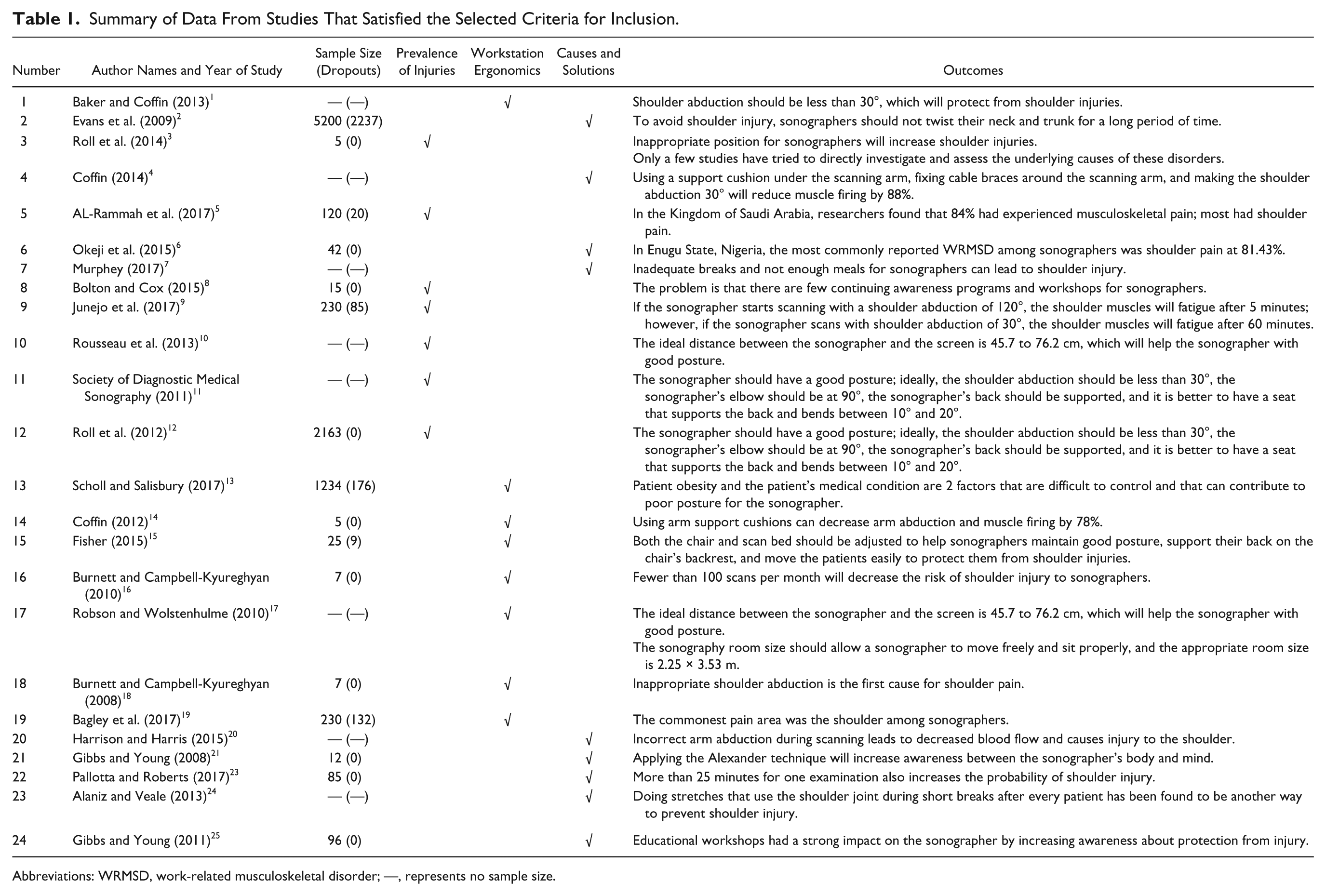
Abbreviations: WRMSD, work-related musculoskeletal disorder; —, represents no sample size.
Seven reviewed studies showed the prevalence of WRMSDs among sonographers.3,5,8–12 Most of these studies indicated that shoulder pain or injury is the most common among sonographers and gave different solutions to protect the sonographers from shoulder injury. The results showed that protecting sonographers from shoulder injuries will allow them to provide high-quality services, work efficiently, and conserve their future career and quality of life. The causes and solutions of WRMSDs that involve the shoulder injury focused on the ergonomics of the workstation and on the benefits of stretching for the sonographers to prevent the injuries. In Riyadh, Kingdom of Saudi Arabia, a study by AL-Rammah et al. 5 in 2017, including 100 sonographers, most of them female, found that 84% had experienced musculoskeletal pain; most had shoulder pain. Eight of the reviewed studies focused on the ergonomics of the workstation, which helps the sonographers to protect themselves from shoulder injury.1,13–19 Eight studies from the selected articles indicated the causes and solutions of WRMSDs that involve the shoulder injury.2,4,6,7,20–23 One reviewed article focused on the benefits of stretching for the sonographers to prevent the injuries. 24 Gibbs and Young 25 demonstrated that educational workshops had a strong impact on the sonographer by increasing the awareness about the protection from injury.
Discussion
Education and Awareness
Based on the review of the literature, lack of awareness among sonographers is one of the most important causes of shoulder injury. 25 Few lectures for undergraduate students cover prevention of this injury. 25 However, knowledge of a particular WRMSD alone is not enough to avoid it but must be paired with training, and there are few continuing awareness programs and workshops for sonographers. 8 For example, in the Kingdom of Saudi Arabia, research has shown that awareness level to prevent shoulder injury is low among Saudi sonographers. 5 Teaching students and sonographers about the risks of WRMSD, ways to protect them from these injuries, and the importance of ergonomics will help them reduce shoulder injuries. 8 University-level lectures for students and continuing education workshops for sonographers are very important to increase awareness. 25 Moreover, receiving entry-level training would also help sonographers to decrease shoulder injury. 8 In addition, offering continued awareness programs and workshops for seasoned sonographers will decrease shoulder injury. 8 For instance, studies have also shown that applying the Alexander technique increases awareness between the sonographer’s body and mind. 21 This technique was established by Frederick Alexander to reduce physical tension by regulating the relationship between thought and muscular activity. 21 Evidence shows that when using this method, the sonographers studied did not ignore their posture during scanning or press the transducer more than required. 21
Supervision
In addition, lack of knowledge on the part of supervisors of sonography departments about the safety measures to prevent shoulder injury could increase the risk of shoulder injury among sonographers. 7 Evidence shows that an increased number of patients scanned can be a risk factor for shoulder injury. 21 It is better to have sonographers perform a variety of examinations per day since repeating similar examinations in one day may lead to muscle fatigue; for example, performing only abdominal examinations all day will affect shoulder muscles. 7 Moreover, inadequate breaks and meals for sonographers could lead to shoulder injury. 7 Studies also show that increasing portable examinations are not safe for sonographers and may contribute to shoulder injury. 7 Ideally, sonography department supervisors could protect sonographers by following the prevention factors and safety guidelines to protect shoulders. 7 Their knowledge of WRMSDs will lead them to construct suitable schedules for sonographers that limit the number of patients (fewer than 100 examinations per month) and thus will decrease the risk of shoulder injury to sonographers. 16 More than 25 minutes for one examination also increases the probability of shoulder injury.16,22 Doing stretches that use the shoulder joint during short breaks after every patient has been found to be another way to prevent shoulder injury. 24
Physical Positioning and Condition
Some of the risks for shoulder injury stem from the physical positioning and condition of both the sonographers and the patients. Commonly, incorrect arm abduction during scanning leads to decreased blood flow and causes injury to the shoulder. 20 Moreover, correct patient positioning can protect the sonographer from shoulder injury; if the patient is too far from the sonographer, incorrect arm abduction will occur. 20 For example, patient obesity and medical condition are two factors that are difficult to control and can contribute to poor posture for the sonographer. 13 Furthermore, lack of fitness and exercise are other risks for shoulder injury among sonographers, so strengthening shoulder muscles is recommended to prevent shoulder injury. 20
The sonographer should have a good posture; ideally, the shoulder abduction should be less than 30°, the sonographer’s elbow should be at 90°, the sonographer’s back should be supported, and it is better to have a seat that supports the back and bends between 10° and 20° (see Figures 2 and 3).1,10–12,19 Electrogoniometers may be used to monitor the angle of shoulder abduction.16,18 The best position for the patient is close to the sonographer, which will help to avoid arm abduction of more than 30°. 20 If the sonographer starts scanning with a shoulder abduction of 120°, the shoulder muscles will fatigue after 5 minutes; however, if the sonographer scans with shoulder abduction of 30°, the shoulder muscles will fatigue after 60 minutes. 9 Physical fitness can also decrease the probability of shoulder injury, so the sonographer should warm up before scanning to avoid shoulder injury. 20 Using arm support cushions can also decrease arm abduction and muscle firing by 78%. 14
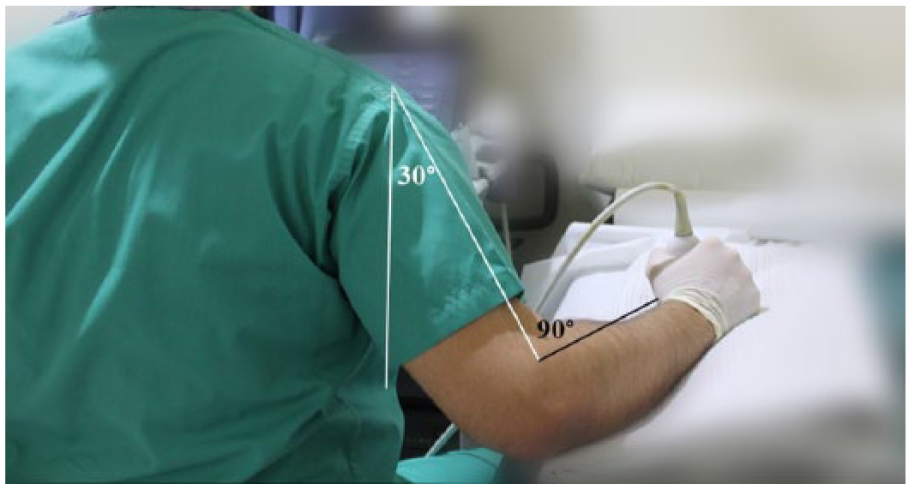
Shoulder abduction should be less than 30° and the elbow at 90°.
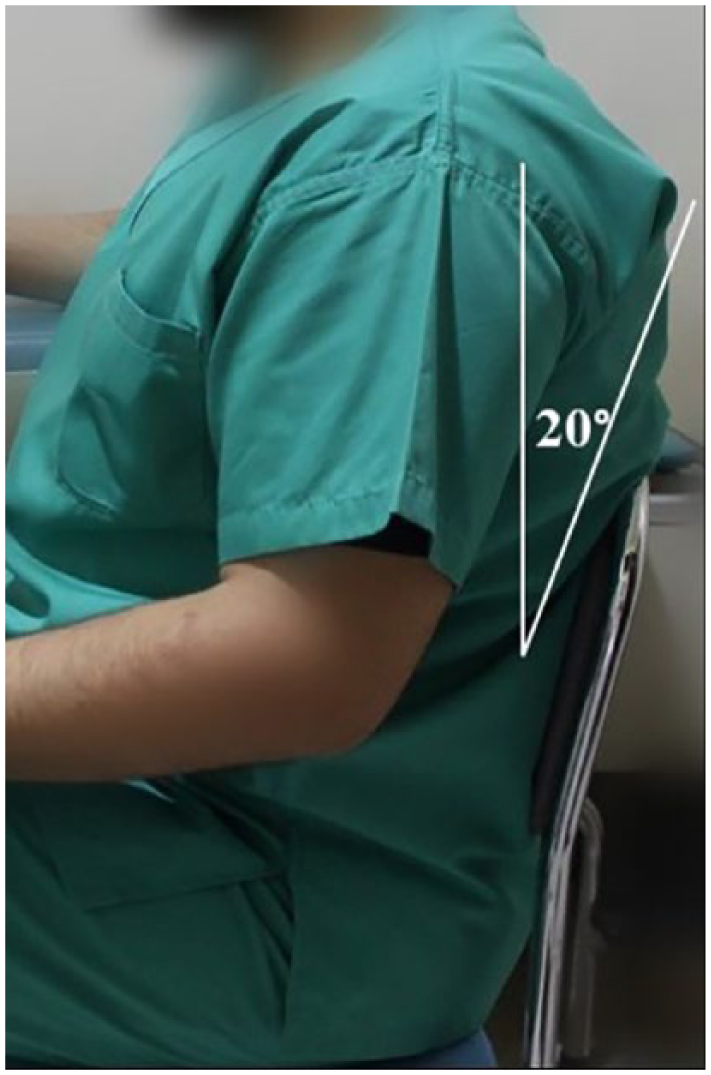
Seat that supports back and bends between 10° and 20°.
Ergonomics
The ergonomics of a sonography room also plays a role in shoulder injury. 17 The distance and angle between the monitor and the sonographer may affect the shoulder position for sonographers and cause shoulder injury. 17 Inappropriate size of a sonography room may lead to poor posture for sonographers, which has been shown to cause shoulder injury. 17 Transducer size and cable length, if not appropriate, will cause shoulder injury. 17 If the scan bed and sonographer’s chair are not adjustable, the resulting incorrect posture may also cause shoulder injury. 17
The ideal distance between the sonographer and the screen is 45.7 to 76.2 cm, which will help the sonographer with good posture (see Figure 4).10,17 The sonography room size should allow a sonographer to move freely and sit properly, and the appropriate room size is 2.25 × 3.53 m. 17 Using a cable brace and arm support cushion will reduce the transducer’s cable weight and decrease the pressure on shoulder muscles while holding the transducer using a palmar grip. 17 Indeed, cable braces and arm support cushions cost very little, but they have been shown to reduce shoulder injury. 17 Using a support cushion under the scanning arm, fixing cable braces around the scanning arm, and making the shoulder abduction 30° will reduce muscle firing by 88%. 4 Moreover, it may be helpful to use a sonographer’s arm support device to decrease pressure on the shoulder and protect it from injuries. 4 This device is similar to an intravenous pole with a curved top that supports the sonographer’s arm, allowing it to move vertically and horizontally. 14 Both the chair and scan bed should be adjusted to help sonographers maintain good posture, support their back on the chair’s backrest, and move the patient easily. 15 Sonographers should always support their feet and back (see Figure 5). 10 They should not twist their neck and trunk for a long period of time to avoid shoulder injury. 2
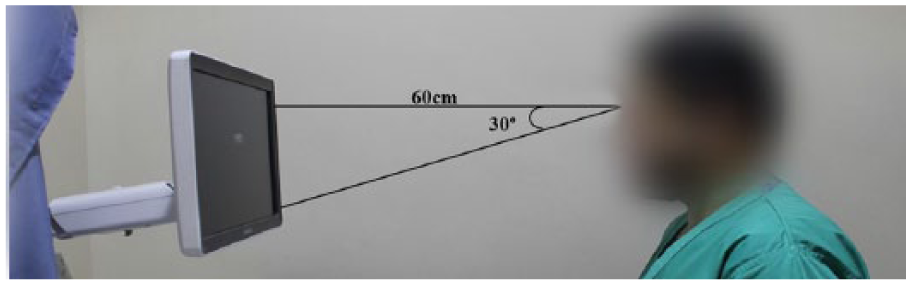
The ideal distance between the sonographer and the screen is 45.7 to 76.2 cm.
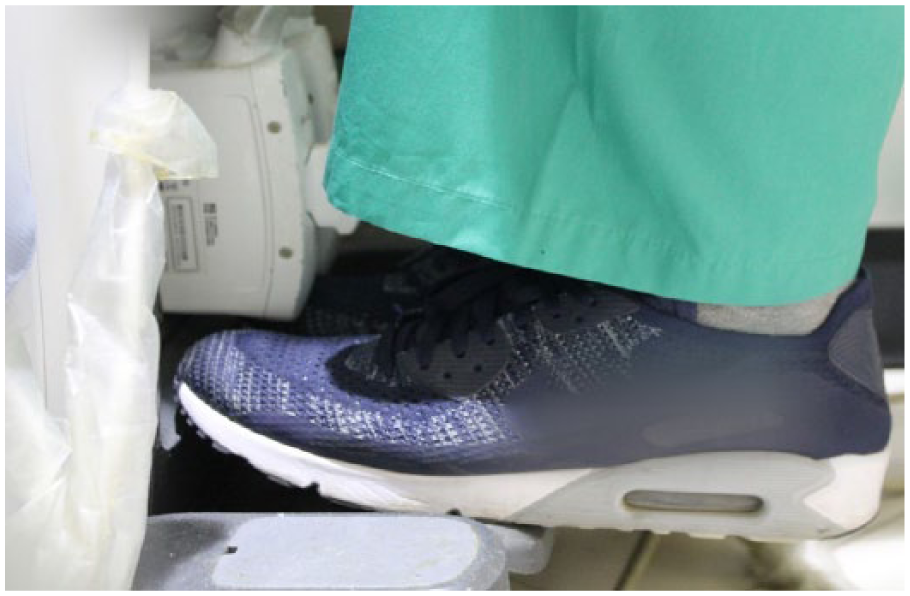
Sonographers should always support their feet.
Summary
There are many ways to protect the sonographer from shoulder injuries. Ideally, the sonographer should have good posture.1,11,12,19 Applying evidence-based ergonomics is essential for identifying the correct posture and suitable workspace design, which play an important role in reducing the rates of shoulder injury. 21 In addition, both the sonographer and the supervisor must be well informed about ways to prevent shoulder injury. The sonographer can increase awareness of how to prevent a shoulder injury through attending workshops, conferences, and reading books. 25 Increasing the knowledge of the supervisor of the sonography department about protection from WRMSDs has been demonstrated to decrease the rates of shoulder injury among sonographers. 16 Furthermore, the sonographer’s physical fitness is an important component in decreasing the probability of shoulder injury. 20 Doing exercises will increase sonographers’ fitness, so they will have sufficient shoulder strength to protect themselves from shoulder injury. 20 Finally, to protect sonographers from the shoulder injury:
Maintain shoulder abduction less than 30°.
Warm up before scanning.
Use a cable brace and arm support cushion.
Maintain a distance between the sonographer and the screen of 45.7 to 76.2 cm.
Have an appropriate sonography room size of 2.25 × 3.53 m.
Avoid more than 100 scans per month.
Take a short break after 25 minutes for one examination.
Teach students and sonographers about risks and prevention of WRMSDs.
Teach and support the importance of ergonomics.
Educate sonography department supervisors and managers on ergonomics, causes of injury, and prevention.
Limitations
There were some limitations to this literature review. Only a few studies have tried to directly investigate, assess the underlying causes, and find solutions for shoulder pain and injuries. In addition, most studies generally discuss prevention of injuries and pain for multiple parts of the body such as the neck, lower back, wrist, and shoulder; however, it is very rare to find articles discussing solutions for shoulder injuries and pain only. Conversely, strengths of the selected studies are that only articles published within the past 10 years and discussing new solutions were reviewed. In addition, the reviewed studies often recommend the same or similar solutions, which gives credibility to these solutions. More research is needed on how best to prevent shoulder injuries and pain among sonographers.
Conclusion
Shoulder injuries are one of the most common of all injuries among sonographers. Understanding how to prevent sonographer’s shoulder injury is just the beginning of solving this problem. Supervisors of sonography departments may benefit from understanding the relationship between shoulder injury and number of studies per month, number of minutes per study, and type of study per day. 7 Ergonomics is essential for identifying the correct posture and suitable workspace design, which play an essential role in reducing the rates of shoulder injury. 21 Solving the problem of shoulder injury could lead to increased efficiency of sonographers, better health care for patients, reduced costs of treating shoulder injuries, and improved career and quality of life for sonographers.
Footnotes
Declaration of Conflicting Interests
The authors declared no potential conflicts of interest with respect to the research, authorship, and/or publication of this article.
Funding
The authors received no financial support for the research, authorship, and/or publication of this article.
