




Abstract
The study aims to assess the level of patients’ awareness and knowledge regarding radiation and dosage along with the associated risks from computed tomography (CT) scan. This cross-sectional study used questionnaires, which were distributed to the diagnostic imaging departments of six large local hospitals in Jordan between September 2014 and March 2015. A total of 600 patients completed the questionnaire, out of which, 52.33% of respondents were female and 47.6% male. The findings show insignificant effects of gender on patient’s knowledge (P = .596) and significant effect of employment and profession on positive scores (P = .000). Similarly, no statistical differences were found between gender and correct answers (P = .707). This cohort of patients demonstrated a lack of awareness and knowledge about the use of ionizing radiation for diagnostic imaging. Thus, there may exist a similar lack of information that will require imaging professionals to raise patients’ awareness and offer them the appropriate information.
There has been a rapid development in the use of computed tomography (CT) as a diagnostic tool for medical imaging diagnosis. As compared to conventional radiographic imaging, CT offers a relatively much higher image resolution, which enables accurate diagnoses to be made by interpreting physicians. This was corroborated by studies that stated that radiologic examinations such as CT form the basis upon which 30% to 50% of medical decisions are made.1–4 The application of a CT examination is associated with an increased dose of radiation for the patient. 5 Similarly, there is an increased availability along with a volume of information concerning radiation dose and associated risk from a CT examination. Moreover, this information is not shared with the patients to raise awareness about the risks and benefits linked with diagnostic CT. However, technical knowledge related to a CT examination is a function of professional practice, and patients are typically not aware about this particular radiation dose. Patients who are awaiting a CT examination are typically unable to make an informed judgment about their diagnostic test.6–9
The radiation dose transmitted to the patient is higher with CT in comparison to other imaging modalities. 10 It accounted for only 15% of radiologic examinations; therefore, it is vital for the radiologist and imaging professionals to use the lowest acceptable dose. New strategies are being explored to reduce the dose while maintaining image quality that supports a radiologic diagnosis. It was discussed in other published studies that there is a lack of awareness among patients regarding the risks posed by ionizing radiation. Studies pertaining to this discussion addressed the critical risks presented due to the lack of awareness regarding the ionizing radiation associated with CT. 11
The lifetime cancer mortality risks per unit dose vary with age.12,13 The National Research Council 14 report indicates that there is a three to four times higher cancer risk among children as compared to adults. It was further discussed that patients undergoing CT examinations perceive the use of this diagnostic test to be extremely important. They also appear to undergo this radiologic examination even though they have a very poor understanding regarding the safe use of CT and the regulations for patient safety. Therefore, there is an urgent need to increase patient awareness with regard to CT safe practices so as to minimize the risk for developing tumors or cancers that may subsequently result in patient mortality. This study aims to assess the level of Jordanian patients’ awareness and knowledge regarding radiation dose and associated risks from a CT examination. 15
Methodology
Data Collection
This study was conducted by the Ethics and Human Resource Committee, which was later approved by the Institutional Review Board (IRB). A questionnaire was developed that consisted of 24 questions in total. This questionnaire was developed to capture patient demographics and their perception regarding radiation, possible risks, and how they can protect themselves from it.
Questionnaire
A questionnaire was initially drafted in English, but later it was translated in Arabic. It was planned in such a way that the patient could complete the survey easily. The questionnaire only had yes/no options to make it more feasible for the patient. The questionnaire was distributed at six local Jordanian hospitals that had diagnostic imaging departments. Over 6 months, patients were asked whether they would like to fill out a survey form. These surveys were conducted in the absence of a radiologist and/or radiographer to avoid bias. Upon completion, the questionnaire was immediately collected by the investigator. The patients were instructed to only complete one single questionnaire.
Statistical Analysis
Statistical analysis was performed by utilizing Microsoft Excel and commercially available software, inclusive of IBM SPSS Statistics version 24.00. Means and standard deviations were analyzed with respect to patients’ demographics. A Spearman’s rho correlation was used to gauge the association of the effects of patients’ gender, profession, academics achievement, and years of experience to get relevant outcomes. For determining the significant differences between the outcomes, one-way analysis of variance (ANOVA) test was used. Furthermore, the percentage of correct responses for each question was calculated through a frequency test using SPSS.
Results
Six hundred patients completed the questionnaire, out of which 52.33% of respondents were female and 47.6% males. Overall, there was no significant statistical difference in the number of correct answers in terms of gender (P = .707).
Level of Education, Employment, and Experience
The results demonstrated that 42 (7%) patients had no formal education, 323 (53%) were high school educated, 78 (13%) held a diploma, 146 (24%) had a bachelor’s degree, 8 (1%) a master’s degree, and 6 (1%) were PhDs. Statistical analysis reported no correlation between participants’ response and their working years of experience with insignificant statistical difference (P = .371). On the contrary, there was a positively significant (P = .023) correlation between the patients’ profession (medical field, nonmedical field, or unemployed) and the correctness of their answers. There was also significant correlation between respondents’ scores and their level of academic achievement (P = .001) as listed in Table 1.
Correlation Between Patients’ Scores and Their Academic Level, Profession, and Experience.
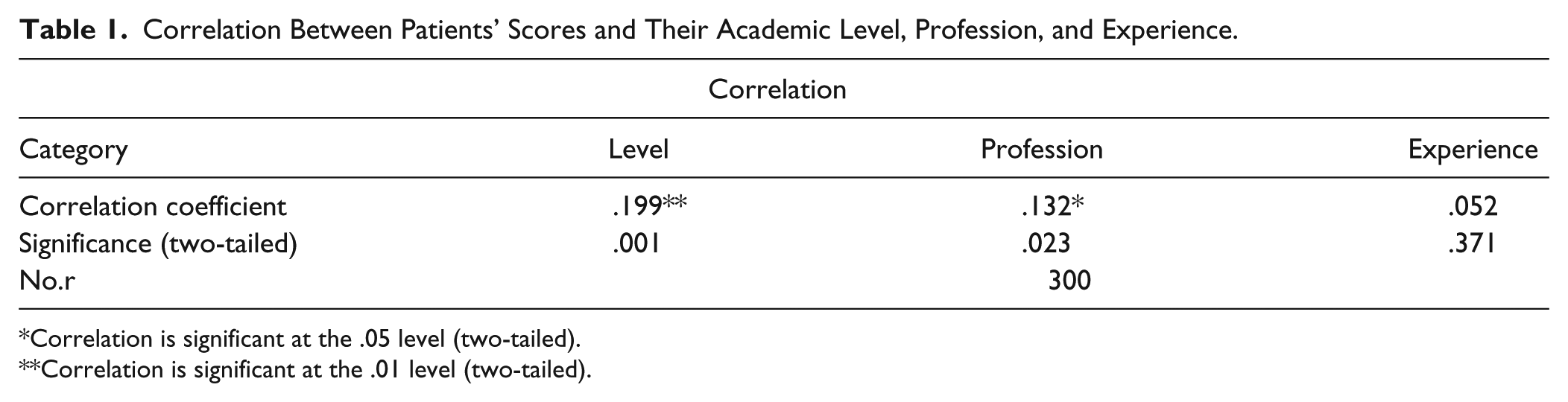
Correlation is significant at the .05 level (two-tailed).
Correlation is significant at the .01 level (two-tailed).
General Radiation Knowledge
Results regarding general radiation knowledge are provided in Table 2. Among the respondents, 544 (90.7%) did not have any type of education or training with regard to radiation during their lifetime.
General Radiation Knowledge Survey Responses. a
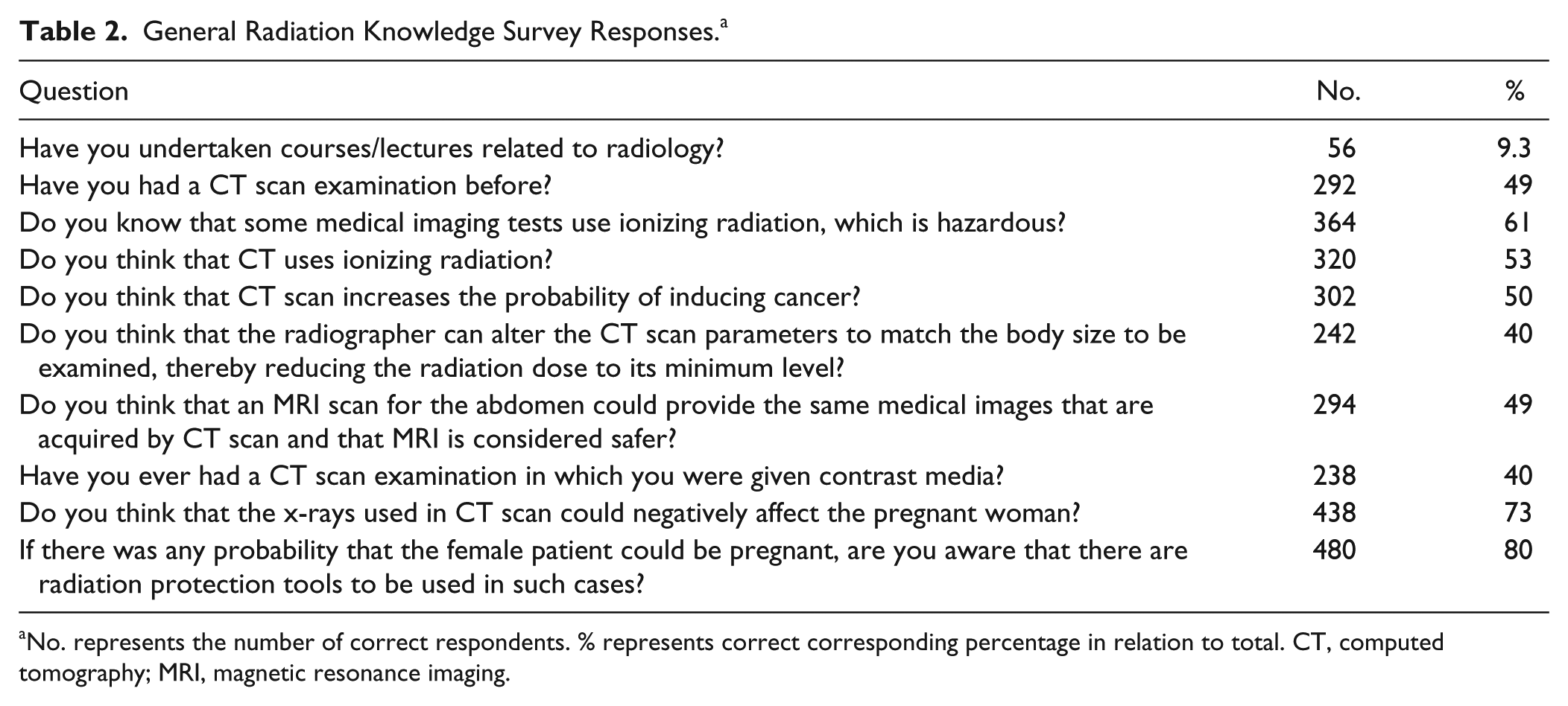
No. represents the number of correct respondents. % represents correct corresponding percentage in relation to total. CT, computed tomography; MRI, magnetic resonance imaging.
Table 2 demonstrates the percentage of patients who had undergone different procedures. Only 292 (49%) of respondents reported that they had a CT examination previously. Similarly, 320 (53%) patients have been examined with ionizing radiation, and 302 (50%) patients were examined with a CT due to increased probability of inducing cancer. Only 40% of the respondents indicated correctly that the radiographer could change the scan parameter. A total of 49% of respondents correctly reported that magnetic resonance imaging (MRI) is safe technique and provides a similar medical image compared to a CT examination. Furthermore, 40% of patients reported having a CT scan with contrast media. Regarding radiographs, 438 (73%) patients stated that ionizing radiation used in a CT scan could negatively affect a pregnant woman.
Radiation Risk and Awareness
The results of radiation risk and awareness are shown in Table 3. Regarding the difference between CT radiation dose, 336 (56%) identified that there are differences in radiation dose from one exam to another.
Radiation Risk and Awareness Survey Responses. a
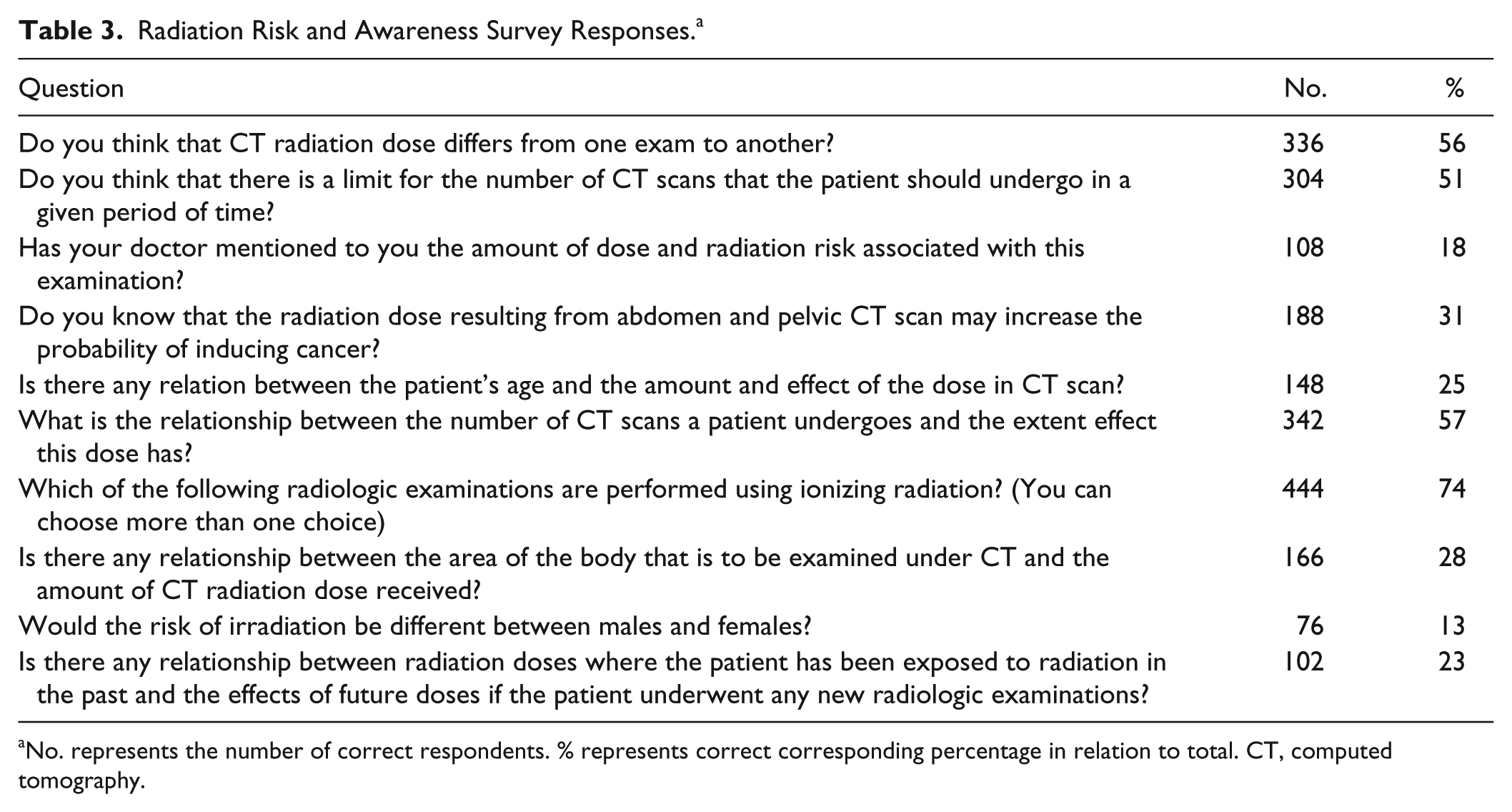
No. represents the number of correct respondents. % represents correct corresponding percentage in relation to total. CT, computed tomography.
The results demonstrated that 108 (18%) were worried with the knowledge provided by physicians about the dose and risk of radiation associated with their CT. Regarding the relationship between patient’s age and the CT dose, 188 (31%) respondents stated that there is a relationship between patient’s age and dose in the CT examination. Moreover, 57% patients have stated that there is a relationship between the number of CT exams of an individual and the extent to which it would affect dose. Regarding ionizing radiations, a number of patients (74%) stated that they had undergone a CT through this procedure. Only 28% of respondents identified the relationship between the area of the body examined under CT and the subsequent amount of dose. Only 23% patients were aware of the relationship between gender and accumulated radiation dose.
Radiation Protection and Safety
Results concerning radiation protection and safety are reported in Table 4. The findings have shown that 220 (37%) patients were aware of wearable radiation protection tools with the CT examination.
Radiation Protection Survey Responses. a
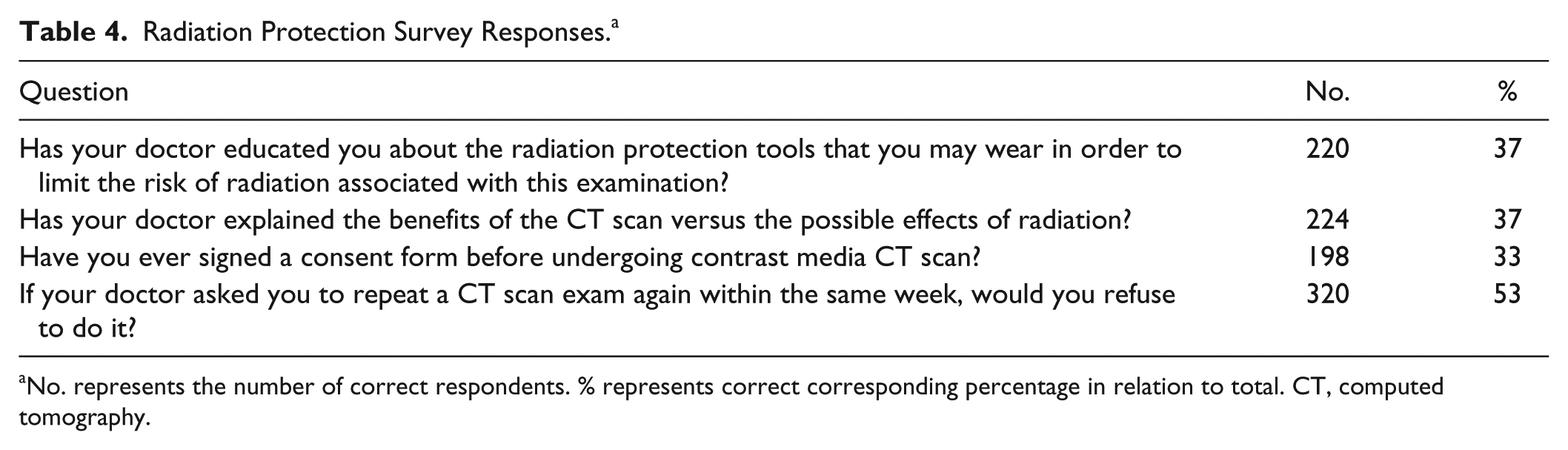
No. represents the number of correct respondents. % represents correct corresponding percentage in relation to total. CT, computed tomography.
The results show that 37% of respondents identified the importance of a physician’s knowledge and how they explained the information about the risks from radiation from the examination. Only 198 (33%) of patients had signed a consent form before undergoing a CT examination with contrast media. Similarly, 320 (53%) indicated that in the future, they would refuse to repeat a CT within the same week if their physician requested it.
Analysis of Patients’ Scores
Table 5 shows the respondents’ scores means, which were calculated among three different categories of gender, employment, profession (nonmedical, medical, unemployed), and level of academic achievement.
Patients’ Mean Scores, Distributed According to Their Gender, Profession, and Academic Level of Accomplishment.
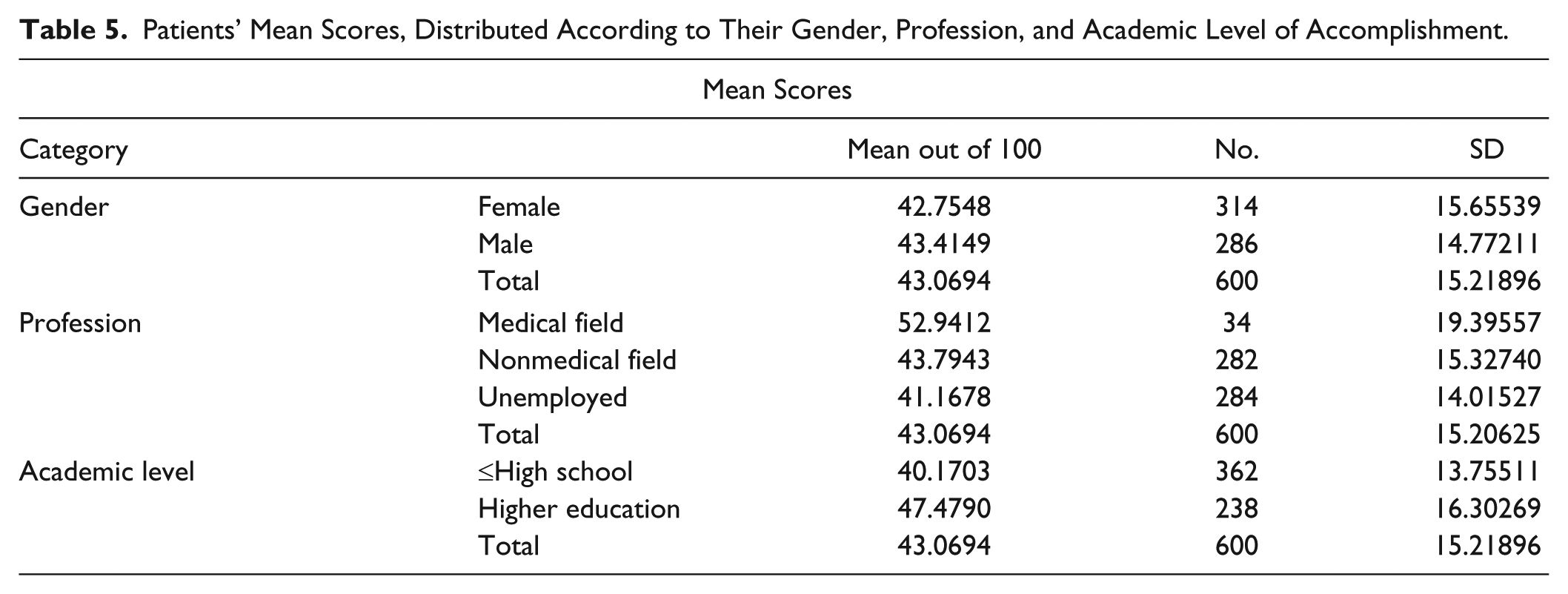
By gender, the mean for males was 43.4149, while for females, the mean was 42.7548. Regarding employment and profession, the mean scores of the respondents who worked in the medical field was 52.9412, while the score for employment in nonmedical fields was 43.7943. The mean score of respondents who were not employed was 41.1678. Regarding level of academic achievement, respondents with tertiary education achieved a mean score of 47.4790, while respondents of academic levels equal to high school or lower achieved a mean score of 40.1703.
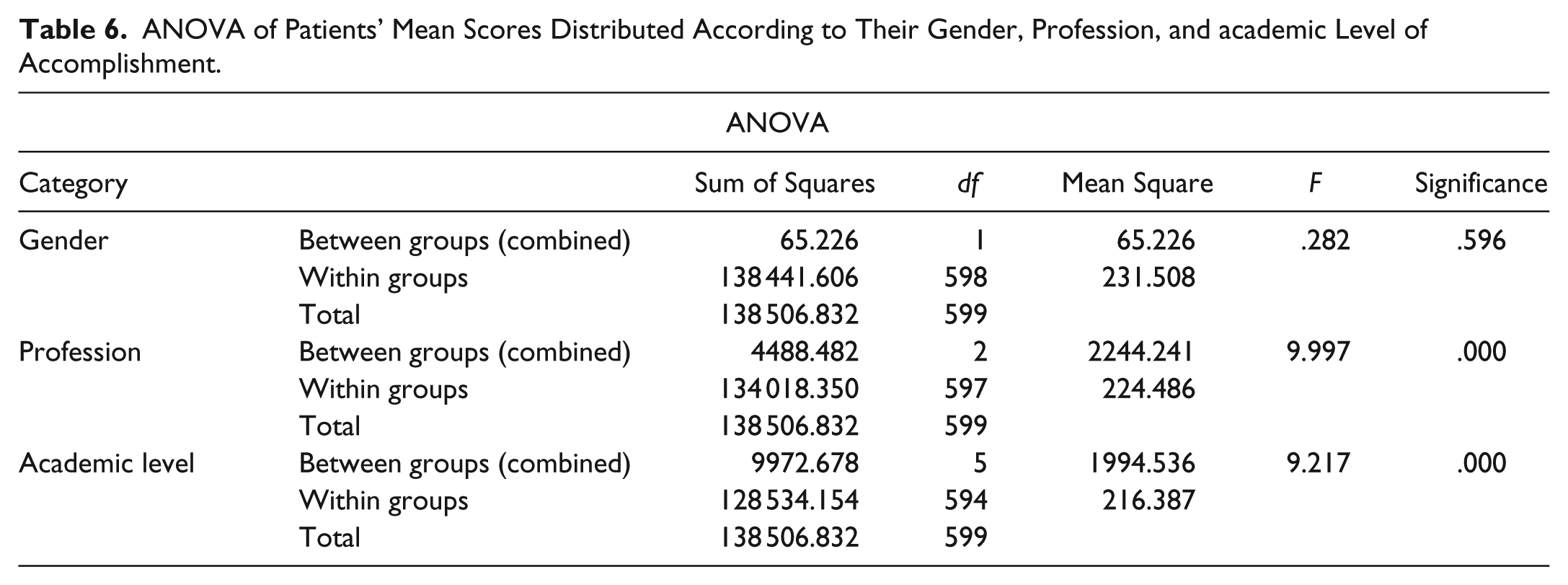
A one-way ANOVA test of respondents’ mean scores as distributed according to their gender, employment, profession, and academic level of achievement was statistically analyzed. For gender category, the mean square between groups (combined) was 65.226 and 231.508 within groups (P = .596). Regarding employment and profession, the mean square between groups (combined) was 2244.241 and 224.486 within groups (P = .000). For various levels of achievement, the mean square between groups (combined) was 1994.536 and 216.387 within groups (P = .000) as listed in Table 6.
ANOVA of Patients’ Mean Scores Distributed According to Their Gender, Profession, and academic Level of Accomplishment.
Discussion
The use of CT as a diagnostic tool has expanded dramatically in the past decade. The CT examination is capable of providing high-quality and valuable diagnostic information; however, it is also recognized to produce a higher radiation dose to patients.16,17 From 1970 to 1979, the worldwide utilization of CT was reported to be 6.1 per 1000, increasing to 44 per 1000 in 1985 to 1990. In the United States, 14.5 CT exams per 1000 people, 30 per 1000 in Australia, 35 per 1000 in Germany, 50 per 1000 in Belgium, and 97 per 1000 in Japan were recorded. As the number of CT examinations increased, the collective dose to the population would also have increased.17–19
Individual patient doses continue to rise dramatically, indicating a concern for patients’ dose that is both personal and professional. There is an increased need for strategies focused on dose optimization during a CT examination.3,20 Recently, awareness on radiation exposure has significantly risen due to increased scientific evidence linked to medical irradiation and cancer development. Radiation-induced cancer can be estimated using the BEIR VII 2006 report, which is based on the magnitude of a single radiation exposure and a patient’s age at the time of exposure. The report has indicated an estimation of 1 in 1002 males and 1 in 930 females who underwent routine abdomen-pelvic CT exams without contrast media at the age of 40. 21
The imaging professionals already apply CT dose reduction applications that match the ALARA standard. A significant driver is the increased awareness of the population concerning radiation dose from medical imaging procedures. 22 This study represents the first survey of this type conducted in Jordan, to assess the level of awareness among patients concerning radiation dose and the risks associated with CT, in a specific locale. The findings have revealed that the overall patient knowledge of CT radiation dose and risk in this Jordanian cohort is lower (Table 5). This finding aligns with previous studies showing similar results among patient cohorts from other countries. 23 ,24–29
The results also demonstrated that awareness and knowledge is higher among respondents with higher education than those with lower educational levels. Respondents’ scores increased with academic achievement; respondents with higher education achieved a score mean of 47.479 while respondents with equal to high school or lower primary school (P = .000). The results also demonstrated that gender had no significant effect on patients’ knowledge (P = .596). In contrast, the type of employment and profession had a major effect on positive scores (P = .00). As expected, respondents working in the medical field achieved the highest mean scores (52.94).
Previous studies have supported these results reporting that individuals’ higher education leads to greater understanding and knowledge of radiation dose and risk compared to individuals with a low level of education.24,25,30–32 This study aimed to conduct an investigation of the level of patient awareness with regard to radiation dose and ionizing hazards posed by CT imaging in a specific area of Jordan. As was indicated by the results, it was seen that these Jordanian patients had a low level of knowledge and understanding with regard to the aforementioned aspects. These results were in line with additional studies that highlighted the lack of patient awareness regarding the risk of CT’s ionizing radiation in other countries. Therefore, this is illustrative of the critical need for patient education to raise awareness among patients regarding the risks posed by CT imaging prior to conducting any such radiological examinations. It was discussed in studies that there is often a high degree of confusion regarding which medical personnel are responsible for communicating the risks posed by CT directly to patients. Thus, it is necessary that a consensus be reached among medical personnel regarding this responsibility. As suggested by studies, radiation dosage for CT examinations should be categorized as per the weight of the individual undergoing the radiologic examination. This was found to be a useful technique for determining the technique need for imaging neonates. It is therefore necessary to incorporate the concept of the ALARA principle for the widespread community at large. Furthermore, as stated earlier, it is the responsibility of medical personnel to educate patients regarding ALARA principles and patient safety standards to minimize radiation exposure and risk of cancer onset.33–35
Additionally, it was discussed in studies that compared to CT, sonography shows a better conformity to ALARA practices and diagnostic tool exposure, even though ultrasound is a non-ionizing imaging modality. An example of one such ALARA principle employed by sonographers was the range of ultrasound power settings used for obstetric examinations and the need for these to be kept at a very low level. 23 The World Federation of Ultrasound in Medicine and Biology provides a comprehensive statement on the use of the ALARA principle for using ultrasound. This set of statements was provided to be a valuable resource for medical professionals globally. 35
It is essential that ALARA practices be translated effectively for use in the case of CT examinations. A study by McNierney-Moore et al 32 on CT imaging reported that physicians needed to educate patients about both the radiation exposure risk versus the diagnostic benefits. Previous studies have also identified that ionizing radiation used during a CT could negatively affect the pregnant woman and supported the findings of the current study presented. Moreover, a past study has noted that CT is a medical imaging modality that uses ionizing radiation, which can be hazardous and of concern to patients. 36
Limitations
There are a number of limitations in this study. Most importantly, it is probable that patients presenting for a CT have a lack of awareness about radiation dose and risks compared to those presenting for conventional radiographic imaging. The study is also specific to six Jordanian hospitals, and results may not translate to other world regions. Moreover, cross-sectional design should be used by future studies to explicitly provide information regarding CT examinations and variety of dose among patients. Larger case studies are needed that employ an intervention for patient education specific to radiation exposure that examines participants’ level of understanding.
Conclusion
The study has provided clear evidence that these Jordanian patients had a lack of education and awareness about the level of ionizing radiation used for a CT and the associated risks. The results also have identified limited radiation protection awareness among these particular patients. Information about CT radiation risks should be made available to patients prior to their examination to ensure informed consent. It may be particularly helpful for patients who have limited education. Moreover, physicians, radiologists, and imaging professionals should be encouraged to provide patients with information regarding the risks of ionizing radiation associated with CT. Hospitals should also be involved and take the lead in encouraging patient education to increase general awareness and overall knowledge about radiation safety and awareness. Further research is needed on patient education of radiation dose to determine the most successful methods of education and measure their impact.
Footnotes
Appendix
Acknowledgements
We would like to thank our respectful research assistants for their distinguished role of data collection.
Declaration of Conflicting Interests
The authors declared no potential conflicts of interest with respect to the research, authorship, and/or publication of this article.
Funding
The authors disclosed receipt of the following financial support for the research, authorship, and/or publication of this article: This work was supported by Jordan University of Science and Technology, Irbid-Jordan, under grant number 20140176.
