




Abstract
Increasingly, post-earthquake cordons (PECs) have been used to support response and recovery activities around the world. However, thus far, the empirical analysis of cordons has not considered the overarching feasibility of their use. This research aims to fill this gap through a case study of Kathmandu Valley following the 2015 Gorkha earthquake in Nepal. It draws on a broader study that has investigated various aspects of cordons in New Zealand and Italy. In total, 13 interviews were conducted in the Nepali language with relevant experts of varying backgrounds and expertise such as academics, disaster management officers, policymakers, municipality representatives, and practitioners (INGO). The interviews were semi-structured and conducted through purposive and snowball sampling. The data was translated, transcribed, and then coded into NVivo software which was then analyzed inductively through an iterative thematic process. The findings of this research demonstrate the importance of context in understanding PECs and their implications on disaster response and recovery. For cordons to be feasible, many factors such as resource challenges (physical, economic, and human) and provisions for temporary housing, welfare, access to essential services, security, and availability of alternative transportation routes are essential. In addition, legislative frameworks, trust in government institutions, and cultural nuances need to be taken into consideration if PECs are to be feasible as a disaster response and recovery strategy.
Introduction
Recently, there has been a growing recognition of the use of cordons as a response mechanism after major seismic events (Chang et al., 2014; Elwood et al., 2020; Hulsey, 2020; Underwood et al., 2020). Although cordons have been documented as a response strategy, cordons have not yet been subject to detailed investigation in the academic discourse. This is despite the fact that, whenever used, post-earthquake cordons (PECs) have had significant impacts following major seismic events such as Christchurch earthquake in New Zealand, 2011 and L’Aquila earthquake in Italy, 2009 (Underwood et al., 2020). The establishment of cordons around the damaged Christchurch CBD following the 2011 event (Hatton et al., 2012) was one of the most important decisions for response and recovery after the earthquake (Chang et al., 2014). It widely influenced the social, economic, infrastructure, legal, and institutional fabric of Christchurch in the aftermath of the disaster (Seville et al., 2014). The cordons remain in some parts of the historic L’Aquila city center more than a decade later, which means that access to some areas is still controlled by the authorities to varying degrees (Shrestha et al., 2022). Contreras et al. (2022) conducted a sentiment analysis of social media tweets to assess the postdisaster recovery of L’Aquila, and found cordons are associated negatively with recovery.
According to Underwood et al. (2020: 2), cordons are “a barrier established by an authority to temporarily exclude the public from a defined area.” Cordons are a practical tool to ensure the safety of the public. When establishing PECs around buildings, the rule of thumb to determine the spatial extent when using soft barriers is 1.5 times the height of the building (California Building Officials (CALBO), 2013). This extent corresponds to the possible fall zone of debris and provides an appropriate safe distance during the demolition of buildings (Shrestha et al., 2021). Although more common in recent years around the world, the use of cordons is an exception and not the rule following a major seismic event. In some cases, their use is not captured formally and systematically, even when they are established after an earthquake (Hulsey et al., 2022).
A growing number of studies allude to the importance of PECs for response and recovery (Brown et al., 2013; Elwood et al., 2020; Hulsey et al., 2022); however, thus far, the empirical analysis of cordons has not considered the overarching feasibility of their use. This research aims to fill this gap through a case study of Kathmandu Valley following the 2015 Gorkha earthquake in Nepal. It draws on a broader study that has investigated various aspects of cordons such as its definition, decision-making processes, and operational challenges, among others. To this end, case studies in Christchurch, Wellington, and L’Aquila (Shrestha et al., 2021, 2022) are often referred to while elucidating the factors that influence the feasibility of cordons.
Context: Kathmandu Valley, Nepal
Kathmandu Valley comprises three cities: Kathmandu (the capital of Nepal), Bhaktapur, and Lalitpur, which are inextricably interconnected geographically, culturally, and historically. Traditionally, the settlements of the Newar 1 ethnic group, all three cities host historical city centers that collectively contain more than a thousand historical monuments and temples that were built across two millennia. At the time of earthquake, Kathmandu Valley hosted 22.77% of the total 27 million population of Nepal (Rimal et al., 2017). On 25 April 2015, a powerful Mw 7.8 earthquake struck near Gorkha, Nepal, approximately 77 km northwest of Kathmandu city (National Planning Commission-Government of Nepal (NPC-GoN), 2015) (Figure 1). The initial shock was followed by hundreds of aftershocks, among which was a major aftershock at Mw 7.3 on 12 May 2015, northeast of Kathmandu. These major seismic events caused around 8800 deaths, approximately 23,000 injuries, destruction of 500,000 houses, and damage to a further 250,000 buildings (Bothara et al., 2016). The economic cost of the earthquake was estimated at approximately US$7 billion (Lizundia et al., 2017). The immediate response was mainly conducted by the Nepal army mobilizing around 90% of the soldiers in various response activities such as search and rescue activities (1336 people rescued), medical care (85,954 people), and distribution of relief materials (5707 tons) (Manandhar et al., 2017).
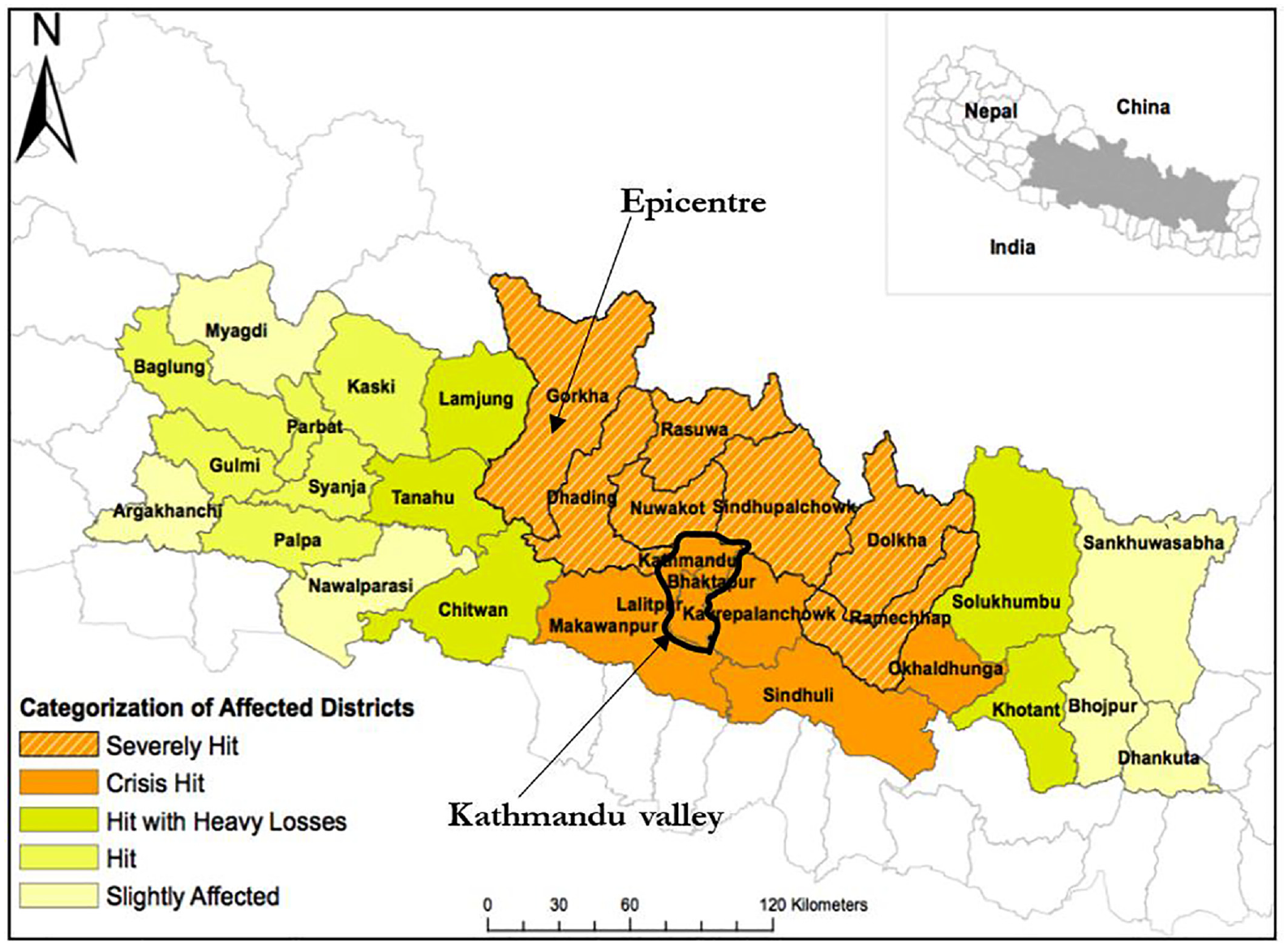
Earthquake-affected areas in Nepal (as of 21 May 2015).
In the wake of this disaster, the government of Nepal declared a state of emergency within a few hours of the initial shake, designating 11 affected districts including Kathmandu Valley as “Sankatgrast Kshetra” meaning emergency area (Office of Prime Minister and Council of Ministers—Government of Nepal (OPMCM-GoN), 2015). The legal provision for disaster management in Nepal is originally based on the Natural Calamity Act of 2039, 2 established in 1982, and later amended in 1992. According to this Act, the government is responsible to designate areas of danger as “disaster area” and list them in the Nepal Gazette (Wendelbo et al., 2016). Following this designation, the government then has emergency authority over disaster-affected areas to confiscate property (while offering compensation) to assist in the emergency response. Additional emergency legal powers are provisioned in the Local Self-Governance Act of 1999, which strengthened the existing powers of the local authorities. These legal provisions were replaced by a comprehensive National Disaster Response Framework (NDRF) in 2013, which combined previous laws and regulations into a single DRR framework for Nepal (Wendelbo et al., 2016).
Even though the damage to buildings and loss of lives and injuries were significant, the use of cordons to protect the public was rarely observed in Kathmandu following the Gorkha earthquake response. However, with help from registered engineers (from government as well as private initiatives), a massive Rapid Visual Damage Assessment (RVDA) was carried out to identify vulnerable buildings (Shrestha et al., 2016). A system was developed to mark the severity of damage to buildings, colored red (most damage), yellow, and green (least damage). The red sticker meant the building was unsafe and there was imminent danger of collapse, and the yellow sticker denoted that there was potential danger and entry was permitted by the building owner for emergency purposes only and at their own risk. Finally, the green sticker meant the building was safe, although repairs may be required.
The concerns regarding life safety, as suggested by the RVDA program, rarely actualized in the form of cordon use around damaged buildings. This is surprising given there were significantly higher death tolls and injuries and more widespread damage to buildings observed in Kathmandu Valley compared to other case studies (Shrestha et al., 2021, 2022). Although New Zealand and Italy also differ in terms of culture, governance structure, and disaster management mechanisms, both countries had established cordons for a long time following major seismic events. As such, the Kathmandu case provides valuable insights into the use (or lack) of cordons following earthquakes and sheds light on the feasibility of cordons as an emergency response strategy.
Context: Christchurch, Wellington, and L’Aquila
The city of Christchurch was struck by a major earthquake measuring 6.3Mw in February 2011. In the aftermath of the seismic event, 185 people lost their lives, thousands of people were injured, and partial to complete damage was observed to thousands of buildings (Potter et al., 2015). A state of emergency was declared soon after, which lasted 66 days (National Emergency Management Agency (NEMA), 2021). The city center suffered the most damage, resulting in authorities cordoning a large area of 114 blocks, which was later reduced to 75 blocks after 10 days (Comerio et al., 2011). The cordons were officially lifted more than two years after their establishment.
Wellington City established cordons of smaller spatial extent following the 2016 Kaikōura Mw 7.8 earthquake. Although the epicenter of the earthquake was ∼200 km away from Wellington City (Fleisher, 2019), it caused significant damage to multiple buildings and minor disruption to lifeline services (Giovinazzi et al., 2017). There were two main cordons established around Molesworth and Tory Streets, which were in place for 3–4 months (Shrestha et al., 2021). Authorities did not declare a state of emergency after the earthquake.
In central Italy, L’Aquila city was hit by an Mw 6.3 earthquake in April 2009, with its epicenter 34 km from southwest of the city. There were 309 deaths and approximately 1500 injured, while thousands of buildings were damaged (Contreras et al., 2013). A state of emergency was immediately declared that continued for an unprecedented 3 years (Imperiale and Vanclay, 2019). The city center was designated as a “red zone” with access restricted to the public. After more than a decade, there are still areas that are cordoned off in L’Aquila city (Shrestha et al., 2022). These recent examples were the subject of previous qualitative research that drew on expert knowledge across each specific context (Shrestha et al., 2021, 2022). These studies provide insights into the range of contextual, cultural, and political factors that influence cordon establishment following seismic events and are drawn on throughout this article. The previous two articles are briefly summarized henceforth.
In the first article, Shrestha et al. (2021), discussed two cases from New Zealand, Christchurch, and Wellington. The authors demonstrated cordons as a post-earthquake response strategy, defined cordons, and described their purpose for life safety and security. In addition, two key aspects of cordons in the New Zealand context were presented in relation to decision-making and operational management. Shrestha et al. (2022) then focused on the similarities and differences observed in cordoning decisions and operational practices owing to different sociocultural, legal, and institutional factors by comparing Christchurch to L’Aquila. It was found that cordons were primarily established for life safety, that their boundaries are typically porous and often contentious in nature, and they support recovery efforts when maintained for extended periods. However, it was also evident that contextual information played an important role in influencing cordon decisions and management, primarily the issue of insurance and demolitions of buildings in Christchurch and of evacuation and heritage protection in L’Aquila. It was concluded that cordons should be avoided if possible and removed as soon as safe and practical.
Methods
Although the impact of the Gorkha earthquake was felt widely across Nepal, for the purpose of this study, only Kathmandu Valley was selected. One reason is that Kathmandu Valley is comprised of three cities and thus provides a comparable dimension to other cities (Christchurch, Wellington, and L’Aquila) referred to in this study. In addition, two-thirds of the injuries (around 15,000 people) during the earthquake occurred in Kathmandu Valley alone, in addition to more than 1000 recorded deaths (Okamura et al., 2015). Similarly, the damage to buildings was also significant. According to Okamura et al. (2015), in Kathmandu Valley alone, around 75,000 buildings were completely damaged, and 60,000 buildings were partially damaged. Since cordons were used sparsely across the three cities, there were only a limited number of relevant experts from which to collect data; thus, the entire valley was studied instead of one in isolation. Also, offices of relevant national-level organizations are situated in one of these three cities.
The data collection process followed a similar approach to previous case studies (Shrestha et al., 2021, 2022), with relevant experts being identified who had been directly or indirectly involved and/or were knowledgeable about the response and recovery following the 2015 Gorkha earthquake. Experts included academics, city council employees, emergency managers, relevant INGO representatives, and other government employees from relevant organizations. Similar to other case studies, purposive and snowball sampling strategies were used to connect with experts, which benefited from the lead author being a native of Kathmandu with knowledge of earthquake response and recovery agencies and processes related to the 2015 earthquake. The interviews were semi-structured in nature, and contextual information about Kathmandu Valley was incorporated into the interview schedule.
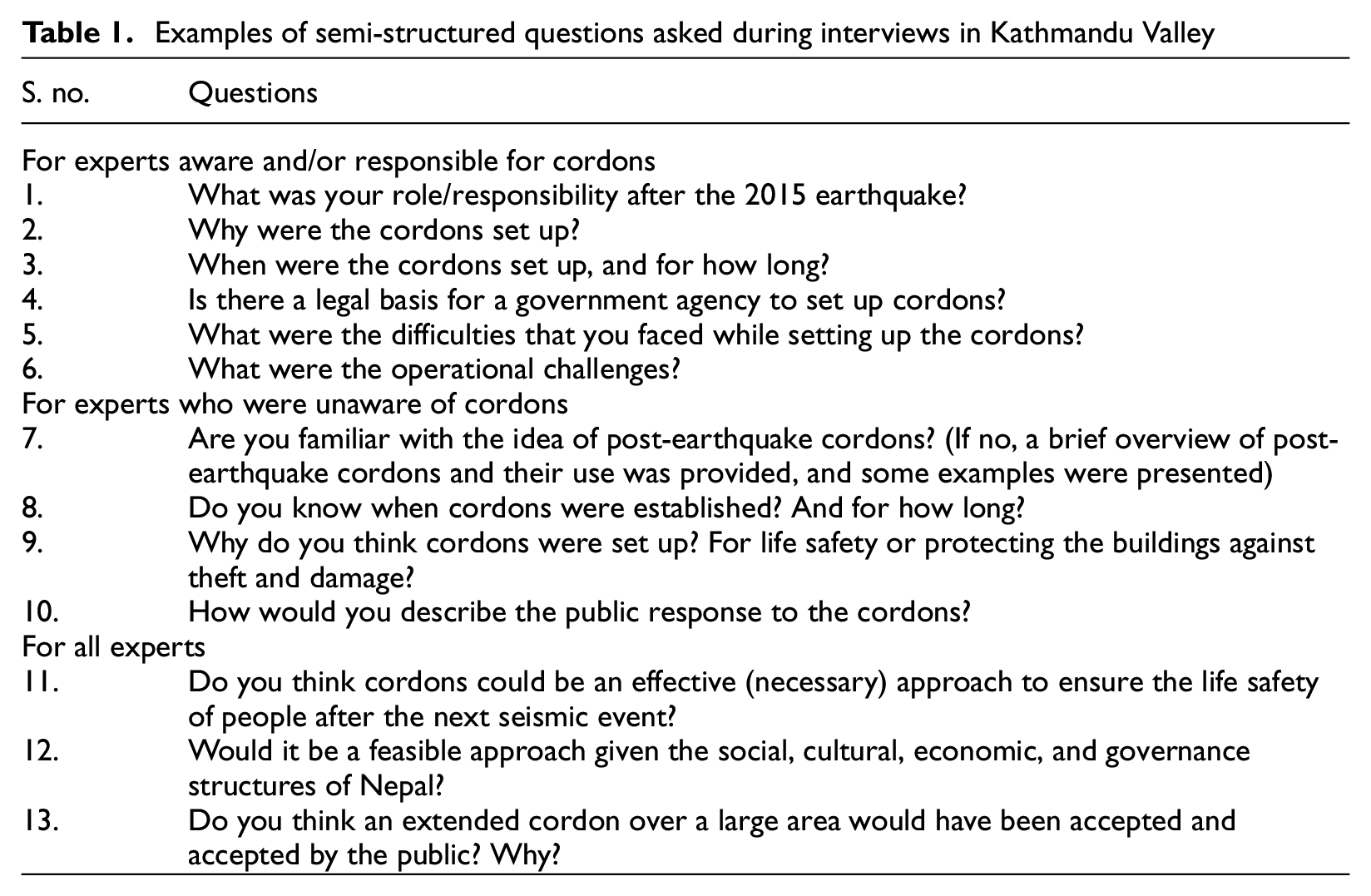
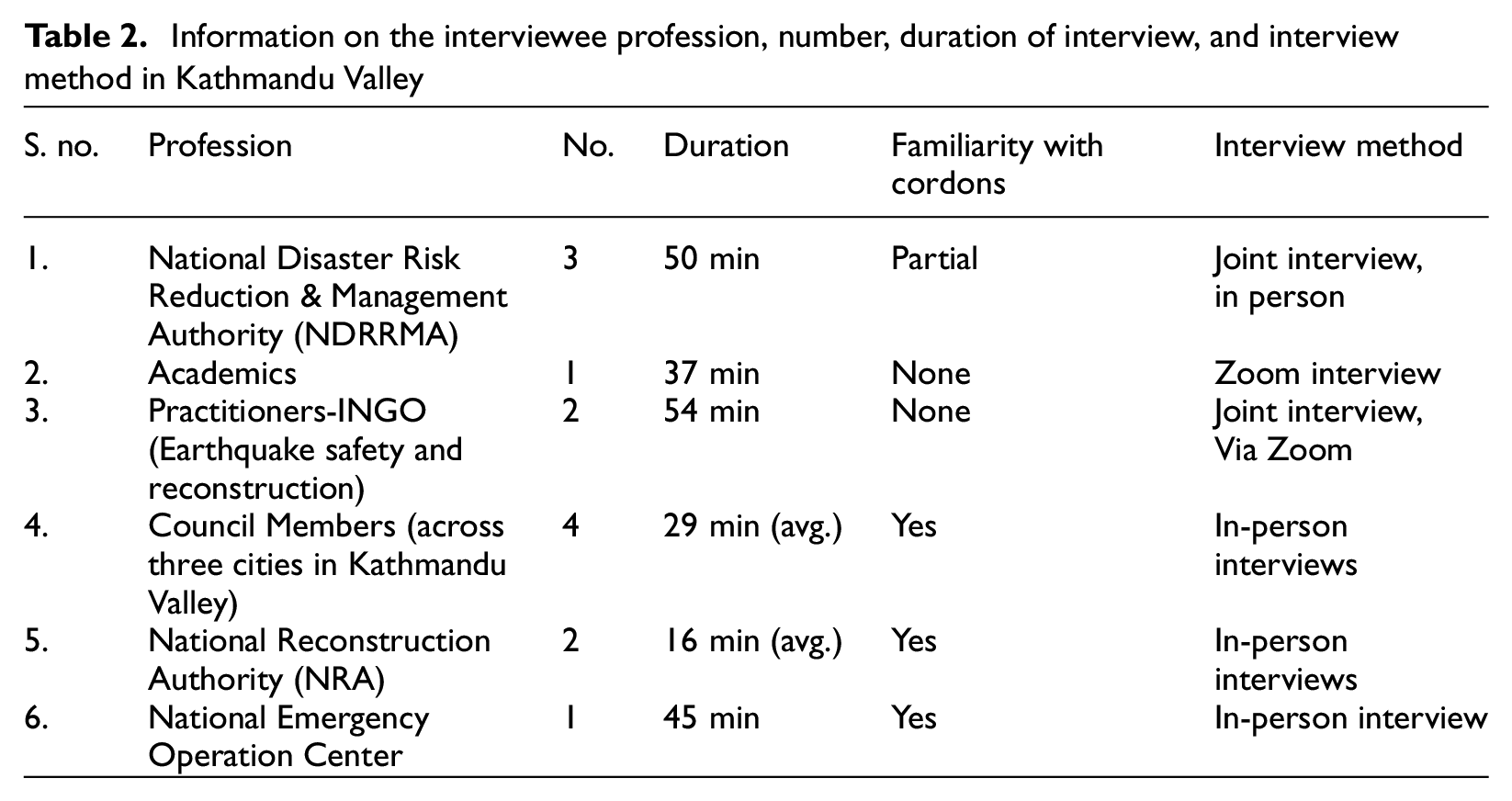
In total, 13 interviews were conducted, all in the Nepali language over the span of three months, from November 2020 to January 2021. Most of the interviews were conducted in person, with three interviews via the Zoom platform (Table 1). It should be noted that earlier cases had a similar number of interviews, that is, Christchurch (n = 13), Wellington (n = 8), and L’Aquila (n = 10). On average, the interviews were shorter (avg. 25 min) compared to other case studies (New Zealand = avg. 45 min and L’Aquila = avg. 70 min) owing to the fact that cordons were not a preferred response approach and were rarely implemented in Kathmandu Valley. As such, there was limited knowledge and experience regarding the operational aspects of cordoning and its consequences. The questions designed for the interviews accounted for potential gaps in the knowledge of the experts by posing hypothetical questions and differentiating between the interviewee’s knowledge of cordons and cordoning processes, as shown in Table 2.
Examples of semi-structured questions asked during interviews in Kathmandu Valley
Information on the interviewee profession, number, duration of interview, and interview method in Kathmandu Valley
The transcribed interview data were coded in NVivo software, grouped based on underlying themes and concepts, and then analyzed inductively. NVivo is a computer-assisted qualitative data analysis software that can be used for qualitative inquiry beyond coding, sorting, and retrieval of data. The software allows for the integration of codes with qualitative linking, shaping, and modeling of data (which could be audio, video, or text) (Wong, 2008). An emic coding approach was used whereby meanings were drawn directly from the perspectives of the interviewees (Peterson, 2017). This was carried out through open coding of the data to conceptualize initial categories (Khandkar, 2009), followed by axial coding to further refine the codes into distinct themes (Williams and Moser, 2019).
The codes generated after the axial coding process were reflected upon and updated where appropriate in relation to the context specificity of Kathmandu Valley. It should also be noted that the coding process was undertaken in progressive iterations as the New Zealand and Italian case studies were being completed over the span of 3 years. As such, codes used for the initial case studies were used (where appropriate) for the Nepal case as well. Additional codes were developed where necessary. During the analysis, some of the codes were amended and updated based on the improved understanding of the cordons that emerged during the data analysis phase. The themes generated in this study through iterative thematic analysis reflect what emerged from the datasets, while drawing out the differences that site-specific contexts have on various aspects of PECs.
Results and discussion
The results and discussion are presented together for this study following the same approach used for previous case studies (Shrestha et al., 2021, 2022). In this article, the analysis of the data has reinforced the results that were observed in the previous Christchurch and L’Aquila case studies and provided new insights into the use of cordons in a post-earthquake scenario. This article is focused on establishing whether cordons can be a feasible solution in a completely different economic, sociocultural, legal, and institutional structure compared to New Zealand and Italy. Following the thematic analysis, multiple themes have emerged that provide a window into the feasibility of PECs, related to law, life safety, culture, available resources, and governance. These themes are presented henceforth.
Cordons, life safety, and law
The case study in Kathmandu Valley reveals that the use of cordons following the 2015 Gorkha earthquake as a response strategy was rare. This is in stark contrast to the previous case studies where PECs were applied at various spatial and temporal scales as a significant part of the response strategy. In New Zealand and Italy, the initial establishment of PECs was mostly motivated by life safety considerations. Kathmandu Valley suffered extensive human casualties, with a much higher number of lives lost and injuries observed (Okamura et al., 2015; Shrestha et al., 2016) compared to New Zealand (Ardagh et al., 2012) and Italy (Alexander, 2010). Concerns for life safety were evident in Nepal, too, highlighted by more than 1000 lives saved by the Nepalese army in the immediate response phase following the 2015 earthquake (Manandhar et al., 2017).
The importance of protecting people’s lives was noted by many experts, as one interviewee described, Yes, we have to (cordon) if the whole area is at risk. If tomorrow any incident occurs people can die. You have to try to save even one life. In the times of emergency, if we can save even one life, then it is a very big deal. (Municipality representative, Lalitpur)
Similarly, another expert reiterated, ‘The primary responsibility of the state is to save lives. To save lives, we cannot allow people to live in the house with red stickers’ (Municipality representative, Kathmandu).
Government institutions such as the Department of Urban Development and Building Construction (DUDBC) and the Ministry of Urban Development (MOUD) conducted targeted RVDA for government buildings, high-rise apartments, housing colonies (low-rise residential areas), and schools (Shrestha et al., 2016). The RVDA received significant support from other organizations such as the Institute of Engineering (IOE) and the Nepal Engineering Association (NEA 3 ). This institution mobilized hundreds of engineers who volunteered to conduct RVDA upon request from homeowners, primarily in urban areas of Kathmandu Valley. While RVDAs are a useful and efficient way to indicate damage and potential risks from a building to ensure the safety of people, they were only suggestive in nature. Therefore, the decision to access the building, even if it was red-stickered, was at the discretion of the homeowners. This was in stark contrast to the use of cordons in other case studies where authorities controlled access to buildings and spaces. The Nepal government’s use of the stickering system was also in stark contrast to Christchurch, where red stickering meant no entry following the 2011 earthquake (Bayer, 2012).
Although the need to protect life safety was reiterated by many experts, this concern did not translate into extensive use of PECs in Kathmandu Valley. There are many reasons which factored into the limited use of cordons. The first aspect to consider is whether there are legal provisions in place that allow authorities to establish cordons. In Kathmandu, following the earthquake, a national state of emergency was declared, and the National Emergency Operation Center (NEOC) was activated under the NDRF guidelines. Based on NDRF, the Ministry of Home Affairs (MoHA) was the lead agency primarily responsible and equipped with the necessary legal powers to direct various emergency response activities and facilitate national and international cooperation across response agencies. Government officials shared their views on whether cordons were recognized by Nepalese law: Most of the things envisioned in the law are based on life-saving activities for immediate periods. The things that you mentioned (use of cordons) have not been mentioned in the law itself. (NDRRMA representative) Our law does not recognize that (cordons). These things should and have been done but is not mentioned broadly in the law provisions of our country. Our law provisions mainly focus on response and life-saving activity. (NDRRMA representative)
Although the use of cordons had not been specifically provisioned in the law, their use could be considered legally tenable because of the focus on life safety as a major objective of the emergency legislation (MoHA, 2013). Despite a lack of clear provisions for cordon establishment in the disaster management legislation, there were instances where cordons were established around heavily damaged buildings. These cordons were mostly set up around government-controlled public buildings and/or heritage buildings and temples. The main reason cordons were established around public buildings was because government officials had complete control over the buildings, and as such, it was legally and logistically much more feasible compared to private buildings. In addition, these premises were office spaces which meant displacing residents and providing temporary accommodation was not required. However, while private properties were rarely cordoned off by emergency authorities, there were a few instances where such cordoning occurred when authorities deemed the buildings to be extremely dangerous. One such case was of the Horizon Park View Apartments in Kathmandu, which was cordoned off for 4–5 days.
It (cordoning) was done after the earthquake in 2015 in some places such as Nayabazaar stopping people from entering and resettling the people to another place. It was also done around Horizon Apartment. Likewise, in dangerous places, cordoning was done. (NEOC representative) There were no casualties or injuries but as that (Horizon) apartment was dangerous and later red-stickered, the situation was a little tense and hence, the road was blocked. (Municipality representative, Kathmandu)
In relation to temples and other heritage buildings, which may or may not be fully controlled by the government, cordons were also used to protect against theft of artifacts as well as structural and decorative elements. The need to protect against potential/actual theft and looting was suggested as one of the reasons for the establishment of cordons in Christchurch and L’Aquila as well (Shrestha et al., 2022). In Nepal, fears of artifacts being stolen in the chaos following the earthquake (which caused significant damage to temples) were heightened due to a long history of theft of artifacts in Nepal (Mani, 2015). It should be noted that around 753 temples, monasteries, and monuments were damaged to some degree, if not entirely, following the earthquake (Satyal, 2018). Some experts estimate that almost 90% of artifacts (such as idols of deities) and artworks of significant cultural, religious, and aesthetic value have been stolen from Nepal since the 1960s (Limbu, 2001). This fear of potential theft of cultural items was echoed by many experts, as one of them explained: It (cordoning) was about both (safety of people and security of place). Since Bhaktapur Durbar Square
4
is a public place so it is always dangerous to let people freely roam around. Also, it is a heritage site so the old, preserved items like idols, bricks could be stolen. (HRRP representative)
Although there was no documented theft of sacred art and artifacts in the 3 months following the earthquake (Yates and MacKenzie, 2018), there were several instances of theft of structural elements of temples such as struts, cornices, bricks, and parts of damaged columns and beams from the damaged heritage buildings or temples (Wolfson, 2015) as one interviewee noted: I heard many cases of stealing in Kasthamandap
5
which fell due to the earthquake. It is also done (cordoning) for life safety as a lot of aftershocks were coming. Plus, the materials in the heritage sites are very precious to us and should be preserved. (Municipality representative, Kathmandu)
Cordons and culture
The significance of cultural and religious traditions and norms was either explicitly mentioned or implicitly inferred throughout the interviews by most experts. This is not surprising given the rich history of Kathmandu Valley in relation to religious and culturally significant temples, palaces, stupas, traditions, and arts & crafts (mostly Hindu and Buddhist) spanning two millennia. The existence of more than 1000 temples and monuments within Kathmandu Valley (Lekakis et al., 2018) has led to it being likened to “a large open-air museum” (Schick, 1998 as cited in Yates & MacKenzie, 2018). In addition, Kathmandu Valley hosts seven UNESCO world heritage sites to protect groups of monuments and buildings (UNESCO, 2022) within a radius of 14 km.
Besides this tangible heritage, Kathmandu Valley also boasts an intangible heritage that weaves a rich social fabric into Nepali culture. There are numerous large-scale public religious/cultural festivals (known as Jatra) that occur in Kathmandu annually. Similarly, hundreds of community-based and/or household-level religious or cultural functions and rituals are observed in Kathmandu Valley regularly. The cultural practices and rituals, such as morning puja (worshipping), are integral parts of the daily lives of people and communities (Shrestha et al., 2020; Yates and MacKenzie, 2018). One respondent spoke of the need for recovery to occur quickly, to protect the way of life in Kathmandu: In my opinion, recovery should not be only about construction of physical infrastructures. It must also include health, livelihood, cultural and social aspects. (HRRP representative)
In the aftermath of the 2015 earthquake, the tangible and intangible cultural and religious heritage of Kathmandu Valley suffered significantly (Figure 2). Around 80% of the historic structures and temples were damaged due to the earthquake (Ganz, 2015), with all seven of the UNESCO World Heritage Sites severely damaged (Jing et al., 2015). In the years since the earthquake, considerable effort has been made to safeguard, conserve, and rehabilitate damaged temples and monuments through assistance from local communities, government institutions as well as international donor agencies (Associated Press, 2016; UNESCO, 2022; Wijesuriya and Forbes, 2019).
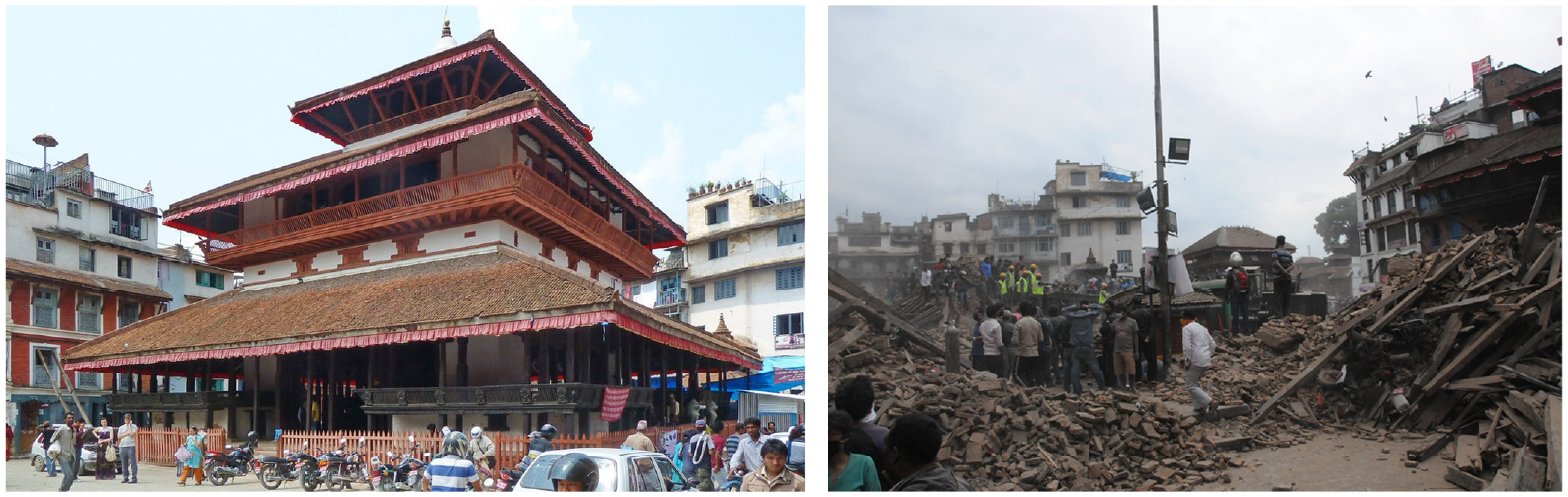
Image of Kasthamandap before and after the 2015 Gorkha earthquake.
In Kathmandu Valley, cordons were established around some temples and heritage sites while still providing access to the local community or priests to allow people to continue their daily rituals of worship (puja). In L’Aquila, similar efforts went into saving damaged heritage buildings in order to protect the cultural heritage of the city (Shrestha et al., 2022). This response and recovery approach to secure and rehabilitate buildings greatly influenced the decisions and operationalization of cordons in the historic city center of L’Aquila. For Kathmandu, recovery and reconstruction efforts were focused on cultural sites, often in response to demands from the public.
People come to us and want us to reconstruct the monuments and temples quickly so that the puja (worshipping) ceremony begins. We have a culture to not stop the puja. (NRA representative) Each and every place has small to big temples where pooja should be done. If that is not done, I think the cultural sense and richness will diminish with time. (Academic) The core areas (of Kathmandu valley) are culturally ingrained. They have different jatras and pujas. We have to consider even tiny details such that it does not hamper their cultural practices. (Municipality representative, Bhaktapur)
It is clear that culture and heritage are intricately intertwined within the lives of Kathmandu Valley residents, and its importance was perhaps even accentuated by the 2015 disaster. As Yates and MacKenzie (2018: 219) state, “here, local communities mobilized to ‘save’ their gods in a proactive and symbolic effort that rested on, but goes well beyond, the normal emotions of daily worship.” Such reverence toward restoring the cultural heritage of Kathmandu Valley is highlighted through multiple community-led reconstructions and restoration of temples and heritage structure (Associated Press, 2016; Shrestha et al., 2020; Joshi et al., 2021). One such community-led, municipality-supported effort was the restoration of the Nyatapola temple which is detailed by Shrestha et al. (2020). The authors note that the temple was restored in active partnership with more than 4000 community volunteers working in various capacities (Figure 3). Around US$12,500 (NPR 1,400,000, around 37% of total cost) was donated from all over Nepal (mostly Bhaktapur) in addition to construction materials such as timber, specialized decorative bricks, and tiles which were donated by members of the community and various organizations.
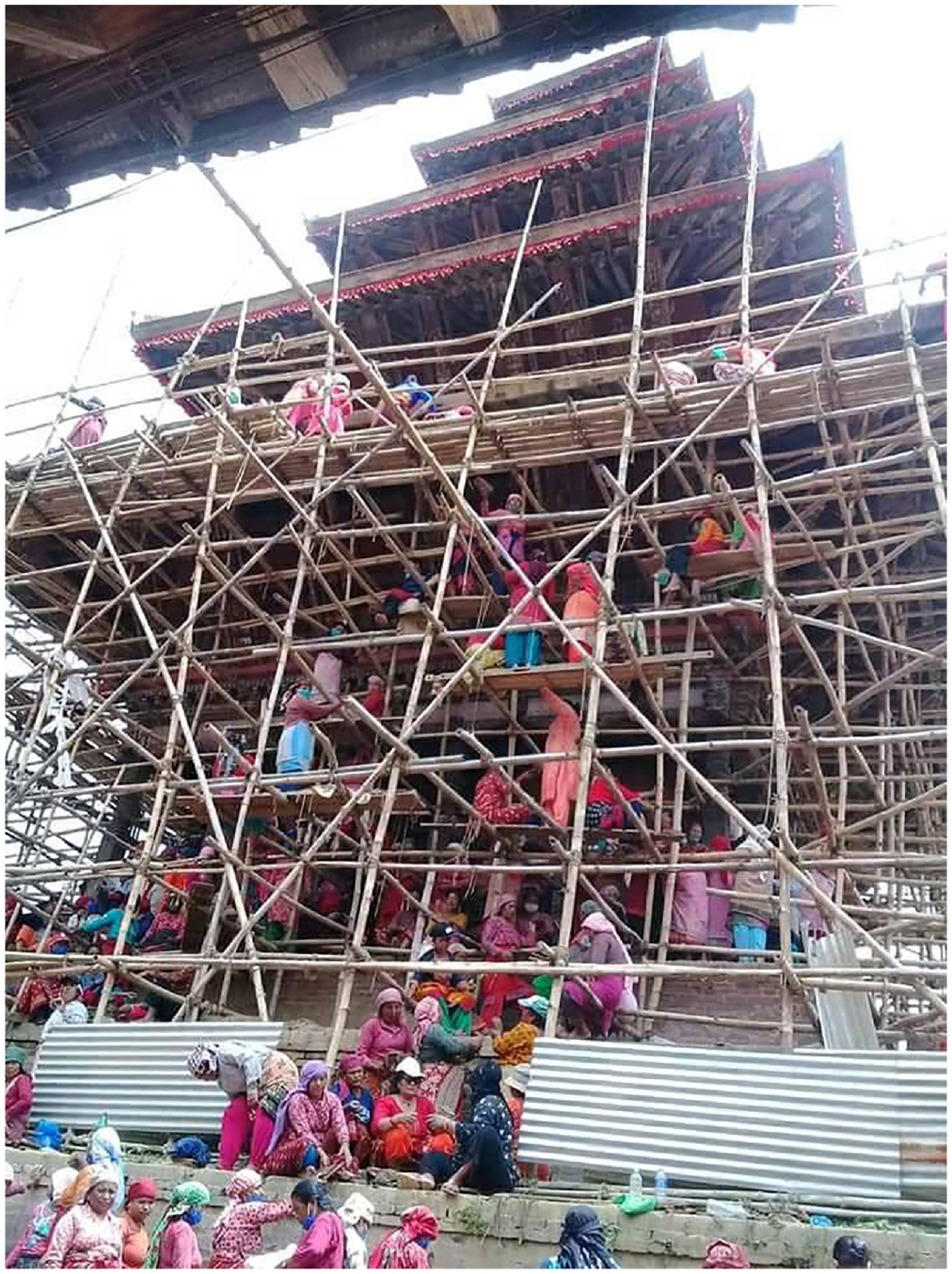
Restoration of Nyatapola in 2020 was done through community participation.
Cultural and social norms influence perceptions of risk, risk awareness, and risk acceptability (Slovic, 1999; Weinstein, 1989). Paton et al. (2010) highlight the importance of social contexts and argue that people’s risk beliefs and risk mitigation strategies are influenced by the social networks they have. A similar assertion is made by Bhandari et al. (2021), who conducted a case study in Pokhara City (Nepal) which did not suffer damage due to the 2015 earthquake. Their study investigated perceptions of risk after the 2015 earthquake, in addition to other disasters, and showed that 60% of survey respondents (N = 152) considered disasters as acts of God with a low possibility of them personally being able to mitigate the disaster risk. Many respondents were also either unaware of actual risks or ignored the risks with limited consideration for mitigation and preparation measures. Perceptions of risk and levels of risk tolerance then impact risk-taking behaviors (Mills et al., 2008). This sentiment is reflected in the views of the interviewee: They regularly want to check up on them (their properties) no matter the risk. The risk-taking capacity of the society is very high in Nepal. (NDRRMA representative)
There are observed differences in the social norms and perceptions of risk and risk acceptability when comparing residents from Italy, New Zealand, and Nepal owing to significant cultural differences. The data suggest a higher tolerance of risk by Nepalese people (general public as well as government officials) compared to those in New Zealand and Italy. Figure 3 illustrates hundreds of volunteers who worked for many months in a tight construction space with bamboo scaffolding without helmets and safety gear while restoring the Nyatapola temple. Such practices of limited use of safety and personal protective equipment are common in general construction practices all over Nepal.
In addition, Laursen (2015) notes that many people come to Kathmandu Valley even when they are aware of earthquake risks. The author further notes that there are many Kathmandu residents who live in precarious economic conditions and, as a consequence, have to live with and accept risks, including those presented by earthquakes. Similarly, Dixit et al. (2000) state that there is a tendency to ignore earthquake risks due to pressing day-to-day issues borne out of economic hardships in Kathmandu Valley. It should be noted that Nepal’s annual GDP per capita in 2021 was US$1222 compared to US$48,424 in New Zealand (2021) and US$35,551 in Italy (2021). Cultural awareness and acceptance/tolerance of risk are key to developing appropriate disaster risk response strategies, such as cordons, and understanding risk-taking behavior. The social and cultural factors that influence behavior are vital if cordons are to become part of a response and recovery strategy for the Nepalese disaster management authorities in the future.
Culture is not just found in temples and religious traditions, and it is also reflected in how people live, how they interact with others, and how they view themselves in relation to others (Spencer-Oatey, 2012). Kathmandu Valley, traditionally, is a collective culture where people live in joint families, and there is high importance put on community and maintaining community relations. Many Nepali citizens still live with their parents even after they are married. Communal significance is also reflected in the interactions of residents for daily and annual cultural practices often conducted in common public spaces, especially in core city areas across the Kathmandu Valley. However, owing to rapid urbanization in recent decades, Kathmandu Valley has witnessed a steady growth of low-density sprawling neighborhoods compared to the dense and compact settlements of traditional towns (Chitrakar, 2016). This has meant that the Kathmandu Valley, which traditionally used to be a Newar settlement, is now a multi-ethnic society that accommodates at least 67 ethnic/caste groups (Subedi, 2010).
Understanding such community characteristics is important in relation to cordons as they indicate how people may react to actions necessitated by cordons, such as evacuation and relocation. Similar issues of relocation after the earthquake were also observed in L’Aquila (Contreras et al., 2017). According to expert knowledge holders interviewed for this research, relocating people far away from their homes is extremely challenging in Kathmandu Valley and thus unlikely to be a feasible strategy, illustrated by these remarks: In the context of the core areas of Kathmandu, it is quite difficult. Even if the government provides a proper residence, people would still be resistant to go there because our culture is community based. We like to live around people. It is very different from other countries where people are more individualistic, and people have nuclear families. (Academic) I am going back to the topic of culture. Some people might agree to reside in a different area proposed by the government when their houses are cordoned off, but it is difficult in case of older generation. It is very difficult for the old people to adjust. As we as a community are a very emotional group of people, we should take into account that part too. (HRRP representative)
Cordons and resource challenges
It is known from previous case studies that cordon establishment and management often lead to challenges related to available resources (physical, financial, human, etc.). This was also observed in Kathmandu Valley. When cordons were placed around private properties, the restrictive rules of cordons were not always respected and adhered to by the public. Many people crossed the barricades erected around their homes to retrieve belongings, secure their property, and even shelter in their homes. It is known from Christchurch, and L’Aquila experiences that cordons tend to be porous even when authorities patrol them (Shrestha et al., 2021, 2022). In Kathmandu Valley, cordons were not monitored regularly by the authorities, which meant that the restrictions indicated by stickers and light barriers were easily circumvented by the public to gain unauthorized access to the cordons. Furthermore, some cordons that blocked a road near the Park View Horizon Apartments were removed by the public after a few days because people did not have an alternate route for commuting. In this case, as well, government officials did not stop people from removing the barricades, nor did they re-establish the cordons, as some experts note: This is what the law states, but this arrangement (restricting access) was not imposed. What we generally saw was a barrier was put around the buildings which were dangerous, but people were not fully prohibited to enter. We did make people aware not to enter though. (NRA representative) The road was reopened by the local people and the government was silent as there was no alternative way. (Municipality representative, Kathmandu) We can see in places like Ason and Newroad (highly dense areas, for both population and buildings) where a lot of houses were damaged and are using support (such as shoring). If the house falls, then people are obviously going to die. But the government has not stopped people from entering that area. People should be stopped to enter those areas or alternative ways are to be figured out. Alternative ways are not possible for places like these. (NDRRMA representative)
In addition, the lack of available resources meant that the government of Nepal was unable to provide alternate solutions if a cordon were to be implemented extensively. For example, the public could not be offered temporary housing, alternate transportation routes, economic subsidies, or provisions for essential services, such as clean drinking water and sanitation (toilets, water taps, etc.). In L’Aquila, the government supported thousands of people evacuated from the red zone by providing essential supplies to them. Approximately one-third of evacuees found accommodation alone, another third sheltered in state-sponsored hotels, and the remaining third were placed in temporary camps (tents) (Alexander, 2013). Similarly, in Christchurch, an Earthquake Support Subsidy (ESS) program was enacted by the government through which employee wages were paid (up to a certain threshold) to assist eligible businesses. The eligibility criteria were “New Zealand owned businesses based in the Christchurch City Council area that are unable to access the workplace due to damage, a cordon, or the unavailability of essential services, or that can open but are experiencing significant loss of trade” (Fischer-Smith, 2013: 6).
The National Reconstruction Authority (NRA) was established in December 2015, 8 months after the earthquake in Nepal. The Authority provided financial assistance in the form of grants to people whose houses had been damaged (Acharya et al., 2022); however, for many, the assistance came too late. In the aftermath of the earthquake, the government of Nepal could not carry out necessary initial needs assessments (Shrestha and Pathranarakul, 2018), and there were observed difficulties in coordination, a lack of local leadership, and gaps in the supply chain for relief distribution (especially in rural areas) (Hall et al., 2017). Similarly, Manandhar et al. (2017) contend that there were significant shortcomings observed in the operational capabilities of the Nepal government in relation to disaster preparedness and response following the 2015 earthquake.
Lack of resources (human, economic, and physical) was cited as one of the reasons why cordons were not implemented more broadly as one of the experts claimed, “No, we do not have enough resources. We are really lagging in these aspects”—Municipality representative, Lalitpur. The use of the RVDA program to assess residential buildings following the 2015 earthquake was required to be supported by nonprofit organizations and volunteer engineers as the government did not have enough resources.
As learned from experiences in Christchurch, L’Aquila, and Wellington, cordons are a resource-intensive undertaking, especially if the cordons are to remain for extended periods of time (Shrestha et al., 2021, 2022). Required resources include physical structures to create the cordon boundary (often light metal barriers), technical expertise, and governance mechanisms (communication and collaboration among various organizations and the public) to manage and operationalize the cordons. Furthermore, government authorities require significant financial resources to establish, manage, and operationalize cordons. It is also important to provide some restricted access to enable residents and business owners to gain access to their building under supervision and human resources to achieve the aforementioned tasks in addition to patrolling and managing the cordons (often done by police/army). These resource challenges are significantly dependent on the temporal and spatial scale of the cordon placement.
The resources required to establish and maintain cordons were far more significant in the case of Christchurch and L’Aquila compared to the Wellington case study. This is because the damage observed in Wellington was significantly less, and thus cordons were spatially and temporally limited to individual buildings or small city blocks. In contrast, Kathmandu Valley is a highly populated area of Nepal, which experienced extensive damage following the 2015 earthquake. Hence the resources required for widespread cordoning would have exceeded the capacity of the government even if the authorities had used cordons as a response strategy. If we just consider housing needs in Kathmandu Valley following an evacuation due to extensive cordoning, the potential number of displaced people requiring shelter/temporary housing would have far exceeded the almost 70,000 evacuated in L’Aquila. There are still around 10,000 people living in temporary housing in L’Aquila after a decade (Imperiale and Vanclay, 2020), which highlights the significant challenge that housing after disasters can pose. As one expert explains: If the government ensures that the people will get value of their properties then I think cordoning off a certain area for a long period of time is possible, if the area is small, like you said, about five houses. But again, practically speaking it is not possible for a large area in an overpopulated city like Kathmandu. (HRRP representative)
In addition, in Nepal, the government’s limited resources were being directed to many other response activities, such as demolition of houses, provision of shelter and welfare, and resourcing the response (e.g., medical support and construction materials): (We lack) both human and financial resources. If the government had to demolish all those damaged houses, they would have required extensive amount of equipment and human resources and as such money is automatically involved (which we do not have). (NRA representative) All of the challenges will come. All kinds of problems will occur. We lack a lot of resources being a poor country. (Municipality representative, Bhaktapur) The government can make them aware of the risks but is not able to monitor on a regular basis. The condition here is not similar to that of New Zealand. Stopping a person from living in their damaged house or relocating them is quite difficult here. (HRRP representative)
In relation to human resources during the response phase, authorities in both Christchurch and L’Aquila utilized the army and police personnel (in various capacities) to control and operationalize the cordons with varying degrees of acceptance by the public (Imperiale and Vanclay, 2019; Parfitt, 2012). In Nepal as well, the army and police were mobilized immediately after the earthquake with a significant response program conducted by the army that saved more than 1000 lives, among other response activities (Manandhar et al., 2017). The Nepalese army has played a significant role in Search and Rescue (SAR) and distributing relief materials, among other emergency responses in Nepal, over many years. Their active participation in immediate response following the 2015 earthquake has been viewed in a positive light by the public (Marshall and Adkin, 2015).
However, according to several government officials, if the Nepal government had taken the decision to use PECs in the aftermath of the Gorkha earthquake and used army personnel to patrol the cordon, the public would not have been supportive. As one respondent suggested, “It was very difficult to control our public. There was a tendency in people to not follow the rules and ignore the guidelines provided by the security bodies’—Municipality representative, Kathmandu. Another participant noted that ‘Also, public attitude, behaviour and discipline towards the law is important. Here people are more into avoiding the rule of law rather than accepting and respecting it”—Municipality representative, Lalitpur. It should be noted here that residents entered cordons in both L’Aquila and Christchurch following demonstrations in each city (Dines, 2015; The press, 2011). In addition, authorities from both cities confirm that there were some residents who flouted the rules and entered cordons potentially for the purposes of theft.
Cordons and governance
There are multiple additional contextual factors in Nepal that preclude the public from accepting cordons if they are implemented in areas of their city. One major reason is that there is limited trust among the public for government authorities. According to Transparency International (2009), issues of corruption, lawlessness, nepotism, and lack of accountability prevail despite reforms of the governance structure of Nepal in 2008. Unsurprisingly, Nepal was ranked 150th among 177 countries on their level of stability and key political, social, and economic indicators (Haken et al., 2012). These issues of corruption and mistrust are likely to exist within disaster management programs and government agencies as well.
In addition, disaster risk reduction plans and programs are not provided solely by the government but are also supported and resourced by I/NGOs (Shrestha and Pathranarakul, 2018). However, many issues persist related to clarity of responsibility, coordination at different levels, and political influences, which further complicate disaster management in Nepal (Southasia Institute of Advanced Studies, 2016). According to Tuladhar et al. (2015), many such disaster risk reduction programs initiated by I/NGOs are full of jargon and/or contain misleading information such that they cannot be implemented in the communities.
Conversely, most experts commented on the lack of awareness among the Nepalese public about potential risks and other facets of disaster management that establishing cordons would necessitate. This lack of awareness of earthquake risks is reflected in the lack of a legislated and enforced building code in Nepal (Dixit et al., 2012). Evacuations and relocation of people and preventing people from entering dangerous buildings are some of the issues that reduce cordon feasibility in Kathmandu Valley. This is because people take risks to enter dangerous buildings and flout the rules even when cordons are in place, as some experts explain: We can evacuate people to a safe place for a certain time, but after that people would start to go to their houses if they are not damaged completely. (HRRP representative) Let me give you an example. Even on barred places of Kathmandu valley like cultural heritage sites, there should not be allowed mobility of people, but we can see people freely roaming around those places. So even if the government cordons off a certain area for reconstruction we Nepalese are ignorant enough to breach that barred area. (Municipality representative, Lalitpur)
Conclusion
The use of PECs (or lack thereof) in Kathmandu Valley following the 2015 earthquake has further demonstrated the importance of context in understanding cordons and their implications on disaster response and recovery. Similar to Italy and New Zealand, this case has highlighted the importance of resourcing (physical, economic, and human) to support cordon implementation and management and the need to provide suitable alternatives to displaced people for cordons to be a viable tool in disaster response. Provisions for temporary housing, welfare, access to essential services, security, and availability of alternative transportation routes are some of the major factors that require consideration when cordons are being planned. The importance of culture and heritage has also been demonstrated to be an important factor in Nepal which has a strong influence over risk acceptance and behavior. It should be noted that cultural values played a significant role in Kathmandu Valley and L’Aquila; however, the implications of these values were varied and contextually nuanced. In addition, high public trust in governance structures is critical for cordons to be effective. The feasibility of cordons and their effectiveness is thus affected by many factors: legislative frameworks, governance structures, availability of resources, and cultural aspects.
The limitation of this study is that unlike in New Zealand and Italy, there was limited experience in establishing and maintaining cordons after the earthquake in Nepal. As such, the sample size to conduct interviews was relatively small. In addition, the views of the experts are sometimes based on hypothetical considerations but are still based on inter-related disaster response and management experiences following the 2015 earthquake. One of the way this research has addressed these issues is through comparison of data across multiple case studies so that a holistic understanding of PECs could be attained. Finally, the case of Kathmandu has provided valuable insights into the significant challenges facing Nepal in protecting people who reside in densely populated cities.
Footnotes
Acknowledgements
We want to thank the Centre of Natural Hazards and Disaster Science (CNDS), Uppsala University, for their support in publishing this research. Also, we acknowledge the input from the reviewers, which has helped us improve this article.
Declaration of conflicting interests
The author(s) declared no potential conflicts of interest with respect to the research, authorship, and/or publication of this article.
Funding
The author(s) disclosed receipt of the following financial support for the research, authorship, and/or publication of this article: This project was (partially) supported by QuakeCoRE, a New Zealand Tertiary Education Commission-funded Centre. This is QuakeCoRE, publication number 0787.
Ethical approval
The University of Otago Human Ethics Committee has approved this study under category “A.” Excerpts from the interviews are anonymized for privacy.
