



Abstract
This study’s Part I proved that ground-motion duration could play an important role when assessing the nonlinear structural performance of case-study inelastic single degree-of-freedom systems. However, quantifying duration effects in many practical/more realistic engineering applications is not trivial, given the difficulties in decoupling duration from other ground-motion characteristics. This study’s Part II, introduced in this article, explores the impact of duration on nonlinear structural performance by numerically simulating the structural response of realistic case-study reinforced concrete bare and infilled building frames. Advanced computational models incorporating structural components’ cyclic and in-cycle strength and stiffness deterioration, and destabilizing
Keywords
Introduction
This study’s Part I (i.e. Otárola et al., 2023) presented a comprehensive parametric analysis to quantitatively evaluate the impact of ground-motion duration on the nonlinear structural performance of case-study inelastic single degree-of-freedom systems using spectrally equivalent long- and short-duration ground motions in comparative incremental dynamic analyses. Overall, it provided the required tools to assess the impact of ground-motion duration in large-scale (regional) seismic risk assessment exercises, as per current practice (e.g. Martins and Silva, 2021; Villar-Vega et al., 2017). This study’s Part II, described in this article, proposes an end-to-end seismic performance-based assessment framework to account for spectral shape and duration effects in more practical/realistic engineering applications, such as single-building loss assessments. Specifically, it considers a site-specific seismic hazard analysis based on the generalized conditional intensity measure (GCIM) approach (Bradley, 2010) and a structure-specific seismic response modeling based on cloud analyses (e.g. Jalayer and Cornell, 2009) of multi-degree-of-freedom (MDoF) systems. The considered systems represent realistic reinforced concrete (RC) bare and infilled building frames associated with different seismic design levels. In addition, this study uses peak- and cumulative-based engineering demand parameters (EDPs) and a vector of intensity measures (IMs) accounting for ground-motion spectral shape and duration.
It is known that ground-motion duration increases with the distance from the source due to the scattering and dispersion of seismic waves and the difference in the arrival times of waves propagating at different velocities and crossing different paths (e.g. Boore and Thompson, 2014; Stein and Wysession, 2003; Trifunac and Brady, 1978). However, duration also depends on local site conditions, with long-duration ground motions typically observed at sites with soft soils due to repeated seismic wave reflections within the softer layers (e.g. Dobry et al., 1978). Hence, ground-motion record selection for seismic performance-based assessment should adequately consider the site-specific seismic hazard, accounting for the various sources of uncertainty associated with such hazard estimates. An inaccurate record selection might lead to biased results in terms of structural response and resulting damage/loss estimates (e.g. Sousa et al., 2017). This selection typically involves searching within a ground-motion database to find records related to specific seismological and site features (e.g. rupture mechanism, earthquake magnitude, source-to-site distance, soil type) and ground-motion amplitude, frequency content, and—more rarely—duration consistent with the seismic hazard at the considered site.
The definition of target distributions of ground-motion IMs for a given site and a rational approach to match these targets are fundamental for a rigorous site-specific, hazard-consistent ground-motion record selection (Bradley, 2010). The conditional spectrum (CS) approach developed by Baker and Cornell (2006) and improved by Jayaram et al. (2011) offers a direct link between ground-motion characteristics and probabilistic seismic hazard analysis (PSHA), providing the mean and variance of pseudo-spectral acceleration
Chandramohan et al. (2016a) used the GCIM approach to computing site-specific target distribution of ground-motion IMs (including and excluding a duration-related IM) to assemble ground-motion record sets for three sites located in different tectonic settings (characterized by shallow-crustal and subduction earthquake events). Thereby, the effects of considering duration when estimating the structural collapse risk of a ductile RC building frame were quantified by performing multiple-stripe analyses for the different record sets, representing the structural response in terms of maximum (i.e. peak) inter-story drift ratio (MIDR). Neglecting duration led to underestimating the mean annual frequency of collapse for every considered study case, in particular, up to 59.00% for a site where subduction earthquake events dominate the seismic hazard. Previously, Chandramohan et al. (2016b) observed that it is unlikely to detect any influence of ground-motion duration on the structural response at low conditioning intensity levels because duration effects are apparent after the structural components reach their peak strength and start to strain-soften. Thus, duration impact on structural response can be more evident at sites presenting high-intensity, long-duration ground motions.
Du et al. (2020) investigated duration effects on structural collapse risk using hazard-consistent ground-motion record sets selected based on the GCIM approach, similarly to Chandramohan et al. (2016a). However, this study quantitatively investigated duration effects using several scenarios with varying earthquake magnitude, source-to-site distance, and conditioning fundamental structural periods. For each scenario, four hazard-consistent ground-motion record sets with a different distribution of ground-motion IMs were selected (in particular, one base-duration set and three longer-duration sets). Fragility relationships associated with structural collapse were derived by conducting incremental dynamic analyses on four different steel building frames, representing the structural response in terms of MIDR. Comparative results demonstrated that an impact due to duration could be observed depending on the ratio between the mean significant duration of two (longer/base) sets, having statistically significant effects for ratios over 1.40. In addition, reductions in fragility median values up to 20.00% were obtained using the longer-duration sets compared to the base-duration one. Such reductions are smaller than those obtained in other studies because records from shallow-crustal (rather than subduction) earthquake events were employed (e.g. Bravo-Haro and Elghazouli, 2018; Chandramohan et al., 2016a).
The problems encountered when selecting hazard-consistent ground-motion records for assessing the impact of ground-motion duration on a building (or group of buildings) nonlinear structural performance at a specific site are complicated by the observed correlations between duration and other ground-motion characteristics (e.g. spectral shape) influencing structural response (e.g. Bradley, 2011; Huang and Galasso, 2019; Huang et al., 2020). In Part I of this study and specific literature (e.g. Chandramohan et al., 2016b), spectrally equivalent long- and short-duration ground motions were used, assuming a low correlation between spectral shape and duration. Nevertheless, this assumption is not always valid, especially at sites where multiple sources influence the site-specific seismic hazard. Hence, this study presents an approach to evaluate the specific impact of duration by decoupling it from the effect of other relevant ground-motion characteristics. To this aim, an analysis of variance (ANOVA) approach is employed to analyze the statistical significance of duration effects on structural response. In addition, vector-valued fragility and vulnerability models depending on spectral shape and duration are derived to account for duration influence in more realistic/practical engineering applications like those related to seismic performance-based assessment.
Several nonlinear dynamic analysis procedures that use a vector of IMs to estimate the probabilistic relationship between ground-motion intensity and structural response have been developed (e.g. Baker, 2007). Options include cloud-based analysis, incremental dynamic analysis, and multiple-stripe analysis. Cloud-based analysis, which uses multiple linear regression (commonly through the least-squares approach) on the vector of IMs, requires the fewest number of nonlinear dynamic analyses and can effectively avoid the “curse of dimensionality” issue (Page and Bellman, 1962) (noting that collinearity between IMs can be a problem). In this study, this analysis procedure is implemented to develop vector-valued fragility and vulnerability models using: (a) nonlinear modeling strategies accounting for cyclic and in-cycle strength and stiffness deterioration in structural components and destabilizing
Indeed, Part I of this study (among others) demonstrated that peak-based EDPs did not show a clear correlation with ground-motion duration unless advanced nonlinear modeling strategies (accounting for cyclic and in-cycle strength and stiffness deterioration) were used. However, duration effects on several structural systems were generally observed at conditioning intensity levels producing significant inelastic deformations (especially when approaching their peak strength and beginning to strain-soften as in Chandramohan et al., 2016b), which in turn causes a reduction in the strength, particularly evident in highly deteriorating systems. Conversely, cumulative-based EDPs (e.g. dissipated hysteretic energy,
Accounting for ground-motion duration and spectral shape: the GCIM approach is used to select ground-motion records accounting for their duration and spectral shape (accounting for several
Vector-valued IM composed of spectral shape and duration: a vector-valued IM consisting of average pseudo-spectral acceleration
Adoption of contributing masonry infills on RC building frames: two different archetypical RC moment-resisting frames representing actual buildings are chosen for analysis. Each building is associated with a different seismic design level, sharing the same geometrical layout. Moreover, two planar building computational models are built for each archetypical building frame (including stiffness and strength in-cycle and cyclic deterioration, and
Implementation of
This article is organized as follows. Section “Methodology” describes the methodology employed in this study, namely the ground-motion selection procedure and the approach to assess the impact of ground-motion duration on the nonlinear structural performance. Section “Results and discussion” presents the main findings from the analyses based on thoroughly examining the results. These results are also compared against relevant literature findings mentioned before. Section “Conclusions” outlines the main conclusions from the results of this study.
Methodology
The adopted methodology (Figure 1) relies on the GCIM approach to select site-specific, hazard-consistent ground-motion records for a target site affected by multiple seismic sources. Those records are used as input to perform cloud-based analyses on case-study RC building frames representing the selected target site. The impact of ground-motion duration on nonlinear structural performance is then investigated via ANOVA, and vector-valued fragility and vulnerability models corresponding to each structure. Details related to each aspect of this methodology are introduced in the specific subsections.
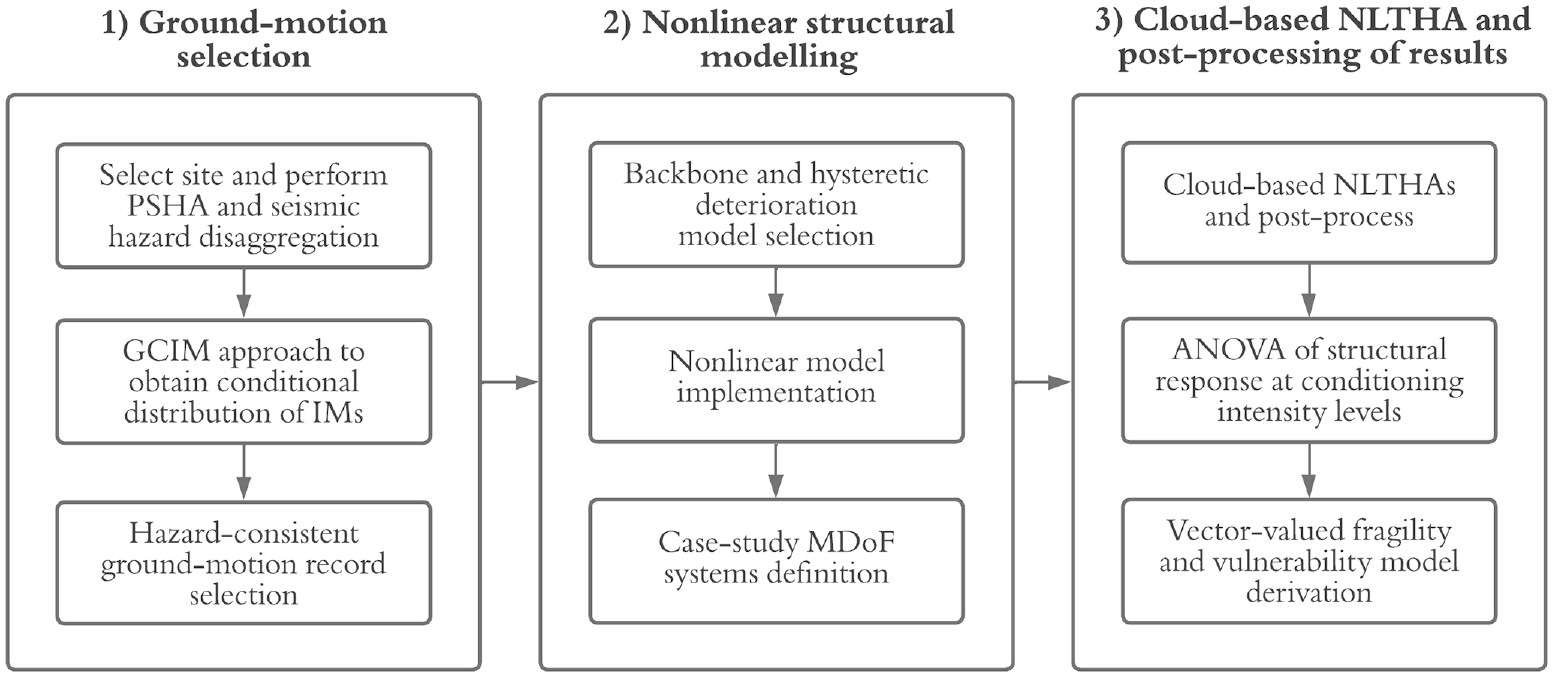
Adopted methodology to assess the impact of earthquake-induced ground-motion duration on nonlinear structural performance.
Case-study structural systems
Two distinct archetypical infilled RC moment-resisting frames representing buildings located in Ponticelli—Napoli, Italy—are selected (latitude: 40.8516°, longitude: 14.3446°). Each building is associated with a different seismic design level, constituting the mid-rise RC building vulnerability class used in this study. Nevertheless, both frames share the same geometry (Minas and Galasso, 2019), with a total height equal to 13.50 m, a first story height equal to 4.50 m and upper stories of 3.00 m, and bay spans of 4.50 m (Figure 2a). Furthermore, two planar building computational models are developed for each archetypical building frame, one in an infilled and the other in a bare configuration for relative comparison (i.e. to evaluate ground-motion duration effects on bare and infilled building frames under the same settings); hence, a total of four study cases (Figure 2b). These models are intended to capture the three-dimensional structural behavior representing the geometry, boundary conditions, mass distribution, energy dissipation, and interaction among structural components based on the assumption that the buildings are regular and symmetric. In other words, the models can simulate the structural response of the buildings in both horizontal directions equivalently under an earthquake event (i.e. ground motion) (e.g. Haselton and Deierlein, 2008).
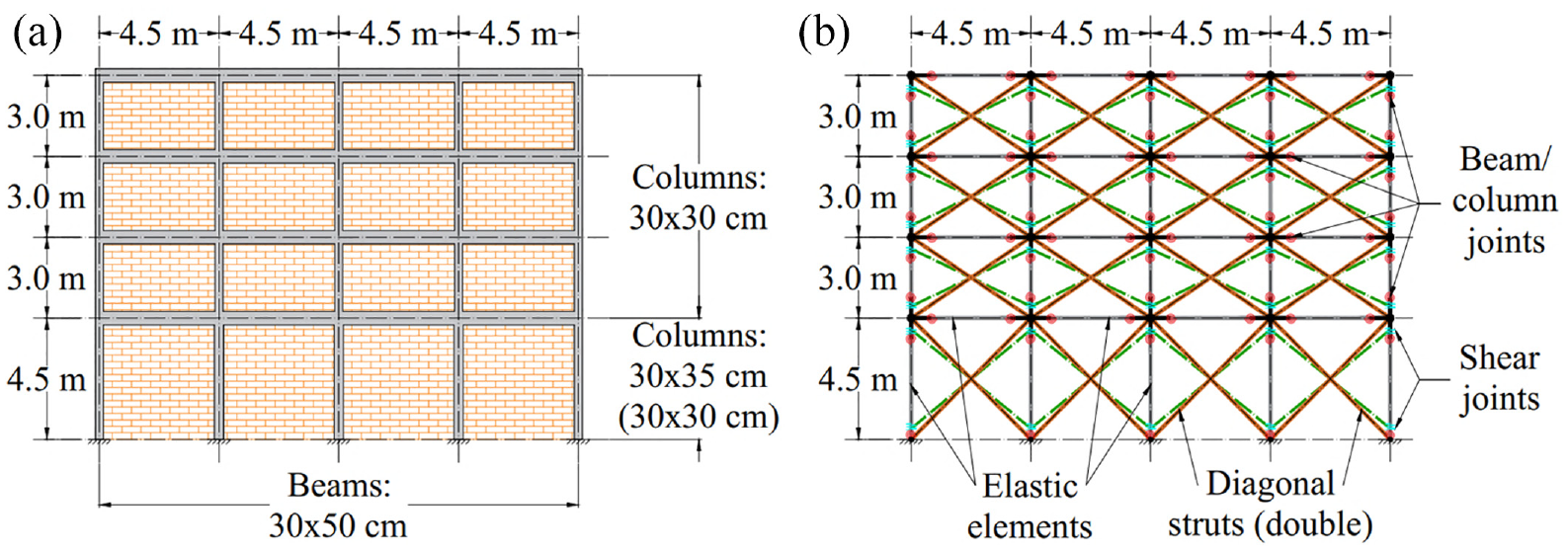
(a) Elevation layout of the PI and PB frames; (b) nonlinear modeling strategy for the PI and PB frames. Equivalent diagonal struts do not apply to the PB frame.
The first building frame, termed special-code frame, is designed and detailed according to the Eurocode 8 Part 3 (EC8-3) seismic provisions for high ductility class (EN 1998-3, 2005). These provisions include capacity design, various requirements in terms of cross-sectional dimensions, and seismic detailing to ensure ductile global performance and prevent the formation of localized brittle failure mechanisms. It is characterized by 30 × 50 cm2 columns at the first level, 30 × 40 cm2 columns at the second and third levels, 30 × 30 cm2 columns at the fourth level, and 30 × 50 cm2 beams. The other building frame, termed pre-code frame, is designed only for gravity loads according to the Royal Decree n. 2239 of 1939 (Consiglio dei Ministri, 1939) that regulated the structural design in Italy until 1974. Thus, the frame does not conform to modern seismic requirements and is characterized by a non-ductile behavior due to the lack of capacity design principles, poor confinement, and susceptibility to developing brittle failure mechanisms. It is characterized by 30 × 30 cm2 columns at all levels except for the internal 30 × 35 cm2 columns at the first level, and 30 × 50 cm2 beams. According to the above denomination, the four case-study frames are identified as special-code infilled (SI) frame, pre-code infilled (PI) frame, special-code bare (SB) frame, and pre-code bare (PB) frame, based on their level of seismic design and structural configuration.
The materials’ mean mechanical properties, such as the concrete’s compressive strength and the steel rebar yield strength, represent those adopted in Italy (Table 1). Specifically, the mean mechanical properties of the concrete are obtained from the Verderame et al. (2011) investigations for the PI and PB frames while being based on current practice of building construction for the SI and SB frames (Aljawhari et al., 2021). The mean mechanical properties of the masonry infills are obtained from Liberatore and Mollaioli (2015) for the PI frame, while they are obtained from Mohammad Noh et al. (2017) for the SI frame (Table 2). It is worth mentioning that the masonry infills for bare frames function as heavy partitions and do not contribute to the overall strength or stiffness of the structural systems but undoubtedly contribute to losses. In addition, some basic information on the case-study frames’ dynamic structural behavior, such as the fundamental structural periods and the corresponding mass participation ratios, is summarized in Table 3.
Properties of the RC
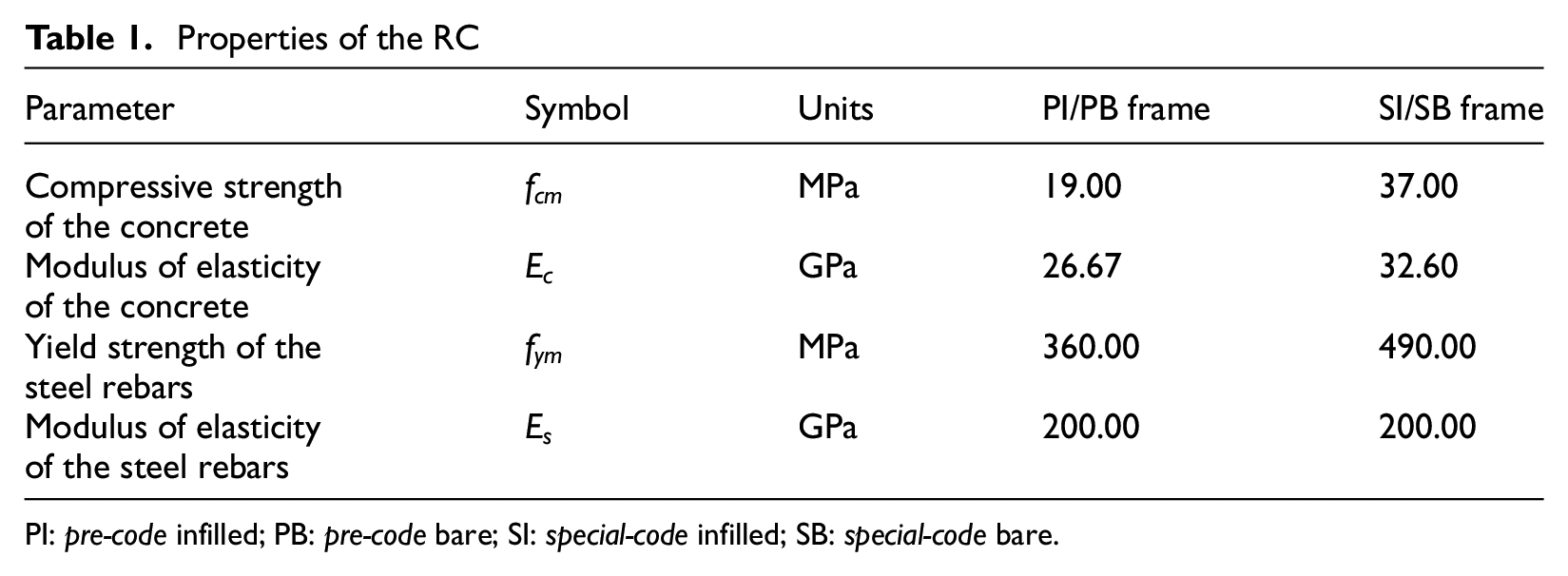
PI: pre-code infilled; PB: pre-code bare; SI: special-code infilled; SB: special-code bare.
Properties of the masonry infills
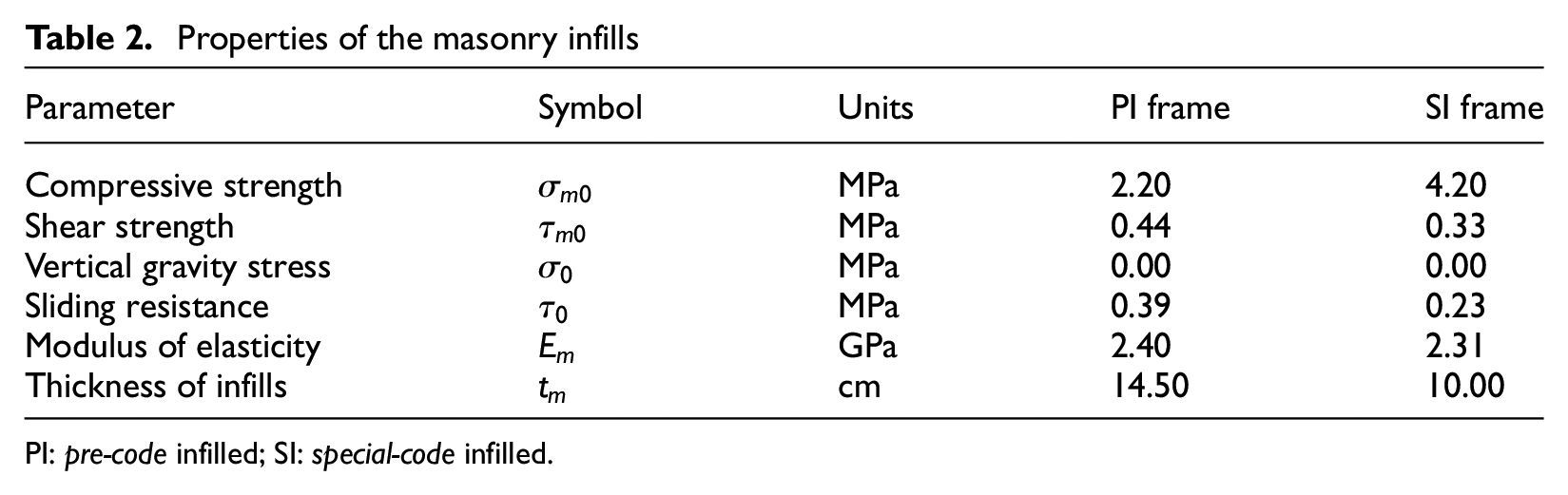
PI: pre-code infilled; SI: special-code infilled.
Fundamental structural periods and mass participation ratios
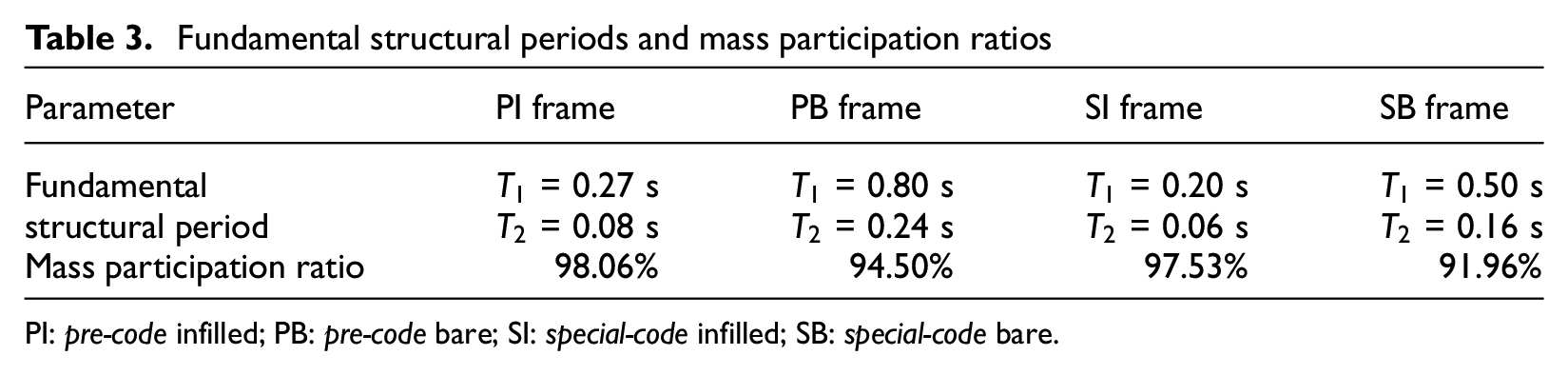
PI: pre-code infilled; PB: pre-code bare; SI: special-code infilled; SB: special-code bare.
Numerical modeling strategy
The case-study frames’ structural response is simulated using two-dimensional computational models in OpenSees v3.2.2 (Mazzoni et al., 2009). The gravity loads are uniformly distributed on the beams, and the masses are concentrated at each floor master node (associated with the assigned rigid diaphragms in each story). Elastic damping is modeled through the Rayleigh model (Zareian and Medina, 2010) using a 5.00% viscous damping ratio on the first two structural vibration modes. Geometric nonlinearities are incorporated to account for the destabilizing
A lumped plasticity approach is used for all the case-study frames to model both beams and columns’ nonlinear behavior using zero-length rotational springs. The Ibarra–Medina–Krawinkler (Ibarra et al., 2005; Lignos and Krawinkler, 2011) model with a peak-oriented hysteretic response is implemented to define the moment–rotation relationship of the rotational springs (including stiffness and strength cyclic and in-cycle deterioration). The yielding bending moment and yielding rotation are determined according to Panagiotakos and Fardis (2001), while the other parameters (i.e. initial stiffness, hardening stiffness, maximum bending moment, rotation at the onset of capping, softening stiffness, and post-capping rotation) are defined according to Haselton et al. (2016) (including axial effects in the constitutive models). The former study is based on the results of 1000 tests, mainly cyclic, for different RC structural components, while the latter provides formulations based on cyclic and monotonic tests of 255 RC columns failing in flexural or flexural-shear modes. For PI and PB frames, nonlinear shear springs are added in series to the rotational ones to account for potential shear failures that may occur in such frames. This is attributed to the lack of transverse reinforcement and smooth bars with end-hooks, especially in external joints (e.g. Calvi et al., 2002a, 2002b; Pampanin et al., 2002). In fact, the shear failure mode is unlikely to develop in modern frames since those were designed with actual seismic design provisions. The Setzler and Sezena (2008) model (including axial gravity load effects in the constitutive models) is implemented to define the force–deformation relationship of the shear springs following a peak-oriented hysteretic behavior. It is characterized by the maximum shear strength (calculated according to Sezen and Moehle, 2004), shear deformation at the onset of peak shear strength, the shear deformation at the beginning of shear failure, and the shear deformation at the axial load failure. Masonry infill walls are modeled as equivalent diagonal struts connecting beam–column intersections to account for their effect on the global response of the case-study frames. The force–deformation relationship introduced by Liberatore and Decanini (2011) is assigned to the equivalent struts characterizing the behavior of infills, which accounts for four possible failure modes: diagonal tension, sliding shear, corner crushing, and diagonal compression, following a peak-oriented hysteretic behavior with pinching and suffering from cyclic stiffness and in-cycle strength deterioration. The parameters describing the hysteretic response of infills are adopted from Mohammad Noh et al. (2017), who calibrated them based on experimental testing, characterized by the uncracked infill stiffness, the strength at the first crack, the displacement at the first crack, the stiffness at complete cracking, the maximum strength, the full crack displacement, the residual strength, and the residual displacement. Diagonal struts which connect the nodes at the beam–column intersections are used to model the masonry infills for the SI frame. In contrast, infills are modeled using Burton and Deierleins’ (2014) double strut approach for the PI frame. In such a case, one diagonal strut connecting the beam–column joints and another off-diagonal strut connecting the column shear springs are modeled. According to Burton and Deierlein (2014), 75% of total infill strength and stiffness is assigned to the diagonal strut, while 25% is assigned to the off-diagonal one. Such a strategy does not simulate the entire distribution of column shear due to the frame–infill interaction. Still, it captures the increase in shear demands in columns, thus allowing possible changes in the overall plastic mechanism of the frame. A complete description and additional details (e.g. structural parameters descriptions) of the used models can be found in Aljawhari et al. (2021).
Ground-motion record selection
The
Since ground-motion records represent the critical link between PSHA results and seismic structural response, the explicit consideration of the joint probability distribution of spectral shape and duration is required to achieve an accurate result. The selection procedure used in this study is based on the GCIM approach (Bradley, 2010). The conditional distributions of amplitude- and duration-based IMs are computed using seismic hazard disaggregation results, GMMs, and empirical correlation models between the total residuals of the chosen IMs. The ground-motion records used herein are obtained from the Pacific Earthquake Engineering Research Center – Next Generation Attenuation Relationships for Western United States database (NGA-West2; Ancheta et al., 2014), dominated by shallow-crustal earthquake events as in Part I. It is worth noting again that duration effects are found to be significant at ratios between the mean significant duration of long- and short-duration ground-motion sets as low as 1.40 (e.g. Du et al., 2020); therefore, a noticeable impact due to duration on the nonlinear structural performance is expected in such seismicity conditions. The GMMs and empirical correlation models calibrated from Italian strong-motion records for amplitude- and integral-based IMs are used in this study (Huang and Galasso, 2019; Huang et al., 2020).
As mentioned before, a target site (i.e. Ponticelli) influenced by multiple sources, each contributing to the site-specific seismic hazard, is selected (e.g. Barani et al., 2009). Such a condition can reflect the existing correlation between spectral amplitudes (at different structural periods) and duration. Notably, this study adopts structural systems with a low fundamental structural period (i.e. the correlation between spectral shape and duration is expected; e.g. Huang et al., 2020), investigating their structural response at intensity levels associated with a wide variety of seismic hazard return periods. Hence, seismic hazard disaggregation showing a bimodal distribution of earthquake magnitudes and source-to-site distances contributing to ground-motion exceedance are not expected for the structural periods of interest (e.g. Iervolino et al., 2010, 2011). The target site is located over class C soil (Forte et al., 2019) according to EC8, with a mean shear wave velocity in the first 30 m
PSHA and seismic hazard disaggregation are computed using the OpenQuake engine (Silva et al., 2014). Seismic hazard disaggregation is performed following a rupture-by-rupture discretization (i.e. accounting for all the independent ruptures generated by the earthquake rupture forecast), as proposed by Sousa et al. (2017). The vector of IMs considered in this work includes
The algorithm used for ground-motion record selection is proposed by Bradley (2012), where random realizations (i.e. simulations) of the selected IMs (consistent with the GCIM target distributions) are generated. Therefore, for each realization of a vector of IMs, a ground motion with an identical IM vector can be ideally selected. In this study, the algorithm is slightly modified to admit a maximum amplitude scale factor of 5.00 (Luco and Bazzurro, 2007) and avoid repeated utilization of the same seed ground-motion records within each specific conditioning intensity level. As an example, Figure 3a shows the response spectra of the selected ground-motion records and the
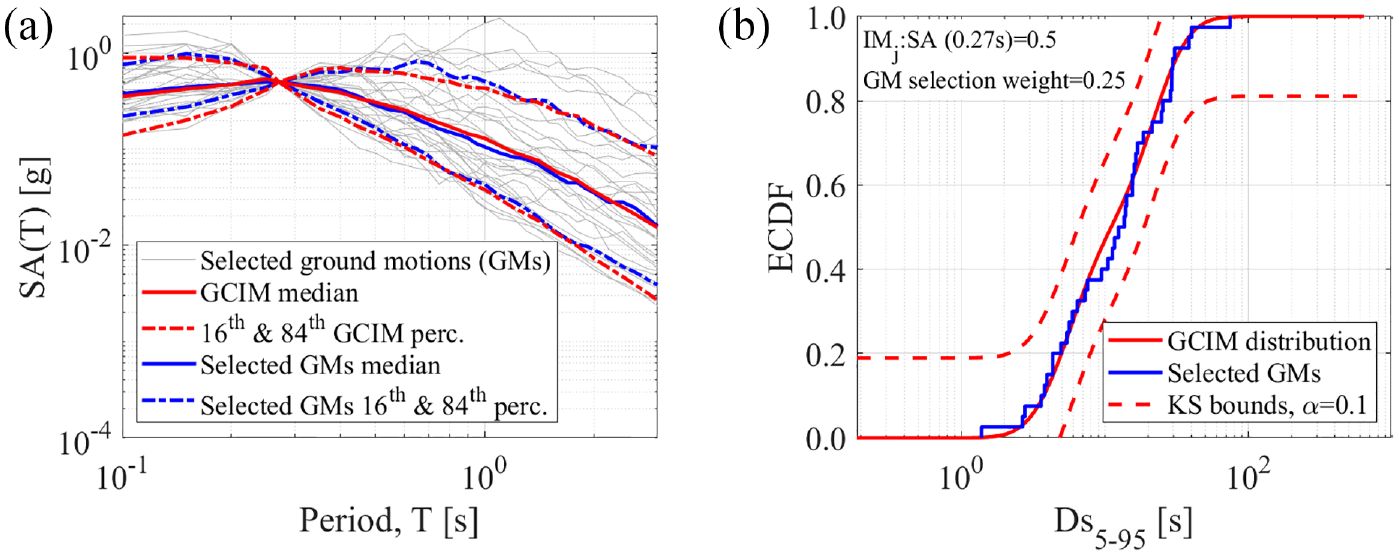
GCIM distributions and selected ground motions for the PI frame: (a) ground-motion response spectra; (b) empirical cumulative distribution function (ECDF) of the selected ground motions and Kolmogorov–Smirnov (KS) testing for
The selection is repeated for each case-study frame and each conditioning intensity level. The 40 ground-motion records within the database with the minimum misfit compared to the target GCIM distributions are selected for each conditioning intensity level. This is done using the Kolmogorov–Smirnov goodness-of-fit testing for each of the 37 IM distributions, as shown in Figure 3b. The main parameters used in the selection are as follows: (a) weight’s vector, equal to 0.25 for
Seismic response analysis
For each case-study frame, a nonlinear time-history analysis (NLTHA) is conducted for each selected ground motion at each
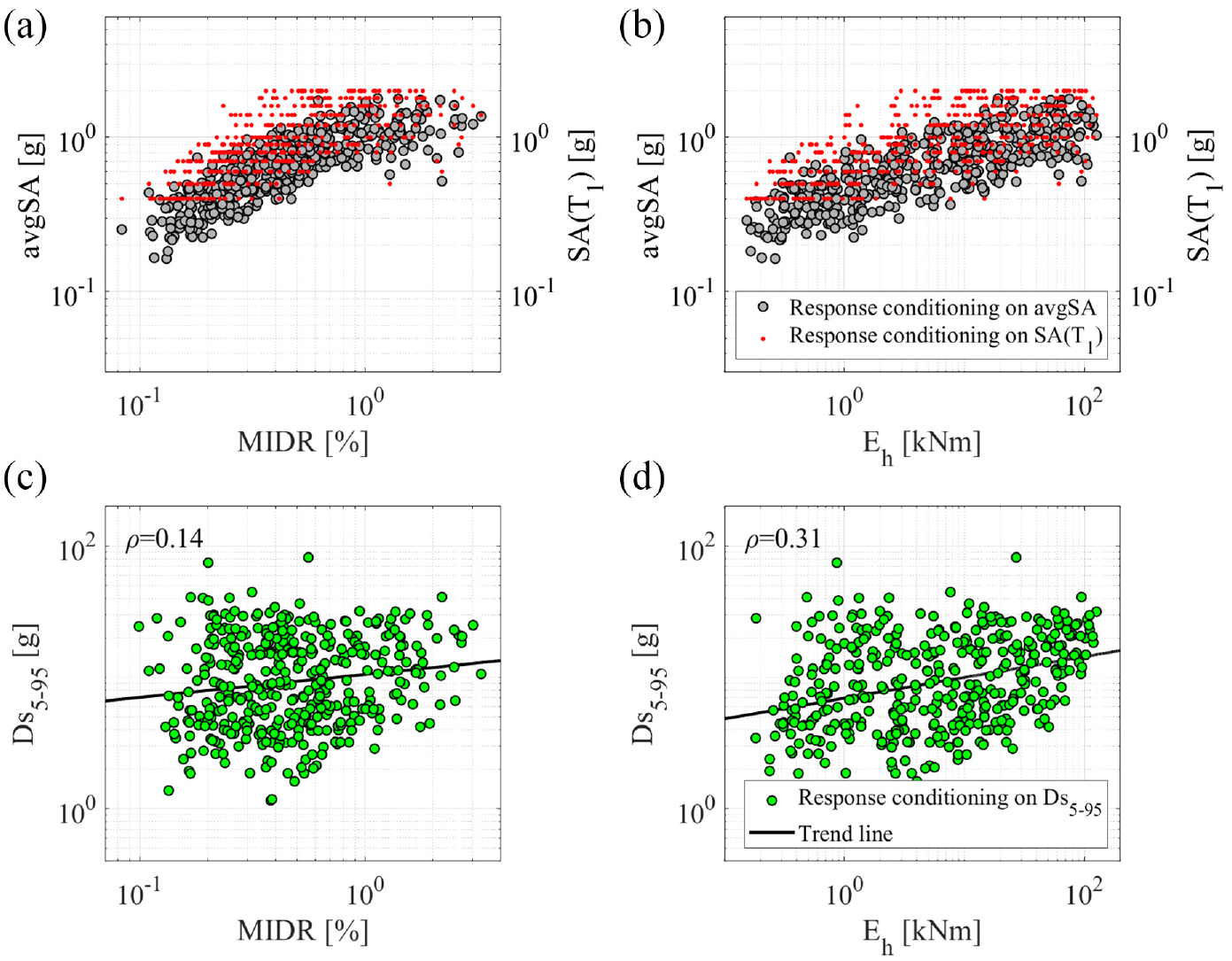
Response analysis of the PI frame expressed in terms of (a) MIDR, conditioning on
DS thresholds definition
Structure-specific DS thresholds in terms of MIDR are calibrated via pushover analyses reviewing multiple measurable criteria according to Table 4. The pushover load pattern is defined according to the first-mode shape, as indicated in EC8-3 (EN 1998-3, 2005). Figure 5a and b shows the first story MIDR versus base-shear coefficient capacity curves for the case-study frames. In every case, the definition of the DS thresholds is governed by the MIDR response associated with this story (i.e. the first floor). The selected DS thresholds are shown in Table 5; as expected, the SI and SB frames have significantly higher thresholds concerning the PI and PB frames. Structural collapse (dynamic instability not associated with a numerical value of the EDPs) is defined in this study as reaching an MIDR of 4.00% for the PI and PB frames and 8.00% for SI and SB frames. Such collapse DS thresholds are indifferently used (i.e. when using MIDR or
Criteria used to define the DS thresholds of the case-study frames (Aljawhari et al., 2021)
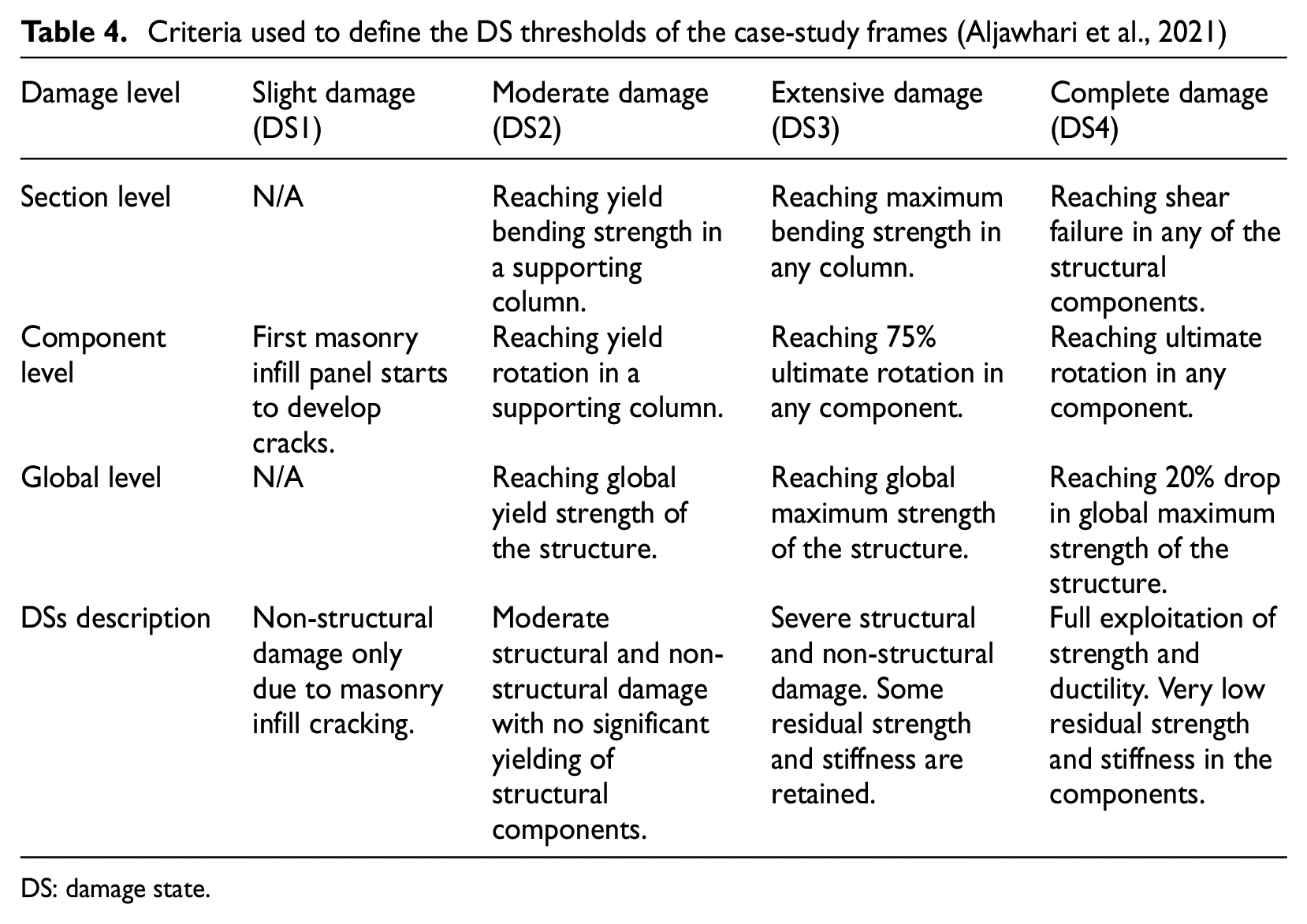
DS: damage state.
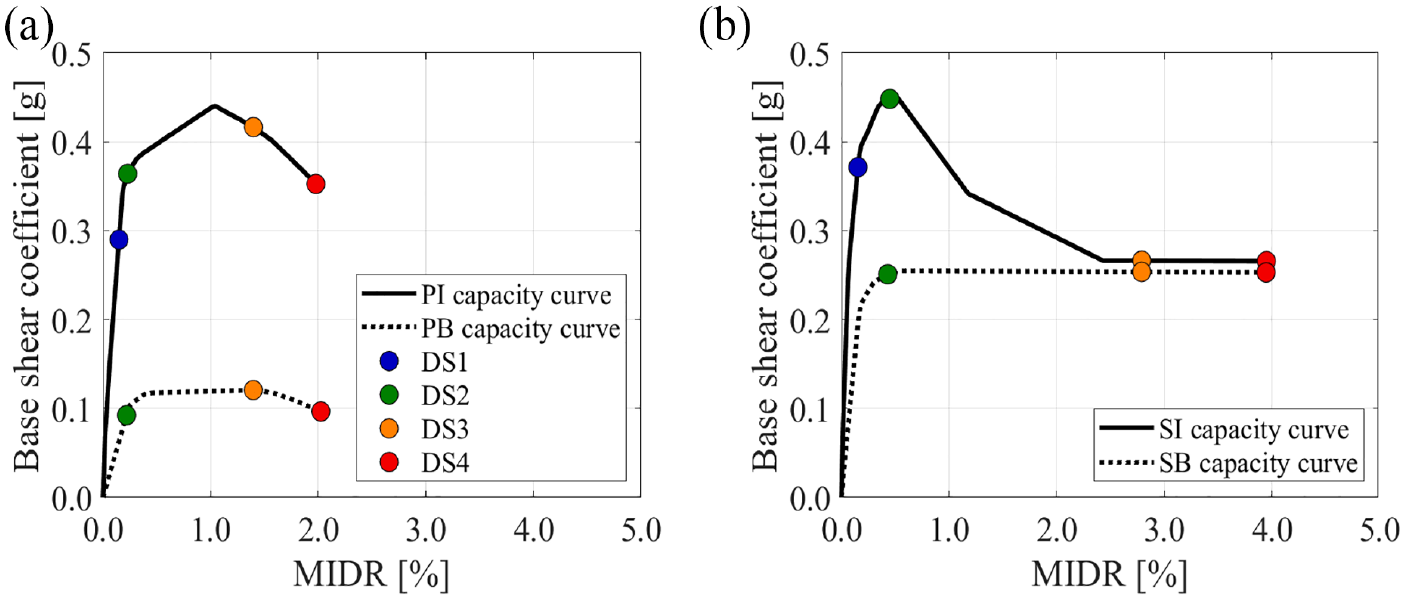
(a) Capacity curve for the PI and PB frame and (b) capacity curve for the SI and SB frame. The colored circles correspond to the DS threshold definition (Table 4).
Definition of DS thresholds in terms of MIDR (DS1 does not apply to PB and SB frame)
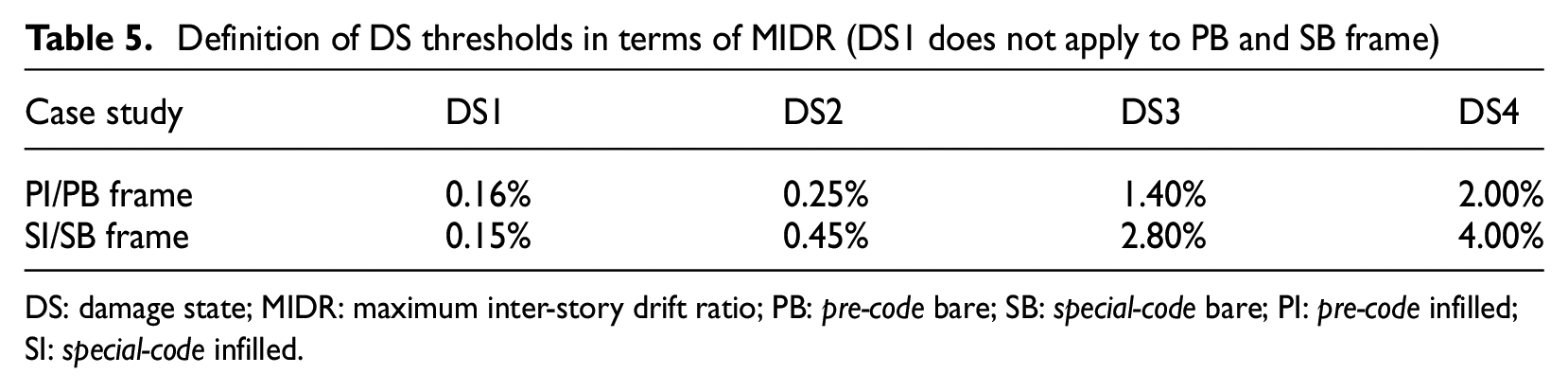
DS: damage state; MIDR: maximum inter-story drift ratio; PB: pre-code bare; SB: special-code bare; PI: pre-code infilled; SI: special-code infilled.
Energy-based DS thresholds are defined using the stable relationship between MIDR and

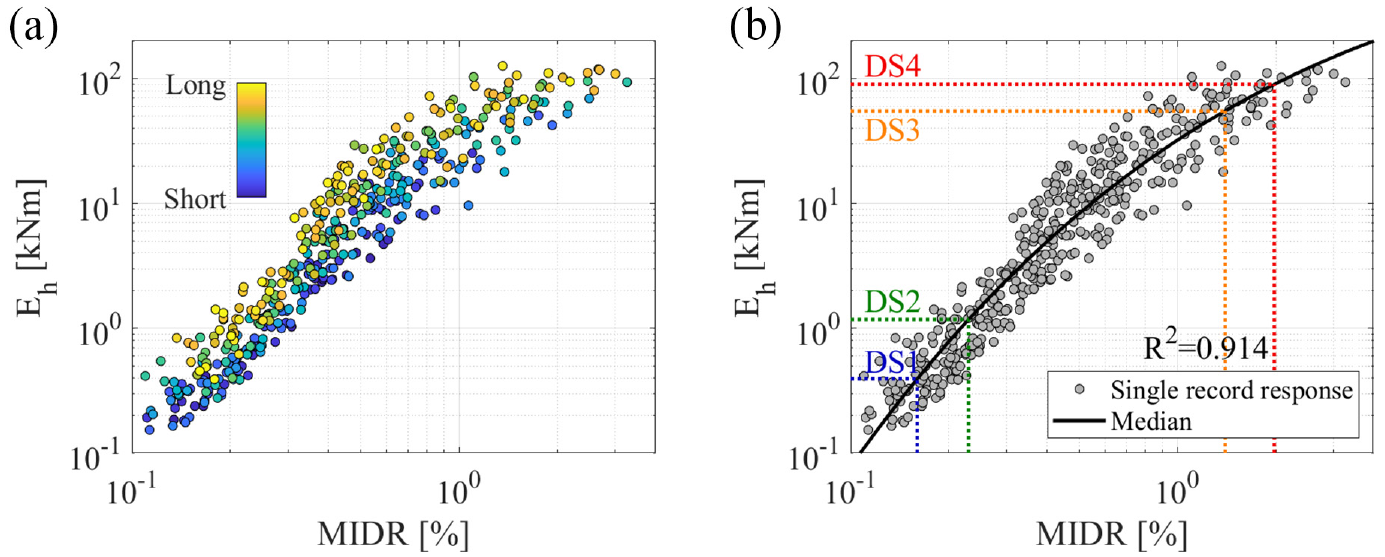
Definition of energy-based DS thresholds from the MIDR versus
Such functional form allows, from a statistical (rather than physics-based) perspective, capturing the change in the concavity of the MIDR versus
Decoupling duration from spectral shape
To visualize how duration changes with spectral shape and whether the spectral shape effects can be effectively decoupled from duration effects at the selected site, 100 synthetic spectral shapes (i.e. response spectra) and their corresponding
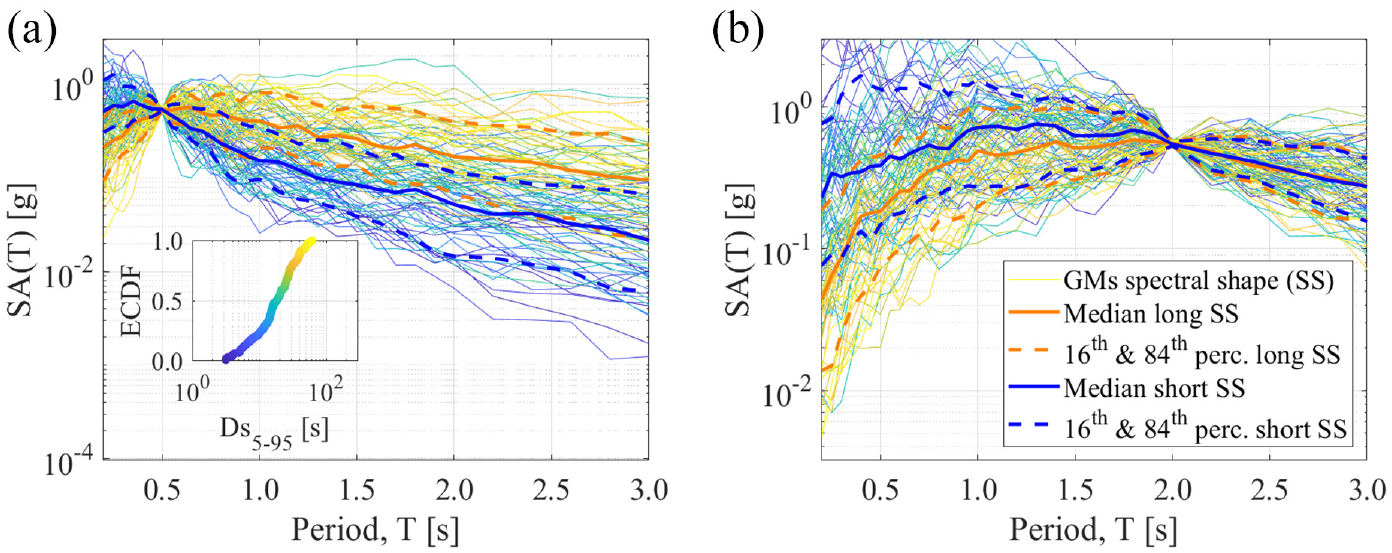
(a) Synthetic spectral shapes and
The 50 response spectra with the shortest and the longest
This exercise shows that decoupling duration and spectral shape for the given target site and case-study frames is not possible since the periods of the selected study cases are smaller than 0.83 s (Table 3). In other words, it may not be reasonable to expect two distinct ground motions showing similar spectral shapes yet distinct durations and vice versa. Thus, the approach used in Part I of this study, involving pairs of spectrally equivalent long- and short-duration records, may not be feasible for this site-specific, hazard-consistent analysis.
To overcome the above difficulty, the ANOVA (Fisher, 1992) is adopted to measure the impact of ground-motion duration on nonlinear structural performance. The ANOVA allows measuring the proportion of the total variance in the response (dependent) variable prediction, explained by each predictor (independent) variable. This analysis estimates the contribution of all ground-motion characteristics of interest to the variability in the structural response. Therefore, a comparison between the impact of duration against that of spectral shape is possible. The ANOVA is performed for each conditioning intensity level, consistently with the GCIM results, using a multiple linear regression through the ordinary least-squares approach, including (a)

Vector-valued fragility and vulnerability models
Vector-valued IMs use two or more parameters to predict a structure’s response with higher efficiency (Baker and Cornell, 2005) than scalar IMs and attain sufficiency when scalar IMs do not guarantee it (Elefante et al., 2010). In this study, a vector

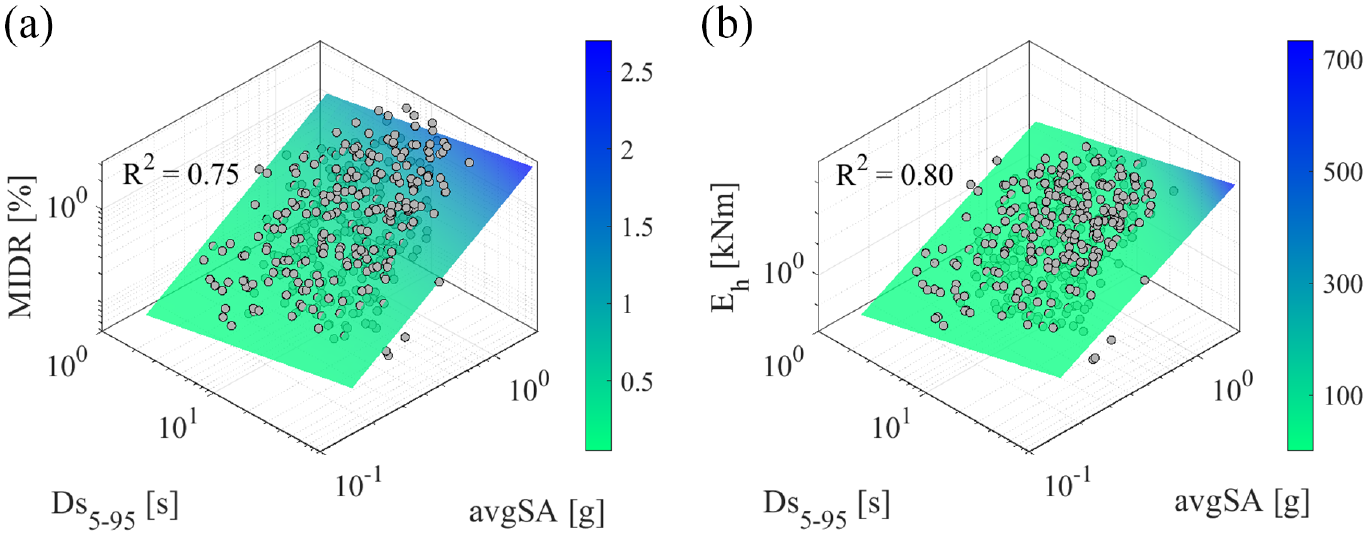
Probabilistic seismic demand model for the PI frame in terms of (a) MIDR; (b)
The probability of exceeding a DS conditioned on

Using the DS thresholds (i.e.


Multiple logistic regression (Bojórquez et al., 2012) is used to estimate the probability of collapse,

The estimated collapse and non-collapse probabilities are then combined using the total probability theorem. Equation 8 is used to compute the conditional probability of exceeding a DS conditioned on

Damage-to-loss ratios (DLRs) are commonly estimated empirically through post-earthquake reconnaissance or employing expert judgment. However, these ratios are region-specific and building class-specific, and they must be carefully selected while developing vulnerability models for obtaining reliable outcomes (e.g. Rossetto and Elnashai, 2003). Since this study involves Italian buildings, a modified version of the DLRs suggested by Di Pasquale et al. (2005) is used. The definition of the DLRs for the case-study frames is presented in Table 6. It is worth mentioning that the selected DLRs are representative of all the case studies considered here, according to Aljawhari et al. (2021).
DLRs for the case-study frames
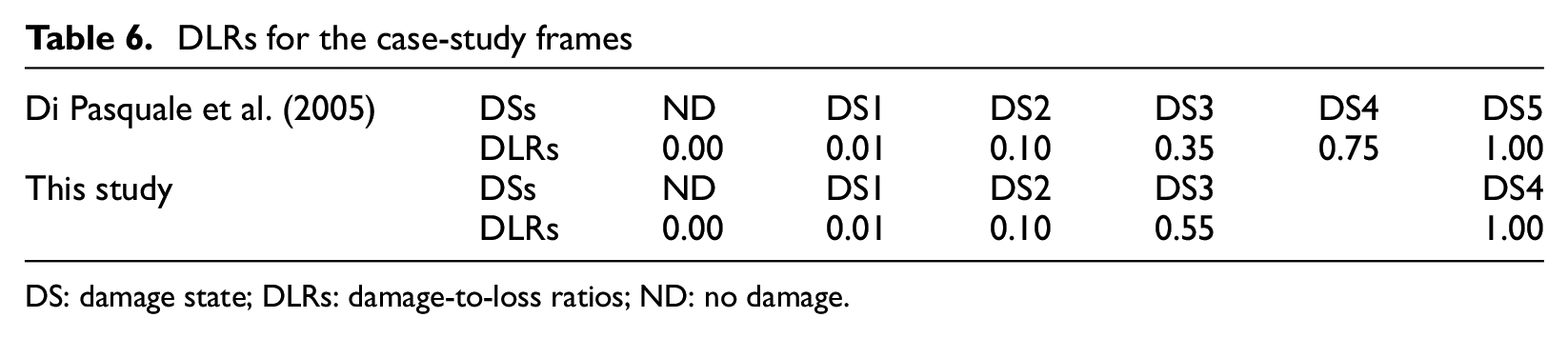
DS: damage state; DLRs: damage-to-loss ratios; ND: no damage.
Vector-valued vulnerability models are expressed in terms of mean loss ratio (LR); in other words, the repair-to-replacement cost ratio of the building, conditional on the vector


Results and discussion
Impact of duration on structural response
An ANOVA is performed for each conditioning intensity level considered within the GCIM approach and each case-study frame. In Figure 9a to d, the proportion of the variance explained for regression models conditioned on
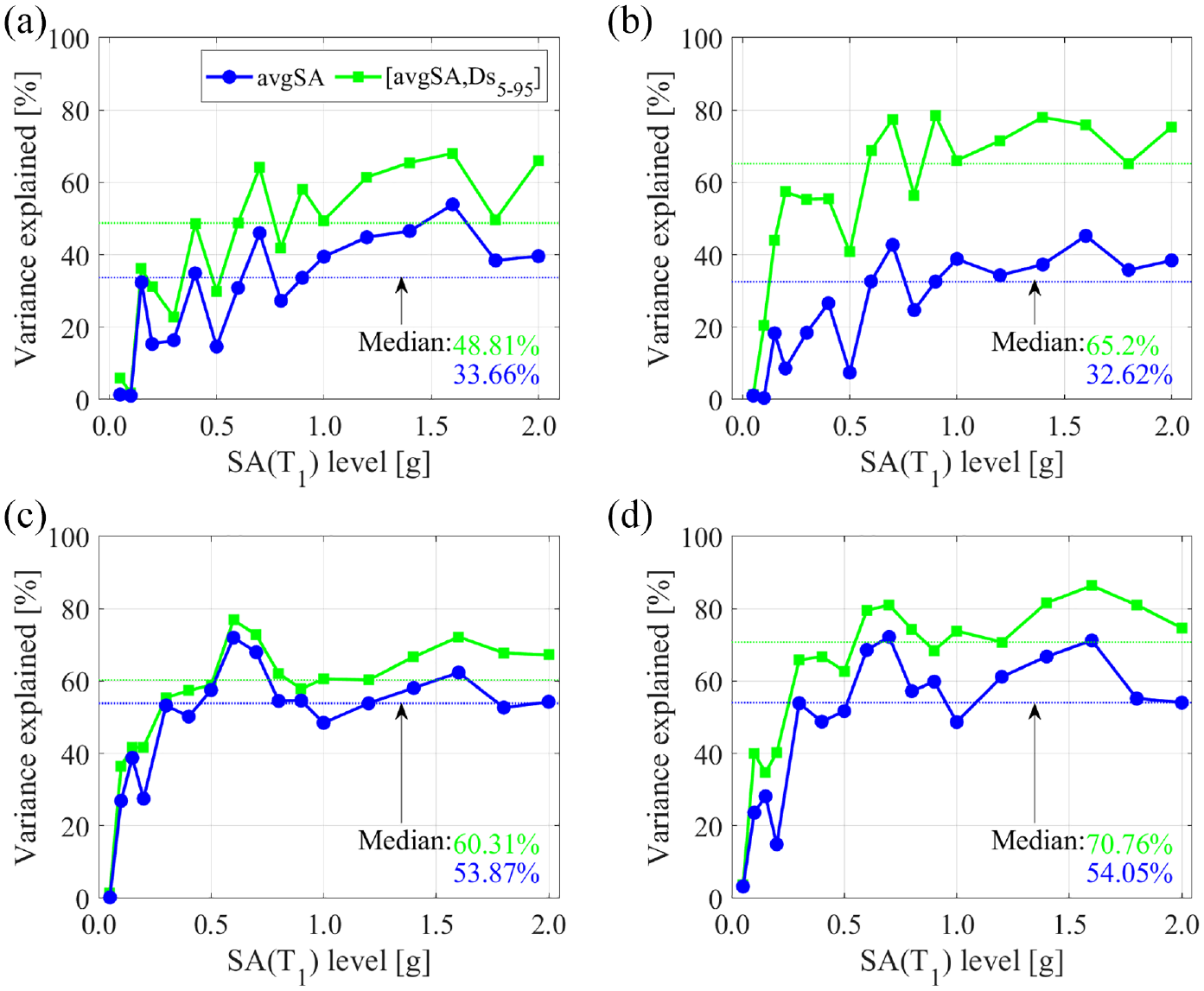
ANOVA for the case-study frames per
Overall, ground-motion duration impacts structural response based on the differences observed between the estimated curves conditioning on
For the PI frame, the proportion of variance explained by
Vector-valued fragility models
The general trend observed when deriving vector-valued fragility and vulnerability models is their strong dependence on the selected EDP, confirming the ANOVA results. When expressing the fragility models in terms of MIDR, the ground-motion duration effects are apparent only at high
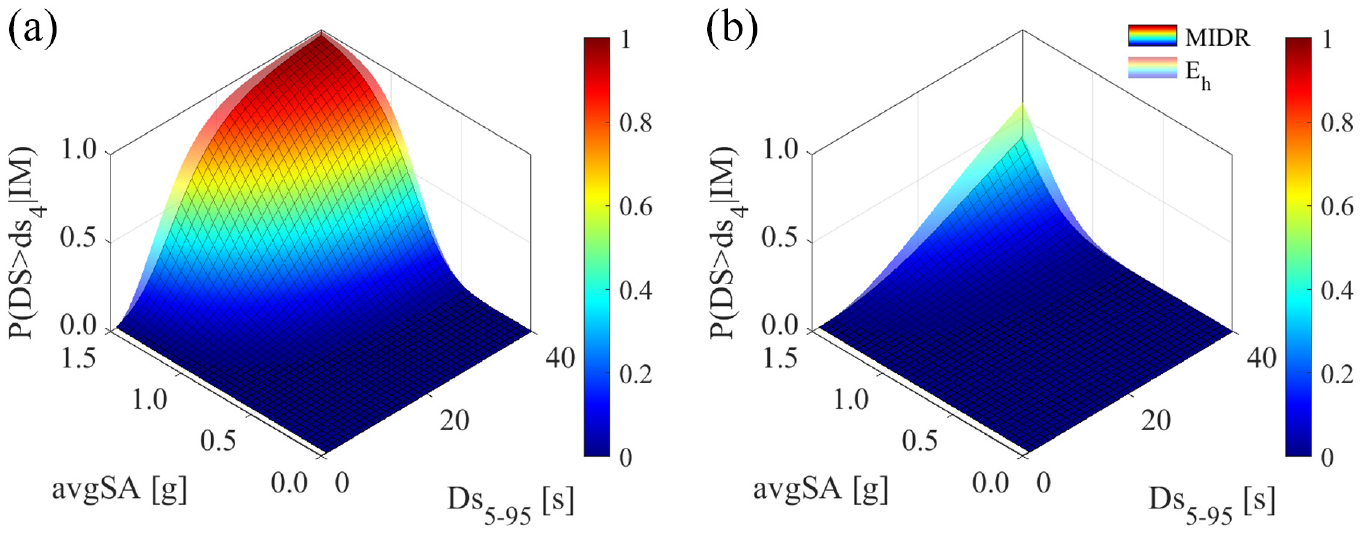
Comparison of DS4 fragility models in MIDR and
When using the MIDR as an EDP, significant duration effects are expected only if the structural components undergo cyclic deterioration or strain-softening since they are only indirectly captured by the computational (i.e. numerical) model. For the PI frame, expressing the response in terms of MIDR yields larger fragility median values for any combination of
To better observe how the fragility varies with duration, fragility relationships conditioned on a scalar (i.e.
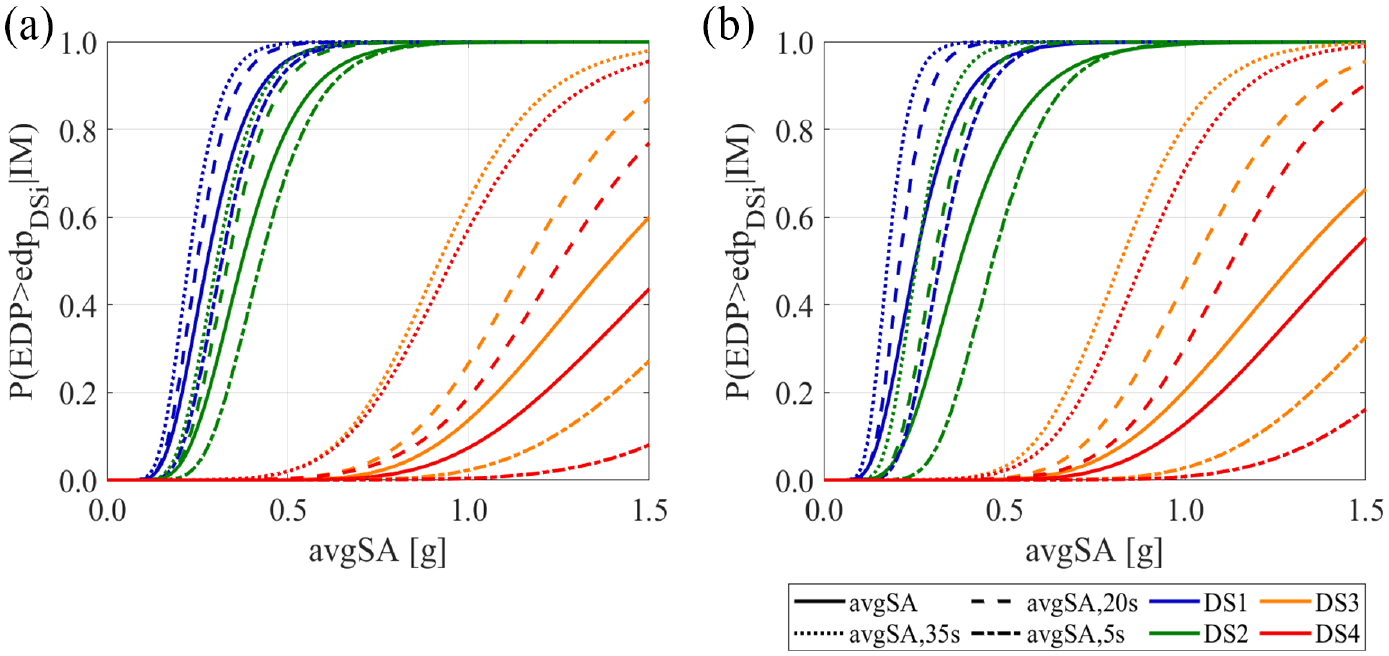
Fragility relationships conditioned on
Fragility relationship parameters conditioning on
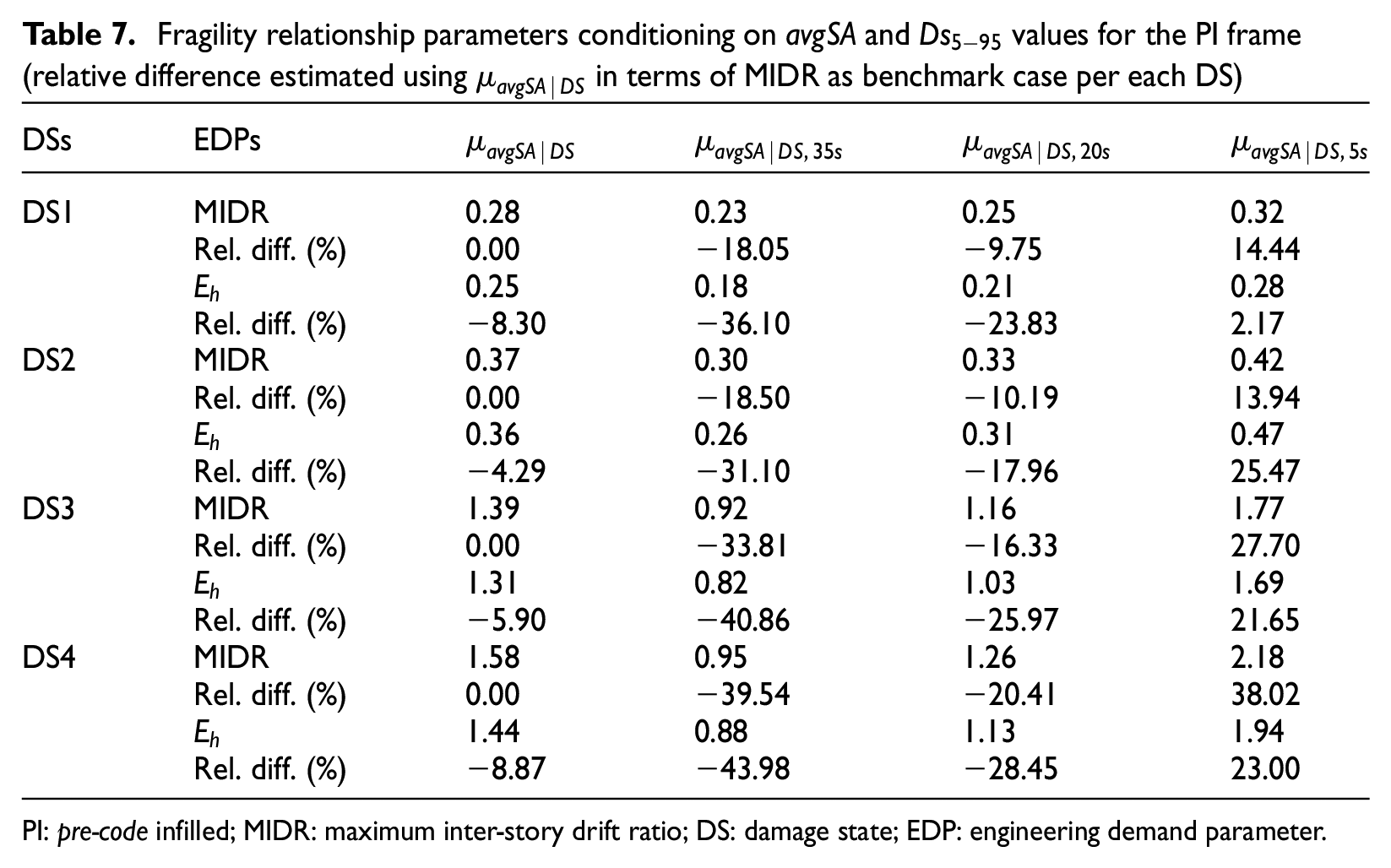
PI: pre-code infilled; MIDR: maximum inter-story drift ratio; DS: damage state; EDP: engineering demand parameter.
Finally, Figure 12a and b shows a comparison between the
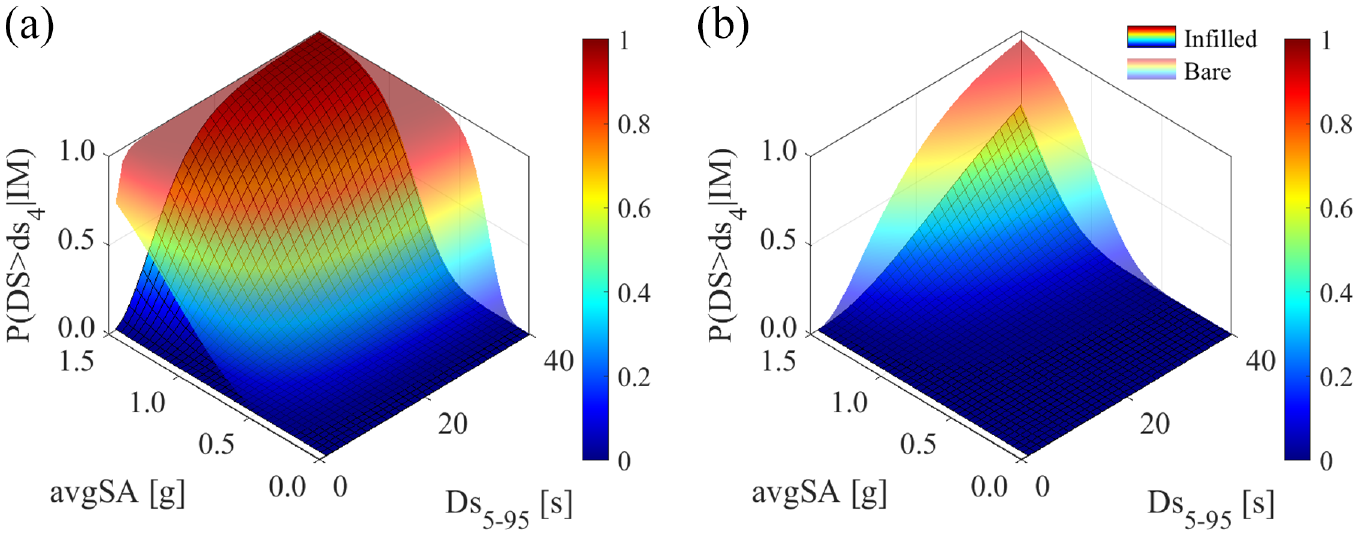
Comparison of DS4 fragility models in
Vector-valued vulnerability models
As highlighted by the comparisons above in terms of fragility models, the LR is also strongly influenced by duration. Observing the vulnerability models for the PI (Figure 13a) and SI frame (Figure 13b), it is clear that accounting for duration explicitly (i.e. using
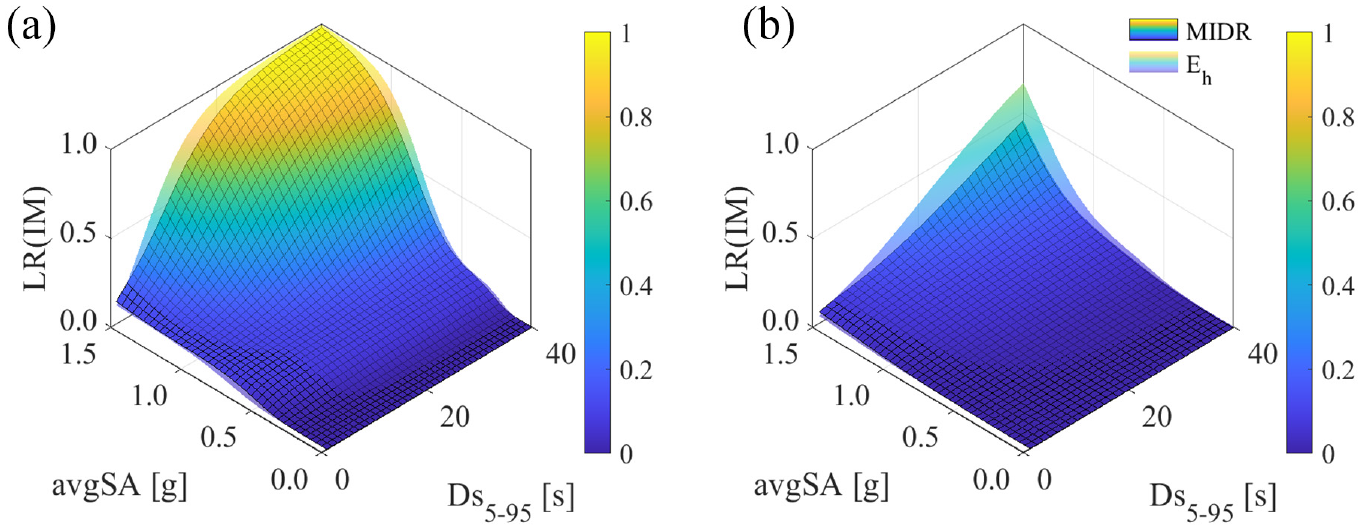
Comparison of vulnerability models in MIDR and
Vulnerability relationship values conditioning on
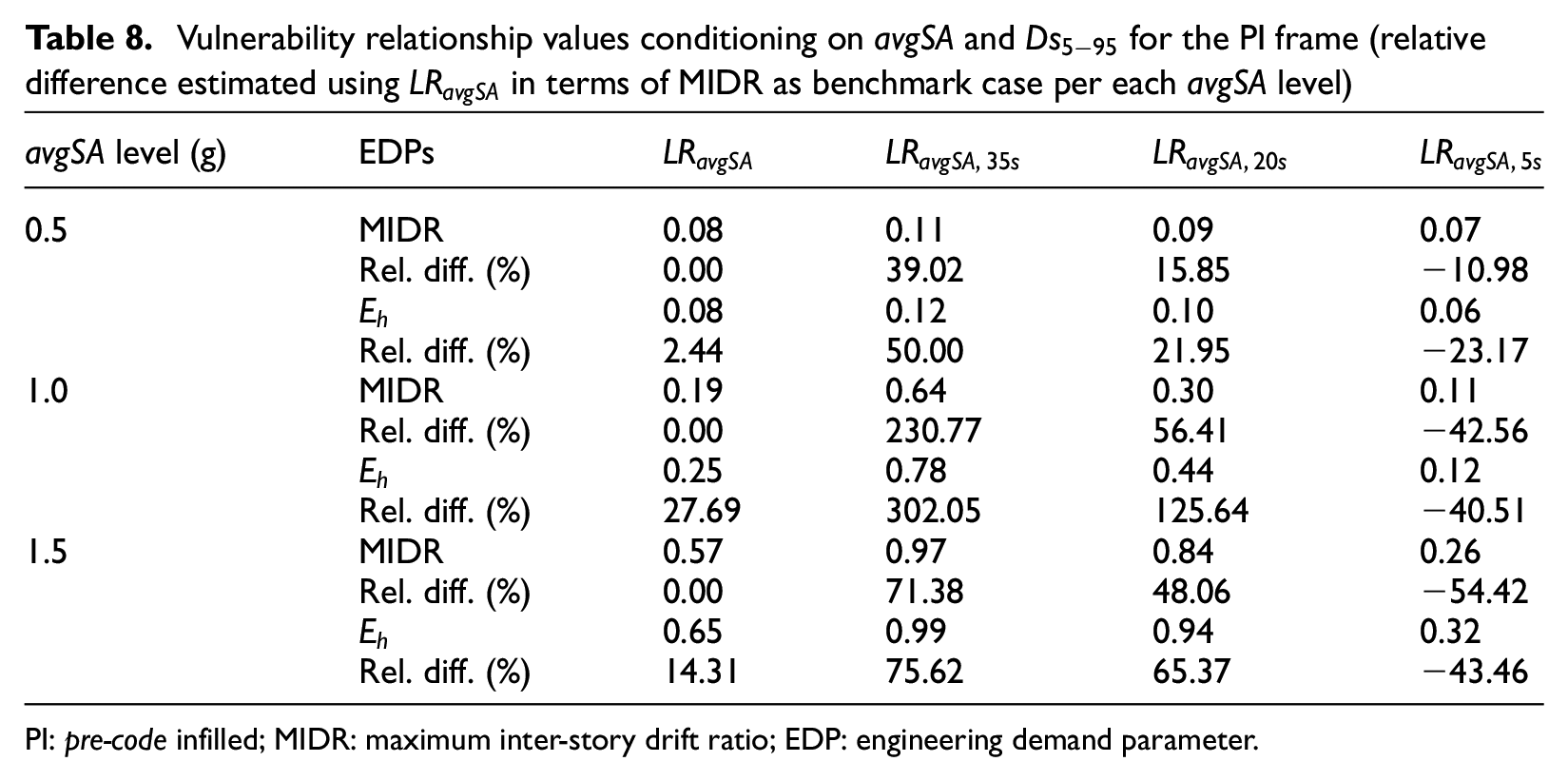
PI: pre-code infilled; MIDR: maximum inter-story drift ratio; EDP: engineering demand parameter.
To better understand the impact of ground-motion duration on vulnerability, a plot of the vulnerability relationships is developed using a scalar (i.e.
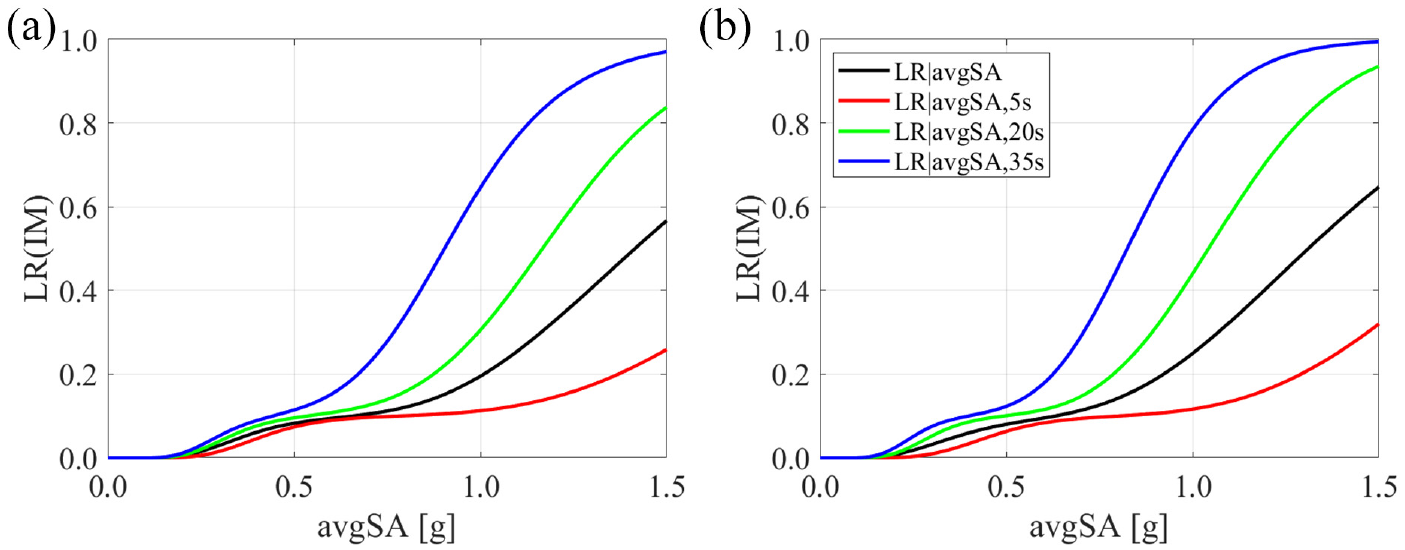
Vulnerability relationships conditioning on
Finally, masonry infills positively affect the structural vulnerability (reduce the LR for a given
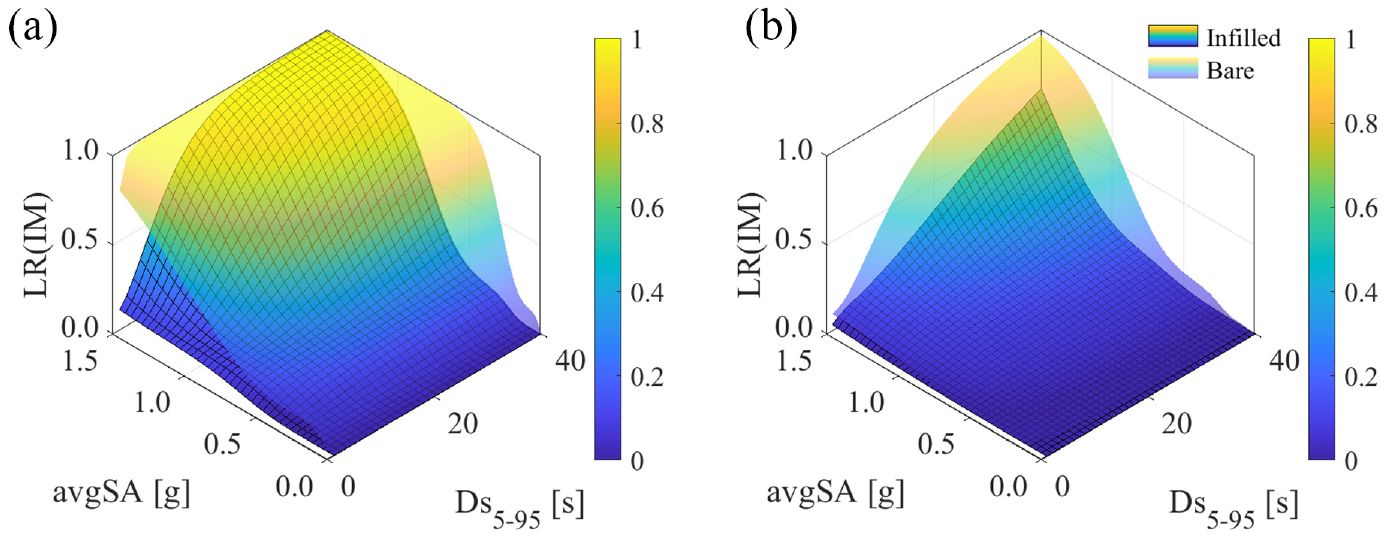
Comparison of vulnerability models in
Conclusions
This article describes an end-to-end seismic performance-based assessment framework to account for ground-motion duration effects in practical/realistic engineering applications, relying on site- and building-specific analyses. Specifically, two archetype RC moment-resisting building frames, representative of different seismic design levels, are selected and used in an infilled and a bare configuration (four case-study frames in total) to perform cloud-based NLTHAs. The analysis results are used (1) to assess ground-motion duration’s impact on the structural response variability via ANOVA and (2) to derive vector-valued fragility and vulnerability models, accounting for spectral shape and duration.
The ANOVA allows estimating the contribution of ground-motion duration and spectral shape to the variability in the structural response. However, it is observed that the proportion of variance explained in the regression models conditioned on
The vector-valued fragility and vulnerability model results agreed with the findings made in Part I. In such regard, as duration increases, the probability of exceeding a DS for a given
In general,
Overall, ground-motion duration was found to provide a non-negligible impact on the nonlinear structural performance of the analyzed case-study frames. Hence, it is concluded that duration should be included in the current seismic performance-based and seismic risk assessment practice. This is better done by considering a hazard-consistent ground-motion record selection and defining the fragility (and thus vulnerability) modeling using vector-valued IMs (e.g.
Footnotes
Acknowledgements
The authors thank the anonymous reviewers for their constructive feedback.
Declaration of conflicting interests
The author(s) declared no potential conflicts of interest with respect to the research, authorship, and/or publication of this article.
Funding
This research has been developed within the framework of the project “Dipartimenti di Eccellenza,” funded by the Italian Ministry of Education, University and Research at IUSS Pavia. Verisk—Extreme Event Solutions—London office is gratefully acknowledged. R.G. has received funding from the European Union’s Horizon 2020 research and innovation program (grant no. 843794).
