




Abstract
Introduction. Antibiotic overuse is a critical global health issue that drives antibiotic resistance, especially in low-income countries like Ethiopia, where data on prescribing practices are scarce. Objective. This study assessed antimicrobial prescription patterns in pediatric patients at Dessie Comprehensive Specialized Hospital, Northeast Ethiopia. Methods. A retrospective cross-sectional analysis of 171 pediatric inpatient prescriptions from March to April 2022 was conducted, using WHO pediatric guidelines and Ethiopia’s Standard Treatment Guideline (STG) for evaluation. Results. Among 157 analyzed prescriptions, most patients (55.4%) were hospitalized over 5 days. Severe acute malnutrition (27.4%) and meningitis (14%) were the leading causes of admission. Ceftriaxone (51%) and augmentin (19%) were frequently prescribed, with inappropriate use noted in 10.2% of cases. Injectable antibiotics were used in 62.4% of prescriptions. Conclusion. Ceftriaxone was the primary antibiotic prescribed, with a generally rational prescribing pattern. However, additional attention to patients with comorbidities and rural backgrounds is advised.
Introduction
The development of antibiotics has been a major advancement in combating infectious diseases and is essential in healthcare worldwide.1 -3 However, up to 50% of prescribed antibiotics are misused, contributing to antimicrobial resistance (AMR). Overuse of antibiotics encourages bacteria to develop resistance, making it crucial to use them only when necessary.3,4 In Ethiopia, research indicates that many bacterial pathogens are increasingly resistant to commonly used first-line antibiotics, highlighting the growing challenge of AMR in the region. 5
The reasons behind over-prescribing antibiotics for inpatients offer valuable insights for intervention. Several factors contribute to this issue, including diagnostic uncertainty, where physicians prescribe antibiotics as a precaution when unsure about the diagnosis 6 ; patient expectations, as patients or their families sometimes expect antibiotics as part of treatment, leading doctors to prescribe them to meet these expectations; and time pressure in busy hospital settings, where doctors may prescribe antibiotics to quickly address symptoms rather than waiting for diagnostic test results. Addressing these specific drivers can support the development of more effective strategies to reduce antibiotic overuse. 7
Rational antibiotic prescribing is crucial in combating antimicrobial resistance (AMR), 5 which occurs when bacteria become resistant to antibiotics used for infection prevention and treatment. The World Health Organization (WHO) recommends that fewer than 30% of outpatient visits in primary healthcare settings should involve antimicrobial prescriptions. 8 AMR is a growing global public health challenge, with widespread resistance emerging rapidly. 9 Despite the critical role of antimicrobials in healthcare, up to 50% of prescriptions are inappropriate, contributing to the spread of resistance and undermining effective treatment.10 -13
Antimicrobial prescription practices often deviate from World Health Organization (WHO) guidelines, and pediatric patients are particularly vulnerable to the misuse of antibiotics. This issue significantly impacts patient care and outcomes, contributing to the growing threat of antimicrobial resistance (AMR). Dessie Comprehensive Specialized Hospital, a major healthcare facility in Ethiopia, serves a diverse pediatric population, making it a crucial setting for studying antibiotic prescribing patterns. This study aims to assess antibiotic prescription trends in pediatric care at this hospital, focusing on the types of antibiotics prescribed, adherence to guidelines, and the potential effects on AMR. By analyzing these trends, the study seeks to provide insights into current practices and offer recommendations to improve antibiotic use, ultimately enhancing infection management and mitigating AMR risks.
Methods and Materials
Study Area and Period
The study was carried out at the Dessie Comprehensive Specialized Hospital (DCSH), located in Dessie town, 401 km from Addis Ababa, the capital of Ethiopia, in Northeastern Ethiopia, during March and April 2022. The hospital’s medical services include surgery, obstetrics and gynecology, maternal and child health, medicine, pediatrics, neonatal care, and critical care, as well as a clinic for antiretroviral therapy (ART) and tuberculosis (TB).
Study Design
A Hospital-based retrospective cross-sectional study was conducted.
Population
The source population consisted of all pediatric patients in DCSH who were prescribed antibiotics. The study population consisted of a sample of carefully chosen antibiotic prescriptions written for pediatric patients in DCSH between March 2022 and April 2022.
Inclusion and Exclusion Criteria
All prescription antimicrobial drugs administered to pediatric patients between March 2022 and April 2022 were included in the study. The study excluded a prescription that was never fulfilled with incomplete documentation or missing key data points essential for evaluating appropriateness (e.g., dosage, duration, or indication).
Sample Size and Sampling Technique
Using a single population proportion formula, the sample size was determined with a margin of error of 5%, a two-sided 95% confidence interval, and a 10% nonresponse rate. The percentage of antibiotic prescriptions (41.3%) from public health institutions in Bahir Dar town 13 was used. We used this percentage and used the adjustment procedure to obtain a sample size of 373, as our target populations of 400 are fewer than 10 000. Subsequently, the sample size was 171. We included a sample size calculation to ensure sufficient power for analyzing differences between appropriate and inappropriate prescriptions. The sample was based on inpatient studies, avoiding reliance on outpatient data, and accounting for variations in prescription patterns
Sampling Technique and Procedure
Prescriptions for antibiotics that were administered while a patient was in the hospital were collected in the correct order, packed, and labeled every day by the dispensers. One prescription was taken using the simple random sampling method (lottery method) from the prescription pack for each sampled date. A package of prescriptions that were distributed during each chosen working date was retrieved from the dispensary. Since prescriptions are dispensed and packed in the order in which they arrive at the dispensary, an effort was made to spread the prescriptions selected over different times of the day when selecting them from subsequent dates. According to WHO recommendations, the prescriptions for the first selected date was chosen from the front of the package, the prescription for the second selected date from the middle, and so on.
Data Collection Tools and Procedure
Prescription papers of 171 were included, and distributed between March 2022 and April 2022. Data were filled in by looking at patient prescription documents using a structured, defined data abstraction format that was adopted from global health organizations and contained personal and health-related information about the patient. Data abstraction format created by World Health Organization (WHO) prescription indicators adapted from World Health Organization Guideline for Pediatric Illness 14 was used to collect data. All relevant data on clinical characteristics of pediatric patients, socio-demographic information, and antibiotic use would be included in the form.
Variables
Dependent variables included the pattern of pediatric antimicrobial prescriptions, the route of administration, the dosage form, the duration of the prescription, the frequency of drug use, and the sex, age, date of prescribing, antimicrobials prescribed, cost of antimicrobials, type and category of antimicrobials prescribed, diagnosis, and laboratory investigations completed.
Data Collection and Analysis
The format for data abstraction was created to ensure that the required data were collected and organized according to the purpose of the study. Under the assumptions of normality, the mean and percentage were utilized for continuous variables. The results were displayed using tables and graphs.
Data Quality Assurance
The investigator trained and oversaw the data collectors, and the data abstraction format was appropriately created. To make sure that the content and method of data collection are clear, the format for data collection was pre-tested. Following collection, each data sheet was examined and the completeness of the datasheet was judged. The completeness of the data was verified in relation to daily operations.
Ethical Approval and Informed Consent
The study received ethical clearance and approval from the Wollo University’s College of Medicine and Health Sciences Ethical Committee (CMHS/355/029/22). Permission was acquired and a letter of collaboration was sent to DCSH. Patients gave their complete consent to participate in this study in a confidential manner. Private names and addresses that were protected. Patient guards were used to protect patients’ privacy as they filled out data forms. The declaration of Helsinki was followed when conducting the study.
Results
Socio-Demographic Characteristics of Study Participants
This study included 171 prescription papers in total, Due to missing responses to numerous outcome variables, 14 respondents were excluded from the study. Sixty-six (61.2%) of the 171 prescription papers were written for men. It was found that the average age (±SD) was 3.28 (±2.5) years. The majority (60.5%) lived in cities. Regarding the length of hospital stay, 87 people (55.4%) had stays longer than 5 days. Most diagnoses (89.8%) were empirical in nature. In terms of finances, 59.9% of the patients had health insurance, or were covered by the government (Table 1).
Socio-Demographic Characteristics of Antimicrobial Prescription Papers in DCSH, June 2022.

Patient Care Indicator of Antimicrobials for Treatment and Prophylaxis
The majority of patients, 98 (62.4%), received antimicrobial treatment by IV injection (76 (48.4%) and 18 (11.5%) received prophylaxis. Of the significant patients, 24 (15.3%) received antibiotic treatment by IV with PO, and the remaining 35 (22.3%) received prophylactic treatment. Certain antimicrobial administration routes for prophylaxis and therapy have not been properly reported. (Table 2).
Patient Care Indicator of Antimicrobials for Pediatric Inpatients in DCSH June 2022.

Pattern of Infection Distribution/Hospital Indicator Among Pediatric Inpatients
The most frequent cause of hospitalization, accounting for 43 cases (27.4), was severe acute malnutrition, followed by 25 cases of SCAP (15.9%) and 22 cases of meningitis (14%) (Table 3).
Top 10: Pattern of Infection Distribution/Diagnoses Among Pediatric Inpatient in DCSH, May 2022.

Patient Care Indicator of Dosage Form/Root of Administration Among Pediatric Patients
Of all antibiotics prescribed, 96 (62.4%) were in injectable form, followed by injection plus suspension/syrup 36 (23%) and so on. Oral tablets accounted for the least percentage of administration roots. (Table 4)
Patient Care Indicator of Dosage Form/Route of Administration Among Pediatric Inpatients in DCSH, May 2022.

Prescription Indicator of Antimicrobials Among Pediatric Inpatients
Ceftriaxone was the most commonly prescribed antibiotic in 45 (51%) categories, followed by augmentin in 17 (19%) and amoxicillin in 14 (16%), when looking at the most commonly administered single category and type of antibiotics by antimicrobial category. Ampicillin + gentamycin was the most widely used antimicrobial combination, with 59 (52.7%) followed by ceftriaxone + metronidazole (29, 25.9%) and Ampicillin + gentamycin + ceftriaxone/ceftazidime + vancomycine (15, 13.4%), in that order. 112(56%) of the patients used more than one antibiotic at the same time, and 15 (13.4%) took more than two antimicrobials at once. The maximum number of antimicrobials per prescription was four antimicrobials per prescription. The sources used to prescribe the drug were from national STGs. (Table 5).
Prescription Indicator of Antimicrobials in DCSH, May 2022.

Antimicrobial Prescription Pattern Among Pediatric Inpatients
There is no record of drug-drug interactions in this study, and the use of antibiotics in the presence of contraindications is nonexistent. A total of 141 antibiotic prescriptions (89.8%) followed a rational pattern of antibiotic prescribing, while 16 prescriptions (10.2%) followed an irrational pattern. The overall inappropriateness of antibiotic was 10.2 % as per the national standard treatment guideline (STG) (Figure 1).
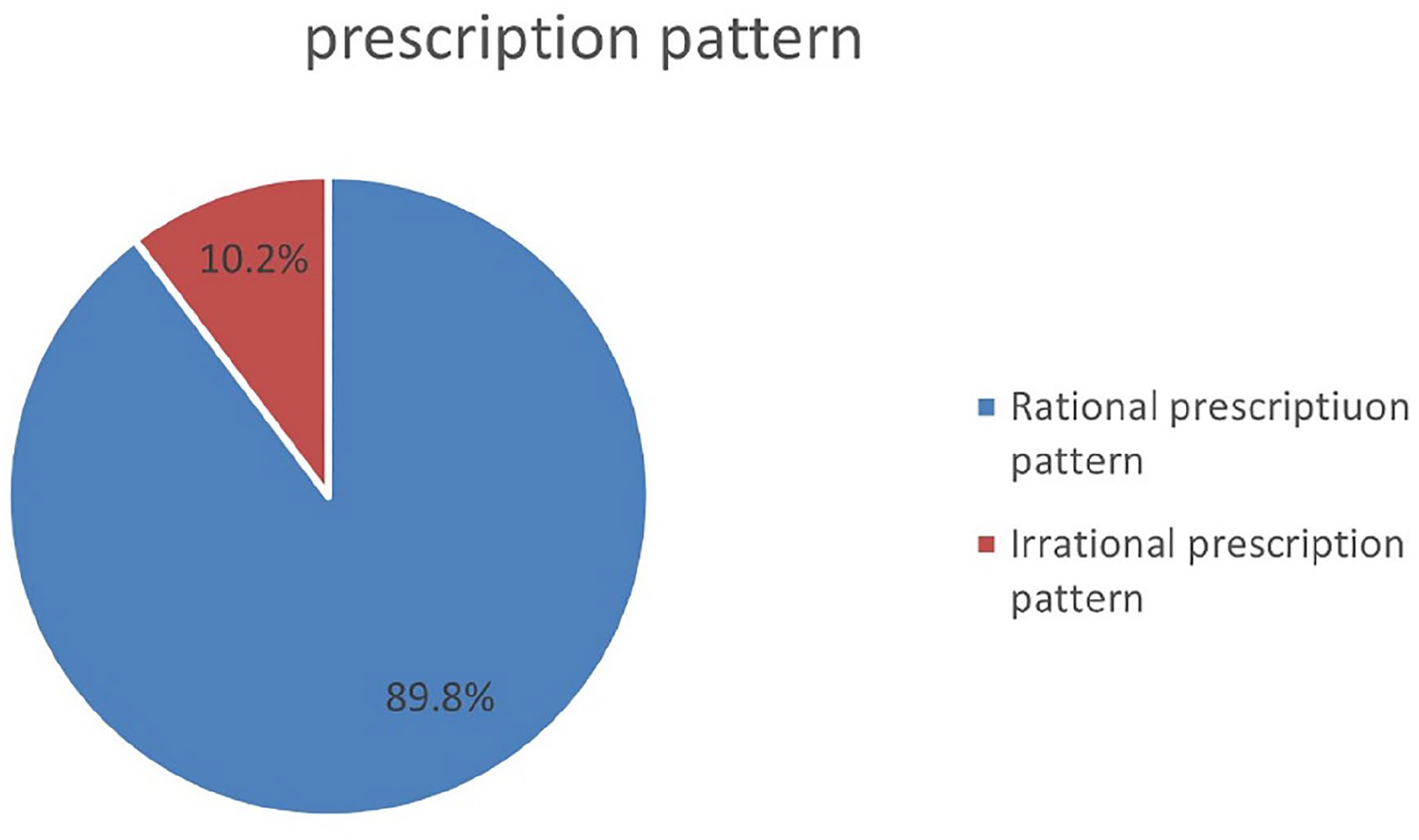
Antimicrobial prescription pattern among pediatric inpatients in DCSH, Northeast Ethiopia, 2022.
Discussion
The findings of this study showed that while 16 (10.2%) antimicrobial prescription patterns followed illogical antibiotic prescribing patterns, the majority of 141 (89.8%) antimicrobial prescription patterns followed reasonable norms. The WHO advises that 100% of prescription drugs be prescribed under their generic names, which is less than this reasonable antimicrobial prescription pattern finding. A study reveals that a significant number of pediatricians in Ethiopia routinely prescribe antibiotics, which can be reasonable or irrational at times. These data support the extent of the irrational and rational prescribing pattern. 15 One study, which revealed that the prescribing pattern for most of the antibiotics differs from the WHO’s recommendation, supports our findings in this regard. 16 Of all the prescriptions written for pediatric DCSH patients, 141 (89.8%) of the antimicrobials were based on the generic name, while the remaining 16 (10.2%) were based on the brand name. This theory is supported by research that indicates the growing practice of providing medications under generic names has become problematic. However, issues included prescribing from the essential drug list and polypharmacies were not a concern. 17
The majority of patients, 98 (62.4%), received antimicrobial therapy and prophylaxis by IV administration. Percentage of encounters with injections was relatively higher compared to WHO standards (13.4-24.1). 14 It is agreed that antibiotic appropriateness should depend primarily on patient-specific factors. In our study, this target serves as a flexible reference to identify opportunities for optimizing IV use, not as a strict rule. This result is consistent with research done in Ethiopia’s Addis Ababa. 17 A study conducted in Aksum, Ethiopia, found that patients received 2.01 (SD = 1.9) antibiotic prescriptions on average. 18
The maximum number of antimicrobials per prescription was four, however this is less than the maximum number of medications per prescription for all types of drugs in general and five for antimicrobials specifically, according to a study done in Jimma, Ethiopia. 15 It is possible that the disparity results from a failure to adhere to our updated STG.
According to our analysis, 112 patients (56%) were taking multiple antibiotics concurrently. This figure is greater than that of an Ethiopian study that found that 49% of patients were using two or more antibiotics. compared to a study done in Ethiopia, which found that 39% of patients received at least two antibiotics, our investigation found that there were only 15 (13.4%) patients overall who were taking more than two antimicrobials at a time. 19 This difference can be attributed to the fact that our findings indicated a reasonable prescribing pattern and that polypharmacy is not an issue. It has been shown that a significant portion of prescriptions written in Ethiopia (55%) contain one or more antimicrobials. 13 The WHO guidelines for the typical amount of antibiotics is 1.6% to 1.8% which less than our finding.
The most frequent cause of hospitalization, accounting for 43 cases (27.4%), was severe acute malnutrition, followed by 25 cases of SCAP (15.9%) and 22 cases of meningitis (14%). This conclusion is corroborated by a research conducted in Jimma, Ethiopia, which found that the main causes of antibiotic use on the ward were meningitis, pneumonia, and sepsis. 15
This study indicated that the three categories of antimicrobials that were prescribed the most frequently were ceftriaxone, augmentin, and amoxicillin, in that order. However, our results here conflict with a study conducted in Jimma, Ethiopia, which found that ampicillin (19%) and gentamicin (19%) were the most commonly prescribed medications, after penicillin G crystalline (20%). The main reasons for this difference may be Local pathogen profiles and resistance patterns often influence antibiotic choices, Differences in the availability and cost of antibiotics can also shape prescribing patterns, Finally, temporal variations could play a role, as antibiotic usage evolves over time in response to changing resistance data and updated guidelines. Together, these factors underscore the complexity and regional specificity of antimicrobial prescribing practices. The overall inappropriate antibiotic use was around 10.2% which was measured as convergence with the national Standard treatment guideline (STG) 20 with respect to dosage indication, duration.
Limitations of This Study
This study had several limitations. It was a small, cross-sectional study conducted over a short period at a single government facility, limiting its generalizability to national data. Only routine laboratory and hematological tests were performed, as additional investigations were not feasible in this setting. Additionally, antibiotic prescribing patterns were influenced by government-supplied drug availability, as most patients were from low socioeconomic backgrounds and depended on hospital-provided antibiotics. Future studies should address these limitations to improve representativeness and data accuracy.
Conclusion
There was widespread use of a logical prescription pattern for antibiotics. The antibiotic administered most frequently was ceftriaxone, and the most common reason for hospitalization was SAM. It is important to regularly conduct public education efforts to increase awareness of responsible drug use and the leading reasons for hospital admission.
Footnotes
Acknowledgements
The authors thank the Dessie Comprehensive Specialized Hospital and the participants for their cooperation
Author Contributions
Both authors made substantial contributions to the conception and design, acquisition of data, or analysis and interpretation of data; participated in the drafting of the article or critically reviewing it for important intellectual content; agreed to submit to the current journal; gave final approval of the version to be published; and agree to be responsible for all aspects of the work.
Data Availability
The data sets used and/or analyzed during the current study are available from the corresponding author on a reasonable request.
Declaration of Conflicting Interests
The author(s) declared no potential conflicts of interest with respect to the research, authorship, and/or publication of this article.
Funding
The author(s) received no financial support for the research, authorship, and/or publication of this article.
