



Abstract
Non-ablative radiofrequency (RF) treatments have emerged as a popular modality for skin tightening, offering effective results with minimal downtime. This case series evaluates the clinical outcomes of a novel high-frequency (6.78 MHz) hybrid RF system that combines monopolar and bipolar energy with active cooling, in five patients with Fitzpatrick skin Types III and IV. Treatments targeted facial zones, including the midface, lower face and perioral regions. All patients tolerated the treatment well, reporting low pain scores (VAS 2–3/10), with no pigmentary changes, scarring or other adverse events. Objective wrinkle reduction was observed in three patients, ranging from 16.6% to 45.1%. Active contact cooling maintained epidermal temperatures below 42°C, reducing pain and preventing thermal injury. All patients reported good-to-excellent satisfaction with the outcomes. These findings are consistent with the literature supporting the safety and efficacy of RF in darker skin types and emphasise the protective role of active cooling in minimising thermal injury. This case series demonstrates the safety, effectiveness and comfort of hybrid RF with integrated active cooling for non-invasive facial rejuvenation in patients with skin of colour.
Keywords
Improving Facial Firmness and Wrinkles Using a Gentle Radiofrequency Treatment
As we age, the skin on our face naturally becomes looser and develops fine lines and wrinkles. Many people look for treatments that can tighten the skin without surgery or long recovery times. Radiofrequency (RF) technology is one such option. RF uses controlled heat beneath the skin to stimulate collagen, which helps the skin become firmer and smoother.
This article describes the results of a small case series using a new ‘hybrid’ RF device that delivers two types of energy, monopolar and bipolar RF, along with active cooling to protect the skin’s surface. Five women with medium to darker skin tones (Fitzpatrick skin Types III and IV) were treated for concerns such as jowling, fine wrinkles and lower face sagging. Each patient received one treatment session, and their progress was assessed 3 months later.
All patients tolerated the procedure well. Pain levels were low (rated 2–3 out of 10), and none experienced burns, scarring or changes in skin colour, which are important safety considerations for people with skin of colour. All five patients were satisfied with their results, reporting good to excellent improvement in skin tightening and appearance.
The active cooling feature of the device helps keep the outer skin safe and comfortable while allowing deeper layers to heat effectively. This may reduce the risk of side effects and shorten the recovery time.
In summary, this small case series shows that hybrid monopolar/bipolar RF with active cooling is a safe, comfortable and effective nonsurgical option for improving early signs of ageing in medium-to-darker skin types. Larger studies would help confirm these results, but the early findings are promising.
Introduction
Facial ageing is a prominent and early sign of skin ageing characterised by progressive laxity and rhytid formation due to collagen degradation and dermal thinning. Ablative lasers can dramatically improve photodamage, but their use often entails downtime, significant pain, prolonged erythema, risk of infection, scarring and pigmentary changes. 1 Consequently, the demand has grown for non-invasive modalities with reduced downtime and minimal risk. Radiofrequency (RF) devices generate controlled dermal heat through electrical currents, causing immediate contraction of collagen fibres and stimulating neocollagenesis.2,3 Because RF energy is chromophore-independent, treatment safety is unaffected by epidermal melanin, making it suitable for Fitzpatrick skin Types III and IV. 4 Systematic reviews have confirmed that both monopolar and bipolar RF treatments can measurably improve facial skin laxity and wrinkle reduction, with a favourable safety profile and higher patient satisfaction. 5
In this series, all cases used a sequential monopolar–bipolar RF platform, DENSITY (Jeisys Med Inc., Seoul, South Korea). Compared to traditional RF devices, the DENSITY device, which combines monopolar and bipolar delivery modes through a tip designed to achieve immediate tissue tightening, offers significantly shorter treatment times and minimal discomfort, making it an accessible adjunctive modality in aesthetic practice. 6 This case series presents five patients treated with the DENSITY RF device for facial laxity, aiming to assess objective clinical outcomes, patient-reported satisfaction and safety end points.
Case Presentation
Case 1
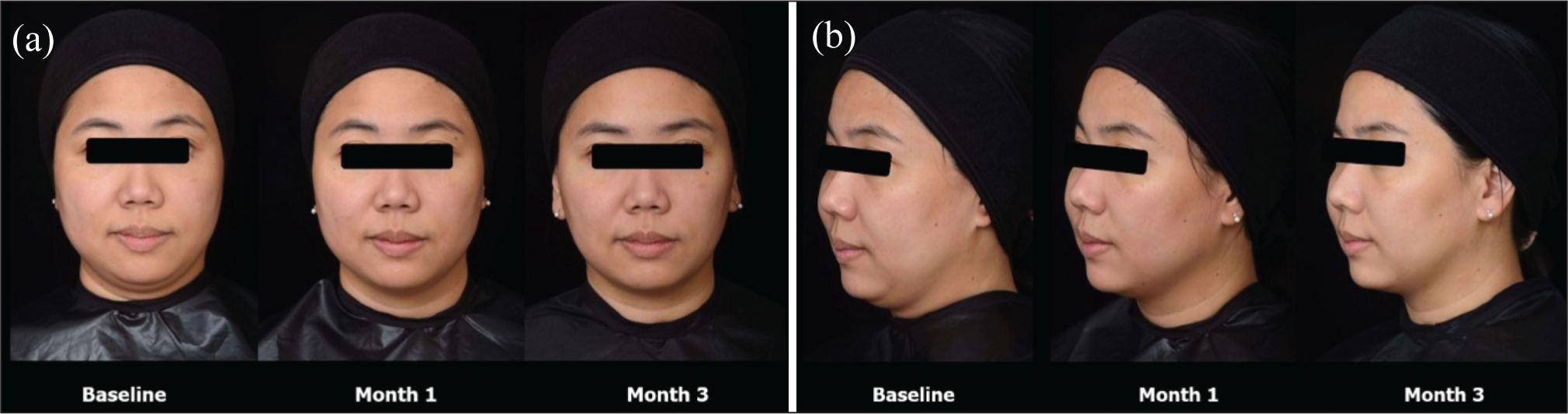
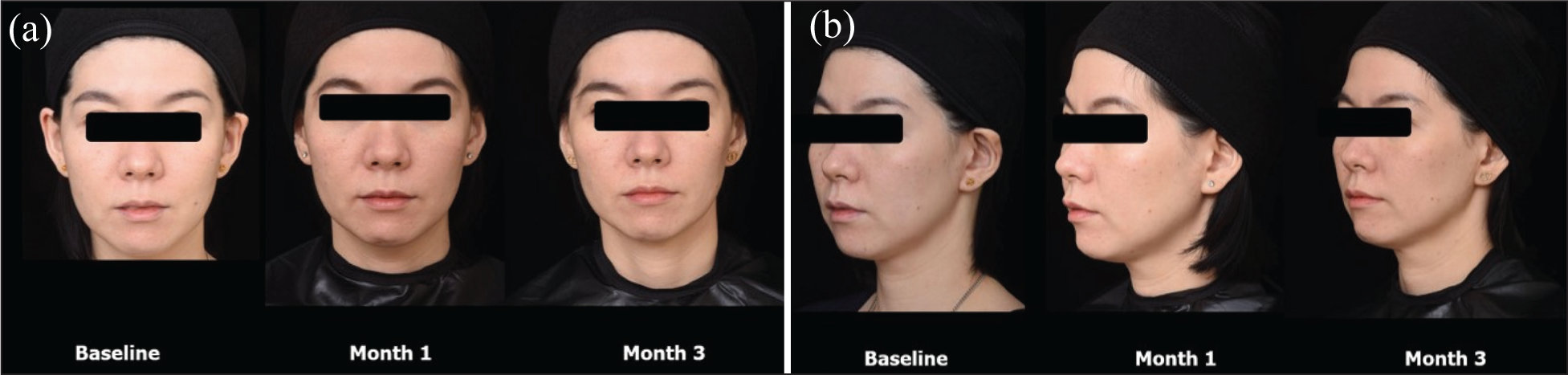
A 37-year-old female patient of Thai ethnicity presented with concerns of facial ageing, primarily moderate perioral and nasolabial rhytids and mild jowl laxity. On clinical examination, features of photodamage and dermal thinning were evident, though no active lesions were noted. The patient had Fitzpatrick skin Type IV and no recent cosmetic procedures. The patient had a medical history of premature ventricular contractions, which were stable and managed. Aesthetic history included prior treatments with botulinum toxin, high-intensity focused ultrasound (Ulthera→) and monopolar radiofrequency (Thermage→), all performed more than 6 months before the procedure. The working diagnosis of facial photoaging with skin laxity was made. The patient underwent a single treatment session using the DENSITY RF device with a HIGH F-tip (face) to deliver 20 uniform passes over the treated area, starting from Level 3.5 then titrating to 4.5. No topical aesthetic was required owing to continuous contact cooling. At 3-month post-treatment, an objective analysis using standardised imaging showed a 45.1% reduction in the wrinkle surface area compared to baseline (Figure 1). The patient reported minimal discomfort (VAS pain score = 2/10) and expressed high satisfaction (4/5) with the result. Mild erythema and mild oedema were noted but resolved within 24 hours after the procedure.
Patient (37-year-old Female) with Facial Photoaging and Mild Jowl Laxity Before Treatment: Excellent Improvement in 3-month Follow-up. (a) Front View of the Face; (b) Lateral View of the Face.
Case 2
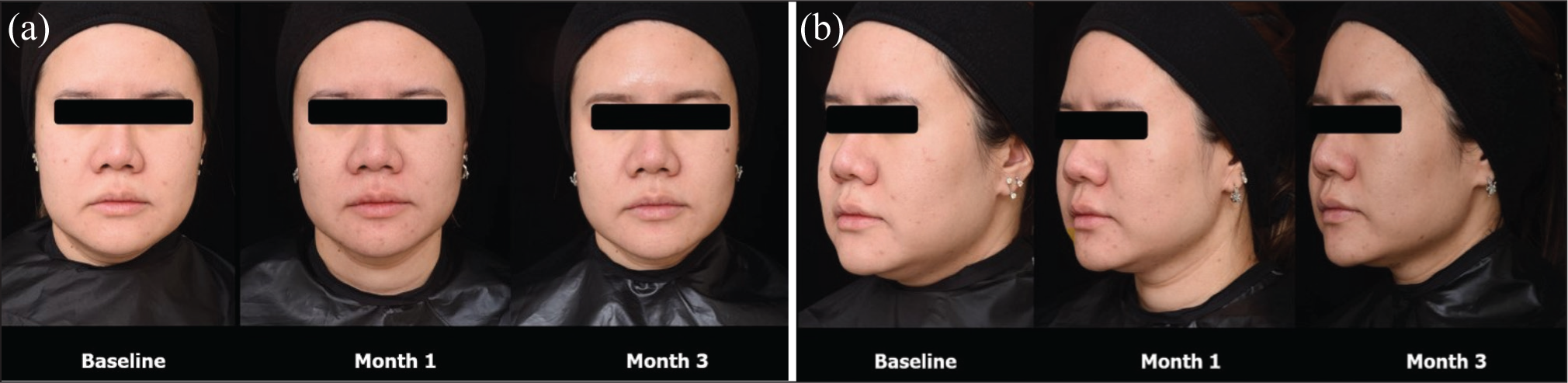
The patient was a 41-year-old Thai female with Fitzpatrick skin Type III who presented with moderate marionette lines and a general concern about reduced skin elasticity. She had not undergone any recent cosmetic procedures and was in overall good skin health. A diagnosis of lower facial laxity and midface photoaging was made. Treatment was performed using the DENSITY HIGH F-tip. In this case, 25 uniform passes were administered at a level starting from 2.5 then titrating to 4.0, adjusted for a slightly smaller treatment area. The technique emphasised a uniform ‘moving’ application to ensure even energy distribution across the dermis. Contact cooling was used throughout the procedure. During the 3-month follow-up, the wrinkle surface area analysis showed a 16.6% reduction compared to the baseline (Figure 2). The patient reported minimal discomfort during the procedure (VAS pain score: 2/10) and rated her satisfaction as 4 out of 5. No erythema, pigmentary changes or delayed adverse effects were observed.
Patient (41-year-old Female) with Moderate Lower Facial Laxity and Midface Photoaging Before Treatment: Good Improvement in 3-month Follow-up. (a) Front View of the Face; (b) Lateral View of the Face.
Case 3
The patient was a 43-year-old female of Brazilian descent who presented with moderate jowl and neck laxity, as well as fine wrinkles on the lower face. She had Fitzpatrick skin Type III and had received botulinum toxin injections approximately 6 months earlier; however, the effects had fully dissipated by the time of presentation. No other recent aesthetic procedures were reported. The diagnosis was moderate laxity of the lower face and submental region in the context of early photoaging. Treatment was conducted using the DENSITY ‘Classic F’ (monopolar) and HIGH F (monopolar + bipolar). A total of 300 shots were delivered using a dynamic moving technique with integrated contact cooling across the cheeks, jawline and neck to ensure consistent dermal heating and patient comfort. Monopolar and bipolar RF were applied sequentially, taking advantage of their synergistic effects. Monopolar RF targeted the deep dermis and fibroepithelial network, inducing neocollagenesis and dermal contraction.
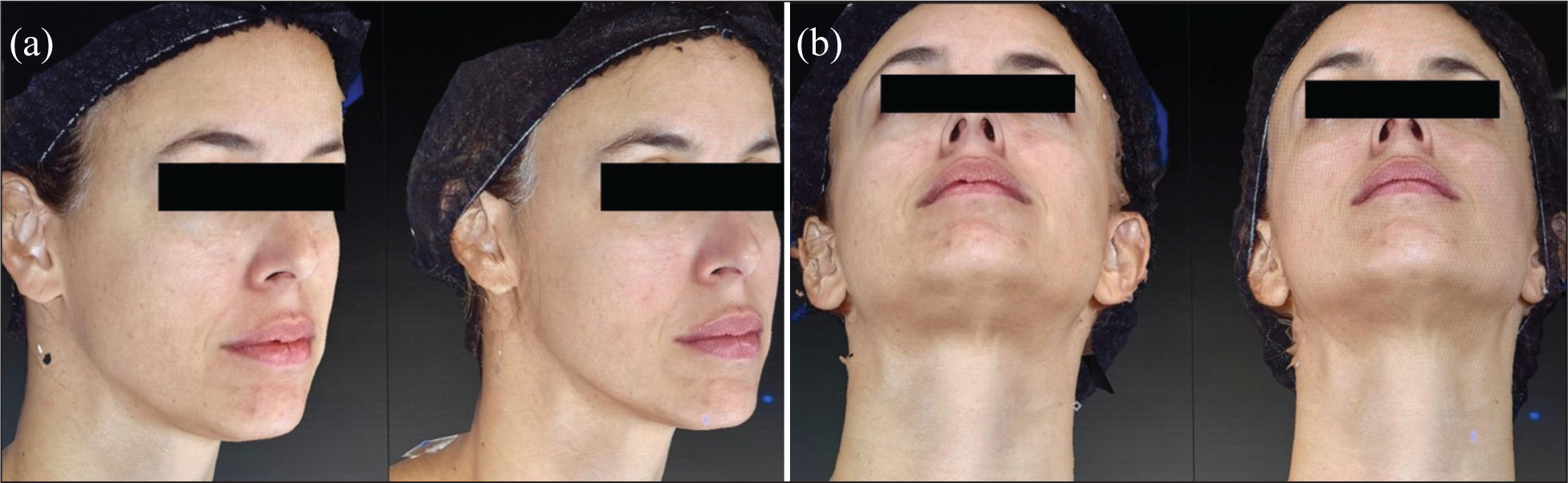
In contrast, bipolar RF delivered energy more superficially and with greater precision, enhancing dermal tightening and refining texture. This combination created a synergistic impact, engaging both deep and superficial dermal structures for a more comprehensive and sustained result. The total energy applied was 18 kJ, which is within the effective range commonly used in clinical practice. In the treating physician’s clinical experience, total energy levels of 12–25 kJ are typically selected, with adjustments made based on skin thickness. Thicker skin requires greater energy and a monopolar emphasis, while thinner or more delicate skin may benefit from a more balanced or superficial approach. Although a formal wrinkle surface area index was not calculated, post-treatment clinical photographs demonstrated visible improvement, with clear tightening and smoothing of wrinkles, especially along the submental region and mandibular line, 3 months after the treatment (Figure 3). The patient reported mild discomfort (VAS score: 3/10) and rated her satisfaction as 5/5. No pigmentary changes or thermal injuries were observed. As no concurrent dermal fillers or neurotoxins were used, and prior botulinum toxin effects had dissipated, the improvements were attributed solely to the radiofrequency treatment.
Patient (43-year-old Female) with Moderate Lower-face and Submental Laxity Before Treatment: Noticeable Improvement After 3 Months. (a) Lateral View of the Face; (b) Front View of the Face.
Case 4
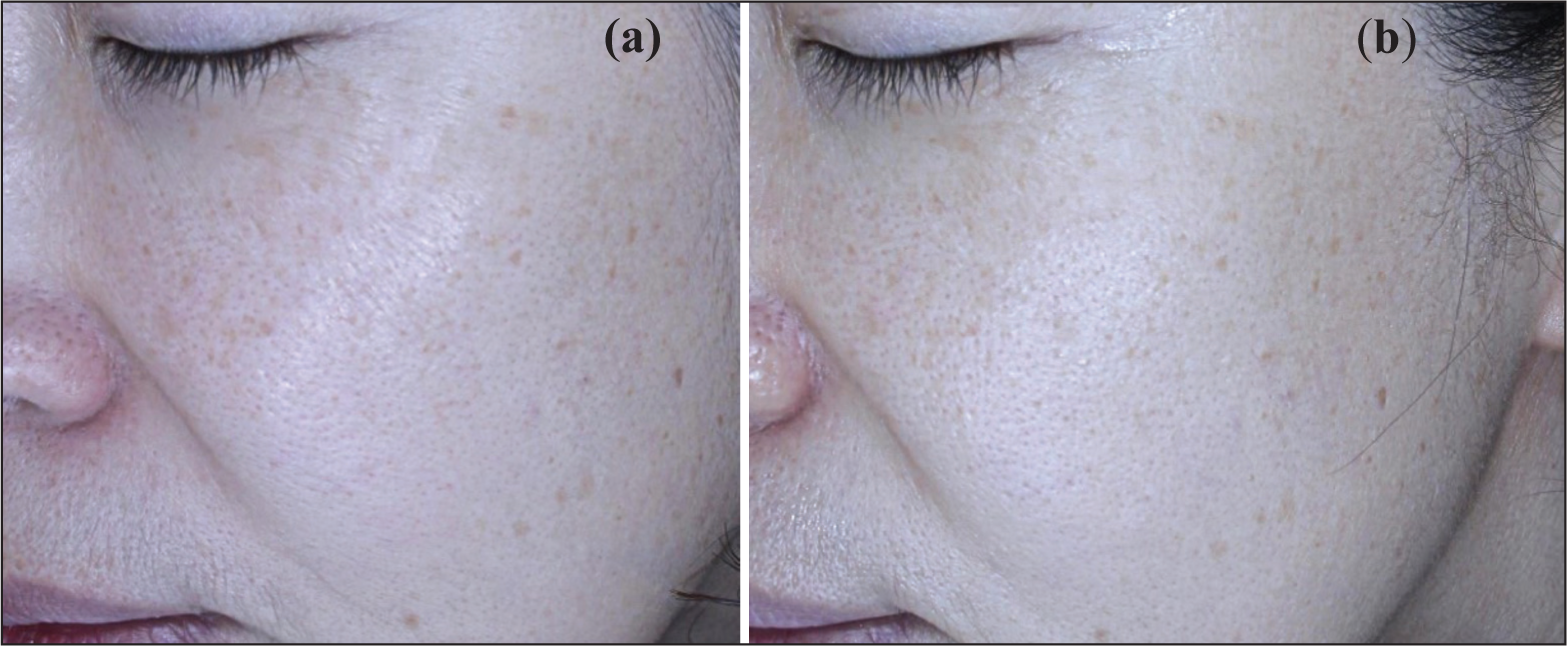
A 43-year-old female with Fitzpatrick skin Type IV and Korean ethnicity presented with moderate jowl and fine wrinkles in the malar and buccal regions. Her aesthetic history included skin boosters, neuromodulators and collagen stimulators, with no recent procedures in the treated areas. She was diagnosed with early-stage photoaging, manifesting as moderate dermal laxity localised to the malar and buccal regions of the lower face. Treatment was performed using the DENSITY RF device with the ‘Classic F’ tip. A total of 300 pulses were delivered at 2.0–2.5 using a continuous motion technique with integrated contact cooling across the cheeks, jawline and neck. The follow-up was done 3 months after the treatment. Although wrinkle quantification was not performed, post-treatment images showed noticeable tightening and wrinkle smoothing (Figure 4). The treating physician observed clear clinical improvement. The patient experienced mild discomfort (VAS = 3/10) and reported high satisfaction (5/5). No pigmentary changes or adverse effects were noted. Botulinum toxin had been previously injected into the forehead, glabella and crow’s feet areas. However, the improvements seen after DENSITY RF treatment were in different areas, mainly the malar and buccal regions. Since the follow-up was done after the effects of botulinum toxin had subsided, visible improvements can be attributed to the effect of DENSITY.
Patient (43-year-old Female): (a) Moderate Jowl and Fine Wrinkles in the Malar and Buccal Regions Before the Treatment; (b) Noticeable Improvement 3 Months After the Treatment (Lateral View of the Face).
Case 5
A 37-year-old female patient with Fitzpatrick skin Type III and Thai ethnicity presented with primary concerns of facial skin laxity. She had no relevant medical history and no prior aesthetic treatments. The patient underwent a single treatment session using the DENSITY RF device with a HIGH F-tip. Pre-procedure preparation included cleansing with Syndet facial soap, followed by the application of an ice pack. A topical anaesthetic (EMLA→) was applied before the procedure. The treatment was performed on both cheeks, with 25 passes per area, starting at an energy level of 2.0 and titrating to 3.5, delivering a total of 400 shots over a 30-minute session. At the 3-month follow-up, the patient showed significant improvement in skin laxity on both cheeks (Figure 5).
Patient (37-year-old Female) with Facial Laxity Before Treatment: Significant Improvement in 3-month Follow-up. (a) Front View of the Face; (b) Lateral View of the Face.
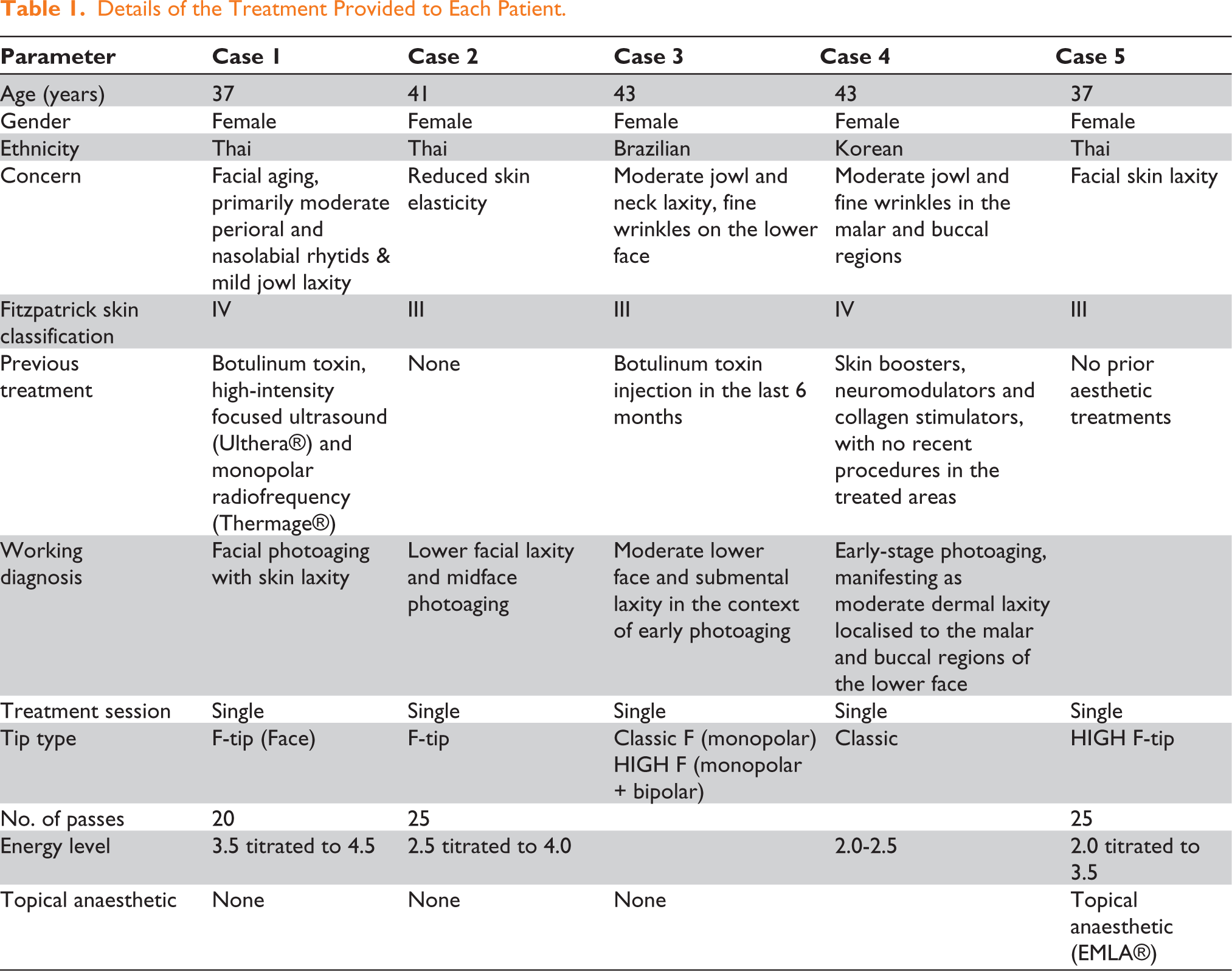
The patient reported mild discomfort (VAS score: 3/10) and rated her satisfaction and perceived improvement at 4 out of 5. Mild erythema and oedema were observed immediately post-treatment and resolved within 24 hours with ice pack application and observation. No downtime was reported. The patient characteristics and treatment outcomes are summarised in Table 1.
Details of the Treatment Provided to Each Patient.
Discussion
Facial laxity remains one of the most common concerns among patients seeking non-invasive rejuvenation. Evidence from 2024 confirms that 82% of patients report improvement in mid-to-lower face laxity following a single monopolar RF treatment session. 7 While multiple energy-based devices have been introduced over the past two decades, the ideal platform must balance efficacy, safety, tolerability and versatility across skin types and treatment zones. 5 This case series highlights the clinical utility of the DENSITY RF device, which combines contact cooling and flexible applicator designs (HIGH F-tip and Classic F-tip) to address various degrees and locations of facial skin laxity with minimal discomfort or downtime.
Across five patients with varying ages, skin types (Fitzpatrick Types III and IV), and treatment areas, the DENSITY RF system demonstrated consistently favourable safety and high patient satisfaction. Three of five patients showed measurable wrinkle reduction, ranging from 16.6% to 45.1%, while all reported good to excellent satisfaction. This level of improvement is consistent with recent studies utilising 6.78 MHz RF devices, which report immediate improvements in skin roughness of 28.42% and sustained enhancement of 26.23% at 1 month. 8 These findings align with prior reports that non-ablative RF enhances dermal collagen and improves skin appearance.5,9 El-Domyati et al reported significant upregulation of collagen Type I/III and wrinkles in Fitzpatrick Type III and IV patients following multiple monopolar RF sessions, with high patient satisfaction. 9 Histological studies have further demonstrated significant increases in Type I collagen (from 65.8% to 81.2%) and Type III collagen (from 60.9% to 73.6%) at 3 months post-treatment. 9 Similarly, a systematic review by Rohrich et al concluded that both monopolar and bipolar RF technologies produce clinically meaningful skin tightening outcomes, with mainly minor complications. 5
The DENSITY device combines these modalities, theoretically enabling uniform deep-tissue heating alongside superficial dermal sealing. Advanced dual-frequency approaches have shown even greater promise, with histological analysis revealing immediate alterations in collagen bundle configurations and marked thickening of both superficial and deep fascial layers. 10 Prior studies have shown that hybrid RF can effectively deliver both volumetric (monopolar) and localised (bipolar) heating, yielding patient improvement in many cases. 11 Similarly, Jaffary et al reported that monopolar and bipolar RF produced objective wrinkle reduction and high satisfaction in a cohort of 45 women. 12 Our cases extend these findings by utilising a 6.78 MHz high-power RF system with integrated active cooling, specifically designed to enhance patient comfort during treatment.
Across all cases, procedures were well tolerated with low pain scores (VAS 2–3 on a 0–10 scale). These findings align with previous literature describing favourable tolerability and outcomes associated with non-ablative RF technologies. 7 Ross and Wischnack reported mild discomfort during fractional RF treatments, with an average pain score of 4 on a 10-point VAS, 13 whereas Eubanks and Solomon observed a mean score of 2/10 for acne scar treatments with fractional RF, along with high patient satisfaction. 14 No patient in this series required more than topical anaesthesia, and none requested it, further supporting the literature suggesting that modern RF devices, particularly those with built-in cooling systems, are generally well tolerated.9,13
The role of active cooling has been extensively validated in recent preclinical studies. Thermometric imaging demonstrates that parallel contact cooling (PCC) promptly lowers skin temperature in RF-treated areas, with effects persisting for over 60 seconds. 15 Moreover, PCC-assisted RF treatment enhances thermal tissue reactions in the mid-to-deep dermis while preserving the epidermis and upper papillary dermis from excessive thermal injury. 15
In Cases 3–5, although improvements were not captured by standardised wrinkle indices, the absence of other concurrent aesthetic interventions and the patients’ perfect satisfaction score suggest a true treatment effect.
Importantly, all patients in this series had Fitzpatrick skin Types III and IV. While high-frequency RF is generally safe across all skin types, individuals with darker skin carry a higher risk of thermal side effects. Recent comprehensive reviews of RF treatment in skins of colour have demonstrated an excellent safety profile, with only 7 of 35 studies reporting transient post-inflammatory hyperpigmentation; 1 observing mild, prolonged hyperpigmentation; and only 1 reporting permanent scarring. 16 The use of a non-ablative, cooled RF protocol resulted in no pigmentary changes or scarring, consistent with reports indicating that fractional or insulated-tip RF minimises epidermal heating in skins of colour. Battle and Battle demonstrated safe and effective wrinkle reduction in Fitzpatrick VI patients treated with fractional RF using coated pins, without unexpected adverse effects. 17 DENSITY incorporates active contact cooling that maintains epidermal temperatures below 42°C, thereby ensuring adequate epidermal protection, reducing pain and preventing thermal injury. 15 The absence of any hyperpigmentation or blistering in our series supports its favourable safety profile.
In summary, this case series suggests that the DENSITY RF system can safely improve facial wrinkles or laxity with minimal discomfort, aligning with broader evidence that RF is a promising non-invasive rejuvenation modality. Limitations include a small number of patients. A split-face study design would be valuable in future research to more precisely compare treatment efficacy within the same individual.
Conclusion
This case series demonstrates that the DENSITY RF system is a safe and well-tolerated option for improving facial wrinkles and laxity in patients with Fitzpatrick skin Types III and IV, with minimal discomfort and no adverse events. The findings align with existing evidence supporting RF as a promising non-invasive rejuvenation modality. Notably, even a single treatment session produced visible improvements, although multiple sessions might optimise results.
Footnotes
Acknowledgements
The authors would like to acknowledge and appreciate the medical writing support provided by Ms Pooja Banerjee and Dr Pinki Mishra from Krystelis Ltd.
Declaration of Conflicting Interests
The authors declared no potential conflicts of interest with respect to the research, authorship and/or publication of this article.
Funding
The authors received no financial support for the research, authorship and/or publication of this article.
Informed Consent
Written informed consent was obtained from each patient for the publication of this case series and any accompanying images.