



Abstract
Chin augmentation surgery for the correction of a recessed chin is gaining popularity for individuals seeking to enhance their facial profile. With the advent of 3D imaging and 3D printing technology, the procedure has become more precise and customised with better aesthetic outcomes and minimal complications.
Introduction
Chin implant surgery, also known as chin augmentation, is a cosmetic procedure that involves the insertion of a synthetic implant to enhance the shape and projection of the chin. In the ever-evolving field of cosmetic surgery, chin implant procedures have become an increasingly popular solution for individuals seeking to enhance their facial profile by correcting recessed chin. A well-proportioned chin plays a crucial role in facial harmony, and this surgery can improve the overall balance between the chin, nose and jawline.
Case Report
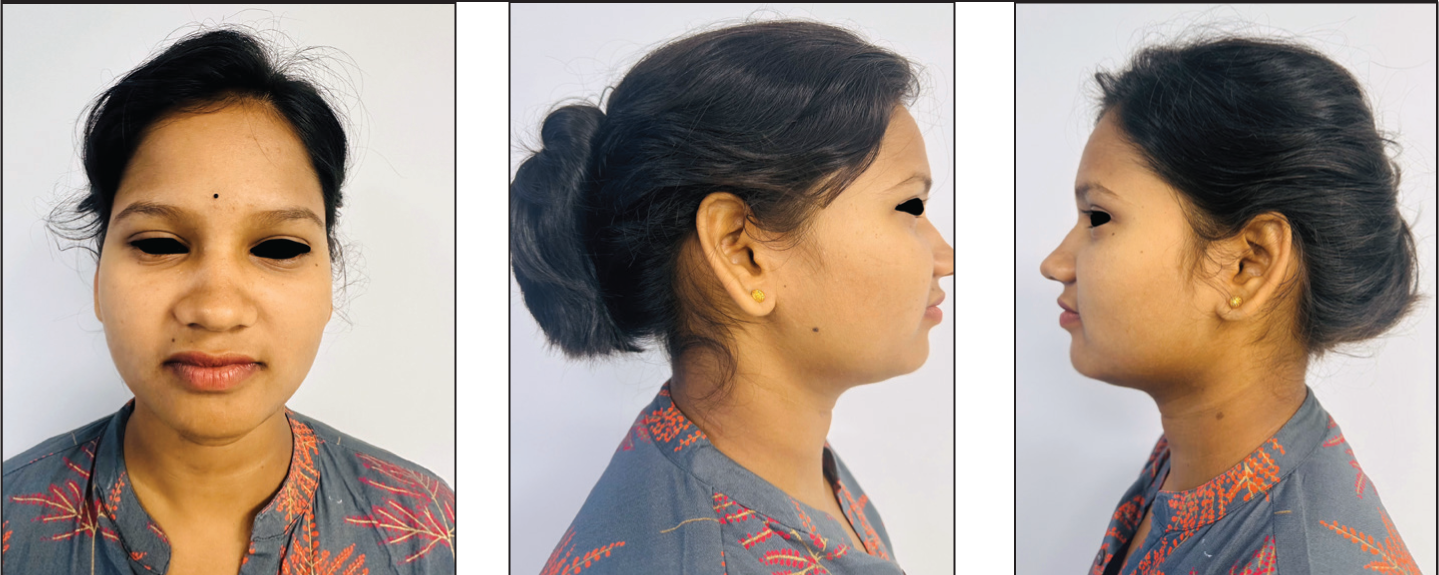
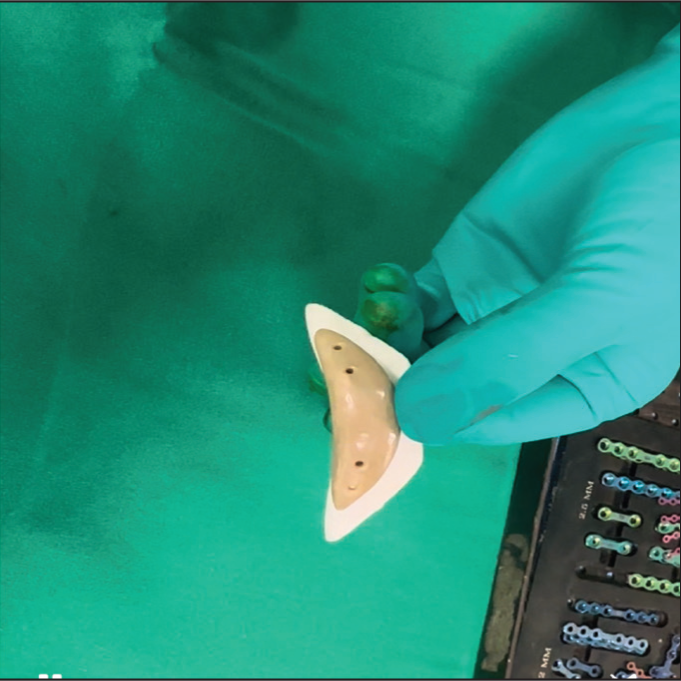
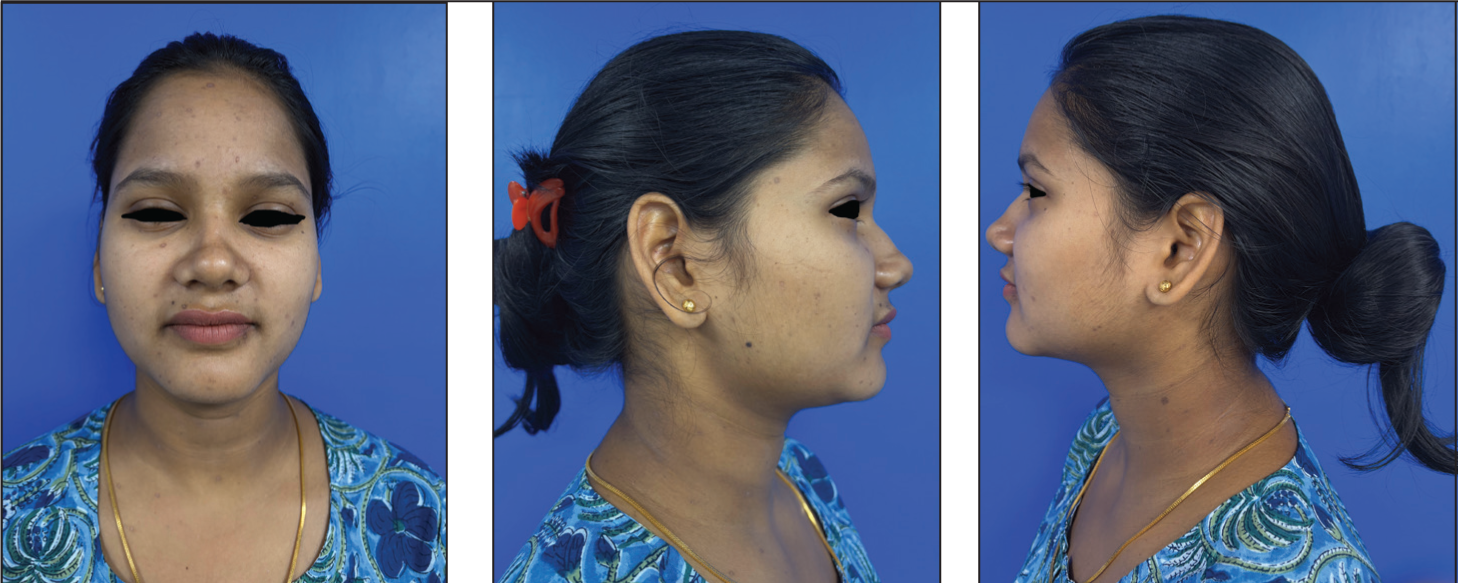
A 24-year-old girl came to Kalinga Hospital, Bhubaneswar, Odisha with a desire to enhance her facial profile with chin augmentation. She was explained about all the options available for it. She agreed to undergo surgery with a customised patient-specific 3D PEEK implant. Pre-operative photographs (Figure 1a-c) were taken. All pre-surgical investigations including CT scan face with 3D reconstructions were done. Based on the pre-op CT scan, the PEEK patient-specific implant was planned and manufactured focusing on the size, shape, inclination and precise location of placement (Figure 2a-f). Even the placement of screws for fixation of the implant was marked in order to achieve a fast and correct placement. Finally, the placement of the implant (Figure 3) was performed through a lower gingiva-buccal incision under general anaesthesia (nasal intubation). Standard two-layer closure done with absorbable suture. The compressive bandage was put over the chin to prevent the collection of seroma and to reduce oedema. The patient was discharged on the next day with an oral antibiotic, analgesic and chlorhexidine mouthwash solution to maintain oral hygiene. She was called for follow-up on the 7th day, 30th day and 90th day post-OP. Recovery was good and uneventful. Photographs (Figure 4a-c) were taken on 90th day.
Pre-Op Photos (Frontal, Right and Left lateral view) of the Patient.
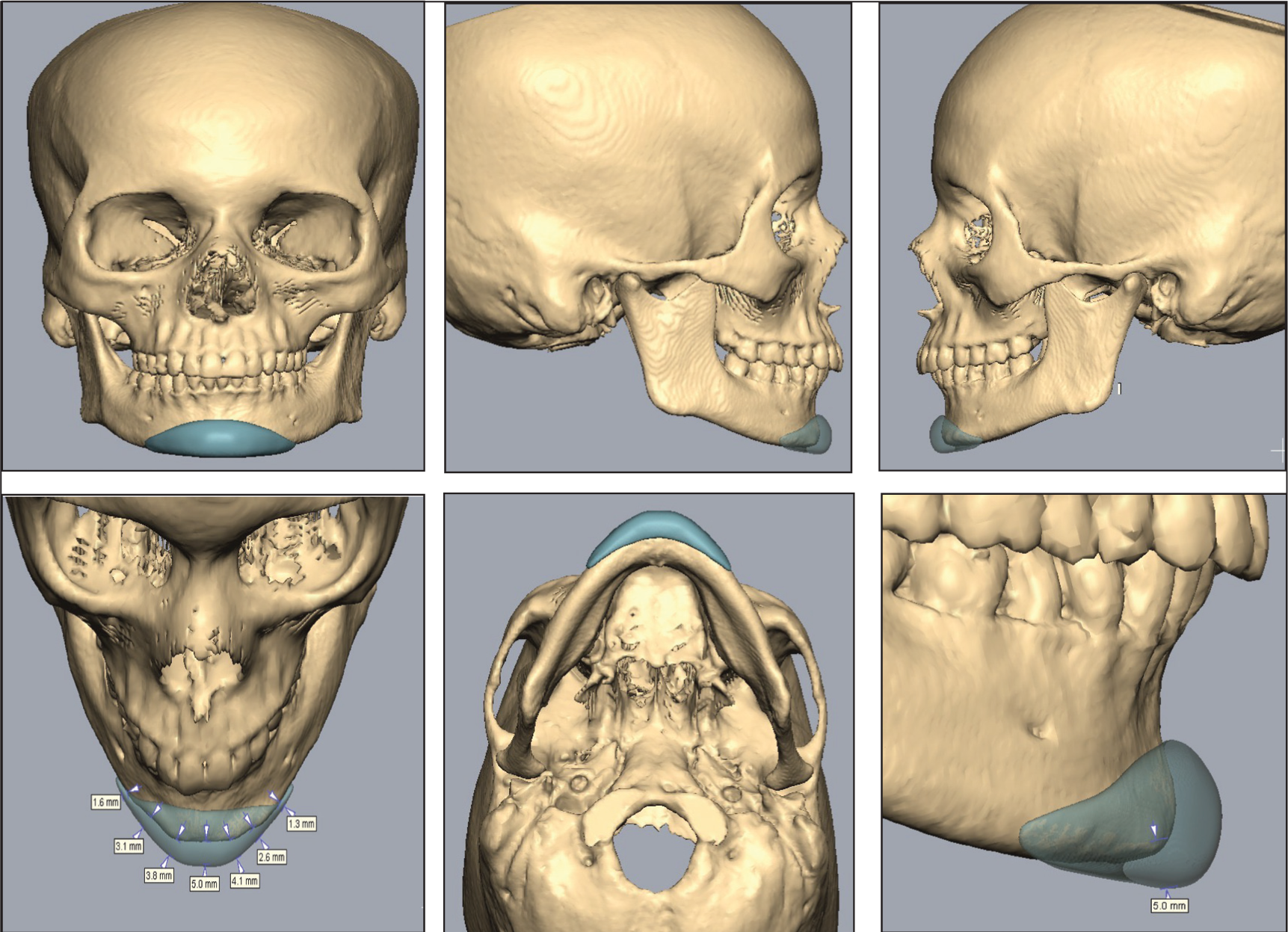
Patient Specific PEEK Chin Implant.
Post-Op Photos (Frontal, Right and Left lateral view) of the Patient.
Discussion
Traditionally, chin implants were made from solid materials like porous polyethylene/Gore-Tex/silicone, and the size and shape of the implants were typically chosen based on the surgeon’s experience and general guidelines. Injectable fillers provide a temporary trial for chin augmentation but besides the lack of permanency, it can take a lot of injection volume to achieve a complete augmentation effect. However, as technology has advanced, so has the approach to chin augmentation. With the advent of CT scan face with 3D reconstruction and 3D printing, chin implant surgery has entered a new era, offering a higher level of customisation and precision for patients. CT scan/MRI provide a detailed view of the underlying bone structure, soft tissue, and existing facial proportions, enabling the surgeon to make precise measurements and determine the optimal placement and size of the chin implant.
The benefits of 3D imaging and customised 3D implants are multifaceted:
Enhanced visualisation: Surgeons can now see the entire structure of the chin area in three dimensions, which allows for more accurate planning and a clearer understanding of how the implant will be placed and how it will look in proportion to the rest of the face. Pre-surgical simulation: Before the surgery even begins, 3D imaging can be used to simulate different implant sizes and shapes. This allows patients to preview potential results and make more informed decisions about their procedure. Improved accuracy: The detailed 3D maps provided by imaging ensure that the implant is placed with a higher degree of precision, leading to more natural-looking results and a reduced risk of complications. Customisation: 3D imaging allows surgeons to create a personalised implant, which complements the patient’s unique facial features. The procedure can also be fine-tuned to meet the patient’s specific aesthetic desires. 3D implant is created with FDM (Fused Deposition Modelling) technology which allows the creation of custom-made implants that are tailored specifically to the patient’s facial anatomy, ensuring a perfect fit and superior outcomes. The implant is fabricated from biocompatible materials, such as PEEK (polyether ether ketone), which are durable, safe and long-lasting. Faster recovery and fewer complications: As the implants fit better than standard ones, they may require less manipulation during surgery, potentially leading to a quicker recovery time. Additionally, the reduced risk of implant shifting or asymmetry means there are fewer complications post-surgery. Enhanced patient satisfaction: Patients can rest assured that the implant will fit perfectly with their facial features, resulting in more predictable and satisfying outcomes.
Thus, with the ability to print a custom implant which perfectly matches the patient’s chin bone structure, surgeons can now plan the procedure with greater precision than traditional implants resulting in better aesthetic outcomes.
Footnotes
Acknowledgements
The author acknowledges the patient for her understanding of the technology and the implant.
Declaration of Conflicting Interests
The author declared no potential conflicts of interest with respect to the research, authorship and/or publication of this article.
Funding
The author received no financial support for the research, authorship and/or publication of this article.