




Abstract
Objective:
Guided by Maslow’s Hierarchy of Needs, this study explored the impact of home-based social support services on the well-being of older adults in Turkey.
Methods:
A qualitative descriptive design was employed with 63 participants, including 25 older adults, 23 caregivers/family members, and 15 professionals from four major cities. Data were collected through semi-structured interviews and analyzed using MAXQDA 2024.
Results:
Home-based services were found to enhance both physical and psychological well-being. Nonetheless, chronic health conditions limited daily activities and social engagement. Older adults who maintained regular interactions with family, friends, and professionals demonstrated greater emotional resilience and strengthened social relationships.
Discussion:
Strengthening collaboration between families and professionals in home-based care is essential to improve older adults’ well-being and promote active aging. The findings underscore the need for inclusive, needs-oriented approaches in gerontological social work and aging policies.
What this paper adds
This study provides an in-depth analysis of how home-based social support services address the multilayered needs of older adults through the lens of Maslow’s Hierarchy of Needs.
It introduces a gerontological social work perspective that integrates physiological, psychological, and social dimensions in evaluating support systems.
By contextualizing individual care experiences within broader socio-political structures, this study offers an original interdisciplinary contribution to aging-in-place research.
Applications of study findings in gerontological practice/policy/research
The findings indicate that care models should integrate emotional and social well-being alongside physical needs to promote holistic aging.
Policymakers are encouraged to design structured home support services that promote active aging, resilience, and dignity among community-dwelling older adults.
These results may guide future research toward scalable, technology-assisted, and culturally relevant support interventions for aging populations.
Introduction
The global increase in the older population has positioned aging as a central focus within the social sciences (Kurtkapan, 2019; Tokol, 2013). Aging is a natural life stage in which individuals encounter physical, psychological, social, and economic challenges while simultaneously accumulating life experiences (Gedik, 2020; Saddock & Saddock, 2007). In Turkey, individuals aged 65 years and older comprise 10.2% of the total population, a demographic shift that has highlighted the growing need for support in areas such as access to healthcare services, coping with social isolation, and participation in community life (TÜİK, 2024).
Increases in life expectancy and advances in medical care have intensified the demand for comprehensive service models that address not only physical needs but also psychosocial and economic dimensions of well-being (Işıkhan, 2021; Kalınkara, 2014). Importantly, the challenges are more pronounced among older adults living with life-limiting chronic conditions such as Chronic Obstructive Pulmonary Disease (COPD) and Interstitial Lung Disease (ILD). These conditions not only impair physical functioning but also exacerbate psychological distress, increase social isolation, and place economic burdens on families. Recent studies emphasize that older adults with such illnesses could benefit most from integrated, home-based social support services (Işıkhan, 2021; Kalınkara & Kalaycı, 2017; Ursoleo, Bottussi, Sullivan et al., 2025).
Within this context, the concept of social support has emerged as a fundamental protective factor that enhances quality of life (QoL), often defined through human relationships and approached from an interdisciplinary perspective (Çoban, 2021; Costa-Cordella et al., 2021). Maslow’s (2015) Hierarchy of Needs emphasizes the multilayered structure of human requirements, ranging from physiological needs to belonging, esteem, and self-actualization. Complementary approaches conceptualize social work not merely as individual support but as a politically grounded and human rights-based practice within an ecological framework, reinforcing the necessity of viewing social support through both individual and structural lenses (Thompson, 2016).
Gerontological social work adopts a holistic perspective that addresses the physical, emotional, and social needs of older adults, aiming to support independence and encourage active societal engagement (Buffel & Phillipson, 2017). Previous studies have shown that unmet needs can lead to social isolation and, over time, to exclusion processes referred to as “social death” (Borgstrom, 2017; Taylor, 2008).
Against this backdrop, the present study examines the impact of home-based social support services on the QoL of older adults residing in the metropolitan Turkish cities of Istanbul, Ankara, Izmir, and Adana. Specifically, it investigates how these services contribute to meeting fundamental needs, enhancing safety, fostering belonging, strengthening self-esteem, and sustaining social roles. Furthermore, the study evaluates the effectiveness of services delivered under the Republic of Turkey, Ministry of Family and Social Services (TC-ASHB) (2024) International Plan of Action on Ageing, offering an empirical contribution to understanding the role of home-based social support services in promoting the well-being of older populations.
Research Design
This study used a phenomenological approach and a qualitative research method to explore older adults’ experiences with home-based social support services. Phenomenological research aims to identify shared themes by analyzing individuals’ subjective experiences related to a specific phenomenon (Creswell, 2018; Karasar, 2016). Through purposive sampling, participants were selected from three distinct groups: older adults receiving home-care services, family caregivers, and professionals providing formal support.
During the data collection process, both direct and indirect observation techniques were employed to capture participants’ lived experiences. The data were coded using MAXQDA 2024 qualitative analysis software to identify intersections and emerging patterns (Frodeman et al., 2017; Smith & Doe, 2018). Thematic analysis and categorization were used to generate the main themes and sub-themes, which were then systematically organized within the framework of Maslow’s Hierarchy of Needs. A mind-mapping technique was also applied to visually represent the relationships between older adults’ needs within a hierarchical model.
The study’s sampling strategy, data collection procedures, and analytical steps were structured to ensure methodological rigor, validity, and reliability (Flanagan & Beck, 2016; Polit & Beck, 2017). In line with this methodological rigor, and grounded in an interdisciplinary perspective from gerontological social work, the study sought to evaluate the effectiveness of services addressing older adults’ needs for physiological well-being, safety, belonging, esteem, and self-actualization.
Study Population and Sample
This study was conducted in four metropolitan cities in Turkey, namely Istanbul, Ankara, Izmir, and Adana. Participants were selected from three groups by using a purposive sampling strategy: older adults receiving home-based social support services, family members providing informal care, and professionals delivering formal care. Maximum variation sampling was employed to ensure representation across age, sex, socioeconomic status, and the type of support received.
A total of 75 individuals were initially assessed for eligibility, including 31 older adults, 29 family members, and 15 professionals. Of these, 6 older adults and 6 family members were excluded because their health conditions prevented them from providing reliable data during the interviews. To avoid overstraining or distressing these individuals, they were not included in the study.
Exclusion criteria were defined as follows: (a) older adults with severe cognitive impairment (e.g., advanced dementia) that prevented meaningful participation in interviews, (b) individuals with acute medical conditions requiring hospitalization at the time of data collection, (c) family members or caregivers not directly involved in providing daily support, and (d) professionals with less than 1 year of experience in home-based care services. The final sample therefore comprised 25 older adults, 23 family members, and 15 professionals, resulting in 63 participants being included in the analysis. The participant selection process is presented in Figure 1.

Flow diagram of participant recruitment and inclusion in the study.
Inclusion criteria were as follows:
Older adults: Individuals who have been receiving home-based social support services for at least 1 year.
Family members: Primary caregivers who had been supporting older adults for at least 1 year.
Professionals: Those directly involved in providing care to older adults, including social workers, physicians, nurses, psychologists, physiotherapists, and spiritual/religious counselors.
The sample size was determined based on the principle of data saturation. The sampling process was concluded when no new or distinctive themes emerged from the interviews. Semi-structured, in-depth interviews were conducted with 25 older adults, 23 family members, and 15 professionals.
The selection of participants and the development of interview questions were guided by the scope and priorities outlined in the International Plan of Action on Aging’s Ministry of Family and Social Services (TC-ASHB, 2024).
Data Collection Instruments
Data were collected through semi-structured face-to-face interviews conducted with older adults, their family members, and professionals providing home-based support services. The interview guide was developed based on a review of relevant literature and refined with input from two academic experts. It focused on key themes such as demographic background, access to services, adequacy of support, social isolation, physical safety, and overall quality of life. Open-ended questions were structured around Maslow’s Hierarchy of Needs and designed to elicit in-depth insights into participants’ lived experiences. Semi-structured interviews allowed participants to respond freely, facilitating the emergence of information not directly solicited by the researcher but potentially valuable to the study. Some scholars emphasize that conducting interviews politely and conversationally enhances access to reliable data by fostering more comfortable and open dialog (Creswell, 2018; Swain & King, 2022). All interviews were recorded with participants’ informed consent, either through audio recordings or detailed written notes. These interviews were subsequently transcribed, and all identifying information was anonymized to ensure data security. Tables 1 and 2 present the summarized coding of the data, respectively. This approach facilitated a comprehensive analysis of the lived experiences of older adults who had received home-based social support services.
Coding of Elderly Individuals Receiving In-Home Social Support, Family Members, and Care Providers.
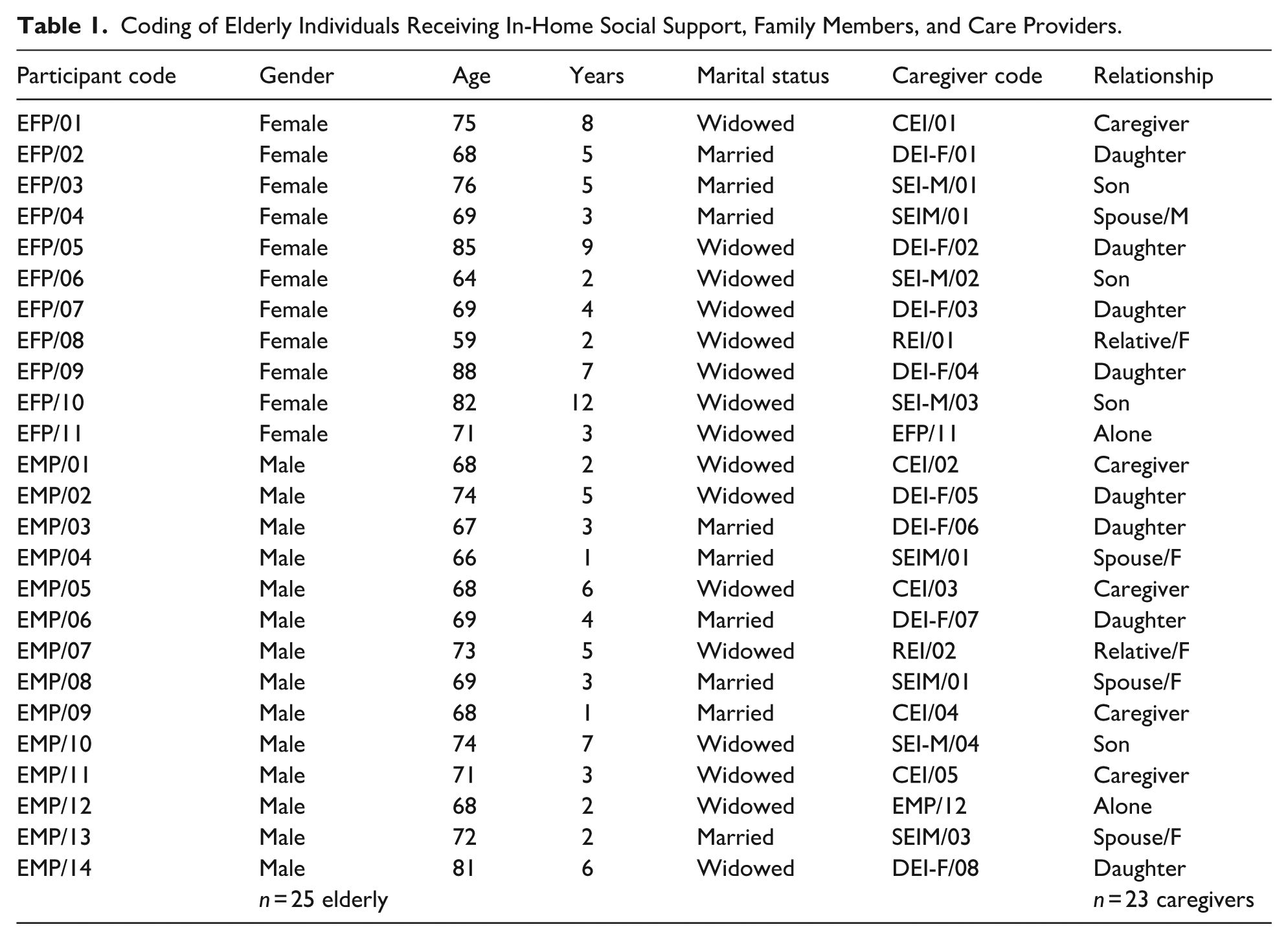
Coding of Elderly Individuals Receiving In-Home Social Support Services, Family Members, Caregivers, and Service Professionals.

Note. All 63 participants provided complete data. No missing data were reported for the variables included in the analysis.
Data Collection Process
The data collection process commenced after obtaining ethical approval on June 10, 2024, and was conducted between July and October 2024 with the support of volunteer academics and graduate students affiliated with the GAV Academy and the International Association of University Scholars (UNİAD). Using purposive sampling, face-to-face interviews were conducted with 63 participants in Istanbul, Ankara, Izmir, and Adana, including 25 older adults, 23 family members, and 15 professionals.
Before the interviews, eligibility to receive social support services was confirmed through preliminary phone calls. Interviews were then scheduled and conducted in safe and preferred environments, typically within participants’ living spaces. Interviews with older adults and family members lasted approximately 60 min, whereas those with professionals lasted between 30 and 45 min.
After obtaining informed consent, all interviews were documented through audio recordings or detailed field notes. The data collection process was conducted according to ethical guidelines and methodological rigor, and continued until data saturation was achieved. All transcribed interviews were cross-checked at both the beginning and the end of the coding process to ensure consistency and analytical reliability (Campbell et al., 2013).
Data Coding
An interdisciplinary approach was adopted in this study, utilizing qualitative content analysis to ensure the objective interpretation of data categorized into main and sub-themes (Frodeman et al., 2017; Shava et al., 2021; Smith & Doe, 2018). The coding process was conducted using the MAXQDA 2024 qualitative data analysis software, which facilitated data preparation, theme identification, and model development (Derili, 2023). This process enabled the integration of knowledge from different disciplines and a holistic analysis of participants’ responses.
Table 2 presents the complete coding structure of all 63 participants. This table allows for a comparative examination of older adults receiving home-based social support services, their caregiving family members, and professionals’ delivery services based on the identified codes.
Data Analysis
Thematic analysis was employed to systematically organize and interpret the qualitative data. Using the MAXQDA 2024 software processes such as transcription, coding, and categorization were conducted, and both main and sub-themes were identified to develop a thematic model (Derili, 2023; MAXQDA, 2021). The resulting data were structured through a systematic analytical process supported by tables, charts, and visual representations to generate meaningful findings in response to the research questions. This analytical phase was rigorously conducted to ensure the reliability and validity of qualitative analysis. To minimize potential bias, data coding was independently reviewed by two researchers, and discrepancies were resolved through consensus. In addition, reflexive notes were maintained throughout the process to enhance transparency and critically examine how researcher presence or phrasing might have influenced participants’ responses. To further reduce interviewer bias, all interviews were conducted by trained researchers using a standardized semi-structured interview guide.
Results
Demographic Characteristics
As presented in Table 1, the interviews were conducted with 25 older adults (11 women and 14 men). The age range of female participants was 59 to 88 years, with a mean age of 73.27. The duration of home-based social support services ranged from 2 to 12 years. Male participants were between 66 and 81 years old, with a mean age of 70.77, and had been receiving services for durations ranging from 1 to 7 years.
Among the older adult participants, 2 lived alone, while the remaining 23 received support from family members or caregivers. Of the 23 individuals providing care, 8 were daughters, 4 were sons, 4 were spouses, 5 were female paid caregivers, and 2 were female relatives.
The study was conducted in four major cities: Istanbul, Ankara, Izmir, and Adana, with an even distribution of participants across these urban areas. A total of 25 older adults participated in the study: 14 males (56%) and 11 females (44%). The city-based distribution was as follows: 8 participants (32%) from Istanbul, 6 (24%) from Ankara, 6 (24%) from Izmir, and 5 (20%) from Adana. Male and female participants were evenly distributed across four cities. This distribution reflects the study’s aim to ensure diversity in terms of both gender and geographic representation as well as to capture a broad range of experiences among older adults utilizing home-based social support services.
Thematic Findings
In this study, the fundamental needs of older adults receiving home-based social support services were analyzed through thematic analysis within the framework of Maslow’s Hierarchy of Needs. Based on the qualitative data analysis conducted with MAXQDA 2024, the findings were categorized into five main themes:
Physiological/Biological Needs: Adequate nutrition, access to healthcare services, personal hygiene, and physical mobility.
Safety Needs: Financial security, health-related safety, social support networks, and environmental safety.
Love and Belonging Needs: Family and community-based social support, participation in social life, and spiritual and cultural interaction.
Esteem Needs: Recognition of personal life experiences, involvement in decision-making processes, and support for maintaining social roles.
Self-Actualization Needs: Engagement in productive activities, encouragement of personal interests, and active social participation.
Figures 1 and 2 illustrate how the diverse needs of older adults are addressed by various social support mechanisms. These findings emphasize the importance of comprehensive needs-based social service interventions to enhance the well-being of older adults (Frodeman et al., 2017; Smith & Doe, 2018).
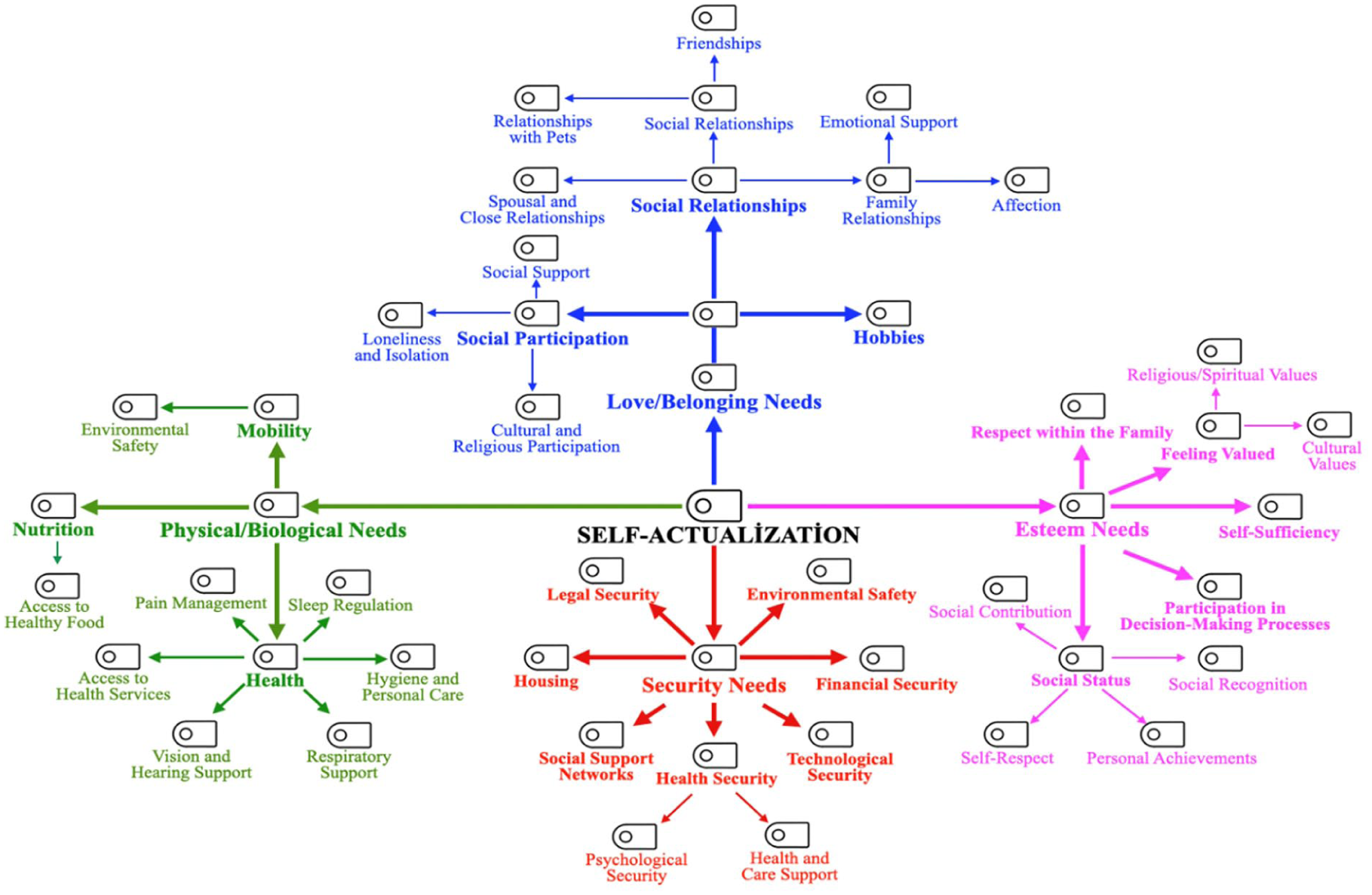
Needs of older adults according to Maslow’s Hierarchy of Human Needs (Created by the author).
Quotations Within Themes and Subthemes
The findings of this study were interpreted through a gerontological social work lens and framed within Maslow’s hierarchy of needs. The need categories identified through thematic analysis are illustrated in Figures 2 and 3 presents a conceptual model of older adults’ self-actualization needs.

Thematic analysis of older adults receiving home-based social support services within the context of gerontological social work based on Maslow’s Theory (created by the author).
In this context, older adults’ needs, classified as physiological/biological, safety, love and belonging, esteem, and self-actualization, were examined in alignment with Maslow’s framework using thematic analysis. The themes were supported by participant codes and illustrative quotations, reinforcing the importance of needs-based social service interventions in promoting older adults’ well-being.
The thematic analysis identified five major themes corresponding to Maslow’s hierarchy of needs. These themes and their respective sub-themes are summarized in Table 3, followed by detailed narrative findings and illustrative quotations.
Thematic Summary of Participants’ Responses Within Maslow’s Hierarchy of Needs.
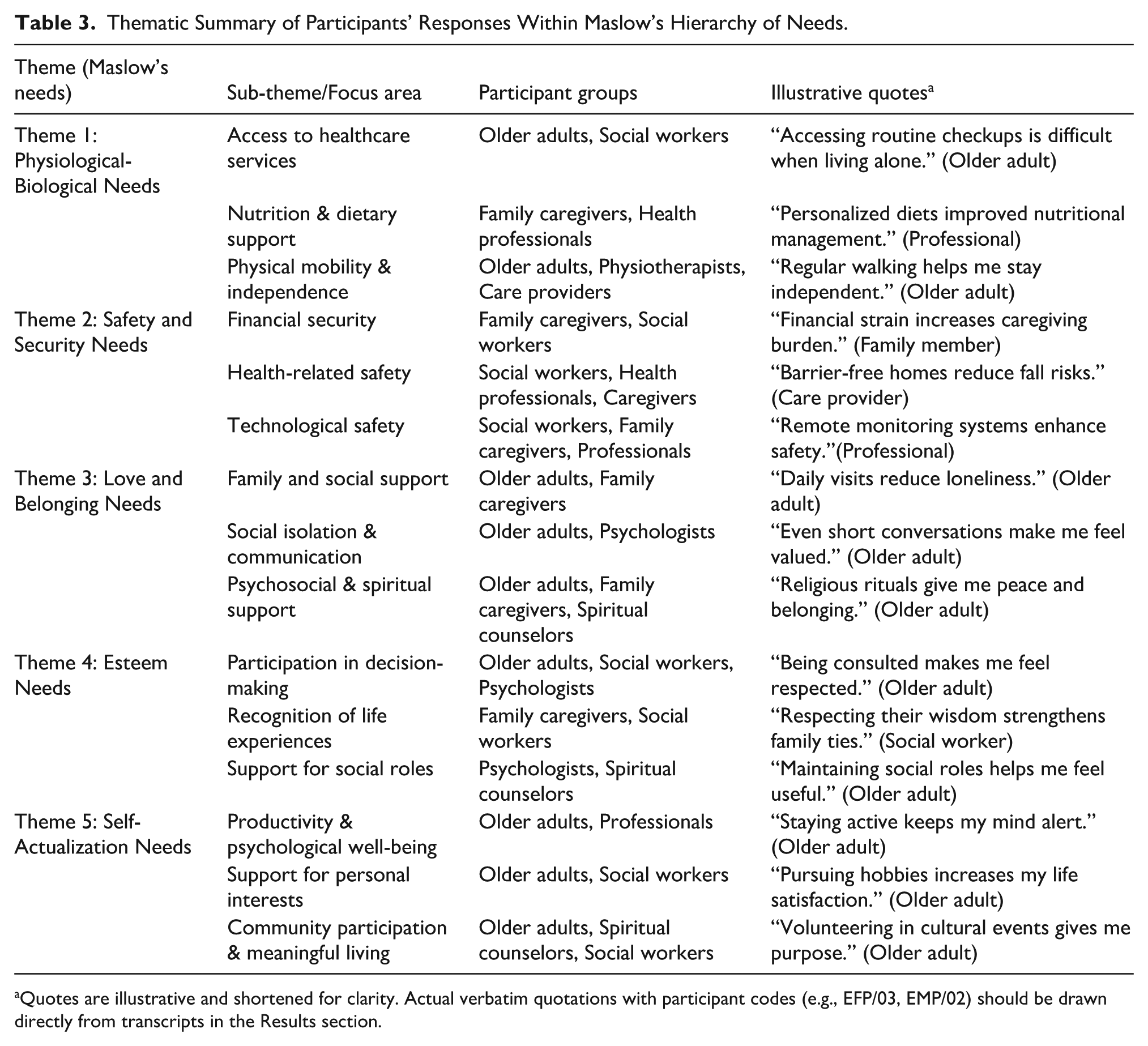
Quotes are illustrative and shortened for clarity. Actual verbatim quotations with participant codes (e.g., EFP/03, EMP/02) should be drawn directly from transcripts in the Results section.
Theme 1: Physiological/Biological Needs
As summarized in Table 3, participants emphasized the importance of access to healthcare services, nutrition, and physical mobility. These aspects were consistently linked to maintaining independence and enhancing overall well-being.
Access to healthcare services has been identified as a critical factor for maintaining a healthy lifestyle. Older adults living alone reported difficulties in accessing routine health checkups. Social workers emphasized that expanding home-based healthcare services supports independent living and enhances overall QoL by promoting age-friendly care systems.
Healthy nutrition has emerged as another key aspect of managing chronic illnesses and improving general well-being. Healthcare professionals noted that access to personalized dietary planning significantly improved nutritional management in older adults. Family members stated that community-based inclusive nutrition policies contribute to the maintenance of healthy eating habits and support a better QoL.
Physical mobility has also been highlighted as a core component of physiological well-being. A physiotherapist recommended encouraging regular walking, light-resistance training, and balance exercises to improve mobility and strengthen independence among older adults. Social workers and care providers noted that physical activity not only improves muscle strength and reduces fall risk but also enhances daily living safety. Additionally, several older participants reported that regular walking had a noticeably positive impact on their QoL. These findings resonate with prior evidence highlighting the critical role of nutrition and physical activity in promoting healthy aging and independence (WHO, 2015; Berkman & Syme, 2017; Costa-Cordella et al., 2021).
Theme 2. Safety and Security Needs
Table 3 illustrates that financial security, health-related safety, and technological support were perceived as essential for reducing risks and supporting independent living. Participants highlighted both economic and environmental dimensions of safety.
Financial security was identified as a critical factor for sustaining independent living. Family members noted that financial insecurity increased the burden of care and created additional economic strain. Social workers emphasized the need to expand social assistance programs and strengthen financial support mechanisms to reduce economic vulnerability among older adults.
Health-related safety is a major concern. Social workers and healthcare professionals indicated that regular health monitoring and early interventions significantly contributed to better QoL. Family caregivers and professional care providers reported that adapting living spaces to be barrier-free reduced fall and injury risks and promoted older adults’ independence. Additionally, multiple service providers emphasized that accessible environments improve the safety of daily activities. The emphasis on financial and environmental safety is consistent with prior studies showing that age-friendly environments and secure care systems significantly reduce vulnerability among older adults (Borgstrom, 2017; Taylor, 2008; WHO, 2020).
Technological safety has emerged as a significant sub-theme. Social workers and healthcare professionals highlighted that access to medical devices and assistive technologies is crucial to safety. Tools such as remote patient monitoring systems and emergency alert devices have been noted to support independent living and improve access to healthcare services. Family members and a professional caregiver stressed the importance of expanding technological support systems to reduce health risks and enhance safety.
Theme 3. Love and Belonging Needs
As presented in Table 3, love and belonging needs were strongly associated with family ties, social interaction, and spiritual support. Participants emphasized the protective effect of family engagement and cultural or religious practices against loneliness.
Family and social support play critical roles in reducing feelings of loneliness and enhancing the psychological well-being of older adults. Participants reported that spending time with family members helped mitigate emotional distress and fostered a sense of connection. However, individuals living alone or cared for solely by their spouses expressed increased feelings of loneliness when they lacked regular contact with other family members. Family members who provided daily care stated that such support helped maintain older adults’ independence while strengthening intergenerational bonds. Experts also emphasized that emotional and social engagement within families contributed significantly to happiness and well-being. Additionally, social workers and family members highlighted that expanding home-based healthcare services supports independent living and helps alleviate caregiver burden.
Social isolation was identified as a risk factor that can be mitigated through family and community support. Social workers and psychologists stressed the importance of social interactions in protecting older adults from isolation. Participants noted that regular visits from family and neighbors improved psychological well-being and reduced feelings of disconnection. For those who were homebound, even brief conversations were described as uplifting, and communication through telecommunication tools or social media made them feel valued and connected.
Psychosocial and spiritual support have emerged as essential factors. Psychologists and spiritual counselors emphasized that religious and cultural activities strengthen the sense of belonging by enhancing social interaction. Many older participants reported a decrease in feelings of loneliness and an improvement in spiritual well-being when engaged in such activities. Family members noted that supporting older adults in practicing religious or spiritual rituals contributed to their sense of belonging and made them feel happier and safer (Andersen et al., 2023; Costa-Cordella et al., 2021; Ursoleo, Cali et al., 2025). Additionally, both psychologists and spiritual counselors affirmed that the support provided by families and professionals goes beyond physical care and includes a moral and spiritual dimension that plays a vital role in enhancing psychosocial well-being. The centrality of family and spiritual ties to belonging echoes prior work that emphasizes how social and cultural bonds buffer against loneliness and foster well-being in later life (Andersen et al., 2023; Berkman & Syme, 2017; Ursoleo, Cali et al., 2025).
Theme 4. Esteem Needs
Table 3 shows that esteem needs were reflected in participants’ desire for involvement in decision-making, recognition of life experiences, and opportunities to sustain social roles. These aspects were seen as vital for maintaining dignity and respect in later life.
Participation in decision-making processes has been reported to have a significant impact on older adults’ sense of self-worth. Several older adults shared that consultations with family members made them feel important and valued. Social workers and psychologists emphasized that involvement in decision-making contributes to emotional empowerment and enhances psychosocial well-being in later life.
Social workers noted that when family members valued the opinions and experiences of older adults, they strengthened family bonds and made them feel respected and appreciated. Support for social roles was identified as an important factor. Psychologists and spiritual counselors observed that maintaining or encouraging social roles enables older adults to feel useful and supports their active engagement in society. Respect and inclusion in decision-making are widely recognized as essential to dignity in later life, aligning with previous literature on recognition, psychosocial well-being, and participatory care (Costa-Cordella et al., 2021; Taylor, 2008; Ursoleo, Bottussi, Epstein et al., 2025).
Theme 5. Self-Actualization Needs
As summarized in Table 3, self-actualization needs were expressed through productivity, personal interests, and community participation. These opportunities supported older adults’ sense of purpose, psychological well-being, and meaningful living.
Productivity and psychological well-being were frequently mentioned by participants as essential for maintaining a sense of purpose and vitality. Older adults reported that engaging in productive activities enhanced mental alertness and helped them feel valued. Simple daily tasks such as reading or watching television were also reported to reduce feelings of loneliness and increase life energy. Psychologists emphasized that staying active and productive supports mental health and reduces the symptoms of depression and isolation. Social workers noted that social programs and community-based activities help promote engagement with personal interests and enhance productivity. Spiritual counselors stated that participation in religious and cultural practices contributes to a more meaningful outlook on life and strengthens psychological resilience.
Support for personal interests was also emphasized by the participants. Older adults shared that spending time on activities they enjoyed increased happiness and satisfaction. They noted that learning new things and staying productive contributed to cognitive vitality. Social workers stressed that encouraging older adults to pursue their interests supports mental health and enhances life satisfaction through sustained engagement.
Community participation and meaningful living have emerged as key pathways for self-actualization. Spiritual counselors highlighted that involvement in community projects, volunteer work, and religious or cultural events fosters social bonding, strengthens a sense of belonging, and contributes to a meaningful life. Social workers added that creating opportunities for intergenerational interaction and civic engagement supports older adults’ self-actualization processes. Furthermore, psychosocial counselors and spiritual guides noted that drawing upon older adults’ knowledge and life experiences can provide inner peace and a sense of fulfillment. Opportunities for productivity and community engagement as pathways to self-actualization are consistent with international evidence on active aging and social participation as drivers of meaningful living (WHO, 2015; Andersen et al., 2023; Borgstrom, 2017).
Discussion
Guided by Maslow’s hierarchy, we interpret our findings within a needs-based framework in which the fulfillment of foundational needs is a precondition for psychosocial well-being (Ihensekhien & Arimie, 2023; Şengöz, 2022). In a complementary philosophical tradition, Avicenna (Ibn Sina), a Persian philosopher-physician, emphasizes that meeting natural human needs is integral to a meaningful life (Nasr, 2017). Consistent with this perspective, prior research indicates that home-based social support services can strengthen both physical and psychosocial outcomes in later life, whereas social isolation, functional decline, and limited engagement undermine well-being and therefore require comprehensive, multi-level interventions (Berkman & Syme, 2017; Kalınkara & Kalaycı, 2017; Nicholson, 2012; Rosso et al., 2013). Our results align with and extend this literature by showing how these processes unfold across physiological, safety, belonging, esteem, and self-actualization domains in the context of home-based support.
From a gerontological social work perspective, care for older adults must be conceived as multidimensional, extending beyond biomedical concerns to encompass physical, psychological, and social dimensions through person-centered interventions (Ray et al., 2015). Our findings corroborate this view: well-being in later life is shaped not only by individual characteristics but also by the strength of family, community, and institutional support systems (Andersen et al., 2023; Çoban, 2021; Li et al., 2023). This highlights the importance of designing interventions that integrate professional care with familial and community resources, thereby creating more sustainable models of support.
Home-based social support services should move beyond physical assistance to embrace holistic approaches that foster social participation, strengthen psychosocial well-being, and ultimately enhance QoL (Acoba, 2024). Building on this holistic orientation, our analysis further demonstrates how foundational physiological and safety needs provide the basis for addressing higher-order psychosocial and spiritual dimensions of well-being. This perspective affirms the interdependence of needs categories and underscores the necessity of comprehensive frameworks that can adapt to the evolving priorities of older adults.
The role of physiological and safety needs in well-being is particularly noteworthy. Maslow’s hierarchy suggests that higher-level psychosocial needs cannot be fulfilled unless basic physiological and safety needs are first secured (Ihensekhien & Arimie, 2023; Walsh, 2011). This underscores the necessity for social services aimed at older adults to move beyond addressing physiological concerns in isolation. Technological support systems such as remote monitoring devices have been shown to improve the safety of older adults and facilitate access to healthcare services (Li et al., 2023; Acoba, 2024). Holistic, safety-enhancing interventions are thus indispensable for promoting independence and reducing vulnerability among older populations (Berkman & Syme, 2017). Many governments are shifting toward developing home-based care as an alternative to institutional models, a trend that reflects older adults’ preference to age in place while also improving cost-effectiveness in service delivery (Kesgin, 2018).
Strengthening the sense of social belonging among older adults is also critical for sustaining psychosocial well-being. Prior studies have identified reduced social isolation, prevention of loneliness, and reinforcement of belonging as essential needs, while highlighting the positive role of strong social ties in fostering resilience (Borgstrom, 2017; Taylor, 2008). In this light, home-based care services should incorporate frameworks that actively promote social connectedness (Berkman & Syme, 2017). The sustainability of social service mechanisms and their alignment with community integration further play a pivotal role in enhancing the QoL of older adults (Berkman & Syme, 2017; Kalınkara & Kalaycı, 2017). Together, these findings reinforce the importance of embedding belonging-oriented practices into long-term care strategies.
The need for esteem is closely tied to maintaining self-respect and fulfilling meaningful social roles (Ihensekhien & Arimie, 2023; Maslow, 2015). Our findings indicate that the active involvement of older adults in decision-making processes fosters psychosocial empowerment. This resonates with Schunk and DiBenedetto’s (2020) emphasis on recognition and perceived competence as essential to developmental outcomes. Accordingly, social service interventions must value older adults’ knowledge and life experience while fostering their active participation. Within the context of chronic and life-limiting illness, strengthening Prognostic Awareness (PA) facilitates Shared Decision-Making (SDM) and helps families remain engaged in care processes. Recent evidence suggests that deepened PA not only benefits patients but also enhances hope and psychosocial well-being among caregivers (Ursoleo, Bottussi, Epstein et al., 2025). In this sense, family participation in home-based support services should extend beyond emotional reassurance to include active roles in care planning, thereby strengthening resilience and perceived QoL for both patients and caregivers.
Finally, productivity and self-actualization emerge as vital dimensions of later-life well-being. Engaging older adults in productive activities that build upon past experiences enhances self-esteem, independence, and psychological health (Nicholson, 2012; Rosso et al., 2013; Stathers, 2017). Active aging policies reinforce this by encouraging social roles aligned with life skills and prior expertise (Rosso et al., 2013). Volunteering and community participation further serve as pathways to reduce depressive symptoms, increase self-efficacy, and strengthen belonging (Berkman & Syme, 2017; Ihensekhien & Arimie, 2023; Maslow, 2015). Embedding these opportunities within gerontological social services provides sustainable models that promote both individual well-being and social inclusion. This study contributes to the literature by underscoring the importance of enabling older adults to assume active, meaningful roles that reinforce dignity, purpose, and self-actualization within social service processes.
Limitations
This study has certain limitations. The sample was drawn from four metropolitan cities in Turkey (Istanbul, Ankara, Izmir, and Adana), selected because they reflect diverse socio-economic and cultural contexts and incorporate structural features that are broadly representative of other urban regions. Nevertheless, the focus on large metropolitan settings may limit the transferability of findings to rural areas or provinces with different demographic and service characteristics. In addition, older adults with severe health problems were excluded, which may have restricted insights into the experiences of the most vulnerable subgroups, who might otherwise have reported greater unmet needs.
As with many qualitative studies, responses may also have been influenced by social desirability bias, which could have led some participants to overemphasize positive experiences with family support or underreport difficulties, thereby shaping the overall representation of well-being. In addition, participants’ responses may have been influenced by interviewer bias, despite efforts to minimize this effect through the use of standardized interview procedures and reflexive practices; this may have limited the openness with which sensitive topics such as loneliness or spiritual needs were discussed. Finally, while the findings are context-specific, they may be transferable to other socio-cultural settings with similar demographic and service characteristics but are not statistically generalizable. Future studies should also consider rural contexts and frailer populations to enhance external validity.
Conclusion
This study underscores the importance of adopting person-centered and holistic approaches in the delivery of home-based social support services, emphasizing the multidimensional needs of older adults. The findings demonstrate that physical care alone is insufficient; psychological support, social connectedness, productivity, and participation in decision-making processes also exert a direct influence on QoL in later adulthood.
To promote well-being and healthy aging, social services must be both supportive and empowering, enabling older adults to sustain their social roles, preserve independence, and derive meaning from their lives. Service models that reduce social isolation, foster community engagement, and encourage productivity are particularly valuable in enhancing resilience and life satisfaction.
Accordingly, social service policies should extend beyond individualized care and be restructured to strengthen meaningful relationships and ensure active participation in society. Home-based care services should not be limited to meeting basic needs but should also aim to enhance the psychosocial and spiritual well-being of older adults.
In conclusion, there is a pressing need to design participatory, inclusive, and sustainable social service models that not only respond to the diverse socioeconomic and cultural contexts of older adults but also empower them to remain active agents in their own care. By aligning policy and practice with these principles, societies can move toward a more just and supportive framework for aging. This framework values dignity, fosters resilience, and promotes meaningful engagement throughout later life.
Supplemental Material
sj-doc-1-ggm-10.1177_30495334251387500 – Supplemental material for Home-Based Social Support Services for Elderly Well-Being: A Qualitative Study From a Gerontological Social Work Perspective
Supplemental material, sj-doc-1-ggm-10.1177_30495334251387500 for Home-Based Social Support Services for Elderly Well-Being: A Qualitative Study From a Gerontological Social Work Perspective by Mehmet Gedik in Sage Open Aging
Supplemental Material
sj-jpg-2-ggm-10.1177_30495334251387500 – Supplemental material for Home-Based Social Support Services for Elderly Well-Being: A Qualitative Study From a Gerontological Social Work Perspective
Supplemental material, sj-jpg-2-ggm-10.1177_30495334251387500 for Home-Based Social Support Services for Elderly Well-Being: A Qualitative Study From a Gerontological Social Work Perspective by Mehmet Gedik in Sage Open Aging
Footnotes
Acknowledgements
I would like to express my sincere gratitude to the Educational Support Department of Hasene International e.V. for their indirect support during the data collection process. I also extend my thanks to the Migration Research Foundation (GAV Academy) and the International Association of University Students and Academics (UNIAD) for their valuable assistance in facilitating access to participants during fieldwork. I am deeply grateful to all individuals who participated in the semi-structured interviews and generously shared their experiences and insights. I would like to extend special thanks to Dr. Sena Öksüz and Clinical Psychologist Dr. Merve Dalmaz for their significant contributions to the data analysis process. I am also thankful to the undergraduate and postgraduate students who supported the implementation of the fieldwork. All these valuable contributions played a crucial role in the successful completion of this research. I sincerely wish continued success to all individuals and institutions who contributed to this study in their academic endeavors.

Ethical Considerations
Participants were provided with written assurances that the Law would protect their privacy and personal data on the Protection of Personal Data (No. 6698) and relevant regulations, that no harm would come to them, and that all necessary precautions and responsibilities would be observed with utmost care (Republic of Türkiye, Presidency of the Legislation Information System (TC-MBS, 2016)). Semi-structured interview questions directed toward older adults, their family members, and professionals providing home-based support/care services were reviewed and approved by the Ethics Committee of Istanbul Sabahattin Zaim University on June 10, 2024 (Approval No: E-20292139-050.04-240002116).
Consent to Participate
All participants were provided with written information stating that their participation was voluntary, that their privacy would be protected, and that the Law would secure their data on the Protection of Personal Data (No. 6698) and other relevant regulations.
Author Contributions
The present study was conducted by a Mehmet Gedik. The author was responsible for the development of the conceptual framework, research design, literature review, data collection, data analysis, interpretation of findings, and manuscript preparation. Voluntary support was obtained from the research team during the data collection. The experts in the field provided critical feedback and evaluations.
Funding
The author received no financial support for the research, authorship, and/or publication of this article.
Declaration of Conflicting Interests
The author declared no potential conflicts of interest with respect to the research, authorship, and/or publication of this article.
Data Availability Statement
Owing to ethical considerations and the protection of personal data under the Law on the Protection of Personal Data (No. 6698), a substantial portion of the data supporting this study’s findings is not publicly available. However, anonymized data files (including selected excerpts from Excel, Word documents, and MAXQDA outputs) may be made available to qualified researchers upon reasonable request via the corresponding author’s email, following the participants’ informed consent and ethical approval protocols.
Data Confidentiality and Access Restrictions
Due to confidentiality agreements and ethical approval requirements, the data used in this study cannot be made publicly available. However, portions of the dataset (e.g., Excel files, Word documents, and MAXQDA outputs) may be shared with researchers upon reasonable request and by ethical guidelines.
Supplemental Material
Supplemental material for this article is available online.
References
Supplementary Material
Please find the following supplemental material available below.
For Open Access articles published under a Creative Commons License, all supplemental material carries the same license as the article it is associated with.
For non-Open Access articles published, all supplemental material carries a non-exclusive license, and permission requests for re-use of supplemental material or any part of supplemental material shall be sent directly to the copyright owner as specified in the copyright notice associated with the article.

