




Abstract
Tea binds Assam with the rest of the country. With the discovery of tea plants in 1823, the state emerged as a place of immense significance on the global map, opening wide avenues for direct and indirect employment. However, the tea industry of Assam underwent some significant transformation, especially with the growth of the small tea growers (STGs). The quality of the green leaf produced by the STGs was a concern. Also, to ensure production at a fair price, the Guwahati Tea Auction Centre (GTAC) was formed where registered buyers, sellers and brokers meet for trading. The GTAC was expected to also provide support to the STGs and train them to produce better quality tea. However, several issues have emerged with the functioning of the GTAC which needed urgent attention. This management case is an attempt to provide a roadmap for the effective functioning of the GTAC which could also ensure the sustainable livelihood of the STGs.
Introduction
‘What a delectable cup of tea it was at GTAC!’ exclaimed an English tourist who visited Assam and Guwahati Tea Auction Centre (GTAC) in the winter of 2021, sharing his experience with a fellow Indian traveller at the Guwahati International Airport. A Tea Lounge in the GTAC surroundings was very appealing to tea tourists. Sharing those instances of his stay in the tea garden bungalow, the tourist narrated to his fellow traveller that the next time when he bought ‘Assam Tea’ at his favourite departmental store in London, he would recall his moment halt at the GTAC.
Assam, a state in Northeast India, is a land of rich flora and fauna, the largest in terms of population, which is 3.12 crore per the Census 2011, and the second largest in terms of area which is 78,438 square kilometres. As an important trading link with Southeast Asian countries, Assam comprises two UNESCO World Heritage sites—the Kaziranga National Park and the Manas Wildlife Sanctuary. The state further has a rich reserve of mineral resources such as petroleum, limestone and natural gas. In addition, Assam is well known for its tea production. The discovery of the Assam variety of the tea plant (Camellia sinensis) in 1823 revolutionized the world tea trade, and Assam has since experienced 200 glorious years of the tea industry. Not only the demographics, but it has changed the economic, social and political life of the people in the region. Assam earns a revenue of ₹5,000 crore annually as agricultural income. The Assam tea industry provides daily employment to six lakh people. With approximately 845 tea gardens spread over 2,32,079 hectares of land, producing an annualized yield of 4,32,430 tonnes, the state accounts for a significant 55% of the total tea production in the country (Rai, 2022).
Twenty-five of thirty-three districts in Assam are directly dependent on this industry and are responsible for providing 25 lakhs direct and 10 lakhs indirect employment. The tea industry of Assam has been contributing significantly to the government exchequer with approximately 17% of the total revenue being generated from this sector (Bhuyan et al., 2023). Celebrating 50 years of its glorious existence on the 25th of September 2020, and quite conveniently located in a prime location in Guwahati (the gateway to the Northeastern states) just adjacent to the State Secretariat, the GTAC which was established on the 25th of September 1970, is the second-largest auction centre for Curl-Tear-Cut (CTC) tea in the world with a well-spread office and recreational space for the members. The auction space is quite big in size and sprawled around 20,000 square feet. GTAC has four sets of stakeholders and eight registered brokers. The sellers (or mark owners), the brokers, the buyers and the warehouses are the stakeholders of GTAC. However, tea gardens and small tea growers (STGs) are not registered as such, though their marks (brand name with codes) are registered. One brand may be produced in several tea estates. In an average year, there are about 1,500 marks. The tourists expected the hits of the hammer, which could not be heard due to the turnaround e-auctioning system.
The Legacy
The year was 1837. The first organized auction centre for tea was established in London, which was then under the absolute control of the East India Company. Two years later, on the 10th day of January 1839, the first consignment of Assam tea reached the London auction centre for trading. The tea industry of India can be largely attributed to the large-scale production of green leaves in Assam during the Colonial rule at the beginning of the nineteenth century. Further, the establishment of a tea garden at Chabua in Upper Assam in 1837 by the colonial rulers and its commercialization in the region in 1840, witnessed the dawn of the Assam Tea Company. The erstwhile USSR was a major importer of Assam tea and such was its significance that a wide network of customers from Russia, Kazakhstan, Georgia, Ukraine and Azerbaijan preferred Assam tea over any other tea-producing state which was also a major source of foreign revenue for the country. Since India had an absolute advantage over tea production through Assam, it could afford a rupee-rouble agreement; that facilitated the import of sophisticated defence weapons from the erstwhile Soviet Union. In the later years, the emergence of several players such as Sri Lanka and Kenya provided stiff competition and the tea industry has witnessed ups and downs over the years, and as has Assam tea.
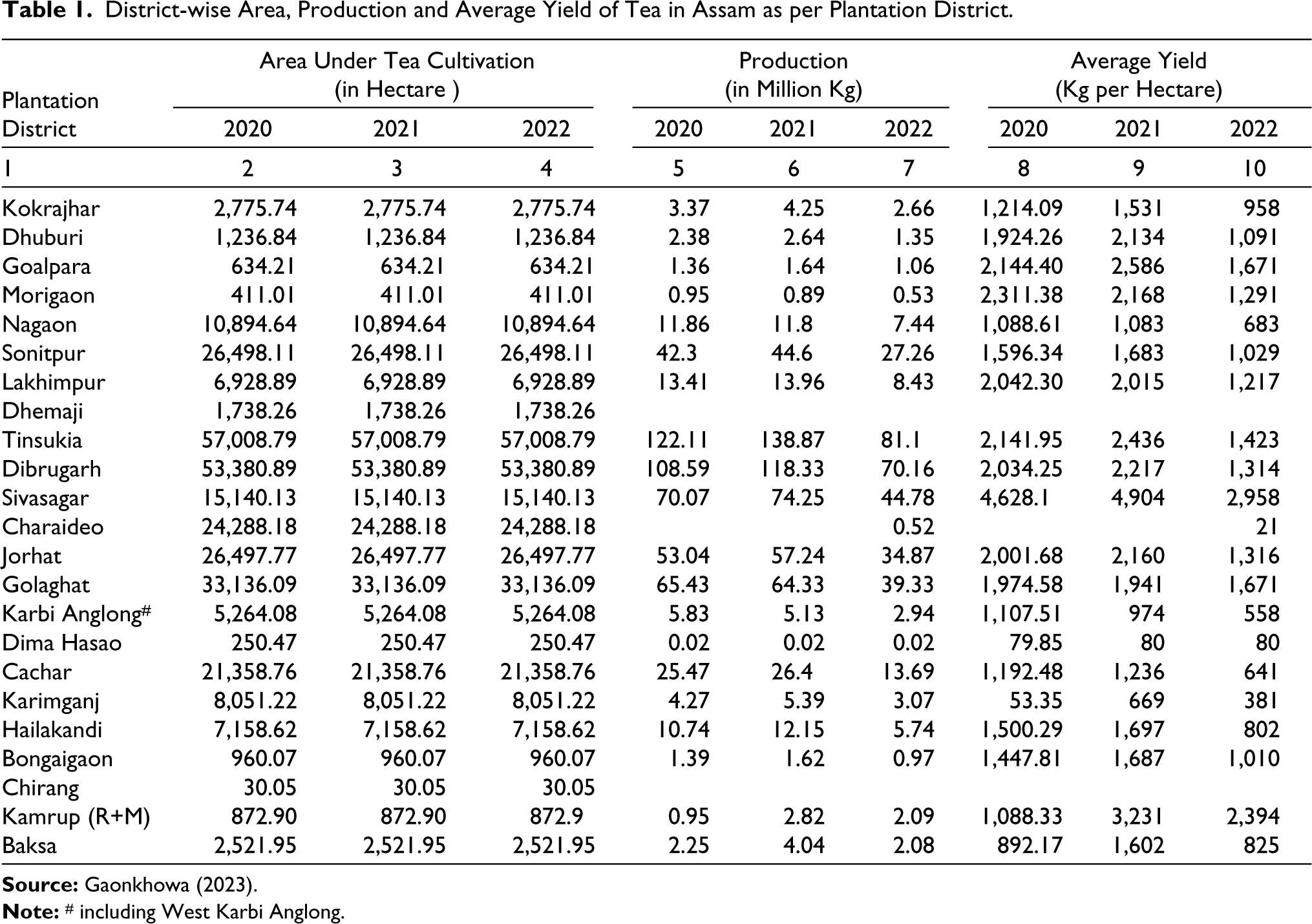
Table 1 indicates the break-up of production and the average yield of tea in Assam as per the plantation districts for the years 2020, 2021 and 2022.
District-wise Area, Production and Average Yield of Tea in Assam as per Plantation District.
Socio-economic Factors of Tea Labourers of Assam
Being a labour-intensive and seasonal industry, the labourers are employed during peak seasons between July and August and October and November, and during the idle period, the labourers may be engaged in other operations as and when required. Women labourers are mostly engaged in the plucking of tea leaves, which requires significant dexterity. In spite of their long duration of working hours and untiring efforts in the tea garden, these contractual labourers are not entitled to the benefits and allowances as their permanent counterparts. A daily wage of below ₹200 per day provided to the labourers is not sufficient for maintaining a minimum standard of living. Moreover, gender-wise discrimination in the distribution of wages (with 88.23% of male labourers earning below ₹200, compared to 11.77% of their female counterparts) further leads to lack of motivation (Devi, 2022). In several earlier studies that were conducted on tea tribes of Assam, it was found that non-availability of proper drinking water and sanitation, early marriage, superstitious beliefs, lack of proper accommodation facilities, education and healthcare services, electricity supplies, malnutrition, and so on are some of the socio-economic indicators that determine the status of tea labourers, which in turn affect their productivity. The uncontrolled use of chemicals in tea factories is responsible for unsafe drinking water in tea gardens, which significantly affects the health of the labourers. Moreover, female workers are prone to severe health issues due to improper sanitation facilities. A sense of social unrest within the members of the community is also a cause for their pathetic condition. Inter-community violence is a major issue that hampers the rational thinking process of the labourers. Such issues may be a cause for low levels of production. If productivity needs to be enhanced, the above issues require critical investigation.
It is seen that there are members of the community who are elected as representatives of the government. Thes members should raise the issue of labour welfare and stand for the upliftment of their economic conditions. Furthermore, social organizations and NGOs should make an effort to generate awareness about the rights and privileges of tea labourers as outlined in the Plantations Labour Act of 1951. In addition, the management should empathetically look into minimizing the issues of the tea labourers so that they can be provided a better standard of living by encouraging primary education to the children of the tea community, assisting financially the meritorious children with higher education, providing emergency medical facilities within proximity, skill-based training to the women labourers, educating them to keep their surroundings clean, and providing better sanitation and water facilities.
Industry Issues
Organizations such as the North Eastern Tea Association (NETA), Assam Branch Indian Tea Association (ABITA) and Indian Tea Association (ITA) have indicated that the tea industry of Assam is facing various issues and challenges that have severely affected its functioning. A few of those are indicated:
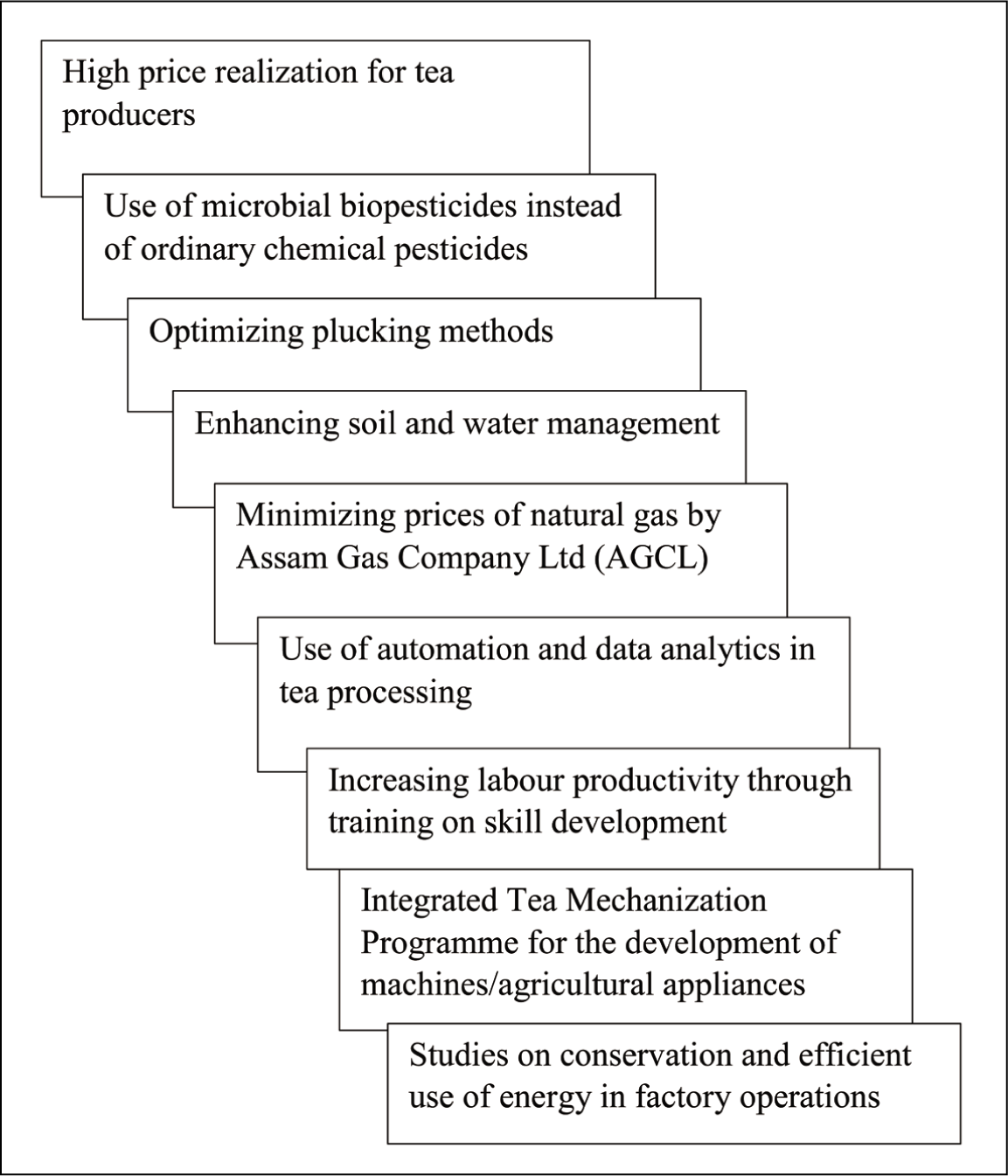
Productivity: Assam has been able to produce ₹1,700 kg per hectare of tea as against 2,500 kg in Sri Lanka and 3,000 kg in Kenya. Per hectare productivity and increased cost of production is a concern. Considered the Tea Capital of India, Assam is blessed with suitable climatic conditions and favourable soil quality for tea cultivation. However, ironically, the traditional method of plantation is still relevant in most tea gardens. Awareness and training on modern methods of tea culture in the existing plantations shall improve the productivity level of Assam tea. In addition, the growing unrest among the members of the tea tribes, their pathetic living conditions, and the inability to expand the area under cultivation (as evident from Table 1), poor drainage have contributed to a considerable decline in productivity or led to poor quality of output. Further, the rise in input costs has a negative effect on profitability as well. However, productivity may be enhanced through the effective implementation of the methods mentioned in Figure 1.
Replantation: The ageing of tea bushes is a matter of concern behind the low productivity. Most of the tea gardens of Assam date back to the colonial era. Industry observers view that tea bushes achieve their maturity in terms of production of the final output within 5–30 years. As indicated by early researchers, 29% of tea bushes were over 50 years old in Assam against the all-India figure of 35% which is significant in the low productivity of the green leaf (Bhowmik, 2002 cited in Mishra et al., 2008). Therefore, there is a requirement for replantation and replacement of the bushes to boost the production level. Irrigation: The absence of proper irrigation facilities has threatened the survival of the tea bushes in Assam which is highly dependent on rainfall. Weather condition: The unpredictable weather conditions have witnessed a decline in the overall productivity of the green leaf in Assam, from 79.24 million kg in the year 2020 to an estimated 63.39 million kg in 2021. The adverse climatic conditions induced a decline in the yield, and an easy breeding ground for pests has a negative effect on the industry. An Integrated Programme on Climate Change (IPCC) for assessing the impact of climate change on tea could help mitigating the issue of uncertain climatic conditions. Branding: Further, inadequate marketing of Assam tea has affected generating mass awareness. Lack of local branding and packaging has also contributed to the loss. According to the Union Minister for Ports, Shipping and Waterways & AYUSH, Sarbananda Sonowal (2024) felt that there is a need to enhance the marketing aspects of Assam tea through ‘tea value tea tourism’ as a component of ‘Heal in India, Heal by India’ propaganda of the Government of India. It was also suggested that tourists should be encouraged to travel within the premises of the tea gardens amidst nature so they can experience a sense of freshness and enjoy exploring the actual art of living. Lack of ethical practices: There is a lack of ethical practices among the suppliers. That also has affected its quality. Stringent rules of labelling in developed markets, quality standards, maximum residual limits, food safety and ethical practices are the major non-tariff barriers confronting exports of tea from India. Such issues have affected Assam tea as well. This downfall of Assam tea has led to a decline in its import by countries such as the United Kingdom, the United Arab Emirates and Pakistan which has significantly affected its Balance of Trade (BoT). The possible factors that have led to declining imports are indicated in Figure 2.
Tea Pricing: The prices of tea in GTAC have become stagnant over the years. Industry observers are of the view that most tea sellers prefer private channels as their favourite destination over auctions resulting in selling quality-oriented tea to private parties and the residual through the auction centre. According to industry experts (Mr Suneel Singh Sikand, Vice Chairman of the ITA, 2024), the prolonged phase of stagnation in the prices of Assam tea has led to a crisis among the producers. According to available data, the prices of Assam tea declined by ₹10 during the period 2023–2024 as compared to the period 2022–2023. Further, 46% of Assam CTC and dust teas have been sold below ₹200 per kg at the auctions in the current fiscal (up to 9th March 2024) which is much below the cost of production and suggested remunerative prices for tea producers in the light of rising inflation. Low-quality output: Another area of concern is that various factories are engaged in constant production of poor-quality tea through mixing, blending and reprocessing which has hampered the overall quality of the final output and resulted in substandard pricing for Assam tea. Severe pest problems also have hit production and are responsible for low-quality output. In an article entitled ‘Microbial Biopesticides: Prospects in Tea Industry’, Dr Pranaba Nanada Bhattacharyya (2024) indicated that the rapid growth of insect pests and pathogens affects tea farming which results in significant crop loss of up to 65%. Although chemical pesticides are widely used by tea growers, such chemicals may hamper the quality of tea by disturbing the vital physiological processes and also deteriorating the soil health which results in low-quality output. To enhance the quality production and sustainability of the tea bushes, they should be protected from weeds, pests and diseases through the application of non-chemical and modern biological approaches. The introduction of the advanced concept of Integrated Plant Protection (IPP) such as microbial biopesticides and Integrated Tea Quality Improvement Programme (ITQIP) for the standardization of factory operations to ensure the retention of quality of finished product can lead to the enhancement of tea cultivation in a smarter way by controlling the threat of pests and pathogens and ensuring the long-term sustainability of the green leaves. Assam tea originated during colonial rule. However, after independence, most of the tea gardens moved under the direct control of Indian businessmen who were novices in the area of tea production. In their quest for short-term profit, they had resorted to unskilled labour at minimum wages which was not sufficient to meet their minimum standard of livelihood. Being a labour-intensive industry, scientific knowledge and skills from the plantation stage up to the plucking of the tea leaves are essential of enhancement in productivity and improvement in quality. Labour shortage is another concern: The new generation is more interested in going outside the state (Delhi, Mumbai and Bengaluru) for a livelihood than working in the tea industry.
Suggestive Strategies for Improving Tea Productivity in Assam.
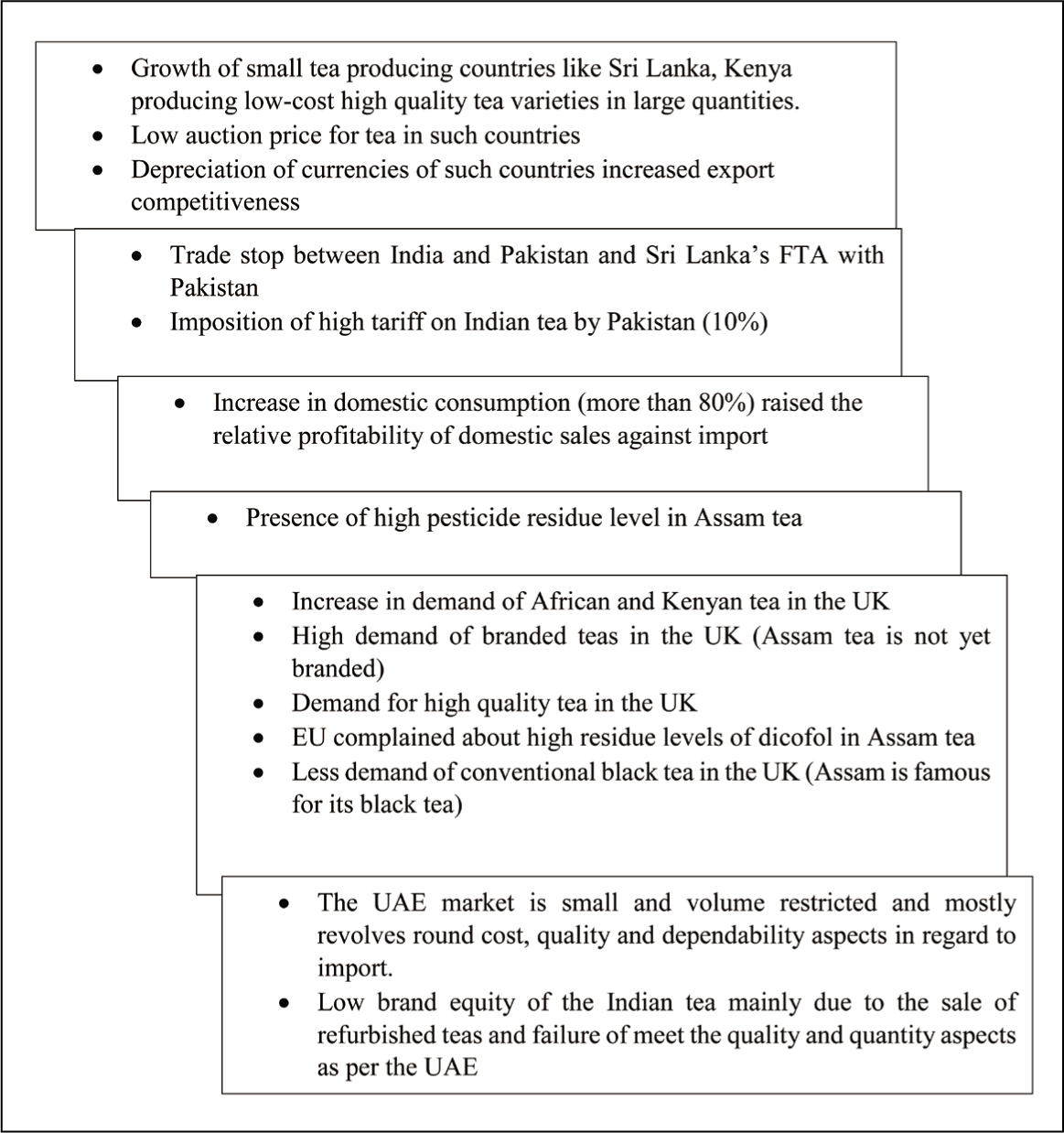
During the period from 1985 to 2003, the Assam tea industry was significantly disrupted due to the rise of extremism. Like various other industries, the COVID-19 pandemic has also affected the tea industry of Assam. A disruption in the process of plucking quality tea leaves had somewhat affected the production process which witnessed a steep rise in its price. However, the timely intervention of the Assam government to ensure the uninterrupted plucking of tea leaves and the production of quality tea prevented the industry from an otherwise major debacle.
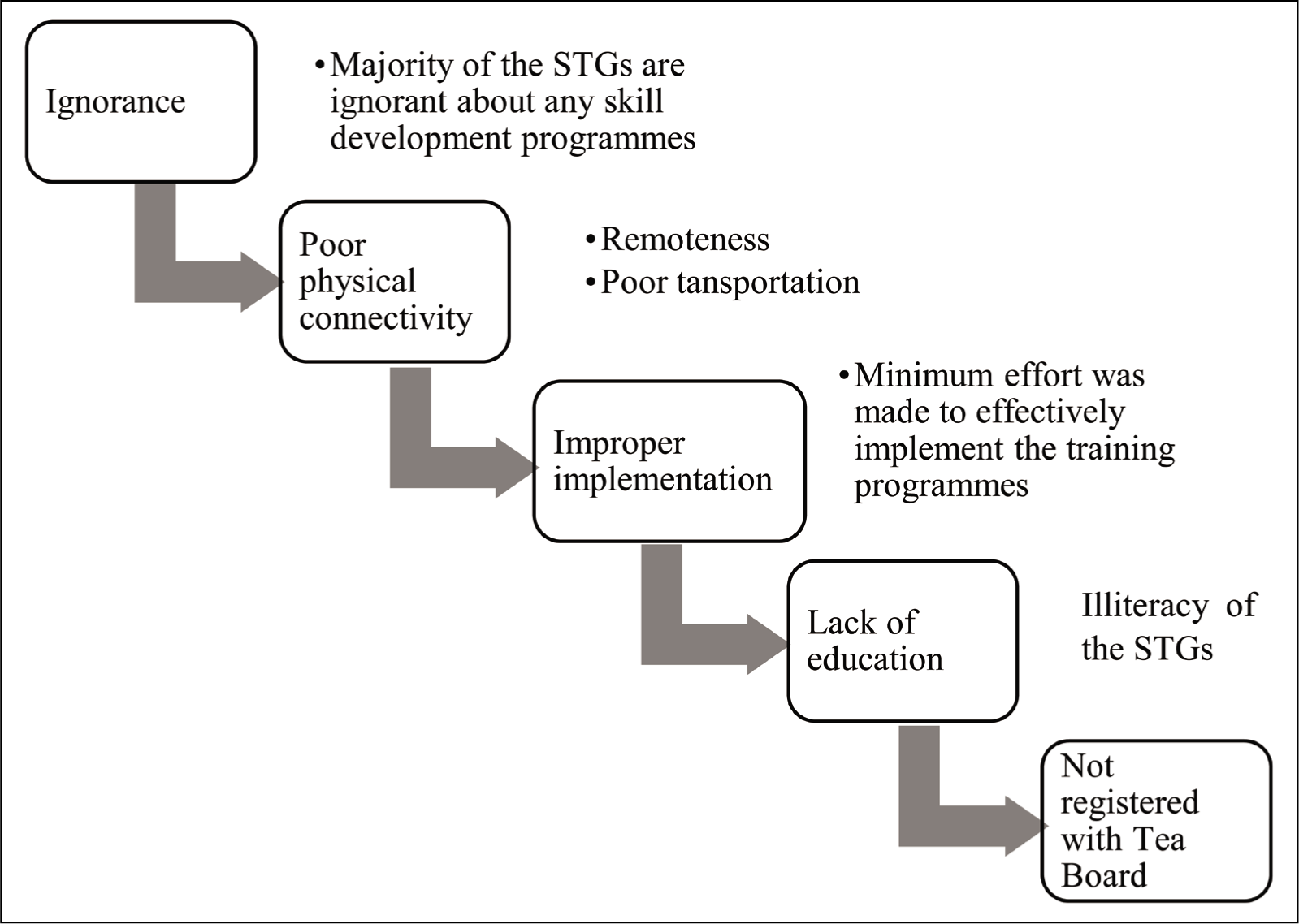
According to some industry experts, STGs are an indispensable part of the tea industry in Assam, engaged in producing over 50% of the green leaf and their rise across different districts of Assam has immensely contributed to the enhancement of the quality of the green leaf. The emergence of the STGs in Assam has contributed to the upliftment of the rural economy by improving the lifestyle of the rural people. As per the data available with the Tea Board of India, based on an assessment as of 31st of March 2022, the state of Assam comprises 122,415 STGs having 114,847.89 hectares of land. However, some industry experts are of the view that Brought Leaf Factory (BLF) and improper method of plucking by the small growers are emerging concerns along with the lack of basic amenities and improper living conditions of the tea garden workers of Upper Assam. In this regard, organizations such as the Tea Board of India and National Skill Development Corporation (NSDC) may play the determining role of a mentor in providing all necessary support to the STGs by organizing various orientations that could guide them towards good quality tea plucking skills. In this context, various challenges emerge as stumbling blocks toward generating requisite skills among the STGs. A few of those are indicated in Figure 3.
Challenges of Skill Development Among the Small Tea Growers (STGs).
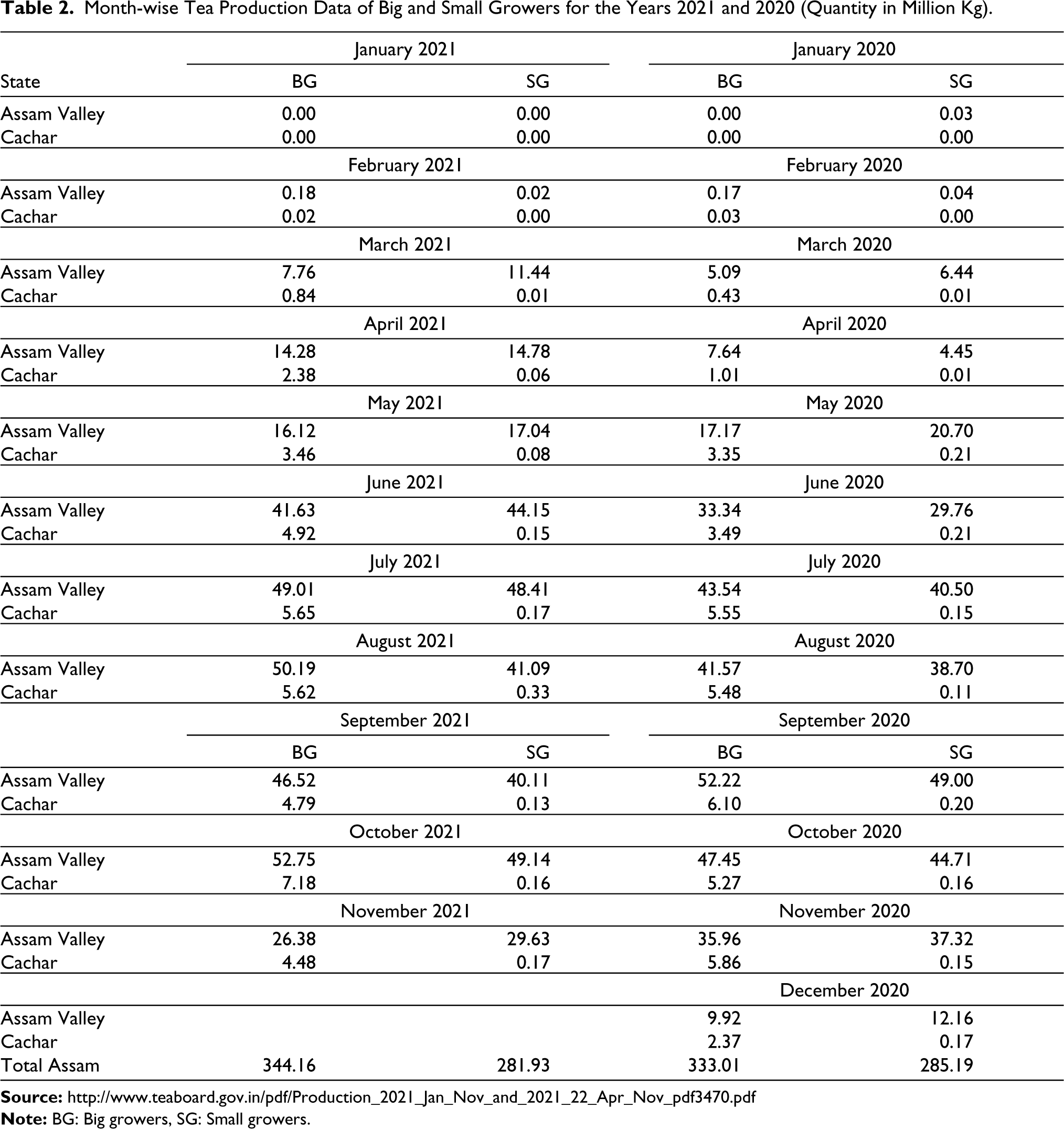
To enhance the consumption of Assam tea, NETA has indicated a series of measures for its revival. In this regard, experts from the industry feel that the consumers may be provided with an unadulterated taste of the indigenous tea. It has been emphasized that effective promotion of non-blended, single garden output would also enhance consumption and brand building. Moreover, the installation of Assam tea outlets in and around public places could further open the gates for the revival of the tea industry in Assam. All these developments in the tea industry of Assam may significantly affect the functioning of its auctioning segment. The month-wise tea production of big and small growers for the state of Assam for the years 2021 and 2020 is indicated in Table 2.
Month-wise Tea Production Data of Big and Small Growers for the Years 2021 and 2020 (Quantity in Million Kg).
Auctioning System in GTAC
The hard processes deployed by GTAC in the auction hall to facilitate tea trading are no longer in vogue. With the initiative of the Tea Board, an e-auctioning system is in place now. GTAC facilitates online bidding through a portal developed by the National Stock Exchange Information Technology (NSEIT). It is now based on meticulous documentation and a decision support system. GTAC organizes 52 sales (bid) at the rate of one per week. However, sometimes bids have to be cancelled for lack of adequate supply. That may happen during off season.
Normally, bids are organized on Tuesdays for orthodox tea, and on Wednesdays for CTC. Upon their arrival from various estates, teas are stored at registered warehouses located in and around Guwahati city which undergo a careful inspection process carried out by the registered brokers. The brokers draw out a fixed quantity as a sample from the lot for free distribution to the registered buyers entitled as indicated by the GTAC. Every Tuesday and Wednesday, the registered brokers as well as the buyers to whom the free tea samples were supplied, gather at the auction hall of the GTAC. Six lots are normally offered for bid per minute which are kept open from 9
E-auction at GTAC
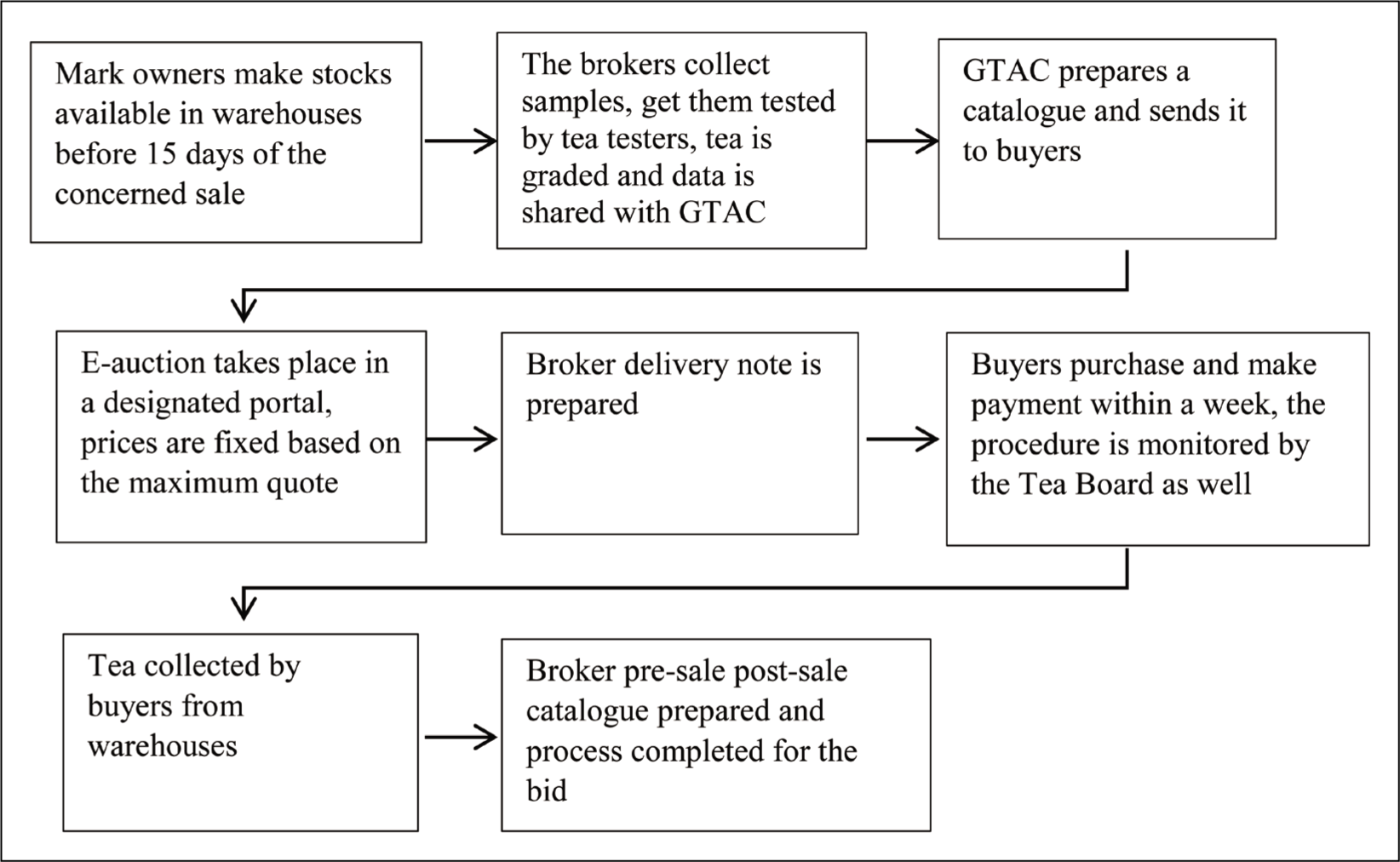
The emergence of the internet has witnessed the growth of a new form of auctioning system, thereby witnessing a shift from the traditional to a modern process of trading. It needs to be mentioned that the world’s first electronic auction of tea jointly organized by the Calcutta Tea Traders Association and Tea Board was held at Nilhat House, the headquarters of the country’s largest tea auction firm J. Thomas & Co. On 19th November 2008, the modern trading platform in the form of e-auction was introduced to the GTAC. The e-auctioning process can be understood with the help of a Process Flow Chart indicated in Figure 4.
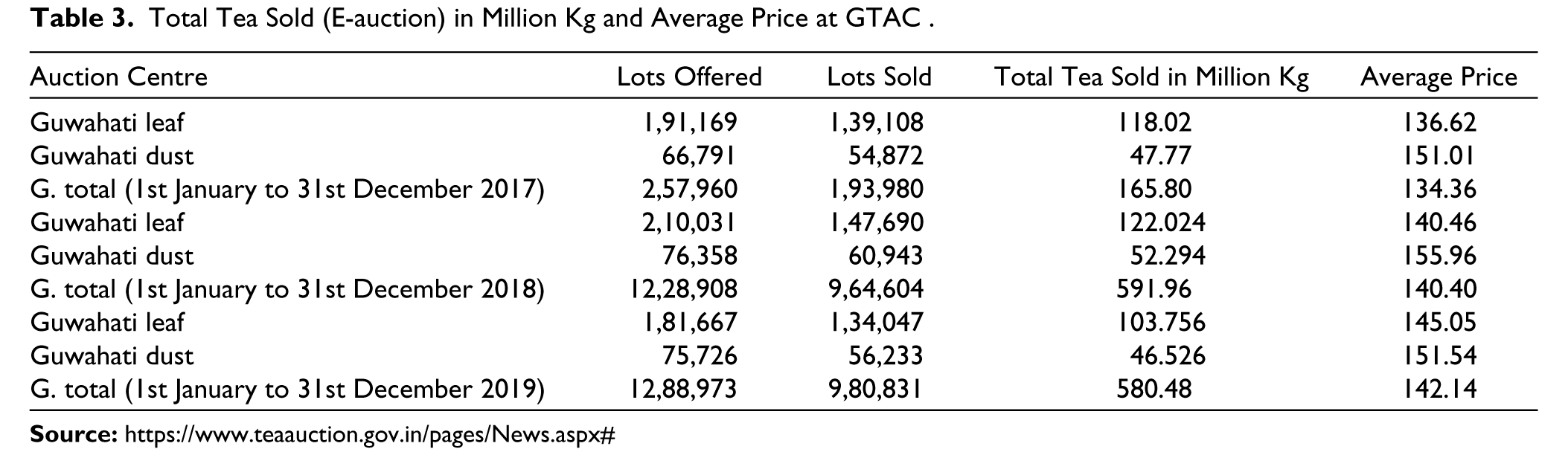
An upcoming e-auction platform in the Jorhat district of Assam, ‘m-junction services’, will offer teas, especially from Assam and the Northeastern region, for trading through this e-platform as per the procedures prescribed by the Tea Board of India. The planters’ associations like ABITA and NETA have assumed a positive role in the collective interest of the industry. E-auctioning is going on quite smoothly. The total tea sold through the e-auction platform and the average price at the GTAC are indicated in Table 3.
Total Tea Sold (E-auction) in Million Kg and Average Price at GTAC .
Payment System at GTAC
GTAC has been driven by a financial model of collection of registration fees and a fee for yearly renewal of registration. Moreover, depending on the quantity of tea sold in the slots, GTAC levies a charge. It has not been confronted with any significant financial issues. Buyers at GTAC are privileged for credit facilities from the respective brokers from whose catalogues teas were purchased for up to two weeks till the prompt date which is 13 days after the date of finish of a catalogue in the case of Leaf teas and 14 days from the date of finish of a catalogue in the case of Dust teas. Payments are made by Demand Draft or bearer cheque, cashable in a bank in Guwahati. Brokers retain a portion of the amount in the form of a commission as per their entitlement and the balance is remitted to the sellers which is known as the sellers’ prompt date.
Transportation of Tea
Road transportation is considered more feasible to dispatch tea from Assam to other parts of the country. However, the Inland Container Depot (ICD) facility is also available in Amingaon, which is about 16 kilometres from Guwahati from where tea packages are palletized and loaded into containers to be carried by rail to the port of Haldia in West Bengal. The ICD at Amingaon in Guwahati is mostly patronized by the producer exporters for the export of bulk teas, because of the convenience of location and the inherent advantages of speedy documentation and despatch. Merchant exporters, however, do not utilize these facilities as pre-shipment blending is usually done in locales closer to the ports.
Management Dilemma
The classic case of disintermediation and intermediation is prevalent in the tea industry as well. GTAC is also no exception. The process flow of GTAC in Figure 4 indicates the prevalence of intermediation while a swift model toward its disintermediation still awaits. GTAC At the initiative of the Tea Board, an intervention was made in 2023 by launching the Bharat Auction to establish a direct buyer–seller linkage. However, due to the physical presence of the warehouses and some serious technical glitches, the system was discontinued. Against the government’s mandate of auctioning 100% of dust tea, industry watchers NETA and ITA have opinions that contradict each other, and still a final decision is expected which shall lead to quality enhancement and better price realization of Assam tea. While industry experts from NETA had strongly objected to the proposal citing the inability of the government to guarantee a better price realization for the producers, ITA, on the other hand, had started on a three-month trial for the same. The Union Minister for Ports, Shipping and Waterways & AYUSH, Sarbananda Sonowal (2024), stressed the need for a better management–worker relationship for the long-term sustainability of the tea industry of Assam, yet the urgency has not been manifested by its internal management. The disintermediation has been done away with. The top management of the industry is constantly seeking financial assistance from the government for the high freight and handling costs associated with the export of Assam tea from ICD, Amingaon in Guwahati which could somewhat ease the burden from the producers. However, the lack of any concrete assurance from the government has put the management in a dilemma over the realization of the price structure. In addition, the threat of Volatility, Uncertainty, Complexity and Ambiguity (VUCA) associated with the tea industry environment still prevails. The management dilemma of sustaining meaningful intermediation persists. GTAC is fully aware of this and is constantly striving to stay relevant. Having a sustainable stakeholder management model is quite essential for its survival and growth. It does not have a benchmark of its own. It has to evolve on its own. A lot depends on the prudent actions of the Tea Board, planters’ associations and its stakeholders. GTAC is just a part of a larger system.
Future Scope of GTAC
Tea is the second-largest drink consumed worldwide after water. Once planted, a tea plant ensures production for a minimum of 50 years. The tea industry will never become extinct. With the emerging presence of STGs and corresponding quality concerns, there have been a lot of changes in the tea industry. The way GTAC functioned in the formative years is quite different from the way GTAC is functioning in an ICT-enabled environment. There have been sporadic records of auctioning Assam tea at a very high price target for the developed markets in Western Europe and North America. The presence of Indian MNCs in the auctioning system is very strong. With all these, there could be pressures from lobbying. GTAC has taken the move of promoting GTAC Tea Lounge which may help in augmenting the image of Assam Tea and GTAC. However, the larger issue regarding the role of auctioning in promoting Assam Tea still needs attention.
Questions to be Discussed in Class
How can tea sellers be motivated to approach GTAC for auctioning rather than approaching private parties?
How do you think Assam Tea can be marketed effectively?
How can social media help in promoting Assam Tea?
What strategies may be adopted to avoid sub-standard production of tea in factories?
How could the STGs benefit from an auctioning system, or, to be precise, from an e-auctioning system?
Footnotes
Declaration of Conflicting Interests
The authors declared no potential conflicts of interest with respect to the research, authorship and/or publication of this article.
Funding
The authors received no financial support for the research, authorship and/or publication of this article.