




Abstract
Quantitatively capturing gender and sexuality using social surveys can be a controversial, political exercise—increasingly so in an age of political turmoil. Still, there is profound utility in quantitative metrics, particularly related to sexual orientation, gender identity/expression, and sex characteristics (SOGIESC). Indeed, scholars, under the banner of queer demography, leverage social scientific surveys to measure gender and sexuality at the scale of populations to make important inferences about LGBTQ+ lives. Therefore, this essay tracks the history, challenges, and potential opportunities for capturing survey-based, SOGIESC data. Specifically, we detail measurement developments related to sex and sex characteristics; sexual behavior; sexual orientation and identity; sexual attraction and desire; and gender identity and expression. Moreover, we showcase the challenges to capturing SOGIESC data amidst political turmoil. Though data purges have become a tactic of the second Trump administration, SOGIESC data have always been subject to state suppression—explaining the poor data environment and longstanding construct-to-operationalization mismatches. Paradoxically, the field of queer demography and survey-based measurement is simultaneously one of rapid innovation requiring emergency preservation. We ultimately call on sexuality scholars to help shape measurement practices, protect existing data, and ensure that knowledge about SOGIESC populations is not erased, while we still can.
Keywords
Introduction
This inaugural issue of Sex & Sexualities coincides with what was supposed to be one of the most significant data collection efforts concerning gender and sexuality in U.S. history. In 2024 and 2025, the American Community Survey (ACS) fielded specific questions about sexual orientation and gender identity for the first time (Reamer 2023; Stepler 2024). These data collection efforts were particularly important because insights from the ACS affect civil and political rights, allocate billions of federal dollars, and provide social scientists with rich data to study a myriad of social processes. Nonetheless, as of January 31, federal websites have been taken down and/or scrubbed of mentions of gender identity—among other things relating to “woke” policy agendas. At the time of writing, the state of federal data surrounding sexual orientation, gender identity and expression, and sex characteristics (SOGIESC) (Badgett 2024; Smith 2023) remains unclear. Given data’s importance in providing representation, it bears asking: how can researchers effectively and accurately inquire about sex, gender, and sexuality using population-level survey methods—particularly in a time of political turmoil?
It is time to take stock of efforts to quantify queer sexuality. The ACS is the latest result of a storied history of attempts to quantify queer sexuality via survey measures at a time of both rapid innovation and political suppression. Yet, both beyond and within queer scholarship, quantifying queerness is a highly political project. Furthermore, the critiques of quantifying queerness, particularly within queer scholarship, push against real concerns regarding the theoretical (im)possibility of quantifying queerness, the practical limitations of measurement, the ethics around privacy and surveillance, and other issues (see Ghaziani and Ochoa 2025; Grzanka 2025 in this issue for additional discussions). Still, despite the suppression of federal data, efforts to conceptualize, classify, and quantify sexuality are happening and will continue to happen—with or without queer scholars. Therefore, we—three early-career, critical sociologists of sexuality in the nascent field of queer demography—believe that the quantitative measurement of sexuality is vital to the sociology of sex, gender, and sexuality and that broader collaboration and communication across our discipline is necessary to ensure the theoretical accuracy and ethical integrity of this political project. Here is our call to action: when you fill out forms asking about identity, relationships, and sexual practices, we urge you to consider the underlying survey research methodologies. In the burgeoning world of queer demography, your voice can shape measurement practices, queer inclusion, and sexuality knowledge through the rest of the 21st century. We invite you to join us in the engagement, critique, and ultimately the improvement of these measurement practices, tools, and data sources.
This essay presents brief histories of and identifies key innovations in the measurement of sex, sexuality, and gender. We focus on the following constructs: (1) sex and sex characteristics; (2) sexual behavior; (3) sexual orientation and identity; (4) sexual attraction and desire; and (5) gender identity and expression. Given our backgrounds, we focus on demographic measurement based on data from surveys and censuses—in other words, attempts to use survey methods to “quantify” and “count” sexuality constructs for use in empirical social science research. Sexuality is a natural extension of traditional demography, which studies change in population size resulting from births, deaths, and migration.
We provide illustrative tables in each section with examples of past and present demographic measures of our stated constructs. These tables are to be read, not as best practice, but as documentation of where we, as a discipline, have been—particularly in light of the recent purging of SOGIESC data. We highlight different types of questions to demonstrate various ways surveys have tried to operationalize each construct. We hope that featuring explicit questions will allow readers to appreciate the level of precision necessary to understand the (mis)match between some theoretical constructs and their corresponding questions. While most examples come from the United States due to the context-specific nature of measurement development (Gonsalves 2024), much of the groundbreaking work is happening outside of the United States (Bates, Chin, and Becker 2022; UNECE 2019). Perhaps surprisingly, while we discuss the importance of measurement and numbers, we will not provide any statistics. Our goal is to highlight the interplay between constructs, theory, and question wording for ultimate measurement—as opposed to detailing “definitive” statistics on sex, gender, and sexual diversity. We conclude by discussing the challenges that await. By encouraging measurement skeptics to offer their theoretical insights into measurement tasks and encouraging measurement enthusiasts to take seriously the importance of constructs and their histories, we hope this essay helps lay the groundwork for overcoming these future challenges.
Constructs
Sex and Variations in Sex Characteristics
Sex is defined as a “multidimensional construct based on a cluster of anatomical and physiological traits that include external genitalia, secondary sex characteristics, gonads, chromosomes, and hormones” (Bates et al. 2022:20). Despite the precision of this definition, sex and gender—two distinct but interrelated social constructs (Ridgeway and Saperstein 2024; Rubin 1975)—have often been conflated conceptually in both social science research and daily discourse (West and Zimmerman 1987). This tendency to conflate the two is due, in part, to the routine collection of sex, in lieu of gender, in historical and current data collection.
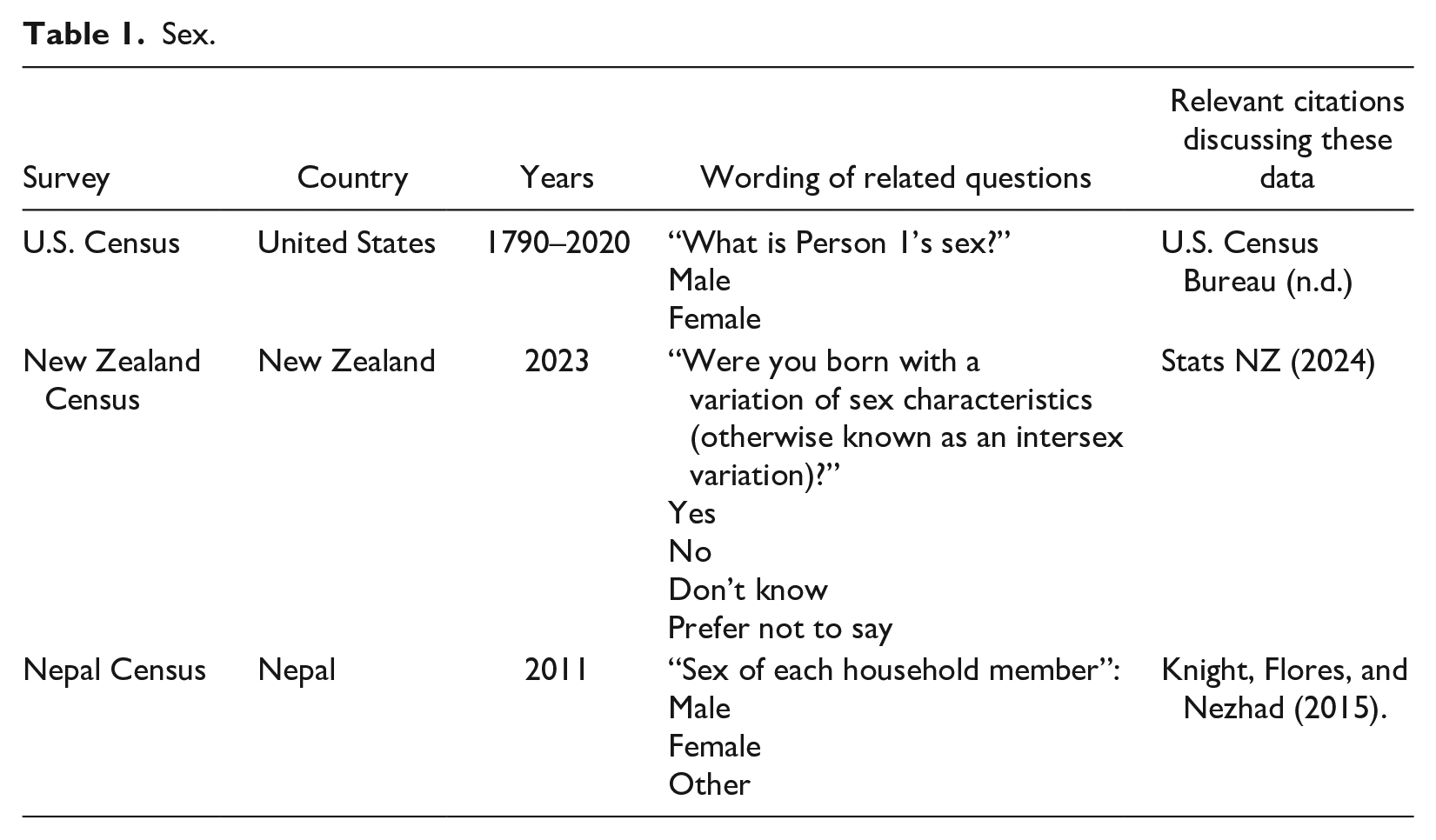
Sex is one of the longest-standing unchanged questions on the U.S. Census (U.S. Census Bureau 2002); sex (along with race) has been captured since the first U.S. Census in 1790 to determine eligibility for political and social citizenship (Prewitt 2016). Throughout this history, sex has always been captured in federal data collection as a binary: female or male (U.S. Census Bureau n.d.). However, sex binaries are socially constructed and rooted in colonialism (Gonsalves 2024; Kessler 1990; Patil 2022). Recently, countries such as India and Nepal have added a third sex option to better reflect their populations (UNECE 2019), and others, such as New Zealand, have explicitly added questions about variations in sex characteristics and intersex traits (Stats NZ 2024).
Despite the staggered progress toward deconstructing the traditional binary sex marker, sex is embedded in administrative records and is challenging to change (Brodie Maier 2020). Only recently have some U.S. jurisdictions allowed for a nonbinary “X” marker instead of “M” for male or “F” for female (Ashley 2021)—though these markers are currently under contention in a Trump administration. Indeed, a binary sex classification is so embedded in data infrastructure that some surveys have collected “interviewer-coded sex,” wherein interviewers “assess” the sex of the respondent without ever explicitly asking the respondent (Lagos 2019), or simply feed the sex from other administrative records (such as drivers licenses, birth certificates, or school and employment records used as sampling frames) into the survey. Researchers have used the data creatively to study discrepancies between interviewer-coded and self-identified measures of sex and gender (e.g., Lagos 2019), and this line of research has shown the need to ask about gender explicitly in surveys—separate from or even in lieu of questions about sex (Bates et al. 2022:43–44). In sum, some measurements have begun to catch up with theory. By distinguishing between measures of sex and measures of gender, researchers can better study sex explicitly—for example, of intersex populations or those existing outside Western conceptualizations of the sex binary. Nonetheless, these measurement concerns are at odds with the present “anti-gender” discourse that aims to keep gender conflated with the sex assigned at birth (Table 1).
Sex.
Sexual Behavior
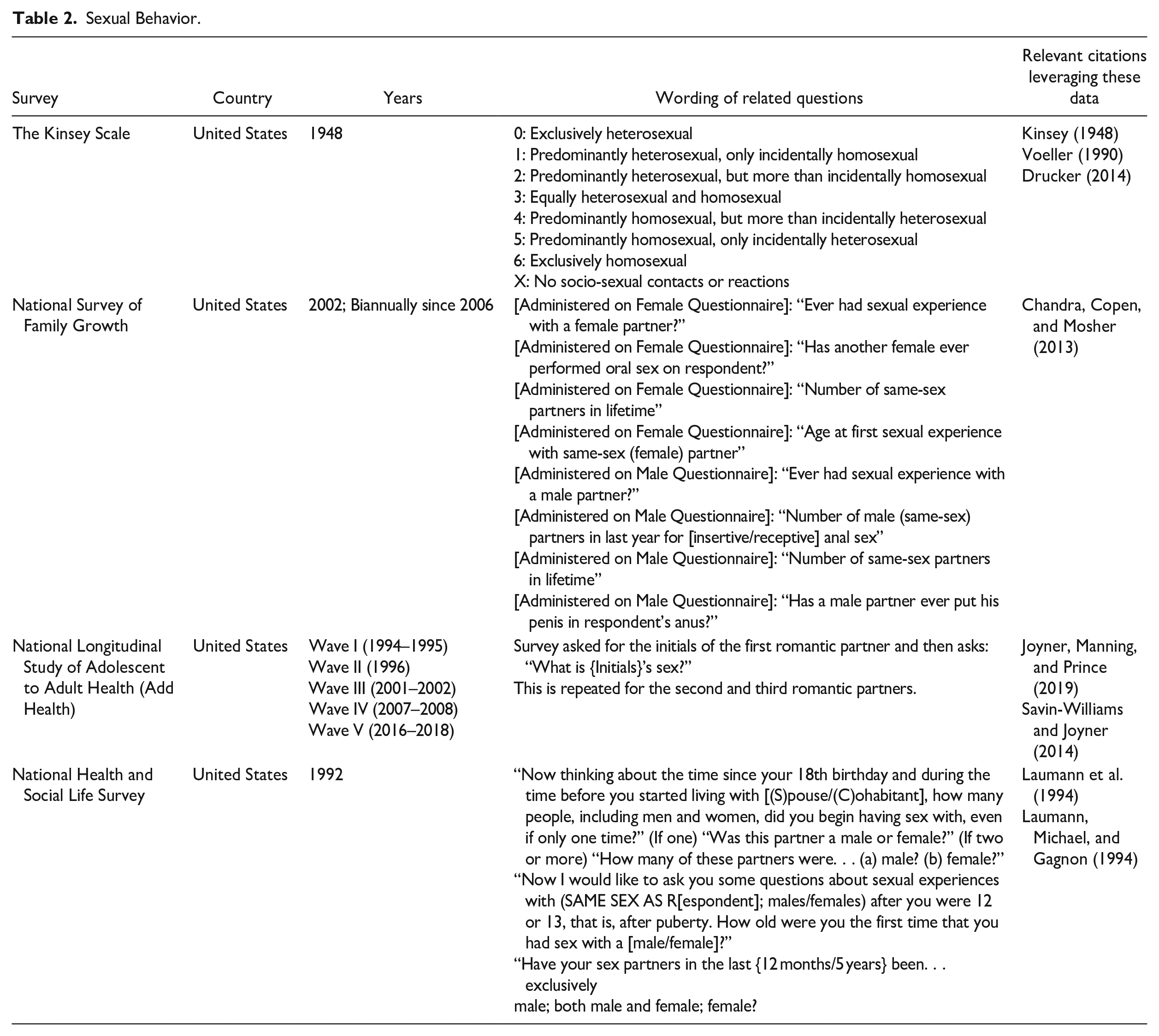
Measuring sexual behavior—namely, heterosexual penile-vaginal intercourse—became commonplace in the United States in the post-war era because of state interests in monitoring population growth and family size and characteristics. These “state-istics” (Louckx and Vanderstraeten 2015) served national projects that Foucault described as biopolitics (Foucault 1976) and correspond with the classic demographic concerns of population fertility (and population control). Some smaller surveys focused on specific populations have asked about other forms of sexual behavior, for example, bisexuality among women living at residential colleges or the masturbation habits of college men (Ericksen and Steffen 1999). There was great popular interest in the sexual statistics published by social scientists in the post-war decades, beginning with Kinsey (1948) and extending through Masters and Johnson (1966) to work by sociologists using surveys (Laumann, Michael, and Gagnon 1994); Igo (2008) tells the story of how surveys, as national projects, led individuals to “know” themselves and their fellow citizens via aggregate statistics.
Among national and larger representative surveys, the inclusion of questions about sexual behavior was shaped by the moral panics of the respective eras, including unwed and teenage mothers, extramarital sex, and sexually transmitted infections (STIs) (Best 2001; Ericksen and Steffen 1999). The AIDS epidemic was the background context for contemporary measures of same-sex behavior. This focus on risk and health has a critical legacy for the currently available statistics and the frameworks in which social scientists study sexuality. For example, “men who have sex with men” (or “MSM”) is a popular way of labeling the behavior of survey participants who exhibit “incongruence” across questions about sexual behavior, attraction, and identity. This language and the paradigm of studying incongruence across these axes of sexuality is a popular approach within public health research that extends to other forms of sexuality knowledge.
There are notable gaps in the measurement of sexual behavior as it concerns queer people and practices. Surveys typically collect data on one partner, sometimes instructing participants to select the most recent or most important partner to answer questions about. There is less available data about partner concurrency, polyamory, and non-monogamy (notable exceptions include Brew et al. 2020; Weitzman and Kusunoki 2020). Within the sociology of sexualities, scholars are interested in many topics for which there is scant population-level and representative data, including sex work, pornography consumption and production, BDSM and kink, and nonqueer subcultures (exceptional scholars working in these areas include Burke 2023; Jones 2020; Simula 2019) (Table 2).
Sexual Behavior.
Sexual Orientation and Sexual Identity
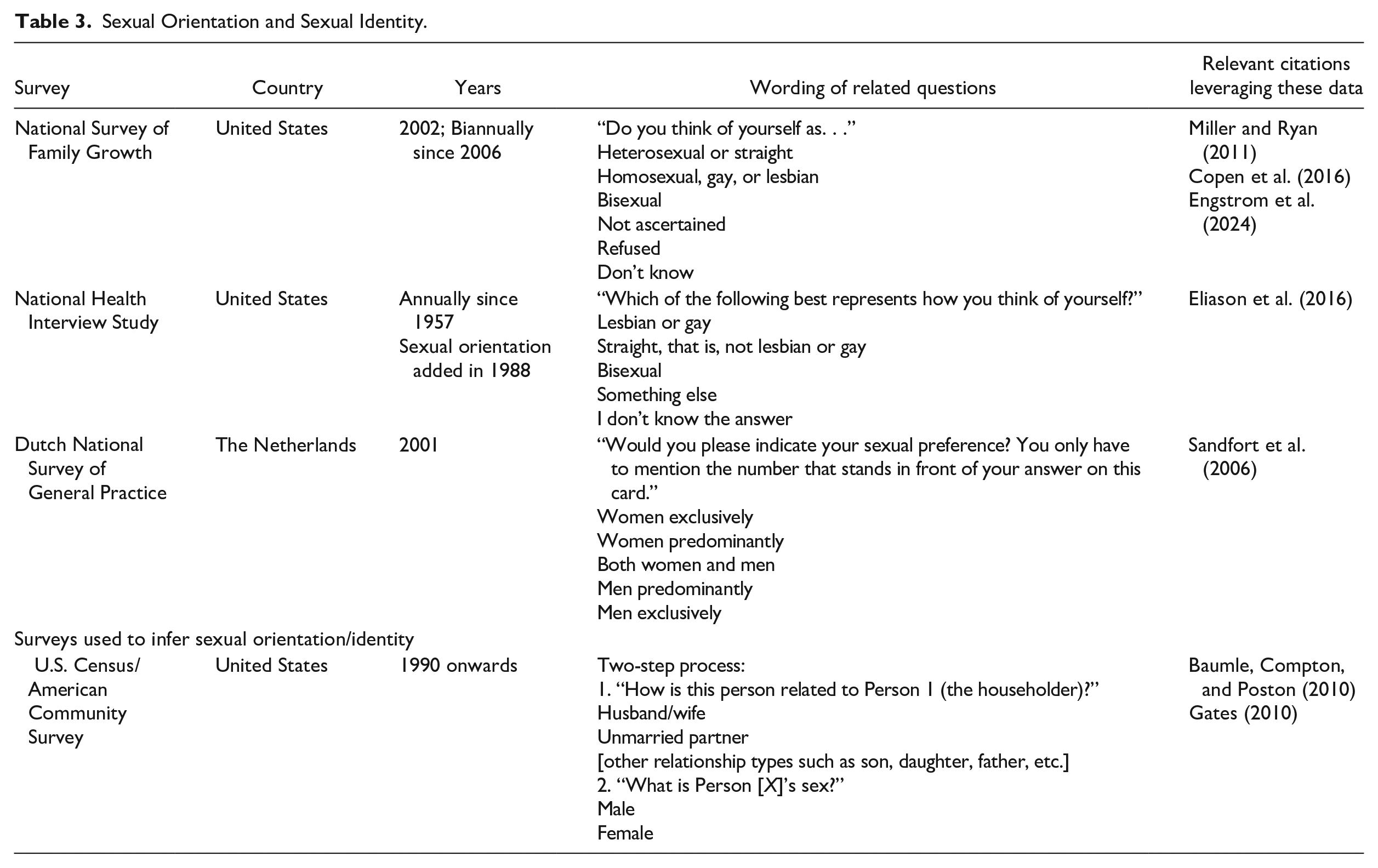
In a striking example of how classification practices can shape the people they are applied to (Hacking 2006), the public health measurement paradigm that resulted in research on “men who have sex with men” has led some individuals to self-identify as “MSM” instead of using labels like “gay” or “bisexual” (Boellstorff 2011). More broadly, the shift from surveying sexuality as a biopolitical state project to interest in the individual motivated social scientific interest in sexual orientation and identity. Historically and to the present, the definition of sexual orientation has been tricky to pin down and is often conflated with “identity”—defined in psychology research as an “enduring disposition to experience sexual, affectional, or romantic attractions to males, females, or both,” also “encompass[ing] an individual’s sense of personal and social identity based on those attractions, behaviors expressing them, and membership in a community of others who share them” (American Psychological Association 2014:4). These definitional challenges stem from both ambiguities in conceptualization and improvisational measurement practices. The first national U.S. statistics on sexual orientation were produced via creative inference: same-sex households were first enumerated on the 1990 Census when it became possible to list an unmarried same-sex partner (Baumle, Compton, and Poston 2009). Further, much of the sociology of sexualities literature has been influenced by the axes of measurement paradigm (i.e., separately measuring behavior, attraction, and identity, and investigating lives at the incongruencies among them; e.g., see Budnick 2016; Silva 2021; Ward 2015).
Survey researchers now ask about sexual orientation/identity explicitly. Exactly how to ask is the subject of much methodological debate and investigation, and—we argue—is of critical interest to sociologists of sexuality of all stripes. When people are asked to self-identify on a survey, researchers typically provide a list of fixed (closed-ended) response options using carefully chosen language that has gone through pre-testing (Miller and Ryan 2011). Researchers investigate whether the use of “other” and “fill-in-the-blank” options produce statistically significant differences in responses (Engstrom et al. 2024), occasionally deciding the fixed list is adequate (Copen, Chandra, and Fabo-Vezquez 2016) despite “other” remaining evocative to queer research subjects and scholars (Compton, Meadow, and Schilt 2018). Which words to use (e.g., “homosexual,” “not straight,” “lesbian,” “queer”) is of paramount importance, with scholars recognizing that the labels preferred by individuals and subcultures may not be intelligible to a mass audience (Julian, Manning, and Westrick-Payne 2024; Pai, Zhu, and Pao 2024); nonetheless, the consensus of careful research is that participants are generally able and willing to respond to these questions (Bates, García Trejo, and Vines 2019). There are also debates about whether the sexual identity question should appear on the standard demographics battery (e.g., with age, race, and occupation) or in separate “sensitive questions” sections where respondents do not provide answers directly to their interviewer and are assured greater privacy (Tourangeau and Smith 1996). Recent political pushback threatens the rapid progress made on sexual orientation and identity measures in the United States, but for now, international censuses and surveys continue to innovate this line of work (Table 3).
Sexual Orientation and Sexual Identity.
Sexual Attraction and Desire
Attraction and desire comprise the third axis of sexuality. Sexual attraction has been defined as the “desire to engage in sexual behavior with another individual or individuals. . .[it] involves a person’s feelings or interest in someone else in a sexual way and may or may not lead to sexual behavior” (Bates et al. 2022, emphasis added). This construct also encompasses the relative absence of or disinterest in attraction (i.e., asexuality, aromanticism); notably, attraction and desire may operate distinctly from actualized behavior.
Sexual attraction has historically received less academic attention than behavior and identity because research on attraction is less related to health outcomes (Epstein and Mamo 2017) and is not seen as fundable or socially acceptable (Westbrook, Budnick, and Saperstein 2022). Sociology has its own storied example to this effect. Edward Laumann, at the University of Chicago, and his research team received a grant from the National Institute of Child Health and Human Development in 1989 to conduct a representative survey about sexuality (for a detailed history see Laumann, Michael, and Gagnon 1994). Their comprehensive study covered topics such as foreplay, desire, nonmonogamy, and sex toys. Laumann’s research team eventually lost congressional funding because the work was deemed insufficiently motivated by health concerns.
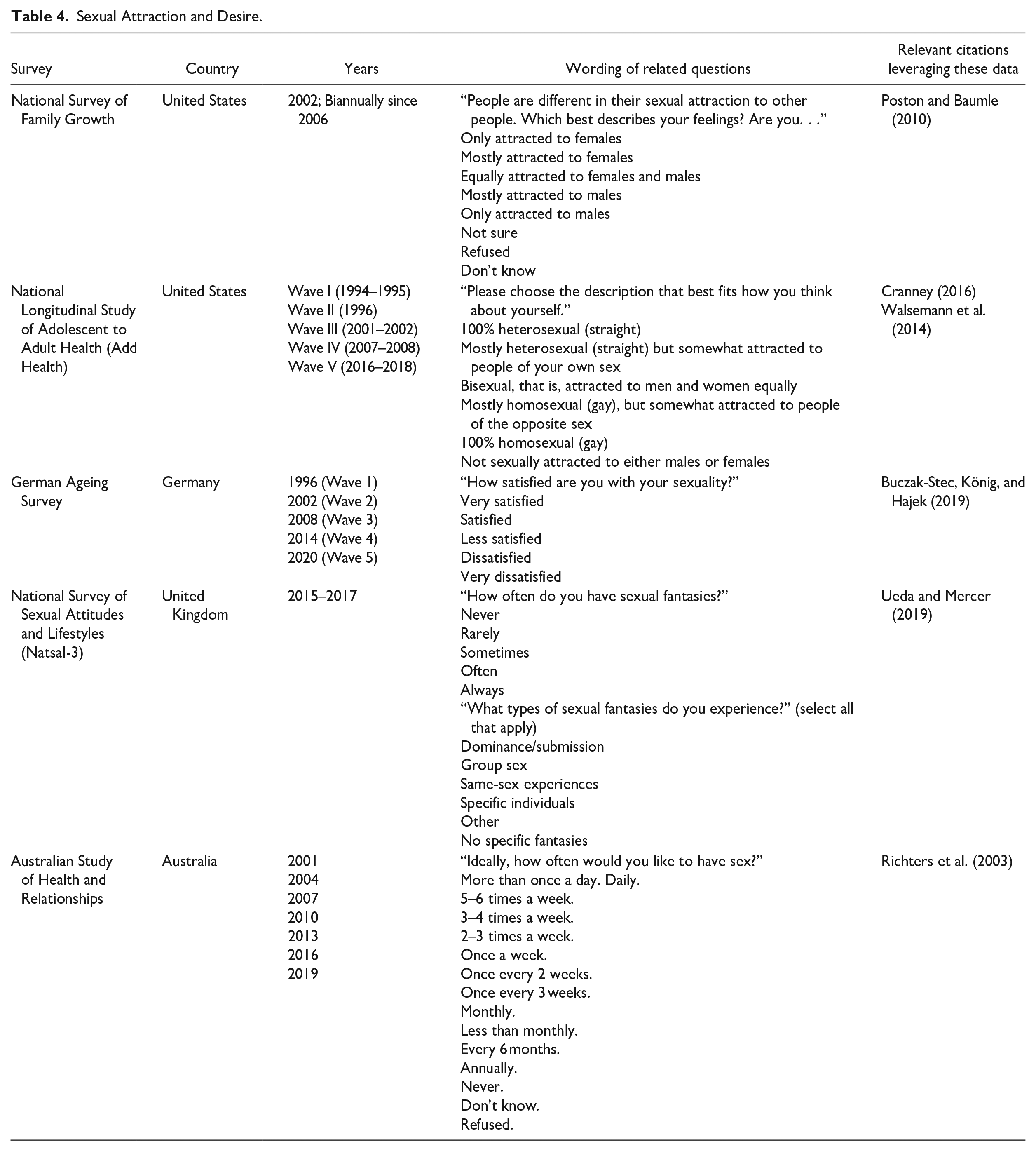
In more recent years, some representative surveys have begun to inquire about sexual attraction and desire. In the United States, common operationalizations of these constructs include the gender of the people someone is either sexually or romantically attracted to, desired frequency of sexual interactions with one’s partner, and self-rated sexual satisfaction (Epstein and Mamo 2017). Other survey questions have evaluated the lack of stated sexual desire or attraction, which has allowed researchers to (unexpectedly) study asexuality and aromanticism (Winer 2023). Outside the United States, many scholars are setting new precedents for questions about desires (Lehmiller and Gormezano 2023). An Italian research team, for example, developed the Sexual Desire and Erotic Fantasies Questionnaire to evaluate the frequency in desires such as voyeurism, sex toys, and group interactions, among other topics (Nimbi et al. 2023).
Despite this development, nationally representative studies of attraction and desire are still relatively rare in sociology. In part, because initial studies of sexuality were state-development or public health imperatives that warranted legitimacy and funding, studies of attraction and desire that center the sexual agency of the individual have historically been sidelined. Emerging work, however, demonstrates the sociological implications of a sexual self-motivated by pleasure, kinks, joy, and desires. This research helps elucidate economies of desire, sexual racism and exoticization, and power. Furthermore, this work shows that attraction and desire have clear demographic implications whether for migration (Carrillo 2017), relationship stability (Julian, Manning, and Kamp Dush 2024), or well-being (Mittleman 2019). Consequently, there is ample opportunity for sexuality scholars to collaborate with queer demographers to advance this intellectual project at the scale of populations. Of course, conducting this work will be incredibly more difficult under the Trump administration given funding and data purges and a likely reintroduction of concerns that sexual attraction and desire are less legitimate projects. Queer demographers who have previously relied on national data may now need to reimagine their ideal data collections. This is both a challenge and an opportunity to creatively consider what can and should be collected at a national scale or whether alternative sources of data (e.g., data on sexual toys or web-camming subscriptions) can serve as an alternative for the time being (Table 4).
Sexual Attraction and Desire.
Gender Identity and Expression
Gender is defined as “a multidimensional construct that links gender identity, which is a core element of a person’s individual identity; gender expression, which is how a person signals their gender to others through their behavior and appearance (such as hairstyle and clothing); and cultural expectations about social status, characteristics, and behavior that are associated with sex traits” (Bates et al. 2022:20). As mentioned, historically, gender has often been conflated with sex, and gender measurement is currently the focus of intense discussion and innovation. One step in gender measurement was to use gender terms (man/woman) instead of sex terms (male/female), but this semantic change was still rooted in a binary understanding of two sexes, and thus two (correlated) genders (Muehlenhard and Peterson 2011). Recent measurement conversations have pushed against not only the man/woman binary (Westbrook and Saperstein 2015), but also the transgender/cisgender binary, termed as gender modality (Ashley, Brightly-Brown, and Rider 2024).
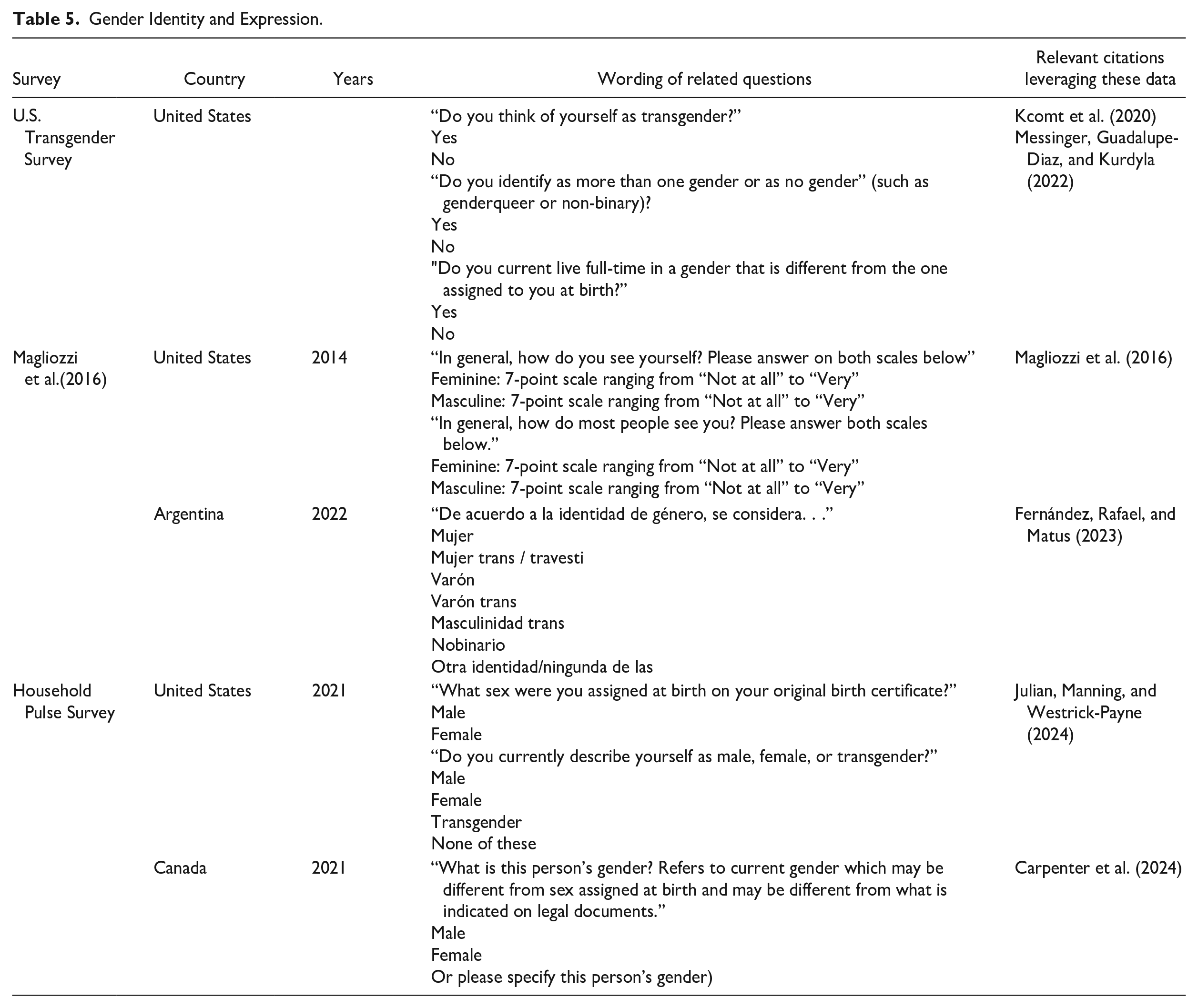
In particular, queer demography has studied trans and noncisgender populations via measurement innovations such as explicit questions about trans identification (e.g., National Records of Scotland 2024); the inclusion of “other”/“something else”/“none of these” and open-ended text responses (Julian, Manning, and Westrick-Payne 2024; Pao et al. 2025; Wong et al. 2024); and the use of a two-step gender measure, which first asks about sex and then about gender (Lagos and Compton 2021; Lombardi and Banik 2016; The GenIUSS Group 2014). Gender scholars have also long thought about other components of gender outside identity, such as performance and expression, which are now being included in large-scale surveys. Gradational gender scales are one development that has captured self-rated and reflected appraisals of masculinity and femininity on a spectrum (Magliozzi, Saperstein, and Westbrook 2016). A growing number of studies have used these gradational gender scales to study differences between and within gender-identity subpopulations (Choi and Merlo 2021; Hart et al. 2019; Pao 2023). The field of gender measurement is currently undergoing fast and important change around the world: many countries have created and adapted questions to gather data on a wide range of gender identities (Bates et al. 2022; UNECE 2019), and there are community efforts to explore more holistic measures of gender beyond identity alone (e.g., on the U.S. Trans Survey and the Gender Census). This field is evolving and under fire in the United States, drawing from crucial international precedent: a queer and transnational lens remains critical for developing inclusive measures that capture the complexity of gender (Table 5).
Gender Identity and Expression.
Conclusion
Survey measurement reflects and shapes social reality (Westbrook et al. 2022): we highlight this interaction in the context of sexuality, sex, and gender. There are tremendous innovations transpiring as survey researchers seek to better align constructs and measurements. These innovations are urgently needed since much of the extant survey data have come through accident or creative use of data—researchers have been forced to leverage scraps of data where possible to provide “fuzzy” or coarse, yet important, insights. At the time of initial drafting, several outlets had developed or were developing resources for individuals interested in collecting data on gender and sexuality: these groups include the Gender Identity in U.S. Surveillance (GenIUSS) group; the Federal Committee on Statistical Methodology (FCSM); the Sexual Minority Assessment Research Team (SMART); and the Federal Interagency Working Group (FIWG) on Improving Measurement of Sexual Orientation and Gender Identity in Federal Surveys, to name a few. Despite many of these online U.S. resources being taken down to comply with Trump’s executive orders, these groups remain important for their rigor in establishing the foundations of much contemporary best practices. Most of the data and survey documentation described here are still being archived and made available to the public at the Inter-University Consortium for Political and Social Research (ICPSR). Other resources, like Dr. Randall Sell’s privately hosted site (lgbtdata.com), remain an important place for individual researchers and organizations to find information about past data collection and resources.
Some sexuality scholars are critical of the “quantification” of these complex, seemingly “unquantifiable” social constructs. This criticism is understandable: previously collected data were often imprecise in their reflection of the construct(s) at hand and necessarily produced by leveraging “accidental” data due to resource constraints. Nonetheless, because of these important critiques and epistemological distinctions, we invite sexuality scholars to be part of the measurement conversation. There is more room for collaboration than perhaps is initially apparent. All scholars agree on the importance of nuance, complexity, and precision. Survey methodologists have an immense appreciation for how exact question wording, question ordering, survey platform, and the social identities of the surveyor affect the operationalization of gender and sexuality, akin to critical scholars’ emphasis on situated knowledge production. Moreover, the use of repeated measures validates the fluid and contextually defined aspects of gender and sexuality, and the use of surveys, such as through open-text response, can reveal modalities of understanding that warrant further, critical examination (Cimpian and Timmer 2020; Lindqvist, Sendén, and Renström 2021). Of course, some norms of representative survey research present fundamental tensions for sexuality scholars. For example, demographers are often loath to update question wording because doing so impedes the harmonization of data across time and place; therefore, measurement will always lag social change. Furthermore, demography is historically rooted in a deficit/disparities framework that decenters positive aspects of the human condition like joy and pleasure. Still, there is a role for active engagement between survey methods, demography, sexualities studies, and critical theory to enhance the understanding of how social life shapes and is shaped by sexuality.
Finally, we wish to end where we began: a reflection on 2025. Data are political and survey data are no exception (see Laumann, Michael, and Gagnon 1994). Indeed, the three of us, along with all quantitative queer social scientists, are acutely confronting these challenges. Consequently, we directly acknowledge the tension that comes with the second Trump administration. Surveillance accompanies data collection. The uncertainty behind the sexual orientation and gender identity testing results from the American Community Survey coincides with an administration (potentially) capable of leveraging these data for exploitation. Queer demographers and sexuality scholars share this deep, troubling concern. Yet we, the authors, do not believe the solution is to roll back the inclusion of gender and sexuality-related questions on federal (and federally funded) surveys—as has already started. These data are hard-won and necessary to further the empowerment and well-being of queer populations. Therefore, the charge for all researchers is to simultaneously protect the privacy and data of survey respondents as well as the survey items themselves from bad-faith actors. This is a time when high-quality measurement and engagement from sexuality scholars are particularly needed: we hope this essay will inspire new research and cross-field collaborations to support the aims of queer demography.
