




Abstract
Background:
Diabetes mellitus is a chronic metabolic disorder requiring precise glucose regulation. The Internet of Medical Things (IoMT) and smart insulin pens enable connected, data-driven insulin therapy, linking devices and health care systems for personalized management. This review critically synthesizes clinical evidence on smart insulin pens within the IoMT framework, evaluating study quality, guideline positioning, and translational barriers.
Aim:
This study examines the role of IoMT, with a focus on smart insulin pens. This review compares smart insulin pens with conventional insulin delivery methods, evaluating their clinical effectiveness, impact on patient quality of life, and challenges related to cost, training, and integration into health care systems.
Methods:
A comprehensive review of literature was performed using PubMed, Cochrane, Web of Science, and Embase databases, focusing on randomized controlled trials (RCTs), clinical trials, registries, guidelines, and expert consensus documents related to smart insulin pens and IoMT in diabetes care. Two authors performed a structured risk-of-bias assessment (domains: study design, sample size, funding source, outcome definitions, follow-up duration, and generalizability) of key studies and extracted standardized endpoints (HbA1c, time-in-range, adherence metrics, and patient-reported outcomes).
Results:
Insulin pens have proven advantages in diabetes management. A 12-week study showed insulin pens reduced average glucose levels with higher patient satisfaction. Many studies showed that these devices make treatment more consistent and effective. Both patients and doctors preferred them. However, studies showed that they are unaffordable for low-income groups, and even physicians lack enough training for their use. Future trends should focus on making them more user-friendly. While numerous studies report positive outcomes, many are small, short-term, industry-sponsored, or observational. When considering independently conducted RCTs and high-quality registries, the observed benefits are more modest, and results show considerable variability.
Conclusions:
Smart insulin pens can be very helpful in the management of diabetes. They provide accurate dosage based on patient data and simplify patient care. However, due to privacy issues, high costs, and limited training of the health care professionals, their use is limited. Robust, long-term randomized trials and cost-effectiveness analyses across diverse health care settings are needed before broad guideline recommendations can be made.
Keywords
Introduction
The Internet of Medical Things (IoMT) is a rapidly growing part of the Internet of Things. It connects medical devices and health care systems through internet-enabled networks. This setup helps collect, share, and analyze health data. 1 The IoMT ecosystem includes various components. These range from wearable and implantable medical devices, biosensors, and communication technologies like Bluetooth and Wi-Fi to cloud computing platforms and cybersecurity measures that protect data privacy and integrity.2,3
Illustrations of this ecosystem often show physical devices that monitor bodily functions, communication networks that send data, and cloud-based services that analyze real-time information. These services help provide predictive and personalized health care. 4
Despite its promise, IoMT, such as smart insulin pens, faces several significant challenges. Security and privacy are especially critical, as medical devices collect highly sensitive personal health information. IoMT systems are vulnerable to threats such as unauthorized access, data interception, and malware. In addition, many devices have limited processing power and battery life, which makes implementing strong encryption and regular security updates difficult. Regulatory frameworks like the General Data Protection Regulation (GDPR) in Europe often lag, failing to clearly define requirements for device authentication, data ownership, and consent across borders. 5
Diabetes mellitus is a chronic metabolic disorder that affects millions around the globe. It requires careful management of blood glucose levels, mainly through insulin therapy. Traditional methods of insulin delivery face many challenges, including mistakes in dose calculation, missed injections, and poor patient compliance. These issues lead to inadequate glycemic control and increase the risk of complications.6,7 IoMT provides hopeful solutions by supporting continuous glucose monitoring (CGM), data-driven treatment adjustments, and improved patient involvement through connected devices. 8
Furthermore, the successful integration of smart insulin pens into clinical practice depends not only on technical functionality but also on human factors and health system infrastructure. Studies show that pairing smart pens with CGM can reduce hypoglycemic events, increase time-in-range (TIR), and improve adherence in both adult and pediatric populations. However, several barriers persist: patient education, reimbursement issues, device interoperability, and the need for reliable data infrastructure.
A cost-effectiveness analysis conducted in Sweden and Canada revealed that smart insulin pens not only improve clinical outcomes but also reduce long-term health care expenditures compared with standard insulin pens. 9
Smart insulin pens have emerged as a key IoMT application in managing diabetes. These devices use Bluetooth technology to wirelessly track doses, automatically record injection data, integrate with smartphone apps, and offer personalized dosing advice. These features significantly improve the accuracy of insulin delivery and allow for timely clinical feedback.10,11 In addition, smart pens help patients manage their own care and enable health care providers (HCPs) to monitor adherence and glycemic trends remotely. This improves therapeutic outcomes and supports proactive care.9,12
This study aims to provide a comprehensive overview of the IoMT framework, with a particular focus on smart insulin pens. It explores how these devices enhance insulin delivery, address limitations of traditional methods, and support the broader shift toward personalized, connected, and data-driven diabetes management.
Methodology
Two authors independently performed a comprehensive literature search to identify studies related to the role of the IoMT in diabetes management, with a particular focus on smart insulin pen technologies and their clinical implications. The search was conducted across major electronic databases, including PubMed, Google Scholar, Cochrane Library, and ClinicalTrials.gov, covering all articles published from January 2025 to October 2025.
A combination of controlled vocabulary (e.g., MeSH terms) and free-text keywords was employed to ensure broad retrieval of relevant literature. The primary keywords and search terms included: “Smart insulin pens,” “Diabetes Management,” “Glycemic Control,” “internet of Medical Things (IoMT),” and “Insulin Therapy.” Boolean operators (“AND,” “OR”) were used to link and expand search terms as appropriate. Reference lists of included studies and prior reviews were also screened to identify additional pertinent publications.
All retrieved studies were screened independently by both reviewers for eligibility according to predefined inclusion and exclusion criteria. Discrepancies were resolved through discussion and consensus. The authors systematically evaluated the risk of bias for the most influential reports using standard domains, including randomization procedures, allocation concealment, blinding of participants and assessors (where applicable), attrition rates, funding source, potential conflicts of interest, and selective outcome reporting.
For studies reporting clinical endpoints, emphasis was placed on randomized controlled trials (RCTs) and prospective cohort studies, given their higher level of evidence for assessing the effectiveness of IoMT-based insulin delivery devices. Because of significant heterogeneity in study designs, populations, outcome measures, and follow-up durations, a formal meta-analysis was not performed. Instead, findings were synthesized narratively, summarizing the direction and strength of observed effects, as well as the key limitations, methodological quality, and implications for digital diabetes management and glycemic control.
Results
Smart insulin pens in IoMT
Description of smart insulin pens
Smart insulin pens are transforming diabetes management by integrating advanced digital health technologies. Unlike standard insulin pens, these devices incorporate Bluetooth or NFC connectivity, enabling automated dose tracking and integration with digital monitoring platforms. Think of them as having a personal assistant who helps you stay on top of your insulin and glucose levels. 9
The main parts of Smart Insulin Pens include:
Dose-Tracking Mechanism
A dose-tracking system that automatically logs every injection with its exact time, like Medtronic’s InPen, which has really improved how to record doses without relying on manual entries, saving from errors or forgetting.13,14
App Integration
Apps that connect smoothly via Bluetooth or NFC, giving you a clear view of your insulin doses and blood sugar readings. These apps include handy tools like bolus calculators, reminders, and trackers showing how much insulin is still active in your body. 15
Real-Time Monitoring
Real-time monitoring by syncing with glucose monitors such as CGMs or traditional glucometers, offering insight into how your body reacts to food and insulin by combining live glucose data with your dosing history. 16
Hardware and Software
Hardware and software that feature built-in sensors for measuring insulin intake. Some, like Go Cap, use a click counting system to ensure precise dose tracking, so you do not need to keep manual tabs. These pens come in different styles; they can be reusable, durable options, or disposable ones, often compatible with fast-acting insulins like NovoLog or Humalog.17,18
Beyond a high-tech injection tool, these smart pens are part of the IoMT, a growing network of connected health devices. They communicate effortlessly with continuous glucose monitors (CGMs) and traditional blood glucose meters (BGMs), sharing real-time data that helps everyone involved make smarter decisions and develop more effective treatment plans. These devices function as integrated digital health tools that enhance adherence, enable real-time monitoring, and support data-driven decision-making for clinicians and patients. 19
Connectivity and data sharing
Smart insulin pens are linked together and can exchange information through the IoMT, and communication between patients, caregivers, and HCPs becomes much easier.
Here’s how it works
Data Collection
These smart pens have built-in sensors that record the insulin doses (how much and when they were taken). In this way, the data about each injection are recorded and sent to an application using Bluetooth Low Energy (BLE). 20 One example is the InPen, which records each dose and sends that information to its app. When used with continuous glucose monitors (CGMs), such as the FreeStyle Libre Abbott, it provides a complete picture of glucose and insulin data, which has been beneficial in managing diabetes. 18
Data Transmission
It transmits the information in real-time or near-real-time to your mobile phone or a cloud-based server, usually via Bluetooth and NFC. They can scan their NFC-powered pens manually, and even Bluetooth-powered pens like the Lilly Temp Pen can automatically transfer data to the app or the cloud when in range. 9
Data Sharing
Apps will be designed to share reports without compromising the safety and security of reports with health care teams or caregivers. Like the InPen app, these reports include data on insulin doses, glucose levels, and TIR and can be accessed at a virtual or in-person appointment. 21
Effect on Diabetes Care
The latest data would help health professionals follow up on the compliance of a patient to a regimen, recognize those who skip or delay taking their medicine, and make the necessary changes to an insulin regimen in time. One of such information is that providers can streamline insulin-to-carb or insulin sensitivity factors to govern more. 22 Remote monitoring is also used by caregivers who give care to children or geriatric patients to alleviate conflict and to facilitate timely responses. 18
This is replacing the climate of less adaptive diabetes care that involves inflexible and outdated methods of providing feedback and care with information-oriented methods. It is at this stage that practitioners will be able to study the trends remotely and provide personal advice without necessarily having to visit the office.15,23
Advantages over traditional methods
Smart insulin pens are associated with a wide range of benefits compared with traditional insulin delivery devices, including unconnected pens, vials, or syringes. They help the patient improve adherence to routine, reduce prescription mistakes, and customize treatment plans. 24
Increased Patient Adherence
These smart pens can help reduce the problem of patient nonadherence to insulin schedules by providing alerts and reminders each time the patient does not take his or her insulin on time. As it has been demonstrated, features like dose reminders and visibility are associated with higher compliance rates in approximately half of the clinics. 22 InPen: The InPen app makes a notification when the bolus is forgotten to prevent high blood sugar events. 25
Less Dosing Error
Some can calculate the dose of insulin needed by using a bolus calculator within their device, such as InPen, eliminating the need for mathematical calculations to determine the required dose of insulin and the amount of insulin needed based on blood sugar levels, carbohydrate intake, and insulin sensitivity, eliminating the possibility of error. 25 This may be particularly useful when dealing with individuals who may not excel in math or who are cognitively poor. 18
Personalized care
Continuous glucose monitors (CGMs) and applications can be implemented in combination with smart pens and assist in controlling the insulin dose on a case-by-case basis. Since HCPs tend to check the trends in glucose and insulin data, the therapy can be readjusted, leading to more time in the target range and less variability. 16 One of them is a Swedish study where the researchers discovered that smart pens could reduce health care spending and health care outcomes because they could improve the precision of health care administration procedures. 22
Enhanced Quality of Life
Through the use of smart pens, manual record keeping is reduced, and dosing confidence is improved. This improves self-management and decreases the stress levels that come with the management of diabetes. 9 This further satisfies the patients since these pens are easily accessible and less conspicuous than the old vials and syringes. 15
Cost Savings
Smart pens may be relatively expensive in the short term, but because they help prevent complications and hospitalizations in the long term, they ultimately prove cost-saving to the entire health care system. 20 Indeed, the insulin pens have been linked to better blood sugar levels and lower rates of hypoglycemia than the vials and syringes. 15
Technological innovations
The linked diabetes care environment for consumers, HCPs, and health systems could be completely transformed by smart insulin pens (SIPs) (Fig. 1). 15 Digital dose collection, real-time wireless communication, and integration with customized dosing decision support are all improvements to current SIPs. Fundamentally an insulin delivery device, the InPen is enhanced by a Bluetooth link to a partnered smartphone app that offers automatic data collection and bolus calculator capabilities. 15 In the near future, doctors will work in a “Digital diabetic Ecosystem” that integrates the new smart pens to support insulin therapy with constant internet access, as well as a network of medical items (connected physiological and behavioral sensors incorporated within multiple medical devices worn or used by an individual). 26
There is an anticipation that insulin dosage data, real-time continuous plasma insulin data, and machine learning (ML) and artificial intelligence (AI) will someday be used to support dose calculations and forecasting and avoid adverse outcomes like hypoglycemia. 27 It is interesting to note that if a user decides to use a different kind of insulin or prefers reusable pens, the app and its ability to calculate IOB can still function properly. This is possible even if the pen has been associated with the app. There is not much of a learning curve, so switching to the pen and related software should be easy for tech-savvy people and those who have used an insulin pump before. Any meter with Bluetooth that can connect to the Apple iOS environment should be able to use the auto-upload feature. The glucose meter must be linked to Apple Health in order to benefit fully from this pairing feature, which may then pre-populate the glucose level in the blood entry field when utilizing the bolus calculator on the app. 13
For instance, mathematical formulas were created using AI and ML to forecast and identify diabetes milestones, ranging from the development of the disease to consequences like retinal degeneration, heart disease, renal impairment, and even dementia. 28 Together with more individualized, goal-oriented treatment, these techniques facilitate advancements in monitoring and early detection. Furthermore, causal AI techniques have been used to better understand intervention mechanisms, improve therapy customization, and guide strategic planning for the best possible results. 29 A revolutionary development in diabetes care, the integration of AI into insulin delivery devices offers real-time personalization, enhanced glycemic control, and improved results. Notably, algorithms have improved, especially in reinforcement learning (RL), allowing systems to adjust to complex dynamic factors and individual variability. 30

Components of a smart insulin pen: showing dose-tracking mechanism, bluetooth/NFC communication, app integration, and cloud data flow within the IoMT ecosystem. IoMT, internet of medical things.
Case study analysis
Galindo et al. assessed the use of a smart insulin pen cap with Bluetooth in persons with poorly managed type 2 diabetes in a randomized crossover experiment. In comparison with a masked control phase, participants who used the active device reported high treatment satisfaction and demonstrated significant reductions in average daily glucose and HbA1c over 12 weeks. 28 This study demonstrates how comparatively easy-to-use add-on technologies can strengthen behavioral change and maximize adherence. 28 The clinical usefulness of smart pens is further supported by real-world data in addition to controlled trials. Patients who used both devices showed improved TIR and more consistent dosing practices, according to a large U.S. trial that integrated InPenTM data with CGM. Crucially, the greatest benefit was experienced by those with the smallest baseline glycemic control, highlighting the function of connected pens in those most at risk for adverse consequences. 31 Similar registry data from Sweden validated the use of smart pens in daily practice by confirming that their commencement was linked to persistent glycemic improvements. 32 When combined, these case-based results show that smart insulin pens serve as a workable IoMT option that connects completely automated insulin delivery to conventional injectable therapy. Smart pens are a significant step toward more individualized and integrated diabetes management by increasing adherence, boosting clinical results, and promoting patient autonomy. 33
A summary of key clinical studies comparing smart insulin pens with traditional insulin delivery methods is presented in Table 1 and Table 2.
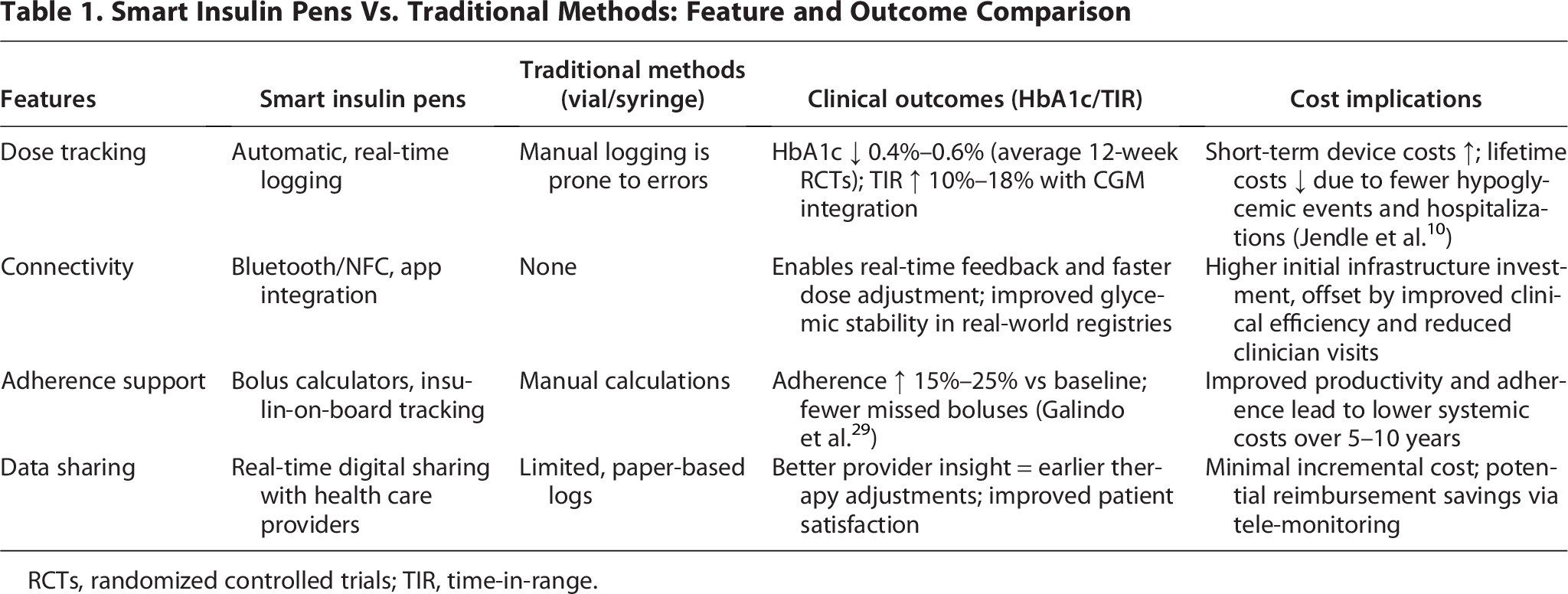
RCTs, randomized controlled trials; TIR, time-in-range.
Summary of Key Clinical Evidence Comparing Smart Vs. Traditional Insulin Pens

RCTs, randomized controlled trials; SIP, smart insulin pen; TIR, time-in-range.
Patient experience and feedback
Insulin pens are routinely favored by patients over syringe and vial administration, with advantages that go beyond convenience to include quality of life and treatment satisfaction. Despite equal glycemic outcomes, pen devices were significantly preferred by both patients and HCPs in a randomized crossover study of insulin-naïve individuals with type 2 diabetes. The patients cited ease of use and reduced treatment load. 26 In addition, a 48-week study revealed that, in comparison with their prior insulin delivery method, users of smart injection pens reported higher levels of pleasure, better psychological well-being, and less anxiety connected to diabetes. 34 These benefits have increased with the shift from conventional pens to those that are connected, or smart pens. According to a multicenter survey, 71% of users said linked pens were “very useful,” indicating that they required less mental effort to track and calculate doses than traditional pens. 35 High user satisfaction was also noted in a systematic assessment of connected pen systems, which was primarily fueled by real-time notifications, easy data exchange with clinicians, and simplified data recording. 20 Other benefits observed by patients include increased perceived autonomy in managing their diabetes, fewer missing bolus injections, and improvements in dosing confidence. 33 However, obstacles still exist. Although pens were highly preferred, many patients had little to no formal instruction, which resulted in mistakes, including neglecting to prepare the device before injection, according to qualitative research conducted among Black and Hispanic/Latino communities with type 2 diabetes. 36
Critical appraisal of the evidence
Smart insulin pens show potential to improve adherence, time in range (TIR), and patient satisfaction. 28 However, evidence is limited by small sample sizes, short follow-up, manufacturer sponsorship, heterogeneous outcomes, underrepresented populations, and variable integration with CGM and electronic health record (EHR) systems. 35 Reported effect sizes should be interpreted cautiously, with greater emphasis on independent, well-designed randomized trials and prospective registries for clinical guidance. 32 Most studies were short-term (≤12 weeks) and industry-funded, with limited independent replication.28,32 However, a few studies reported randomization or blinding, and external validity was restricted by homogeneous study populations. 32 Several of the cited cost-effectiveness and adherence outcomes derive from manufacturer-sponsored or industry-funded studies; therefore, these findings should be interpreted cautiously. Independent, peer-reviewed trials with transparent funding sources are required to validate real-world effectiveness and economic value.
Challenges and Limitations
Data privacy and security concerns
Smart insulin pens are part of the IoMT data chain (pen-smartphone app-cloud/EHR), and risks affect the entire lifecycle: device compromise (e.g., BLE sniffing, replay, or tampering), insecure mobile applications/SDKs, weak cloud controls, third-party analytics, and cross-border transfers. These risks may reveal sensitive dose histories, glucose-linked contexts, and identifiers, and even, when integrity is compromised, impact dose-calculation logic and patient safety.37–39 An examination of Terms of Service/Privacy Policies of European diabetes devices in 2023 revealed inconsistent disclosure, minimal EUDAMED registration of related applications, and inconsistent GDPR basis of transfer examples, revealing how companies find loopholes to operate even when their products are certified. 40
Regarding diabetes tech, in particular, recent changes focus on device cybersecurity requirements (e.g., IEEE 2621, DTSec/DTMoSt) and ongoing risk management according to the changing FDA guidelines, since connectivity (Bluetooth, Wi-Fi, NFC) adds the attack area to insulin delivery ecosystems. 41 Measures include end-to-end encryption with modern key management, powerful authentication/authorization (including at the app and API layers), secure OTA updates, privacy-by-design data minimization, granular consent and transparency around second use and transfers, and integration of device-specific conformance testing against sector standards (e.g., IEEE 2621) in hospital/vendor procurement. The importance of lightweight cryptography and robust protocol selection is that most IoMT endpoints are resource-constrained.37,38 Lastly, organizations must consider privacy risk to be colocated with cybersecurity risk and apply risk models with IoMT-consciousness across device, network, and cloud/EHR layer, and with auditable logging and red-team testing.37,41
Interoperability remains a fundamental barrier. There is inconsistent adoption of open standards (FHIR, HL7) across vendor platforms; consumer platforms (Apple Health, Google Fit) provide different APIs and data schemas, and many pen vendors provide proprietary cloud formats or closed APIs. This heterogeneity complicates integration with EHRs and with various CGM vendors.42,43 For instance, Apple Health and Android Health Connect employ incompatible data schemas, limiting cross-platform analytics. Standardized APIs (FHIR, HL7) remain underutilized by most manufacturers, impeding device-to-cloud data transfer. Recommendations added: (a) adopt and report on FHIR resources and standardized units for insulin dose and timestamps in future device publications, (b) require vendors to publish API specifications and data dictionaries, and (c) encourage independent interoperability testing during procurement. 44
Cost and accessibility issues
The adoption of smart insulin pens (SIPs) relies on the immediate cost of the devices/consumables, as well as the system costs of prescription, coverage, and support. Among the routine care providers, diabetes teams repeatedly mention insurance access barriers and prescribing process barriers as high-impact barriers to SIP access, despite their perception that the clinical benefits of SIP access surpassed the barriers. 22 In low- and middle-income contexts, affordability remains an even tighter limitation, as individuals usually cover the costs of delivering insulin and monitoring it themselves. The latest Indonesian facility and marketplace surveys, e.g., discovered that even a low-income worker would need a few days’ wages monthly to access analogue insulin, pen needles, a glucose meter, and strips, which would make persistent use of pen-based regimens and self-monitoring economically vulnerable. 45
Real-world use is low in even higher-resource systems because of initial training and system configuration requirements, intermittent clinician awareness, and fragmented procurement routes, with SIPs typically being promoted as a less expensive option to those unable or unwilling to use pumps but still encountering access frictions of their own. 46
To offset these obstacles, new economic data indicate that SIPs can be worth the money to payers and health systems. A projected Swedish cost-effectiveness analysis estimated SIPs would be dominant over standard care, improving quality-adjusted life-years and reducing lifetime expenditure through the reduction of diabetes-related complications. U.S. data support complementary findings that show a relationship between SIP initiation and reduced events of severe hypoglycemia detected by sensors and the hypothesized cost savings associated with hypoglycemia, reinforcing the argument for reimbursement and expanded coverage. 47
In general, some viable levers to enhance equitable access to SIP are reducing patient out-of-pocket payments (e.g., coverage of pens, needles, and compatible CGM/BGM), streamlining clinic workflows around prescription, and specific training on the part of clinicians and patients. 22
Adoption by health care providers
Although smart insulin pens (SIPs) are technically accessible and reimbursable, they can only be successfully integrated through HCP uptake. One of the most common obstacles is a lack of awareness and training: a survey has revealed that most primary care providers and even a few diabetes specialists are unaware of how devices and apps work or how to use and interpret the digital data about insulin dosage. 48 Such a lack of knowledge results in either under-prescription or inconsistent prescription despite evidence of clinical benefit.
The other obstacle is the workflow burden. SIP-generated information will need to be downloaded, distributed, and analyzed within time-out situations in clinics. Clinicians do not perceive the devices as reducing documentation workloads but as increasing workloads without smooth integration into EHRs. There are also questions of data overload, medicolegal responsibility of real-time monitoring, and who within the care team (physicians, nurses, educators) is responsible for acting on device warnings. 22
HCP adoption is further determined by reimbursement and regulatory context. SIPs in the U.S. and the EU occupy a gray zone between drug delivery devices and digital health tools; this makes it more complex to code, bill, and hold anyone accountable, and slows institutional adoption. Research points out that despite the reimbursement of devices, a lack of clear guidelines regarding training time, remote monitoring, and follow-ups is one of the reasons why clinicians do not widely recommend them. 49
On the optimistic front, it has been shown that provider trust and utilization markedly improve when HCPs are provided with structured training and when SIP data are incorporated into digital diabetes environments. Recent assessments of multidisciplinary clinics indicate that clinicians are appreciating the possibility to monitor compliance remotely, identify when patients have missed doses, and modify protocols more proactively—functions that are consistent with models of value-based care. 50
Clinical guideline positioning and population stratification
Current major diabetes guidelines, including the American Diabetes Association (ADA) Standards of Care and European Association for the Study of Diabetes (EASD) consensus documents, recognize digital tools as potentially useful adjuncts but do not recommend connected insulin pens as first-line therapy for all insulin-treated patients. Connected pens may complement pump or hybrid closed-loop approaches in type 1 diabetes when pump therapy is declined or unavailable, with the greatest benefit seen in patients on multiple daily injections who have poor adherence or high glycemic variability. 14 In type 2 diabetes, smart pens appear most beneficial for patients with missed boluses or erratic dosing, though evidence remains largely short-term. 51 Pediatric patients may benefit from caregiver-linked data sharing, while older adults may gain from dose reminders; however, both groups face usability and access barriers, and studies specifically powered for these subgroups are limited. 51 Evidence suggests distinct benefits between type 1 and type 2 diabetes users; type 1 users gain dosing precision, while type 2 users benefit primarily through improved adherence. Pediatric and geriatric groups face unique usability and affordability barriers. Integrating smart insulin pens into routine care requires alignment with the 2024 ADA Standards of Care and EASD consensus statements, which currently classify connected insulin pens as adjunctive tools rather than first-line therapy. Clearer clinical pathways are needed to define when smart pens should be initiated, how data should be incorporated into insulin titration algorithms, and what training is necessary for both patients and providers.
Pediatric patients particularly benefit from caregiver-linked data sharing and dose reminders that support adherence, while older adults often encounter usability barriers such as reduced dexterity, limited vision, and digital inexperience. Device manufacturers and health care systems must address these age-specific challenges through ergonomic design, simplified interfaces, and caregiver-inclusive education to ensure equitable access and safety.
Future Prospects of Internet of Things in Diabetic Care
Upcoming trends
The future landscape of IoMT in diabetes care promises significant advancements in enhancing smart insulin pens and expanding the integration of IoMT-based solutions into clinical practice. Innovations continue to enhance precision in insulin delivery, seamless data synchronization with continuous glucose monitors, and a user-friendly mobile interface that supports adherence and patient empowerment.9,52 Remote monitoring capabilities and integration combined with CGM devices are expected to become standard, enabling real-time insulin dose adjustments and improved glycemic control.1,53 These advancements will facilitate automated insulin delivery and efficient data sharing between patients and HCPs, enhancing personalized diabetes management and reducing hospital visits. The trend is toward more compact user-friendly, and AI-enabled devices that improve treatment adherence and outcomes. 15
Potential for AI integration
The integration of AI and ML has the potential to revolutionize IoMT devices such as smart insulin pens by enabling adaptive, data-driven insulin dosing strategies. AI algorithms can analyze diverse inputs, including glucose patterns, insulin absorption rates, carbohydrate intake, and patient-specific factors, to recommend optimized insulin doses and predict glycemic excursions before they occur. 54 This AI-enabled approach not only optimizes insulin therapy but also reduces dosing errors and prevents hypo- or hyperglycemia events. This real-time decision support can enhance patients’ safety and satisfaction while also potentially reducing the burden on health care systems. 1 Research suggests that AI can help adapt insulin therapy to the complex and variable nature of diabetes physiology, improving long-term metabolic control. 3
RL approaches optimize dosing policies through trial-and-error in simulated or retrospective datasets, but translating these models safely into clinical practice requires strong safety constraints and prospective validation. 2 Causal and hybrid models that combine ML with causal inference help distinguish correlation from true treatment effects, enabling personalized dosing recommendations and potentially improving patient outcomes. 1 Decision-support rule-based systems, such as adaptive insulin bolus calculators, can further assist clinicians while maintaining interpretability. 2
For clinical utility, algorithmic dosing support must demonstrate safety and efficacy, ideally through RCTs, provide transparent explainability, and obtain regulatory clearance when influencing dosing decisions. External validation across independent datasets, calibration for demographic subgroups, and comprehensive performance reporting, including sensitivity and specificity for hypoglycemia prediction and decision-curve analysis, are essential to ensure reliability and generalizability.55,56
Recent models such as the Bolus Advisor Algorithm, GluCoach RL, and Cambridge Adaptive Dosing System have demonstrated potential for safe insulin titration in pilot settings, though large-scale validation is pending.57,58
Broader implications for health care
Innovations driving IoMT in diabetes management extend beyond glucose control to broader health care applications. Technologies like the smart insulin pen exemplify how digital health solutions can be designed for other chronic disease states requiring continuous medication optimization, such as hypertension, heart failure, and respiratory disorders. 59 By enabling continuous patient monitoring, real-time data sharing, and automated alerts, IoMT fosters more efficient health care delivery models, improving both individual health outcomes and the utilization of health care resources across systems. 4 In addition, IoMT can empower patients to take a more active role in self-management, ultimately enhancing engagement and adherence across diverse health care settings.
Study Limitation
The incorporation of IoMT and smart insulin pens in diabetes management has made significant progress, but despite that, several limitations remain. There are challenges related to data interoperability because many IoMT devices lack standardized protocols; as a result, it is difficult to make flawless integration and data exchange across platforms. 1 Security and privacy concerns are another major barrier to patient health data being transmitted through connected devices, as there is a high risk of unauthorized access, breaches, or cyberattacks, and evolving hacker strategies. Practical operational challenges also persist that include high initial expenses, limited insurance coverage, and infrastructure demands that may restrict widespread implementations in low-resource settings.22,60 In addition, despite the availability of IoMT technology, both health care professionals and patients can face difficulty in implementation due to a lack of awareness, insufficient training, and resistance to new workflows. There is a critical need for prospective, independently funded long-term randomized trials and well-designed registries that (a) quantify clinical endpoints (HbA1c, TIR, severe hypoglycemia), (b) measure cost-effectiveness from payer and societal perspectives using local cost inputs, and (c) evaluate implementation outcomes (usability for older adults/children, training burden for HCPs, and interoperability in routine EHR workflows). Bolded change: more specific recommendations for research.
A formal meta-analysis was not conducted due to significant heterogeneity in study designs, sample sizes, and outcome definitions. However, across independent randomized and real-world studies, the median HbA1c reduction ranged from 0.4% to 0.6%, with consistent improvements in TIR and adherence metrics. These findings suggest moderate clinical benefit, pending confirmation from larger, long-term trials.
Conclusion
This study revealed that smart insulin pens are a great advancement in diabetic care. Conventional methods of diabetes management are associated with problems such as dosing mistakes and lack of proper patient adherence. Insulin pens greatly reduce these problems and allow continuous monitoring of patients by connecting the glucose monitors and mobile applications. This study also found that the use of these pens leads to better blood sugar control, smoother patient management, and improved quality of life. However, it cannot be fully benefited from these devices without making them more secure, affordable, and easy to use for both patients and clinicians. Future research should be more focused on improving the long-term clinical benefits and making these devices more cost-effective and compatible for use in real-life clinical settings.
Authors’ Contributions
All authors made substantial contributions to this study. M.O.O. has contributed to the conceptualization of ideas, project administration, supervision, and reviewing and editing. R.A.: Writing and supervision. D.R., S.J., A.A., U.A., A.S., M.A., U.K., S.W., and S.u.R.: writing of initial drafts. M.K.: Review.
Footnotes
Author Disclosure Statement
The authors declare that there are no competing interests regarding the publication of this article.
Funding Information
This research did not receive specific grants from public, commercial, or not-for-profit funding agencies.
Transparency Statement
All the authors have approved the submitted version and have agreed both to be personally accountable for their contributions and to ensure that questions related to the accuracy or integrity of any part of the work, even ones in which they are not personally involved, are appropriately investigated, resolved, and the resolution documented in the literature.
Provenance and Peer Review
Not commissioned, externally peer-reviewed.