



Abstract
Smart wearables have evolved from merely data storage tools to patterns that closely interact with our bodies, brains, and emotions, aiming to enhance human capabilities. This paper systematically examined the approaches by which smart wearables enhance human capabilities via integrating concepts from materials science, cybernetics, and other diverse fields. Additionally, a hierarchical framework was built by linking physiological, cognitive, and emotional domains with the tailored material structures, sensing and interaction architectures. Four core development paths were identified: moving from simple human–machine collaboration to interdependent coexistence between them; incorporating sensor technologies with soft robotics to boost human perception and locomotor functions; transforming from only performance improvement to human–machine co-creation; and addressing ethical and environmental challenges including data management, equitable access and environmental protection. Apart from that, this study further pinpoints that smart wearables will evolve in a spiral manner driven by the interplay of materials, technology, and design, slowly progressing from passive sensing to active empowerment. In future, the research of wearables is not only about developing more “intelligent” products, but also about constructing an intelligent technological system that balances efficiency & empathy, intelligence & ethical responsibility, and innovation & ecological awareness. From this point of view, smart wearables are a manifestation of technological advancement and a carrier of cultural evolution, which will propel the continuous evolution of the human–machine connection paradigm through human-centered and sustainable design.
Introduction
In the 21st century, significant advances in artificial intelligence (AI), advanced materials, and human–machine integration technologies have led to a new paradigm called “Human Augmentation” (HA) (Kong et al., 2025). Enhancing human physical, cognitive, and affective abilities via smart systems has evolved from science fiction movies into a new research domain that includes both technological development and philosophical reflection. During this process, as an intimate interface between human physiology and AI systems, smart wearables contribute significantly to transforming the ways humans perceive, act, and interact (De Boeck & Vaes, 2024).
Tracing earlier to the beginning 2000s, wearables chiefly served as tracking devices, acquiring data like skin temperatures and heart rates, and were applied in healthcare, fitness, and daily well-being fields (Ometov et al., 2021). However, over the past decade, they have experienced a remarkable shift. Specifically, they have progressed into dynamic systems capable of responding to users’ states, adjusting physiological processes, and reframing interpersonal interactions (Patel et al., 2012). Multiple factors contribute to the shift. The first reason is that AI and edge intelligence make wearables process continuous sensing and adaptive learning capabilities. Second, progress in materials science such as soft electronics, biofriendly materials, and thermoregulatory textiles enables closer and more comfortable integration of devices with the human body. Third, the post-pandemic requirement for stronger psychological resilience, remote work, and emotional bonding further accelerates the transition of wearables from “tools” to “partners” (Stoppa & Chiolerio, 2014). All of these things have changed how people are with machines, making them see technology not just as something outside themselves but more like a helper that works with them and changes along with how their bodies and actions work (Jiang et al., 2024).
Though there is considerable technology development, the humanistic view of this change is still restricted. The current discussions about smart wearables mainly center on the engineering performance, market growth, and medical applications of smart wearables, whereas discussions about ethical issues, experiential issues, and existential issues concerning smart wearables are relatively much less (Segura Anaya & Alsadoon, 2018). There is a fair amount of review talk to technology progress like hardware, sensors, and algorithms. Few have offered the humanist and design thinking perspective on where the whole framework of human & machine relationship, culture, and ethical responsibility stands in this context (Arias-Oliva et al., 2024). As such technologies become more part of our bodies, there are questions to be asked about how they will affect society. Wearable augmentation is redefining what it means to be human, creating new senses and dependencies (Sui et al., 2023). Designers and researchers must think of how to make sure that these technologies improve, instead of lessen human agency and dignity (Capulli et al., 2025). However, the rapid advancement of technology has left the study of its potential and limits far behind. The developments of smart wearables bring significant implicit costs. Specifically, during human abilities enhancement, reliance on technology grows ever stronger, privacy and authority are merging into one another, and the uneven ability to acquire technology is exacerbating the digital divide. However, current studies mainly focus on boosting technological force rather than exploring what might be sacrificed to achieve this.
To fill this gap, an interdisciplinary review was conducted to link material innovations and design paradigms with human experiences and social meanings. Specifically, the ways in which smart wearables have progressed as tools for human augmentation were examined. In addition, four related objectives were proposed to lead this investigation. Noteworthy is that the technical aspects of wearables as well as their concepts from cybernetics, embodied cognition and posthumanism philosophy are explored.
Cybernetics theory, put forward by Norbert Wiener, views wearables as closed-loop systems where sensing, computing, and execution form a continuous feedback loop for adaptive regulation of human–machine interaction “feedback loop” (Clark & Chalmers, 1998). Embodied cognition stresses the coupling between perception and action, with cognition coming from the body and devices together, so wearable systems become a significant part of the sensory-motor cycle “perception–action coupling” (Haraway, 1985). Posthumanism philosophy is focused on the co-evolution of humans and technology, and a human’s wearing augmentations blur lines and give way to hybrid identity (“human–machine co-evolution”) (Guerrero and da Silva, 2022).
Therefore, this review has the following inter-related goals: (1) To explore how smart wearables have evolved in human augmentation, tracing the journey through distinct phases (from industrial origins to symbiotic augmentation) and identifying the turning points that marked the key innovations of later eras. (2) To classify the major types, theories and technical methods of augmentation building a multi-level framework that connect physical, sensory, cognitive, affective, and social-ethical augments with their design principles and enabling technologies. (3) To review the key people, milestones, and ideas in wearable technology, examining how shifts in design thinking continuously negotiated the tensions between human control, dependence, and empowerment. (4) To explore the implications of smart wearables for life, work, and the environment, evaluating their impact on human identity, labor transformation and the emergence of a symbiotic and co-adaptive dynamic with smart ecosystems.
To outline this review, a systematic analytical framework is presented to scrutinize smart wearables for human augmentation. It integrated three interlinked dimensions, that is, material, technical, and design, with the core domains of human augmentation, that is, physical & sensory, cognitive & affective, and social & ethical aspects. In addition, by combining functional augmentation requirements with hierarchical human–machine integration (HMI), it identifies the cooperative effect of material intelligence, closed-loop regulation and embodied HMI, and shows the development of smart wearables from merely assistive tools to human–machine symbiotic systems. Furthermore, a foundation for comparing wearables technologies, analyzing development patterns, and examining human-ethical impact were provided.
Literature Search and Selection
Literature Search Method
A systematic review methodology was performed, comprehensively retrieving databases including Google Scholar (1920–2025), Web of Science (1949–2025), Science Direct (1949–2025), and Scopus (1949–2025). Keywords used for retrieval included: human augmentation, smart wearables, wearable technology, affective wearables, exoskeleton, sensory augmentation, cognitive enhancement, human–machine symbiosis, embodied intelligence, and so on. To ensure a rigorous and complete search process, Boolean operators “AND” and “OR” were used to combine the above keywords for systematic retrieval. Furthermore, additional publications including review articles were tracked by examining the references listed in the searched results. To avoid possible omissions, the research was continued until the paper was submitted to a journal.
Screening Criteria
After a systematic search, a total of 6538 relevant articles were produced. To select the included studies, a stepwise screening framework with the specific process, strictly following the research topic, were described in Figure 1. The Selecting Process of the Publications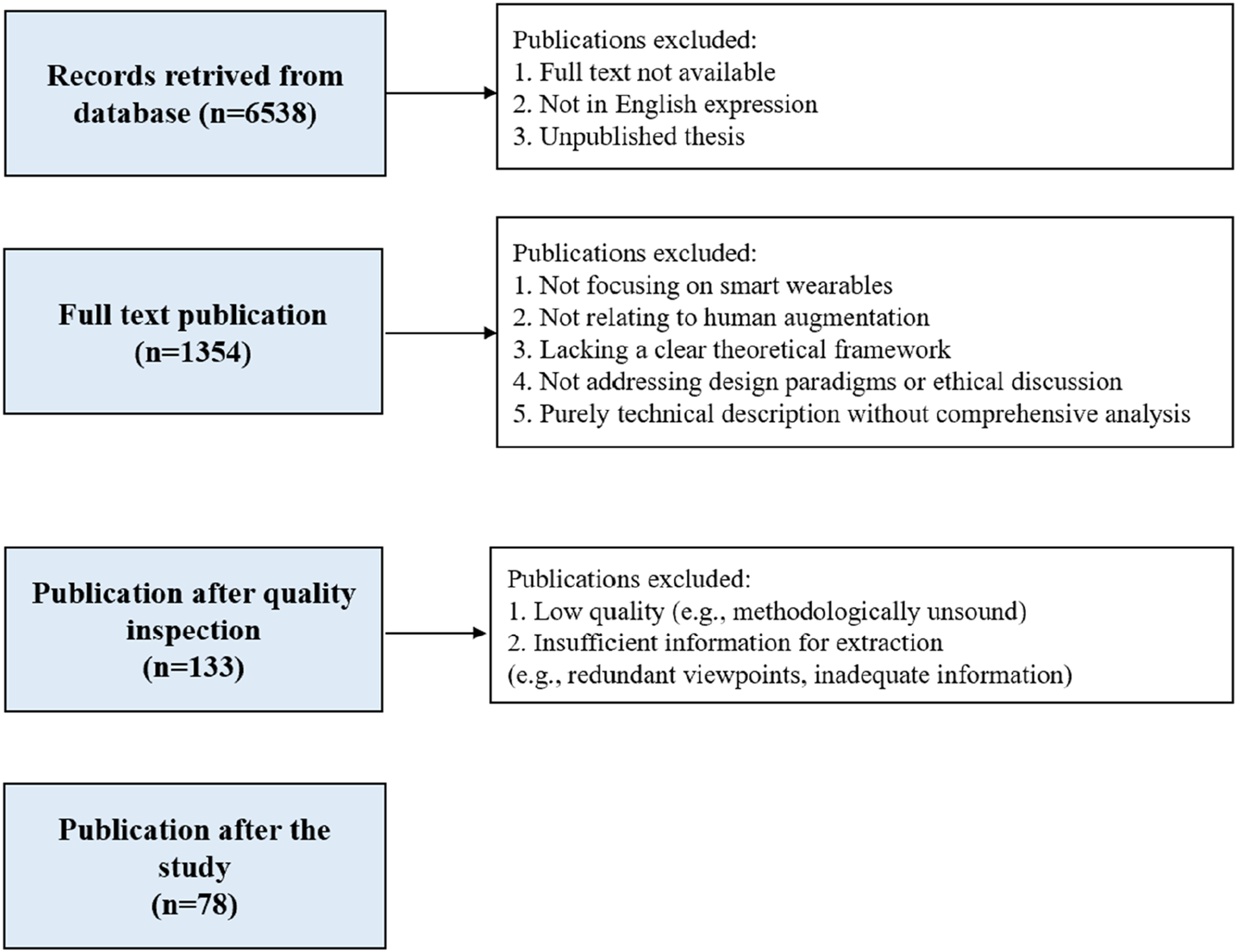
After preliminary selection, studies that were not expressed in English, and those only included abstracts and unpublished were excluded, and 1354 articles were retained for full-text review. Following this, five key content criteria for evaluation were established: (1) tethering the studies in smart wearables; (2) clearly addressing human augmentation as a core concept; (3) applying a structured framework for analysis; (4) demonstrating a well-structured research design and thorough analytical scope; (5) not only focusing on practical application and further exploring the theoretical aspects; (6) excluding studies showing obvious methodological limitation, ambiguous study designs or insufficient detail for reliable synthesis.
Following the aforementioned screening process, a total of 78 high-quality articles was screened to facilitate deeper investigation and systematic integration.
Literature Analysis and Synthesis
A systematic reading and qualitative thematic synthesis were performed. A thorough examination and collation of relevant publications were conducted, and key contents were extracted, including research goals, technological methods, enhancement types, and application fields.
On this basis, several key stages of technological development were analyzed and the functional types of the studies were categorized. In addition, the evolution of material innovations and design philosophies were primarily discussed, and the co-evolution of humans and machines promoted by smart wearables were explored from a theoretical perspective (e.g., cybernetics theory).
To promote the clarity and accessibility of the studies, charts, case comparisons, and visual aids to demonstrate the characteristics of typical products in fields (e.g., sports, healthcare) were shown. In addition, the widely concerned ethical issues (e.g., data privacy) and environmental challenges (e.g., electronic waste management) were also discussed.
Theoretical and Conceptual Foundations
Definitions and Typology of Human Augmentation
Definitions of Human Augmentation
Human augmentation is a broad term that refers to the extension or improvement of human physical, sensory, cognitive, and affective capacities through technology (Chignell et al., 1999). In disciplines such as design, engineering, human–computer interaction (HCI), and philosophy, the idea has been understood differently, but it usually involves bringing together human and computational systems to expand or change human function (Raisamo et al., 2019). Scholarly attention is increasing but no universal definition is accepted as approaches range from biomedical assistance to posthuman symbiosis (Prattichizzo et al., 2021).
Augmentation generally refers to a human-technology coupling that extends, substitutes for, or enhances one of our intrinsic capabilities, achieved via wearable, implantable, or immersive technologies that push at the boundaries between the organic and the artificial (Zhang et al., 2024). Augmentation in the HCI context refers to body-integrated digital technologies which allow for sustained meaningful interaction within one’s own environment, without loss of autonomy and agency (De Boeck & Vaes, 2024).
Typology of Human Augmentation
Human augmentation can be explained by two inter-related aspects, that is, functional and systemic dimensions, which define what needs to be enhanced and how is it enhanced. Specifically, functional dimension refers to the specific capacity that is being increased: physical, sensory, cognitive, and affective (Anderson, 2003; Cornelio et al., 2022; De Boeck & Vaes, 2021). These categories describe the inherent targets for augmentation at the level of the body and mind: physical augmentation enhances motor skills by physically strengthening or supporting them with structural reinforcement, actuation, and wearable robotics; sensory augmentation enhances perception using haptic, optical, or auditory sensors; cognitive augmentation increases mental capabilities such as memory, reasoning, or decision-making through AI-assisted computation and adaptive feedback and affective augmentation interprets and modulates emotions using multimodal sensing and real-time feedback mechanisms. Importantly, different functional dimensions mean different technological dependencies and design logics. In particular, physical improvement depends on sturdy frameworks and actuation, while cognitive and affective boosting more on advanced sensing, computing, and interaction feedback, not heavy mechanical systems (De Boeck & Vaes, 2021). This relationship shows how a function of augmentation creates a shape for what that thing should be made of and how it should be designed.
From a systemic perspective, human augmentation, as a continuous process evolving from assistive to supplementing and ultimately to symbiotic systems, indicates an increasing proximity and intimacy of HMI (Chignell et al., 1999). In practical applications, these types manifest as different forms of HMI, that is, assistive technologies replacing lost capabilities with external and task-specific systems, supplementary systems extending performance beyond human capability, and symbiotic systems, such as smart garments, skin patches, or implants, continuously co-adapting with the body (Chignell et al., 1999). The degree of HMI directly governs the type of smart wearables people choose, the mode of wear, the way users interact, and the degree the devices can be.
Theoretical perspectives can help the understanding these augmentation dimensions. Building on cybernetic theory, embodied cognition and the philosophy of posthumanism, human augmentation represents a mutual adaptive system between human and smart technology. Such theories demonstrate that augmentation stems from ongoing feedback and mutual evolution between humans and machines, not merely by simple prosthetics. Hence, successful augmentation depends on both technical performance and the holistic integration of user experience, perception, identity, and socio-cultural factors (Clark, 2008; Duus et al., 2018). However, the theoretical frameworks often embrace an optimistic vision of progress, and they may ignore the darker sides of augmentation. For example, while cybernetics stresses adaptive feedback loops, it rarely raises the issue of who governs these loops. While embodied cognition emphasizes HMI, it may minimize the perception of disconnection induced by ill-fitted systems. Thus, it is crucial to undertake a critical examination of these theories to uncover the operative forces and tacit norms underlying within the narrative of technological enhancement.
Core Components of Smart Wearables
Wearable technologies improve humans by adding to our bodies with materials, technology, and designs that help us perform better at sensors, soft robots, and wearables.
Material Dimension
The material dimension focuses on how different materials are combined and structured to ensure the system functions effectively. Figure 2 shows the material dimensions of the smart wearables. It includes conductive and flexible materials that make body-conforming circuits, biocompatible substrates that are comfortable and safe, and textiles that can adjust to temperature and moisture (Ates et al., 2022; Li et al., 2022; Tang, 2025). In addition, it includes energy harvesting and storage elements power active operation, and functional coatings and thin films to enhance durability and integration (Majumdar et al., 2010; Tang, 2025; Thirumalai et al., 2024; Yi et al., 2018). For instance, soft sensors support affective augmentation by providing emotional feedback, whereas bio-inspired actuators facilitate physical augmentation, demonstrating a direct mapping between material selection and functional objectives (Li et al., 2022; Thirumalai et al., 2024). And, sustainability and lifecycle stuff are increasingly critical, as material choices directly influence environmental impact and device ecological footprint (Majumdar et al., 2010). The Material Dimension of the Smart Wearables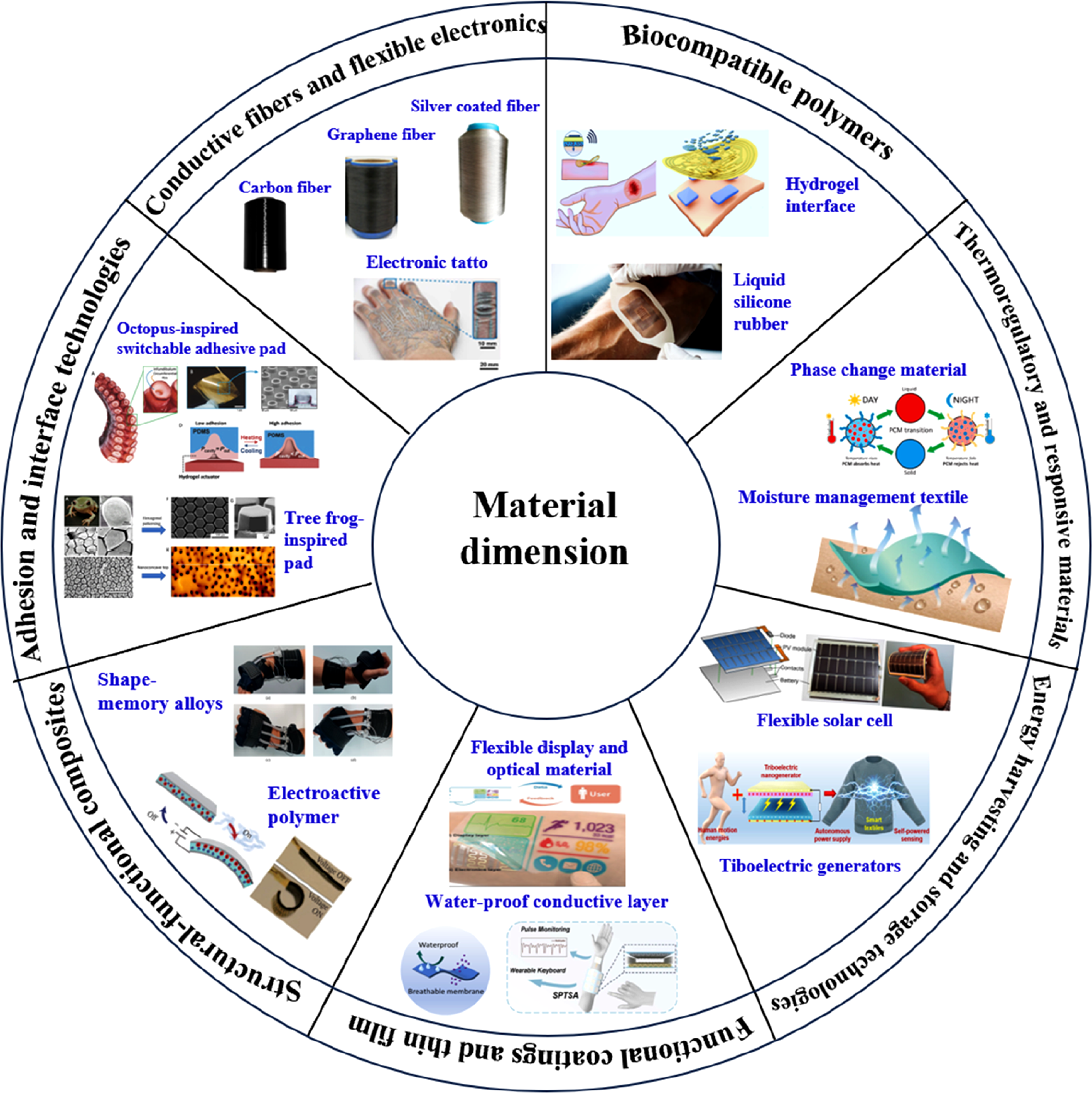
Technical Dimension
The technical aspect of smart wearables adheres to a sensing–computing–communication–feedback paradigm (Clark & Chalmers, 1998; Fu et al., 2025; Górriz et al., 2023; Jeong et al., 2025; Ji et al., 2025; Liu et al., 2024; Lottridge et al., 2011; Lu et al., 2022; Munshi et al., 2022; Zhang et al., 2025), which enables the implementation of cybernetic loops for continuous adjustment and accommodation. Figure 3 shows the typical framework of wearables. Sensing gathers multimodal data from body, environment, and context, fusing signals from accelerometer and IMU, thermal and optical sensors, biosignals, and other physiologic monitors for state estimation and context awareness (Górriz et al., 2023; Ji et al., 2025; Munshi et al., 2022; Zhang et al., 2025). Computation exploits local/embedded processing, signal analysis, machine learning, and adaptive algorithms for real-time operation in devices like exoskeletons or cognitive-assist wearables (Jeong et al., 2025). Communication coordinates data exchange between wearables and external devices and cloud systems for cooperation and interoperability (Górriz et al., 2023; Ji et al., 2025; Munshi et al., 2022; Zhang et al., 2025). Feedback and actuation give out haptic signals, mechanical assistance, sensory substitution, or multimodal boost, creating a circle from sensing through functional reaction. This closed-loop architecture follows Wiener’s classical cybernetic control logic (Wiener, 1949). As he puts it, “the physical functioning of the living individual and the operation of some of the newer communication machines are exactly parallel in the sense that they all try to control entropy through feedback…in both the animal and the machine their action on the outside world… is reported back to the center,” pointing out that good control requires constant reporting and regulation of the system’s state. A Typical Framework of Wearables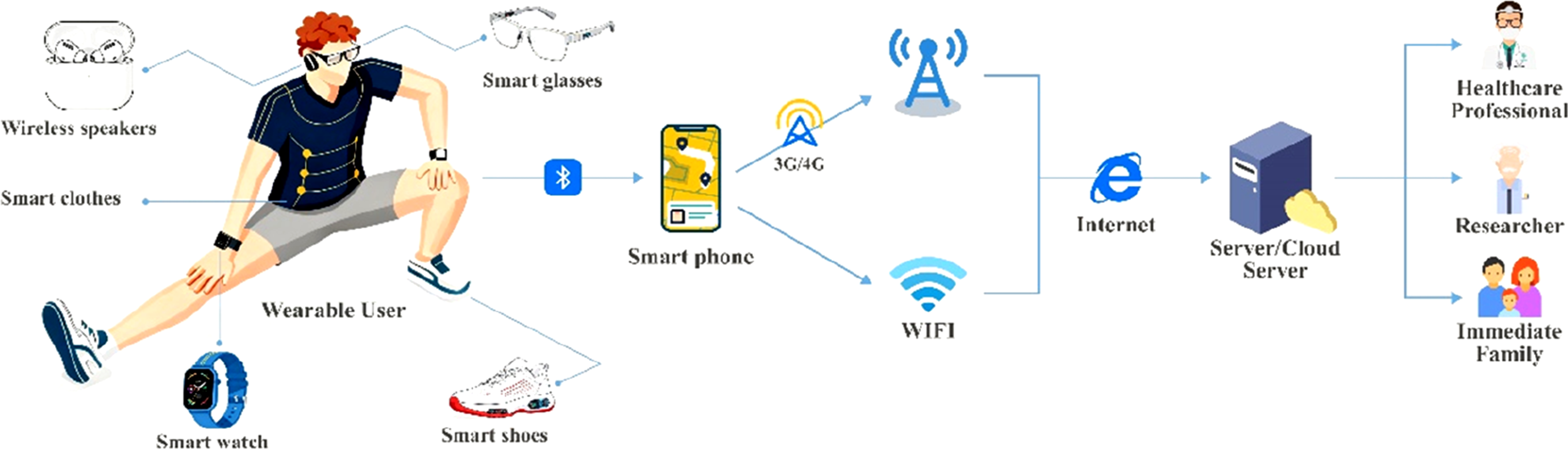
Beyond mechanical and physiological augmentation, cognitive and affective systems require adaptive feedback for continuous modulation of perception, decision-making, and emotional states (Lottridge et al., 2011; Lu et al., 2022). Low-power design, data security, privacy protection, and scalable modular structures further ensure that technical functions effectively translate material and structural features into meaningful human augmentation (Górriz et al., 2023; Lottridge et al., 2011; Lu et al., 2022; Zhang et al., 2025). It demonstrates how cybernetic loops extend into physical sensations and experiences, connecting technology directly to a person’s feelings and behaviors.
Design Dimension
Design dimensions for wearable technology focus on how a device fits with a user’s body, mind, and society (Almeida & Santos, 2025). Human–machine coupling takes into consideration fit, degrees of freedom, natural movement, and control methods that separate assistive devices from performance enhancing ones (Almeida & Santos, 2025). Bio-inspired frameworks such as CPG and DMP help to adapt and achieve natural movement pattern for wearable robot, and to support coordination of movement and intuitive control (Adapa, 2016; Rosenberger & Verbeek, 2015). Interaction design focuses on embodiment, comfort, emotional experience, and identity, all of which tie to real-world perception–action loops, where devices use continuous physical feedback to keep users informed. Wearables can integrate with the body schema to reinforce self-perception, but inadequate integration may lead to a sense of disconnection (Almeida & Santos, 2025). As Rosenberger and Verbeek (2015) state, these sorts of embodied couplings create cyborg relationships, and so design facilitates human–machine coupling as a lived experience and an ethical relationship.
The design of wearable devices is not just about functionality; it also reflects social and cultural meanings (Adapa, 2016). Their look, visibility of technology, and expressive elements influence social perception, identity display and acceptance. While, design factors such as symmetry, color contrast, and overall aesthetics affect user preferences. In short, the design makes augmentation not only useful but also culturally meaningful, combining creativity with materials with consideration of their impact on teamwork, work practices, and the environment.
Historical Evolution and Key Milestones
Chronological progression of human augmentation by means of smart wearables can be classified into four unique periods: the Industrial Origins (Phase I), Digital Monitoring (Phase II), Intelligent Connectivity (Phase III), and Symbiotic Augmentation periods (Phase IV) (Figure 4). Each field has its crucial technologies, milestones, and key contributors, and recent review articles and landmark studies provide the foundation for the historical and technological discussion in the following chapters (Baltimore, 1994; Foster et al., 1972; Khan et al., 2025; Kupfer et al., 1972; LifeBEAM, nd; Lu et al., 2024; Mann & Fung, 2002; Polar Electro Oy, nd; Severinghaus, 2007). The Chronological Development of Human Augmentation via Smart Wearables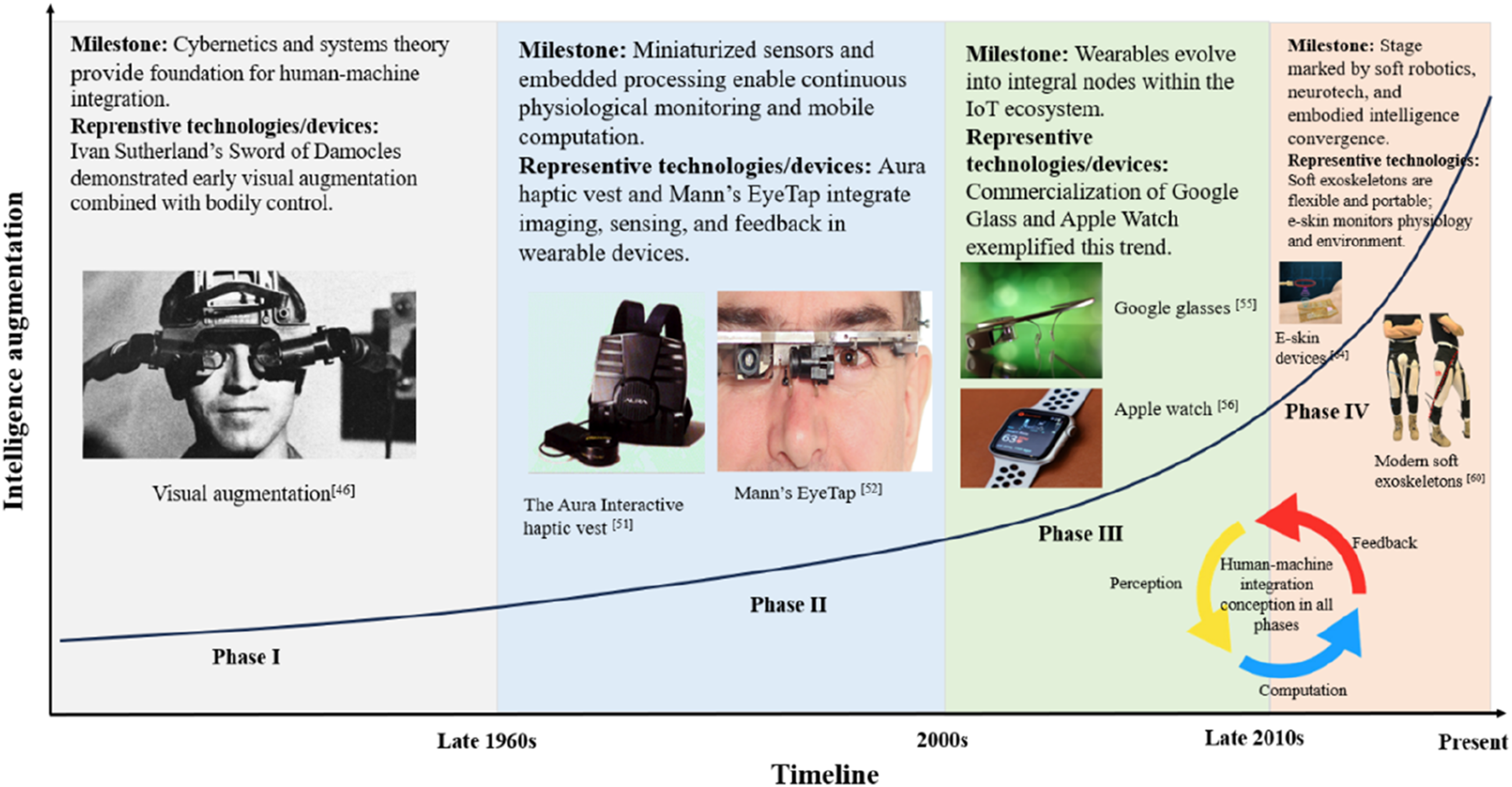
Phase I: Industrial Origins (1950s–Late 1960s)
Step one heavily took from the field of cybernetics and systems theory, which formed a theoretical base to connect humans and machine. The earliest event of this phase dates to the 1950s when Norbert Wiener proposed that humans and machines both function as feedback systems, meaning they can regulate and control themselves. In Wiener’s book, nervous system and machine controllers were compared, revealing insights into errors, signals and internal balance (Wiener, 1949). It provided a rigorous model for understanding human–machine interactions. It also laid a foundation for subsequent experimental studies that integrated human sensory-motor functions with mechanical or electronic devices. By the late 1960s, Ivan Sutherland’s Sword of Damocles had brought early forms of visual augmentation integrated with bodily control (Baltimore, 1994). These explorations pointed that the wearables were a manifestation of human sensorimotor feedback, prefiguring Wiener’s vision of adaptation and regulation in living machines. Later, this cybernetic framework plays a key role in adaptive and symbiotic design methods in wearable technology.
Phase II: Digital Monitoring (1970s–2000s)
The second phase saw sensors get smaller and computation being done inside the devices, enabling continuous monitoring of our body’s functions and portable feedback systems. The earliest of the source events comes from around the early 1970s with Foster et al. (1972) and Kupfer et al. (1972), who were the first to utilize telemetric mobility data to estimate the sleep and wake cycles of psychiatric patients, indicating that movement data was reliable enough to predict the individual’s sleep pattern within a 24-hr period with relatively low-cost, wrist-based devices. In 1972, Takuo Aoyagi developed the first pulse oximeter for measuring blood oxygen saturation, which was later commercialized in Japan in 1977 and in the USA in 1980 by Minolta and Biox, respectively. In 1978, Polar introduced its first commercial heart-rate-monitoring wristband, the Tunturi Pulser, and began the era of wearables, wireless cardio monitoring (Polar Electro Oy, nd). Early examples of these kinds of devices can be seen in health and sports monitoring with integrated embedded sensing and wireless communication into a wearable form factor. Building on this, milestones like the Aura Interactive Haptic Vest and Steve Mann’s EyeTap prototypes integrated imaging, sensing, and control in a wearable form (Khan et al., 2025; Mann & Fung, 2002). These innovations gradually moved wearables beyond just laboratory setups, taking them closer to daily sensory enhancements. During this period, research on haptic and perceptual interface emphasized distributed cognition and embodied feedback. These studies laid the technical and theoretical groundwork for sensory augmentation and human–computer symbiosis in later decades.
Phase III: Intelligent Connectivity (2010s–Late 2010s)
In the third phase, the integration of wearables into the IoT system, facilitates real-time data connectivity and smart feedback, marking a remarkable step toward ubiquitous, data-driven human augmentation. One important source event happened around 2011, when WIMM Labs launched a modular Android-based wrist-computer, the WIMM One, which had Wi-Fi and Bluetooth connections, could support micro-apps, and made it possible for always-on, internet-connected wearables. LifeBEAM was also founded at this time to place optical biometric sensors inside high-performance helmets for real-time wireless transmission of physiologic data and foreshadowed future consumer-grade IoT wearables (LifeBEAM, nd). These advances provided the technical and business basis for later commercial products such as Google Glass, Apple Watch, and smart e-textiles (Bexheti, 2020; Lu et al., 2024). These systems gathered physiological, behavioral, and contextual info to back personalized health care, environmental sensing, and anticipatory interventions (Bexheti, 2020; Lu et al., 2024). Narrative Clip and Autographer, devices that assist people to record and track everyday experiences and extend their thinking and memory beyond the body (Bexheti, 2020). Beyond being mere tools, they help interactive augmentation of human intelligence which is sensitive to the context of people, nature, etc.
Phase IV: Symbiotic Augmentation (2020s–Present)
Current phase is soft robotics, neurotechnology and embodied intelligence converging into wearables becoming co-adaptive and multimodal systems. Its roots are to be traced through key technology and research turning points that range from the first concepts through early practical applications over the years 2013–2020. Conor Walsh and the Harvard Biodesign Lab developed the first textile-based soft exosuit with lightweight, compliant structures to aid ergonomically in human motion. Yang’s group at the University of Edinburgh developed the first flexible e-skin which enabled continuous sensing of physiology and the environment (Leogrande et al., 2025). The theoretical basis of BCI was laid down in the 1970s by Jacques Vidal at UCLA (Vidal, 1973). These ideas would eventually be applied to the practical in the 2020s, with a concrete example being Neural ink’s N1 neural implant allowing for direct mental control of outside systems (Neuralink, 2025). At the same time, Metin Sitti’s work on soft robotics introduced the idea of embodied intelligence by embedding sensing and actuation directly in flexible structures (Zhang et al., 2024). Together they have redefined the human–technology interface: Soft exosuits give adaptable motion support, e-skin platforms make continuous tracking possible, and neural implants take control of the mind and body outside the organic body (Neuralink, 2025; Verma et al., 2021). Collectively, they signal a posthuman shift in which cognitive, sensory, and motor functions span both organic and synthetic agents, giving rise to co-evolving intelligence that reshapes human perception and identity.
Regularities in the Technological Development Pattern
Technological growth of smart wearables has a definite pattern of development based on technology and a clear pattern of development with milestones and a growing system. Unique characteristics were observed in each phase. In phase I, a conceptual and theoretical grounds for human–machine feedback was established. In Phase II, real-time biological monitoring through small-scale sensors and portable devices were realized. In Phase III, coupling wearables into the IoT environment were achieved, achieving data-driven, user-adaptive augmentation. In Phase IV, mutually adaptive symbiotic systems appeared, integrating soft robotics, electronic skin, and neural interfaces to augment sensory cognitive and physical capabilities. Throughout each phase, wearables have progressed from simple user assistance toward greater intelligence, proactivity, and personalization. However, the narrative of technological progress often hides the technological closures, failures, and unanticipated results that also define the field. For instance, healthcare privacy violations have continually undermined social confidence. Earlier exoskeletons were frequently discarded owning to economic impracticalities and ergonomic issues. Such conflict reveals that technological advancement is far from a smooth, linear process; rather, it is really about tough choices, roadblocks, and never-ending moral dilemmas.
In future developments, smart wearables are projected to further highlight deeper multimodal integration, adaptive personalization, and human-in-the-loop co-evolution. Developing directions are AI-powered predictive augmentation, smooth neuroadaptive HMI systems, and hybrid living-digital systems capable of dynamically responding to both environmental and physiological states. In all, this view highlights that “augmentation” includes not only usability but also the sensory, social, and cultural ways through which a technology link ideas. These links ultimately affect our thinking patterns, approaches to work, and interactions with the natural environment, further examined later in this study.
Domains of Smart Wearable Augmentation
Domains of Smart Wearable Augmentation
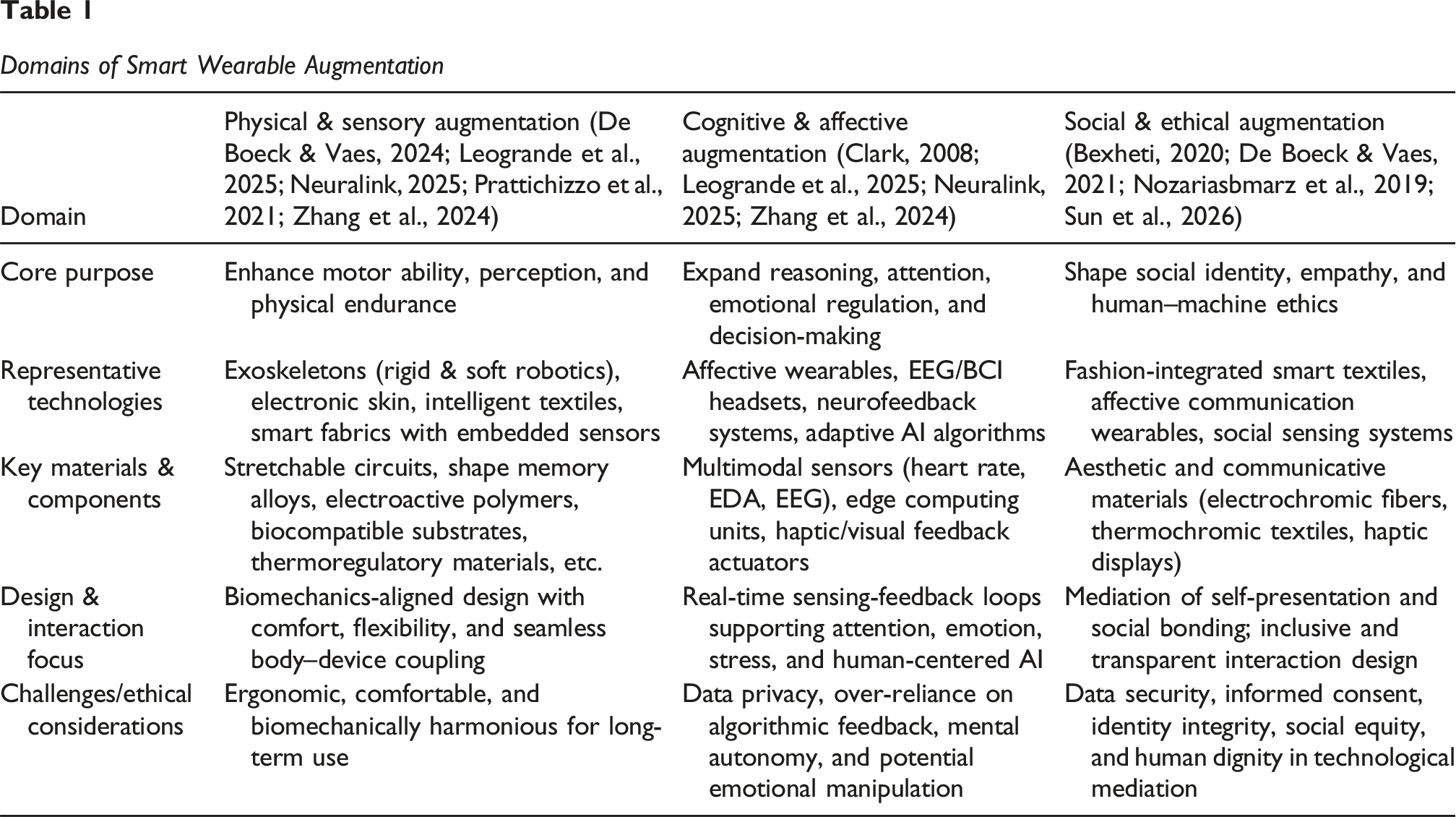
Physical & Sensory Augmentation
Physical & sensory augmentation enhance human physical and perceptual capabilities through integrated wearables (Clark & Chalmers, 1998; De Boeck & Vaes, 2024; Geddam et al., 2022; Liu et al., 2025; Prattichizzo et al., 2021; Silva et al., 2023; Zhang et al., 2024). For instance, from rigid industrial structures to soft robotic suits, exoskeletons increase strength, endurance, and precision. Electronic skin and smart textiles have incorporated sensing-actuation networks to achieve high-resolution capture of tactile, thermal, and environmental signals (Geddam et al., 2022; Harborth & Kümpers, 2022; Liu et al., 2025; Silva et al., 2023). A feedback loop is developed through integrating flexible circuits, conductive fibers and sensitive polymers, which manifests Wiener’s pioneering concept, that is, human body perfectly engages with its environment through cybernetic control.
This domain is supported by a material-driven design. The flexibility, wear resistance, and reactivity of smart wearables are governed by functional materials, involving electroactive polymers, shape memory alloys, and biocompatible substrates (Sun et al., 2026). Long-term stability could be ensured by energy-harvesting materials, and ecological footprints could be reduced by eco-friendly materials (Nozariasbmarz et al., 2019). When material design coordinates with human biomechanics and perception, augmentation exceeds mere mechanical assistance and merges with the body, becoming part of its sensory-motor system. It illustrates embodied cognition, highlighting that our perception is shaped by the actions we can take and the ways we can interact with the world.
Cognitive & Affective Augmentation
Cognitive & emotional augmentation improves how people think, focus, and handle feelings using adaptive feedback and brain–computer integration (Clark, 2008; Geddam et al., 2022; Harborth & Kümpers, 2022; Liu et al., 2025; Silva et al., 2023). Affective wearables monitor many signals like heart rate, skin conductance, tiny face expressions to notice emotions, and offer quick touch or sight reaction that cuts down tension, improves empathy, and makes feelings steadier (Geddam et al., 2022; Liu et al., 2025). Moreover, they share emotions to regulate the group and maintain cultural ties (Sun et al., 2026). Likewise, neurofeedback systems that use wearable EEG or brain–computer interfaces can monitor brain activity that is linked to attention, memory, and fatigue (Geddam et al., 2022; Harborth & Kümpers, 2022; Liu et al., 2025; Silva et al., 2023). With the development of AI algorithms and edge computing, these systems can respond instantly by adjusting the speed, suggesting breaks, or modifying stimuli, so that the device can take part in mental processes, becoming the extended mind, allowing the device to actively participate in cognitive processes and embody the concept of the “extended mind.”
Moreover, this domain raises tough issues on how we are going to govern the huge amounts of data we are producing and the use of algorithms (Geddam et al., 2022; Harborth & Kümpers, 2022; Liu et al., 2025; Silva et al., 2023). Due to the real-time capture of affective & cognitive data using wearables, questions about consent, bias, and interpretive transparency appear. It is thus important to keep trust and inclusion in different groups by embedding privacy-by-design ideas and ensuring culturally appropriate affective interpretation. In this regard, cognitive & affective augmentation acts as both a technological and cultural system, linking physiological responses with socio-emotional interpretations. Wearables were turned into co-adaptive partners in thinking, fusing feedback loops, embodied intelligence, and emotion-aware systems.
Social & Ethical Augmentation
In addition to improving human ability, wearables also affects self-perception, social interactions, and ethical awareness of human body (De Boeck & Vaes, 2021; Mann & Fung, 2002; Nozariasbmarz et al., 2019; Sun et al., 2026). Social augmentation means how wearables affect a sense of belonging, self-presentation, and how embedded in our daily physical interactions. For example, visible exosuits or smart fabrics can demonstrate skills or group membership, while invisible emotional interfaces can augment empathy and trust in direct or online interactions (Jiang et al., 2021).
The ethics of modern wearables have attracted increasing attention (Sun et al., 2026). For example, Apple Watch continually tracks body states, minds, and everyday behaviors, turning individuals into components of large-scale data systems. Such data provides us with important insights into health and lifestyle, but they also introduce many risks such as exceeding profiling, uninterrupted surveillance, and predication of personal behavior. Regarding situations such as workplace, wearables may promote efficiency, but may also weaken individuals’ autonomy and loss of data control. Emotional-management systems have the capacity to compel affective uniformity. In this view, ethical issues must be considered when designing. Furthermore, availability of these wearables is layered by income, geography and skill levels, commonly expanding current disparities instead of narrowing them. This means transparency, conscious approval, and sustainable data practices must be embedded into both the technology and its application.
Beyond data ethics, wearable augmentation also entails ecological and material responsibilities (Nguyen et al., 2021). The rising manufacture of smart clothing and electronic textiles generates complicated challenges in electronic waste, material recycling, and environmental footprint. This calls for designers and producers use sustainable materials to innovate while reducing ecological harm. Therefore, the ethics of wearables evolve beyond privacy and autonomy to incorporate social responsibility, tech management, and ecological concern, which needs ongoing disclosure among designers, regulators, and ethicists.
From Material Innovation to Humanity Design
An important development direction of smart wearables has shifted from simple material innovation to human-centered design. With the incessantly breakthroughs in novel materials and technologies, the wearables are more naturally merged into our daily life. By tracing the developmental path of material technologies and the applications of human–machine interaction design principles across fields such as sports science, rehabilitation engineering, and emotional interaction, a new development model is formed by smart wearables, that is, the system is no longer only an external tool, but rather evolves in constant coordination with human physiological functions and sensory experiences.
Key Material Innovations
The material dimension is the structural, functional, and perceptual foundation of smart wearables, which ensure their proper functioning. Due to using inflexible substrates and detached electronic components, initial systems used were often discomfortable, inflexible, and insensitive. Recent systems use flexible, biocompatible, and multifunctional material platforms, which exhibit optimized performance, comfort, and high user acceptance. They can be designed specifically for human body for sustained-sensing, communication, and energy management, transforming wearables from simple tools into symbiotic, embodied enhancements.
Conductive and Functional Fibers
Conductive and functional fibers serve as the electromechanical support skeletons of textile-based wearables, allowing the direct embedding of circuits, sensors and communication channels within fabrics (Alzghaibi, 2025; Li et al., 2022; Majumdar et al., 2010; Tang, 2025; Yi et al., 2018). These fibers enable seamless integration of sensing, communication, and energy management abilities into fabrics for real-time health monitoring, motion tracking, and adaptive HMI (Li et al., 2022; Tang, 2025). For example, conductive textile materials such as silver-coated nylon, copper-infused yarns, graphene composites, and polymeric conductors (e.g., PEDOT:PSS) strike a balance between conductivity, softness, and stretchability (Li et al., 2022; Tang, 2025). They are also compatible with conventional weaving, knitting, embroidery, and printing (Li et al., 2022; Tang, 2025). In addition, new-generation fibers not only have electrical conduction, but also possess piezoelectric, thermoelectric, and electroactive properties for energy harvesting, mechanical actuation, and haptic response.
Although significant progress has been achieved for the materials, their key properties such as the durability, washability, and signal stability still meet many challenges, as metallic coatings peel or oxidize, and polymer conductors crack under strain (Kim et al., 2025; Tang, 2025). Physiological signal accuracy drops with sweat, stretching, or micro-movements, making long-term use challenging (Kim et al., 2025). To address these challenges, recent studies mainly focused on separating mechanical and electrical functions by using hybrid yarn structures, improving body comfort through using breathable coverings t, and establishing common tests for long-term stress resistance and washing durability (Cai et al., 2025; Choi et al., 2023). Moreover, ecological scalability and recycling have become key concerns, alongside technical advances in sustainable materials.
Intelligent and Responsive Textiles
Intelligent textiles fuse sensing, computing, communication, and actuation directly into the fabric, turning normal clothes into clever, context-aware interfaces (Fu et al., 2025; Górriz et al., 2023; Jeong et al., 2025; Ji et al., 2025; Liu et al., 2024; Lottridge et al., 2011; Munshi et al., 2022; Zhang et al., 2025). They usually consist of functional fibers or printed sensors, flexible connection parts, and small microcontrollers or low-power wireless modules. Coatings like phase-change microcapsules, thermoregulating weaves, and moisture-sensitive layers can make the clothing adjust automatically to body temperature, humidity, and the surrounding environment, providing the right feeling of warmth or coolness to make them feel better. These smart materials are currently being deployed in applications such as sports performance improvements, rehabilitation monitoring, and adaptive clothing. Wearables are evolving from external devices to clothing that integrates with the body, providing real-time information and supporting immediate action (Abtew et al., 2025; De Fazio et al., 2023).
Key technical barriers include energy autonomy, mechanical reliability, and data interoperability (Abtew et al., 2025; Huang et al., 2025). Batteries are still big and not washable, and current energy harvesters (thermoelectric, triboelectric, photovoltaic) are intermittent and low power. Rigid connectors and non-standard communication protocols also hamper modularity and repairability. Future developments should prioritize hybrid energy solutions, textile-compatible microelectronics, and privacy-preserving edge AI models that can process real-time multimodal biosignals. To better maintain and recycle the intelligent textiles, it is beneficial to integrate modular architectures and circular design principles, while also enhancing user trust (Huang et al., 2025; Zhu & Liu, 2025).
Biocompatible and Protective Interfaces
Given that wearable devices require closer and more continuous contact with the human body, their design must simultaneously meet the user’s comfort needs and practical value. Soft and skin friendly materials such as medical grade silica gel, thermoplastic polyurethane, hydrogel, and breathable laminated materials can build a non-irritating contact interface, which is not only suitable for long-term wear scenarios, but also can support implantable applications (Alzghaibi, 2025; Li et al., 2022; Majumdar et al., 2010; Yi et al., 2018). Active materials such as shape memory alloys and electroactive polymers endow wearable devices with the ability to adjust fit, transmit tactile feedback, and change hardness, thereby ensuring that the device can naturally link with the wearer’s movements. In addition, the application of functional coatings such as antibacterial coatings, waterproof coatings, or self-healing coatings can further improve the hygiene, durability, and safety of the device, which also helps to better adapt the mechanical performance of the device to the wearer’s physical condition (Li et al., 2022; Tang, 2025; Thirumalai et al., 2024). Even with these achievements, many challenges still present. Soft polymers may induce skin irritation under subtle movements, active materials are subjected to low response efficiency, and a balance between durability and biodegradability of materials is still in exploration due to environment requirements (Li et al., 2022). And, due to the limitations of legal standards and the demand for long-term use, it is impressing to balance material performance, user comfort, and environmental responsibility.
Future directions will include low-power, long-life actuators, breathable conformal encapsulants that can be sterilized, and cross-disciplinary validation frameworks that incorporate materials science, dermatology, and human factors engineering. To align technical innovations with physiological ethics and environmental responsibilities, biocompatible interfaces for establishing sustainable ecosystems of embodied augmentations was supported.
Design Paradigm Shifts
Material innovation grows with changes in design thinking; smart wearables go from outside gadgets to body part of interactive system. Early designs were about technology performance, but later, the focus shifted toward human experience, ethical use of technology, and smoother collaboration between people and machines. This kind of shift is guiding how wearables are designed now and will direct how these technologies enhance thinking, connection, and everyday presence.
Device-Centered Design
The early wearables (2000s) were mainly defined by the instrumental rationality and function was preferred over experience. Haptic vests, early smartwatches, and physiological monitoring patches were made to collect or display information, without regard for bodily comfort, fluid motion, or aesthetics (Lee et al., 2016; Seo et al., 2024). In this paradigm, the human body is considered as a substrate for instrumentation, and it acts as a passive recipient of the instrumented technology instead of being an adaptive co-agent. While they worked well for a controlled or athletic context, it interfered with one’s embodied perception, and had no emotional or social resonance. This showed that a mechanistic enhancement model alone has its limits (Lee et al., 2016).
Human–Machine Symbiosis
With advances in soft robotics, edge computing and adaptive materials, wearables entered a new stage emphasizing reciprocal interaction between humans and machines. In this symbiotic paradigm, the body is regarded as an active participant within a cybernetic loop, where sensing, computation, and actuation dynamically respond to user goals and context (Almeida & Santos, 2025; Clark & Chalmers, 1998; Cornelio et al., 2022; De Boeck & Vaes, 2024; Wiener, 1949). For instance, soft exosuits, widely used in rehabilitation and industrial applications, used small actuators and organism-synchronized control systems to supplement muscular effort without redistricting motion (Almeida & Santos, 2025; Clark & Chalmers, 1998; Cornelio et al., 2022; De Boeck & Vaes, 2024; Wiener, 1949). Guided by cybernetic theory, wearables processed closed-loop feedback, and synchronized regulation between physiological signals and mechanical output could be realized. Therefore, designers start to integrate engineering precision with body autonomy and ethics by incorporating user feedback, contextual adaptation, and behavioral modeling (Anderson, 2003; Clark & Chalmers, 1998; Wiener, 1949). This will generate the effects of long-term comfort, fatigue reduction, and sustainable performance enhancement.
Perceptual and Co-Constructive Design
The design paradigm of wearables is experiencing a significant shift. It progresses from physical augmentation to the perceptual, cognitive, and emotional dimensions of human experience. Under the current paradigm, wearables act as collaborative builders of reality, defining the way in which users feel, interpret their environments, and interact with other people (Clark, 2008; De Boeck & Vaes, 2024; Raisamo et al., 2019). A typical instance is emotional wearables, which interpret stress through physiological signals and provide subtle haptic feedback (Fu et al., 2025; Ji et al., 2025; Jiang et al., 2021; Liu et al., 2024). Another example is smart clothing that translates emotional signals into tactile or visual forms, addressing social empathy and identity performance (Abtew et al., 2025; Jiang et al., 2021; Lee et al., 2016; Zhu & Liu, 2025). This paradigm reflects embodied cognition that views perception and action as a synergistic process. It also echoes posthuman philosophy which treats the merge of humans and machines as generating new modes of capacity and experience. From this perspective, perceptual design is not only about information gathering, but also about enabling people sense and make judgments, reducing mental efforts and eliciting a sense of empathy. This makes wearables shifting from the cold tools to driven patterns with social meaning.
In summary, these paradigms demonstrate a general shift from centering on device-oriented design to human perception-centered design, driving wearables toward systems that combine technology, thinking, and culture. The following sections discussed the theoretical and practical foundations for the applications of wearables, where material and perceptual innovations merge.
Representative Product Analyses
To know how material innovation and design paradigms integrated, representative cases across sports enhancement, medical rehabilitation, and affective augmentation were examined. In addition, how wearables operate as cybernetic systems of sensing, computation, and feedback were revealed.
Sports Augmentation
In sports applications, wearables demonstrates the synergistic effect of state-of-art materials, integrated perception and human-centered design, which makes athletes to improve physical abilities, detect physiological states, and enhance real-time training. Through the integration of conductive fibers, smart textiles, and self-adaptive algorithms, the wearables turn the body into an interactively augmented system.
Exosuit for Running and Load Carriage
A representative example of human performance augmentation is the Harvard Wyss Institute’s Soft Exosuit, which exemplifies textile-based actuation aligned with human biomechanics (Figure 5(a)) (Kim et al., 2025). Unlike rigid exoskeletons, it integrates cable-driven actuators and elastic textile straps along the hip flexor and extensor muscles, forming a compliant network that moves in synchrony with human motion. Constructed from high-strength nylon-spandex and Dyneema webbing reinforced with electroactive polymers (EAPs) and shape memory alloys (SMAs), the exosuit provides lightweight yet responsive assistance for hip flexion and extension. Real-time IMU and strain data drive adaptive control, syncing actuation with each stride to create a closed-loop interaction between movement and mechanical feedback. Experimental studies under the DARPA Warrior Web program and by Lee et al. (2018) showed reductions in metabolic cost of loaded walking by about 14% and running by 9%, while lowering hip torque and hamstring activation. Smart Wearables for Sports Augmentation (Alzghaibi, 2025; Lee et al., 2016, 2018; Li et al., 2022; Tang, 2025)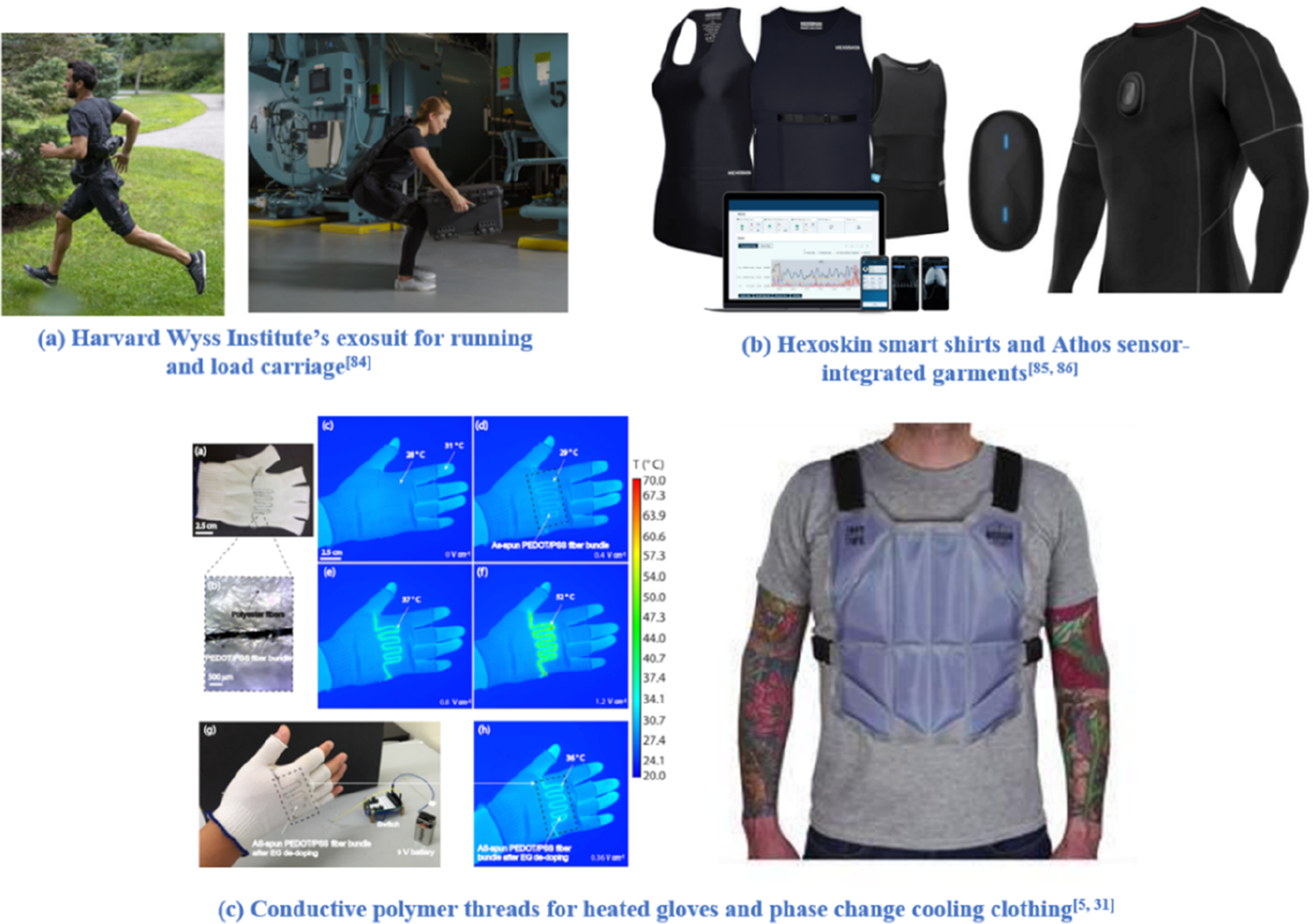
Smart Training Garments
Wearables such as Hexoskin smart shirts and Athos sensor-integrated garments combine flexible conductive fibers, MEMS sensors, and ultra-thin microcontrollers to continuously monitor cardiovascular and musculoskeletal activity (Figure 5(b)) (Ji et al., 2025; Liu et al., 2024). Conductive fibers, often silver-coated nylon or carbon-coated polymer, are woven into fabric to capture muscle and heart signals, while small sensors at key points track body movements, posture, and joint angles. It is noted that microcontrollers preprocess signals before wireless transmission, and simultaneous feedback enables fatigue tracking, motion adjustment, and training optimization. Stretchable, breathable, and modular materials ensure skin conformity, comfort, and perceptual integration. Fabrics featured with stretchable and breathable characteristics assure skin stable sensor contact and comfort. In addition, modular sensor placement can be adjusted as required, assisting upgrade sports apparatus into data-driven smart products.
Thermoregulatory Sportswear
Phase-change materials (PCMs), moisture-wicking fabrics, and heating conductive yarns are often used in advanced sportswear to keep thermal comfort during extreme environment or high-intensity activities (Figure 5(c)) (Li et al., 2022). Specifically, PCMs were often incorporated into fibers or used as packs in clothing, which could absorb or release heat to stabilize body temperature when thermal imbalance occur. Moisture-wicking fabrics, typically with a hydrophobic inner layer and a hydrophilic outer layer, quickly enables one-way moisture transport and ensures body comfort. Heating yarns, normally made of polyester, nylon, and other substrate fibers coated with a metallic layer, support localized heating. An embedded temperature sensor detects skin temperature and sends signals to the circuit board, which in turn controls the heating yarn. This forms a cybernetic feedback loop. Apart from that, design issues should be also considered, such as the placement of PCMs in core areas, creating breathable mesh zones and using ergonomic seam patterns. This highlights wearable design addressed feedback-enabled material smartness and embodied comfort (Li et al., 2022).
Medical Augmentation
In medical field, soft actuators, smart sensing, and cybernetic control loops were integrated to transform passive support into adaptive human augmentation, which could help patients to retrieve mobility, dexterity, and body awareness.
Soft Robotic Exoskeletons for Gait Training
Soft exoskeletons such as ReWalk and EksoGT could help lower-limb rehabilitation in patients with spinal cord or after stroke (Figure 6(a)). In principle, their sensing module collects patients’ gait real-time data, the control system analyzes the corresponding motion intention and gait phase, and the driving module outputs matching flexible driving force to assist the hip, knee, and ankle in completing flexion and extension movements. In structure, soft exoskeletons generally consist of a flexible wearable frame, adaptive actuation system, multimodal sensing module, real-time control unit, and human–machine interaction interface. Specifically, the wearable frame is often made of fabric-based composite material and shapes memory polymer, which fits the lower limbs conformably for free movement. The actuation system, typically using pneumatic actuation units or cable-driven actuation unit, could provide gentle, adjustable torque to prevent secondary injuries during training. The multimodal module often in patch-mounted structure monitor the movement profiles of the body joints, capture the contact force of HMI and collect the electrical signals of lower-limb muscles. The HMI made lightweight and bendable OLED materials allows trainers setting training modes and real-time data monitoring. These exoskeletons help patients in gait training while promoting their muscle involvement, body awareness and motor skill acquisition by synchronizing actuation with intentional movement, which can hastening functional rehabilitation and boosting patient confidence. Smart Wearables for Medical Augmentation (Cipriani et al., 2014; Kim et al., 2025; Li et al., 2022; Mehrabi et al., 2022; Silva et al., 2023)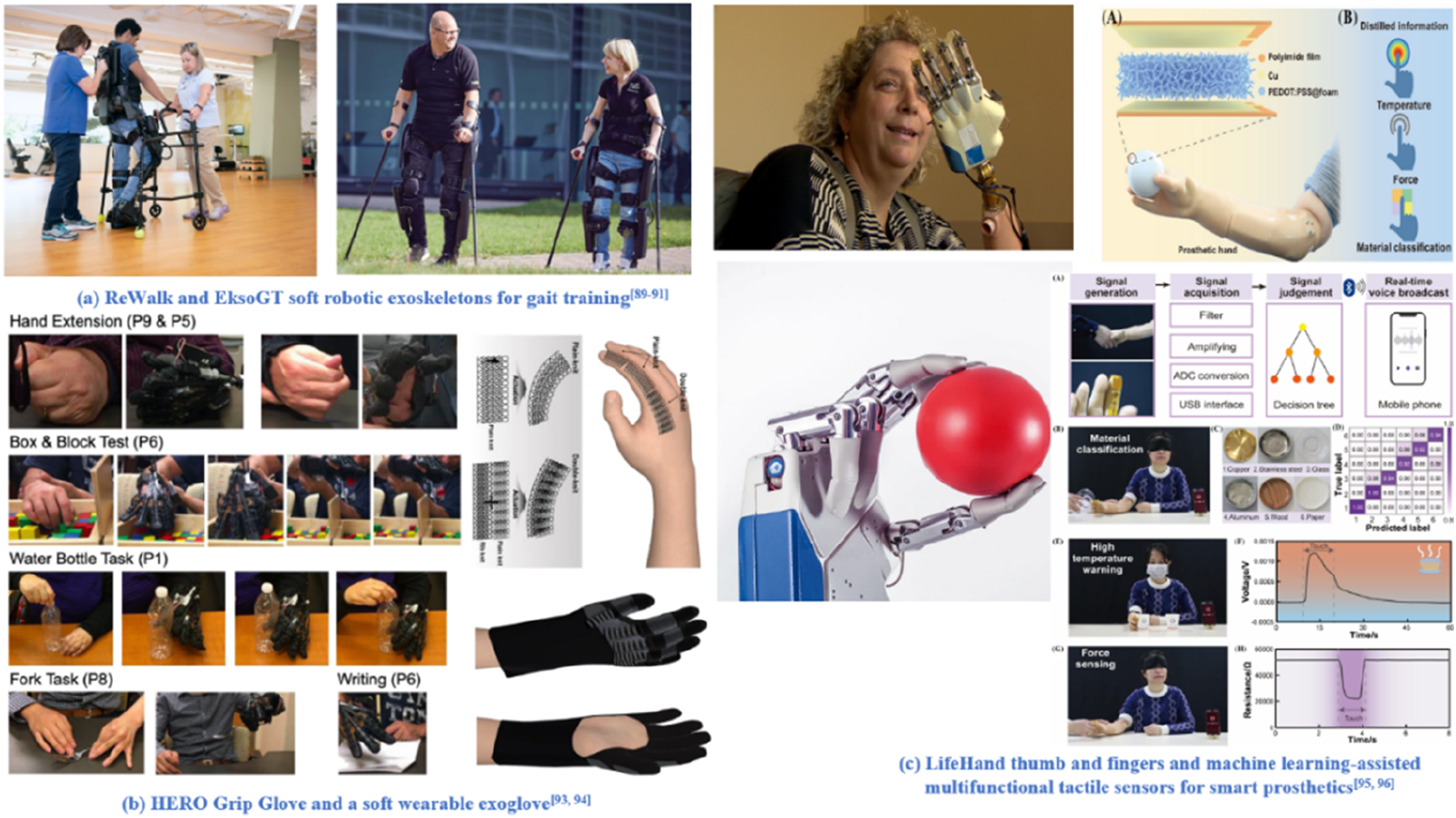
Electroactive Orthoses for Hand Rehabilitation
Wearable orthotic gloves are mainly developed for stroke-related hand therapy, which could actively adjust resistance and movement range based on the residual strength and recovery stage of patients coupling sensor feedback with AI-driven control (Figure 6(b)). These gloves were normally constructed of support carrier, stretchable circuit sensors, soft actuators as well as microcontrollers, which achieves hand rehabilitation by combining with AI-driven control. The circuit sensors embedded in gloves are often made of silver or carbon-coated elastomer fibers. It detects joint motion, and the produced signals were sent to the connected microcontrollers, which control actuator responses to facilitate therapeutic motion. The support carrier is also utilized in gloves, mostly made of flexible materials such as medical silica gel and elastic fabric, which fits the hand contour to fix the figure joints. In a case study, eleven chronic stroke patients with severe hand impairment were examined wearing the HERO Grip Glove. Remarkable improvements were observed in finger extension (∼147° increase) and the ability to grip daily items such as water bottles. In another study, a soft exoglove knitted with SMA actuators increases grip force by about 55% and range of finger motion by about 13.7% in three patients with hemiplegia.
Sensor-Embedded Prosthetic Limbs for Tactile Augmentation
These smart prosthetic limbs incorporate a range of built-in sensors and utilize technical means to simulate and improve tactile function, addressing the limitations of traditional prosthetics. They integrate stretchable e-skin, conductive textiles and distributed tactile sensors to detect pressure, vibration, and temperature (Figure 6(c)) (Kim et al., 2025). A conformal sensor network over the limb surface was covered with flexible silicone substrates, piezoresistive fibers, and circuit layers, and haptic information was conveyed via vibrotactile actuators, peripheral nerve interfaces, or direct brain–computer connections to establish real-time sensory feedback loops. During actual use, the device collects physical signals like pressure upon contact with objects, processes them via a processor, transmits feedback to the user through electrical stimulation to simulate and enhance tactile function. Meanwhile, the built-in AI analyzes sensor data to adjust hand strength and accuracy, and the integrated tactile feedback into the body schema could further boost body position sense. A typical example is the LifeHand neuroprosthetic project, which restores touch sensation through neural connections. Overall, these prosthetic limbs act as cognitive and bodily extensions, demonstrating a posthuman model of embodied technology. In this model, a hybrid, co-adaptive loop between user and device was formed by integrating sensory information, AI-powered interpretation, and neural connectivity.
Affective & Emotional Wearables
Affective & emotional wearables function as mediators of self-regulation, social cognition, and interpersonal interaction by integrating multimodal physiological sensing, intelligent computation, and subtle feedback.
Emotion-Detecting Wristbands
Smart devices such as the Empatica E4 wristbands sample signals, such as heart rate variability, skin conductance activity, and temperatures using PPG sensors, EDA electrodes, and temperature sensors embedded in elastomer wristbands, which could be transformed to emotion data (Figure 7(a)) (Schuurmans et al., 2020). Precise, real-time data acquisition could be obtained by using stretchable conductive lines and flexible microcontrollers, calculated by machine-learning algorithms to indicate human physiological stress, arousal level, or affective valence. For the feedback system, haptic vibrations, mild pulses, or slight LED cues were designed, guiding respiratory rhythm, posture, and attention to help mindfulness development and adaptive emotional regulation. Through ongoing loop closure between detected physiology and intervention actions, self-awareness, stress regulation, and emotional toughness were augmented, demonstrating the cybernetic fundamentals of embodied affective feedback. Affective and Emotional Wearables (Liu et al., 2025)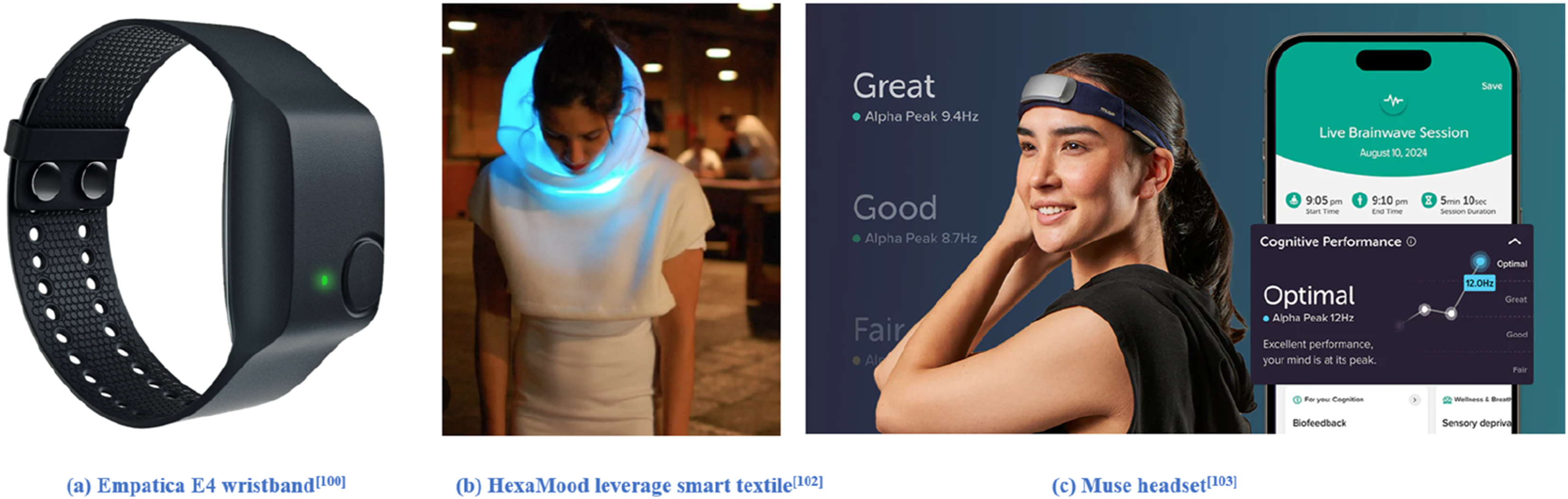
Mood-Adaptive Garments
Smart garments such as HexaMood were leveraged to reflect emotional states (Figure 7(b)) (Davis et al., 2013; Guennes et al., 2025). Color-changing fibers, electrochromic membranes, and compliant tactile actuators are integrated into stretchable, conductive garments. Color-changing fibers can change color in reaction to feedback signals such as skin temperature, while haptic actuators give gentle or strong vibrations to deliver calming or excited sensations. The built-in flexible microcontrollers and low-power Bluetooth modules make real-time adjustment depending on user vital or environmental signals. Using such smart garments, expressiveness, social compassion, and shared feeling experiences could be augmented.
Neurofeedback Wearables
Neurofeedback wearables (e.g., Muse or Emotiv headsets) are a category of intelligent devices that integrate wearable sensing technology with neurofeedback training, which could collect real-time brain signals, turn them into intuitive feedback, and guide users to actively regulate their own brain states (Figure 7(c)) (Garcia-Moreno et al., 2025; InteraXon Inc, 2025). They typically consist of flexible conductive substrates, dry EEG electrodes, microprocessors, and feedback output components. Electroencephalographic (EEG) signals, typically alpha, beta, and theta waves, are forwarded to processors or the connected phone. The AI algorithm analyzes the variation patterns of these signals and establishes self-adaptive feedback loops for mindfulness, focal point, or fatigue management. Feedback is conveyed using auditory tones or tactile signals, and the user’s emotional state can be dynamically adapted.
Despite many practical applications, the focus on cutting-edge, hybrid wearables often challenges ecological targets. Many electronic textiles depend on rare earth materials, disposable amalgams and carbon-heavy fabrication, leading to questions about the sustainability cost of augmented wearables. In the same way, the quick turnover of wearable electronics intensifies the discarded tech challenges, whereas the language design of “closed-loop systems” is commonly an ideal more than a practice. These tensions stress a crucial gap between the concept of eco-friendly augmentation and the practical conditions of producing and getting rid of it.
Futures of Smart Wearables: From Symbiotic Design to Wise Technologies
The above part presents the historical development, material developments, and shifting design paradigms of smart wearables. The evolution of smart wearables incorporates embodied intelligence, human–computer symbiosis, societal morality, and ecological awareness, generating a consistent conception of “wise technologies.” It is noted that “wise technology” means not merely to all smart systems, but rather to a specific type of innovation that goes beyond practical output to integrate ethics and ecological responsibility within its design logic. The core difference rests on the following: while smart technology asks ways to realize aims more effectively, wise technology challenges the nature of the goals that should be sought, on behalf of whom, and at what cost. So, the term functions not merely as a forward-looking prospect but simultaneously as an analytical structure grounded in current technological and socio-cultural developments.
Historical Evolution, Current Bottlenecks, and Future Research Directions of Smart Wearables for Human Augmentation
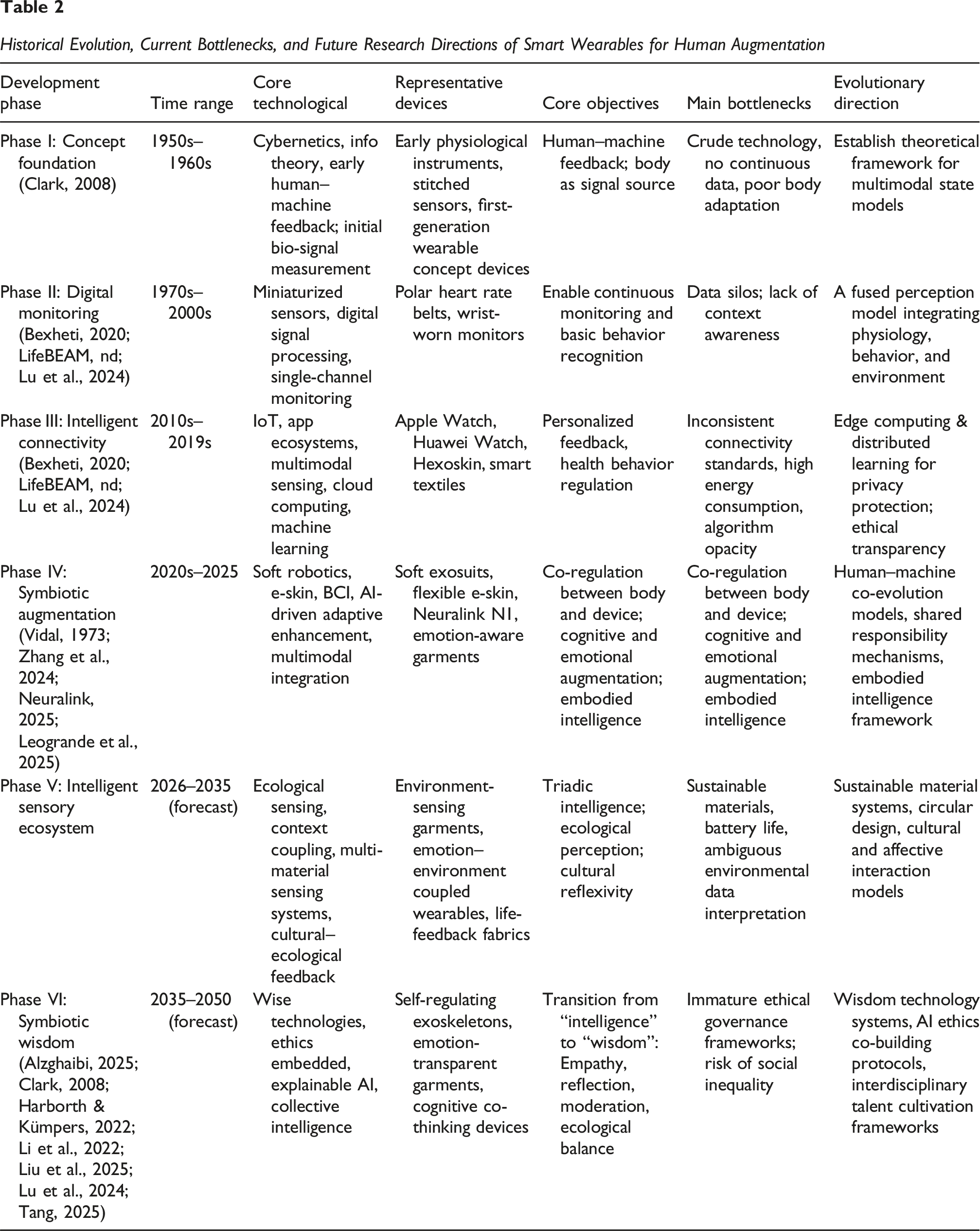
Technological Evolution Routes: Toward Embodied and Adaptive Intelligence
Smart wearables are progressing from simple information-tracking tools into part of us, which act like a tutor learning alongside us, adjusting to needs, and growing together. Due to the fusion of novel paradigms, flexible materials, and miniaturized, smart computing systems, the frictionless collaboration between humans and machines were realized. It is highly expected that the future of wearables lies in merging biological and smart computation into flexible materials, along with the development of compact sensors and energy-conserving intelligent chips. In fact, progresses in e-textiles, electronic skin and self-learning algorithm are already moving toward this. In the next generation, smart skin sensors can detect person’s real-time hydration levels and stress by subtle sweat changes. In the future, smart wearables are expected to link subtle muscle signals with electronic environments, enabling users to operate tools or virtual interfaces merely by gestures or perceiving their own emotions.
In addition, wearables can adapt to occupational scenarios, monitor relevant data, adjust wearing comfort, and help improve work performance, transforming from a passive tool into an active participant in human sensory and cognitive experiences. For instance, emotion adaptive garments for medical workers could identify increasing tension and regulate the wearer’s immediate environment to enhance concentration and well-being. Another example is a smart firefighter’s uniform, which could detect heat stress, predict body fatigue and dynamically adjust cooling levels. Therefore, this adaptive interaction signifies a transformation in the human–environment relationship in which embodied intelligence transforms wearables from passive tools into active participants in human perception and cognition.
In this sense, the evolution of wearables could then be described as a progression along a continuum from assistive to supplemental to symbiotic. These technologies do more than augment the body; they also enable co-adaptive regulation of cognition, emotion, and behavior. Therefore, augmentation is redefined from a static improvement of human capacity to a dynamic and reciprocal process, where the boundaries between the organic and the artificial become more fluid, and both the wearer and the technology continuously learn from and adapt to each other.
Human–Machine Symbiosis: Redefining Cognition, Identity, and Agency
As humans become ever more intimate with intelligent wearables, cognition, perception, and identity are being redefined. Based on the theory of embodied and extended cognition, future wearables are expected to become cognitive assistants that adding decision-making, attention control, and emotional regulation. Neurofeedback headsets are currently improving concentration and stress management by using adaptive sensory feedback, while emotion-sensing garments are utilizing biometric and AI technologies to sense a change in mood and respond with calming effects such as temperature or vibration adjustment. These prototypes mark the advent of a new kind of interaction in which technology takes part in our thoughts and emotions.
Cognition is offloaded to the body, device, and environment as part of an on-going biofeedback. Wearables that sense when you are getting tired or that respond to your affective state extend the range of our perception and allow us to react in real time. In high-demand contexts such as aviation or healthcare, adaptive systems can assess how much cognitive load a person can handle at a given moment and regulate incoming information to prevent overload. In addition, tactile and emotional signals can be shared among users, promoting coordination, mutual understanding, and empathic engagement within teams.
With fusing of technology with daily life, design is not merely about doing things better, but about establishing mutually adaptive ethical connections between humans and systems. This approach focuses on transparency (meaning clarity about what is being used), reversibility (allowing actions to be undone) and participation (enabling users to take part in the design of their own experience). Real human–machine symbiosis demands both technical intelligence and ethical maturity, building systems that grow and trust alongside us for mutual benefit in a mixed cognitive world. Nevertheless, the threat of human reliance on wearable technology was often ignored. For example, emotion-regulating wearables could diminish genuine emotions, and power-augmenting exoskeletons may hinder inherent biomechanical evolution. Thus, the future of smart wearables needs to concentrates on the way to improve users but also guarantee that users maintain their agency, adaptability, and the right to be offline.
Socio-Economic Futures: The Augmented Society and Ethical Economy
In an era of the fourth industrial revolution or a newer one, smart wearables are rapidly shifting the manner in which humans work together, interact with others, and govern their affairs. As human judgment increasingly mirrors machine processes, a new model of labor emerges: real-time collaboration between biological and algorithmic systems. Take manufacturing as an example, the workers wearing soft exosuits can lift heavy materials without being tired, and physiological sensors can monitor fatigue and remind them to take short breaks to avoid injuries. In logistics or healthcare, AI-powered cognitive assistants in wearable devices could give immediate directions, safety warnings, and change tasks according to how stressed or busy the worker is, making work better and safer (Clark, 2008; Sun et al., 2026).
However, with these developments, new ethical-social challenges arise. Due to the data-driven work, the risk of constant monitoring and control were brought through biometrics. Heartbeat, gesture, and expression of human body were reduced to an efficiency indicator. Consequently, our emotions and attention could be treated as commodities for trade, and human joys and sorrows have surprisingly been transformed into a form of labor capital. Thus, it is essential to keep a balance between productivity, privacy, and dignity within an algorithmic workplace.
In order to create a moral economy of augmentation, transparent and inclusive governance systems were required. Wearable devices must operate according to specific user authorization protocols and privacy-by-design principles, enabling users to fully charge of their personal data. To establish clarified accountability and trust, local computing, on-device smart applications, and easy-to-understand interfaces are needed. Last but not least, the future smart augmented society must employ efficient, fair, and people-centric technologies, making humans and smart systems to collaborate as equals instead of exercising mutual control.
Ecological and Cultural Technoscapes: Toward Perceptual Ecology
Smart wearables will be shaped by technology developments as well as by ecological and cultural factors. They have gradually become intermediaries between humans and their surroundings with the application of material science on sensor systems. Rather than neutral tools or little gadgets, they present a possibility to combine human biological characteristics, technology, and ecology in daily routines, enhancing our understanding of the environment and its cultural meanings.
For the implications of wearable tech innovations, sustainable materials and the circular design are the two key pillars. Technologies, such as making soluble fibers, recyclable circuits, and component-based assembly, can decrease material waste and lengthen product longevity. For instance, some companies and researchers explored self-powered clothing via sunlight, temperature difference between human skin and environment or kinetic energy generation, and studied naturally decomposed fibers after use such as corn fibers. In addition, life-cycle of products, which includes the stages of production, use, reuse, and recycling, were being increasingly considered by designers. It can be said that when something is no longer just a tool with basic functions, it becomes a route for us to honor and safeguard the Earth.
Apart from that, smart clothing can also translate environmental information into perceptible emotional signals. For example, a T-shirt could change its color when exposed to sunlight. These wearables seamlessly connect emotional design with sustainability and could be treated as the cultural carriers of care and mutual coexistence. The development of smart wearables into perceptual tools demonstrated that design enables human to gain more precise insights into the surrounding ecosystems.
From Intelligence to Wisdom: The Future Paradigm of Human Augmentation
With the growing fusion of human and technology, technological advancement should seek wisdom rather than mere smart. Different from other smart technologies that merely concerning on predicting trends and improving efficiency, wise technologies can strike a harmony between performance and compassion, rationality and caution, and reactivity and contextual awareness. It is an ideal technological model, whose essence is to find a balance between performance and compassion, and logicality and moderation. Such a vision represents not a description of current technologies, but instead a technical design goal created based on current technological shortcomings and social risks. Imagine a wearable device that monitors stress and emotions, facilitates the development of awareness-based behaviors, and combines cold computation with warm human care.
Furthermore, wise wearables should be adaptive and unobtrusive, smart and practical, and empowering without causing dependence. For example, smart exoskeleton can monitor body fatigue, regulate support strength, and even remind users to take a break, all of which can safeguard long-term physical health, rather than only pursuing higher productivity (De Boeck & Vaes, 2024). The associative intelligence of such systems originates precisely from the mutual collaboration between humans and machines.
To realize such as vision, interdisciplinary education and research were needed. Designers can develop devices that integrate technical precision with human sensitivity by combining computational design, affective science, and ethics. In future, human augmentation may nurture a human–machine co-evolutionary partnership, where technology helps safeguard human values, cultural diversity, and the ecological environment, and turns wearables into great helpers for aggregating collective wisdom.
Summary and Future Development
With the development of material science, AI, and human-centered design, the boundary between human and technology is being redefined. Rather than just an external tool, technology is slowly becoming part of our lives and acting as a partner helping us to be smarter. By reviewing relevant research, core viewpoints and practical insights were summarized, that is, smart wearables act as a bridge connecting technology, human, and society. In addition, key factors governing the “smart” characteristics of wearables in the past were sorted, and the ways to let them make more responsible decisions in the future were explored.
From Performance to Participation: Rethinking Human Augmentation
Unlike traditional approaches for human augmentation stressing human performance improvement by enhancing their physical strength, cognitive agility, or acute perception, this study aims to explore a highly interactive mode for wearables. These wearables were not only being tools, but also actively become a partner in our thinking and perceiving, which influence our emotions, focus, and self-awareness approach via constant embodied feedback (Alzghaibi, 2025; Clark, 2008; Li et al., 2022; Lu et al., 2024). This is consistent with the embodied cognition and affective computing theories, that is, intelligence is not a result of isolated cerebral processing, but of the body’s active interplay with its ambient environment (Alzghaibi, 2025; Li et al., 2022; Lu et al., 2024; Tang, 2025). The typical examples include affective clothing responding to human emotions, electronic skin converting tactile contact into information and neurofeedback headgears for concentration improvements. This means a shift from merely human augmentation to technology development in tandem with humans. In other words, we do not aim to make machines smarter, but to create forms of AI that can perceive, interpret, and respond to their surroundings while conforming to worldwide values and shared sentiments.
Material Intelligence and Human Experience
As discussed in the above sections, materials are very key for the embodied intelligence design. Functional materials such as stretchable circuits, electro-driven polymers, and biocompatible base materials decide both device flexibility, their mode of response to us as well as the distance we can be from them. This means that materials are not just passive conveyors of data, but active mediators of experience.
Consequently, materials become dynamic participants in interaction. Material developments, by combining with affective and cognitive sensory detection technology, form adaptive interfaces that dynamically adjust to the body and its environment. This type of material responsiveness requires a revolutionary design viewpoint that integrates a product’s functional principle, haptic perception, and emotional response. In future studies, developing multi-material co-design systems were of great need. In the system, the comfort, usability, and sustainability were addressed at the same time, turning the material substrate into a bridge for empathy and understanding.
Regarding to the aesthetic aspect, the social image of smart wearables was collectively shaped by their visual design and haptic experience, which was defined by the cognitive implications, inclusiveness and personal identity delivered by wearable design. Thus, the future of smart wearables is not a simple trade-off between utility and ethics, but in essence a cultural proposition. We must consider how our future selves will feel, exist, and perceive themselves within a technologically mediated world.
Multidimensional Coupling: From “Intelligence” to “Wisdom”
The use of wearables in everyday life shows a close connection between technology, people, and society. Devices can sense and respond, humans can read and adjust, and society decides who gets what. This three-link concept enriches the focus on problem-solving and efficiency, or intelligence, by integrating a more reflective and balanced dimension of wisdom.
In this view, it is no longer smart enough. The next step for wearable is based on wisdom design: it will be adaptive, independent, but respectful to people, fair, and in balance with nature. Such systems would make emotions sensitive, ethics transparent and environment conscious part of their own logic of functioning. Intelligence to wisdom thus becomes a change from control to coexistence, from efficiency to empathy, and from a straight path to a system.
Ethical, Social, and Ecological Challenges
Smart wearables moving to cognitive and affective capabilities create ethical challenges and issues related to real-time responsiveness. Continuous biometric monitoring raises questions regarding the ownership of the data, the giving of consent and the accountability of the algorithms. Without transparent governance, affective data can be used for surveillance and behavior control. Ethical frameworks need to be explainable, allowing users to understand how their data is being processed; they need to be agentic, giving users the power to influence this processing; and they need to be participatory, giving users a way to participate in the ethical design of the system.
Socially speaking, there might be even more inequality because not everyone can get the same technology. Wearable technologies can lead to a more unequal society when access to them is uneven. Specifically, a body of people deriving greater benefits from technological advances outperform others. Therefore, open and inclusive wearables were required to develop. For this purpose, open platforms with intuitive, user-centric interfaces and guidelines that guarantee equitable access for all were of great need.
Ecologically, sustainable measures should be taken due to a rising trend of e-textiles and wearable electronics. Instead of an absorption-driven innovation system, eco-friendly materials, energy-saving technologies, and sustainable design should be developed. Take a step further, the wearables also generate a form of environmental awareness, and users can perceive their surroundings and act in harmony with the Earth.
Future Research
The present review pinpointed the paths of breakthroughs, and emphasized the ongoing tensions and oversights in wearable augmentation study. Therefore, a more critical viewpoint should be adopted, centering on explaining the mutual relationship between wearables and authority systems. Besides, the complicated and far-reaching impacts of bodily and mental enhancement technologies must be explored, and design guidelines should be developed to prevent technological dependence and the decline of human capabilities. Apart from that, given conditions of material and power limitations, feasible pathways for sustainable augmentation should be also identified. Thus, a framework for human–machine mutual evolution should be developed, based on three primary areas.
First, the next-generation wearables should on the basis of multi-sensory perception and embodied modeling. This means an adaptive intelligent system can be formed by integrating physiological, behavioral and environmental data. Wearables on this basis can gain insights from users while ensuring privacy protection through edge computing and spread-out data management.
On the second point, with the ever-deepening integration of wearables into daily life, the building of human–machine ethics and responsibility-led collaboration serve as an inviolable core underpinning. It is of great need to develop protocols which incorporate moral deliberation into the design of wearables to ensure equity, authorization and openness. So, the human–AI relationship should be regarded as the shared responsibility, where users and systems collaborate in tandem, not one party controlling the other.
Last but not the least, to make sustainable innovation in wearables, cross-disciplinary approach was needed. In future studies, designers should focus on the area where materials, data and people converge. In educational courses, algorithmic design, affective science, and moral philosophy must be included. In practice, art and science should be balanced. Therefore, it is important for the designers, engineering specialists, and humanities scholars to work together to make the new-generation wearable innovations.
Therefore, this review not only provides a potential pathway from “intelligent” to “wise” technology but also supplies conceptual tools to analyze and assess this progression. Given the present perspective, “wise technology” functions both as a concept of the future and as a critical viewpoint to recognize technological pathways. To be specific, it enhances human abilities while preserving human dignity, social justice, and ecological sustainability, laying a foundation for evidence-based research in system design, user experience design, and social acceptance. In all, the above presents a state of the art where technological innovation, ethical deliberation, and cultural significance co-evolve. The evolution of these concepts and technologies is driving a profound shift in this field, that is, from “simply constructing smart systems” to “establishing a new framework featured by smarter, more responsible human–machine symbiosis and technology-enabled empowerment.”
Footnotes
Acknowledgments
The authors would like to express their gratitude to the colleagues and research assistants at the Laboratory for Human Thermophysiology and Ergonomics, Guangdong University of Technology, for their valuable discussions and technical support throughout this study. Special thanks are extended to the anonymous reviewers whose constructive comments significantly improved the quality of this manuscript. The authors also acknowledge the support of the Center for the Built Environment, UC Berkeley, for providing an inspiring research environment during the preparation of this work.

Author Contributions
Song Wenfang: Conceptualization, methodology, investigation, writing—original draft, writing—review and editing, supervision, funding and acquisition. Liu Ziyu: Investigation, data curation, formal analysis, visualization, and writing—original draft. Wan Xianfu: Conceptualization, methodology, validation, writing—review and editing, and resources.
Funding
The authors disclosed receipt of the following financial support for the research, authorship, and/or publication of this article: This work was supported by the Ministry of Education Humanities and Social Sciences Planning Project of China (Grant No. 25YJAZH153) and the Guangdong University of Technology Undergraduate Innovation and Entrepreneurship Program (Grant No. 2025YXD13). The funders had no role in the design of the study; in the collection, analyses, or interpretation of literature; in the writing of the manuscript; or in the decision to publish the results.
Declaration of Conflicting Interests
The authors declared no potential conflicts of interest with respect to the research, authorship, and/or publication of this article.
Data Availability Statement
Data sharing is not applicable to this article as no new data were created or analyzed in this study. All sources cited in this systematic review are publicly available and listed in the references section.